

 Brazil
 Argentina
 Bolivia
 Chile
Chile Colombia
 Ecuador
 Guyana
 French Guiana
 Falkland Islands (Malvinas)
 Paraguay
 Suriname
 Uruguay
 Venezuela
 Germany
 Belgium
 Spain
Spain France
 Greece
 the Netherlands
 Ireland
 Italy
Italy Luxembourg
 Portugal
 the United Kingdom
 Switzerland
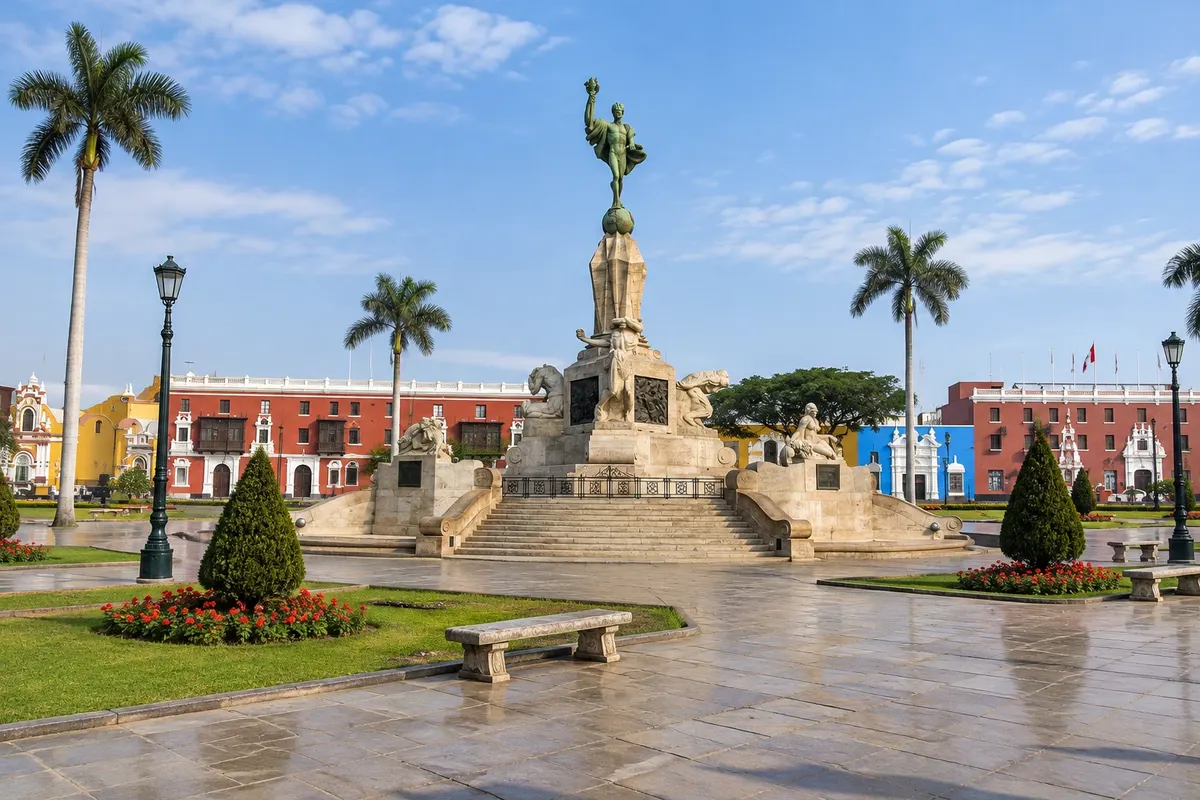
Plaza
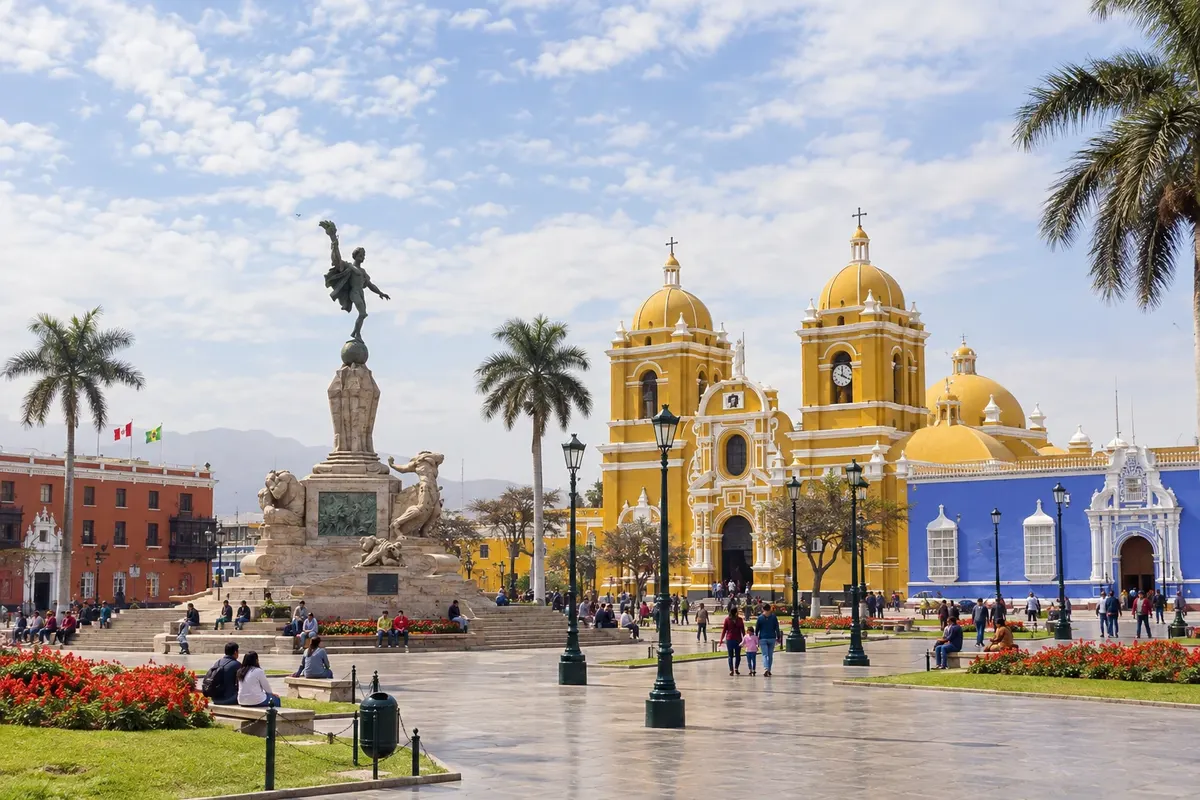
Plaza de Armas de Trujillo
The square where Trujillo was founded, surrounded by the Cathedral, the city hall and colonial mansions painted in bright colors, with the Monument to Liberty in the center.
La Libertad · Peru Capital
In the destination Trujillo and Chan Chan.
In the photo: Plaza de Armas de Trujillo
Illustrative images. The pictures in this guide are illustrations based on the real place, not photographs, and may differ from it.
The city
Trujillo, capital of La Libertad, was founded in 1534 in the valley of the Moche River and preserves in its historic center the Plaza de Armas, the Cathedral and colonial mansions such as Casa Urquiaga. Around the city are Chan Chan, the adobe capital of the Chimú, the Huacas del Sol y de la Luna of the Moche, and the Huaca Arco Iris; further north is the El Brujo complex. It is also the city of the marinera and the paso horse.
There's no accommodation in the guide yet in Trujillo.
There are no restaurants in the guide yet in Trujillo.
Know a good one? Recommend it to ushow to get there · how many days · itinerary · questions
The local experience
The square where Trujillo was founded, surrounded by the Cathedral, the city hall and colonial mansions painted in bright colors, with the Monument to Liberty in the center.
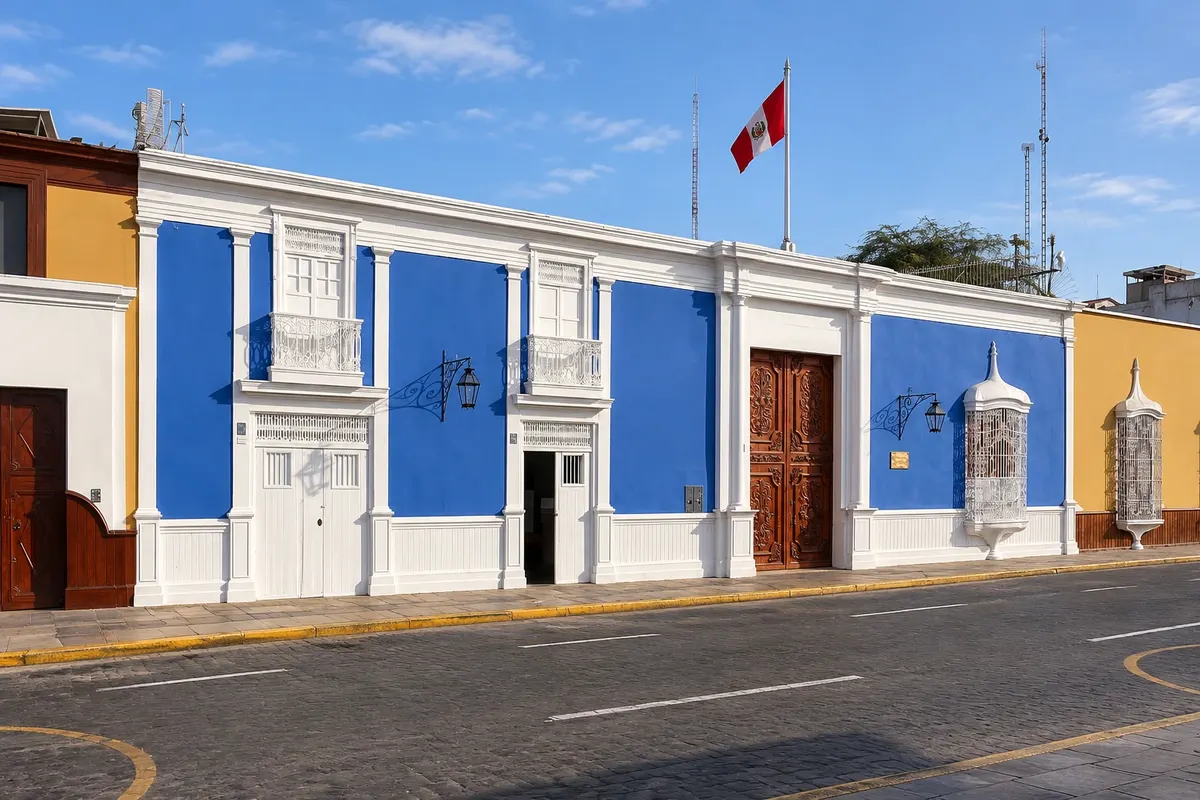
A colonial mansion on the Plaza de Armas, rebuilt in a neoclassical style, with three courtyards, mahogany furniture and a collection of Chimú and colonial pieces. It belongs to the Central Reserve Bank of Peru.
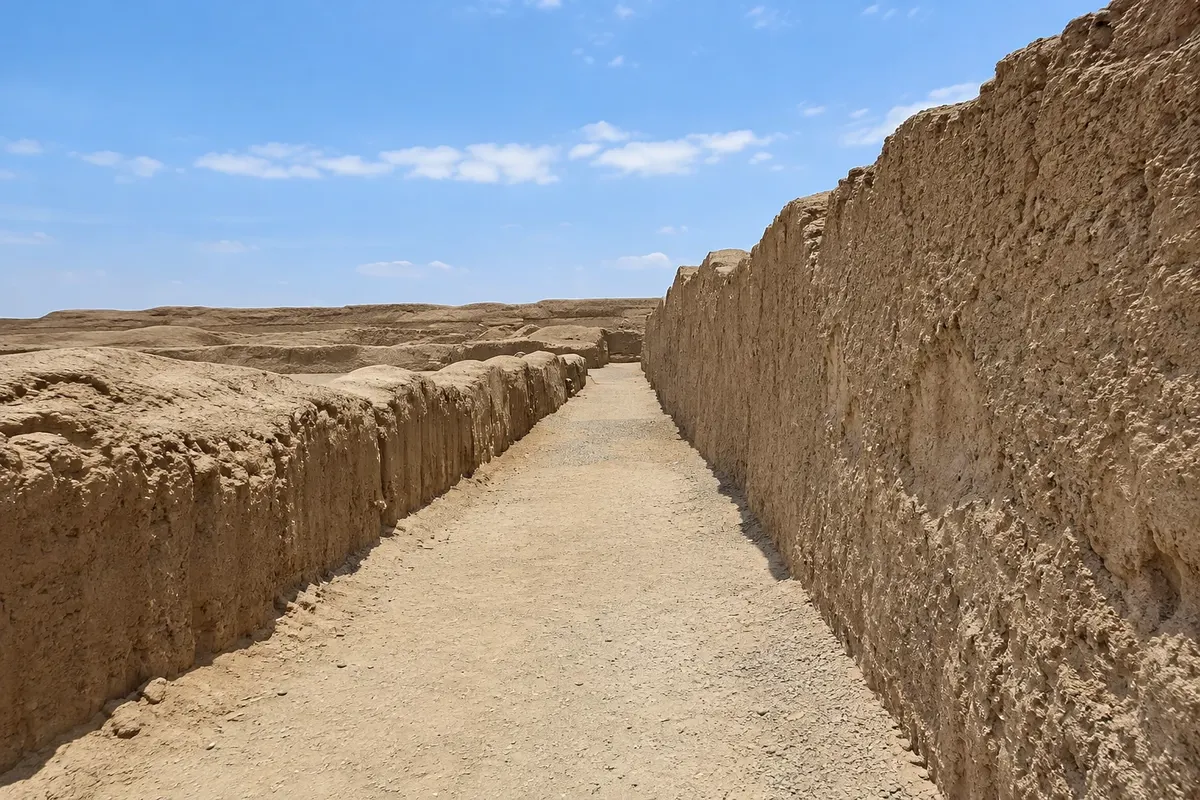
The capital of the Chimú kingdom, an adobe city of about 20 km² between Trujillo and Huanchaco, with walled palaces, plazas and walls decorated with friezes of fish, birds and waves. UNESCO World Heritage Site.
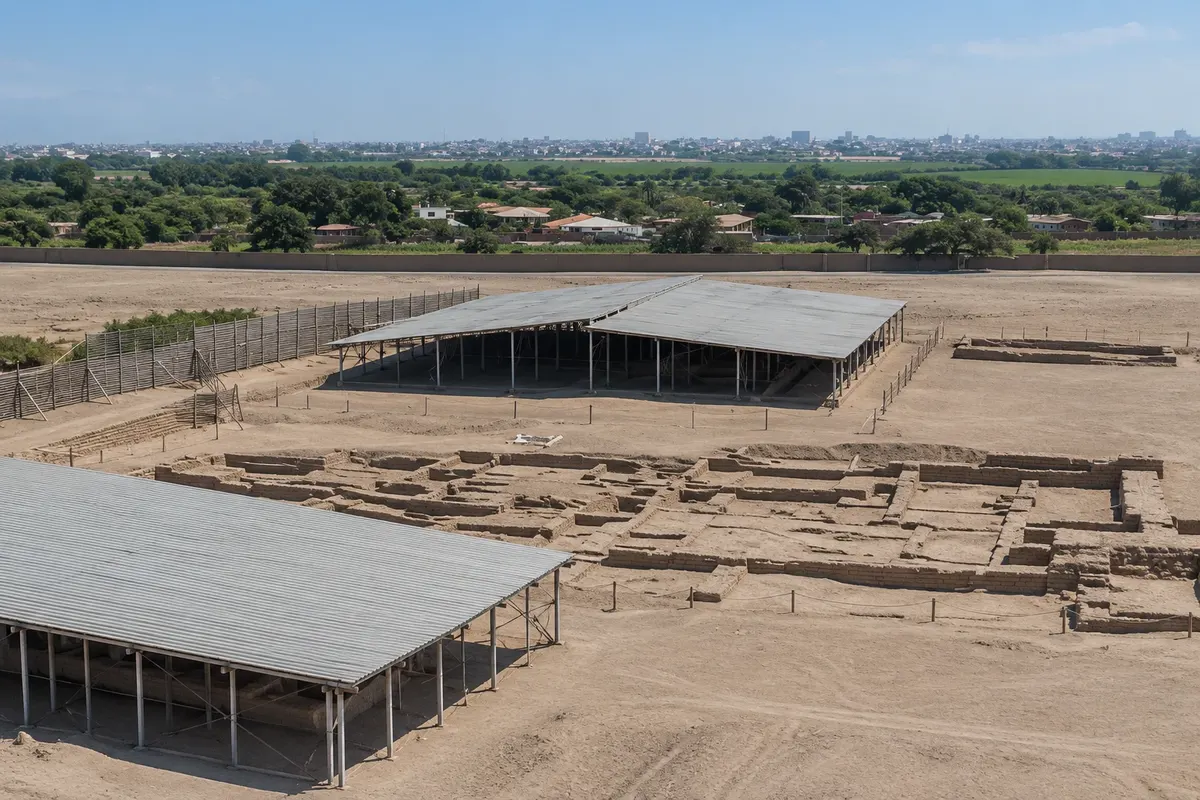
Two large adobe pyramids of the Moche culture, at the foot of Cerro Blanco, 5 km from Trujillo. Huaca de la Luna shows superimposed temples with murals in five colors, and a museum houses ceramics and items from the excavations.
A Chimú adobe temple enclosed by a wall, in north Trujillo, with walls of raised friezes depicting the rainbow and figures of snakes and mythical beings. Also called Huaca del Dragón.
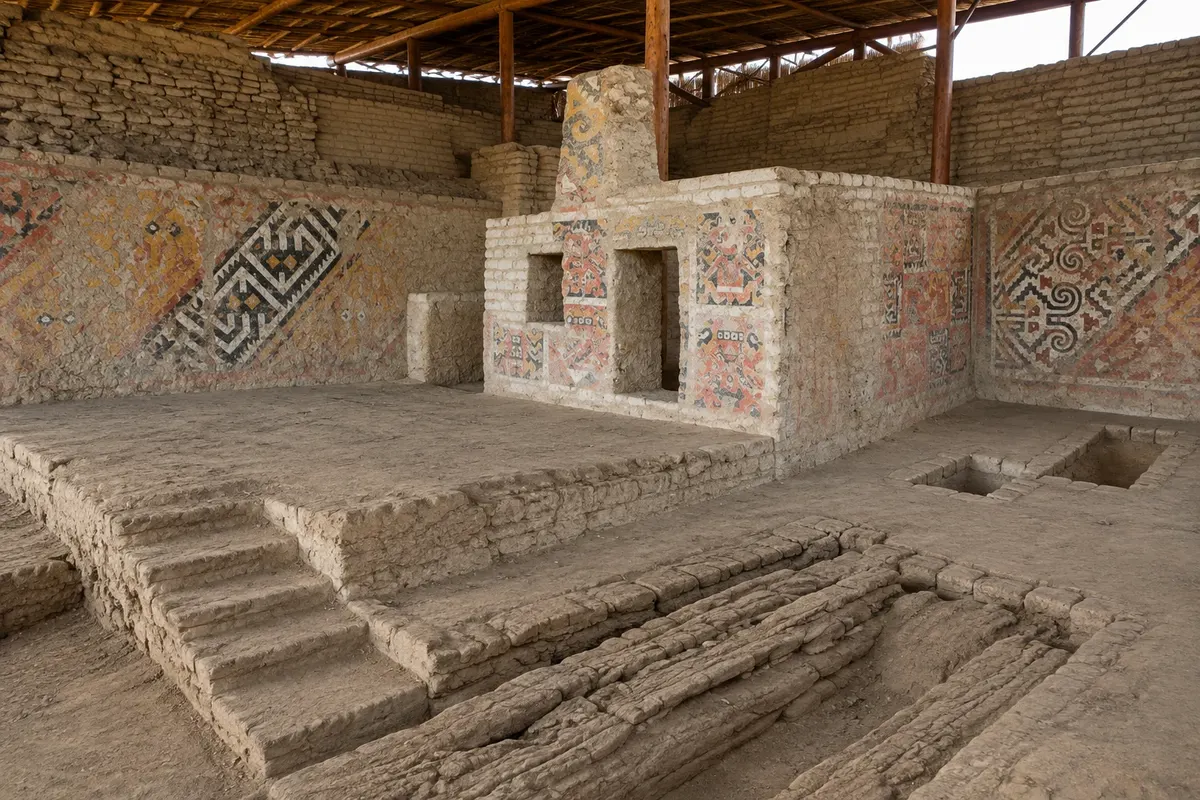
An archaeological complex in the Chicama valley, about 60 km from Trujillo, featuring Huaca Cao Viejo with colorful Moche murals, Huaca Prieta and the Museo de Cao, where the Señora de Cao, a Moche ruler, is displayed.