

 Brazil
 Argentina
 Bolivia
 Chile
Chile Colombia
 Ecuador
 Guyana
 French Guiana
 Falkland Islands (Malvinas)
 Paraguay
 Suriname
 Uruguay
 Venezuela
 Germany
 Belgium
 Spain
Spain France
 Greece
 the Netherlands
 Ireland
 Italy
Italy Luxembourg
 Portugal
 the United Kingdom
 Switzerland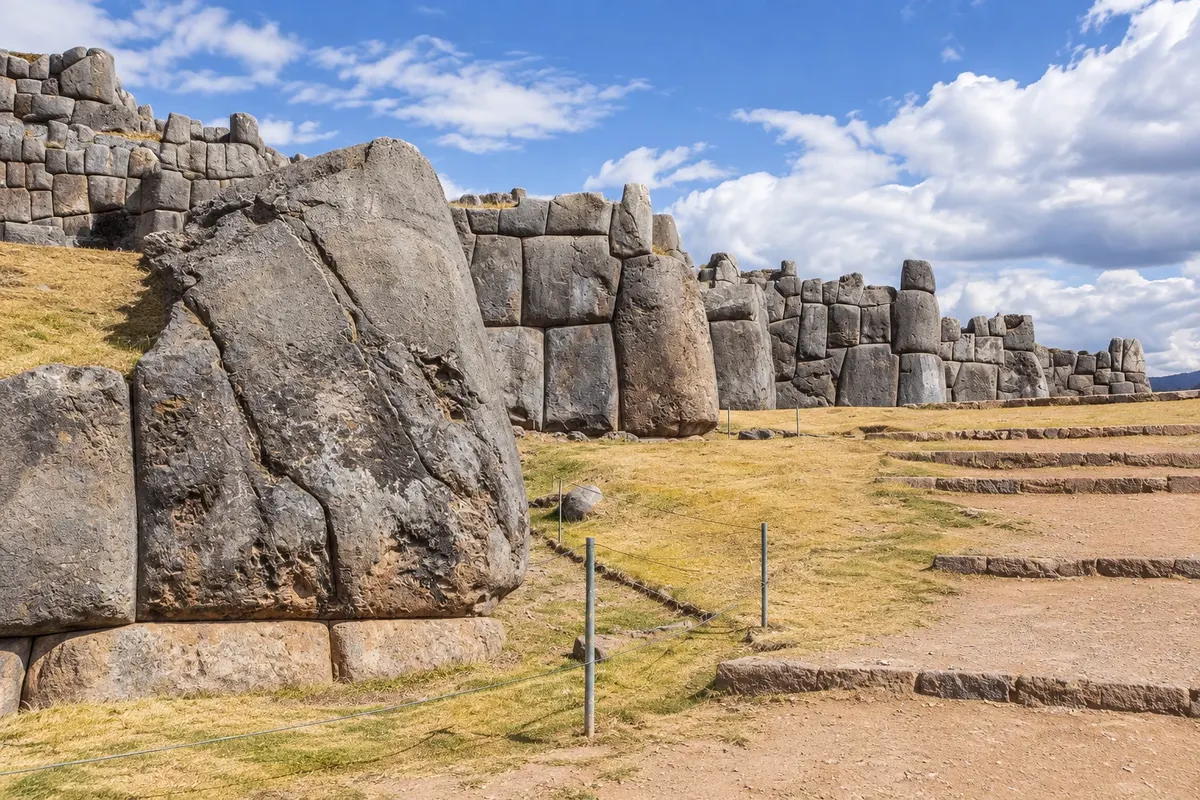
Archaeological site · Cusco, Cusco
Parque Arqueológico de Sacsayhuamán
The Inca fortress high above Cusco, at about 3,700 m, with three zigzag walls of stones weighing over 100 tons fitted without mortar and offering a view over the entire city.
Illustrative images. The pictures in this guide are illustrations based on the real place, not photographs, and may differ from it.

Discover
About Parque Arqueológico de Sacsayhuamán
Sacsayhuamán sits on a hill north of Cusco, at about 3,700 meters above sea level. Chroniclers say construction began under the rule of Pachacútec in the 15th century and took decades, with thousands of workers. The Spaniards called the place a fortress, but it was also a religious center, and some see it as the head of the puma that would form the city's layout.
What stands out most are the three parallel zigzag limestone walls, with enormous stones, some over 100 tons, fitted without mortar. The walls are about 400 meters long. At the top of the hill there were three towers and storehouses; almost everything was dismantled after the conquest, and the stones were used to build churches and houses in Cusco.
In front of the walls is the large esplanade where, since 1944, the Inti Raymi, the festival of the Sun, is performed on June 24. On the other side of the esplanade, the Rodadero hill has smooth rocks and the carved seats called the Inca's throne. From the top of the complex you can see all of Cusco, with the Plaza de Armas down below.
Sacsayhuamán is part of the tourist ticket, together with other nearby sites on the road to Pisac: Q'enqo, with a sanctuary carved into the rock, Puka Pukara and Tambomachay, with Inca flowing water fountains. The visit is outdoors and uphill: bring water, a hat and sunscreen.
Before you go
Practical information
Cidade Turismo reviews its information regularly, but something may have changed. Check with the place before planning your trip.
How much time to set aside
About 1h30 to 2 hours for Sacsayhuamán; with Q'enqo, Puka Pukara and Tambomachay, half a day.
Best time
Early in the morning or late in the afternoon, when the low light falls on the stones and there are fewer groups. On June 24 the esplanade hosts the Inti Raymi with controlled access. Confirm times before you go.
How to get there
It is about 2 km from the Plaza de Armas. You can walk up the street that leaves the square toward San Cristóbal, with steep stairways, in 30 to 40 minutes, or take a taxi by road in 10 minutes. For Q'enqo and Tambomachay, a taxi with waiting time is the most practical option.
Tip
Go up by taxi and walk down to the center via the church of San Cristóbal, which offers a view over the rooftops. Leave Sacsayhuamán for your second or third day in Cusco, when your body has already begun to acclimatize to the altitude.
Get your questions answered
Frequently asked questions about Parque Arqueológico de Sacsayhuamán
What is the largest stone of Sacsayhuamán?
The largest stones of the zigzag walls weigh more than 100 tons and are several meters high. They were brought from nearby quarries and fitted without mortar.
Is Sacsayhuamán included in the tourist ticket?
Yes. The site is part of the Cusco tourist ticket, together with Q'enqo, Puka Pukara and Tambomachay. Confirm the rules before buying.
Can you walk up from the center?
Yes, in 30 to 40 minutes via steep streets and stairways from the Plaza de Armas. At altitude the effort is greater: many prefer to go up by taxi and walk down.
Where is the Inti Raymi held?
The main ceremony takes place on the esplanade in front of the walls of Sacsayhuamán on June 24, after passing by the Qorikancha and the Plaza de Armas.