

 Brazil
 Argentina
 Bolivia
 Chile
Chile Colombia
 Ecuador
 Guyana
 French Guiana
 Falkland Islands (Malvinas)
 Paraguay
 Peru
Peru Suriname
 Uruguay
 Venezuela
 Germany
 Belgium
 Spain
Spain France
 Greece
 the Netherlands
 Italy
Italy Luxembourg
 Portugal
 the United Kingdom
 Switzerland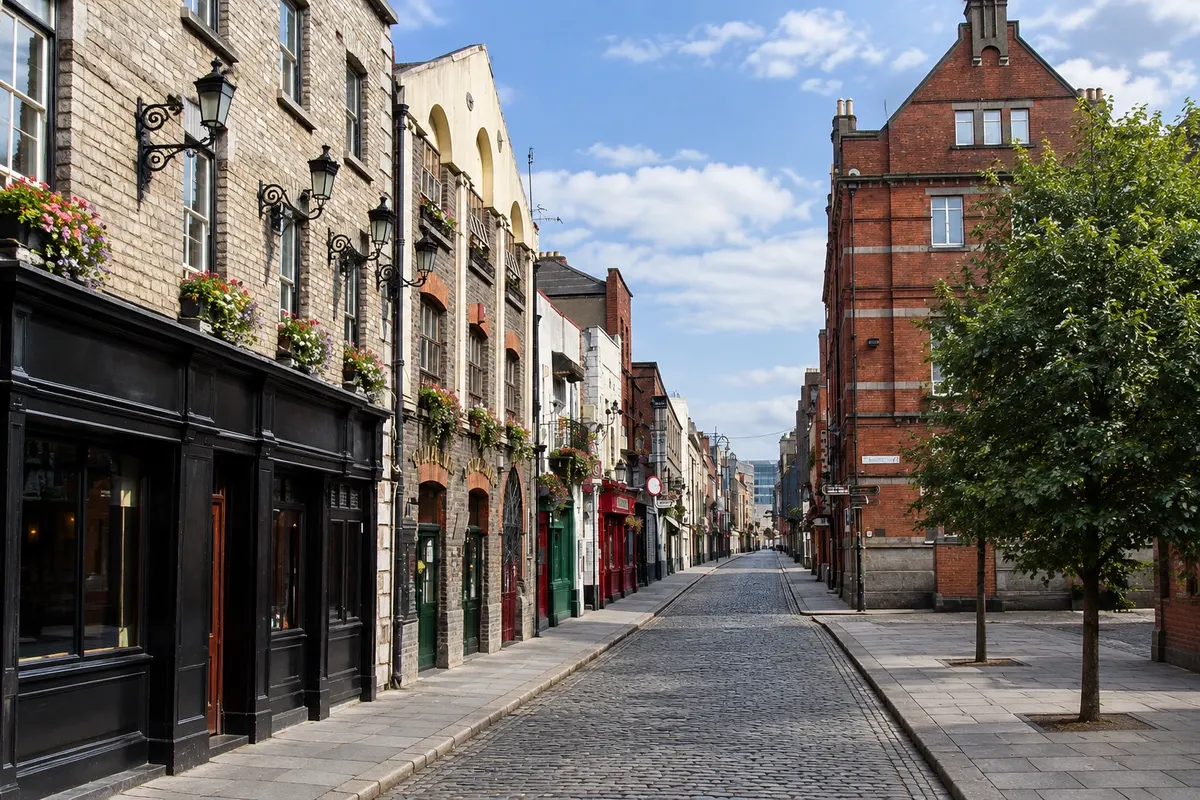
Neighborhood · Dublin, Dublin
Temple Bar
The neighbourhood of cobbled streets between Dame Street and the River Liffey, with live-music pubs, galleries, the Saturday food market and the Ha'penny Bridge, the iron bridge from 1816.
Illustrative images. The pictures in this guide are illustrations based on the real place, not photographs, and may differ from it.

Discover
About Temple Bar
Temple Bar is the block between Dame Street and the quay of the River Liffey, in central Dublin, with narrow cobbled streets, painted facades and pub signs. The name comes from William Temple, rector of Trinity College in the 17th century, who had a house and garden in the area, and from "bar", meaning the riverbank. At the end of the 20th century the area was redeveloped as a cultural quarter and today houses pubs, restaurants, galleries and arts centres.
The main street, also called Temple Bar, is where the red-fronted pubs seen on postcards are located. Irish traditional music starts in the afternoon in several of them and continues into the evening, with fiddle, flute, banjo and the bodhrán drum. At Meeting House Square, a plaza with a retractable roof, a food market with local producers operates on Saturdays, and the Irish Film Institute on Eustace Street screens Irish films and classics.
On the riverside, the Ha'penny Bridge links Temple Bar to the Northside. The 1816 cast-iron bridge was the first pedestrian crossing of the Liffey, and its name comes from the halfpenny toll that was charged for over a hundred years. It is Dublin's most iconic image, especially at dusk when the lights are reflected on the river.
Temple Bar is lively late into the night, particularly on Fridays and Saturdays, and gets crowded with tourists. Those seeking pubs with more locals often walk a few blocks toward the streets around Camden Street or Smithfield, on the other side of the river.
Before you go
Practical information
Cidade Turismo reviews its information regularly, but something may have changed. Check with the place before planning your trip.
How much time to set aside
One hour to stroll the streets and cross the Ha'penny Bridge; a whole evening to dine and listen to music in a pub.
Best time
Early in the morning the streets are quiet and good for photos. The Meeting House Square food market usually runs on Saturday mornings. Music in the pubs starts in the afternoon and becomes livelier after 9pm, especially on Fridays and Saturdays.
How to get there
It's in the centre, between Trinity College and Christ Church, a 5-minute walk from both. From the Northside, cross the Liffey via the Ha'penny Bridge or the O'Connell Bridge. The Jervis stop on the Luas (red line) is on the other side of the river, a 5-minute walk away.
Tip
Cross the Ha'penny Bridge at dusk, when the bridge lights come on. To hear traditional music without fighting for space, arrive at the pub late in the afternoon, before 8pm, or look for sessions in the pubs on the neighbouring streets.
Get your questions answered
Frequently asked questions about Temple Bar
Is Temple Bar just for tourists?
It's Dublin's most touristy neighbourhood and fills up at night. Even so, it has cultural centres, a cinema, galleries and the Saturday market that locals attend. For pubs frequented more by locals, walk a few blocks away.
Why is the bridge called Ha'penny?
Because of the half‑penny toll that was charged to cross it from its opening in 1816 until 1919.
What time does the music start in the pubs?
In many pubs in Temple Bar live music starts in the afternoon and continues into the evening. The busiest time is after 9 pm.
Can children enter pubs?
In general, accompanied minors can enter during the day and early evening, but each pub has a cutoff time. Check the notice on the door.