Dublin

Dublin · Ireland

Dublin

The capital of Ireland on the banks of the River Liffey: the Book of Kells at Trinity College, medieval cathedrals, Kilmainham Gaol, pubs with live music and, a half-hour train ride away, the fishing port of Howth.

Leinster

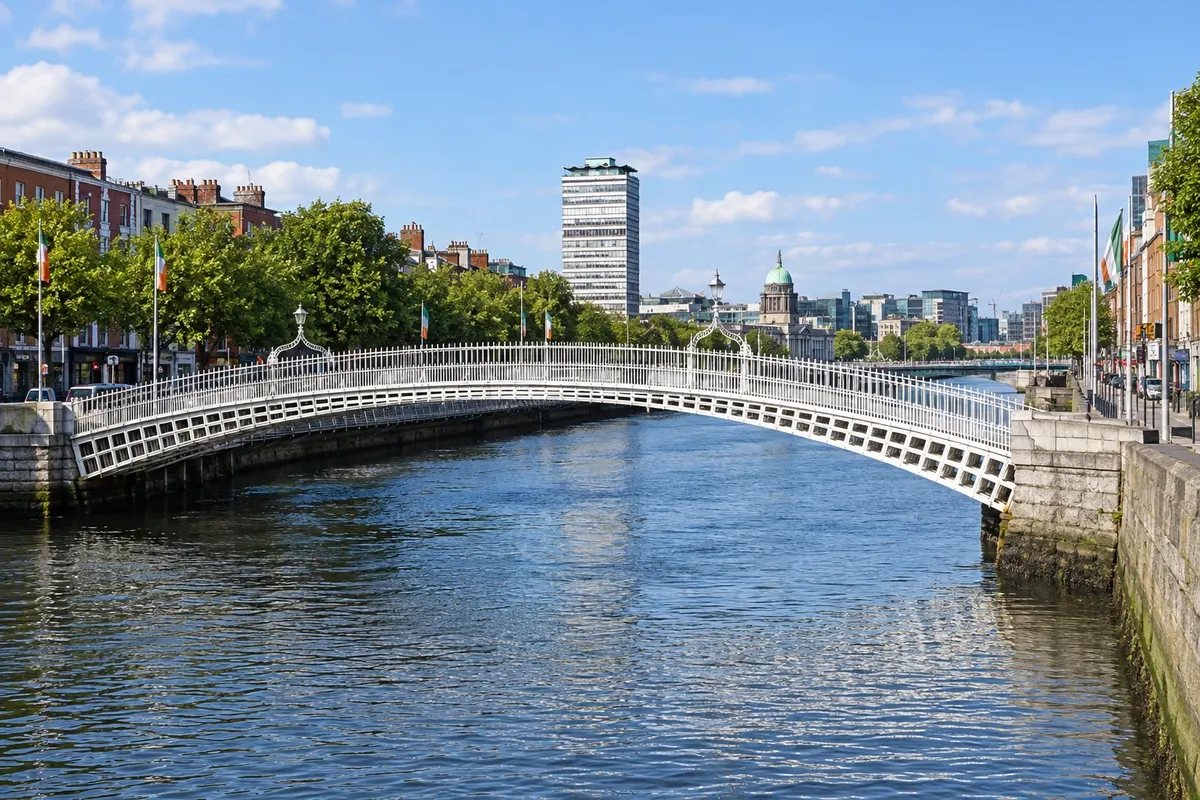
In the photo: Ha'penny Bridge, Dublin

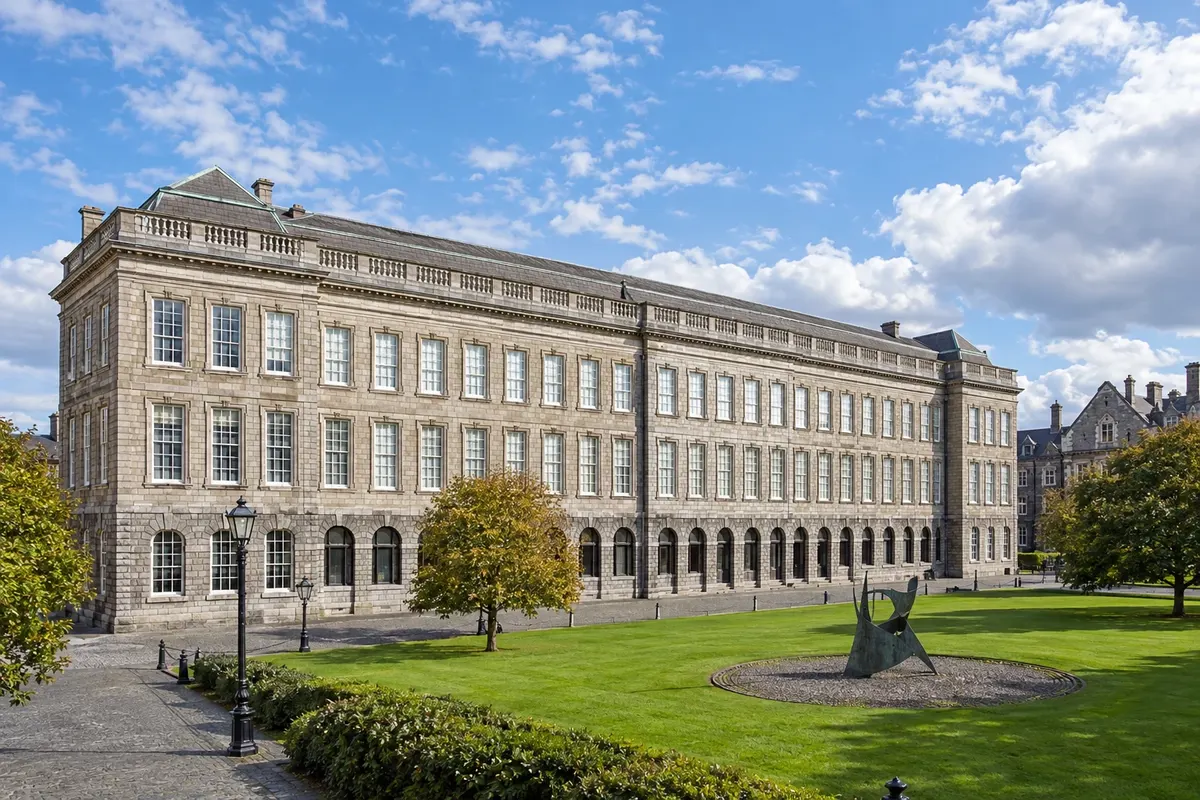
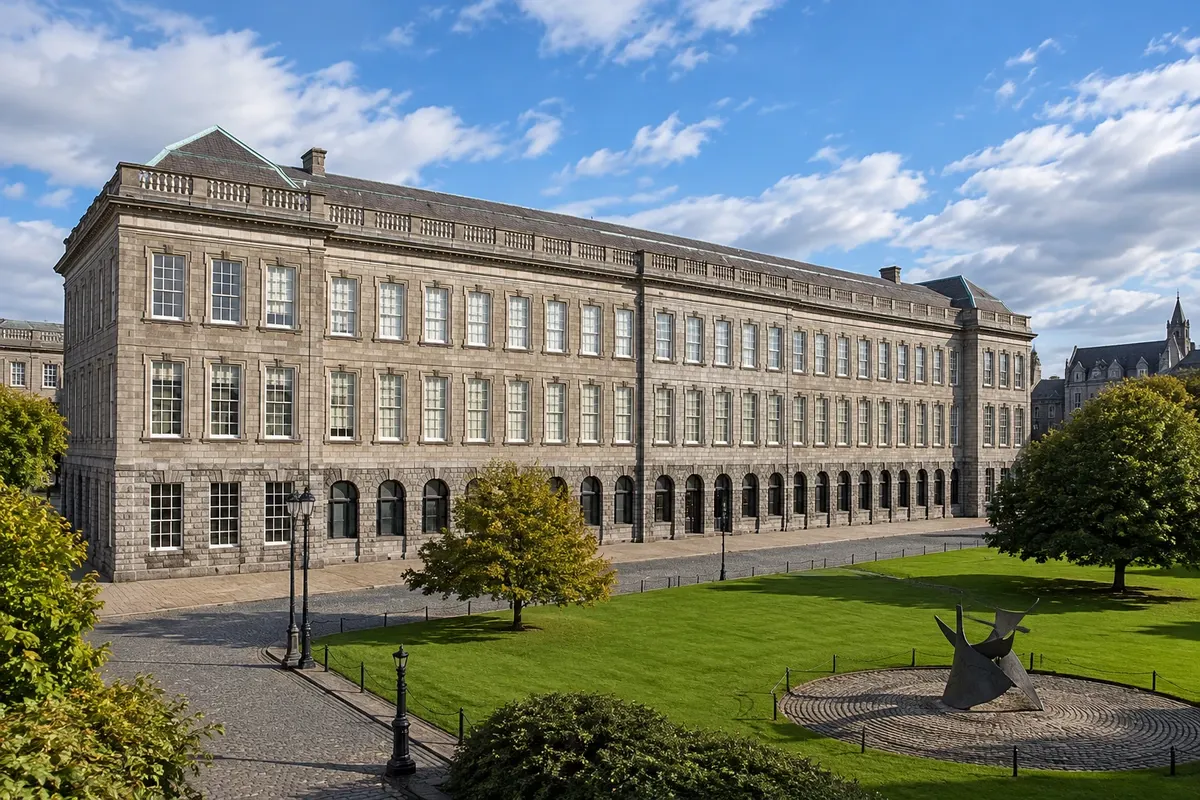
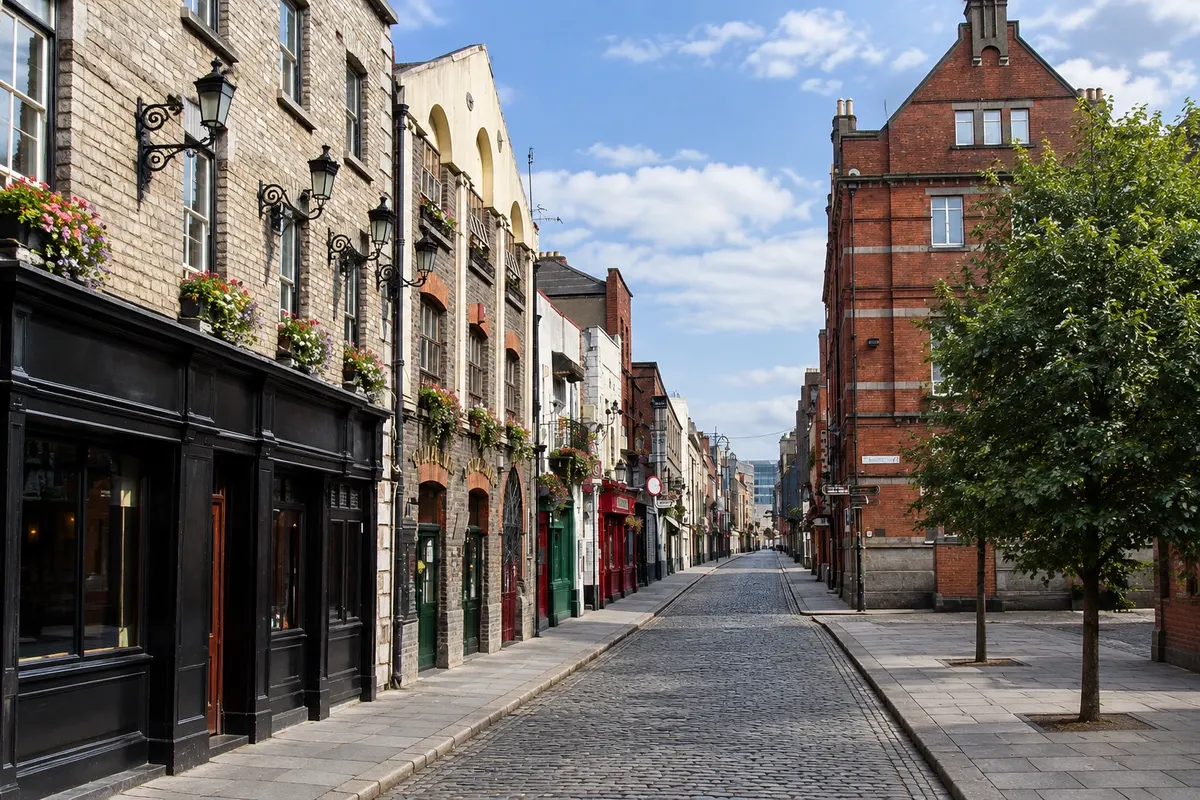
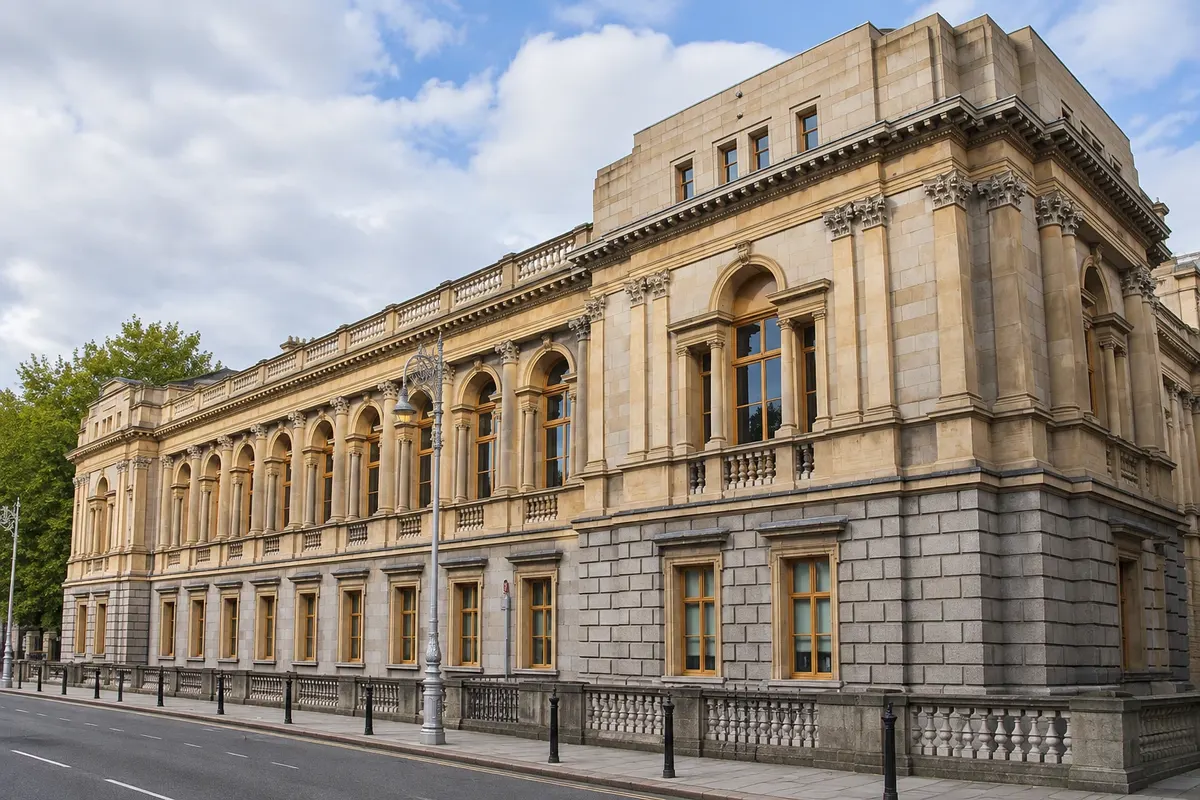
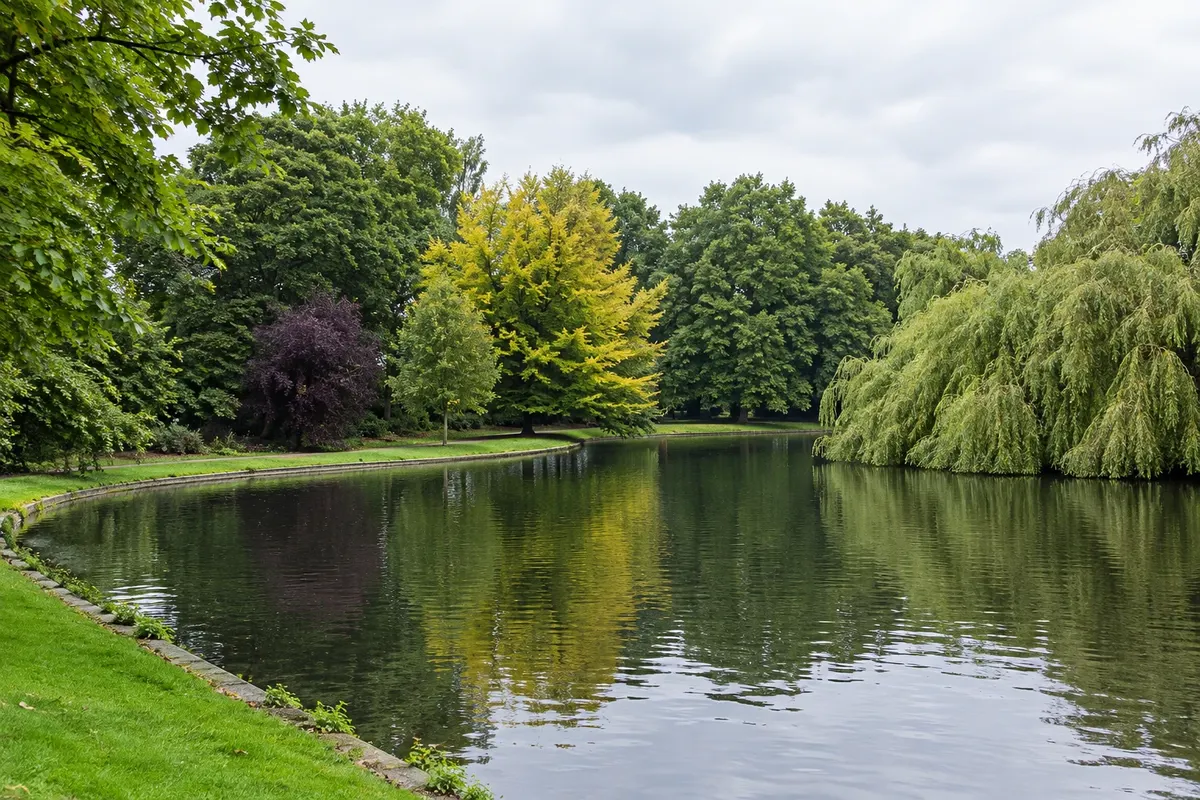
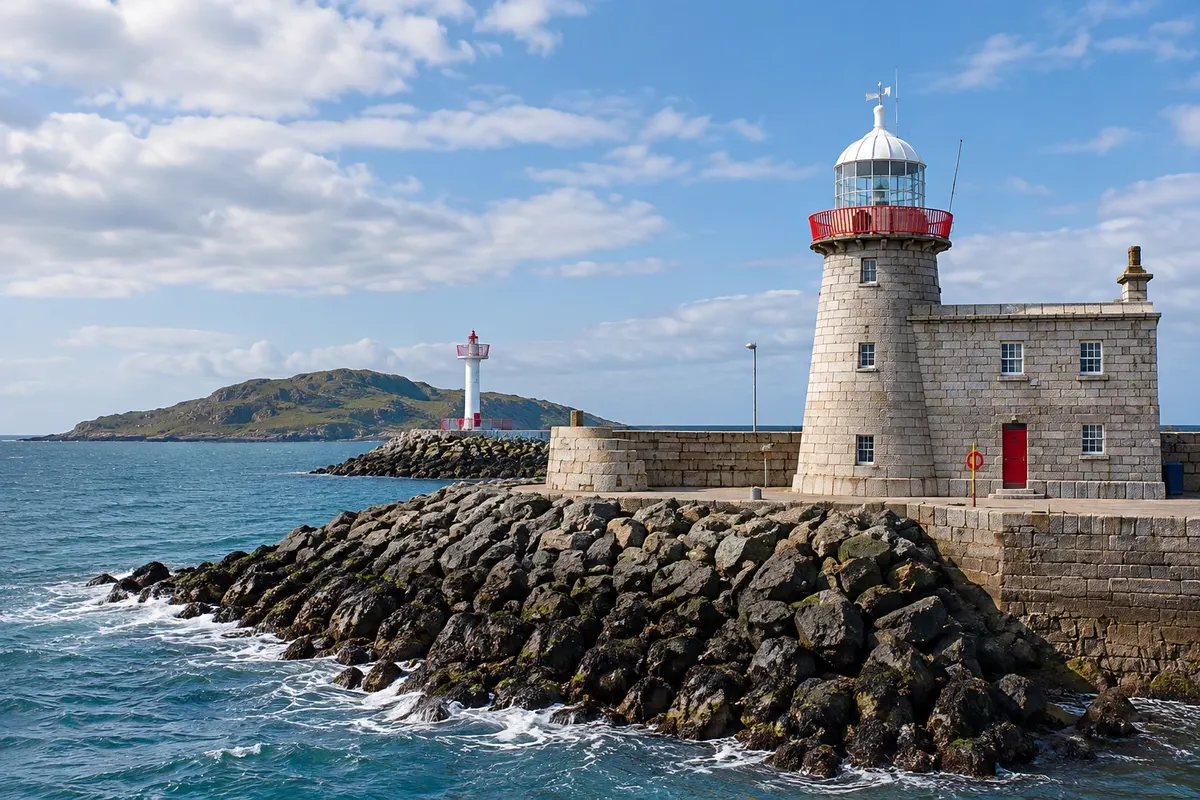
Illustrative images. The pictures in this guide are illustrations based on the real place, not photographs, and may differ from it.

Get it on Google Play Send your photos

Get to know the place

A region to enjoy
at your own pace.

Dublin lies on Ireland's east coast, at the mouth of the River Liffey, which runs west to east through the city and divides it into Northside and Southside. Founded by the Vikings in the 9th century and taken by the Normans in the 12th, it was for 700 years the centre of English rule on the island, until independence in 1922. Today it is the capital of the Republic of Ireland and the city where most international flights to the country arrive.

The historic centre is best explored on foot. South of the river are Trinity College, with the Book of Kells and the Long Room of the old library, Dublin Castle, the cathedrals of Christ Church and São Patrício, the Temple Bar neighbourhood, the pedestrian Grafton Street and St Stephen's Green, a park surrounded by Georgian houses with colourful doors. On Kildare Street, the National Museum holds Bronze Age gold and the bodies preserved in the peat bogs. To the west, the Guinness Storehouse occupies an old brewery warehouse at St James's Gate, and Kilmainham Gaol tells the story of the struggle for independence.

Along the Liffey on the north side, the old dock warehouses have become offices and museums, such as EPIC, about Irish emigration. The suburban DART train follows the bay and takes you to the fishing port of Howth in half an hour, with cliff-top walking trails. To the south, about 50 km away, the Glendalough valley in the Wicklow Mountains preserves a 6th-century monastery between two lakes and is the most popular day trip from the capital.

Rain can fall in any month, so a lightweight raincoat is part of the luggage year-round.

This destination brings together 1 city: Dublin.

Share: WhatsApp
Traveler, share your experiences through photos Up to 5 photos of each place you visited.

One destination, many paths

The cities on this trip

Start with one city or combine several in your itinerary.

Where Dublin is
Dublin

Contornos: © Tailte Éireann, National Statutory Boundaries 2026, CC BY 4.0. Adaptação do Cidade Turismo.

How to get there: Dublin

✈ Aeroporto de Dublin (Dublin Airport) (DUB), in Collinstown · 10 km to Dublin

Check before booking. Dublin Airport is about 10 km from the centre, with express buses taking 30 to 45 minutes. Within Ireland, trains depart from Heuston station (for Cork, Galway and Killarney) and Connolly, and long-distance buses operate from Busáras.

The local experience

Things to do in Dublin

Trinity College Dublin – Book of Kells e Old Library
Dublin · Dublin · Museum

Trinity College Dublin – Book of Kells e Old Library

The oldest university in Ireland, founded in 1592, houses the Book of Kells, an illuminated manuscript of the Gospels from around the year 800, and the Long Room, the 65-metre hall of the Old Library.

Temple Bar
Dublin · Dublin · Neighborhood

Temple Bar

The neighbourhood of cobbled streets between Dame Street and the River Liffey, with live-music pubs, galleries, the Saturday food market and the Ha'penny Bridge, the iron bridge from 1816.

St Patrick's Cathedral
Dublin · Dublin · Church

St Patrick's Cathedral

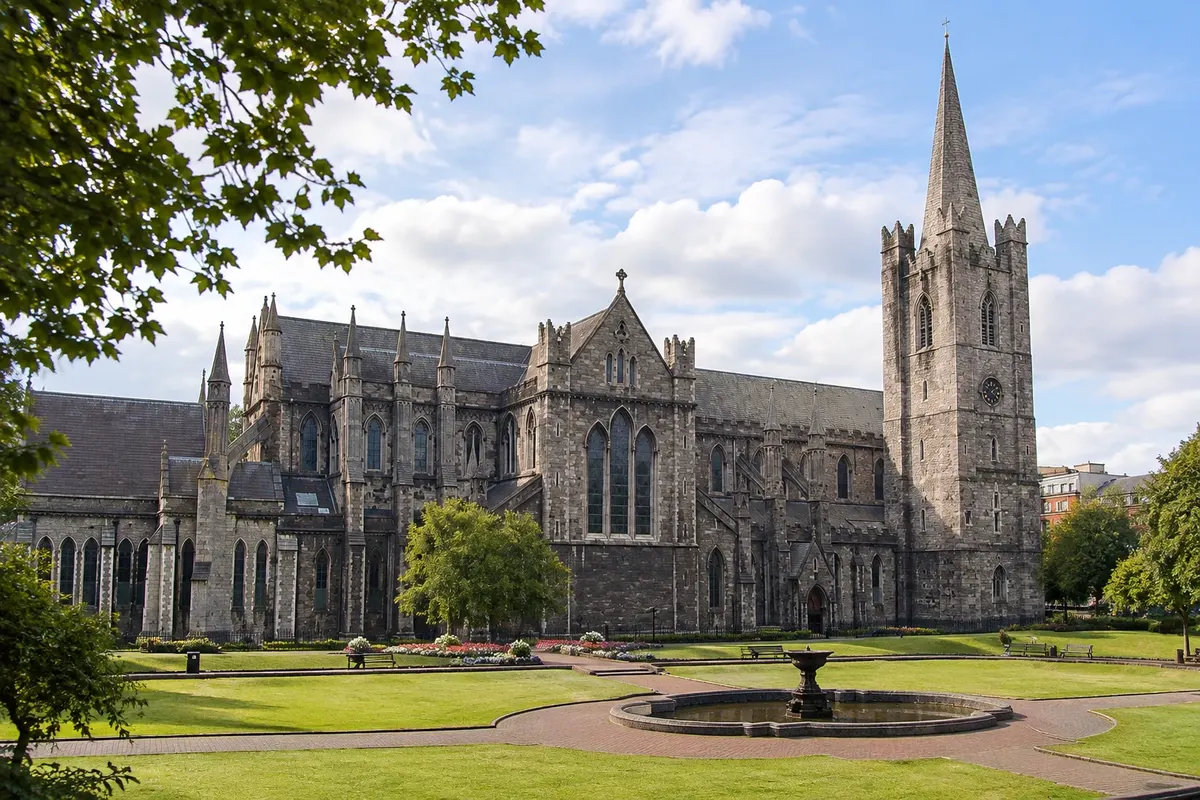
The largest church in Ireland, founded in 1191 beside the well where, by tradition, St Patrick baptized. Jonathan Swift, author of Gulliver's Travels, served as dean here and is buried in the nave.

Christ Church Cathedral
Dublin · Dublin · Church

Christ Church Cathedral

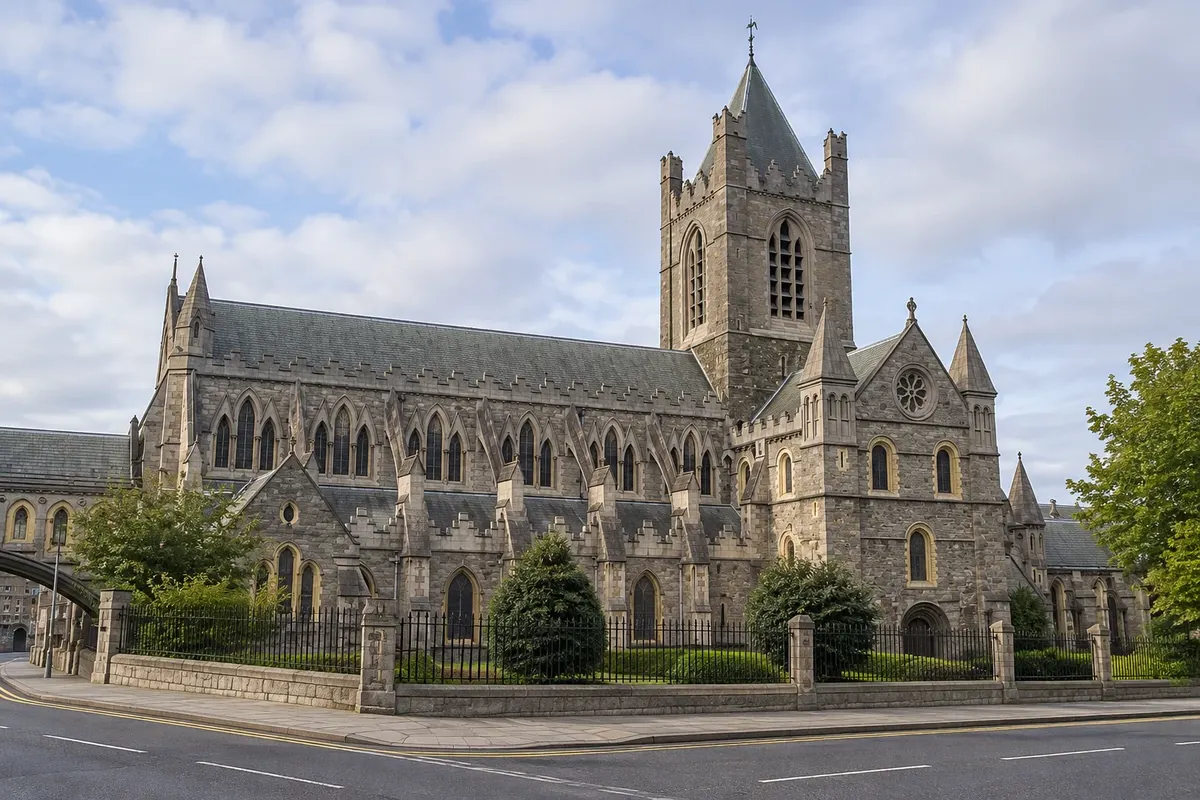
Dublin's oldest cathedral, founded around 1030 by the Viking king Sitric and rebuilt by the Normans, with one of the largest medieval crypts in Ireland and Great Britain.

See 9 more places in Dublin
Dublin Castle
Dublin · Dublin · Castle

Dublin Castle

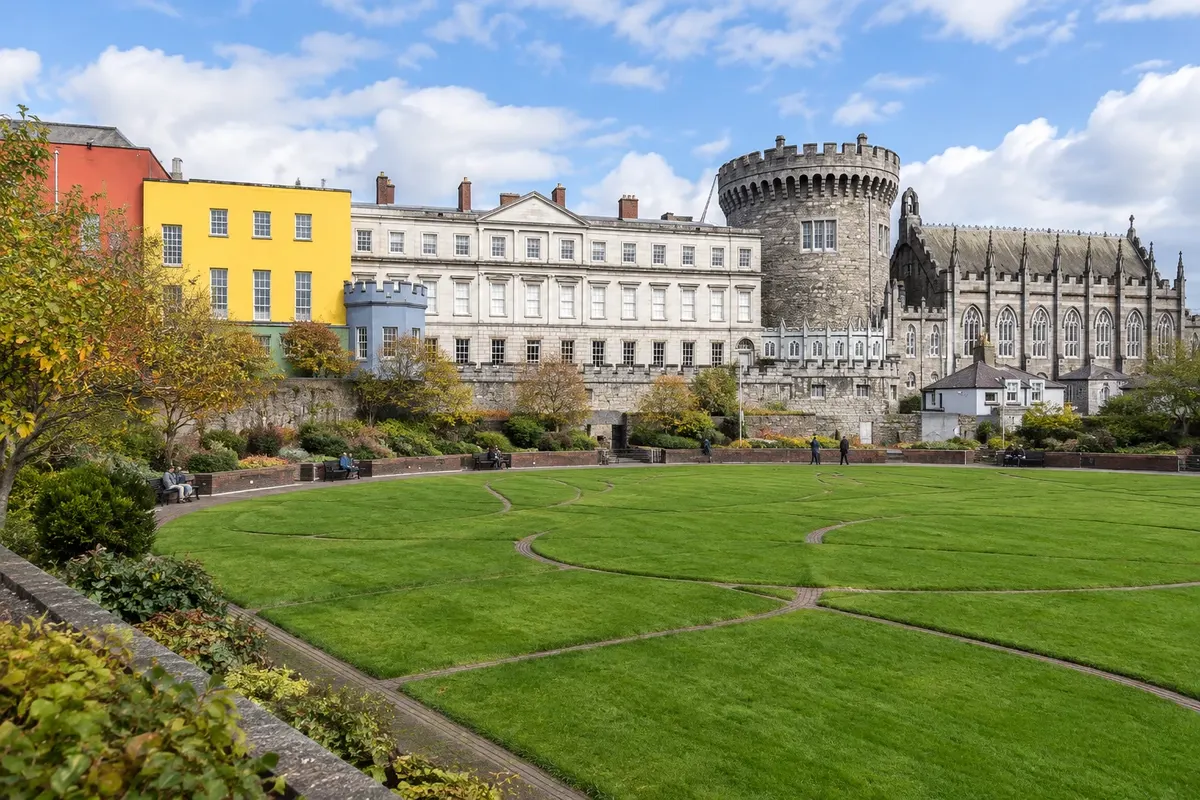
The castle, built from 1204 by order of King John of England, was the headquarters of British government in Ireland until 1922. Today it houses the Apartamentos de Estado, the Capela Real and the Viking excavations below ground.

Dublin · Dublin · Museum

Chester Beatty

Museum on the grounds of the Castelo de Dublin with the collection of manuscripts, rare books and artworks assembled by Alfred Chester Beatty: biblical papyri, illuminated Qur'ans, Japanese prints and Chinese scrolls.

Kilmainham Gaol
Dublin · Dublin · Museum

Kilmainham Gaol

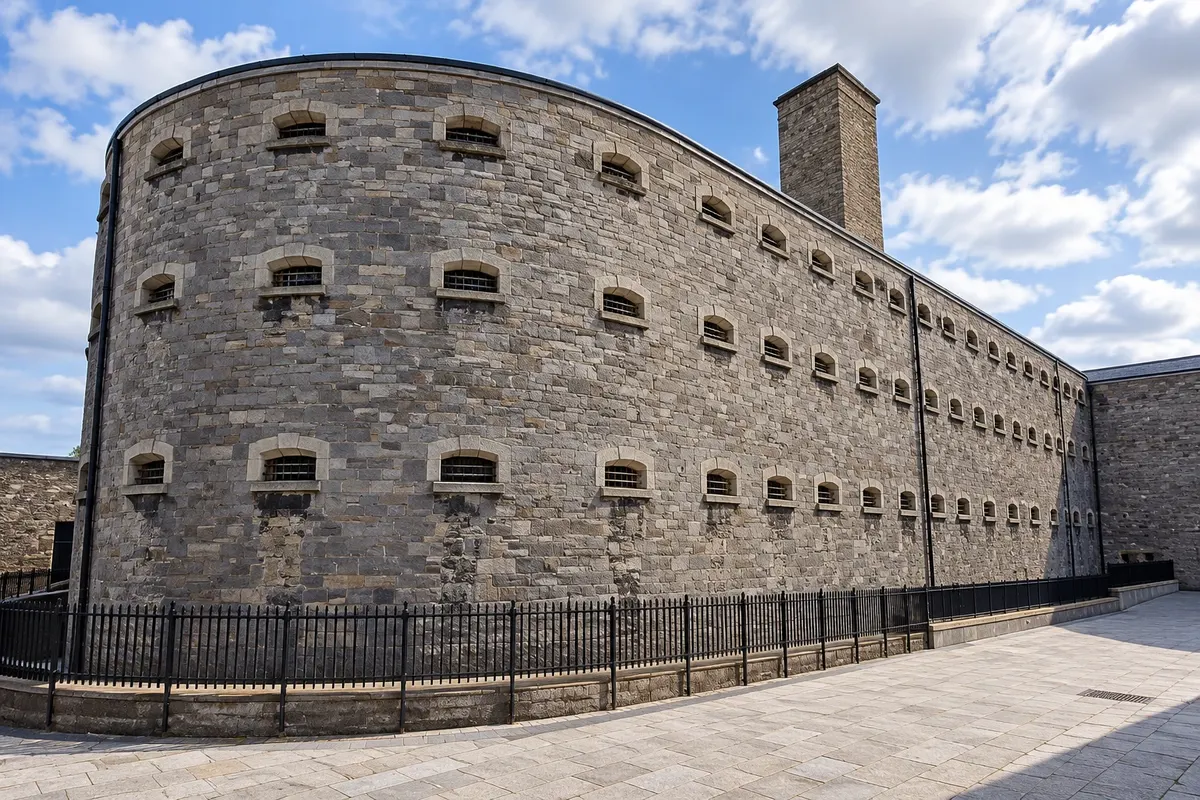
The 1796 prison where leaders of the Irish uprisings were held and where leaders of the Easter Rising of 1916 were executed. Visit only with a guide and a pre-booked time.

Dublin · Dublin · Museum

Guinness Storehouse

Former fermentation warehouse of the St James's Gate brewery, converted into seven floors of exhibition about Guinness, with the glass-enclosed Gravity Bar at the top and views over all of Dublin.

Dublin · Dublin · Museum

EPIC The Irish Emigration Museum

Interactive museum in the vaults of an 1820 warehouse on the Liffey docks, about the millions of Irish who left the country and their influence on the world.

National Museum of Ireland – Archaeology
Dublin · Dublin · Museum

National Museum of Ireland – Archaeology

The National Museum of Archaeology, in an 1890 building on Kildare Street: Bronze Age gold, the Tara Brooch, the Ardagh Chalice, bodies preserved in bogs and Viking Ireland.

St Stephen's Green
Dublin · Dublin · Park

St Stephen's Green

The Victorian 9-hectare park at the end of Grafton Street, with a lake, bridges, flowerbeds and the Fusiliers' Arch, surrounded by Georgian houses.

Howth
Dublin · Dublin · Village

Howth

Fisherman village on a peninsula north of Dublin Bay, a half hour by DART train: harbor with seals, fishmongers, the pier lighthouse and the cliff-top trail.

Glendalough
Dublin · Dublin · Archaeological site

Glendalough

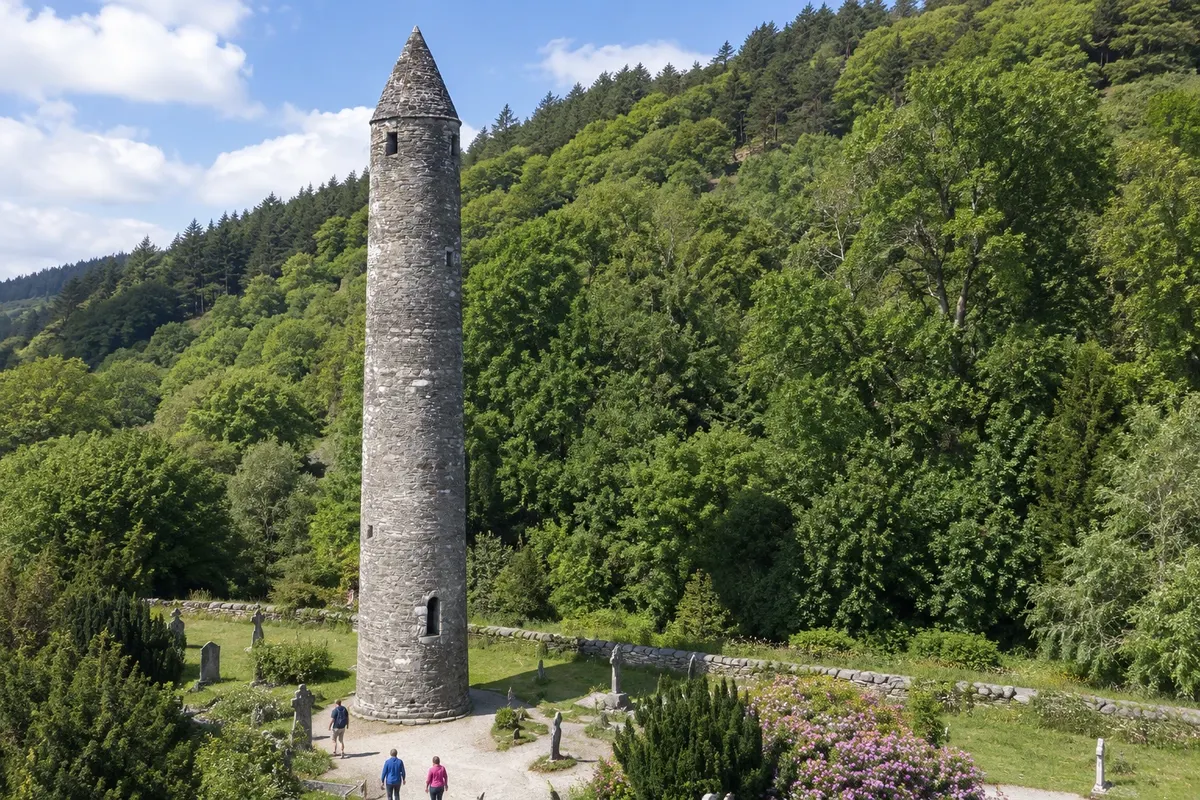
The monastery founded by Saint Kevin in the 6th century, located in a valley between two lakes in the Wicklow Mountains, with a 30‑metre round tower, stone churches and trails in the national park.

Before you go

Practical information

A little planning leaves more time to enjoy the journey.

When to go

From May to September the days are long, with daylight until after 21:00 in June and July, and temperatures typically between 15 and 20 °C. It is also the busiest season. April and October tend to be quieter. In winter, from November to February, it gets dark around 16:30 and the cold is damp, but museums and pubs operate as usual. Rain can fall at any time of year.

The seasons shown are the most usual ones; nature doesn't always follow the calendar.

How many days to stay

Three days allow you to see the historic centre, the main museums, Kilmainham and the Guinness Storehouse at a relaxed pace. With four days you can add Howth and still have a day for Glendalough. Those continuing west around Ireland might allocate two days to Dublin at the start and one night at the end, near the return flight date.

Which city to stay in

The Southside, between Trinity College, St Stephen's Green and Temple Bar, puts almost everything within walking distance and concentrates hotels and restaurants. Temple Bar is lively late into the night, which appeals to those who want to go out and bothers light sleepers. The Northside, near O'Connell Street and Busáras, has simpler options and is close to the buses. Ballsbridge and the Georgian streets south of St Stephen's Green are quieter, about a 15–20 minute walk to the centre.

Respect the place

Take your trash with you, follow the signs and support local businesses. In natural areas, follow the visiting guidelines.

Get your questions answered

Frequently asked questions about Dublin

How many days to stay in Dublin?

Three days for the centre, museums, Kilmainham and the Guinness Storehouse. With four or five days you can include Howth and Glendalough, both doable as day trips.

Do I need a car in Dublin?

No. The centre is walkable, and buses, the Luas tram and the DART train take you to neighbourhoods, to Howth and to the airport. A car only helps later if you head into the countryside. In Ireland you drive on the left, with the steering wheel on the right.

What's the best time to go to Dublin?

From May to September, with long days and mild temperatures, or April and October, which are quieter. It can rain any month, and in winter it gets dark early, around 16:30.

Can you do day trips from Dublin?

Yes. Howth is half an hour away on the DART train, and Glendalough is about an hour by car or by tour bus. Belfast and the Calçada dos Gigantes are on the other side of the border, in Irlanda do Norte, and also feature as day trips offered by agencies.

What language is spoken in Dublin?

English in everyday use. Irish is the first official language and appears on all signs, on buses and on documents alongside English.

Rotas entre países

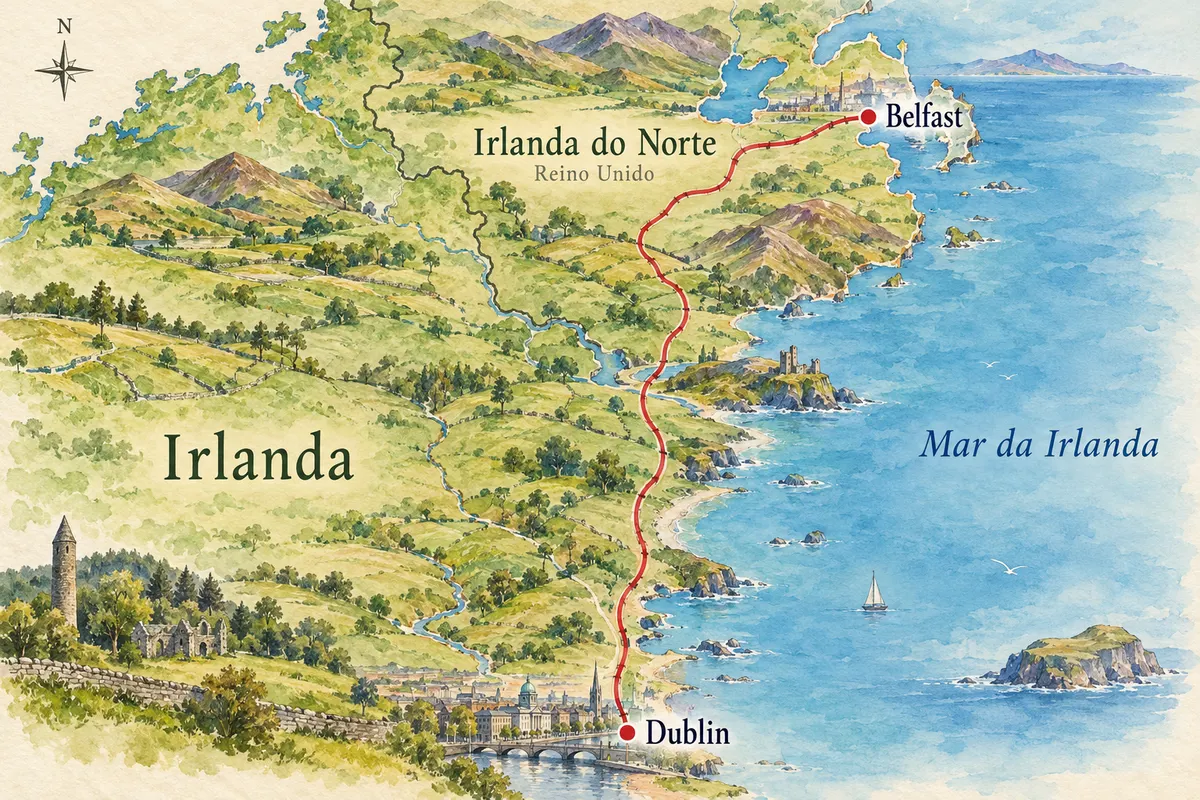
Dublin is on the Dublin–Belfast by train

Two capitals on the island of Ireland in about two hours by train, along the coast of the Irish Sea, with no border checks on the way.

Illustrative map, not to scale. Tap a city to open its page.
Illustrated map of Dublin–Belfast by train
Explore the Dublin–Belfast by train
Explore other destinations Search by state and city
Back