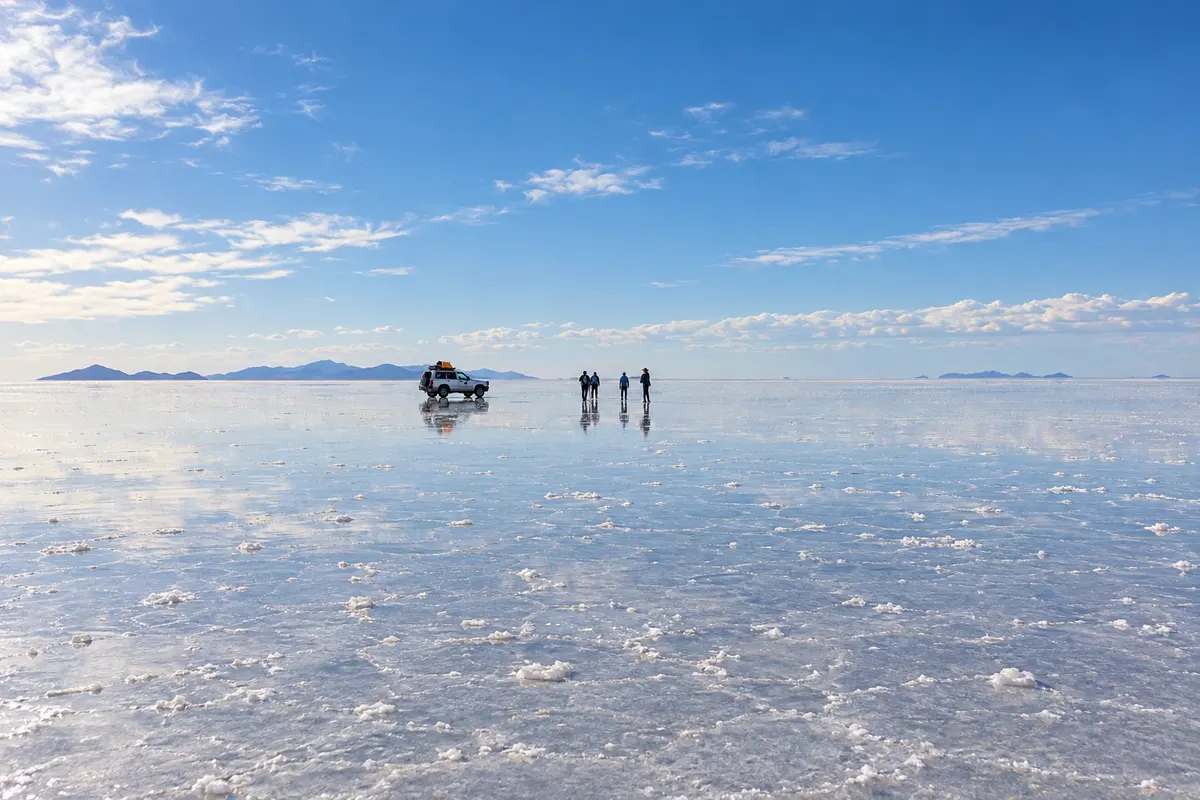
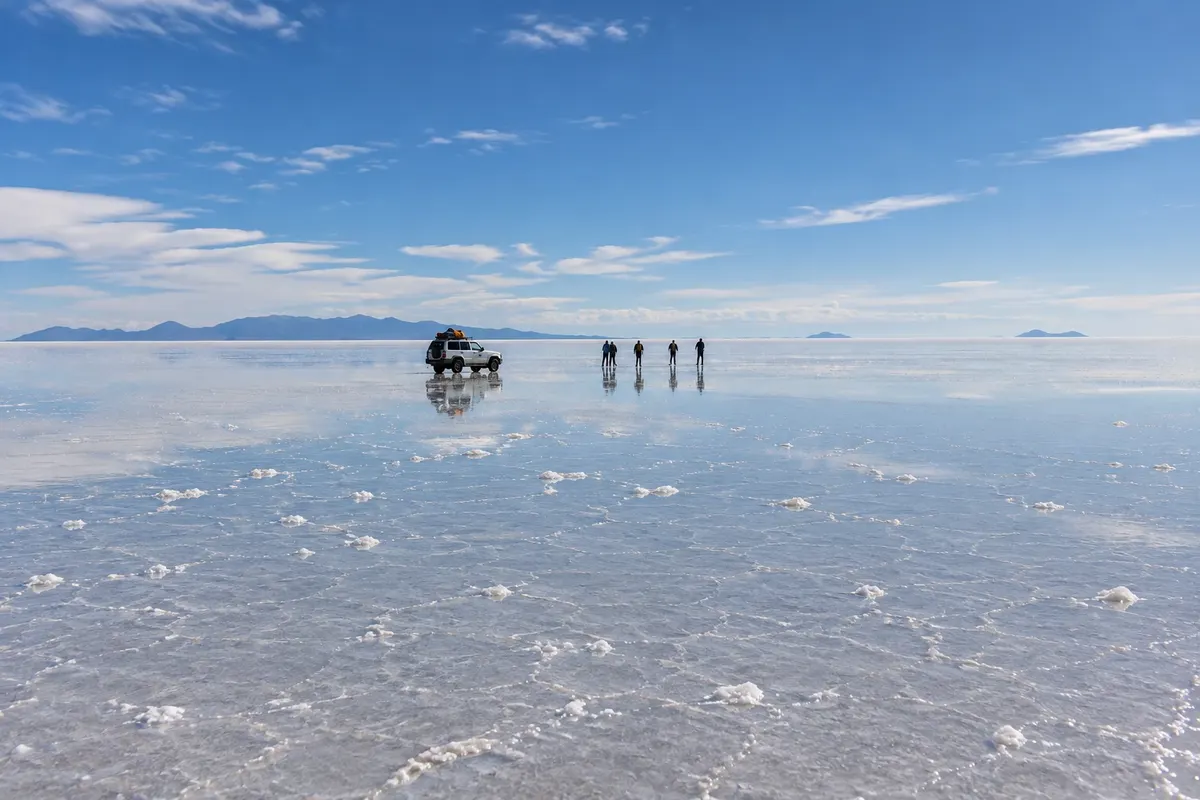
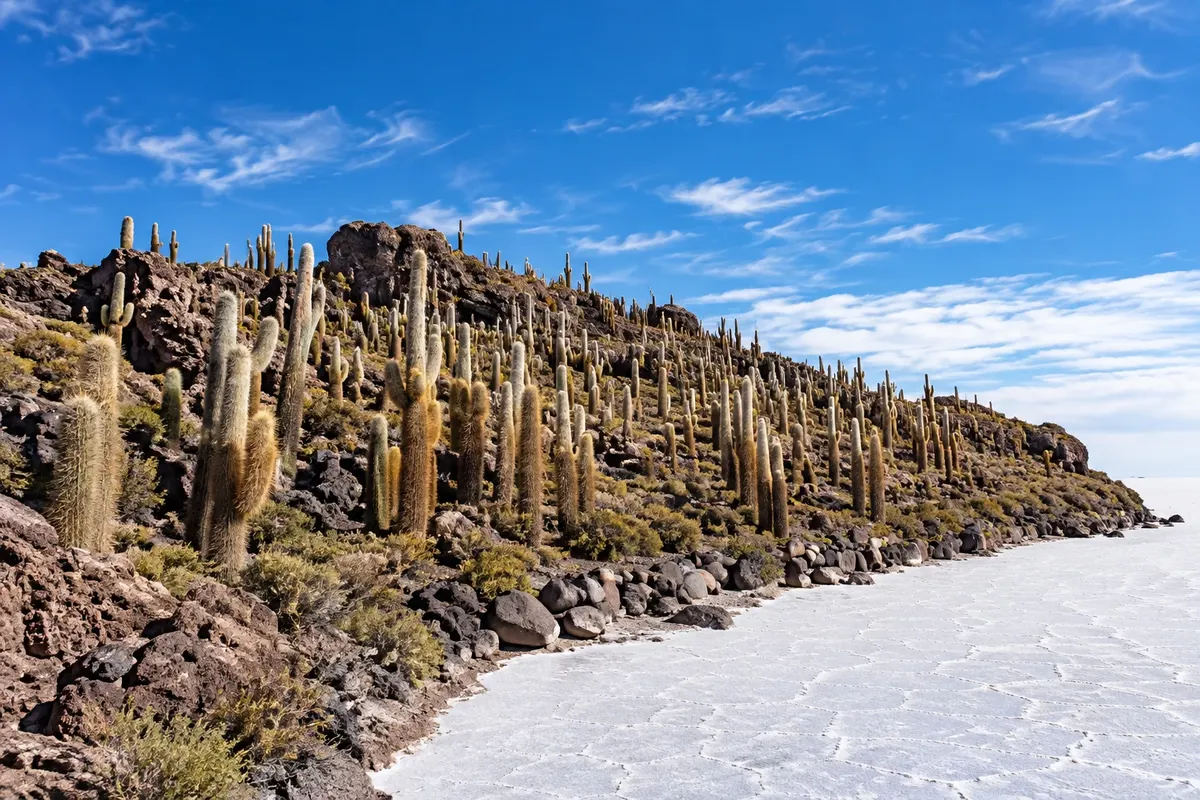
The Salar de Uyuni covers more than 10,000 km² in southwest Bolivia, in the department of Potosí, at about 3,660 meters of altitude. It is the largest salt desert in the world, the remnant of ancient lakes that dried up thousands of years ago and left a salt crust several meters thick, almost perfectly flat. Beneath it lies a brine rich in lithium, one of the largest reserves of the metal on the planet.
For most of the year, the salar is a white, dry plain, cut by salt hexagons, where the lack of reference points creates the perspective photos visitors take. In the rainy season, usually from January to March, a thin sheet of water often covers parts of the salar and reflects the sky, forming the water mirror. In the middle of the salt, Isla Incahuasi is a rocky hill covered with giant cacti.
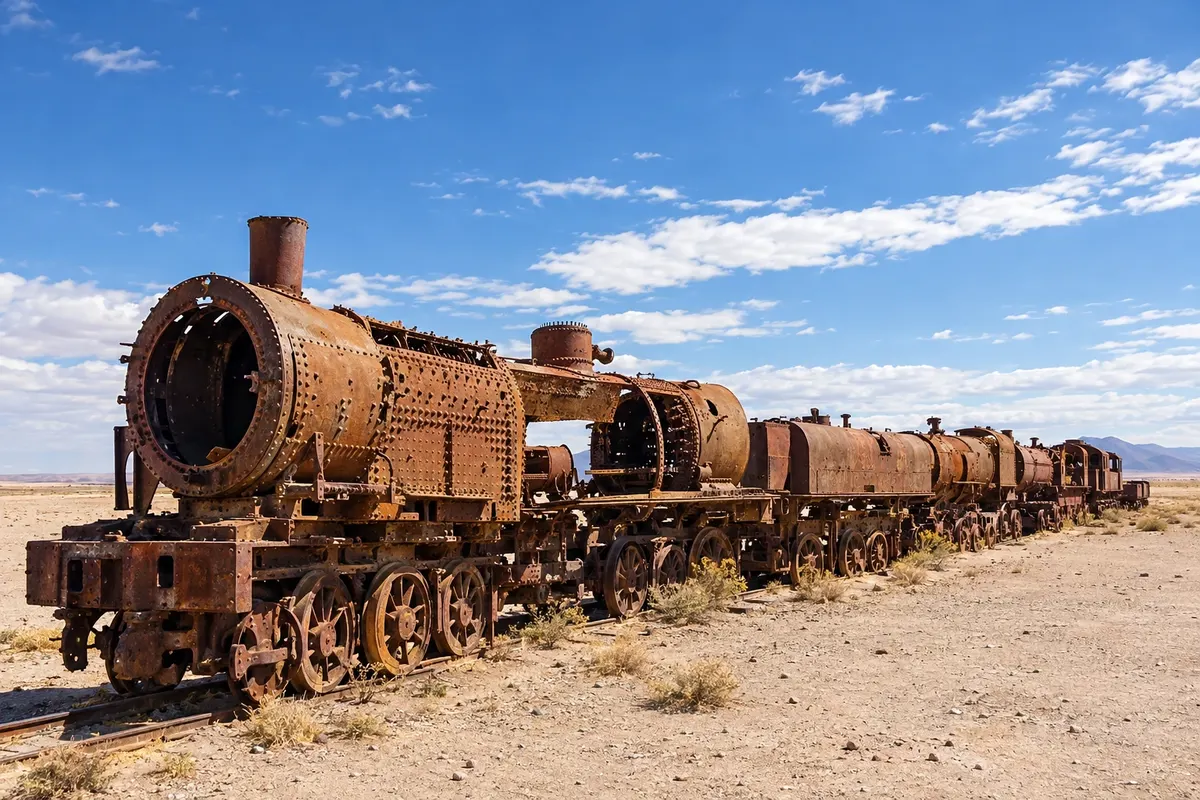
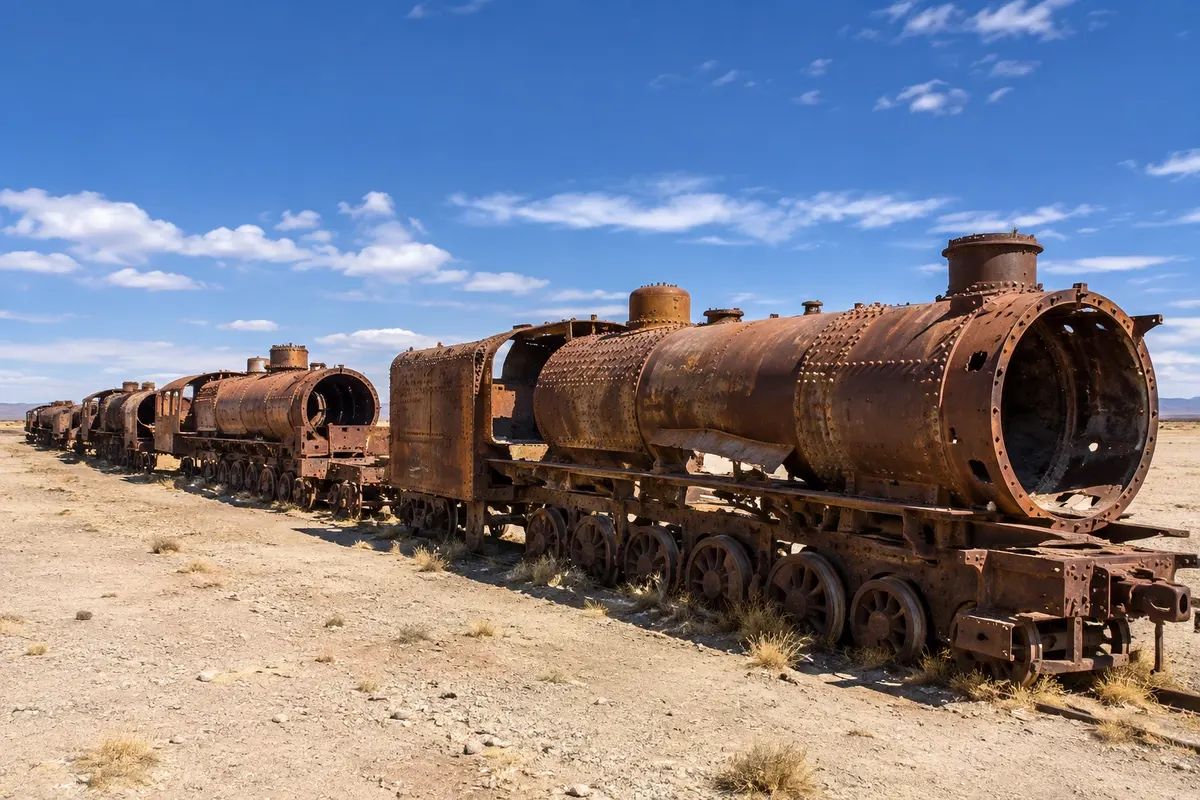
The town of Uyuni, at about 3,700 meters, was founded at the end of the 19th century as a junction of the railway that carried ore to the Pacific. Today it is the base for excursions, which depart from local agencies in 4x4 vehicles. Nearby are the Train Cemetery, with abandoned locomotives in the desert, and Colchani, the village where salt is extracted and processed.
Besides the one-day tour, agencies run three- or four-day itineraries across the southern Altiplano, with the Colorada and Verde lagoons, geysers and the Lípez deserts, which end in Uyuni or at the border with Chile.
This destination brings together 1 city: Uyuni.


 Brazil
 Argentina
 Chile
Chile Colombia
 Ecuador
 Guyana
 French Guiana
 Falkland Islands (Malvinas)
 Paraguay
 Peru
Peru Suriname
 Uruguay
 Venezuela
 Germany
 Belgium
 Spain
Spain France
 Greece
 the Netherlands
 Ireland
 Italy
Italy Luxembourg
 Portugal
 the United Kingdom
 Switzerland