Rijeka

Primorje-Gorski Kotar Capital

Rijeka

In the destination Kvarner.

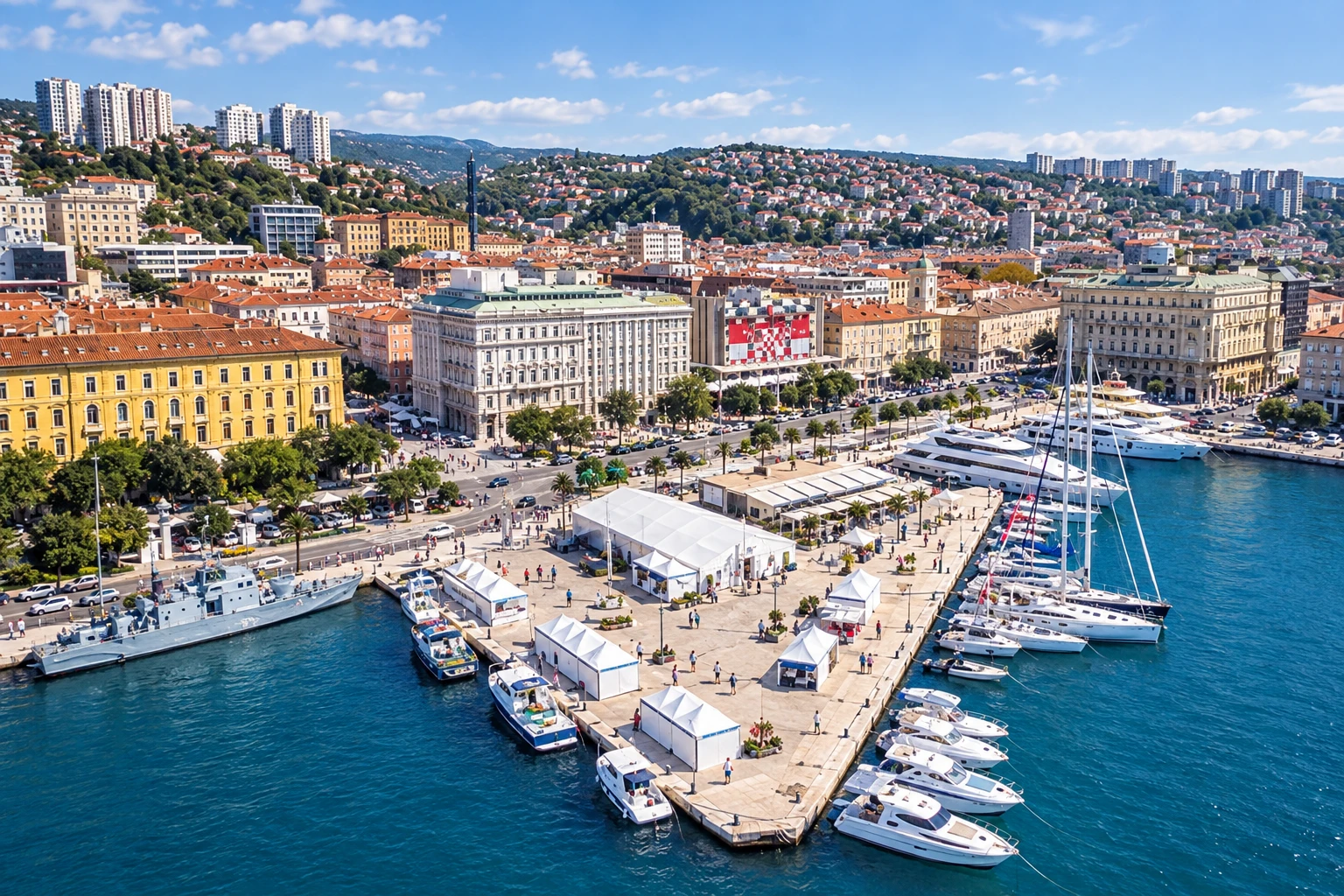
In the photo: Riva, Rijeka

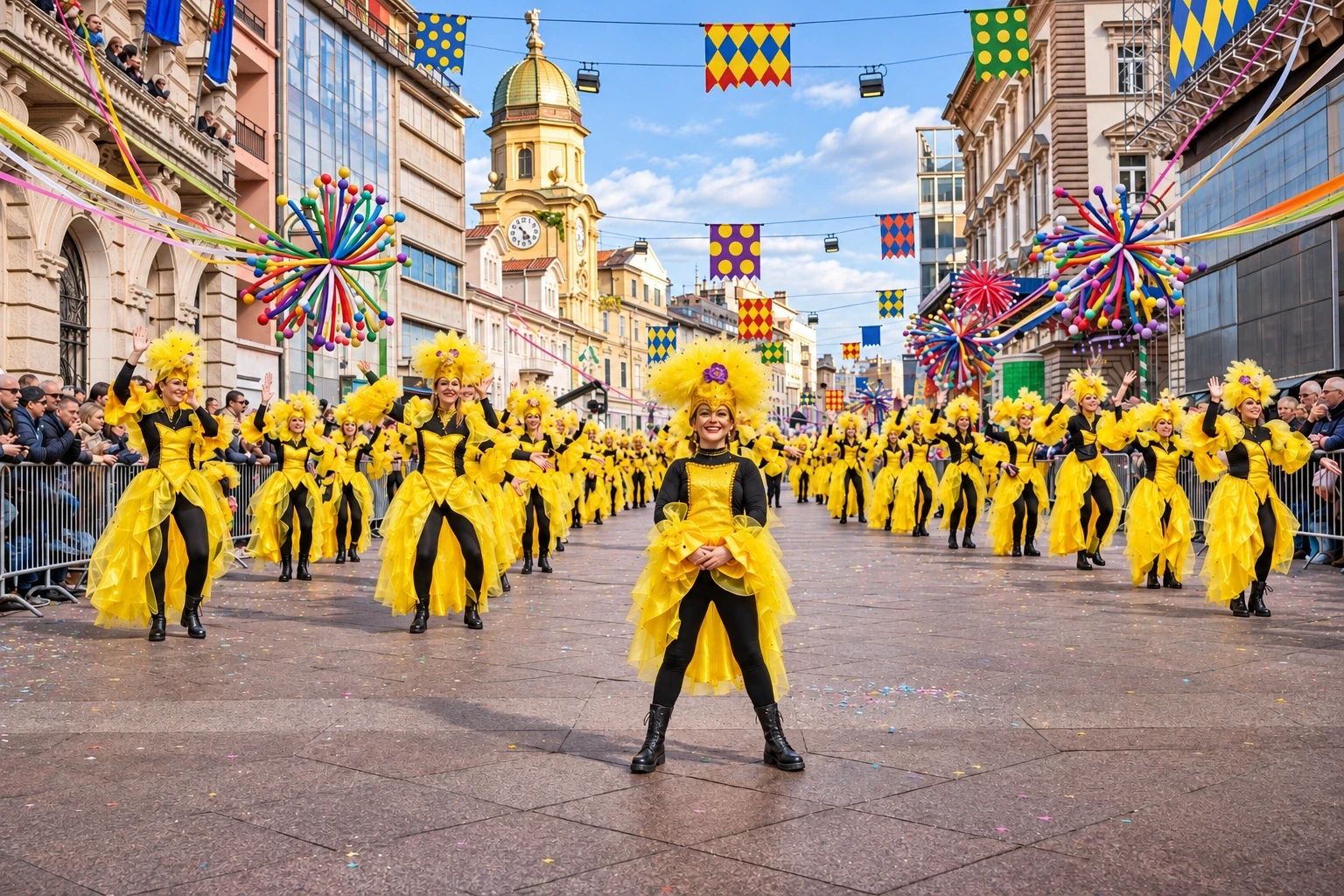
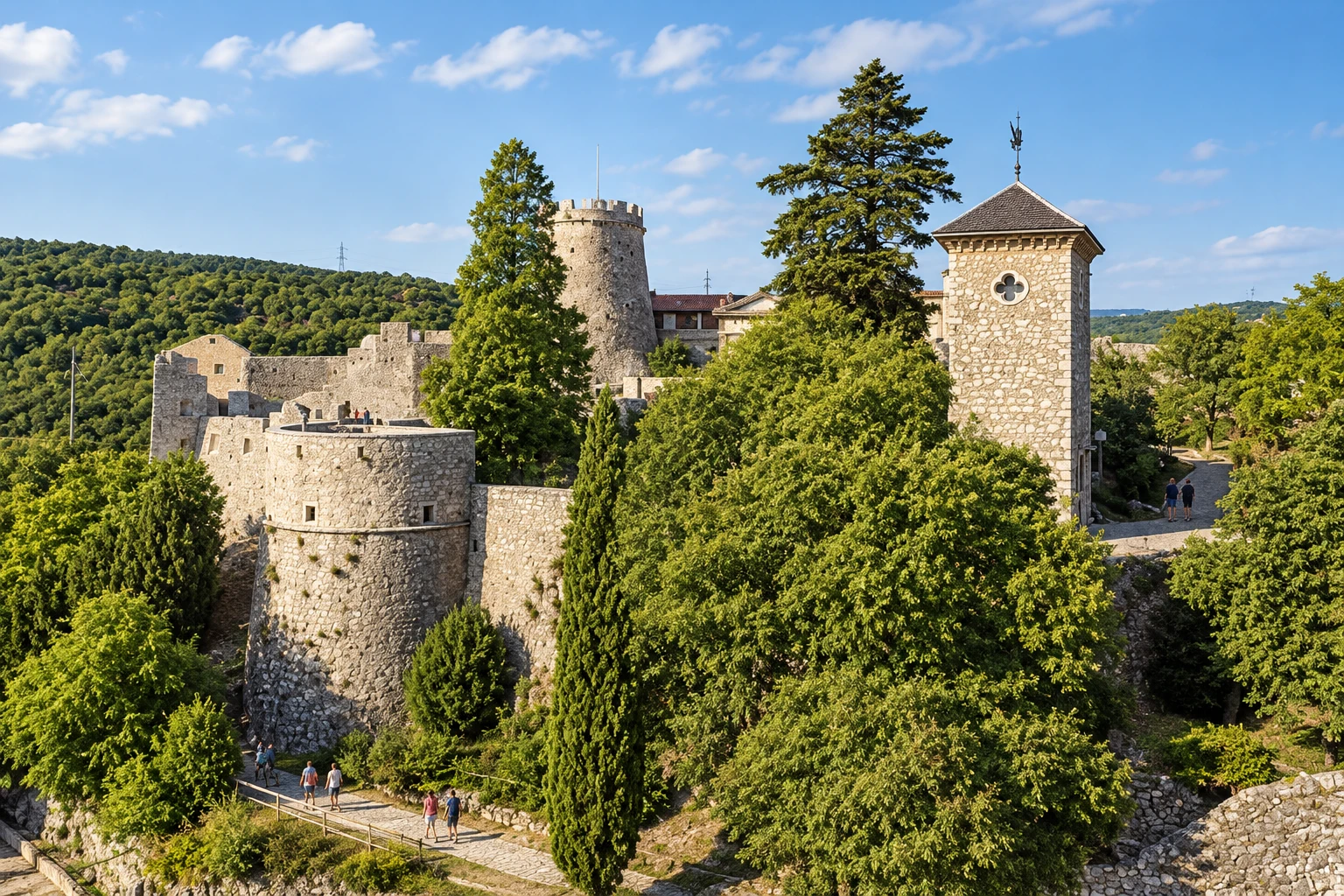
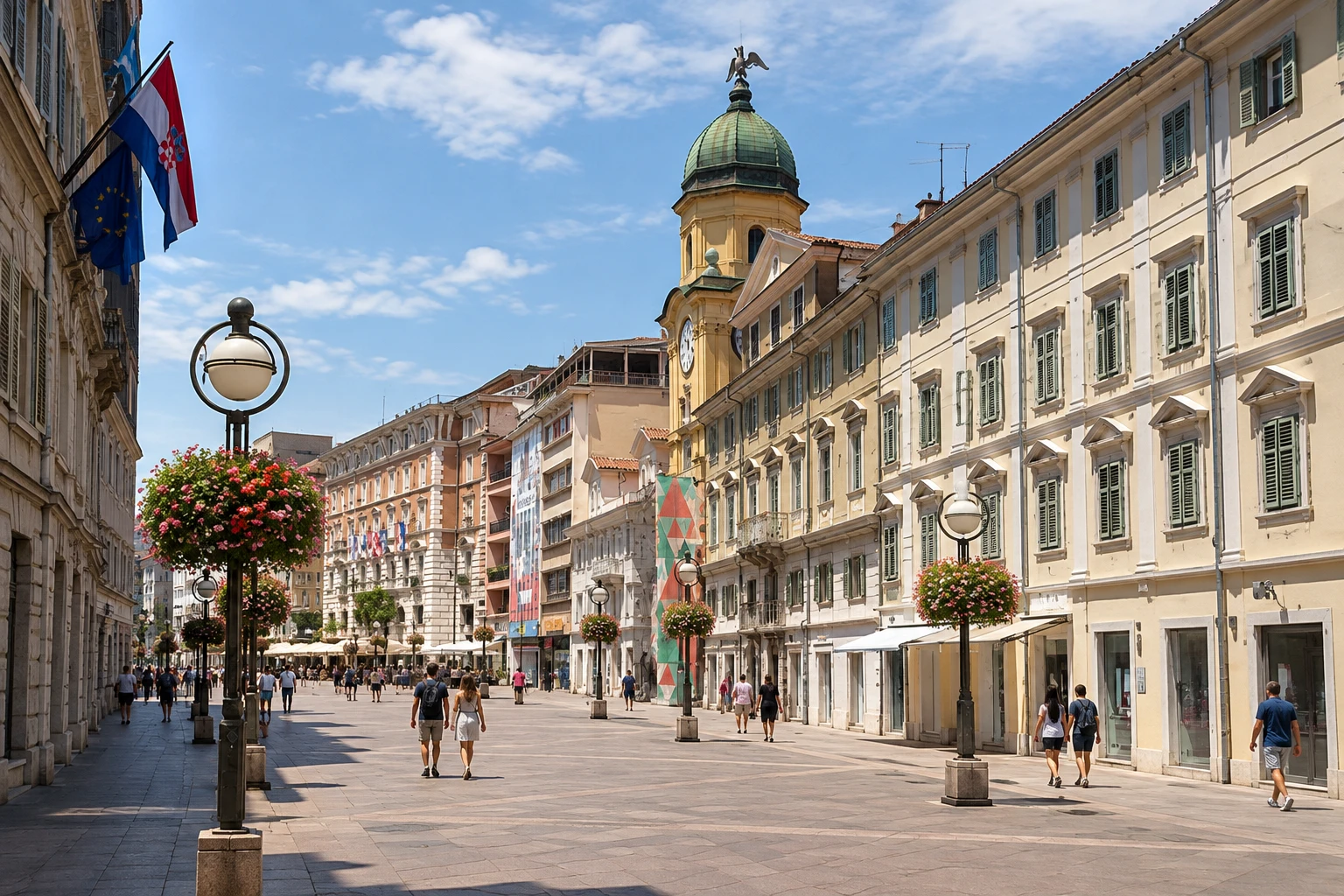
Illustrative images. The pictures in this guide are illustrations based on the real place, not photographs, and may differ from it.

Get it on Google Play

The city

What to expect from Rijeka.

Rijeka is the seat of Primorje-Gorski Kotar and a gateway to the Bay of Kvarner. The pedestrian center is organized around the Korzo, while Trsat Castle sits on a rise above the city. Both ensembles show the relationship between the port, routes inland and the coastal relief.

Rijeka is Croatia's third-largest city, with about 108,000 residents, and its largest port. It stands at the head of Kvarner Bay, where the Rječina River meets the Adriatic. Its name simply means “river,” as does Fiume, the Italian name used for centuries. Unlike the nearby Riviera resorts, Rijeka is a working city of docks, cranes, and warehouses, with a center full of Austro-Hungarian palaces, markets, theaters, and museums.

Its history helps explain what you see. The old town stands on the site of Tarsatica, a Roman military base whose surviving remains include the arch known as Stara vrata and the walls of the Principia. In the Middle Ages, the town grew within its walls under its patron saint, St. Vitus. Under direct Hungarian administration from 1868, Rijeka became Hungary's great seaport. The breakwater, theater, market, train station, and Governor's Palace all date from this era. In the 20th century, Rijeka experienced D'Annunzio's occupation, a brief period as a Free State, and Italian rule, while Sušak grew as a separate town across the Rječina. The two merged after World War II. The torpedo was also developed here by Robert Whitehead from an idea by Giovanni Luppis, in the world's first factory of its kind. Rijeka was a European Capital of Culture in 2020.

There are three main areas to explore. The lower city is flat and walkable. Visit the pedestrian Korzo and City Tower, the old town lanes with St. Vitus Cathedral and the leaning tower, the central market, the theater, and Mrtvi kanal, a former riverbed now used by small boats. Offshore, the Molo Longo breakwater stretches 1,707 meters out to sea. The second area is hilltop Trsat. Its castle stands 138 meters above sea level, and its Marian shrine has drawn pilgrims for seven centuries. Take a bus or climb the more than 500 Petar Kružić steps. The third area is the waterfront, with pebble and rock beaches in Pećine to the east and Kantrida to the west, minutes from the center.

The climate is mild and rainy. Average temperatures range from about 6°C in January to nearly 24°C in July and August. Rain falls every month, especially between September and December. July is the driest and sunniest month. The bora, a cold, dry wind that gusts down from the mountains, is common in winter. Snow is rare in town.

One of the year's highlights falls outside summer. Rijeka Carnival starts on January 17 and ends with the International Carnival Parade through the center on the Sunday before Lent. In summer, Trsat Castle hosts outdoor concerts and performances. The Feast of the Assumption on August 15 draws pilgrims to the shrine. At year's end, Advent celebrations fill the central squares and castle.

Fish and seafood from Kvarner are staples on local tables. Visit the central market's fish pavilion any morning to see the catch. The traditional souvenir is the morčić, a piece of jewelry depicting a Moor in a white turban, considered a good-luck charm and an official Carnival symbol.

Opatija on the same bay and the town of Krk on the island linked to the mainland by a bridge are other towns in the Kvarner destination, each with its own page. Both are accessible from Rijeka by bus or car.

Share: WhatsApp

Where to stay

30 places to stay in Rijeka.

Where to eat

30 places to eat in Rijeka.

Map of Rijeka

The city's hotels and restaurants on the map.

Festivals and events

Festivals Rijeka

Dates change every year: check this year's date before you travel.

Festival calendar in Croatia

The local experience

Things to do in Rijeka

Rijeka · Croatia · Castle

Trsat Castle

Trsatska gradina occupies a rise above Rijeka, with views over the city and the Bay of Kvarner. The fortification helps to recognize the relationship between the Rječina river valley, inland routes and the port. The visit combines the castle's structures with observation of the urban landscape.

Explore Trsat Castle

Rijeka · Croatia · Urban ensemble

Korzo

The Korzo is the pedestrian spine of Rijeka's center. The street follows the city near the port, with historic facades, cafés and passages into the neighboring blocks. The interest of the walk lies in the urban ensemble and the relationship between daily circulation and architecture.

Explore Korzo

To choose before you go

Tours in Rijeka

Where each tour starts, how long it takes, how it is done, what is included and the price range.

The Korzo, the City Tower, and Roman Rijeka

From The Korzo, in downtown Rijeka On foot About 2 hours Morning Easy

The Korzo is Rijeka's main street, a pedestrian promenade lined with facades from different periods, sidewalk cafés, and shops. Locals come and go in every season. It's the city's meeting place and a good starting point. Halfway along is the City Tower, a symbol of Rijeka. It was once the entrance to the walled city, built in the Middle Ages, probably on the foundations of a gate from Late Antiquity. Its lower section retains a Baroque portal with the imperial coat of arms and reliefs of Emperors Leopold and Charles VI. Beneath the clock, in place since the 17th century, is the city coat of arms granted in 1659. A double-headed eagle, both heads facing the same way, holds an urn from which water flows endlessly. Pass under the tower into the old town. On the other side is Ivan Kobler Square, where people traded and made decisions about city affairs for centuries. A few steps uphill stands Stara vrata, the Old Gate, also called the Roman Arch. Long thought to be a triumphal arch, it was actually the monumental entrance to the headquarters of Tarsatica, the Roman base whose ruins underlie medieval Rijeka. Beyond it lies the Principia, the barracks courtyard, a square about 40 meters on each side. Stone and brick walls survive, with Baroque houses built over them. Finish the loop at the Church of the Assumption. Its freestanding Gothic bell tower bears an inscription from 1377 and leans about 40 cm, earning it the name of the Leaning Tower. Roman baths once occupied the site.

Stops: Korzo, City Tower (Gradski toranj), Ivan Kobler Square, Stara vrata (Roman Arch), Tarsatica Principia, Church of the Assumption and its leaning tower.

Includes: Self-guided walk through the streets and squares. Free entry.

Tip: Head upstairs at a Korzo café for a view over the street. The Old Town is compact. Take your time exploring the lanes between Kobler Square and the arch.

Best time: Year-round. During Carnival in January and February, the parades follow the Korzo.

St. Vitus Cathedral and the Rijeka Tunnel

From Rijeka's Old Town On foot 1 to 2 hours Morning or afternoon Easy

St. Vitus Cathedral stands on high ground in the old town and is dedicated to Rijeka's patron saint. A large Baroque rotunda unique in Croatia, it was designed by Jesuit architect G. Briano after Santa Maria della Salute in Venice. Construction began in 1638 and took a century, with interruptions. Parts of the facade still lack their stone facing, revealing that it was never fully finished. The interior gallery was added in 1725. The Baroque high altar holds the Gothic crucifix from the small church that once stood here. Legend says the crucifix bled when Petar Lončarić, furious at losing a game, threw a stone at it. The stone is also kept in the altar. Beside the main door, look for a cannonball embedded in the wall. A humorous Latin inscription refers to the “fruit” sent by England, recalling an episode of the Napoleonic Wars in 1813. The capital letters in the inscription give the year. Beside the cathedral is the entrance to the Rijeka Tunnel, a former military shelter open to visitors. The 330-meter passage runs under the old town to the courtyard of Dolac elementary school. The Italian army excavated it early in World War II to protect residents from bombing, and it served as a shelter during the air raids of 1944 and 1945. In places you can still read signs reserving sections for air defense. The route is level and takes only a few minutes.

Stops: St. Vitus Cathedral (Katedrala sv. Vida), Rijeka Tunnel (Riječki tunel).

Includes: Self-guided visit. The tunnel charges separate admission. Check current prices.

Tip: The tunnel usually closes on Sundays. Check opening days ahead. Bring a light layer, as it's cool inside even in summer. Avoid sightseeing in the cathedral during Mass.

Best time: Year-round. The tunnel is a good choice on rainy or very hot days.

Trsat: the stairway, shrine and castle

From Titov trg, beside the Rječina River On foot up the staircase or by city bus 3 to 4 hours Afternoon Moderate by the stairs, easy by bus

Trsat is the hilltop neighborhood above the Rječina valley, first mentioned in 799. Here you'll find the castle, one of Croatia's oldest Marian shrines, and the broadest view of Rijeka and Kvarner. The traditional approach is the Petar Kružić Stairway. It starts on Titov trg at an open-sided Baroque chapel resembling a small arch, with a relief of the Virgin and Child. Captain Petar Kružić commissioned the first section in 1531. Later centuries added more steps, now over 500, and votive chapels along the way. To spare your legs, ride a city bus up and walk down. At the top is the Shrine of Our Lady of Trsat, the largest pilgrimage center in western Croatia. Tradition links its origins to the Holy Family's house in Nazareth, said to have stood at Trsat between 1291 and 1294 before moving on to Loreto. Pope Urban V donated the image of Our Lady of Trsat in 1367. Franciscans have tended the shrine since the 15th century. The present church owes much to the Baroque rebuilding after the fire of 1629. The Chapel of Votive Gifts holds offerings from the faithful and from Habsburg rulers. Large numbers of pilgrims arrive on August 15 for the Assumption. A few minutes away stands Trsat Castle, 138 meters above sea level. The Liburnians and later the Romans kept lookout posts here. The medieval fortress is among the oldest on the Croatian coast. Its present appearance dates to Count Laval Nugent, who bought it in the first half of the 19th century and made it his family mausoleum. The lookout takes in the old town, port, bay, and islands. There's a gallery, a small collection, and a café in the courtyard.

Stops: Petar Kružić Stairway (Stube Petra Kružića), Shrine of Our Lady of Trsat, Votive Chapel, Trsat Park, Trsat Castle (Trsatska gradina).

Includes: Self-guided outing. Any admission fees for the castle and collections are separate.

Tip: Take a bus up and the steps down, or climb early before it gets hot. The castle information point and collection usually close Sundays, but the courtyard stays open for the café. Dress appropriately for worship at the sanctuary.

Best time: Year-round on clear days. From June to September, the castle hosts evening concerts and shows.

The central market, the theater, and the Mrtvi kanal

From Rijeka Central Market, near the port On foot 1 hour 30 minutes to 2 hours Morning Easy

Rijeka has shopped at its central market since the 19th century. It grew up on reclaimed land beside the wooden jetty where fishermen unloaded their catch. The first fish hall was built in 1866. Work on the two iron-and-glass pavilions designed by Izidor Vauchnig began in 1880. Reliefs of fruit and vegetables decorate their facades. Local architect Carlo Pergoli designed the present fish pavilion, completed in 1916 in the style of the Vienna Secession. Look up at its capitals, fountains, and facade, where Venetian sculptor Urbano Bottasso carved crabs, octopuses, fish, and shells in stone. Beside the market stands the Ivan pl. Zajc Croatian National Theatre. Mayor Ciotta initiated the project in the 1880s, commissioning the Viennese firm Fellner and Helmer, specialists in theaters from Prague to New York. It opened as the Teatro Verdi with room for 1,240 spectators, a Renaissance Revival exterior, a Baroque Revival interior, and the most advanced technical equipment of the day. A few steps away is Mrtvi kanal, the “dead canal,” once the bed of the Rječina. Heavy rain used to flood this part of town, so a new channel was dug farther east in the 19th century. The old channel became a harbor where sailing boats brought olive oil, wine, fruit, and vegetables. Today it shelters small boats. Adamić Palace, built in 1787, stands on its bank. Its owner, Simeon Adamić, was said to have become rich by finding treasure. According to the story, he commissioned busts of the 14 false witnesses against him and displayed them near the canal. In 1906 the building housed Croatia's first permanent movie theater.

Stops: Central Market (Velika tržnica), Fish market hall, Ivan pl. Zajc Croatian National Theater, Mrtvi kanal, Adamić Palace.

Includes: Self-guided outing. Market purchases and theater tickets cost extra.

Tip: Visit in the morning when the stalls and fish market are active. The market empties in the afternoon. To see inside the theater, check the program and buy a performance ticket.

Best time: Mornings, year-round.

Molo Longo: a walk along the harbor breakwater

From Port passenger terminal, downtown On foot 1 to 1½ hours round trip Late afternoon Easy

The breakwater enclosing the main harbor basin extends 1,707 meters, hence its nickname Molo Longo, or “long pier.” It serves as both a passenger terminal and a public promenade, central Rijeka's waterfront walk. Planning and preparations began in 1872, and construction ended in 1888, when Rijeka was Hungary's seaport. The breakwater was named for Empress Maria Theresa in recognition of her role in the city's development. It was extended in 1908 and 1934, badly damaged at the end of World War II, and rebuilt in the years that followed, along with the cranes whose engineering had been a source of pride. In the early 20th century, local rowing clubs built boathouses, small pools, and terraces beside the breakwater, and a bathing establishment operated here. The walk is straight and level, with the open sea on one side and the docks on the other. As you go, the whole city comes into view: waterfront palaces, hillsides, Trsat above, and the Učka massif in the distance. With ships, ferries, and catamarans coming and going, it's a good place to appreciate Rijeka as a working port.

Stops: Molo Longo (Lukobran), Port of Rijeka, Passenger terminal.

Includes: Self-guided outing with free admission.

Tip: There's almost no shade. Go early or late in summer. The bora brings strong, cold winds to the breakwater, so bring a warm layer.

Best time: Late afternoons from April to October, or calm winter days.

The Governor's Palace and downtown museums

From Trg Riccarda Zanelle, above the Old Town On foot 3 to 4 hours, including two or three museums Morning or afternoon Easy

Above the old town, four museums within a few minutes' walk of one another offer options for a morning or afternoon, particularly on a rainy day. The Governor's Palace is the most imposing building. Work began in 1892 under Governor Lajos Batthyány, to a design by Alajos Hauszmann, one of the leading Hungarian architects of the day. This freestanding Renaissance Revival palace has a French-style park. It houses the Maritime and History Museum of the Croatian Littoral, founded in 1961, with maritime, cultural history, ethnographic, and archaeological sections. The state rooms retain original pieces from the palace, including furnishings and portraits of prominent residents. Next door, the building known as the Cube is a branch of the City Museum of Rijeka, with exhibitions drawn from its collections on local industry, music, photography, theater, and city life. The Natural History Museum stands in Nikola Host Park. Conceived in 1876 on the model of Vienna's museum, it was the area's first regional museum. Today its focus is the sea. Exhibits cover the geological history of the Adriatic, minerals, marine invertebrates, sharks and rays, and local reptiles and amphibians. There's an aquarium with Adriatic species and a botanical garden. It's a good choice with children. Nearby, Peek&Poke is Croatia's first computer museum. Opened in 2007, it holds over 2,000 computing, audio, video, and photographic items dating back to the 1960s. Among them is the first European calculator, made in 1971 in Buje, Istria.

Stops: Governor’s Palace, Maritime and History Museum of the Croatian Littoral, Rijeka City Museum (Cube building), Natural History Museum, Nikola Host Park, Peek&Poke Computer Museum.

Includes: Self-guided visits. Each museum charges separate admission. Check current prices.

Tip: Choose two or three museums for your visit. Opening days and hours vary, and some open for only part of the day, so check before you go. From October to March, visitors staying in town for two nights or more receive a winter pass to several museums.

Best time: Year-round. A good choice on rainy days or when the bora wind blows.

See 3 more tours

The Sugar Palace and industrial Rijeka

From Krešimirova ulica, west of the center On foot About 2 hours Afternoon Easy

The sugar refinery was Rijeka's first industry. Founded in 1750, it processed cane and raw sugar that arrived by sea and were unloaded at the factory door, then right on the waterfront. In 1786 the administration moved into the large Baroque building locals call the Sugar Palace. The refinery operated until 1828. The complex subsequently housed a tobacco factory that became the monarchy's largest, and after World War II the Rikard Benčić engine factory. Painted walls and late Baroque reliefs survive in the palace. It now serves as the main home of the City Museum of Rijeka, whose permanent exhibition traces the city's history from the refinery era to the present over two floors. The same industrial complex houses the Museum of Modern and Contemporary Art. Its collection includes 19th-century Rijeka artists and Croatian and international artists of the 20th and 21st centuries, with drawings, prints, sculpture, posters, photography, and new media. On the same street, look for the portal of the Lazaretto, in use from 1725 to 1812. One of the Adriatic's most advanced maritime health facilities, it held passengers and cargo arriving from high-risk areas for 40 days to check for disease. The complex now houses the city fire department, founded in 1863 as Croatia's first professional fire brigade.

Stops: Sugar Palace (Palača šećera), Rijeka City Museum, Museum of Modern and Contemporary Art, Lazaretto Gate.

Includes: Self-guided visit. Museum tickets cost extra. Check current prices.

Tip: If you have time for one museum, choose the Sugar Palace for its overview of the city's history. Check opening days before visiting.

Best time: Year-round. A good option for rainy days.

Rijeka's beaches: Pećine and Kantrida

From Downtown Rijeka City bus or car, or walk to the nearest beaches Half a day Morning or afternoon Easy

Rijeka is a working city with beaches on both sides of the port, minutes from downtown. Expect pebbles, rocks, or concrete platforms with steps into the water. There are no stretches of sand. To the east, Pećine has the oldest beaches of Sušak, already a summer resort by the late 19th century. Sablićevo, a local favorite tucked between rocks, overlooks Učka and the bay of Opatija. Farther along the shore are Glavanovo, Ružićevo, and Grčevo, among others. To the west, Kantrida has five beaches, including Ploče, and the Kantrida pool complex if you prefer fresh water. Nearby, the 1912 Kantrida stadium sits between the sea and a sheer rock face. Farther along, from Bivio to Preluk, a seaside promenade links coves and little beaches with bars, restaurants, parks, and children's areas. Preluk, at the city boundary, is popular for wind sports. Some beaches have accessible facilities and others have bars and restaurants. Dogs have two beaches, Brajdica and Igralište. Some small, unnamed coves are accessible only from the sea. The swimming season generally runs from June through September, when average air temperatures range from 19°C to 24°C.

Stops: Sablićevo, Glavanovo, Grčevo, Ružićevo, Ploče, Kantrida Swimming Pools, Preluk.

Includes: The beaches are free. Pools, loungers, and sports activities cost extra.

Tip: Bring water shoes for rocks and pebbles. You can walk from downtown to the Pećine beaches. For Kantrida, take a city bus.

Best time: June to September for sea swimming. July and August are the busiest beach months.

Rijeka Astronomy Centre: planetarium and observatory

From Downtown Rijeka City bus, taxi or car 2 to 3 hours, including travel Evening Easy

On Sveti Križ Hill above the city, a World War II fortification now houses the Rijeka Astronomy Centre, opened in 2009. It was Croatia's first astronomy center to combine an observatory and a planetarium. In 2001 a telescope was installed beneath a movable dome in one of the former fort's four towers. The planetarium seats up to 52 under a spherical dome and offers films and presentations on the universe. It belongs to the international planetarium association. The center also has lecture and workshop rooms, a bar, and a terrace overlooking Kvarner Bay. Telescope viewing depends on the sky. On cloudy days you can still attend a planetarium show. The building is accessible to visitors with disabilities and, unusually for this kind of facility, you can reach it by city bus.

Stops: Rijeka Astronomy Center (Astronomski centar), Sveti Križ.

Includes: Planetarium shows and observing sessions cost extra. Check current prices.

Tip: Check the program and observing nights before heading up. Arrive a little early for late afternoon bay views from the terrace.

Best time: Year-round for the planetarium. Choose clear nights for the telescope. July and August have more clear days.

Day by day

1, 2 and 3-day itinerary in Rijeka

Suggestions to plan the trip. Change the order of the days according to the weather and tour availability.

1 day · One day in Rijeka: the lower town and Trsat

For Day visitors from Opatija, Krk, Istria or Zagreb, or travelers waiting for a boat to the islands. · Based in Rijeka (day visit)
  1. Day 1 · From the Korzo to the castle

    Start early at the central market while the stalls and fish pavilion are busy. See the exterior of the theater next door, then head to the Korzo for coffee at a sidewalk table. Pass beneath the City Tower to enter the old town. Visit Kobler Square, Stara vrata, the Roman Principia, and the Leaning Tower. Walk up to St. Vitus Cathedral, look for the cannonball beside the door, and, if it's open, walk through the tunnel underneath the neighborhood. Have lunch downtown. In the afternoon, head up to Trsat by city bus or climb the Petar Kružić steps from Titov trg. Visit the shrine and Chapel of Votive Gifts, cross the park, and finish at the castle overlooking the city, port, and bay. Walk back down the stairway. If daylight allows, stroll along part of Molo Longo before dinner.

2 days · Two days in Rijeka: downtown, Trsat, the port and the museums
For Travelers staying in the city who want to explore downtown at leisure without a car. · Based in Rijeka
  1. Day 1 · Lower town and Molo Longo

    In the morning, visit the central market, the theater, and Mrtvi kanal with Adamić Palace. Continue to the Korzo and City Tower. Enter the old town through the tower arch for Kobler Square, Stara vrata, the Principia, and the Leaning Tower. Before lunch, walk up to St. Vitus Cathedral and through the tunnel. Choose a museum for the afternoon. The Sugar Palace gives an overview of the city's history, while the Governor's Palace houses the maritime museum. Late in the day, follow Molo Longo until the entire city opens out before you, with Trsat above. Return downtown for a dinner of Adriatic fish.

  2. Day 2 · Trsat and a free afternoon

    Head up to Trsat in the morning before it gets hot. Climb the stairway from Titov trg or take the bus. Visit the shrine, the Chapel of Votive Gifts, and the park, leaving time for the castle and lookout. The neighborhood has cafés and restaurants for lunch. Choose the afternoon's outing by season. From June through September, head down to a Pećine beach such as Sablićevo or take a bus to Kantrida. At other times, explore more museums. The Natural History Museum and Peek&Poke work well with children, and the Museum of Modern and Contemporary Art is next to the Sugar Palace. In summer, check whether there's a concert at Trsat Castle that evening.

3 days · Three days in Rijeka: the city, hilltop and sea
For Travelers using Rijeka as a base in Kvarner who want to visit a beach, the planetarium or nearby towns. · Based in Rijeka
  1. Day 1 · Downtown on foot

    Start early at the central market and theater, then explore the Korzo, City Tower, and the Roman and medieval old town. Visit St. Vitus Cathedral and the tunnel before lunch. Spend the afternoon at the Sugar Palace and its City Museum, then see the Lazaretto portal on the same street. End the afternoon on Molo Longo.

  2. Day 2 · Trsat and the museums at the Governor’s Palace

    Spend the morning in Trsat. Take the Petar Kružić steps or the bus, then visit the shrine, park, and castle. Have lunch in the neighborhood. Walk down and spend the afternoon at the museums above the old town. Options include the Maritime and History Museum in the Governor's Palace, the City Museum's Cube, the Natural History Museum in Nikola Host Park, and Peek&Poke. Two are plenty for one afternoon. In the evening, if the sky is clear and events are scheduled, head up to the Astronomy Centre on Sveti Križ for a planetarium show and views over the bay.

  3. Day 3 · The beach or a neighboring town

    In summer, spend the day by the sea. Try the Pećine beaches near the center or Kantrida, with its beaches and pools, and follow the waterfront promenade toward Preluk. Outside the swimming season, or for a change of scene, visit a neighboring town in Kvarner. Opatija lies on the same bay and has bus service from Rijeka. Krk, on the island of the same name, is accessible by bridge, by bus or car. Each town has its own guide page. Another option is a catamaran to the islands, returning the same day if schedules allow. Check ahead.

Best time to go

When to go: Rijeka month by month

The seasons shown are the most usual ones; nature doesn't always follow the calendar.

January Some rain

Winter · Carnival begins January 17 · Winter museum pass

Winter temperatures average 5.8°C, with about 134 mm of rain over ten days and 110 hours of sunshine during the month. Days are short, cold, and damp, with occasional bora winds. Snow is rare in the city. On the 17th, flag-raising opens Rijeka Carnival and weeks of festivities. Advent events continue downtown during the first few days of the month. It's a good time for the museums, cathedral, and tunnel.

February Some rain

Winter · International Carnival Parade (date varies, before Lent)

Winter temperatures average 6.4°C, with about 121 mm of rain over nine days and 123 hours of sunshine during the month. Carnival usually peaks this month with the children's parade and, on the final Sunday, the International Carnival Parade, with floats and thousands of costumed revelers downtown. The date depends on Lent and sometimes falls in March, so check the calendar. Book accommodations early for that weekend.

March Some rain

Late winter · Longer days

As winter gives way to spring, temperatures average 9.1°C, with about 108 mm of rain over ten days and 156 hours of sunshine during the month. The days lengthen and sunny tables on the Korzo fill up again, though the bora still blows. The museums and Trsat are quiet. It's the last month of the winter pass for visitors staying at least two nights.

April Some rain

Spring

Spring temperatures average 12.8°C, with about 108 mm of rain over 12 days and 182 hours of sunshine during the month. The weather is mild and changeable, with frequent showers. Bring a raincoat. It's a good month to walk the lower city, climb the Trsat steps without the heat, and see the shrine park turn green. The sea is still cold for swimming.

May Some rain

Spring · Long days

Late spring temperatures average 17.2°C, with about 107 mm of rain over 12 days and 234 hours of sunshine during the month. Days are long and pleasant, though it still rains on nearly half of them. Late afternoon is a good time for Molo Longo and the castle lookout. On warmer days, the first swimmers head for the beaches.

June Some rain

Early summer · Summer at Gradina at Trsat Castle, June through September

Early summer temperatures average 21.2°C, with about 99 mm of rain over 11 days and 260 hours of sunshine during the month. The swimming season begins, along with the outdoor concerts and performances that continue at Trsat Castle through September. Crowds are still moderate.

July Low rain

Summer · Concerts at Trsat Castle · Beach season

Summer temperatures average 23.8°C, with about 80 mm of rain over nine days and 303 hours of sunshine during the month. It's the driest and sunniest month, with about 12 days above 30°C. Explore the old town and Trsat in the morning, head to the beach at midday, and walk Molo Longo in the late afternoon. The castle hosts evening performances. Island catamarans and ferries run more often. Book ahead.

August Some rain

Summer · The Assumption in Trsat on August 15 · Castle concerts

Summer temperatures average 23.5°C, with about 97 mm of rain over nine days and 281 hours of sunshine during the month. It's about as hot as July, with occasional summer storms. On August 15, the Feast of the Assumption brings the year's largest pilgrimage to the Shrine of Our Lady of Trsat. Expect crowds on the steps and throughout the neighborhood. Beaches and regional roads are busy.

September High rain

Late summer · final concerts at Trsat Castle

As summer turns to fall, temperatures average 19.3°C, with about 178 mm of rain over ten days and 205 hours of sunshine during the month. The first half of the month still offers beach weather. Later, heavier rain tends to fall over just a few days. Crowds thin, the city returns to its working routine, and Trsat Castle's summer program ends.

October High rain

Fall · Winter museum pass season begins

Fall temperatures average 14.7°C, with about 185 mm of rain over 11 days and 164 hours of sunshine during the month. Mild days alternate with heavy rain. It's a good month for the museums, market, and Korzo cafés. From October 1, visitors staying at least two nights receive the winter pass, with free admission to museums, Trsat Castle, the tunnel, and the astronomy center.

November High rain

Rainy fall · Advent starts late in the month

Fall temperatures average 10.3°C, with about 190 mm of rain over 13 days and 104 hours of sunshine during the month. This is the wettest month and one of the least sunny. Plan indoor activities and keep an umbrella handy. Rijeka Advent begins late in the month, bringing lights, stalls, and music to several central squares and Trsat Castle.

December High rain

Winter · Advent in Rijeka

Early winter temperatures average 7.1°C, with about 160 mm of rain over 11 days and 98 hours of sunshine during the month. Days are short, cold, and damp, with occasional bora winds. Advent fills the center and Trsat Castle throughout the month and into early January, with street food, concerts, and children's events. Museums and the tunnel round out rainy days.

Plan the journey

How to get there: Rijeka

By air: Rijeka Airport on the island of Krk

Rijeka Airport (RJK) is on the island of Krk near Omišalj, about 25 km by road from the center via the bridge to the mainland. Most flights are seasonal services from European cities, with more in summer and few outside the season. Check destinations for your travel dates before planning.

The airport operates an official shuttle timed to flights between the terminal and central Rijeka, stopping at Jelačićev trg. It's the only bus that serves the terminal building. Other buses drop passengers at a junction 2 km away. Taxis and rental cars are also available. The shuttle requires a separate ticket, so check the current fare.

If no convenient flight serves Rijeka, the usual alternative is Zagreb Airport in the capital, 162 km away by road. Buses and trains connect Zagreb to Rijeka. Pula Airport in Istria, 107 km away, is another summer option. Travelers from another continent usually connect in a European city. Confirm connections before booking.

By bus: Žabica station in the city center

Rijeka's bus station is downtown in Žabica, a few minutes' walk from the Korzo. Buses are the most common way to reach the city and get around Kvarner.

Routes serve Zagreb, Karlovac, Pula, Rovinj, Poreč, Zadar, Šibenik, Split, Makarska, and Dubrovnik. Regional destinations include Opatija, Crikvenica, Novi Vinodolski, and Fužine. Island services reach Krk, Malinska, Baška, Cres, Mali Lošinj, Rab, Pag, and Novalja. International buses arrive from Trieste, Ljubljana, Sarajevo, Belgrade, and cities in Germany and Switzerland, including Munich, Frankfurt, and Zurich.

The station has luggage storage if you have a few hours between journeys. Check schedules and tickets on the operators' websites, and book ahead in summer.

By train from Zagreb, Osijek, and Ljubljana

Rijeka has direct trains from Zagreb, Osijek, and Ljubljana. Connections are available from other Central European cities. The station is central, within walking distance of downtown hotels.

Two lines brought the railway to Rijeka in 1873, one from Karlovac and Budapest, the other from Ljubljana and Vienna. Construction of the present Classical-style station began in 1890.

Check schedules and buy your ticket from the rail operator before traveling.

By car: distances and where to park

By road, Rijeka is 162 km from Zagreb, 113 km from Karlovac, 107 km from Pula, 293 km from Zadar, 347 km from Šibenik, 380 km from Split, and 622 km from Dubrovnik. Check road and border conditions with the Croatian auto club before leaving, especially in summer and on windy days.

The center has pedestrian streets and parking is in demand. Gated lots without time limits include Delta, Srednja Delta, and Školjić beside the river and Riva Boduli on the waterfront. Covered garages such as Zagrad and Stari grad operate around the clock. Street spaces are divided into zones with time limits. For stays of several days, the tourist office suggests Riva Boduli or the Zagrad garage. Check current parking rates.

Once in town, you can leave the car parked and get around on foot or by bus.

By boat: catamarans to the Kvarner islands

The passenger port is downtown beside Molo Longo. Passenger catamarans leave from here for Cres, Lošinj, Rab, Pag, and the smaller islands of Susak, Unije, Ilovik, and Silba.

These scheduled services carry island residents and run only a few times a day, with more departures in summer. Some schedules allow a round trip in one day. Others require an overnight stay on the island.

Krk is accessible by bridge, so you can get there by bus or car without taking a boat.

Check seasonal schedules with the ferry company and buy tickets ahead in July and August. Rough seas and bora winds can affect departures.

Getting around on foot and by city bus

The bus station, train station, and passenger port are all central, and the lower city is level. Explore the Korzo, old town, market, theater, museums, and Molo Longo on foot. The hills start just behind the center, with views over the bay just a few minutes uphill.

City buses serve Trsat, Kantrida, Pećine, and the astronomy center. A ticket bought at a newsstand covers two rides and must be validated in the machine when you board. A ticket bought from the driver covers one ride and costs a little more. Newsstands also sell day passes, and you can buy tickets in a mobile app.

Taxi stands are at the bus station, on Jelačićev trg, and at the train station. Bike rentals are also available.

Guides from the Kvarner tourist guides' association lead city walks.

Your questions

Frequently asked questions about Rijeka

How many days to allocate for Rijeka?

Two nights give time for the center and the fortification, plus arrival.

Does Rijeka require a car?

For the urban itinerary, trams are not the reference: use buses and walking.

How to combine Rijeka with Kvarner?

Opatija lies on the same bay and can be reached by road transport.

What characterizes a visit to Rijeka?

The port and the slopes are part of the urban reading, different from a destination based solely on beaches.

What should I do with one day in Rijeka?

Start at the central market and the Korzo, pass under the City Tower and explore the old town. Look for the Roman Stara vrata arch, the leaning tower and St. Vitus Cathedral, with the tunnel beside it. In the afternoon, head up to Trsat for the shrine, castle and bay views. If time allows, finish the day with a walk along Molo Longo.

How do I get up to Trsat from downtown Rijeka?

There are two ways. On foot, follow the Petar Kružić Stairway from the Baroque chapel on Titov trg beside the river. There are more than 500 steps to the shrine. Alternatively, a city bus runs up to the neighborhood. Many visitors take the bus up and walk down the steps.

Does Rijeka have beaches?

Yes, though it’s primarily a port city. Expect pebbles, rocks or concrete bathing platforms rather than stretches of sand. The closest beaches to downtown are in Pećine to the east, including Sablićevo and Glavanovo. To the west, Kantrida has five beaches and a swimming pool complex. The swimming season generally runs from June through September.

How do I get from Rijeka Airport to downtown?

The airport is on Krk Island, about 25 km away. The official airport bus connects the terminal with Jelačićev trg downtown on a schedule coordinated with flights. It’s the only bus that serves the terminal building itself. Taxis and rental cars are also available. Check the bus time for your flight before traveling.

When is Rijeka Carnival?

The season starts on January 17, the Feast of St. Anthony the Abbot, with the raising of the Carnival flag, and ends before Lent. The highlight is the International Carnival Parade on a Sunday, with floats and thousands of costumed participants downtown. The children’s parade takes place a week earlier. The date changes each year, usually falling in February. Check before booking.

What is the Rijeka Tunnel?

It’s a 330-meter air-raid shelter dug by the Italian army early in World War II to protect residents during bombing raids. It runs beneath the old town from St. Vitus Cathedral to the courtyard of Dolac School and is open to visitors. Admission is charged. The tunnel usually closes on Sundays, so check before you go.

Is Rijeka worth visiting in winter?

Yes, if you’re here for city life. The museums, cathedral, tunnel and market open year-round. Advent festivities enliven downtown from late November to early January, and Carnival runs in January and February. From October through March, visitors staying at least two nights receive a winter pass from their accommodations with free admission to several museums, Trsat Castle and the tunnel. Bring a warm layer for the bora wind and an umbrella.

Does Rijeka get much rain?

It gets more rain than other cities on the Croatian coast. Monthly averages range from 100 to 135 mm in the first half of the year and exceed 150 mm from September through December. November is the wettest month and July the driest. Rain tends to fall on a handful of days, and the city offers plenty to do indoors.

What does the name Rijeka mean?

Rijeka means “river” in Croatian, a reference to the Rječina, which runs through the city. Its Italian name, Fiume, used for centuries, has the same meaning. In antiquity the town was called Tarsatica, a name that lives on in Trsat, the castle district.

What is the morčić, Rijeka’s symbol?

It’s a small traditional piece of jewelry depicting the head and shoulders of a Moor with a black face and white turban, most often worn as an earring. In Rijeka it’s considered a good-luck charm. It was worn across social classes and became the city’s signature souvenir. It’s also the official symbol of Rijeka Carnival.

Can I get from Rijeka to the islands by boat?

Yes. Scheduled catamarans leave the downtown passenger terminal for Cres, Lošinj, Rab, Pag and smaller islands such as Susak, Unije, Ilovik and Silba. These public routes have few daily departures, with more in summer. You can get to Krk Island by bus or car across the bridge.

Where should I park in Rijeka?

Gated lots with no time limits are on the edge of downtown, including Delta, Srednja Delta and Školjić by the river, and Riva Boduli on the waterfront. Covered garages such as Zagrad and Stari grad operate around the clock. Street parking is divided into time-limited zones. Riva Boduli and the Zagrad garage are good options for several days.

What can I do in Rijeka with children or on a rainy day?

The Natural History Museum has an aquarium with Adriatic species, sharks and rays. Peek&Poke displays vintage computers, the Astronomy Center has planetarium shows, and the Rijeka Tunnel makes for a short walk beneath the old town. The Sugar Palace and the maritime museum in the Governor’s Palace round out the options.

How far is Rijeka from Zagreb and other Croatian cities?

By road, Zagreb is 162 km away, Pula 107 km, Zadar 293 km, Split 380 km and Dubrovnik 622 km. Direct buses serve all of them, and there’s also a direct train to Zagreb.

Traveler, share your experiences through photos Up to 5 photos of each place you visited.
See the destination Kvarner Find another city