Fiš paprikaš
Spicy stew of river fish, such as carp and catfish, with onion and lots of paprika, cooked in a cauldron over a wood fire. It is the fish dish of Osijek and of Slavonia and Baranja.
Antarctica
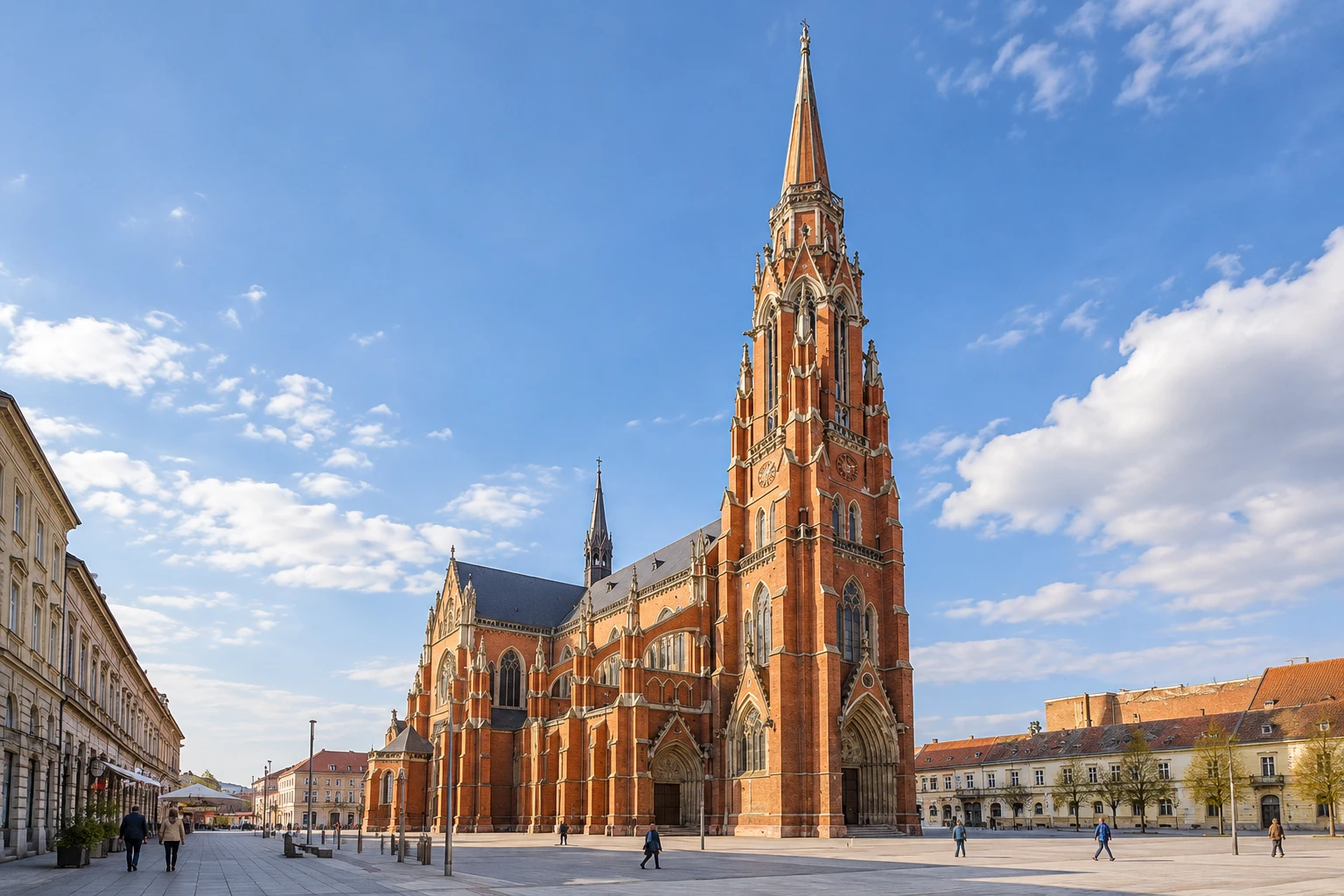
In the photo: Konkatedrala sv. Petra i Pavla
Illustrative images. The pictures in this guide are illustrations based on the real place, not photographs, and may differ from it.
The city
Osijek lies on the Drava and is the seat of Osijek-Baranja. The baroque core of Tvrđa, the Museum of Slavonia and Konkatedrala sv. Petra i Pavla structure the urban visit. Kopački rit adds a nature outing to channels and wetlands, with a booked program and transport arranged from the city.
Osijek is the largest city in eastern Croatia, with about 100,000 residents, and the cultural and economic center of Slavonia and Baranja. It stretches along the right bank of the Drava River, about 20 km from where it flows into the Danube. The name comes from “oseka,” the high, dry ground above the river, beyond the reach of floods. Before Osijek, the Celtic and Roman city of Mursa stood here.
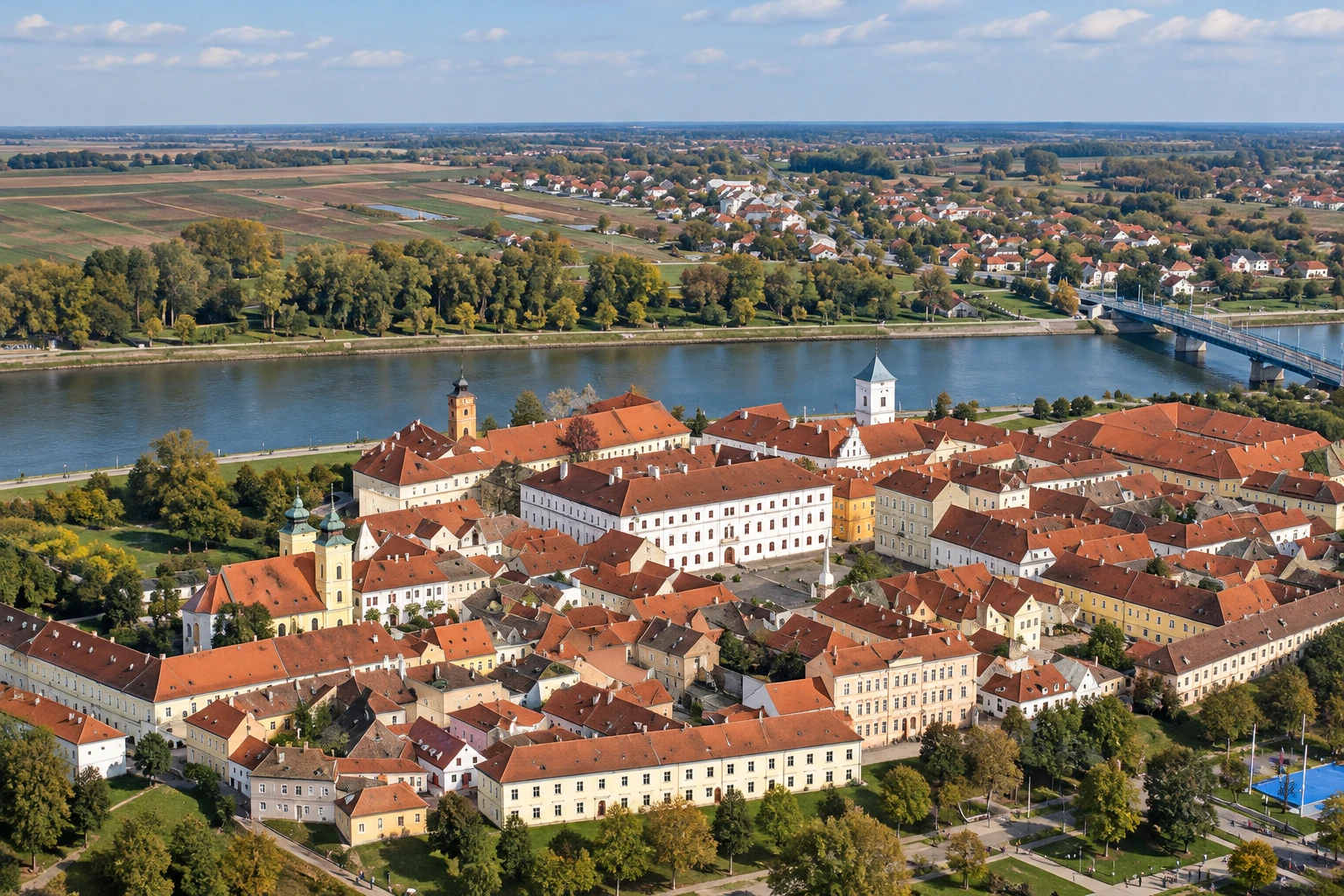
Osijek is easiest to explore district by district along the river. The oldest is Tvrđa, the fortified quarter the Habsburgs began building in the late 17th century after more than a century and a half of Ottoman rule. Its straight streets, barracks, and palaces form a Baroque ensemble around Trg Svetog Trojstva, the square with the Holy Trinity votive monument at its center. The Muzej Slavonije and the Archaeological Museum are here.
To the west lies Gornji grad, the Upper Town, where people come to shop and go about their day. The red-brick Konkatedrala sv. Petra i Pavla stands on the main square, Trg Ante Starčevića. Completed in 1898, its 90-meter tower marks the highest point in Osijek. Europska avenija leads away from the square, lined with mansions in the Secession style of early-20th-century Central Europe.
A belt of parks separates Tvrđa from Gornji grad. It owes its existence to a military rule that kept houses a kilometer from the walls, the range of a cannon at the time. The largest park is Perivoj kralja Tomislava. The city has 17 parks in all. A tram connects the two districts, and trams have run here continuously since 1884.
The Drava waterfront is where the city goes for a stroll. The Promenada follows the riverbank past cafés near Zimska luka, the winter harbor. A pedestrian suspension bridge and the kompa, a ferry powered entirely by the current, take you to the left bank. Here you'll find the zoo and Copacabana river beach, known to locals as “Kopika.” Baranja begins across the river, and a few kilometers away lies Park prirode Kopački rit, a wetland formed by the Drava and the Danube.
The climate here is continental, quite different from the Croatian coast. Winters are cold, with average January highs near 2°C and overnight temperatures below freezing. Spring and fall are mild. Summers are hot, with average highs around 27°C in July and August, when the riverbank becomes the center of city life. Rain falls throughout the year, with a little more in June.
The food comes from the plains and rivers. Try fiš-paprikaš, a freshwater fish stew with paprika, or perkelt, kulen (a spicy cured sausage), game, strudel, and plum dumplings called knedle. The city has brewed beer since 1697. Wine comes from the nearby hills of Baranja and Erdut, where graševina is the leading grape variety.
Vukovar and Ilok on the Danube and the wine villages of Baranja are separate municipalities within reach of Osijek by bus, car, or bicycle.
30 places to stay in Osijek.
30 places to eat in Osijek.
The city's hotels and restaurants on the map.
Flavors of Croatia
The local experience
Tvrđa is Osijek’s baroque core beside the Drava river. The complex gathers streets, squares and buildings of different uses within the former fortified area. The visit allows you to experience an inland Croatian urban landscape distinct from the stone towns of the coast.
The Konkatedrala sv. Petra i Pavla occupies a prominent position in the central part of Osijek. The neo-Gothic church is notable for its brickwork and its tall tower, which helps orient a walk through the city. Its title as a co-cathedral reflects the religious organization, without implying it is the city’s administrative seat.
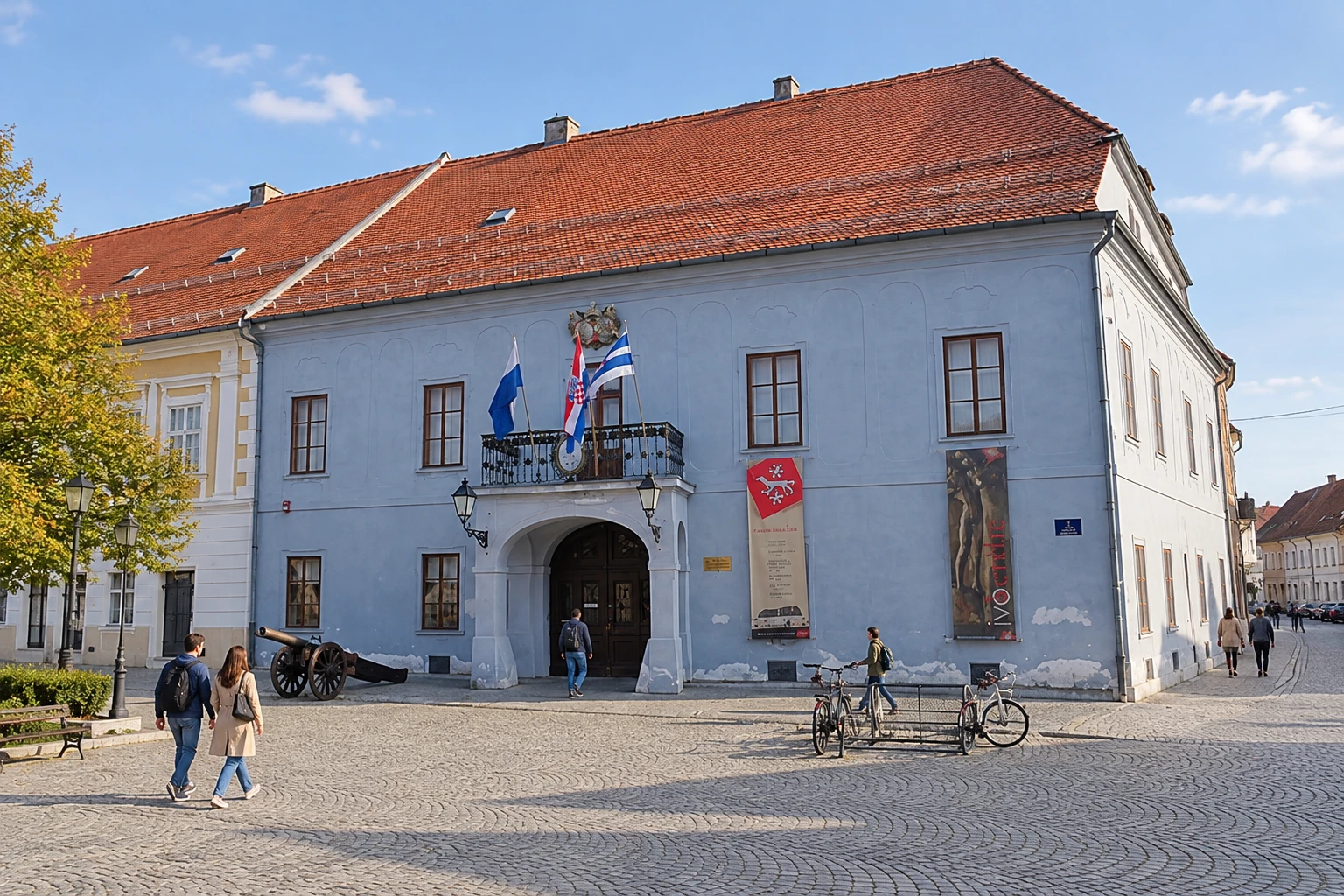
The Muzej Slavonije is located in Tvrđa, Osijek’s Baroque quarter. The museum displays collections related to the history, culture, and material life of Slavonia. Its location allows an internal visit to be connected with the streets and squares of the historic complex.
The Park prirode Kopački rit protects a wetland in the Baranja region, near Osijek and the confluence of the Drava and Danube systems. Channels, lakes and flooded areas change appearance with water levels. The landscape should be experienced via the park’s authorized programs and trails.
To choose before you go
Where each tour starts, how long it takes, how it is done, what is included and the price range.
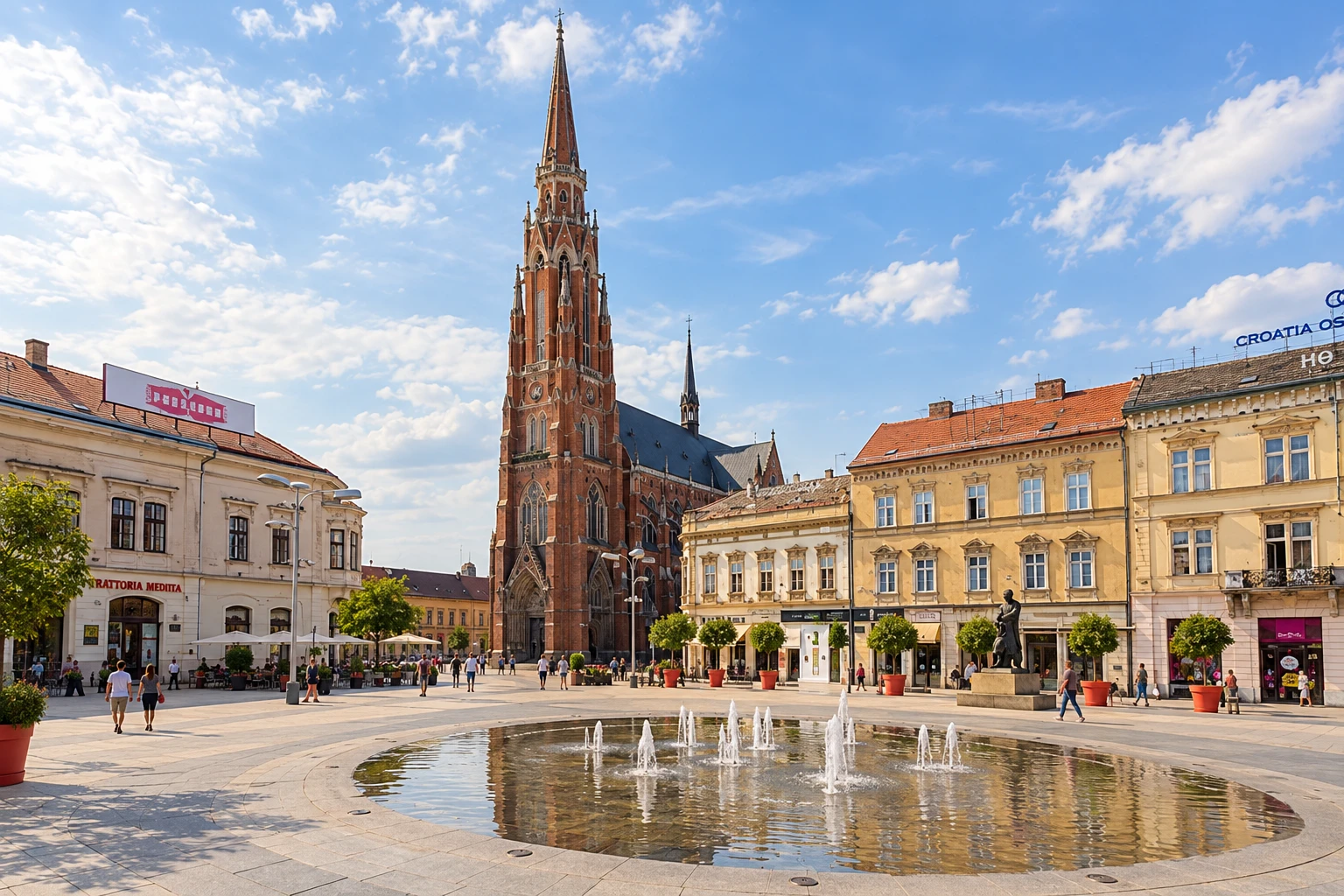
Tvrđa is Osijek's fortified quarter, built in the 18th century and home to some of Croatia's finest Baroque architecture. It stands beside the Drava between Gornji grad and Donji grad, surrounded by parks. At the southern entrance, the Rondel velikana fountain is ringed by busts of three people with ties to the city. One is Bishop Josip Juraj Strossmayer. The others are Nobel Prize-winning chemists Lavoslav Ružička and Vladimir Prelog, both of whom studied in Osijek. Straight streets lead to Trg Svetog Trojstva, the central square. At its center stands the Holy Trinity votive monument, erected in 1729–1730 as a plea for protection from the plague that struck Slavonia. The buildings around it once housed the fortress's military and civilian administration. The former Magistrat and City Guard buildings house the Muzej Slavonije, founded in 1877, with hundreds of thousands of objects relating to natural history, archaeology, coins, ethnography, and technology. The Main Guard building houses the Archaeological Museum, with prehistoric, ancient, and medieval collections. On the same square is the General-vojarna, the military headquarters depicted on the 200-kuna banknote. Markets have been held on the square for centuries, a tradition carried on today by the antiques market in the neighboring park. Across the Drava, Krunska utvrda is the northern part of the old fortress. Tvrđa has cafés and restaurants with outdoor tables and a tourist information center on the square.
Stops: Rondel velikana, Trg Svetog Trojstva, Holy Trinity votive monument, Muzej Slavonije, Archaeological Museum, General-vojarna, Krunska utvrda.
Includes: Self-guided outing. Museum tickets cost extra. Check current prices.
Tip: Check opening days and visiting hours at the museums. Wear sturdy shoes for the stone paving.
Best time: Year-round. In summer the square hosts outdoor events. In December it is the center of the city's Advent celebrations.
Gornji grad is the center of Osijek. Start at the main square, Trg Ante Starčevića, where people meet and the tram lines cross. A few steps away stands the Konkatedrala sv. Petra i Pavla, completed in 1898. Its 90-meter tower is the city's tallest structure and makes this the second-tallest church in Croatia. Look for the gargoyles on the exterior walls. Europska avenija leads from the square toward Tvrđa. This is the place to see Secession architecture. A row of early-20th-century mansions and public buildings includes the courthouse and post office. On the same avenue, a 19th-century Neo-Renaissance villa houses the Muzej likovnih umjetnosti, the fine arts museum. Its paintings, drawings, and sculptures date from the 18th to the 20th century and include Slavonian landscapes painted by Osijek's drawing school. Along the way is Sakuntala park, planted in the second half of the 19th century and named for its statue of Sakuntala, a figure from Indian literature. City architect Viktor Axmann designed the park, which has a small bandstand and two sphinxes at the main entrance. Another sphinx appears on the facade of the nearby Urania cinema. The avenue ends at the belt of parks between Gornji grad and Tvrđa.
Stops: Trg Ante Starčevića, Konkatedrala sv. Petra i Pavla, Europska avenija, Muzej likovnih umjetnosti, Sakuntala park, Urania Cinema.
Includes: Self-guided outing. The museum charges separate admission. Check current prices.
Tip: Combine this with Tvrđa. Walk along the avenue and through the parks, or take tram 1, which stops at Sakuntala Park and Tvrđa. The tourist office is beside the co-cathedral.
Best time: Year-round. The trees along the avenue and in the parks are in leaf from April to October.
Osijek runs along the Drava, and its developed riverfront has become the Promenada, where residents walk, cycle, and skate. Start at Zimska luka, the winter harbor dug in 1898 to ship beer from the nearby brewery. Today fishing boats moor here, and café terraces line the waterfront. Beside it is the dock for river cruise ships coming up the Drava from the Danube. The pedestrian suspension bridge crosses the river and offers a view of the whole city. Follow the bank upstream to a lookout over the Drava, a floating mill modeled on the boat mills that worked here from the 18th to the early 20th century, and the kompa. The kompa is a ferry that has crossed the Drava since 1916. The current alone powers it, and a steel cable keeps it from drifting downstream. It's the locals' favorite way to get to the zoo. Founded in 1955, Osijek Zoo occupies 11 hectares of riverside woodland on the left bank, away from the noise of the city. Its enclosures are home to about 80 species. There's also an aquarium, a terrarium, and a children's play area next door. Downtown, near the main square, remember to look up. White storks often nest on top of the buildings.
Stops: Zimska luka, Promenada, Pedestrian suspension bridge, Drava River overlook, Floating mill, Kompa, Osijek Zoo.
Includes: Self-guided outing. The kompa ferry and zoo admission cost extra. Check current prices.
Tip: The kompa runs regularly from both banks, depending on river levels and the season. Confirm service before relying on it. If the ferry isn't running, cross by the suspension bridge.
Best time: April to October. The wind off the river is cold in winter.
Osijek's largest and most popular river beach sits on the left bank of the Drava, directly across from downtown. Built in 1965, it was named after the beach in Rio de Janeiro. Locals call it Kopika. In summer, you can swim in the river, spread a towel on the sand, or use the outdoor pools next door. From the beach you can see the city spread out before you, from the co-cathedral tower to the rooftops of Tvrđa, and watch river cruise ships sail into downtown. Near the beach is Krunska utvrda, the northern part of the old fortress, now a recreation area. In late summer, this spot on the left bank hosts the Days of the First Croatian Beer, a festival associated with the city's brewery. Walk across the pedestrian suspension bridge from Gornji grad or take the Dr. Franje Tuđmana Bridge from Tvrđa.
Stops: Copacabana (Kopika), Krunska utvrda, Pedestrian suspension bridge.
Includes: Self-guided outing. The baths and pools charge separate admission. Check current prices.
Tip: The pools and facilities operate during the summer season. Dates vary each year. Bring sunscreen and a hat.
Best time: The summer months, when the days are warmest.
Osijek has 17 parks, the largest of which form a ring around Tvrđa. They owe their existence to a military rule that kept Gornji grad and Donji grad a kilometer from the walls, within range of the fortress cannons. The open land eventually became gardens. The largest park, Perivoj kralja Tomislava, lies between Gornji grad and Tvrđa and dates to the early 18th century. Beside it are Park kralja Petra Krešimira IV and Park kralja Držislava. Among the trees you'll find a linden planted in 1925 to mark a thousand years of the Croatian kingdom, a fountain celebrating Osijek's friendship with Pécs decorated with Zsolnay ceramics from the Hungarian city, and The Dying Soldier, an 1898 work by sculptor Robert Frangeš Mihanović. On the morning of the first Saturday of every month, Park kralja Držislava hosts an antiques market with books, jewelry, antiques, handicrafts, and produce from local farms. Round out the outing with a tram ride. In 1884 Osijek introduced one of the first horse-drawn tram services in Central and Southeastern Europe, and the city has used trams ever since. Line 1 links the main square to Sakuntala park and Tvrđa. The oldest tram, built in 1926, takes visitors on sightseeing rides around the city.
Stops: Perivoj kralja Tomislava, Park kralja Petra Krešimira IV, Park kralja Držislava, Sakuntala park, Line 1 tram.
Includes: Self-guided outing. Buy a separate tram ticket on board.
Tip: Walk out through the parks and take the tram back, or reverse the route. Ask the tourist office about vintage tram rides.
Best time: April to October. The antiques fair takes place on the first Saturday of the month.
Osijek is flat, with nearly 40 km of bike routes on dedicated paths or marked lanes on streets and sidewalks. Many residents get around by bike every day. The route recommended by the city tourist office starts beside the co-cathedral, crosses the main square, and follows the bike path on Europska avenija past the Secession mansions and the belt of parks to Tvrđa. Stop here at a café terrace, visit a museum, or drop by the tourist information center on the square. From Tvrđa, cross the Drava on the Dr. Franje Tuđmana Bridge. On the left bank, the route passes Krunska utvrda and reaches Copacabana beach, with views back across the river to the city. Return to Gornji grad over the pedestrian suspension bridge and finish at the cafés of Zimska luka. Some wide downtown streets have no bike lanes, but parallel routes carry less traffic. It's easy to park a bike, with racks outside public buildings and shopping centers. Osijek is on EuroVelo 6, the cycle route that links the Atlantic and the Black Sea, following the Danube through this region. With more time, turn off toward Kopački rit in Baranja, or head east to Aljmaš, Erdut, and Dalj.
Stops: Europska avenija, Tvrđa, Dr. Franjo Tuđman Bridge, Krunska utvrda, Copacabana, Pedestrian suspension bridge, Zimska luka.
Includes: Self-guided outing. Bike rental, if needed, costs extra.
Tip: Ask the tourist office for a route map and a list of bike rental shops. On the Promenada, share the path with pedestrians and skaters and ride slowly.
Best time: April to October. In summer, set off early or in the late afternoon.

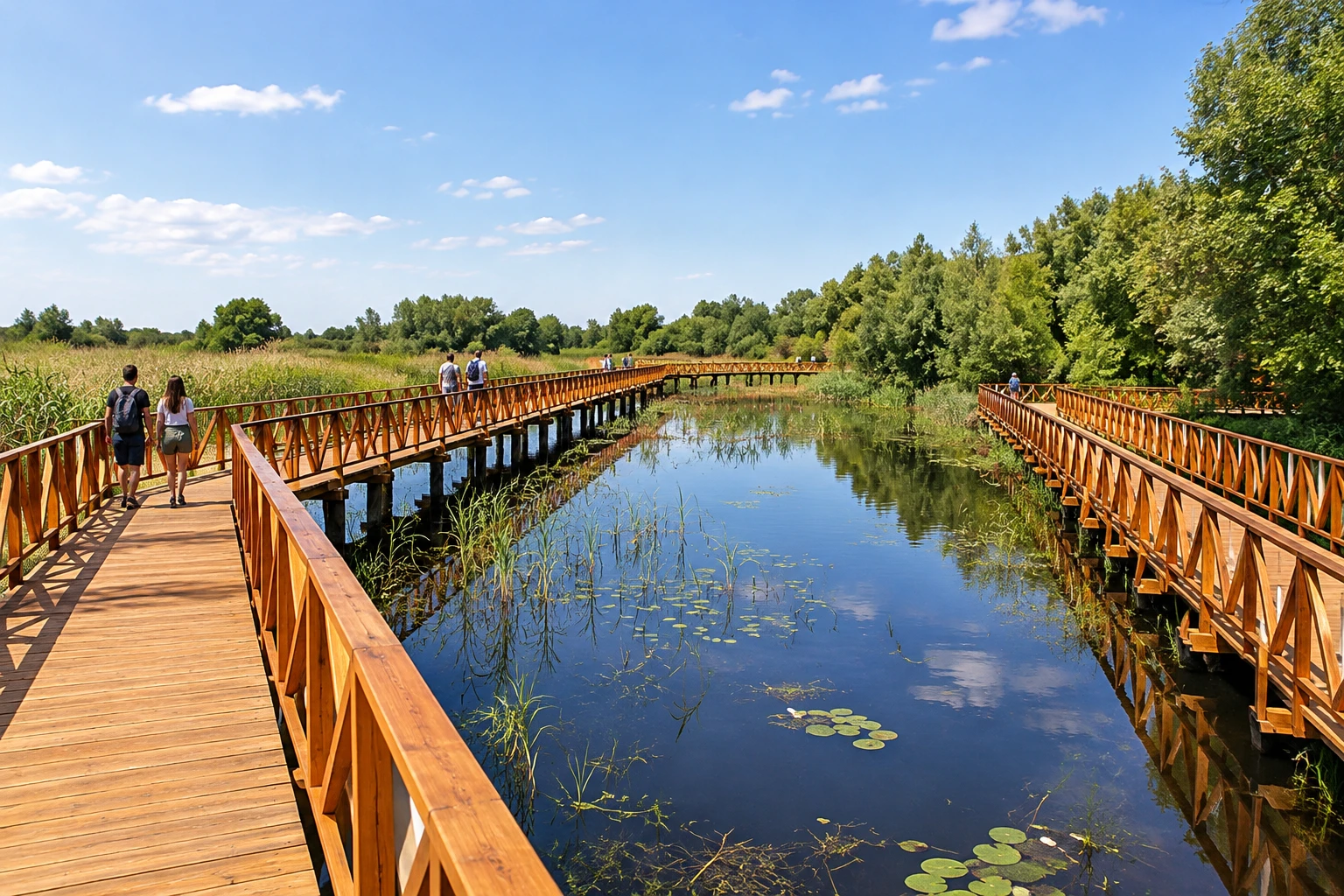
Park prirode Kopački rit begins just outside Osijek, across the Drava in Baranja. It occupies the land between the Danube and the Drava and is one of Europe's largest surviving natural wetlands. As water levels rise and fall, the rivers reshape its lakes, channels, marshes, floodplain forests, and wet meadows. The park is home to more than 290 bird species, including white-tailed eagles, white and black storks, herons, and cormorants, as well as deer, wild boar, and beavers. In 1993 it joined the Ramsar Convention's list of wetlands of international importance. Start at the visitor center near the village of Kopačevo, where there's also an exhibition space. A wooden boardwalk follows Lake Mali Sakadaš to the dock on Lake Veliki Sakadaš, where the tour boats depart. A guided small-boat trip follows narrow channels to Kopačko jezero and usually runs from March through November, weather permitting. Deep in the woods, the former hunting lodge at Tikveš now houses exhibits about the park. Book all activities in advance through the visitor center. From Osijek, buses bound for Batina and Beli Manastir stop in Kopačevo, with few weekend departures. By bike, the easiest route follows the bike path alongside the road to Bilje. The full loop from Tvrđa is about 20 km.
Stops: Kopačevo Reception Center, Lake Mali Sakadaš, Lake Veliki Sakadaš, Kopačko jezero, Tikveš.
Includes: Park admission and boat trips are charged separately. Check current prices. Reservations are required for the excursions.
Tip: Book before leaving Osijek and ask about the water level, which determines what you'll see and where the boat can go. Bring insect repellent in hot weather, a warm layer for the boat, and check the return bus schedule.
Best time: March to November for boat outings. The landscape changes with water levels throughout the year.
Day by day
Suggestions to plan the trip. Change the order of the days according to the weather and tour availability.
Start at Trg Ante Starčevića and visit the Konkatedrala sv. Petra i Pavla, with its 90-meter tower. Follow Europska avenija past the Secession mansions and Sakuntala park. Cross the belt of parks and enter Tvrđa. See the Rondel velikana and Trg Svetog Trojstva with its votive monument, then choose between the Muzej Slavonije and the Archaeological Museum. Have lunch in Tvrđa or on the way back. This is a good time to try fiš-paprikaš or perkelt. In the afternoon, return to Gornji grad along the Promenada beside the Drava. Cross the pedestrian suspension bridge for a view of the city from the opposite bank, and stop at Copacabana in summer. Finish on one of the terraces at Zimska luka. To save some walking, take tram line 1 between the main square and Tvrđa.
Spend the morning in Tvrđa. See the Rondel velikana, Trg Svetog Trojstva, the Holy Trinity votive monument, and the General-vojarna, then take your time at the Muzej Slavonije. After lunch, visit the Archaeological Museum or walk down to the riverbank. In the late afternoon, walk through Perivoj kralja Tomislava and the neighboring parks, looking for monuments among the trees. On the first Saturday of the month, start the day at the antiques market in Park kralja Držislava. Take the tram back downtown.
Spend the morning in Gornji grad. Visit the co-cathedral, the main square, Europska avenija, and the Muzej likovnih umjetnosti, housed in a Neo-Renaissance villa on the avenue. In the afternoon, follow the Promenada upstream past the lookout and the floating mill. Cross the Drava to the zoo on the kompa, the ferry powered by the current. Return by the pedestrian suspension bridge. In summer, you could spend a few hours at Copacabana beach in place of the zoo. In the evening, try the local beer and wines from Baranja on a terrace at Zimska luka or in Tvrđa.
Start in Tvrđa at Trg Svetog Trojstva, the votive monument, the Museum of Slavonia, and the Archaeological Museum. Have lunch inside the fortress. In the afternoon, follow the park belt to Gornji grad and finish at Zimska luka.
Set aside the day for Park prirode Kopački rit and reserve your activities in advance through the Kopačevo visitor center. Get there by car, by bus, or by bike along the path beside the road to Bilje. Walk the boardwalk along Lake Mali Sakadaš, then take a tour by boat or dinghy from Veliki Sakadaš. Stop for lunch at a Baranja restaurant in one of the nearby villages, where freshwater fish and game appear on the menu. Return to Osijek in the late afternoon, checking the bus schedule before you leave.
In the morning, visit the co-cathedral, Europska avenija, Sakuntala park, and the fine arts museum. Rent a bike and ride a loop along both banks via Tvrđa, the Dr. Franje Tuđmana Bridge, Krunska utvrda, Copacabana, and the pedestrian suspension bridge. In the afternoon, follow the Promenada to the kompa and visit the zoo, or spend the afternoon at the beach if it's summer. If you're heading on to Vukovar and Ilok, buses depart from Osijek's bus station.
Best time to go
The seasons shown are the most usual ones; nature doesn't always follow the calendar.
WineOS wine fair · Antiques market on the first Saturday
The coldest month brings average highs near 2°C, nights below freezing, and short days with little sunshine. Snow is possible. Try museums, cafés, and Slavonian winter cooking. Kopački rit boat outings usually pause.
Antiques market on the first Saturday
Winter continues, with average highs around 6 °C and nighttime frosts. There is little rain or snow. Life moves indoors to theaters, concerts and museums. Bring a heavy coat for walks through Tvrđa and along the river.
Antiques market on the first Saturday · Start of boating season at Kopački rit
Average highs rise to around 12 °C, though nights remain cold. Parks begin to bud, and boat trips resume in Kopački rit as weather and water levels allow. It’s a good month for birdwatching in the wetlands.
Gymnastics World Cup (Dobro World Cup) · Ferivi Half Marathon · Flower Festival
Spring brings average highs around 17 °C and showers on several days. The parks and Europska avenija turn green, and the Promenada fills up again. The city hosts a gymnastics World Cup event, the half marathon and the flower fair.
Craft beer festival · International tamburica music festival · Osijek Wine and Walk
Days are mild, with average highs near 22°C. This is one of the best times to cycle around the city and out to Kopački rit. Rain falls in showers, totaling about 60 mm over the month. Look for craft beer and wine festivals and a festival celebrating the tamburica, the region's traditional stringed instrument.
Pannonian Challenge · Opening of Osječko ljeto kulture · First Osječka ljetna noć
Summer begins, with average highs around 25°C. This is the wettest month, with about 85 mm of rain, usually in showers. The Pannonian Challenge combines extreme sports and music. At the end of the month, the summer arts season opens with outdoor events in Tvrđa and around the city.
Osječko ljeto kulture · Osječka ljetna noć
It's a hot month, with average highs near 27°C and intense afternoon heat. City life shifts to the Drava waterfront, from Copacabana and the pools to the terraces at Zimska luka. The summer arts season continues with free outdoor concerts, theater, and films. Take your walks early in the day.
Osječko ljeto kulture through the end of the month · Osječka ljetna noć · Sunset Run nighttime half marathon
Summer heat continues, with average highs around 27 °C and pleasant nights. Swimming season on the Drava continues. The summer cultural program ends with an orchestral concert at the end of the month. Ask about water levels before visiting Kopački rit.
Days of the First Croatian Beer between late summer and early fall · Slavonijo u jesen si zlatna · Fall Fair
Days are still warm, with average highs near 23 °C and less rain. It’s a good time for walking, cycling and visiting Kopački rit. The left bank of the Drava hosts the city’s beer festival, and there’s a gathering celebrating traditional Slavonian culture.
HeadOnEast food festival · Miholjska regata
Fall brings average highs around 18°C, cold mornings, golden parks, and little rain. Food and wine take center stage at a festival celebrating the cooking of Slavonia and Baranja. Bring a warm layer for evenings.
Jazz festival · Advent u Osijeku opens at month's end
Cold weather arrives, with average highs near 10°C and short days. Boat outings at Kopački rit end. Advent opens at month's end with a stage and stalls on the square in Tvrđa.
Advent u Osijeku in Tvrđa through December 31
Winter brings average highs around 4°C and frosty days. Advent celebrations fill Trg Svetog Trojstva in Tvrđa with concerts, stalls serving food and hot drinks, skating, and a tram decorated for Christmas. On New Year's Eve the square hosts a celebration for children.
Plan the journey
Osijek has its own airport in the village of Klisa, on the road to Vukovar, 15 km from downtown. It serves other Croatian cities and a few international routes that vary by season. Check with the airport and airlines for current departure cities. Taxis connect the airport with the city.
If you can't find a flight to Osijek, you can fly into Zagreb, Budapest in Hungary, or Belgrade in Serbia and continue overland. Each of these three capitals is about two and a half hours away by car. Direct buses run from Zagreb, Budapest, and Belgrade to Osijek's bus station.
Croatia's national railway runs direct trains between Zagreb and Osijek. The journey takes several hours and is usually slower than the bus. Check the travel time for your particular train when booking. Regional trains serve towns in Slavonia and Baranja, including Beli Manastir, and connecting services reach other parts of the country.
Rail journeys to Hungary and Serbia involve transfers, and services change frequently. Check connections before planning your trip.
The train station is near the bus station. Tram line 2 connects both with the main square, Trg Ante Starčevića. Long-distance trains have cars that accommodate bicycles.
Buses run frequently between Zagreb and Osijek and connect the city with other Croatian centers. The trip from Zagreb takes about four hours, depending on the service.
Regional routes from Osijek's bus station serve Vukovar and Ilok on the Danube, as well as other towns in Slavonia. Buses to Beli Manastir and Batina in Baranja go through Bilje and the village of Kopačevo, the entrance to Kopački rit.
Direct international routes serve Serbia (Novi Sad and Belgrade), Hungary (Budapest), Austria, Slovenia, Germany, Switzerland, and Bosnia and Herzegovina, among other countries.
Check operating days and times before you travel. Regional lines have fewer departures on weekends.
Osijek lies between the capitals of Croatia, Serbia, Hungary, and Bosnia and Herzegovina. By car, Zagreb, Belgrade, and Budapest are each about two and a half hours away. Sarajevo is about four hours away. The Hungarian border is 50 km from Osijek, the Serbian border 35 km, and the border with Bosnia and Herzegovina 100 km.
From Zagreb, take the A3 freeway toward Slavonski Brod, then the A5 via Đakovo to Osijek. The D2 crosses the city from west to east and continues to Vukovar and Ilok. Heading north, the D7 and A5 lead to Beli Manastir and Hungary in the direction of Pécs.
Croatian freeways charge tolls. When crossing borders, carry your vehicle documents and check each country's rules.
The city stretches almost 25 km along the Drava, and public transit connects its districts. There are two tram lines. Line 1 serves the main square, Sakuntala park, and Tvrđa. Line 2 connects the main square with the bus and train stations. City buses round out the network, and you can buy a ticket on board.
You can also walk between the main square and Tvrđa along Europska avenija and through the parks, or by following the riverside Promenada. If you're cycling, the city is flat and has almost 40 km of bike routes.
To reach Copacabana and the zoo on the left bank of the Drava, take the pedestrian suspension bridge, the Dr. Franje Tuđmana Bridge, or the kompa, the unpowered ferry.
Danube river cruise ships come up the Drava and dock downtown beside Zimska luka.
Your questions
Three days allow for both urban areas and a reserved outing to Kopački rit.
Visiting programs require booking; confirm the activity before leaving the city.
No. The inland usually has colder winters and a greater contrast between winter and summer.
The stop expands the itinerary into the eastern inland. If you have few days, consider the travel time by road to Zagreb or the coast.
It’s the Baroque fortified town the Habsburgs built beside the Drava in the 18th century. Inside are Holy Trinity Square with its votive monument, the Museum of Slavonia, the Archaeological Museum and former barracks now housing museums, cafés and restaurants. Allow two to three hours to explore on foot.
Walk along Europska avenija and through the parks, or follow the Promenada along the Drava. Tram 1 links the main square, Trg Ante Starčevića, with Sakuntala Park and Tvrđa. A bike path runs along the avenue.
It’s the ferry that has crossed the Drava since 1916 between Gornji grad and the left bank near the zoo. It has no engine. A steel cable holds it while the river current propels it across. Service depends on the season and water level, so check ahead. The pedestrian suspension bridge is an alternative.
Yes, in summer. The Copacabana bathing area, known as Kopika, is on the left bank of the Drava opposite downtown. It has a sandy section and outdoor pools. Walk across the pedestrian suspension bridge to reach it. Swimming season runs in summer, with dates varying each year.
April through June and September and October have mild weather for walking, cycling and visiting Kopački rit. July and August are hot, with summer cultural events and swimming in the Drava. Winter is cold and frosty, with Advent festivities in Tvrđa in December.
Drive via the A3 and A5 highways in about two and a half hours. Frequent buses take around four hours. Direct trains generally take longer. Flights between the two cities are also available at certain times of year. Check schedules before traveling.
Yes. It’s in the village of Klisa, 15 km from downtown on the road to Vukovar. It serves other Croatian cities and has some international routes that vary by season. Take a taxi into town. Many travelers arrive via Zagreb, Budapest or Belgrade and continue overland.
Try fiš-paprikaš, a river fish stew with paprika, perkelt with homemade pasta, kulen, a spicy cured Slavonian sausage, or game. For dessert, try strudel or plum knedle dumplings. Osijek has brewed beer since 1697 and serves a refreshing local dark radler. Wines come from Baranja and Erdut, especially those made from graševina grapes.
Buses from Osijek to Batina and Beli Manastir stop in the village of Kopačevo, a few minutes’ walk from the park reception center. Weekend departures are infrequent. By bike, follow the path along the road to Bilje. Book your park activity ahead of time.
Yes. It’s flat, has almost 40 km of bike paths and lies on EuroVelo 6, the route that follows the Danube. The most popular circuit links Gornji grad, Tvrđa and both banks of the Drava. From there you can ride to Kopački rit or to the wine villages of Baranja and Erdut.
Routes in Croatia
From Batina to Ilok along EuroVelo 6, between the floodplain of Baranja, the Drava riverside in Osijek and the towns on the Danube.