Dubrovnik

Dubrovnik-Neretva Capital

Dubrovnik

In the destination Dubrovnik.

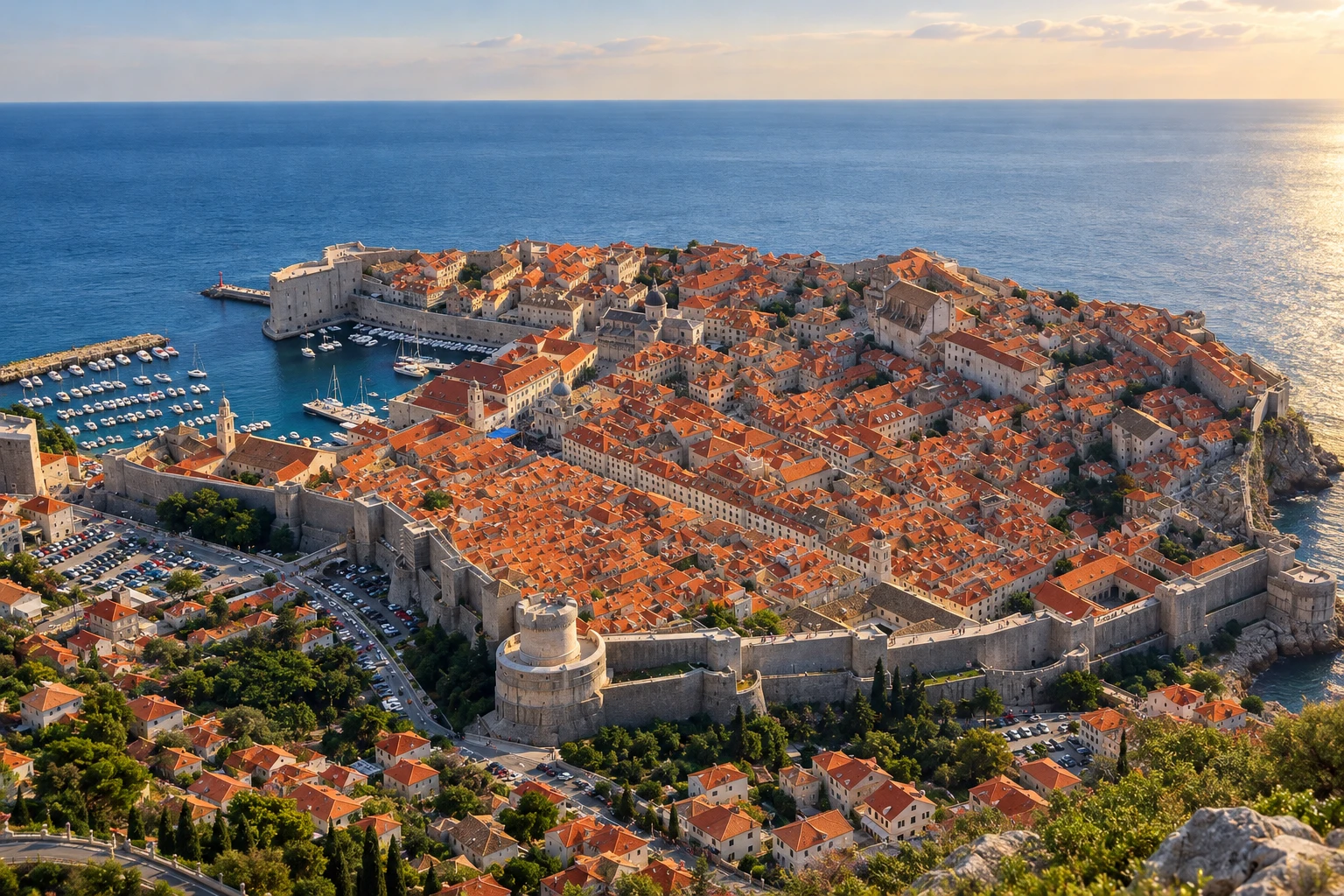
In the photo: Old city of Dubrovnik

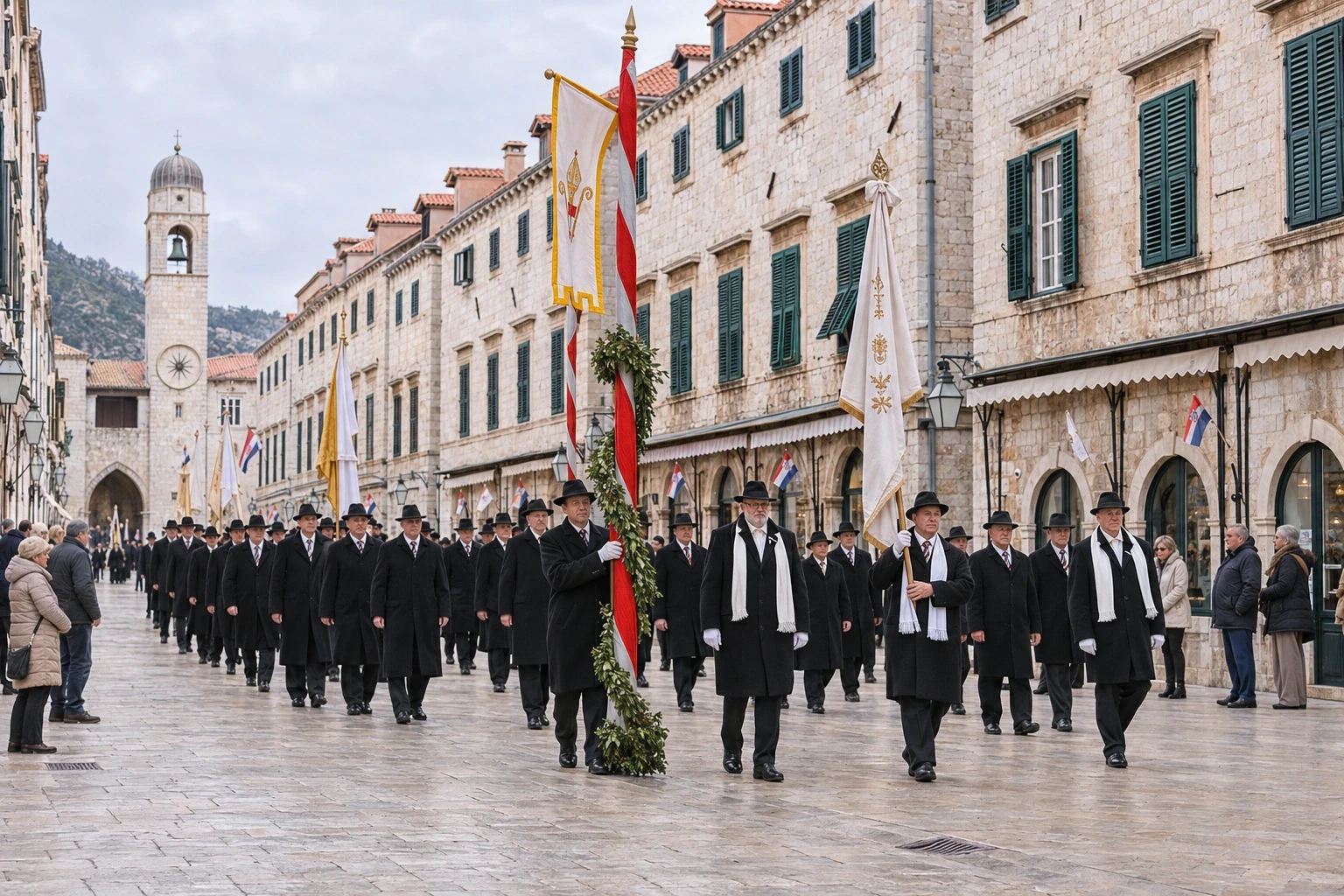
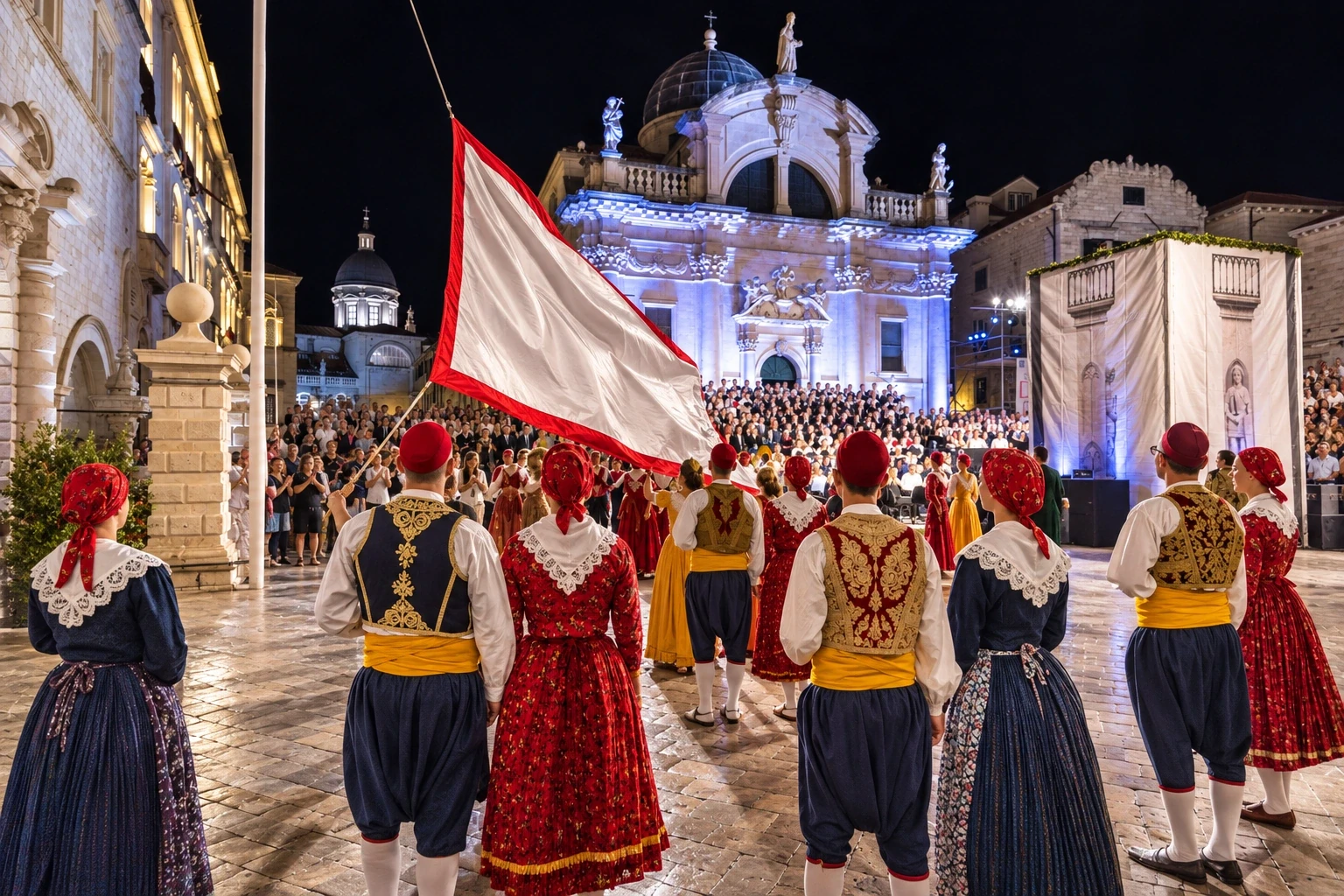
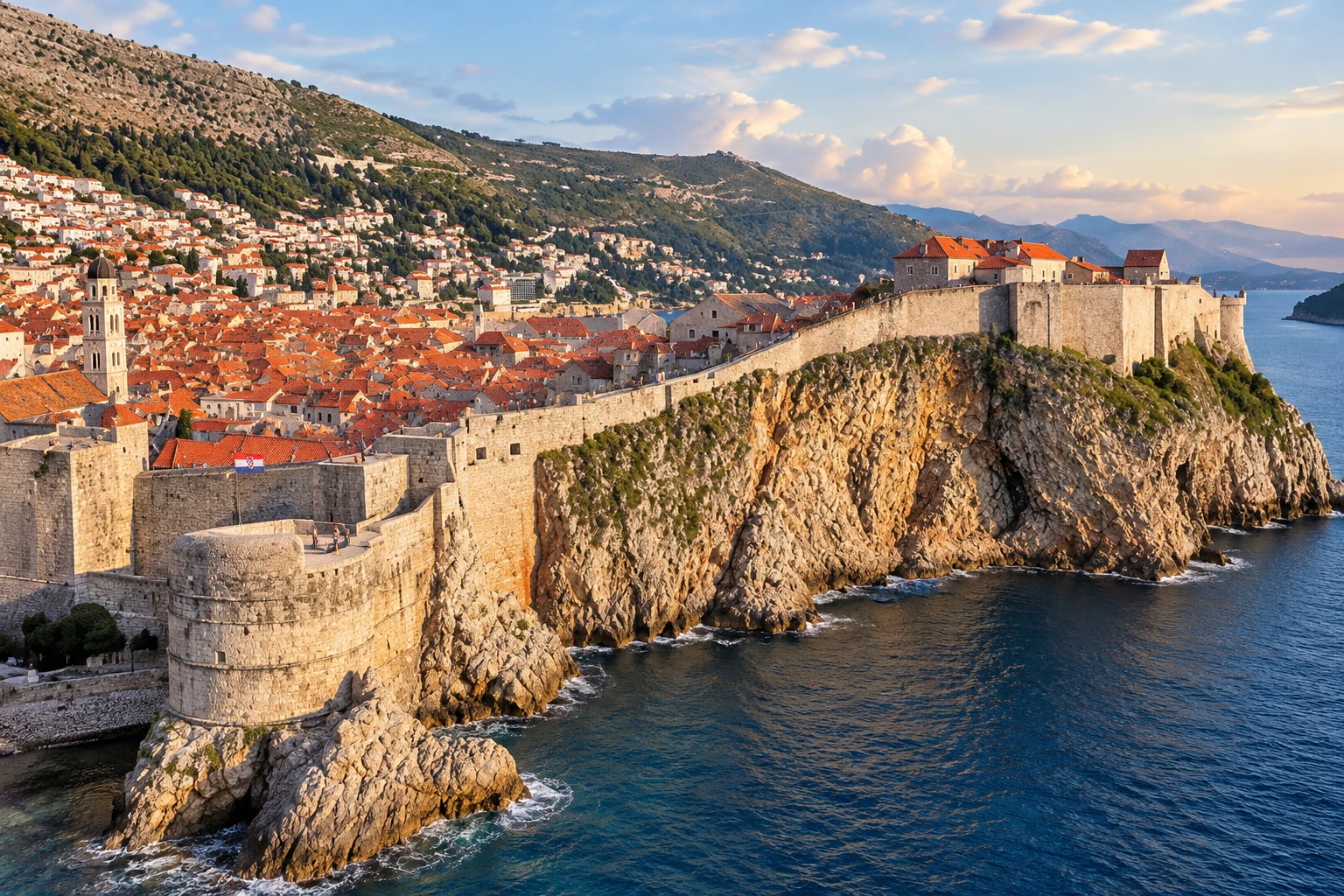
Illustrative images. The pictures in this guide are illustrations based on the real place, not photographs, and may differ from it.

Get it on Google Play

The city

What to expect from Dubrovnik.

Dubrovnik concentrates its walls, the Rector’s Palace and the Franciscan Monastery in a stone core by the Adriatic. Lokrum requires a short crossing; the Srđ viewpoint offers another perspective on the coast. The city can also serve as a base for Mljet, provided boats allow time to reach the lakes and return.

Dubrovnik lies at the far southern end of Croatia's coast between the Adriatic Sea and the slopes of Mount Srđ. The old town, enclosed by 1,940 meters of walls, was the capital of the Republic of Dubrovnik, a small maritime state sustained by trade for centuries. It's now a UNESCO World Heritage Site. Most of the main sights are within this small area or a few minutes away.

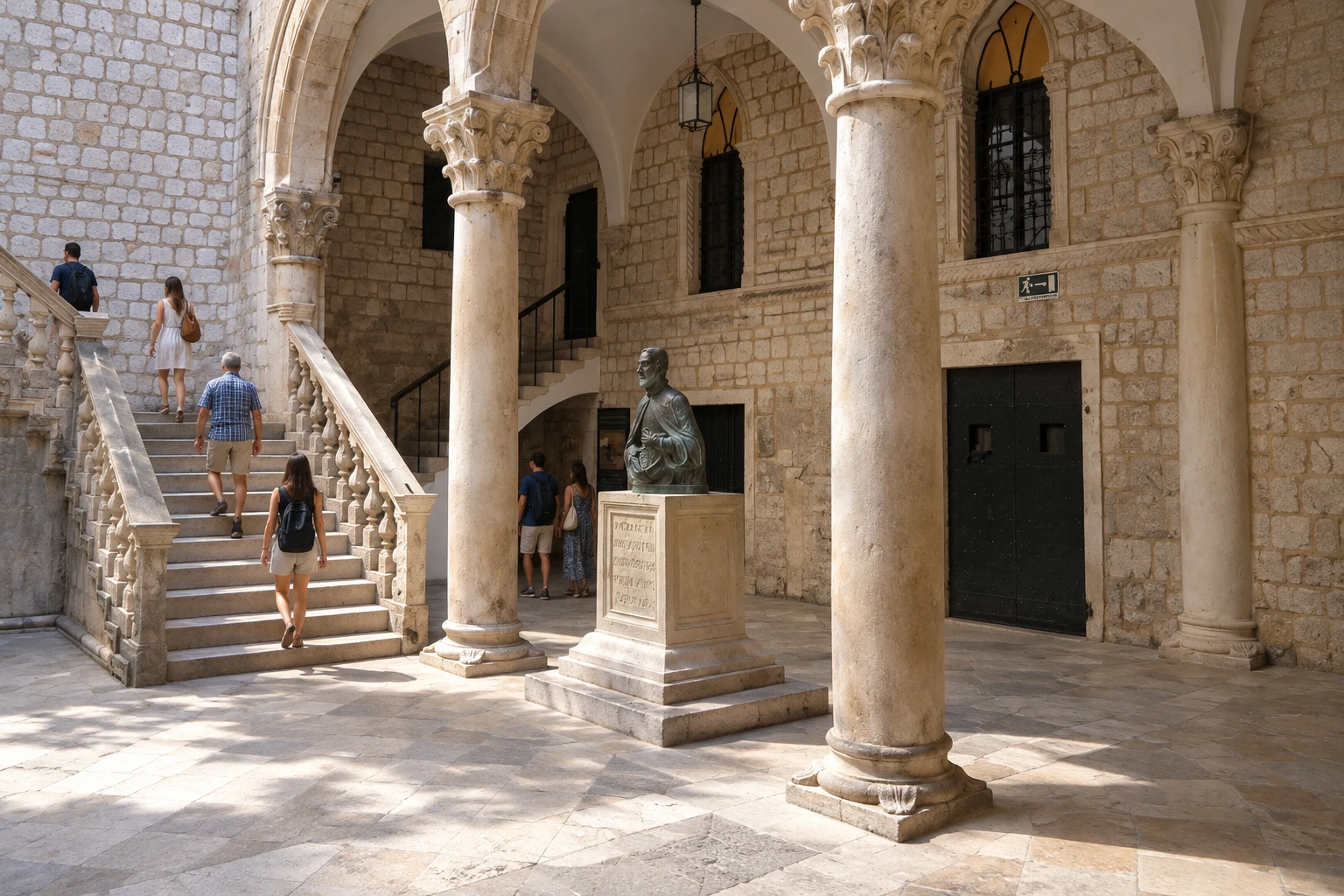
The main street is Placa, better known as Stradun, a 298-meter stretch of stone paving from Pile Gate in the west to Luža Square in the east. Its uniform Baroque facades date from the rebuilding after the 1667 earthquake. Onofrio's fountains stand at the two ends. Around Luža are Sponza Palace, Orlando's Column, the bell tower, and Knežev dvor, the Rector's Palace, once the seat of the republic's government and now a museum. The Baroque cathedral, the Franciscan monastery cloister with a pharmacy founded in 1317, and the Dominican monastery round out the circuit. Narrow streets climb on both sides of Stradun, many in flights of steps.

The walk along the top of the walls is the city's most popular attraction. It passes Minčeta, Bokar, and St. John's fortresses, overlooking the rooftops, old port, and Lokrum island. Beyond the circuit, Lovrijenac stands on a rock 37 meters above the sea. A cable car climbs to the summit of Srđ, 412 meters high, for a view of the whole city.

The modern city spreads westward. Pile and Ploče adjoin the two gates and have the beaches closest to the center, including Banje. Gruž is the port neighborhood, with island boats, the bus station, and a daily fish and produce market. The Lapad peninsula and Babin kuk have most of the hotels, a promenade, and pebble beaches. City buses connect all these neighborhoods with Pile Gate.

The sea is part of any stay here. Lokrum, a nature reserve with a botanical garden and Benedictine monastery, is ten minutes by boat from the old port. Scheduled boats from Gruž reach the Elaphiti Islands of Koločep, Lopud, and Šipan, with small settlements and sandy beaches such as Šunj. On the mainland, the municipality includes the Renaissance gardens of Trsteno Arboretum, 15 km away, Zaton Bay, and the Rijeka Dubrovačka valley, where the Ombla rises.

The climate is Mediterranean. From June through September days are hot and dry, averaging around 25°C in July and August. The old town fills up, especially at midday. April, May, and October bring milder temperatures and fewer visitors. From November through March it rains often, temperatures average around 10°C, the cable car stops running, and boats are less frequent. The walls and museums remain open.

Polished stone and steps are everywhere in the old town. Wear sturdy shoes and pack light if you're staying inside the walls. With two or three days, you can spread out the walls, museums, Srđ, and a boat trip without rushing.

Share: WhatsApp

Where to stay

30 places to stay in Dubrovnik.

Where to eat

30 places to eat in Dubrovnik.

Map of Dubrovnik

The city's hotels and restaurants on the map.

Flavors of Croatia

To try Dubrovnik

Discover other flavors of Croatia

Festivals and events

Festivals Dubrovnik

Dates change every year: check this year's date before you travel.

Festival calendar in Croatia

The local experience

Things to do in Dubrovnik

Dubrovnik · Croatia · Walls

Walls of Dubrovnik

The Dubrovačke gradske zidine encircle Dubrovnik’s old core, between the landward side and the stretches facing the Adriatic. Walking the defenses links roofs, streets, towers and the harbor. The walk requires a separate ticket and is not the same as merely strolling the city streets.

Explore Walls of Dubrovnik

Dubrovnik · Croatia · Palace and museum

Rector's Palace

Knežev dvor is located in Dubrovnik’s old town and houses the Museum of Cultural History. The palace combines Gothic and Renaissance elements, with a street-facing portico and an internal atrium. The visit brings together architecture and objects related to the city’s historical life.

Explore Rector's Palace

Dubrovnik · Croatia · Monastery

Franciscan Monastery of Dubrovnik

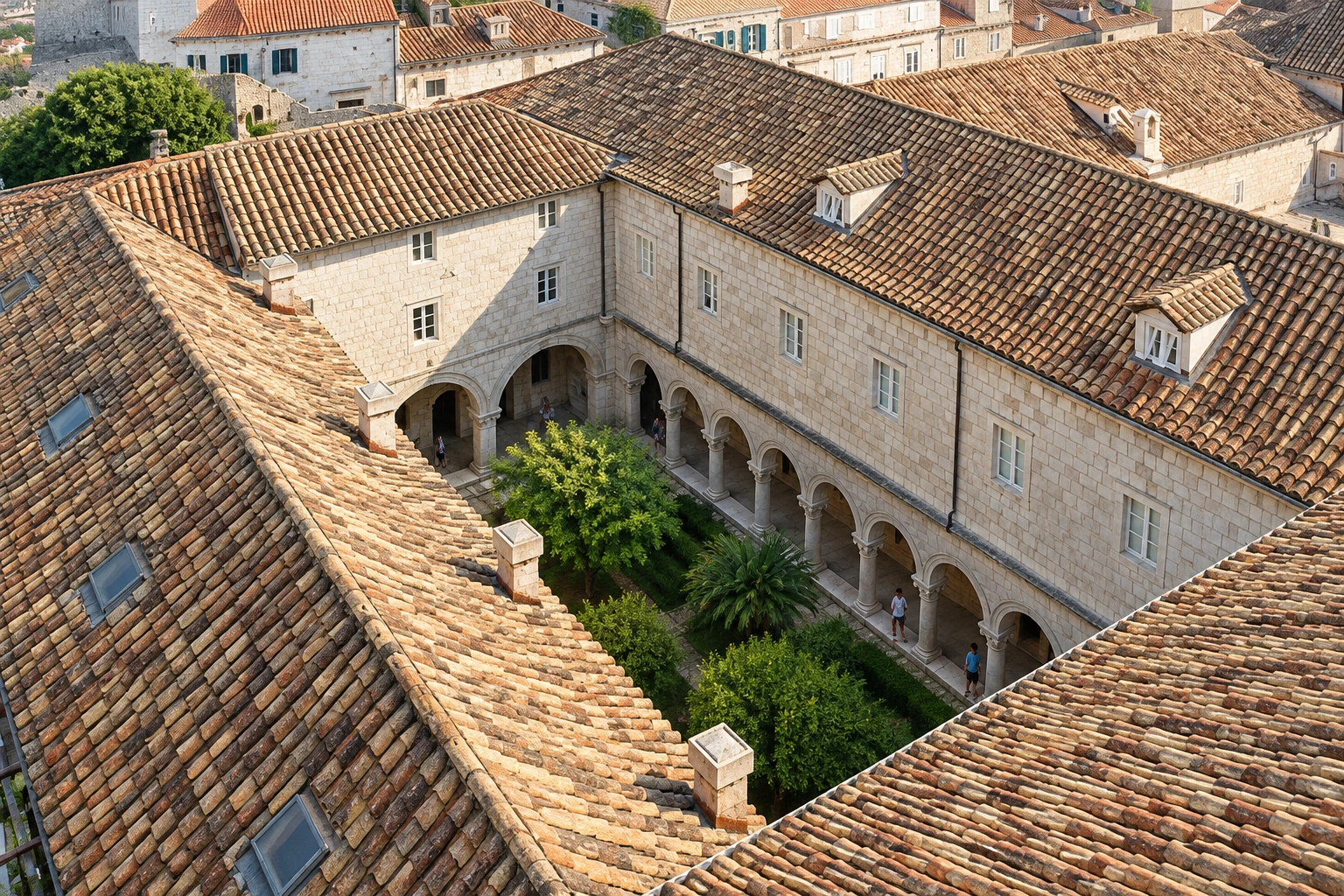
The Franjevački samostan Male braće is located by the western entrance to Dubrovnik’s old town. The Franciscan complex offers an indoor visit break near the city’s busiest streets. The cloister is a highlight of the monastery’s architecture and can be seen through its arches and carved elements.

Explore Franciscan Monastery of Dubrovnik

Dubrovnik · Croatia · Island and reserve

Lokrum

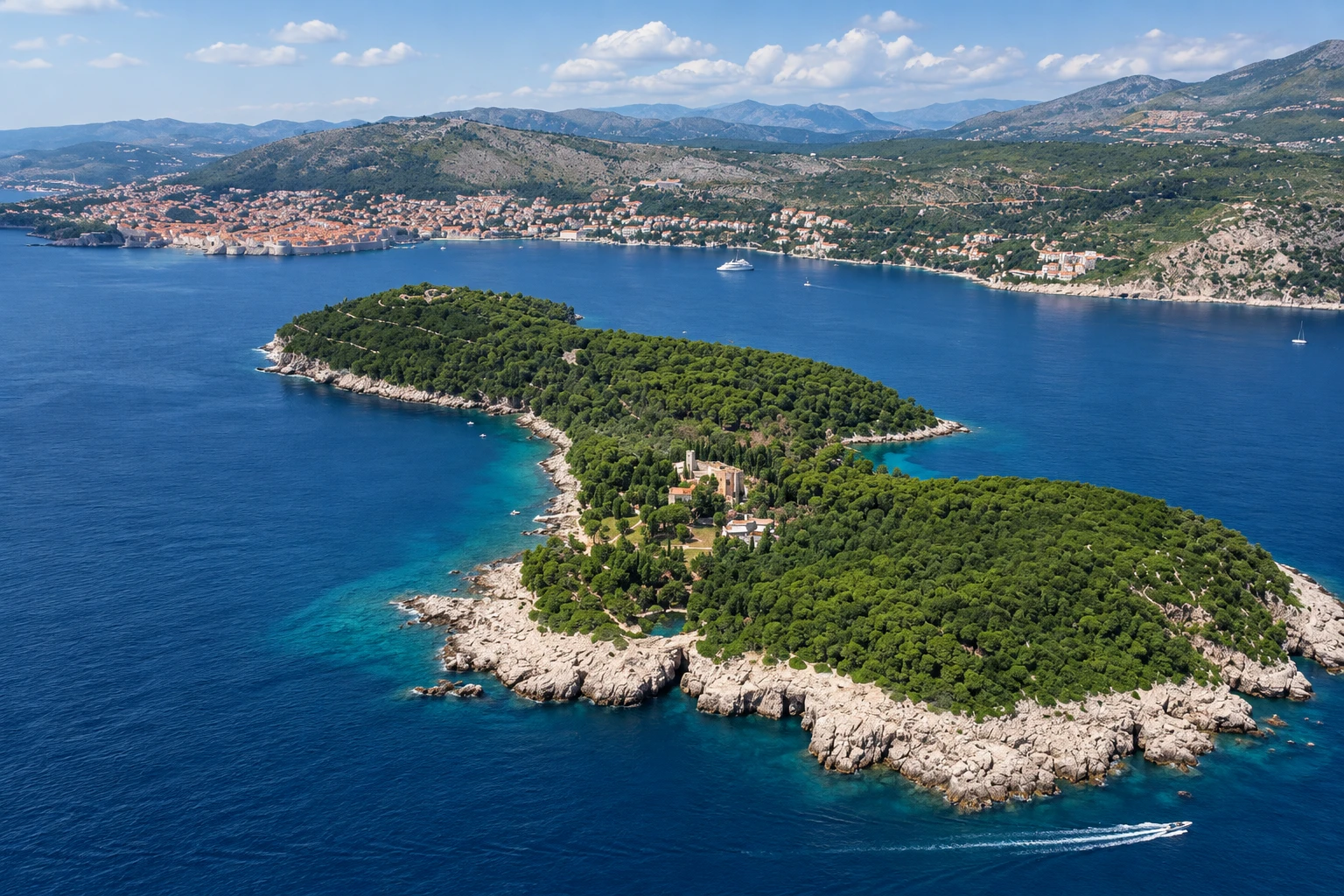
Lokrum is the island opposite Dubrovnik’s old town, separated from the city by a short crossing. The visit combines paths through a protected area, vegetation and historic structures. Visual proximity does not mean land access: authorised sea transport is required.

Explore Lokrum

See 3 more places in Dubrovnik

To choose before you go

Tours in Dubrovnik

Where each tour starts, how long it takes, how it is done, what is included and the price range.

Walking the old town from Pile Gate along Stradun to the old harbor

From Pile Gate On foot About 3 hours Morning or late afternoon Easy

Start at Pile Gate, the western entrance to the old town. Just inside is the polygonal Large Onofrio's Fountain, where water flows from 16 carved stone masks. Beside it are the Franciscan church and the Friars Minor monastery (Franjevački samostan Male braće), with its cloister and historic pharmacy. From here Stradun, the popular name for Placa, runs straight for 298 meters to Luža Square. The statute of 1272 established the layout of the street and town. The Baroque houses with shops on the ground floor date to the rebuilding after the earthquake of 1667. On Luža Square are the bell tower, Orlando's Column with its medieval knight, the Small Onofrio's Fountain of 1446, and Gothic-Renaissance Sponza Palace, once the customs house and mint. A few steps south stand Knežev dvor, the seat of the old republic's government, and the Baroque cathedral built in the 18th century on the site of the Romanesque cathedral destroyed in the earthquake. Behind the cathedral, Gundulić Square hosts a morning fruit and vegetable market. Finish at the old port, sheltered by St. John's Fortress, where boats leave for Lokrum. On the return walk, climb to Prijeko, parallel to Stradun, or explore the stepped streets on the southern side.

Stops: Pile Gate, Large Onofrio’s Fountain, Stradun (Placa), Sponza Palace, Orlando’s Column, Rector’s Palace, Cathedral, Old Port.

Includes: Walking the streets is free. The Rector's Palace, Franciscan monastery, and cathedral treasury charge separate admission. Check current prices.

Tip: In summer, start early or go in late afternoon. At midday Stradun fills up and the stone reflects the heat. Refill your water bottle at the public fountains.

Best time: Year-round. April to June and September to October bring milder temperatures and fewer visitors.

Walk along Dubrovnik’s city walls (Dubrovačke gradske zidine)

From Entrance beside Pile Gate On foot 1 to 2 hours Early morning or late afternoon Moderate, with stairs

Dubrovnik's walls form a 1,940-meter ring around the old town, with five fortresses and sixteen towers and bastions built between the 12th and 17th centuries. The open-air path along the top makes a full circuit. There are three entrances: by St. Saviour's Church (Sv. Spas) opposite the Large Onofrio's Fountain on the Pile side, by St. Luke's Church (Sv. Luka) in the east opposite the Dominican church, and beside the Maritime Museum in St. John's Fortress. The highest point is Minčeta, the round tower that protected the northern approach and overlooks the entire sweep of rooftops. At the southwestern corner, Bokar guarded the Pile bridge and faces Lovrijenac across the little bay. The southern stretch follows the rocks overlooking the open sea and Lokrum. St. John's Fortress, dating to 1346, protected the old port. Beneath it lies the Porporela breakwater, where residents walk and swim. Revelin to the east and Lovrijenac to the west complete the five fortresses but stand outside the ring. The walls welcome visitors year-round. Allow at least an hour for the circuit, longer for views and photos.

Stops: Dubrovnik City Walls, Minčeta Fortress, Bokar Fortress, St. John’s Fortress, Porporela.

Includes: Buy a ticket at the entrances or online. The Dubrovnik Pass city card includes the walls. Check current prices and the closing time for the day.

Tip: There’s very little shade along the route. Bring water, a hat and sunscreen. In summer, go at opening time or in the late afternoon to avoid the midday heat and crowds.

Best time: Year-round. Spring and fall are more comfortable for this route.

Fort Lovrijenac and Pile Bay

From Pile Gate On foot About 1 hour Morning or afternoon Moderate, with a flight of stairs

Lovrijenac is the freestanding fortress west of the old town on a rock 37 meters above the sea. Named for St. Lawrence, it was once called the Gibraltar of Dubrovnik. Records identify the 14th century as the decisive period in its construction. Its strategic position led to further reinforcement in the 15th and 16th centuries. Damaged in the 1667 earthquake, it was restored by the end of that century. It later served as a barracks. The Latin inscription above the entrance became the city's motto: liberty cannot be sold for all the gold in the world. In summer the fortress hosts performances during the Dubrovnik Summer Festival. Walk from Pile Gate down to the little bay and up the steps cut into the rock. From the top you can see Bokar Fortress, the western walls, and the open sea.

Stops: Fort Lovrijenac, Pile Bay, Bokar Fortress.

Includes: Admission fee. Check current prices and whether the city walls ticket or city card covers the fort.

Tip: Combine this with the wall walk on the same day. It's a long staircase, so take it slowly in the heat.

Best time: Year-round. In July and August, check whether preparations for a performance are underway at the fort.

Mount Srđ by cable car: the city from above

From Lower cable car station, north of the Old Town Cable car, with the option to hike About 2 hours Late afternoon Easy by cable car, strenuous on foot

Srđ is the 412-meter mountain rising behind Dubrovnik. Built in 1969, the cable car climbs from the lower station outside the walls to the upper station at 405 meters in three and a half minutes. The terrace overlooks the entire walled town, Lokrum straight ahead, the Elaphiti Islands to the west, and the coastline toward Cavtat. On clear days you can see for dozens of kilometers. Beside the station is the early 19th-century Fort Imperial, built here for this commanding position. It now houses a museum of the city's recent history. The cable car runs from April through November, with longer summer hours, and closes from December through March. Strong winds or a risk of lightning interrupt service until the weather improves. A steep, rocky trail also leads to the top. A good combination is to ride up and walk down. Late afternoon, as the sun sinks over the sea, is usually the most popular time.

Stops: Srđ, Dubrovnik Cable Car, Fort Imperial.

Includes: Buy a separate one-way or round-trip cable car ticket. Check current fares and the time of the last ride down.

Tip: Wear sturdy shoes and take water on the trail. In summer, go only early in the morning or late in the afternoon.

Best time: April to November, when the cable car runs. From December to March, go up by road or trail.

Lokrum by boat, from the botanical garden and monastery to Mrtvo more

From Dubrovnik old harbor Scheduled boat service Half a day Morning or afternoon Easy

Lokrum is the wooded island facing the old town, ten minutes by boat from the old port. Its forest vegetation has been protected as a special reserve for decades. The main monument is the Benedictine monastery of St. Mary, whose founding charter dates to 1023. In the 19th century Austrian Archduke Maximilian bought the island, established his summer residence in the monastery complex, and laid out gardens and avenues. The free-roaming peacocks descend from birds he brought here. The Botanical Garden, established in 1959, has plants from tropical and subtropical regions, particularly eucalyptus, cacti, and succulents. To the south is Mrtvo more, the Dead Sea, a former cave whose roof collapsed, creating a natural pool linked to the sea by a channel about 15 meters long. The still water appeals to children and less confident swimmers. At the island's highest point, Fort Royal, begun by the French in 1806, overlooks Dubrovnik, Cavtat, and the islands. Shady paths connect the sights, and the rocky shore has swimming spots. The island closes in winter from mid-December to the Feast of St. Blaise in early February, then usually opens only on weekends until the end of March. Boats stay in port in bad weather.

Stops: Lokrum, Benedictine Monastery of St. Mary, Botanical Garden, Mrtvo more, Fort Royal.

Includes: A ticket is required. Check current rates and what the ticket covers.

Tip: Bring water shoes for the slippery rocky coast. On arrival, check the last boat back. Outside summer, service ends in midafternoon.

Best time: April to October for frequent boats, with swimming from June to September.

The Elaphiti Islands by ferry: Koločep, Lopud, and Šipan

From Gruž harbor Scheduled passenger boat Full day Morning and afternoon Easy

The Elaphiti are thirteen islands northwest of Dubrovnik, only three of them inhabited: Koločep, Lopud, and Šipan. All belong to the municipality. A scheduled passenger boat from Gruž calls at all three year-round. Koločep, known locally as Kalamota, is closest, about 25 minutes away. It's car-free. Paths through olive groves, pines, and citrus trees link the two villages, Donje Čelo and Gornje Čelo. Look for pre-Romanesque churches from the ninth and tenth centuries. Lopud, about 50 minutes away, is the most visited. The village has a Franciscan monastery, the Rector's Palace, and remains of summer houses belonging to the republic's nobility. Šunj Beach, with sand and shallow water, is about a 30-minute walk from the village. Golf carts cover the route if you prefer. Šipan, the largest island, is about an hour away. A path through olive groves and vineyards links Suđurađ and Šipanska Luka and makes a good walk or bike ride. The island preserves churches, summer houses, and a 16th-century defensive tower. Allow one day per island for a comfortable pace. Private operators also offer day trips covering several islands, with less time at each stop.

Stops: Koločep, Lopud, Šunj Beach, Šipan, Suđurađ, Šipanska Luka.

Includes: The ferry ticket is valid for a specific departure. Buy it in advance at the Gruž ticket office or online. Check current fares.

Tip: Check outbound and return schedules before choosing an island. There are fewer departures on Sundays and holidays. In summer, arrive at Šunj early.

Best time: May to September for the beach. The ferry runs year-round, with fewer departures in winter.


See 6 more tours

Beaches by the Old Town: Banje, Sv. Jakov, Porporela, and Buža

From Ploče Gate On foot or by city bus 2 to 4 hours Morning or afternoon Easy

Dubrovnik's beaches are pebble, rock, or concrete platforms with steps into the sea. Several lie just minutes from the old town gates. Banje, a pebble beach in Ploče just beyond the eastern gate, is the closest. It faces the walls and Lokrum. Continue along the coast in the same direction for St. Jacob's (Sv. Jakov), a quieter pebble cove. Old town residents swim at Porporela, the breakwater beneath St. John's Fortress, and from the Buža rocks outside the walls facing the open sea. On the Pile side are little Šulić Beach in the bay below Lovrijenac and the rocks of Danče. At these spots you enter the sea from rocks or steps. The tourist office also suggests renting a kayak for coves with no land access, such as Betina špilja.

Stops: Banje, Sv. Jakov, Porporela, Buža, Šulić, Danče.

Includes: Public beaches are free. Loungers and umbrellas cost extra where available.

Tip: Water shoes are handy on pebbles and rocks. Banje, closest to the Old Town, is also the most crowded beach in July and August.

Best time: June to September.

Lapad and Gruž: the market, promenade, and beaches of the modern city

From Gruž Market By city bus and on foot Half a day Morning Easy

Explore everyday Dubrovnik west of the old town. Start in the morning in the port neighborhood of Gruž. The daily market sells local fruit, vegetables, herbs, olive oil, and wine, and fishers offer the day's catch. Cafés surround the market and boats are busy leaving for the islands. From Gruž, take a city bus or walk to the Lapad peninsula. Its hub is Uvala Lapad, a bay with a pebble beach and a promenade lined with cafés, restaurants, and children's areas. This part of town also has the most hotels. For a view over the peninsula, climb the pine-shaded paths to the lookout on Petka Hill. The waterfront walk among pine groves, coves, and rocks is easy and also suitable for bikes. At Babin kuk, Copacabana Beach has facilities geared to families. Return to the old town by bus to Pile Gate.

Stops: Gruž Market, Gruž Harbor, Uvala Lapad, Petka Hill, Copacabana.

Includes: Bus fares are separate. Tickets cost less at kiosks than when purchased from the driver.

Tip: Gruž Market is busiest and has the best selection early in the morning.

Best time: Year-round, or June to September for the beach.

Museums and monasteries of the Old Town

From Pile Gate On foot 3 to 4 hours Morning or afternoon Easy

This indoor route stays entirely within the walls and works for hot afternoons or rainy days. Just inside Pile Gate, the Friars Minor monastery (Franjevački samostan Male braće) has a Romanesque-Gothic cloister and one of Europe's oldest working pharmacies, founded in 1317. Its museum displays instruments and manuscripts. At Knežev dvor, the palace of the republic's rector, the Cultural History Museum fills the rooms and atrium with paintings, coins, and furniture. Near Ploče Gate, the Dominican monastery museum in the cloister displays major works of Dubrovnik's 15th- and 16th-century school of painting. St. John's Fortress houses the Maritime Museum on the upper two floors and the Aquarium, with Adriatic species, on the ground floor. Other options include the cathedral treasury, the synagogue in the area where Jews were permitted to settle within the walls in 1546, the Ethnographic Museum, and the house of playwright Marin Držić. A room in Sponza Palace commemorates the city's defenders. Choose two or three places for a morning or afternoon.

Stops: Franjevački samostan Male braće, Rector’s Palace, Dominican Monastery, Maritime Museum, Aquarium, Synagogue, Cathedral treasury.

Includes: Each museum charges admission. The Dubrovnik Pass, available for one, three, or seven days, covers several museums. Check the list and current prices.

Tip: Closing days vary by museum and season. Check before going.

Best time: Year-round. A good choice from November to March, when it rains more.

Trsteno Arboretum, a Renaissance garden above the sea

From Dubrovnik bus station in Gruž Suburban bus or car Half a day Morning Easy

Trsteno is a village in the municipality of Dubrovnik about 15 km northwest of the city on the coastal road. Trsteno Arboretum was established in 1948 on the former summer estate of the noble Gučetić-Gozze family and is protected as a monument of landscape architecture. Covering just over 25 hectares, the estate includes a Renaissance garden and summer residence, an early 20th-century Romantic garden, and a historic olive grove, along with native oak, Aleppo pine, and cypress woodland. The collection has about 465 kinds of plants from the Mediterranean, Asia, and the Americas. Monumental fountains and sea views are features of the garden, which appeared in Game of Thrones. The arboretum opens every day of the year, with shorter hours from November through April. Westbound suburban buses stop in Trsteno. By car, combine the visit with neighboring Brsečine, where pebble beaches lie among olive groves, or stop on the return trip at Zaton Bay for a meal by the water.

Stops: Trsteno, Trsteno Arboretum, Brsečine, Zaton.

Includes: Arboretum admission and bus fares are charged separately. Check current rates.

Tip: Check the return bus schedule before entering the garden.

Best time: April to June, when the garden is at its greenest, and September and October.

Rijeka Dubrovačka: the source of the Ombla and the summer residences

From Pile Gate By city bus and on foot About 3 hours Morning or afternoon Easy

Rijeka Dubrovačka is the long, narrow, fjord-like inlet at the western approach to Dubrovnik. At its head the Ombla springs directly from the base of the mountain, typical of the limestone landscape, and almost immediately reaches the sea. It's often listed among the world's shortest rivers. Stone villages and summer houses built by the republic's nobility in the 15th and 16th centuries stand around the spring and along both shores. The best preserved is the Sorkočević family residence in Komolac, with its garden and staircase, now part of the marina. Walk along the water from Komolac marina to the summer houses of Rožat, past greenery, traditional houses, and the green river where ducks and other birds are common. It's a peaceful outing away from old town crowds. City buses on the Mokošica route run frequently from Pile Gate to the area.

Stops: Rijeka Dubrovačka, Ombla River, Komolac, Rožat.

Includes: Bus fare is separate.

Tip: In summer, go in the morning or late afternoon. Much of the route is in the sun.

Best time: Spring and fall offer the most comfortable temperatures.

Day trip to Mljet National Park by catamaran

From Gruž harbor Passenger catamaran Full day Morning and afternoon Moderate

Mljet National Park (Nacionalni park Mljet) occupies the northwestern part of Mljet island outside the municipality of Dubrovnik. You can visit on a full-day trip from the city. Dense woodland surrounds two deep saltwater inlets known as lakes, Veliko jezero and Malo jezero. Passenger catamarans link Gruž port with the island. The park has three official entrances, Pomena, Polače, and Vrbovica. For this outing, disembark at Polače inside the protected area. Not every sailing stops there. Outside the season, boats often call only at Sobra, farther away, requiring an onward journey by road. During the visiting season, the park opens from early morning to early evening. From early November through late April, visits are by advance arrangement only. Inside the park, walk along the lakeshores. Before buying a ticket, check the arrival port, the return sailing time, and how much time they leave you on the island. If the interval is short, an overnight stay gives you more time than a day trip.

Stops: Mljet National Park, Polače, Pomena, Veliko jezero, Malo jezero.

Includes: The catamaran and park admission are charged separately. Check current prices for both.

Tip: Summer catamarans sell out. Buy tickets ahead and bring swimwear, water, and walking shoes.

Best time: May to September, when the park opens daily and boats run to Polače.

Day by day

1, 2 and 3-day itinerary in Dubrovnik

Suggestions to plan the trip. Change the order of the days according to the weather and tour availability.

1 day · One day in Dubrovnik: the walls, old town and summit of Mount Srđ

For Travelers with just one day and those arriving by ship or from another town on the coast · Based in Dubrovnik Old Town
  1. Day 1 · From the top of the walls to the mountaintop

    Reach Pile Gate early and start with the walls before the heat and crowds. Allow at least an hour, stopping at Minčeta. Back at street level, follow Stradun to Luža for Onofrio's Fountain, Sponza Palace, and Orlando's Column, then visit the Rector's Palace or the Franciscan monastery cloister. Have lunch in the old town or by the port. Choose the afternoon's outing according to the season. In summer take a boat to Lokrum for shade and a swim in Mrtvo more during the hottest hours. In the colder months, explore the museums and climb to Lovrijenac. Late in the afternoon, ride the cable car to Srđ for views over town as the light softens. From December to March, when the cable car is closed, walk to Porporela and the old port instead. Return to the illuminated old town streets in the evening.

2 days · Two days in Dubrovnik: the walled city and an island
For Overnight visitors looking to combine historic sights with time by the sea · Based in Old Town, Ploče, Pile or Lapad
  1. Day 1 · The walls, Stradun and Mount Srđ

    Early in the morning, walk the walls from the Pile entrance. Then explore the old town on foot: the Large Onofrio's Fountain, Stradun, Luža, Sponza Palace, Knežev dvor, the cathedral, and the morning market on Gundulić Square. After lunch, visit the Franciscan monastery cloister and pharmacy or the Dominican monastery museum, then climb to Lovrijenac. Ride the cable car to Srđ in the late afternoon.

  2. Day 2 · Lokrum or Lopud and a swim in the sea

    Spend the day by the sea. The shorter option is Lokrum. Take a boat from the old port, visit the Benedictine monastery and Botanical Garden, climb to Fort Royal, and swim in Mrtvo more. Return in the early afternoon and spend the rest of the day at Banje Beach. For a full-day outing, visit Lopud in the Elaphiti Islands. Catch the scheduled morning boat from Gruž, walk around the village, and cross the island to sandy Šunj Beach. Confirm your return sailing before leaving. From November to March, when Lokrum is closed or has limited opening days and boats are infrequent, spend the morning in Gruž and Lapad and the afternoon in the old town museums instead.

3 days · Three days in Dubrovnik: the old town, islands and surroundings
For Travelers who want time to explore the city and take a day trip by boat · Based in Old Town, Ploče, Pile or Lapad
  1. Day 1 · The walled town

    Start early on the walls and descend into the old town for Stradun, Onofrio's fountains, Sponza Palace, Orlando's Column, the Rector's Palace, and the cathedral. In the afternoon, visit the Franciscan monastery and the Maritime Museum in St. John's Fortress, then walk out to Porporela. Finish by climbing to Lovrijenac or swimming at Šulić in Pile Bay.

  2. Day 2 · Lokrum and Mount Srđ

    In the morning, cross to Lokrum from the old port. Visit the Benedictine monastery, Botanical Garden, and Fort Royal, then swim in Mrtvo more or from the rocks. Return in the early afternoon and rest through the hottest hours at Banje Beach or your accommodations. Late in the afternoon, ride the cable car to Srđ. If you enjoy walking, wear sturdy shoes and take the trail down. In the evening, check for a concert or a performance by the Linđo folk ensemble in town.

  3. Day 3 · The Elaphiti Islands or Trsteno and Gruž

    Choose one of two outings. By boat, catch the Elaphiti Islands service from Gruž and spend the day on Lopud at Šunj Beach, or on Šipan walking or cycling between Suđurađ and Šipanska Luka. By land, visit Gruž market in the morning, take a suburban bus to Trsteno Arboretum, and return for the Lapad promenade and a climb up Petka Hill. Another afternoon option is a riverside walk along the Ombla in Rijeka Dubrovačka. With a fourth day from May through September, you can fit in a day trip to Mljet National Park. Suburban buses also serve the neighboring towns of Ston and Cavtat.

Best time to go

When to go: Dubrovnik month by month

The seasons shown are the most usual ones; nature doesn't always follow the calendar.

January High rain

Dubrovnik Winter Festival through early January

The coldest month averages about 9°C, with rain on roughly 12 days. The old town empties out. The walls and museums stay open, but the cable car stops and Lokrum closes. Boats to the islands run less often. It's a good time for a leisurely look inside the sights. Bring a coat and rain gear.

February High rain

Feast of St. Blaise, the city’s patron saint (February 3) · Dubrovnik Carnival

Temperatures average around 10°C with frequent rain. On the 3rd, the Feast of St. Blaise, recognized by UNESCO as intangible heritage, fills the old town with processions and traditional dress. Lokrum reopens during the festivities, then on weekends only. The cable car remains closed. Carnival also falls around this time.

March High rain

The average rises to around 11–12 °C, and rain still falls on about 11 days. The city walls and Stradun are quiet. Lokrum opens on weekends, and the cable car resumes in April. Some visitor services are still closed.

April Some rain

Dubrovnik Half Marathon and race along the city walls late in the month

Spring temperatures average around 14 to 15°C, and the days lengthen. The cable car starts running again and Lokrum opens daily. It still rains on about 11 days, with sunny spells between showers. The sea is cold for swimming. It's a good month for the walls, Trsteno, and walking.

May Some rain

Temperatures average around 19°C, with some afternoons above 25°C. Rain eases and island boats add departures. More visitors arrive, though crowds are lighter than in summer. The first swims are possible late in the month while the water is still cool. It's a good time for the Elaphiti Islands and Mljet.

June Low rain

Midsummer Scene outdoor theater (late June and early July)

Early summer brings an average temperature around 23°C, little rain, and about ten hours of sunshine a day. The sea is comfortable for swimming and beaches fill up. The cable car runs late into the evening. Visit the walls at opening time or late in the afternoon, and book accommodations and boats ahead.

July Low rain

Dubrovnik Summer Festival (July 10–August 25)

The driest and sunniest month averages 25°C, with afternoon temperatures above 30°C on about a third of the days. It's peak season, and the old town fills up at midday. The summer festival brings theater, music, and dance to squares, palaces, and fortresses. Spend the hottest hours by the sea.

August Low rain

Dubrovnik Summer Festival through August 25

It's as hot as July, with an average of 25°C. This is the busiest month, so buy boat and festival tickets ahead. Rain showers return, usually briefly. Visit the walls and Srđ early in the morning or near sunset.

September Some rain

Temperatures average around 22°C. The sea is still warm and crowds start thinning in the second half of the month. Rain gradually increases, falling on about seven days. The cable car and boats continue to run extended schedules. It's one of the best months for combining beaches, islands, and sightseeing.

October High rain

Good Food Festival, a celebration of local food

Fall is mild, averaging 18°C, but heavy rain returns and this is one of the wettest months. You can still swim on sunny days. Crowds thin, the cable car shortens its hours, and island boats become less frequent late in the month. The food festival brings special menus, tastings, and workshops.

November High rain

The Winter Festival and Advent celebrations begin late in the month

The wettest month has about 13 rainy days and an average temperature of 14°C. This is the cable car's last month of operation, with service ending in the late afternoon. Few boats run to Lokrum, and only until midafternoon. The old town is quiet. Holiday lights and events begin late in the month.

December High rain

Dubrovnik Winter Festival: Advent, concerts and New Year’s celebrations on the Stradun

Temperatures average around 11°C, with rain on about 13 days. The cable car stops and Lokrum closes in the middle of the month. Advent brings stalls and concerts to Stradun and the squares, and New Year's Eve is celebrated in the streets. The walls and museums remain open, though daylight hours are short.

Plan the journey

How to get there: Dubrovnik

By air via Dubrovnik Airport, about 22 km away

Dubrovnik's Ruđer Bošković Airport (DBV) is at Čilipi in neighboring Konavle, about 22 km from the old town. It has year-round flights to many European cities and many more seasonal connections in summer.

Four options link the airport to the city: the official shuttle, which leaves shortly after flights land, scheduled suburban buses that call at the airport, taxis or private transfers, and rental cars. The trip averages 30 to 35 minutes but can take an hour in summer.

Ask about shuttle stops when boarding. Allow extra time for the return journey in July and August.

By bus from Split, Zagreb, and neighboring countries

Dubrovnik has no train station. Overland travelers arrive by bus or car. Long-distance buses serve Zagreb and Split, with connections from Sarajevo and Montenegro.

Split, the nearest major city, is about 230 km away. The trip takes three and a half to four and a half hours depending on the route. Zagreb is considerably farther.

The bus station is beside the port in Gruž, a few kilometers from the old town. City buses stopping outside go to Pile Gate.

Buy summer tickets in advance. Some routes still cross the stretch of coast belonging to Bosnia and Herzegovina at Neum, so keep your travel document handy. Others use the Pelješac Bridge and stay in Croatia. Check the route when booking.

By car: the A1 highway, Pelješac Bridge, and the coastal road

Coming from the north, take the A1 highway for most of the trip and finish on the Adriatic coastal road. The Pelješac Bridge connects southern Dalmatia to the rest of the country without passing border checkpoints, making the trip shorter and simpler.

A car is more trouble than it's worth in town. The old town is pedestrian-only, and a special traffic zone surrounds it for part of the year. Only preregistered vehicles or those belonging to guests with confirmed parking may enter. Parking near the walls is scarce and in high demand.

Leave the car in a public garage or an outlying lot, some of which have bus connections, then get around on foot and by public transportation. A car is useful for exploring Trsteno, Zaton, Ston, the Pelješac peninsula, and Konavle.

By boat: catamarans from Split and the islands, ferry from Italy

Gruž port serves scheduled routes from Split and the Dalmatian islands. Passenger catamarans link Dubrovnik with Mljet, Korčula, Hvar, Brač, and Split. There's also a route to Lastovo. Most operate seasonally from spring to fall, with more departures in summer.

Summer also brings an international ferry between Dubrovnik and Bari in Italy and a boat route to Montenegro. Cruise ships frequently dock at Gruž.

Catamarans carry no cars and fill up in July and August, so buy tickets in advance. Rough seas can delay or cancel departures.

Check your terminal. Long-distance boats and Elaphiti Islands services leave from Gruž, a few kilometers from the old town. Boats to Lokrum and seasonal services to Cavtat leave from the old port within the walls.

Getting around on foot, by city bus and by boat

The old town is entirely pedestrian. Stradun takes just a few minutes to walk from end to end, but the side streets climb in flights of steps.

City buses run frequently throughout the day to Pile Gate from Gruž, Lapad, Babin kuk, and Mokošica in Rijeka Dubrovačka. Buy tickets at kiosks for a lower fare or from the driver. City buses are included in the Dubrovnik Pass. Suburban buses leave the bus station for Cavtat and Konavle to the east and Zaton, Trsteno, Ston, and Pelješac to the west.

Scheduled boats leave the old port for Lokrum and, in season, Cavtat. Elaphiti Islands boats depart from Gruž. Taxis and rentals are available, including cars, scooters, bicycles, and e-bikes.

If you're staying within the walls, pack light and expect steps. Vehicles cannot reach your door.

Your questions

Frequently asked questions about Dubrovnik

How many days to stay in Dubrovnik?

Four or five days allow you to see the core and choose excursions without combining all crossings in a single day.

Is the old port the same as the regional boats' port?

Not necessarily. Check the terminal, as services use different points, including the Gruž area.

Can you visit Dubrovnik without a car?

Yes. Walking and buses cover the urban part; sea excursions require planning your boarding.

Can Mljet fit into a day trip from Dubrovnik?

It depends on the day’s boats and the arrival port. If the schedule doesn’t allow enough time at the park, consider staying overnight on the island.

When is the best time to visit Dubrovnik?

May, June, September and early October offer comfortable temperatures, sea warm enough for swimming much of the time, and fewer people than peak summer. July and August are the hottest, driest and busiest months, averaging 25 °C, and the Summer Festival takes place then. November through March brings plenty of rain. The cable car closes from December through March and boats run less often, but the walls and museums stay open and the city is quiet.

How long does it take to walk Dubrovnik’s walls?

The full circuit is 1,940 meters and takes at least an hour. Allow 1½ to 2 hours for photos and the climb up Minčeta Fortress. There are many steps and very little shade. In summer, start at opening time or in the late afternoon and bring water. Admission is charged.

How do I get from Dubrovnik Airport to the old town?

The airport is about 22 km away. The official shuttle leaves shortly after flights arrive and heads into the city. Other options include scheduled suburban buses, taxis, private transfers and rental cars. The trip averages 30 to 35 minutes but can take up to an hour in summer. When boarding, ask which stop is closest to your accommodations.

Does the Dubrovnik Cable Car run year-round?

No. The Mount Srđ cable car operates from April through November, with longer hours from June through September. It closes from December through March. Even in season, strong winds or a risk of lightning can suspend service. Outside the operating season, you can reach the summit by road or on a steep, unshaded hiking trail.

Does Dubrovnik have sandy beaches?

Nearly all city beaches have pebbles, rocks or platforms with steps into the sea, including Banje, Sv. Jakov and the rocks at Buža. For sand, head to the Elaphiti Islands, which are part of the municipality. The best known is shallow Šunj Beach on Lopud, about 50 minutes by scheduled boat from Gruž plus a 30-minute walk. Koločep also has sandy beaches.

Where should I stay in Dubrovnik: the old town, Ploče, Lapad or Gruž?

Inside the walls you can walk everywhere, but expect stairs, no car access and livelier nights. Ploče and Pile, right by the two gates, are close to downtown and the beaches of Banje and Šulić. Lapad and Babin kuk have most of the hotels, a promenade and beaches, a short bus ride from Pile Gate. Gruž suits early boat or bus departures because it’s beside the port and bus station.

What is the Dubrovnik Pass, and who is it good for?

It’s the official city pass, available for one, three or seven days. It covers the walls, the Rector’s Palace and several other museums and monuments, plus city bus travel and discounts at participating businesses. It generally pays off if you plan to walk the walls and visit more than one museum. Check current prices and inclusions before buying.

Can I drive into Dubrovnik’s old town?

No. The old town is pedestrian-only. During part of the year, a special traffic zone around it admits only preregistered vehicles or guests with confirmed parking. Leave your car in a public garage or a lot farther out, then walk or take a bus to Pile Gate or Ploče Gate.

Does Dubrovnik have a train station?

No. You can arrive by air, bus, car or boat. The bus station is in Gruž beside the port, with routes from Split, Zagreb, Sarajevo and Montenegro. In season, catamarans connect Dubrovnik with Split, stopping at islands along the way.

When does Lokrum Island open, and where does the boat leave from?

The boat leaves from the Old Port inside the walls and takes about ten minutes. The island welcomes visitors from the Feast of St. Blaise in early February through mid-December. It usually opens only on weekends in February and March, then daily from April. Boats do not sail in poor weather. Outside summer, the last return is in midafternoon.

What can I do in Dubrovnik on a rainy day?

Explore the interiors of the old town: the Rector’s Palace, the Franciscan monastery’s cloister and pharmacy, the Dominican monastery museum, the Maritime Museum and aquarium in St. John’s Fortress, the cathedral treasury and the synagogue. All are within a few minutes’ walk of each other. The Stradun’s stone paving is slippery when wet, so wear shoes with good grip.

Traveler, share your experiences through photos Up to 5 photos of each place you visited.

Routes in Croatia

Dubrovnik is part of the Dalmatian Islands from Split to Dubrovnik

From Split to Dubrovnik by catamaran across the Adriatic, with stops in Milna, Hvar and Korčula.

Explore the Dalmatian Islands from Split to Dubrovnik
See the destination Dubrovnik Find another city