9 places to visit, chosen by the Cidade Turismo guide.
Illustrative images. The pictures in this guide are illustrations based on the real place, not photographs, and may differ from it.
To start
The 9 main places Zagreb
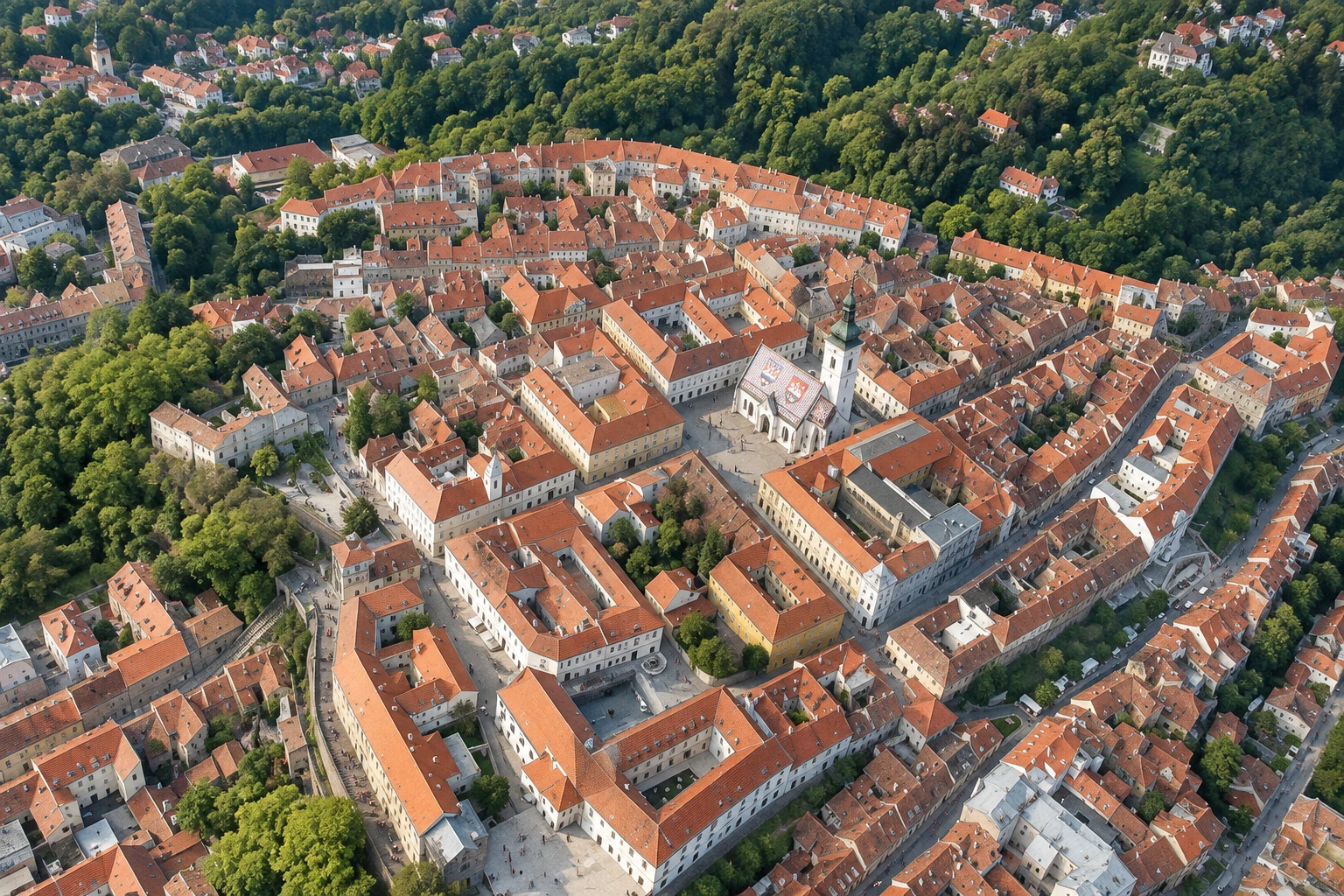
Upper Town · ZagrebGornji grad occupies the upper part of Zagreb, where short streets and stairways link squares and old houses.
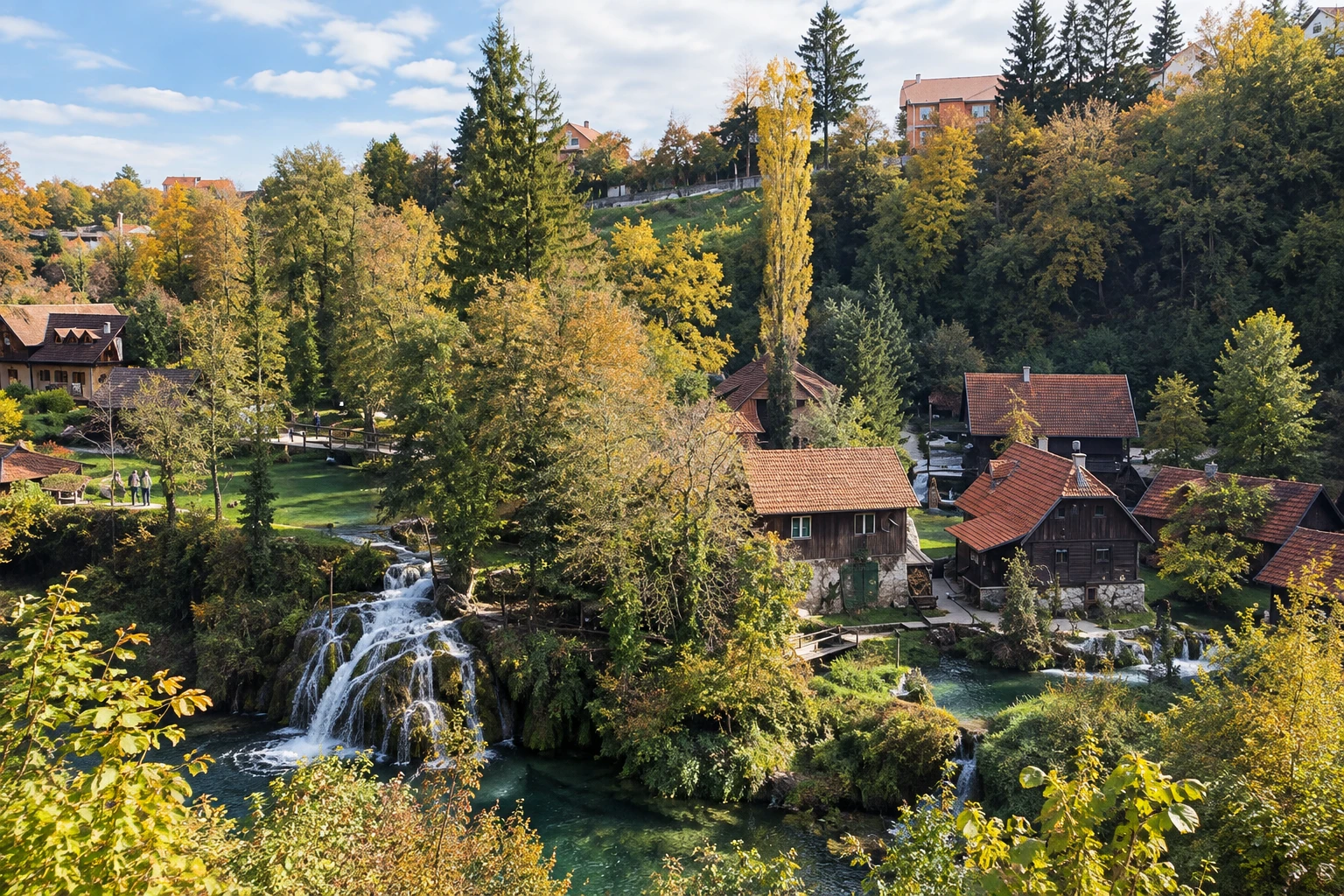
Rastoke · SlunjRastoke is the cluster of houses and old mills at the meeting of the Slunjčica and Korana rivers, in Slunj.
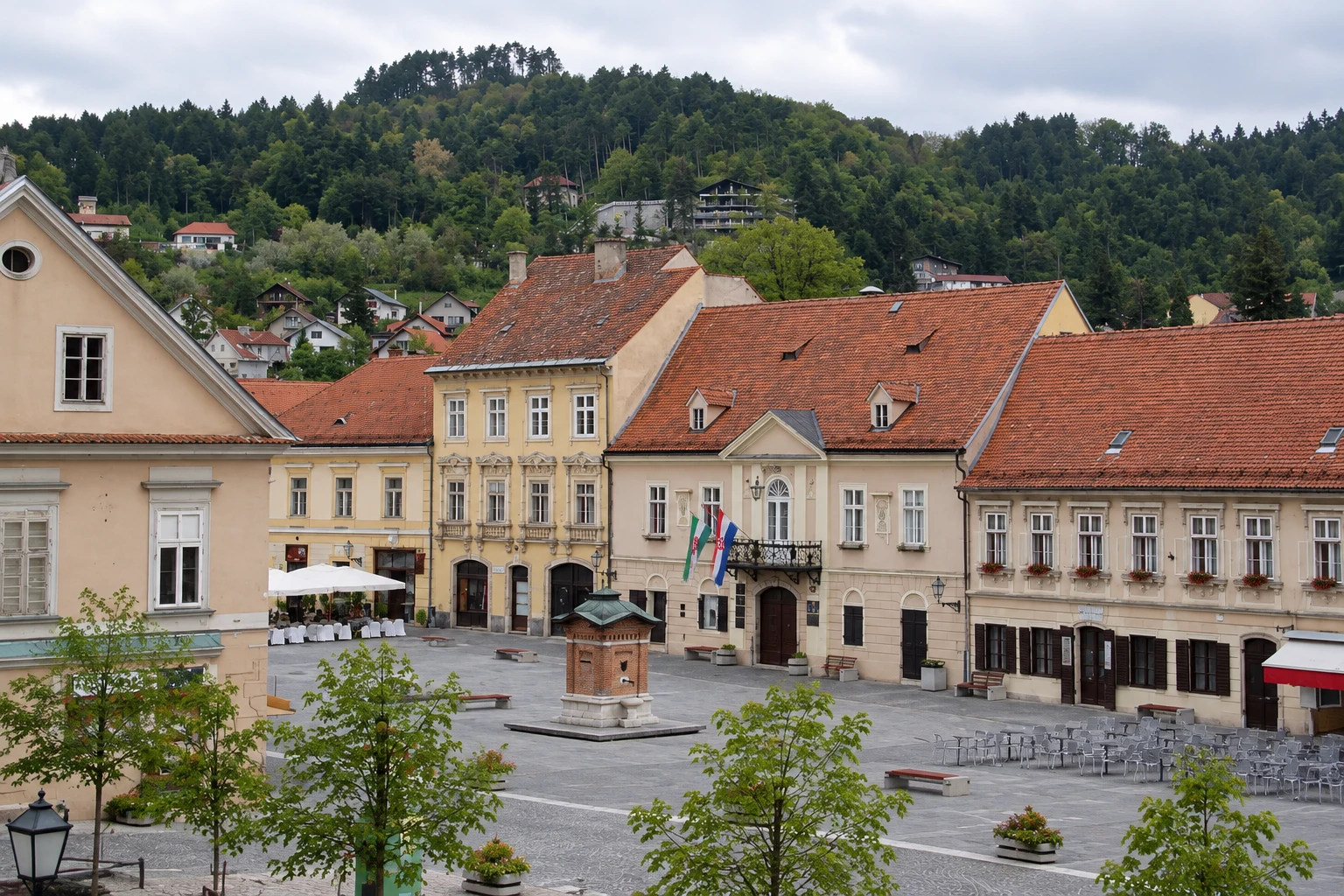
King Tomislav Square · SamoborSamobor’s central square, surrounded by low houses with colorful façades, cafés and shops, with the Gradna stream running alongside.
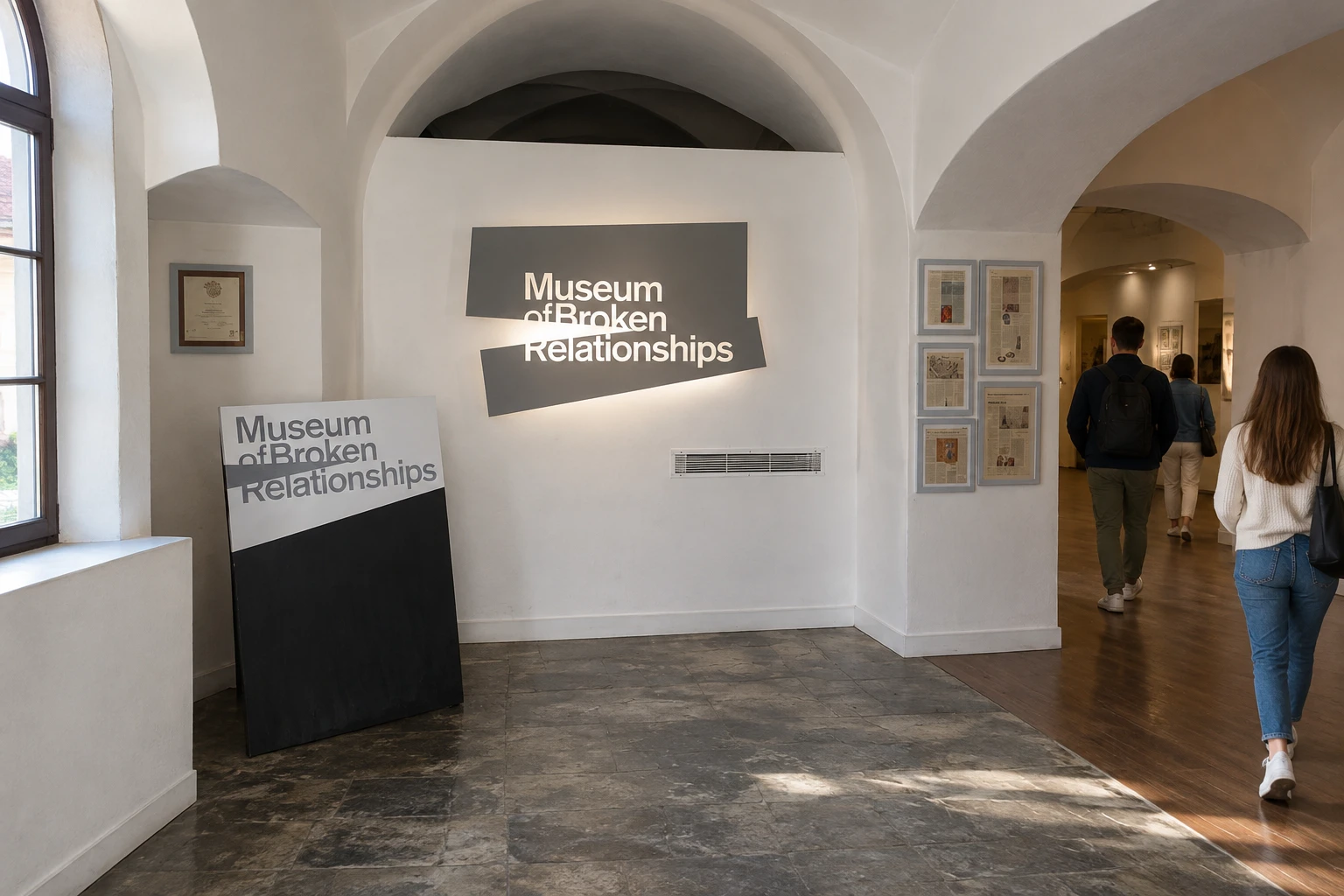
Museum of Broken Relationships · ZagrebThe Muzej prekinutih veza, in Zagreb’s Upper Town, collects objects donated after relationships end.
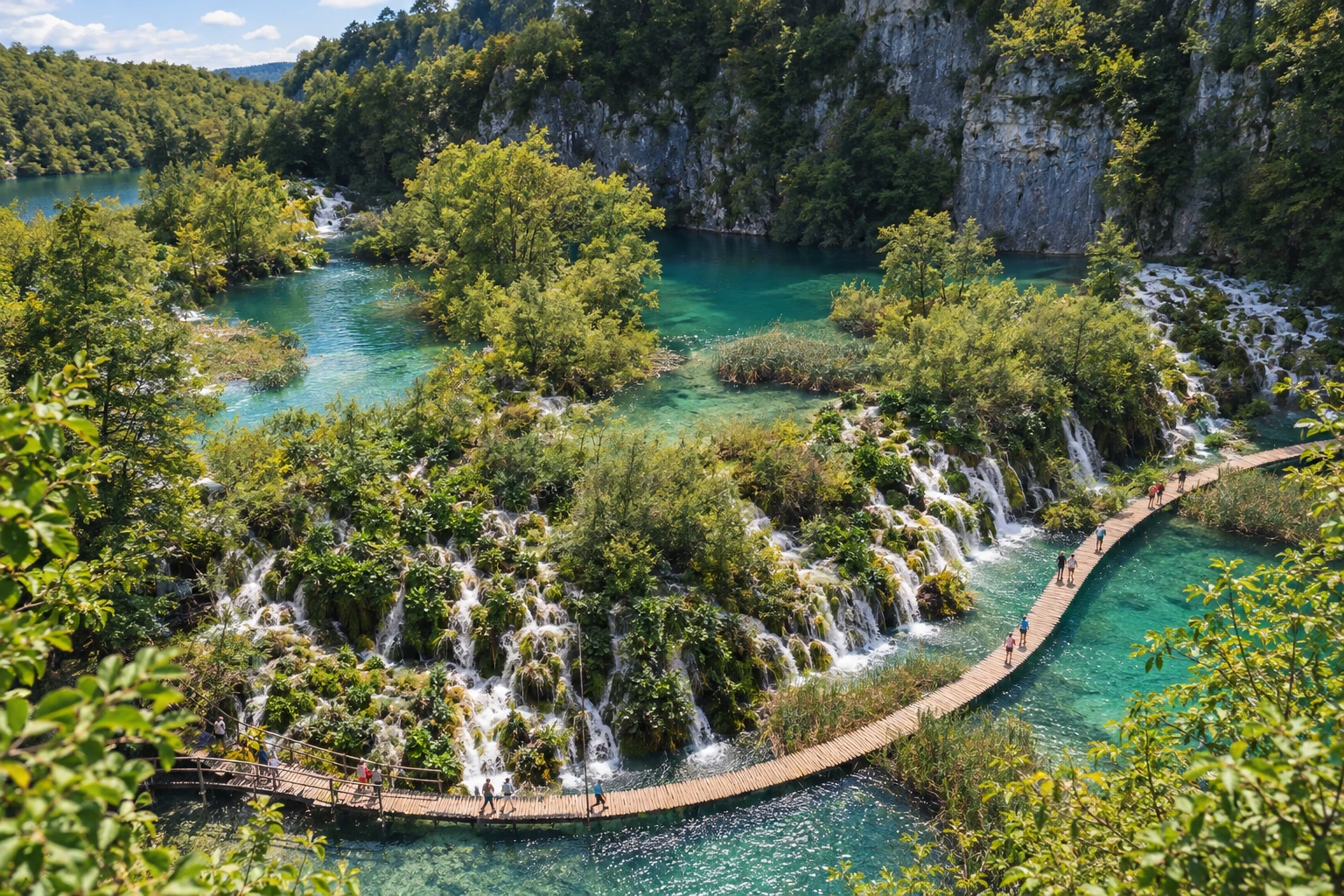
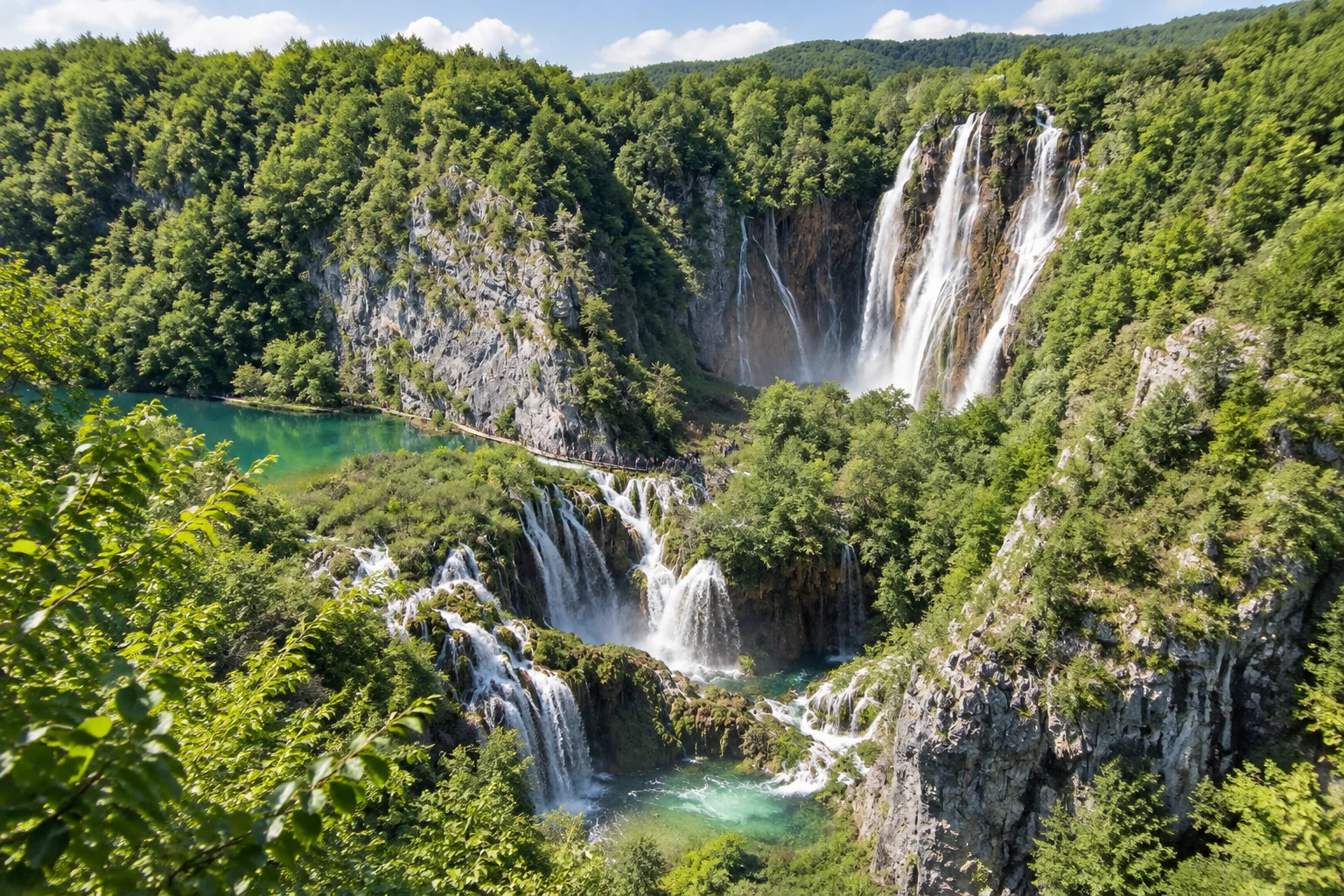
Plitvice Lakes National Park · SlunjThe Nacionalni park Plitvička jezera protects a sequence of lakes separated by travertine barriers in inland Croatia.
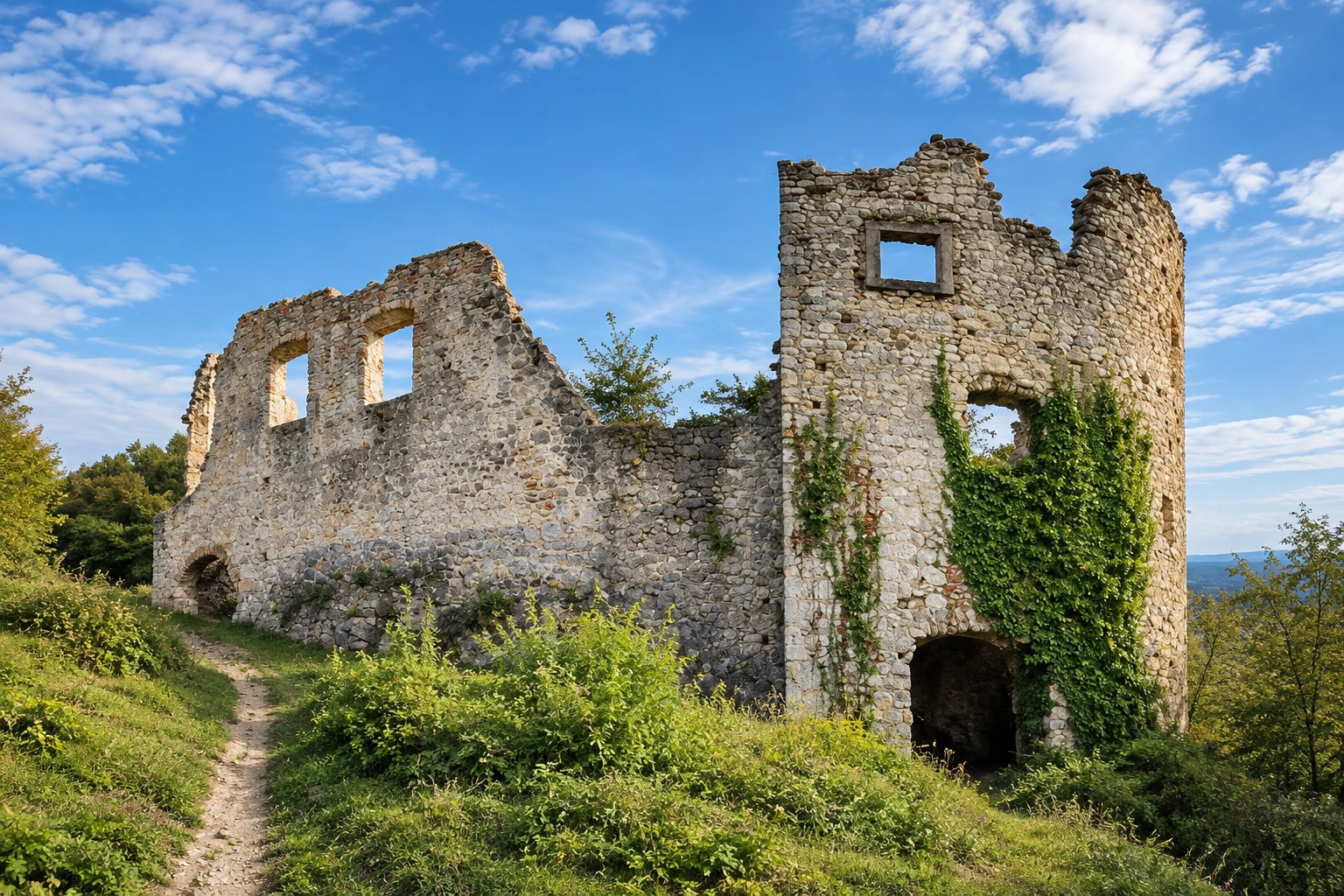
Samobor Castle · SamoborRuins of Samobor’s castle, built around 1270 on Tepec hill above the town.
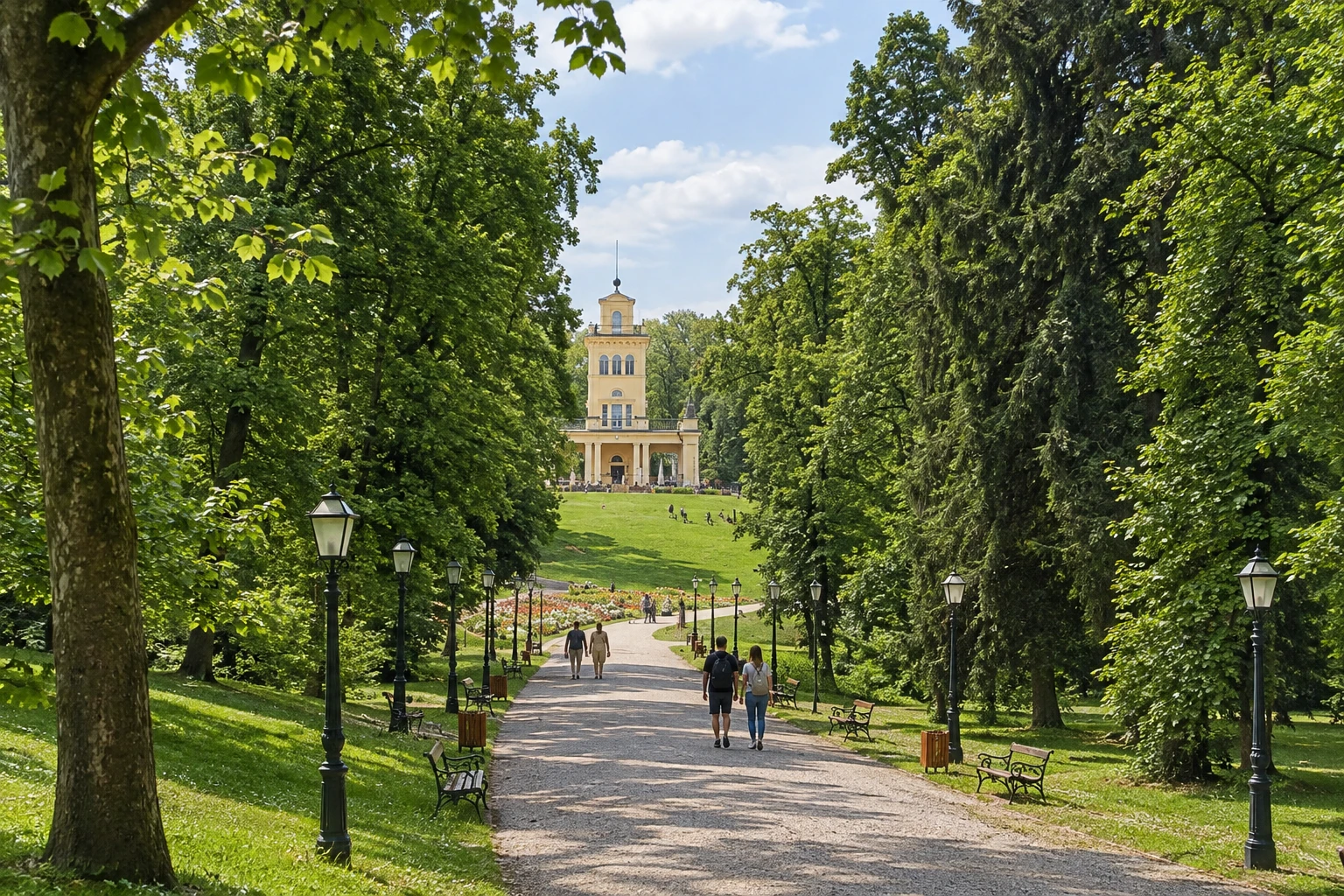
Maksimir Park · ZagrebPark Maksimir lies east of Zagreb’s center and offers a landscape of avenues, clearings, wooded areas and lakes.
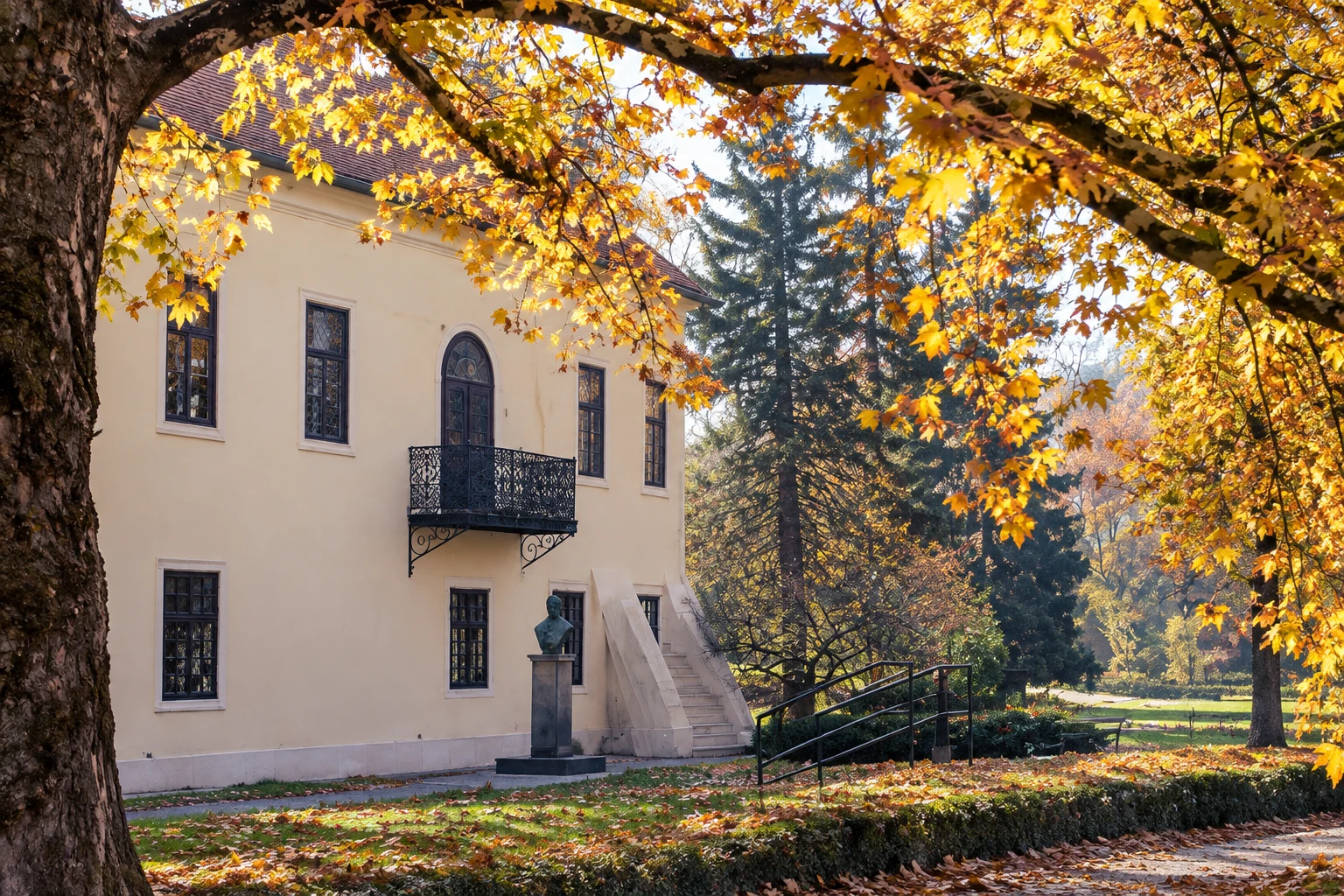
Samobor Museum · SamoborThe town museum is housed in the Baroque manor that belonged to the family of composer Ferdo Livadić, surrounded by a park.
Gornji grad occupies the upper part of Zagreb, where short streets and stairways link squares and old houses. The neighborhood differs from the regular grid of the lower town: here the walk follows the terrain and passes through gateways and façades from different eras.
Rastoke is the cluster of houses and old mills at the meeting of the Slunjčica and Korana rivers, in Slunj. Watercourses split into canals and small drops between wooden and stone buildings. The visit addresses both the use of water and the landscape.
Samobor’s central square, surrounded by low houses with colorful façades, cafés and shops, with the Gradna stream running alongside. It is the starting point for the museum, the castle and the Anindol wood.
The Muzej prekinutih veza, in Zagreb’s Upper Town, collects objects donated after relationships end. The items gain meaning through the stories of those who donated them: the collection deals with emotional bonds through shared mementos, not objects chosen for their material value.
The Nacionalni park Plitvička jezera protects a sequence of lakes separated by travertine barriers in inland Croatia. Water flows over drops between forest and cliffs, forming waterfalls of various sizes. The landscape results from the relationship between rock, water and the organisms involved in forming those barriers.
Ruins of Samobor’s castle, built around 1270 on Tepec hill above the town. Walls and towers remain among the trees, and the walk up from the square follows the Gradna stream.
Park Maksimir lies east of Zagreb’s center and offers a landscape of avenues, clearings, wooded areas and lakes. It’s a different outing from the cobbled streets of the Upper Town: the interest is in the park’s layout and the time spent walking among trees.
The town museum is housed in the Baroque manor that belonged to the family of composer Ferdo Livadić, surrounded by a park. It brings together collections of archaeology, ethnography, art and the history of Samobor.
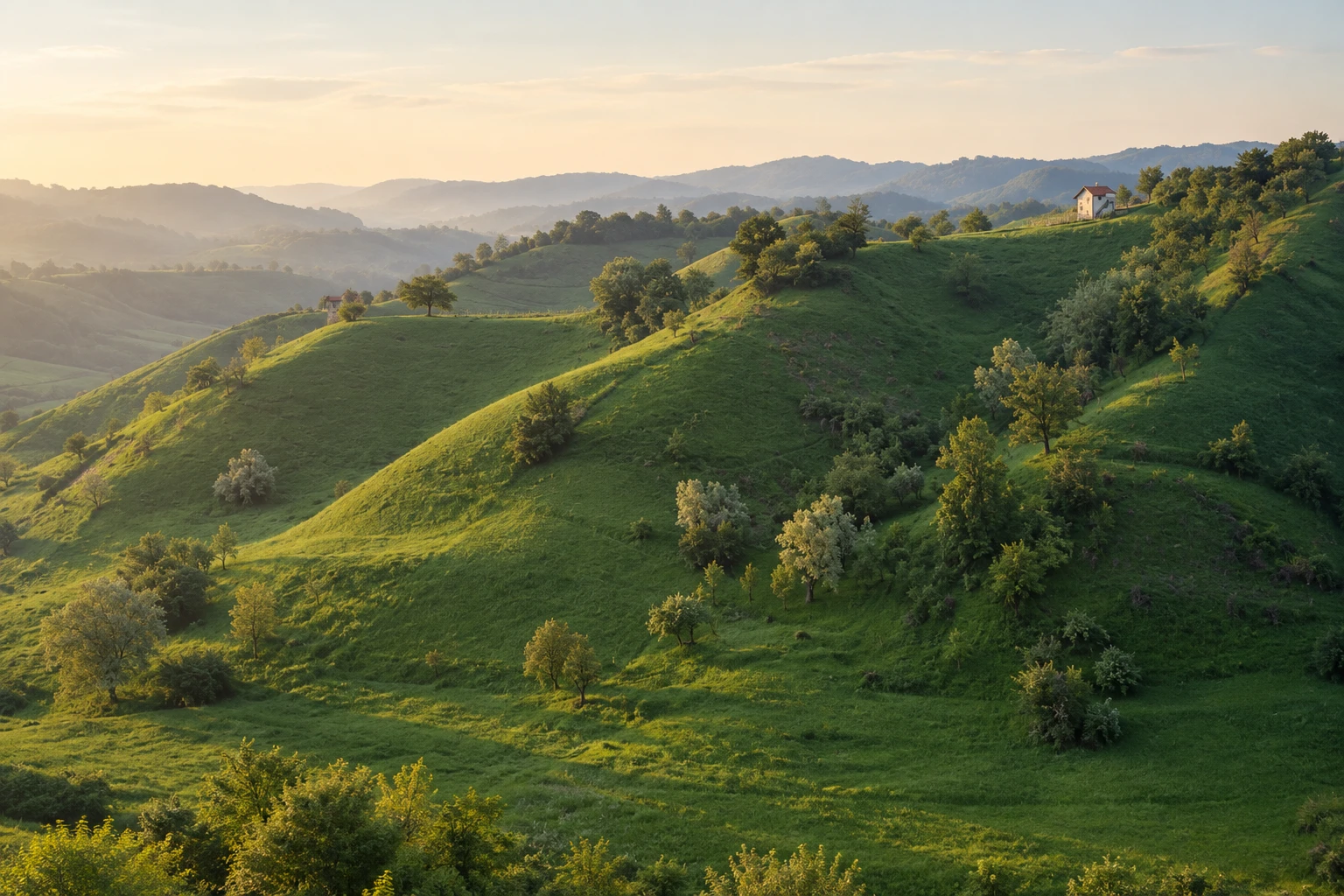
A nature park of low mountains and hills on the border with Slovenia, west of Samobor. It has forests, villages, fields and marked trails, and includes the protected Slapnica landscape.


 Brazil
 Antarctica
 Argentina
 Bolivia
 Chile
 Colombia
 Ecuador
 Falkland Islands (Malvinas)
 French Guiana
 Guyana
 Paraguay
 Peru
 Suriname
 Uruguay
 Venezuela
 Austria
 Belgium
 Denmark
 Finland
 France
 Germany
 Greece
 Hungary
 Iceland
 Ireland
 Italy
 Luxembourg
 Norway
 Poland
 Portugal
 Slovakia
 Slovenia
 Spain
 Sweden
 Switzerland
 the Czech Republic
 the Netherlands
 the United Kingdom
 Turkey
 Bermuda
 Canada
 Greenland
 Mexico
 Saint Pierre and Miquelon
 the United States
 the Dominican Republic
 Japan
 Egypt
 South Africa
 Australia
 Fiji
 New Zealand
 Papua New Guinea