Vukovar · Vukovar-Syrmia · Museum
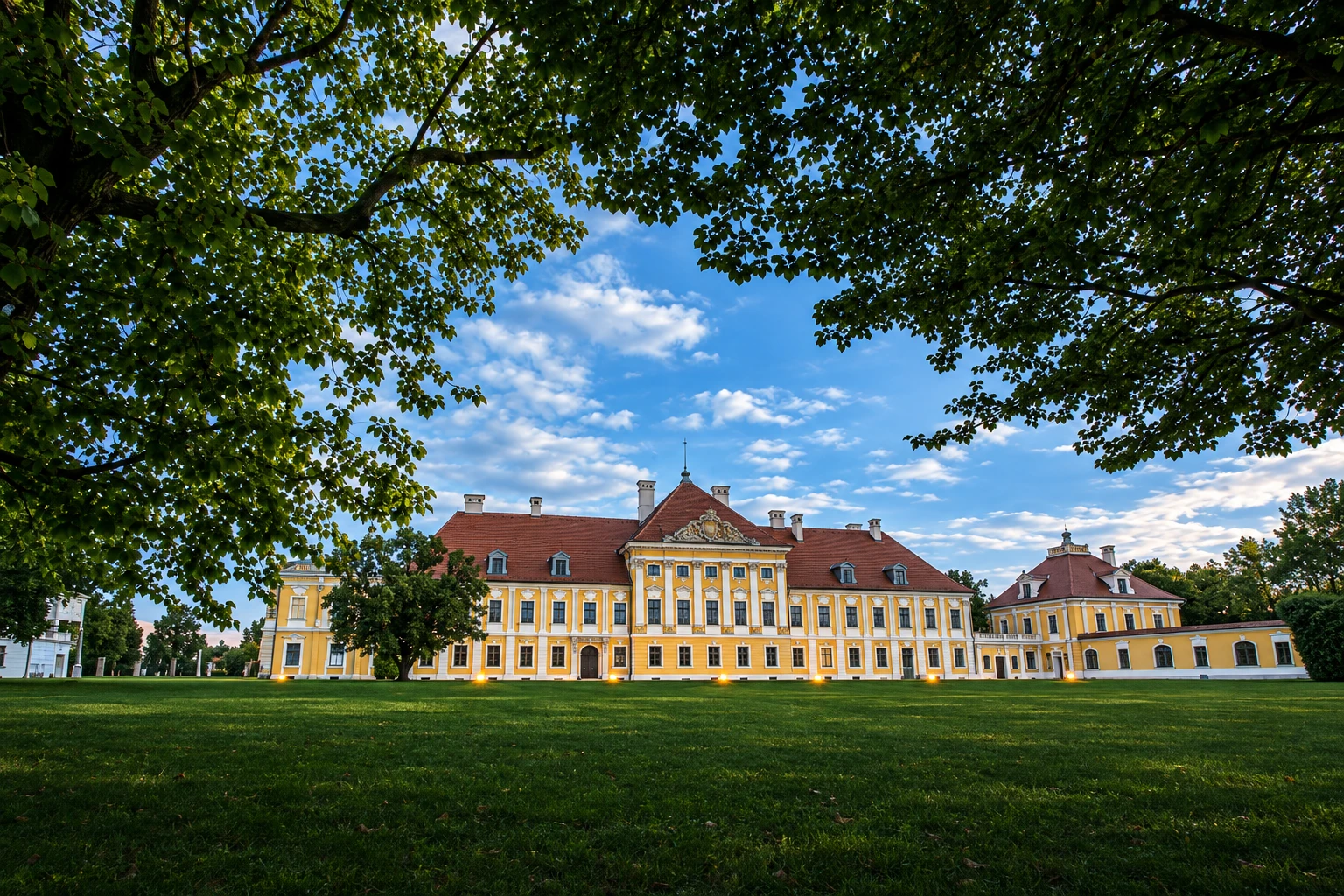
Eltz Castle
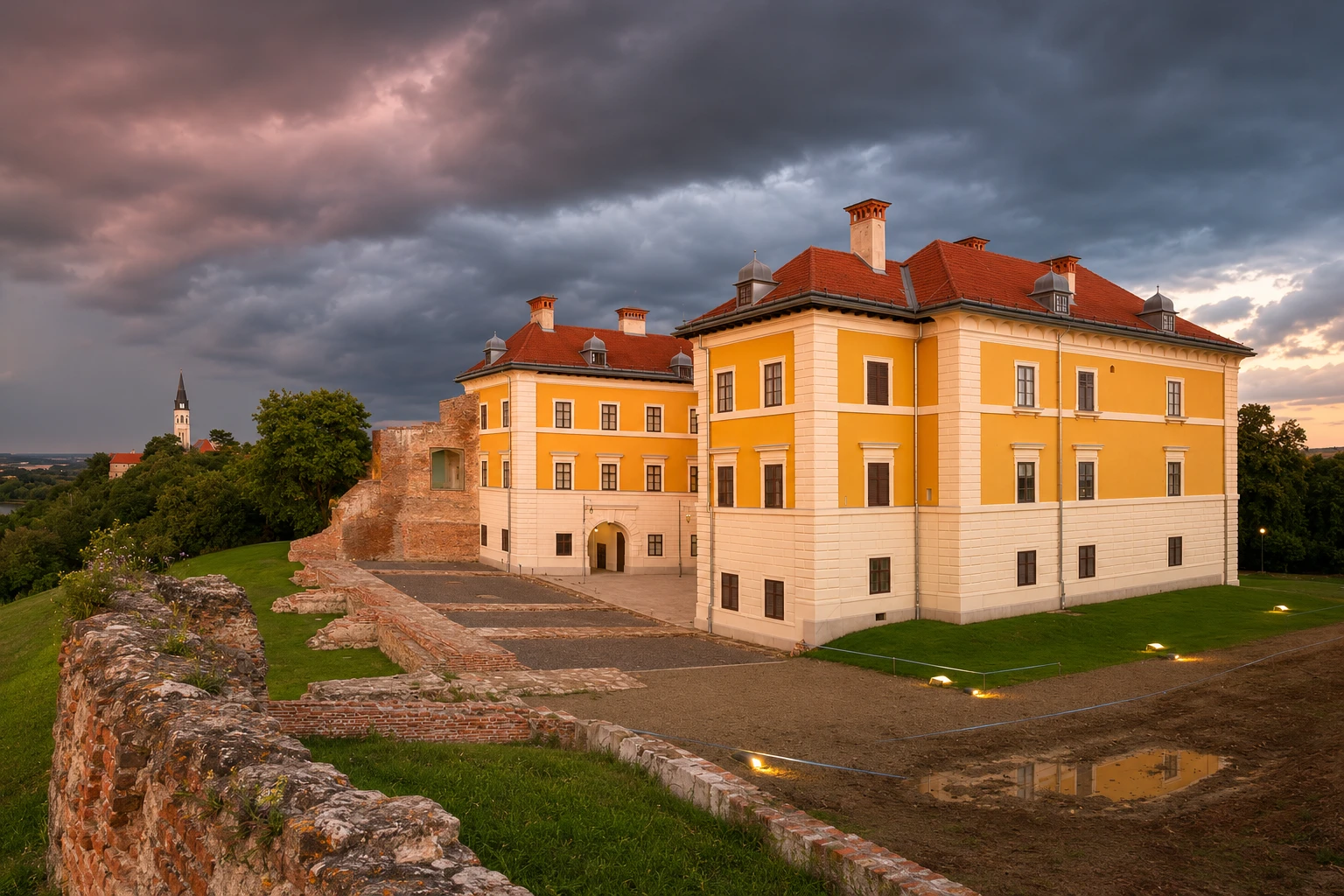
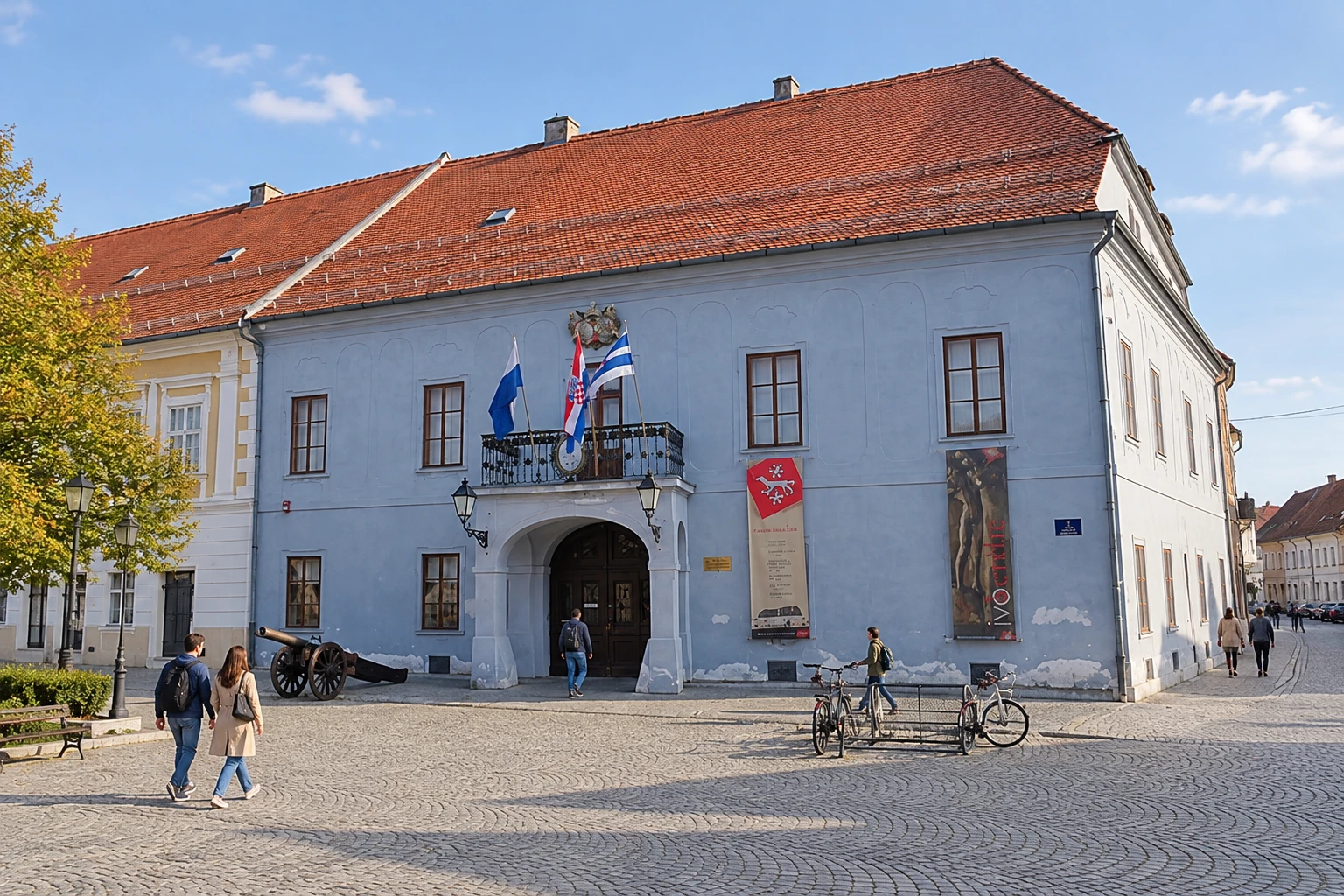
On the Danube bank, Dvorac Eltz houses Vukovar’s municipal museum. The exhibition traces the city’s history through archaeology, everyday objects, costumes and works of art.

 Search
 Brazil
 Antarctica
 Argentina
 Bolivia
 Chile
 Colombia
 Ecuador
 Falkland Islands (Malvinas)
 French Guiana
 Guyana
 Paraguay
 Peru
 Suriname
 Uruguay
 Venezuela
 Austria
 BelgiumCroatia
 Denmark
 Finland
 France
 Germany
 Greece
 Hungary
 Iceland
 Ireland
 Italy
 Luxembourg
 Norway
 Poland
 Portugal
 Slovakia
 Slovenia
 Spain
 Sweden
 Switzerland
 the Czech Republic
 the Netherlands
 the United Kingdom
 Turkey
 Bermuda
 Canada
 Greenland
 Mexico
 Saint Pierre and Miquelon
 the United States
 the Dominican Republic
 JapanTurkey
 Egypt
 South Africa
 Australia
 Fiji
 New Zealand
 Papua New Guinea
Osijek-Baranja · Vukovar-Syrmia
8 places to visit, chosen by the Cidade Turismo guide.
Illustrative images. The pictures in this guide are illustrations based on the real place, not photographs, and may differ from it.
To start
One by one
On the Danube bank, Dvorac Eltz houses Vukovar’s municipal museum. The exhibition traces the city’s history through archaeology, everyday objects, costumes and works of art.
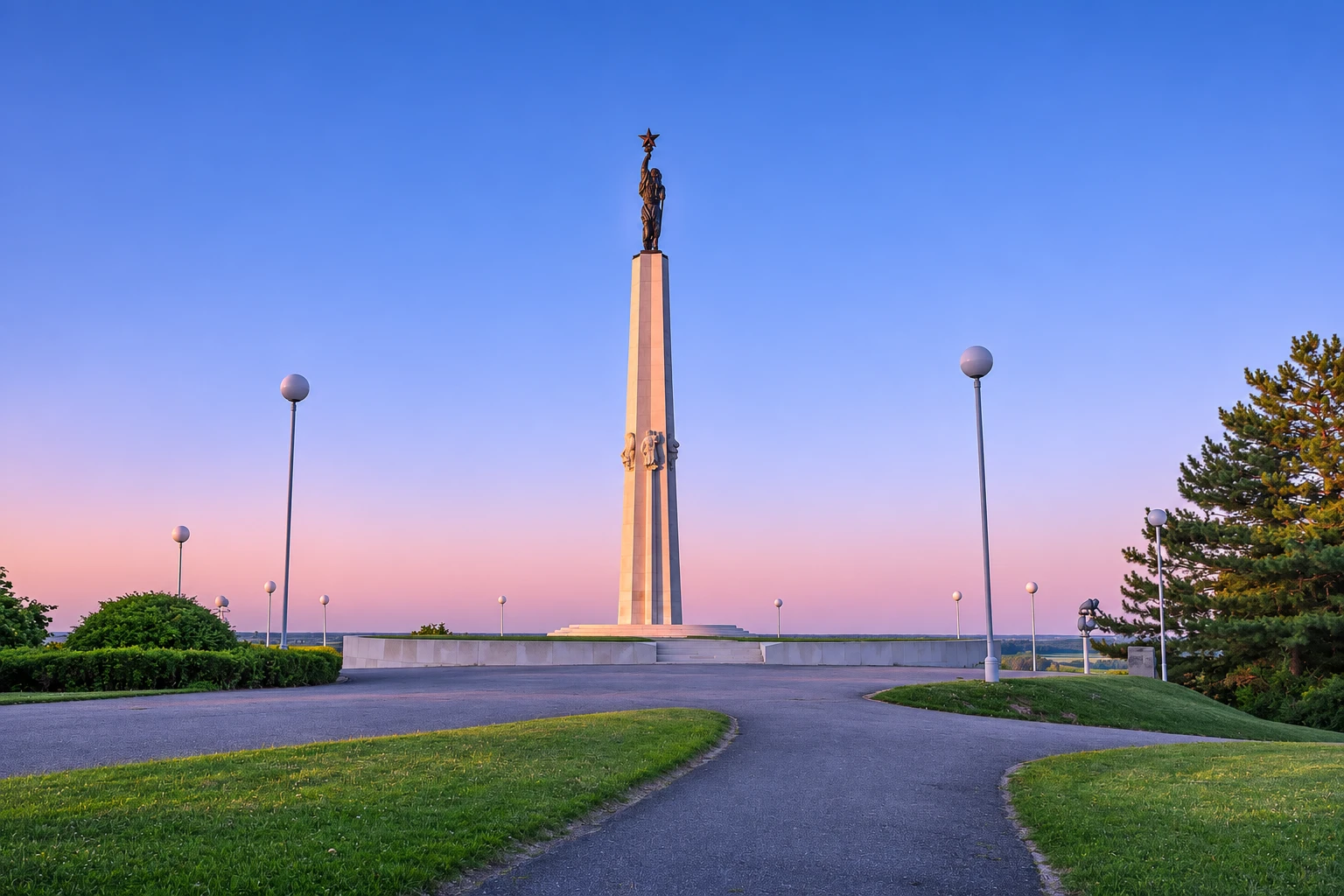
On the plateau above the village of Batina, an esplanade and a column known as Julka mark the memorial of the November 1944 battle. From above, the Danube appears between the slope of Baranja and the wooded plain on the far bank.
The Ilok museum occupies the Dvorac Odescalchi inside the medieval enclosure. The collection covers local archaeology and history. From the courtyard, the ground slopes down toward the wood and the Danube.
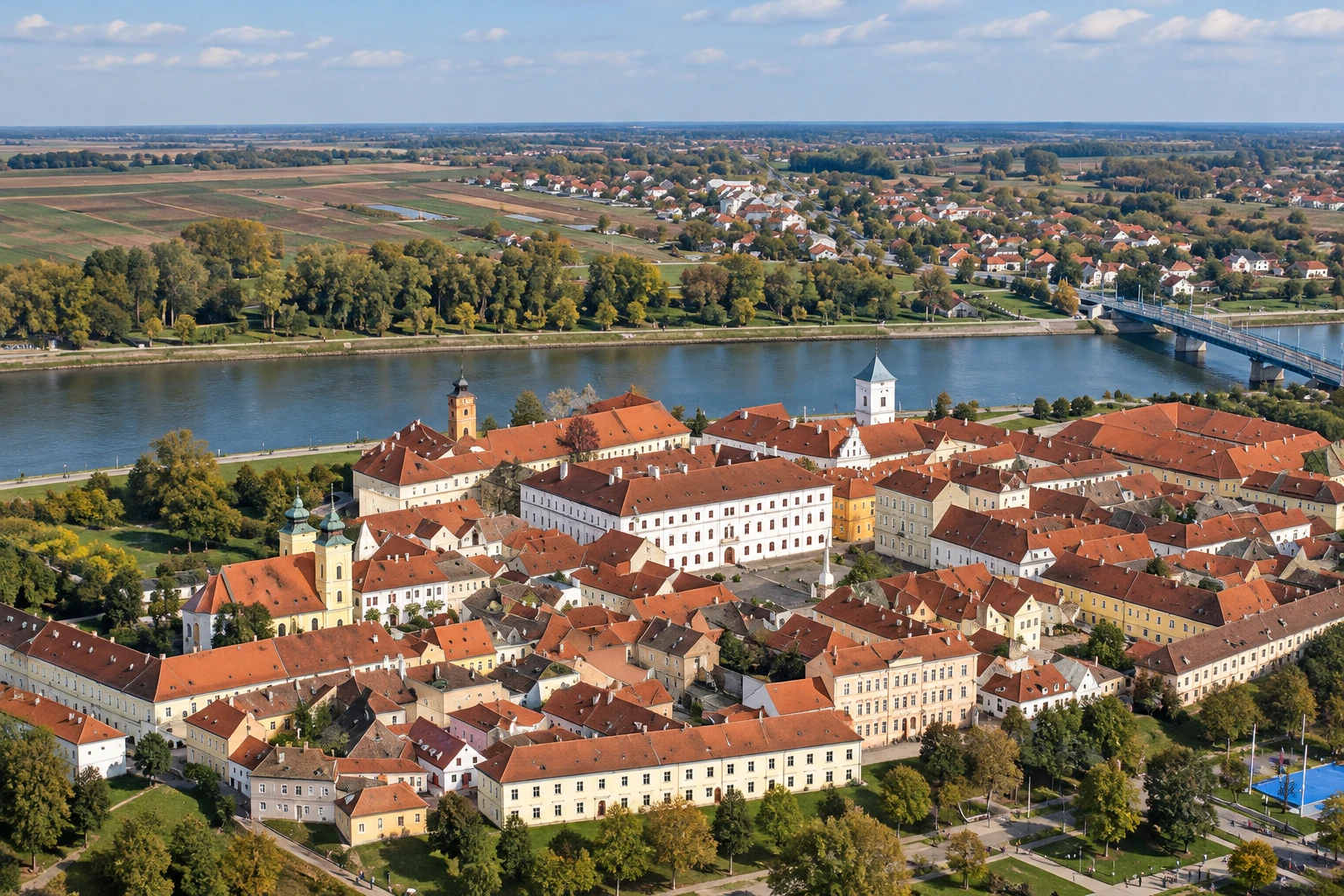
Tvrđa is Osijek’s baroque core beside the Drava river. The complex gathers streets, squares and buildings of different uses within the former fortified area. The visit allows you to experience an inland Croatian urban landscape distinct from the stone towns of the coast.
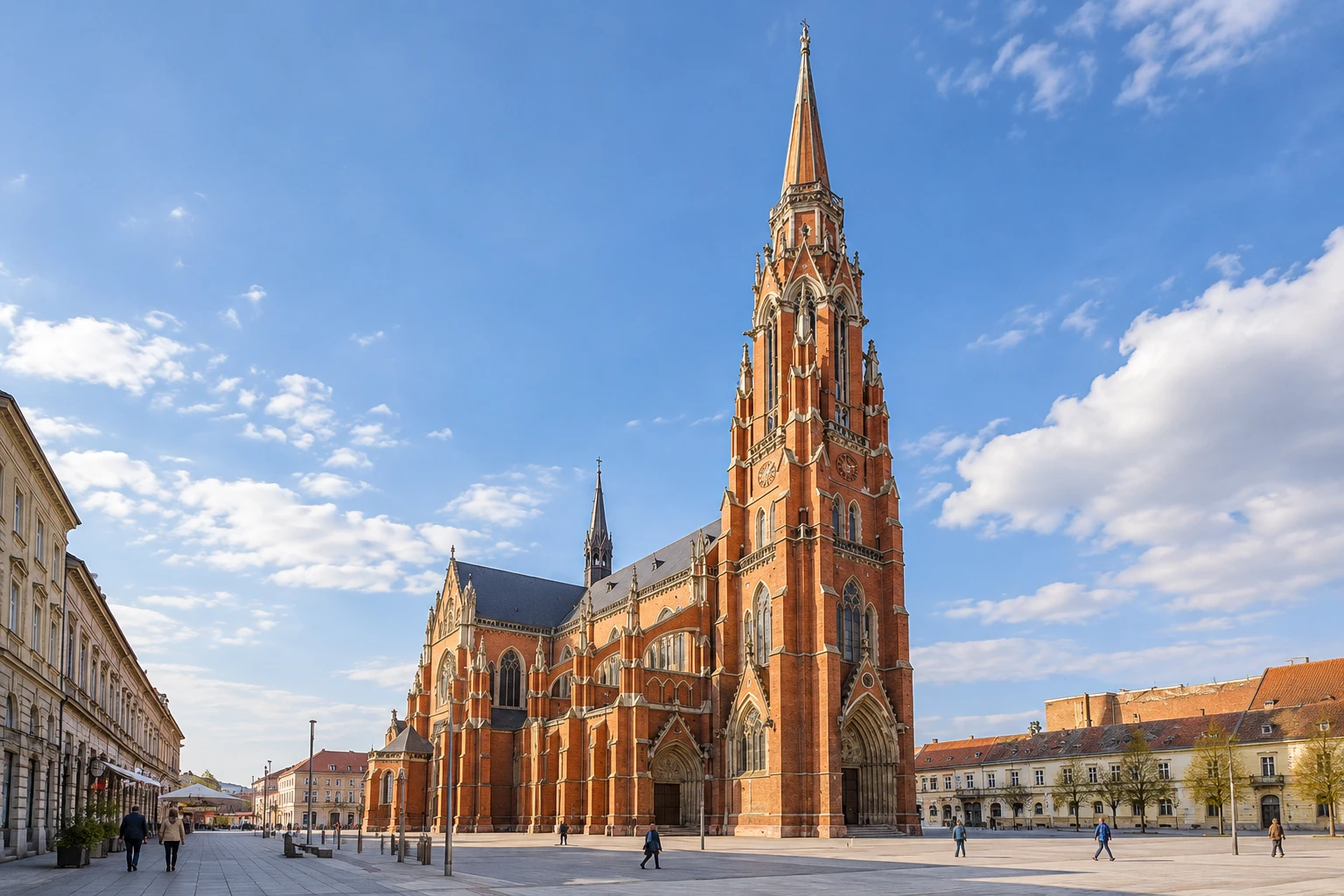
The Konkatedrala sv. Petra i Pavla occupies a prominent position in the central part of Osijek. The neo-Gothic church is notable for its brickwork and its tall tower, which helps orient a walk through the city. Its title as a co-cathedral reflects the religious organization, without implying it is the city’s administrative seat.
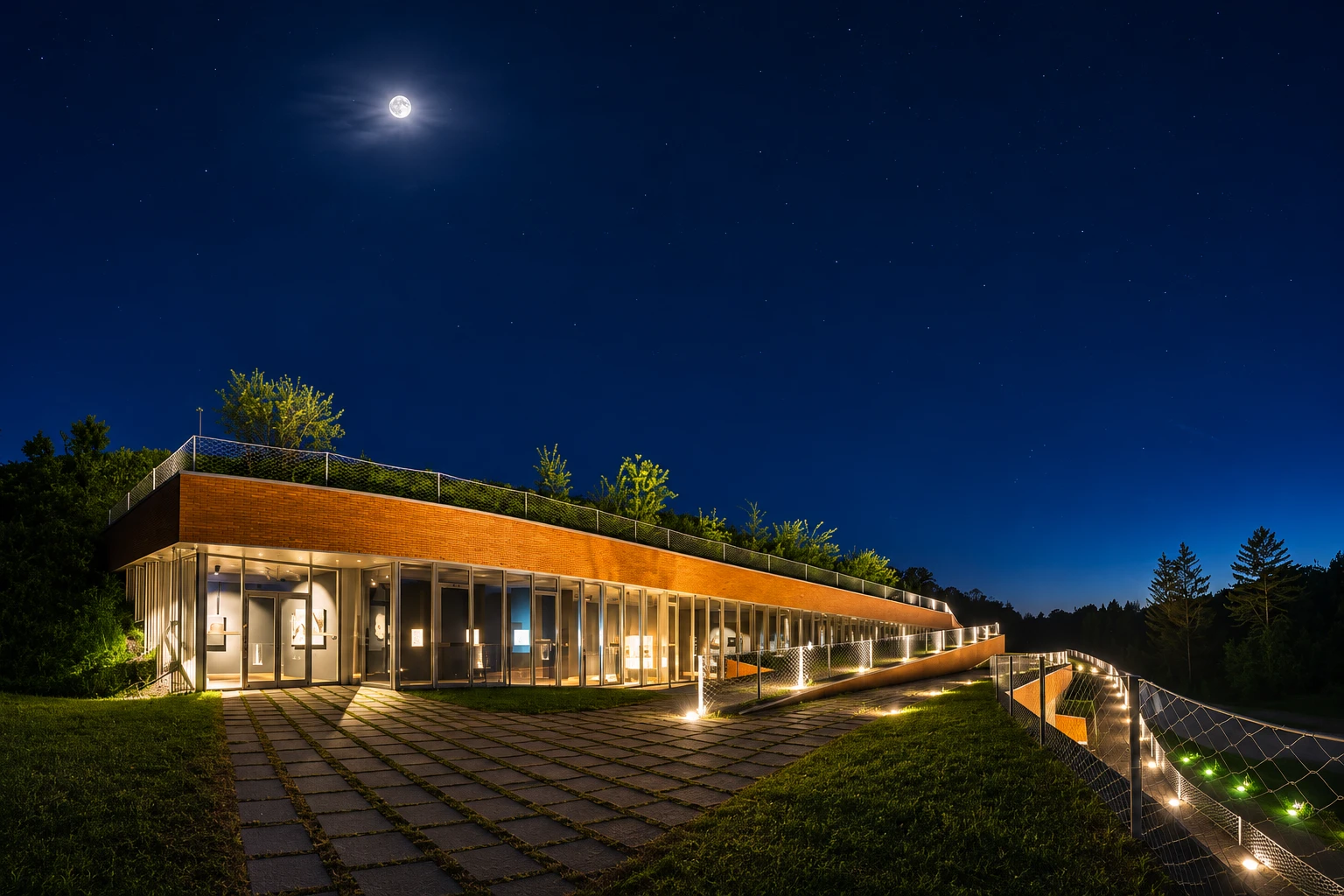
Beside the Vučedol archaeological site, the museum presents the Copper Age culture identified in the region. The rooms cover ceramics, metallurgy and daily life. The building follows the slope from the plateau down to the Danube bank.
The Muzej Slavonije is located in Tvrđa, Osijek’s Baroque quarter. The museum displays collections related to the history, culture, and material life of Slavonia. Its location allows an internal visit to be connected with the streets and squares of the historic complex.
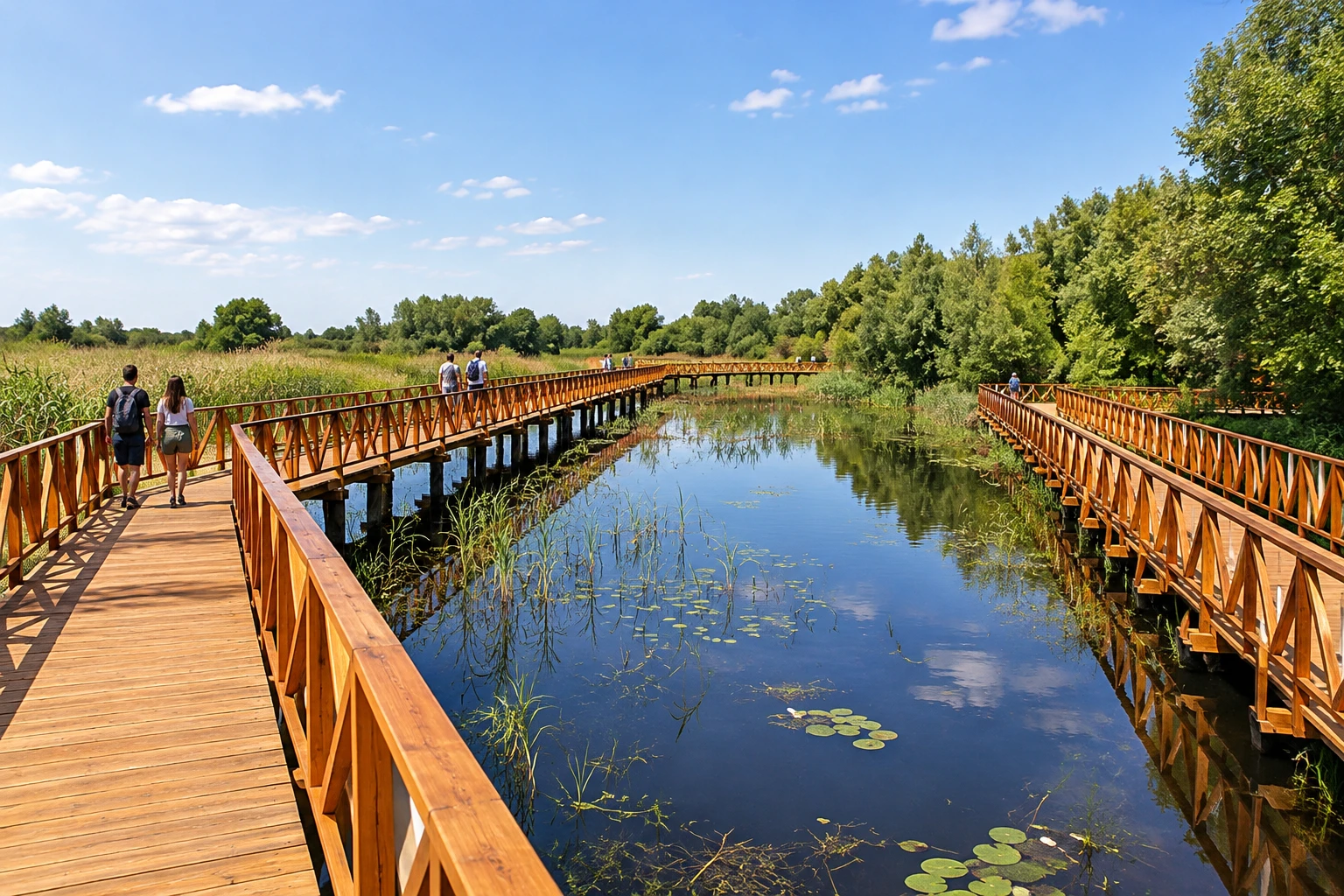
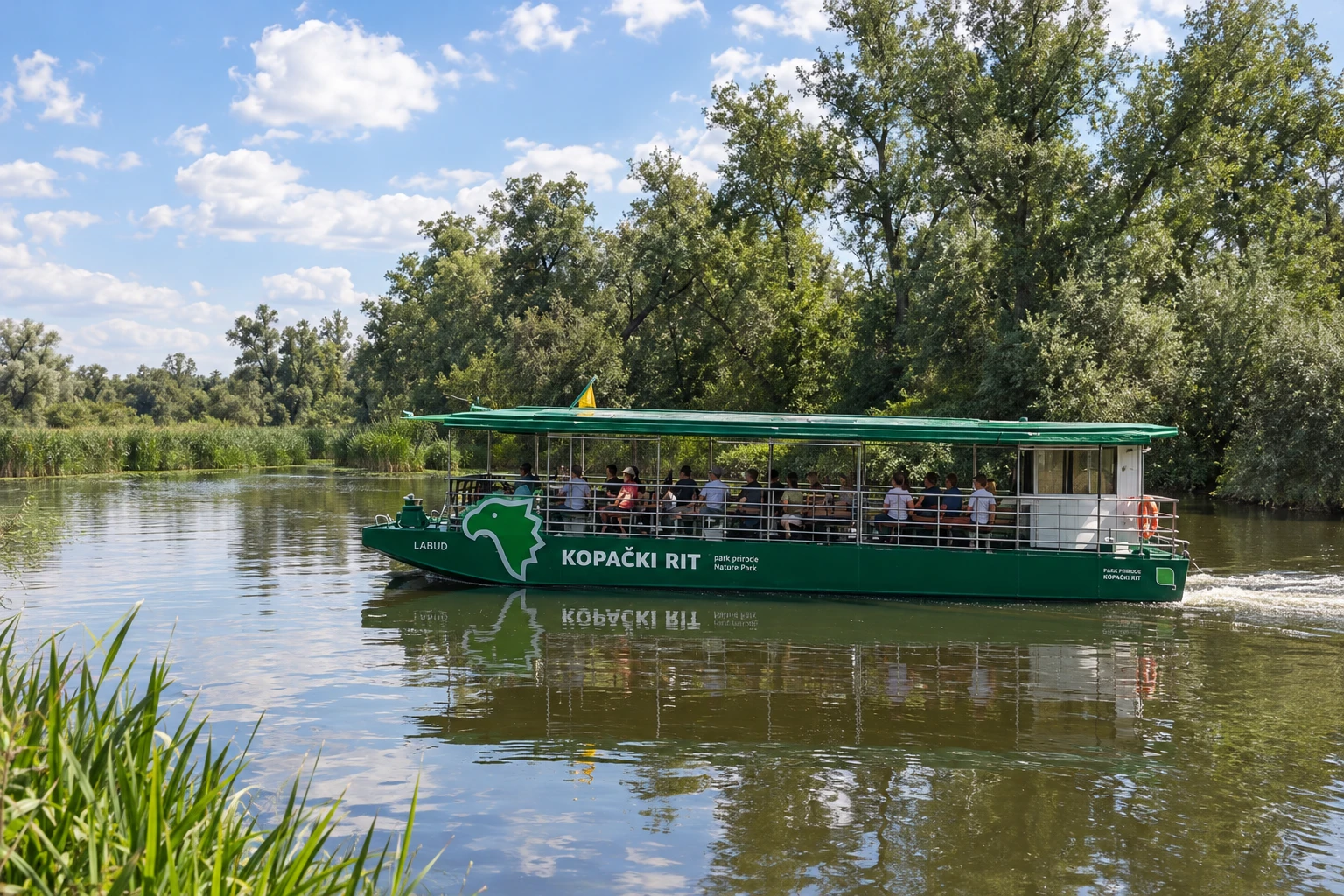
The Park prirode Kopački rit protects a wetland in the Baranja region, near Osijek and the confluence of the Drava and Danube systems. Channels, lakes and flooded areas change appearance with water levels. The landscape should be experienced via the park’s authorized programs and trails.
To plan