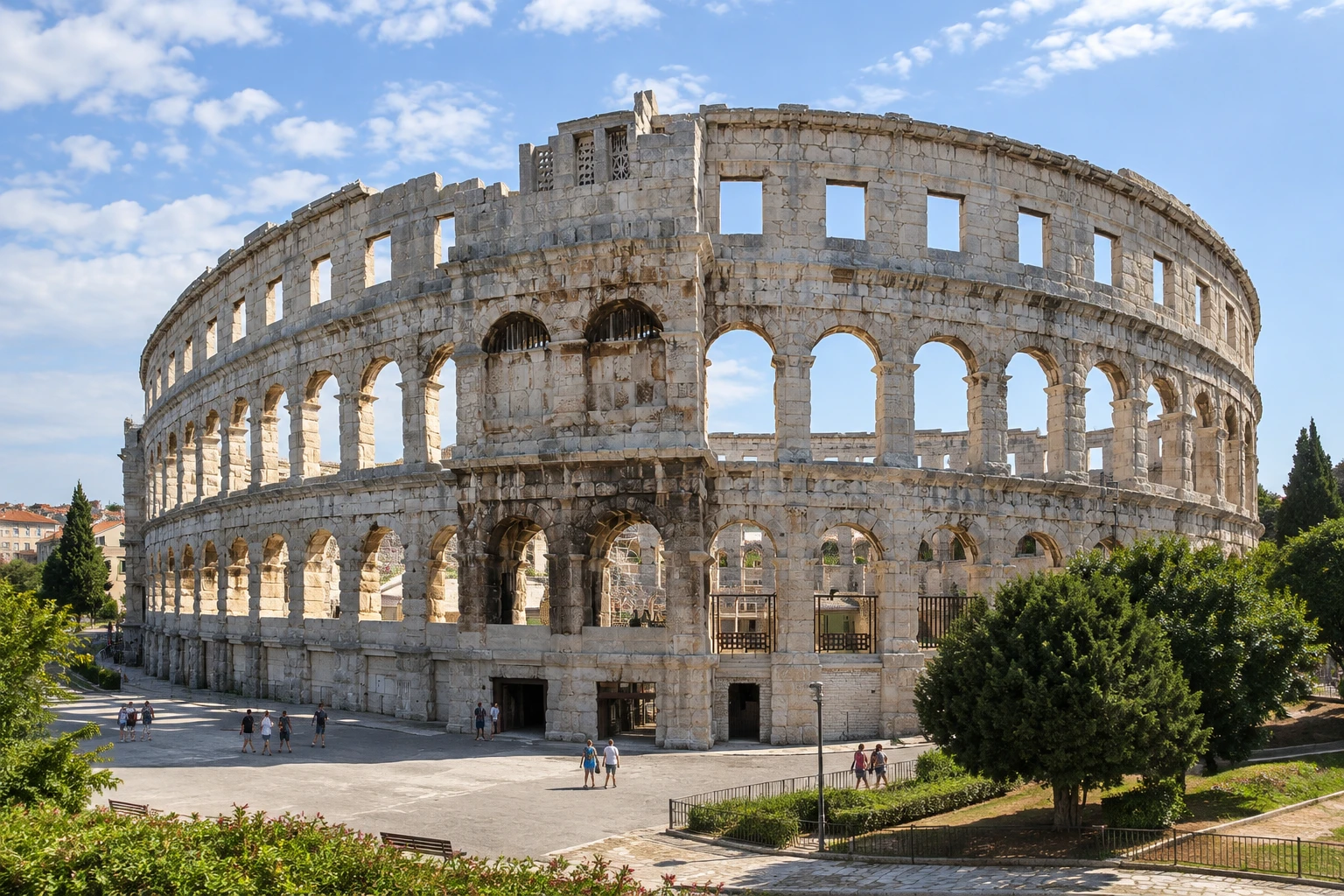
The Arena u Puli is Pula’s Roman amphitheatre. The limestone ring preserves a sequence of arcades that reveal the structure of an ancient entertainment building. The sloping ground explains why the façades do not have the same height on all sides.
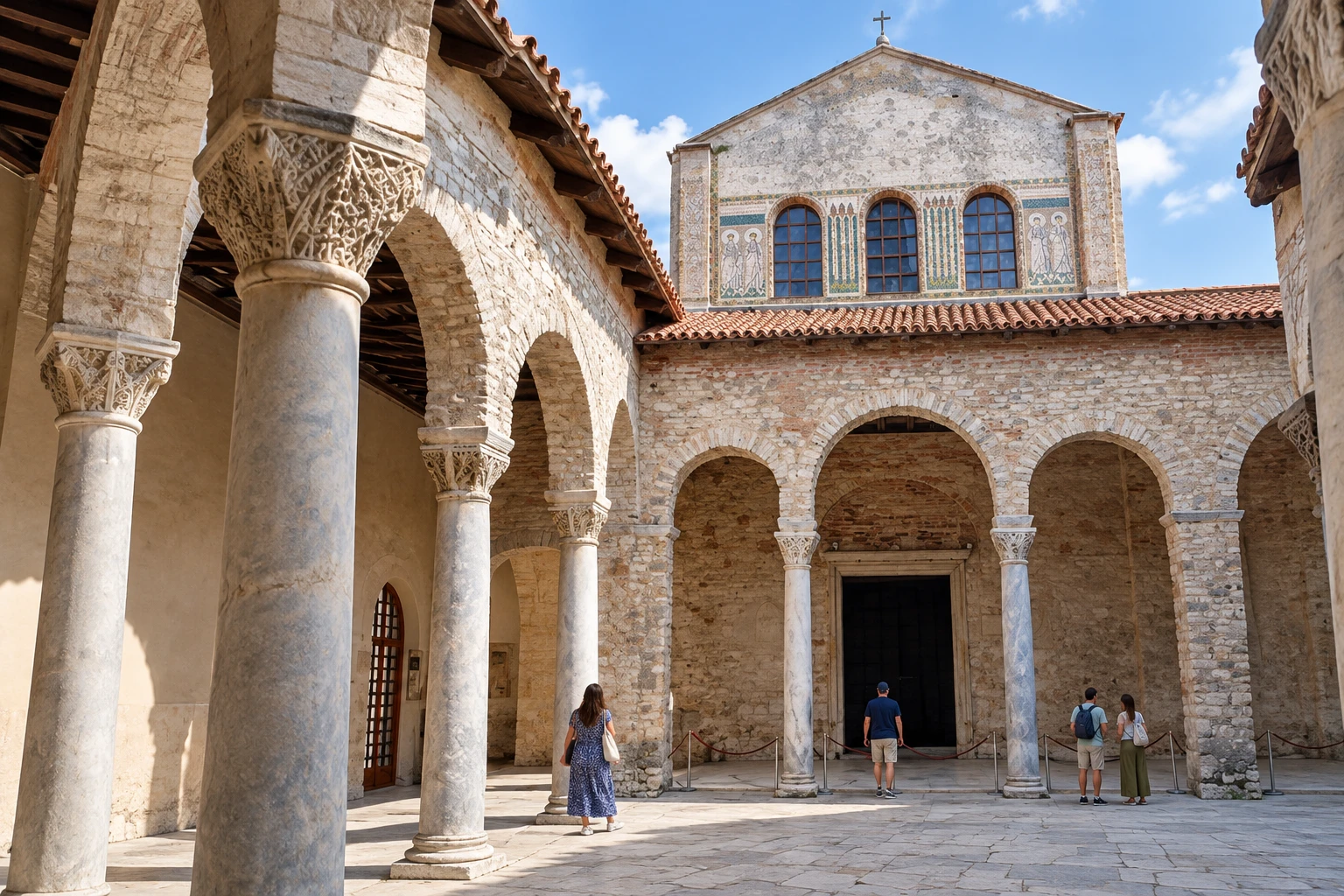
The Eufrazijeva bazilika is part of Poreč’s episcopal complex. The basilica is known for its Byzantine-period mosaics that cover the altar area and depict religious figures, vegetal details and gold backgrounds. The visit is meaningful for the ensemble of spaces, not just the main nave.
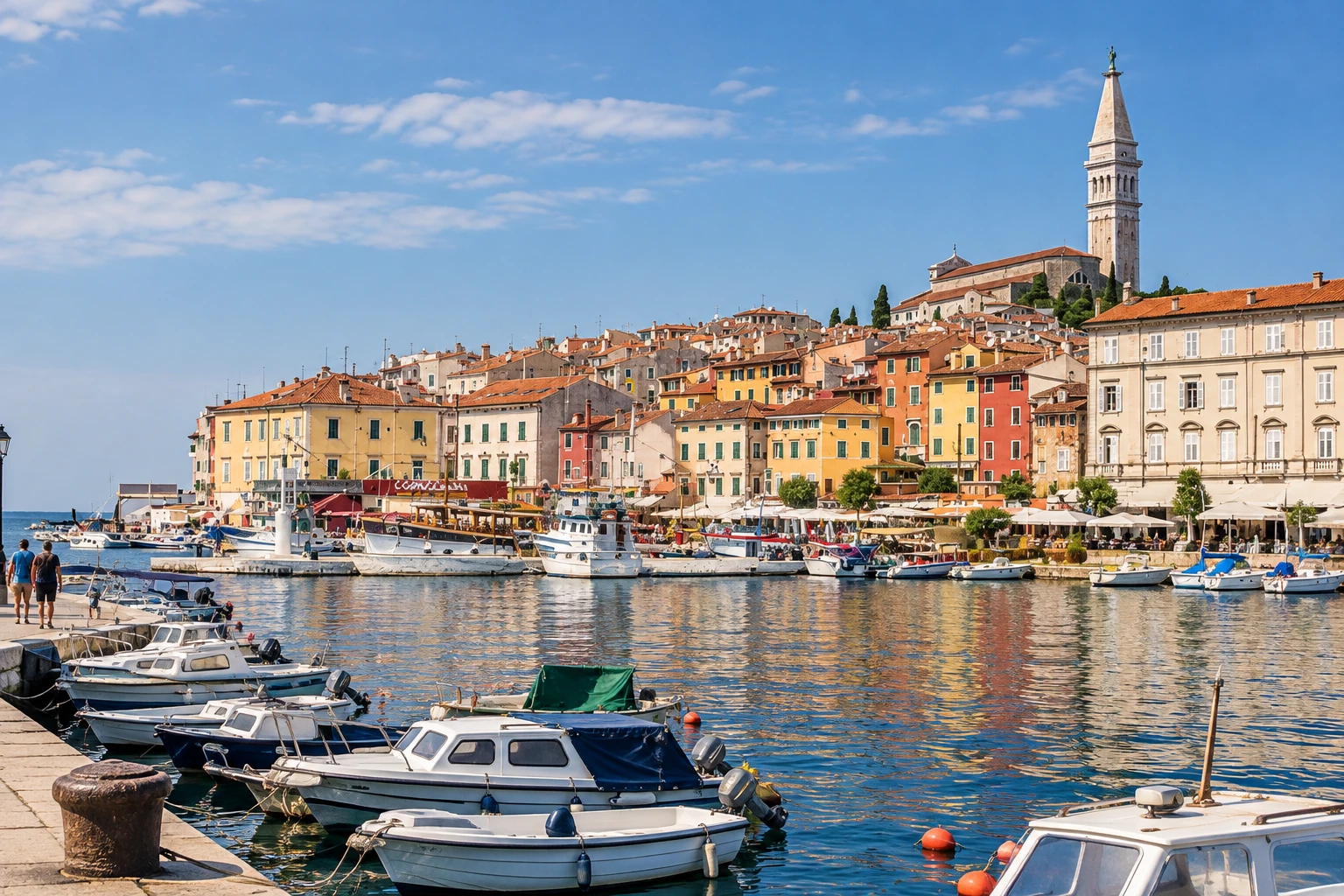
The Stari grad of Rovinj occupies a peninsula of narrow streets rising from the harbor up to the church of Santa Eufemia. The façades come close to the water and the houses follow the terrain. The walk makes it possible to perceive how the urban core adapted to a small space by the sea.
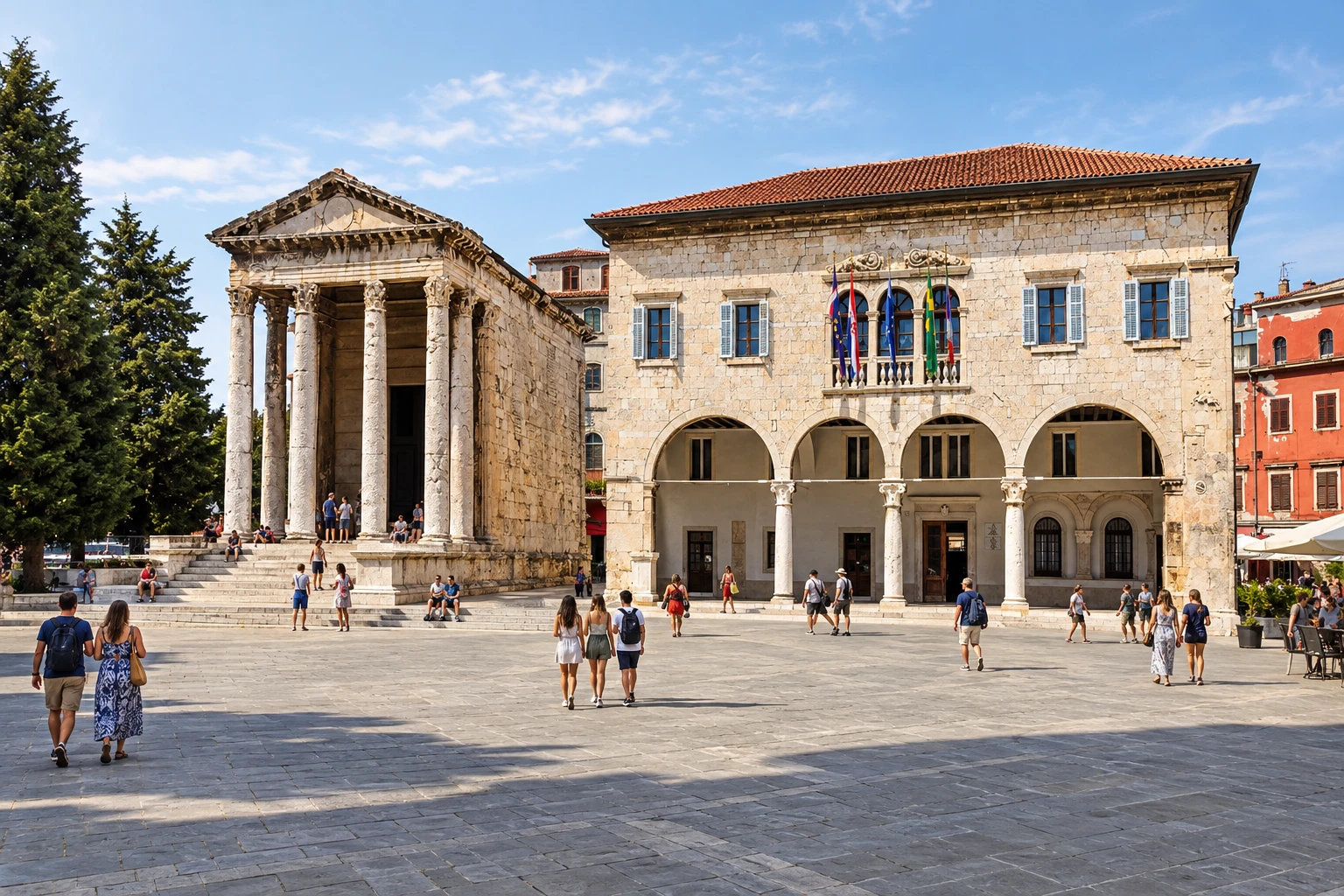
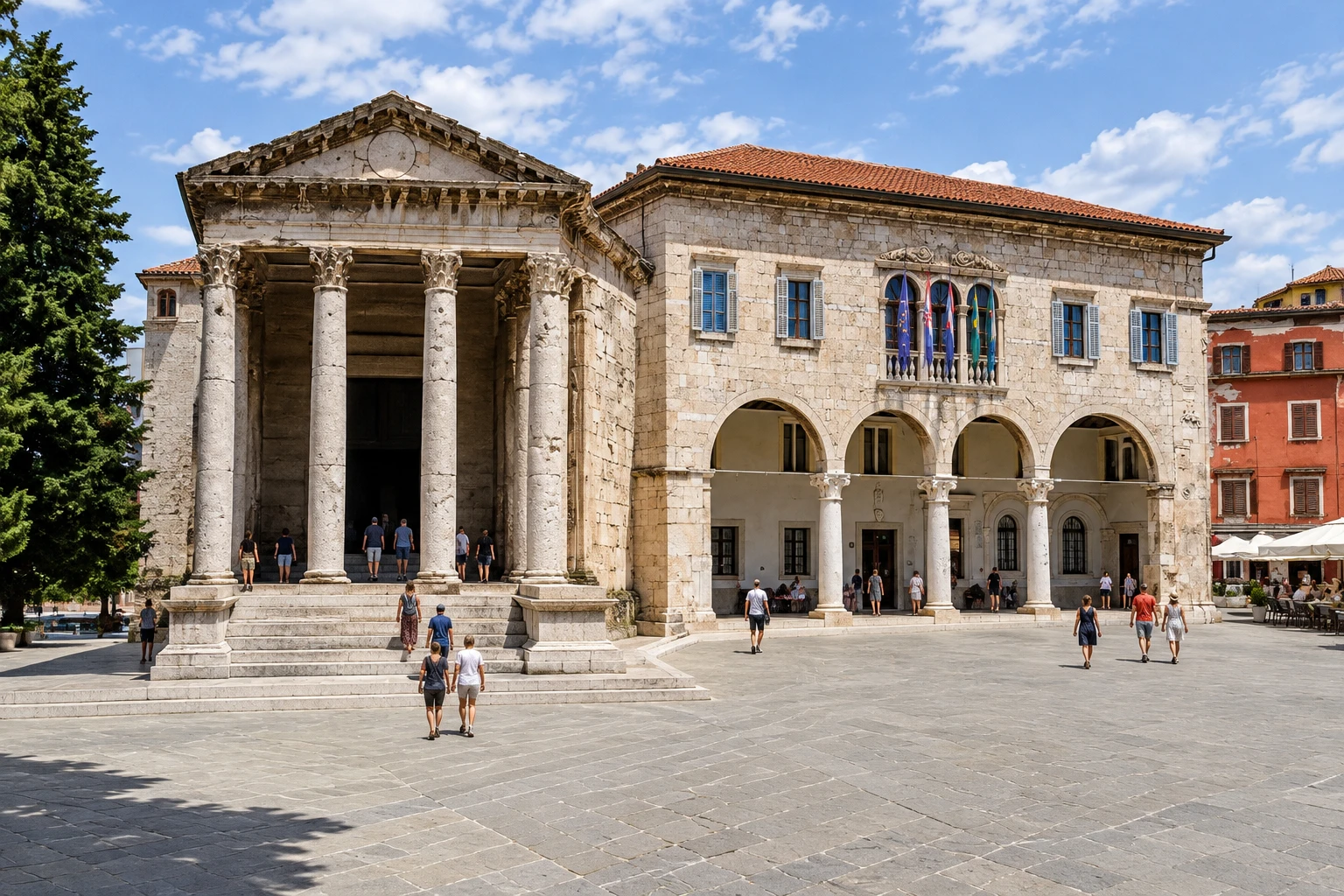
The Augustov hram occupies one side of Pula’s ancient forum. The Roman temple has a raised portico on a podium and columns on the façade. Its position by the square allows you to appreciate its scale relative to the buildings that formed around it over the centuries.
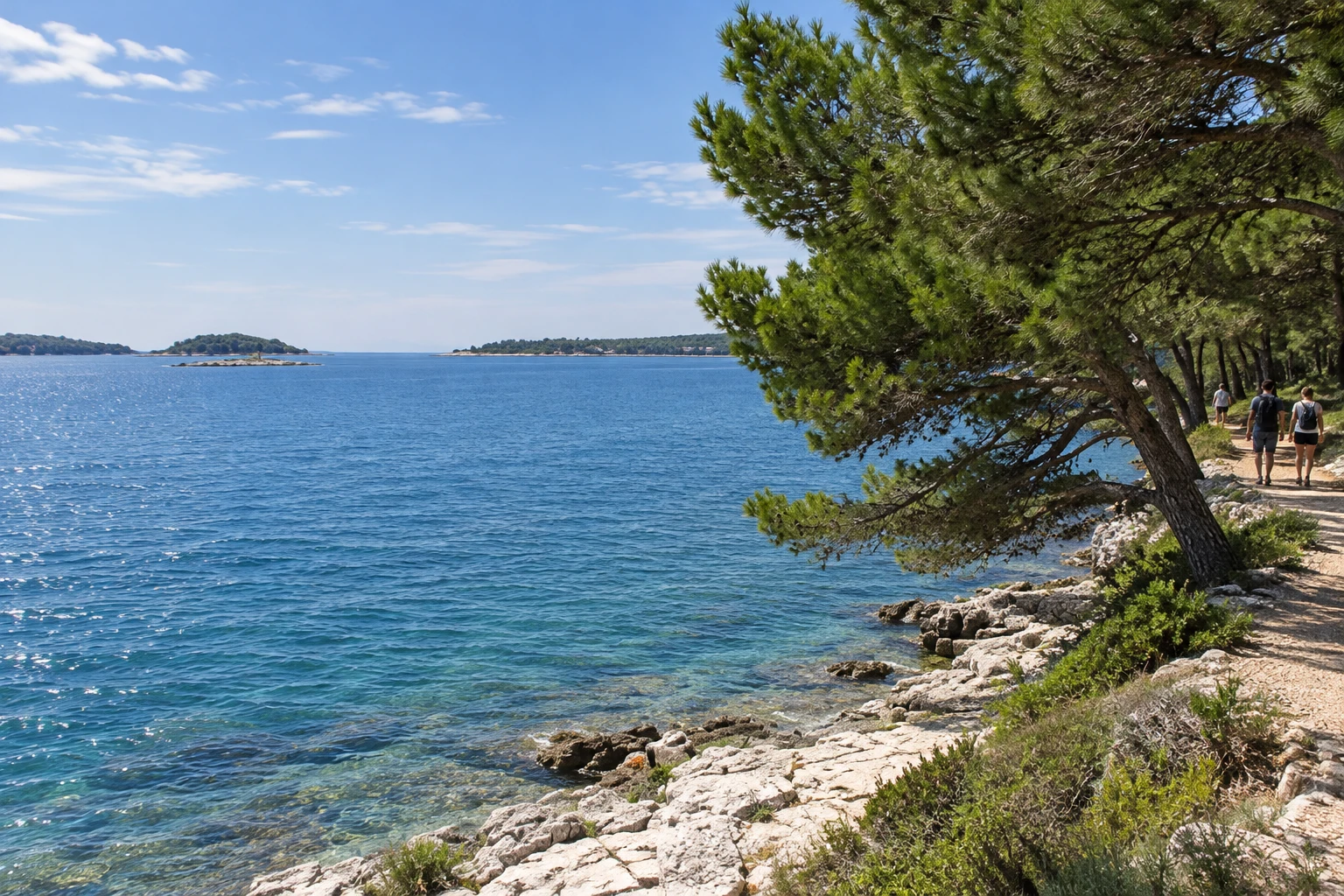
The Park šuma Zlatni rt lies south of Rovinj's center, on a wooded peninsula by the Adriatic. The park combines trails through woodland areas, clearings and accesses to the coast. It is a stage for walking outside the old core, with space for a longer outing.
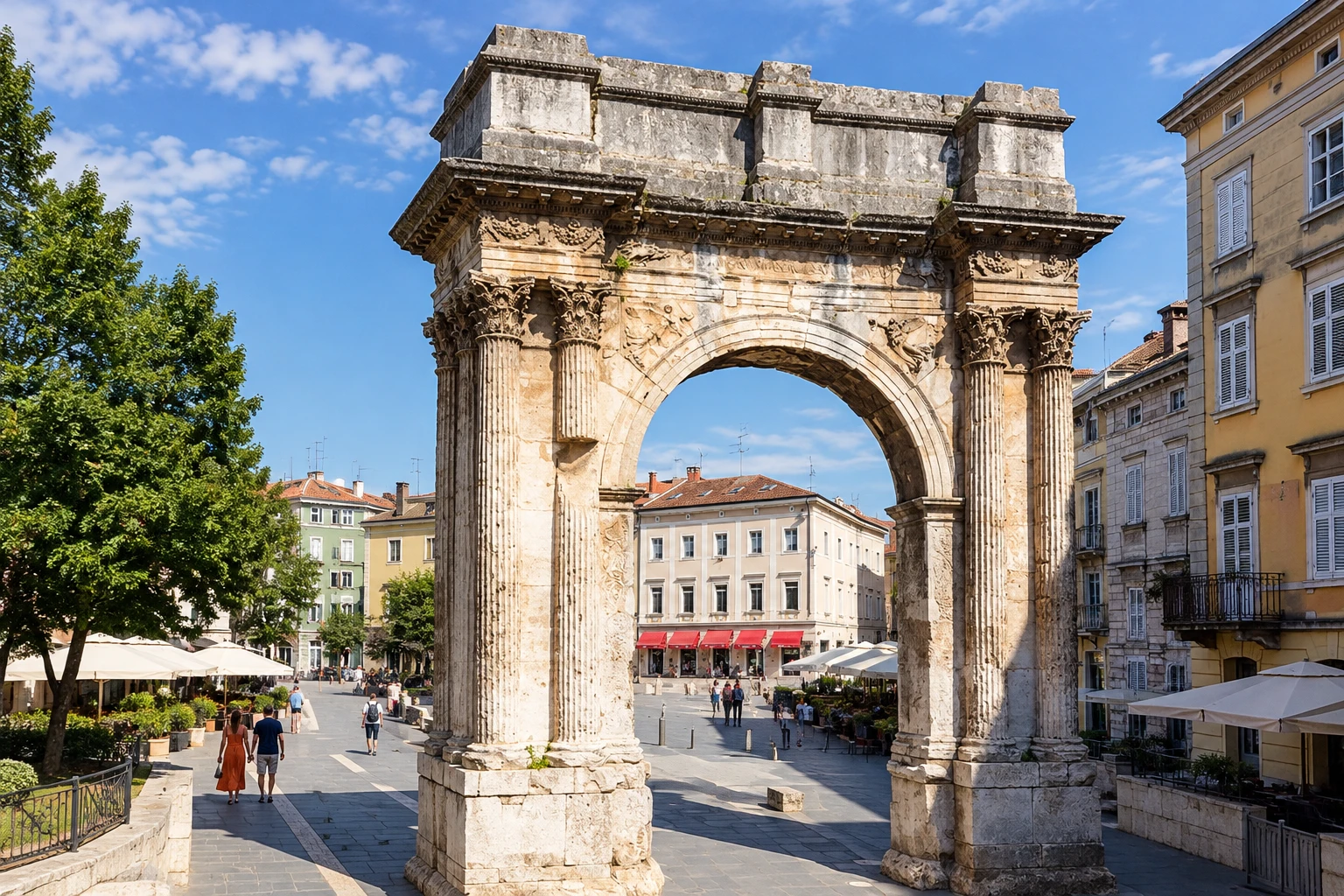
The Slavoluk Sergijevaca is the Roman Arch of the Sergii, located on the edge of Pula’s old town. The structure marks a passage between the historic city and the streets leading to the surrounding neighbourhoods. Its decorated façade contrasts with the scale of nearby buildings.


 Brazil
 Antarctica
 Argentina
 Bolivia
 Chile
 Colombia
 Ecuador
 Falkland Islands (Malvinas)
 French Guiana
 Guyana
 Paraguay
 Peru
 Suriname
 Uruguay
 Venezuela
 Austria
 Belgium
 Denmark
 Finland
 France
 Germany
 Greece
 Hungary
 Iceland
 Ireland
 Italy
 Luxembourg
 Norway
 Poland
 Portugal
 Slovakia
 Slovenia
 Spain
 Sweden
 Switzerland
 the Czech Republic
 the Netherlands
 the United Kingdom
 Turkey
 Bermuda
 Canada
 Greenland
 Mexico
 Saint Pierre and Miquelon
 the United States
 the Dominican Republic
 Japan
 Egypt
 South Africa
 Australia
 Fiji
 New Zealand
 Papua New Guinea