Zagreb

City of Zagreb Capital

Zagreb

In the destination Zagreb.

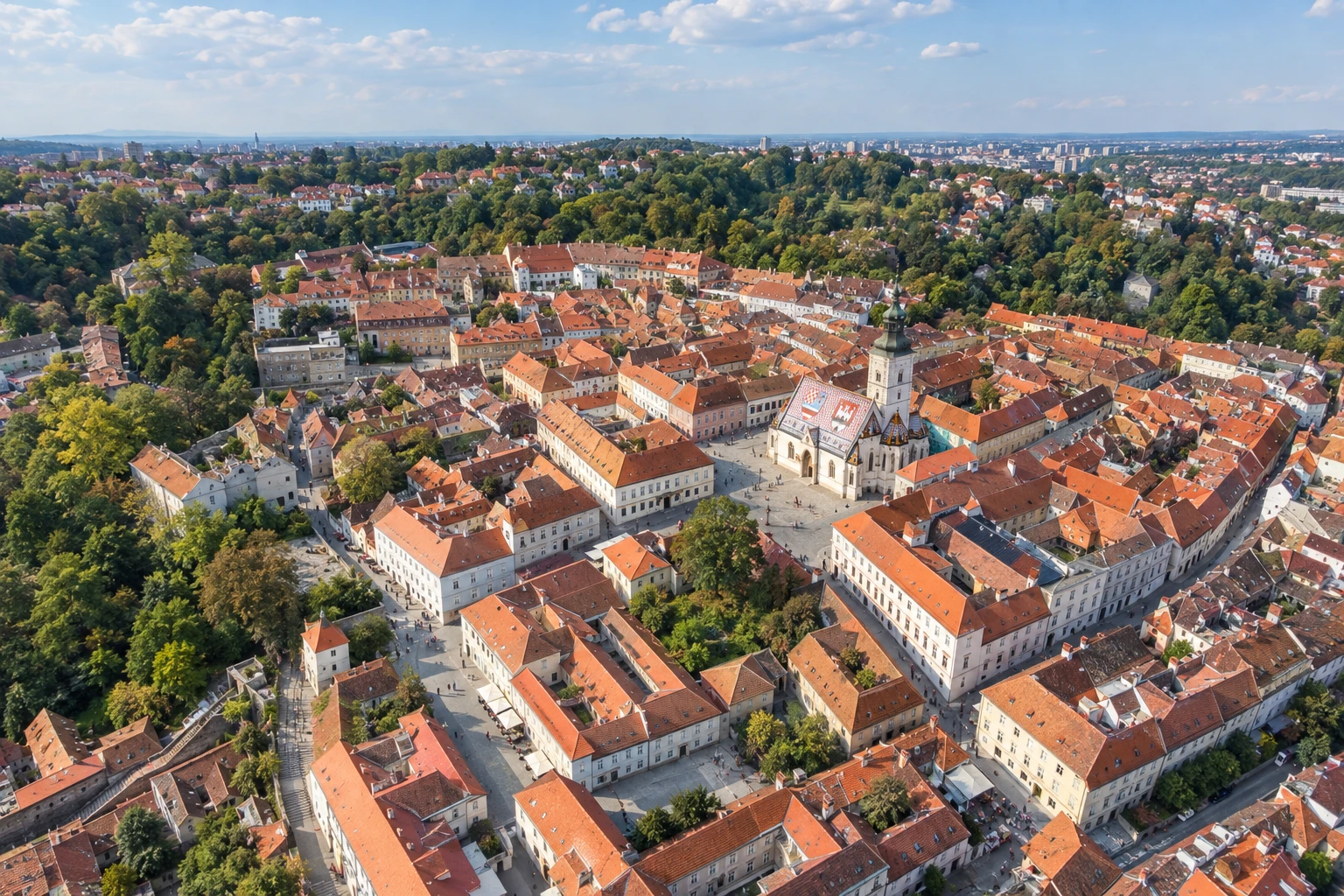
In the photo: Gornji grad

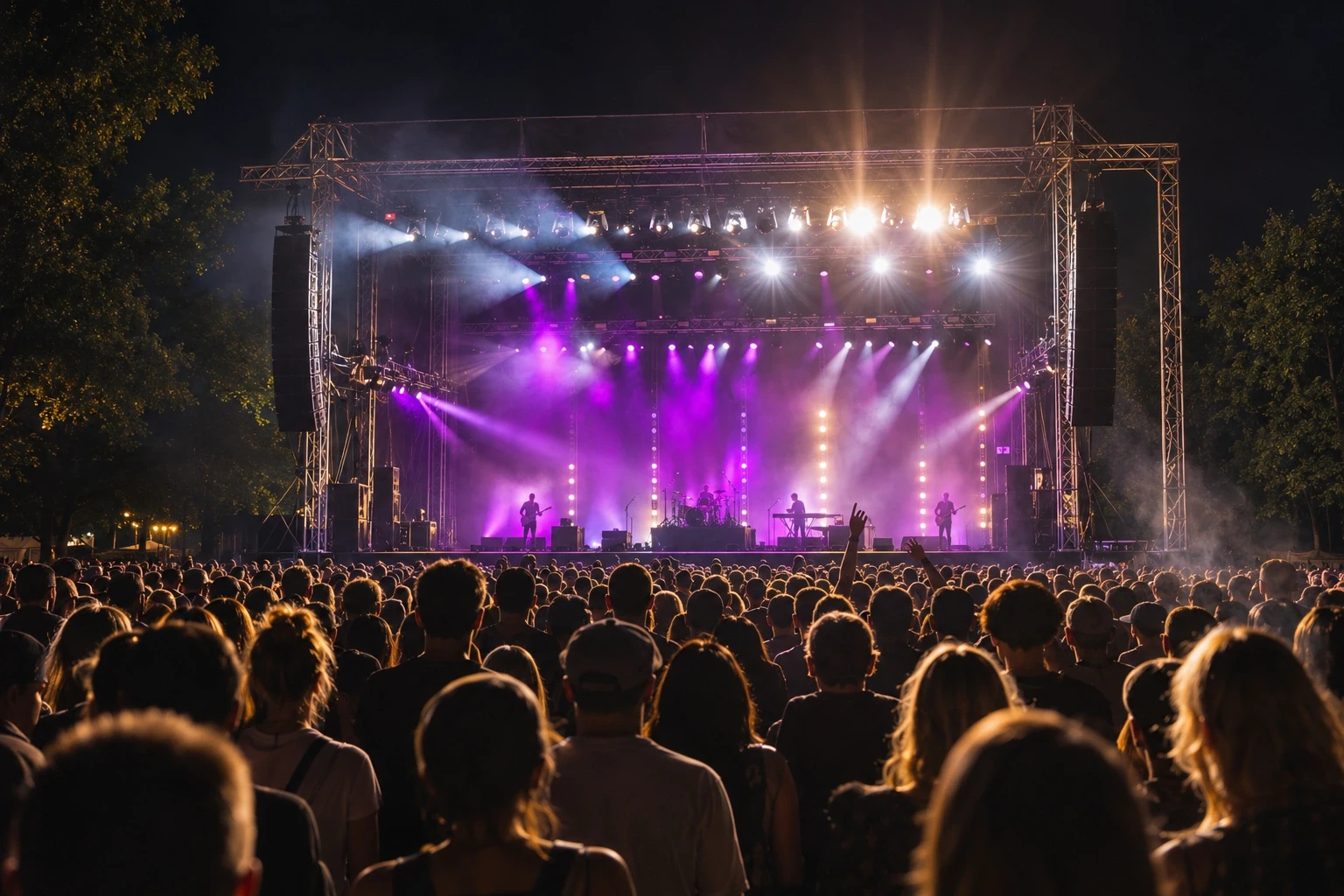
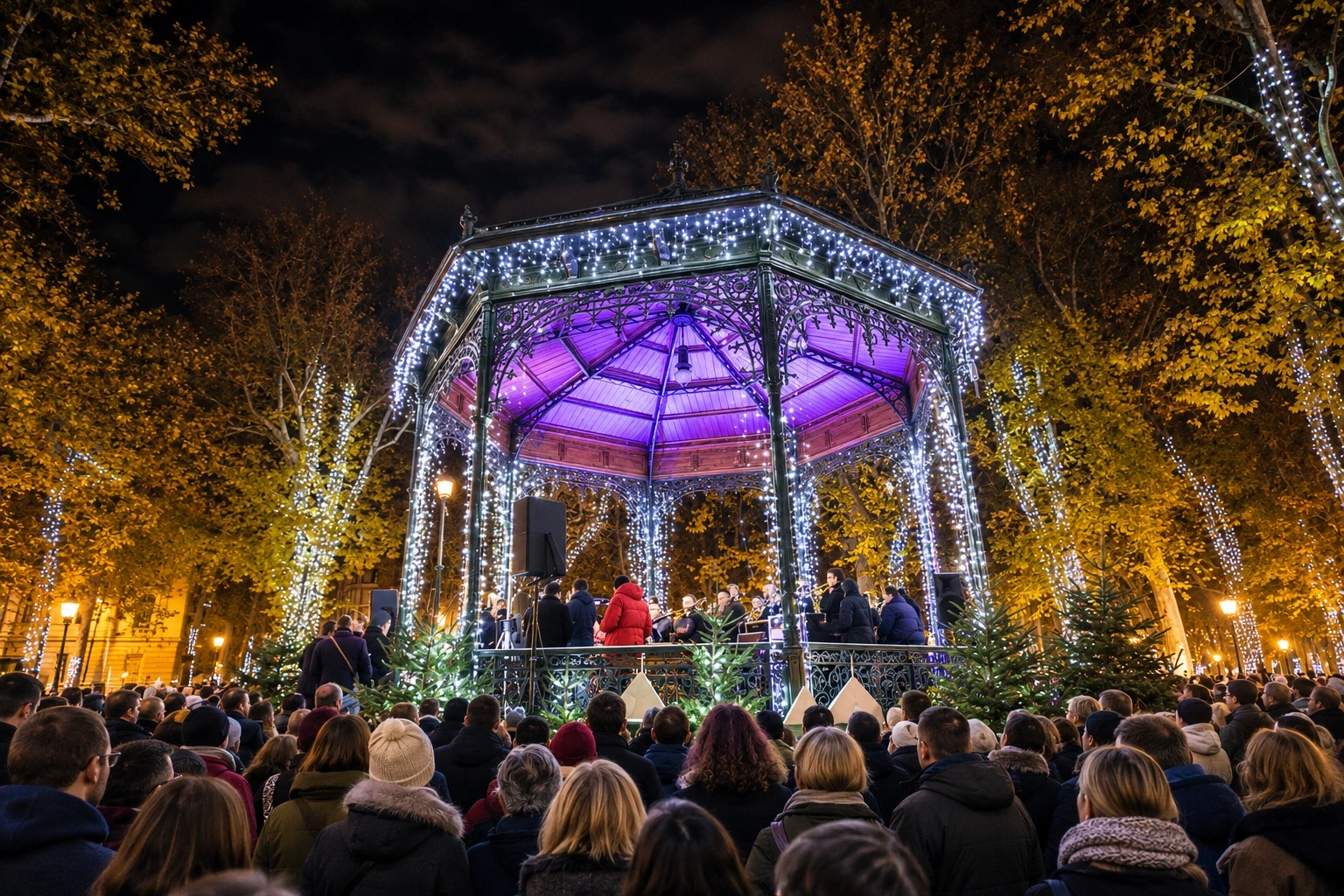
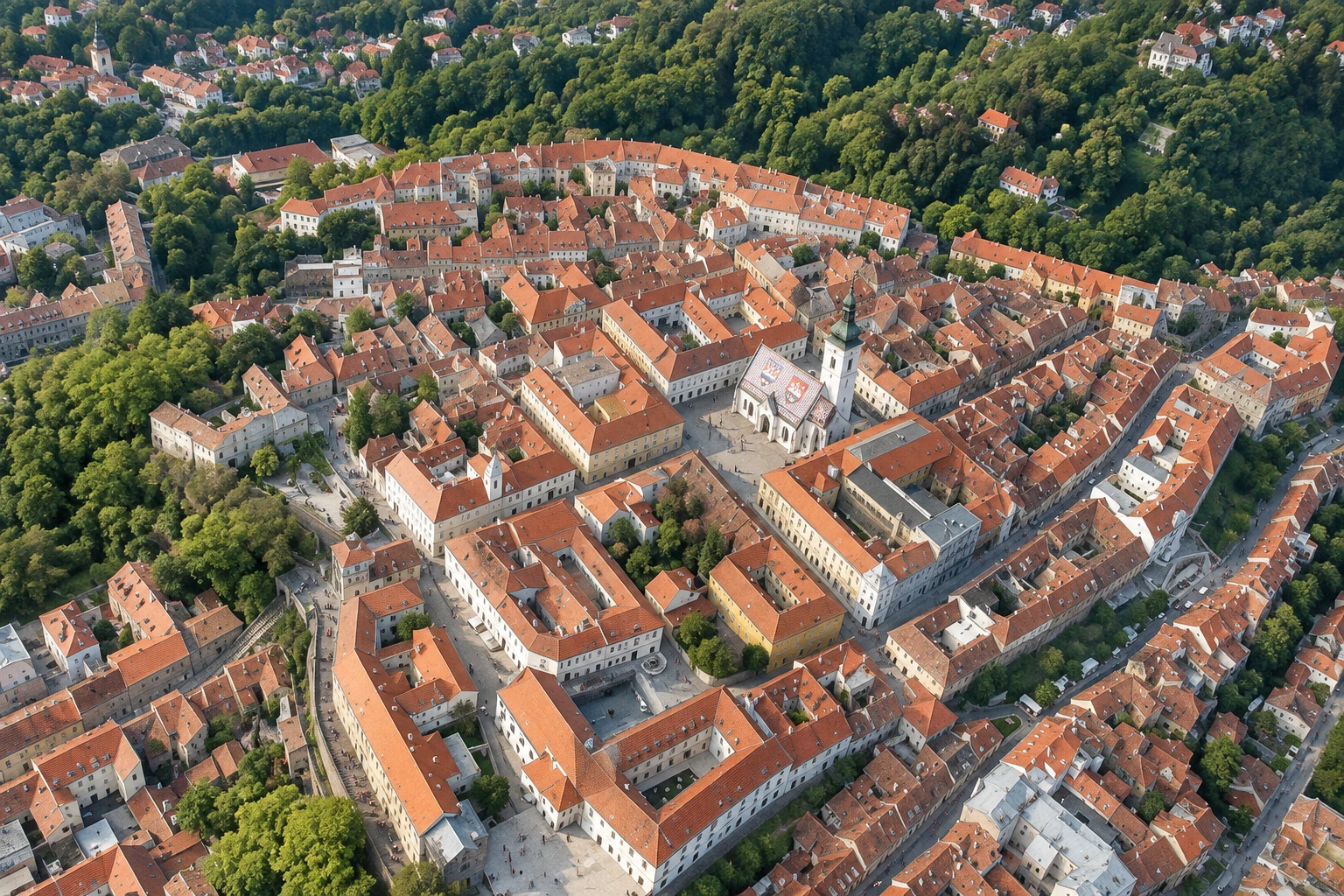
Illustrative images. The pictures in this guide are illustrations based on the real place, not photographs, and may differ from it.

Get it on Google Play

The city

What to expect from Zagreb.

Zagreb brings together the Upper Town, the Museum of Broken Relationships and Maksimir Park in a capital best explored on foot and by tram. The center shifts in elevation between the streets of Gornji grad and the blocks of the lower town. It’s a convenient arrival point to begin an inland trip and then continue to the Adriatic.

Croatia’s capital lies inland, well away from the coast, between the slopes of Mount Medvednica to the north and the Sava River to the south. Zagreb officially dates its history to 1094. For centuries it consisted of two neighboring settlements on separate hills, the bishop’s Kaptol and Gradec, home to free citizens. At their foot, Trg bana Jelačića, a market square from 1641 onward, became the center of town and the place where locals meet.

The center has two parts you can explore on foot. The Upper Town, Gornji grad, occupies Gradec hill. Its short streets lead to Trg svetog Marka, with its colorful-roofed church, Parliament and government headquarters, Lotrščak Tower and the Strossmayerovo šetalište promenade overlooking the city. More than 200 gas lamps are still lit by hand each evening. Next door in Kaptol are the neo-Gothic cathedral, with twin towers about 108 meters high, and Dolac Market. A 66-meter funicular operating since 1890 links the Upper and Lower Towns in just over a minute.

The Lower Town, Donji grad, was laid out on level ground in a regular grid in the 19th century. Its best-known feature is Lenuci’s Horseshoe, a U-shaped sequence of eight squares and gardens encompassing museums, the Croatian National Theatre, the Botanical Garden and the central railway station. Cafés fill the sidewalks between Trg bana Jelačića and Petra Preradovića Square, known as Flower Square. Lingering over coffee outdoors is a local habit in every season.

Beyond the center, each park has its own character. Maksimir, opened in 1794 to the east, has woodland, five lakes and the zoo. Jarun to the west is a sports and recreation lake with beaches for summer swimming. Bundek is in Novi Zagreb, the newer part of the city on the south bank of the Sava, near the Museum of Contemporary Art. To the north, Mirogoj Cemetery, with late 19th-century arcades and domes, doubles as a sculpture park. Behind it all rises Medvednica, a nature park with hiking trails, medieval Medvedgrad Castle and the 1,033-meter Sljeme summit, accessible by cable car from the edge of the city.

The climate is continental. Winter is cold, with January highs around 3°C, nights below freezing and the possibility of snow. Spring and fall are mild. Summer is hot, with July highs around 26°C, drawing residents to the lakes and mountains. Rain falls throughout the year. December has its own rhythm as Advent fills central squares and parks with markets, music and an ice rink.

Zagreb’s churches and museums have undergone a lengthy period of restoration, and some remain closed. Check each place before visiting. The city is also a base for the region. Samobor to the west and the Plitvice Lakes to the south lie in other municipalities and are accessible by bus or car.

Share: WhatsApp

Where to stay

30 places to stay in Zagreb.

Where to eat

30 places to eat in Zagreb.

Mapa de Zagreb

Hotéis e restaurantes da cidade no mapa.

Festivals and events

Festivals Zagreb

Dates change every year: check this year's date before you travel.

Festival calendar in Croatia

The local experience

Things to do in Zagreb

Zagreb · Croatia · Historic center

Upper Town

Gornji grad occupies the upper part of Zagreb, where short streets and stairways link squares and old houses. The neighborhood differs from the regular grid of the lower town: here the walk follows the terrain and passes through gateways and façades from different eras.

Explore Upper Town

Zagreb · Croatia · Museum

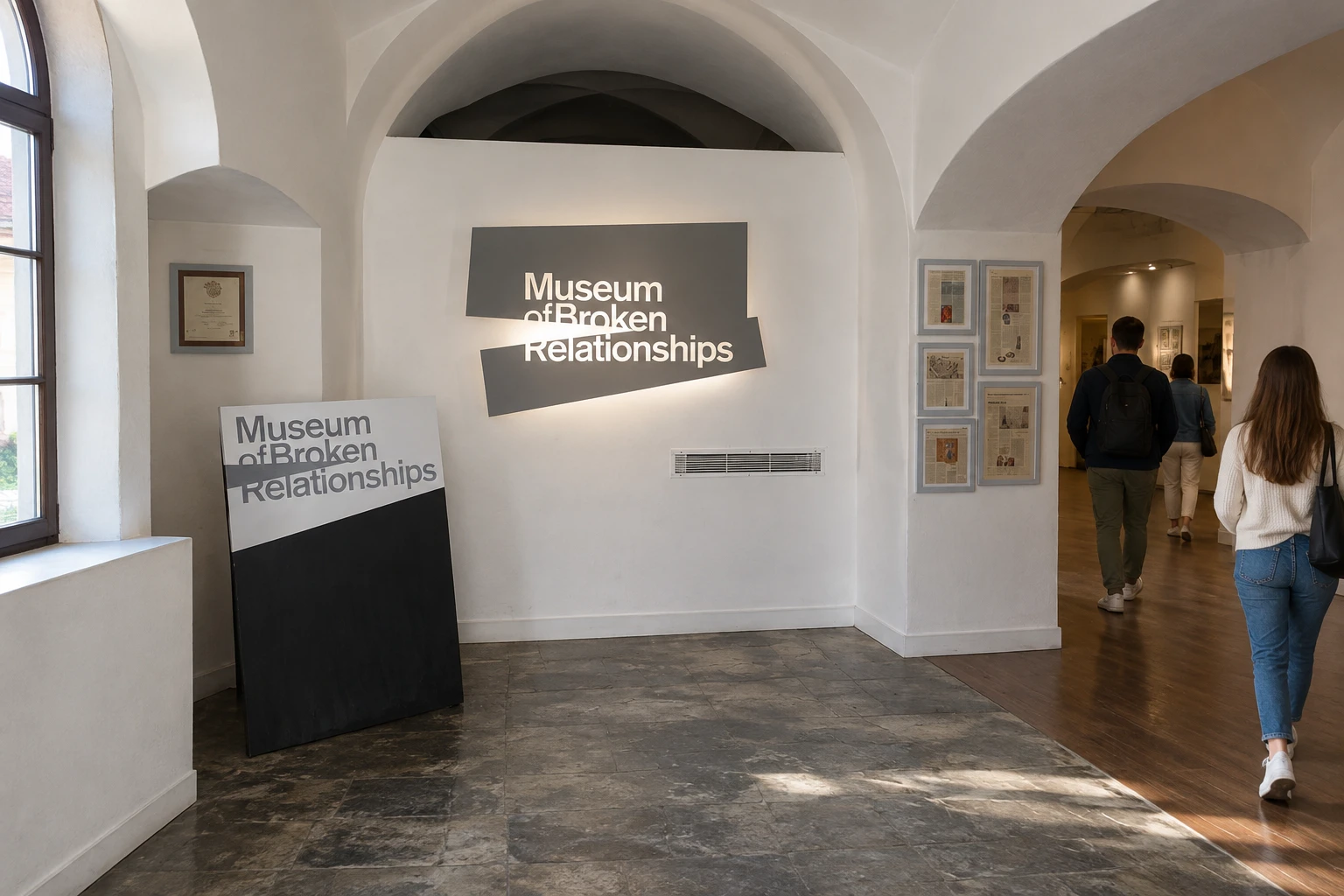
Museum of Broken Relationships

The Muzej prekinutih veza, in Zagreb’s Upper Town, collects objects donated after relationships end. The items gain meaning through the stories of those who donated them: the collection deals with emotional bonds through shared mementos, not objects chosen for their material value.

Explore Museum of Broken Relationships

Zagreb · Croatia · Park

Maksimir Park

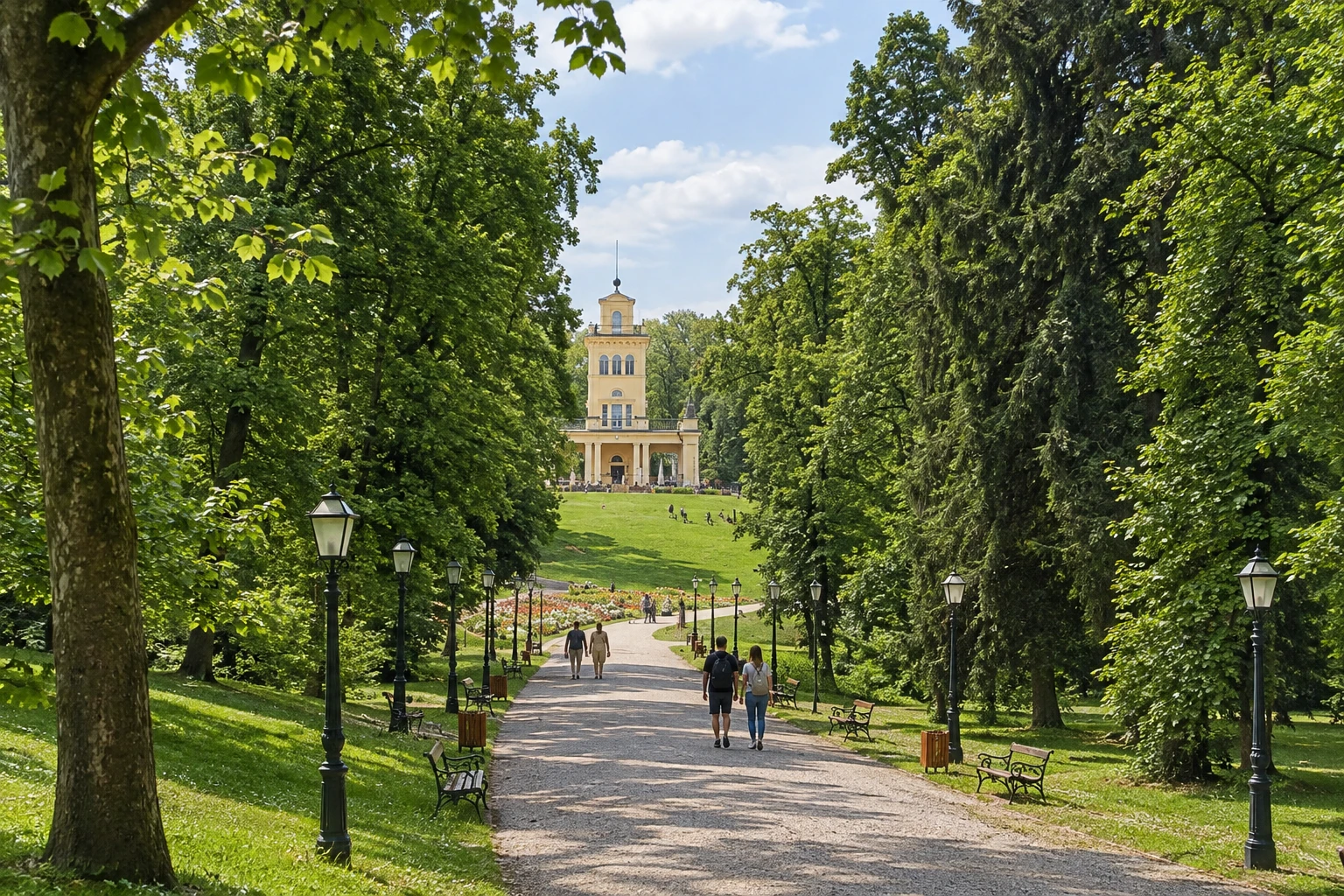
Park Maksimir lies east of Zagreb’s center and offers a landscape of avenues, clearings, wooded areas and lakes. It’s a different outing from the cobbled streets of the Upper Town: the interest is in the park’s layout and the time spent walking among trees.

Explore Maksimir Park

To choose before you go

Tours in Zagreb

Where each tour starts, how long it takes, how it is done, what is included and the price range.

Walk through the Upper Town: from the funicular to the Stone Gate

From Lower funicular station on Tomićeva Street Funicular and self-guided walk 2 to 3 hours Morning Easy, with slopes and stairs

The ascent begins on Tomićeva Street at the lower funicular station. The 66-meter ride takes just over a minute. Dating to 1890, this is the city’s oldest form of public transportation. You can also walk up one of the hillside stairways. At the top stands Lotrščak Tower, one of the best-preserved parts of the old walls. The Grič cannon fires from here every day at noon and can be heard across much of the city. You can climb the tower. Beside it runs Strossmayerovo šetalište, a tree-lined 19th-century promenade overlooking the Lower Town. A bronze statue of poet Antun Gustav Matoš sits on a bench. Continue to Katarinin trg. The Baroque Church of St. Catherine is under restoration, but behind it a lookout faces Kaptol, the cathedral and Dolac Market. On neighboring Jezuitski trg, the Klovićevi dvori gallery occupies the former Jesuit monastery. Nearby is the Muzej prekinutih veza, the Museum of Broken Relationships, displaying objects donated after relationships ended. Trg svetog Marka is the heart of the Upper Town. The 13th-century Church of St. Mark has a Gothic south portal and a colored tile roof bearing the arms of Croatia, Dalmatia and Slavonia and the city’s coat of arms. The square is also home to the Sabor, Croatia’s Parliament, and Banski dvori, the seat of government. Descend through Kamenita vrata, the Stone Gate, a covered passage through the old walls. Inside is a chapel with an image of the Virgin Mary said to have survived a fire unscathed in 1731. Keep quiet in this place of prayer. The exit leads back toward the central square.

Stops: Zagreb Funicular, Lotrščak Tower, Strossmayerovo šetalište, Katarinin trg, Trg svetog Marka, Museum of Broken Relationships, Stone Gate.

Includes: The streets, squares, and lookouts are free. The funicular, Lotrščak Tower climb, and museums cost extra. Check current prices for each.

Tip: To see the cannon fire, reach the foot of the tower just before noon. St. Mark’s Square has several government buildings, and access may be restricted on some days. Beneath the hill, the Grič Tunnel, a World War II air raid shelter, is open to pedestrians.

Best time: Year-round. The gas lamps are lit by hand in the late afternoon.

Kaptol, Dolac Market, and Tkalčićeva Street

From Trg bana Jelačića Self-guided walk About 2 hours Morning Easy

Trg bana Jelačića is the center of Zagreb. In the middle stands Austrian sculptor Anton Fernkorn’s equestrian statue of Ban Josip Jelačić, installed in 1866. Locals arrange to meet “under the clock” on the west side or “under the horse’s tail.” The Manduševac fountain was built over the spring that supplied the city until the late 19th century. Legend links the spring to Zagreb’s name, and visitors traditionally toss in a coin and make a wish. A few steps away is Dolac, the city’s main food market, nicknamed the “belly of Zagreb.” The upper open-air level has fruit and vegetable stalls from across the country. On the covered lower level are the kumice, traditional vendors of fresh cheese and sour cream. Morning is the busiest time. A few minutes’ walk from the market brings you to Kaptol and the Cathedral of the Assumption of the Virgin Mary. The first cathedral was completed in 1217 and destroyed in 1242. Its current neo-Gothic appearance comes from the reconstruction directed by Hermann Bollé after the earthquake of 1880 and completed in 1902. It is Croatia’s largest religious building. Visitors can enter outside services, and the towers often have scaffolding as restoration continues. Return along Opatovina and descend to Tkalčićeva Street, lined with cafés, bars and restaurants. It is one of the city’s favorite places to sit outdoors by day or night. The street ends a few steps from the square where you started.

Stops: Trg bana Jelačića, Manduševac Fountain, Dolac Market, Zagreb Cathedral, Opatovina, Tkalčićeva Street.

Includes: The squares, market, and street are free to explore. Check whether the cathedral is open to visitors that day.

Tip: Visit Dolac early when the stalls are fully stocked. Dress modestly and visit the cathedral outside Mass times.

Best time: Year-round. During Advent, markets and music fill the square and the area around the cathedral.

Lenuci's Horseshoe: squares and gardens of the Lower Town

From Zrinjevac (Trg Nikole Šubića Zrinskog) Self-guided walk 2 to 3 hours, plus time for the museums Afternoon Easy, on level ground

Lenuci’s Horseshoe is the U-shaped chain of squares and gardens around which the Lower Town is laid out. Designed in the 19th century, it is considered the high point of Zagreb’s urban planning. Eight connected green spaces are lined with museums, academies and palaces. The first, Zrinjevac, is one block from the central square. It has avenues, flower beds, fountains, a weather column and a bandstand for summer concerts. Busts of figures from Croatian history line the paths. One palace on the square houses the Archaeological Museum, founded in 1846. Continue south to Trg kralja Tomislava, with Robert Frangeš Mihanović’s equestrian statue of King Tomislav, crowned in 925. On the north side stands the Art Pavilion. Its metal structure was first assembled in Budapest for the 1896 exhibition and brought to Zagreb by train. The building is under restoration and can be viewed from outside. Opposite is Glavni kolodvor, the central station, designed by Hungarian architect Ferenc Pfaff in 1892. Leaving the station, you see the statue, the pavilion, the cathedral towers and Medvednica in the distance. The southern arm of the horseshoe is the Botanical Garden, parallel to the railway, with around 5,000 plant species. It opens in spring and closes at sunset. Stay off the lawns and leave bicycles outside. The western arm leads up to Trg Republike Hrvatske and the Croatian National Theatre. A few blocks farther is Petra Preradovića Square, known as Flower Square, with flower stalls, the Orthodox Church of the Transfiguration and sidewalk cafés. The pedestrian stretch from here to Trg bana Jelačića is the špica, the city’s best-known café strip.

Stops: Zrinjevac, Archaeological Museum, Trg kralja Tomislava, Glavni kolodvor, Botanical Garden, Croatian National Theater, Petar Preradović Square.

Includes: The squares are free to explore. Museums charge separate admission. The botanical garden has its own season and visiting rules. Check ahead.

Tip: Some museums along the horseshoe are closed for restoration. Check which are open and choose one or two to visit.

Best time: Spring through fall, when the botanical garden is open. During Advent, Zrinjevac and Trg kralja Tomislava host markets and an ice rink.

Mirogoj Cemetery

From Kaptol City bus or on foot 1 hour 30 minutes to 2 hours Morning or afternoon Easy

Mirogoj is Zagreb’s main cemetery, on a low hill just north of the center. Architect Hermann Bollé, who also oversaw the cathedral’s reconstruction, designed it in the late 19th century. Opened in 1876, the complex has monumental arcades, domed gateways and pavilion chapels. Often called Croatia’s pantheon, it is the resting place of many figures from the country’s history, politics and arts. Sculpted tombs give it the character of an open-air art gallery, with broad avenues and old trees. The cemetery welcomes people of every faith, and Catholic, Orthodox and Muslim symbols stand side by side. The visit is a peaceful walk along the avenues and arcades. The central dome is visible from several points in the Upper Town. City bus 106 connects Kaptol near the cathedral to Mirogoj in a few minutes. On foot, the uphill walk from Kaptol takes about half an hour.

Stops: Mirogoj, Hermann Bollé’s arcades and domes.

Includes: Admission is free. Bus fare is separate.

Tip: This is an active cemetery. Speak quietly, avoid photographing ceremonies, and respect closed areas. Parts of the arcades may be under restoration.

Best time: Year-round.

Maksimir Park and the zoo

From Main entrance to Maksimir Park By public transportation and on foot 2 to 4 hours Morning or afternoon Easy

East of the center, Maksimir is Zagreb’s oldest park, opened in 1794. The first public promenade in southeastern Europe, it combines English-style gardens, woodland and clearings and is protected as a monument of landscape architecture. From the entrance, a broad, straight avenue climbs to the Belvedere, the park lookout. The 17-meter pavilion was built between 1841 and 1843 in the time of Archbishop Haulik. Other paths radiate from it, and a café occupies the ground floor. Around it are five lakes with swans, other pavilions, sculptures and a Swiss chalet-style house. Unpaved paths enter the woods for walking and running. Families fill the park on weekends. Weekdays are quieter. Within the park, Zagreb Zoo opened in 1925 and has more than 350 species. Allow half a day if you are traveling with children. Public transportation connects the park with the center. Check the route on the day of your visit.

Stops: Park Maksimir, Belvedere, Maksimir lakes, Zagreb Zoo.

Includes: The park is free. The zoo charges separate admission. Check current prices.

Tip: If you're short on time, go to the Belvedere and return via one of the lakes. Allow about an hour. Bring water in summer.

Best time: April to October. The woods change color in fall.

By cable car to Sljeme: the top of Medvednica

From Gračansko dolje station, Sljeme cable car Tram and cable car Half a day Morning or afternoon Easy at the top, with trails of varying difficulty

Medvednica is the forested mountain that bounds Zagreb to the north, protected as a nature park. Locals say they are “going to Sljeme” for trips anywhere on the mountain, although Sljeme is specifically the 1,033-meter summit. The cable car leaves from Gračansko dolje on the edge of the city. It travels 5,017 meters, rising 754 meters in 16 to 22 minutes. Enclosed ten-person cabins have exterior racks for skis and equipment. There is an intermediate station at Brestovac. The upper station is about 50 meters from the Sljeme tower, the capital’s highest visitor attraction. From the top, the lookout terrace overlooks the ski slopes and, to the north, the hills of Zagorje. Marked trails link the summit to mountain huts serving traditional food. When snow allows, winter facilities include ski runs at three difficulty levels and a sledding area. In summer, cooler temperatures than downtown attract hikers and cyclists. Fog and cloud can obscure the view at any time of year. To reach the lower station, take tram 8 or 14 to the Mihaljevac terminus, then change to line 15 for the roughly five-minute ride to Gračansko dolje. Bus 140 connects Mihaljevac with the mountaintop.

Stops: Žičara Sljeme, Sljeme, Sljeme Tower, Medvednica Nature Park.

Includes: The cable car and tower climb cost extra. Check current prices. The trails are free.

Tip: The cable car closes a few days each month for inspections. Check service on the day. Bring a warm layer even in summer.

Best time: Year-round: snow in winter when conditions allow, and trails from spring through fall.


See 3 more tours

Medvedgrad Castle

From Downtown Zagreb Car, or city bus followed by a walk Half a day Morning or afternoon Easy by car, moderate on foot

Medvedgrad is the medieval castle visible from central Zagreb on the southern slope of Medvednica, atop Mali Plazur hill. It was built in 1254 after the Tatar invasion devastated Gradec and Kaptol, to protect residents, the bishop and the church treasury. The fortress was never attacked. It changed hands many times through marriage, purchase and intrigue, and some lords plundered neighboring villages. Best remembered are the 15th-century Counts of Celje. Countess Barbara of Celje lives on as the Black Queen in legends told at the foot of the mountain. An earthquake damaged the castle in 1590 and it was abandoned. Archaeological work began in 1979. The walls were conserved and the octagonal Chapel of St. Philip and St. James, the southern tower and the residential palace were rebuilt. Below the southern tower stands the Altar of the Homeland, a 1994 monument by sculptor Kuzma Kovačić. The castle has a visitor center, and you can explore independently or with a guide. The walls offer sweeping views of Zagreb. Arrive by car or combine public transportation with a hike on a nature park trail.

Stops: Medvedgrad, Chapel of St. Philip and St. James, Altar of the Homeland, Medvednica Nature Park.

Includes: The castle charges separate admission. Check the nature park website for current prices and opening days.

Tip: In July the castle hosts evening concerts overlooking the city lights. Bring a warm layer for cool mountain nights.

Best time: Spring through fall. The Medieval Days festival takes place in late September or early October.

Lake Jarun

From Downtown Zagreb Public transportation or bike 2 hours to half a day Afternoon Easy, on level ground

Jarun is the sports and recreation lake in western Zagreb that locals call the “Zagreb Sea.” The recreation center opened in 1987, when the city hosted the World University Games. The lake has a rowing course used for international competitions, surrounded by walking paths, bike paths, running tracks and miniature golf. Beaches fill on hot summer days, and a string of cafés and restaurants lines the shore. After work and on weekends, residents come to walk, cycle and skate. After dark, the waterfront bars and clubs make this one of the city’s nightlife destinations. In June the lake hosts a major music festival. Come to see Zagreb beyond the historic center at your own pace. Walk around the lake, settle into a café or go for a summer swim.

Stops: Jarun.

Includes: The lake area is free to enter. Bike and equipment rentals cost extra.

Tip: Rent bikes downtown and follow the bike paths around the entire lake. On hot summer days the beaches fill early.

Best time: May to September. Swim from June to August, weather permitting.

Novi Zagreb: the Museum of Contemporary Art and Bundek

From Downtown Zagreb By public transportation and on foot 3 to 4 hours Afternoon Easy

Novi Zagreb is the newer part of town on the southern bank of the Sava, with broad avenues and level terrain. Cross one of the bridges to see a different side of the city from its historic center. The Muzej suvremene umjetnosti, the Museum of Contemporary Art, stands on Avenija Dubrovnik. Its collections comprise around 12,000 works by Croatian and international artists, and the building hosts major temporary exhibitions. From the museum you can walk to Bundek, a park beside the Sava between the Liberty and Youth bridges. It has two lakes. The Great Lake has a swimming shore with summer lifeguards, while the Small Lake is preserved as a wildlife habitat. Around them are a 1,650-meter cycling and skating track, walking paths, three playgrounds, sand courts and barbecue areas with tables. A stage on the water hosts cultural events in summer. In May, Bundek hosts Floraart, an international flower and garden exhibition.

Stops: Muzej suvremene umjetnosti, Bundek, Sava River.

Includes: Park entry is free. The museum charges separately. Check current prices and opening days.

Tip: Visit the museum in the early afternoon and the park toward evening. In summer, bring swimwear.

Best time: May to September for the park, year-round for the museum.

Day by day

1, 2 and 3-day itinerary in Zagreb

Suggestions to plan the trip. Change the order of the days according to the weather and tour availability.

1 day · Zagreb in 1 day: the two hills and the Lower Town

For A stopover, layover, or first visit · Based in Zagreb
  1. Day 1 · Kaptol, the Upper Town and Lenuci’s Horseshoe

    Start early at Dolac Market while the stalls are full and walk to the cathedral in Kaptol. Return along Tkalčićeva Street and stop for coffee. Before noon, take the funicular to the Upper Town and wait for the cannon at the foot of Lotrščak Tower. Walk along Strossmayerovo šetalište, through Katarinin trg and on to Trg svetog Marka. If time allows, visit the Muzej prekinutih veza. Descend through Kamenita vrata. After lunch, follow Lenuci’s Horseshoe past Zrinjevac, Trg kralja Tomislava, the central station, the Botanical Garden when open, and the Croatian National Theatre. Finish among the cafés on Petra Preradovića Square. In the evening, Tkalčićeva and Opatovina have plenty of bars and restaurants.

2 days · Two days in Zagreb: the historic center and parks
For A weekend in the city · Based in Zagreb
  1. Day 1 · Dolac, Kaptol and the Upper Town

    Devote the morning to Dolac Market, the cathedral and Tkalčićeva Street. Climb to the Upper Town in time for the noon cannon and explore at leisure. See Lotrščak Tower, Strossmayerovo šetalište, Trg svetog Marka and a museum such as the Muzej prekinutih veza or Zagreb City Museum. Descend through Kamenita vrata and spend the afternoon in the Lower Town, following Lenuci’s Horseshoe from Zrinjevac to the Botanical Garden. End the day over coffee on Petra Preradovića Square.

  2. Day 2 · Mirogoj, Maksimir and Jarun

    Take the morning bus from Kaptol to Mirogoj Cemetery for a walk along the avenues and arcades. Back downtown, take a tram to Maksimir Park, climb to the Belvedere and walk around a lake. With children, include the zoo. In the late afternoon, head to Lake Jarun for a shoreline walk and dinner by the water. In rainy or cold weather, explore museums instead, such as the Archaeological Museum on Zrinjevac, the Nikola Tesla Technical Museum or the Museum of Contemporary Art in Novi Zagreb.

3 days · Three days in Zagreb: the city and the mountain
For Travelers who want to explore the capital at a relaxed pace · Based in Zagreb
  1. Day 1 · Kaptol and the Upper Town

    Visit Dolac Market and the cathedral in the morning and have coffee on Tkalčićeva Street. Take the funicular before noon for the cannon and spend the rest of the day in the Upper Town. Visit Lotrščak Tower, the lookout behind Katarinin trg, Trg svetog Marka, the Muzej prekinutih veza and Kamenita vrata. Walk through the Grič Tunnel on your return. In the evening, have dinner around Tkalčićeva.

  2. Day 2 · Lower Town, Mirogoj and Maksimir

    Start with Lenuci’s Horseshoe, visiting the Archaeological Museum and, in spring and summer, the Botanical Garden. Have lunch near Petra Preradovića Square. In the afternoon, take a bus to Mirogoj Cemetery, then head to Maksimir Park to walk to the Belvedere and lakes. If you prefer art, swap Maksimir for Novi Zagreb, with the Museum of Contemporary Art and Bundek Park on the south bank of the Sava.

  3. Day 3 · Sljeme and Medvedgrad on Medvednica

    Spend the day in the mountains. Take the tram to Gračansko dolje and ride the cable car to Sljeme. At the top, visit the lookout and tower, walk a marked trail and have lunch in a mountain hut. If you have a car, include Medvedgrad Castle on the southern slope, with views over the whole city. If the weather closes in on the mountain, spend the day at Lake Jarun or visit Samobor, a neighboring town to the west known for its old center and kremšnita cream pastry.

Best time to go

When to go: Zagreb month by month

The seasons shown are the most usual ones; nature doesn't always follow the calendar.

January Some rain

Winter · End of Advent · Museum Night

The coldest month brings highs around 3°C, lows near -3°C, short days and possible snow. Advent continues into the first days of the month. Museum Night usually takes place in late January, when museums across the country open at night. This is the season for museums, cafés and, when there is snow, the Sljeme ski slopes. Bring a heavy coat, gloves and closed shoes.

February Some rain

Winter · Empty streets

It is still winter, with highs around 6°C and lows near -1°C. The city sees few visitors, and museums are quiet. Days start getting longer. Sljeme may have enough snow for skiing and sledding. Plan walks for the middle of the day and save museums for late afternoon.

March Some rain

Early spring · Festival of Lights

The weather changes gradually, with highs around 11°C, lows near 2°C and a mix of sunny and still-chilly days. The Festival of Lights usually takes place in March, with illuminated installations across the center after dark. Bring a coat and umbrella.

April Some rain

Spring · Botanical Garden · ZagrebDox

Spring brings highs around 17°C, lows near 6°C and showers. The Botanical Garden usually opens for the season and the parks come into bloom. ZagrebDox, an international documentary film festival, takes place in April. A light coat is handy for walking around the Upper Town and Lenuci’s Horseshoe.

May Some rain

Floraart at Bundek · Cest is d’Best · City Day on the 31st

One of the most pleasant months has highs around 21°C, lows near 10°C and long days. Bundek hosts Floraart, the flower and garden exhibition. Late in the month Cest is d’Best brings street performers downtown, and May 31 is Zagreb City Day. Maksimir and Medvednica are green, with rain coming in showers.

June Some rain

Animafest · INmusic at Jarun · Zagreb Classic

Early summer brings highs around 24°C, lows near 14°C and the longest days of the year. June events include Animafest for animated films, the INmusic festival at Lake Jarun and Zagreb Classic with outdoor concerts on Trg kralja Tomislava. The beaches at Jarun and Bundek begin to fill. Late-afternoon storms are possible.

July Some rain

Summer · Concerts in the Upper Town and Medvedgrad · Folklore Festival

The hottest month has highs around 26°C and lows near 15°C, though temperatures can climb much higher on hot days. The Upper Town hosts the Grič Evenings concert series and the open courtyards of Dvorišta. The International Folklore Festival fills the central square and Medvedgrad hosts nighttime concerts. Explore early and in the evening, spending afternoons at the lakes or in the mountains.

August Some rain

Summer · Dance evenings in Zrinjevac

Summer heat brings highs around 25°C and lows near 15°C. Zrinjevac usually has dancing and music on weekend evenings. Swim at Jarun or Bundek or head to Sljeme to escape the heat. Brief storms can develop late in the afternoon.

September Some rain

Late summer · Puppet festival · Medieval Days at Medvedgrad

Mild weather brings highs around 22°C and lows near 11°C as the city returns to its usual rhythm. September has an international puppet theater festival. Medieval Days takes place at Medvedgrad Castle in late September or early October. This is one of the most comfortable months for walking downtown and hiking the Medvednica trails.

October Some rain

Fall · Zagreb Marathon · Jazz season

Fall brings highs around 16°C, lows near 7°C and shorter days. Maksimir, Mirogoj and Medvednica turn autumn colors. October brings the Zagreb Marathon and the start of the jazz festival season. It is a good month for museums and walks, with a coat and umbrella in your bag.

November Some rain

Zagreb Film Festival · Start of Advent

Cold and gray, with highs around 9 °C and lows near 3 °C. November brings the Zagreb Film Festival. Advent starts late in the month with the first markets and lights downtown. Plan time for museums and cafés, and bring a heavy coat.

December Some rain

Advent in Zagreb · Ice rink · New Year’s celebrations on the main square

Winter brings highs around 4°C, lows near -2°C and the chance of snow. Advent fills Zrinjevac, Trg bana Jelačića, Europe Square, the cathedral area and the Upper Town with markets, bandstand concerts and an ice rink on Trg kralja Tomislava. A concert on the central square rings in the New Year. Demand is high, so book accommodations ahead.

Plan the journey

How to get there: Zagreb

By air via Franjo Tuđman Airport

Franjo Tuđman International Airport (ZAG) lies 17 kilometers from downtown Zagreb in neighboring Velika Gorica. It receives flights from several airlines in Europe and beyond.

By car or taxi, the trip downtown takes 20 to 25 minutes. There are two public transportation options. The Pleso prijevoz bus runs directly to Zagreb bus station in 35 to 40 minutes. ZET city bus 290 links Kvaternikov trg and Velika Gorica, stopping at the airport in both directions, in 45 to 50 minutes. From the square, continue downtown by public transportation.

From the bus station, tram 6 takes a few minutes to reach Trg bana Jelačića. Car rental companies have desks in the terminal. Check airport bus schedules before traveling, especially for flights in the early hours.

By train to Glavni kolodvor

The central station, Glavni kolodvor, stands on Trg kralja Tomislava at the southern end of Lenuci’s Horseshoe, about a ten-minute walk from the central square. The 1892 building has luggage storage, ticket counters, currency exchange and restaurants.

Several daily trains run from Ljubljana, Slovenia, about 140 kilometers away. The journey follows the Sava River and takes around 2 hours 15 minutes to 2½ hours. Budapest is around six hours away, Vienna seven to eight hours. Within Croatia, the daytime train from Split takes about 6½ hours, and a night train runs in some seasons.

Croatian trains are operated by HŽ Putnički prijevoz. Timetables vary by season and some trains require seat reservations. Check before purchasing.

By bus: Autobusni kolodvor bus station

Zagreb bus station, Autobusni kolodvor, stands on Avenija Marina Držića. Tram 6 connects the terminal to Trg bana Jelačića in a few minutes.

Buses leave for major Croatian cities and international destinations in neighboring countries. Check schedules on the terminal website. The trip from Ljubljana takes just over two hours.

Regional services include Samobor, about 25 kilometers and 30 minutes away, and Slunj and the Plitvice Lakes, more than 130 kilometers to the south. In summer and on holidays, buy tickets ahead, including your return.

By car

Zagreb is Croatia’s main road junction between Central Europe, southeastern Europe and the Adriatic. Common international routes include Trieste–Ljubljana–Zagreb, Graz–Maribor–Zagreb, Klagenfurt–Ljubljana–Zagreb and Budapest–Varaždin–Zagreb. By road, the capital connects with Croatia’s major cities and the capitals of neighboring countries.

Croatian highways charge tolls. Check conditions and payment methods on the operator’s website before setting out.

You can explore downtown on foot and by tram without a car. Public garages and paid parking zones are available. A car is useful for Medvedgrad, the Plešivica wine roads about 40 minutes away and Plitvice.

Getting around Zagreb

The historic center is compact. The Upper Town, Kaptol and the Lower Town are all walkable. Elsewhere, use the ZET network of city trams and buses. Tram 6 links the bus station with Trg bana Jelačića.

The funicular connects Tomićeva Street to the Upper Town. The Sljeme cable car leaves from Gračansko dolje. Take tram 8 or 14 to Mihaljevac, then tram 15. Bus 106 links Kaptol to Mirogoj Cemetery.

Small electric vehicles called Fulir provide free rides in the downtown pedestrian zone. Taxis, ride-hailing apps and bicycle rentals are also available.

The Zagreb Card includes public transportation and admission to certain attractions, with discounts at others. Check whether it pays off for the places you plan to visit.

Your questions

Frequently asked questions about Zagreb

How many days does Zagreb need?

Two days allow you to split time between the historic center and the museums without treating the capital only as a stopover.

Is it possible to see Zagreb without a car?

Yes. Trams serve the lower town, and the upper part can be explored on foot.

Can Plitvice fit into an outing from Zagreb?

It can, but it makes for a long day trip. Staying overnight in Slunj separates the road transfer from the lake walks.

What language will I find in Zagreb?

Croatian uses the Latin alphabet. Tourist services usually offer English; check the language of exhibitions.

When is the best time to visit Zagreb?

May, June and September combine mild weather, long days and green parks. July and August are hot, with outdoor events and swimming at Jarun and Bundek lakes. From late November to early January, Advent fills downtown with markets and lights, with cold weather and a chance of snow. January and February are the coldest and quietest months.

How do I get from Zagreb Airport to downtown?

Franjo Tuđman Airport is 17 km from downtown. A taxi or car takes 20 to 25 minutes. The Pleso prijevoz bus goes straight to the bus station in 35 to 40 minutes. From there, tram 6 continues to the main square. City bus 290 connects the airport to Kvaternikov trg in 45 to 50 minutes. Check schedules before traveling.

What is the noon cannon in Zagreb?

It’s an Upper Town tradition. Every day at noon, a cannon fires from Lotrščak Tower, a surviving section of the old city walls. The boom is loud enough to carry across much of the city. To see it up close, arrive on Strossmayerovo šetalište at the foot of the tower a few minutes before noon.

How do I get up Sljeme without a car?

Take tram 8 or 14 to the Mihaljevac terminus and transfer to tram 15 to Gračansko dolje, where you’ll find the cable car station. The ride up takes 16 to 22 minutes. Bus 140 also connects Mihaljevac with the mountaintop and is an alternative on days when the cable car closes for inspections.

Can I visit Zagreb Cathedral?

The cathedral in Kaptol welcomes visitors outside service times. The building has undergone lengthy restoration, and scaffolding is a common sight around its towers. Check whether it will be open on the day you visit and wear modest clothing.

Are all of Zagreb’s museums open?

No. Some downtown museums, galleries and churches close for extended restoration work. The city’s official tourism office keeps a list of closures and places currently open to visitors. Check the status of the places on your list before planning your route.

What can I do in Zagreb in cold or rainy weather?

Museum options include the Museum of Broken Relationships and Zagreb City Museum in the Upper Town, the Archaeological Museum at Zrinjevac, the Nikola Tesla Technical Museum with its planetarium, and the Museum of Contemporary Art in Novi Zagreb. Children enjoy the Museum of Illusions and the Chocolate Museum. The covered section of Dolac Market and downtown cafés round out the day.

Where can I swim in Zagreb in summer?

The sea is far away, but Jarun Lake to the west and Bundek in Novi Zagreb have swimming areas that fill up on hot days. At Bundek, lifeguards patrol the shore of the Great Lake in summer. Both lakes are popular for walks outside the swimming season.

What should I eat in Zagreb?

The dish most closely associated with Zagreb is štrukli, a kind of filled dough. At Dolac Market, the women known as kumice sell fresh cheese and cream. Locals drink gemišt, white wine mixed with sparkling water, with meals. Nearby, the Plešivica hills produce sparkling wines, and Samobor is known for kremšnita, a cream pastry.

What is Advent like in Zagreb?

From late November through early January, markets, music and Christmas decorations fill several downtown locations within walking distance of each other. These include Zrinjevac, with concerts in its bandstand, Ban Jelačić Square, Europe Square, the cathedral area and the Upper Town. King Tomislav Square has an outdoor ice rink. It’s a popular time to visit, so book accommodations ahead and bring warm clothes.

Can I visit Samobor on a day trip from Zagreb?

Yes. Samobor is about 25 km west, and buses from Zagreb bus station take around 30 minutes. It’s a small town with a historic center and a trail to the castle ruins. Visit in half a day, or stay for lunch and make it a full day.

What is the Zagreb Card?

It’s the city’s visitor pass. It covers public transit and admission to selected attractions, including the zoo and the Museum of Broken Relationships, with discounts at museums, restaurants and shops. It can pay off if you plan to take trams and visit several paid attractions in a short time. Compare the price with your plans before buying.

Traveler, share your experiences through photos Up to 5 photos of each place you visited.
See the destination Zagreb Find another city