

 Brazil
 Antarctica
 Argentina
 Bolivia
 Chile
 Colombia
 Ecuador
 Falkland Islands (Malvinas)
 French Guiana
 Guyana
 Paraguay
 Peru
 Suriname
 Uruguay
 Venezuela
 Albania
 Austria
 Belgium
 Croatia
 Denmark
 Finland
 France
 Germany
 Greece
 Hungary
 Iceland
 Ireland
 Italy
 Luxembourg
 Norway
 Poland
 Portugal
 Slovakia
 Slovenia
 Spain
 Sweden
 Switzerland
 the Czech Republic
 the Netherlands
 the United Kingdom
 Turkey
 Bermuda
 Greenland
 Mexico
 Saint Pierre and Miquelon
 the United States
 the Dominican Republic
 Japan
 Egypt
 South Africa
 Australia
 Fiji
 New Zealand
 Papua New Guinea
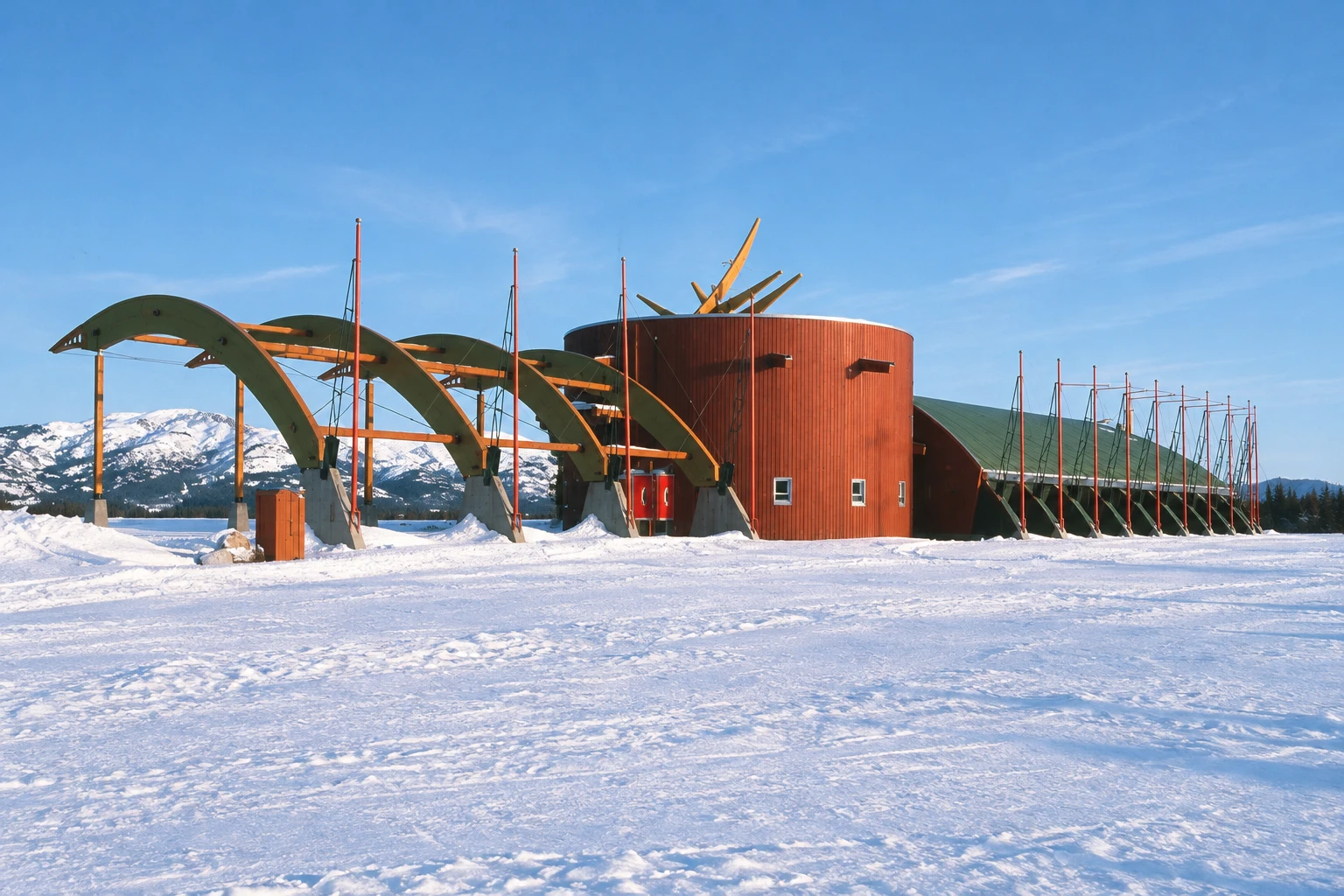
Museum · Whitehorse, Canada
Yukon Beringia Interpretive Centre
Museum about Beringia, the land bridge that connected Asia and America in the ice age, with replicas of mammoths, giant ground sloths and other regional animals.
Illustrative images. The pictures in this guide are illustrations based on the real place, not photographs, and may differ from it.

Discover
About Yukon Beringia Interpretive Centre
In the last ice age, lower sea levels revealed a stretch of land between Siberia and Alaska, Beringia. Much of the Yukon remained ice-free and served as a refuge for animals such as the woolly mammoth, the cave lion, Yukon horse and the giant ground sloth.
The Yukon Beringia Interpretive Centre tells this story with skeletons, life-size replicas and fossils found in the Klondike’s gold mines, where frozen ground preserved bones and even animal remains. Exhibits also cover the first peoples who came to the Americas across that land.
The museum is near the airport, next to the Yukon Transportation Museum. Check opening days and the current schedule.
Before you go
Practical information
Cidade Turismo reviews its information regularly, but something may have changed. Check with the place before planning your trip.
How much time to set aside
One to one and a half hours.
Best time
Any time of year; on very cold or rainy days it’s a good alternative to trails.
How to get there
On the Alaska Highway, near the airport, about 5 km from downtown Whitehorse.
Tip
Combine it with the transportation museum next door, which tells the story of Yukon roads and aircraft.
Official website
Your questions
Frequently asked questions about Yukon Beringia Interpretive Centre
What was Beringia?
The land strip that connected Siberia to Alaska in the ice age, when sea level was lower.
Which animals appear in the Beringia centre?
Woolly mammoth, cave lion, Yukon horse, giant ground sloth and other ice-age animals.
Where is the Beringia centre located?
Near Whitehorse airport, on the Alaska Highway.