

 Brazil
 Antarctica
 Argentina
 Bolivia
 Chile
 Colombia
 Ecuador
 Falkland Islands (Malvinas)
 French Guiana
 Guyana
 Paraguay
 Peru
 Suriname
 Uruguay
 Venezuela
 Albania
 Austria
 Belgium
 Croatia
 Denmark
 Finland
 France
 Germany
 Greece
 Hungary
 Iceland
 Ireland
 Italy
 Luxembourg
 Norway
 Poland
 Portugal
 Slovakia
 Slovenia
 Spain
 Sweden
 Switzerland
 the Czech Republic
 the Netherlands
 the United Kingdom
 Turkey
 Bermuda
 Greenland
 Mexico
 Saint Pierre and Miquelon
 the United States
 the Dominican Republic
 Japan
 Egypt
 South Africa
 Australia
 Fiji
 New Zealand
 Papua New Guinea
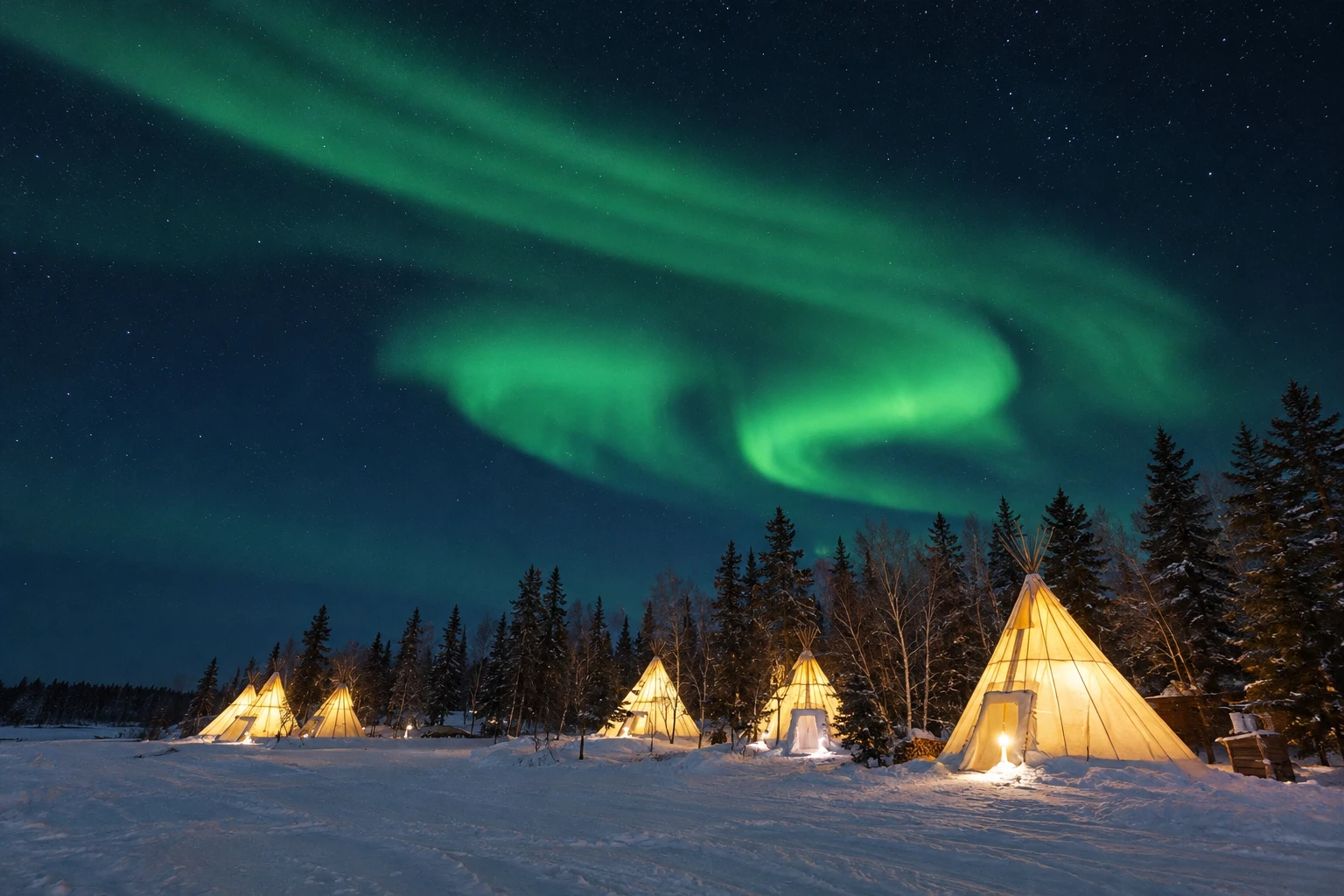
Yellowknife, Canada
Natural Phenomenon
Northern Lights in Yellowknife
The aurora borealis season in Yellowknife runs from mid‑August to mid‑April: autumn and winter, Aurora Village and tours on the Ingraham Trail.
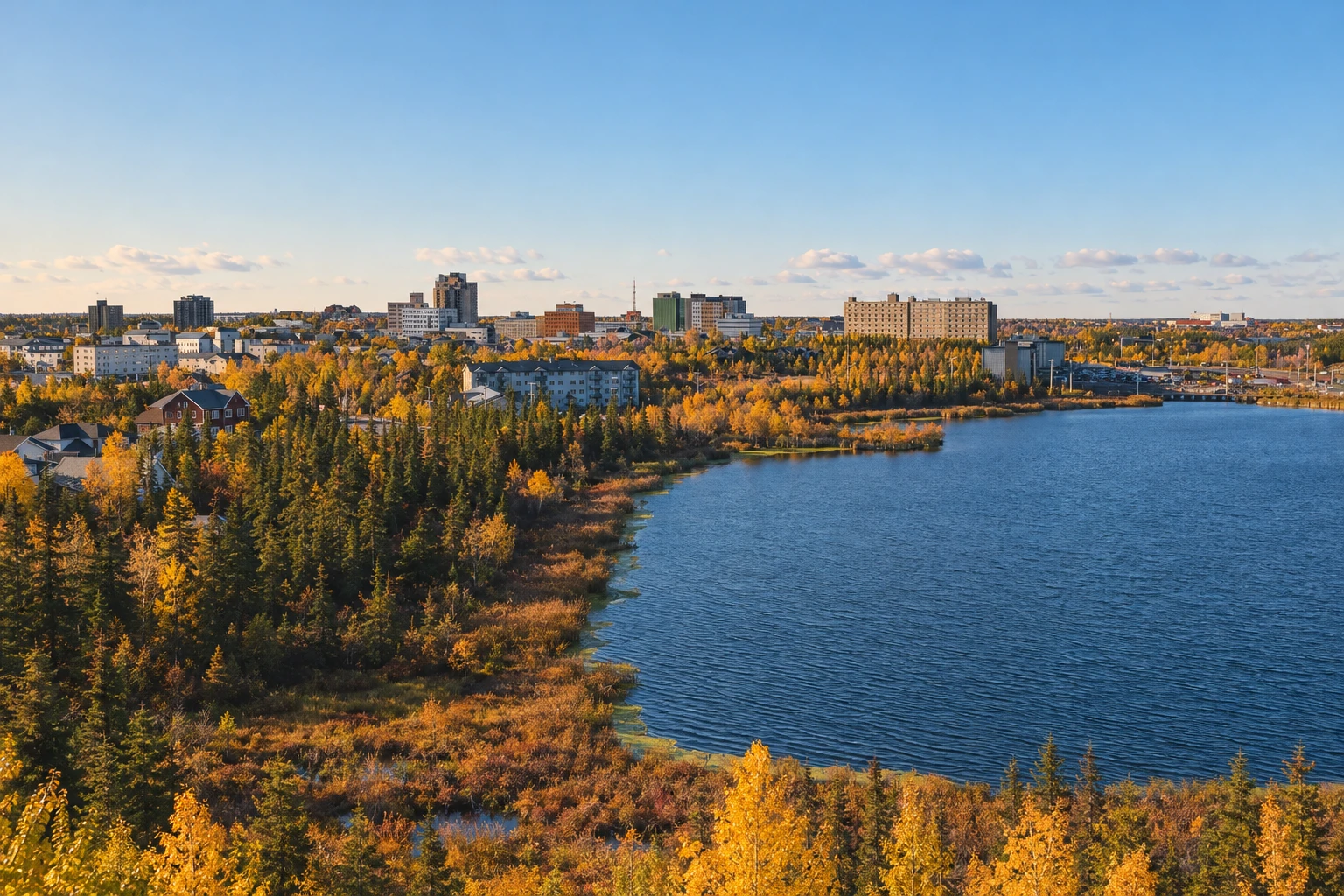
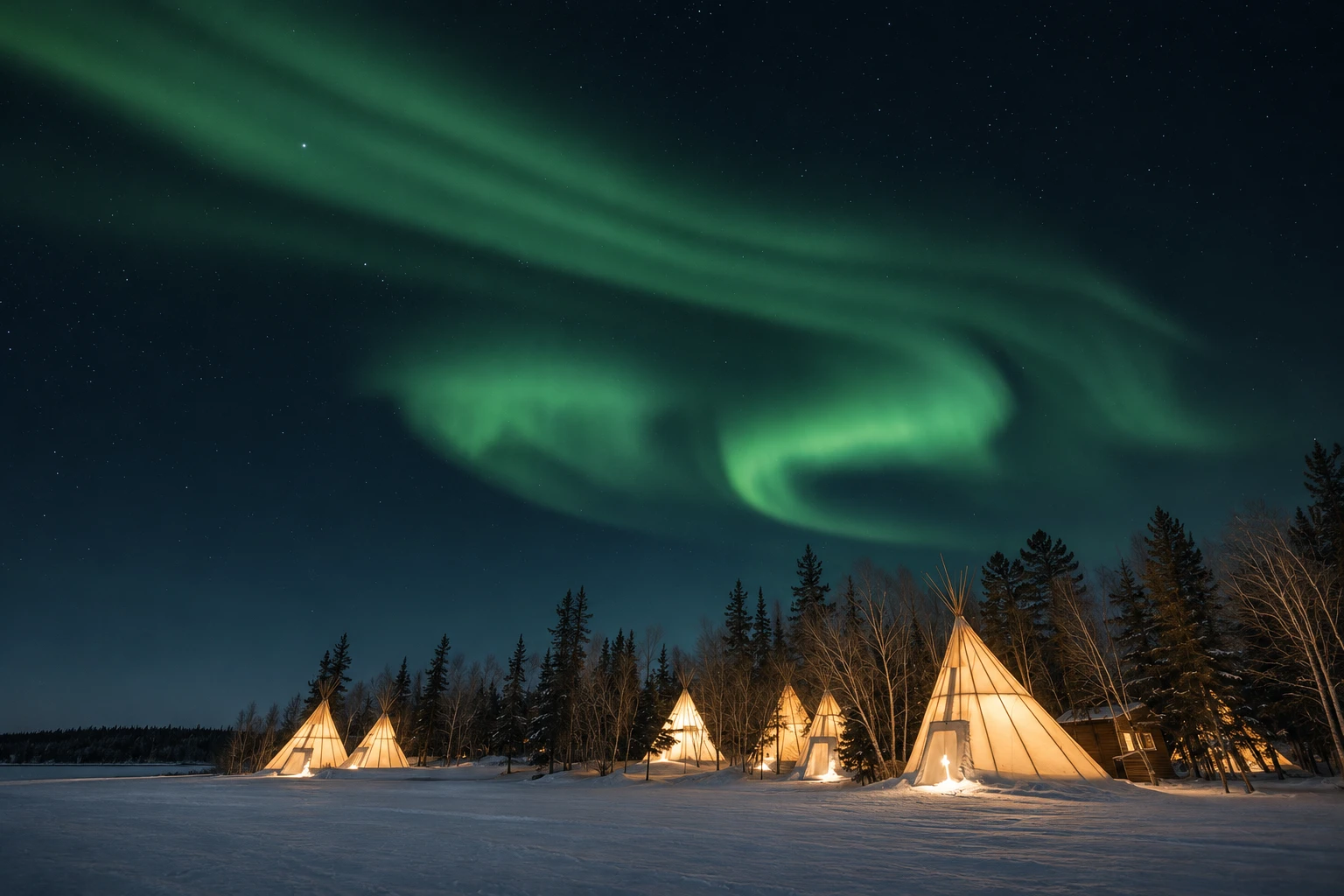
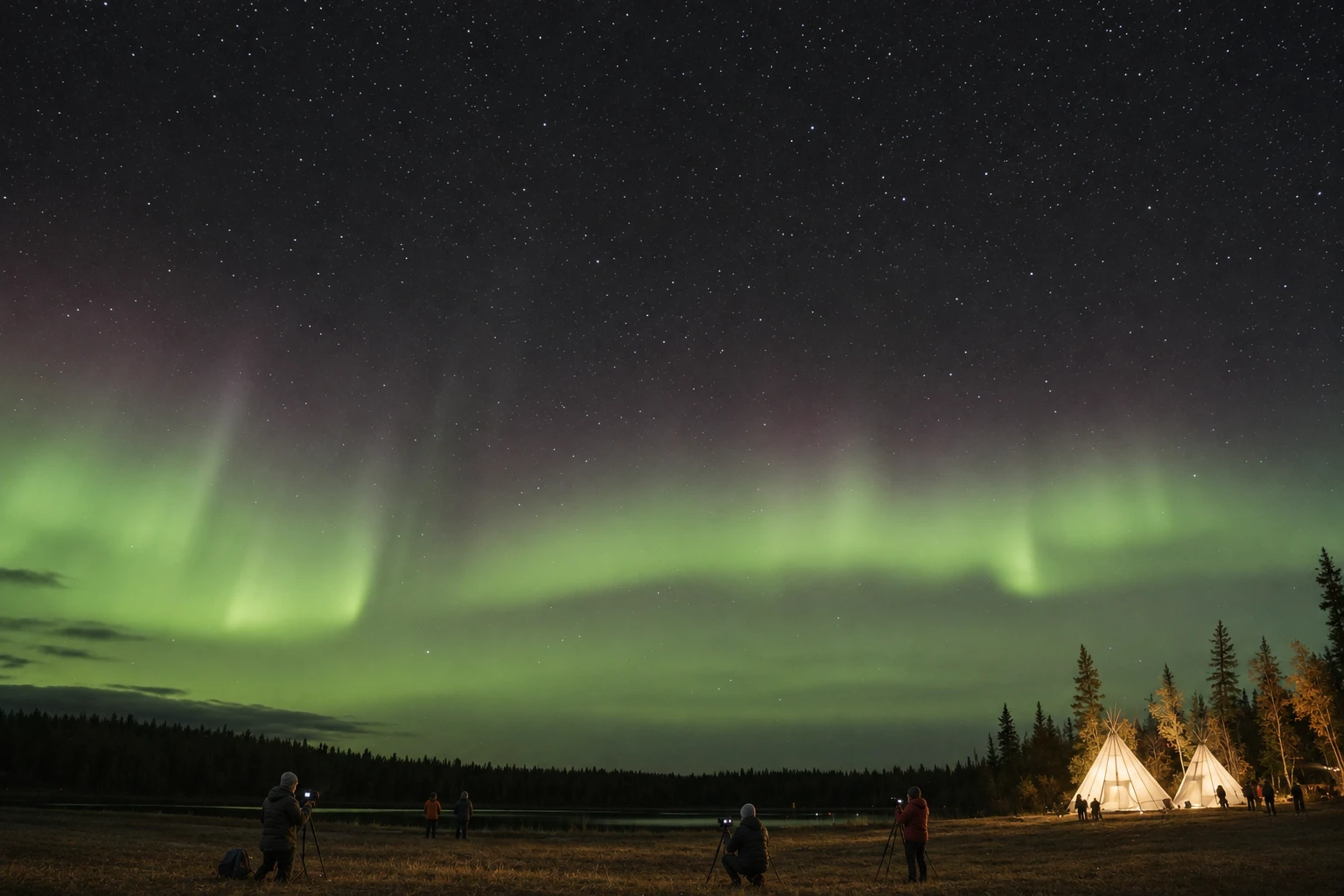
Illustrative images. The pictures in this guide are illustrations based on the real place, not photographs, and may differ from it.

A look at the place
Northern Lights in Yellowknife in pictures
These pictures are illustrations based on the real place, not photographs. They may differ from the place.
Click the picture to enlarge it.
Discover
About Northern Lights in Yellowknife
Yellowknife, the capital of Canada's Northwest Territories, sits on the shore of Great Slave Lake at about 62° north latitude, beneath the ring where the aurora borealis appears most often. The dry interior air brings many clear nights, and the city is one of the world’s top destinations for viewing the aurora. Canadian tourism authorities report as many as 240 aurora nights per year.
The season runs from mid‑August to mid‑April and is split into two parts. In autumn, from mid‑August through the end of September, unfrozen lakes can reflect the aurora and the cold is mild. October usually has more clouds as the lakes begin to freeze. Winter, from mid‑November to early April, brings snow, long nights and very severe cold.
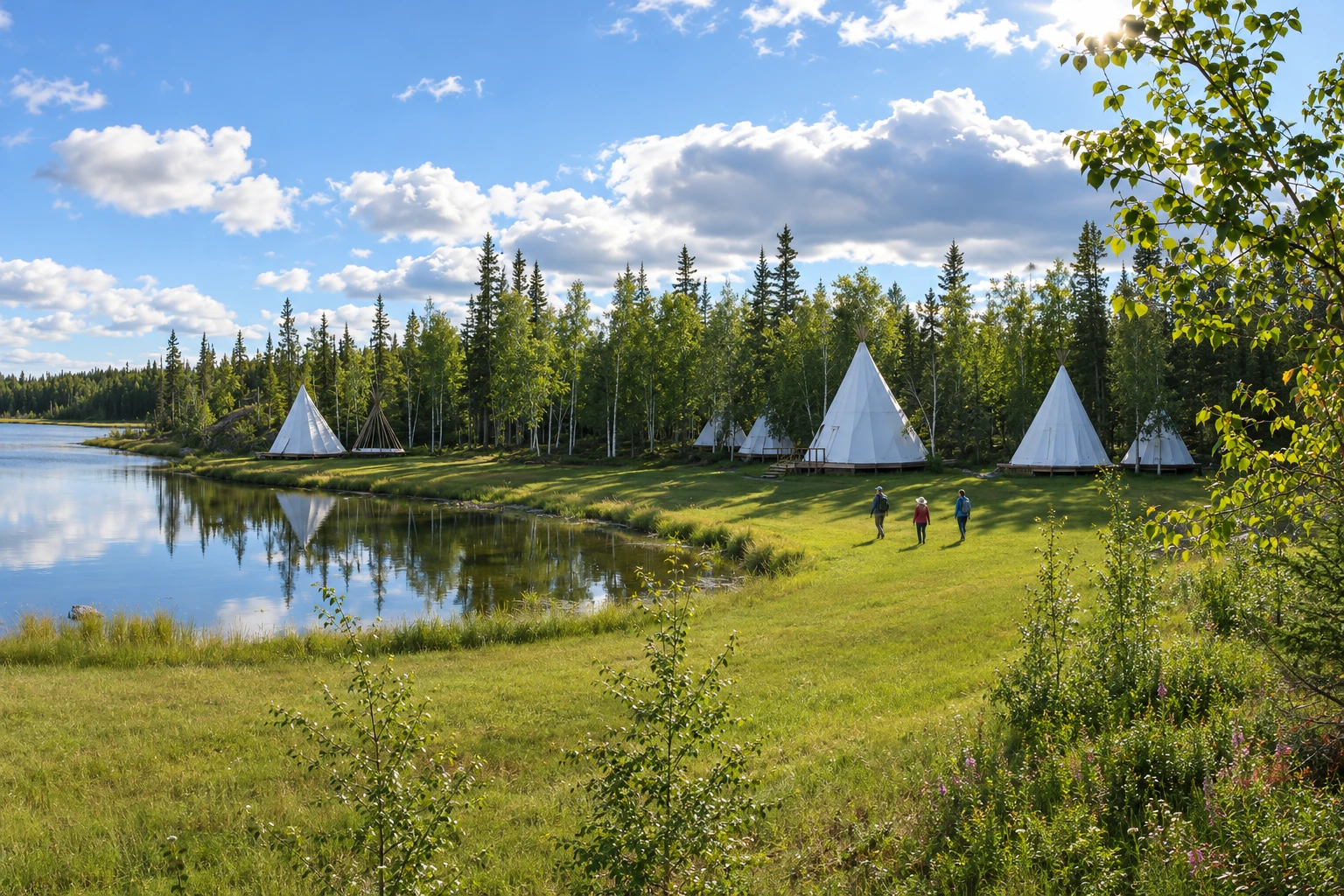
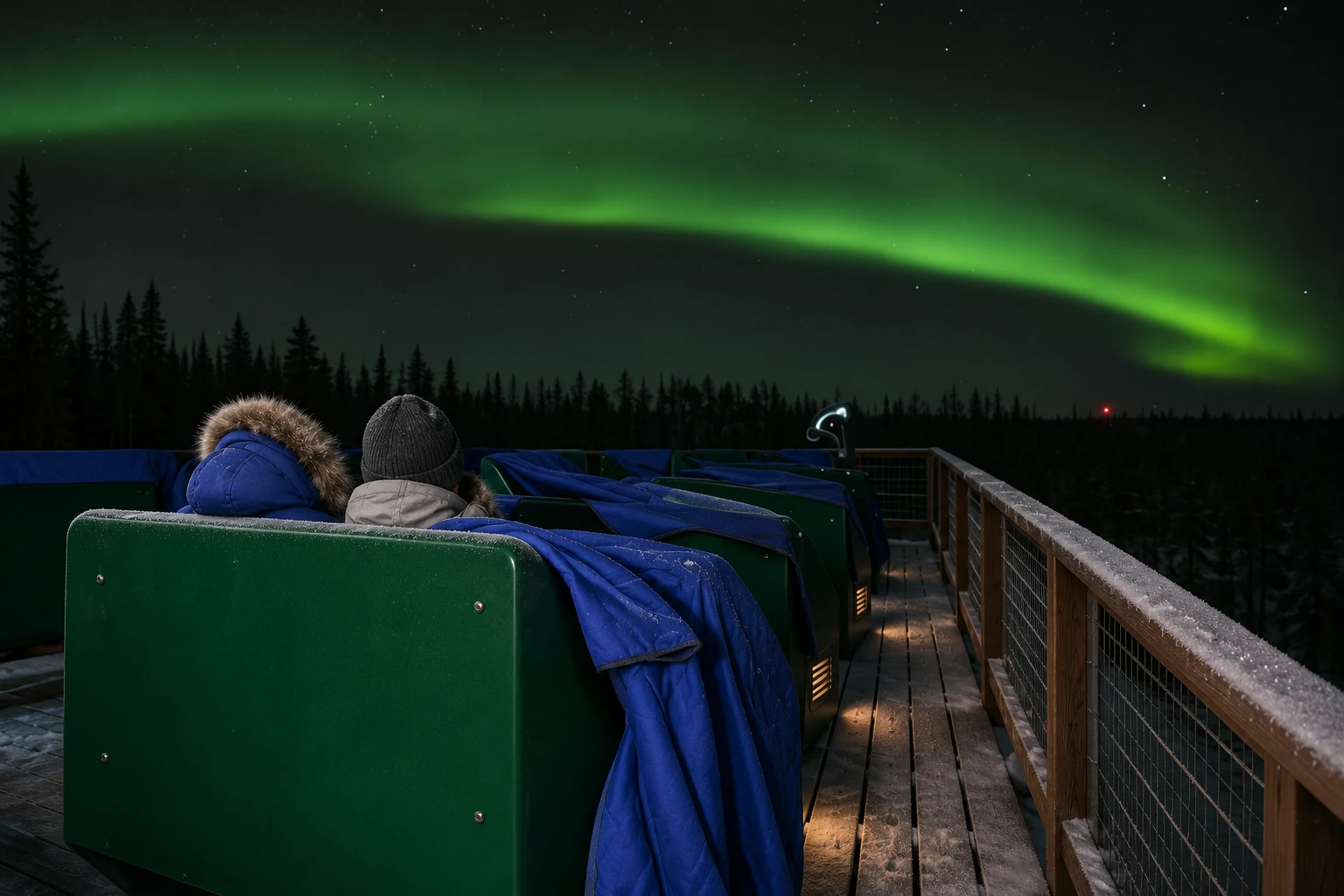
Aurora Village, on the Ingraham Trail about 25 km from downtown, is the best‑known viewing site: it has tipi‑style tents and heated outdoor chairs, and buses pick up at hotels at night. Other tours go to cabins and lakes along the same road, or offer guided aurora photography trips. Schedules, times and rules change: check before you go.
Drivers often look for dark spots along the Ingraham Trail, away from lights. In town, Old Town and the Pilot’s Monument lookout offer lake views, but lighting interferes on weaker aurora nights.
Winter is extreme: expedition‑grade clothing, heavy boots and gloves make a difference, and some tours rent winter gear. Cold also drains camera and phone batteries quickly.
Before you go
Practical information
Cidade Turismo reviews its information regularly, but something may have changed. Check with the place before planning your trip.
The months when it usually happens. It depends on the weather and on nature: it is not guaranteed.
How much time to set aside
One night: tours usually run from evening into the early morning for four hours or more; to increase your chances, stay three to four nights.
Season
Season: mid‑August to mid‑April, from night into the early morning. Autumn (mid‑August to September) and winter (mid‑November to early April) tend to have clearer skies than October.
How to get there
Yellowknife has an airport with flights from southern Canadian cities such as Edmonton and Calgary. Aurora Village is about 25 km along the Ingraham Trail; tours usually pick up at hotels.
Tip
Book early for winter, the busiest time. Bring extra batteries for camera and phone. Seeing the aurora depends on the Sun and the sky.
Your questions
Frequently asked questions about Northern Lights in Yellowknife
What is the best time to see the aurora borealis in Yellowknife?
The season runs from mid‑August to mid‑April. Autumn and winter usually have clearer skies; October is cloudier.
Why is Yellowknife good for seeing the aurora?
It lies beneath the band where the aurora appears most often and has a dry climate with many clear nights.
What is Aurora Village?
A viewing site on the Ingraham Trail about 25 km from downtown, with tents and heated chairs. Buses usually pick up at hotels.
How many nights should you stay in Yellowknife to see the aurora?
Staying three or four nights increases your chance, because cloudy nights or low solar activity are common.