Vancouver · Canada · Park
Stanley Park
A park of about 400 hectares at the tip of the downtown peninsula, with cedar and fir forest, the Seawall waterfront promenade, beaches and the Brockton Point totem poles.

 Search
 Brazil
 Antarctica
 Argentina
 Bolivia
 Chile
 Colombia
 Ecuador
 Falkland Islands (Malvinas)
 French Guiana
 Guyana
 Paraguay
 Peru
 Suriname
 Uruguay
 Venezuela
 Austria
 Belgium
 Croatia
 Denmark
 Finland
 France
 Germany
 Greece
 Hungary
 Iceland
 Ireland
 Italy
 Luxembourg
 Norway
 Poland
 Portugal
 Slovakia
 Slovenia
 Spain
 Sweden
 Switzerland
 the Czech Republic
 the Netherlands
 the United Kingdom
 Turkey
 BermudaCanada
 Greenland
 Mexico
 Saint Pierre and Miquelon
 the United States
 the Dominican Republic
 JapanTurkey
 Egypt
 South Africa
 Australia
 Fiji
 New Zealand
 Papua New Guinea
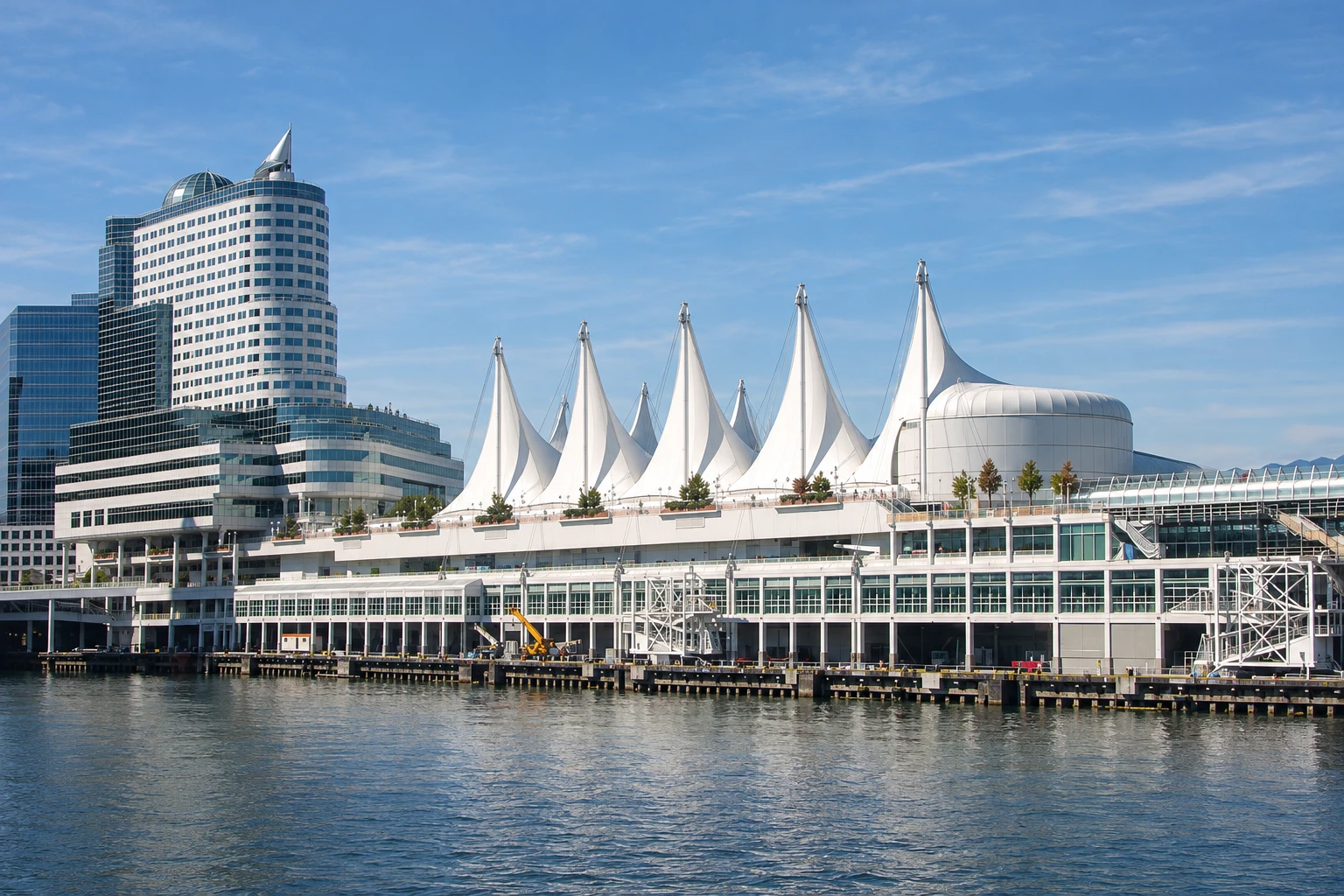
In the photo: Canada Place, Vancouver
Illustrative images. The pictures in this guide are illustrations based on the real place, not photographs, and may differ from it.

The city
The largest city in British Columbia, on a peninsula between the Pacific and the mountains. It has Stanley Park, with the Seawall promenade and the Vancouver Aquarium, Granville Island, Gastown and Chinatown with the Dr. Sun Yat-Sen Garden, the UBC Museum of Anthropology and Queen Elizabeth Park, at the highest point in the city.
There's no accommodation in the guide yet in Vancouver.
Do you run a hotel, guesthouse or vacation rental here? List itThere are no restaurants in the guide yet in Vancouver.
Know a good one? Recommend it to usThe city's hotels and restaurants on the map.
how to get there · how many days · itinerary · questions
The local experience
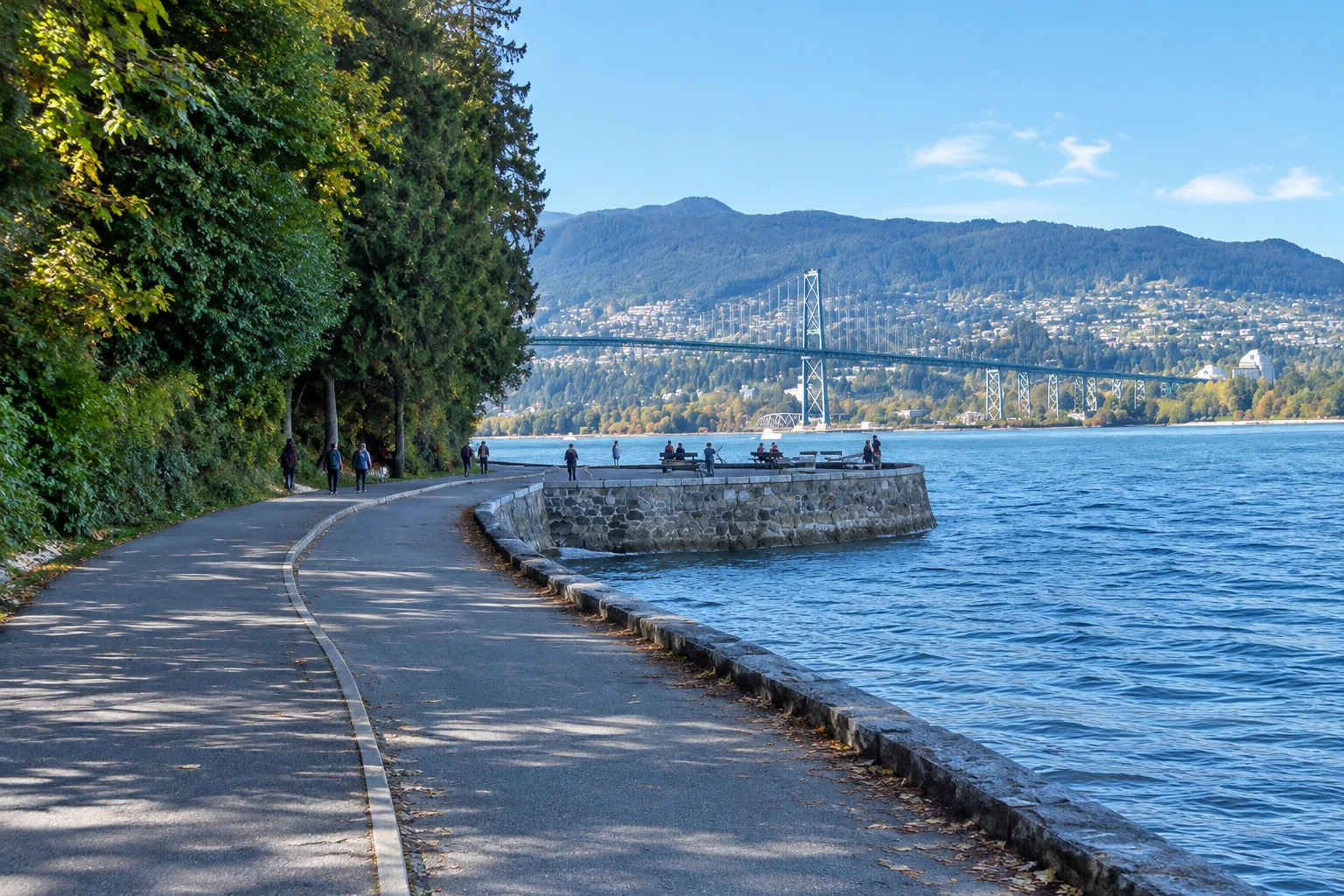
A park of about 400 hectares at the tip of the downtown peninsula, with cedar and fir forest, the Seawall waterfront promenade, beaches and the Brockton Point totem poles.
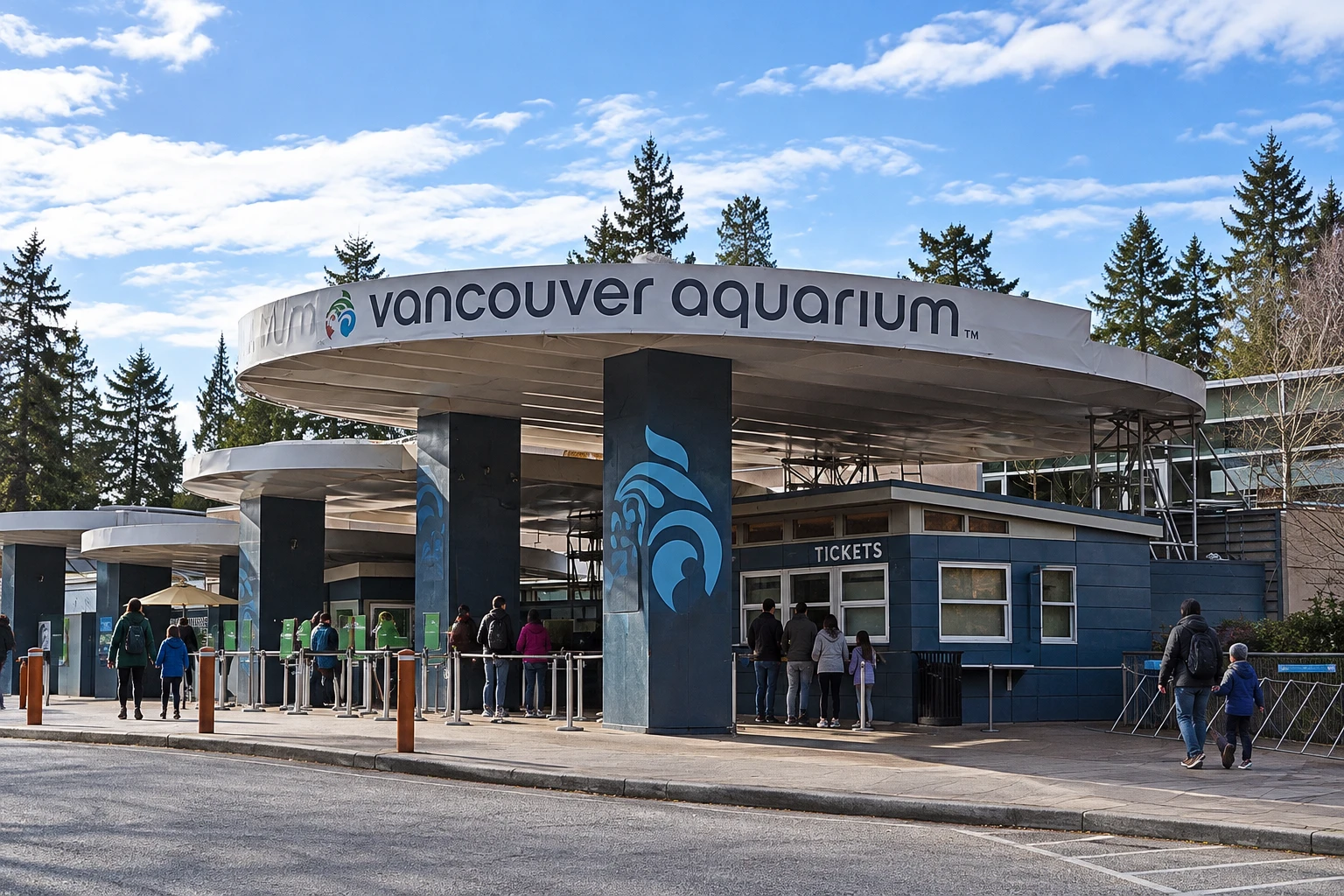
An aquarium inside Stanley Park dedicated to Pacific coast marine life and other seas, featuring sea otters, seals, sea lions, jellyfish and a rainforest gallery.
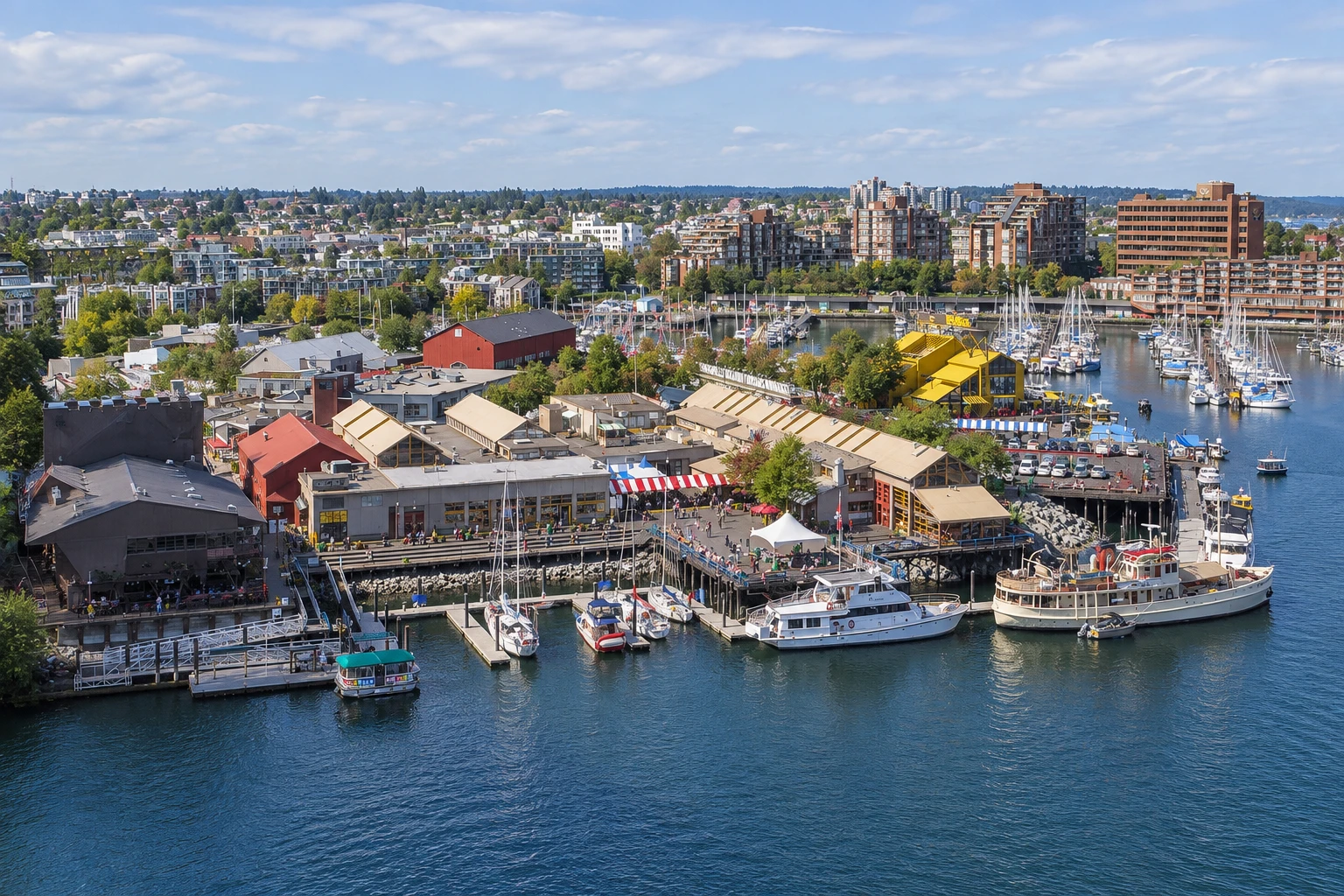
A former industrial area under the Granville Bridge transformed into a public market, artist studios, galleries, theatres and breweries, on the edge of False Creek.
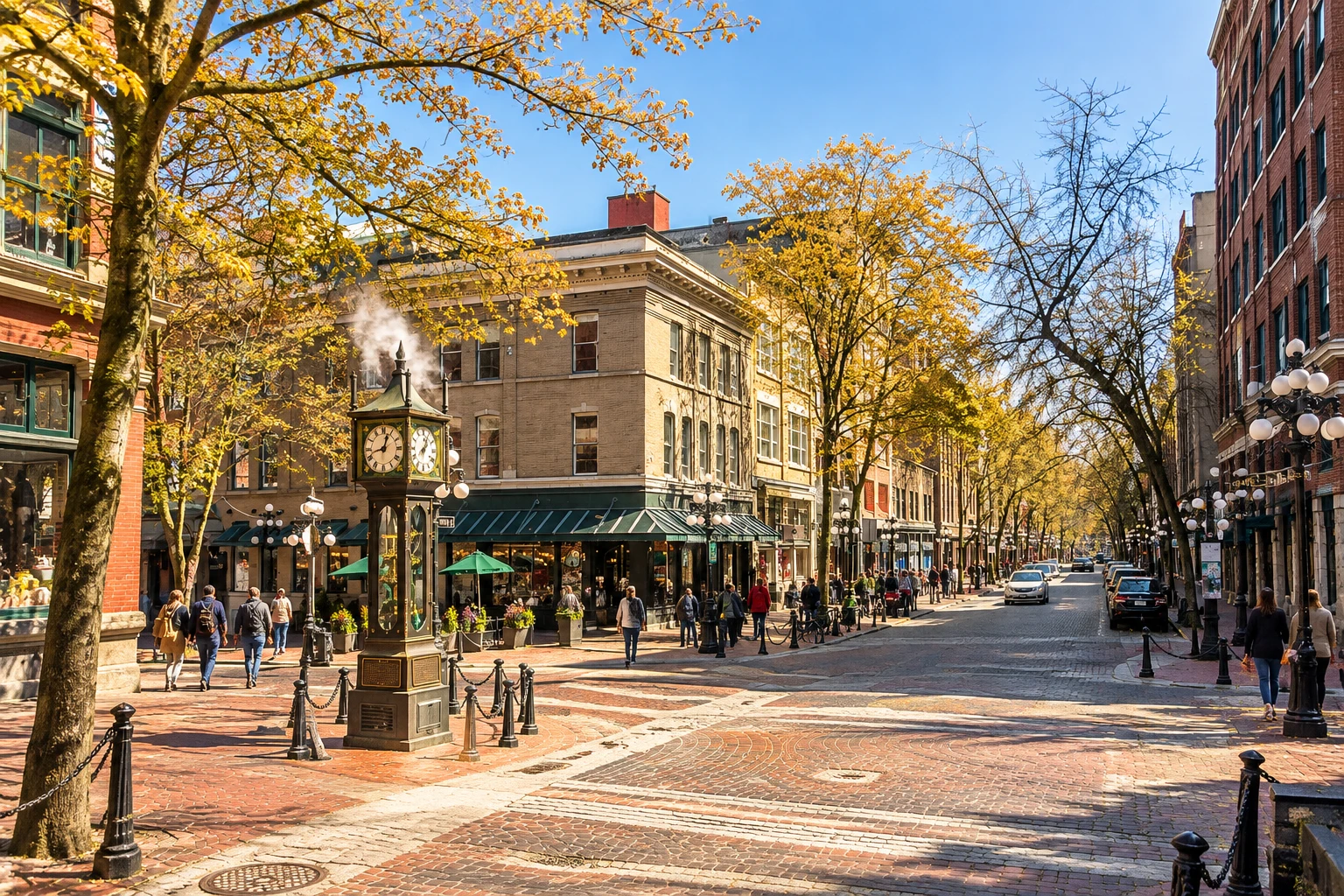
The oldest core of Vancouver, with cobblestone streets, late-19th-century brick buildings, the steam clock and the statue of Gassy Jack, who gave the neighbourhood its name.
Before you go
Vancouver – Canada Destination Vancouver about 115 km from Victoria
Approximate distances. Check flights and bus, train or boat schedules before you travel.
The Canada Line train links the airport to downtown in about 25 minutes. Pacific Central Station handles intercity trains and buses. Within the city, TransLink and local operators run the SkyTrain, buses and the SeaBus and Aquabus ferries.
Three days: one for Stanley Park and downtown, one for Granville Island, Gastown and Chinatown, and one for the Museum of Anthropology and Queen Elizabeth Park.
From June to September, with dry weather and long days. In spring, cherry trees generally bloom between March and April. From October to April it rains frequently, and the nearby mountains have snow.
The seasons shown are the most usual ones; nature doesn't always follow the calendar.
No. SkyTrain, buses and small ferries cover the city, and downtown is walkable or bikeable via the Seawall.
Suggested itinerary
Built with the places on this page. No rush: it's paced so you have time to see them.
Cycle or walk the Seawall around Stanley Park, stopping at the Brockton Point totem poles.
Take the Aquabus to Granville Island and have lunch at the public market.
Day 1
Do the Seawall in the morning and visit the Vancouver Aquarium inside the park.
Go by boat to Granville Island for the market and artist studios.
Day 2
Walk through Gastown to the steam clock and continue to Chinatown and the Dr. Sun Yat-Sen Garden.
Take a bus to the UBC campus for the Museum of Anthropology and finish at a Kitsilano beach.
Check before you go. Opening hours and days change, and places may close for renovations, holidays or events. This itinerary is a suggestion from Cidade Turismo, not a commitment: plan yours by checking directly with each place you intend to visit.
Before you go
Walk the Seawall at Stanley Park, have lunch on Granville Island and finish in Gastown late afternoon.
A waterfront promenade with a pedestrian path and bike lane that circles Stanley Park and continues along the city’s shoreline.
By Aquabus or False Creek Ferries, small boats that depart from several waterfront points, or by bus and on foot across the Granville Bridge.
In parks and streets across several neighborhoods, such as Stanley Park and Queen Elizabeth Park, generally between March and April.