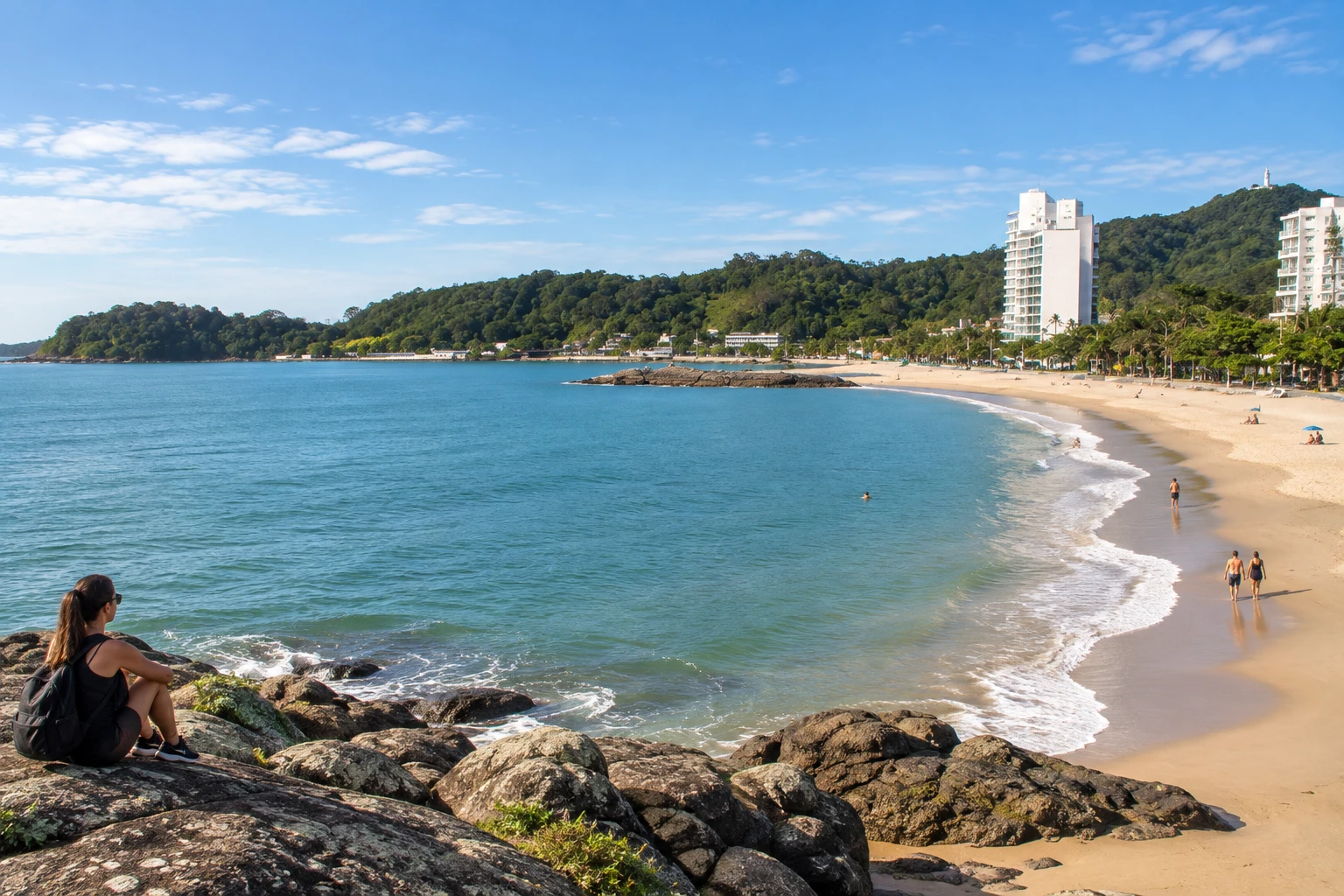
5 places to visit Itajaí (SC), chosen by the Cidade Turismo guide.
Illustrative images. The pictures in this guide are illustrations based on the real place, not photographs, and may differ from it.
To start
The 5 main places Itajaí
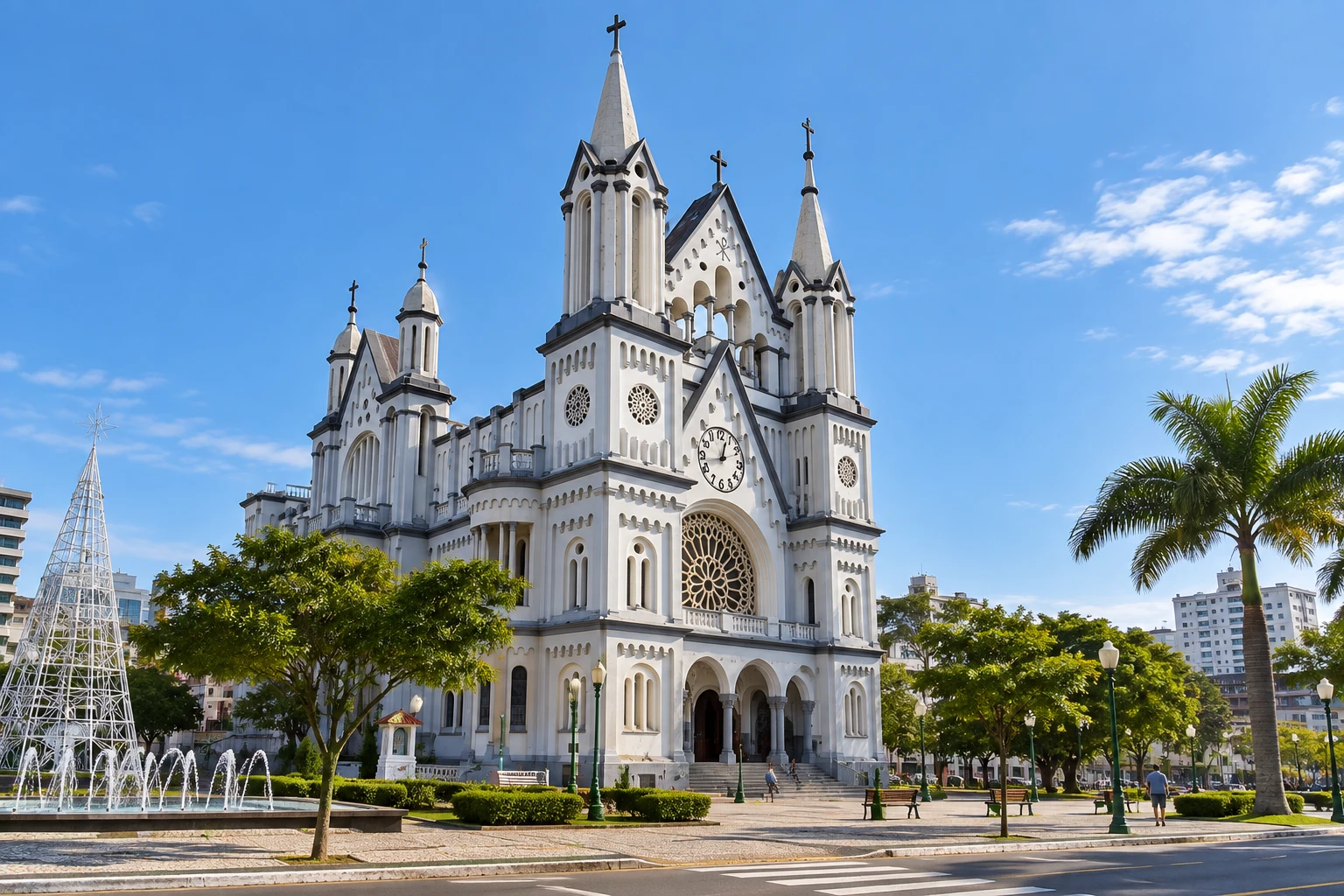
Igreja Matriz do Santíssimo SacramentoDesigned by the German architect Simão Gramlich and inaugurated in 1955, it is in neo-Gothic style with Romanesque arches, six towers and 55 stained-glass windows.
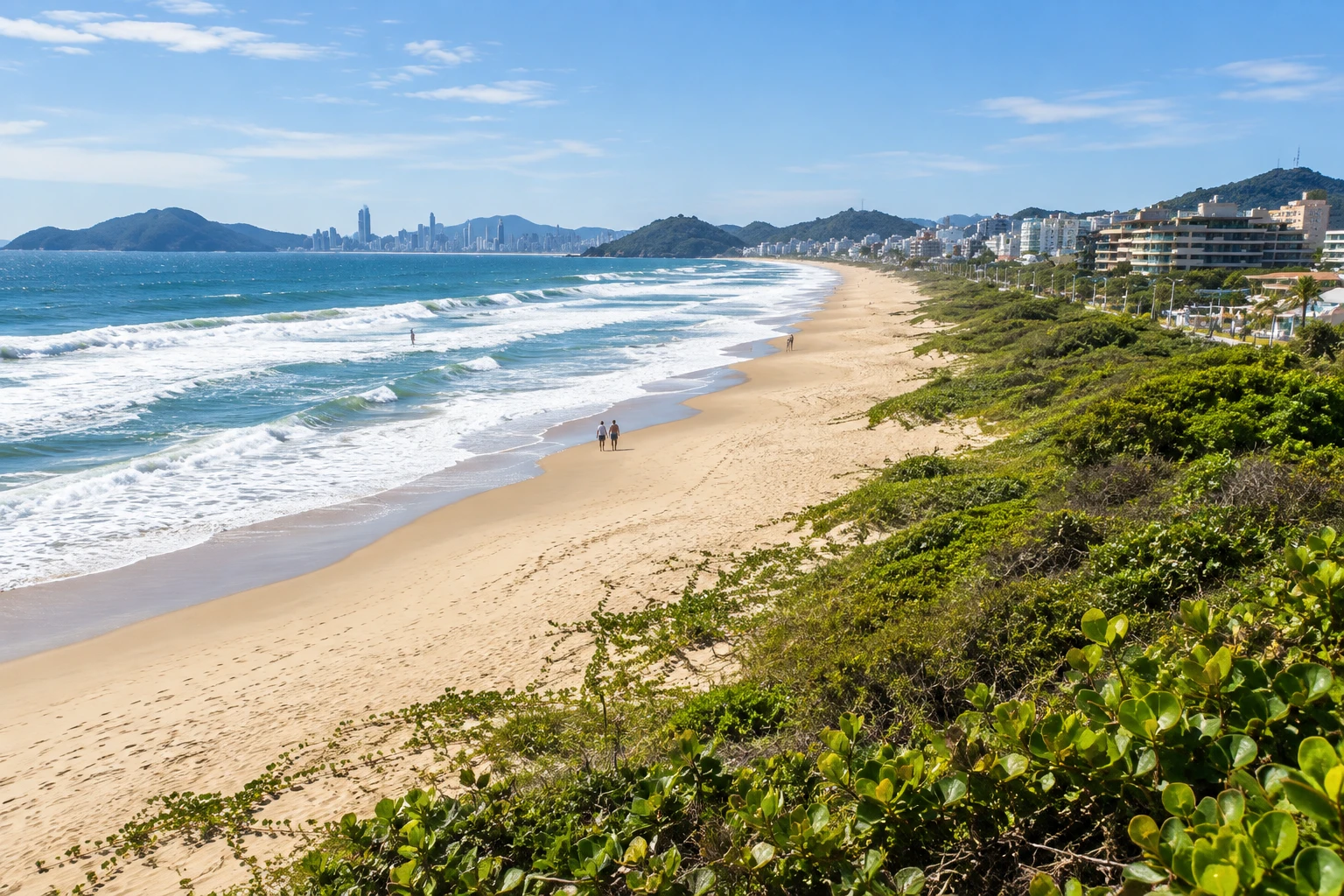
Brava BeachOn the border with Balneário Camboriú, it has steady waves sought after by surfers and a hang gliding landing area.
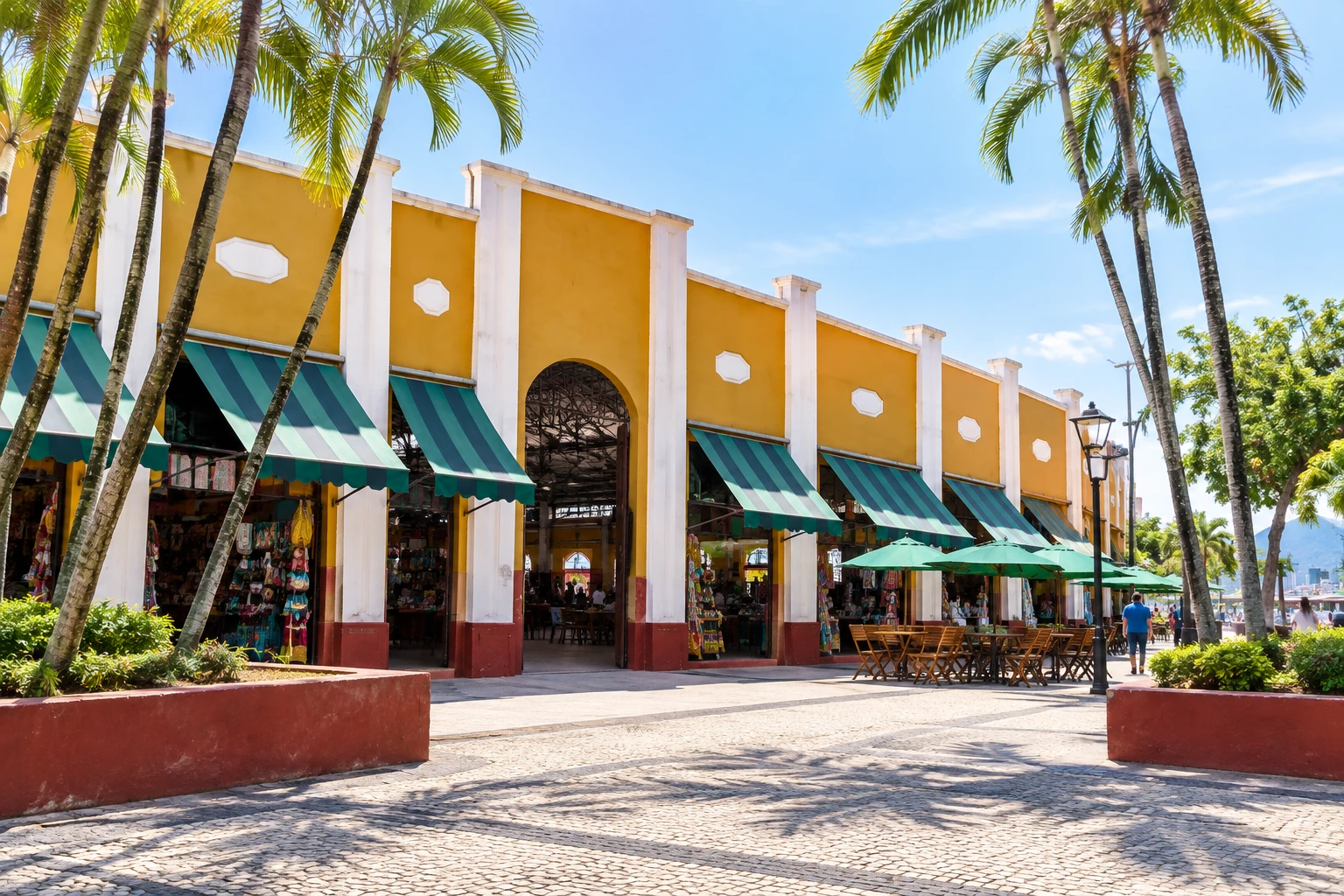
Mercado Público de ItajaíBuilt in 1917 as the first project of superintendent Marcos Konder, it had its eclectic facade simplified into Art Deco lines after a fire in 1936.
Praia de CabeçudasAbout 700 meters long with calm water, it is mainly frequented by families.
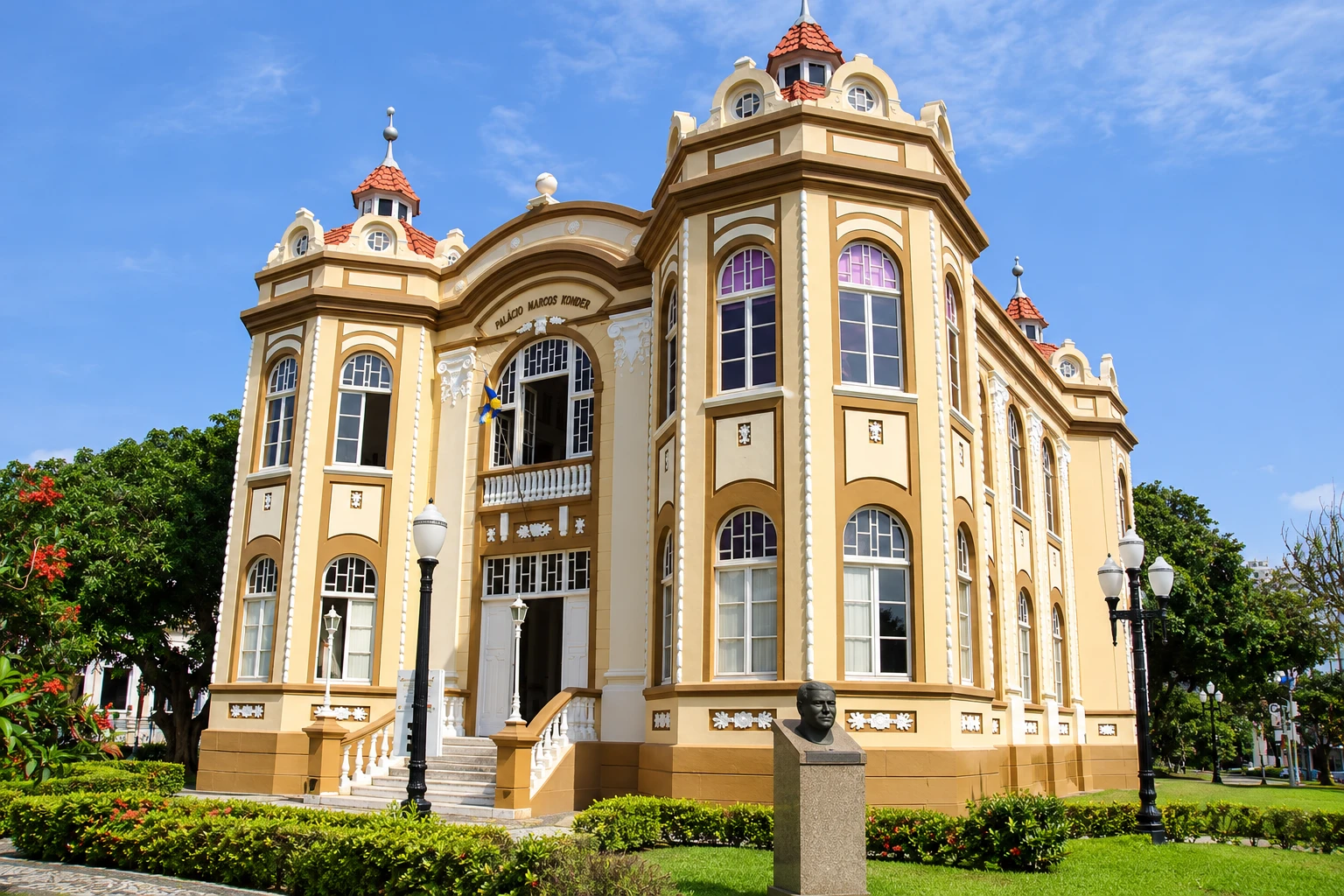
Itajaí Historical Museum (Marcos Konder Palace)The Museum of the History of Itajaí is housed in the Palácio Marcos Konder, a historic downtown building erected in the 1920s and listed as state heritage.
Designed by the German architect Simão Gramlich and inaugurated in 1955, it is in neo-Gothic style with Romanesque arches, six towers and 55 stained-glass windows. The interior decoration is by the Italian artists Emílio Sessa and Aldo Locatelli, and the church has been listed by the state since 2001.
On the border with Balneário Camboriú, it has steady waves sought after by surfers and a hang gliding landing area. At the far north end is the Canto do Morcego, a stretch surrounded by tall hills.
Built in 1917 as the first project of superintendent Marcos Konder, it had its eclectic facade simplified into Art Deco lines after a fire in 1936. Today it is a center of popular culture, with crafts, traditional food and live music.
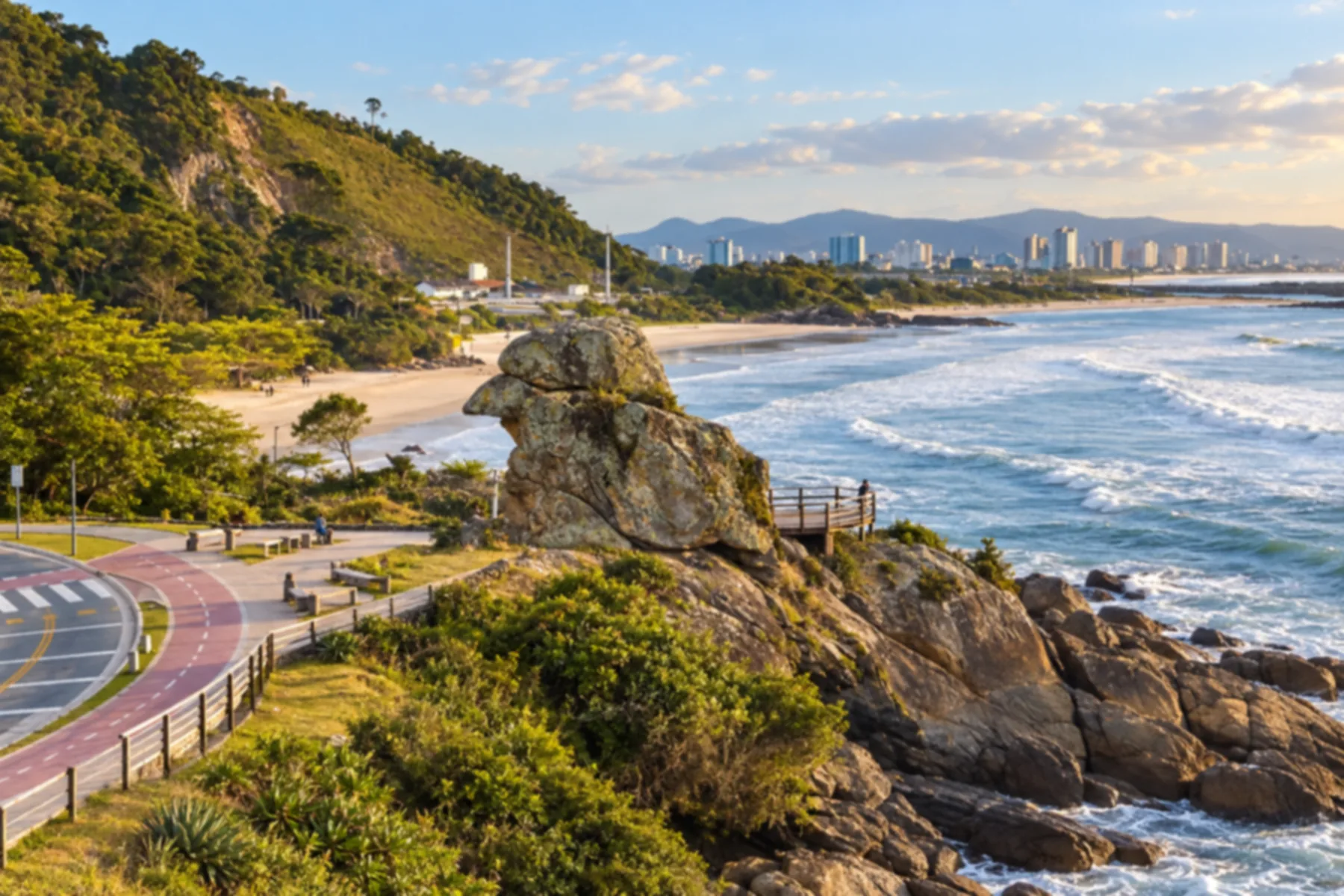
About 700 meters long with calm water, it is mainly frequented by families. On the way from downtown to the beach is the Bico do Papagaio, a rock shaped by blasting when the road was built.
The Museum of the History of Itajaí is housed in the Palácio Marcos Konder, a historic downtown building erected in the 1920s and listed as state heritage. It gathers objects, photographs and documents about the city and hosts temporary exhibitions.


 Antarctica
 Argentina
 Bolivia
 Chile
 Colombia
 Ecuador
 Falkland Islands (Malvinas)
 French Guiana
 Guyana
 Paraguay
 Peru
 Suriname
 Uruguay
 Venezuela
 Albania
 Austria
 Belgium
 Croatia
 Denmark
 Finland
 France
 Germany
 Greece
 Hungary
 Iceland
 Ireland
 Italy
 Luxembourg
 Norway
 Poland
 Portugal
 Slovakia
 Slovenia
 Spain
 Sweden
 Switzerland
 the Czech Republic
 the Netherlands
 the United Kingdom
 Turkey
 Bermuda
 Canada
 Greenland
 Mexico
 Saint Pierre and Miquelon
 the United States
 the Dominican Republic
 Japan
 Egypt
 South Africa
 Australia
 Fiji
 New Zealand
 Papua New Guinea