

 Antarctica
 Argentina
 Bolivia
 Chile
 Colombia
 Ecuador
 Falkland Islands (Malvinas)
 French Guiana
 Guyana
 Paraguay
 Peru
 Suriname
 Uruguay
 Venezuela
 Austria
 Belgium
 Croatia
 Denmark
 Finland
 France
 Germany
 Greece
 Hungary
 Iceland
 Ireland
 Italy
 Luxembourg
 Norway
 Poland
 Portugal
 Slovakia
 Slovenia
 Spain
 Sweden
 Switzerland
 the Czech Republic
 the Netherlands
 the United Kingdom
 Turkey
 Bermuda
 Canada
 Greenland
 Mexico
 Saint Pierre and Miquelon
 the United States
 the Dominican Republic
 Japan
 Egypt
 South Africa
 Australia
 Fiji
 New Zealand
 Papua New Guinea
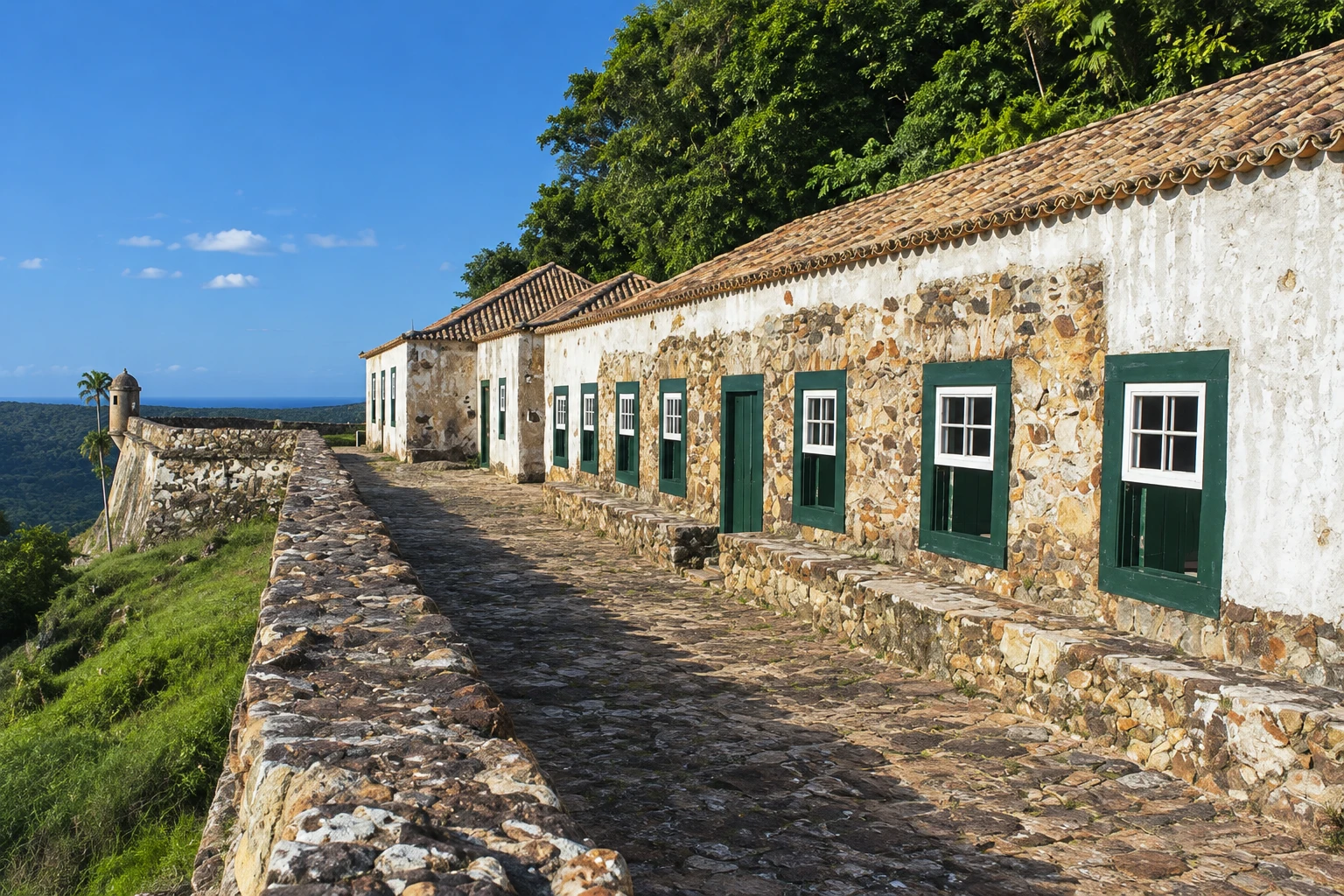
Fortress · Florianópolis, SC
Fortaleza de Santo Antônio de Ratones
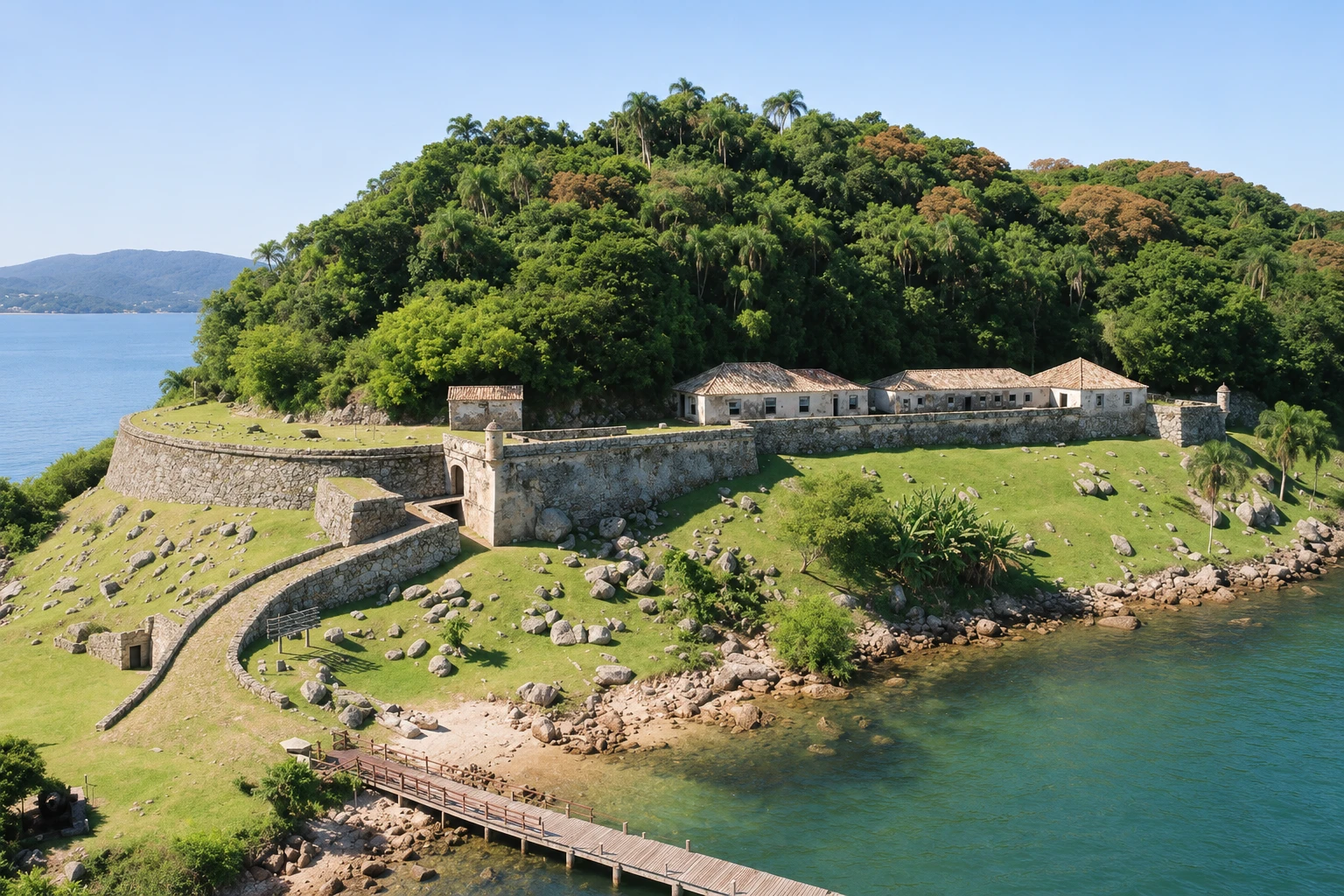
An 18th-century Portuguese fortress on Ilha de Ratones Grande in the North Bay of Florianópolis, restored and managed by UFSC. It is reachable only by boat; the visit shows the barracks, the fountain, the aqueduct and the seawall-facing rampart.
Illustrative images. The pictures in this guide are illustrations based on the real place, not photographs, and may differ from it.


A look at the place
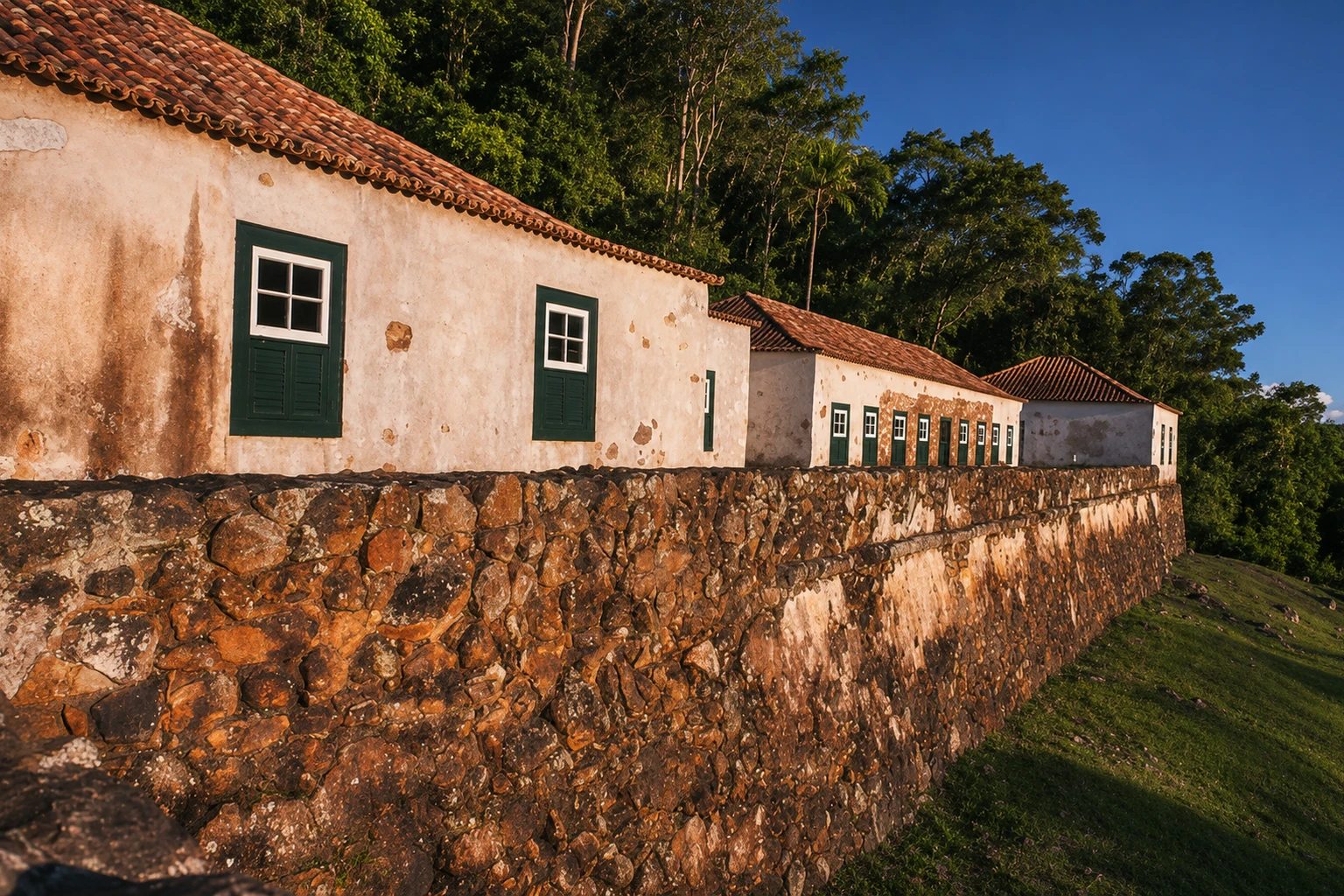
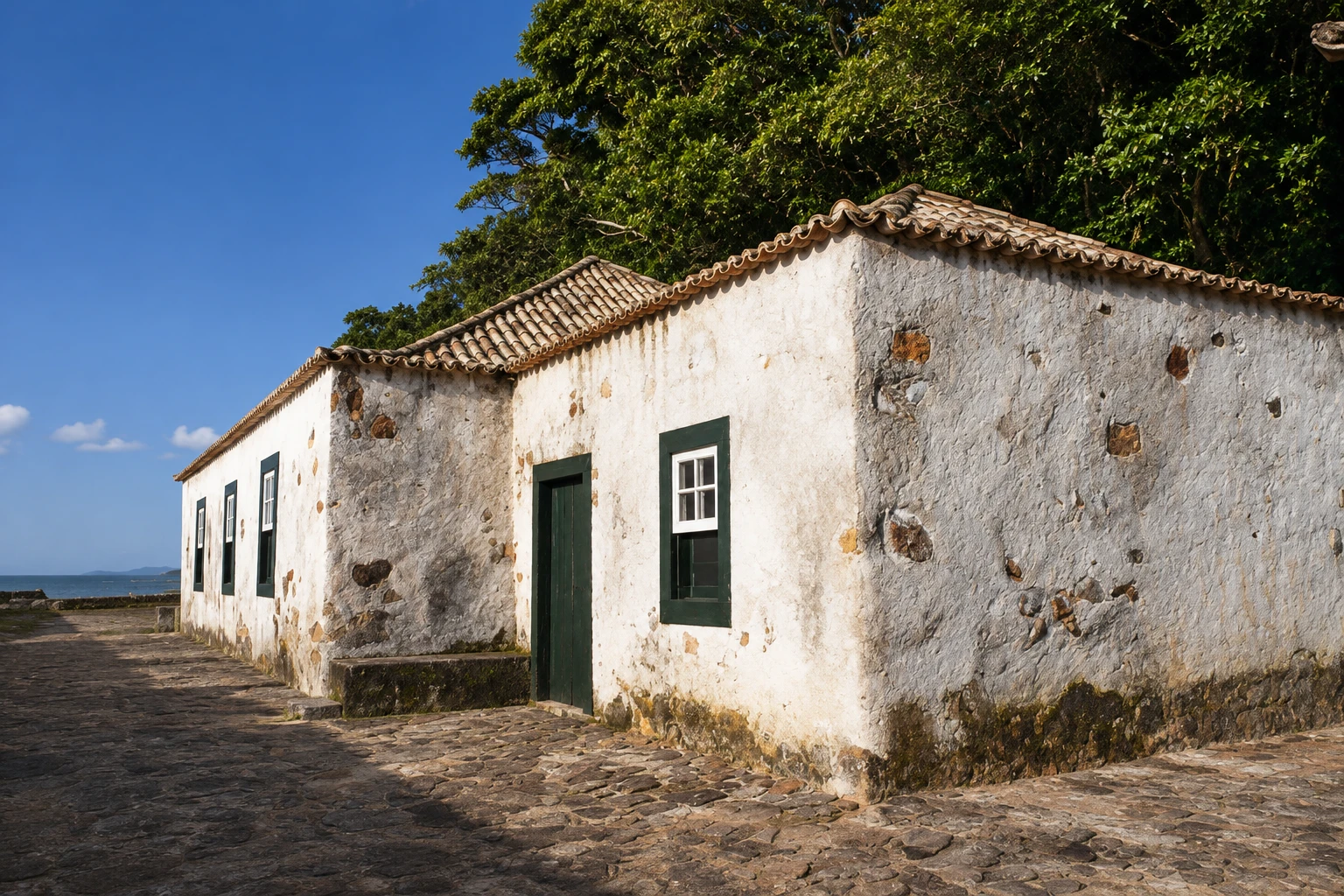
Fortaleza de Santo Antônio de Ratones in pictures
These pictures are illustrations based on the real place, not photographs. They may differ from the place.
Click the picture to enlarge it.
Discover
About Fortaleza de Santo Antônio de Ratones
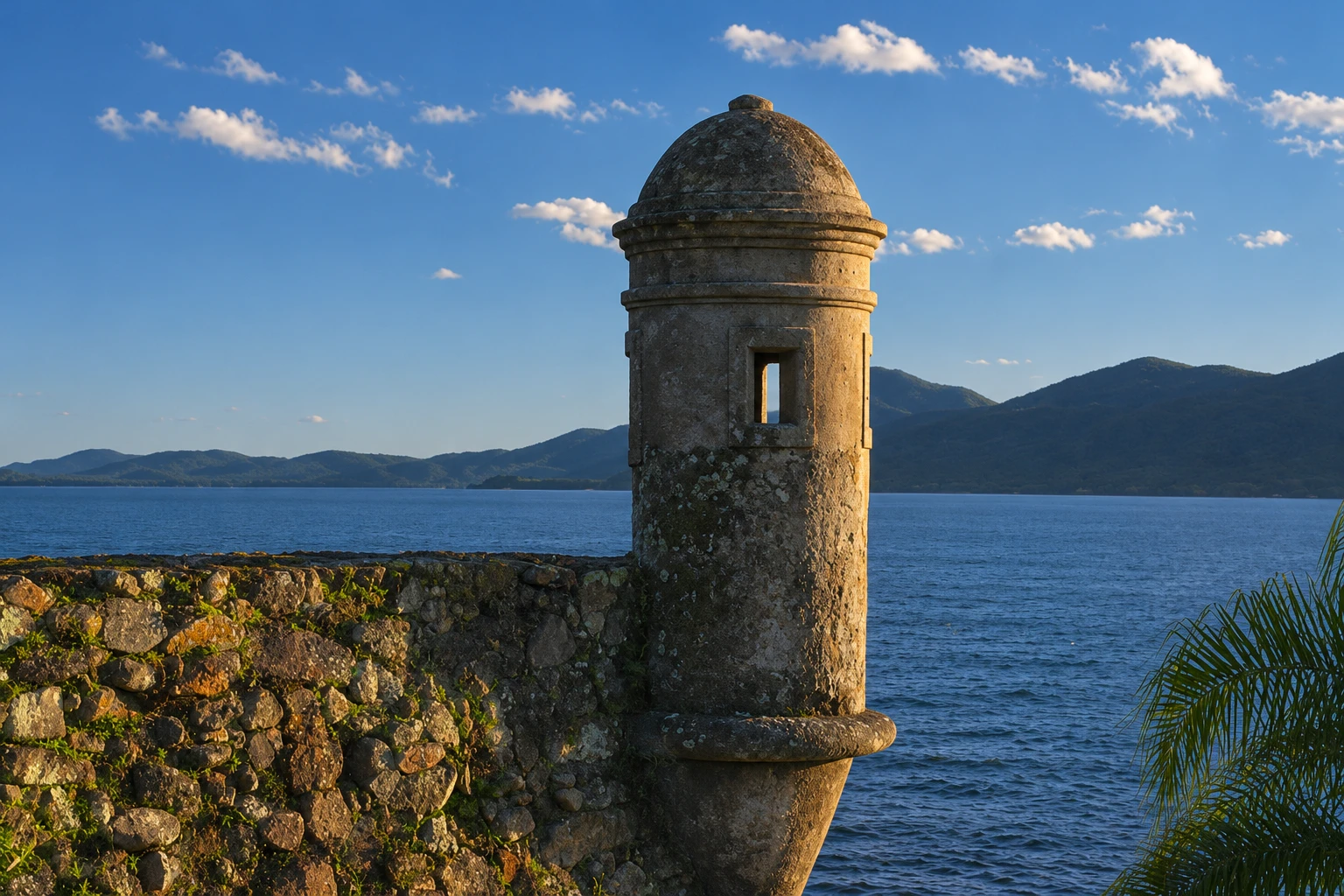
The Fortress of Santo Antônio de Ratones occupies Ilha de Ratones Grande, in the middle of the North Bay, between Ponta do Sambaqui on Ilha de Santa Catarina and the mainland. Construction began in 1740 under the command of Brigadier José da Silva Paes, the first governor of the captaincy. Together with the fortresses of Anhatomirim and São José da Ponta Grossa, it formed the defensive triangle for the island's northern entrance.
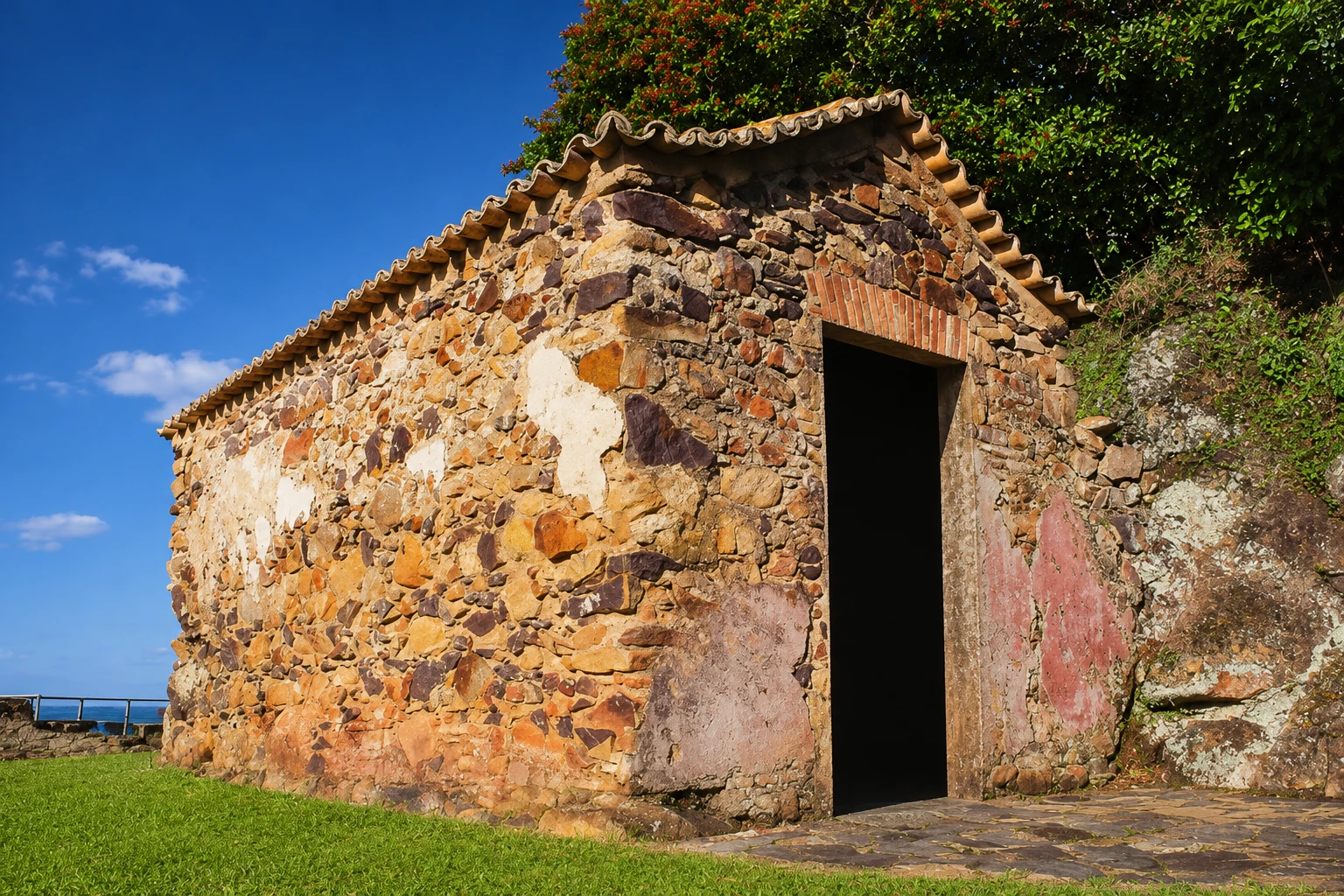
The main buildings are aligned on the same earthen platform, with their backs to the slope and facing the sea: the Commander's House, the barracks, the Gatehouse and the Water Fountain. An aqueduct connects the roofs of the Commander's House and the barracks. At the Gatehouse, a dry moat recalls the former drawbridge that guarded the entrance.
Walls and buildings are built of granite masonry quarried on the island itself, originally coated with lime plaster made from shells. On the north side, the curving wall sheltered the main battery of cannons. Four cannons remain, including a 19th-century British Whitworth model, located near the landing stage.
In the 19th century the fortress served as a lazaretto for epidemic diseases and as a naval coal depot, and later it stood abandoned for decades, overtaken by the forest. Listed as a national heritage site in 1938, it was restored in 1990 and 1991 by the Federal University of Santa Catarina (UFSC), in partnership with IPHAN. The restoration made clear what is original and what was rebuilt.
The rest of the island is covered in Atlantic Forest. From the fortress you can see the bay, with Ilha de Santa Catarina on one side and the mainland on the other, and the boat crossing is part of the experience.
Before you go
Practical information
Cidade Turismo reviews its information regularly, but something may have changed. Check with the place before planning your trip.
How much time to set aside
About an hour on the island; half a day including the crossing, or longer if part of a schooner tour of the bay.
Best time
On days with stable weather and calm seas, when boats usually run regularly, preferably in the morning. The fortress welcomes visitors year-round; check UFSC’s website in advance for days and visiting hours.
How to get there
Only by boat. UFSC does not operate the crossings: they are made by schooners and sightseeing boats that usually depart from points in the North Bay, such as the pier on Avenida Beira-Mar Norte and Canasvieiras, and by local boatmen from Sambaqui, about 20 km from downtown Florianópolis by road. Confirm with the operator the departure point, duration and whether the stop at Ratones is included.
Tip
The fortress entrance fee is charged separately from the crossing; check prices and payment methods on UFSC’s website before you go. There is no snack bar on the island: bring water and snacks; picnicking is allowed, but not alcoholic beverages or open fires.
Official website
Your questions
Frequently asked questions about Fortaleza de Santo Antônio de Ratones
How do I get to the Fortress of Ratones?
Only by boat. Schooners and sightseeing boats usually depart from points in the North Bay, such as the pier on Beira-Mar Norte and Canasvieiras, and there are boatmen at Sambaqui. UFSC, which administers the fortress, does not run the crossings; confirm with the operator whether the stop at Ratones is included.
Do I need to pay to visit the Fortress of Ratones?
Yes. There is a visitation fee, charged separately from the boat crossing. Check the current rates and payment methods on the UFSC fortresses website before you go.
How long does the visit to the Fortress of Ratones take?
About an hour to tour the fortress. With the crossing, the outing typically takes half a day; on schooners, the stop duration on the island is set by the operator.
Is the Fortress of Ratones in Florianópolis?
Yes. Ilha de Ratones Grande is in the North Bay and belongs to Florianópolis. It is different from the Fortress of Anhatomirim, which is on another island in the municipality of Governador Celso Ramos.
Is there food on Ilha de Ratones?
The fortress has no snack bar or restaurant. Bring water and snacks; picnicking is allowed, but alcoholic beverages and lighting fires are prohibited.