7 places to visit Caxias do Sul (RS), chosen by the Cidade Turismo guide.
Illustrative images. The pictures in this guide are illustrations based on the real place, not photographs, and may differ from it.
To start
The 7 main places Caxias do Sul
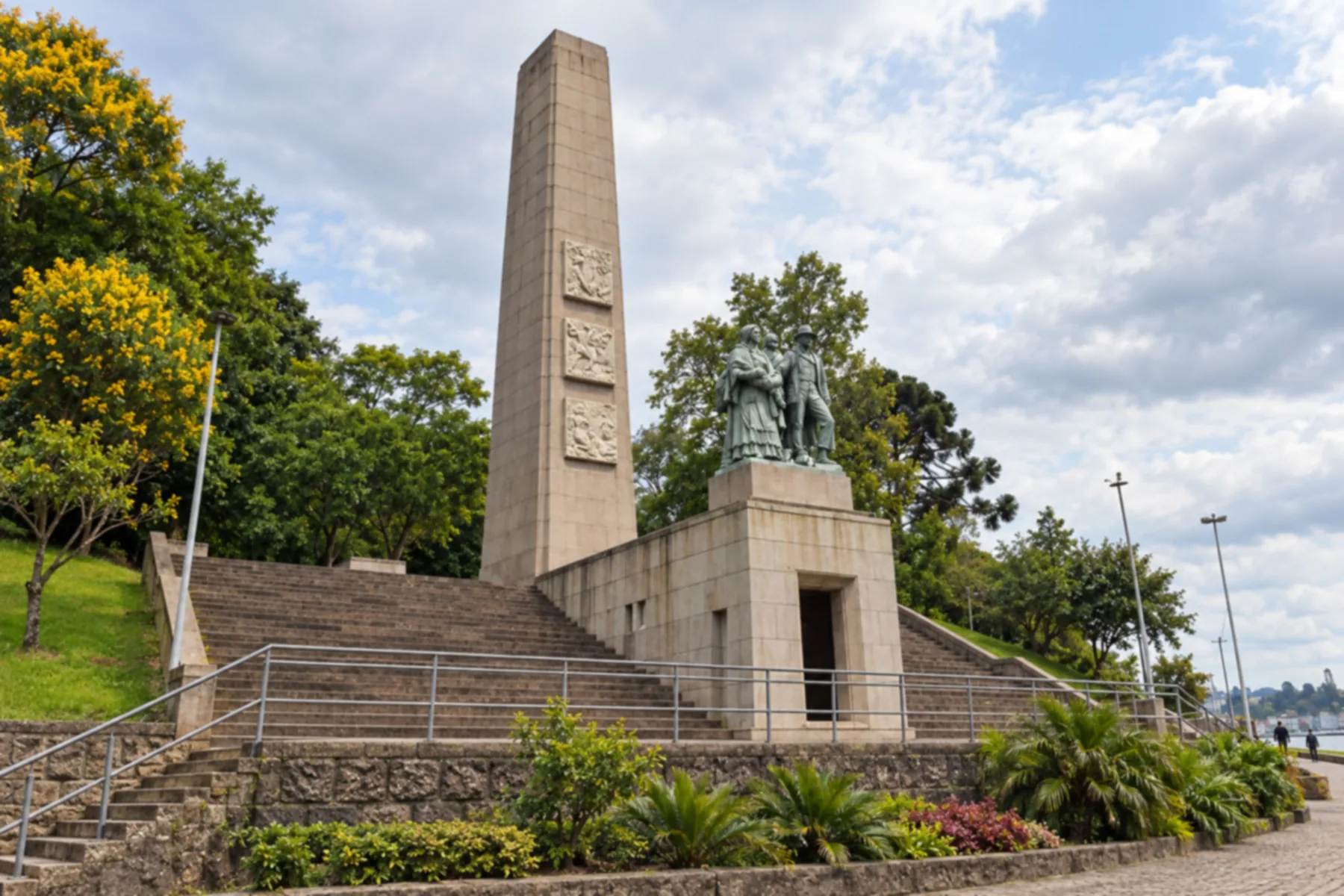
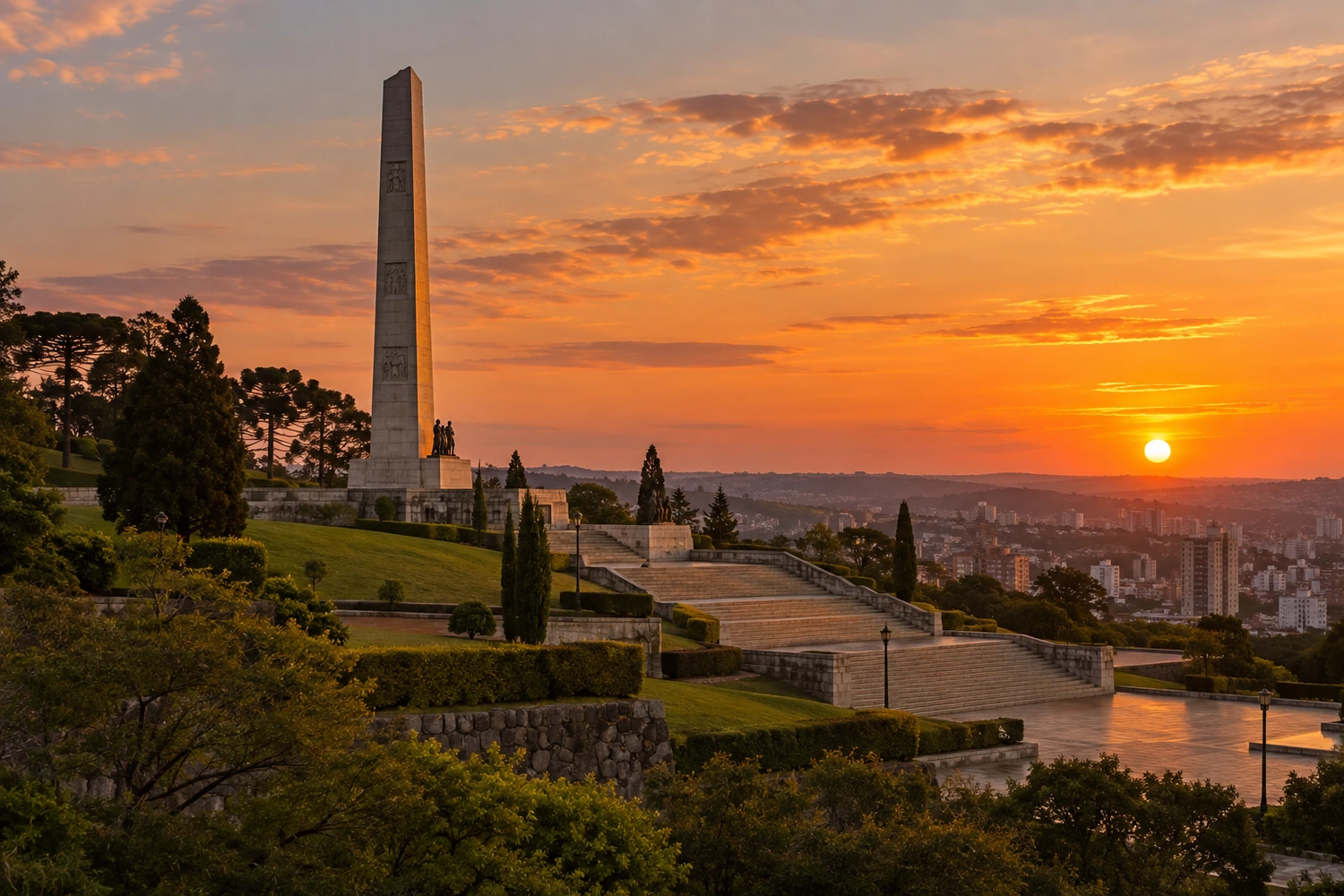
Monumento Nacional ao ImigranteInaugurated in 1954 by Getúlio Vargas at the entrance to the city, next to BR-116, it features a bronze group by Antônio Caringi depicting a farming couple with a child.
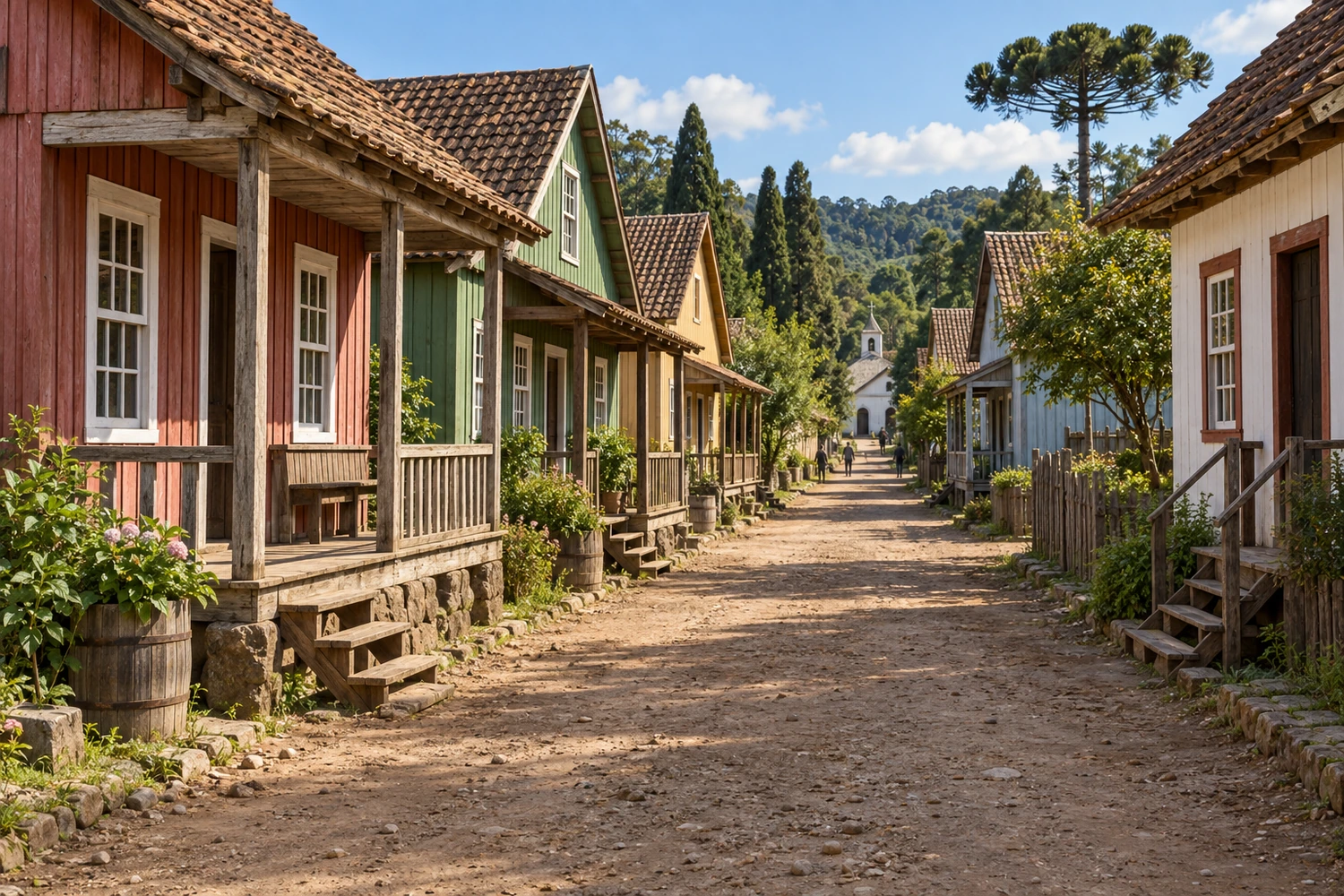
Réplica de Caxias do Sul de 1885Opened in 1978 at the Parque da Festa da Uva, the group of 22 buildings reproduces the village as it was in 1885, following the building techniques of the time.
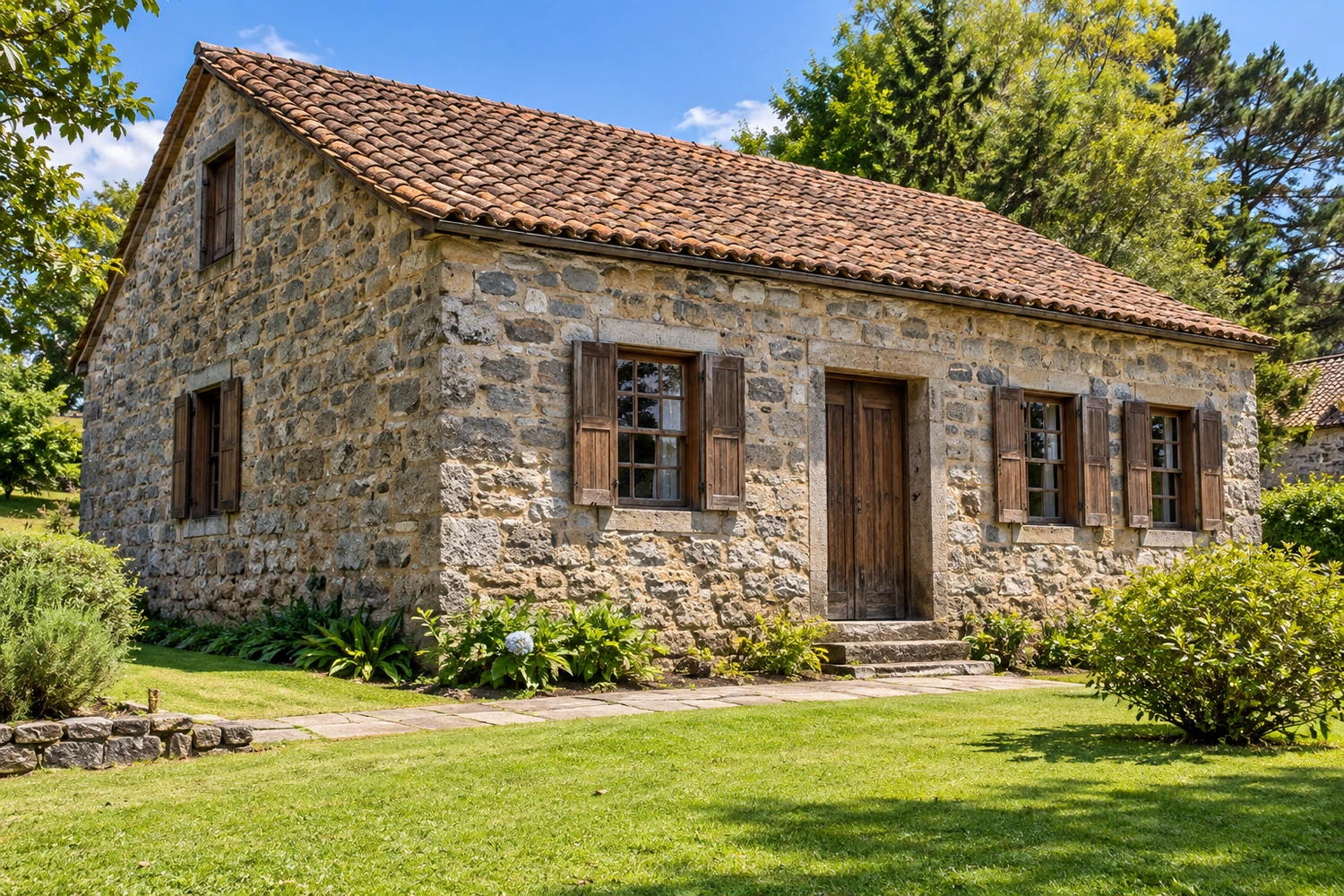
Museu Ambiência Casa de PedraBuilt in the late 19th century by Giuseppe Lucchese and his sons, with stones set in clay, the house became a museum in 1975.
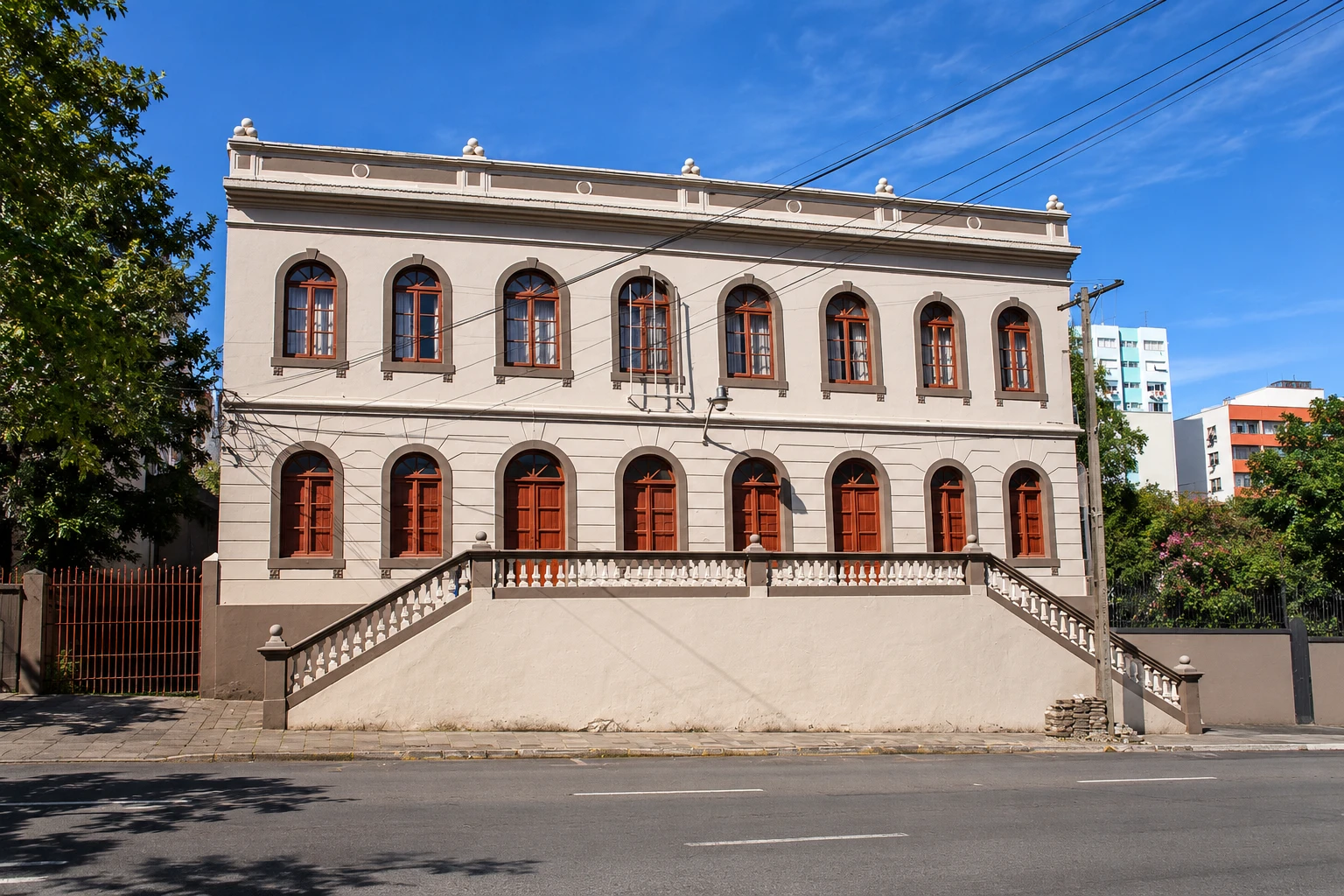
Municipal Museum of Caxias do SulCaxias do Sul History Museum in a manor house built in 1884 on Rua Visconde de Pelotas, a few blocks from Praça Dante Alighieri.
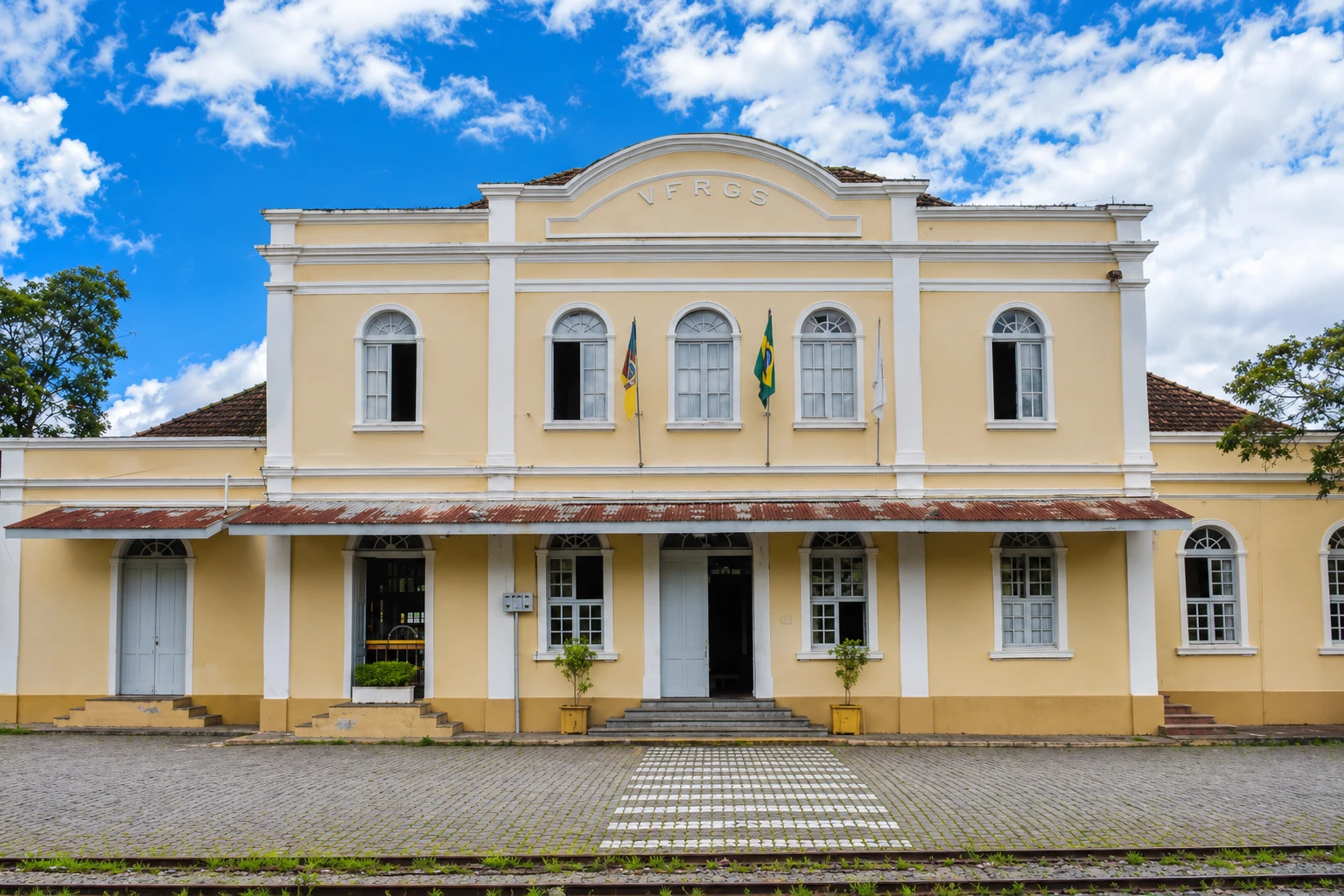
Caxias do Sul Railway StationOld railway station opened in 1910, in the São Pelegrino neighborhood, at the core of Largo da Estação.
Inaugurated in 1954 by Getúlio Vargas at the entrance to the city, next to BR-116, it features a bronze group by Antônio Caringi depicting a farming couple with a child. The crypt beneath the sculptures now houses the Museu do Imigrante.
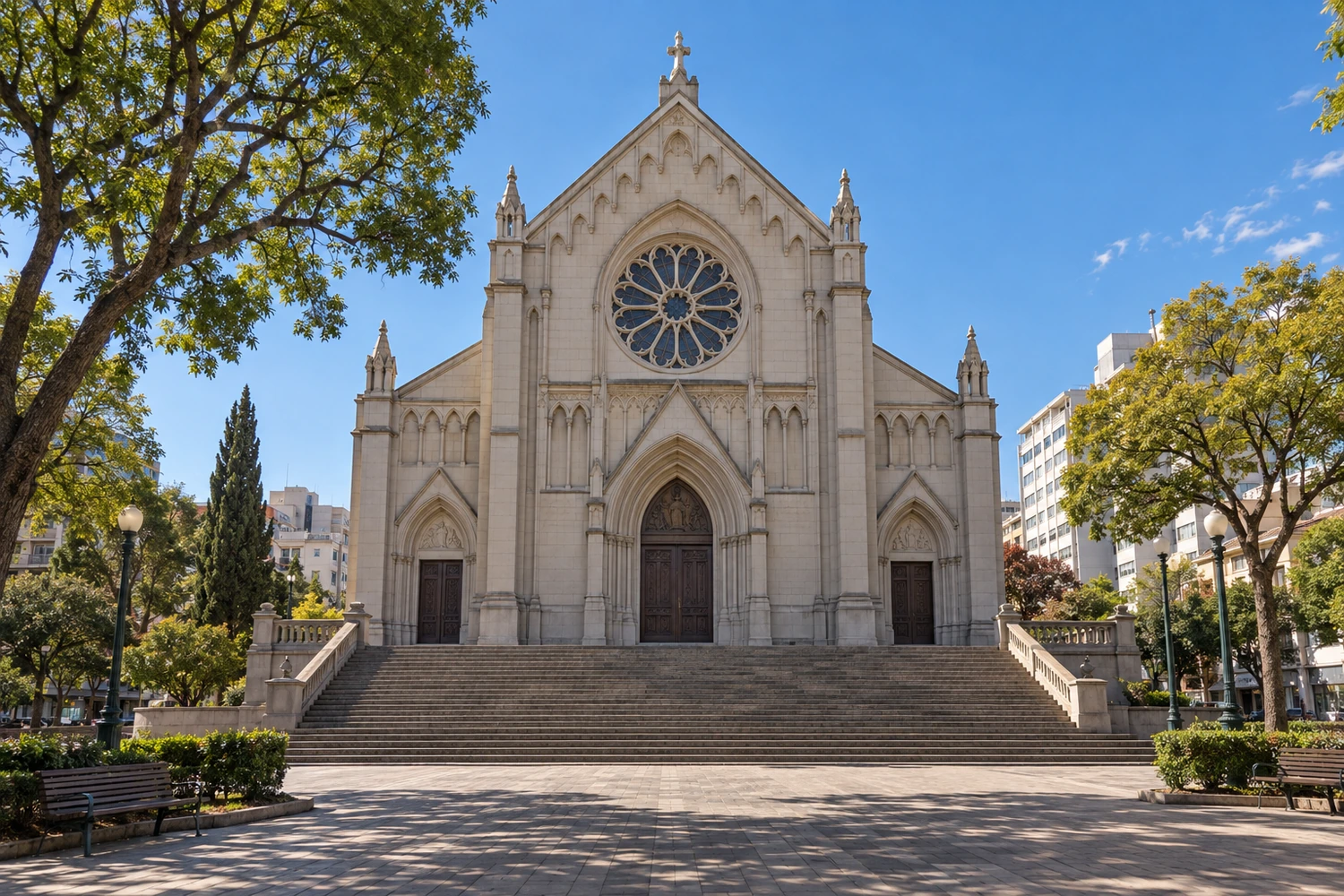
Its cornerstone was laid in 1895 and it opened in 1899. It stands on Praça Dante Alighieri and follows a simplified Neo-Gothic style inspired by the Basilica of Saint Anthony in Bologna. The interior has three naves, a Neo-Gothic high altar and stained glass from Germany.
Opened in 1978 at the Parque da Festa da Uva, the group of 22 buildings reproduces the village as it was in 1885, following the building techniques of the time. The buildings, almost all wooden, now house shops and spaces open to visitors.
Built in the late 19th century by Giuseppe Lucchese and his sons, with stones set in clay, the house became a museum in 1975. The collection, donated by the community, shows utensils, furniture, clothing and tools from the lives of Italian immigrants.
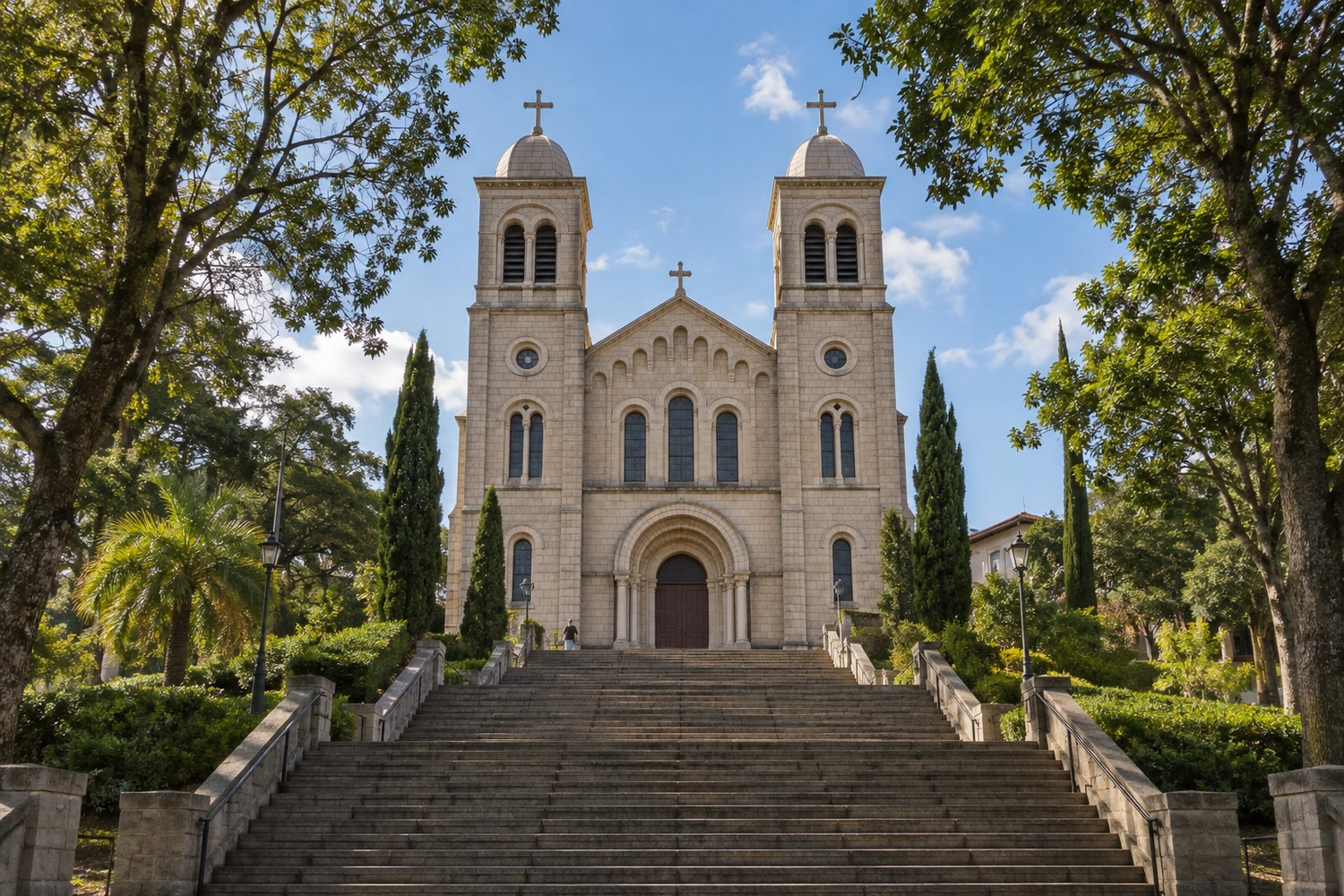
Opened in 1917 on the hilltop of Ana Rech, it replaced an 1881 wooden chapel and has two towers and a wide staircase leading up to it. Residents helped build it by passing the materials hand to hand up the hill.
Caxias do Sul History Museum in a manor house built in 1884 on Rua Visconde de Pelotas, a few blocks from Praça Dante Alighieri. The collection of more than 12,000 items ranges from Indigenous occupation to Italian immigration and the city’s growth.
Old railway station opened in 1910, in the São Pelegrino neighborhood, at the core of Largo da Estação. The railway complex, protected as state heritage, was turned into a social square with decks, an amphitheater and a walking track.


 Antarctica
 Argentina
 Bolivia
 Chile
 Colombia
 Ecuador
 Falkland Islands (Malvinas)
 French Guiana
 Guyana
 Paraguay
 Peru
 Suriname
 Uruguay
 Venezuela
 Albania
 Austria
 Belgium
 Croatia
 Denmark
 Finland
 France
 Germany
 Greece
 Hungary
 Iceland
 Ireland
 Italy
 Luxembourg
 Norway
 Poland
 Portugal
 Slovakia
 Slovenia
 Spain
 Sweden
 Switzerland
 the Czech Republic
 the Netherlands
 the United Kingdom
 Turkey
 Bermuda
 Canada
 Greenland
 Mexico
 Saint Pierre and Miquelon
 the United States
 the Dominican Republic
 Japan
 Egypt
 South Africa
 Australia
 Fiji
 New Zealand
 Papua New Guinea