São João del-Rei

Minas Gerais

São João del-Rei

In the destination Historic Towns of Minas Gerais (Estrada Real).

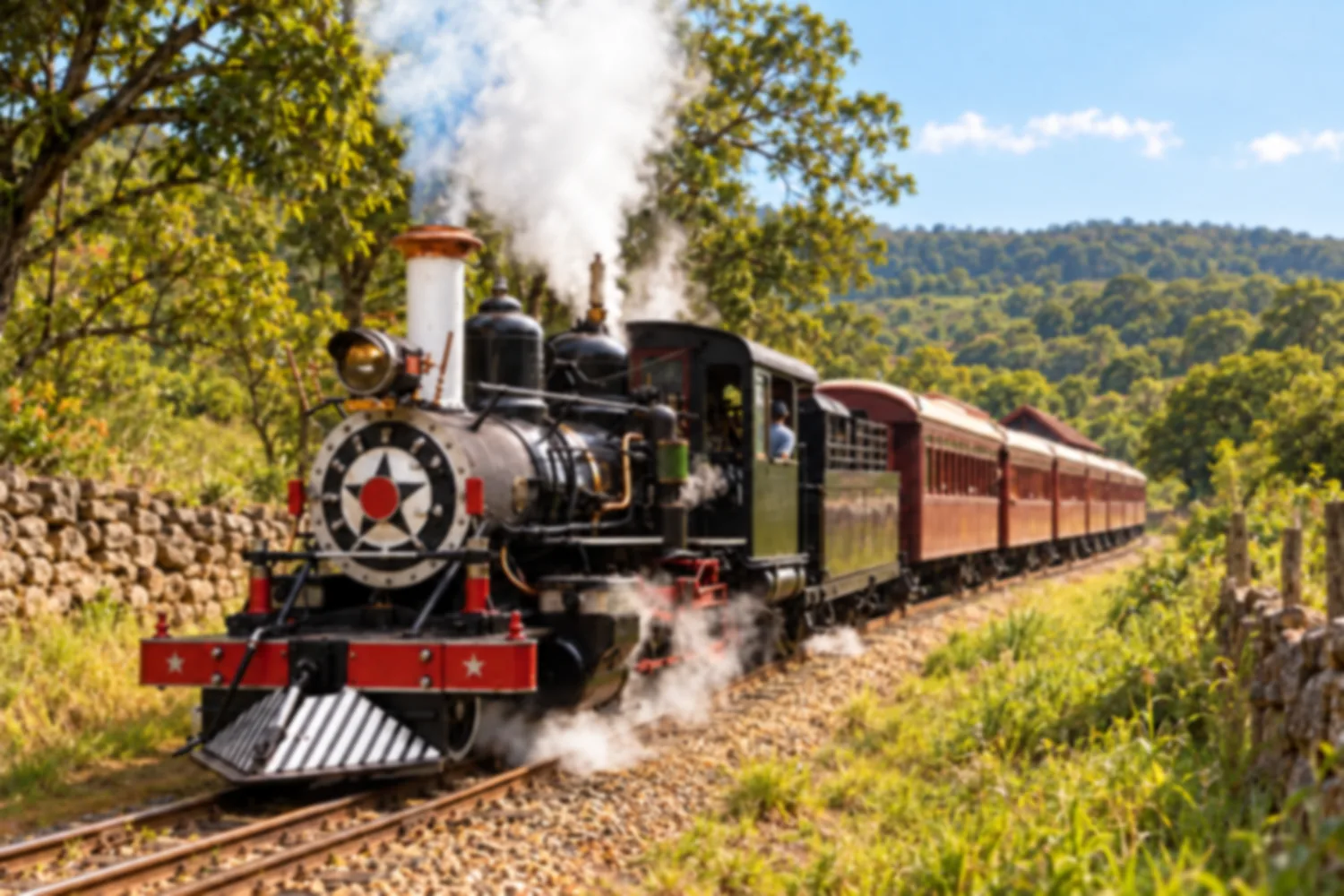
Illustrative images. The pictures in this guide are illustrations based on the real place, not photographs, and may differ from it.

The city

What to expect from São João del-Rei.

São João del-Rei combines colonial heritage with a lively town on the banks of the Córrego do Lenheiro (stream). Walks through the center reveal stone bridges and musical and religious traditions that are still alive.

São João del-Rei is the largest of the 18th-century towns in Minas Gerais and lies in the Campos das Vertentes region, about 185 km from Belo Horizonte. It arose at the start of the gold cycle, beside the road to the mines, in an area disputed in the War of the Emboabas, and was founded in 1713. Tancredo Neves, elected president of Brazil in 1985, and the poet Bárbara Heliodora, linked to the Inconfidência Mineira, were born there. The historic ensemble has been protected by the national heritage agency since 1938.

Unlike nearby Tiradentes, 12 km away, São João del-Rei is not a small town frozen in time. It has fewer than 100,000 inhabitants, a university, strong commerce and traffic. The historic center is a compact core surrounded by the modern town, and that contrast is part of the visit: you see a 300-year-old church next to people shopping.

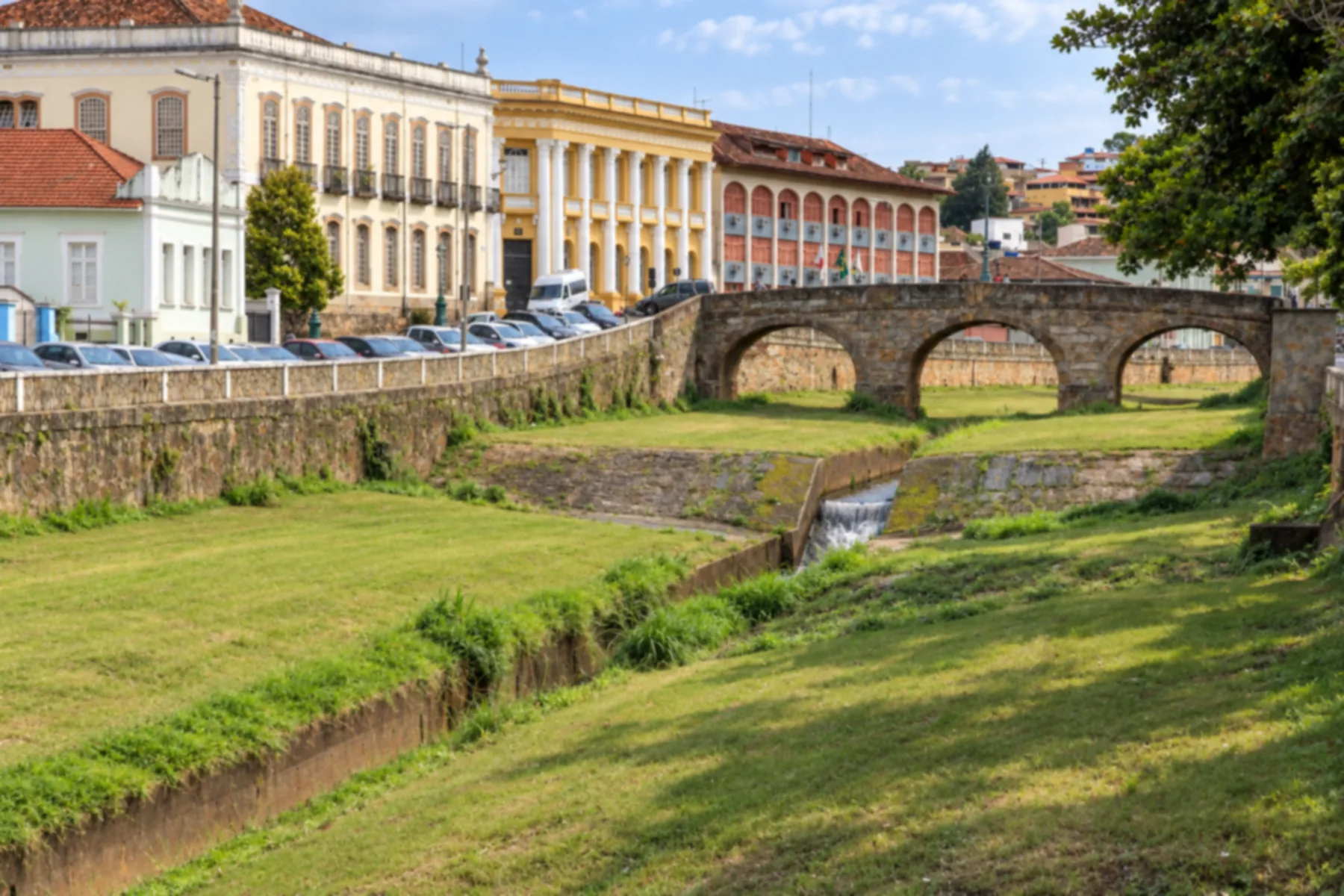
The Lenheiro Stream crosses the center between two avenues, spanned by stone bridges from the late 18th century. On one side are the railway station, the city hall housed in the old Casa de Câmara e Cadeia, and the Church of São Francisco de Assis, with a soapstone façade and a garden of imperial palms. On the other, after the Ponte da Cadeia, Rua Getúlio Vargas aligns the churches of Carmo, Pilar and Rosário, the Museum of Sacred Art and the Solar dos Neves. Behind Rosário begins Rua Santo Antônio, the Rua das Casas Tortas. Above, the Church of Mercês has a view over the roofs.

Two things distinguish the city. First are the bells: São João del-Rei is called the land where the bells speak, because bell peals still signal masses, processions and deaths, in a code recognized as intangible heritage of Brazil. Sacred music follows the same tradition, with two orchestras founded in the 18th century that still play in the churches. The second is the train: from the station departs the Maria Fumaça, the steam locomotive that goes to Tiradentes on a line opened in 1881, with the Railway Museum and the roundhouse beside the platform.

Around the town the Serra do Lenheiro has quartzite outcrops, trails and rock paintings. The city is also known for tinware pieces.

The climate is mild. From May to August it hardly rains, the sky is clear and nights are cold, with lows near 11 °C in July. From November to March it rains a lot, with highs around 26 °C. Holy Week, with processions, music and bells, is the most striking time on the calendar; Carnival and the Inverno Cultural in July also fill the town.

A full day covers the historic center. With two days you can add the train ride, the museums and masses with orchestra.

Share: WhatsApp

Where to stay

3 places to stay in São João del-Rei.

Where to eat

There are no restaurants in the guide yet in São João del-Rei.

Know a good one? Recommend it to us

Mapa de São João del-Rei

1 lugar no mapa: onde ficar e onde comer, por bairro.

São João del-Rei highlights and titles

Listed historic center (IPHAN)
Intangible heritage (IPHAN)
Steam train

The local experience

Things to do in São João del-Rei

São João del-Rei · MG · monument

Ponte da Cadeia

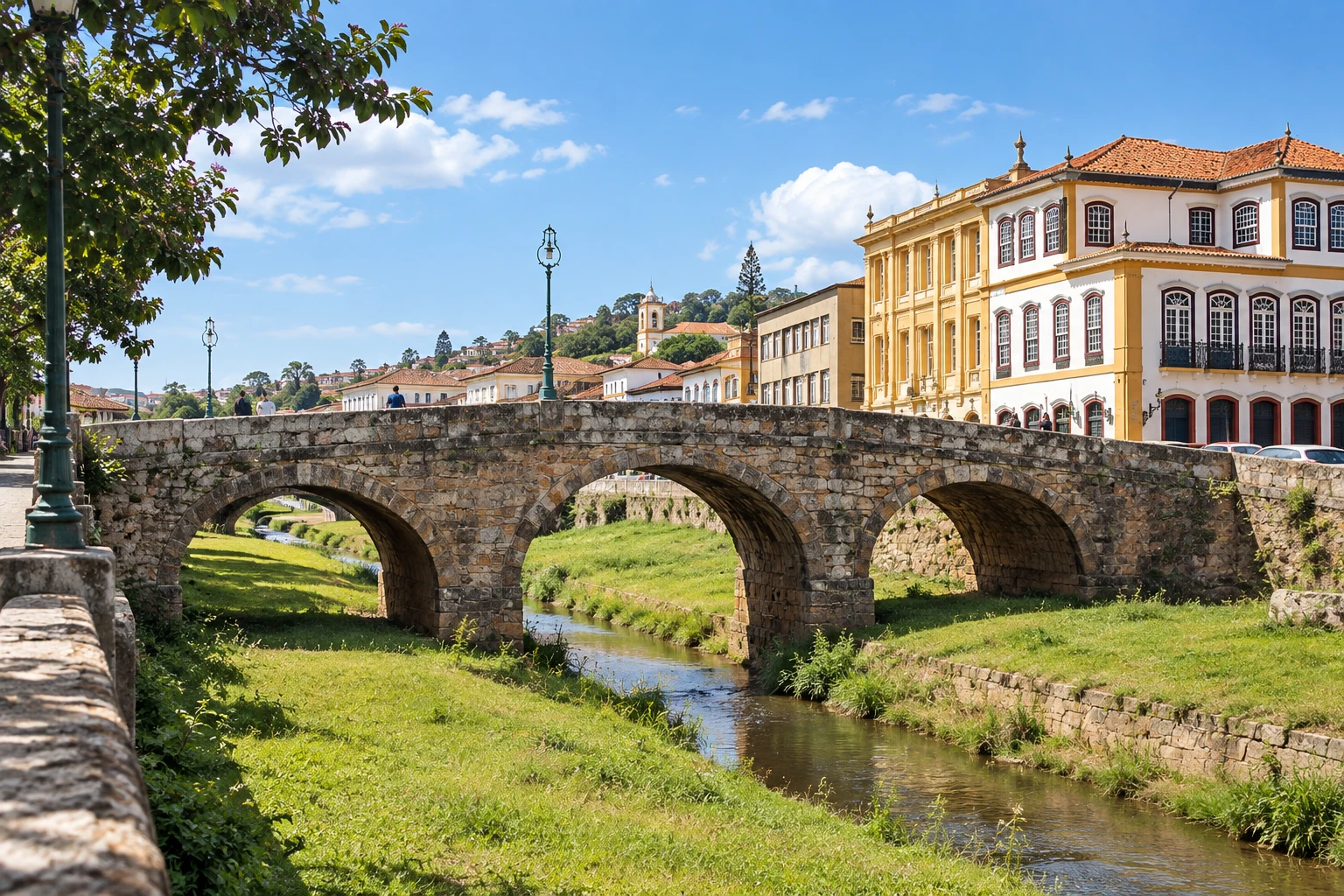
A Roman-style stone bridge completed in 1798, after the old wooden bridge collapsed during a procession. The name comes from the town hall and jail building that stood next to it.

Explore Ponte da Cadeia

See 4 more places in São João del-Rei

To choose before you go

Tours in São João del-Rei

Where each tour starts, how long it takes, how it is done, what is included and the price range.

Córrego do Lenheiro: stone bridges, former Câmara and Regional Museum

From Railway station or city hall on foot about 2 hours, including the museum morning or afternoon easy

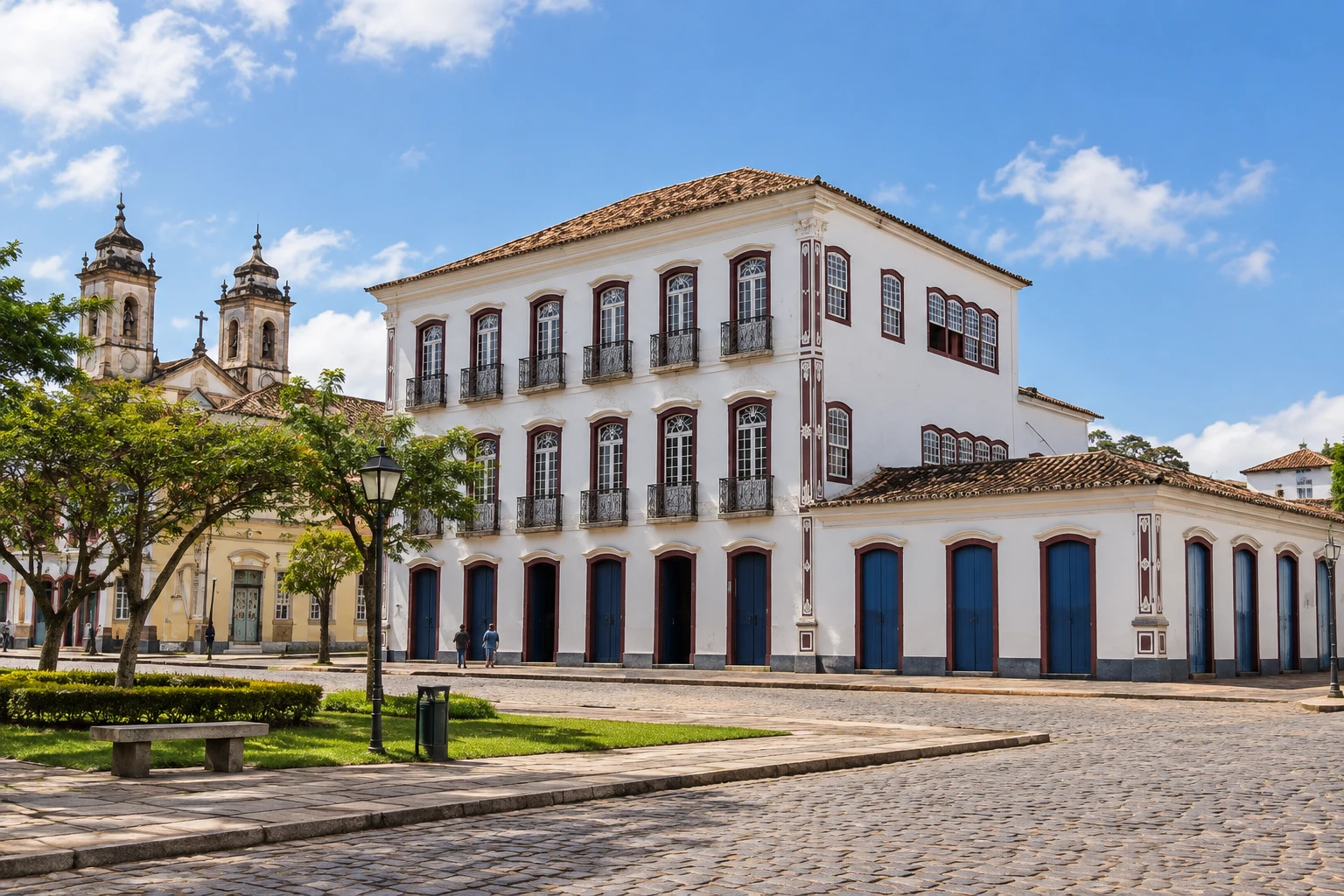
The center of São João del-Rei is arranged along the Córrego do Lenheiro, a channel between two avenues. It’s the natural starting point for those arriving by train, since the station is a few minutes’ walk away. The most familiar sight in the area is the Ponte da Cadeia, a stone arched bridge from the late 18th century. It was commissioned after a wooden bridge that stood there collapsed during a procession, and it was originally called Ponte Nova. Its current name comes from the neighboring building, which was built to house the Câmara on the upper floor and the jail below. That building now holds the city hall. From the middle of the bridge you can see the houses on both banks and the church towers. In this area the old town mixes with everyday commerce, with shops, banks and restaurants. It’s the busiest part of the city. Following the stream leads to the Regional Museum, in a three-story townhouse built in 1859 for commander João Antônio da Silva Mourão, a wealthy merchant. The ground floor was the shop; above was the family’s home. The collection shows Minas Gerais daily life in the 18th and 19th centuries, with furniture, means of transportation, work objects, sacred art and images of saints from several cities in Minas. The museum also hosts temporary exhibitions, recitals and lectures. Completing the center’s list are the Chafariz da Legalidade, from the 19th century, rebuilt after demolition, and the Municipal Theater.

Stops: Córrego do Lenheiro, Ponte da Cadeia, Former Câmara and Jail (city hall), Regional Museum of São João del-Rei, Chafariz da Legalidade, Municipal Theater.

Includes: Self-guided walk. The Regional Museum charges a small admission fee: check the current rates.

Tip: The Regional Museum is closed on Mondays and has stairs between floors; visitors with reduced mobility should check access in advance. Do this section right after arriving by train or before departing.

Best time: All year round.

Getúlio Vargas Street: Carmo, Pilar, Rosário and Rua das Casas Tortas

From Chain Bridge on foot, self-guided 3 to 4 hours, including visits morning or afternoon easy, with an uphill to Mercês

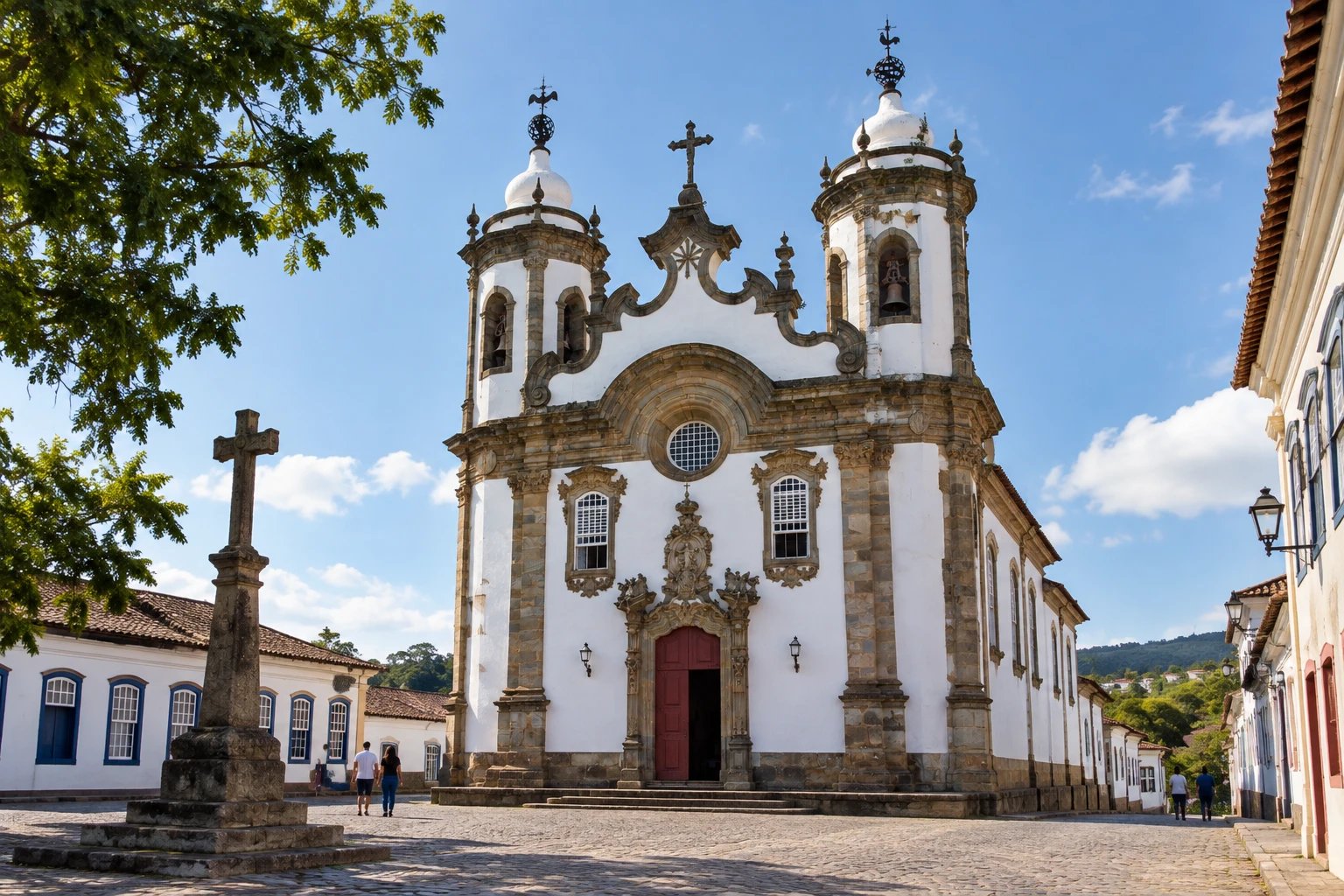
Once you cross the Chain Bridge, two short blocks lead to Getúlio Vargas Street, where the historic center truly begins. The street is narrow and paved with stone, lined with preserved colonial houses, and contains three churches within a few minutes' walk. There are signs for visitors without a guide. At one end is the Church of Our Lady of Mount Carmel, begun in the 1730s, with a rococo façade, a carved portal, and recessed octagonal towers. The interior is entirely white. In the square in front there are bars, cafés, and a university cultural center. Returning along the same street brings you to the Cathedral-Basilica of Our Lady of the Pillar, from the early 18th century and the seat of the diocese. Inside, gilded baroque covers the altars. It is the setting for the main celebrations of Holy Week. Ahead is the Museum of Sacred Art. The street ends at Rosário Square. The Church of Our Lady of the Rosary is one of the city’s oldest. Opposite stands the Solar dos Neves, the mansion of Tancredo Neves’s family; it does not receive visitors but forms part of the square. Through the narrow lane beside the church you enter Santo Antônio Street, nicknamed Crooked Houses Street because of the curious alignment of the walls of the colorful little houses. It is one of the city’s oldest streets and houses the headquarters of two orchestras founded in the 18th century. Nearby, the Tancredo Neves Memorial occupies an 18th-century mansion and preserves photos, documents, letters, and newspapers of the politician. To finish, go behind the Cathedral and climb to the Church of Our Lady of Mercês at the top of a staircase. From there you can see the entire historic center. Largo da Cruz, with one of the Stations of the Cross, is along the way.

Stops: Church of Our Lady of Mount Carmel, Carmo Square, Cathedral-Basilica of Our Lady of the Pillar, Museum of Sacred Art, Church of Our Lady of the Rosary, Solar dos Neves, Santo Antônio Street, Tancredo Neves Memorial, Church of Our Lady of Mercês, Largo da Cruz.

Includes: Self-guided walk. Carmo and Pilar charge a visitation fee paid at the door; museums have their own tickets. Check the current fee schedule.

Tip: Churches close at lunchtime and open at different times: start early and confirm in advance. The Tancredo Neves Memorial is open only part of the week, generally Friday to Sunday. When climbing to Mercês, go at late afternoon for the view.

Best time: All year. During Holy Week, processions pass along these streets.

Church of Saint Francis of Assisi and Bárbara Heliodora House Museum

From Frei Orlando Square on foot or a short taxi ride 1 to 2 hours morning easy

The Church of Saint Francis of Assisi is the best-known church in São João del-Rei and stands on the bank of the stream opposite the one by Rua Getúlio Vargas, the same stream as the railway station. You can walk there from the city center. Construction began in 1774 and took about thirty years. The design is attributed to Aleijadinho and was executed, with modifications, by Francisco de Lima Cerqueira. The façade has a soapstone carved portal, and the interior shows the influence of the rococo style. In front, Praça Frei Orlando has a garden with rows of royal palms that frame the church and form one of the city’s postcards. Behind the church is the order’s cemetery, where the tomb of Tancredo Neves is located. Elected president in 1985, he fell ill on the eve of his inauguration and died without taking office. On Sundays there is usually a mass with Baroque music. It’s one of the simplest ways to hear this repertoire in the place for which it was written. Next door, on the same square, the Bárbara Heliodora House Museum occupies the manor where the poet was born; she was married to the inconfidente Alvarenga Peixoto, who died in exile in Angola. The house offers guided visits.

Stops: Church of Saint Francis of Assisi, Frei Orlando Square, Cemetery of the Third Order, Tomb of Tancredo Neves, Bárbara Heliodora House Museum.

Includes: The church charges an admission fee; guided visits are available—check the current rates. There is no entrance fee at the Bárbara Heliodora House Museum.

Tip: The church closes at lunchtime. For the mass with orchestra, confirm the time the day before and arrive early; during the service you may not move around the nave. Morning light hits the façade.

Best time: All year. From May to August clear skies favor photos of the square.

the language of the bells and the church orchestras

From Historic center on foot, among the churches about 1 hour per service morning, late afternoon or evening easy

In São João del-Rei a bell does more than call people to mass. There are different peals to announce a feast, a procession, who will celebrate and in which church, a serious illness of a brotherhood member and a death. In the funeral peal, those who know the code can tell whether a man, woman or child died. That is why the town is called the land where the bells speak. The bell peals and the trade of bell-ringing in Minas Gerais are recognized as intangible heritage of Brazil. A study by the national heritage body in 2009 visited nine historic towns and concluded the tradition is best preserved in São João del-Rei. There are at least thirty bells in the historic center alone. More than forty distinct peals were recorded, with a well-defined structure. It is also the town where the bell-ringer has a daily role in the churches. There is no ticketed tour for this: the way to experience it is to be on the street at the right time. The bells ring every day, tied to masses and ceremonies, and much more frequently during religious festivals, especially in Lent and Holy Week. The squares of Carmo, Rosário and São Francisco and the Mercês churchyard are good places to listen. Music is part of the same tradition. Rua Santo Antônio is home to two orchestras founded in the 18th century, Lira Sanjoanense and Ribeiro Bastos, which still accompany masses and processions. Attending a mass with orchestra is worthwhile even for those who are not Catholic.

Stops: Catedral Basílica de Nossa Senhora do Pilar, Igreja de Nossa Senhora do Carmo, Igreja de São Francisco de Assis, Igreja de Nossa Senhora das Mercês, Rua Santo Antônio.

Includes: There is no fee: the bells are heard from the street, and masses are open to anyone who wishes to attend.

Tip: Ask at your lodging or at the churches which weekday mass will feature an orchestra. During the service keep silent and do not photograph. Do not climb the towers without authorization: they are workplaces of the bell-ringers.

Best time: Year-round; the peak is from Lent to Holy Week, in March or April.

Steam train from São João del-Rei to Tiradentes, including Railway Museum and Roundhouse

From São João del-Rei Railway Station, Avenida Hermílio Alves steam train about 40 minutes each way; 1 extra hour for the railway museum morning or afternoon easy

São João del-Rei station, on Avenida Hermílio Alves, is the main terminus of the oldest tourist train still operating in Brazil. The line was opened by Dom Pedro II on August 28, 1881, and was part of the Estrada de Ferro Oeste de Minas. The tracks have a 76-centimeter gauge, much narrower than standard railways, and the locomotives are steam. Before boarding, allow time for what’s beside the platform. The Railway Museum houses locomotives, carriages, clocks, bells, telephones and tools, including the railway’s first locomotive and a luxury coach. The Roundhouse is a circular building where 25 tracks converge on a manually operated turntable at the center. The route to Tiradentes is 12.8 km and takes about 40 minutes. The train follows the Rio das Mortes, with the Serra de São José in the background, and passes old farms. The cars are divided into three classes and seating is unreserved: seats are taken on a first-come, first-served basis. In Tiradentes the locomotive is uncoupled and turned on a turntable for the return trip. Tickets are sold per leg, and each direction is purchased separately. You can go by train, spend a few hours in Tiradentes and return by bus or taxi, or travel both ways by rail, with less time in the neighboring town. The train runs on Fridays, Saturdays and Sundays, with extra departures on public holidays and during vacation periods. There are fewer departures on Sundays. Station ticket offices open on operation days, and tickets are also sold online. Children up to 5 years old travel free if they do not occupy a seat.

Stops: São João del-Rei Railway Station, Railway Museum, Roundhouse, Rio das Mortes, Serra de São José, Tiradentes Station.

Includes: One-way train ride from São João del-Rei to Tiradentes. The return trip requires a separate ticket. Half-price tickets are available for students, people aged 60 or over, and people with disabilities. The Railway Museum is visited separately: check the current schedule.

Tip: Buy in advance for holidays, the July school break, and Holy Week. Arrive early at the platform to choose your seat: leaving São João del-Rei, the left side usually has the clearest view of the mountain range. The Tiradentes station is a bit removed from that town’s historic center.

Best time: All year. From May to August the weather is more stable; during school vacations and public holidays there are more departures.

R$80 to R$110 · per person, per leg, full fare (3rd to 1st class) · official price

Serra do Lenheiro: quartzite outcrops and rock paintings

From São João del-Rei city center, with a guide or agency on foot, trail half a day morning moderate

The Serra do Lenheiro is the rocky ridge that closes one side of the town and gives its name to the creek in the center. It is formed of quartzite, with large blocks called outcrops and many other stones scattered across the terrain. Part of the area is protected as a small municipal ecological park, about 2 km². There are rock paintings on the stones, made by peoples who lived in the region thousands of years before the mining period. The cliffs are used as a training field for vertical techniques by the mountain infantry battalion based in the town. The outing is a hike along the ridge, with visits to the painted panels. Because the paintings are in spots that are not obvious and the trails have little signage, it is recommended to book the tour with a guide or a local agency. The ridge is very close to the center, which allows doing the trail in the morning and returning for lunch. This is an activity for those staying more than one day who want to see a side of the town that isn’t just the churches.

Stops: Serra do Lenheiro, Parque Municipal Ecológico da Serra do Lenheiro, Quartzite outcrops, Rock paintings.

Includes: Combined tour with a guide or agency, paid separately: check what is included.

Tip: Leave early, with water, hat, sunscreen and shoes with good grip. Do not touch the paintings. Avoid the ridge after heavy rain, when the rock becomes slick.

Best time: From May to September, during the dry season.

Day by day

1, 2 and 3-day itinerary in São João del-Rei

Suggestions to plan the trip. Change the order of the days according to the weather and tour availability.

1 day · São João del-Rei in 1 day: churches, bridges and Rua das Casas Tortas

For people staying in Tiradentes or just passing through · Based in Historic center of São João del-Rei
  1. Day 1 · O centro histórico a pé

    Comece cedo pela Igreja de São Francisco de Assis e pela praça das palmeiras imperiais; veja o túmulo de Tancredo Neves, atrás da igreja, e a Casa de Bárbara Heliodora, ao lado. Siga a pé até o Córrego do Lenheiro, atravesse a Ponte da Cadeia e entre na Rua Getúlio Vargas. Visite a Igreja do Carmo antes do fechamento do almoço e coma por ali, no Largo do Carmo. À tarde, Catedral do Pilar, Museu de Arte Sacra, Largo do Rosário e Rua Santo Antônio, a das Casas Tortas. Suba à Igreja das Mercês no fim do dia, para ver a cidade de cima e ouvir os sinos. Quem veio de Maria Fumaça, numa sexta-feira, num sábado ou num domingo, deve reservar a última hora para o Museu Ferroviário e a Rotunda, junto à estação, antes do trem de volta. Os museus e a serra não cabem com calma neste dia.

2 days · São João del-Rei em 2 dias: centro histórico, sinos e Maria Fumaça
For weekend and first visit · Based in Historic center of São João del-Rei
  1. Day 1 · Do Lenheiro às Mercês

    De manhã, percorra as margens do Córrego do Lenheiro: Ponte da Cadeia, prefeitura e Museu Regional, que fecha às segundas-feiras. Depois entre na Rua Getúlio Vargas e visite a Igreja do Carmo. Almoce no Largo do Carmo. À tarde, Catedral do Pilar, Largo do Rosário, Solar dos Neves, visto de fora, e Rua Santo Antônio. Se for de sexta a domingo, entre no Memorial Tancredo Neves. No fim da tarde, suba às Mercês. À noite, veja se há missa com orquestra em alguma das igrejas ou fique pelos bares do Largo do Carmo.

  2. Day 2 · São Francisco, museu do trem e Tiradentes pelos trilhos

    Comece pela Igreja de São Francisco de Assis; aos domingos costuma haver missa com música barroca. Veja o cemitério e a Casa de Bárbara Heliodora. Vá à estação com antecedência para visitar o Museu Ferroviário e a Rotunda e embarque na Maria Fumaça para Tiradentes; o trem circula às sextas, aos sábados e aos domingos. São cerca de 40 minutos. Em Tiradentes, almoce e caminhe pelo centro histórico, do Largo das Forras à Matriz de Santo Antônio. Volte de trem, se houver horário, ou de ônibus ou táxi: são cerca de 12 km. Se o trem não estiver circulando, troque a tarde pela Serra do Lenheiro ou vá a Tiradentes de ônibus.

3 days · São João del-Rei em 3 dias: cidade, trem e Serra do Lenheiro
For feriado prolongado, usando a cidade como base para a região · Based in Historic center of São João del-Rei
  1. Day 1 · Chegada, pontes e Rua Getúlio Vargas

    Chegue até o fim da manhã. Depois do almoço, atravesse a Ponte da Cadeia e faça o eixo da Rua Getúlio Vargas: Carmo, Pilar, Museu de Arte Sacra, Rosário e Rua das Casas Tortas. Termine nas Mercês, com a vista do centro. À noite, Largo do Carmo.

  2. Day 2 · São Francisco, Museu Regional e Maria Fumaça

    De manhã, Igreja de São Francisco de Assis, túmulo de Tancredo Neves e Casa de Bárbara Heliodora. Em seguida, Museu Regional. Depois do almoço, Museu Ferroviário, Rotunda e o trem para Tiradentes, se for sexta-feira, sábado ou domingo. Passe o fim da tarde na cidade vizinha e volte de ônibus ou táxi. Organize os dias de modo que este caia num dia de circulação do trem.

  3. Day 3 · Serra do Lenheiro ou um dia de estrada

    Para quem caminha: saia cedo, com guia, para a Serra do Lenheiro, com os pontões de pedra e as pinturas rupestres. Volte para o almoço e use a tarde para o que faltou: Memorial Tancredo Neves, lojas de estanho, mais uma igreja. Para quem prefere estrada: Tiradentes fica a 12 km e pede pelo menos meio dia. Com carro, dá para seguir a Prados e ao povoado de Bichinho, ou parar em Congonhas no caminho de volta a Belo Horizonte, a cerca de 185 km. Com chuva, fique nos museus: Regional, Ferroviário e de Arte Sacra.

Best time to go

When to go: São João del-Rei month by month

The seasons shown are the most usual ones; nature doesn't always follow the calendar.

January High rain

Chuvas de verão · Férias · Mais saídas da Maria Fumaça

Mês quente e o segundo mais chuvoso, com média de 230 mm, mínimas de 18 °C e máximas de 26 °C. As pancadas vêm sobretudo à tarde: faça as caminhadas de manhã e deixe os museus para depois do almoço. Nas férias, o trem costuma ter saídas extras. A Serra do Lenheiro fica escorregadia.

February High rain

Carnival, in February or March · Start of Lent

Segue chuvoso, com média de 139 mm e temperaturas entre 18 °C e 26 °C. O Carnaval, em fevereiro ou março conforme o ano, é uma das festas populares que mais enchem a cidade. Logo depois começa a Quaresma, quando os sinos e as orquestras ganham mais presença nas igrejas.

March High rain

Quaresma · Semana Santa, em março ou abril

As chuvas continuam, com média de 153 mm, e diminuem no fim do mês. Temperaturas entre 17 °C e 26 °C. É tempo de Quaresma, com cerimônias e procissões ao som das orquestras. Quando a Semana Santa cai em março, a Catedral do Pilar concentra as celebrações e a hospedagem lota: reserve com antecedência.

April Some rain

Semana Santa, em março ou abril · Feriado de 21 de abril

A chuva cai para cerca de 52 mm e os dias firmam, com mínimas de 16 °C e máximas de 24 °C. A Semana Santa, quando cai em abril, é o ponto alto do ano, com procissões, música sacra e os sinos de todas as torres. O feriado de 21 de abril também movimenta a cidade e o trem.

May Low rain

Início da seca · Dias claros

Começa a estação seca, com média de 34 mm de chuva. Mínimas de 13 °C e máximas de 22 °C. Dias claros e noites frescas, bons para andar a pé e para a trilha da Serra do Lenheiro. O movimento é moderado, mais forte nos fins de semana.

June Low rain

Seca · Noites frias

Mês seco, com 17 mm de chuva em média, mínimas de 12 °C e máximas de 22 °C. Manhãs e noites pedem casaco. O céu limpo favorece as fotos das fachadas e a vista das Mercês. O feriado de Corpus Christi, em maio ou junho, costuma encher a região.

July Low rain

Inverno Cultural da universidade · Férias de inverno · Mais saídas da Maria Fumaça

O mês mais frio e seco: 12 mm de chuva em média, mínimas de 11 °C e máximas de 22 °C. O Inverno Cultural, festival de artes da universidade federal, ocupa a cidade durante cerca de uma semana. É alta temporada, com férias e saídas extras do trem: compre o bilhete antes.

August Low rain

Tempo seco · Movimento menor

Continua seco, com 18 mm de chuva, mínimas de 12 °C e máximas de 23 °C. Passadas as férias, a cidade fica mais calma. Bom mês para trilha na Serra do Lenheiro e para ver as igrejas com menos gente.

September Some rain

Feriado de 7 de setembro · Volta das chuvas

A temperatura sobe, com mínimas de 14 °C e máximas de 25 °C, e as chuvas voltam aos poucos, com média de 63 mm. O feriado de 7 de setembro movimenta a cidade e o trem. Ainda dá para fazer trilha na maior parte dos dias.

October Some rain

Feriado de 12 de outubro · Pancadas à tarde

Mês de transição, com média de 108 mm de chuva, mínimas de 16 °C e máximas de 25 °C. As pancadas vêm à tarde. O movimento é moderado, salvo no feriado. Programe as caminhadas para a manhã.

November High rain

Chuva frequente · Feriados de novembro

A estação chuvosa se firma, com média de 191 mm e temperaturas entre 16 °C e 25 °C. Os feriados de novembro trazem visitantes; nos outros dias há pouco movimento. Leve capa de chuva e calçado que não escorregue nas pedras.

December High rain

Mês mais chuvoso · Natal e fim de ano · Mais saídas da Maria Fumaça

O mês de mais chuva, com média de 246 mm, mínimas de 18 °C e máximas de 26 °C. A procura sobe perto do Natal e do réveillon, e o trem costuma ter saídas extras no fim do ano. Museus fecham em algumas datas: confirme antes.

Plan the journey

How to get there: São João del-Rei

De avião: por Belo Horizonte, com voo regional em alguns dias

A principal porta de entrada é o Aeroporto Internacional de Belo Horizonte, em Confins. De Belo Horizonte a São João del-Rei são cerca de 185 km, e o aeroporto fica a cerca de 40 km do centro da capital: conte mais de três horas de estrada a partir do desembarque.

São João del-Rei tem um aeroporto pequeno, que passou anos sem voos comerciais e voltou a ter ligação com Confins, em avião de nove lugares, com cerca de uma hora de voo. São três voos por semana em cada sentido, às segundas, às sextas e aos domingos. A oferta de assentos é pequena e a grade pode mudar: confirme com a companhia aérea se a rota está em operação antes de contar com ela.

Sem o voo regional, a continuação a partir de Confins é por carro alugado, transfer contratado ou ônibus, que sai da rodoviária de Belo Horizonte.

Para quem vem do Rio de Janeiro ou de São Paulo, ir por terra direto, sem passar por Belo Horizonte, costuma ser mais simples.

De ônibus: de Belo Horizonte, do Rio de Janeiro e de São Paulo

A rodoviária de São João del-Rei é o terminal da região: quem vai a Tiradentes de ônibus também desembarca aqui.

De Belo Horizonte há saídas diárias, em viagem de cerca de 3h15 a 3h30. Do Rio de Janeiro são cerca de 5h30. De São Paulo há ligações diretas, com opções noturnas, em viagem de 7 a 8h30.

Da mesma rodoviária saem os ônibus para Tiradentes: para lá, a cerca de 12 km, o ônibus passa com frequência e leva de 20 a 30 minutos.

Confira horários e empresas antes de viajar, e compre com antecedência para a Semana Santa, o Carnaval e os feriados.

De carro: de Belo Horizonte, do Rio de Janeiro e de São Paulo

De Belo Horizonte são cerca de 185 km e três horas. Segue-se pela BR-040 no sentido do Rio de Janeiro e, pouco depois de Congonhas, toma-se a estrada que passa por Entre Rios de Minas e Lagoa Dourada até São João del-Rei. Outro caminho, mais longo, continua pela BR-040 até Barbacena e entra na BR-265. Congonhas fica no caminho e vale a parada.

Do Rio de Janeiro, o caminho é a BR-040, por Petrópolis e Juiz de Fora, até Barbacena, e depois a BR-265.

De São Paulo, segue-se pela BR-381, a Rodovia Fernão Dias, até a altura de Lavras, e depois pela BR-265.

Tiradentes fica a cerca de 12 km pela BR-265.

No centro, as ruas históricas são estreitas e há pouco lugar para parar. Deixe o carro perto da estação ferroviária ou na hospedagem e faça tudo a pé.

Entre São João del-Rei e Tiradentes

As duas cidades ficam a cerca de 12 km uma da outra, e é comum visitar as duas na mesma viagem, dormindo em qualquer delas.

De ônibus, a ligação é frequente e leva de 20 a 30 minutos. Há uma linha que vai pela rodovia, mais rápida, e outra pela Estrada Velha, por Santa Cruz de Minas. Táxi e carro de aplicativo fazem o trecho em poucos minutos.

De trem, a Maria Fumaça circula às sextas-feiras, aos sábados e aos domingos, com saídas extras em feriados e férias, em cerca de 40 minutos. Cada sentido é um bilhete. Muita gente vai de trem e volta de ônibus ou táxi, para ficar mais tempo na outra cidade.

Agências de Belo Horizonte vendem o passeio de um dia às duas cidades, com transporte e guia. É um dia longo, com cerca de três horas de estrada em cada sentido; os ingressos de igrejas, museus e trem costumam ficar de fora.

Como circular em São João del-Rei

O centro histórico é compacto e se percorre a pé. Da estação ferroviária à Ponte da Cadeia são poucos minutos; da ponte à Igreja do Carmo, outros tantos. A Igreja de São Francisco de Assis fica do outro lado do córrego, a uma caminhada do centro ou a uma corrida curta de táxi.

A única subida mais forte é a da Igreja das Mercês. O calçamento das ruas históricas é de pedra: use calçado de sola firme.

Para a Serra do Lenheiro, combine o passeio com guia ou agência. O carro só faz falta para quem quer emendar outras cidades, como Prados, Congonhas e Ouro Preto.

Your questions

Frequently asked questions about São João del-Rei

How many days should you stay in São João del-Rei?

One full day is enough for the historic center: the churches of São Francisco, do Carmo, do Pilar and do Rosário, the Ponte da Cadeia and Rua das Casas Tortas. With two days you can add the Regional Museum, the Railway Museum, the Maria Fumaça to Tiradentes and a mass with orchestra. Three days allow for the trail in Serra do Lenheiro and make the town a base for the region.

What is the best time to visit São João del-Rei?

From April to September, when it rains little and you can walk all day; from June to August nights are cold, with lows near 11 °C. From November to March it’s hotter and rains a lot. To see the town in celebration, Holy Week, in March or April, is the most remarkable time, with processions, sacred music and bells. Carnival and the Inverno Cultural in July also attract many people.

Is it better to stay in São João del-Rei or in Tiradentes?

It depends on what you’re looking for. Tiradentes is small, geared to visitors, with more restaurants and pousadas in the historic center. São João del-Rei is a larger, active town with more churches and museums, the region’s bus station and the main train station. The two are about 12 km apart, with frequent buses, so you can sleep in one and visit the other the same day.

How do you get from São João del-Rei to Tiradentes?

By bus, in 20 to 30 minutes, with frequent departures; by taxi or rideshare in a few minutes via BR-265; or by Maria Fumaça on Fridays, Saturdays and Sundays, in about 40 minutes. It’s about 12 km. Many people take the train one way and return by bus or taxi to spend more time in Tiradentes.

Where is the Maria Fumaça station in São João del-Rei and how do you buy a ticket?

The station is on Avenida Hermílio Alves, near Córrego do Lenheiro and the historic center. The ticket office opens on the days the train runs, and tickets are also sold online. Each direction is purchased separately, in one of three classes, and there are no assigned seats. Next to the station are the Railway Museum and the Rotunda. On holidays, during school vacations and at Holy Week, buy in advance.

Why is São João del-Rei called the land where the bells speak?

Because the church bells are still used as a means of communication. There are different ringings for masses, festivals, processions and deaths, and those who know the code can tell from the sound what is being announced. A national heritage study counted more than forty ringings and at least thirty bells in the historic center. The ringing of the bells and the craft of the bell ringer are Brazil’s intangible heritage.

Where can you hear the bells and orchestras of São João del-Rei?

The bells ring every day, linked to Masses and ceremonies, and can be heard from the squares of Carmo, Rosário and São Francisco and from the forecourt of Mercês. During Lent and Holy Week the peals are longer and more varied. The orchestras Lira Sanjoanense and Ribeiro Bastos, founded in the 18th century, accompany Masses and processions; ask at the churches which service of the week will include music.

Where is Tancredo Neves’s tomb?

In the cemetery behind the Church of São Francisco de Assis, at Praça Frei Orlando. Tancredo Neves was born in São João del-Rei, was elected president of Brazil in 1985 and died before taking office. The city also has the Tancredo Neves Memorial, with documents and photos, and the Solar dos Neves, the family mansion at Largo do Rosário, which can only be seen from the outside.

What is Rua das Casas Tortas?

It’s the nickname of Rua Santo Antônio, one of the oldest streets in São João del-Rei, which starts next to the Church of Rosário. The little colorful houses attract attention for the curious alignment of their walls, which look crooked. The street is narrow, paved with stones, and houses the headquarters of two 18th-century orchestras. You can walk it in a few minutes.

Do the churches of São João del-Rei charge an entrance fee?

The main ones, like São Francisco de Assis, Carmo and Pilar, charge a small visitation fee, paid at the door, outside Mass times. Others are open without charge or only open for services. Almost all close at lunchtime. Bring small change and check each church’s current fee schedule.

Does São João del-Rei have an airport?

It has a small airport, with a regional connection to Belo Horizonte’s airport in Confins. There are three flights per week each way, on Mondays, Fridays and Sundays, in a nine-seat plane, with about one hour of travel. The schedule can change: confirm with the airline. The alternative is to travel by road from Belo Horizonte, in about three hours.

What to buy in São João del-Rei?

Pewter pieces are the hallmark of the city’s handicrafts, and some city tours include a visit to a factory. In the historic streets there are also souvenir shops and stores selling regional crafts. In Tiradentes and Bichinho, a few kilometers away, the specialty is wooden furniture and objects.

Traveler, share your experiences through photos Up to 5 photos of each place you visited.

Brazilian routes

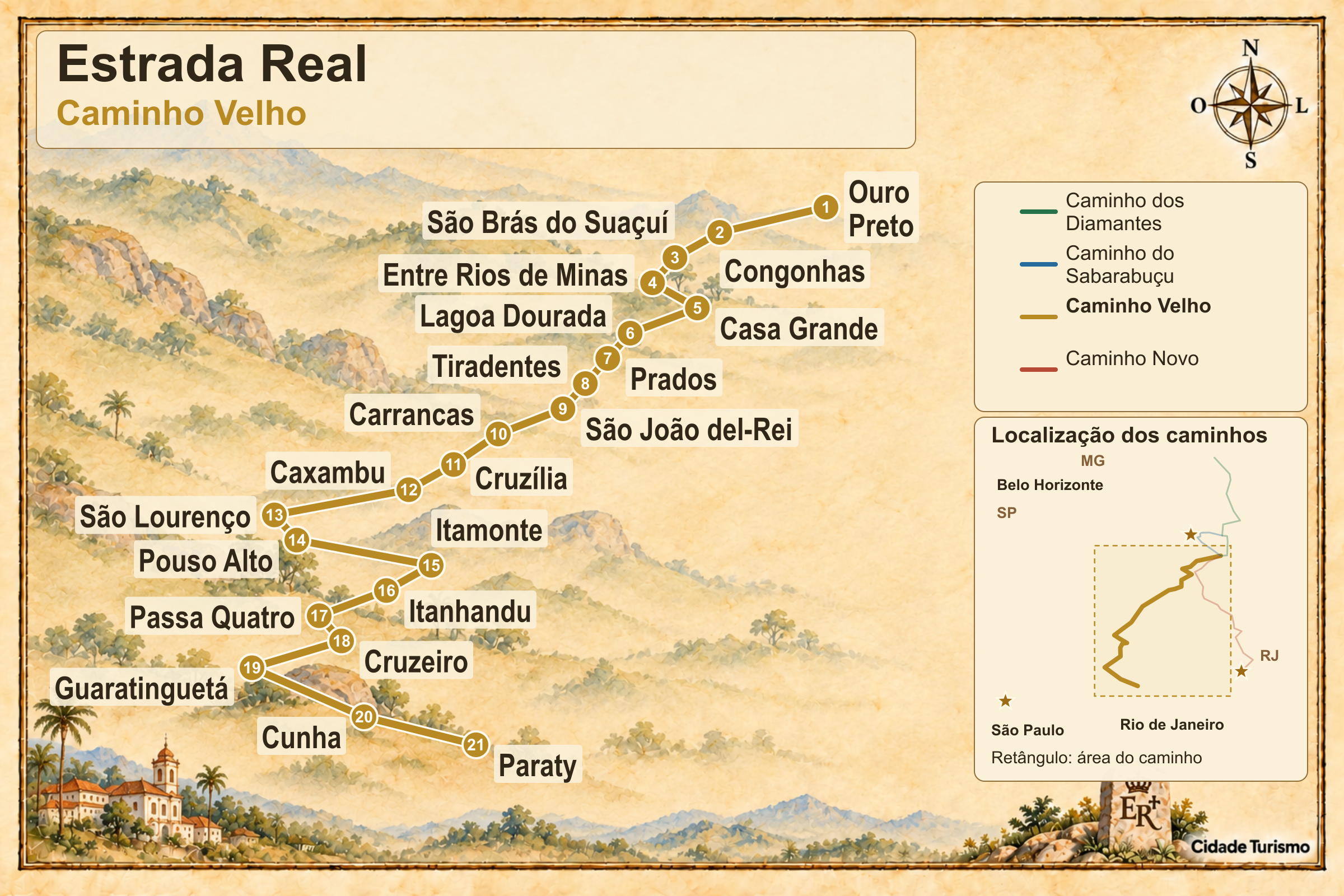
São João del-Rei is part of the Estrada Real – Old Route

From Ouro Preto to Paraty, the oldest route of the Estrada Real passes through historic towns, mineral-water spa towns, and the Mantiqueira mountain range.

Illustrative map, not to scale. Tap a city to open its page.
Illustrated map of Estrada Real – Old Route
Explore the Estrada Real – Old Route
See the destination Historic Towns of Minas Gerais (Estrada Real) Find another city