8 places to visit Diamantina (MG), chosen by the Cidade Turismo guide.
Illustrative images. The pictures in this guide are illustrations based on the real place, not photographs, and may differ from it.
To start
The 8 main places Diamantina
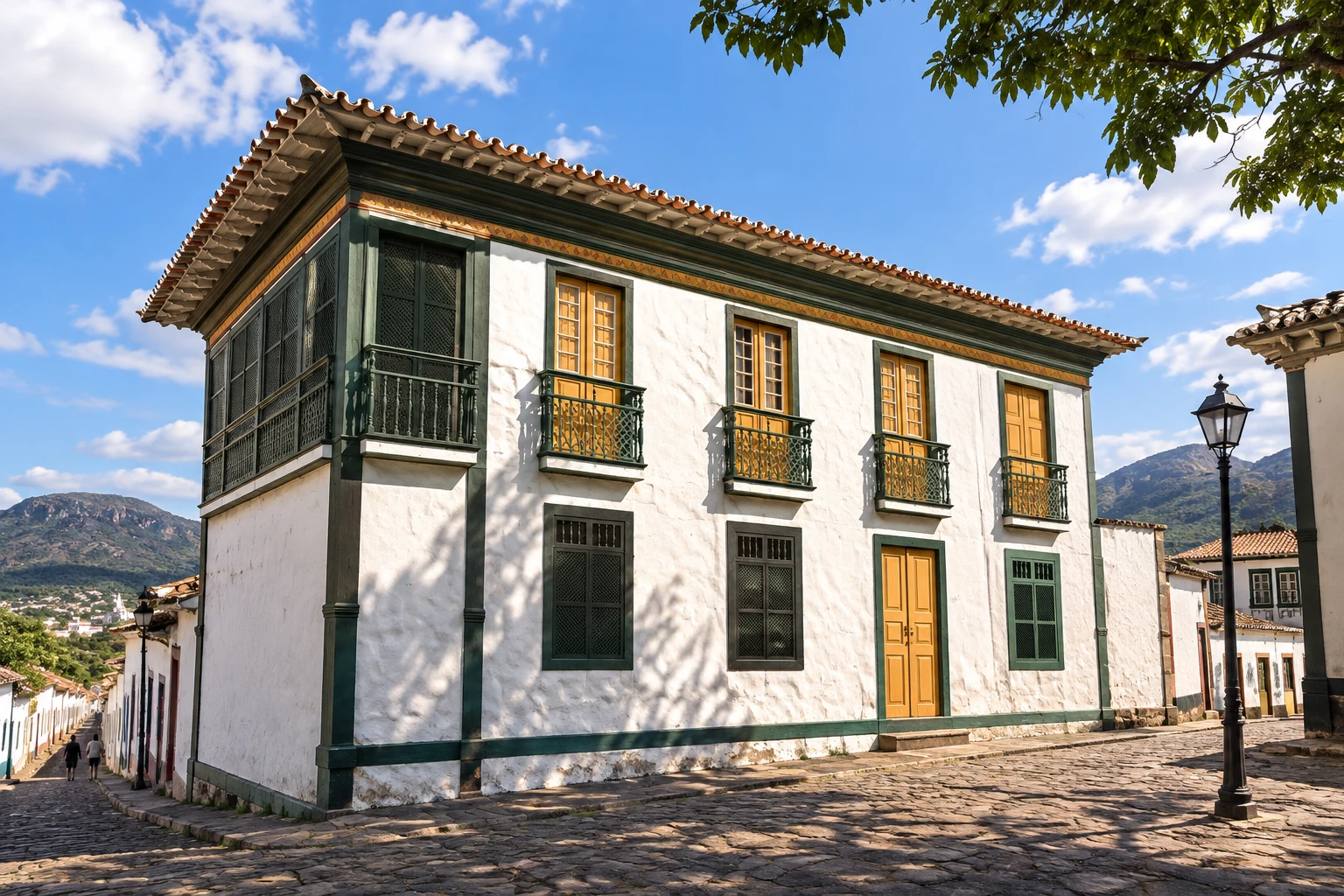
Casa de Chica da SilvaA wattle-and-daub townhouse with wooden balconies where Chica da Silva lived with the diamond contractor João Fernandes de Oliveira between 1763 and 1771.
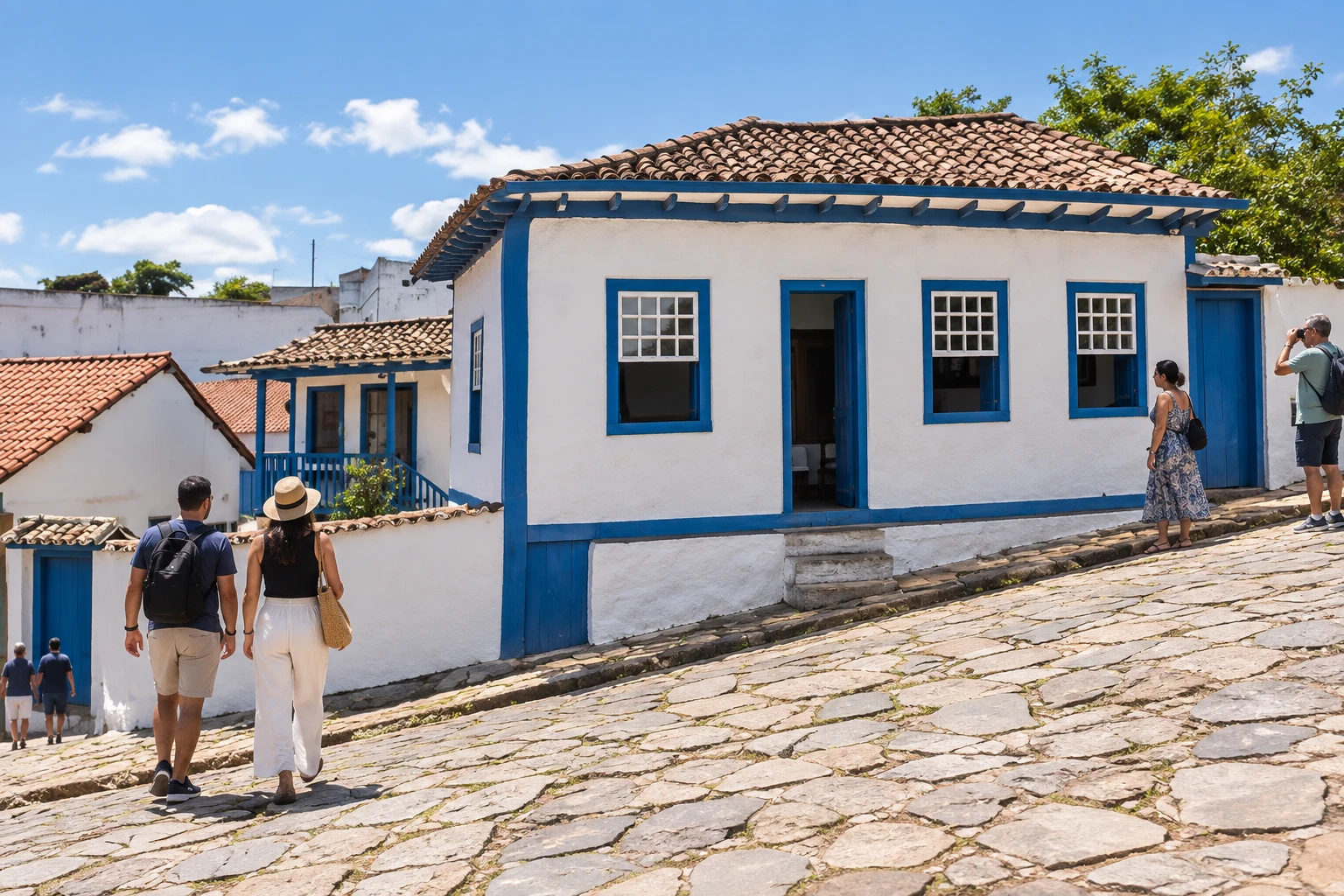
Casa de Juscelino KubitschekAn 18th-century wattle-and-daub house where the former president lived as a child and teenager.
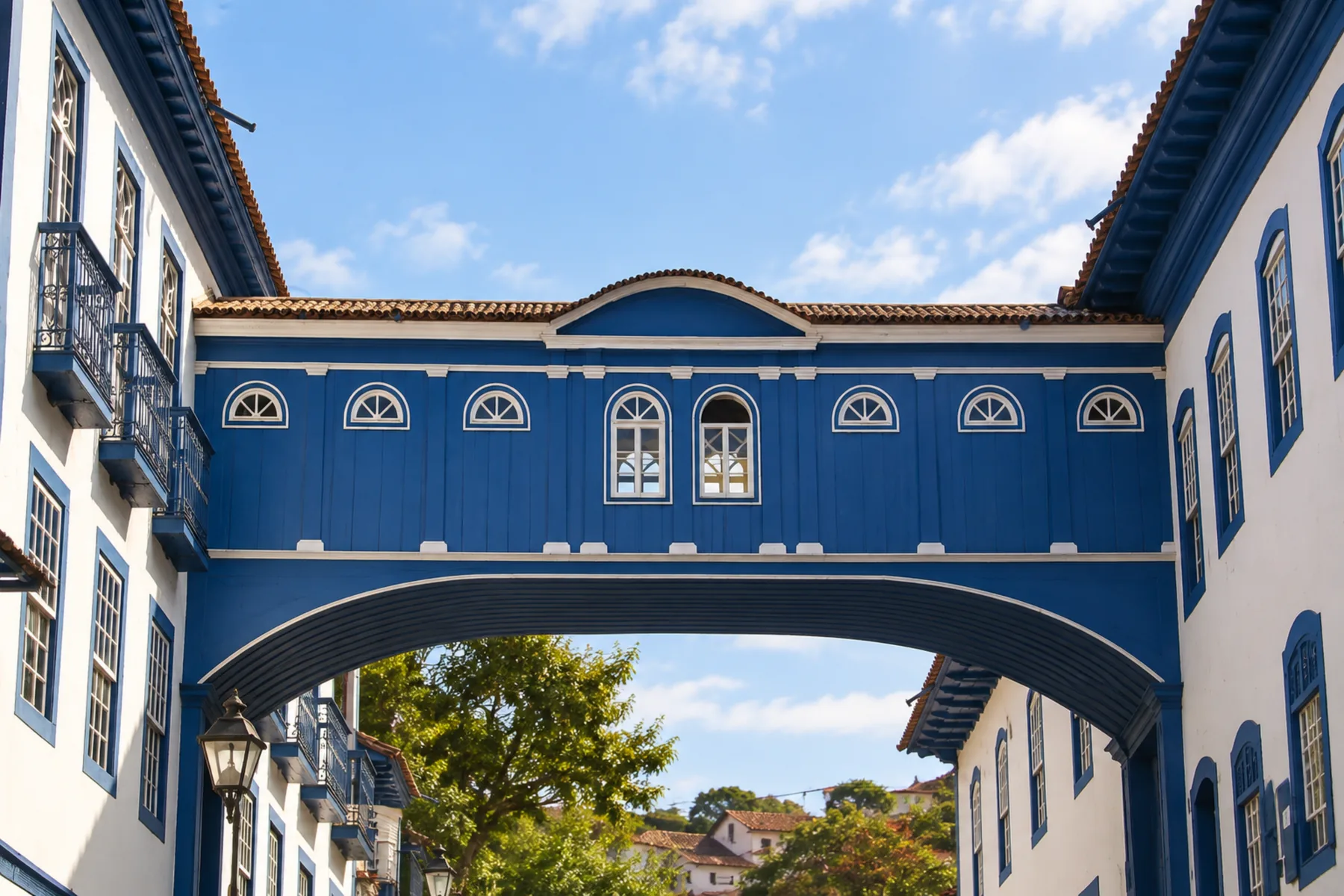
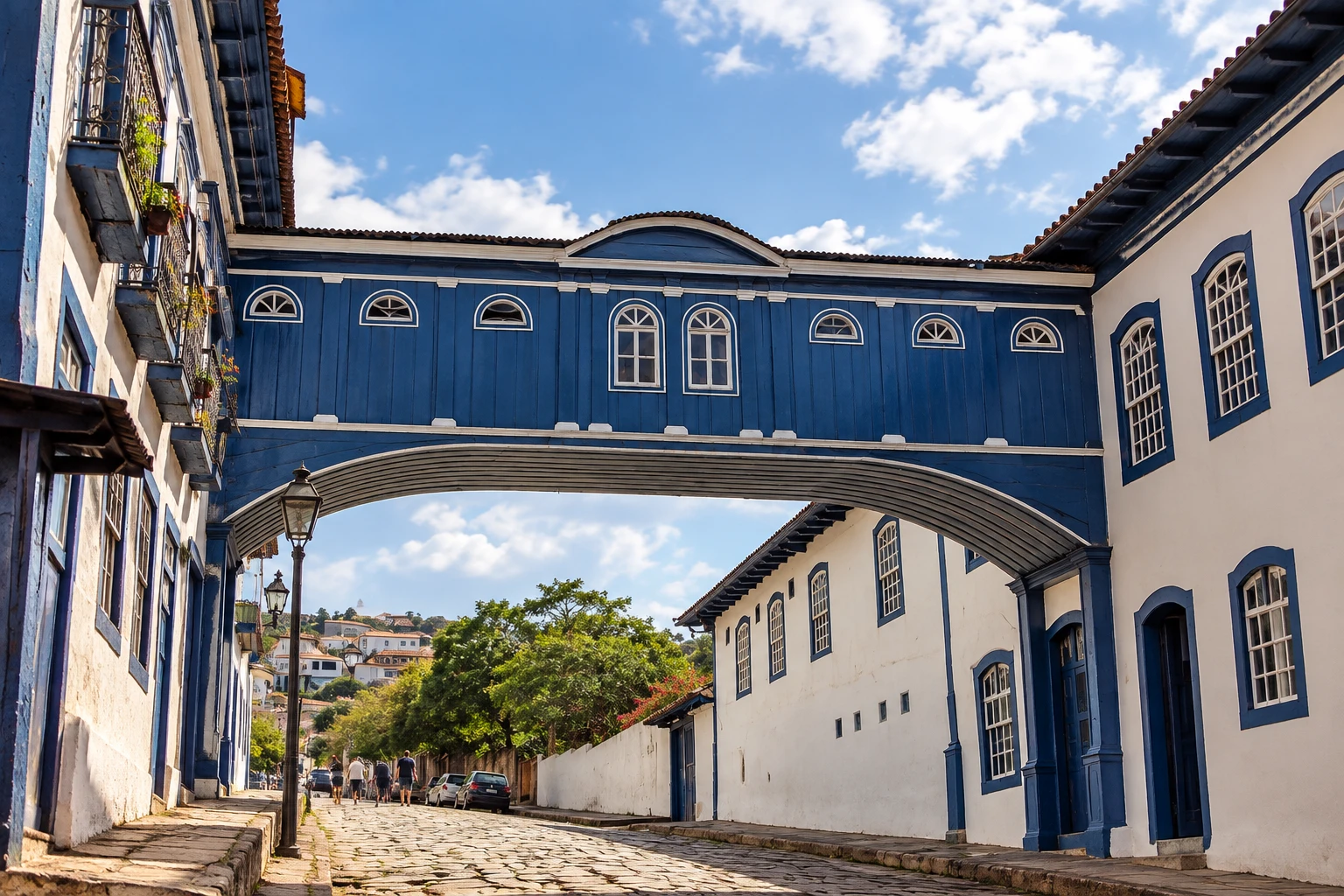
Casa da Glória e PassadiçoTwo late-18th-century mansions joined by a covered walkway over the street, which served as a residence for intendants, a school and an orphanage.
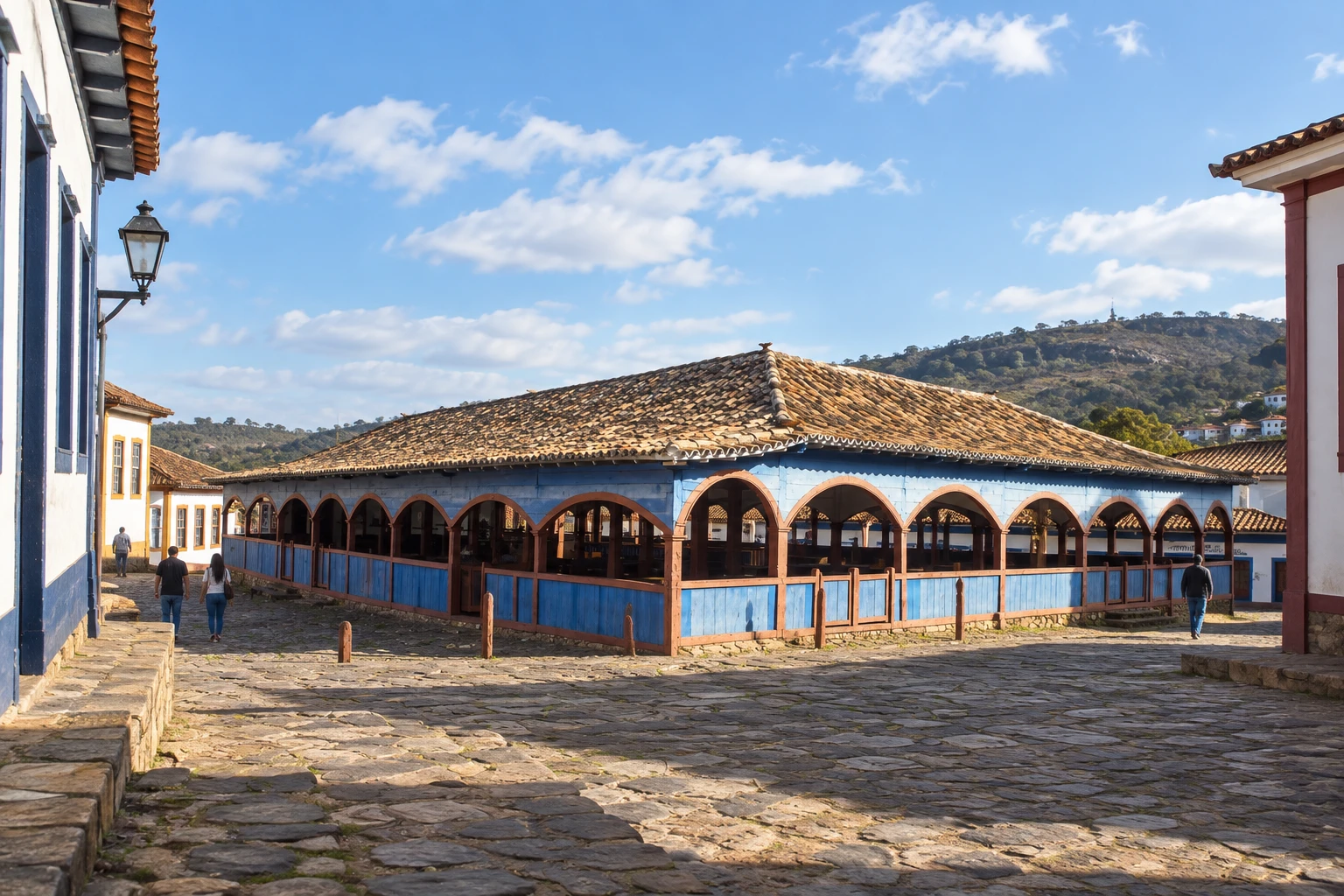
Mercado VelhoBuilt in 1834 as a resting place and trading post for tropeiros (mule drivers), it has a wooden structure with half-moon arches.
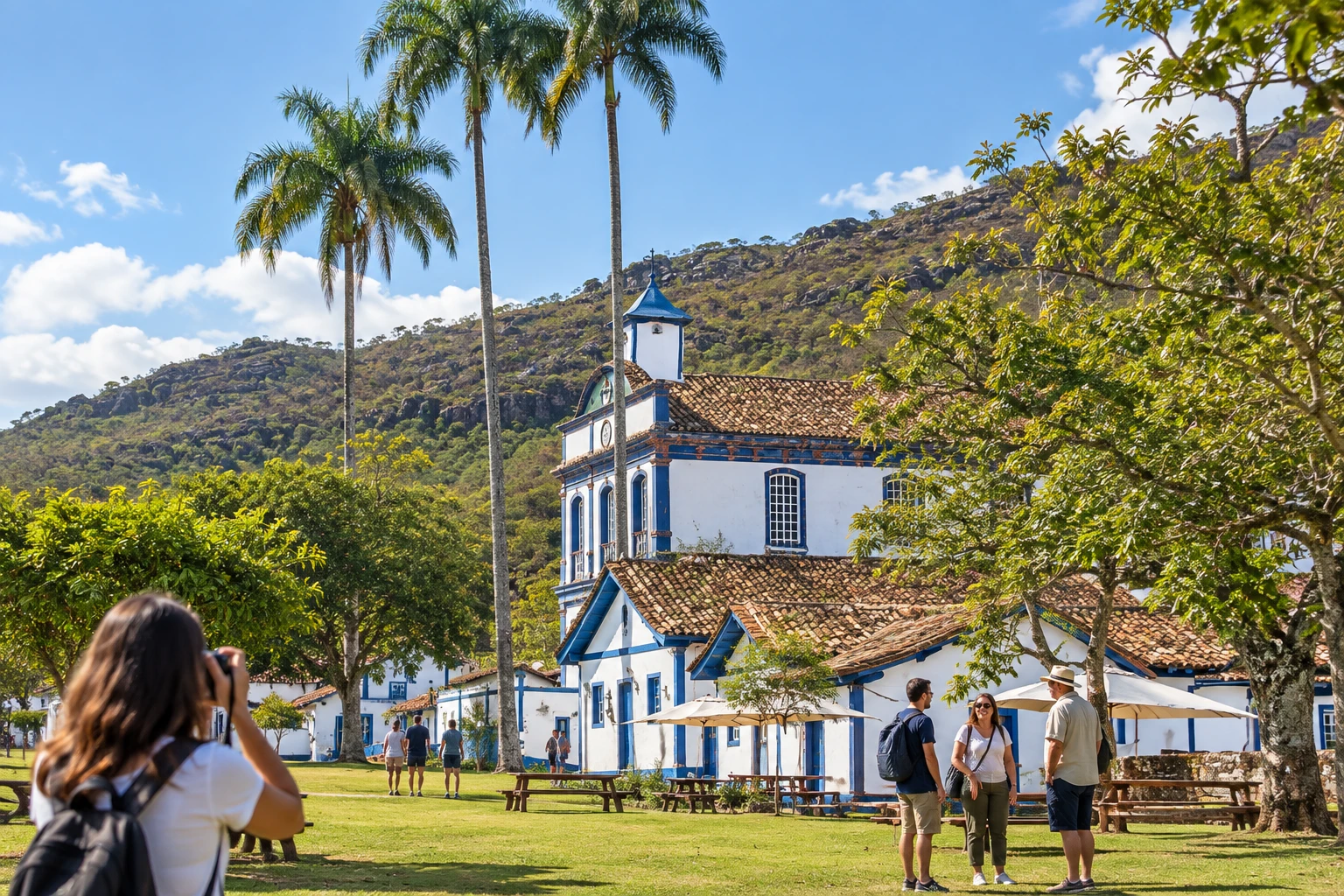
Vila do BiribiriA workers' village built around a textile factory founded in 1876 and closed in 1973, about 14 km from the center.
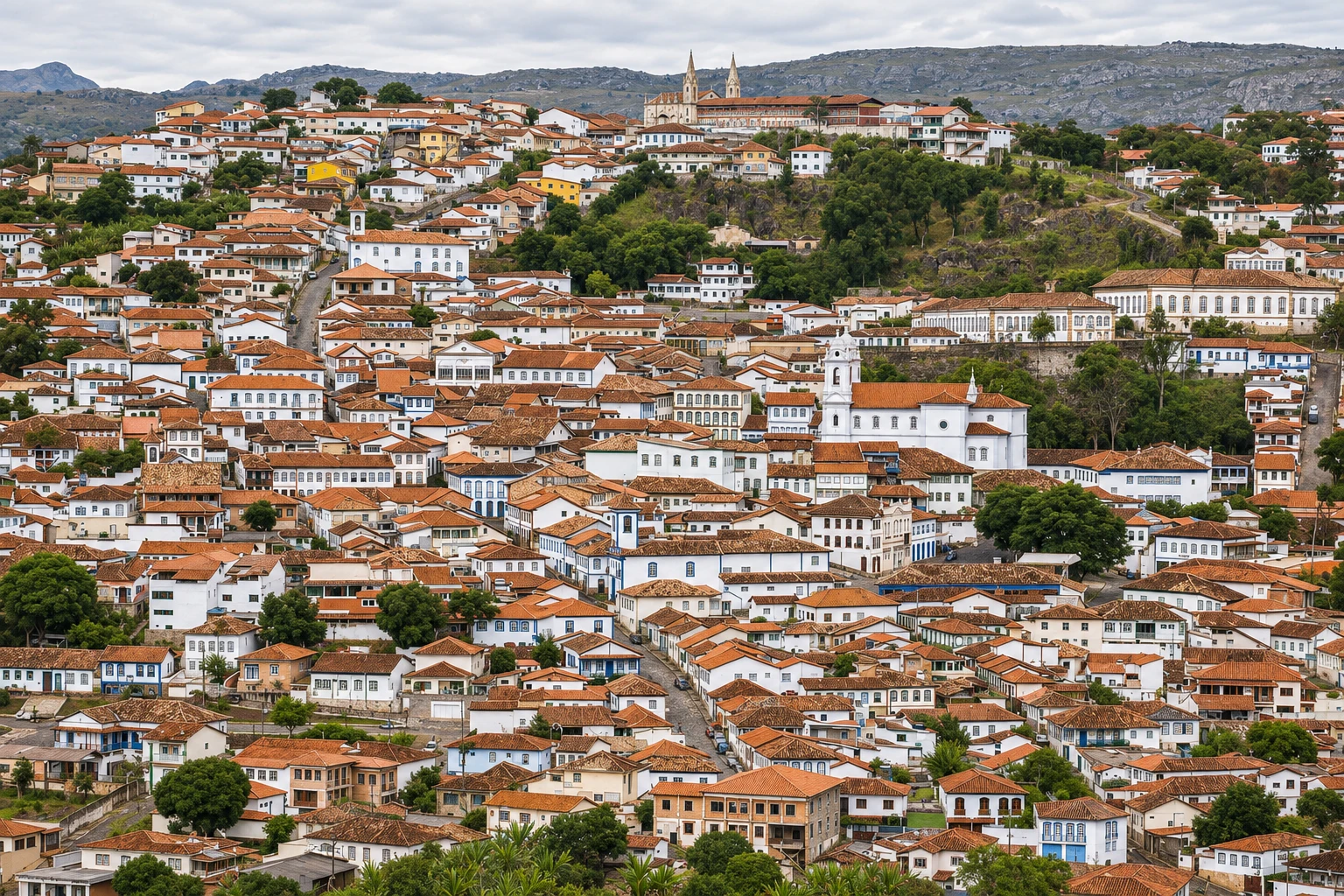
Historic Centre of DiamantinaColonial ensemble of the former Arraial do Tejuco, the center of diamond mining in the 18th century, with stone slopes, houses with balconies and churches.
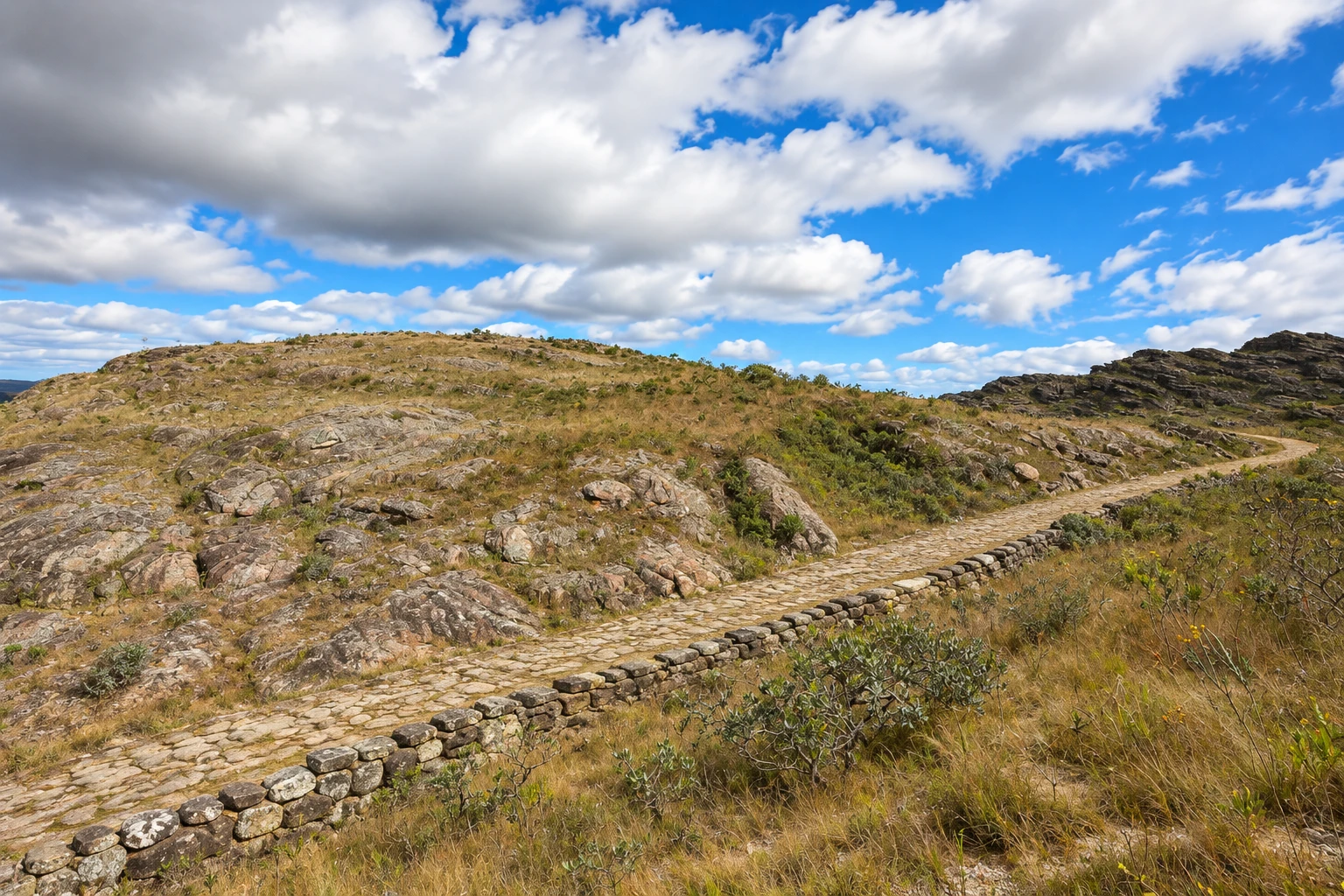
Slave Road18th-century stone paving built by enslaved people that climbs the Serra dos Cristais on the north exit of Diamantina and continues for about 20 km to Mendanha.
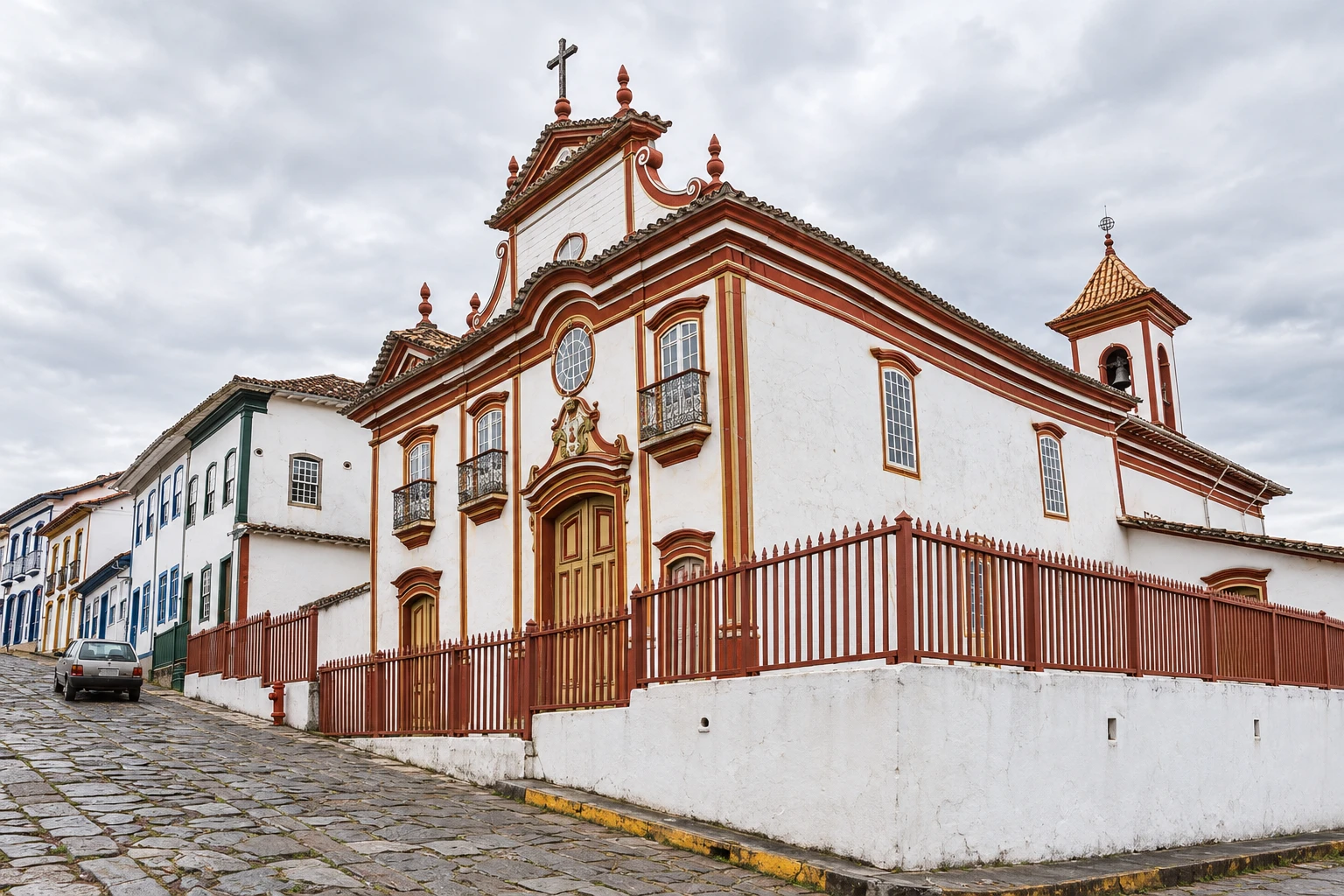
Church of Our Lady of Mount CarmelThe Church of the Third Order of Carmo, from the second half of the 18th century, on Rua do Carmo in downtown Diamantina.
A wattle-and-daub townhouse with wooden balconies where Chica da Silva lived with the diamond contractor João Fernandes de Oliveira between 1763 and 1771. Listed as a heritage site in 1950, it temporarily houses the Museu do Diamante, whose main building is being restored.
An 18th-century wattle-and-daub house where the former president lived as a child and teenager. Turned into a museum, it displays personal belongings, photographs, a library and guitars used in serestas (serenades).
Two late-18th-century mansions joined by a covered walkway over the street, which served as a residence for intendants, a school and an orphanage. Restored, the complex belongs to UFMG (Federal University of Minas Gerais) and welcomes visitors.
Built in 1834 as a resting place and trading post for tropeiros (mule drivers), it has a wooden structure with half-moon arches. On Praça Barão de Guaicuí, it hosts a handicraft fair, traditional food and music on weekends.
A workers' village built around a textile factory founded in 1876 and closed in 1973, about 14 km from the center. The complex, listed by Iepha (the Minas Gerais state heritage institute) in 1998, is next to the Parque Estadual do Biribiri, with waterfalls.
Colonial ensemble of the former Arraial do Tejuco, the center of diamond mining in the 18th century, with stone slopes, houses with balconies and churches. Listed by Iphan in 1938, it has been a UNESCO World Heritage Site since 1999.
18th-century stone paving built by enslaved people that climbs the Serra dos Cristais on the north exit of Diamantina and continues for about 20 km to Mendanha. The first section, with retaining walls and a view of the town, is walked on foot.
The Church of the Third Order of Carmo, from the second half of the 18th century, on Rua do Carmo in downtown Diamantina. Its bell tower is at the rear, it has painted ceilings by José Soares de Araújo, and a pipe organ built between 1782 and 1787.


 Antarctica
 Argentina
 Bolivia
 Chile
 Colombia
 Ecuador
 Falkland Islands (Malvinas)
 French Guiana
 Guyana
 Paraguay
 Peru
 Suriname
 Uruguay
 Venezuela
 Albania
 Austria
 Belgium
 Croatia
 Denmark
 Finland
 France
 Germany
 Greece
 Hungary
 Iceland
 Ireland
 Italy
 Luxembourg
 Norway
 Poland
 Portugal
 Slovakia
 Slovenia
 Spain
 Sweden
 Switzerland
 the Czech Republic
 the Netherlands
 the United Kingdom
 Turkey
 Bermuda
 Canada
 Greenland
 Mexico
 Saint Pierre and Miquelon
 the United States
 the Dominican Republic
 Japan
 Egypt
 South Africa
 Australia
 Fiji
 New Zealand
 Papua New Guinea