8 lugares para conhecer Porto Velho (RO), escolhidos pelo guia Cidade Turismo.
Illustrative images. The pictures in this guide are illustrations based on the real place, not photographs, and may differ from it.
Para começar
Os 8 principais lugares Porto Velho
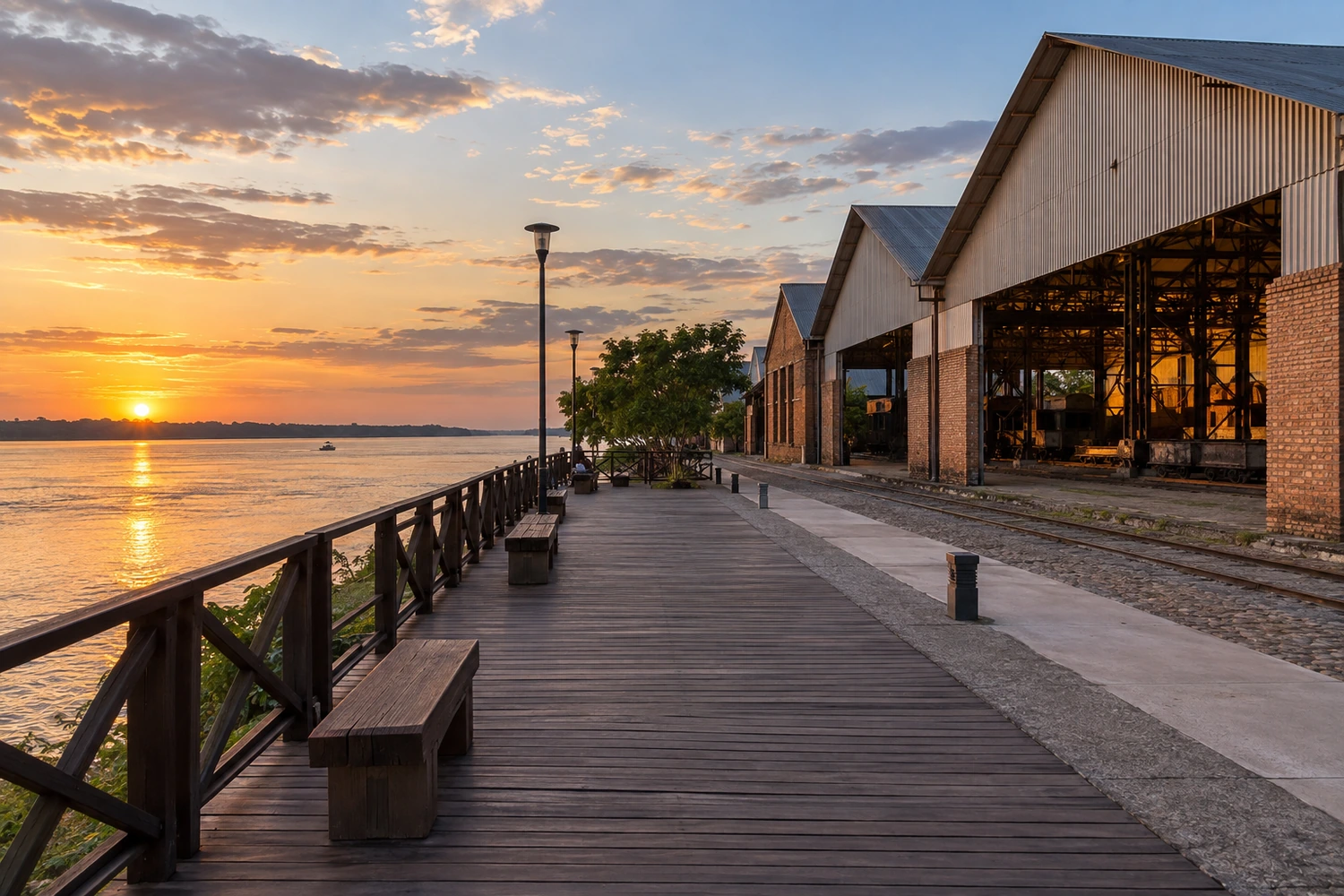
Complexo da Estrada de Ferro Madeira-MamoréThe former yard of the railway opened in 1912, a project that brought together workers of more than 50 nationalities, on the bank of the Rio Madeira.
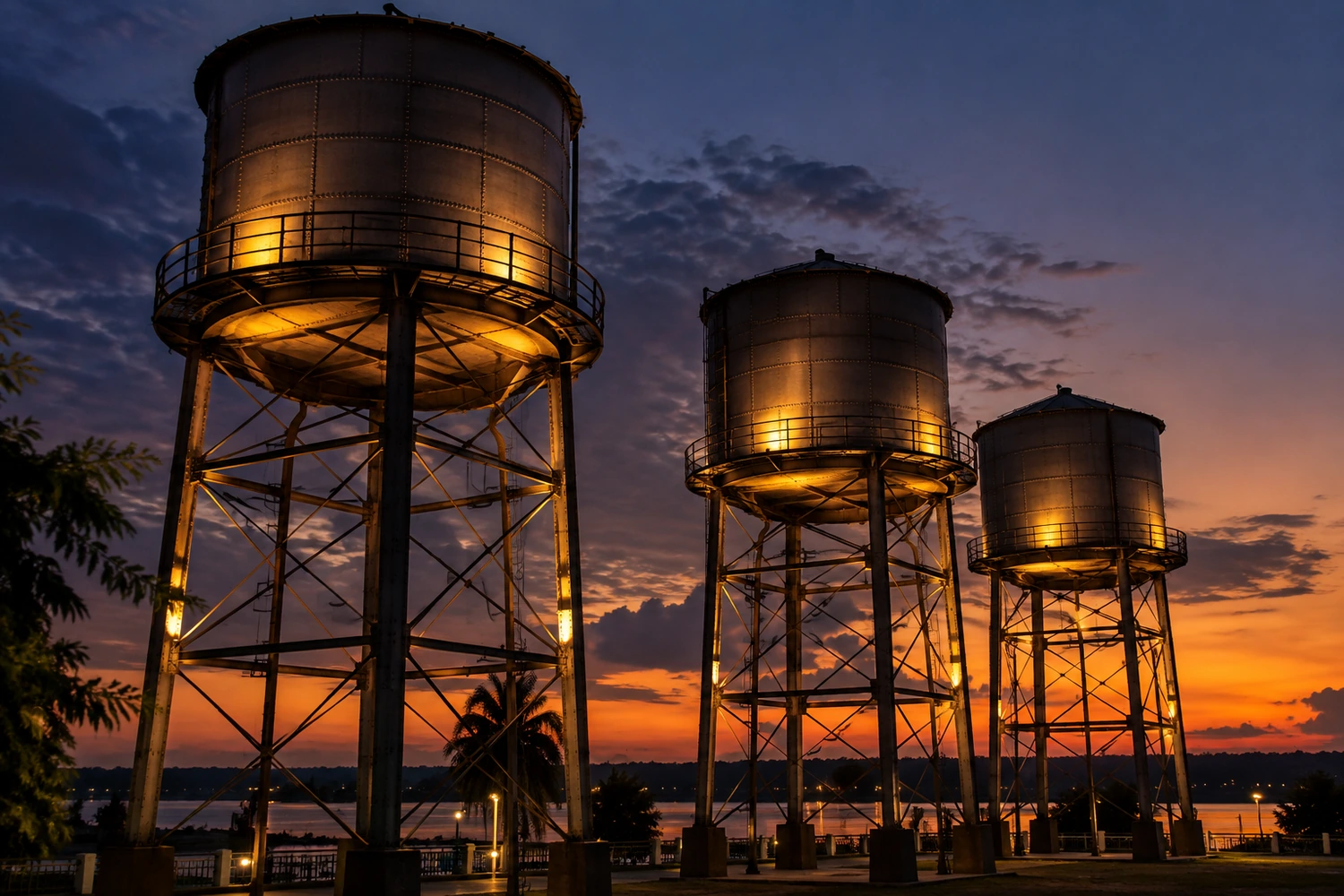
Três Caixas d'ÁguaKnown as the Três Marias, the metal water tanks were brought from the United States in the days of the Madeira-Mamoré Railway and became a symbol of the city.
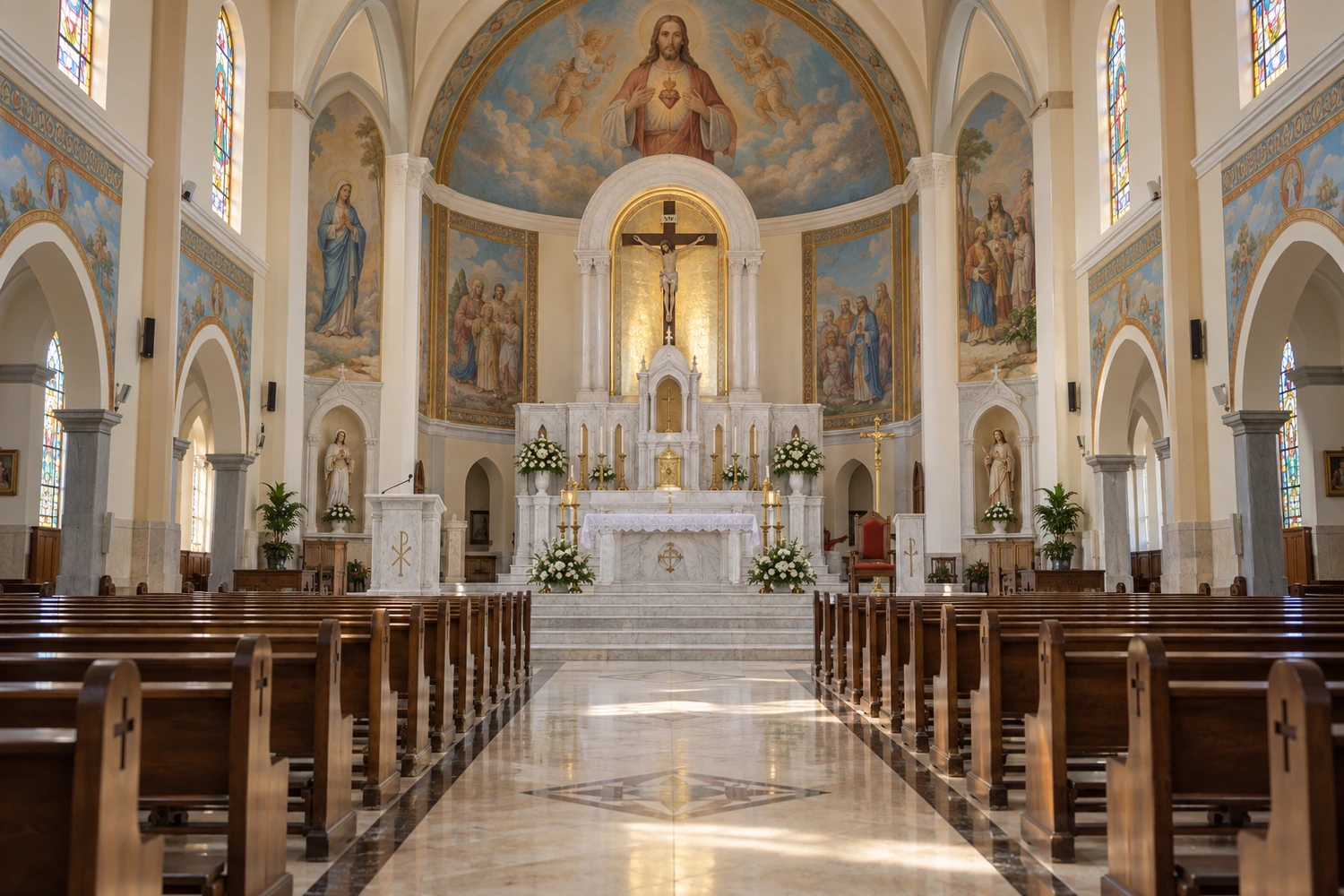
Catedral Sagrado Coração de JesusThe city's first Catholic church, its cornerstone was laid in 1917 and work resumed for good in 1927.
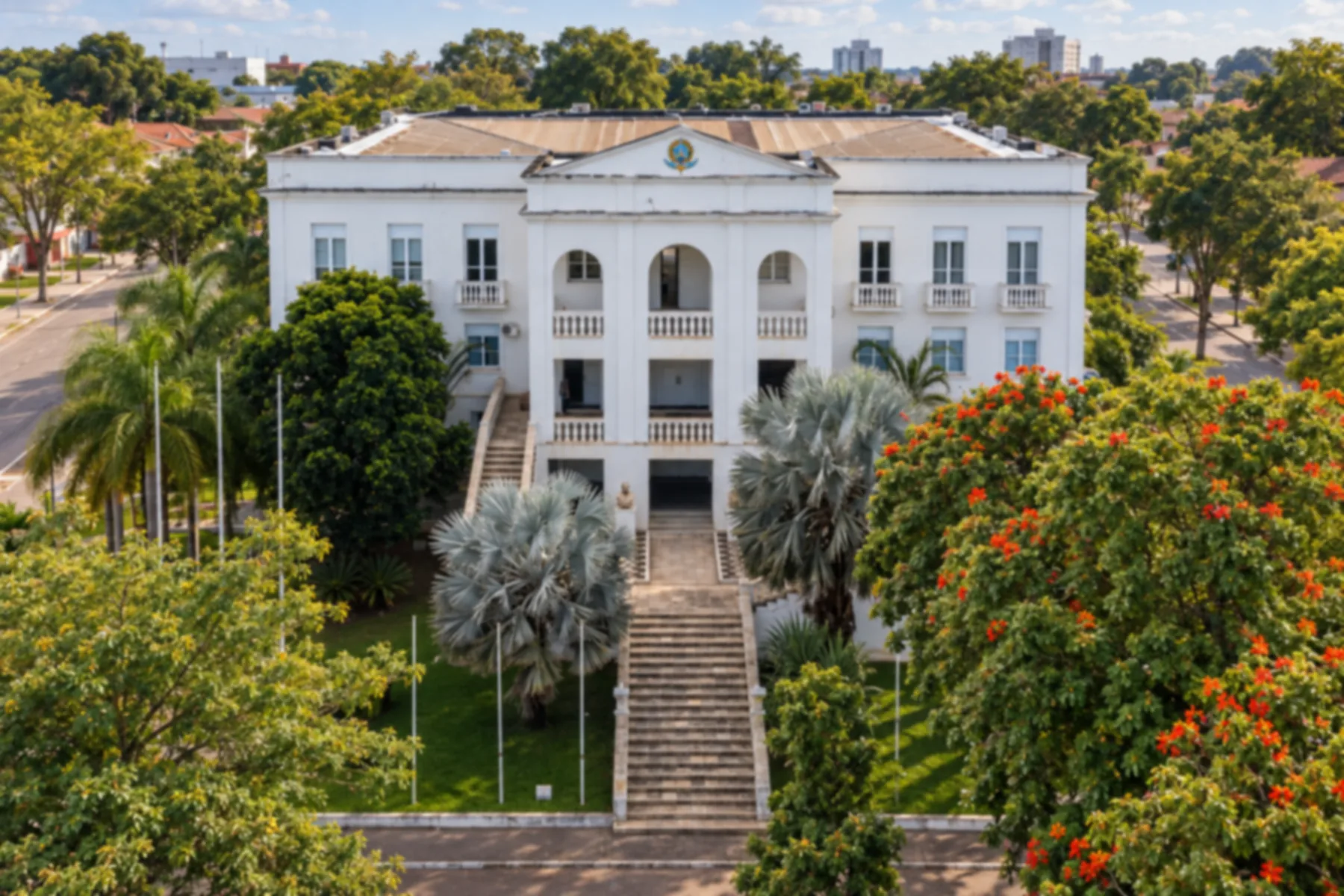
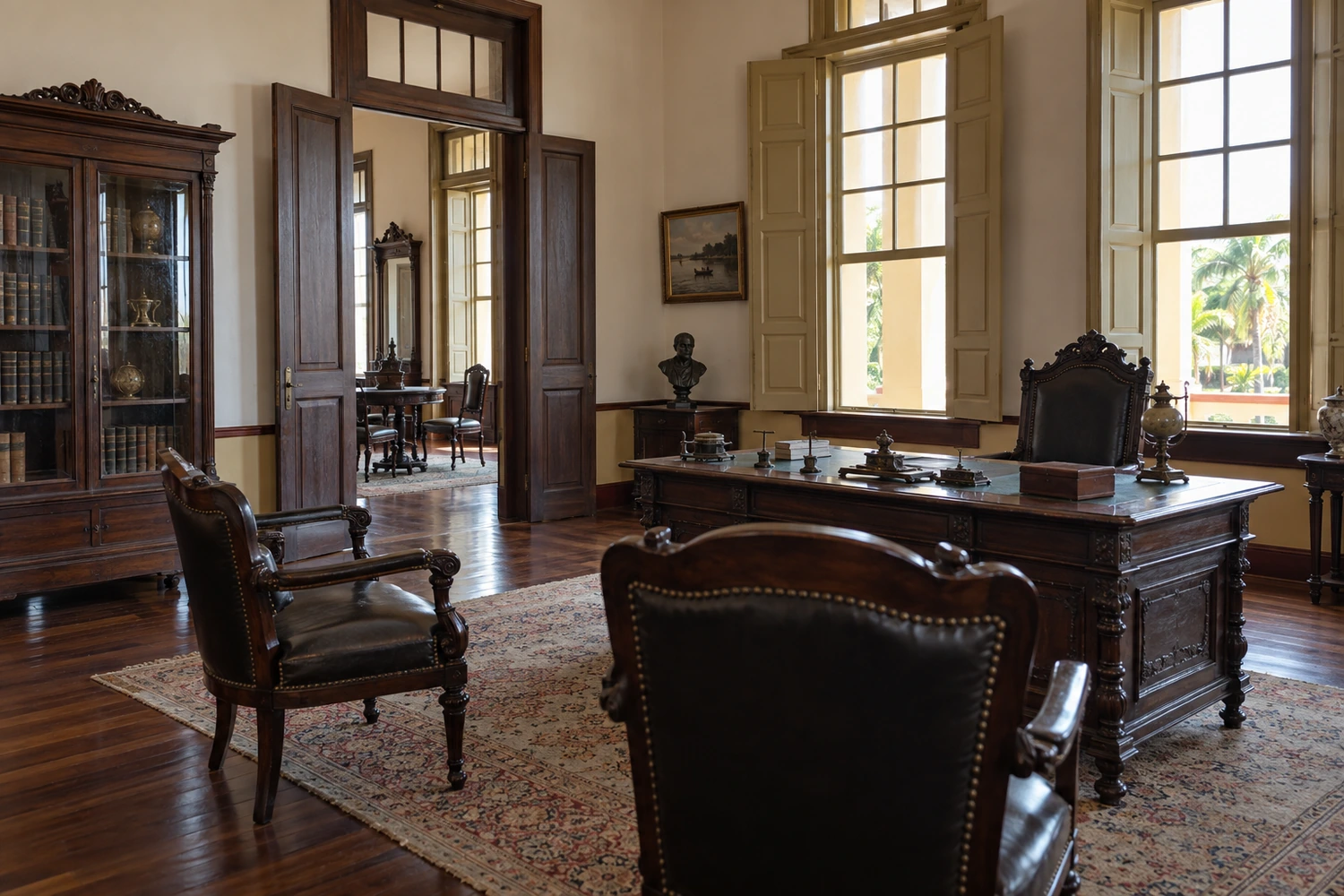
Museu da Memória RondonienseHoused in the former Palácio Getúlio Vargas, opened in 1954 and seat of government until 2015, it holds collections of archaeology, geology, paleontology and historical documents.
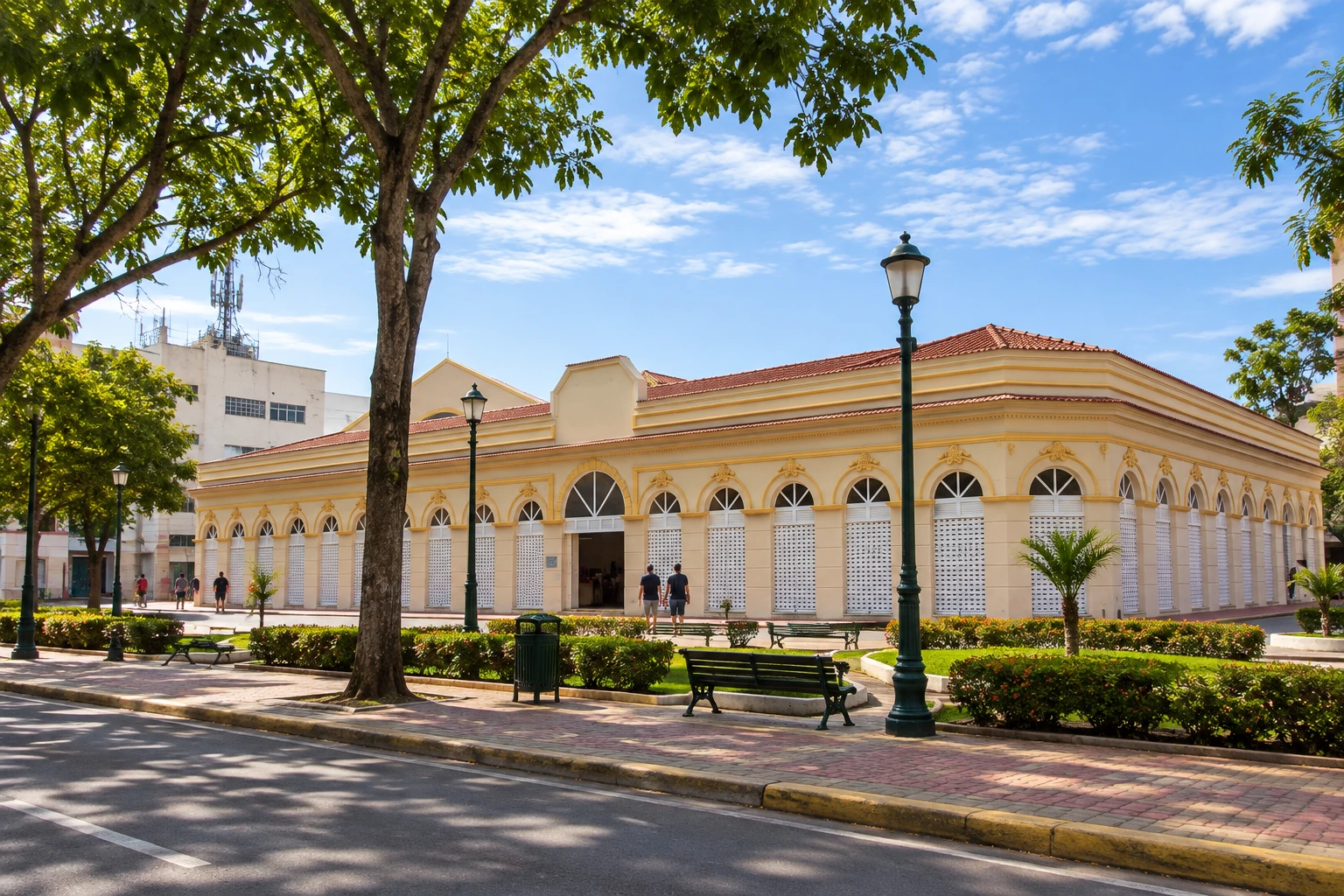
Mercado CulturalThe former city market, tied to the city's growth in the days of the Madeira-Mamoré railway, damaged by fire in 1966 and later rebuilt.
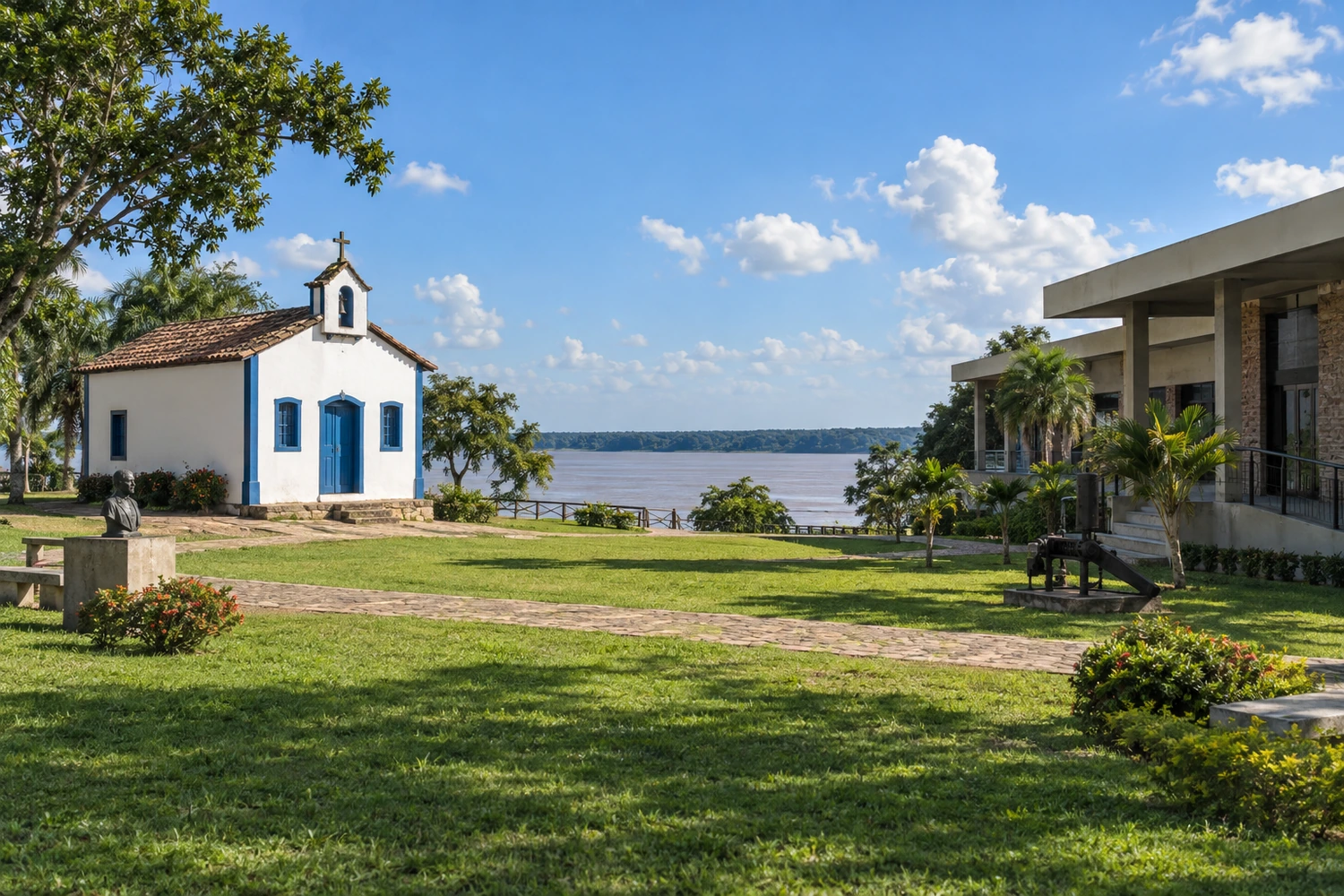
Memorial RondonOpened in 2015 on the Largo da Capela de Santo Antônio, it tells the story of Marshal Cândido Rondon and the commission that brought the telegraph to the region.
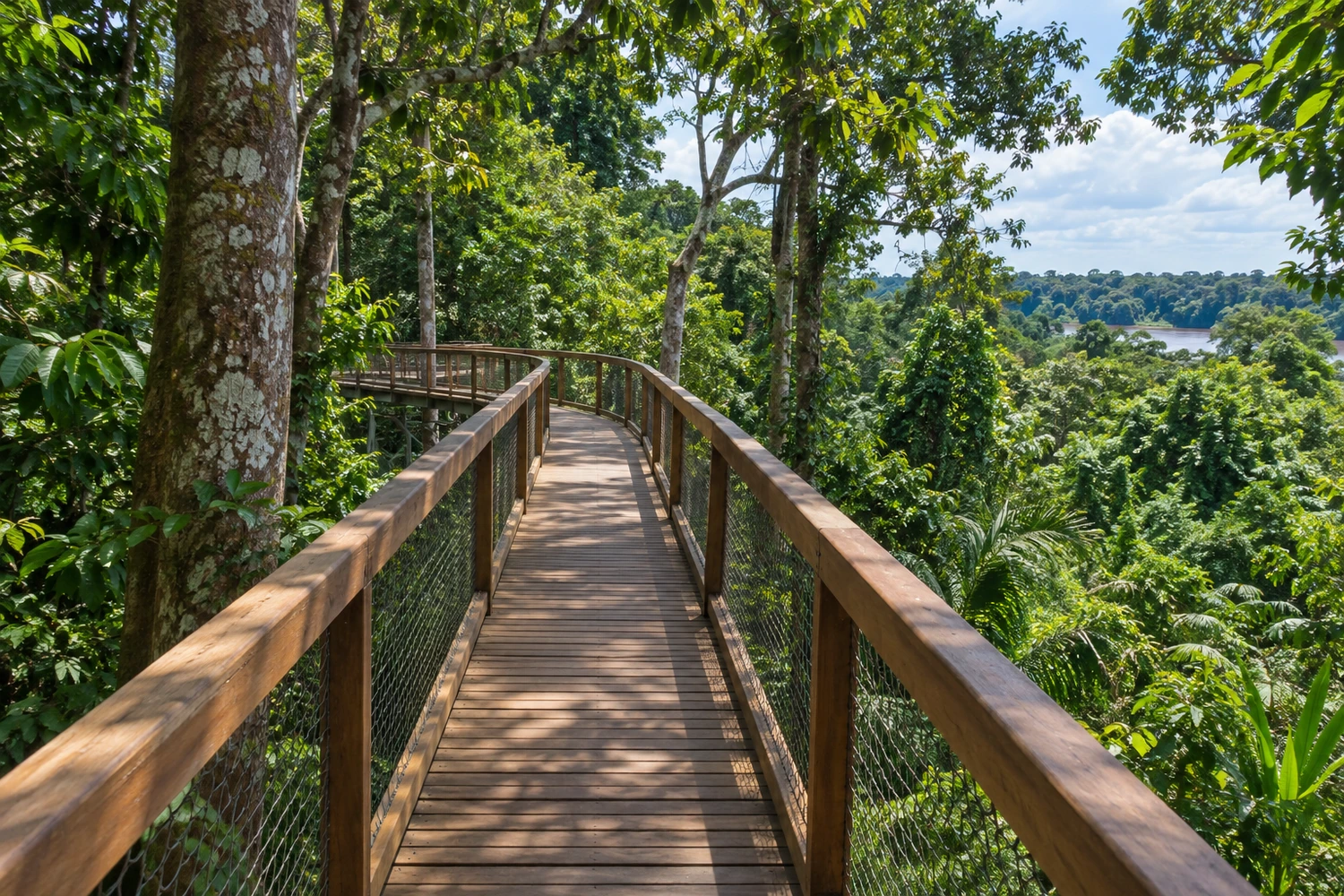
Parque Natural Municipal de Porto VelhoAn area of Amazon rainforest at the end of Avenida Rio Madeira, with walking and biking trails and a fauna and flora museum.
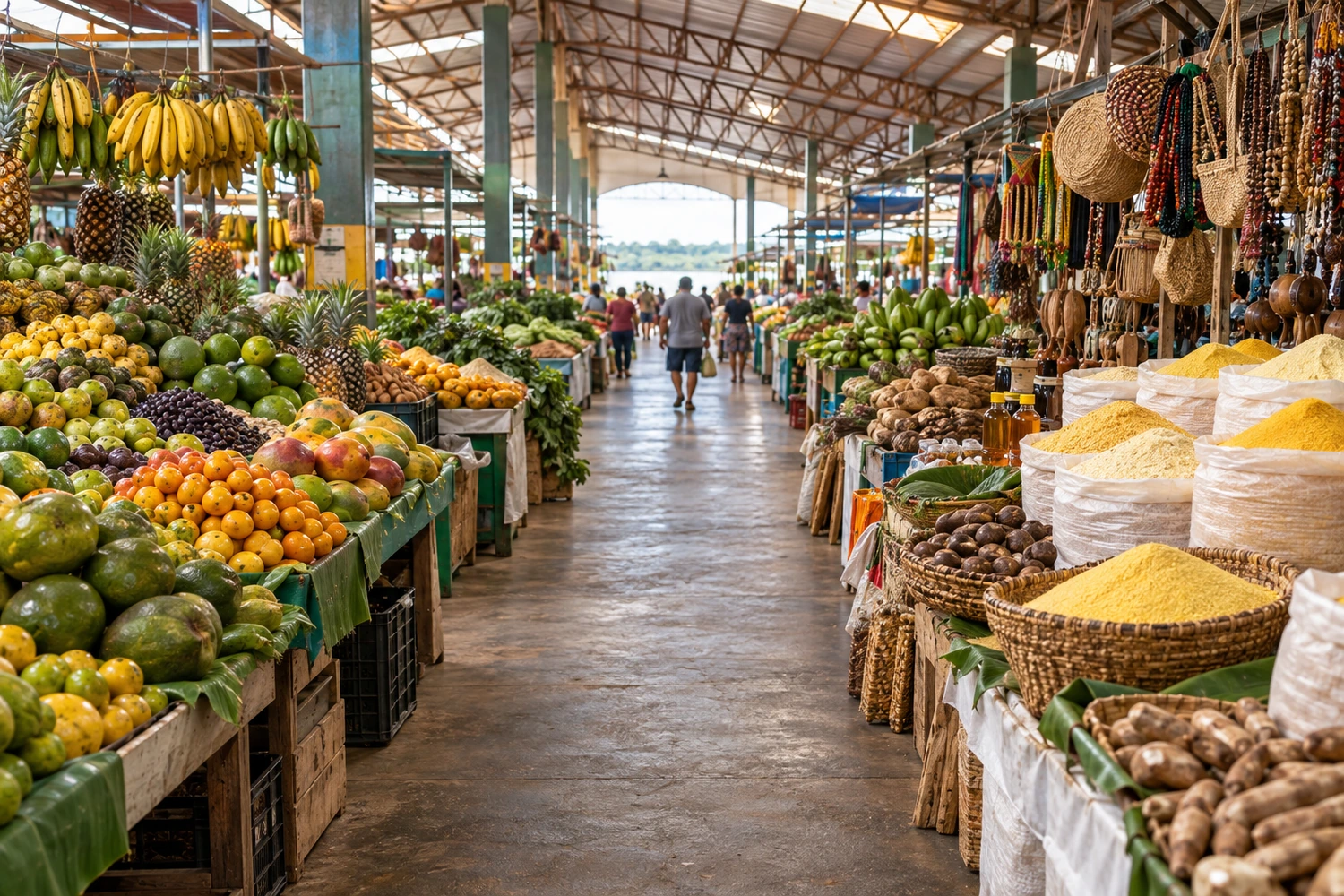
Santiago Central MarketThe newest of the city's three historic markets, in the Panair neighborhood, with stalls of Amazonian food and local crafts.
The former yard of the railway opened in 1912, a project that brought together workers of more than 50 nationalities, on the bank of the Rio Madeira. Revitalized and reopened in 2024, it has a museum with railway items, restored sheds and a deck overlooking the river.
Known as the Três Marias, the metal water tanks were brought from the United States in the days of the Madeira-Mamoré Railway and became a symbol of the city. They stand at the intersection of Avenida Carlos Gomes and Avenida Rogério Weber and host arts events.
The city's first Catholic church, its cornerstone was laid in 1917 and work resumed for good in 1927. The high altar is of Carrara marble, made by Italian artists, and the walls have religious paintings by Father Ângelo Cerri.
Housed in the former Palácio Getúlio Vargas, opened in 1954 and seat of government until 2015, it holds collections of archaeology, geology, paleontology and historical documents. On the upper floor, the governor's office has been kept with its original furniture.
The former city market, tied to the city's growth in the days of the Madeira-Mamoré railway, damaged by fire in 1966 and later rebuilt. Today it hosts concerts, craft fairs, exhibitions and food festivals.
Opened in 2015 on the Largo da Capela de Santo Antônio, it tells the story of Marshal Cândido Rondon and the commission that brought the telegraph to the region. The exhibition has photographs, documents, models of telegraph poles and objects from the city's early days.
An area of Amazon rainforest at the end of Avenida Rio Madeira, with walking and biking trails and a fauna and flora museum. It recently gained a suspended trail more than 500 meters long that crosses the native forest.
The newest of the city's three historic markets, in the Panair neighborhood, with stalls of Amazonian food and local crafts. It serves as a hub for small businesses tied to Rondônia's identity and regional cuisine.


 Antarctica
 Argentina
 Bolivia
 Chile
 Colombia
 Ecuador
 Falkland Islands (Malvinas)
 French Guiana
 Guyana
 Paraguay
 Peru
 Suriname
 Uruguay
 Venezuela
 Austria
 Belgium
 Croatia
 Denmark
 Finland
 France
 Germany
 Greece
 Hungary
 Iceland
 Ireland
 Italy
 Luxembourg
 Norway
 Poland
 Portugal
 Slovakia
 Slovenia
 Spain
 Sweden
 Switzerland
 the Czech Republic
 the Netherlands
 the United Kingdom
 Turkey
 Bermuda
 Canada
 Greenland
 Mexico
 Saint Pierre and Miquelon
 the United States
 the Dominican Republic
 Japan
 Egypt
 South Africa
 Australia
 Fiji
 New Zealand
 Papua New Guinea