

 Antarctica
 Argentina
 Bolivia
 Chile
 Colombia
 Ecuador
 Falkland Islands (Malvinas)
 French Guiana
 Guyana
 Paraguay
 Peru
 Suriname
 Uruguay
 Venezuela
 Austria
 Belgium
 Croatia
 Denmark
 Finland
 France
 Germany
 Greece
 Hungary
 Iceland
 Ireland
 Italy
 Luxembourg
 Norway
 Poland
 Portugal
 Slovakia
 Slovenia
 Spain
 Sweden
 Switzerland
 the Czech Republic
 the Netherlands
 the United Kingdom
 Turkey
 Bermuda
 Canada
 Greenland
 Mexico
 Saint Pierre and Miquelon
 the United States
 the Dominican Republic
 Japan
 Egypt
 South Africa
 Australia
 Fiji
 New Zealand
 Papua New Guinea
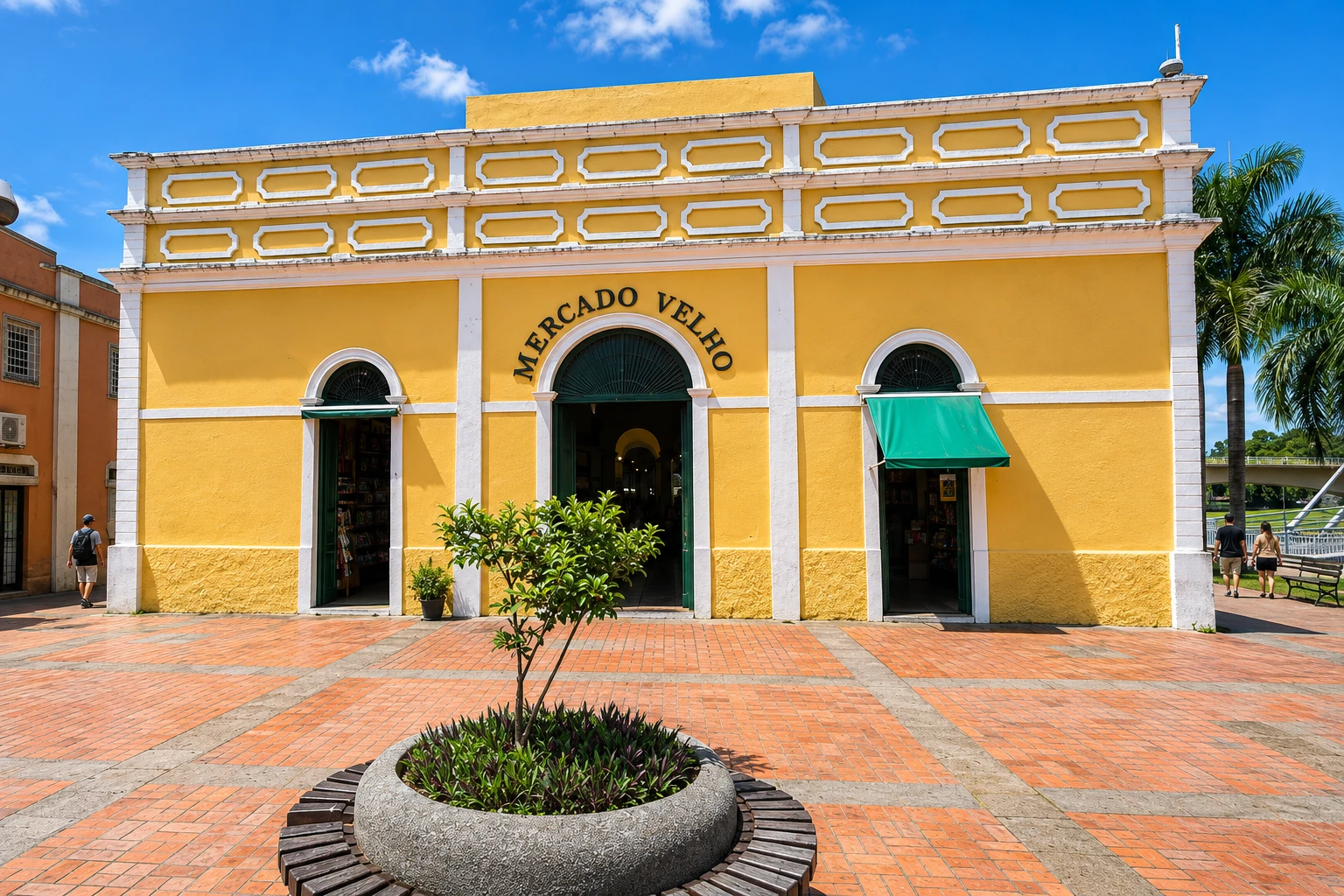
historic market · Rio Branco, AC
Mercado Velho
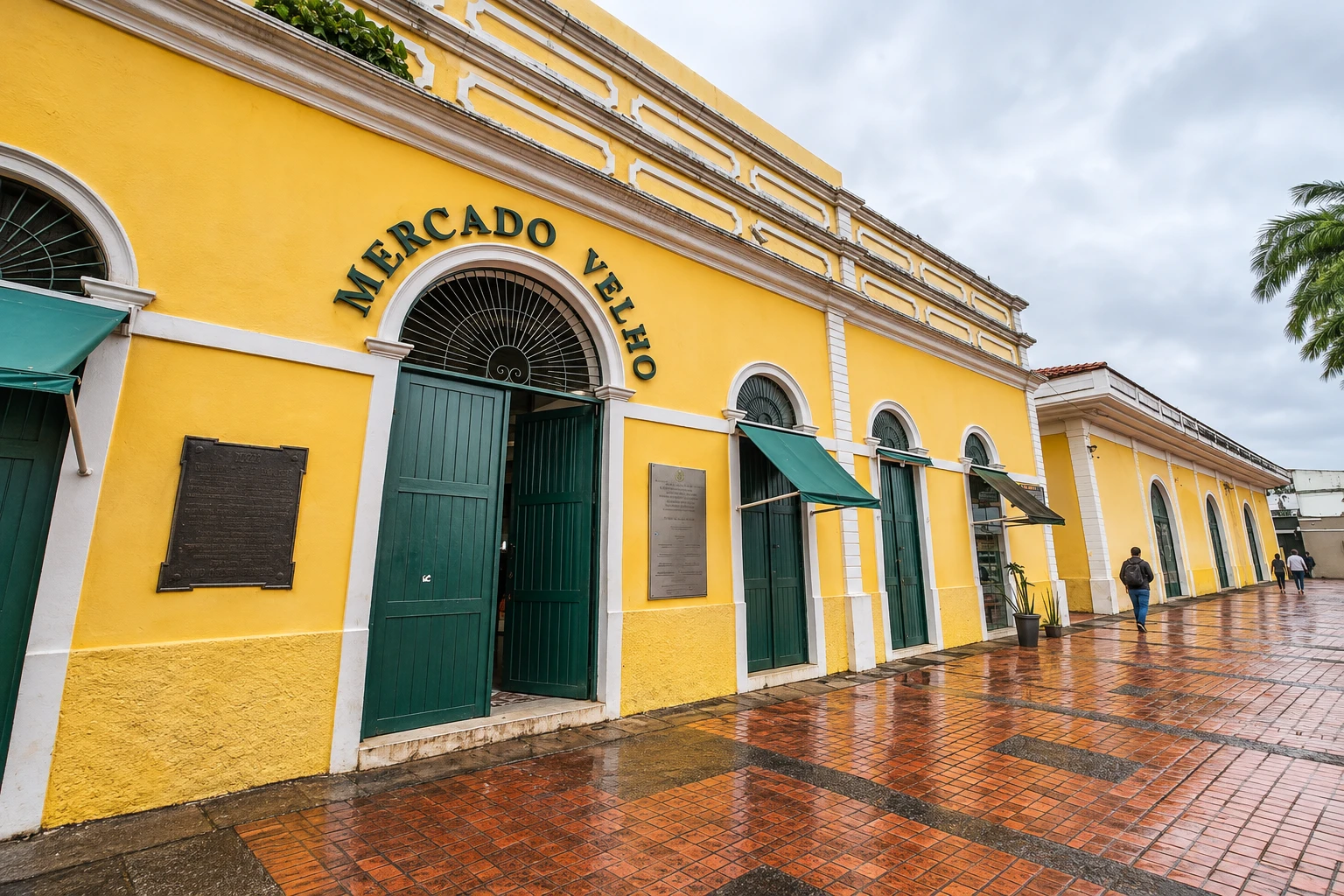
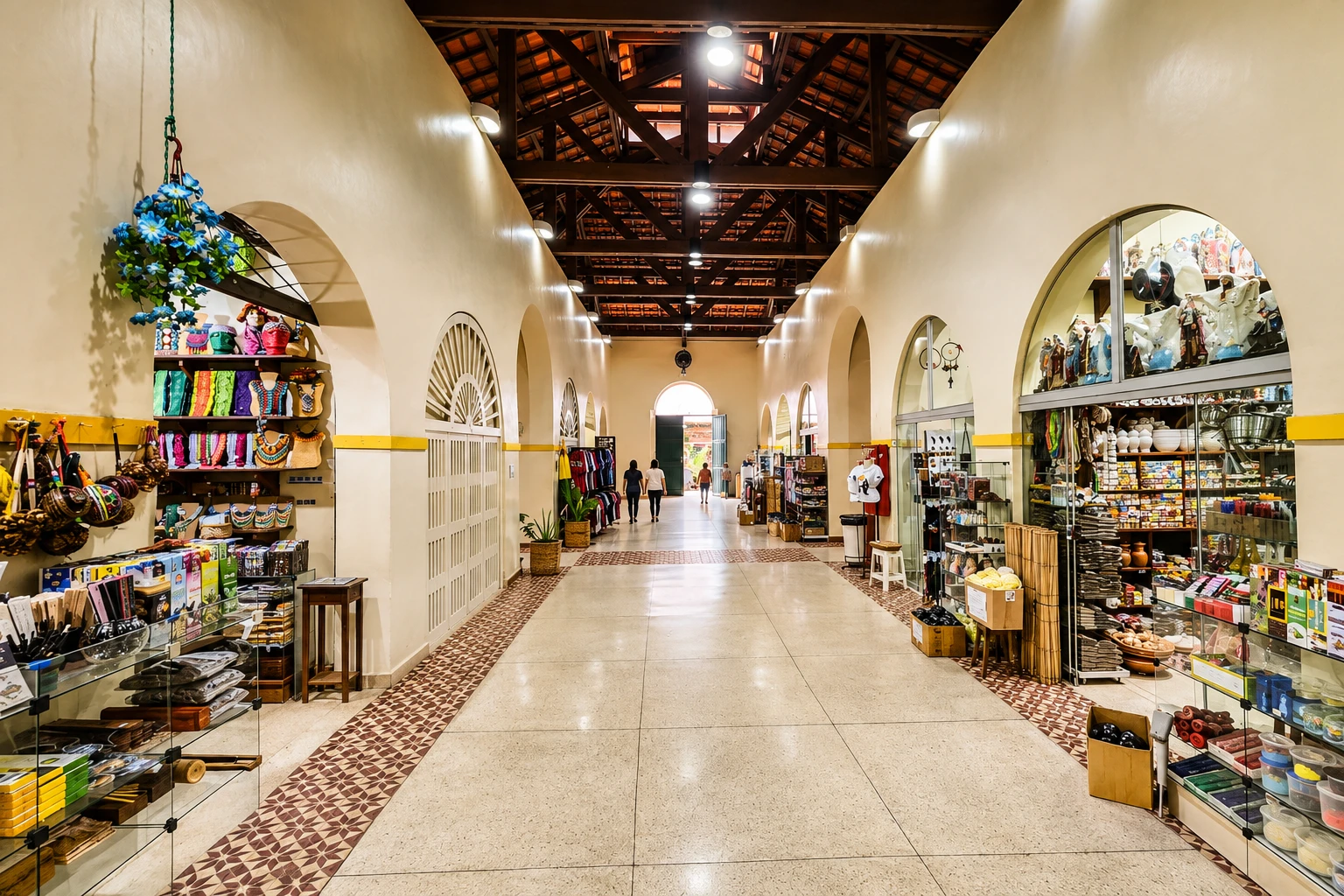
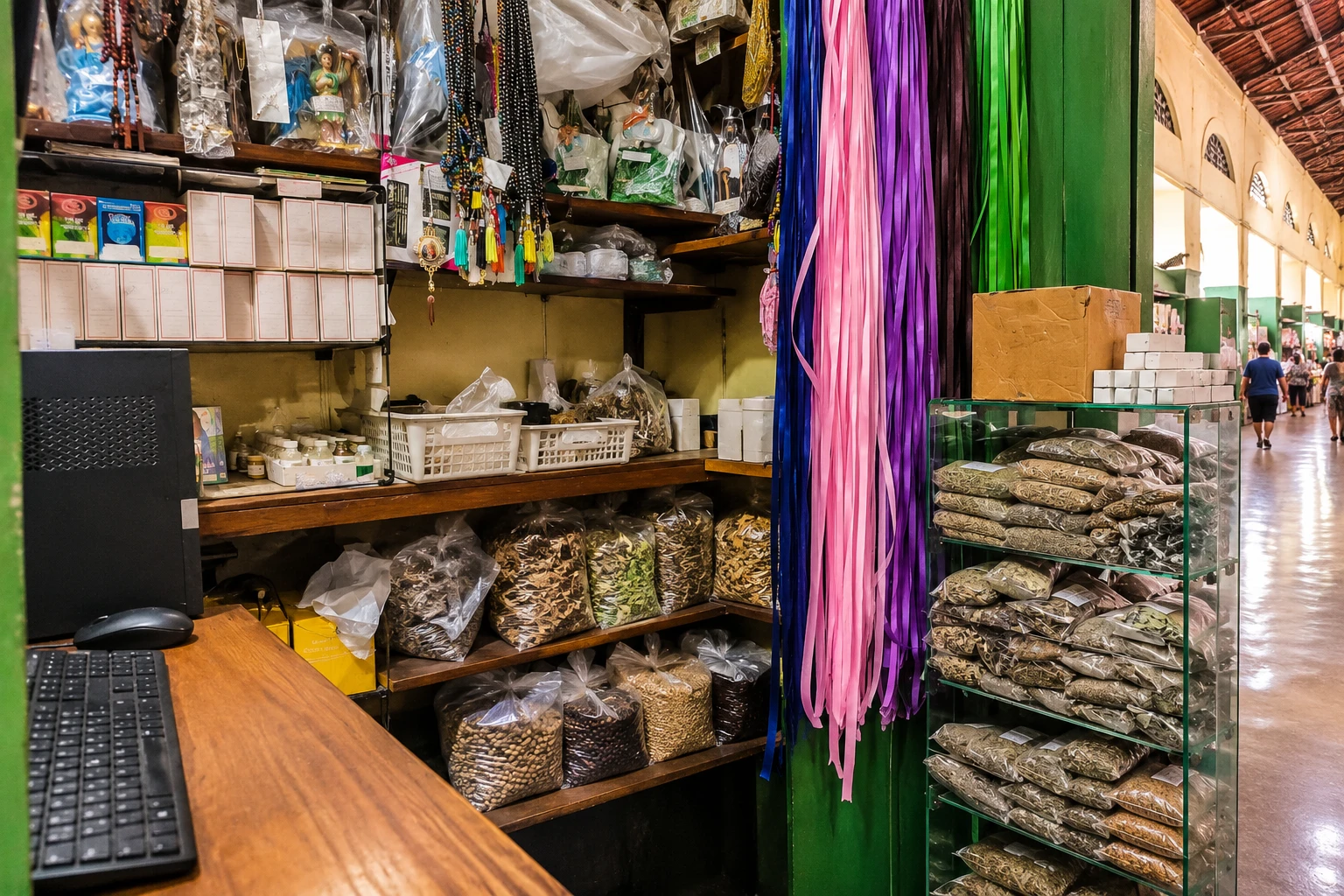
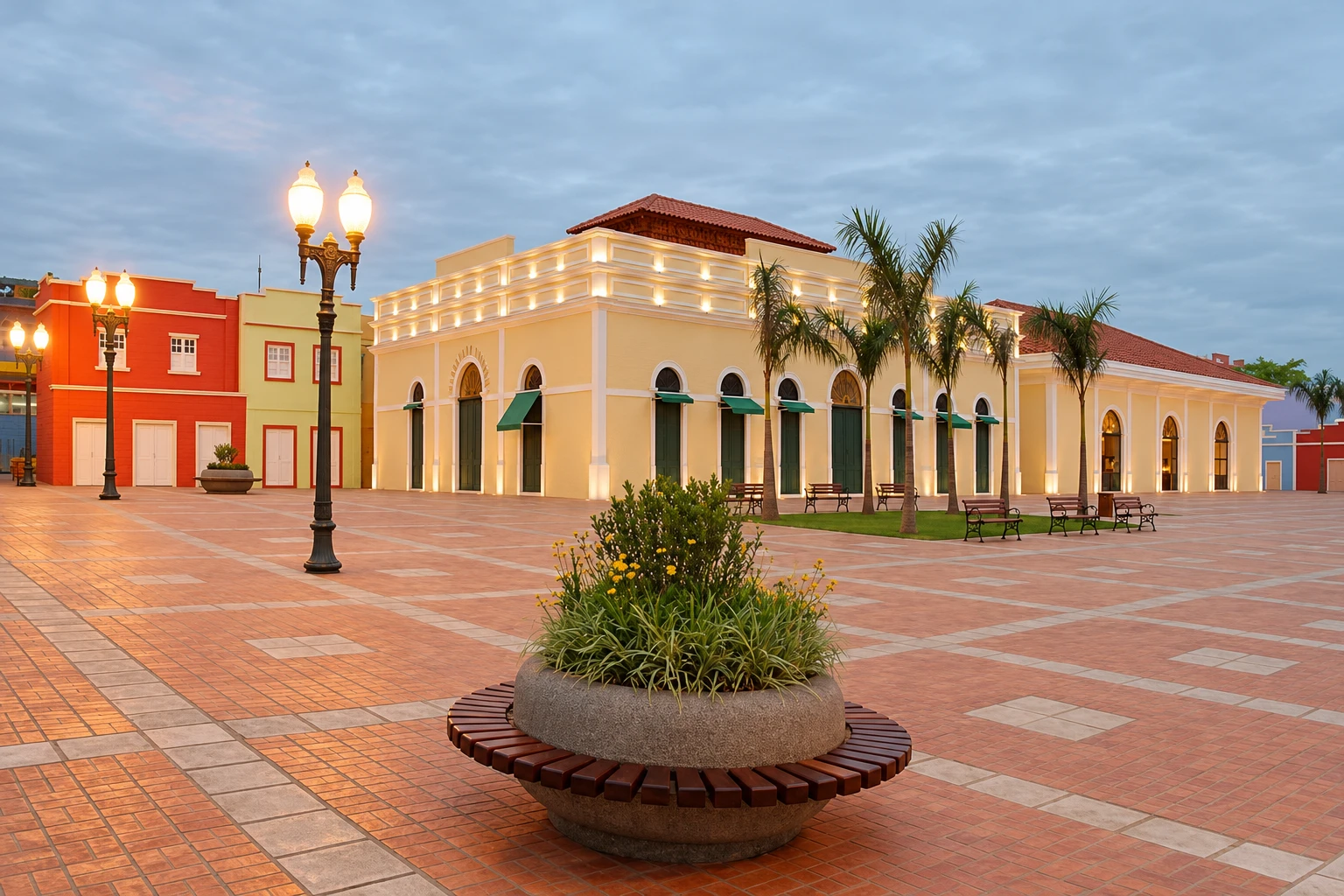
The first masonry public building in Rio Branco, built in 1929 on the banks of the Acre River. Revitalized, it earned the nickname Novo Mercado Velho (New Old Market) and houses restaurants, craft stalls and herbal shops, next to the Passarela Joaquim Macedo pedestrian bridge.
In the photo: Yellow façade of Mercado Velho and the square in front.
Illustrative images. The pictures in this guide are illustrations based on the real place, not photographs, and may differ from it.


A look at the place
Mercado Velho in pictures
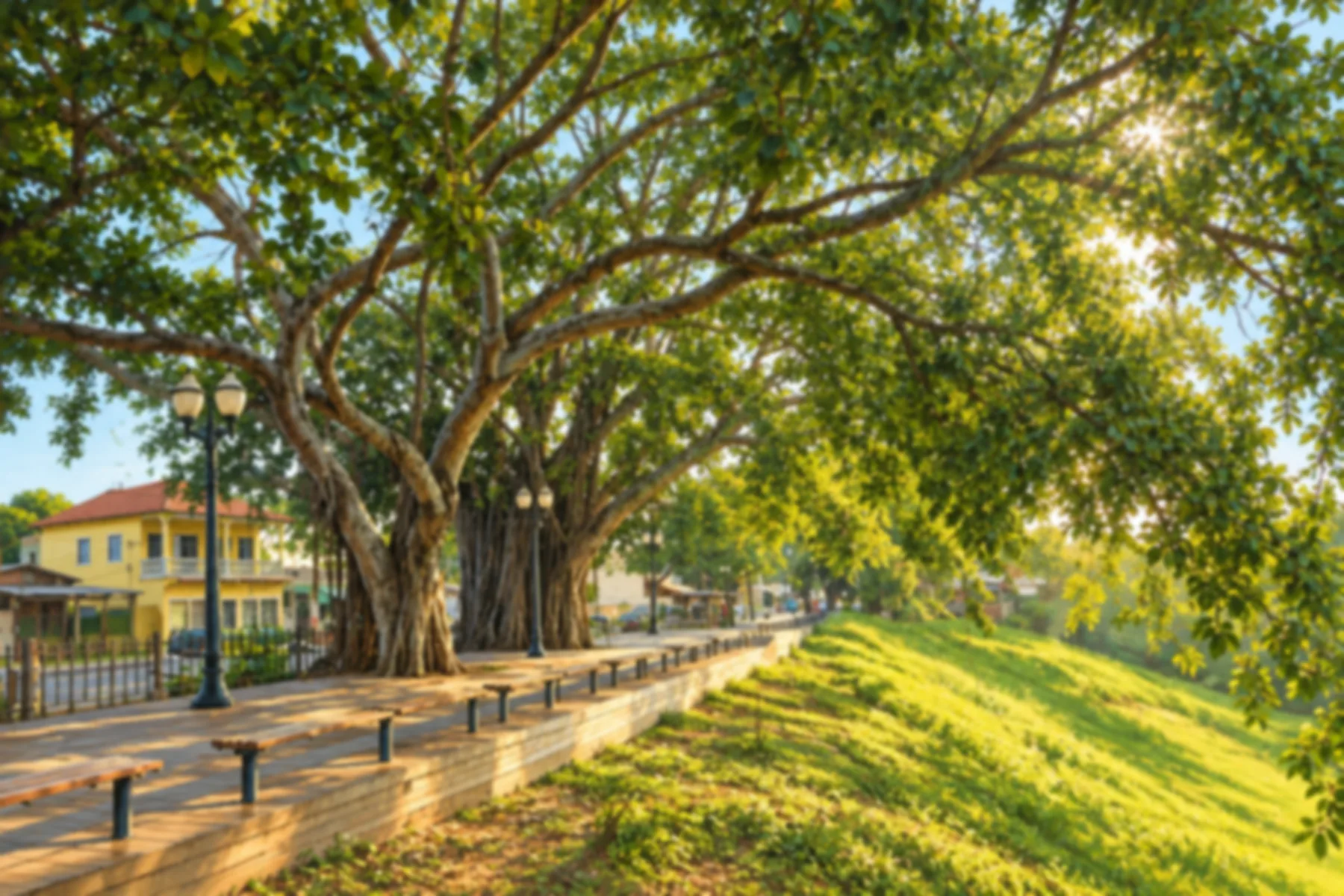
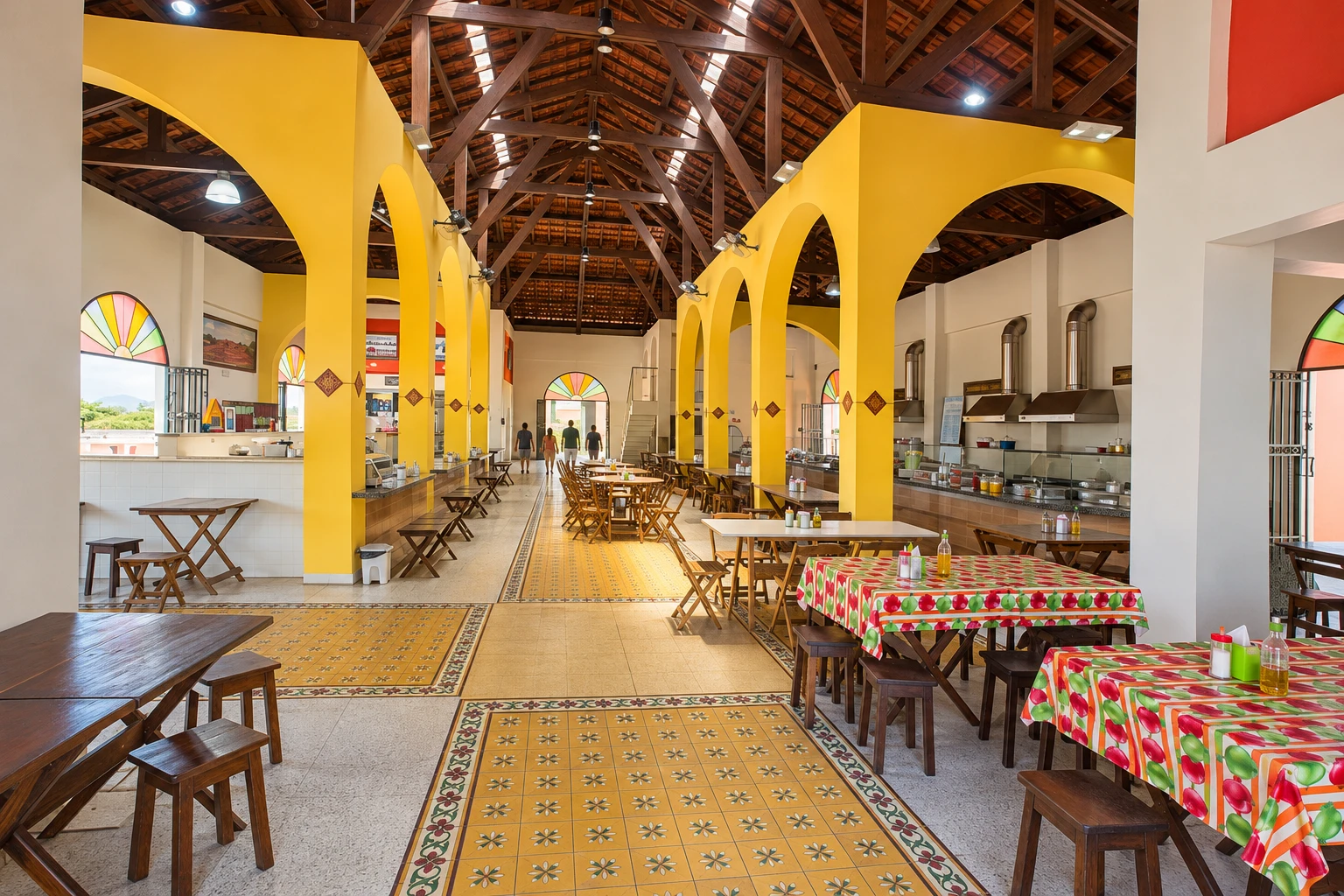
These pictures are illustrations based on the real place, not photographs. They may differ from the place.
Click the picture to enlarge it.
Discover
About Mercado Velho
The Mercado Velho sits on the left bank of the Acre River in downtown Rio Branco, at the spot where the city began as a rubber-tapping port. The building was erected in 1929 during Hugo Carneiro’s administration and was the capital’s first masonry public building, at a time when almost everything there was made of wood. For decades it functioned as the city’s municipal market.
After a revitalization in the early 2000s, the complex began to be called Novo Mercado Velho. The rebuilt buildings house restaurants, snack bars, craft stalls and shops selling herbs and regional products, and Praça da Bandeira completes the area by the river.
A visit is a walking stroll with no fixed route. It’s worth browsing the stalls, trying Acreano dishes such as baixaria (corn couscous with ground meat and egg) and tacacá, and looking at crafts made from seeds, rubber and wood. The riverside promenade is the place to watch the water’s movement and the bank of the Segundo Distrito.
From there you can take the Passarela Joaquim Macedo, the pedestrian bridge that crosses the Acre River to the Segundo Distrito, where the Gameleira tree marks the city’s old port. A few blocks further are the Museu dos Povos Acreanos, the Palácio Rio Branco and the Catedral Nossa Senhora de Nazaré.
The surroundings are livelier in the late afternoon and at night, when the heat drops and the restaurants fill up. The Acre River’s water level varies greatly through the year, and the view from the promenade changes considerably between high water and dry season.
Before you go
Practical information
Cidade Turismo reviews its information regularly, but something may have changed. Check with the place before planning your trip.
How much time to set aside
1 to 2 hours to walk the stalls, eat and stroll along the promenade. Add more time if you plan to cross the bridge to the Gameleira and the Segundo Distrito.
Best time
Late afternoon and evening, when the heat eases and the restaurants get busier. From June to September there is less rain in Rio Branco, which makes walking around downtown easier. During the Acre River’s high water, more common from February to April, parts of the riverside may have restricted access.
How to get there
Mercado Velho is downtown on Avenida Epaminondas Jácome, on the Acre River bank, a few blocks from Palácio Rio Branco. If you’re staying in the center you can walk; from more distant neighborhoods, taxi or ride-hailing apps are the simplest option. From the Segundo Distrito, cross the river via the Passarela Joaquim Macedo.
Tip
Combine the market with a walk across the Passarela Joaquim Macedo to the Gameleira at late afternoon, when the light on the river is most beautiful, and return to the market for dinner. Try the baixaria, a typical Acreano breakfast dish, if you go early.
Your questions
Frequently asked questions about Mercado Velho
What’s at Mercado Velho in Rio Branco?
Regional restaurants and snack bars, craft stalls and shops selling herbs and regional products in buildings on the Acre River bank. Next to them are Praça da Bandeira and the riverside promenade, from which the Passarela Joaquim Macedo departs.
Why is it called Mercado Velho?
The 1929 building was the city’s first public market and the first public masonry building in Rio Branco. After the revitalization the complex became known as Novo Mercado Velho, but the old name remains the most used.
What to eat at Mercado Velho?
Dishes from Acreano cuisine, such as baixaria (corn couscous with ground meat and egg), tacacá and river fish. Offerings vary from stall to stall.
Can you cross the Acre River on foot from Mercado Velho?
Yes. The Passarela Joaquim Macedo, the pedestrian bridge next to the market, links the city center to the Segundo Distrito, where the Gameleira is located. Before going, check whether the bridge is open, as it has been closed at times due to riverbank erosion.
What is the best time to visit Mercado Velho?
Late afternoon and evening are the busiest and coolest times. In the morning the market is good for a regional breakfast.