

 Antarctica
 Argentina
 Bolivia
 Chile
 Colombia
 Ecuador
 Falkland Islands (Malvinas)
 French Guiana
 Guyana
 Paraguay
 Peru
 Suriname
 Uruguay
 Venezuela
 Austria
 Belgium
 Croatia
 Denmark
 Finland
 France
 Germany
 Greece
 Hungary
 Iceland
 Ireland
 Italy
 Luxembourg
 Norway
 Poland
 Portugal
 Slovakia
 Slovenia
 Spain
 Sweden
 Switzerland
 the Czech Republic
 the Netherlands
 the United Kingdom
 Turkey
 Bermuda
 Canada
 Greenland
 Mexico
 Saint Pierre and Miquelon
 the United States
 the Dominican Republic
 Japan
 Egypt
 South Africa
 Australia
 Fiji
 New Zealand
 Papua New Guinea
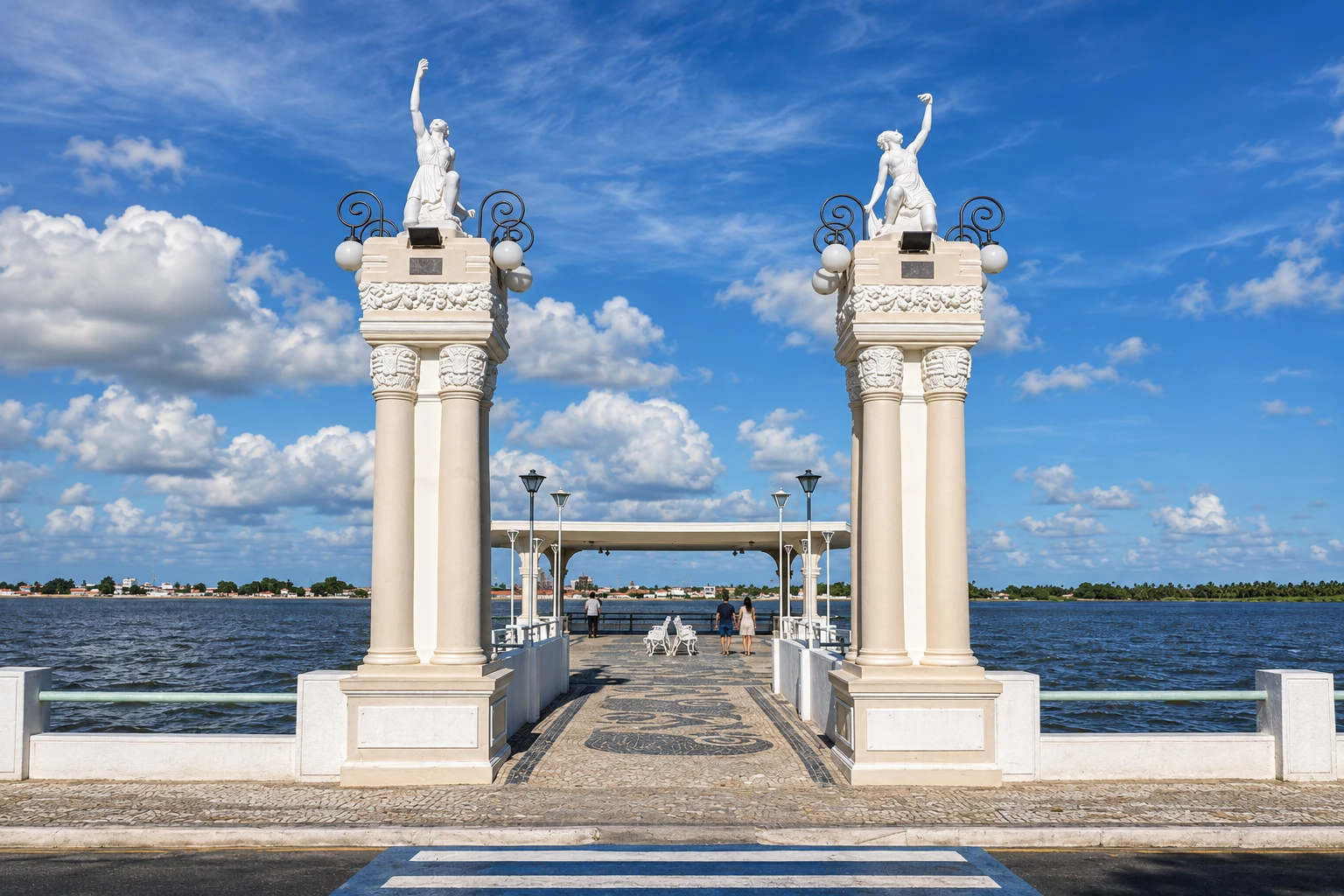
Historic monument · Aracaju, SE
Emperor Bridge
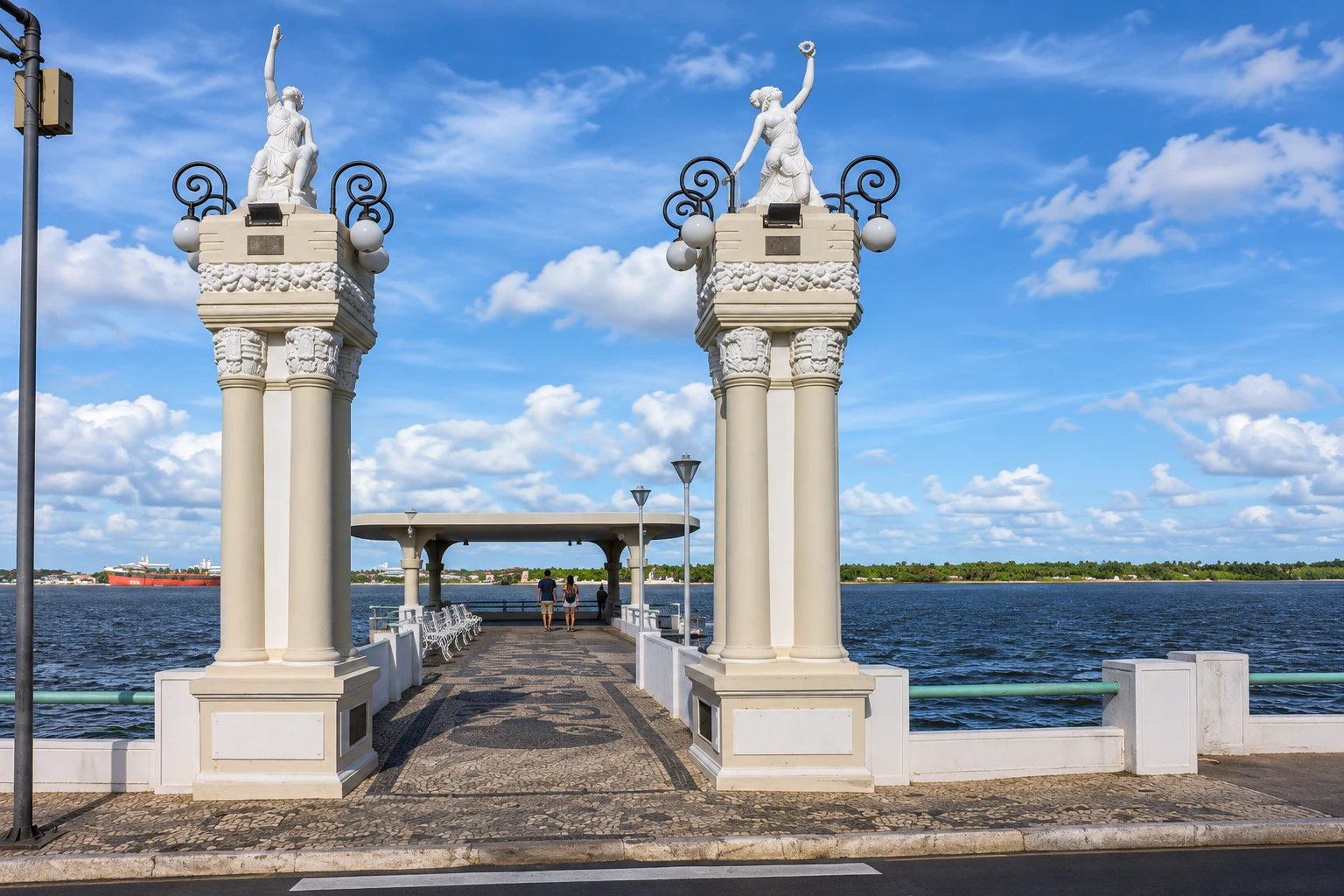
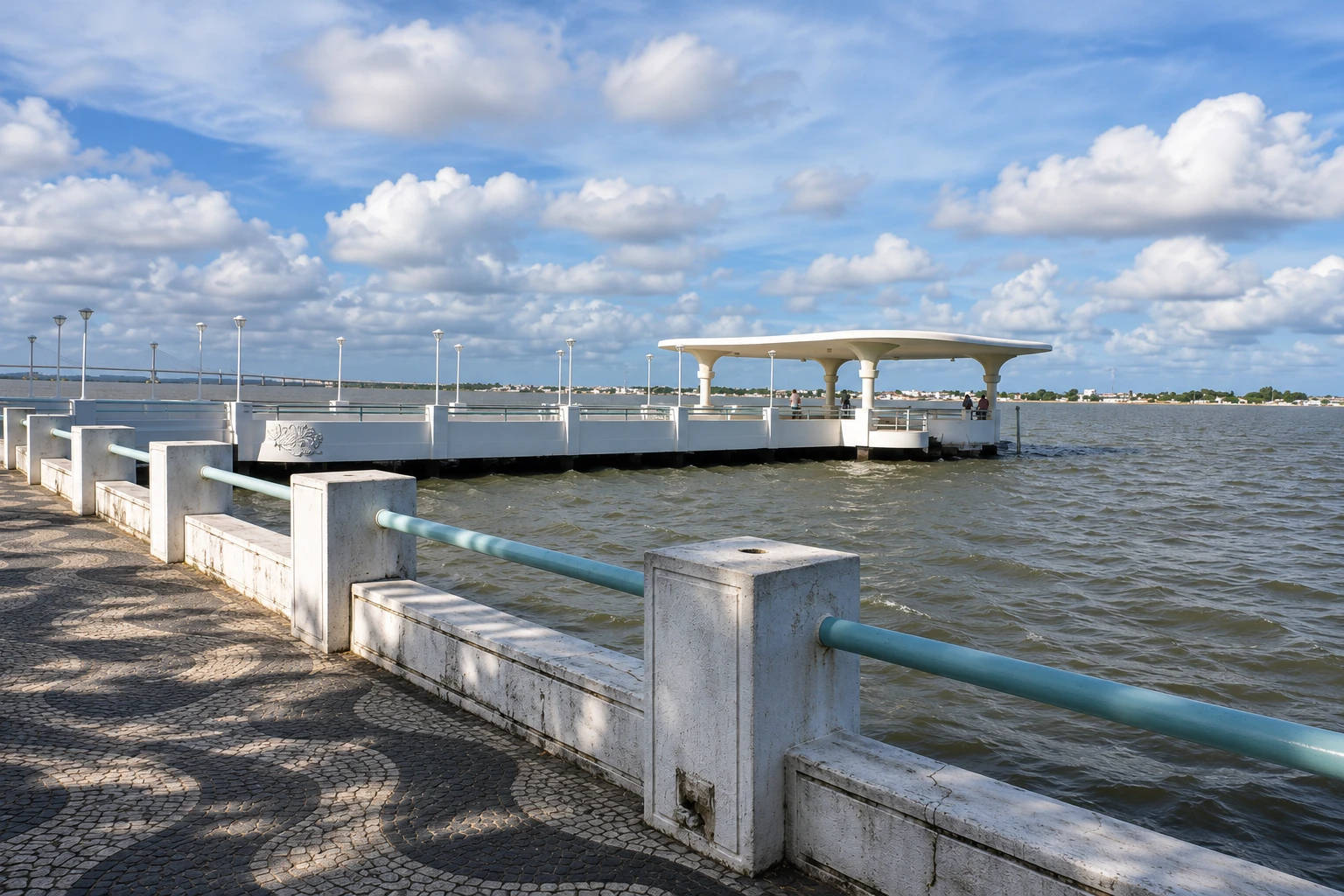
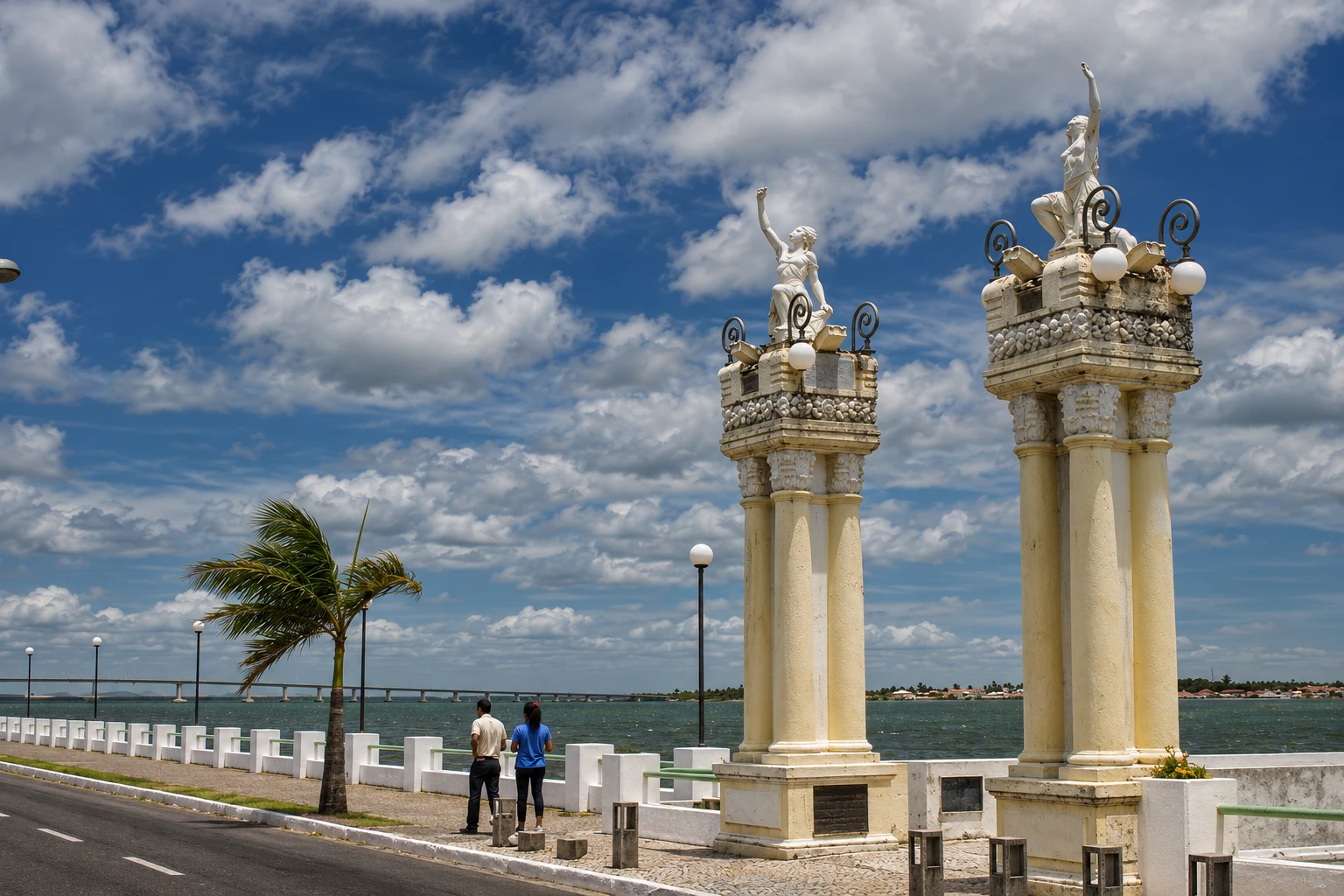
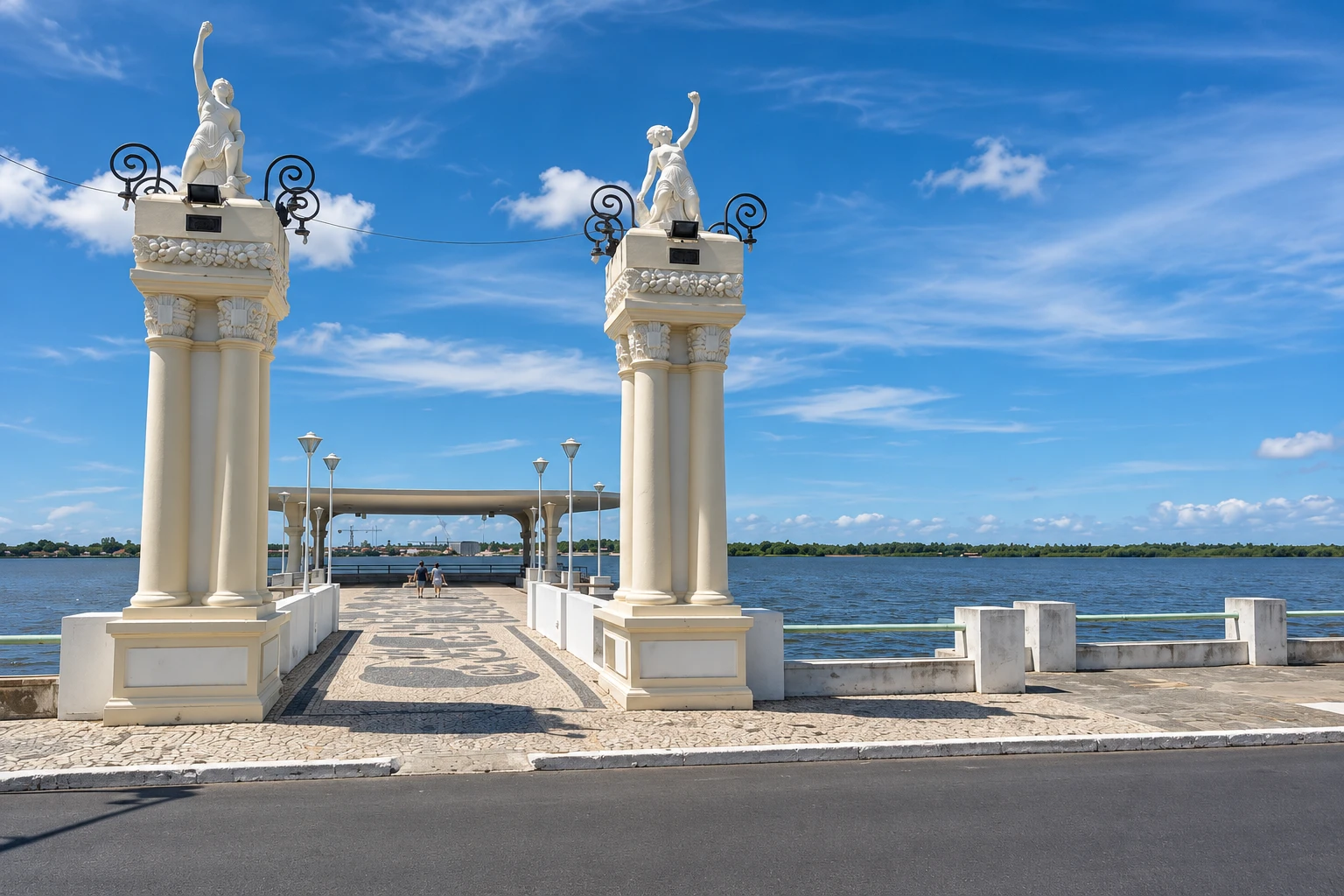
Platform over the Sergipe River, in front of Fausto Cardoso Square, built in 1859 as a landing pier to receive Dom Pedro II. It is a landmark of Aracaju's historic center and a viewpoint over the river.
In the photo: Portal of the Emperor’s Bridge and platform over the Sergipe River.
Illustrative images. The pictures in this guide are illustrations based on the real place, not photographs, and may differ from it.


A look at the place
Emperor Bridge in pictures
These pictures are illustrations based on the real place, not photographs. They may differ from the place.
Click the picture to enlarge it.
Discover
About Emperor Bridge
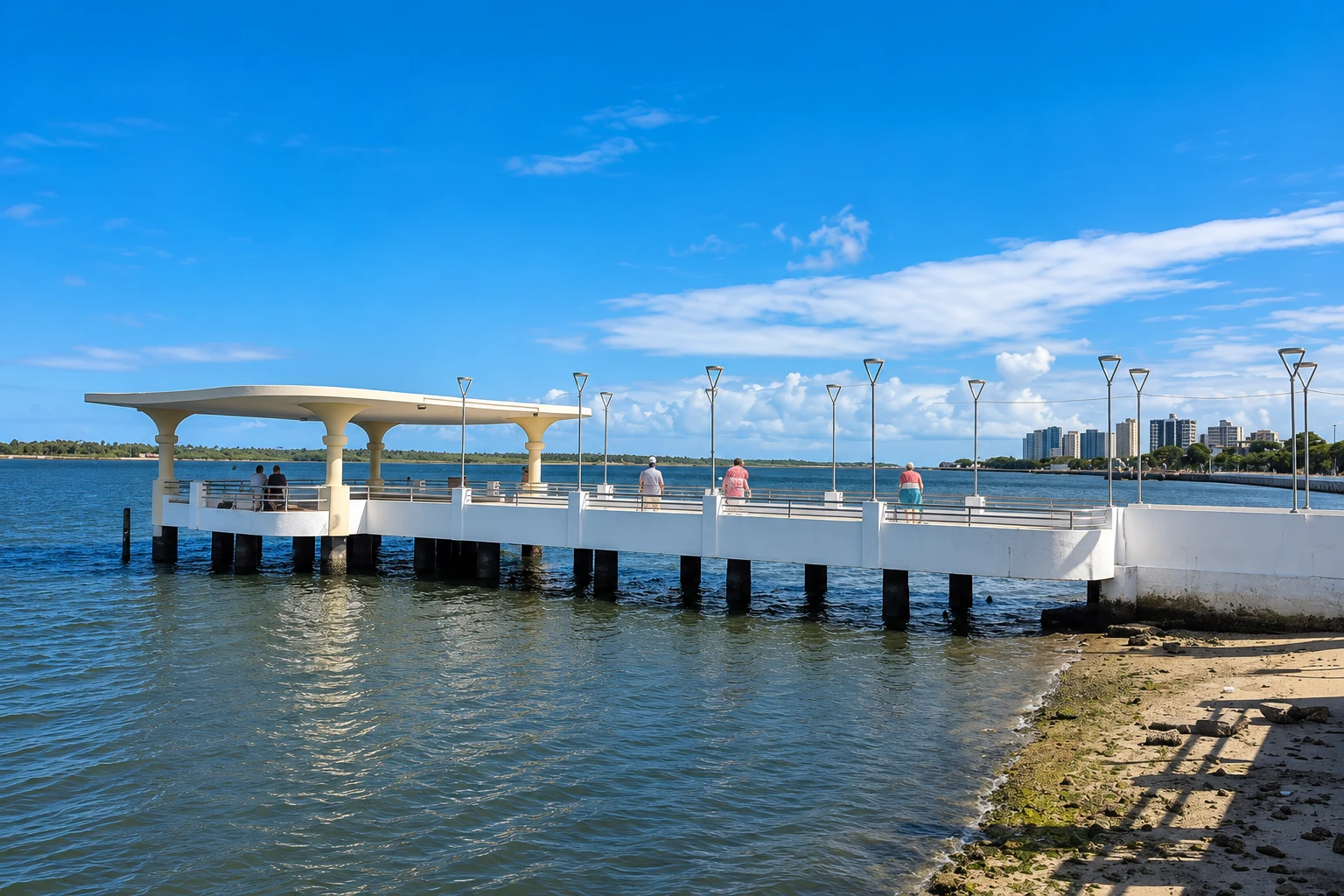
The Emperor's Bridge is not a bridge that crosses the river: it is a platform that extends over the Sergipe River, in front of Fausto Cardoso Square, in Aracaju’s historic center. It was built in 1859 to serve as the landing pier for the steamer Apa, which brought Dom Pedro II and his entourage on the imperial visit to Sergipe.
Aracaju had been chosen as the provincial capital a few years earlier, and the emperor’s arrival was an event for the young city. The bridge, then made of wood, marked the disembarkation point, facing the square where the main government buildings stood.
Over time, the wooden structure was replaced—first by one of metal and glass and later by concrete. The place kept its name and function as a landmark: it is one of the symbols of downtown Aracaju and appears in old photographs and postcards of the city.
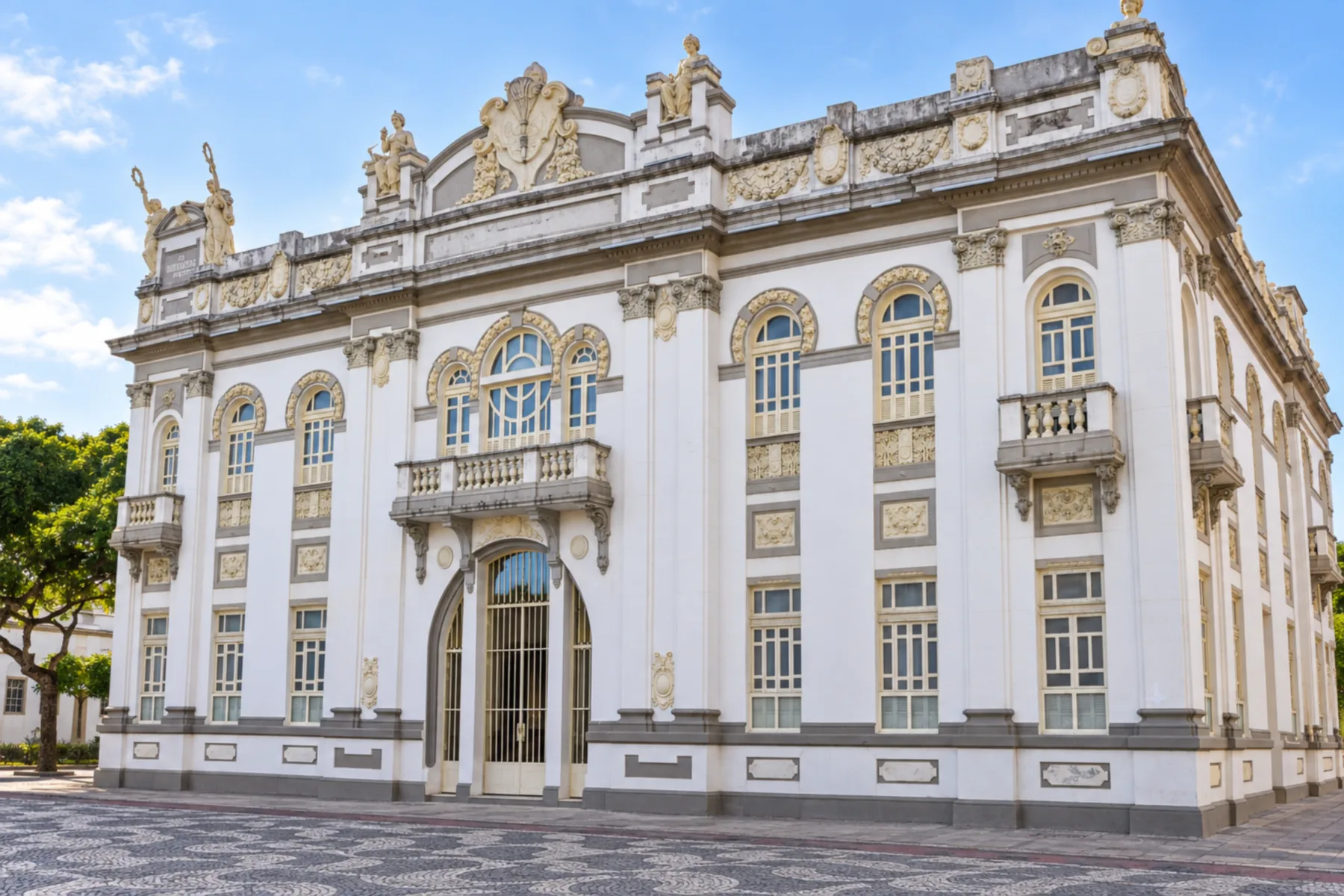
Today, the bridge is a viewpoint over the river. From there you can see boat traffic, Barra dos Coqueiros on the opposite bank, and at late afternoon the light lowering over the water. Behind it lies Fausto Cardoso Square, with the Olímpio Campos Palace-Museum.
A short walk along the riverbank connects the bridge to Largo da Gente Sergipana and the Museum of the Sergipana People, and the streets behind lead to the Cathedral and the Tourism and Handicraft Center.
Before you go
Practical information
Cidade Turismo reviews its information regularly, but something may have changed. Check with the place before planning your trip.
How much time to set aside
15 to 30 minutes; longer if combined with the squares and museums of the historic center.
Best time
All year. Late afternoon, with lower light over the Sergipe River, or early morning before the strong sun.
How to get there
In front of Fausto Cardoso Square, on the avenue along the Sergipe River, in Aracaju’s center. From Atalaia Waterfront, it’s about 10 km by car, taxi, or bus to downtown; from there, everything is within walking distance.
Tip
Do a walking itinerary through the center: Emperor’s Bridge, Olímpio Campos Palace-Museum, Cathedral, Tourism and Handicraft Center and, following the riverbank, Largo and the Museum of the Sergipana People. Bring water and a hat.
Your questions
Frequently asked questions about Emperor Bridge
Why is it called Emperor’s Bridge?
Because it was built in 1859 as a landing pier for the steamer that brought Emperor Dom Pedro II and his entourage to Aracaju. The name remained even after renovations.
Does the Emperor’s Bridge cross the Sergipe River?
No. It is a platform that extends over the river, in front of Fausto Cardoso Square, formerly used as a disembarkation point and now as a viewpoint.
Where is the Emperor’s Bridge located?
In Aracaju’s historic center, on the bank of the Sergipe River, in front of Fausto Cardoso Square and near the Olímpio Campos Palace-Museum.
What to do near the Emperor’s Bridge?
Visit the Olímpio Campos Palace-Museum, the Metropolitan Cathedral, the Tourism and Handicraft Center and, along the riverbank, Largo and the Museum of the Sergipana People.