Mucugê preserves historic houses and traces of the diamond era at the foot of Serra do Sincorá. The Byzantine Cemetery, the stone streets and outings to rivers and trails reveal the town's identity.
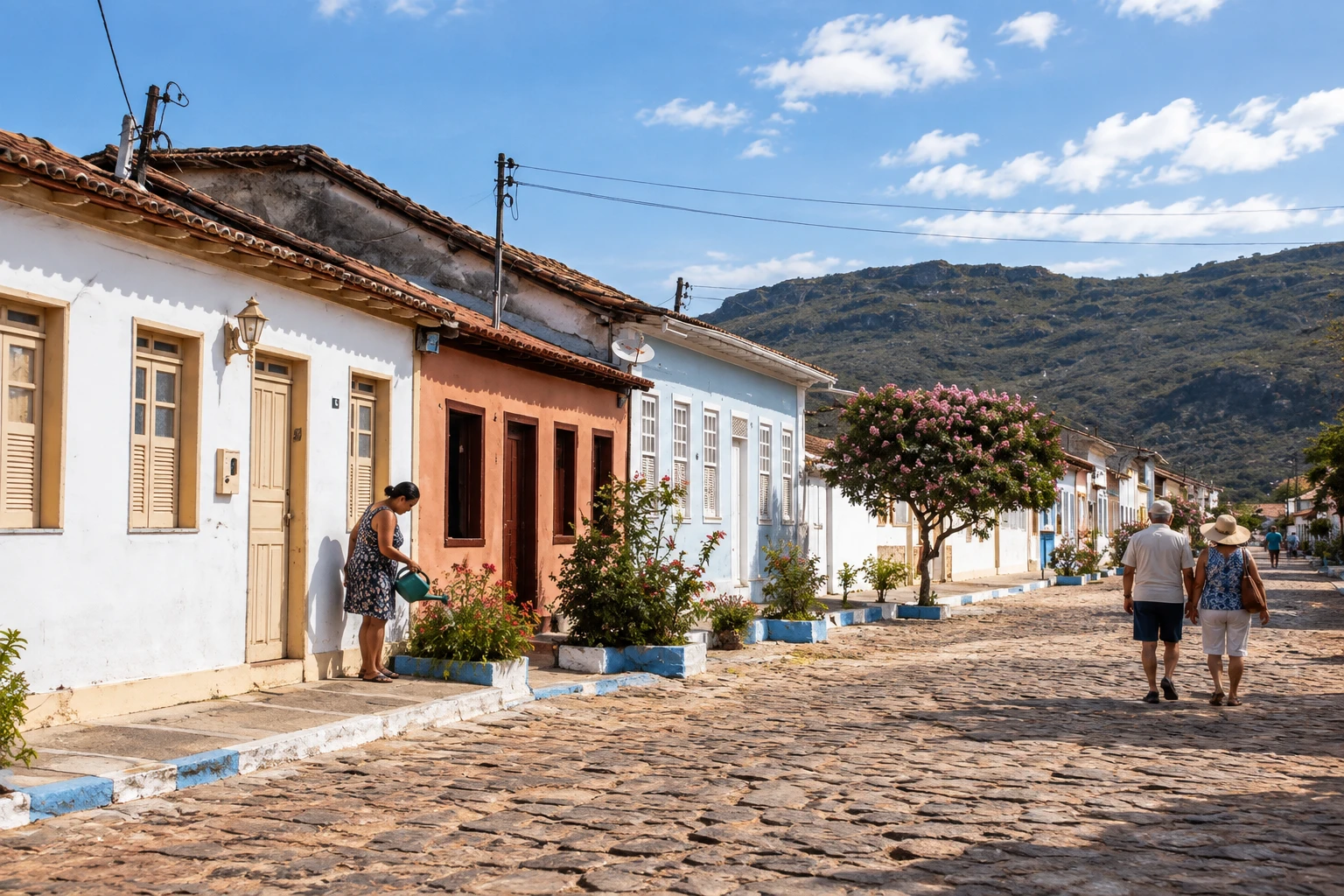
Founded after diamonds were discovered in the local river in 1844, the town ensemble was protected by Iphan (the national heritage institute) in 1980. It includes about 300 single-story houses and 10 two-story townhouses of adobe or stone from the second half of the 19th century, laid out in an L shape.
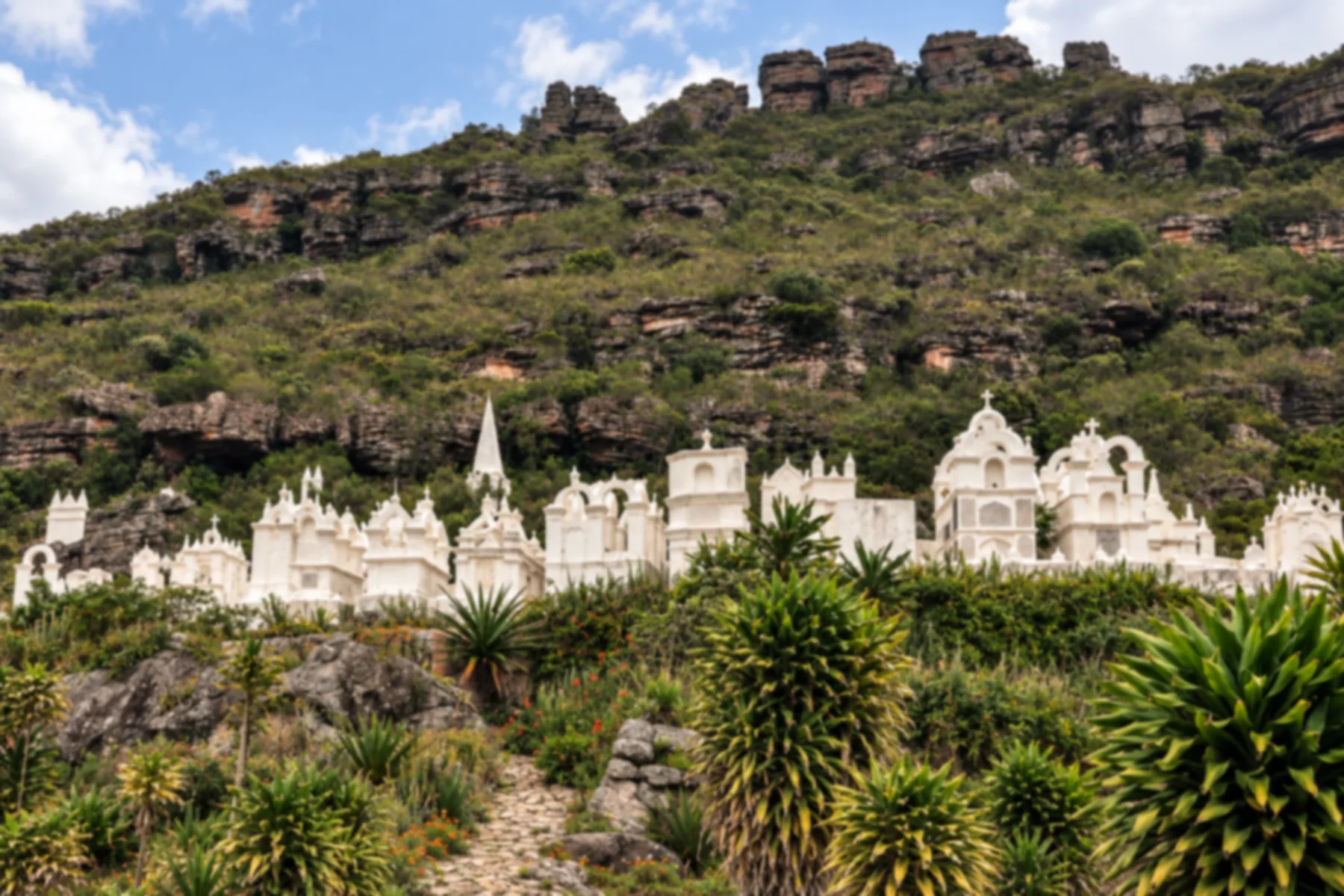
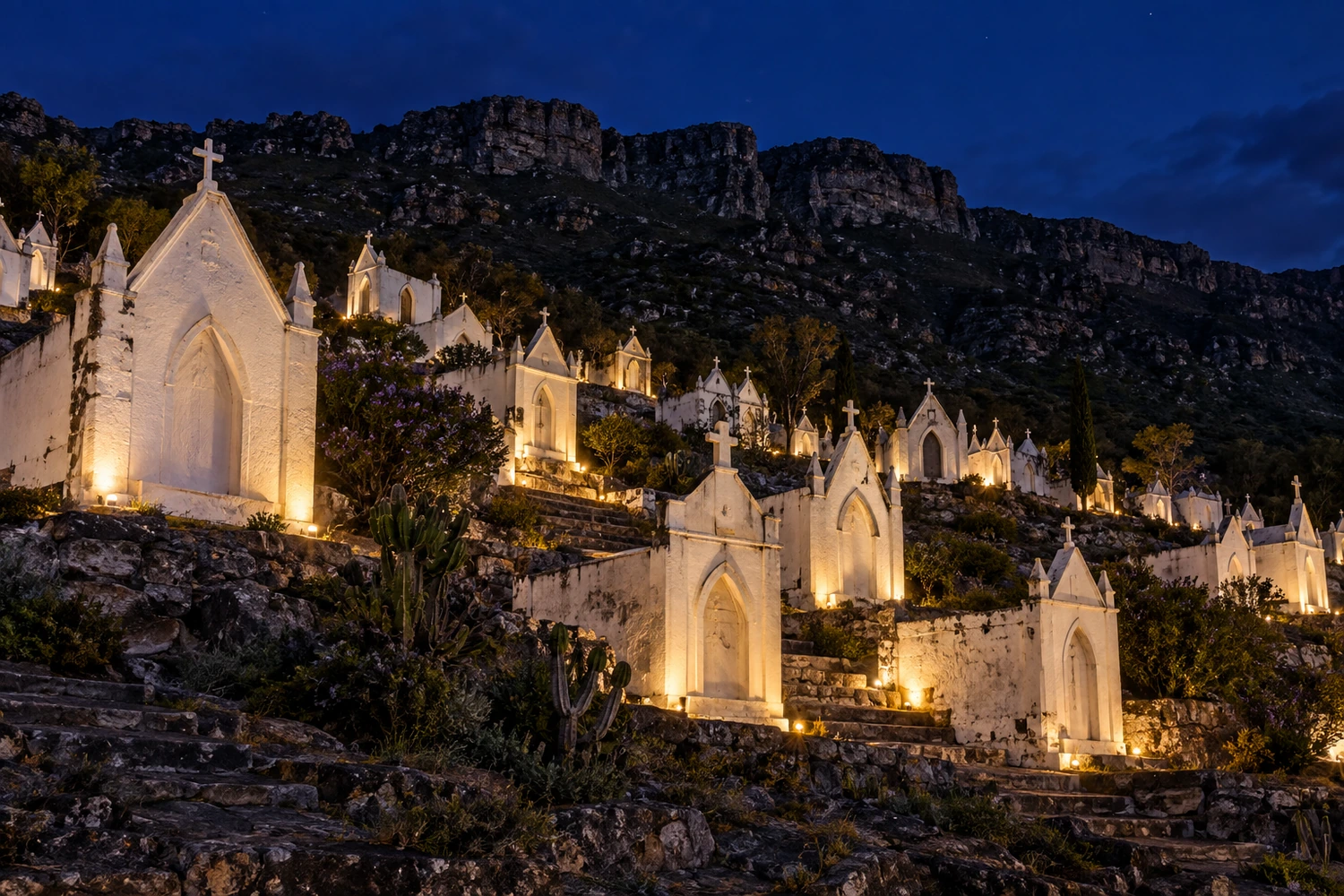
Built between 1854 and 1886 after a cholera epidemic, it has white neo-Gothic tombs, with domes that recall Byzantine architecture, set into the rocky hillside. At night, the tombs are lit in a bluish light.
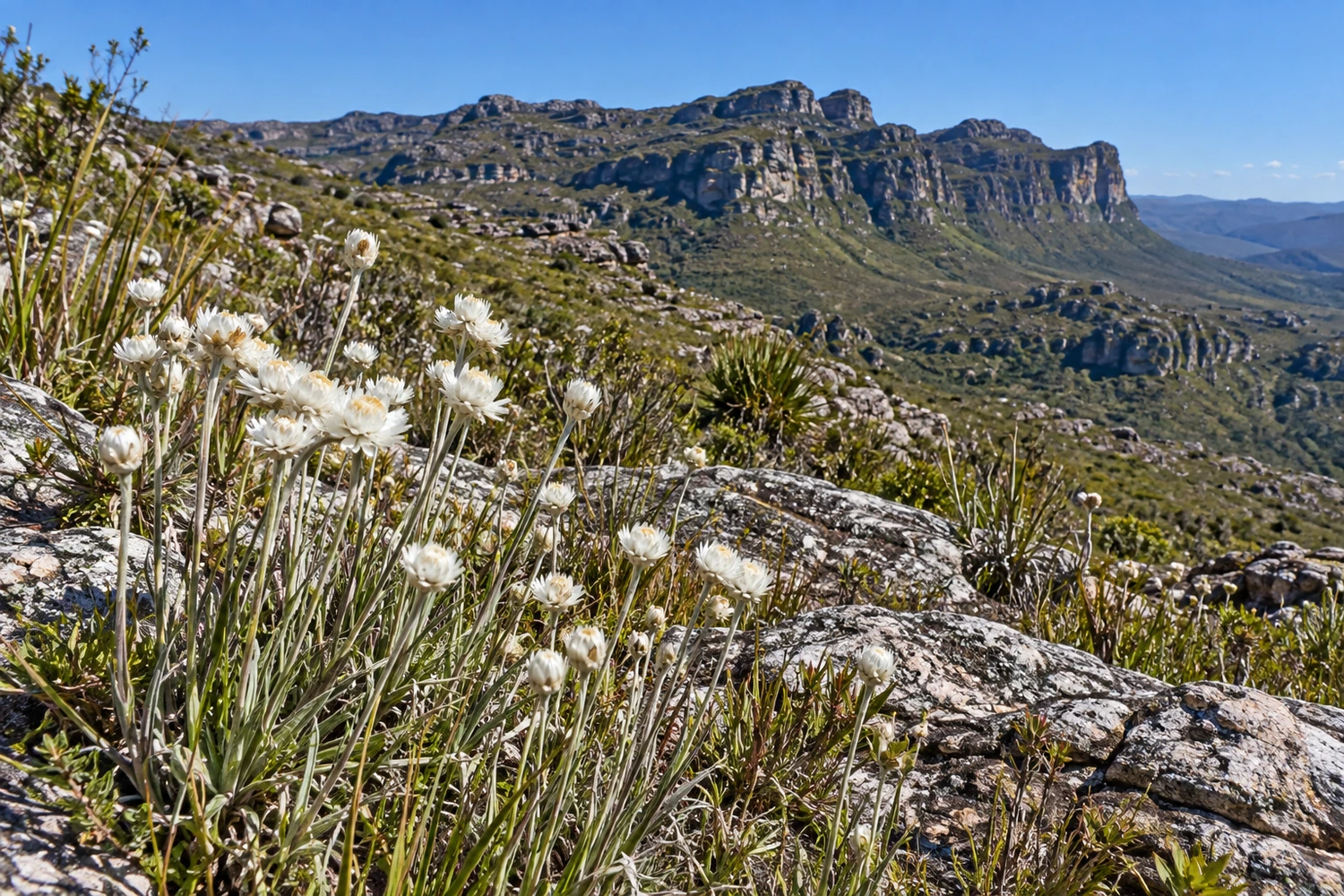
A 270-hectare area where Projeto Sempre Viva, in partnership with UEFS (a state university), studies the reproduction of an endemic, endangered species of sempre-viva (everlasting flower). The park's trails lead to the Tiburtino and Piabinha waterfalls.
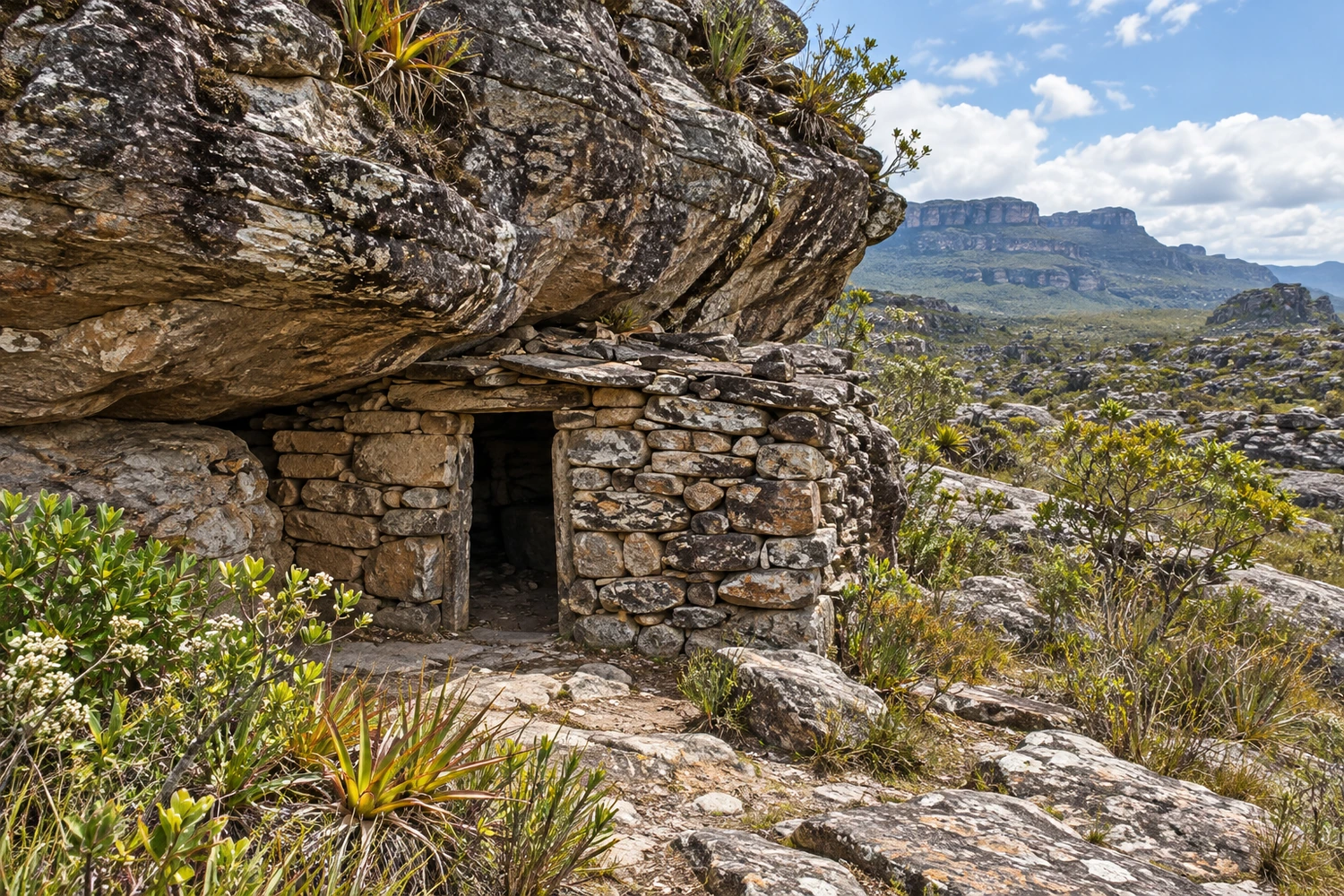
Set in a restored former miners' shelter inside the municipal park, it displays tools, clothing and diamond replicas from the mining era. Access is via the Trilha dos Polinizadores, a flat 400-meter path.
Approximate distances. Check flights and bus, train or boat schedules before you travel.
Mucugê is 147 km from Lençóis, on a paved road, and about 450 km from Salvador. There are buses from Salvador; some sources mention a change in Itaberaba. Nearest airport: Lençóis; the main one is Salvador.
How many days
Two days cover the center, the cemetery, the municipal park and Cachoeira das Andorinhas. With one more, you can go to Igatu or to Buracão, in Ibicoara, 77 km away.
When to go
From April to October, with dry trails. From June to August the nights are cold: bring a jacket. The São João festival, with traditional forró music, takes place around June 21 to 24. From November to March it rains more.
The seasons shown are the most usual ones; nature doesn't always follow the calendar.
Do you need a car?
In the historic center, no: you can walk. The municipal park and the Museu Vivo do Garimpo (mining museum) are a few kilometers away, on a paved road, and a car is more practical. For Igatu and Ibicoara, yes.
Suggested itinerary
An order that works
Built with the places on this page. No rush: it's paced so you have time to see them.
One day in Mucugê
Manhã
Historic Center
Start with the streets of adobe and stone houses, protected by Iphan (the national heritage institute).
Manhã
Cemitério Bizantino (Santa Isabel)
On the rocky hillside, on the way out of town. Half an hour is enough.
Tarde
Municipal Park (Projeto Sempre Viva)
Trails to the Tiburtino and Piabinha waterfalls, with swimming.
Tarde
Museu Vivo do Garimpo
Inside the park, along a flat 400-meter trail. It shows how people lived in the mining days.
Noite
Cemitério Bizantino (Santa Isabel)
Come back after dark, when the tombs are lit up.
2 days in Mucugê
Day 1
Manhã
Historic Center
The mining-era houses, at an easy pace.
Manhã
Cemitério Bizantino (Santa Isabel)
The white tombs set into the rock.
Tarde
Museu Vivo do Garimpo
In the municipal park, along the flat 400-meter trail.
Noite
Cemitério Bizantino (Santa Isabel)
Back at night, with the lighting.
Day 2
Manhã
Cachoeira das Andorinhas
A trail of about 3 km through rocky grasslands and old mining sites, to a wide pool for swimming.
Tarde
Municipal Park (Projeto Sempre Viva)
The Tiburtino and Piabinha waterfalls, inside the park.
Check before you go. Opening hours and days change, and places may close for renovations, holidays or events. This itinerary is a suggestion from Cidade Turismo, not a commitment: plan yours by checking directly with each place you intend to visit.
Before you go
Frequently asked questions
Does it get cold in Mucugê?
Yes, especially at night, between June and August. It is one of the coldest towns in the Chapada. Bring a jacket even outside winter.
Is the Byzantine Cemetery worth visiting at night?
It is worth going back after dark: the tombs are lit up and look different from what you see by day.
Is Mucugê a good base for the southern Chapada?
Yes. Ibicoara, home of Buracão, is 77 km away on a paved road, and Igatu is on the way to Andaraí. For Pai Inácio and the Iraquara caves, Lençóis is closer.
When is the São João festival?
Around June 21 to 24, with traditional forró music on cold nights. The town fills up at this time: book your lodging well in advance.


 Antarctica
 Argentina
 Bolivia
 Chile
 Colombia
 Ecuador
 Falkland Islands (Malvinas)
 French Guiana
 Guyana
 Paraguay
 Peru
 Suriname
 Uruguay
 Venezuela
 Austria
 Belgium
 Croatia
 Denmark
 Finland
 France
 Germany
 Greece
 Hungary
 Iceland
 Ireland
 Italy
 Luxembourg
 Norway
 Poland
 Portugal
 Slovakia
 Slovenia
 Spain
 Sweden
 Switzerland
 the Czech Republic
 the Netherlands
 the United Kingdom
 Turkey
 Bermuda
 Canada
 Greenland
 Mexico
 Saint Pierre and Miquelon
 the United States
 the Dominican Republic
 Japan
 Egypt
 South Africa
 Australia
 Fiji
 New Zealand
 Papua New Guinea