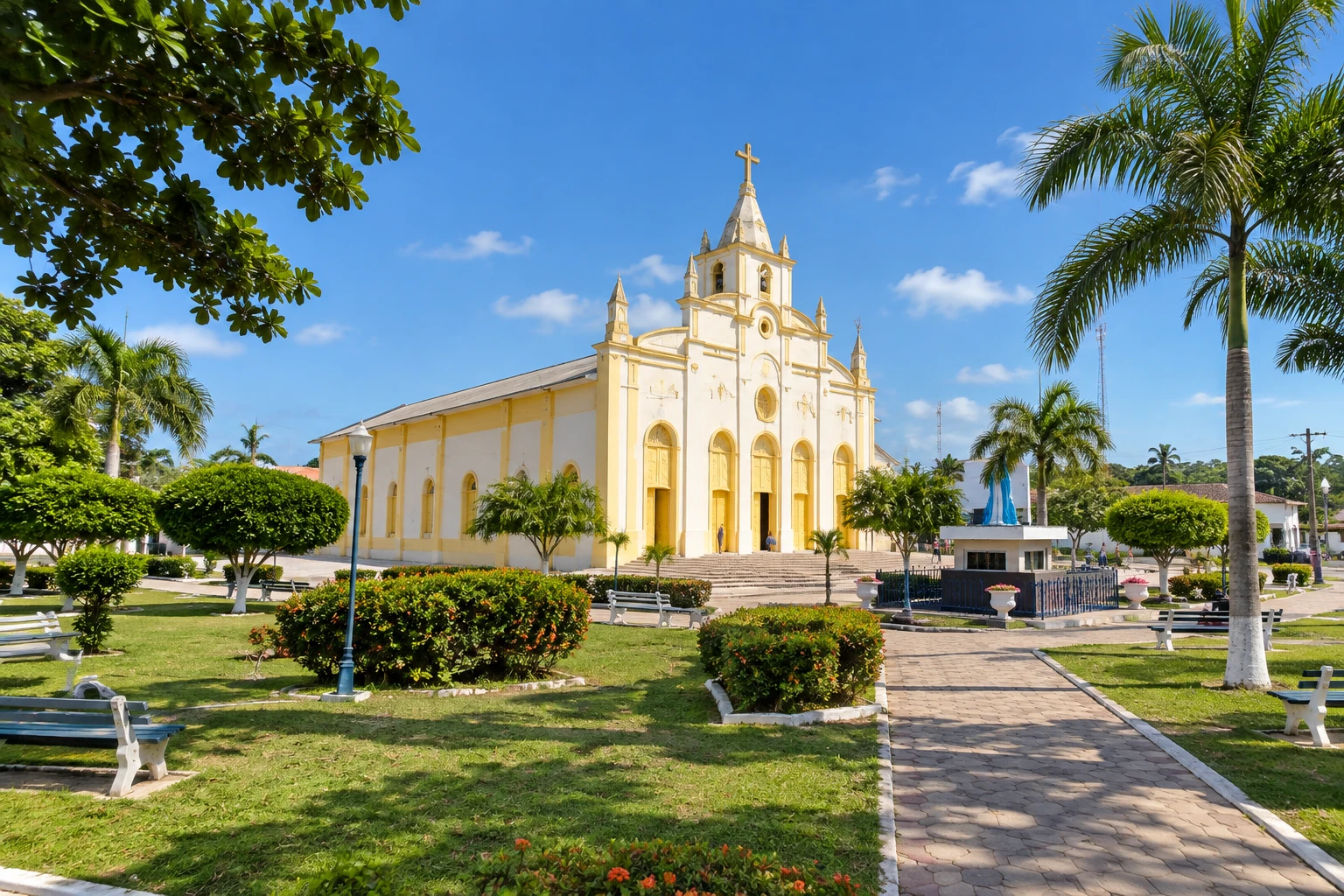
Salvaterra
Salvaterra combina praias e vestígios históricos na costa oriental da Ilha de Marajó. A vila de Joanes, os campos e as comunidades locais aproximam o visitante das paisagens e da cultura marajoara.
Antarctica
PA
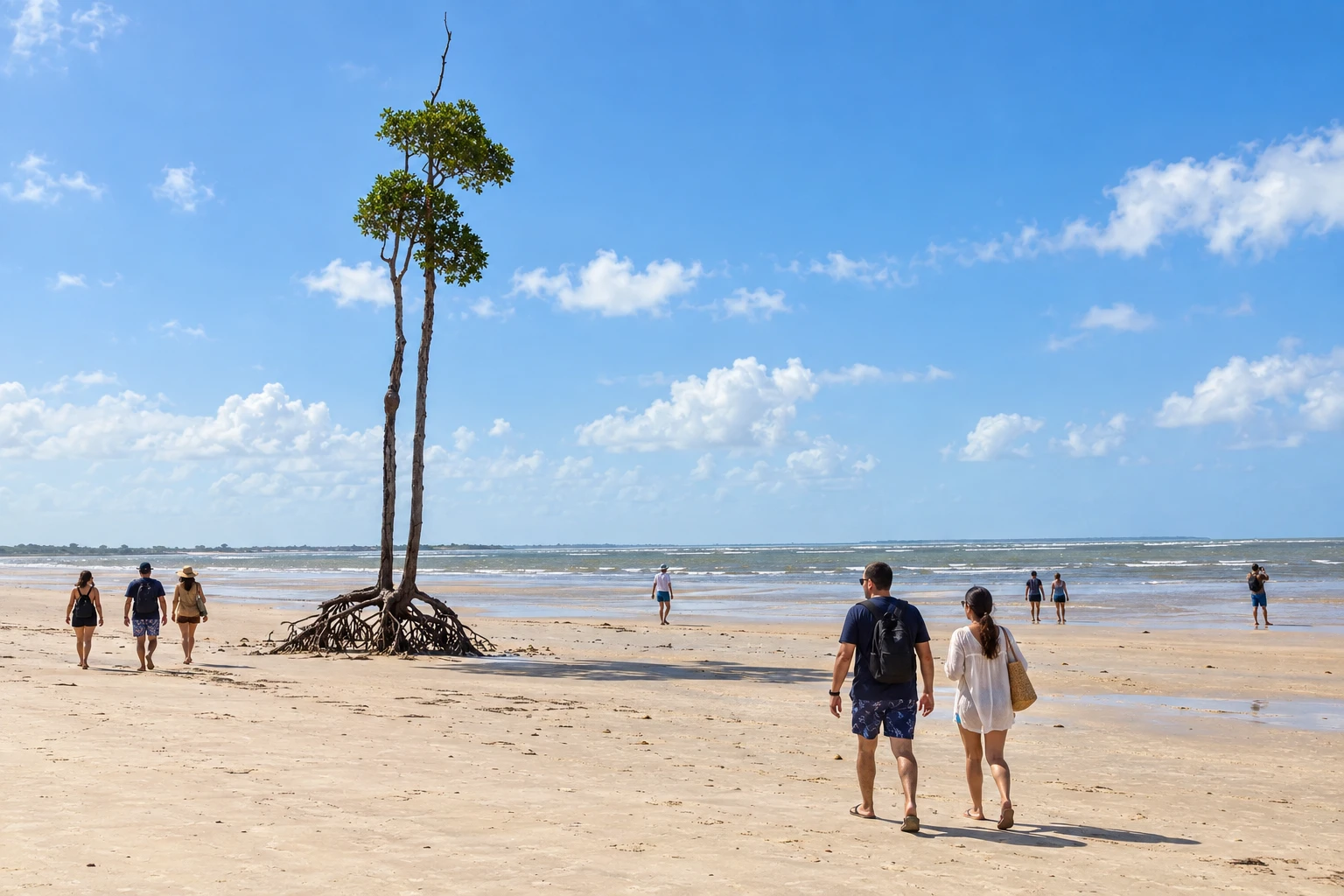
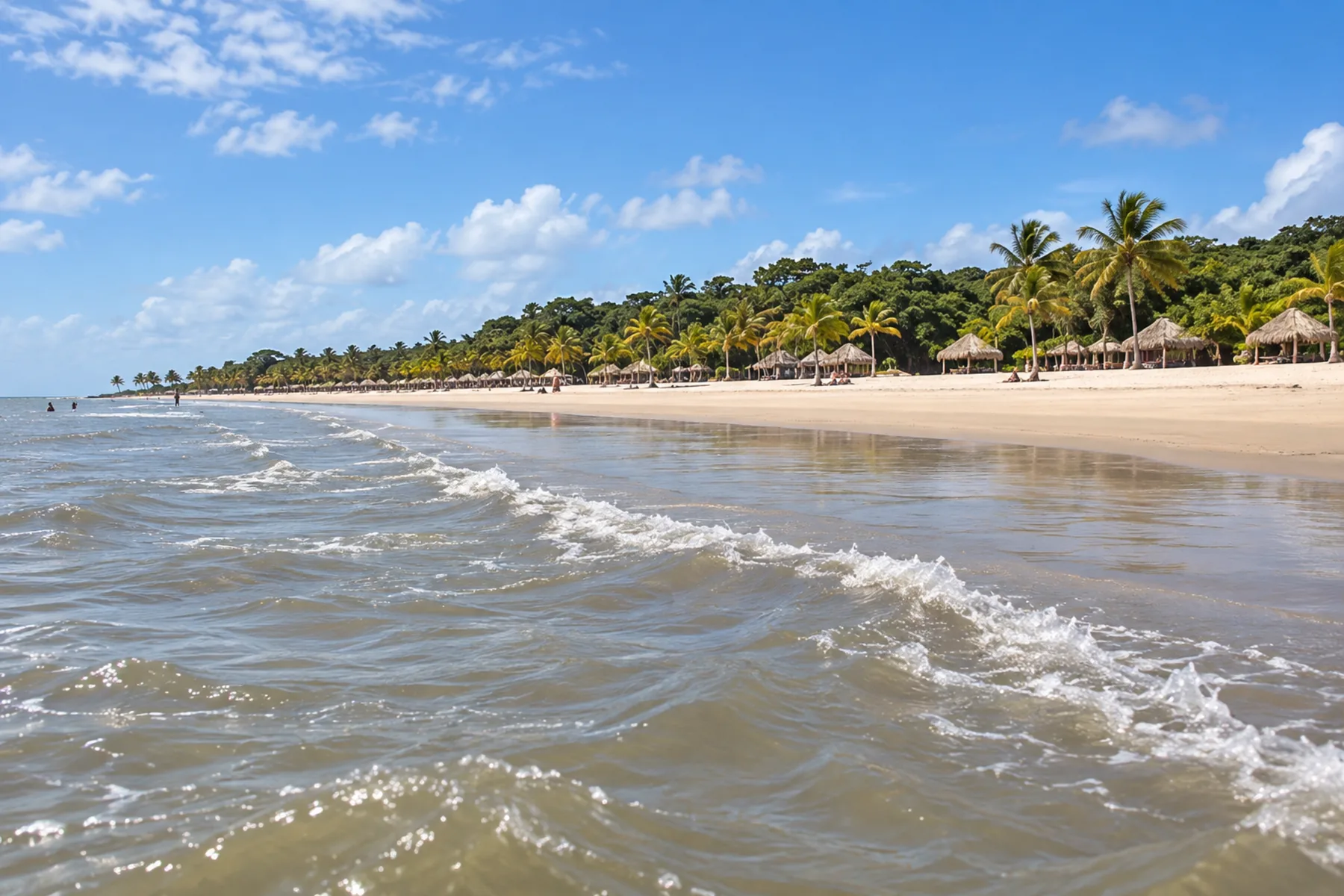
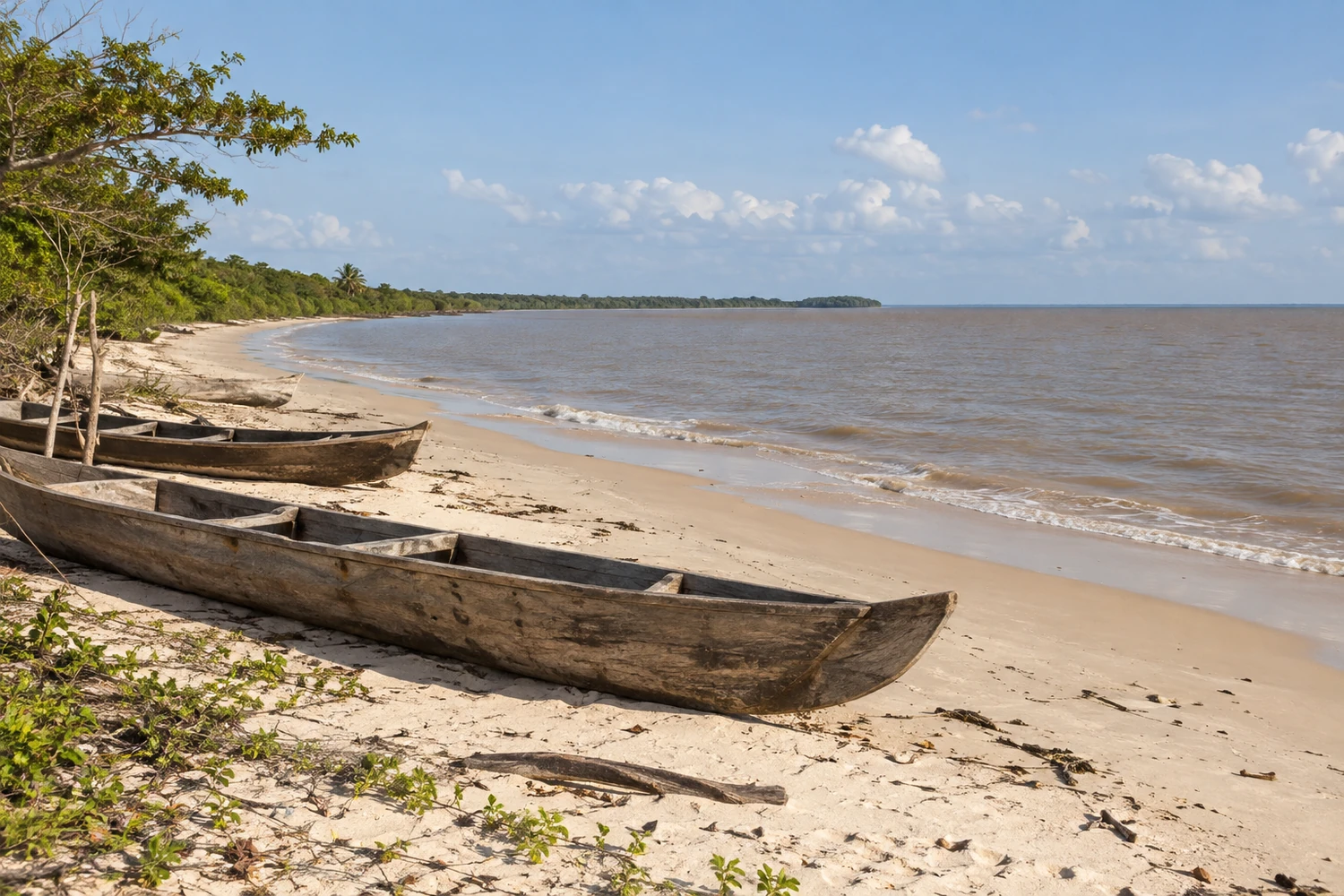
In the photo: Praia de Soure, Ilha de Marajó
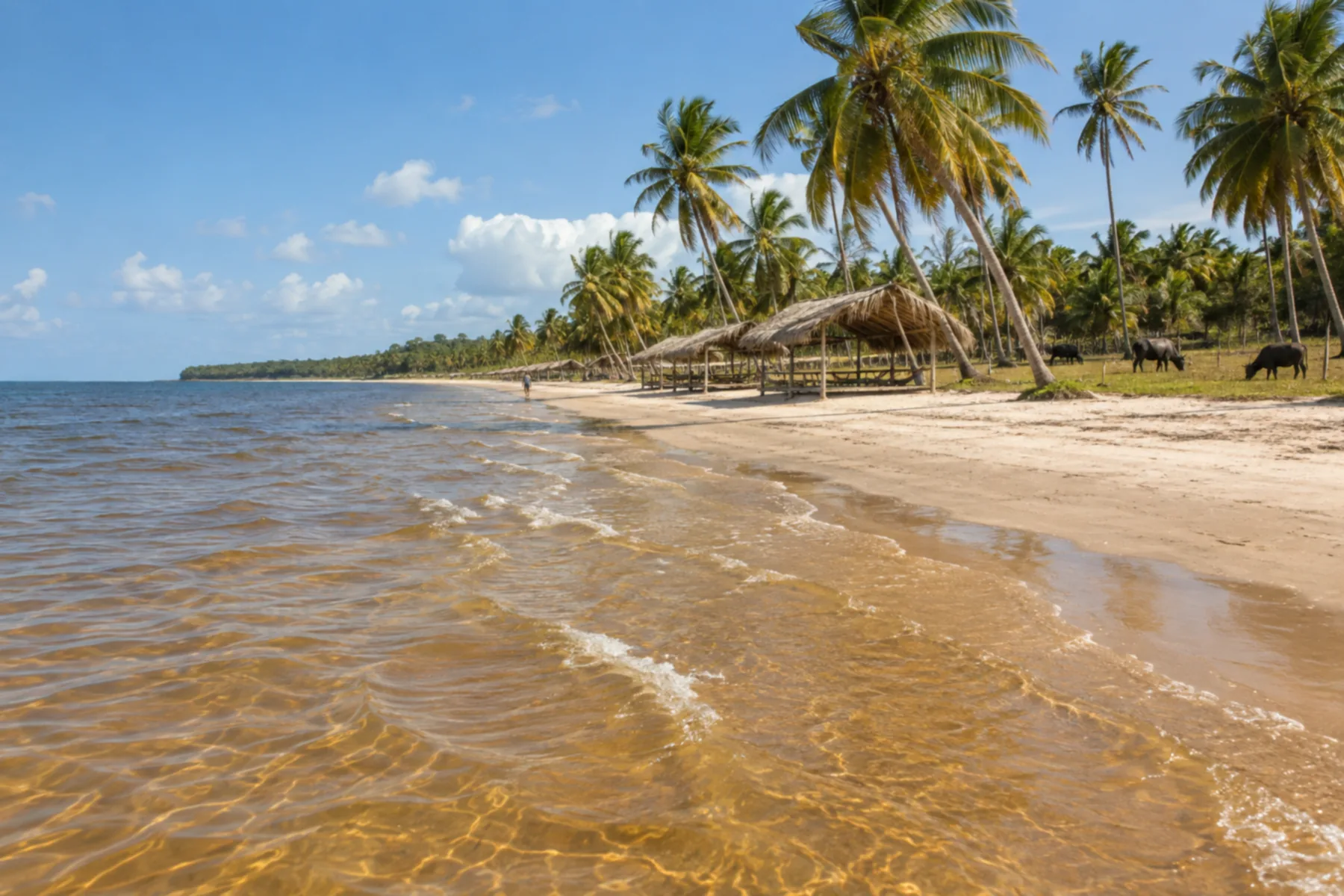
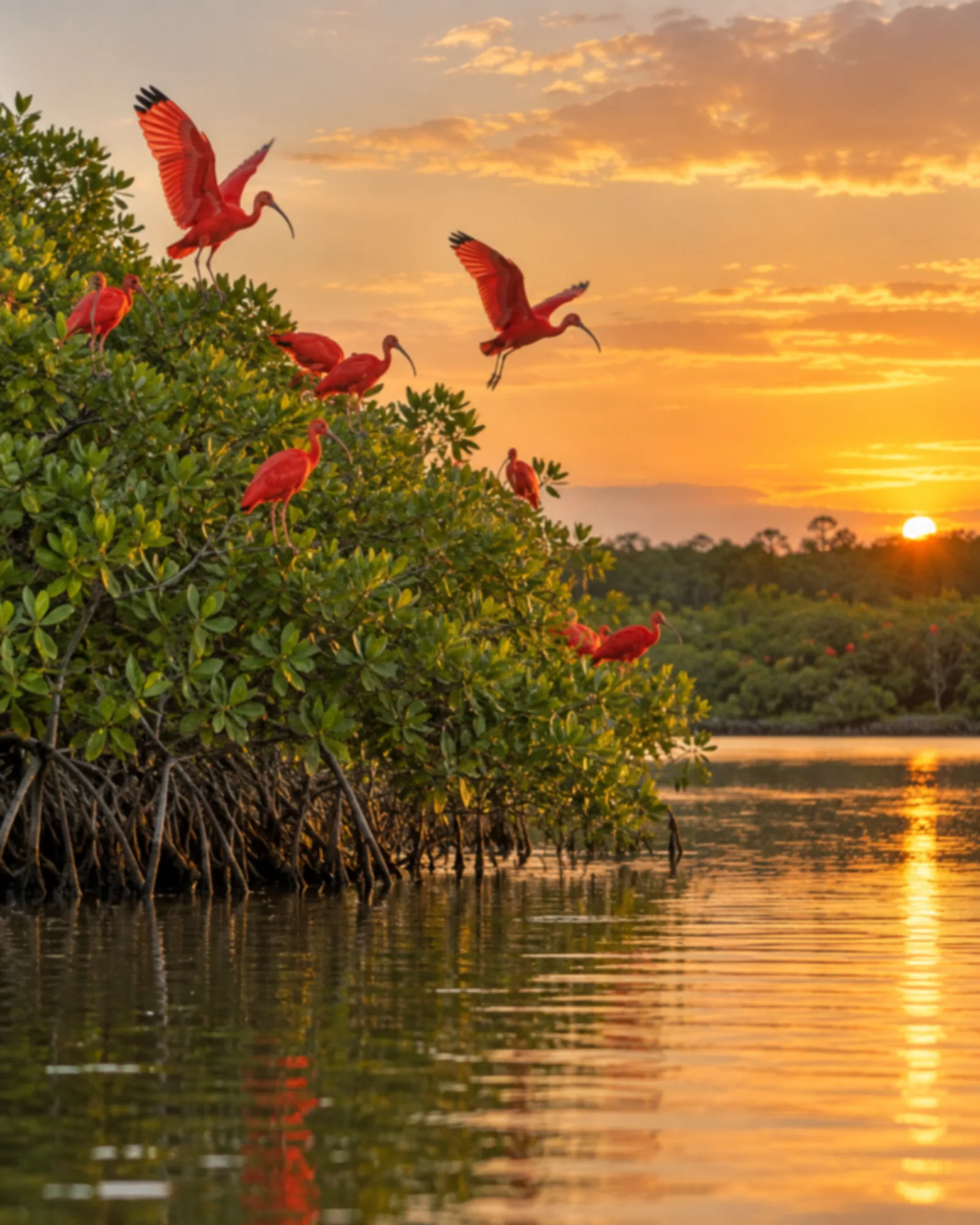
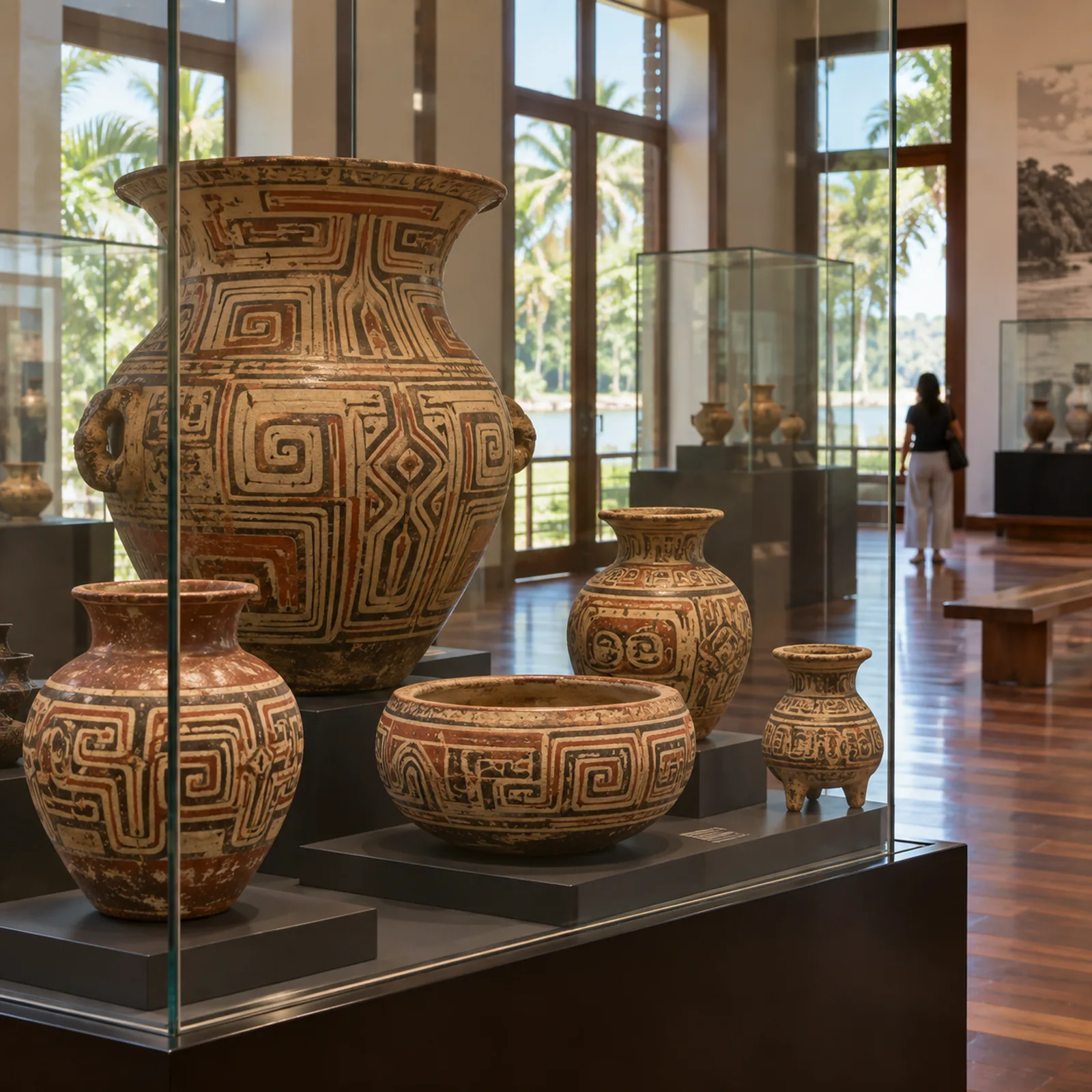
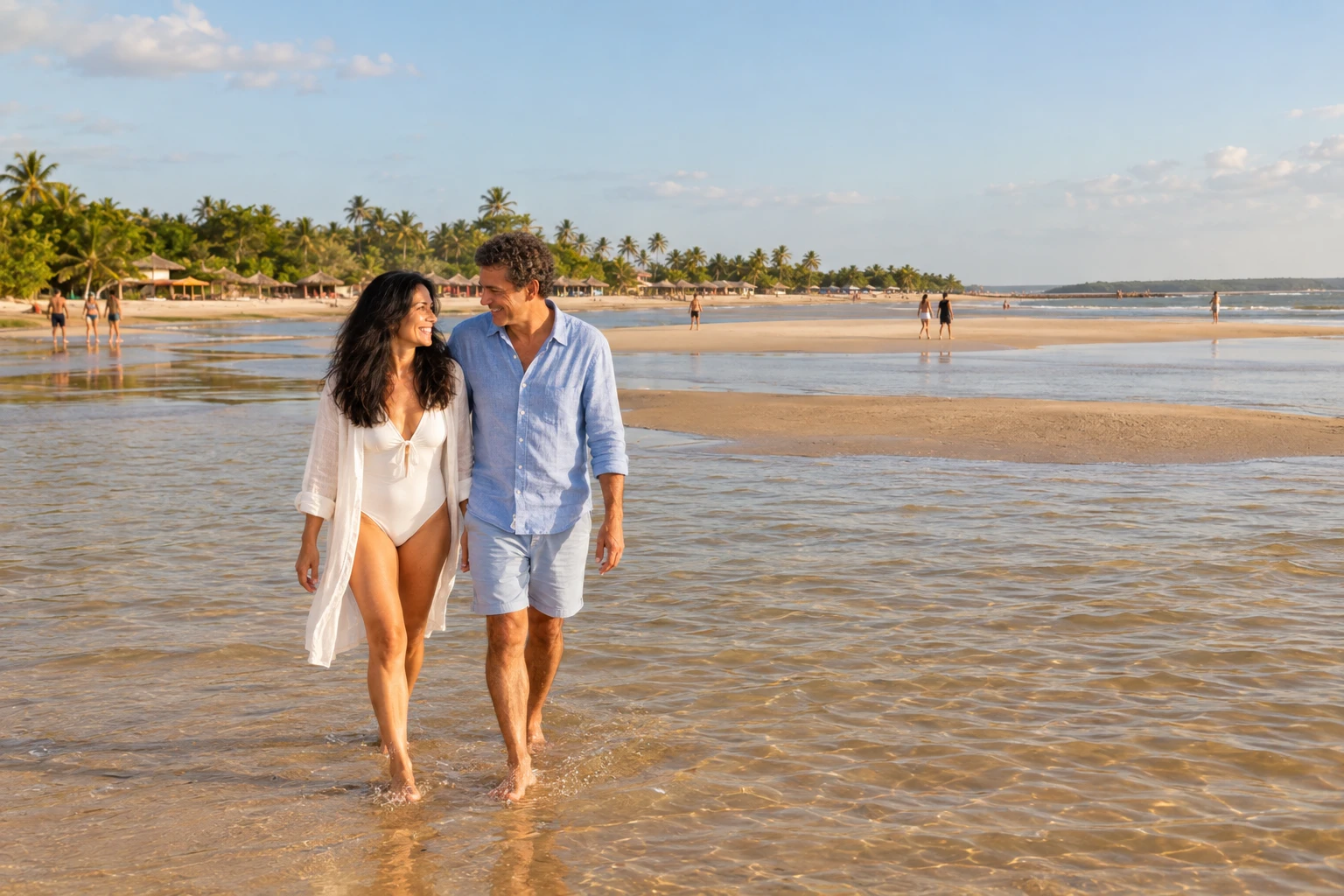
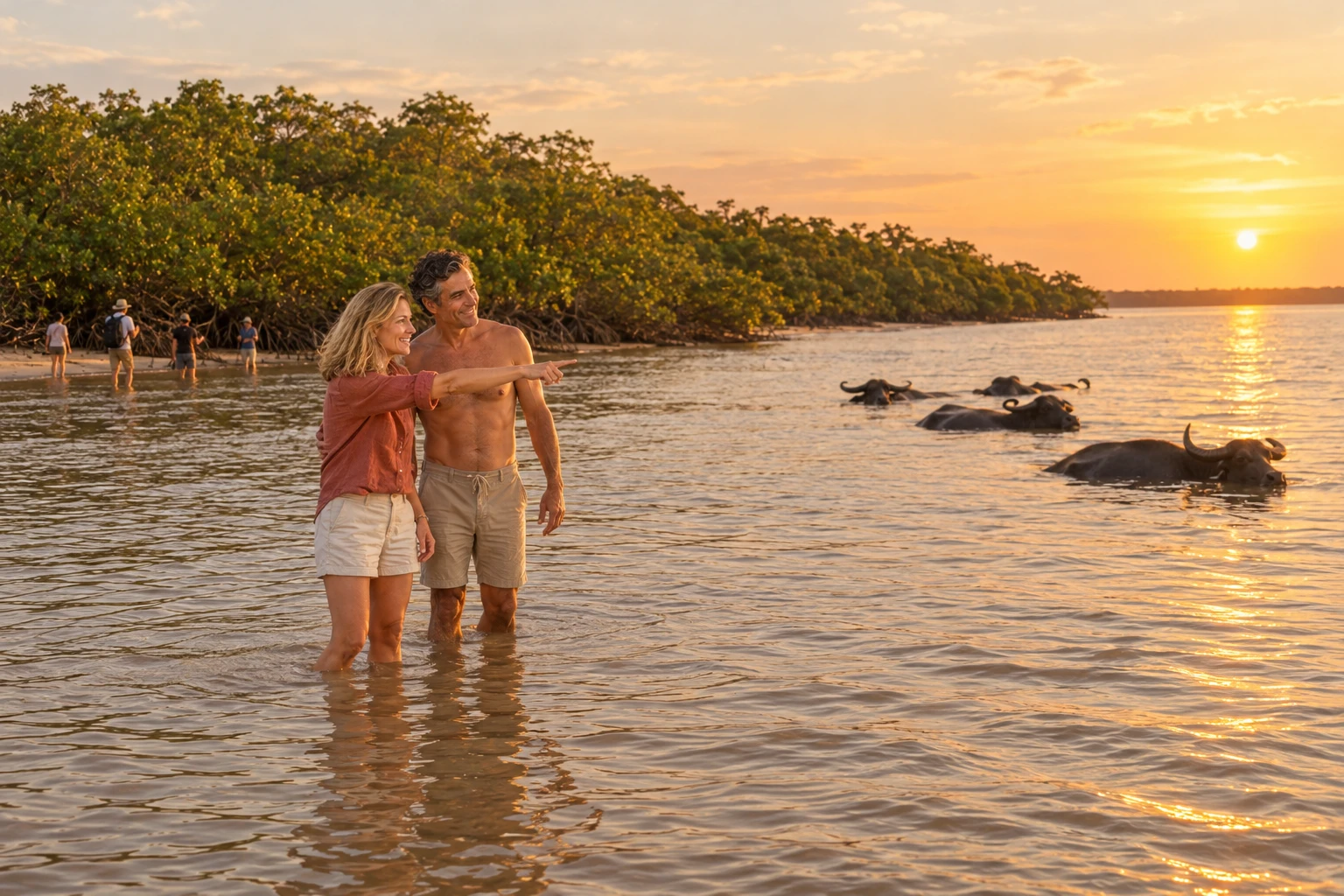
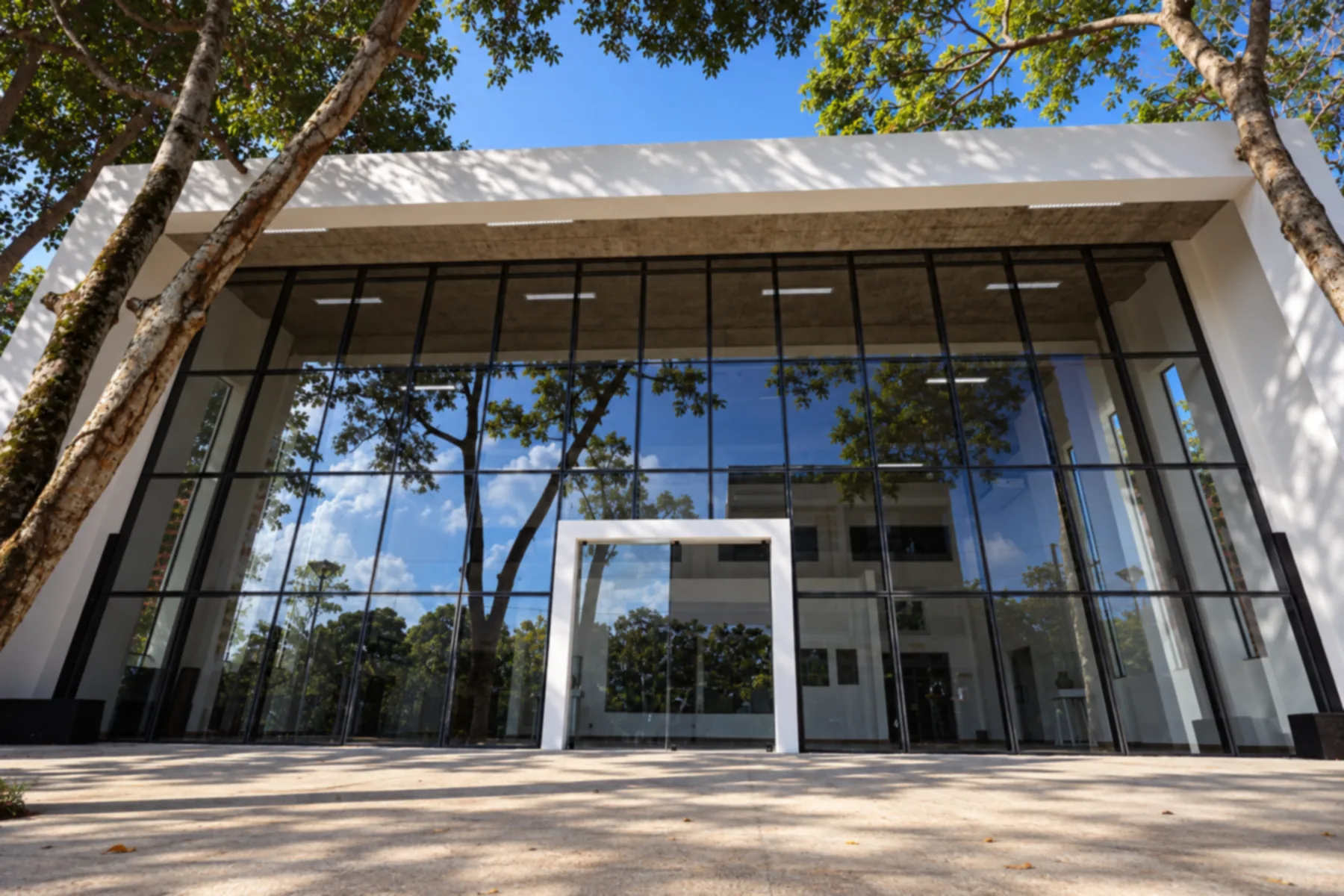
Illustrative images. The pictures in this guide are illustrations based on the real place, not photographs, and may differ from it.
Get to know the place
A maior ilha fluviomarinha do mundo tem búfalo andando na rua, praia de água salobra com manguezal e um ritmo que desacelera qualquer visitante. Em Soure e Salvaterra dá para tomar banho em igarapé cor de chá, comer filé de búfalo com queijo marajoara e comprar cerâmica inspirada nos povos que viveram ali há séculos. É a cara mais original do Pará.
This destination brings together 5 cities: Salvaterra, Soure, Cachoeira do Arari, Ponta de Pedras, Breves.
A look at the place
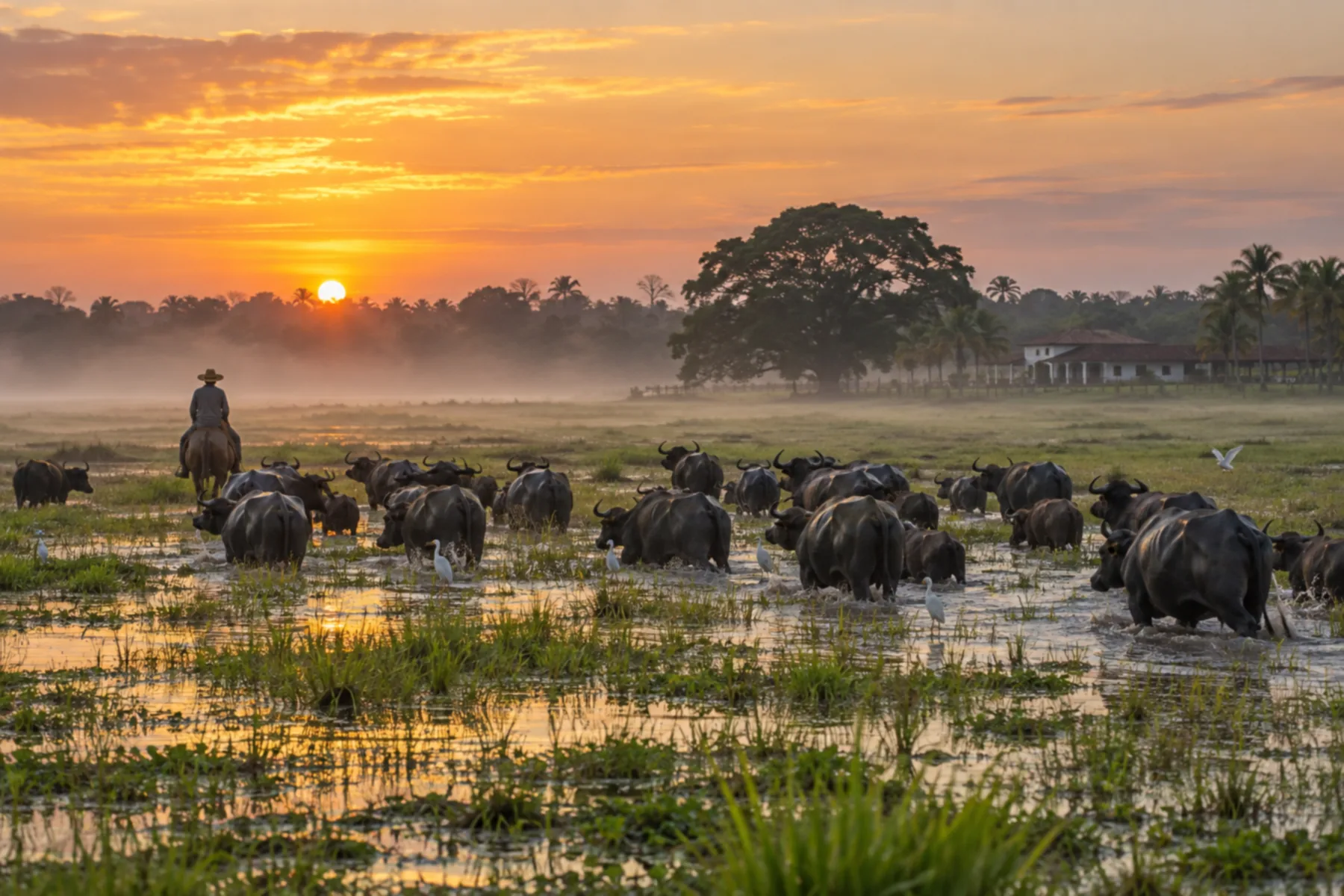
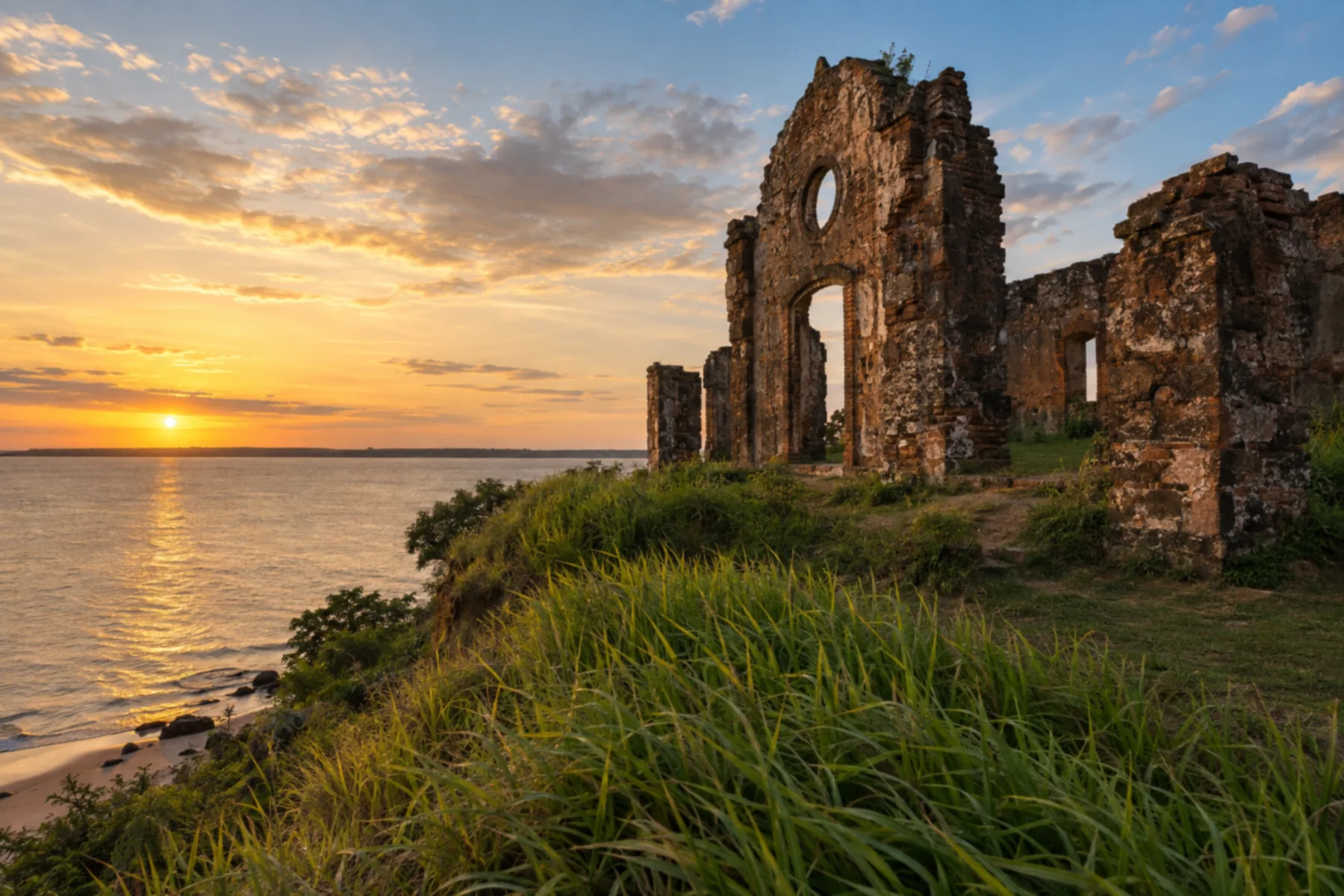
These pictures are illustrations based on the real place, not photographs. They may differ from the place.
Click the picture to enlarge it.
Travelers' photos
One destination, many paths
Start with one city or combine several in your itinerary.
Mapa: @svg-maps/brazil, CC BY 4.0
Aeroporto Internacional de Belém (BEL), in Belém
Voo até Belém (BEL) e travessia de lancha ou ferry pelo terminal de Icoaraci até Camará, em Salvaterra, seguindo por estrada até Soure.
Suggested arrival point: Salvaterra

Salvaterra combina praias e vestígios históricos na costa oriental da Ilha de Marajó. A vila de Joanes, os campos e as comunidades locais aproximam o visitante das paisagens e da cultura marajoara.

Soure reúne praias, manguezais e campos naturais na Ilha de Marajó. A paisagem do Pesqueiro e o cotidiano das comunidades revelam a relação entre as águas, a pesca e a cultura marajoara.

Cachoeira do Arari reúne campos marajoaras, vida ribeirinha e patrimônio cultural. O Museu do Marajó apresenta a história e os saberes da região, em diálogo com o cotidiano das comunidades locais.

Ponta de Pedras reúne paisagens de várzea e comunidades ribeirinhas no arquipélago do Marajó. A pesca, o açaí e o patrimônio religioso ajudam a conhecer a relação entre o município e suas águas.

Breves se desenvolveu às margens do Rio Parauaú, em uma região de ilhas e canais amazônicos. O movimento das embarcações e o patrimônio do centro revelam a presença dos rios na vida marajoara.
The local experience
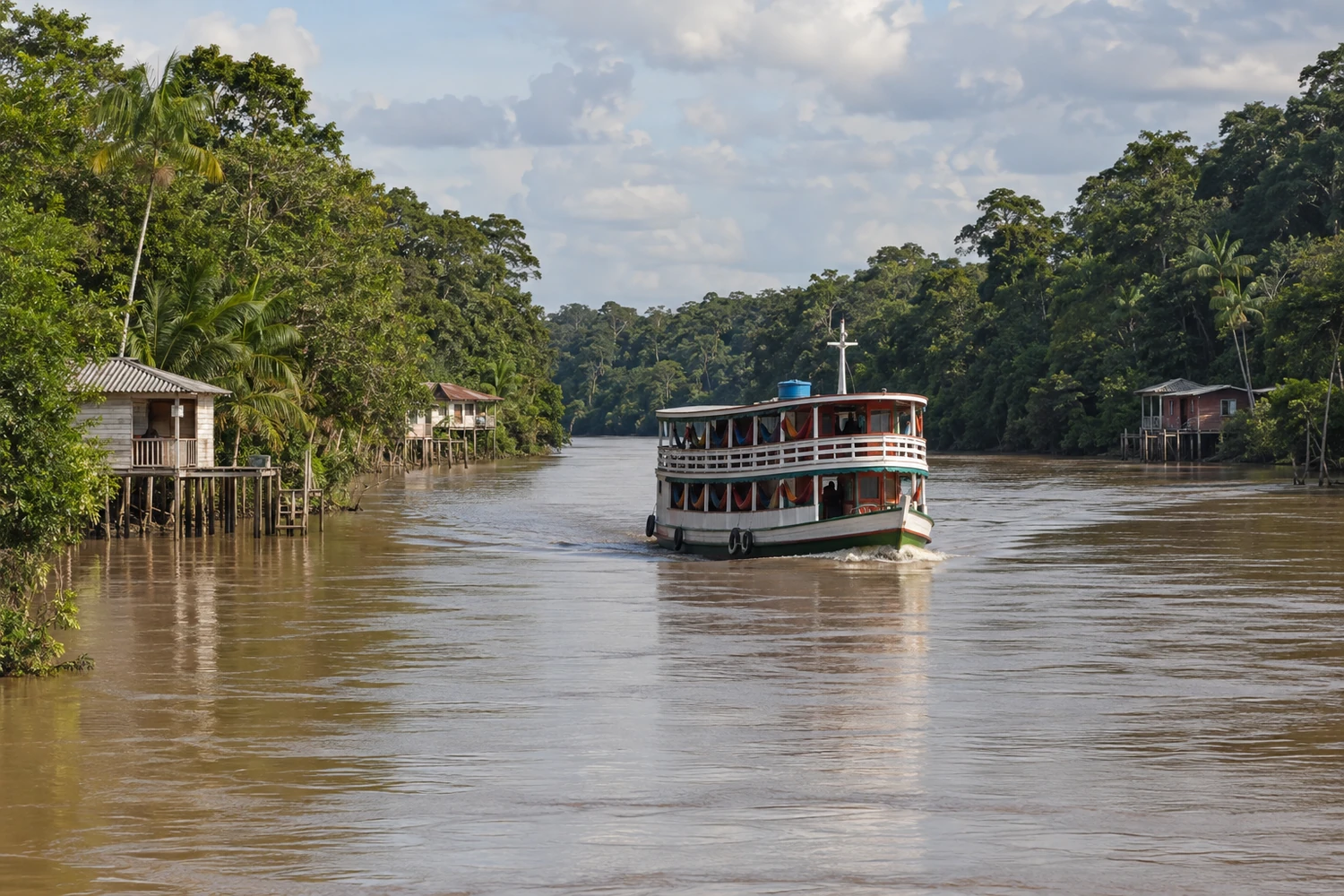
Conjunto de pequenos rios, furos e ilhas que liga o rio Amazonas ao rio Pará, é rota de embarcações que cruzam o arquipélago do Marajó. A navegação revela florestas de várzea e comunidades ribeirinhas nas margens.
Banhada pelas águas doces da baía do Marajó, estende-se por cerca de 2 km e fica a 10 km do centro. O nome da praia inspirou a primeira denominação da cidade, mais tarde substituída pela atual, referência às pedras do local.
Praia larga com coqueiros, barracas de peixe frito e água morna de cor amarelada. É a mais movimentada e bem estruturada da ilha.
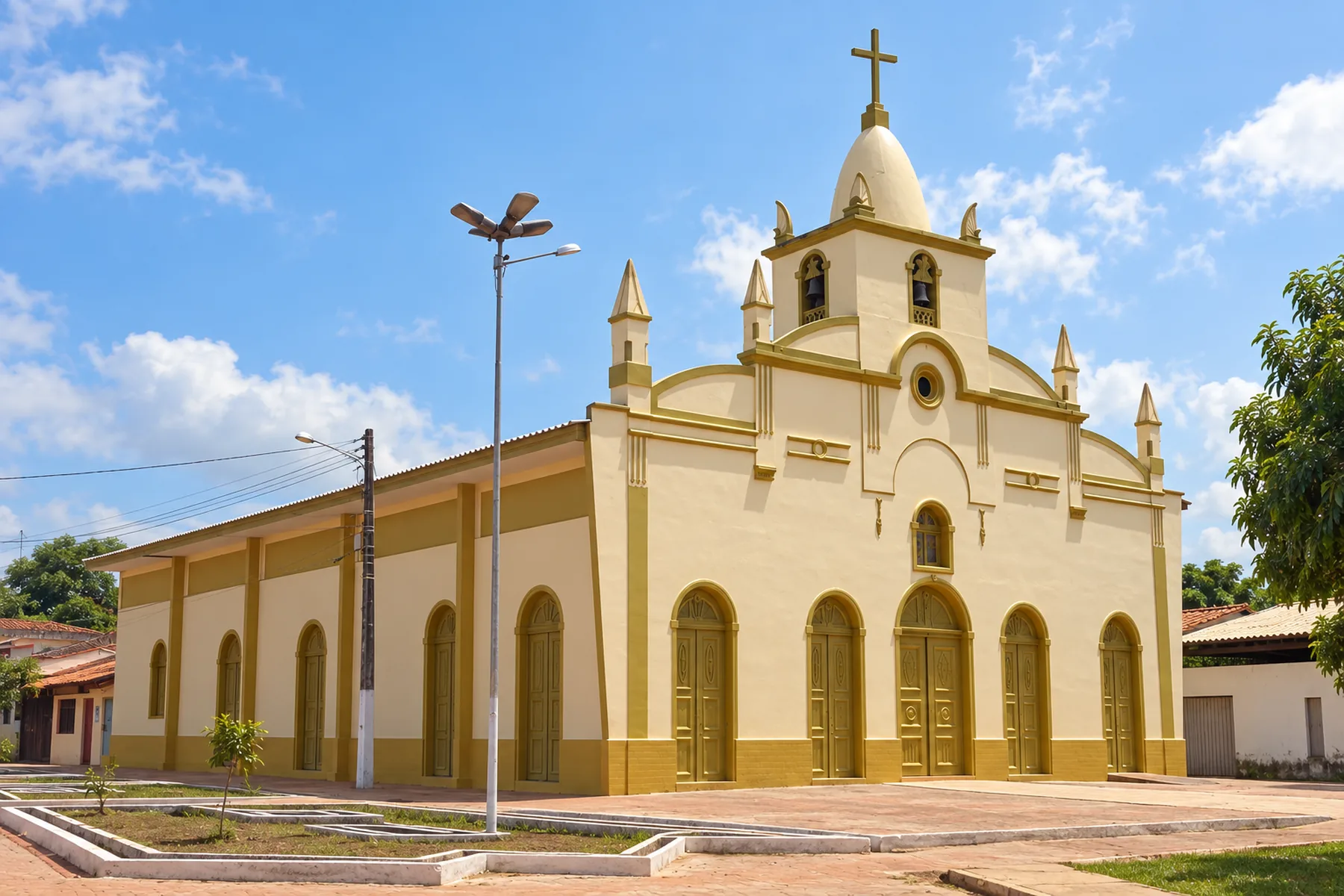
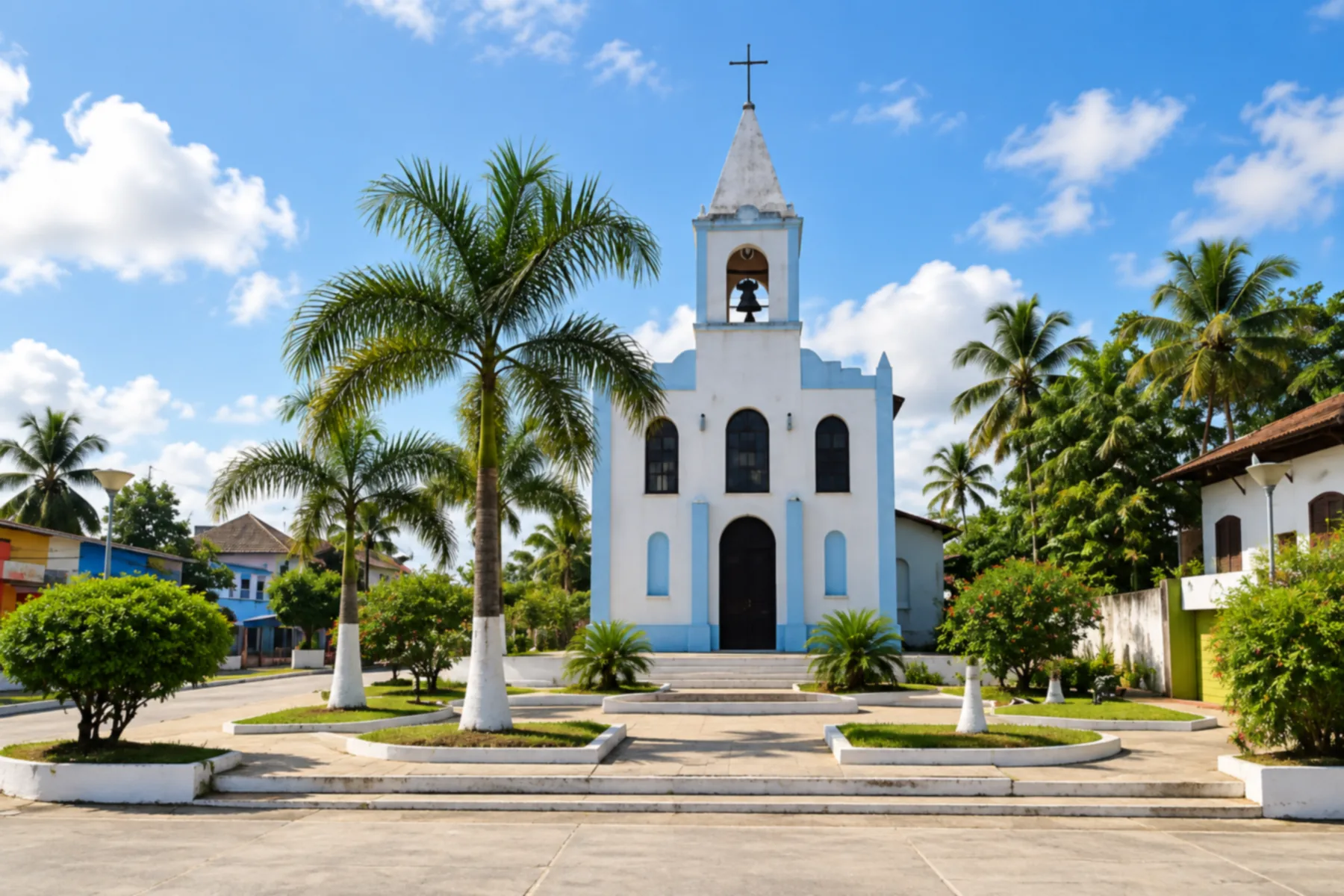
Construída em 1923, é a sede da paróquia criada em 1747 que deu origem ao município. No terceiro domingo de dezembro, recebe o Círio de Nossa Senhora da Conceição, procissão em honra à padroeira.
To choose before you go
Where each tour starts, how long it takes, how it is done, what is included and the price range.
Fazenda São Jerônimo is at km 3 of the Soure–Pesqueiro road. The property is private and the tour is a guided circuit. The route combines a trail through the forest, a canoe ride along the igarapé, a walk on a suspended boardwalk in the mangrove and a stop at Praia do Goiabal, a river beach with no commercial facilities, inside the farm. There is also buffalo riding, with a staff member accompanying each group. Those who do not want to ride can walk alongside the animals. There is also a version with swimming alongside the buffalo. It has its own rules, such as a minimum age, and depends on the tide. The order of the stages changes according to the tide of the day, and the farm determines the direction of the circuit. At the end, the farm may serve regional fruit juice. Lunch at the manor house is by reservation and availability must be confirmed. The circuit is easy and often welcomes families with children.
Stops: Fazenda São Jerônimo, Igarapé do Tucumanduba, Praia do Goiabal, Suspended boardwalk in the mangrove.
Includes: Farm guide, canoe, trails and buffalo riding. Swimming with the animals may have an additional cost. Transport to the farm and lunch are usually paid separately. Check the current price list with the farm.
Tip: Book in advance, because the visit depends on reservation and the tide. Bring insect repellent, sunscreen, light clothing and footwear that can get wet. Arrange the return with the taxi driver or moto-taxi driver, because the farm is outside the town center. If you prefer not to use animals you can request only the trail and the canoe; confirm when booking.
Best time: From July to December, with less rain. The section on the water depends on the tide and the farm.
R$290 · per person (standard circuit) · official priceFazenda Mironga produces cheese, dulce de leche and butter made from buffalo milk. The Vivência Mironga is a guided visit led by the farm hosts. It starts with a conversation circle about raising buffaloes on the island. Next comes the milking of a buffalo and contact with the animals, with riding optional. The visit ends at a tasting table with cheeses, dulce de leche, butter, tapioca, homemade bread, coffee and regional juices. It is a farm visit. travelers report that it does not include a visit to the cheese factory. The experience is relaxed and works well for children. The farm also has a shop with its own products to take home. You must book in advance. At some times there is a horse-drawn carriage instead of the ride, and the milking depends on the time of day.
Stops: Fazenda Mironga, Empório Mironga.
Includes: Conversation circle, milking, contact with the buffaloes and tasting. Transportation to the farm and purchases at the shop are paid separately. Check the current price list with the farm or the agency.
Tip: Book in advance, because the visit requires a reservation. Many pousadas and agencies in Soure handle the booking. The outing pairs well with an afternoon, at the end of the day, after Praia do Pesqueiro. Bring cash or Pix for the shop. Ask whether the required minimum group size affects the price.
Best time: All year; from July to December there is less rain.
The boat leaves Vila do Pesqueiro and follows igarapés to the Igarapé do Poço Encantado. This stretch is a mangrove tunnel with aerial roots. Along the way, the boatmen point out birds such as guarás and herons and explain the mangrove vegetation. There is a stop for swimming in the river. The trip usually ends at Comunidade do Céu, within the Reserva Extrativista Marinha de Soure, and at Praia do Céu. There are few restaurants there, and lunch is usually paid separately. The route depends on the tide and the time is arranged with the boat operator. It can be done with agencies from Soure or with local boatmen from the village, who also do just the crossing. The return can be by boat or by land, arranged when booking.
Stops: Vila do Pesqueiro, Igarapé do Céu, Igarapé do Poço Encantado, Comunidade do Céu, Praia do Céu.
Includes: Boat and local driver; the stop for swimming is usually included. Lunch in the community and transport from the town to Vila do Pesqueiro are paid separately. Check the current rates table with the operator.
Tip: Ask about the tide times when booking. Bring insect repellent, sunscreen, swimwear and a towel. Arrange in advance how the return will be, since cell reception may be unreliable.
Best time: From July to December, when it rains less.
Fazenda Bom Jesus is a property of flooded fields, with a landscape that resembles várzea areas. The tour is a guided walk through the farm, without a canoe and without buffalo riding. The guides talk about fauna, flora and the difference between the dry and rainy seasons. Buffaloes, horses, capybaras, herons, spoonbills and guarás (scarlet ibises) usually appear, and, with luck, monkeys and caimans. The tour takes place in the afternoon and ends at dusk, when the guarás return to roost in flocks. At the end there is a regional snack featuring dairy products made from buffalo milk. The visit requires booking, and many pousadas in Soure book the tour and transportation.
Stops: Fazenda Bom Jesus.
Includes: Guide and a regional snack at the end. Transport to the fazenda may be included by pousadas and agencies, or paid separately. Check the current table for the fazenda.
Tip: Book in advance, preferably through the pousada. Wear closed-toe shoes, use insect repellent and bring a hat. Bring binoculars if you have them. The access road is the same used by visitors to the praias do Céu and Caju-Una; check whether there is an access fee at the gate.
Best time: From July to December; the fields become drier and the walk is easier.
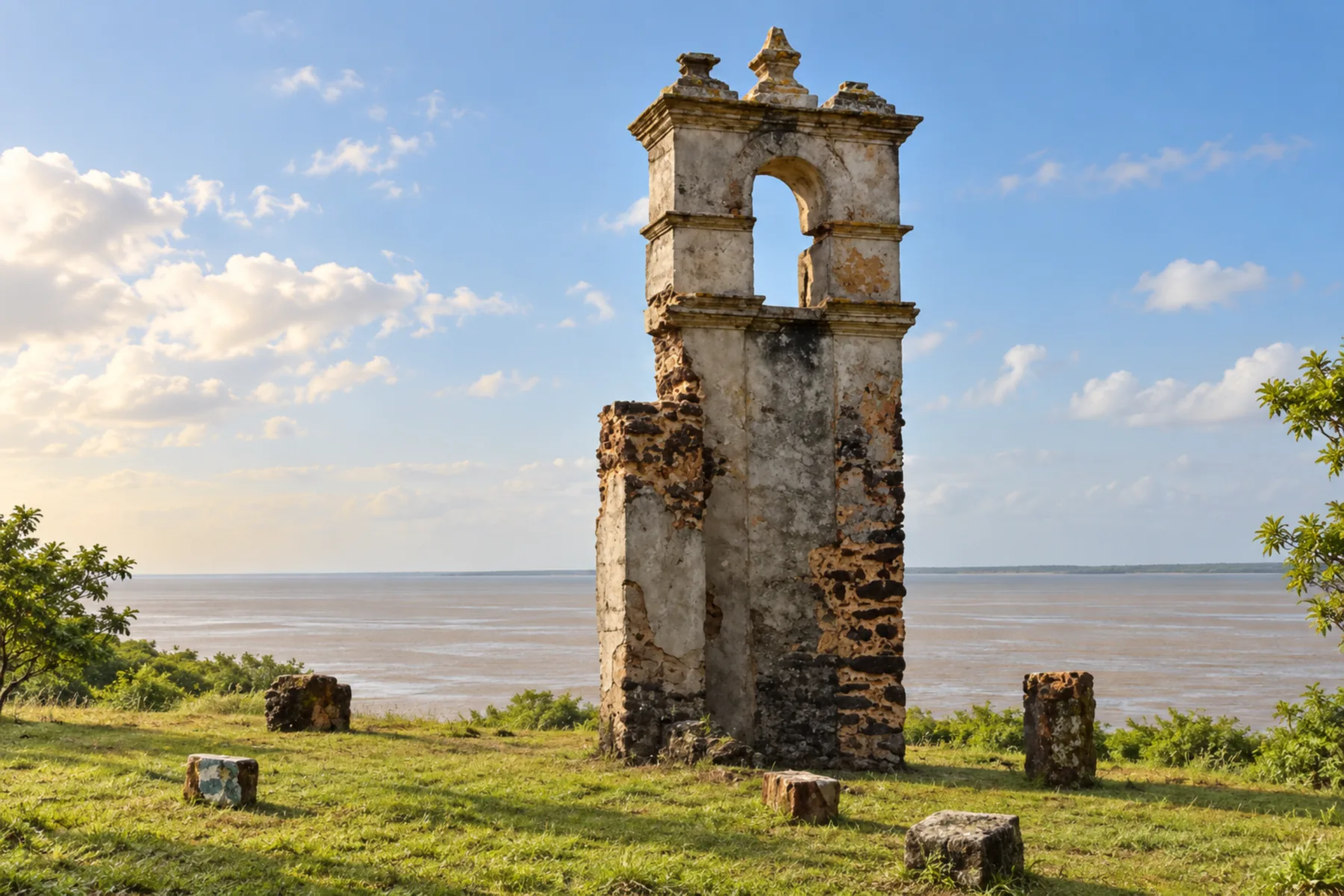
Joanes is a village in the municipality of Salvaterra, about 17 km from the town center. The tour often includes a stop in the district of Jubim, just for photos. In Joanes are the ruins of a church built by the Jesuits in the 17th century and, next to it, the Igreja de Nossa Senhora do Rosário. On foot, the ruins are about a five-minute walk from the beach. Praia de Joanes is on a river, with slightly salty water, and has bars and restaurants. Praia de Água Boa comes next, formed by igarapés and washed by the baía do Marajó. Access is by dirt road, or on foot along the beach at low tide. Many groups do the route in a single outing and return to Salvaterra or Soure to cross. Those staying in Soure need to plan the crossing of the rio Paracauari.
Stops: Vila de Joanes, Ruínas de Joanes, Igreja de Nossa Senhora do Rosário, Praia de Joanes, Praia de Água Boa, Praia de Jubim.
Includes: In agency packages, transportation and a driver are often included. Lunch, drinks and crafts are paid separately. If you hire a taxi or motorcycle taxi, the fare is agreed on the spot. Check the current rate table.
Tip: Arrange the return time with the driver and check the crossing schedule between Salvaterra and Soure. Bring sunscreen and swimwear. On windy days the river becomes choppy; ask locals about swimming.
Best time: From July to December, when the beach area becomes larger.
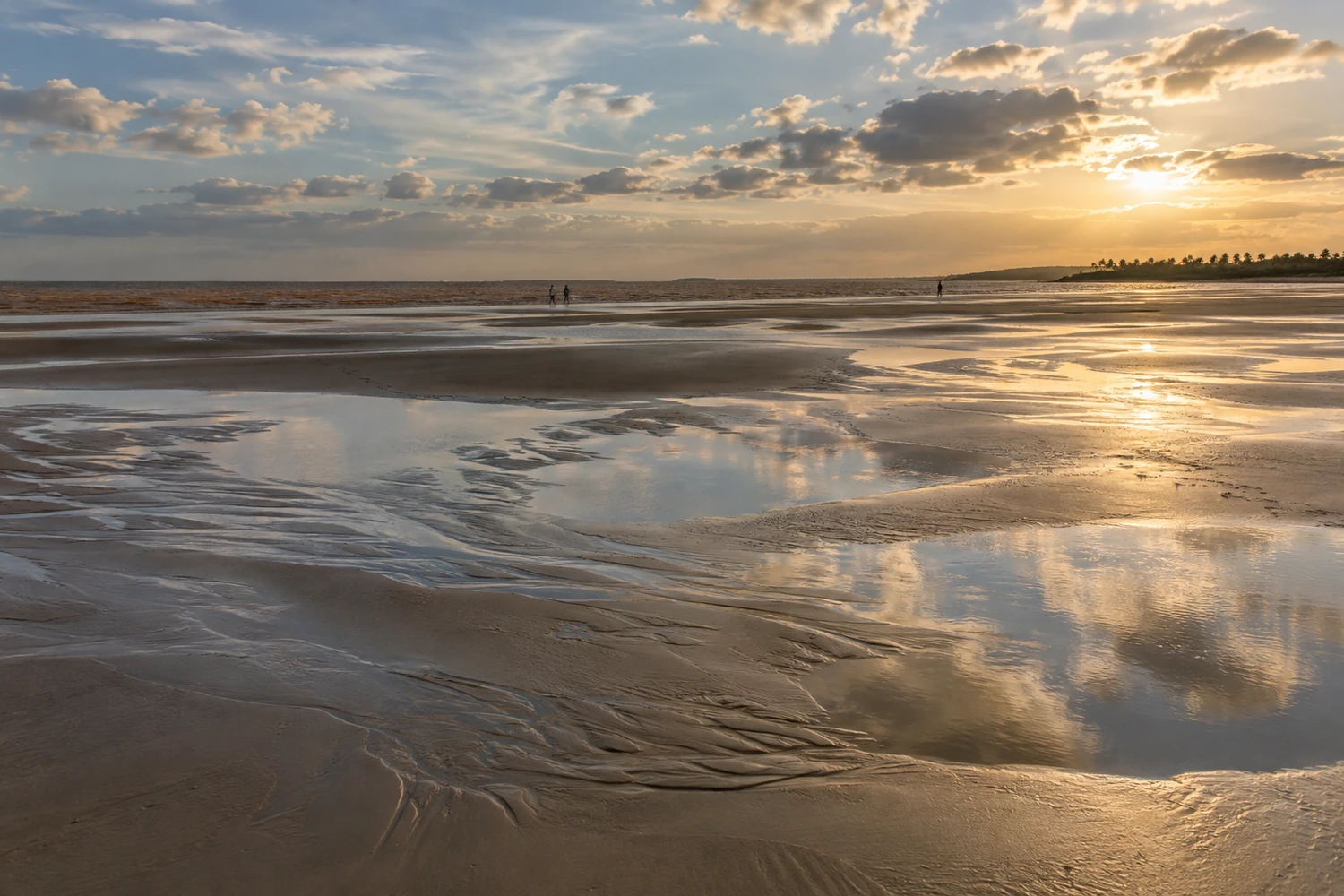
Praia do Pesqueiro is in the Reserva Extrativista Marinha de Soure, 10 to 13 km from Soure center. It is a calm, slightly brackish-water beach. At low tide small pools form on the sand. There are kiosks and restaurants serving fish, shrimp and crab. Nearby is Vila do Pesqueiro, a fishing village with wooden houses. Boats for igarapé tours depart from there. Some operators in the village also offer a buffalo ride along the beach, with a stretch in the water, to the village and back. It’s a day program with swimming, lunch and a walk on the sand.
Stops: Praia do Pesqueiro, Vila do Pesqueiro, Reserva Extrativista Marinha de Soure.
Includes: Access to the beach does not require an entrance fee. Transport there, lunch, drinks and boat or buffalo rides are paid separately. Check the current price list with the operator.
Tip: Arrange your return time with the motorcycle taxi driver or taxi driver, because mobile signal can fail. Bring cash or Pix for the kiosks. Check the tide chart to plan the walk and the swim.
Best time: From July to December, with less rain.
The beaches Praia do Céu and Praia do Caju-Una are in fishing communities inside the Reserva Extrativista Marinha de Soure. By land, the route crosses Fazenda Bom Jesus, with flooded fields, free-roaming buffalo and birds. By sea, boats depart from Vila do Pesqueiro, with a crossing of a few minutes. The beaches are a 15–20 minute walk from each other. There is light-colored sand, few kiosks and simple restaurants in the Comunidade do Céu. Local agencies sell the experience including round-trip transport, visits to both beaches and a local guide.
Stops: Praia do Céu, Praia do Caju-Una, Comunidade do Céu, Fazenda Bom Jesus (access road).
Includes: In packages: round-trip transport, visit to the two beaches and driver. Lunch and drinks are paid separately. There may be an access fee at the farm gate; confirm when booking.
Tip: Infrastructure is limited. Bring water, sunscreen and cash or Pix. Arrange your return in advance, because there may be no cell signal. A motorcycle trip requires closed-toe footwear.
Best time: From July to December, when the road and the beach are drier.
Agencies that run it: Edgar Viagens e Turismo.
The boat goes down the Rio Paracauari, which separates Soure from Salvaterra, and enters the Furo do Miguelão. It is a narrow channel under the mangrove and várzea vegetation that links one river to the other. The boatman explains the vegetation and the history of the channel. Birds appear along the route and, with luck, monkeys. Some itineraries stop at Praia do Garrote, where the Farol de Soure is located — the first beach on Soure's coast. Departures are usually early because the trip depends on the tide. The return is along the same river or via a crossing arranged with the boatman.
Stops: Rio Paracauari, Furo do Miguelão, Praia do Garrote, Farol de Soure.
Includes: Boat and skipper. Pickup at the guesthouse may be included depending on the operator. Snacks and drinks are paid separately. Check the current price list with the operator.
Tip: Ask the tide times when booking. Bring insect repellent, a cap, and a lightweight rain jacket. It can be booked at guesthouses, agencies, or with the boatmen at the port.
Best time: From July to December, when there's less rain.
Agencies that run it: Edgar Viagens e Turismo.
Fazenda Araruna is a few minutes from Soure town center, near Praia da Barra Velha. The visit is a guided farm tour. It includes a buffalo ride for photos and a cart ride through the fields, where herons and scarlet ibises may appear. At the end there is a marajoara snack with buffalo milk and cheese, butter, homemade breads, regional juices and tapioca fritters. The farm welcomes small groups and families. Because it is close to town, it is an option for visitors who arrive in Soure with little time.
Stops: Fazenda Araruna.
Includes: Buffalo riding, cart ride and a regional snack. Transport to the farm may be charged separately. Prices for children are arranged at booking. Check the current price list with the farm or the agency.
Tip: Reserve in advance by phone with the pousada or the agency. When arranging, ask if the buffalo ride is only for photos or includes a route. You can add Praia da Barra Velha in the same time slot.
Best time: All year; from July to December, with less rain.
Agencies that run it: Edgar Viagens e Turismo.
The turu is a mollusk that grows inside mangrove trunks and is part of the local communities' diet. The boat departs from Vila do Pesqueiro and takes you to the area where a local resident shows how the turu is removed from the trunk. Those who want can taste it on the spot, raw or seasoned. The tour usually includes a swim in an igarapé and birdwatching. It is a community-based tourism activity led by village residents. In Soure's restaurants, turu is also served in a broth.
Stops: Vila do Pesqueiro, Mangrove of the Reserva Extrativista Marinha de Soure, Igarapés do Pesqueiro.
Includes: Boat, guide, and a demonstration with tasting. Transport to Vila do Pesqueiro and meals are paid separately. Check the current price list with the operator.
Tip: Tasting is optional. Inform the boatman if you have any dietary restrictions. Bring insect repellent, sunscreen, and clothing that can get wet. The tour depends on the tide; the time is arranged when booking.
Best time: From July to December, when there's less rain.
Soure's center is flat and can be explored on foot or by bicycle. The route usually goes by the Mercado Municipal, Praça da Independência and the Igreja Matriz, with old manor houses around. Curtume Art Couro Marajó works with buffalo leather. In ceramic studios such as Ateliê Arte Mangue Marajó, on the way to Praia da Barra Velha, and M'barayó Cerâmica Marajoara, you can see how pieces inspired by Marajoara designs are made. Several agencies include this route in their packages. You can also do it on your own. Ceramic and leather items are often sold on site.
Stops: Mercado Municipal de Soure, Praça da Independência, Igreja Matriz de Soure, Curtume Art Couro Marajó, Ateliê Arte Mangue Marajó, M'barayó Cerâmica Marajoara.
Includes: Included in packages: guide and transport. Visits to the workshops and to the tannery are usually without an entrance fee. Purchases, drinks and meals are paid separately. Check the current price list with the operator.
Tip: Go in the morning to avoid the strong midday sun. Bring cash or Pix for handicrafts. Ask at the workshops about shipping for large pieces and about packing for the flight.
Best time: All year round.
The Museu do Marajó is located in the center of Cachoeira do Arari. It was founded by the priest and museologist Giovanni Gallo and brings together hundreds of pieces on Marajoara culture, the island's fauna and flora. The collection includes archaeological ceramics and objects of archaeology and anthropology. The building underwent renovation, and the complex now includes the museum shop, Padre Gallo's house and a grove. The visit is self-guided and interactive. The town is far from the beaches of Soure and Salvaterra, so the visit is usually done as a day trip, by car or with an agency. It's worth combining it with a walk around the center of Cachoeira do Arari, the Praça da Matriz and the market.
Stops: Museu do Marajó, Casa do Padre Gallo, Bosque do museu.
Includes: There is no entrance fee, according to the official museum registry. Transport to the town and meals are paid separately.
Tip: Opening days vary depending on the source. Call or confirm with the museum before you go and avoid Monday. The road journey is long; leave early and arrange the return with the driver.
Best time: From July to December, when the roads are drier.
It's a program for the end of the day. Agencies in Soure offer an experience with music and dance of the marajoara culture. It may be a carimbó circle or the rehearsal of a group of local traditions, such as lundu. Visitors watch and are generally invited to learn the steps. The location and day change according to the groups' schedules, so the program is always arranged in advance. It complements daytime tours and requires no physical effort.
Stops: Soure.
Includes: Driver and access to the performance or rehearsal are included in agency packages. Drinks and dinner are paid separately. Check the current rates table with the operator.
Tip: Ask your guesthouse or the agency when there is a carimbó rehearsal or roda during your stay. Bring insect repellent. Arrange the return to the guesthouse before you leave.
Best time: All year; the schedule depends on the groups.
Ponta de Pedras is the Marajó town closest to Belém and lies on the bank of the Marajó-Açu river. The itinerary is a local visit. It includes Praia da Mangabeira, about 10 km from the town, with roughly 2 km of shoreline, coconut trees and freshwater waves coming from the baía do Marajó. There is also Praia Grande and the ceramic workshops, which preserve the ceramic tradition. Straw, wood and rope items are also made there. Tourist infrastructure is limited. Arrange the visit and transport with local residents or drivers before going.
Stops: Praia da Mangabeira, Ceramic workshops in Ponta de Pedras, Praia Grande.
Includes: There is no standard package. Transport, driver/guide and meals are arranged and paid separately. Check the current price list with the service provider.
Tip: Plan your visit in advance; don’t rely on a walk-in agency. Bring cash or Pix, water and sunscreen. Confirm access conditions with the municipal government or with local residents.
Best time: From July to December, when it rains less.
Breves is located in the western part of the archipelago, 265 km from Belém, and is the main urban center of that region. The igarapé balneários are the most direct excursion for those in town. Sítio do Bira is about 5 km from the center, on the Breves–Arapijó road, on the banks of the Igarapé Arapijó, with parking, restrooms, restaurants and kiosks. The Balneário Mamanjó is about 8 km away, beside the Igarapé Mamanjó, with similar facilities. These are freshwater bathing areas used by locals. The Reserva Extrativista Mapuá in the region only receives visitors under the unit's rules and coordinated with the communities.
Stops: Balneário Mamanjó, Balneário Sítio do Bira, Igarapé Mamanjó, Igarapé Arapijó.
Includes: There is no standard package. Entrance, transport and meals are paid separately and vary by location. Check the current price table for each bathing spot.
Tip: Plan transport in advance, because the vicinal roads have limited services. For the Resex Mapuá, contact the residents’ association and the managing body before going. Bring insect repellent and cash or Pix.
Best time: From July to December, with less rain.
Day by day
Suggestions to plan the trip. Change the order of the days according to the weather and tour availability.
Take the morning boat from Belém. The crossing to Soure takes about 2 hours. Leave your bags at the pousada and follow the route on foot: market, tannery and marajoara ceramics studios. In the afternoon, take a boat trip on the Rio Paracauari and the Furo do Miguelão. In the evening, check whether there is carimbó and lundu programming in town and confirm in advance.
In the morning, go to Praia do Pesqueiro and the village of the same name by taxi, motorcycle taxi or transfer from the pousada. The beach has brackish water and the tide greatly changes the width of the sand: check the tide chart. Have lunch in the village. In the afternoon, visit Fazenda Araruna, with buffaloes, a cart ride and a marajoara snack. Book the fazenda in advance.
The direct boat from Soure to Belém leaves early: confirm the day and time before buying the ticket and keep the morning for the journey. Those who choose to depart from Porto de Camará, in Salvaterra, in the afternoon gain an extra morning. In that case you can visit Joanes, in Salvaterra, before continuing. Buy the return ticket in advance and arrive early at the terminal.
Morning boat from Belém to Soure, about 2 hours. Settle in and follow the walking itinerary: market, tannery and ceramics studios. Late afternoon on the Rio Paracauari waterfront. At night, check if there is a cultural evening with carimbó and lundu and reserve a spot if so.
Morning at Praia do Pesqueiro and the village, with lunch of fish or crab at the stalls. Check the tide before leaving. In the afternoon, circuit at Fazenda São Jerônimo, with a trail, canoe ride and contact with the buffaloes. Arrange round-trip transport with the pousada or with the fazenda itself.
Cross from Soure to Salvaterra by ferry or small boat, a crossing of about 10 minutes. Arrange transport in Salvaterra, because the points are spread out from the center. In the morning, Vila de Joanes: Jesuit ruins and beaches. In the afternoon, guided walk at Fazenda Bom Jesus, with local wildlife and the flight of guarás. Return to Soure at the end of the day.
In the morning, boat along the Rio Paracauari and the Furo do Miguelão, between mangroves and riverside vegetation. In the afternoon, turu tour: extraction and tasting in the mangrove. Times depend on the tide, so confirm with the operator the day before. Late afternoon free to buy ceramics and marajoara cheese in town.
If the departure is via Camará in the afternoon, reserve the morning for the Vivência Mironga: buffaloes, milking and cheese tasting. Arrange the time in advance. If the direct boat leaves early from Soure, do this experience on day 4 and use day 5 only for the return. In any case, buy the ticket beforehand and arrive early at the terminal.
Morning boat from Belém to Soure, about 2 hours. Walking itinerary through the market, the tannery and the ceramic studios. Late afternoon on the banks of the Rio Paracauari. Dinner with buffalo steak or marajoara cheese.
Morning at Praia do Pesqueiro and the village. Check the tide table before going. In the afternoon, Fazenda Araruna: buffaloes, cart ride and marajoara snack. Reserve in advance and arrange round-trip transport.
Crossing from Soure to Salvaterra, about 10 minutes. In the morning, Vila de Joanes: Jesuit ruins and beaches. In the afternoon, guided walk at Fazenda Bom Jesus, with wildlife and a flight of guarás. Arrange transport in Salvaterra and return to Soure at night.
Water day: boat trip to Igarapé do Poço Encantado and Praia do Céu, with the option to continue overland to Caju-Una via the road of Fazenda Bom Jesus. The operator sets the departure point and the order according to the tide. Bring sunscreen, insect repellent and clothes that can get wet.
In the morning, a boat trip along the Rio Paracauari and the Furo do Miguelão. In the afternoon, a turu ride, with harvesting and tasting in the mangrove. In the evening, carimbó and lundu, when there is programming: check in town. Leave your suitcase packed for the next day.
Cachoeira do Arari is about 74 km from Soure. Arrange transport beforehand (van, taxi or car with driver) and check the road conditions on the day. The Museu do Marajó brings together marajoara ceramics, history and regional handicrafts. Return to Soure or continue to Belém. Breves, with igarapé bathing spots, is on the west side of the island and requires its own itinerary.
Ponta de Pedras is served by boats departing from the Terminal Hidroviário de Belém. Check days and times with the companies before scheduling this leg. On the day: Praia da Mangabeira, a freshwater beach, and visits to the city's ceramics studios. Plan the return to Belém by boat and buy your ticket in advance.
Best time to go
From July to December, in the Amazon summer, when it rains less and the beaches are wider.
The seasons shown are the most usual ones; nature doesn't always follow the calendar.
Amazon winter · Flooded fields
Rainy season, with heavy and frequent downpours. Low fields flood and dirt roads can become difficult. Boat tours continue, but trails and farm routes change according to the water. Highs around 30 °C and lows around 23 °C. Bring a raincoat and leave some leeway in your schedule.
Daily rain · Carnival
The rainy period continues, with flooded fields and overcast skies most days. If Carnival falls in the month, traffic increases and boat (lancha) tickets sell out. Reserve transport and tours in advance. Rain usually comes in showers, so morning tours tend to be safer.
Peak of the rainy season · Ilha Verde
March and April form the peak of the rains in the region of Soure, Salvaterra and Cachoeira do Arari, with averages above 400 mm in the month. Vegetation turns very green and many low areas are flooded. At Praia do Pesqueiro, the sand strip tends to be smaller. Prefer boat tours and covered activities.
Peak of the rains · Holy Week
The peak of the rainy season continues. Flooded fields and high water in the igarapés. If Holy Week falls in the month, there's holiday traffic and fewer spots on lanchas and tours: book early. Dirt roads may require more time. Bring closed shoes, a raincoat and a bag to protect your phone.
Rain eases · Fields still flooded
It's still part of the rainy season, but showers begin to spread out toward the end of the month. The fields remain soaked and the water is still high in the igarapés. It's a lower-visitor period, which makes it easier to get a spot on tours. Check with the operator whether the overland route is passable.
Start of the transition · Water receding
From June the rain decreases and the region gradually enters the drier season. Field waters recede, farm trails become easier and beaches begin to gain sand. Short showers can still occur, usually in the afternoon. A good time for those who prefer less activity than in the following months.
Start of the dry season · School holidays
The Amazonian summer begins, with less rain, more sun and larger beaches. In the dry months, saltwater from the Baía do Marajó pushes up the rivers and beaches become more brackish. School holidays increase demand for boat trips, pousadas and tours. Book in advance and buy return tickets.
Wide beaches · More sun
Month with low rainfall, more hours of sun and clear skies. Beaches like Pesqueiro and Joanes widen at low tide, and farm grounds are firm for walking and carriage rides. It gets hotter, and sunscreen, a hat and water make a difference. Check the tide table to plan your beach time.
One of the driest months · Dry fields
Among the driest months of the year on the island. Igarapés and furos run lower, and some boat routes depend on the tide: the operator sets the schedule. Trails and dirt roads are in good condition. Hot days with little rain. Bring insect repellent for late afternoons near the mangroves.
Dry season · Círio in Belém
The dry season continues, with little rain and wide beaches. The Círio de Nazaré in Belém usually fills boats and seats in the days around it: buy your ticket and reserve transport beforehand. National holidays also increase traffic. Short showers may appear at the end of the month, but they have little effect on tours.
Dry season · Holidays
It's still a low-rain period, with strong sun and open beaches. Holidays at the beginning and middle of the month increase movement between Belém, Salvaterra and Soure. Book tours and tickets in advance. Igarapés and fields remain low. At the end of the month, rain clouds become more frequent in the afternoon.
Return of the rains · End of year
Rains return, almost always as quick downpours and often in the afternoon. Tours continue, preferably in the morning. Demand rises near Christmas and New Year's: book transport and tours ahead. The beaches still have sand, but the water in the fields begins to rise. Bring a lightweight raincoat.
Plan the journey
There is no road connecting Marajó Island to the mainland. For that reason, travelers from other states fly to Belém, to Val-de-Cans International Airport (BEL), and continue by boat. The island is about 130 km from Belém. The Soure city government also points to flying as the best way to reach the capital of Pará, especially for those coming from other regions of the country.
Soure Airport (SFK) receives air taxis and private aircraft. Travel guides note there is no regular commercial route to Soure.
Breves, in the south of the island, appears on route aggregators with flights between Breves (BVS) and Belém a few times per week, with a duration of around 1h15. These flights change frequently. Check availability with the airline before planning.
From Belém, the way to Soure, Salvaterra and Cachoeira do Arari is by water: the hydro terminal in the city center (no vehicle) or the port of Icoaraci (with vehicle). If your flight arrives late, plan to stay overnight in Belém and make the crossing the next day.
Those who don't take a car board at the Terminal Hidroviário de Belém, on Av. Marechal Hermes, in the Umarizal neighborhood, near the Estação das Docas. Tickets are sold at the companies' counters in the terminal. Buy in advance: the launches often depart full, and advance sales are usually only open for a few days. Check the current schedule of each company.
Options: • Direct to Soure: launches Expresso Golfinho and Campeão 9 (Master Motors), about 2 hours, morning departures. The catamaran Álamo (Henvil) also connects Belém to Soure in about 2 hours and disembarks at the pier of the Hotel Ilha do Marajó. • To Porto Camará, in Salvaterra: launches Atlântica and Salmista (Navegação Ferreira), about 1h30, afternoon departures, and Banav's catamaran, about 2 hours, morning departures.
At Camará there are vans and scheduled buses to Salvaterra, Soure and Cachoeira do Arari. It's about 31 km to Soure. Including road and the river crossing between Salvaterra and Soure, allow about 1 hour.
Schedules change. Confirm with the company before buying and plan your return with time to spare. Between September and December the sea can be rougher, and some people bring motion-sickness medication.
To take your car you must board the ferry boat. Departure is from the port of Icoaraci, a district about 20 km from Belém city center, and the destination is Porto Camará, in Salvaterra. The crossing takes about 2h30 to 3 hours. To reach the ferry, drive to Belém by highway. There is no bridge or road across the bay.
The service is operated by Henvil, Master Motors and Banav, with departures throughout the day: very early, morning and early evening. Times change. Check with the companies and arrive early, especially on holidays and during July school vacations. Ferries have a snack bar, restrooms and air-conditioned areas. Passengers pay separately, with reduced fares for some age groups. Check Henvil's current fare table.
The indicated price is the passenger car tariff, from small to large, per crossing. Motorcycles and utility vehicles have their own rate.
From Camará to Soure it's about 30 km of paved road to the Salvaterra–Soure ferry port. That ferry also carries vehicles and is charged separately. On the island, access to beaches and fazendas may include unpaved stretches, so go slowly. Those who prefer not to deal with the logistics usually leave the car in Belém and use vans and taxis on the island.
R$175 to R$235 · by passenger car (small to large), via the Icoaraci–Camará crossing · official priceThese towns lie outside the more common Soure–Salvaterra circuit, and access is also by water.
Cachoeira do Arari: the most used route is the same as for most visitors. You reach Porto Camará and continue by van, bus or taxi. Those driving board at Icoaraci. There are also boat lines between the Terminal Hidroviário de Belém and the town.
Ponta de Pedras: there are scheduled boats departing from Belém, with a trip of several hours. Days and times vary by company and season. Check at the Terminal Hidroviário de Belém.
Breves: is located in the south of the island, far from Soure. There are scheduled boats from Belém, with a long trip that is usually overnight, and scheduled flights with few weekly frequencies, according to route aggregators. There are also boat lines linking Breves to Macapá and Santana, in Amapá.
On these stretches schedules change a lot. Book your ticket in advance and allow extra time for the return.
For most itineraries in Soure and Salvaterra you don't need a car. Distances are short and Soure's center can be explored on foot or by bicycle. Many visitors rent bikes independently.
The most used options: • Mototaxi and taxi within towns and to the port where you disembark. • Vans and scheduled buses between Porto Camará, Salvaterra, Soure and Cachoeira do Arari. • Ferry between Salvaterra and Soure. It operates only during the day. Small boats make the river crossing and serve outside that period. • Tours arranged by pousadas and local agencies for beaches, buffalo farms and communities. Much of the transport is already included in these tours.
Praia do Araruna is about 3 km from Soure and is reached by road. Some beaches and villages are further away and depend on combined transport.
At disembarkation, vans usually wait for passengers. At night there are fewer options to Soure. If you arrive late, arrange the transfer in advance.
Renting a car or bringing your own only pays off for those who want to travel independently between villages and farms. The ferry cost weighs on the budget.
There are two ways to organize the trip to Marajó.
Package with transfer: agencies in Belém sell itineraries that combine hotel, transfer from the hotel to the port, a speedboat to Soure, tours and return. One example is a 7-day itinerary departing Sunday to Friday, which includes the boat crossing on Monday or Saturday, depending on the departure. The advantages are not having to buy a ticket at the terminal, having the land transport already arranged, and fitting the boats' schedules into the itinerary. Check what is included and whether the speedboat reserves assigned seats.
On your own: you buy the ticket at the Terminal Hidroviário de Belém, choose the company and the time, and arrange transfer at the destination. Since there are few departures per day, planning is key. Some travelers take different boats for the outbound and return trips because of the schedules. There are also vans that pick passengers up at hotels in Belém and take them to Porto Camará, where another speedboat departs.
In any case, book the transfer and the ticket before you arrive, especially on holidays and during the July holidays. Check the current list of sellers.

Who takes you
Only agencies with an active registration in Cadastur, the official registry of Brazil's Ministry of Tourism, are listed. The order is not a ranking: compare the tours and book directly with the agency.
Cidade Turismo reviews its information regularly, but something may have changed. Check with the place before planning your trip.
Adventure travel agency that sells packages for Belém and Ilha de Marajó, and for Belém, Marajó and Alter do Chão. The transfer departs from hotels in Belém to the water terminal, with the crossing to Soure. The 2026 departures are on fixed dates; check the current schedule on the website.
Cadastur checked in October 2026
Community-based tourism agency headquartered in Soure. It sells itineraries and immersive experiences with local guides, potters and riverside residents. The website lists Fazenda Araruna, the boat trip along the Rio Paracauari and through the mangrove, and the Vivência Caminho do Céu e Caju-Una. There is also the Vivência Sol e Praia in Salvaterra, and car rental. Tours depart from Soure.
Tours: Praia do Céu and Caju-Una via the road of Fazenda Bom Jesus, Boat trip on the Rio Paracauari and Furo do Miguelão, Fazenda Araruna: buffaloes, cart and marajoara snack.
Cadastur checked in October 2026
Your base to explore
Before you go
A little planning leaves more time to enjoy the journey.
From July to December, in the Amazon summer, when it rains less and the beaches are wider.
The seasons shown are the most usual ones; nature doesn't always follow the calendar.
Take your trash with you, follow the signs and support local businesses. In natural areas, follow the visiting guidelines.
Beyond the guide
Your questions
<cite index="12-13,12-14">Um dos roteiros pesquisados recomenda pelo menos três dias inteiros. Esse tempo dá para fazer fazendas, praias e a culinária local.</cite> Com um dia só, é possível, mas <cite index="11-6,11-7">o foco deve ser Soure, com dois pontos principais e o transporte organizado com antecedência.</cite> <cite index="11-5">Em um roteiro de cinco dias, sobram dois dias em Soure, um de fazenda, um para Salvaterra e um extra para repetir uma praia.</cite> Lembre que <cite index="12-6">o eixo turístico da ilha está em Soure e Salvaterra.</cite> Para incluir Cachoeira do Arari, Ponta de Pedras ou Breves, some dias à parte, porque a logística é separada.
Os barcos saem do Terminal Hidroviário de Belém. Há dois caminhos. O primeiro é a lancha rápida direto para Soure: <cite index="6-3">a viagem leva em média duas horas.</cite> O segundo é uma lancha ou catamarã até o Porto de Camará, em Salvaterra. <cite index="7-2">Algumas lanchas levam cerca de 1h30.</cite> Depois é preciso seguir por terra: <cite index="46-9">são 31 km de Camará até Soure.</cite> Esse trecho, com a travessia do rio, <cite index="5-3">leva cerca de 1 hora.</cite> As empresas, os dias de saída e os horários variam, e as saídas de Belém se concentram de manhã e no início da tarde. Confira a tabela atual de cada empresa, pois os valores mudam conforme o tipo de embarcação.
Dá. Quem vai de carro usa a balsa (ferry boat) do terminal de Icoaraci, <cite index="29-2">a 20 km do centro de Belém.</cite> <cite index="4-6">A travessia dura em média 2h45 até o Terminal Camará.</cite> <cite index="4-4">As balsas têm lanchonete, banheiros e uma área refrigerada.</cite> Do Camará, <cite index="46-9">são 31 km até Soure e pouco mais de 25 km até Salvaterra.</cite> Para chegar a Soure, o carro ainda cruza o rio Paracauari em outra balsa, saindo de Salvaterra. A concessionária Henvil publica tabelas de tarifas para as travessias de Camará e de Soure, por tipo de veículo. Confira a tabela atual antes de viajar.
No Camará, <cite index="46-7">o passageiro sem veículo encontra vans e ônibus de linha para Salvaterra, Soure e Cachoeira do Arari.</cite> Esses transportes costumam sair quando chega a embarcação de Belém. Quem vai a Soure em van geralmente atravessa o rio de balsa junto com o veículo, e <cite index="28-1">a van deixa o passageiro na porta da pousada.</cite> Entre Salvaterra e Soure há só o rio Paracauari. <cite index="12-9">A travessia leva pouco mais de 10 minutos, com barcos de hora em hora.</cite> Pedestres também usam o <cite index="13-10">popopô, um barquinho fechado</cite> que liga os dois lados. No fim da tarde, confirme o horário da última travessia.
<cite index="21-9">Em Soure dá para andar a pé, de bicicleta, mototáxi, táxi ou carro alugado.</cite> Relatos de viajantes descrevem <cite index="22-8">o mototáxi como o transporte mais comum, a bicicleta como a opção mais econômica e o táxi para a chegada e a partida com bagagem.</cite> <cite index="22-9">Não há Uber na ilha e o sinal de internet é ruim.</cite> Por isso, <cite index="23-10">combine a volta com o motorista.</cite> Algumas distâncias: <cite index="22-5">a Barra Velha fica a 3 km do centro.</cite> A Praia do Pesqueiro fica a <cite index="21-6,21-7">cerca de 20 minutos do centro, de carro, táxi, mototáxi ou van.</cite> Combine o preço antes de cada corrida.
Dá. <cite index="32-2">A estação chuvosa vai de janeiro a junho e a seca, de julho a dezembro.</cite> <cite index="33-9">Na seca, as estradas ficam mais acessíveis, as praias aparecem e os passeios por terra são mais práticos.</cite> <cite index="33-11">Na chuva, os campos alagam e há passeios de barco por regiões que, na seca, ficam isoladas.</cite> Em relato de viajantes, <cite index="38-15">as praias continuam acessíveis na época de chuva, mas você pega bastante chuva no caminho.</cite> Leve capa de chuva e deixe os passeios de fazenda e de barco confirmados com antecedência. Os que dependem de estrada de terra podem mudar com o tempo.
Dá, mas o dia fica corrido. Um guia de viagem sobre a ilha indica o <cite index="11-2">bate e volta como opção para 1 a 3 dias, resolvendo táxi, mototáxi e passeios fechados.</cite> A sugestão é <cite index="11-6,11-7">focar em Soure, escolher dois pontos principais (como Barra Velha e Pesqueiro) e organizar o transporte com antecedência.</cite> Uma agência de Belém oferece um pacote de um dia, com <cite index="9-1">embarque cedo pela manhã e montaria em búfalo em fazenda ao chegar.</cite> Confira o horário de volta da lancha antes de reservar passeios. Se a saída de Soure for cedo, o dia rende pouco.
É recomendado, principalmente em feriados e em julho. Sobre as lanchas diretas, uma operadora avisa que <cite index="4-14">as vagas geralmente esgotam.</cite> Outro guia sugere <cite index="14-4">comprar ida e volta com alguns dias de antecedência, especialmente em julho.</cite> <cite index="7-3,7-4">As passagens podem ser compradas no Terminal Hidroviário de Belém, de segunda a sábado, em horário comercial, ou por WhatsApp.</cite> Cada empresa tem seu canal e sua tabela, e os valores variam por embarcação. Confira a tabela atual. Há outro ponto para planejar: <cite index="43-5">de setembro a dezembro as ondas na região podem ficar mais fortes.</cite> Quem enjoa com facilidade deve se preparar antes.
Dá para combinar algumas, com mais dias e planejamento, pois a logística é separada. <cite index="48-4">Do Terminal Hidroviário de Belém partem embarcações para Soure, Salvaterra, Ponta de Pedras, Cachoeira do Arari e Santa Cruz do Arari, além do Porto de Camará.</cite> Do Camará, <cite index="46-7">também há vans e ônibus para Cachoeira do Arari.</cite> A Henvil lista travessia própria entre Salvaterra e Cachoeira do Arari. Para Breves, consulte as empresas de barco sobre dias e horários. Como a maior parte dos passeios do guia está em Soure e Salvaterra, quem tem pouco tempo costuma reservar esses destinos para uma segunda viagem.
Relatos de viajantes dizem que o <cite index="22-9">sinal de internet é ruim na ilha.</cite> Por isso, baixe mapas e confirmações de passeios antes de sair de Belém. <cite index="22-10">Ao contratar transporte, combine o horário e o ponto de encontro com antecedência.</cite> Como o roteiro mistura praias, fazendas e áreas naturais, <cite index="37-18">priorize roupas confortáveis, proteção contra sol e insetos e itens práticos para trilhas e deslocamentos.</cite> Se for pedalar, escolha bicicleta com roda reforçada para a areia fofa. Na hora de pagar, pergunte a cada pousada, restaurante ou operador se aceita cartão, e leve dinheiro em espécie como reserva.