Foz do Iguaçu e Região

PR

Foz do Iguaçu e Região

As Cataratas, Itaipu e o encontro de três países.

Sul

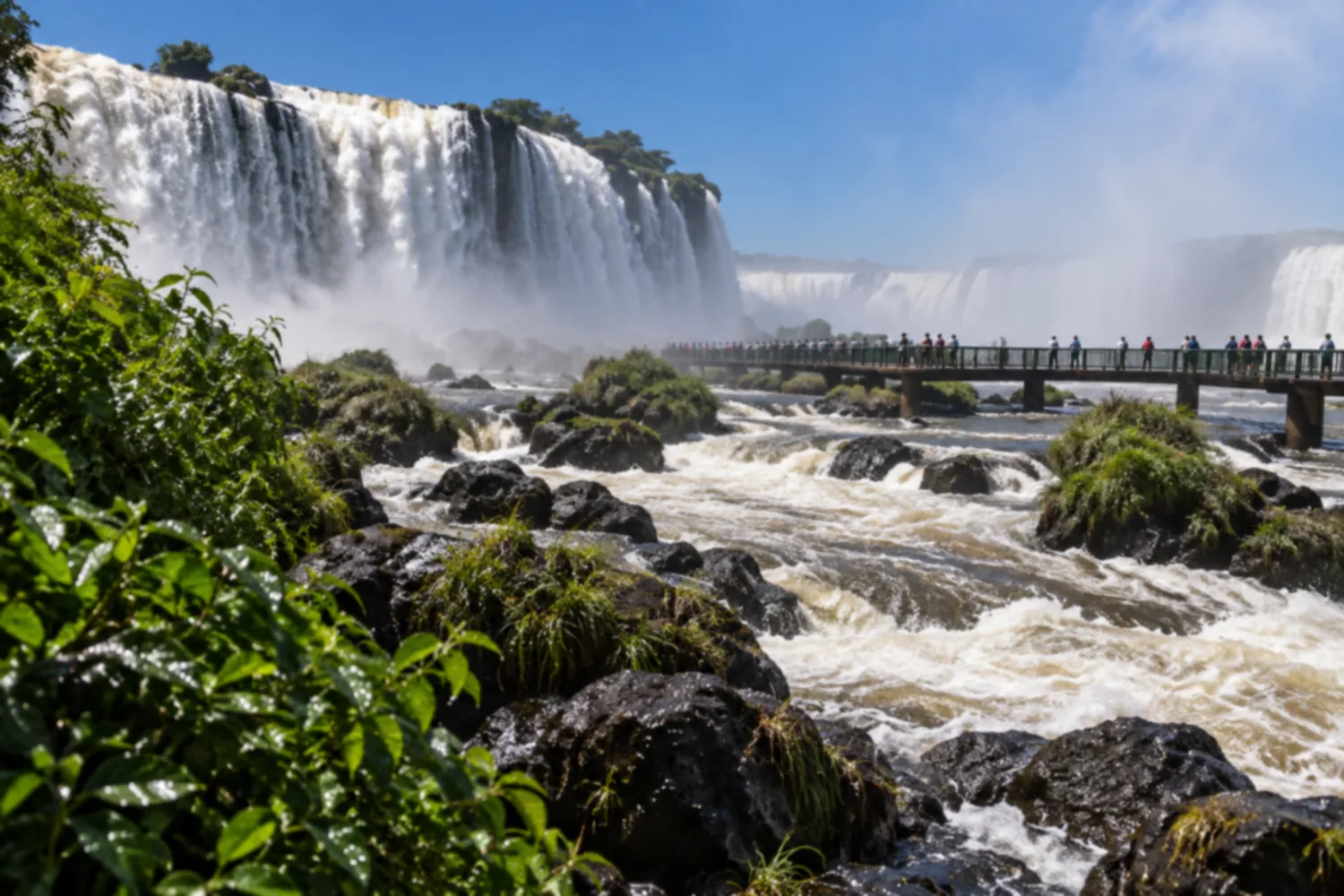
In the photo: Cataratas do Iguaçu

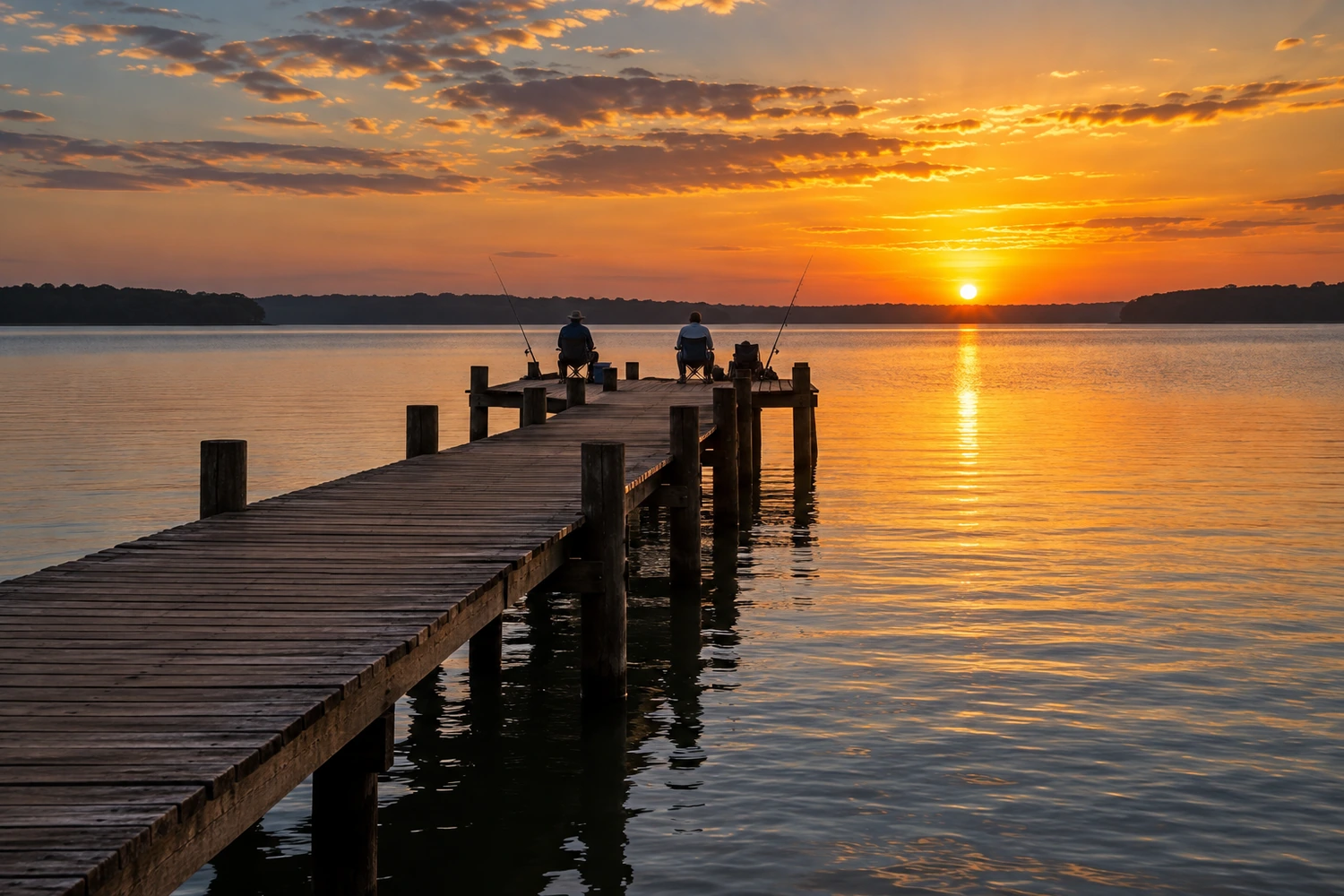
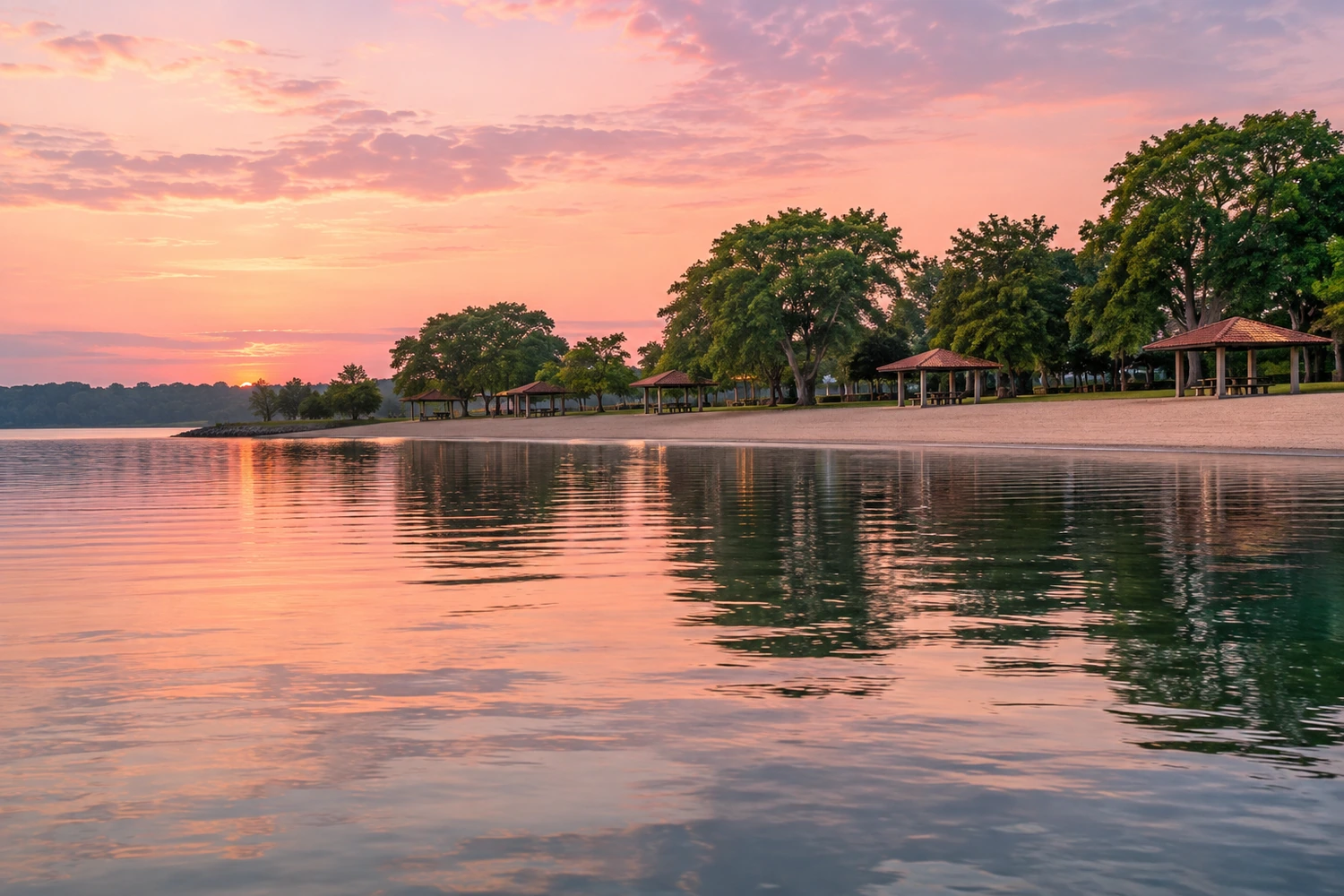
Illustrative images. The pictures in this guide are illustrations based on the real place, not photographs, and may differ from it.

Get to know the place

A region to enjoy
at your own pace.

Foz do Iguaçu é aquele destino em que a natureza aparece em escala exagerada: 275 quedas d'água formando as Cataratas do Iguaçu, uma das Sete Maravilhas Naturais do mundo, e logo ali a Usina de Itaipu, uma das maiores hidrelétricas do planeta. A cidade fica na tríplice fronteira, então dá para ver o Brasil, a Argentina e o Paraguai do mesmo mirante.

As Cataratas se visitam pelos dois lados. No brasileiro, dentro do Parque Nacional do Iguaçu, uma trilha à beira do cânion leva até a passarela sobre a Garganta do Diabo, com a vista panorâmica das quedas. No argentino, as passarelas passam por cima e por dentro das cachoeiras. Os dois lados se completam, e cada um pede um dia.

Fora das Cataratas, a cidade tem o Parque das Aves, com aviários em plena mata atlântica, o Templo Budista, o Marco das Três Fronteiras no fim de tarde e as visitas a Itaipu, que incluem a iluminação da barragem à noite. No entorno, as cidades à beira do Lago de Itaipu, como Santa Terezinha de Itaipu e Itaipulândia, têm praias de água doce e balneários.

This destination brings together 4 cities: Foz do Iguaçu, Santa Terezinha de Itaipu, São Miguel do Iguaçu, Itaipulândia.

Share: WhatsApp

A look at the place

Foz do Iguaçu e Região in pictures

These pictures are illustrations based on the real place, not photographs. They may differ from the place.

Click the picture to enlarge it.

Travelers' photos

Foz do Iguaçu e Região through the eyes of those who went

Foz do Iguaçu e Região
Illustrative image
Foz do Iguaçu e Região
Illustrative image
Marco das Três Fronteiras
Illustrative image
Dreams Park Show
Illustrative image
Usina Hidrelétrica de Itaipu
Illustrative image
Cataratas do Iguaçu (lado brasileiro)
Illustrative image
Traveler, share your experiences through photos Up to 5 photos of each place you visited.

One destination, many paths

The cities on this trip

Start with one city or combine several in your itinerary.

Where Foz do Iguaçu e Região is The star marks the nearest capital, Curitiba.
CuritibaFoz do IguaçuSanta Terezinha de ItaipuSão Miguel do IguaçuItaipulândia

Mapa: @svg-maps/brazil, CC BY 4.0

How to get there: Foz do Iguaçu e Região

Aeroporto Internacional de Foz do Iguaçu (IGU) · 13 km to Foz do Iguaçu

Aeroporto Internacional de Foz do Iguaçu/Cataratas (IGU), a cerca de 10 km do centro e 14 km das Cataratas, com voos das principais capitais. Por estrada, a cidade fica a cerca de 640 km de Curitiba pela BR-277. O aeroporto fica no caminho entre o centro e o parque, pela BR-469.

Suggested arrival point: Foz do Iguaçu

The local experience

Things to do in Foz do Iguaçu e Região

Itaipulândia · PR · praia de lago

Balneário Jacutinga

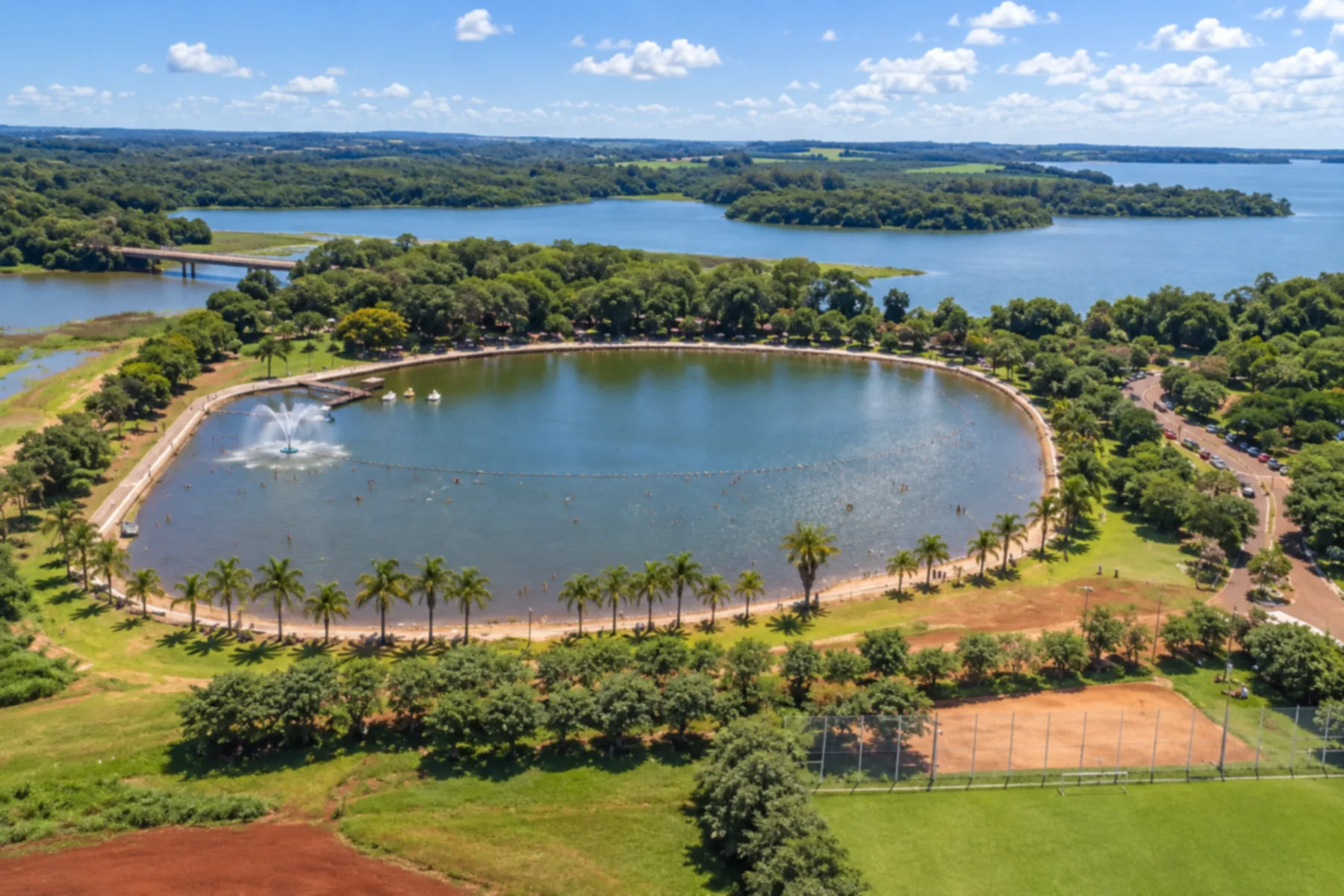
Praia artificial às margens do Lago de Itaipu, a menos de 5 quilômetros do centro, tem mais de 800 metros de orla. Conta com área de camping, píer para pesca e jet ski, quadra de areia e vista para o pôr do sol sobre o lago.

Explore Balneário Jacutinga

See 15 more places in Foz do Iguaçu e Região

To choose before you go

Tours in Foz do Iguaçu e Região

Where each tour starts, how long it takes, how it is done, what is included and the price range.

Iguaçu Falls – Brazilian side

From Foz do Iguaçu park bus and walking about 3 to 4 hours morning or afternoon easy

The visit starts at the Iguaçu National Park Visitor Center on Rodovia das Cataratas, about 18 km from downtown Foz. From there, the park bus runs about 10 km through the forest. The first stop is Macuco Safari; the second is by the Hotel das Cataratas, where the Waterfalls Trail begins. The trail is about 1 km on walkways, with stairs and ramps, and shows the falls head-on, from the other side of the river. At the end, a walkway extends over the Iguaçu River to the Devil’s Throat viewpoint, where the spray gets you wet. A panoramic elevator goes up to Espaço Porto Canoas, with snack bars and a restaurant, from where the bus returns to the Visitor Center. The ticket includes internal transport.

Stops: Visitor Center, Waterfalls Trail, Devil’s Throat walkway, panoramic elevator, Espaço Porto Canoas.

Includes: round-trip internal bus between the Visitor Center and the Waterfalls Trail, access to the trail, walkways, elevator and viewpoints. Parking and food are paid separately.

Tip: Buy your ticket in advance, choosing the day and time. Bring a rain poncho for the Devil’s Throat walkway and do not feed the coatis. If the river is very full, the walkway may be closed for safety.

Best time: year-round; less crowded outside school vacations

Agencies that run it: Loumar Turismo, Foz Atrativa Turismo, COOTTRAFOZ, ANV Travel.

R$121 to R$134 · per person, ticket (R$ 121 Brazilians and Mercosur; R$ 134 other foreigners)

Iguazú Falls – Argentine side

From Foz do Iguaçu van or car crossing the border, train and walking full day full day moderate

Iguazú National Park is in Argentina, about 18 km from Puerto Iguazú. Leaving Foz, you cross the Friendship Bridge (Tancredo Neves), with a stop at Argentine immigration. Inside the park, the Tren Ecológico de la Selva links the stations and takes you to the Garganta del Diablo walkway, which reaches the edge of the largest drop. The Upper Circuit is about 1,850 m of walkways over the falls and takes around 2 hours. The Lower Circuit is about 1,750 m, passes closer to the base of the drops and takes about 1.5 hours. The Sendero Macuco, around 3,500 m through the forest, leads to a smaller waterfall. On the Argentine side you walk more and see the falls up close; from the Brazilian side the view is frontal.

Stops: Puerto Iguazú, Tren Ecológico de la Selva, Upper Circuit, Lower Circuit, Garganta del Diablo, Sendero Macuco.

Includes: On agency tours: round-trip transport and border crossing; some include a guide. Park entrance, the Puerto Iguazú tourist tax and food are paid separately.

Tip: Bring a physical ID card or passport and cash for fees. Since August 3, 2026 the Garganta del Diablo walkway is closed as a precaution against flooding; check whether it has reopened before you go. If you return the next day, you pay half the entrance fee if within 72 hours.

Best time: year round; avoid Argentine holidays and school vacation periods

Agencies that run it: Loumar Turismo, PasseioTur, Foz Atrativa Turismo, Combo Iguassu, COOTTRAFOZ, ANV Travel.

Macuco Safari

From Iguaçu National Park vehicle in the forest, trail and boat about 2 hours morning or afternoon easy

Macuco Safari is inside Iguaçu National Park, at the first stop of the park bus. An open vehicle crosses the forest with a guide who talks about the plants; there is the option to walk a roughly 600-meter trail that is all downhill. On the shore, visitors put on life jackets and board a motorized inflatable raft. The ride lasts 25 to 30 minutes, follows the Iguaçu River canyon, passes rapids depending on water level and stops in front of the falls. In the wet version, the boat goes under the Three Musketeers Falls and everyone gets soaked. The boat does not reach the Devil’s Throat. There are changing rooms and lockers on site.

Stops: Iguaçu National Park, Iguaçu River, Salto dos Três Mosqueteiros, Iguaçu River canyon.

Includes: Forest transport, guide, life jacket and navigation. Admission to Iguaçu National Park is sold separately. Locker and photos are charged extra.

Tip: Bring a change of clothes and a towel, and protect your phone in a waterproof bag. No reservation is required: departures are frequent, first come, first served. Avoid flip-flops.

Best time: year round; swimming is more pleasant in summer

Agencies that run it: Loumar Turismo, Foz Atrativa Turismo, COOTTRAFOZ.

R$384 · per person, adult (half-price R$ 192) · official price

Bird Park (Parque das Aves)

From Foz do Iguaçu self-guided walk about 2 hours morning or afternoon easy

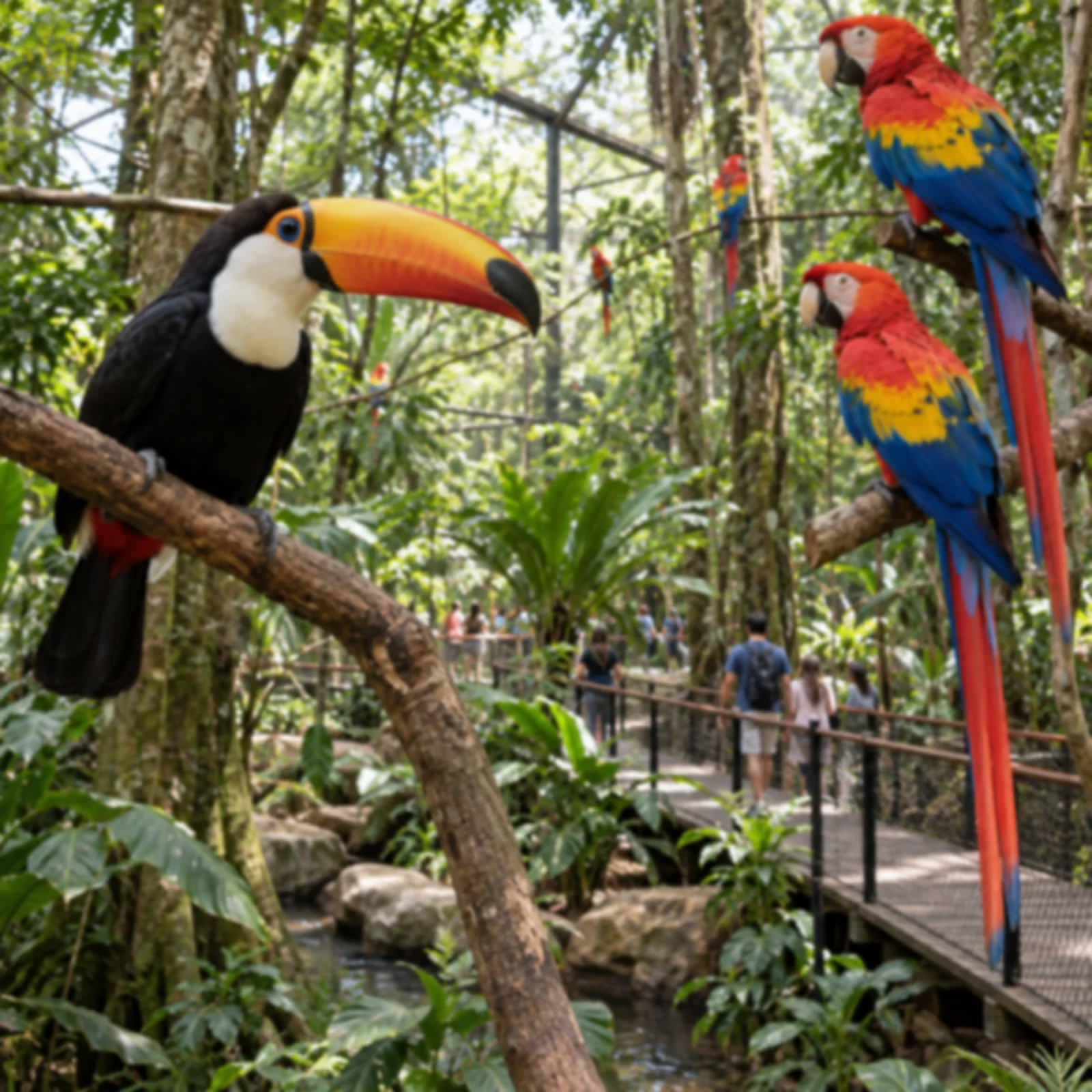
The Bird Park is on Rodovia das Cataratas, km 17, next to the entrance to Iguaçu National Park. It covers about 16 hectares of Atlantic Forest, with more than 1,400 birds of around 130 species, many rescued from trafficking. The route is about 1.6 km, paved, and is done without a guide. In five immersion aviaries visitors enter the birds’ spaces and see them up close, without touching. The aviaries include the World of Toucans, the Macaws aviary, River and Mangrove Birds, and the Butterflies and Hummingbirds area. The park is open every day and also operates in the rain. It has a restaurant and cafés.

Stops: Rodovia das Cataratas, Macaws aviary, World of Toucans, Butterflies and Hummingbirds, River and Mangrove Birds.

Includes: Access to the trails and to the aviaries. Parking, locker, and food are paid separately.

Tip: Combine with the Falls on the same day, starting early at one of the two. Check feeding times at the entrance, when the birds are most active.

Best time: year-round

Agencies that run it: Loumar Turismo, Foz Atrativa Turismo, COOTTRAFOZ, ANV Travel.

R$110 · per person, full admission (Brazilians and foreigners) · official price

Itaipu Panoramic

From Foz do Iguaçu bus with guide about 1h10 morning or afternoon easy

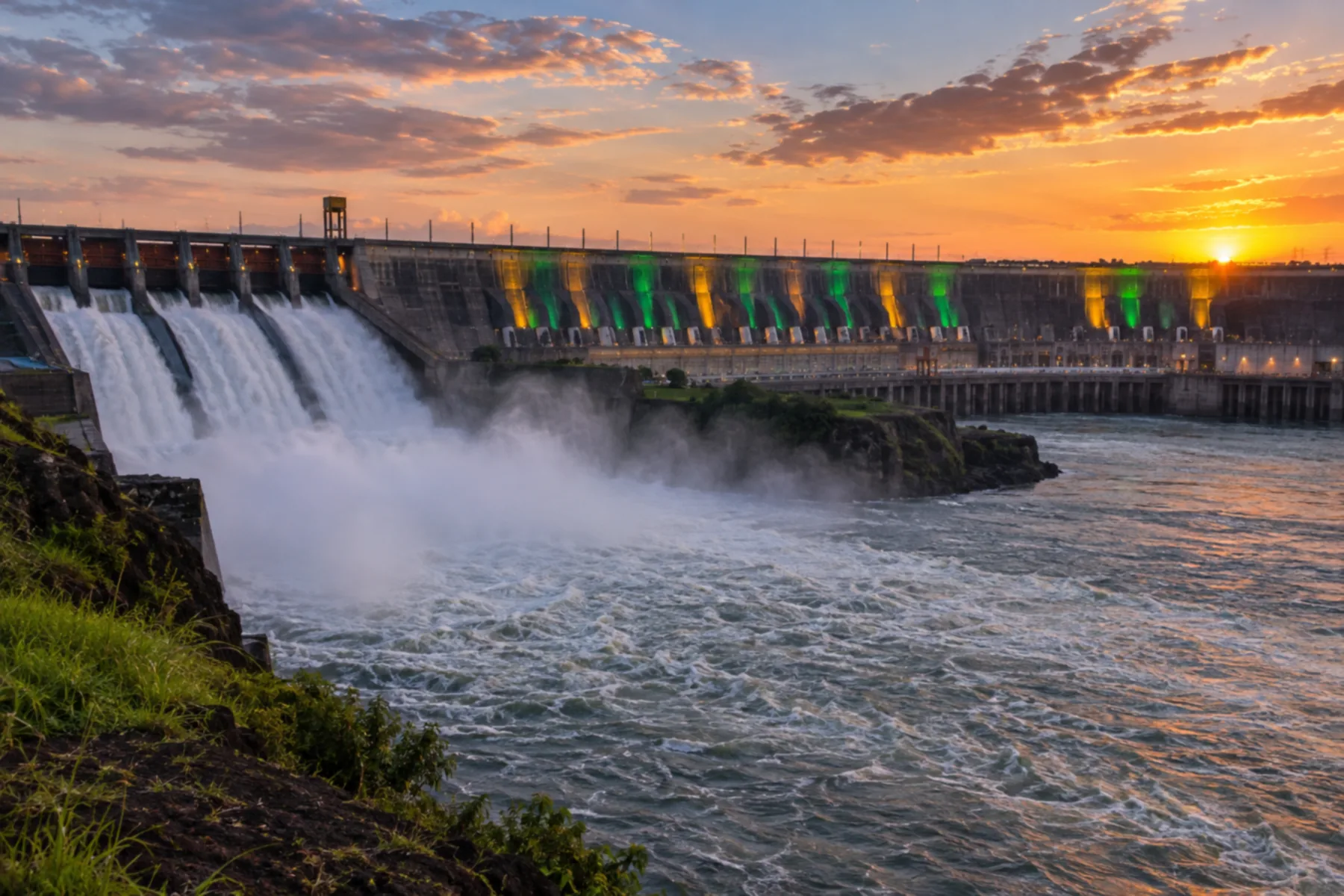
The panoramic visit to the Itaipu Hydroelectric Plant, binational between Brazil and Paraguay, departs from the Visitor Reception Center on Avenida Tancredo Neves. An open-sided bus takes visitors around the plant’s outdoor area, with an audio guide and guides in Portuguese, English and Spanish. The route passes Avenida dos Condutos Forçados, the white pipes that carry water to the turbines, and the top of the dam. There are stops at the Central Viewpoint and the Spillway Viewpoint. The spillway is only open when there is excess water in the reservoir. Departures are frequent, on a first-come, first-served basis, every day. Everyone goes through X-ray and metal detector screening.

Stops: Visitor Reception Center, Central Viewpoint, Spillway Viewpoint, Avenida dos Condutos Forçados, dam top.

Includes: internal transport, audio guide and guide. Parking and luggage storage are paid separately.

Tip: Bring a jacket or raincoat, because the bus is open-sided. Drones are prohibited. The Itaipu Ecomuseum, nearby, has free admission and complements the visit.

Best time: year-round; the spillway is more often open when the reservoir is full

Agencies that run it: Loumar Turismo, Foz Atrativa Turismo, COOTTRAFOZ, ANV Travel.

R$63 · per person, full fare (half fare R$ 31.50) · official price

Itaipu Special (internal circuit)

From Foz do Iguaçu bus and walking inside the plant about 2h30 morning or afternoon moderate

The Itaipu Special circuit is the only tour that goes inside the plant. It follows the panoramic route with the viewpoints and outdoor areas, and adds a stop on top of the dam, 225 meters above sea level. Inside the dam and the powerhouse, the group sees the internal concrete structures, the central control room, the gallery of generating units and the pit of a turbine, in an enclosed space. The route includes walks and stairs, with two floors to climb and two to descend. Only those over 14 years old may participate. Places and times are limited.

Stops: Central Viewpoint, Spillway Viewpoint, dam top, central control room, gallery of the generating units, turbine pit.

Includes: Internal transport, guide and access to internal areas. Parking and luggage storage are paid separately.

Tip: Arrive 30 minutes early for registration and a photo, with an official photo ID. Wear closed shoes that secure at the heel and long pants or shorts; bags and backpacks are not allowed. Buy your ticket in advance.

Best time: year‑round

Agencies that run it: Loumar Turismo.

R$185 · per person, full fare (half fare R$ 92.50) · official price
See 10 more tours

Itaipu Bela Vista Biological Refuge

From Foz do Iguaçu vehicle and guided walk about 2h30 morning or afternoon easy

The Bela Vista Biological Refuge is a conservation area managed by Itaipu, near the dam. The visit has two parts. First, a special vehicle tours the area with explanations about the plant’s environmental actions. Then the group walks about 2 km, plants a native tree, visits the little port on the lake and passes by the animal enclosures. Species mentioned include jaguar, harpy eagle, tapir, caiman, otter, capybara, red-rumped agouti and brocket deer. Some animals may not appear due to veterinary care or weather. It operates Wednesday through Monday, with limited spots, and is open to all ages.

Stops: Bela Vista Biological Refuge, little port on the Itaipu lake, animal enclosures.

Includes: Internal transport, guide, and planting activity. Parking is paid separately.

Tip: Arrive 30 minutes early with photo ID. Wear closed shoes and insect repellent. Some sections are not suitable for wheelchairs or strollers.

Best time: autumn and winter, with less heat on the walk

Agencies that run it: Loumar Turismo.

R$48 · per person, full (half-price R$ 24) · official price

Three Borders Landmark

From Foz do Iguaçu car, taxi, ride-hailing app, or city bus about 3 hours late afternoon and evening easy

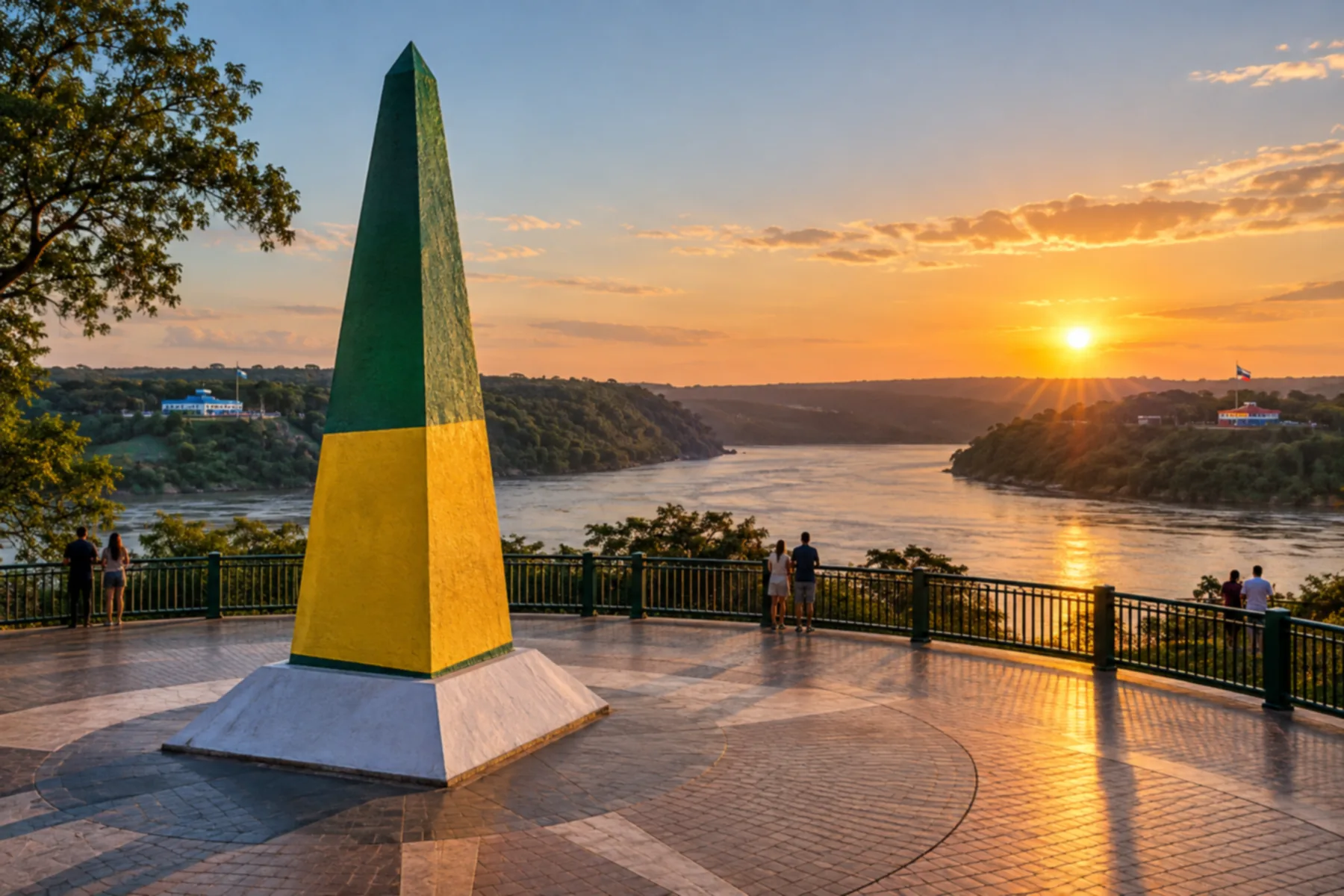
The Three Borders Landmark is located where the Iguaçu River flows into the Paraná River. From the Brazilian obelisk, painted green and yellow and surrounded by a fountain, you can see the markers for Argentina and Paraguay on the opposite bank. The site features a scenic set inspired by the Jesuit Missions, a food court, shops, a children's area, and the restaurant Cabeza de Vaca. In the early evening there are dance and music performances from the three countries, included with the ticket. It is open Tuesday through Sunday in the afternoon and evening. Late afternoon is the most popular time because of the sunset over the rivers.

Stops: Brazilian obelisk, meeting of the Iguaçu and Paraná rivers, scenic Jesuit Missions set, Restaurant Cabeza de Vaca.

Includes: Access to the site and the evening performances. Food is paid separately.

Tip: Arrive before sunset and stay for the performances. Check the sunset time for the day. Closed on Mondays.

Best time: year-round

Agencies that run it: Loumar Turismo, COOTTRAFOZ.

R$60 to R$73.50 · per person, full adult

Chen Tien Buddhist Temple

From Foz do Iguaçu car, taxi, ride‑share app, or city bus about 1 hour morning or afternoon easy

The Chen Tien Buddhist Temple was built in 1996 by Chinese communities from Brazil, Paraguay and Argentina, on top of a hill surrounded by gardens, on the road between downtown Foz and Itaipu. The gardens contain more than a hundred statues and images. The largest is Mi La Pu‑San, the Buddha of the future, seated and gilded, about 7 meters tall. There is also the reclining Shakyamuni Buddha, the Amitabha Buddha at the end of a stone pathway surrounded by smaller statues, and the Guardian Lion. On the first floor, the hall houses the 18 statues of the Arahants. It is open Tuesday through Sunday and may close on public holidays.

Stops: Mi La Pu‑San Buddha, reclining Shakyamuni Buddha, Amitabha Buddha, hall of the 18 Arahants.

Includes: Self‑guided visit to the gardens and the hall. Accepts voluntary donations.

Tip: Avoid regatta shirts, low necklines, shorts and short skirts. Photography is not allowed in the first‑floor salon and pets are not permitted. Can be combined with a visit to Itaipu on the same day.

Best time: all year

Agencies that run it: Loumar Turismo.

Omar Ibn Al-Khattab Mosque

From Foz do Iguaçu car, taxi, ride-hailing app, or on foot through downtown about 40 minutes morning or afternoon easy

The Omar Ibn Al-Khattab Mosque, in downtown Foz, has been the prayer place for the city’s Muslim community since the 1980s. It is run by the Islamic Charitable Cultural Center and features white domes and Arabic-style architecture. Foz has one of the largest Arab communities in Brazil, which began arriving in the 1950s with border trade. Visits are guided, departing every half hour. At the entrance, visitors are lent traditional clothing: a tunic for men and a headscarf or veil for women. There are no visits on Sundays, on Monday mornings, or during religious celebrations.

Stops: Omar Ibn Al-Khattab Mosque, downtown Foz do Iguaçu.

Includes: Guided visit and loan of traditional garments.

Tip: Buy the ticket beforehand or at the entrance terminals. Combine with lunch at an Arab restaurant in downtown.

Best time: year-round, except on religious holidays

Agencies that run it: Loumar Turismo.

Helicopter flight over the Falls

From Foz do Iguaçu helicopter about a 10-minute flight morning or afternoon easy

The scenic flight departs from Helisul’s helipad on Rodovia das Cataratas, opposite the Parque das Aves and near the entrance to Iguaçu National Park. The helicopter carries up to four passengers: three in the back and one beside the pilot. The flight lasts about 10 minutes: it climbs over the park’s forest and circles the Falls, showing the cascades and the Devil’s Throat from several angles. The company operates on a first-come, first-served basis and needs 3 to 4 paying passengers per flight, depending on the aircraft. Flights only run in good weather.

Stops: helipad on Rodovia das Cataratas, Iguaçu National Park, Devil’s Throat.

Includes: Scenic flight. Photos at takeoff and landing are sold separately.

Tip: Go on a clear day, preferably early in the morning. Combine with the Bird Park and the Falls, which are next door.

Best time: clear-sky days, year-round

Agencies that run it: Loumar Turismo.

Shopping in Ciudad del Este (Paraguay)

From Foz do Iguaçu van, car, taxi or on foot via the Friendship Bridge half a day morning easy

Ciudad del Este is on the other side of the Paraná River, connected to Foz by the Friendship Bridge. It is a commercial center with street shops and shopping malls selling electronics, perfumes, alcoholic beverages, clothing and household goods. Many visitors go by agency van, which drops the group off at prearranged stores and picks them up at the agreed time. You can also go by car or cross the bridge on foot. On the return, the Brazilian Federal Revenue inspects purchases at the Brazilian customs: there is a tax-free allowance per person and quantity limits; anything beyond that is subject to tax. The new Integration Bridge, inaugurated in December 2025, is not yet open to passenger cars.

Stops: Friendship Bridge, Ciudad del Este, Ciudad del Este commercial center.

Includes: On agency tours: round-trip transport and bridge crossing. Purchases and food are not included.

Tip: Bring your ID or passport and keep your receipts. Go early: shops close in the late afternoon and the bridge can have lines. Check the current allowance amount on the Federal Revenue website.

Best time: weekdays, excluding holidays

Agencies that run it: Loumar Turismo, PasseioTur, Foz Atrativa Turismo, Combo Iguassu, COOTTRAFOZ.

Duty Free Shop Puerto Iguazú

From Foz do Iguaçu car, taxi, ride‑hail or van about 2 hours afternoon easy

The Duty Free Shop Puerto Iguazú is on Ruta 12, just after the Fraternity Bridge and a few meters before the Argentine immigration checkpoint. Therefore, those who go only to shop don’t have to face the border queue. The store sells chocolates, alcoholic beverages, perfumes, makeup, sunglasses, designer clothing, luggage and electronics with international brands. There is underground parking. Brazilians buy tax‑free within a quota per CPF set by the Federal Revenue. Many agencies combine a visit to the duty free with the return from the Argentine side of the falls or with dinner in Puerto Iguazú.

Stops: Fraternity Bridge, Duty Free Shop Puerto Iguazú, Puerto Iguazú.

Includes: On agency tours: round‑trip transport. Purchases are extra.

Tip: Bring your ID card or passport, which may be requested at the checkout. Check the current allowance amount before you buy.

Best time: year‑round

Agencies that run it: Loumar Turismo, COOTTRAFOZ.

Poço Preto Trail

From Iguaçu National Park bicycle or walk half day morning moderate

The Poço Preto Trail is an approximately 9 km trail inside Iguaçu National Park through the Atlantic Forest to the banks of the Iguaçu River, above the Falls. It can be done on foot or by bicycle; round trip is about 19 km. The concessionaire offers the Bike Poço Preto option, with bicycle rental, and there is a guided option with stops to observe birds and plants. The trail was reopened in 2024 after being closed for about four years. The park also has the Caminho das Bananeiras, a shorter trail, and the 11.6 km Cataratas bike path. Access varies according to weather and river level.

Stops: Iguaçu National Park, Atlantic Forest, Iguaçu River.

Includes: Access to the trail is included with the park entrance ticket. Bicycle rental and guides are sold separately.

Tip: Leave early, because the trail entrance closes before the end of the day. Bring water and insect repellent. In September 2026 the trail was closed due to flood risk; confirm it is open.

Best time: autumn and winter, with normal river levels

Dawn and Sunset at the Falls

From Iguaçu National Park park bus and walk about 2 to 3 hours early morning or late afternoon easy

These are visits to the Falls on the Brazilian side outside the park’s normal hours, with smaller groups. At Dawn, the group enters before opening, walks the Falls Trail and the walkways with few people and has breakfast in the park. At Sunset, access to the falls area happens after regular visiting hours, in the late afternoon. The concessionaire also sells Night at the Falls, with dinner, and Sky of the Falls, a stargazing session with telescopes on Saturdays, limited to 20 places per session. All experiences have limited availability and are purchased separately.

Stops: Falls Trail, Garganta do Diabo walkway, Porto Canoas Area.

Includes: Internal transport and trail access outside normal hours. At Dawn, breakfast is included.

Tip: Buy in advance, because spots are limited. The Dawn experience is good for photos without crowds on the walkways.

Best time: year‑round

Agencies that run it: Loumar Turismo.

Kattamaram boat tour

From Foz do Iguaçu boat about 2 hours of navigation lunch or late afternoon easy

The Kattamaram II is a catamaran that sails the Paraná and Iguaçu rivers in the Triple Border region. The route is about 20 km and passes under the three bridges of the area: the Friendship Bridge to Paraguay, the Fraternity Bridge to Argentina, and the Integration Bridge. There are two main options: lunch on board and sunset with dinner on board, with music. The company states it operates every day. Some agencies sell the tour with hotel transfer.

Stops: Paraná River, Iguaçu River, Friendship Bridge, Fraternity Bridge, Integration Bridge.

Includes: Navigation and meal on board, depending on the option. Hotel transfer with some agencies.

Tip: Choose the sunset schedule to see the rivers meet in late-afternoon light. Bring a warm layer in winter.

Best time: all year

Agencies that run it: Loumar Turismo.

Prices are estimates, checked in October 2026 with local operators, and may change with the season and the type of tour. Confirm with the operator before booking.

Day by day

2, 3 and 5-day itinerary in Foz do Iguaçu e Região

Suggestions to plan the trip. Change the order of the days according to the weather and tour availability.

2 days · Foz do Iguaçu in 2 days: the Falls from both sides

For first trip and short on time · Based in Foz do Iguaçu
  1. Day 1 · Brazilian Falls and Parque das Aves

    Arrive early at Iguaçu National Park and take the Cataracts Trail to the Devil’s Throat boardwalk. If you want to get wet, get off at the Macuco Safari stop on the outbound leg. After lunch, visit the Parque das Aves, next to the entrance. In the late afternoon, go to the Three Borders Landmark for sunset and the evening performances.

  2. Day 2 · Argentine Falls

    Leave early for the Argentine side, by agency van or car, with your physical ID or passport. In the park, do the Upper Circuit and the Lower Circuit and, if it’s open, the Garganta del Diablo walkway by train. On the way back, stop at Duty Free Shop Puerto Iguazú before immigration.

3 days · Foz do Iguaçu in 3 days with Itaipu
For those who want to see the Falls and the power plant · Based in Foz do Iguaçu
  1. Day 1 · Brazilian Falls and Macuco Safari

    Do the Cataratas Trail in the morning and the Macuco Safari on the return, with a change of clothes. In the afternoon, visit the Bird Park. If the day is clear, take the helicopter flight at the helipad in front of the Bird Park.

  2. Day 2 · Argentine Falls

    Full day in Iguazú National Park, with the Upper and Lower Circuits and the Garganta del Diablo if the walkway is open. Those with stamina can do the Sendero Macuco. At night, dine in Puerto Iguazú or return to Foz.

  3. Day 3 · Itaipu, Buddhist Temple and Landmark

    In the morning, do the Itaipu Panoramic tour or the Itaipu Special circuit (for ages 14+), and stop by the Ecomuseum. After lunch, visit the Chen Tien Buddhist Temple. End the day at the Three Borders Landmark, watching the sunset over the Iguaçu and Paraná rivers.

5 days · Foz do Iguaçu in 5 days, relaxed pace
For families and those who want to see everything without rushing · Based in Foz do Iguaçu
  1. Day 1 · Arrival and Three Borders Landmark

    Arrive via Foz airport, about 13 km from the center. After you settle in, go to the Three Borders Landmark at sunset for the view and the dance presentations from the three countries.

  2. Day 2 · Brazilian Falls at a relaxed pace

    Do the Cataratas Trail right at opening, or book the Dawn at the Falls. On the return, take the Macuco Safari. In the afternoon, visit the Bird Park, which is next to the national park entrance.

  3. Day 3 · Argentine Falls

    Full day on the Argentine side. Do the Upper and Lower Circuits, the Garganta del Diablo if the walkway is open, and the Sendero Macuco. Keep your receipt: the second day is half price within 72 hours.

  4. Day 4 · Itaipu and Biological Refuge

    Do the Itaipu Panoramic tour or the Itaipu Special circuit in the morning. In the afternoon, visit the Bela Vista Biological Refuge, open Wednesday to Monday, with tree planting and regional animals. End the day at the Buddhist Temple, open Tuesday to Sunday.

  5. Day 5 · Shopping or trail

    Choose between half a day of shopping in Ciudad del Este, with ID and attention to the Federal Revenue allowance, or the Poço Preto Trail by bicycle in the National Park, if it’s open. In the afternoon, visit the mosque downtown before heading to the airport.

Best time to go

When to go: Foz do Iguaçu e Região month by month

From March to May and from September to November, when the heat lets up and the Falls usually have a good volume of water. Summer is hot and humid, but that is when the falls are fullest. In winter the mornings are cold and the water volume is usually lower, without taking away from the beauty of the falls.

The seasons shown are the most usual ones; nature doesn't always follow the calendar.

January High rain

High season: school holidays in Brazil and Argentina · Flow: in summer it usually runs above average

Hot, rainy month with afternoon showers. Parks and walkways crowded, especially in the first weeks. Buy tickets and tours in advance. Good month for the Macuco Safari.

February High rain

High season until Carnival · Flow: in summer it usually stays above average

Hot with frequent rain. Crowds remain high until Carnival and then fall. Bring a rain poncho for the walkways.

March High rain

Low season, with a peak at Easter when it falls in March

Still hot, with frequent rain. After the holidays attendance drops. Easter fills Foz and the Argentine side; check the date in your travel year.

April Some rain

Low season, with peaks at Easter and the Tiradentes holiday

Milder temperatures and less rain. Good month for walking in both parks. Long weekends increase attendance.

May Some rain

Low season

Autumn with pleasant days and cooler nights. Parks are emptier on weekdays. Good month for hikes such as the Caminho do Poço Preto.

June Some rain

Low season, with the Corpus Christi holiday · Flow: strong floods have occurred in June

Cold begins, with dry days alternating with rain. Bring warm clothing for the walkways and Itaipu’s open bus. In high water, the Devil’s Throat walkway may close.

July Low rain

High season: winter school holidays in Brazil and Argentina · Flow: in winter it usually stays below average

The driest and coldest month of the year. High attendance during school vacations in both countries. Book lodging and tours in advance.

August Low rain

Low season · Flow: in winter it usually stays below average

Dry and still cool, with clear skies. Good for helicopter flights and photography. In prolonged drought, the falls lose volume.

September Some rain

Low season · Flow: spring rains raise the river

Temperatures rise and the rain returns. In high-water years, walkways and trails near the river can close for a few days. Check before you go.

October High rain

Low season, with the October 12 holiday · Flow: month with the highest chance of floods

This is the rainiest month in the climate norm. Falls tend to be heavy and the water can become muddy. Bring a rain poncho.

November Some rain

Low season, with long holidays

Heat returns and rains are more scattered than in October. Good balance between water volume and park activity.

December High rain

High season in the second half: festivals and start of school break · Flow: in summer it usually stays above average

Hot and rainy. The first half of the month is calmer; from Christmas onward, Foz fills up. Entrance fees to Iguaçu National Park are often adjusted at year end.

Plan the journey

How to get there: Foz do Iguaçu e Região

By plane

Foz do Iguaçu International Airport (IGU) is on the Rodovia das Cataratas, about 13 km from downtown and close to the entrance of Iguaçu National Park. It has direct flights from São Paulo (Guarulhos, Congonhas and Viracopos), Rio de Janeiro, Curitiba and Belo Horizonte, among other cities depending on the season.

On the Argentine side, Puerto Iguazú International Airport (IGR) receives flights from Buenos Aires. Arrivals there must cross the border to stay in Foz. From Foz airport to downtown there are taxis, app-based cars and the urban bus line 120.

By bus

Foz do Iguaçu’s international bus station receives coaches from Curitiba, São Paulo, Porto Alegre and other cities in the South and Southeast. The trip from Curitiba takes about 9 to 10 hours; from São Paulo about 16 to 20 hours. From the bus station to downtown, use a taxi, app-based car or the urban bus to the Terminal de Transporte Urbano.

By car

From Curitiba it’s about 640 km via BR-277, which crosses Paraná from east to west to Foz do Iguaçu in around 8 hours. From São Paulo it’s about 1,050 km; from Porto Alegre about 990 km. BR-277 has tolls on several stretches. In Foz, attractions are concentrated along three axes: the Rodovia das Cataratas, the Itaipu area and the downtown area with the Three Borders.

Crossing into Argentina and Paraguay

For Argentina, the crossing is via the Tancredo Neves – Puente de la Fraternidad, with a mandatory stop at Argentine immigration. Brazilians enter with a physical national ID (RG) in good condition or a valid passport, no visa required. The RG must have been issued less than 10 years ago. Digital RG and CNH, CPF and professional ID cards are not accepted. Minors traveling with only one parent or with third parties need a travel authorization with notarized signature. Puerto Iguazú charges a per-person tourism fee, payable in cash.

For Paraguay, the crossing to Ciudad del Este is via the Friendship Bridge (Puente de la Amistad), by car, taxi, van or on foot. Bring your RG or passport. On return, the Federal Revenue Service inspects purchases. The Integration Bridge (Ponte da Integração), inaugurated in December 2025, is not yet open to passenger cars. Confirm document and duty-free allowance rules before you travel.

Getting around the city

Local bus line 120 departs from the Terminal de Transporte Urbano (TTU) in downtown and stops at the airport, Parque das Aves and Iguaçu National Park; from the terminal to the Falls is about 30 minutes. For the Buddhist Temple and the Three Borders Landmark there is line 103; for Itaipu, lines 101, 102 and 104. An international bus leaves next to the TTU for Puerto Iguazú, with a stop at immigration.

Taxis and app-based cars operate in Foz. For the Argentine side, most visitors use shared vans or private agency cars, which handle the border crossing.

Need to rent a car?

Not necessary. Urban buses, app-based cars and agency vans reach all Foz attractions and the Argentine side. A rental car gives schedule freedom, but parks charge for parking and the crossing to Argentina requires vehicle documents and insurance valid in that country. If you stay only in Foz and do the Argentine side with an agency, a car can be dispensed with.

Who takes you

Tour agencies in Foz do Iguaçu e Região

Only agencies with an active registration in Cadastur, the official registry of Brazil's Ministry of Tourism, are listed. The order is not a ranking: compare the tours and book directly with the agency.

Cidade Turismo reviews its information regularly, but something may have changed. Check with the place before planning your trip.

Agencies in Foz do Iguaçu

Loumar Turismo

Foz do Iguaçu
Active Cadastur

Agency based in downtown Foz do Iguaçu selling circuits and tickets for the Falls on both sides, Itaipu and the Three Borders Landmark. Also provides transport for shopping in Ciudad del Este and city tours in Argentina and Paraguay.

Tours: Iguaçu Falls – Brazilian side, Iguazú Falls – Argentine side, Macuco Safari, Bird Park (Parque das Aves), Itaipu Panoramic, Itaipu Special (internal circuit), Itaipu Bela Vista Biological Refuge, Three Borders Landmark, Chen Tien Buddhist Temple, Omar Ibn Al-Khattab Mosque, Helicopter flight over the Falls, Shopping in Ciudad del Este (Paraguay), Duty Free Shop Puerto Iguazú, Dawn and Sunset at the Falls, Kattamaram boat tour.

Cadastur checked in October 2026

PasseioTur

Foz do Iguaçu
Active Cadastur

Reception service in Foz do Iguaçu with transfers and tours to Argentina and Paraguay. Sells private-car tours to the Argentine side of the Falls for up to 4 people, with a guide.

Tours: Iguazú Falls – Argentine side, Shopping in Ciudad del Este (Paraguay).

Cadastur checked in October 2026

Foz Atrativa Turismo

Foz do Iguaçu
Active Cadastur

Foz do Iguaçu agency that sells shared and private transport to the Argentine Falls, shopping trips in Paraguay and tickets for Macuco Safari, Itaipu and Parque das Aves. Also offers sport fishing and trips to Jesuit ruins.

Tours: Iguaçu Falls – Brazilian side, Iguazú Falls – Argentine side, Macuco Safari, Bird Park (Parque das Aves), Itaipu Panoramic, Shopping in Ciudad del Este (Paraguay).

Cadastur checked in October 2026

Combo Iguassu

Foz do Iguaçu
Active Cadastur

Foz do Iguaçu agency that sells transport-and-ticket combos for the Argentine Falls, a night tour in Puerto Iguazú and transport for shopping in Ciudad del Este.

Tours: Iguazú Falls – Argentine side, Shopping in Ciudad del Este (Paraguay).

Cadastur checked in October 2026

COOTTRAFOZ

Foz do Iguaçu
Active Cadastur

Cooperative transport and tourism company of Foz do Iguaçu, with cooperative drivers. Provides transfers from Foz and Puerto Iguazú airports and private or shared transport to the Falls on both sides, Itaipu and shopping trips.

Tours: Iguaçu Falls – Brazilian side, Iguazú Falls – Argentine side, Macuco Safari, Bird Park (Parque das Aves), Itaipu Panoramic, Three Borders Landmark, Shopping in Ciudad del Este (Paraguay), Duty Free Shop Puerto Iguazú.

Cadastur checked in October 2026

ANV Travel

Foz do Iguaçu
Active Cadastur

Reception desk in Vila Yolanda, Foz do Iguaçu, selling transfers to the Brazilian Falls and Itaipu and tickets for Parque das Aves and the Argentine side.

Tours: Iguaçu Falls – Brazilian side, Iguazú Falls – Argentine side, Bird Park (Parque das Aves), Itaipu Panoramic.

Cadastur checked in October 2026

Iguassu Brasil Receptivos

Foz do Iguaçu
Active Cadastur

Receptive tour agency in Foz do Iguaçu found by search; the website blocked access and the tours were not verified.

Cadastur checked in October 2026

Do you run an agency or work as a tour guide Foz do Iguaçu e Região? Get listed on Cidade Turismo.

Your base to explore

Where to stay and where to eat

Cidade Turismo partners

Featured places to stay in the region

Itaipuland Thermas Park & Resort

Partner

Hotel · Jardim Bourbon · Itaipulândia, about 70 km from Foz do Iguaçu Approximate distance by road. In a straight line, by GPS, it is 53 km; the actual trip varies with the road you take.

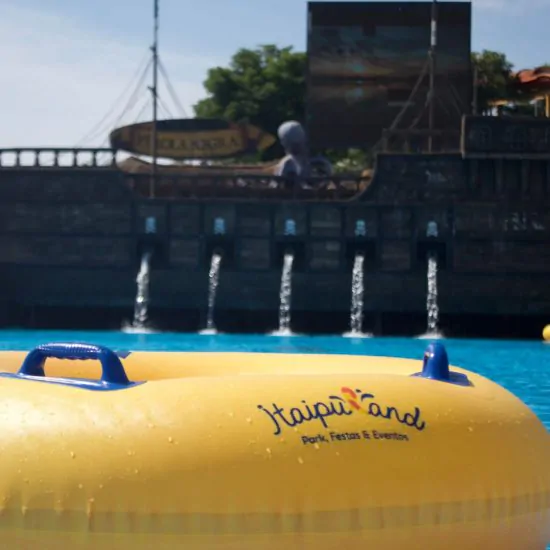
Water park in Itaipulândia, PR, with resort and heated pools 72 km from Foz do Iguaçu. Family fun, tickets and lodging. Buy now!

Own hot spring pool

Before you go

Practical information

A little planning leaves more time to enjoy the journey.

When to go

From March to May and from September to November, when the heat lets up and the Falls usually have a good volume of water. Summer is hot and humid, but that is when the falls are fullest. In winter the mornings are cold and the water volume is usually lower, without taking away from the beauty of the falls.

The seasons shown are the most usual ones; nature doesn't always follow the calendar.

How many days to stay

Plan at least 3 days: one for the Brazilian side of the Falls and the Parque das Aves, which are on the same road; one for the Argentine side; and one for Itaipu and the Marco das Três Fronteiras. With 4 days, you have time for boat rides under the falls or for the beaches of Lago de Itaipu.

Which city to stay in

Most hotels are in downtown Foz do Iguaçu, with restaurants within walking distance and buses to the attractions, or on Rodovia das Cataratas, the road to the park, where the resorts and hotels surrounded by greenery are. Downtown is more practical if you don't have a car; the highway is quieter and close to the airport and the Falls.

Respect the place

Take your trash with you, follow the signs and support local businesses. In natural areas, follow the visiting guidelines.

Beyond the guide

Your questions

Frequently asked questions about Foz do Iguaçu e Região

Vale a pena visitar as Cataratas pelos dois lados?

Vale. O lado brasileiro oferece a vista panorâmica das quedas e fica pronto em meio dia. O lado argentino tem trilhas e passarelas mais longas, que passam por cima e bem perto das cachoeiras, e ocupa um dia inteiro. Quem tem pouco tempo e só pode escolher um costuma ficar com o panorama do lado brasileiro.

Que documento preciso para ir ao lado argentino?

Brasileiros entram na Argentina com RG em bom estado e emitido há menos de 10 anos, com a nova Carteira de Identidade Nacional ou com passaporte válido. CNH não é aceita. Menores viajando sem um dos pais precisam de autorização. Antes de viajar, confira as exigências atuais de entrada no site oficial do governo argentino.

Quanto tempo leva a visita às Cataratas no lado brasileiro?

A trilha principal tem cerca de 1,2 km, com mirantes ao longo do cânion, e termina na passarela da Garganta do Diabo. Contando o ônibus interno do parque, a visita leva de 2 a 4 horas. Os passeios de barco que chegam perto das quedas são contratados à parte, dentro do parque.

O que é o Marco das Três Fronteiras?

É um mirante no encontro dos rios Iguaçu e Paraná, de onde se veem, ao mesmo tempo, o Brasil, a Argentina e o Paraguai. Cada país tem o seu marco pintado com as cores da bandeira. O programa mais procurado é o fim de tarde, com o pôr do sol sobre os rios.

Precisa de carro em Foz do Iguaçu?

Não. Ônibus urbanos ligam o centro às Cataratas e ao Parque das Aves, e há táxi, aplicativos e agências com transporte para o lado argentino e para Itaipu. O carro ajuda quem quer visitar as cidades do Lago de Itaipu ou fazer vários passeios no mesmo dia.

Quanto custa a entrada nas Cataratas do Iguaçu do lado brasileiro?

Desde dezembro de 2025, o ingresso do Parque Nacional do Iguaçu custa R$ 121 para brasileiros e cidadãos do Mercosul e R$ 134 para os demais estrangeiros. Moradores de Foz e de 13 municípios vizinhos pagam o Passe Comunidade, de R$ 26. Crianças até 6 anos não pagam. O ingresso inclui o ônibus interno até a Trilha das Cataratas. Não há meia-entrada. O valor é reajustado todo ano.

Qual lado das Cataratas é melhor, o brasileiro ou o argentino?

Os dois se completam. Do lado brasileiro, a vista é de frente para as quedas, numa trilha de cerca de 1 km, feita em meio dia. Do lado argentino, as passarelas passam por cima e por baixo dos saltos e chegam à Garganta del Diablo; a visita leva o dia inteiro e exige mais caminhada. Quem tem dois dias deve visitar os dois.

Que documento preciso para ir ao lado argentino das Cataratas?

Brasileiros entram na Argentina com RG físico em bom estado, emitido há menos de 10 anos, ou passaporte válido. Não precisa de visto. RG e CNH digitais, CPF e carteiras profissionais não são aceitos. Menores que viajam com só um dos pais ou com terceiros precisam de autorização com firma reconhecida. Confirme as regras com o consulado argentino antes da viagem.

Quanto custa a entrada no lado argentino das Cataratas?

O Parque Nacional Iguazú cobra em pesos argentinos. Desde junho de 2026, estrangeiros, inclusive brasileiros, pagam 60.000 pesos no passe diário. Não há categoria especial para o Mercosul. O segundo dia sai com 50% de desconto, dentro de 72 horas. Crianças de 0 a 6 anos não pagam. A compra pode ser feita no portal oficial ou na bilheteria.

Quantos dias ficar em Foz do Iguaçu?

Dois dias bastam para as Cataratas dos dois lados. Com três dias, dá para incluir Itaipu, o Templo Budista e o Marco das Três Fronteiras. Com quatro ou cinco, cabem o Macuco Safari, o Parque das Aves, o Refúgio Biológico, compras no Paraguai e trilhas no Parque Nacional sem pressa.

Qual a melhor época para visitar as Cataratas do Iguaçu?

As Cataratas podem ser visitadas o ano todo. O volume de água depende das chuvas na bacia do Rio Iguaçu e das hidrelétricas, e não dá para prever com certeza; no verão costuma ficar acima da média e no inverno, abaixo. Outubro é o mês mais chuvoso; julho e agosto, os mais secos. Para pegar menos gente, evite janeiro, julho e feriados prolongados.

Dá para ir às Cataratas de ônibus?

Sim. A linha 120 do ônibus urbano sai do Terminal de Transporte Urbano, no centro de Foz, passa pelo aeroporto e pelo Parque das Aves e chega ao Centro de Visitantes do Parque Nacional do Iguaçu em cerca de 30 minutos. Para o lado argentino, não há ônibus direto até o parque: é preciso ir até a rodoviária de Puerto Iguazú e trocar de ônibus, ou usar van de agência.

O Macuco Safari molha?

Sim. Na versão molhada, o bote entra embaixo do Salto dos Três Mosqueteiros e todos saem encharcados, mesmo com capa. Leve roupa de troca e toalha e proteja o celular. O passeio dura cerca de 2 horas, com cerca de 30 minutos de barco. A entrada do Parque Nacional do Iguaçu é paga à parte.

Qual a idade mínima para o circuito Itaipu Especial?

O circuito Itaipu Especial, que entra na usina e passa pela sala de controle e pela galeria das turbinas, só aceita maiores de 14 anos, mesmo acompanhados dos pais. É preciso documento oficial com foto, chegar 30 minutos antes e usar calçado fechado. Para crianças menores, a opção é a Itaipu Panorâmica, livre para todas as idades.

A passarela da Garganta do Diabo pode fechar?

Sim. Nos dois lados, as passarelas que chegam à Garganta do Diabo fecham quando o Rio Iguaçu fica muito cheio. Do lado brasileiro, o fechamento é reavaliado quando a vazão passa de cerca de 8 milhões de litros por segundo com tendência de alta. Do lado argentino, a passarela da Garganta del Diablo foi desmontada por prevenção em agosto de 2026. Confira a situação antes da visita.

Explore other destinations Search by state and city