Costa do Dendê

BA

Costa do Dendê

Paisagens, cultura e passeios para conhecer a Costa do Dendê.

Nordeste

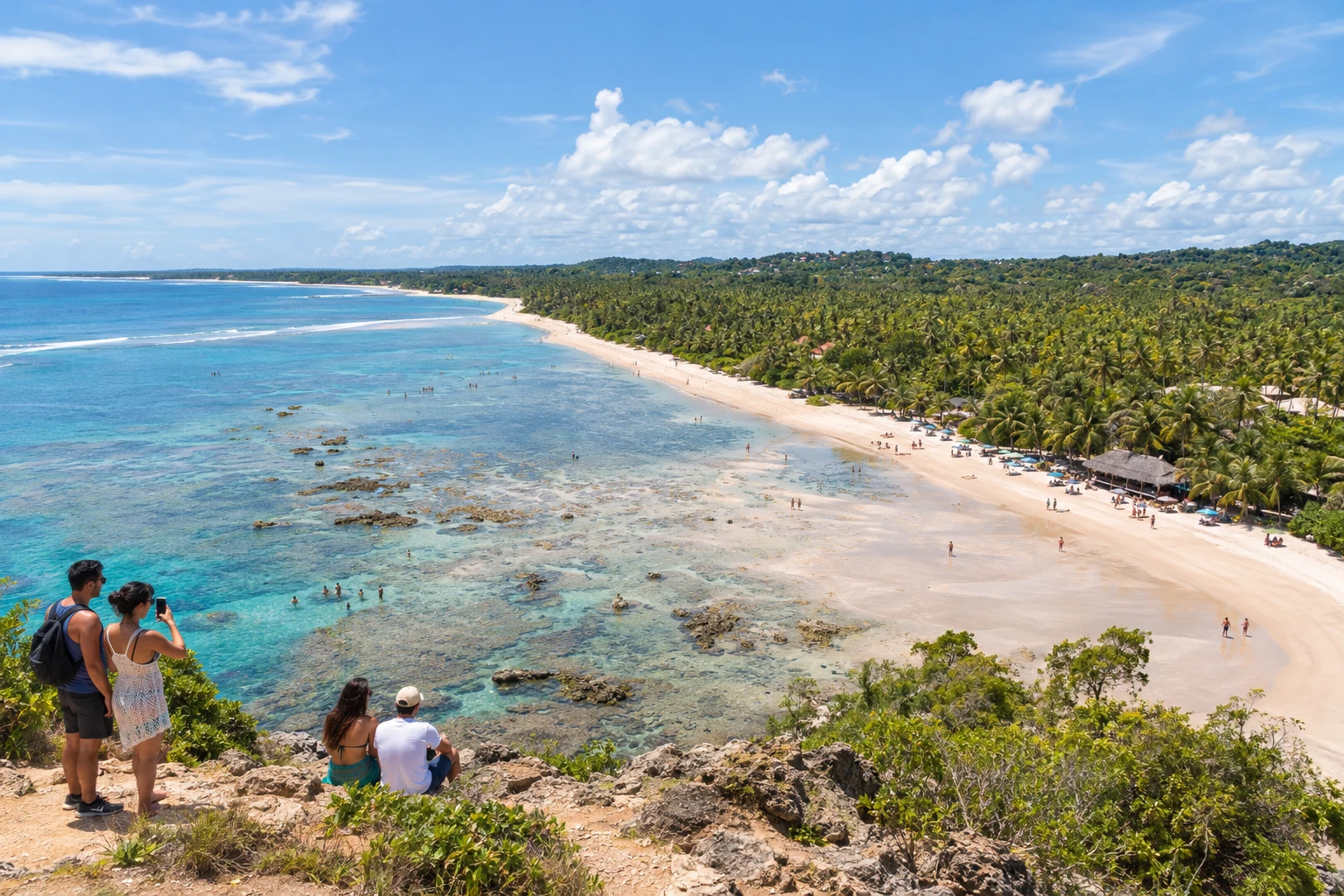
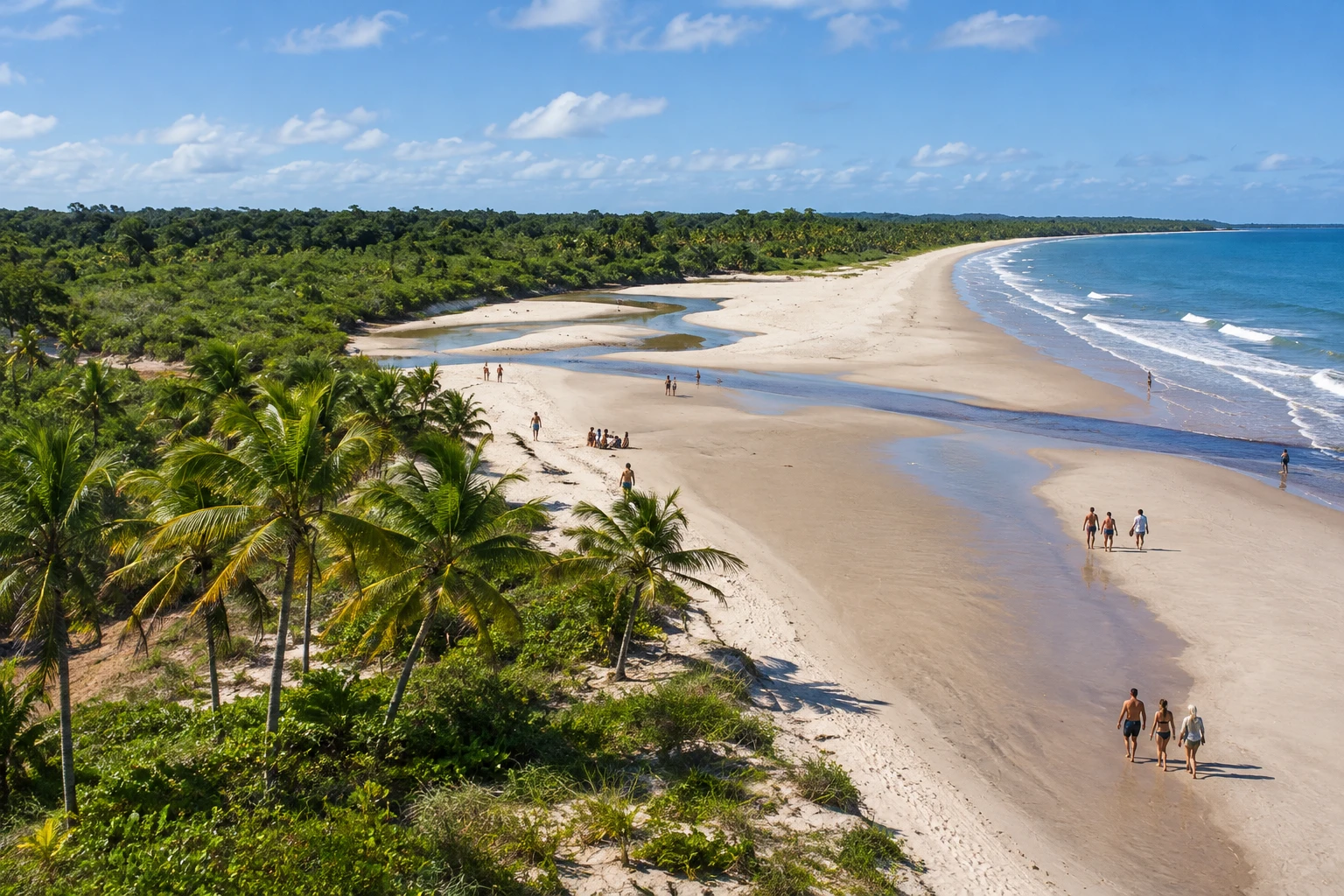
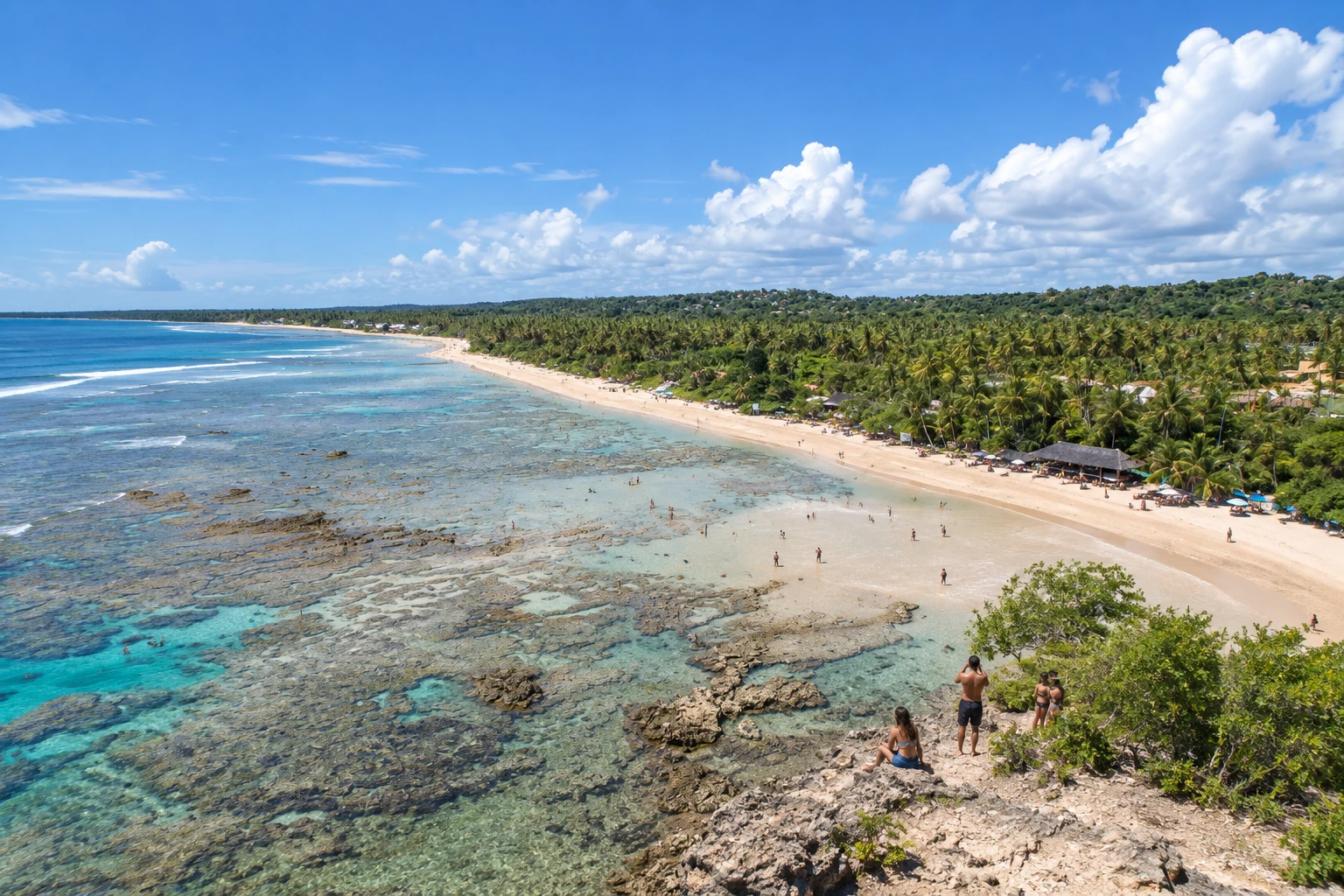
In the photo: Quarta Praia, no Morro de São Paulo, Cairu, na Costa do Dendê

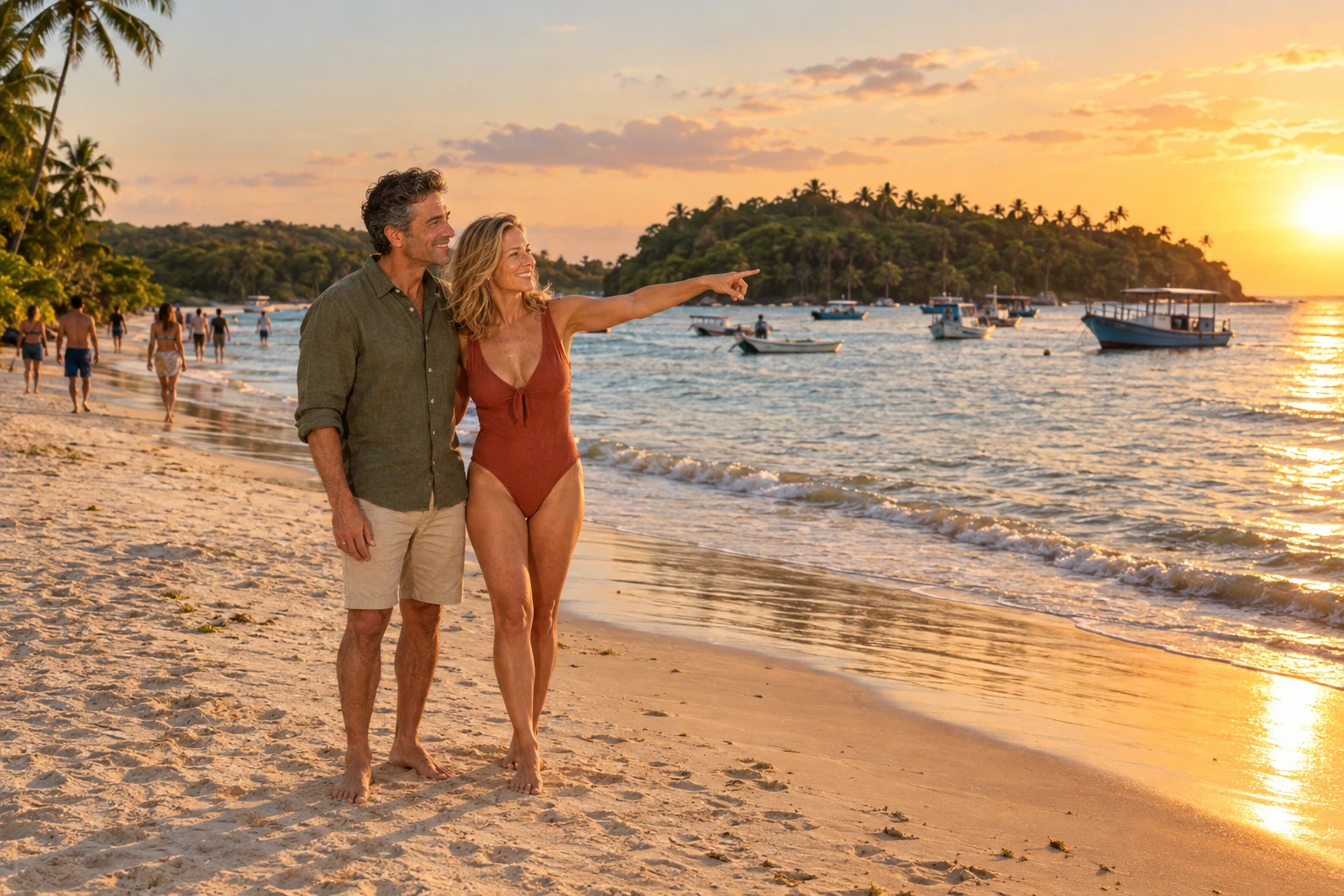
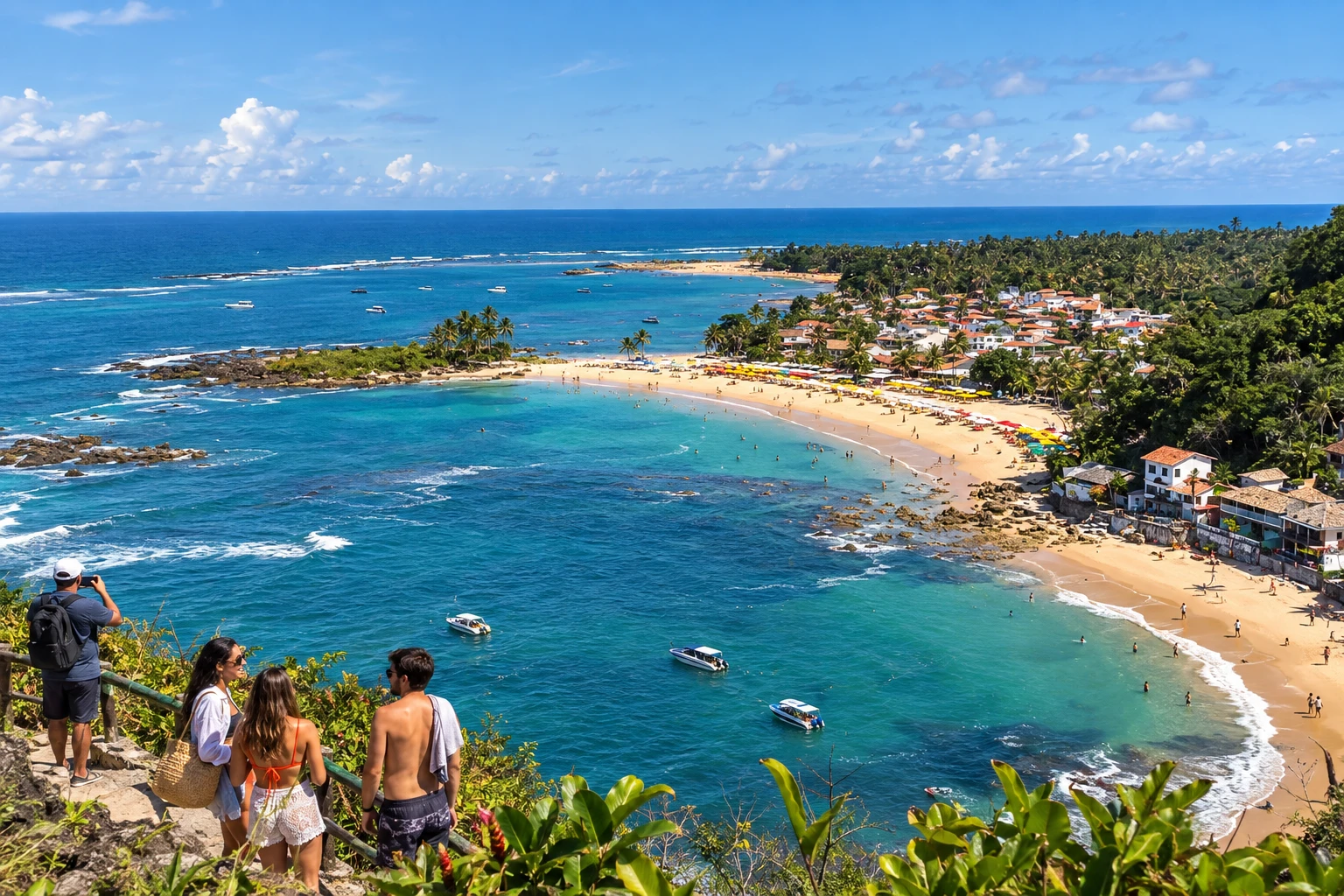
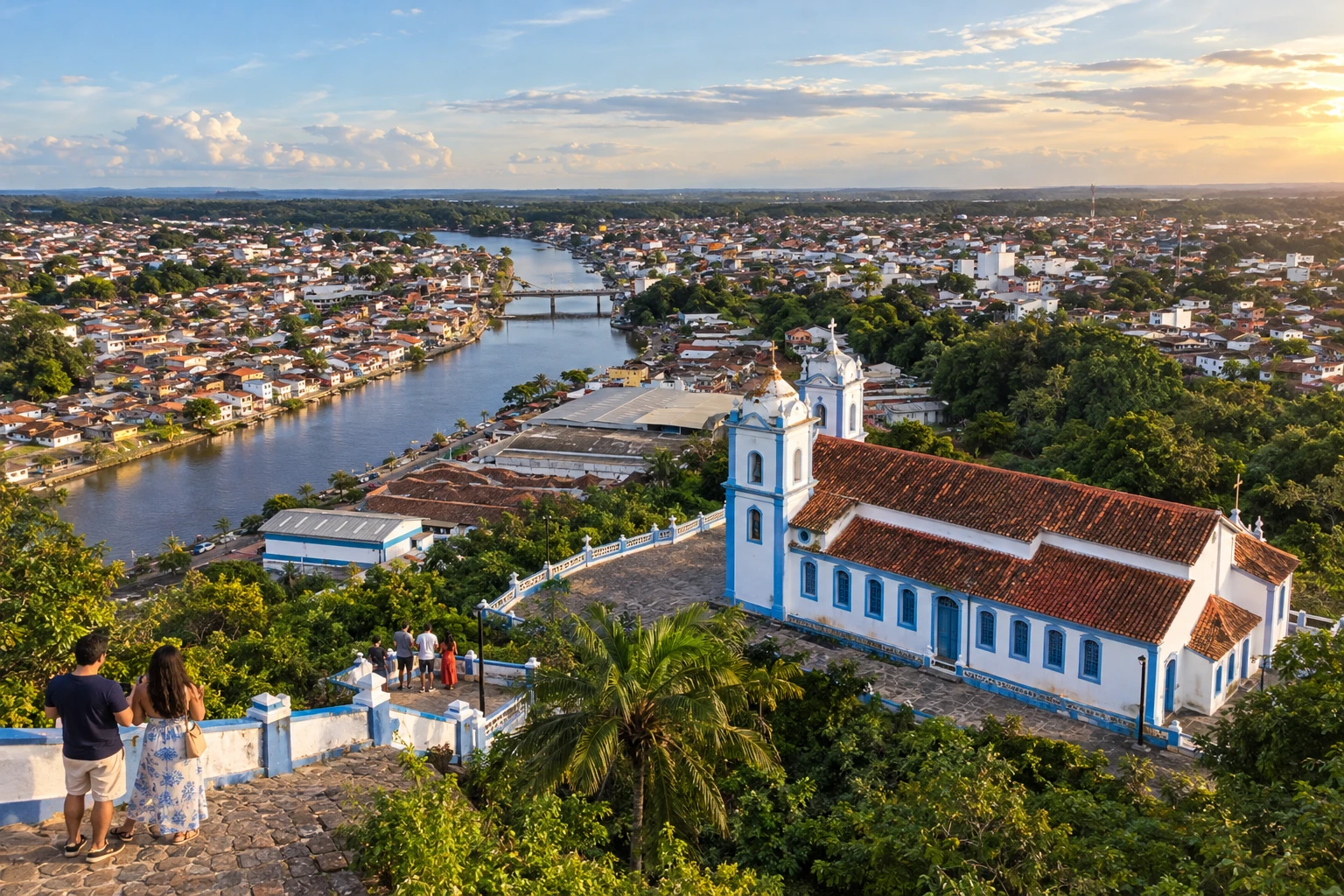
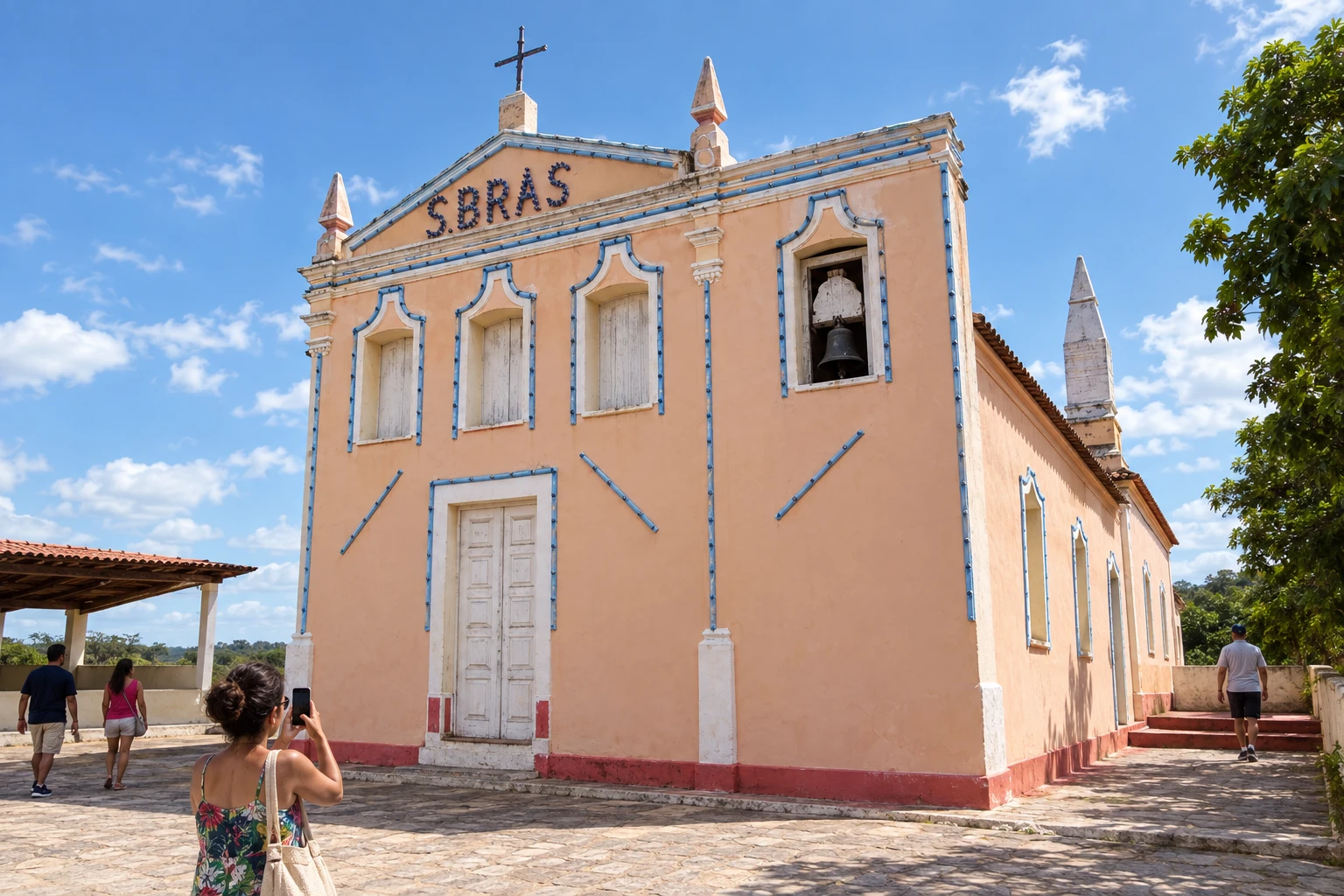
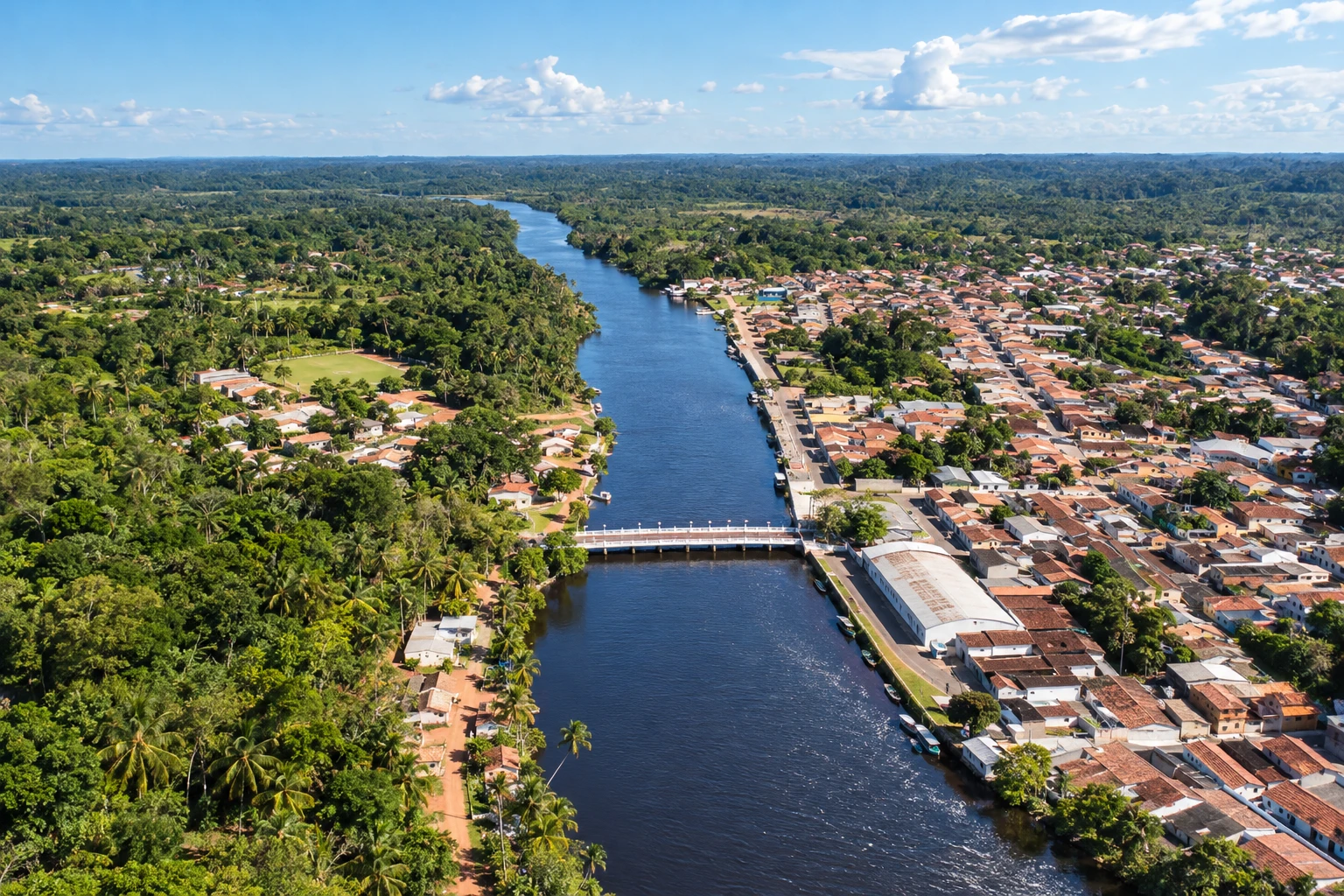
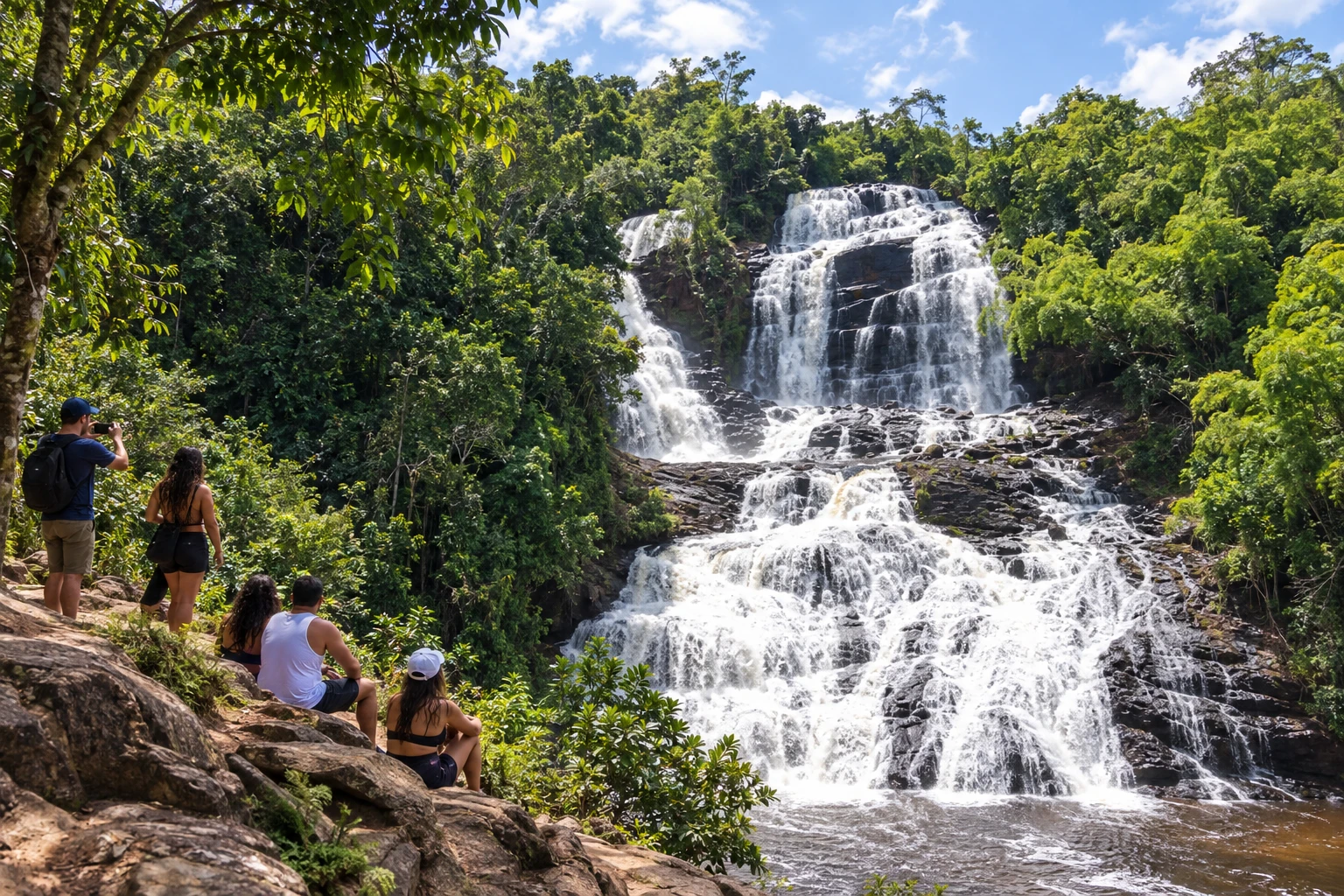
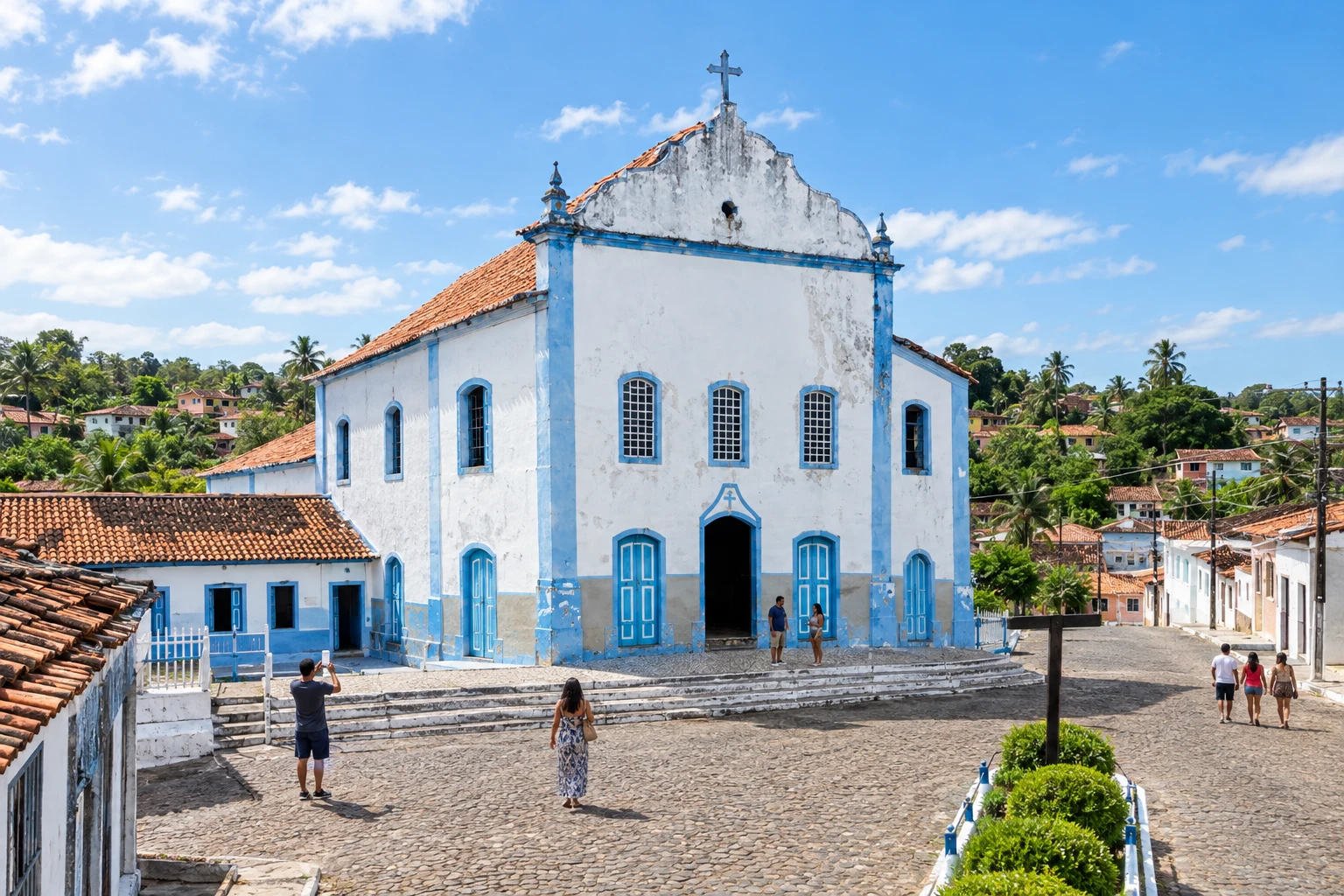
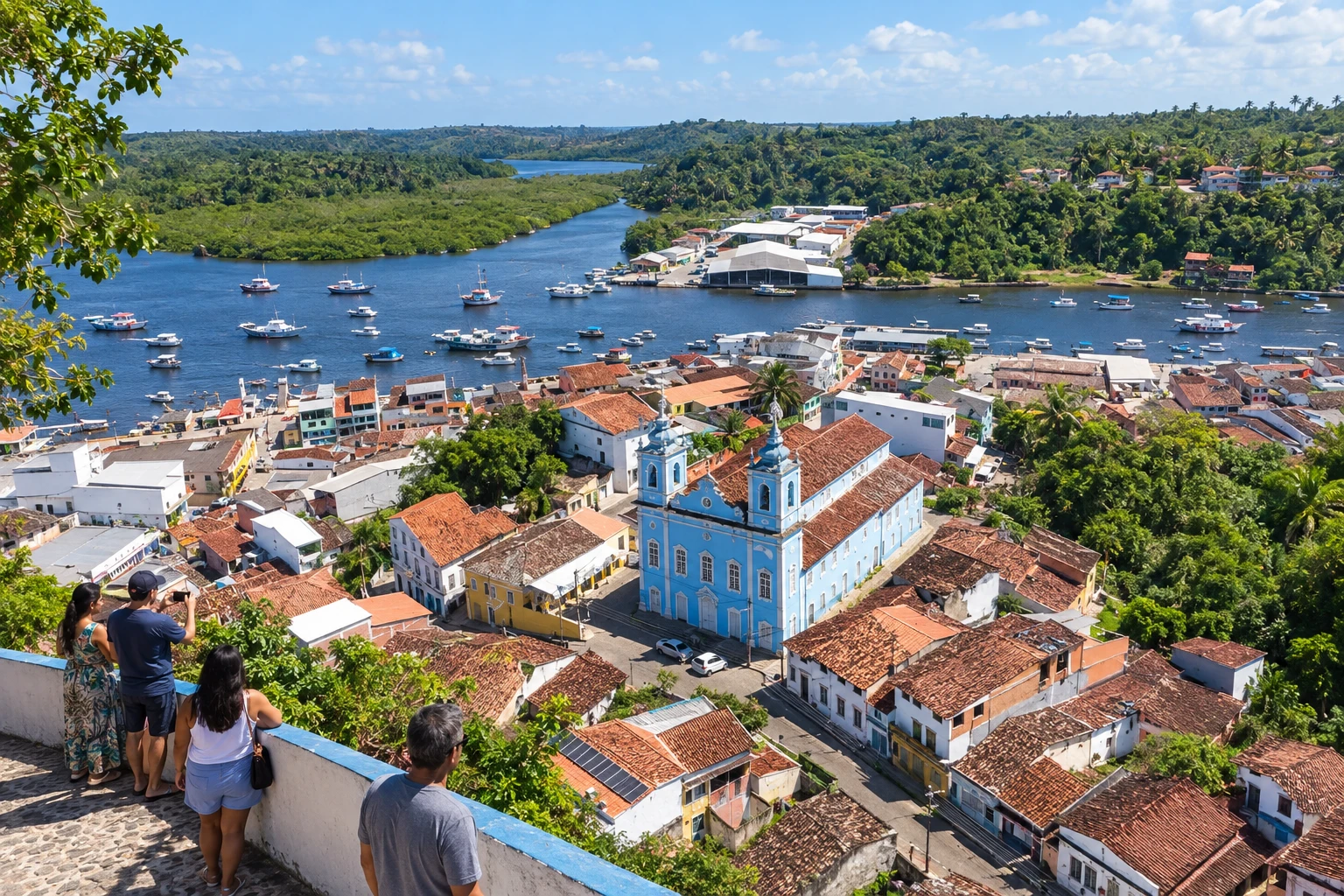
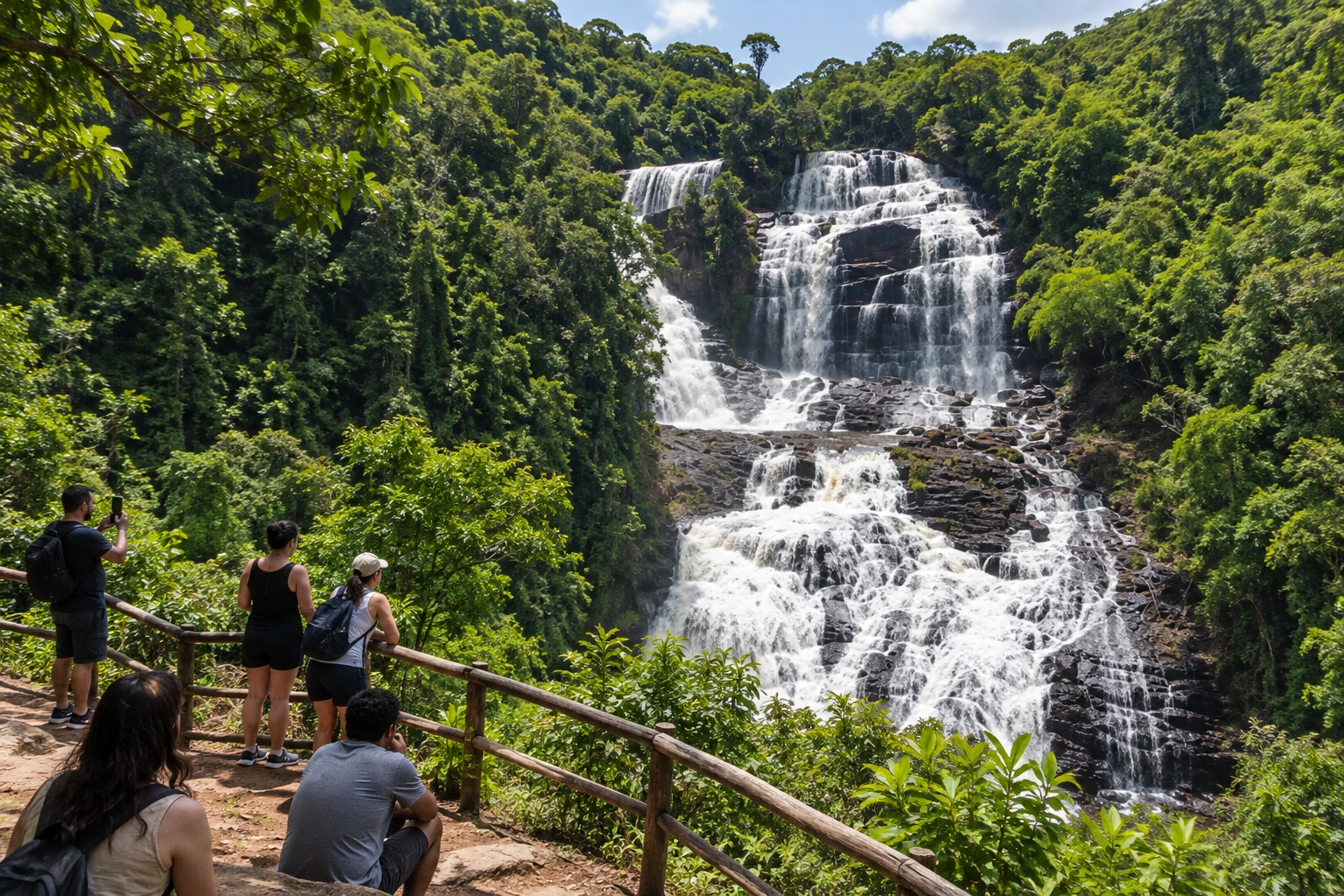
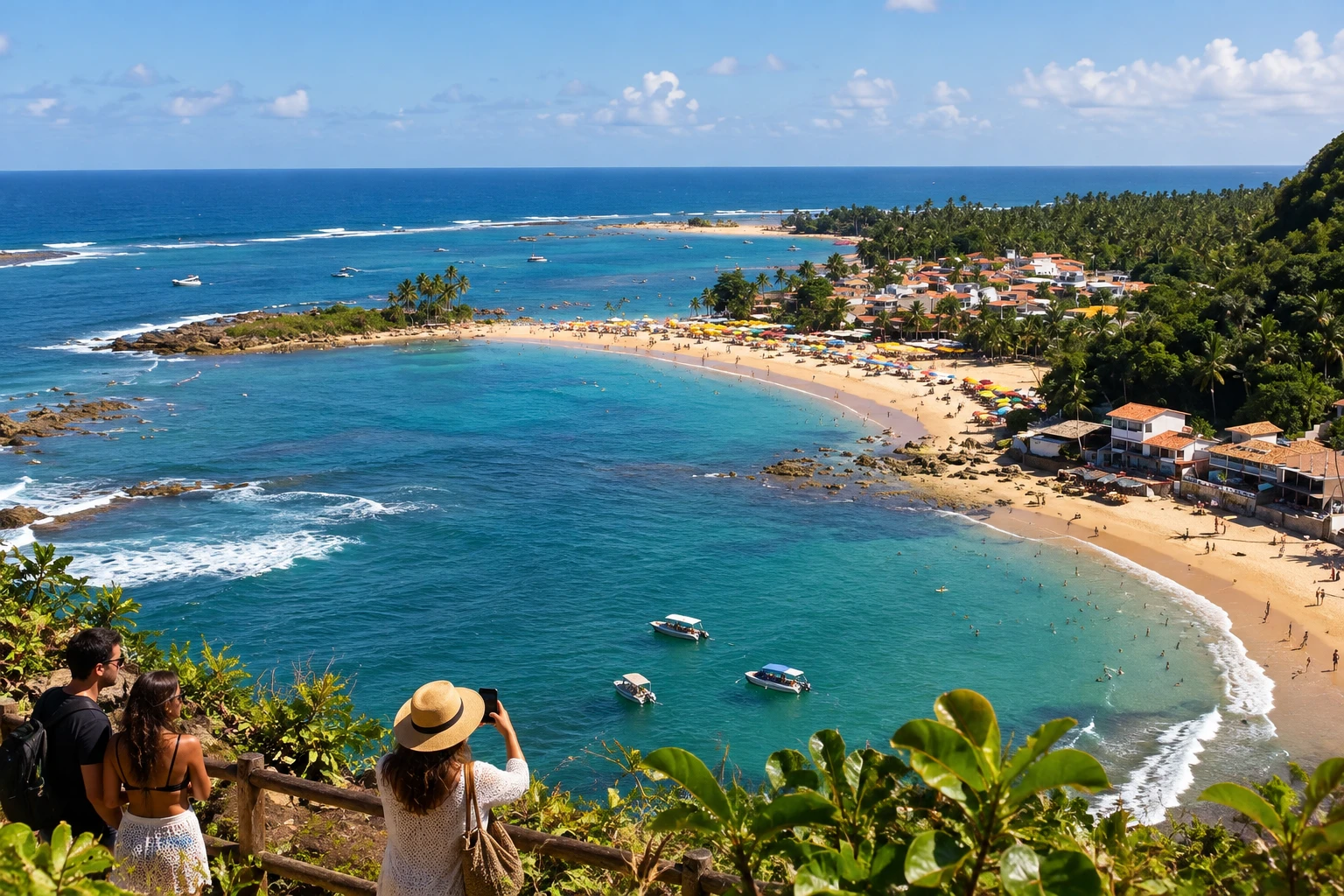
Illustrative images. The pictures in this guide are illustrations based on the real place, not photographs, and may differ from it.

Get to know the place

A region to enjoy
at your own pace.

Cairu é um município insular que reúne Morro de São Paulo e Boipeba. Em Tinharé, a Segunda e a Quarta Praia oferecem roteiros diferentes à beira-mar; em Boipeba, Boca da Barra e Moreré convidam a conhecer a paisagem das ilhas. Escolha a base com cuidado, pois as travessias fazem parte da viagem.

Planeje a estadia a partir da região em que pretende concentrar os passeios. A escolha da base ajuda a reduzir deslocamentos e deixa mais tempo para observar a paisagem e conhecer os lugares com calma. Reserve períodos de descanso entre visitas e adapte o roteiro ao ritmo do grupo.

Antes de sair, confirme as condições de acesso aos atrativos e o transporte de retorno. Nas áreas naturais, respeite a sinalização e as orientações locais; nos conjuntos históricos, observe o uso cotidiano dos espaços e a programação dos locais que deseja visitar.

This destination brings together 7 cities: Cairu, Valença, Taperoá, Nilo Peçanha, Ituberá, Igrapiúna, Camamu.

Share: WhatsApp

Travelers' photos

Costa do Dendê through the eyes of those who went

Costa do Dendê
Illustrative image
Costa do Dendê
Illustrative image
Traveler, share your experiences through photos Up to 5 photos of each place you visited.

One destination, many paths

The cities on this trip

Start with one city or combine several in your itinerary.

Where Costa do Dendê is The star marks the nearest capital, Salvador.
SalvadorCairuValençaTaperoáNilo PeçanhaItuberáIgrapiúnaCamamu

Mapa: @svg-maps/brazil, CC BY 4.0

How to get there: Costa do Dendê

Aeroporto Internacional de Salvador (SSA), in Salvador

A chegada às ilhas exige transporte aquaviário. Salvador serve como referência aérea, e Valença concentra conexões terrestres e embarques para o arquipélago. Confira a operação das travessias para sua data e escolha o desembarque compatível com a ilha e a hospedagem.

Suggested arrival point: Cairu

The local experience

Things to do in Costa do Dendê

Cairu · BA · Praia

Segunda Praia

A Segunda Praia fica em Morro de São Paulo, na ilha de Tinharé, e é conhecida pelo movimento de visitantes e pelos serviços no entorno. A areia e a paisagem marinha formam o cenário do passeio.

Explore Segunda Praia

Ituberá · BA · Praia

Praia de Pratigi

Pratigi é uma faixa costeira de Ituberá, com areia, vegetação e paisagem ligada à área de proteção ambiental. A visita à praia tem acesso próprio além da sede.

Explore Praia de Pratigi

Cairu · BA · Praia

Quarta Praia

A Quarta Praia integra a sequência de praias de Morro de São Paulo, na ilha de Tinharé. A faixa de areia permite dedicar mais tempo ao litoral e a caminhadas, observando as condições da maré.

Explore Quarta Praia

See 9 more places in Costa do Dendê

To choose before you go

Tours in Costa do Dendê

Where each tour starts, how long it takes, how it is done, what is included and the price range.

Around Ilha de Tinharé and Boipeba (speedboat, departure from Morro de São Paulo)

From Terceira Praia, Morro de São Paulo speedboat 6 to 8 hours, depending on the tide and the agency full day easy

The speedboat departs from Terceira Praia in Morro de São Paulo in the morning and circles Ilha de Tinharé toward Boipeba. The first stops are the natural pools of Garapuá and Moreré. If the tide is high, agencies may choose only one of them. After that the boat heads to Praia da Cueira in Boipeba, with a long stop for lunch at seaside restaurants. In the afternoon the boat enters the Rio do Inferno through mangroves and stops at Canavieiras. There floating bars serve locally farmed oysters and there is time for a river swim. The last stop is Cairu, the municipal seat, with a visit to the Convento e Igreja de Santo Antônio, built by the Franciscans in 1654. The return is by river in the late afternoon to the pier at Morro de São Paulo. The tour price is standardized among agencies registered in the Viva Cairu program.

Stops: Piscinas naturais de Garapuá, Piscinas naturais de Moreré, Praia da Cueira, Rio do Inferno, Canavieiras, Cairu, Convento e Igreja de Santo Antônio.

Includes: Speedboat and crew. Lunch, drinks, oyster tasting, a local guide in Cairu and other extras are paid separately. Small children have a reduced rate; check the agency's current price list. The municipal visitor fee (TUPA) is also charged separately; check the current rates at the city hall.

Tip: Choose the day according to the tide table: with low tide both natural pools are included in the route. Bring a snorkel, sunscreen, a cap, a light jacket for the return, and cash for lunch. If you get seasick, sit at the front or on the sides of the boat. Book before the trip with an agency registered in the Viva Cairu program.

Best time: Days with low tide, calm seas and sun. There are departures every day; check the forecast and the tide table.

Agencies that run it: Passeios MSP Turismo (Passeios Morro de São Paulo).

R$350 · per person, adult, shared boat

Around Ilha de Boipeba (speedboat, departure from Velha Boipeba)

From Praia da Boca da Barra, Velha Boipeba speedboat about 7 hours full day easy

The speedboat leaves from Praia da Boca da Barra, in Velha Boipeba, between the morning and early afternoon, according to the tide. The first stop is at the natural pools of Moreré, about 1 km from the coast, good for snorkeling and with a floating bar. Then there is a landing at the fishermen's village of Moreré. The boat passes close to Praia de Bainema and continues to Ponta dos Castelhanos, with a stop for swimming and thatched stalls. Lunch is in Cova da Onça, the São Sebastião settlement in the south of the island, where the cuisine is based on shellfish and local fish. Afterwards the boat enters the Rio do Inferno estuary, through mangroves, and reaches Canavieiras, with oyster tasting on floating bars. The return is in the late afternoon, with the sunset. The route may change depending on the tide and weather.

Stops: Piscinas naturais de Moreré, Vila de Moreré, Praia de Bainema, Ponta dos Castelhanos, Cova da Onça (São Sebastião), Rio do Inferno, Canavieiras.

Includes: Speedboat and crew. Lunch, drinks, oysters and other extras are paid separately. Small children have reduced rates; check the current pricing with the agency.

Tip: If you can choose, go on a low-tide day to enjoy the natural pools. Bring a snorkel, water, sunscreen, sunglasses and a hat. The tour is subject to weather conditions and may be postponed. Alone, you join an already formed group; with three or more people it's possible to form your own group.

Best time: Days with low tide and calm seas; check the tide table and the forecast before booking.

Agencies that run it: Bahia Terra Turismo e Eventos, Coco Louco Turismo.

4x4 tour to Garapuá and Quinta Praia

From Morro de São Paulo (agency reception) 4x4 vehicle on dirt roads and trails 4 to 6 hours, with free time on the beach morning and afternoon easy

The 4x4 departs from Morro de São Paulo in the morning and follows a dirt road through Atlantic forest, restinga and coconut groves for about 14 km. There is a short stop at Quinta Praia, also called Praia do Encanto. Afterwards the group reaches Praia de Garapuá, a horseshoe-shaped beach facing a fishing village. Most of the tour is free time: swimming in the sea, lunch at village restaurants and walking on the sand. At low tide, boats take visitors to the natural pools; this service is paid separately. There are also optional activities such as kayaking through the mangroves and bicycle rental to reach Praia de Pratigi, just after Garapuá. Return is in the late afternoon, in time for the sunset in Morro.

Stops: Quinta Praia (Praia do Encanto), Praia de Garapuá, Povoado de Garapuá, Piscinas naturais de Garapuá, Praia de Pratigi.

Includes: Group 4x4 transport. Lunch, drinks, boat to the natural pools and optional extras (kayak, bicycle) are paid separately. Small children are free or have a reduced rate, depending on the agency; check the current price list.

Tip: Check the tide table: the best timing is low tide during your stay in Garapuá to reach the natural pools. Bring a snorkel, sunscreen and cash for lunch. Arrange the return time with the agency.

Best time: Days with low tide in the afternoon and calm seas.

Agencies that run it: Passeios MSP Turismo (Passeios Morro de São Paulo), Bahia Terra Turismo e Eventos.

R$130 · per person, adult, shared

Zipline from the Farol over Primeira Praia

From Caminho do Farol, Morro de São Paulo hike to the viewpoint and zipline descent 20 to 30 second descent, plus trail and waiting morning and afternoon easy (trail with steps)

Access is via a signed trail with steps on the Caminho do Farol that leads to the viewpoint where the zipline is located. At the reception area, visitors sign a liability waiver and the staff fits the equipment. From the top there are views of Primeira Praia, Segunda Praia and Ilha da Saudade. The zipline is about 340 meters long and ends in the water at Primeira Praia, where staff help remove the gear. The descent takes 20 to 30 seconds, and speed varies according to the rider's weight. Belongings are lowered by rope to the beach, so there is no need to climb back up to fetch them. A photographer records the descent and the images are sold separately. The attraction operates year-round.

Stops: Caminho do Farol, Mirante da Tirolesa, Farol de Morro de São Paulo, Primeira Praia.

Includes: Safety equipment, instructions and supervision by the staff. Photos and video are optional and sold separately. The cost of the descent is charged per person; check the operator's current price list.

Tip: Go in swimwear, as the landing is in the water. Take only what you need: belongings are lowered by rope. Arrive with plenty of time, since there may be queues and schedule delays. Ask if it is possible to reserve a time and confirm payment methods before going up.

Best time: Sunny days, with calm sea at Primeira Praia; the tour operates year-round.

Boat trip to Gamboa, Praia da Argila and sandbank

From Terceira Praia, Morro de São Paulo shared boat (schooner or speedboat) 5 to 6 hours morning and afternoon easy

The boat departs from Terceira Praia in the late morning and passes by Ilha do Caitá, Ilha da Saudade, Segunda and Primeira Praia, the lighthouse and the ruins of Forte de Tapirandu. On some days it is possible to see dolphins. It continues to Praia da Argila, where there is a stop for a natural clay bath. Next is the Coroa, a sandbank in the middle of the sea where you can walk at low tide, and Praia da Ponta do Curral. The longest stop is at the village of Gamboa, with beachfront restaurants for lunch. Return is to the Morro de São Paulo pier in the mid-afternoon. The order of stops varies with the tide.

Stops: Ilha do Caitá, Ilha da Saudade, Primeira Praia, Segunda Praia, Farol, Ruínas do Forte de Tapirandu, Praia da Argila, Coroa Vermelha (sandbank), Praia da Ponta do Curral, Praia da Gamboa.

Includes: Boat transport and crew. Lunch, drinks and extras are paid separately; check the agency's current price list.

Tip: The clay stains light-colored clothes, so prefer dark swimwear. Follow the guide's instructions and avoid staying near the base of the cliff; remove the clay taken from the sand. To go on your own, there are regular boats from the pier to Gamboa and about a 30-minute walk at low tide.

Best time: Sunny days and calm seas; for the walk to Gamboa, low tide.

Gamboa Full Experience (6x6, Fonte do Céu and clay)

From Terceira Praia, Morro de São Paulo 6x6 truck and walking trails about 6 hours morning and afternoon easy to moderate

The tour starts in Morro de São Paulo aboard a 6x6 truck that follows off‑road trails through preserved areas of the island, with stretches of mud, forest and open views. The first stop is Fonte do Céu, a waterfall amid the Atlantic Forest (Mata Atlântica), reached by a roughly 30‑minute walk along a trail. Then the group passes the Gamboa lookout with panoramic views. Next is Praia da Gamboa, with free time for a swim, lunch and a natural clay bath on the cliff. Return is in the afternoon. The agency notes the activity is suitable for different types of visitors.

Stops: Fonte do Céu, Mirante da Gamboa, Praia da Gamboa, Praia da Argila.

Includes: Transportation in a 6x6 and a guide. Lunch and drinks are paid separately; check what the agency includes when booking.

Tip: Bring closed-toe shoes for the trail, swimwear and a change of clothes. Avoid light-colored clothing because of the clay. Book in advance and confirm the meeting point with the agency.

Best time: Dry, sunny days; on rainy days the trails become more slippery.

Agencies that run it: Passeios MSP Turismo (Passeios Morro de São Paulo).

See 10 more tours

Quadricycle tour to Garapuá

From Segunda or Terceira Praia, Morro de São Paulo (according to the agency) guided quadricycle, up to 2 people per vehicle 6 to 7 hours morning and afternoon moderate

The tour starts at a reception point in Morro de São Paulo, with driving instructions and safety rules. Then the group follows guided dirt and sand trails, passing stretches of forest, coconut groves and local villages. There is a stop at Quinta Praia, also called Praia do Encanto, for photos. In Garapuá there is free time for swimming in the sea, lunch and a walk along the beach; at low tide it is possible to go to the natural pools by boat, a paid extra. The return to Morro is in the afternoon by the same route. Each quad bike carries the driver and one passenger. The driver needs a driver's license.

Stops: Quarta Praia, Quinta Praia (Praia do Encanto), Praia de Garapuá, Natural pools of Garapuá.

Includes: Quadricycle for up to two people, helmet, initial instruction, guide and insurance (according to the agency). Lunch, drinks and boat to the natural pools are paid separately. The fee is charged per quadricycle.

Tip: Bring your CNH, as it is required of the driver. Children only from 10 years old and accompanied by a guardian. Bring swimwear, sunscreen, a towel and cash for lunch. On rainy days the trails become muddy; follow the guide.

Best time: Days with low tide in the afternoon, to coincide with the natural pools of Garapuá.

Agencies that run it: Passeios MSP Turismo (Passeios Morro de São Paulo), Bahia Terra Turismo e Eventos.

R$700 to R$850 · per quadricycle (up to 2 people)

4x4 and boat crossing from Morro de São Paulo to Boipeba

From Morro de São Paulo (agency meeting point) 4x4 pickup and a short boat crossing 7 to 8 hours, with free time in Boipeba full day easy

The 4x4 pickup departs Morro de São Paulo early and follows the trails of Ilha de Tinharé, with wildlife and plant observation, for about 1 hour 10 minutes to the southern end of the island. There a short boat crossing of a few minutes crosses the Rio do Inferno, which separates Tinharé from Boipeba. In Boipeba the group has free time to choose beaches, have lunch and walk; the route may include Garapuá, depending on the agency. The same route serves as a crossing between the two islands for those changing base. The departure requires a minimum group size, and the itinerary varies with the tide.

Stops: Trails of Ilha de Tinharé, Rio do Inferno, Ilha de Boipeba.

Includes: 4x4 transport and boat crossing. Lunch, drinks and excursions within Boipeba, such as boat trips to the natural pools, are paid separately. Check the agency's current price list.

Tip: Confirm with the agency the minimum group size, the return point and the return time. Bring a snorkel, sunscreen and cash for lunch. If you plan to change islands, arrange your luggage in advance.

Best time: Sunny days and calm sea; check the tide table.

Humpback whale watching

From Terceira Praia (Morro de São Paulo) or the pier of Boipeba motorboat with guide up to 4 hours morning easy

In season, boats with up to 15 passengers depart from Terceira Praia in Morro de São Paulo or from the pier of Boipeba. The route changes on each departure because it depends on where the humpback whales are. On board, a guide trained by Projeto Baleia Jubarte explains migratory behavior and the approach rules. Tours are operated by agencies accredited in the Viva Cairu program, with trained sailors. As these are wild animals, sightings are not guaranteed. The tour is only canceled or rescheduled when the sea does not offer navigation conditions.

Stops: Open sea off the coast of Cairu.

Includes: Motorboat, trained sailor and guide. Food and drinks are the visitor's responsibility. Check with the agency for the current price list and rebooking conditions.

Tip: Use sunscreen, sunglasses and a hat, as sun exposure is long. Prefer a light meal before boarding. Follow the approach instructions given by the guide. Book only with accredited agencies.

Best time: From July to November, when humpback whales pass along the coast.

Agencies that run it: Passeios MSP Turismo (Passeios Morro de São Paulo), Bahia Terra Turismo e Eventos, Rota Tropical.

Scuba diving and introductory dives on the reefs of Morro de São Paulo

From Primeira Praia, Morro de São Paulo (depending on the operator) scuba diving with tank and instructor introductory dive of about 2 hours, with around 1 hour of diving morning or afternoon, depending on the tide moderate

Diving takes place on the coral reefs around Morro de São Paulo, at Primeira Praia, Ilha do Caitá or Quarta Praia, depending on the operator and the tide. For beginners there is a baptism dive: about one hour of onshore preparation with instructions on breathing with equipment, equalizing ear pressure, swimming with equipment and environmental care, and about one hour of diving. Each instructor accompanies two people. Certified divers can do cylinder dives with the operator. The schedule depends on the tide and visibility, and one operator reports that diving is done only at low tide. There are also night dives for certified divers.

Stops: Coral reefs at Primeira Praia, Ilha do Caitá, Quarta Praia.

Includes: Full equipment, instructor and boat transport when departure is by vessel (depending on the operator). Photos may be included or sold separately. Check the current rates and minimum age.

Tip: Confirm availability for your date, as it depends on tide and visibility. One operator reports that the introductory dive is offered from September to April. Minimum age is 11 years at at least one operator. Bring swimwear and a towel.

Best time: Low‑tide days and clear water; confirm the diving season with the operator.

Agencies that run it: Passeios MSP Turismo (Passeios Morro de São Paulo).

Boat trip to the natural pools of Moreré

From Praia da Boca da Barra, Velha Boipeba motorboat (or fishing boat from Moreré) half-day, depending on the tide morning or afternoon easy

This is the short version of the tour around Boipeba. The boat departs from Boca da Barra, in Velha Boipeba, heading to the natural pools of Moreré, which are about 1 km from the coast and form among the reefs at low tide. The water is warm and clear, with fish, corals and other marine life; bring a snorkel for snorkeling. A floating bar serves seafood and drinks made with local fruits. You can disembark in the fishing village of Moreré and on the beach, where there are restaurants. Those who prefer not to go by boat can reach Moreré by tractor, by quadricycle (quadritáxi) or on foot along the beach, and hire the boat locally.

Stops: Natural pools of Moreré, Vila de Moreré, Praia de Moreré.

Includes: Shared boat and sailor. Lunch, drinks and snorkel rental, when available, are paid separately. Check the agency's current price list.

Tip: Go at low tide to see the pools at their best. Bring your own snorkel, sunscreen and swimwear. In the pools, do not step on the corals. Arrange the return time for the end of your stay in Moreré.

Best time: Days with low tide and calm seas.

Agencies that run it: Bahia Terra Turismo e Eventos, Coco Louco Turismo.

Boat trip to Ponta dos Castelhanos

From Praia da Boca da Barra, Velha Boipeba motorboat half day, depending on the tide morning and afternoon easy

The boat departs from Velha Boipeba and rounds the island's east coast to Ponta dos Castelhanos, passing close to Praia de Bainema. The stretch is difficult to do on foot, which explains the demand for the boat. In Castelhanos the group disembarks for swimming, beach walks and visits to the thatch stalls where snacks are available. At low tide natural pools form with opportunities for snorkeling. One option on the same route includes diving with equipment provided by the operator. The place's name recalls the wreck of a Spanish ship in 1535. For those who want to see more of the island in one day, the Volta à Ilha includes this stop.

Stops: Ponta dos Castelhanos, Praia de Bainema, Natural pools of Castelhanos.

Includes: Shared motorboat and crew. Lunch, drinks and diving with equipment are paid separately. Check the agency's current rate table.

Tip: The stop usually lasts more than an hour; bring cash for snacks. Bring a snorkel and sunscreen. If you do the tour independently, arrange the boat's return time in advance.

Best time: Days with low tide and calm seas.

Agencies that run it: Coco Louco Turismo.

Kayak or stand-up paddle in the mangrove of Rio do Inferno

From Praia da Boca da Barra, Velha Boipeba Kayak or stand-up paddleboard, with a guide about 2 hours morning or afternoon, depending on the tide easy to moderate

Embarkation is at Praia da Boca da Barra, in Velha Boipeba. The group paddles upriver in kayaks or on stand-up paddleboards and goes through natural mangrove tunnels. An oceanographer guide explains the fauna and flora, such as crabs, siris, aratus, oysters and birds. There are stops for a swim at the riverbank or on sandbanks and for conversation. The schedule is coordinated with the tide table so you paddle with the current. The route requires some exercise but is not long. It's an option for days when the beach is not inviting.

Stops: Praia da Boca da Barra, Rio do Inferno, Mangrove tunnels.

Includes: Kayak or stand-up paddleboard, paddle, life jacket and guide. Food, drinks and transport to the meeting point are paid separately. Check the operator's current price list.

Tip: Use sunscreen, insect repellent and lightweight clothing that can get wet. Inform the guide if you can't swim. The time changes with the tide, so book in advance and confirm the day before.

Best time: All year round, at the tide time indicated by the guide; late afternoon is common.

Agencies that run it: Bahia Terra Turismo e Eventos.

Night kayaking with bioluminescence on Rio do Inferno

From Praia da Boca da Barra, Velha Boipeba kayak, with an oceanographer guide 1 to 3 hours, depending on the operator late afternoon and night moderate

The tour starts with a talk on how to paddle and about bioluminescence. Then the group departs from Praia da Boca da Barra and paddles upriver in kayaks, observing the stars or the moon depending on the phase. In one version it begins in the late afternoon, with sunset and a stop for a river swim. At nightfall you enter a mangrove tunnel where, by passing your hand through the water, plankton emit light. The phenomenon depends on water conditions and moon phases and cannot be guaranteed or predicted; the new moon usually favors it. The kayak can be double or single. Return is by paddling back to the starting point.

Stops: Praia da Boca da Barra, Rio do Inferno, Mangrove tunnel.

Includes: Guide, kayak, paddle, life jacket and flashlight. Photos and video may be included depending on the operator. Food, drinks and transport to the meeting point are paid separately.

Tip: If possible, schedule the trip for the new moon. Not recommended for those who are afraid of the dark, enclosed spaces, or mangrove creatures. Bring insect repellent and clothing that can get wet. Inform the guide if you can't swim; the tour is suitable for different ages.

Best time: New moon nights, with the sea and river in good conditions.

Agencies that run it: Bahia Terra Turismo e Eventos.

Guided hike to Castelhanos via Moreré and Bainema

From Velha Boipeba on foot, with a guide (section from Moreré by tractor or quad taxi) half day to full day, depending on the itinerary morning and afternoon moderate

The walking route connects Velha Boipeba to Ponta dos Castelhanos along the east coast. From Velha Boipeba to Moreré it's about 6 km, which can be done on foot or by tractor or quad taxi. From Moreré, the guide leads along Praia de Bainema and through a stretch of mangrove by the sea to Castelhanos, where there is time for a swim and snacks. Some operators return by boat from Moreré. Those with good stamina can link the island's full trail, passing through Tassimirim, Cueira, Moreré, Bainema and Castelhanos to Cova da Onça. The local guide helps choose the section according to the tide.

Stops: Praia de Moreré, Praia de Bainema, Mangrove by the sea, Ponta dos Castelhanos.

Includes: Local guide. Tractor or quad taxi transport, return boat, lunch and drinks are usually paid separately. Check the current rates with the guide or the agency.

Tip: Check the tide table before deciding the section, as part of the route follows the beach and the mangrove. Bring water, sunscreen, hat, footwear that can get wet and money for lunch. Hire a guide or agency in Velha Boipeba.

Best time: Mornings and days of low tide; avoid midday during periods of strong sun.

Private buggy tour to Garapuá

From Receptivo da Segunda Praia, Morro de São Paulo buggy, up to 4 people per vehicle about 6 hours, with free time on the beach morning and afternoon easy

This is a private tour: each buggy carries up to four people and the group does not share the vehicle with strangers. Departure is from the Receptivo da Segunda Praia in Morro de São Paulo in the morning, with return at the end of the afternoon. The destination is Garapuá, a small fishing village about 14 km from Morro's center. The route goes along dirt roads through Atlantic forest, restinga and coconut groves. In Garapuá the group spends most of the day on the beach, has lunch at local restaurants, and can hire the boat to the natural pools separately when the tide allows. The fee is charged per vehicle and must be requested from the agency.

Stops: Povoado de Garapuá, Praia de Garapuá.

Includes: Private buggy with driver or guide, depending on the agency. Lunch, drinks and the boat to the natural pools are paid separately. Price on request, per vehicle; check the agency's current rate table.

Tip: Request a quote in advance and provide the number of people. Arrange the departure time according to the tide. Bring swimwear, sunscreen and cash for lunch.

Best time: Days with low tide in the afternoon and calm seas.

Agencies that run it: Piá do Morro Tour LTDA (Passeios em Morro de São Paulo).

Prices are estimates, checked in October 2026 with local operators, and may change with the season and the type of tour. Confirm with the operator before booking.

Day by day

3, 5 and 7-day itinerary in Costa do Dendê

Suggestions to plan the trip. Change the order of the days according to the weather and tour availability.

3 days · Morro de São Paulo in 3 days: Primeira Praia, return by boat and Gamboa

For First trip to Cairu, limited time and wanting to stay on a single island without changing accommodation · Based in Morro de São Paulo (Segunda or Terceira Praia), 2 nights
  1. Day 1 · Arrival and Tirolesa do Farol over Primeira Praia

    Arrive in the morning. From Salvador, the catamaran takes about two to two and a half hours to the pier; from Valença, the lancha takes 25 to 40 minutes. There are no cars on the island, so bring little luggage and arrange transport to the pousada in advance. The tourism fee is charged on arrival; check the current table. In the afternoon, do the Tirolesa do Farol over Primeira Praia and end the day walking along Segunda Praia.

  2. Day 2 · Return to Ilha de Tinharé and Boipeba by boat

    Lancha tour departing from Morro de São Paulo, lasting the whole day. Bring sunscreen, swimwear, water and shoes that can get wet. Stops vary depending on the operator and the tide, so confirm the itinerary when booking. The tour is paid separately; check the current price list from providers. At night, rest: a day on the boat is more tiring than it seems.

  3. Day 3 · Gamboa, Praia da Argila and sandbank; departure from the island

    In the morning, the boat tour goes to Gamboa, Praia da Argila and the sandbank, with the pace dictated by the tide. Return for lunch and, if your departure time allows, spend the afternoon on Segunda Praia. To leave, book the lancha to Valença or the catamaran to Salvador with plenty of time before your flight or bus. From July to November, humpback whale watching, departing from Terceira Praia, may replace the Gamboa.

5 days · Morro de São Paulo and Boipeba in 5 days: return by boat, crossing and Moreré
For For those who want to visit both islands, with two places to stay and a moderate pace between outings · Based in Morro de São Paulo (2 nights) and Velha Boipeba (2 nights)
  1. Day 1 · Arrival in Morro de São Paulo and Tirolesa do Farol

    Arrive in the morning by catamaran from Salvador or by lancha from Valença. The tourism fee is charged on arrival; check the current table. Leave your luggage at the pousada and do the Tirolesa do Farol over Primeira Praia. Then walk to Segunda Praia and spend the end of the day in the town center. Since there are no cars on the island, book luggage transport in advance.

  2. Day 2 · Return to Ilha de Tinharé and Boipeba by boat

    Full-day lancha trip departing from Morro de São Paulo. Stops vary by operator and tide; ask for the written itinerary when booking. Bring sunscreen, water and swimwear. The trip is paid separately; check the current price list. Return early to the pousada to pack for the crossing the next day.

  3. Day 3 · 4x4 and boat crossing to Boipeba; afternoon at Boca da Barra

    Do the 4x4 and boat crossing from Morro de São Paulo to Boipeba: a pickup follows the island of Tinharé and a short boat crosses the channel between the islands. Since the stretch is over land, luggage goes with the vehicle. Arrive in Velha Boipeba, drop off your bags and spend the afternoon at Boca da Barra beach, a few minutes' walk from the village. Confirm the tour time one day in advance.

  4. Day 4 · Moreré natural pools by boat and night kayak

    Choose the day by the tide table: the natural pools of Moreré only form at low tide. The speedboat tour to Moreré's natural pools departs in the morning or afternoon depending on the tide. At night, if the moon is favorable, do the night kayak with bioluminescence on the Rio do Inferno. The glow depends on the sea and the moon phase, and usually appears better on new-moon nights.

  5. Day 5 · Kayak or SUP in the mangrove and return

    In the morning, an easy kayak or stand up paddle session through the mangroves of the Rio do Inferno, timed to the tide. Afterwards, head to the terminal. From Boipeba the speedboat to Valença takes about one hour to one hour and twenty; from there continue to Salvador. Book the Valença ticket in advance and allow plenty of time before your flight or bus.

7 days · Cairu in 7 days: Morro de São Paulo at a relaxed pace and Boipeba with trails and natural pools
For For those with a week who want to alternate sea, sandy roads and trails and prefer few transfers per day · Based in Morro de São Paulo (3 nights) and Velha Boipeba (3 nights)
  1. Day 1 · Arrival in Morro de São Paulo and Tirolesa do Farol

    Arrive early by catamaran from Salvador or by lancha from Valença. The tourism fee is charged on arrival; check the current table. There are no cars on the island: arrange luggage transport to the pousada. Do the Tirolesa do Farol over Primeira Praia and finish at Segunda Praia, where there are bars and restaurants.

  2. Day 2 · Return to Ilha de Tinharé and Boipeba by boat

    Full-day lancha trip departing from Morro de São Paulo. Stops vary with the operator and tide; confirm the itinerary when booking. Bring sunscreen, water and swimwear. The tour is charged separately; check the current price list. Upon return, have dinner near the pousada and go to bed early.

  3. Day 3 · Gamboa, Praia da Argila and sandbank

    Boat tour to Gamboa, Praia da Argila and the sandbank, at a relaxed pace and dependent on the tide. If you prefer sandy tracks you can switch to a 4x4 tour to Garapuá and Quinta Praia, or to the Gamboa Full Experience in a 6x6. If you prefer underwater activities, you can do an introductory scuba dive with tanks on the reefs. From July to November there is humpback whale watching, departing from Terceira Praia.

  4. Day 4 · 4x4 and boat crossing to Boipeba

    In the morning, 4x4 and boat crossing from Morro de São Paulo to Boipeba: pickup across the island of Tinharé and a short boat ride through the channel between the islands. Settle in Velha Boipeba, a car-free village where local transport is by foot, tractor or quad bike. In the afternoon, walk to Boca da Barra beach and explore the historic center, with the Igreja do Divino Espírito Santo.

  5. Day 5 · Return to Ilha de Boipeba by boat, including Moreré

    Speedboat tour departing from Velha Boipeba. The route usually includes Moreré's natural pools and Ponta dos Castelhanos, and the skippers adjust the order to the low tide. Bring a snorkeling mask if you have one, sunscreen and water. The fee is paid separately; check the operator's current price list. If you prefer a longer stop at the pools, there is also a boat tour only to Moreré.

  6. Day 6 · Guided hike to Castelhanos via Moreré and Bainema; night kayak

    The guided trail runs from Moreré through Bainema to Ponta dos Castelhanos, passing mangroves and forest stretches, and lasts about two hours. Go with a guide, check the tide table and return by boat. At night, if the moon is favorable, do the night kayak with bioluminescence on the Rio do Inferno, which depends on the sea and the moon phase.

  7. Day 7 · Kayak or SUP in the mangrove and return via Valença

    In the morning, kayak or stand up paddle in the mangroves of the Rio do Inferno, timed according to the tide. Afterwards, head to the terminal: the boat from Boipeba to Valença takes about one hour to one hour and twenty. From Valença there are buses and transfers to Salvador. Buy the Valença ticket in advance and allow plenty of time before your flight.

Best time to go

When to go: Costa do Dendê month by month

Choose dates according to the tours you plan to take. Check the forecast before outdoor activities; weekdays outside holidays help organize an itinerary more calmly.

The seasons shown are the most usual ones; nature doesn't always follow the calendar.

January Low rain

Calm sea and steady sun · High season

One of the driest months, with an average below 100 mm. Highs are around 31 °C and the sea temperature is about 27 °C. Speedboat, boat and 4x4 tours usually run regularly. Activity is high in Morro de São Paulo and in Boipeba, with fuller crossings: book catamaran, boat and tours in advance. Short late-afternoon showers may occur.

February Low rain

Stable weather · Carnival and holidays

Month with rainfall below 100 mm and temperatures between 24 °C and 31 °C. The sea stays warm and favors diving, boat trips and natural pools at low tide. Visitor numbers are high, especially during Carnival. Book crossings and tours before you arrive, depart early on high-traffic days and check the current price list of operators.

March Some rain

End of summer · Passing showers

Transition month to the rainy season, with rainfall around 150 mm and temperatures from 24 °C to 31 °C. There are clear days and quick showers. Sea tours continue, but it's wise to have a plan B for longer rainy days. Visitor numbers decrease compared to previous months, except on holidays. Check the forecast on the eve of each tour.

April High rain

Start of the rains · Fewer visitors

The wettest period of the year begins, with averages of 140 mm to 160 mm and temperatures from 22 °C to 28 °C. Rain usually comes in showers, between sunny periods. Speedboat and 4x4 tours may be rescheduled due to rougher seas or wet sand roads. Visitor numbers are lower, except on holidays. Bring a lightweight raincoat and protect documents and electronics.

May High rain

Peak of the rains · Quiet islands

It's among the rainiest months, with temperatures from 22 °C to 28 °C. There are also many sunny days between showers. The sea can become rougher, and boat trips, diving and crossings depend on clearance for the day. Visitor numbers are low and the island is more peaceful. Allow extra time for connections via Valença and confirm each departure a day before.

June High rain

Heavy rain · Trails and villages

The rainy season continues, with temperatures from 22 °C to 28 °C. Rain decreases over the month but still affects the sea and sand roads. It's a time for short trails, viewpoints and village walks, taking advantage of sunny windows. Visitor numbers are low at the start of the month and rise near school holidays. Confirm speedboat tours the day before.

July High rain

Humpback whales · School holidays

Rains begin to ease, but there is still instability, with temperatures between 21 °C and 26 °C. In July the humpback whale watching season starts, continuing until November, with departures from Terceira Praia and the pier of Boipeba, when the sea allows. Tours are operated by accredited agencies. School holidays increase the activity: book in advance.

August Some rain

Humpback whales · More stable weather

The weather becomes more settled, with rainfall around 130 mm and temperatures from 21 °C to 27 °C. It's a month for humpback whale watching, with tours of about four hours on boats with limited capacity. Visitor levels are lower than in summer. Sea and wind can still change the schedule; check the forecast on the eve and bring a lightweight jacket for the boat.

September Some rain

Humpback whales · Few tourists

Rainfall is close to 100 mm, with temperatures from 23 °C to 30 °C and the sea around 27 °C. The humpback whale season continues. Speedboat, kayak and hiking tours run well, and activity is moderate. Solar radiation increases in spring; use sunscreen, a cap and sunglasses on long boat trips.

October Low rain

Humpback whales · Settled weather

One of the most stable-weather months, with rainfall around 90 mm and temperatures from 23 °C to 30 °C. The humpback whale season continues until November, and it's a good month to combine whale watching, natural pools and hikes. Visitor levels are moderate, with peaks on holidays. For the bioluminescence at Rio do Inferno, prefer new-moon nights and confirm the departure with the operator.

November Some rain

End of whale season · Warm sea

Rainfall rises to around 110 mm, in showers. Temperatures range from 23 °C to 30 °C. Humpback whale watching continues until November, with fewer animals toward the end of the month. Visitor levels are moderate and there are holidays that concentrate visitors. Diving, natural pools and 4x4 tours continue normally, always depending on the forecast and the tide.

December Low rain

Start of high season · New Year's Eve

It's the least rainy month, with about 60 mm, and temperatures from 23 °C to 30 °C. The sea is calm and warm, good for speedboats, diving and natural pools. High season begins, with increasing activity on the islands and higher demand at New Year's Eve. Book crossings, tours and departures early, and plan your return with extra time before flights and buses.

Plan the journey

How to get there: Costa do Dendê

By plane: Salvador and air taxi to the islands

Cairu does not have an airport with regular commercial flights. The air reference is the Aeroporto Internacional de Salvador. From there you continue by waterway or, part of the year, by air taxi.

Air taxi: departs from Salvador airport and takes about 25 to 30 minutes to Morro de São Paulo. The landing is on the Terceira Praia runway, a few minutes' walk from the village and from Primeira and Segunda Praia. There is also service to Boipeba in about half an hour. Aircraft are small and seat availability is limited. Flights usually depend on a minimum number of passengers. Book in advance, especially on holidays and in high season. The company operating the route changes over time, so confirm who is flying on your date. Guests staying on Quarta Praia often arrange transport from Segunda Praia through their accommodation.

Another option: Ilhéus airport is about 200 km from Boipeba. From there, travel by land to Valença, Graciosa or Torrinhas and board a speedboat.

Distance: Salvador is about 265 km from Valença via BR-101. Via the ferry and BA-001 it is about 108 km from Bom Despacho. After that, a boat crossing remains.

For those arriving on a commercial flight to Salvador, the transfer from the airport to the boarding terminal and the crossing are paid separately. See other sections of this guide.

Catamaran and speedboat: crossings to Morro de São Paulo

Morro de São Paulo, on Tinharé, has no land connection to the mainland. It is not possible to arrive by car or bus. The water routes are these.

Direct catamaran from Salvador: departs from the maritime terminal behind Mercado Modelo, about 20 km from the airport. The trip takes between 2 and 2h30, depending on sea conditions. There are departures in the morning and early afternoon, and the return from Morro to Salvador is also offered at multiple times. The catamaran carries passengers only and disembarks near the village. Arrive at the terminal about one hour in advance. On holidays and in high season, buy your ticket in advance.

Speedboat from Valença: departs from Valença's hydroport, at staggered times throughout the day, and takes 35 to 40 minutes. Tickets are usually bought on the spot, and there are slower boats that take longer.

Speedboat from the Atracadouro de Bom Jardim, also called Ponta do Curral: the crossing lasts about 20 minutes. It is the point used by those who come by car or van and want to reduce time at sea.

Private boat: on request, for groups, with no fixed schedule.

The municipality's preservation fee is charged to those arriving at Morro de São Paulo. See the section about the municipal fee in this guide.

By bus, van or transfer: Salvador, Valença and Boipeba

By land, access goes through Valença, Graciosa or Torrinhas, where you board to the islands.

Salvador to Valença by bus: there are two options. Via BR-101, buses depart Salvador's bus station daily and take about 4 hours. The other is the ferry from the São Joaquim terminal to Bom Despacho on Ilha de Itaparica, taking about 1 hour, and from there a bus to Valença in about 2 hours. In Valença, ask the driver to drop you near the pier, because the bus station is far from the hydroport.

Semi-land transfer: agencies sell transfers to Morro de São Paulo and Boipeba. It combines a van from the airport or hotel in Salvador, ferry, van or minibus to the dock and a fast boat. To Morro it takes about 3h30; to Boipeba, 5 to 7 hours depending on the connection.

Valença to Boipeba: fast boat in about 1 hour, with departures from morning until late afternoon. There is also a bus from Valença to Torrinhas, followed by a short boat.

Graciosa and Torrinhas: from Graciosa, on the BA-001 roadside, speedboats take about 40 minutes to Boipeba and stop at Cairu town. From Torrinhas, the boat is chartered and takes about 20 minutes.

From Morro de São Paulo to Boipeba: there is no direct regular boat. Options are two speedboat legs via Valença or a 4x4 transfer sold by Morro agencies, with a dirt-road stretch and a short boat crossing. Schedules and prices change with the date; check with the company before buying.

By car: ferry, BA-001 and mainland parking

Cars do not enter Morro de São Paulo or Boipeba. Those who go by car drive to a dock on the mainland, leave the vehicle in a paid parking lot and continue by speedboat.

From Salvador there are two routes. The most used crosses Baía de Todos os Santos on the ferry between the São Joaquim terminal and Bom Despacho, on Ilha de Itaparica. After that it's about 108 km via BA-001 to Valença. The ferry does not require reservations on many departures, but check operations for your date. The other route goes around the bay, about 265 km, largely on BR-101.

From Ilhéus, follow BA-001 toward Itacaré, passing Camamu and Ituberá to Nilo Peçanha. To Atracadouro Graciosa is about 175 km, to Valença about 188 km and to Torrinhas about 178 km.

Boarding points: - Valença: hydroport terminal, with paid parking near the pier. Speedboats depart to Morro de São Paulo and Boipeba. - Atracadouro de Bom Jardim, or Ponta do Curral: speedboat to Morro in about 20 minutes. - Atracadouro Graciosa: on the BA-001 roadside, between Valença and Taperoá. Speedboats depart for Boipeba. - Torrinhas: from the Nilo Peçanha junction, follow the sign to Cairu. It's about 12 km of paved road and then 7 km of dirt road to the settlement. There is parking on site, and the boat to Boipeba is chartered.

There is no car ferry beyond the Baía de Todos os Santos ferry. Parking and the crossing are paid separately. Check each provider's current rate table.

How to get around Tinharé and Boipeba: on foot, quad bike and tractor

You don't need to rent a car. On both islands there are no private cars, so a car is only useful up to the mainland dock.

Morro de São Paulo: almost everything is done on foot, between the village and the beaches, via wooden walkways and sandy stretches. There are slopes, mainly on arrival and on the way to the lighthouse. For longer stretches there are rental bicycles, boats, speedboats, 4x4 vehicles, ATVs and motorcycle taxis. Motorized transport is limited and sold separately. Ask the price before hiring. Luggage can be carried by porters, also paid separately.

Boipeba: the pier is in Velha Boipeba and from there you continue on foot through the village, where only pedestrians circulate. The permitted vehicles are the tractor, used as a jardineira (open passenger vehicle), and ATVs, which operate as taxis. ATVs depart from points in Velha Boipeba, Cueira and Moreré, with rates set by the association, and are driven only by local residents. There is no rental. The tractor links Velha Boipeba to Moreré at irregular times and usually departs when full. Boca da Barra, Tassimirim and Cueira are a walk from the village, from 10 to 40 minutes depending on the beach and route.

Between the islands and the more remote beaches, movements depend on the tide and sea conditions. Check the tide tables and confirm the return transport before leaving. To go to Cairu, Graciosa or Valença from Boipeba, there are regular speedboats. The only way to connect the islands is by watercraft.

Package with transfer or independently

Many visitors to Morro de São Paulo and Boipeba book transfers with receptive agencies, since access involves several stages and depends on schedules and tides. Both approaches work.

Package with transfer: the agency organizes the route from the airport or hotel in Salvador. For Boipeba, the service usually combines the ferry, a minibus to Valença and a fast boat. For Morro de São Paulo, there is the semi-land transfer with van, ferry and boat, or the catamaran with pick-up at the airport. Generally the passenger is met by name upon disembarkation. It's suitable for those arriving by plane, traveling with baggage or children, or who want fewer connections. Before booking, check what is included: schedules, stop in Valença, return and the municipal fee, which is often charged separately.

On your own: buy each leg separately. The most used combinations are a direct catamaran from Salvador to Morro, or ferry, bus to Valença and a boat. Speedboat tickets from Valença are usually bought on the spot, and availability drops late in the afternoon. This requires more attention to ferry times and the last boat, and can be cheaper. If traveling independently, plan your arrival with time margin and buy in advance tickets that may sell out.

In any option, reserve return transport and crossings in advance for holidays and high season.

Municipal fee: Tariff for Use of the Archipelago's Heritage (TUPA)

Cairu charges the Tariff for Use of the Archipelago's Heritage (TUPA). It funds waste collection, maintenance of tourist infrastructure and environmental preservation of the islands.

Amount: the official amount is the one listed in the price field, per person, for those disembarking at Morro de São Paulo. The municipality announced an increase and later suspended it indefinitely until access works are completed, so the amount remains as indicated. Check the current table before traveling.

Boipeba: the law foresees charging in the district as well, with its own lower amount than Morro. It is tied to completion of the new visitor reception facility. Check with the municipality whether it is already in effect on your date.

Who pays: visitors and tourists.

Who is exempt, according to the municipality: children under 5 years and people over 60 years. Regularized residents of the municipality are also exempt. Students, people with disabilities and people registered in social programs have half-price, with proof. Researchers and professionals on official work also have exemption, with proof. Rules may be updated, so carry documentation.

Validity: the paid tariff is valid for 30 days.

How to pay: via the official tariff app or the official website, before the trip. The voucher remains in the app and is presented on entry to Morro de São Paulo. There are also self-service kiosks and in-person points of sale on arrival. Paying in advance helps avoid queues at disembarkation.

R$70 · per person, for disembarkation at Morro de São Paulo, valid for 30 days · official price

Who takes you

Tour agencies in Costa do Dendê

Only agencies with an active registration in Cadastur, the official registry of Brazil's Ministry of Tourism, are listed. The order is not a ranking: compare the tours and book directly with the agency.

Cidade Turismo reviews its information regularly, but something may have changed. Check with the place before planning your trip.

Agencies in Cairu

Passeios MSP Turismo (Passeios Morro de São Paulo)

Cairu
Active Cadastur

Agency based in Morro de São Paulo on the island of Tinharé. Sells the Volta à Ilha speedboat tour departing from Terceira Praia; 4x4 and ATV tours to Garapuá; 6x6 ATV to Gamboa; humpback whale watching in season; and diving. Also sells Salvador–Morro de São Paulo transfers, by catamaran and semi-land transfer. The website states registration with Cadastur.

Tours: Around Ilha de Tinharé and Boipeba (speedboat, departure from Morro de São Paulo), 4x4 tour to Garapuá and Quinta Praia, Gamboa Full Experience (6x6, Fonte do Céu and clay), Quadricycle tour to Garapuá, Humpback whale watching, Scuba diving and introductory dives on the reefs of Morro de São Paulo.

Cadastur checked in October 2026

Piá do Morro Tour LTDA (Passeios em Morro de São Paulo)

Cairu
Active Cadastur

Tour company in Morro de São Paulo. Sells a private buggy tour to Garapuá, with a stop at Praia do Encanto (Quinta Praia), departing from the village center, average duration of six hours and capacity for up to four people. The website also offers private speedboat tours.

Tours: Private buggy tour to Garapuá.

Cadastur checked in October 2026

Bahia Terra Turismo e Eventos

Cairu
Active Cadastur

Agency headquartered in Boipeba with an office in Salvador and operational base in Morro de São Paulo. Sells the Volta à Ilha de Boipeba by boat, departing from Boca da Barra; tours to the natural pools of Moreré; kayak or stand up paddle on Rio do Inferno; night kayak with bioluminescence; 4x4 and ATV tours to Garapuá; and humpback whale watching with a local partner. Also sells transfers departing from Salvador. Reports registration with the Ministério do Turismo.

Tours: Around Ilha de Boipeba (speedboat, departure from Velha Boipeba), 4x4 tour to Garapuá and Quinta Praia, Quadricycle tour to Garapuá, Humpback whale watching, Boat trip to the natural pools of Moreré, Kayak or stand-up paddle in the mangrove of Rio do Inferno, Night kayaking with bioluminescence on Rio do Inferno.

Cadastur checked in October 2026

Coco Louco Turismo

Cairu
Active Cadastur

Agency with an office in Boipeba. Sells the Volta à Ilha de Boipeba by boat, departing from Boca da Barra and lasting about seven hours, and shorter tours to the natural pools of Moreré and Praia de Castelhanos, departing in the morning.

Tours: Around Ilha de Boipeba (speedboat, departure from Velha Boipeba), Boat trip to the natural pools of Moreré, Boat trip to Ponta dos Castelhanos.

Cadastur checked in October 2026

Rota Tropical

Cairu
Active Cadastur

Agency with service in Morro de São Paulo and reservations handled in Salvador. Organizes humpback whale watching in partnership with Instituto Baleia Jubarte during the season from August to early October, with biologists accompanying the outings.

Tours: Humpback whale watching.

Cadastur checked in October 2026

Do you run an agency or work as a tour guide Costa do Dendê? Get listed on Cidade Turismo.

Your base to explore

Where to stay and where to eat

Before you go

Practical information

A little planning leaves more time to enjoy the journey.

When to go

Choose dates according to the tours you plan to take. Check the forecast before outdoor activities; weekdays outside holidays help organize an itinerary more calmly.

The seasons shown are the most usual ones; nature doesn't always follow the calendar.

How many days to stay

We suggest at least three days to get to know a base without rushing the tours. If you want to include distant locations or different islands, add time for crossings and transfers.

Which city to stay in

Choose accommodation in the area where you will concentrate your tours. Cairu is a reference point for this itinerary. Before booking, check the actual location, access to desired places and transport options.

Respect the place

Take your trash with you, follow the signs and support local businesses. In natural areas, follow the visiting guidelines.

Beyond the guide

Your questions

Frequently asked questions about Costa do Dendê

Como escolher a base da viagem?

Priorize a área em que pretende concentrar os passeios e confirme o transporte entre a hospedagem e os atrativos.

Quanto tempo reservar?

Como sugestão, reserve três dias para uma base. Inclua dias adicionais quando houver deslocamentos longos ou travessias.

Como organizar os passeios ao ar livre?

Consulte a previsão e as condições locais. Faça pausas, leve água e respeite as orientações de acesso.

É possível reduzir deslocamentos?

Sim. Agrupe os passeios por área, mantenha tempo livre entre as visitas e escolha a hospedagem conforme esse roteiro.

É preciso pagar taxa para entrar em Morro de São Paulo? Quem tem isenção?

Sim. Quem desembarca em Morro de São Paulo paga a TUPA (Tarifa por Uso do Patrimônio do Arquipélago), cobrada por pessoa. O pagamento é único e vale por 7 dias corridos depois do check-in do ingresso. Há isenções, entre elas idosos com mais de 60 anos, crianças pequenas, militares em serviço e moradores de Cairu. O limite de idade das crianças mudou ao longo do tempo, então confira a regra atual. Dá para pagar antes da viagem, pelo site ou pelo aplicativo oficial da TUPA, o que ajuda a evitar fila no desembarque. O valor já foi reajustado mais de uma vez e é pago à parte da passagem e dos passeios. Confira a tabela atual antes de viajar e guarde o comprovante no celular.

Como ir de Salvador a Morro de São Paulo e quanto tempo leva?

Há quatro opções. O catamarã ou lancha rápida sai do Terminal Turístico Náutico da Bahia, em frente ao Mercado Modelo, e leva cerca de 2h30 até o cais de Morro de São Paulo, na Primeira Praia. O transfer semiterrestre leva cerca de 3h a 3h30. Ele combina travessia até Itaparica, van até o atracadouro de Bom Jardim, em Valença, e lancha de 15 a 25 minutos até a ilha. O táxi aéreo faz o trajeto em cerca de 25 a 30 minutos. A lancha privativa serve a grupos. As travessias de catamarã só operam com luz natural. Com vento forte ou chuva intensa, o catamarã pode ser cancelado e o trecho vira semiterrestre, o que acrescenta cerca de 1 hora. Se você tem voo de volta, escolha um horário de retorno com folga e reserve o transporte antes de chegar.

Como chegar a Boipeba?

Não há estrada até Boipeba. O acesso é por barco, a partir de três pontos no continente: o Terminal Hidroviário de Valença, o povoado de Torrinhas e o atracadouro da Graciosa. De Valença, a lancha rápida leva em média 1h10 e tem saídas em horários fixos, que variam conforme a temporada e o movimento. De Torrinhas, a travessia dura cerca de 20 minutos; as lanchas costumam ser fretadas. Quem vai de carro chega a Torrinhas pela BA-001 até Nilo Peçanha, segue a sinalização para Cairu, percorre cerca de 12 km de asfalto e mais 7 km de estrada de barro. Também é possível ir de Morro de São Paulo, combinando barco até Valença e lancha até Boipeba. Para quem vem de Salvador, há ainda a opção de táxi aéreo. Reserve o traslado antes de chegar e confira os horários da sua data.

Posso levar o carro para Morro de São Paulo ou Boipeba?

Não. Desde 2019, uma lei municipal de Cairu proíbe a circulação de veículos de uso particular nas ilhas de Tinharé, onde fica Morro de São Paulo, e de Boipeba. Só circulam veículos de serviço, como os da coleta de lixo e os de saúde. Quem viaja de carro deixa o veículo no continente, em estacionamentos próximos aos pontos de embarque, como Valença, Torrinhas ou Graciosa, e segue de barco. O estacionamento é pago à parte e varia conforme o local. Confirme a vaga antes de sair e organize o horário da lancha de volta para o dia em que for buscar o carro.

Como me locomover dentro de Morro de São Paulo e de Boipeba?

A pé, na maior parte do tempo. Em Morro de São Paulo, as ruas são de pedra, calçada e areia, com ladeiras entre a vila e as praias. Os carregadores levam as malas do cais até a pousada em carrinhos de mão, serviço pago à parte. Para distâncias maiores, há tratores adaptados e barcos-táxi entre as praias. Em Boipeba, o transporte é feito a pé, em tratores, em carroças para carga e em veículos de serviço. Muitos passeios, como os de 4x4, quadriciclo e lancha, saem de agências locais. Leve mala leve, de preferência com pouco peso, e calçado fechado ou sandália firme para as ladeiras e trilhas de areia.

Quando é a temporada de observação de baleias-jubarte em Cairu?

A temporada vai de julho a novembro. Nesse período as jubartes chegam à região para reprodução e nascimento dos filhotes. Os passeios saem da Terceira Praia, em Morro de São Paulo, e do píer de Boipeba. Em geral usam embarcações para até 15 pessoas e duram até cerca de 4 horas, conforme o mar e a posição das baleias. O avistamento não é garantido, porque os animais são selvagens. O passeio pode ser cancelado ou remarcado por causa do tempo. Algumas operadoras não recomendam o passeio para gestantes em estágio avançado, por ser em mar aberto. Reserve com agência credenciada e confirme idade mínima, dia de saída e política de remarcação. Use protetor solar, boné e óculos escuros, porque a exposição ao sol é longa.

Como ir de Morro de São Paulo a Boipeba?

As ilhas são separadas por água e não há estrada entre elas para uso particular. A rota mais comum é de barco: de Morro de São Paulo até Valença, e de lá lancha até Boipeba. O trecho entre Morro e Valença leva de cerca de 15 a 20 minutos (lancha rápida a partir de Bom Jardim) até pouco mais de 1 hora (embarcação mais lenta), conforme o ponto de partida. De Valença a Boipeba, a lancha leva em média 1h10. As agências de Morro também vendem uma travessia combinando 4x4 e barco. Os horários mudam com a temporada e com a maré. Confirme a saída do dia, evite deixar a conexão para o fim da tarde e reserve o traslado antes de chegar.

A maré e o tempo mudam os passeios de barco e as piscinas naturais?

Sim. Os passeios de barco, as travessias e as piscinas naturais dependem da maré e das condições do mar, e as agências definem o horário de saída conforme a tábua de marés do dia. As piscinas naturais de Moreré, formadas por recifes, ficam mais visíveis na maré baixa. Em dias de vento forte ou chuva intensa, passeios e travessias podem ser remarcados ou cancelados. Ao reservar, pergunte à agência qual é o melhor horário para o passeio que você escolheu, como funciona a remarcação e se há plano alternativo. Se possível, deixe um dia livre no roteiro como reserva. Consulte a previsão do tempo e a tábua de marés na véspera.

Que documentos levar para viajar às ilhas de Cairu?

Leve documento oficial de identidade com foto, em versão original ou digital aceita pela operadora, para todos os viajantes, inclusive crianças. As empresas de travessia e de transfer costumam pedir identificação no embarque, e o nome da passagem deve coincidir com o do documento. Se você vem de outro país sul-americano, confira com antecedência qual documento de viagem é aceito no Brasil e se há exigências para menores de idade. Guarde também, no celular e impresso, os comprovantes de reserva do transporte, do pagamento da TUPA e dos passeios. Quem tem direito a isenção ou meia-entrada, como idosos e crianças, deve levar o documento que comprove a idade.

Brazilian routes

Costa do Dendê is on the Dendê Coast

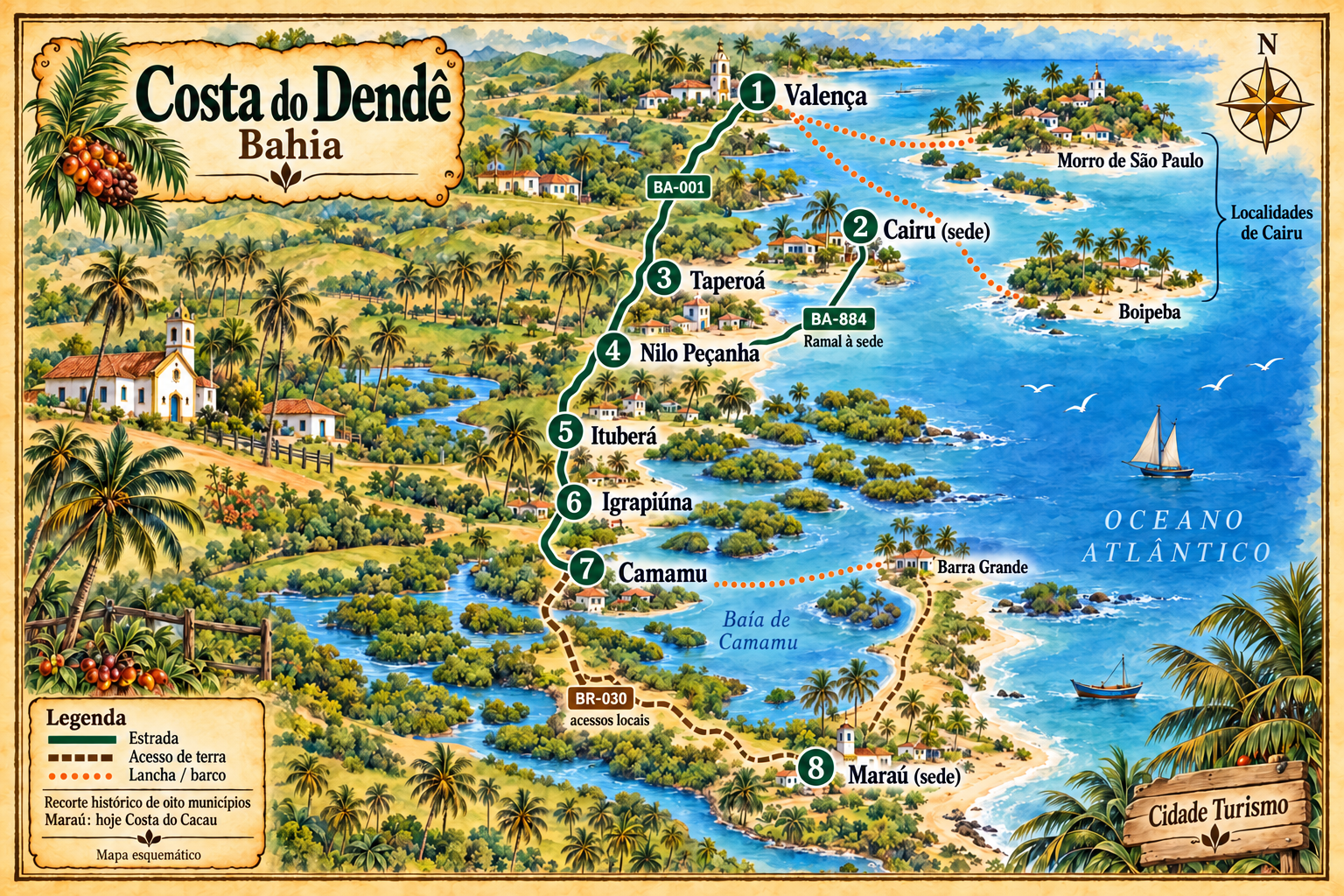
From the Una River to the Maraú Peninsula, the route combines towns of the Lower South, beaches, heritage and crossings along the historic Dendê Coast.

Illustrative map, not to scale. Tap a city to open its page.
Illustrated map of Dendê Coast
Explore the Dendê Coast
Explore other destinations Search by state and city