Costa do Cacau

BA

Costa do Cacau

Paisagens, cultura e passeios para conhecer a Costa do Cacau.

Nordeste

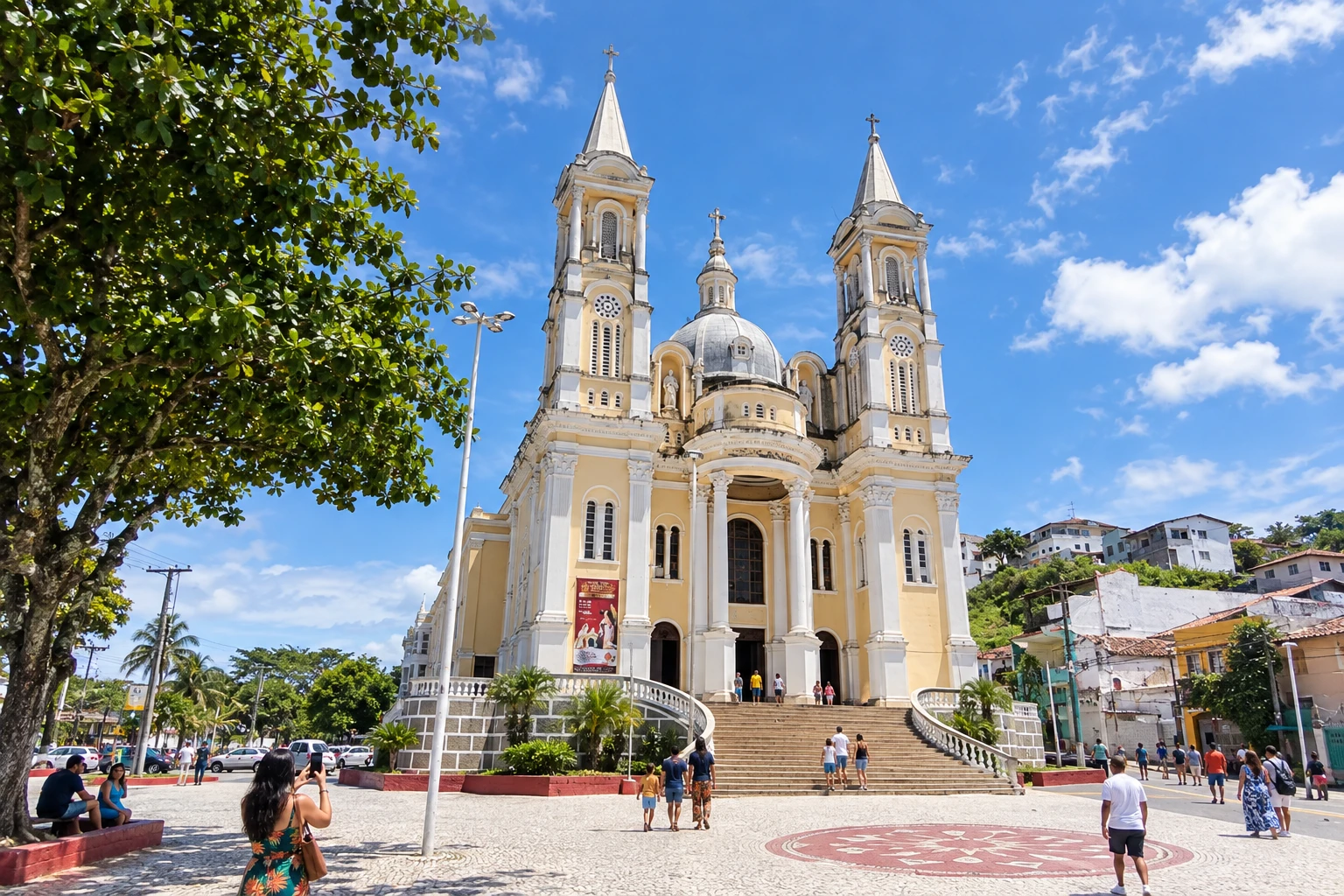
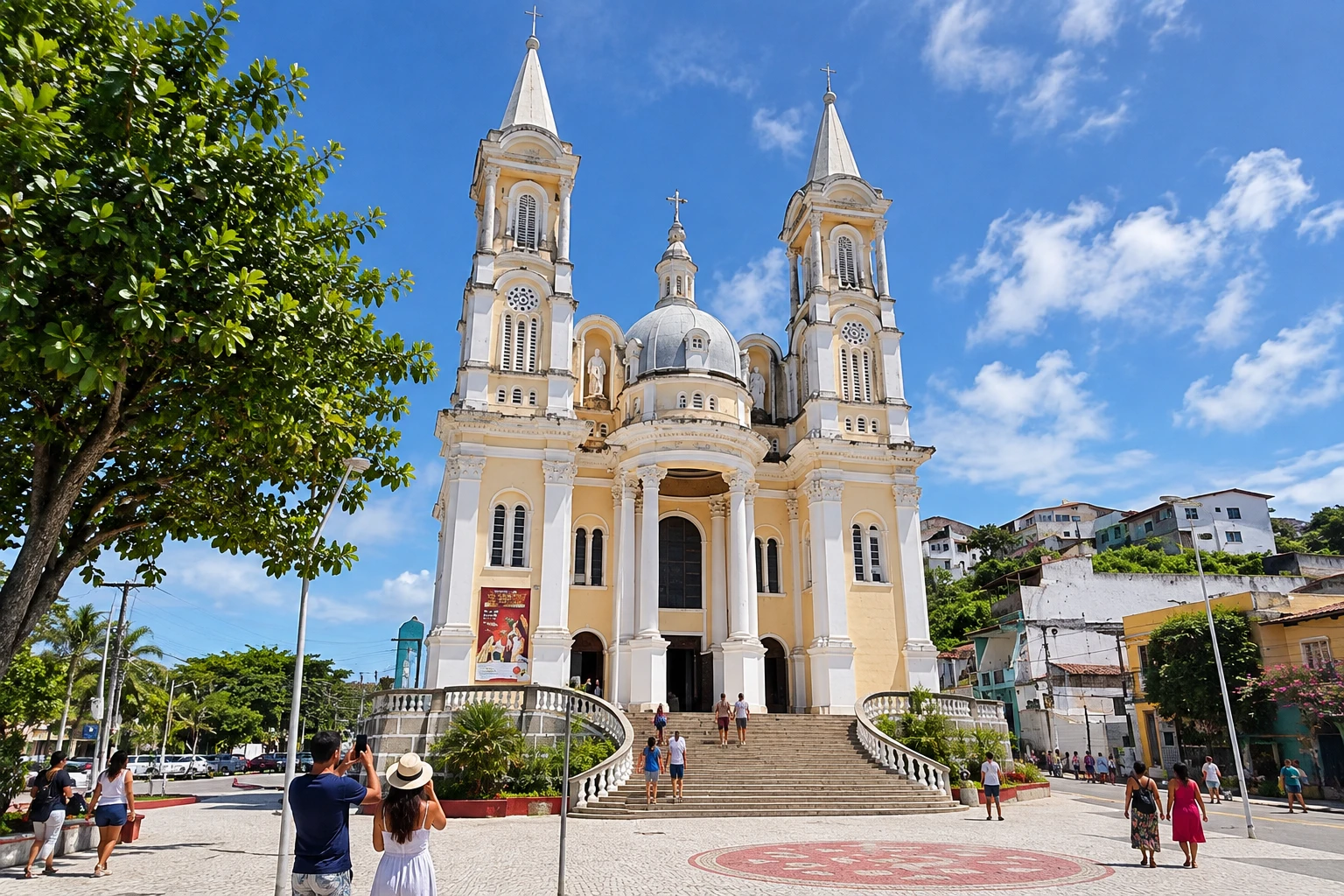
In the photo: Catedral de São Sebastião, em Ilhéus, na Costa do Cacau

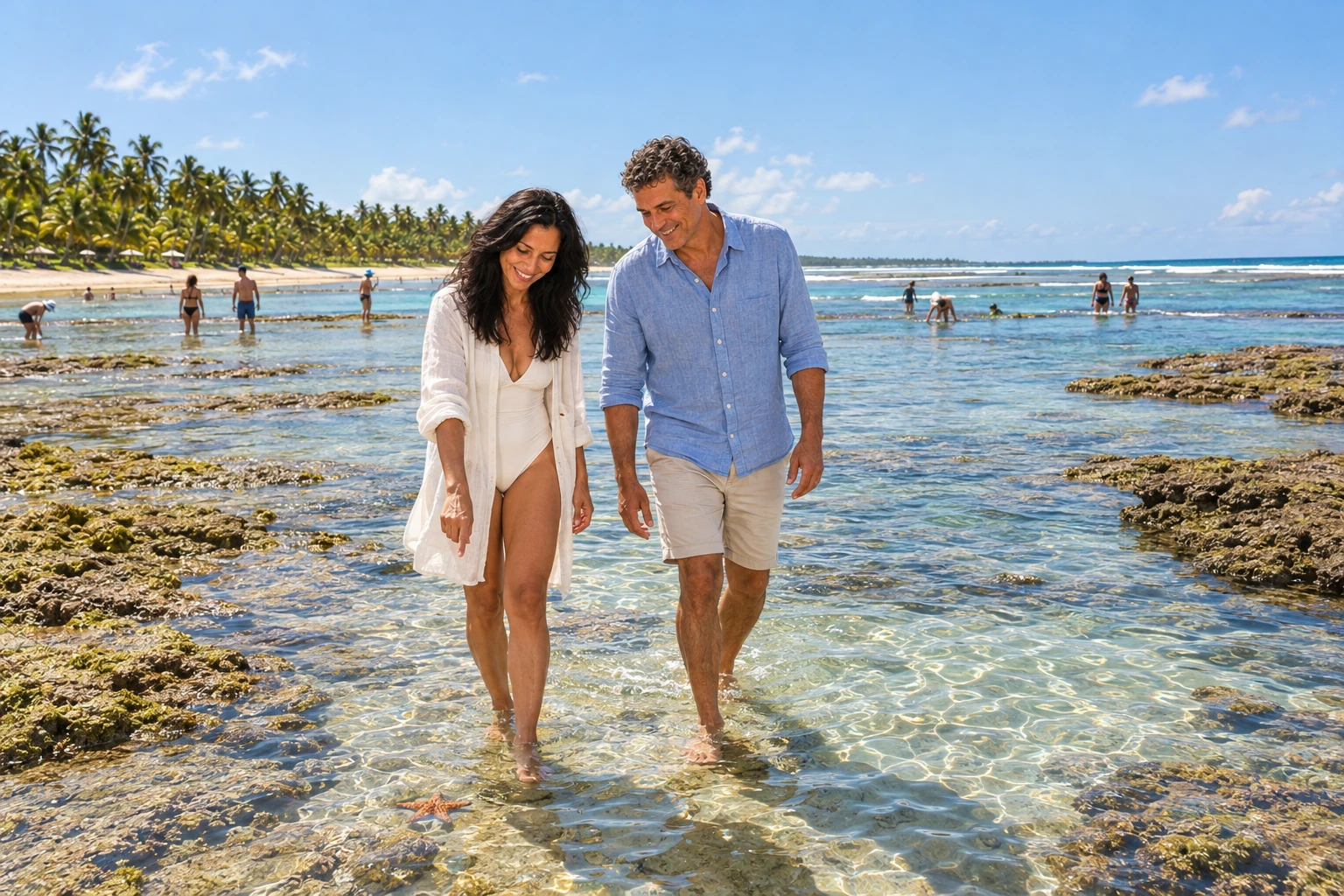
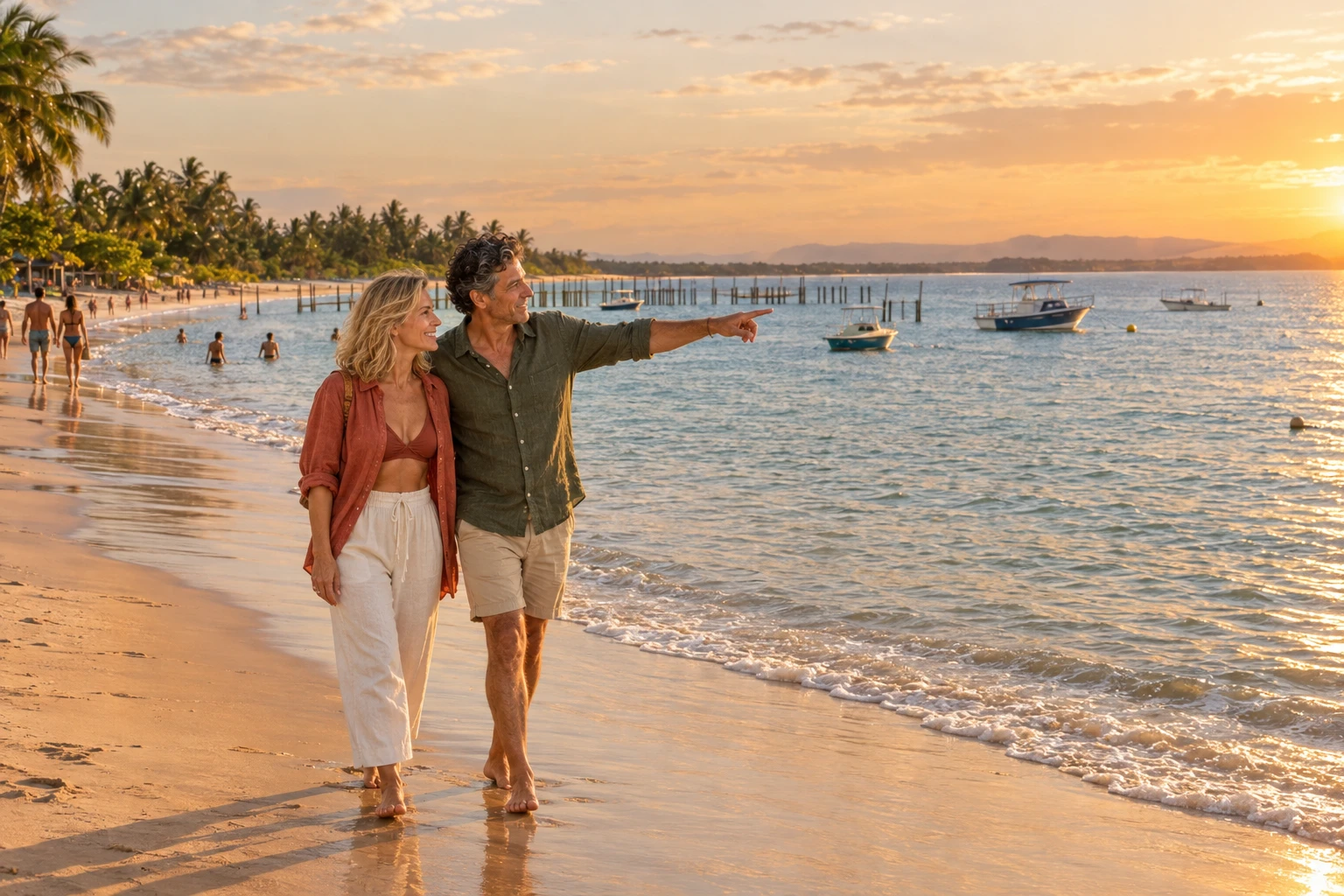
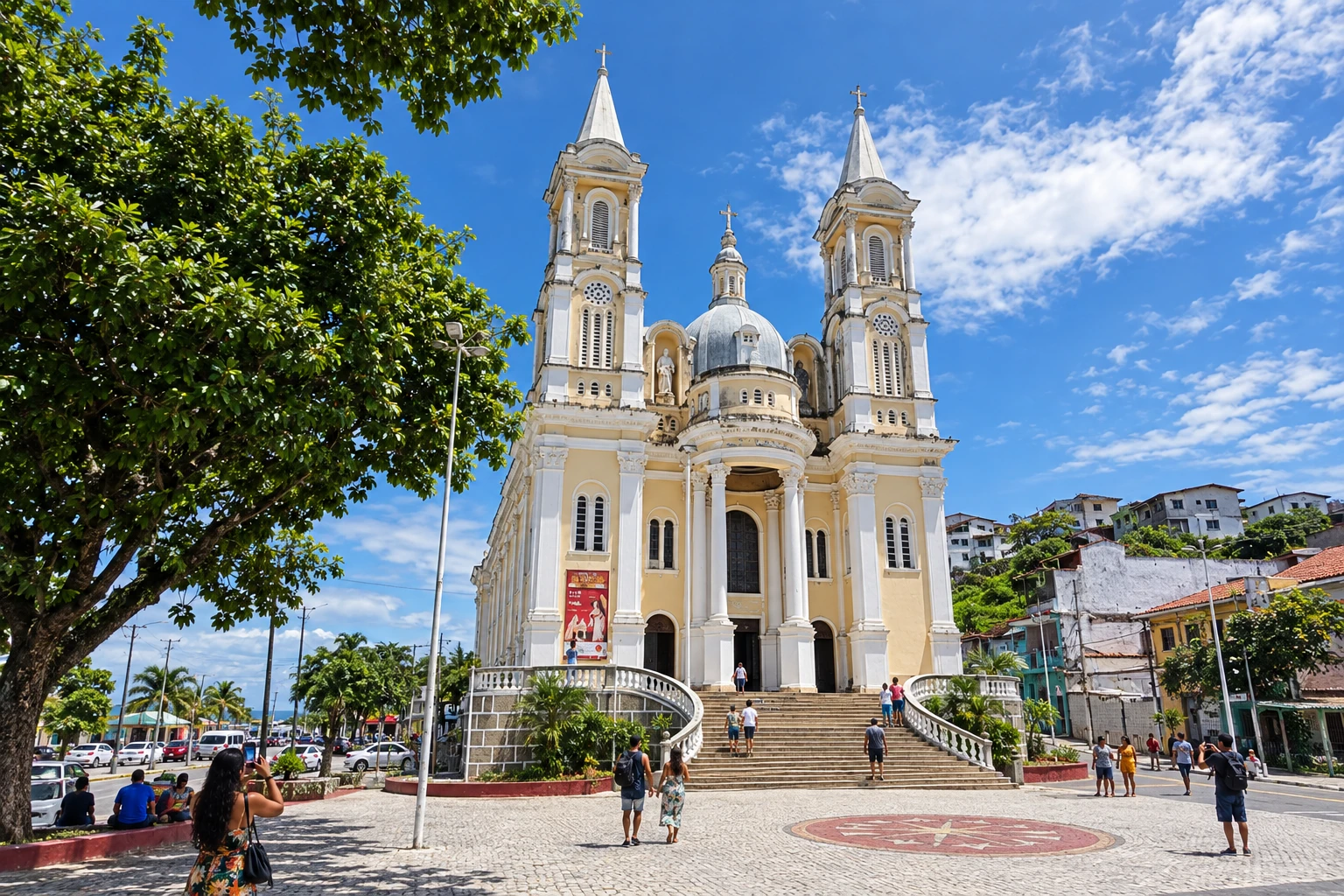
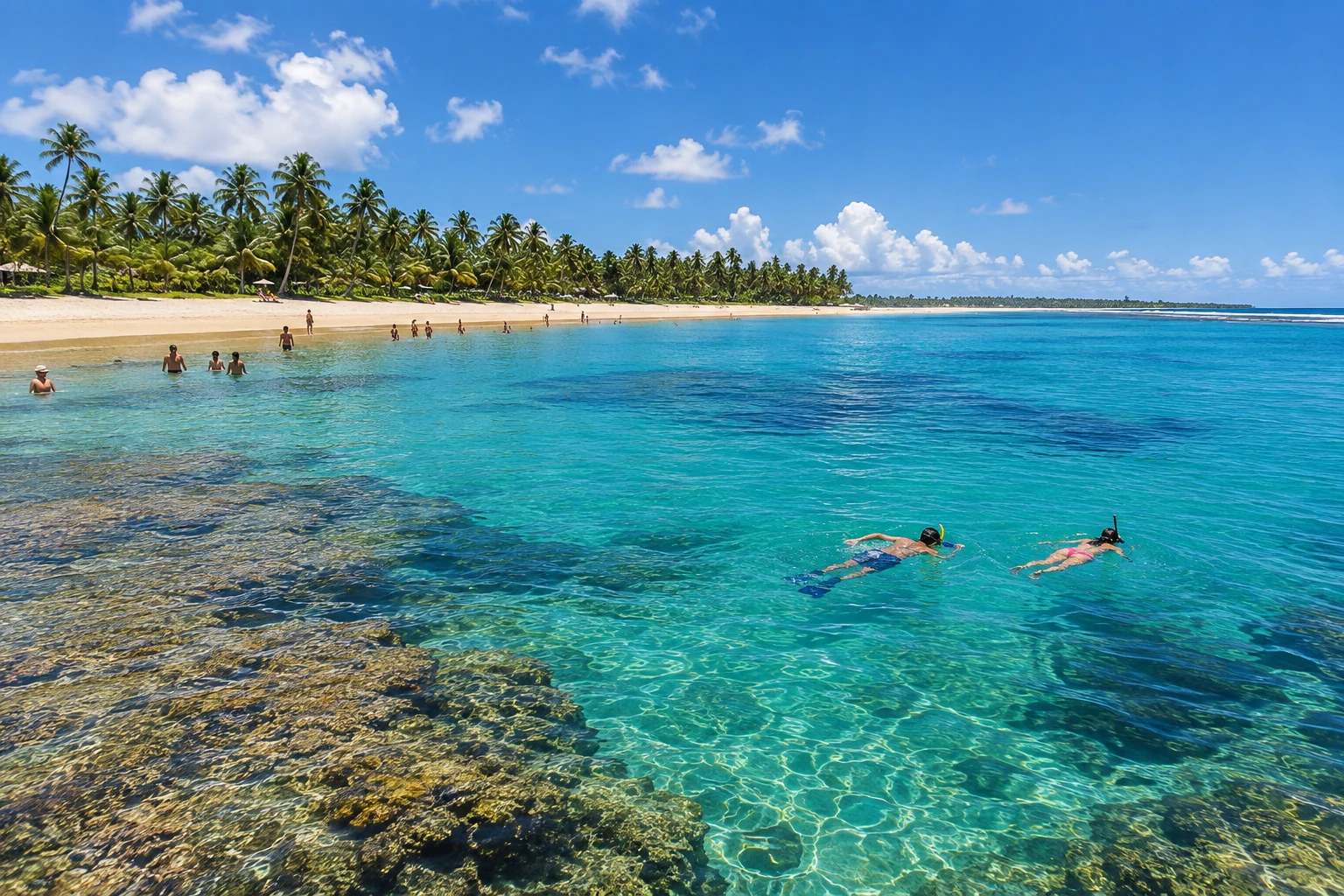
Illustrative images. The pictures in this guide are illustrations based on the real place, not photographs, and may differ from it.

Get to know the place

A region to enjoy
at your own pace.

Maraú reúne praias e povoados da península, com Barra Grande como uma das bases de visita. Taipu de Fora destaca a paisagem de recifes, enquanto Algodões e Cassange ampliam o roteiro à beira-mar. A escolha da hospedagem e do transporte ajuda a organizar os deslocamentos entre as localidades.

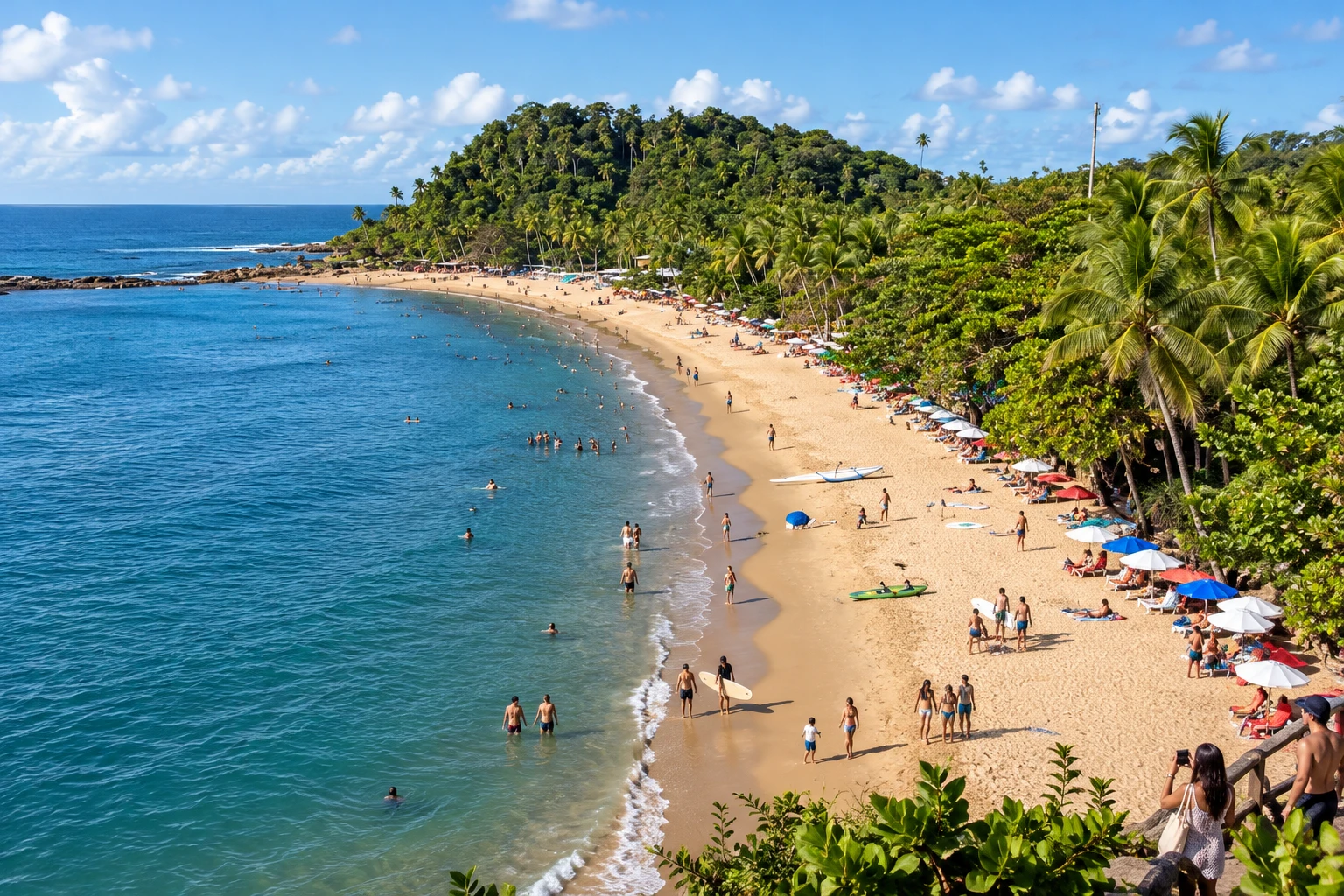
Itacaré combina praias, Mata Atlântica e passeios pelo centro. Concha, Tiririca e Resende permitem começar pelas praias próximas à área urbana; Itacarezinho amplia o roteiro pela costa. Reserve tempo para deslocamentos, observe o mar e escolha cada passeio conforme o ritmo da viagem.

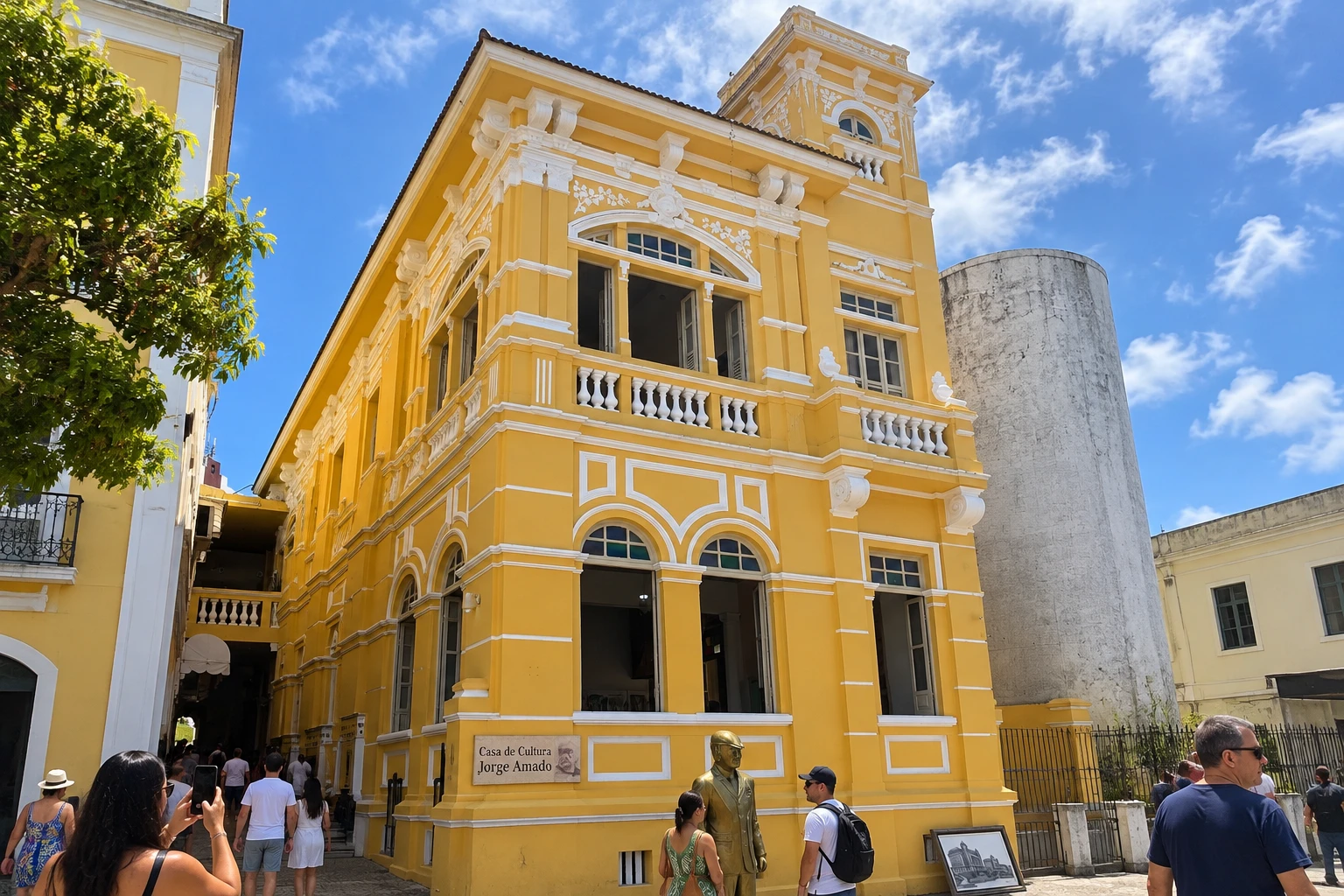
Ilhéus aproxima praias, casario e a memória literária de Jorge Amado. O centro reúne a Catedral de São Sebastião e a Casa de Cultura Jorge Amado, enquanto a Praia dos Milionários e a Baía do Pontal ampliam os passeios pelo litoral. Intercale cultura e mar para conhecer diferentes paisagens.

This destination brings together 3 cities: Ilhéus, Maraú, Itacaré.

Share: WhatsApp

Travelers' photos

Costa do Cacau through the eyes of those who went

Costa do Cacau
Illustrative image
Costa do Cacau
Illustrative image
Traveler, share your experiences through photos Up to 5 photos of each place you visited.

One destination, many paths

The cities on this trip

Start with one city or combine several in your itinerary.

Where Costa do Cacau is The star marks the nearest capital, Salvador.
SalvadorIlhéusMaraúItacaré

Mapa: @svg-maps/brazil, CC BY 4.0

How to get there: Costa do Cacau

Aeroporto de Ilhéus - Jorge Amado (IOS)

Ilhéus possui aeroporto e rodoviária para a chegada à cidade. Organize o transporte da hospedagem conforme pretenda explorar o centro, a Baía do Pontal ou as praias do litoral sul. Evite depender de longas caminhadas entre áreas separadas por pontes e vias de tráfego.

Suggested arrival point: Ilhéus

The local experience

Things to do in Costa do Cacau

Itacaré · BA · Praia

Praia da Concha

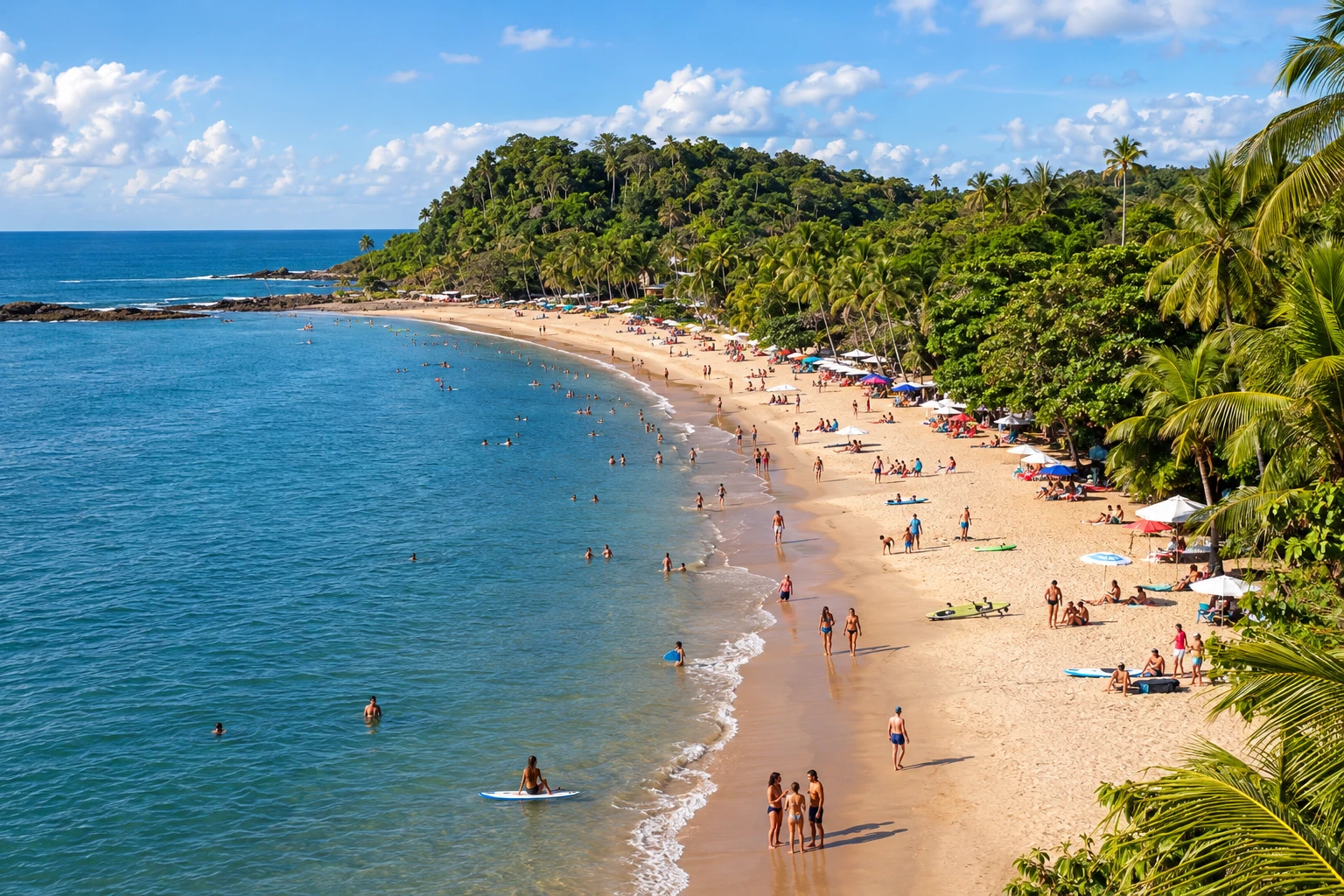
A Praia da Concha fica próxima ao centro de Itacaré e é uma das praias urbanas do município. A paisagem permite aproximar o passeio à beira-mar da circulação pelas ruas da cidade.

Explore Praia da Concha

Maraú · BA · Praia

Praia de Taipu de Fora

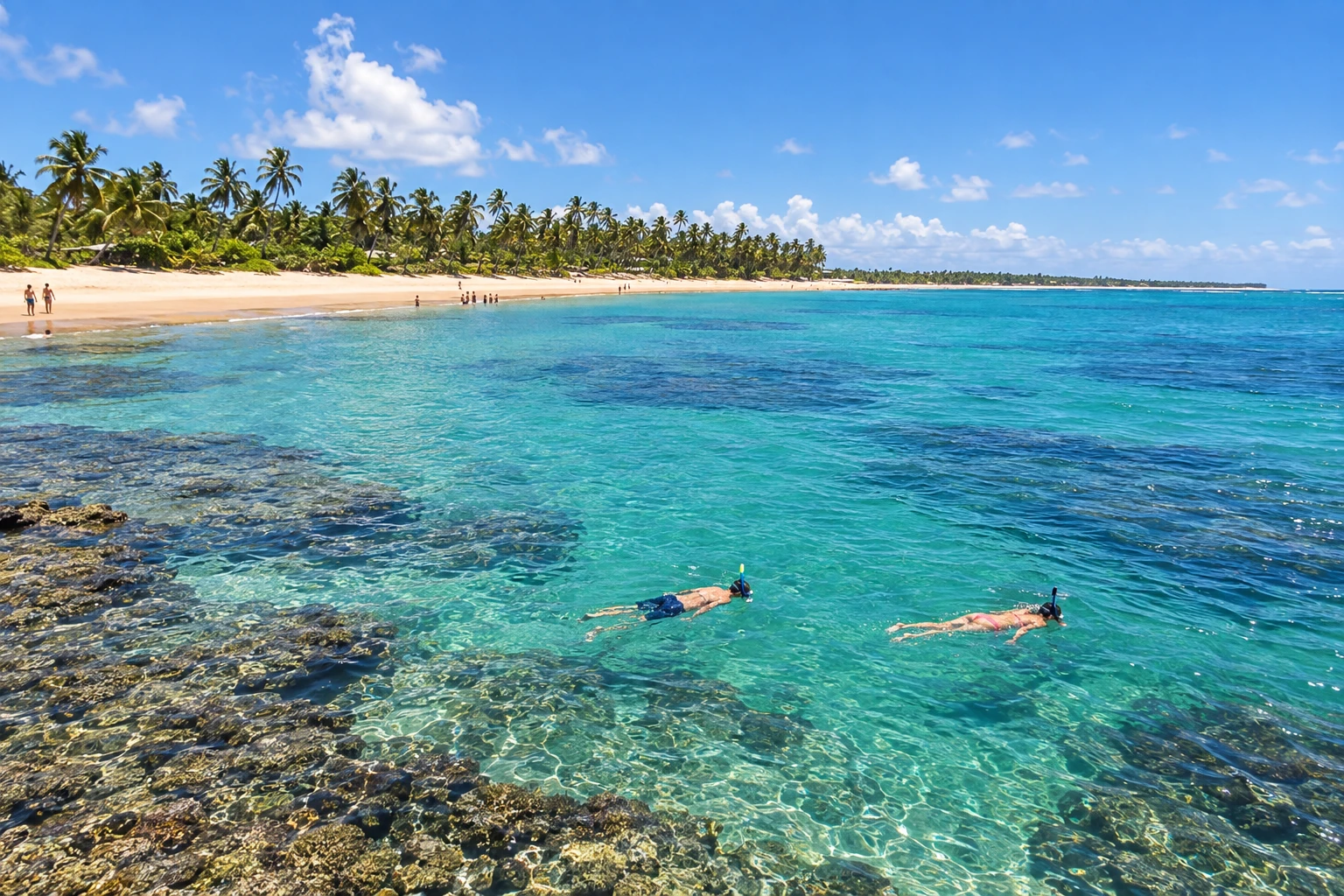
Taipu de Fora fica na península de Maraú e tem recifes que formam piscinas naturais conforme a maré. O passeio combina observação da paisagem costeira e atividades na água, respeitando as condições do dia.

Explore Praia de Taipu de Fora

See 19 more places in Costa do Cacau

To choose before you go

Tours in Costa do Cacau

Where each tour starts, how long it takes, how it is done, what is included and the price range.

Natural pools of Taipu de Fora

From Barra Grande jardineira (local 4x4 transport), taxi or quad bike to the beach; snorkeling on foot a few hours, depending on the tide morning or afternoon, depending on the tide easy

Taipu de Fora is about 8 km from the village of Barra Grande, on the Península de Maraú. Access is by jardineira (the local 4x4 transport), taxi or quad bike, along dirt and sand roads. No boat is needed: the pools form among the corals near the shore, and visitors enter the sea on foot with a mask and snorkel to see fish and coral formations. They only appear at low tide, for a few hours, and are more evident on full and new moons. The corals are concentrated in certain stretches of the beach, near kiosks and pousadas. For that reason the visit requires planning: check the tide table (the reference used in the region is Ilhéus) and arrive before low tide. Outside that period, the beach has a long stretch of sand and coconut trees. Snorkels and masks can be rented on the beach.

Stops: Praia de Taipu de Fora, Natural pools of Taipu de Fora.

Includes: Transport to the beach (jardineira, taxi or quad bike) and snorkel/mask rental are paid separately; check the operator's current price list. A guide is not required. Some boat or jardineira tours include a stop at Taipu de Fora; confirm with the agency whether access to the pools is included.

Tip: Plan your visit for low tide, preferably on a full or new moon day. Do not step on the corals and do not feed the fish. Bring sunscreen, water and, if possible, your own mask. The jardineira usually departs once it has enough passengers; arrange the return before you go.

Best time: Low tide, especially on full and new moons. Check the tide table before you go.

Agencies that run it: Maraú Turismo.

Motorboat tour of the islands of Baía de Camamu

From Terminal Marítimo de Barra Grande motorboat or schooner about 5 to 6 hours, with a stop for lunch from morning to afternoon easy

Baía de Camamu is the third largest in Brazil by water volume. The tour departs from Terminal Marítimo de Barra Grande by motorboat or schooner and goes past islands, coconut-lined beaches and mangroves, with stops for swimming. Ilha da Pedra Furada is about a 30-minute boat ride from Barra Grande and features a rock carved by erosion, a natural spring and a beach. The island is privately owned, and the visit to the area around the rock carries an additional fee. The route continues to Ilha Grande, Ilha Pequena, Campinho, Sapinho and Goió. Lunch is usually at a rustic restaurant on one of the islands serving fish and seafood, and is not included. The tour runs every day. There are several agencies at the Barra Grande pier, and reservations should be made in advance.

Stops: Ilha da Pedra Furada, Ilha Grande, Ilha Pequena, Ilha do Campinho, Ilha do Sapinho, Ilha do Goió.

Includes: Usually includes round-trip motorboat, a crew member and a cooler with ice for those who bring drinks. The visitation fee for Pedra Furada, lunch and drinks are paid separately. There are group and private tours; check the agency's current rate table. Some operators don't charge small children.

Tip: Arrive at the pier early. Bring sunscreen, a hat, swimwear, cash for the island fee and for lunch, and a light snack for the trip. There is a longer itinerary that includes Cachoeira do Tremembé.

Best time: Days with clear weather and calm seas. Confirm with the agency the day before.

Agencies that run it: Itacaré Turismo, Maraú Turismo, Princesinha Turismo, Camamu Adventure.

Trilha das Quatro Praias e Cachoeira do Tijuípe

From Itacaré hikes on foot, with transport to the trailhead full day, about 8 hours on agency itineraries full day easy to moderate

It is one of the most sought-after walking circuits in Itacaré. The trail starts at the edge of the BA-001, towards Ilhéus, near km 12, and goes by four beaches: Engenhoca, Havaizinho, Camboinha (also called Gamboa) and Itacarezinho. Between each beach it's about a 15 to 20 minute walk through the Mata Atlântica. Engenhoca has food and drink stalls. Havaizinho has coves separated by reefs. Camboinha is the smallest. Itacarezinho, the last one, has a restaurant and a freshwater spring. Time spent at each beach depends on the guide. In agency itineraries, the day ends at the Cachoeira do Tijuípe, in Serra Grande, in the municipality of Uruçuca: a drop of about 4 m by 15 m wide, with a bathing pool, on private property with a restaurant and an entrance fee.

Stops: Praia da Engenhoca, Praia do Havaizinho, Praia da Camboinha (Gamboa), Praia de Itacarezinho, Cachoeira do Tijuípe.

Includes: Agencies usually sell the tour with a guide and transport; confirm what is included. The entrance fee to Cachoeira do Tijuípe, lunch and drinks are paid separately. Check the agency's current price list.

Tip: Bring sneakers or sandals that stay on your feet, insect repellent, water, sunscreen and swimwear. You can do only part of the trail. Those who drive leave their vehicle in a makeshift parking area by the highway. Arrive early at Tijuípe: the waterfall fills from around midday.

Best time: Days without rain and with calm sea. Check the forecast before you go.

Historical city tour in Ilhéus: Centro and Jorge Amado

From Hotel or agreed meeting point in Ilhéus vehicle with air conditioning and a walk through the center about 4 hours morning or afternoon easy

About a 4-hour tour through the Historic Center, with a local guide, following the settings linked to Jorge Amado's novels. Depending on the operator, departure is from the hotel in an air-conditioned vehicle, or the route is done on foot. Typical stops include Igreja Matriz de São Jorge dos Ilhéus, Catedral de São Sebastião, Casa de Cultura Jorge Amado (the house where the writer spent part of his childhood and adolescence), the Bataclan, an old cabaret from the cacao era, Bar Vesúvio, mentioned in Gabriela, Cravo e Canela, and the Mercado de Artesanato. Some itineraries also include Mirante do Canhão, Teatro Municipal, Palácio Paranaguá and Quarteirão Jorge Amado. The guide tells the story of the cacao barons. Next to Vesúvio there is a statue of the writer, a photo spot.

Stops: Igreja Matriz de São Jorge dos Ilhéus, Catedral de São Sebastião, Casa de Cultura Jorge Amado, Cabaré Bataclan, Bar Vesúvio, Mercado de Artesanato, Mirante do Canhão.

Includes: Usually includes a local guide and, for hotel departures, transportation. Tickets for the Casa de Cultura Jorge Amado and Bataclan are included by some operators and charged separately by others; the Casa de Cultura offers half-price admission. Lunch and bar consumption are not included. Check the current rates.

Tip: The center is compact and part of the itinerary can be done on foot. Some operators sell the city tour together with a visit to the cacao farm on the same day. Confirm the days and visiting hours of the Casa de Cultura before you go.

Best time: Any time of year. Weekdays outside holidays are better; check the weather forecast.

Cacao and chocolate farm on the Rota do Chocolate

From Hotel or pousada in Ilhéus van or executive car, with a short walk at the farm about 4 hours morning or afternoon easy

About a 4-hour trip to a farm on the Rota do Chocolate. Transportation departs from the hotel reception and takes 40 to 60 minutes. The visit is usually to Fazenda Capela Velha, on the Estrada do Chocolate between Ilhéus and Uruçuca, or to Fazenda Yrerê, between Ilhéus and Itabuna, depending on availability that day. The itinerary includes a light walk through the cabruca plantation, where cacao grows in the shade of the Mata Atlântica, and opening the pod to taste fresh cacao. Next are the fermentation boxes and drying of the beans, an explanation of cultivation and, on farms with a factory, a visit to the production of artisanal chocolate. The tour ends with a tasting of chocolates and derivatives, such as cacao honey, and time in the shop. The trail is short, on flat ground, and suitable for children and older visitors.

Stops: Fazenda Capela Velha, Fazenda Yrerê, Estrada do Chocolate.

Includes: Usually includes round-trip transportation, a guide and a tasting. The farm visit fee is included by some operators and charged separately by others. Some require a minimum of 2 participants. Meals, drinks and purchases in the shop are the visitor's responsibility; check the current rates.

Tip: Ask which farm will be visited on the chosen date. Bring insect repellent, sunscreen and closed-toe shoes. The shop sells single-origin chocolates, a nice souvenir from the trip. There are itineraries that combine the farm and the city tour in about 7 hours.

Best time: Throughout the year, on days without heavy rain. Departures take place in the morning and afternoon.

Jardineira tour around the Península de Maraú

From Barra Grande jardineira 4x4 (adapted pickup) with driver about 4 hours, possibly extending depending on the itinerary morning or afternoon easy

The jardineira is an adapted 4x4 pickup with a passenger cabin and is the peninsula's local transport. On the guided tour it departs from Barra Grande and follows sandy and dirt roads to the main points of the Península de Maraú. The route varies by agency, but usually includes Praia de Algodões, Lagoa do Cassange, Trilha das Bromélias Gigantes, Lagoa Azul, Taipu de Fora, the Farol de Taipu and, late in the afternoon, Ponta do Mutá for the sunset. The Trilha das Bromélias links Taipu de Fora to Lagoa do Cassange, with large bromeliads beside the path. At Lagoa Azul, the stop is in front of the lagoon, which is now private property. The pools at Taipu de Fora only form at low tide, so coordinate the timing with the driver. Local operators report that at least 6 passengers are required for departure.

Stops: Praia de Algodões, Lagoa do Cassange, Trilha das Bromélias Gigantes, Lagoa Azul, Praia de Taipu de Fora, Farol de Taipu, Ponta do Mutá.

Includes: Transport and driver or guide. Entrance fees, meals, drinks and kayak or SUP board rental at Lagoa do Cassange are paid separately. The price may be per person or per vehicle; check the current price list.

Tip: Book in advance with an agency or with the drivers at the plaza in Barra Grande. Bring swimwear, sunscreen and cash for the bars. Those with their own car do not pay for the Trilha das Bromélias, which is part of the route between Cassange and Barra Grande, but the roads require a 4x4 vehicle.

Best time: Days without rain, when roads are firmer. For Taipu de Fora, choose a low-tide day.

See 9 more tours

Boat tour along the Rio de Contas, Cachoeira do Cleandro and Praia do Pontal

From Praça São Miguel, in Itacaré motorized boat and short walk 3 to 4 hours afternoon, with sunset easy

The meeting point is at Praça São Miguel in downtown Itacaré, from where the group walks to the boarding point. The boat travels up the Rio de Contas through the mangroves, with explanations from the driver about the river and safety on board, to the disembarkation point at Cachoeira do Cleandro. The waterfall has three drops and a natural pool for swimming, on a farm with cacao and clove plantations, a restaurant and an access fee per person. Time at the waterfall varies with the group. On the return the boat goes down the river to Praia do Pontal, a sandbar at the mouth of the Rio de Contas, from where you can see the Itacaré waterfront and the Farol. Those who take the tour at the end of the day can watch the sunset there. It is also possible to reach the waterfall by kayak.

Stops: Rio de Contas, Mangroves of the Rio de Contas, Cachoeira do Cleandro, Praia do Pontal.

Includes: Usually includes the boat and the driver or guide. The access fee to Cachoeira do Cleandro, lunch and drinks are paid separately; check the agency's current price list. Boatmen also serve directly from the riverbank.

Tip: Bring swimwear, sunscreen, water and cash for the waterfall fee. If there's time, you can have lunch at a riverside restaurant. Arrange with the boatman the time to stay until sunset at the Pontal.

Best time: Any time with clear weather. Late afternoon favors the sunset at Pontal.

Rafting on the Rio de Contas with zipline

From Itacaré, based in Taboquinhas van transfer to the base and rafting boat about 4 to 5 hours, with 2 hours on the river morning or afternoon moderate

The rafting base is in Taboquinhas, a village about 28 to 30 km from Itacaré, along a road that passes through the Mata Atlântica and runs alongside the Rio de Contas. The group receives safety instructions and equipment and goes down the river in a raft with an instructor. The section is about 3 km of class III and IV rapids, taking roughly two hours, with stops for swimming in the river and, at some points, rock jumps. The rapid levels can rise in the rainy season. At the end there is a zip line of about 170 to 180 m over the river. The minimum age reported by local operators is 7 years. Agencies in Itacaré sell the tour with or without transfer.

Stops: Taboquinhas, Rio de Contas.

Includes: Usually includes the raft, life jacket, helmet, paddle, instructor and the zipline descent. Transfer between Itacaré and Taboquinhas is included in some packages and sold separately in others. Lunch and drinks are paid separately; check the current price list.

Tip: Book in advance: the raft departs with a minimum number of people, which is usually easier in high season. Wear lightweight clothing that can get wet, closed-toe shoes, and sunscreen. Inform the agency if you have any health restrictions.

Best time: Throughout the year. The rapids are stronger after the rains.

Agencies that run it: Itacaré Turismo.

Speedboat tour of the islands of Baía de Camamu with Cachoeira do Tremembé

From Terminal Marítimo de Barra Grande speedboat about 6 to 7 hours, with lunch from morning to afternoon easy

This is the long version of the islands tour in Baía de Camamu. The speedboat departs from Terminal Marítimo de Barra Grande and goes by Pedra Furada, Ilha Grande, Ilha Pequena, Campinho, Sapinho and Goió, with stops for swimming and lunch at Ilha do Sapinho. Then it continues for about 40 minutes from Goió to Cachoeira do Tremembé, in the southern part of the bay, through mangrove channels, with views of the city of Maraú. The boat comes up under the falls and passengers can bathe in freshwater without leaving the boat. It is also possible to disembark beside the waterfall and climb a trail to natural pools. Because of the distance, the route is done in speedboats or small boats.

Stops: Ilha da Pedra Furada, Ilha Grande, Ilha Pequena, Ilha do Campinho, Ilha do Sapinho, Ilha do Goió, Cidade de Maraú, Cachoeira do Tremembé.

Includes: Usually includes speedboat, a crewman and a cooler with ice. Lunch, drinks and the visitation fee for Ilha da Pedra Furada are paid separately. There are shared and private tours; check the agency's current price list.

Tip: Bring swimwear, a towel, sunscreen and a light snack. You can arrange lunch while still on the boat, before disembarking at Sapinho. Book in advance.

Best time: Days with clear weather and calm sea. Confirm with the agency the day before.

Agencies that run it: Princesinha Turismo, Camamu Adventure.

Humpback whale watching in Ilhéus

From Ilhéus Iate Clube shared boat with up to 6 passengers 4 hours, with about 3 hours of navigation morning or afternoon easy

The tour is operated by a local company from Ilhéus, on boats with a maximum of six people, with daily departures in the morning and afternoon from Ilhéus Iate Clube. Before boarding there are navigation briefings and explanations about the whales. Then follows about three hours at sea, accompanied by biologists and guides affiliated with UESC and the Ilhéus aquatic mammals research group. In addition to the humpbacks, gray dolphins and other cetacean species may appear. The boat can be shared with other travelers or reserved for the private group. Sightings depend on the whales' migration season.

Stops: Ilhéus Iate Clube, Coastline of Ilhéus.

Includes: Usually includes individual insurance, an inflatable vest, a photographer on board, water and accompaniment by a biologist. Additional photos and videos may be sold separately. There is a per-person price for the shared boat and a per-boat price for the exclusive tour; check the current price list.

Tip: Book in advance, especially on weekends and holidays. Bring sunscreen, a hat, and a light jacket for the wind. If you get seasick, prepare beforehand. Arrive with time to spare at the boarding point.

Best time: Season runs from June to October, peaking from mid‑July to September. Confirm with the operator whether there are still departures.

Trilha de Jeribucaçu, Arruda e Cachoeira da Usina

From Itacaré transport to the trailhead and hike about 7 to 8 hours full day moderate

The group leaves Itacaré and follows the BA-001 toward Ilhéus until the start of the trail. The hike begins at Cachoeira da Usina, about 15–20 minutes in, where there is a stop of roughly one hour for a swim in the natural pool of the Rio Jeribucaçu. The name comes from an old power plant. The trail continues through the Mata Atlântica, with two river crossings and a stretch through the mangrove where the water can reach waist-deep, until Praia de Jeribucaçu. There the river meets the sea, and locals serve lunch, such as grilled fish. About a 10–15 minute walk along the coast is Praia da Arruda, where the corals form natural tide pools at low tide. The return is along the same trail, with a steep climb of about 25 minutes at the end of the day. The order of stops may vary.

Stops: Cachoeira da Usina, Rio Jeribucaçu, Praia de Jeribucaçu, Praia da Arruda.

Includes: Usually includes a licensed guide and round-trip transport. Lunch, drinks and parking (for those using their own car) are paid separately; check the agency's current price list.

Tip: Bring cash and card, insect repellent, a small backpack, light clothing and closed shoes or sandals that stay on. In the mangrove section the water can reach waist height, so protect your phone and documents. The return has a long uphill section; assess fitness level, especially with children and older adults.

Best time: Days without rain, when the muddy trail is firmer. To see the Arruda pools, prefer low tide.

Quad bike across the Península de Maraú: Trilha das Bromélias and Lagoa do Cassange

From Barra Grande quad bike (ATV), on your own or with a guide full day, depending on the itinerary full day moderate

Quad bikes are a common means of transport on the peninsula, and daily rental gives freedom of schedule and route. The most popular route connects Taipu de Fora to Lagoa do Cassange via the Trilha das Bromélias Gigantes, passing Morro do Farol, which has views of the region, and Lagoa Azul. Lagoa do Cassange has calm freshwater beside the beach. Algodões, the peninsula's first beach, is about 22 km from Barra Grande. The tracks are sand and dirt, with holes in some stretches, and the quad can reach loose-sand spots where regular cars can't go. You can go without a guide, but there are guides who accompany and explain each stop. Each quad carries up to two people. Some companies deliver and pick up the vehicle at the accommodation.

Stops: Morro do Farol, Trilha das Bromélias Gigantes, Lagoa Azul, Lagoa do Cassange, Praia de Taipu de Fora, Praia de Algodões.

Includes: Rental is by day and varies by season. Guide (when hired), meals and drinks are paid separately. Check with the rental company what is included and the current rate schedule.

Tip: Rent at spots in Barra Grande and Taipu de Fora or through an agency, preferably in advance. Confirm with the rental company which documents are required. Bring swimwear and sunscreen. For the natural pools of Taipu de Fora, plan for low tide. If you prefer not to drive, you can go by shuttle/van.

Best time: Days without rain, when the trail is firmer. Plan Taipu de Fora for low tide.

Agencies that run it: Maraú Turismo.

Boat trip to the Rio do Engenho, through the Baía do Pontal

From Ilhéus (boarding location provided by the operator) boat varies depending on the operator; confirm when booking depending on the operator easy

The boat sails through the Baía do Pontal, among Atlantic Forest mangroves, with views of the Ponte Jorge Amado, to the Vilarejo do Rio do Engenho. In the village, the itinerary includes the Igreja de Nossa Senhora de Sant'Ana and a visit to Fazenda Caminho Feliz, which shows cacao cultivation and the production process that marked the history of Ilhéus. There is a tasting of artisanal liqueur, cacao honey and jams, and the itinerary includes a river swim. The navigation is calm, and the tour is suitable for families. Some operators combine the cacao farm, boat trip and the city's history in a single itinerary.

Stops: Baía do Pontal, Manguezais da Baía do Pontal, Vilarejo do Rio do Engenho, Igreja de Nossa Senhora de Sant'Ana, Fazenda Caminho Feliz.

Includes: Items vary by operator; the tour usually includes the boat and transportation. Farm fees, food and drinks may be charged separately. Confirm when booking and check the current price list.

Tip: Ask the operator about the boarding point, the duration, and whether the tasting is included. Bring swimwear, insect repellent and sunscreen.

Best time: On clear-weather days. Check the forecast and confirm with the operator the day before.

Islands tour of the Baía de Camamu departing from Itacaré

From Itacaré transfer to the port of Camamu and speedboat full day full day easy

The Baía de Camamu is about 55 km north of Itacaré. The tour starts with transfer from Itacaré to the Porto de Camamu. From there, the speedboat visits Ilha da Pedra Furada, Barra Grande, Campinho and Goió, with stops for swimming. On full-moon and new-moon days, when the pools appear at low tide, Taipu de Fora can be added, with about an hour and a half in the pools, for an additional fee paid on site. It is an option for those staying in Itacaré who will not spend days on the Península de Maraú.

Stops: Porto de Camamu, Ilha da Pedra Furada, Barra Grande, Ilha do Campinho, Ilha do Goió, Praia de Taipu de Fora (optional).

Includes: The transfer and the speedboat are usually included. The stop at Taipu de Fora is additional and paid on site. Island fee, lunch and drinks are paid separately. Check the agency’s current price list.

Tip: It’s a long day: bring sunscreen, swimwear and a snack. Check the tide table with the agency before including Taipu de Fora.

Best time: Full moon and new moon days, if you plan to include the pools of Taipu de Fora.

Agencies that run it: Itacaré Adventure.

Introductory scuba dive in the natural pools of Taipu de Fora

From Praia de Taipu de Fora scuba diving with tanks, with an instructor about 30 minutes of diving, plus class depending on the tide easy, with instructor

Activity for those who have never dived, don't have certification and want to see the seafloor. It starts with a classroom lesson and practical training, followed by a supervised dive of about 30 minutes, with one instructor per person, to a depth of up to 6 meters among the corals of Taipu de Fora. Minimum age is 12. Those who prefer to stay in shallow water can snorkel on their own in the pools at low tide. Certified divers can check with local agencies about scuba diving with tanks on the reef.

Stops: Praia de Taipu de Fora, Natural pools of Taipu de Fora.

Includes: Theory class, practical training and an instructor are part of the activity. Check with the agency which equipment is included and the current price list.

Tip: Book in advance and confirm the time according to the tide table. Inform the instructor of any health issues. For children under 12, snorkeling in the pools is the alternative.

Best time: Low tide and calm sea. Confirm the schedule for the day with the agency.

Day by day

3, 5 and 7-day itinerary in Costa do Cacau

Suggestions to plan the trip. Change the order of the days according to the weather and tour availability.

3 days · 3 days between Ilhéus and Itacaré: historic center, cacao and beach trail

For First-time visit and limited time. For those flying into Ilhéus who want to combine culture, chocolate and a beach hike. · Based in Ilhéus (1st night) and Itacaré (2nd night)
  1. Day 1 · Ilhéus: historic center and Jorge Amado

    Start with the historic city tour in Ilhéus: Centro and Jorge Amado. The route passes by the Catedral de São Sebastião and the Casa de Cultura Jorge Amado in the town center. Reserve the morning for this section, which is walked for much of the time. In the afternoon, go to Praia dos Milionários for a sea swim. If the Casa de Cultura or another site charges an entrance fee, it is paid separately; check the current price list. Stay overnight in Ilhéus.

  2. Day 2 · Rota do Chocolate and trip to Itacaré

    In the morning, visit the Fazenda de cacau e chocolate on the Rota do Chocolate. The tour shows the stages of cacao production, from the plantation to chocolate, and usually lasts about 4 hours. Have lunch in Ilhéus and depart in the afternoon for Itacaré via the BA-001. It's about 70 km, between 1h15 by car and 1h40 by bus. Arrange transfer before arriving. Arrive in Itacaré during daylight to visit Praia da Concha.

  3. Day 3 · Trilha das Quatro Praias e Cachoeira do Tijuípe

    Day of Trilha das Quatro Praias e Cachoeira do Tijuípe. The trail links the beaches Engenhoca, Havaizinho, Camboinha and Itacarezinho, about 4 km through Atlantic Forest. Allow 4 to 5 hours for the route, with stops for swimming. The Cachoeira do Tijuípe is on private property and charges a separate entrance fee. Wear sneakers or secured footwear and insect repellent. Allow time for the return to Ilhéus airport, which takes between 1h15 and 1h40.

5 days · 5 days in Itacaré and Península de Maraú: trails, river and natural pools
For For those who want beaches, trails and river in Itacaré and a stop in Barra Grande and Taipu de Fora. Suitable for couples and groups of friends. · Based in Itacaré (3 nights) and Barra Grande, on the Península de Maraú (1 night)
  1. Day 1 · Arrival in Itacaré and the city's beaches

    From Ilhéus airport to Itacaré is about 70 km along the BA-001, roughly 1h15 by car. The bus departs from Ilhéus bus station and takes about 1h40. Book transfer in advance. On arrival, walk to Praia da Concha, near the urban area. At late afternoon, go up to Ponta do Xaréu for views of the Concha, the Pontal and the mouth of the Rio de Contas.

  2. Day 2 · Trilha das Quatro Praias e Cachoeira do Tijuípe

    Do the Trilha das Quatro Praias e Cachoeira do Tijuípe. The route goes through Engenhoca, Havaizinho, Camboinha and Itacarezinho, covering about 4 km through Atlantic Forest and taking 4 to 5 hours. Local operators depart from town with a guide and transportation. The waterfall, on private property, charges a separate entrance fee. Bring water, insect repellent and dry clothing.

  3. Day 3 · Rio de Contas and urban beaches

    In the morning, take the boat trip along the Rio de Contas, Cachoeira do Cleandro and Praia do Pontal. The boat departs from the waterfront or from Praia da Concha. The Cachoeira do Cleandro is on a farm and charges an access fee per person, paid separately. In the afternoon, visit the beaches of Tiririca and Resende. Those who prefer adventure can swap the boat for rafting on the Rio de Contas with a zipline.

  4. Day 4 · Itacaré to Barra Grande and Taipu de Fora

    Leave Itacaré heading to Camamu, about 49 km on a paved road. From there, a launch takes you to Barra Grande in about 30 to 40 minutes. By the dirt road, via BR-030, it's about 65 km, much of it unpaved, and travel time changes with the rain. Check the tide table: the natural pools of Taipu de Fora only appear at low tide, more pronounced at full and new moons. From Barra Grande to the beach it's about 7 km. If the tide doesn't cooperate, leave it for the next morning.

  5. Day 5 · Baía de Camamu and return

    If you've already seen the pools, do the morning launch trip around the islands of the Baía de Camamu. Confirm the departure point and tour duration with the operator. The overland return to Ilhéus is about 128 km and takes from 3 hours, possibly over 4 after rains. If you have a flight, prefer the Camamu to Ilhéus section. Allow extra time before boarding.

7 days · 7 days on the Costa do Cacau: Ilhéus, Itacaré and Maraú
For For those who want to visit the three cities in the guide, without rush. Combines culture, cacao, trails, river and natural pools. · Based in Ilhéus (2 nights), Itacaré (3 nights) and Maraú, in Barra Grande or Taipu de Fora (2 nights)
  1. Day 1 · Ilhéus: center and Jorge Amado

    Arrival at Ilhéus airport. Take the historic city tour in Ilhéus: Centro and Jorge Amado, including the Catedral de São Sebastião and the Casa de Cultura Jorge Amado. The route takes a morning or an afternoon, depending on the flight. Finish at Praia dos Milionários. If any site charges an entrance fee, the amount is paid separately; check the current price list.

  2. Day 2 · Cocoa and Baía do Pontal

    In the morning, visit the cocoa and chocolate farm on the Rota do Chocolate, with an explanation of the production process and a tasting. In the afternoon, take the boat trip on the Rio do Engenho through the Baía do Pontal. Between June and October there is also humpback whale watching in Ilhéus, on a tour of about 4 hours departing in the morning, with a peak from mid‑July to September. At that time, swap the afternoon tour for it.

  3. Day 3 · Ilhéus to Itacaré

    Head to Itacaré via the BA-001, about 70 km. By car or transfer it's around 1h15; by bus, about 1h40. Settle in and walk to Praia da Concha. In the late afternoon, climb to Ponta do Xaréu, which overlooks the mouth of the Rio de Contas. Use the day to rest from the road.

  4. Day 4 · Trilha das Quatro Praias e Cachoeira do Tijuípe

    Do the Trilha das Quatro Praias e Cachoeira do Tijuípe. It's about 4 km between the beaches Engenhoca, Havaizinho, Camboinha and Itacarezinho, taking 4 to 5 hours. Finish at the Cachoeira do Tijuípe, on private property that charges a separate entrance fee. Prefer a certified guide and wear closed or secured footwear.

  5. Day 5 · Rio de Contas and the beaches of Itacaré

    Take the boat trip along the Rio de Contas, Cachoeira do Cleandro and Praia do Pontal in the morning. In the afternoon, visit the beaches of Tiririca and Resende. If you prefer adrenaline, choose rafting on the Rio de Contas with a zipline. There's also the Trilha de Jeribucaçu, Arruda and Cachoeira da Usina on a separate day if you have time.

  6. Day 6 · Itacaré to Maraú and Taipu de Fora

    Go to Camamu, about 49 km from Itacaré, and take the launch to Barra Grande in about 30 to 40 minutes. The alternative is the dirt road via BR-030, about 65 km. Check the tide table for the natural pools of Taipu de Fora, about 7 km from Barra Grande, which only appear at low tide. An introductory dive in the natural pools of Taipu de Fora is an option for those who want to explore further.

  7. Day 7 · Península de Maraú and return

    Choose a tour of the peninsula: Jardineira ride on the Península de Maraú, quad bike on the Península de Maraú: Trilha das Bromélias and Lagoa do Cassange, or a speedboat trip around the islands of the Baía de Camamu. The return to Ilhéus by road is about 128 km and takes at least 3 hours, possibly more than 4 after rain. If your flight is the same day, allow extra time and book transport in advance.

Best time to go

When to go: Costa do Cacau month by month

Choose dates according to the activities you plan to do. Check the forecast before outdoor activities; weekdays outside holidays help organize a calmer itinerary.

The seasons shown are the most usual ones; nature doesn't always follow the calendar.

January Some rain

Summer and holidays · Warm sea

Highs around 27 °C and an average of about 108 mm of rain, in showers. It's high season: beaches and tours are busier, so book transfers and excursions in advance. The natural pools of Taipu de Fora depend on the tide, not the month. Check the tide table before you go. It is not humpback whale season.

February Low rain

Carnival · Less rain

Highs around 28 °C and an average of about 95 mm of rain. Carnival occurs in February or March depending on the year, and it increases visitor numbers in Ilhéus and Itacaré. Beaches and boat tours work well. In Maraú, plan Taipu de Fora according to the tide table. Book accommodation and transport well ahead for holiday dates.

March Some rain

Showery rain · Cocoa and city tour

Highs around 28 °C and an average of about 124 mm of rain, in showers that usually pass quickly. It's a good month for a city tour in Ilhéus and visits to cocoa farms, which have covered sections. Easter can fall in March or April and increases activity along the coast. Check the forecast before trails and boat trips.

April High rain

More rain · Dirt roads

This is one of the rainiest months, with an average of about 141 mm and highs around 27 °C. Trails become muddy and the dirt road to Barra Grande can worsen, increasing travel time. Consider going via Camamu and by lancha. Boat trips and waterfalls depend on the day; check the forecast. Holidays like Easter and Tiradentes increase activity along the coast.

May Some rain

Frequent rain · Fewer visitors

Highs around 26 °C and an average of about 118 mm of rain. The rainy season in the region runs from April to July, with alternating sunshine. There are fewer visitors, except on holidays. Favor tours with a rain contingency plan, such as a city tour in Ilhéus and visits to a cocoa farm. On trails, shoes with good grip help.

June Some rain

Start of the whale season · June festivals (Festas juninas)

Highs around 25 °C and lows of 22 °C, with an average of about 109 mm of rain. Between June and October humpback whales pass along the coast of Ilhéus. Junina festivals liven up the towns. Cooler days favor trails and waterfalls; bring a light jacket for the boat. Check the forecast before you go.

July Some rain

Humpback whales · School holidays

It is one of the coolest months: lows around 21 °C and highs of 24 °C, with about 108 mm of rain. Humpback whale watching in Ilhéus peaks from mid-July to September. School holidays increase demand for tours, so book early. Waterfalls and rivers are good options on cloudy days.

August Low rain

Whale peak · Cool days

Average of about 82 mm of rain, one of the lowest of the year, with temperatures between 21 °C and 24 °C. It is peak season for humpback whale watching in Ilhéus. Boat trips and beaches in general work well. In Taipu de Fora, the deciding factor for a visit is the low tide, more pronounced at full and new moons. Bring a light jacket for the launch.

September Low rain

Whale peak · Less rain

With about 73 mm, it is the driest month in the series. Temperatures range between 22 °C and 25 °C. It is still the humpback whale peak until the end of the season. A good time for Taipu de Fora, Itacaré and Maraú due to steadier weather. Still, check the forecast and the tide table before planning visits to the natural pools.

October Low rain

End of the whale season · Less rain

Average of about 96 mm of rain and highs around 26 °C. The humpback whale season runs until October, so check with operators about departures. It's a good time for the beaches, Maraú and Itacaré. Long weekends increase visitor numbers. On trails and dirt roads, rain can return in showers; check the forecast.

November High rain

Showery rain · Pre-summer

The average is high, about 142 mm, with highs around 26 °C. Local sources sometimes describe the month as having low rainfall, which shows year-to-year variation; check the forecast close to your trip. Beaches and boat tours operate on settled days. Holidays during the month increase traffic. For the natural pools of Taipu de Fora, check the tide table.

December High rain

High season · New Year's Eve

Average of about 133 mm of rain, with highs around 27 °C, and rain usually falls in showers. High season begins, with heavy traffic at the end of the month due to New Year's Eve. Book transfers, boats and tours in advance. In Maraú, the dirt road can worsen after rain; plan to arrive with extra time.

Plan the journey

How to get there: Costa do Cacau

By plane: Aeroporto de Ilhéus (Jorge Amado)

Aeroporto Jorge Amado (IOS) is in Ilhéus, about 3 km from the center. It is the main air gateway to the Costa do Cacau and also serves Itacaré and Maraú. The airlines operating at the airport are Azul, Gol and LATAM. Regular connections depart from São Paulo (Guarulhos and Congonhas), Campinas (Viracopos), Belo Horizonte (Confins) and Salvador. Routes and frequencies change with the season, so check with the airline.

Distances from Ilhéus: Itacaré is about 70 to 75 km via the BA-001. Camamu, from where launches to Barra Grande (Maraú) depart, is about 115 km.

Salvador (SSA) is the nearest international airport to the region. From there, the final leg to Itacaré or Camamu is by land and includes a ferry-boat crossing or a long road stretch.

Barra Grande has a small airstrip used by charter air taxis. There are no regular commercial flights to the peninsula.

By bus, van or transfer

Ilhéus to Itacaré: Rota Transportes operates the line, with regular departures throughout the day from the Ilhéus Bus Terminal, which is about 5.5 km from the aeroporto. The trip takes around 1h40. The ticket is paid separately; check the company's current fare table.

Salvador to Itacaré: cross by ferry-boat to Bom Despacho on Ilha de Itaparica. From there, companies Águia Branca and Cidade Sol operate buses to Itacaré, a journey of about 4 to 5 hours. Check schedules before you travel.

To Maraú: buses from Itaparica, Ilhéus and Itacaré arrive in Camamu. From Camamu's port, the crossing to Barra Grande is by boat or launch.

Transfers: agencies in Itacaré offer transfers between Ilhéus, Itacaré and Salvador. There are also taxis and private transfers from the Aeroporto de Ilhéus. Book transfers before you arrive, especially on holidays and in high season.

By car: BA-001, ferry-boat and unpaved sections

Ilhéus to Itacaré: the BA-001 connects the two towns along the coast, about 70 to 75 km. The stretch is paved but may have potholes. Allow between 1h20 and 2h, depending on rain, traffic and stops.

From Salvador: the most used route combines the ferry-boat to Bom Despacho (Ilha de Itaparica) and the BA-001 to Camamu and Itacaré. The route by road only, without the ferry, is over 350 km. The crossing can be delayed in high season.

From the south (Porto Seguro, Trancoso): take BR-367 to Eunápolis, continue on BR-101 toward Itabuna and then to Ilhéus. In Ilhéus, take BA-001 toward the northern beaches and Itacaré.

To Maraú by land: from the BA-001 it is about 46 km of dirt road via BR-030 to Barra Grande, passing Taipu de Fora. Access is via a roundabout after Itacaré toward Camamu. The road can become impassable in rainy periods. Ask pousadas and drivers about conditions before leaving.

Alternative: leave the car in a private parking lot in Camamu (charged per day) and take the boat crossing to Barra Grande. Camamu is about 55 km from Itacaré, 115 km from Ilhéus and 195 km from Salvador.

For Maraú: boat/launch from Camamu to Barra Grande

For most travelers, the most predictable route to Barra Grande goes through Camamu. Arrive in Ilhéus or Salvador, travel by road to Camamu and board a fast boat at the town's pier.

From Ilhéus, the land stretch to Camamu takes about 1h30 to 2h. The crossing across Baía de Camamu takes 30 to 40 minutes. There are departures throughout the day until late afternoon. Operations are run by Camamu Adventure and the Associação Marítima de Camamu, as well as independent boats and launches hired directly at the port. The ticket price is paid separately and varies by vessel; check before boarding.

Plan to arrive in Camamu with extra time so you don't miss the last departure of the day. Route apps do not always account for the real condition of the roads.

From Barra Grande's quay, walk or take a taxi to your pousada. Those heading to Algodões, Saquaíra or Cassange can assess land access depending on road conditions and the location of their accommodation.

How to get around the destination and whether you need to rent a car

The three towns are some distance apart and travel is by road or, in Maraú, by boat. Renting a car is not mandatory, but it gives more freedom for part of the itinerary.

Ilhéus: the city center, Baía do Pontal and the coastal beaches are in areas separated by bridges and traffic routes. Use taxi, transfer or car rather than relying on long walks between them. A rental car helps for beaches farther from the center.

Itacaré: the beaches da Concha, Tiririca and Resende are close to the urban area. Itacarezinho is more distant and requires taxi, transfer or an organized tour. Those who stay only in town can do without a car.

Maraú: the village of Barra Grande concentrates bars, restaurants, shops and pharmacies. At low tide, some accommodations allow walking or cycling along the beach to the village. For Taipu de Fora, Algodões and Cassange, the option is taxi, transfer or a booked tour. If you go by car, consider the condition of the dirt road.

To rent a car, the Aeroporto de Ilhéus is a possible pick-up point. Book in advance in high season.

Package with transfer or on your own

There are two ways to organize arrival.

Package with transfer: agencies and operators sell packages that can include airfare, accommodation and transfer between the Aeroporto de Ilhéus and Itacaré or Barra Grande. For Maraú, the transfer usually includes the car segment to Camamu and the boat to the peninsula. Advantages: coordinated schedules, meet-and-greet on arrival and fewer decisions during the trip. Check what is included, such as baggage, boarding and local fees.

On your own: buy the flight to Ilhéus and arrange the final leg yourself. Options: Rota Transportes bus to Itacaré, taxi, private transfer arranged through a local agency or rental car. For Barra Grande, add the boat in Camamu. Advantages: flexibility of dates and itinerary. Requires checking bus and boat schedules.

In both cases, book the transfer before you arrive and plan to reach Camamu before the last boat of the day. Prices vary by operator, season and vehicle type; check with each company.

Visitor fee in Maraú (TAMMAR)

The Tariff for the Maintenance of Maraú (TAMMAR) was created by municipal law. The funds are directed to the preservation and maintenance of roads, squares and gardens and to promoting the destination. The amount is set by the Prefeitura and may be adjusted by decree. Therefore, check the current table on the Prefeitura de Maraú before traveling. This sheet does not list the amount.

Who pays: non-residents who use the peninsula for tourist purposes. Vehicles also pay, depending on type (car, motorcycle, trailer, cargo or passenger vehicles).

Who is exempt: residents or domiciliaries in the municipality, those who are there for work, researchers of fauna, flora and ecosystems, small children and elderly people within the age bracket defined by the Prefeitura.

Reduced rate (half-price): students, people with disabilities and those registered in CadÚnico. Bring documentation to prove eligibility.

How to pay: at the Central de Atendimento ao Turista when disembarking at the hydroterminal. Those arriving by land pay on the access road. It is also possible to buy the voucher in advance on a tourism site indicated by the Prefeitura.

This fee applies to Maraú. For Ilhéus and Itacaré, check with the municipalities before traveling.


Who takes you

Tour agencies in Costa do Cacau

Only agencies with an active registration in Cadastur, the official registry of Brazil's Ministry of Tourism, are listed. The order is not a ranking: compare the tours and book directly with the agency.

Cidade Turismo reviews its information regularly, but something may have changed. Check with the place before planning your trip.

Agencies in Itacaré, Maraú (Taipu de Fora) and Camamu

Itacaré Turismo

Itacaré
Active Cadastur

Agency based in Itacaré. Sells tours and transfers in Itacaré and the surrounding area. The speedboat tour of the Baía de Camamu departs from the hotel, with a van transfer to the port, and rafting on the Rio de Contas is offered with or without transport. The website also lists Morro de São Paulo, Boipeba, Ilhéus and Salvador.

Tours: Motorboat tour of the islands of Baía de Camamu, Rafting on the Rio de Contas with zipline.

Cadastur checked in October 2026

Itacaré Adventure

Itacaré
Active Cadastur

Agency from Itacaré that takes by van to Camamu, about 55 km away, for the speedboat tour of the islands of the Baía de Camamu. Each boat carries up to 15 people. At new moon and full moon, there is the option to include the natural pools of Taipu de Fora.

Tours: Islands tour of the Baía de Camamu departing from Itacaré.

Cadastur checked in October 2026

Maraú Turismo

Maraú (Taipu de Fora)
Active Cadastur

Agency in Taipu de Fora, on the Península de Maraú. Provides transfers, trips, tours and airport reception. Appears in regional guides for the guided quad biking tour across the peninsula, the speedboat tour of the Baía de Camamu and the visit to the natural pools of Taipu de Fora.

Tours: Natural pools of Taipu de Fora, Motorboat tour of the islands of Baía de Camamu, Quad bike across the Península de Maraú: Trilha das Bromélias and Lagoa do Cassange.

Cadastur checked in October 2026

Princesinha Turismo

Camamu
Active Cadastur

Transport and tourism agency registered in Camamu and also serving Barra Grande, on the Península de Maraú. Sells the speedboat tour of the islands of the Baía de Camamu with the Cachoeira do Tremembé (departure from Barra Grande, boat for up to 16 people) and schooner tours around the islands.

Tours: Motorboat tour of the islands of Baía de Camamu, Speedboat tour of the islands of Baía de Camamu with Cachoeira do Tremembé.

Cadastur checked in October 2026

Camamu Adventure

Camamu
Active Cadastur

Operator of transfers and maritime excursions in Camamu, Barra Grande and Campinhos. Maintains a regular line of speedboats between Camamu and Barra Grande and offers the boat tour of the islands of the Baía de Camamu, with or without the Cachoeira do Tremembé. Serves the Península de Maraú, but its headquarters are in Camamu.

Tours: Motorboat tour of the islands of Baía de Camamu, Speedboat tour of the islands of Baía de Camamu with Cachoeira do Tremembé.

Cadastur checked in October 2026

Do you run an agency or work as a tour guide Costa do Cacau? Get listed on Cidade Turismo.

Your base to explore

Where to stay and where to eat

Before you go

Practical information

A little planning leaves more time to enjoy the journey.

When to go

Choose dates according to the activities you plan to do. Check the forecast before outdoor activities; weekdays outside holidays help organize a calmer itinerary.

The seasons shown are the most usual ones; nature doesn't always follow the calendar.

How many days to stay

We suggest at least three days to explore a base without rushing the visits. If you want to include distant localities or different islands, add time for crossings and transfers.

Which city to stay in

Choose accommodation in the area where you'll concentrate your activities. Maraú, Itacaré and Ilhéus are reference points for this itinerary. Before booking, check the actual location, access to desired places and transport options.

Respect the place

Take your trash with you, follow the signs and support local businesses. In natural areas, follow the visiting guidelines.

Beyond the guide

Your questions

Frequently asked questions about Costa do Cacau

Como escolher a base da viagem?

Priorize a área em que pretende concentrar os passeios e confirme o transporte entre a hospedagem e os atrativos.

Quanto tempo reservar?

Como sugestão, reserve três dias para uma base. Inclua dias adicionais quando houver deslocamentos longos ou travessias.

Como organizar os passeios ao ar livre?

Consulte a previsão e as condições locais. Faça pausas, leve água e respeite as orientações de acesso.

É possível reduzir deslocamentos?

Sim. Agrupe os passeios por área, mantenha tempo livre entre as visitas e escolha a hospedagem conforme esse roteiro.

Quando as piscinas naturais de Taipu de Fora aparecem? Como escolher o dia e o horário?

As piscinas só se formam com a maré baixa. As marés mais baixas ocorrem nas semanas de lua cheia e lua nova. Nas luas crescente e minguante a maré varia pouco e as piscinas ficam menos nítidas. Os guias citam maré de até cerca de 0,5 m como referência mínima, e valores entre 0,0 e 0,3 como os mais favoráveis. Consulte a tábua de marés de Ilhéus, o ponto de medição mais próximo, e escolha o horário da maré mais baixa do dia. A janela é curta: um guia sugere ficar cerca de uma hora e meia antes e depois do ponto mínimo. Quando a maré sobe, as piscinas somem e o mar fica agitado. Sobre as chuvas, um guia aponta setembro a novembro e fevereiro a março como períodos de menos chuva. Mesmo assim, a lua e a maré pesam mais na escolha do dia do que o mês.

Preciso de barco para ver as piscinas de Taipu de Fora? Dá para fazer snorkel por conta própria?

Não é preciso barco. Os corais começam perto da areia e basta entrar no mar para chegar às piscinas. Os recifes se concentram em um trecho da praia. Depois dele, a praia é mais extensa e deserta. A barreira de corais tem mais de 1 km e é usada para mergulho livre (snorkel). Em alguns pontos, mesmo na maré baixa, não dá pé. Esses trechos são só para quem sabe nadar. Também há operadoras que oferecem batismo de mergulho no local. Os corais são organismos vivos: não pise neles. Leve protetor solar e verifique a previsão do tempo, porque o sol melhora a visibilidade na água.

Quando ver baleias-jubarte em Ilhéus? Quanto dura o passeio?

A temporada em Ilhéus vai de junho a outubro. O pico, segundo operadoras locais, fica entre meados de julho e setembro. Há quem informe taxa de avistamento de até 97% nesse período, com mais de 20 baleias em um único percurso. Entre outubro e os meses seguintes a observação passa a ser menos previsível, então confirme com a operadora antes de reservar. O passeio dura cerca de quatro horas, com aproximadamente três de navegação. A saída é do Ilhéus Iate Clube, com saídas pela manhã e à tarde. A bordo há guias e biólogos. Vista roupa que possa molhar e leve uma muda seca e protetor solar. O valor é pago à parte; confira a tabela atual da operadora. Também há saídas de barco a partir de Itacaré, segundo operadoras locais.

Como chegar a Barra Grande e à Península de Maraú? Existe aeroporto?

Não há aeroporto na península. O mais próximo é o de Ilhéus, a cerca de 127 km de Barra Grande. De Ilhéus, o trecho por terra até Camamu tem de 115 a 120 km de estrada asfaltada, feito de ônibus ou transfer contratado antes. De Camamu, lanchas rápidas cruzam a Baía de Camamu até o píer de Barra Grande, em 25 a 40 minutos, conforme a embarcação. As saídas são frequentes ao longo do dia, até o fim da tarde. Depois disso só há lancha privativa, tanto na ida quanto na volta. Por isso, planeje a chegada a Camamu com folga. A passagem é paga à parte; confira a tabela atual e os horários das operadoras antes da viagem. Quem vem de Salvador costuma combinar o ferry-boat até Bom Despacho, o trecho terrestre até Camamu e a lancha.

Vale ir de carro até Barra Grande ou é melhor deixar o veículo em Camamu?

O acesso por terra é pela BR-030 e tem cerca de 45 km de estrada de terra. Com chuva, aparecem lama e trechos que podem ficar intransitáveis para carros sem tração 4x4. A BA-001, no trecho de Ilhéus ou Itacaré até o início da península, é asfaltada, mas tem buracos. Quem não quer encarar a terra pode deixar o carro em estacionamento particular em Camamu pelos dias da viagem, com diária cobrada à parte. Depois, é só seguir de lancha até Barra Grande. Em período chuvoso, os guias de viagem recomendam a lancha via Camamu. Se for dirigir pela BR-030, confirme as condições da estrada antes de sair.

Dá para ir a Taipu de Fora num bate-volta saindo de Itacaré?

Dá. Agências de Itacaré vendem o passeio de dia inteiro. Taipu de Fora fica a cerca de 60 km de Itacaré. O roteiro pode incluir Algodões, a Lagoa do Cassange e a trilha das bromélias gigantes. O horário do passeio depende da maré, porque as piscinas só aparecem com a maré bem baixa, em lua cheia e lua nova. Na época de chuva, o trecho final de terra pode ficar difícil. Um guia de viagem recomenda pelo menos duas noites na península: dormir na região permite chegar na hora exata da maré mais seca, que costuma cair pela manhã. Confira a tábua de marés antes de fechar a data com a agência.

A Cachoeira do Tijuípe tem taxa de entrada? Como é o acesso?

Sim. A cachoeira fica dentro de uma propriedade particular, que cobra taxa de visitação por pessoa na portaria. O valor muda com o tempo; confira a tabela atual. Alguns relatos de visitantes indicam que não houve desconto para idosos, então pergunte sobre meia-entrada ou valor reduzido antes de ir. O acesso é pela BA-001, entre Itacaré e Serra Grande, no km 46. A cachoeira fica no distrito de Serra Grande, município de Uruçuca. Da guarita até a queda são cerca de 10 minutos de caminhada leve, com descida na ida e subida de esforço médio na volta. Há corrimões e bancos no caminho. Existe restaurante no local. O estacionamento fica na beira da rodovia, antes da guarita. Quem vai de ônibus pode pedir ao motorista da linha Itacaré–Itabuna para descer na entrada. A cachoeira também entra no passeio das quatro praias rurais.

O que levar e quais documentos ter em mãos nos passeios de barco e de cachoeira?

Nos passeios reservados com agência, o costume é apresentar o voucher da compra e um documento de identificação com foto. Pergunte à operadora qual documento ela exige. Para cachoeiras e praias, as operadoras recomendam roupa leve e de banho, toalha, calçado confortável, protetor solar, óculos de sol e boné ou chapéu. Nos passeios de lancha, como a observação de baleias, vista roupa que possa molhar e leve uma muda seca. Algumas operadoras avisam que a taxa de visitação de cachoeira é paga em dinheiro no local. Por isso, confirme a forma de pagamento ao reservar. Refeições e bebidas costumam ser pagas à parte.

Quais cidades têm voo direto para Ilhéus?

Segundo informações divulgadas em 2026, Ilhéus recebe voos diretos de São Paulo, Belo Horizonte e Salvador. O voo de Salvador dura menos de duas horas. A malha aérea muda conforme as companhias, então confira os voos e os dias de operação antes de comprar. O Aeroporto de Ilhéus é também o mais próximo da Península de Maraú, a cerca de 127 km de Barra Grande. Quem segue de Ilhéus para Itacaré ou Camamu pode combinar o transfer com a hospedagem antes de chegar.

Brazilian routes

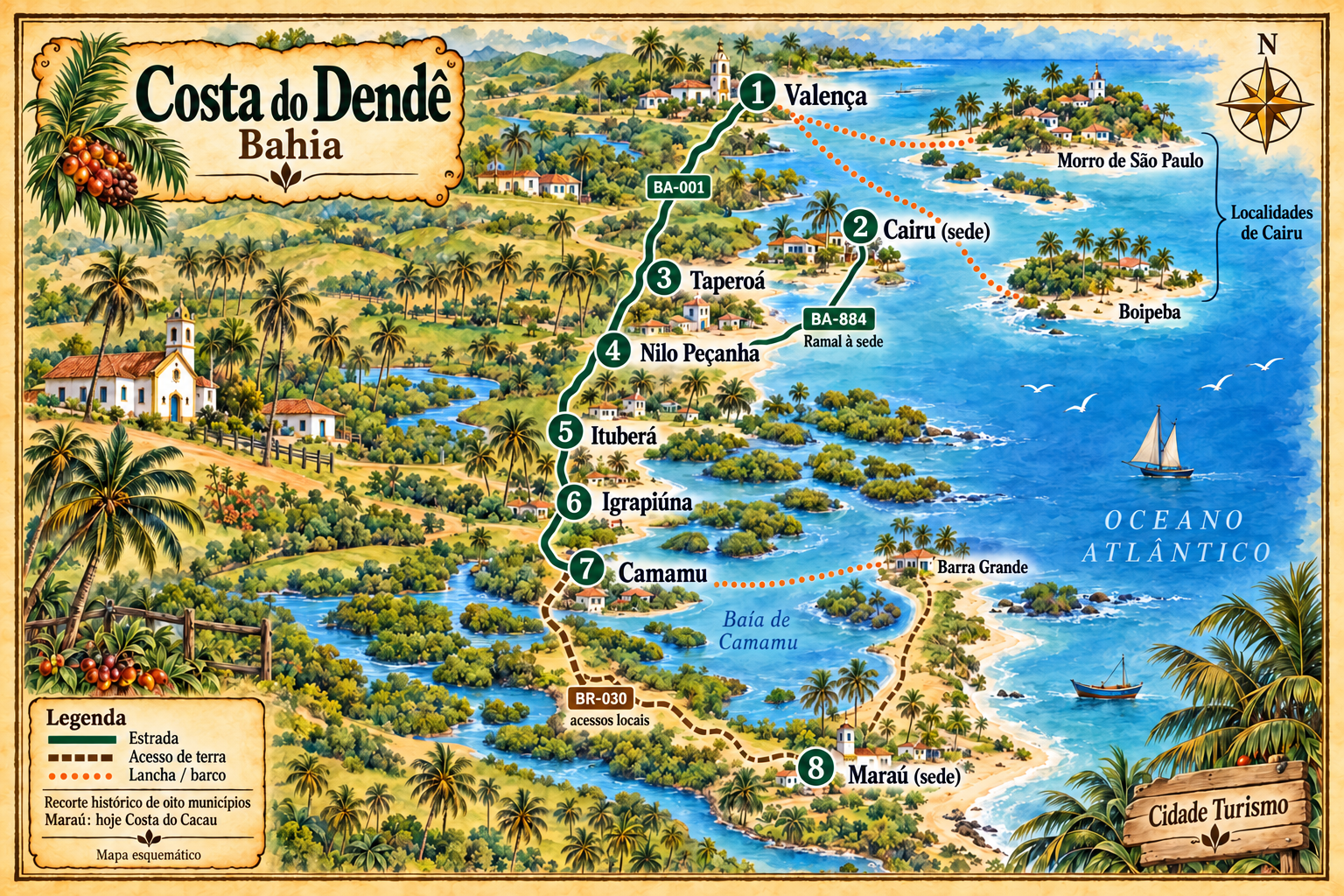
Costa do Cacau is on the Dendê Coast

From the Una River to the Maraú Peninsula, the route combines towns of the Lower South, beaches, heritage and crossings along the historic Dendê Coast.

Illustrative map, not to scale. Tap a city to open its page.
Illustrated map of Dendê Coast
Explore the Dendê Coast
Explore other destinations Search by state and city