

 Brazil
 Antarctica
 Argentina
 Bolivia
 Chile
 Colombia
 Ecuador
 Falkland Islands (Malvinas)
 French Guiana
 Guyana
 Paraguay
 Peru
 Suriname
 Uruguay
 Venezuela
 Austria
 Belgium
 Croatia
 Denmark
 Finland
 France
 Germany
 Greece
 Hungary
 Iceland
 Ireland
 Italy
 Luxembourg
 Norway
 Poland
 Portugal
 Slovakia
 Slovenia
 Spain
 Sweden
 Switzerland
 the Czech Republic
 the Netherlands
 the United Kingdom
 Turkey
 Canada
 Greenland
 Mexico
 Saint Pierre and Miquelon
 the United States
 the Dominican Republic
 Japan
 Egypt
 South Africa
 Australia
 Fiji
 New Zealand
 Papua New Guinea
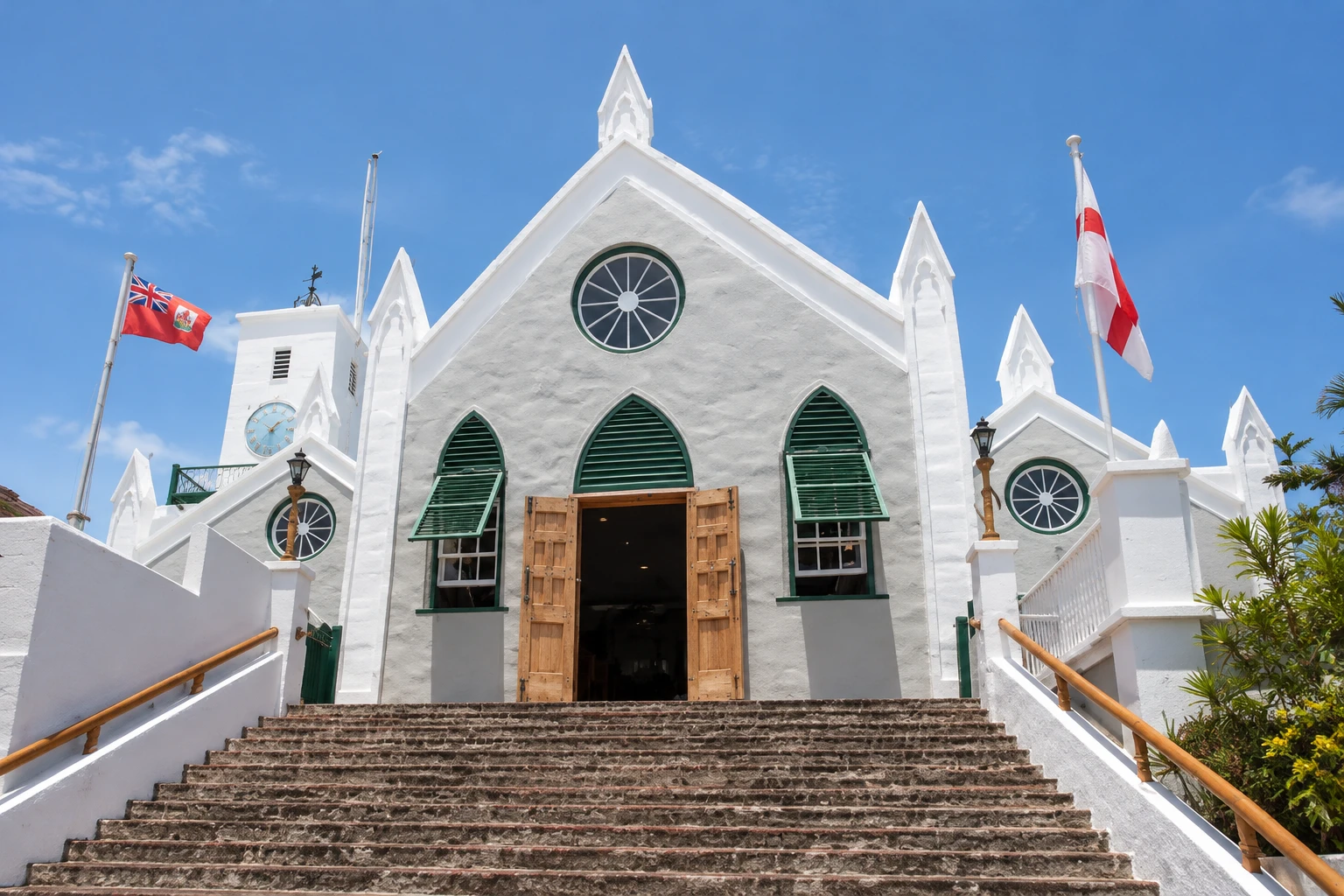
Church · St. George's, Bermuda
St. Peter's Church
Anglican church founded in 1612, considered the oldest in continuous use outside the British Isles, with Bermuda cedar beams and a historic cemetery.
Illustrative images. The pictures in this guide are illustrations based on the real place, not photographs, and may differ from it.

Discover
About St. Peter's Church
St. Peter's Church, also called Their Majesties Chappell, was founded soon after the settlers arrived, in 1612. The first building, of wood and thatch, was destroyed by a storm, and the church was rebuilt and enlarged several times; the oldest parts of the current building date to 1620.
It is cited as the oldest Anglican church in continuous use outside the British Isles. Inside, the beams and lining are Bermuda cedar, and the baptismal font, by tradition, is older than the colony itself. Plaques and headstones on the walls tell the story of families and governors.
In the surrounding cemetery, the area west of the church was reserved, before the 1834 abolition, for the burial of enslaved people and free Black people. The church remains active, with regular services.
Before you go
Practical information
Cidade Turismo reviews its information regularly, but something may have changed. Check with the place before planning your trip.
How much time to set aside
About half an hour.
Best time
In the morning, outside service times. On Sundays tourist visits may be limited.
How to get there
On Duke of York Street, one block from King's Square.
Tip
Notice the cedar lining: it is the same wood the settlers used to build boats and houses in the early decades.
Official website
Your questions
Frequently asked questions about St. Peter's Church
How old is St. Peter's Church?
It was founded in 1612; the oldest parts of the present building date from 1620.
Is St. Peter's Church open to visitors?
Yes, outside service times. There may be a suggested donation for maintenance.
What is in the cemetery of St. Peter's Church?
Graves of colonial families and governors and an area reserved, before 1834, for the burial of enslaved people and free Black people.