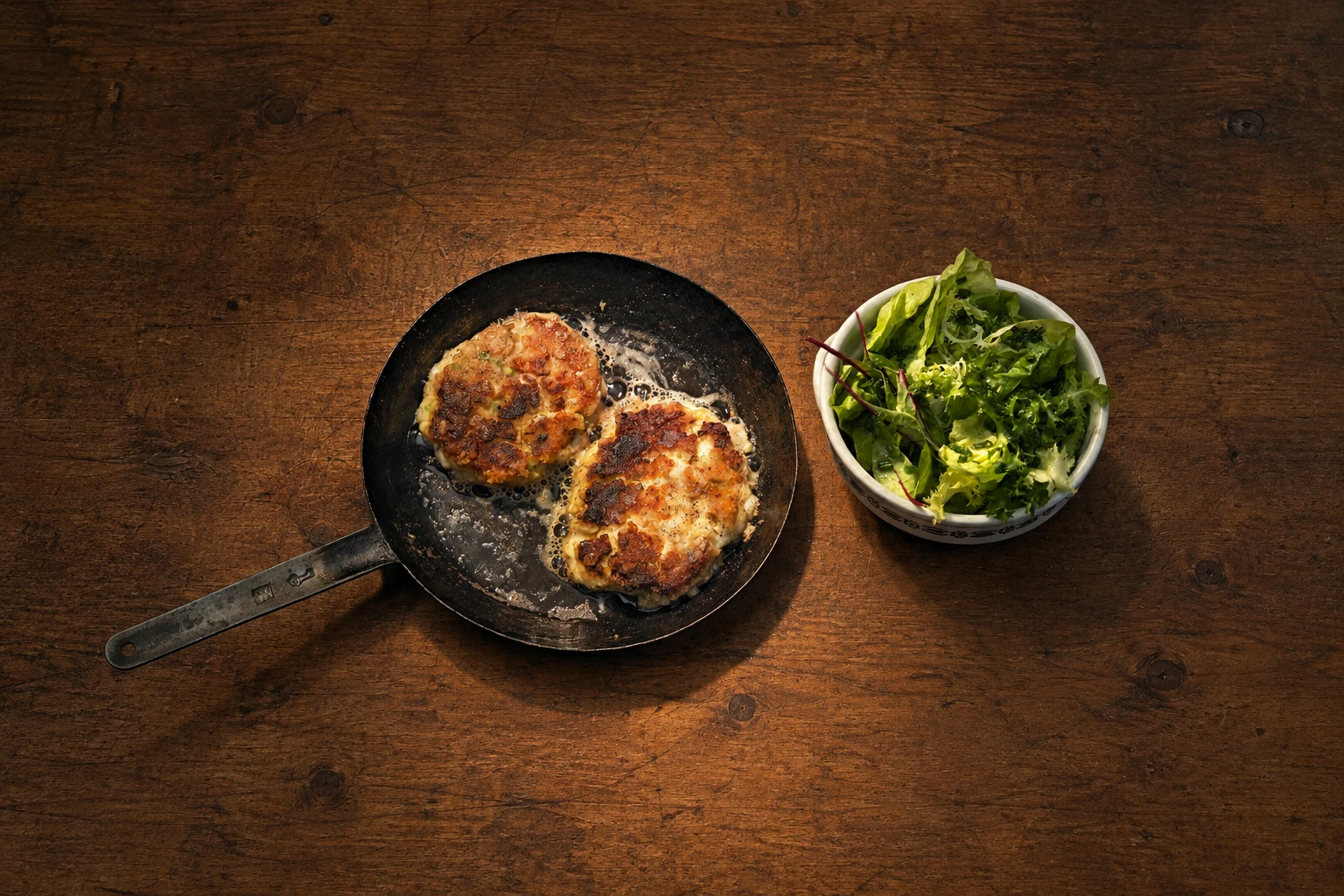
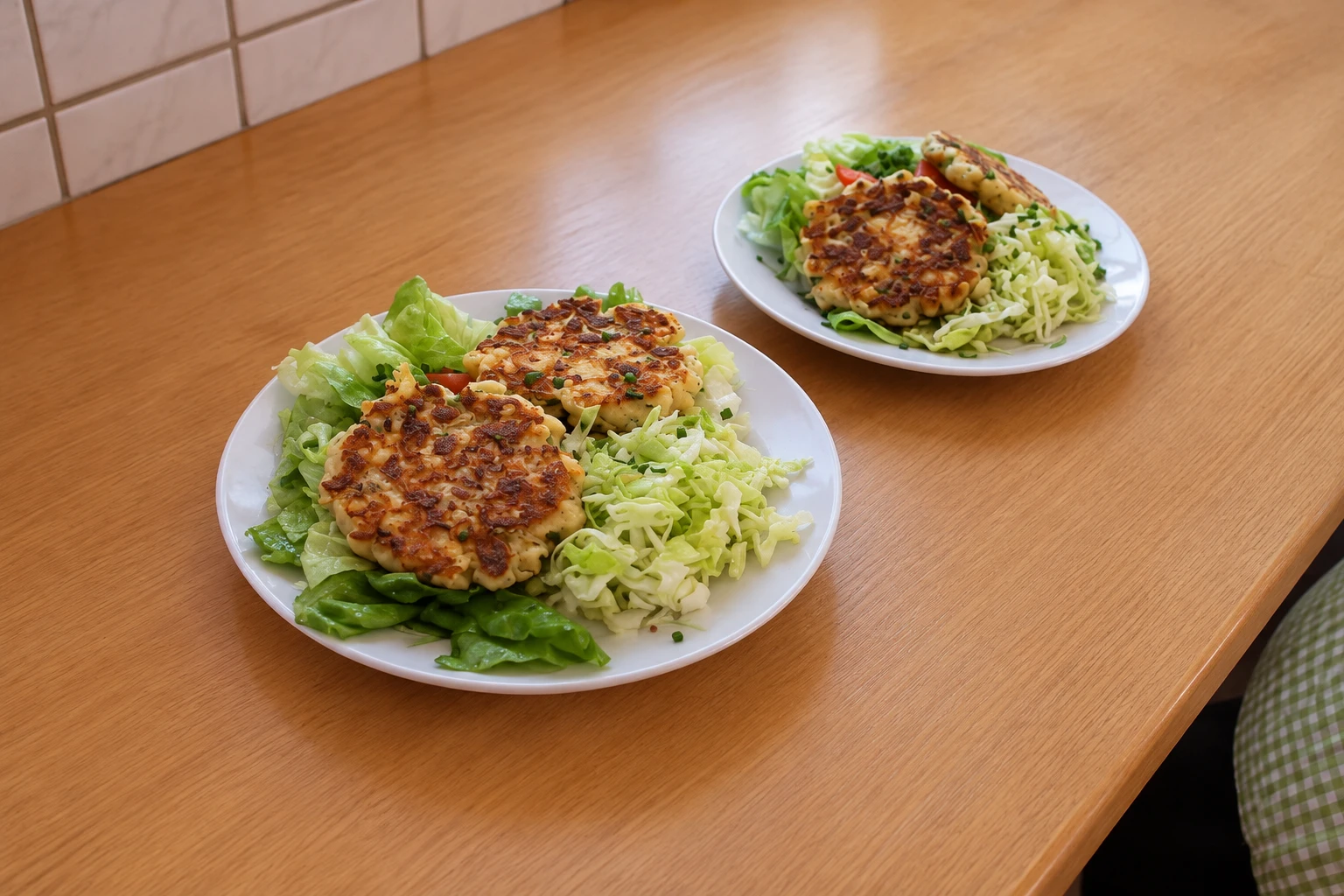
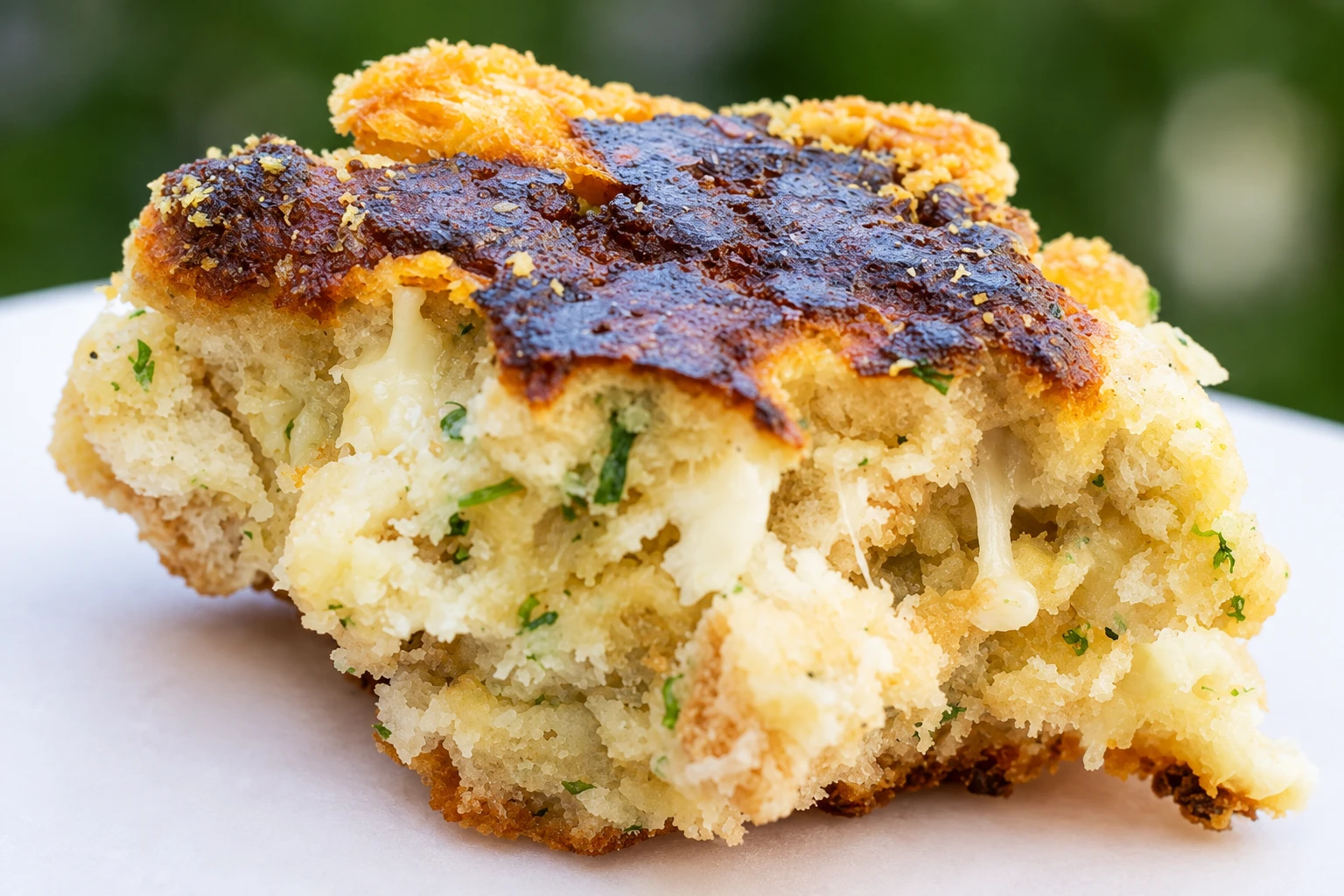
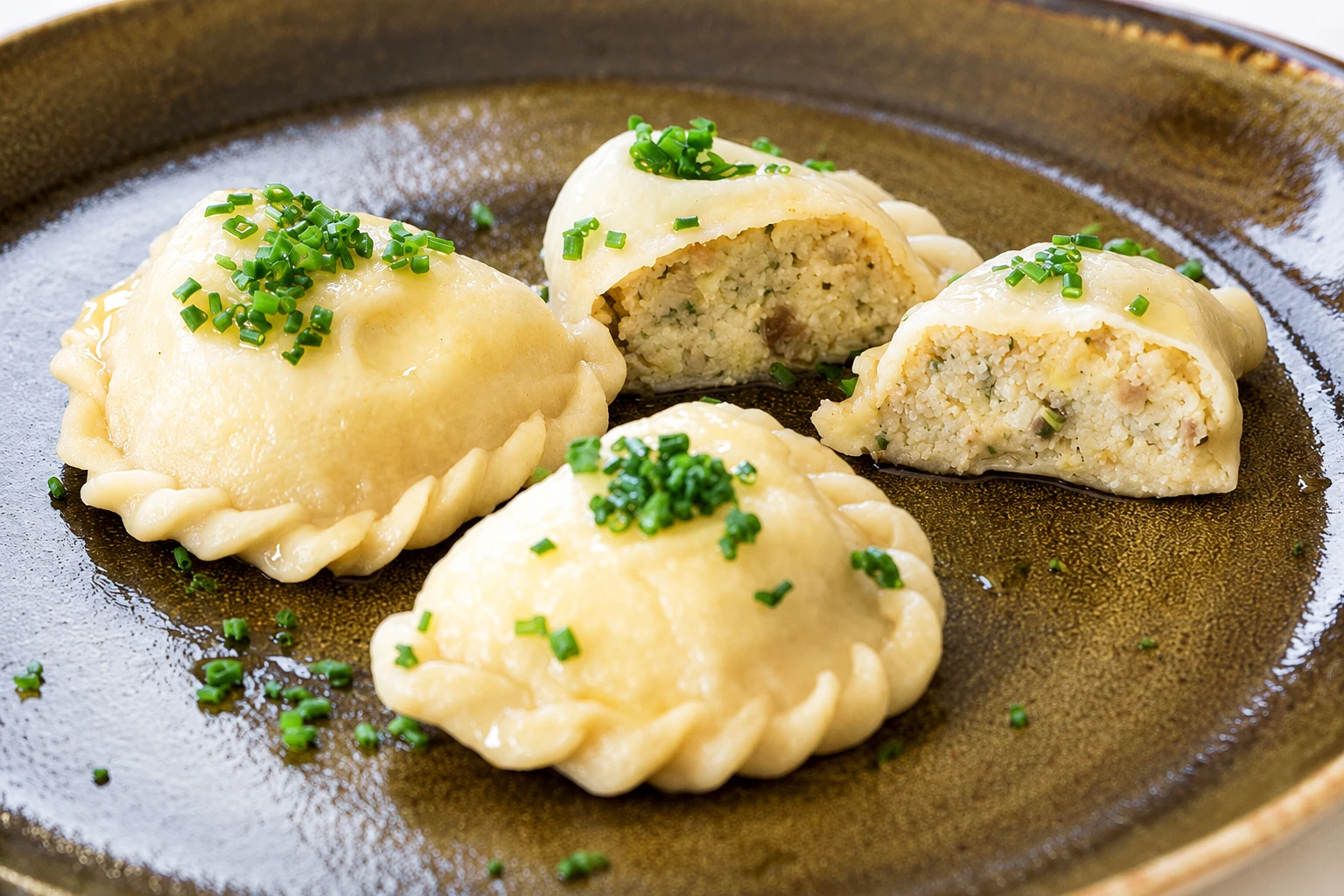
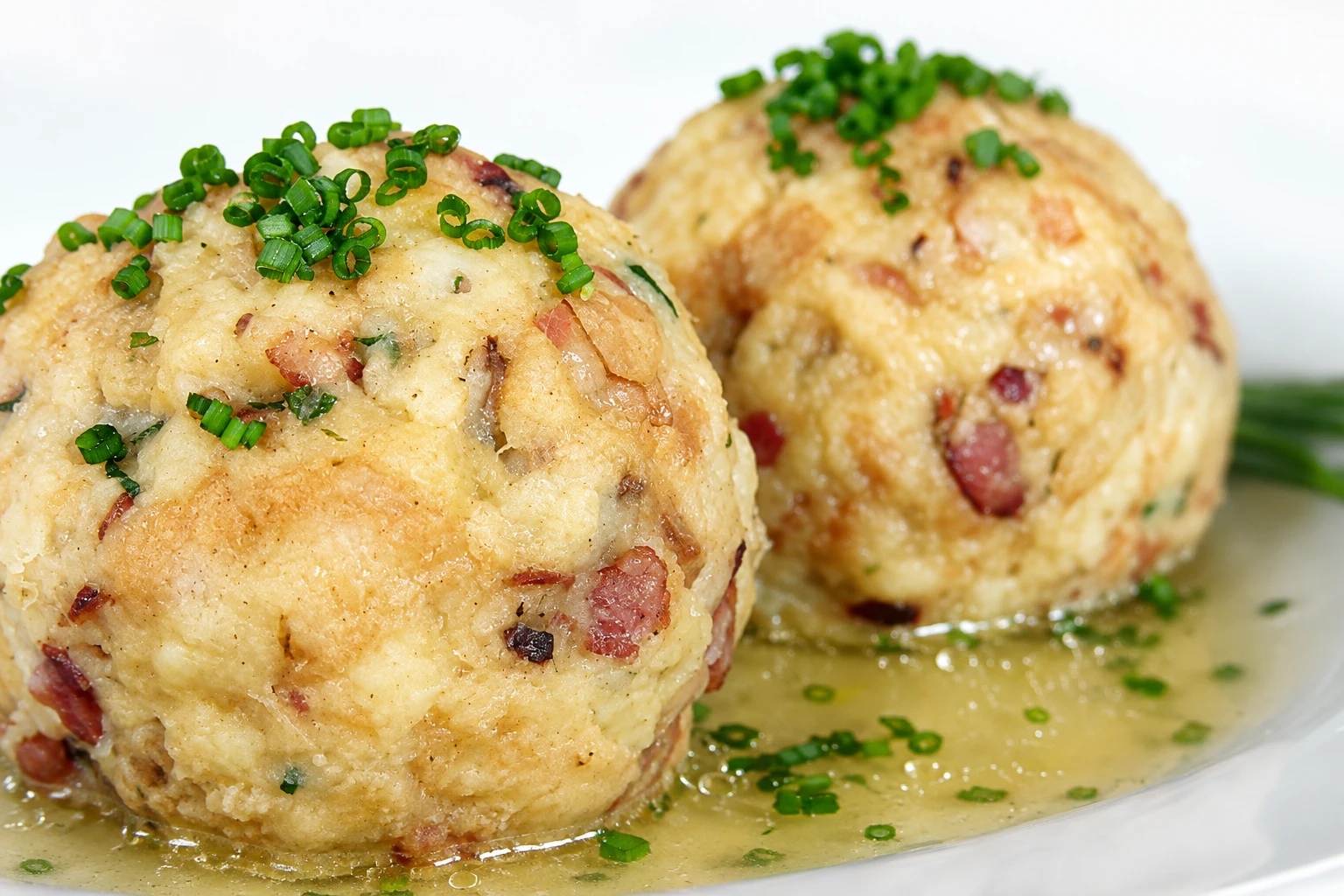
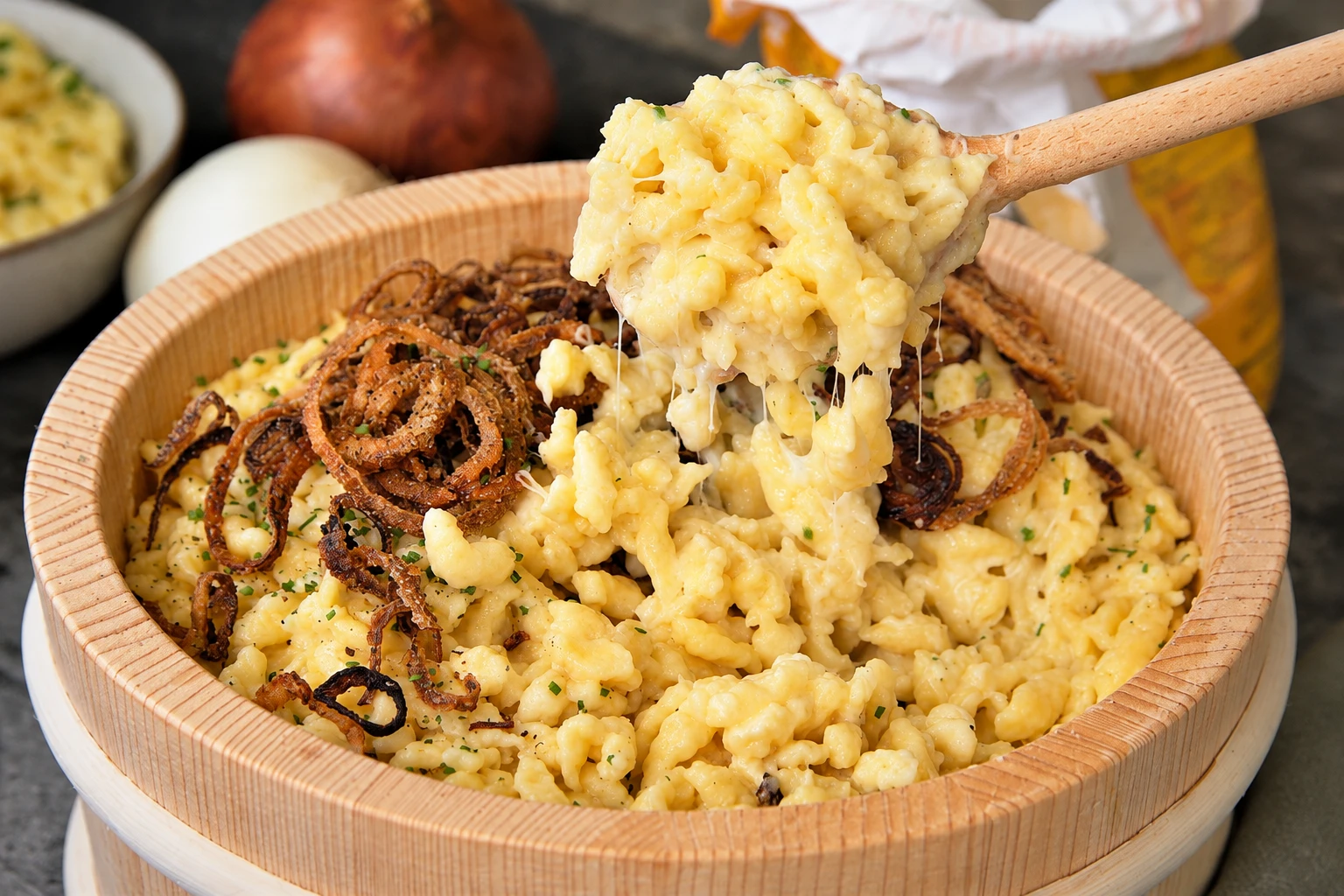
Kaspressknödel are dumplings made from day‑old bread cut into cubes, mixed with eggs, a little water or milk, sautéed onion, parsley and cheese. The mixture is shaped into balls and then flattened by hand, which explains the name: “pressen,” in the local dialect, means to press. The discs go into a pan with butter until they develop a golden crust on both sides.
According to the traditional foods register of Austria’s Ministry of Agriculture, in the Pinzgau and Pongau regions in the southern part of the state of Salzburg the cheese used is Bierkäse, a strong‑flavored cow’s‑milk cheese. In Tyrol and Vorarlberg, similar recipes use other mountain cheeses. It was a farmhouse food that made use of stale bread and home‑made cheese.
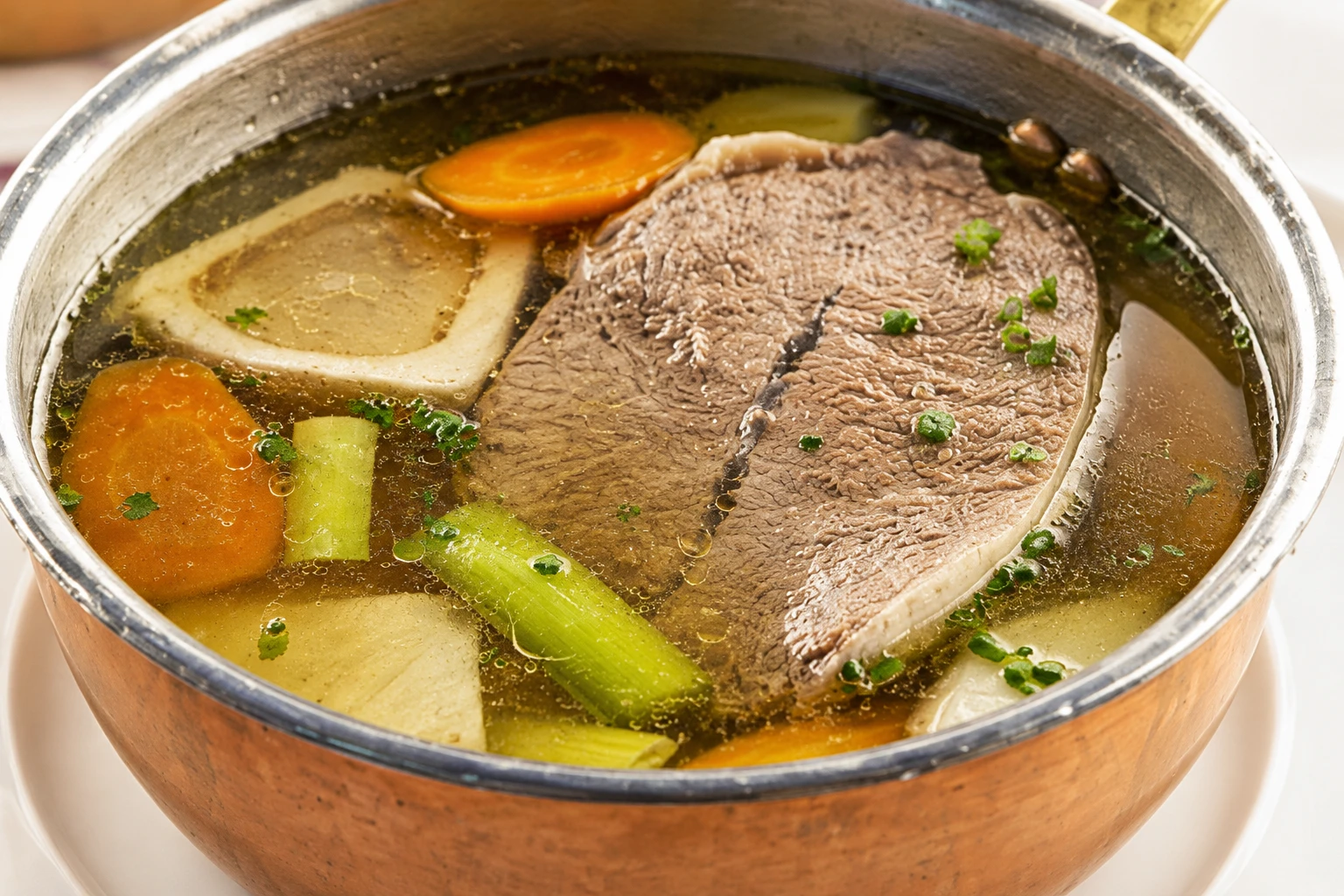
The same register states that in the Pinzgau, Tuesday, Thursday and Sunday were the traditional dumpling days. A complete meal had one dumpling “zu Wasser,” that is, in beef broth, and another “zu Lande,” served on dry land with a salad.


 Brazil
 Antarctica
 Argentina
 Bolivia
 Chile
 Colombia
 Ecuador
 Falkland Islands (Malvinas)
 French Guiana
 Guyana
 Paraguay
 Peru
 Suriname
 Uruguay
 Venezuela
 Belgium
 Croatia
 Denmark
 Finland
 France
 Germany
 Greece
 Hungary
 Iceland
 Ireland
 Italy
 Luxembourg
 Norway
 Poland
 Portugal
 Slovakia
 Slovenia
 Spain
 Sweden
 Switzerland
 the Czech Republic
 the Netherlands
 the United Kingdom
 Turkey
 Bermuda
 Canada
 Greenland
 Mexico
 Saint Pierre and Miquelon
 the United States
 the Dominican Republic
 Japan
 Egypt
 South Africa
 Australia
 Fiji
 New Zealand
 Papua New Guinea