Graz · Austria · Viewpoint
Schlossberg
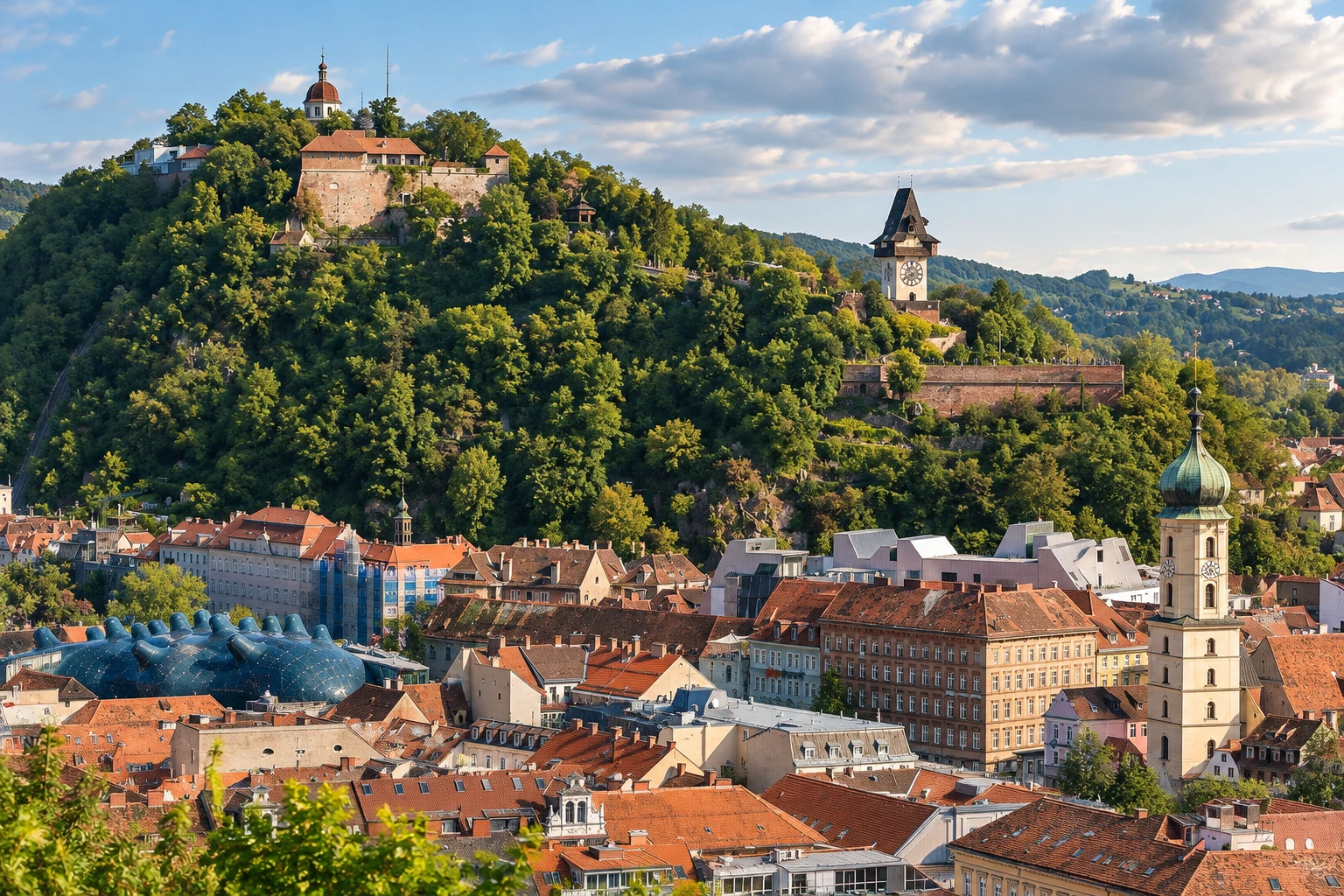
The Schlossberg is Graz’s central hill, crowned by the clock tower. Paths and terraces open views over the Mur River and the roofs of the historic center.

 Search
 Brazil
 Antarctica
 Argentina
 Bolivia
 Chile
 Colombia
 Ecuador
 Falkland Islands (Malvinas)
 French Guiana
 Guyana
 Paraguay
 Peru
 Suriname
 Uruguay
 VenezuelaAustria
 Belgium
 Croatia
 Denmark
 Finland
 France
 Germany
 Greece
 Hungary
 Iceland
 Ireland
 Italy
 Luxembourg
 Norway
 Poland
 Portugal
 Slovakia
 Slovenia
 Spain
 Sweden
 Switzerland
 the Czech Republic
 the Netherlands
 the United Kingdom
 Turkey
 Bermuda
 Canada
 Greenland
 Mexico
 Saint Pierre and Miquelon
 the United States
 the Dominican Republic
 JapanTurkey
 Egypt
 South Africa
 Australia
 Fiji
 New Zealand
 Papua New Guinea
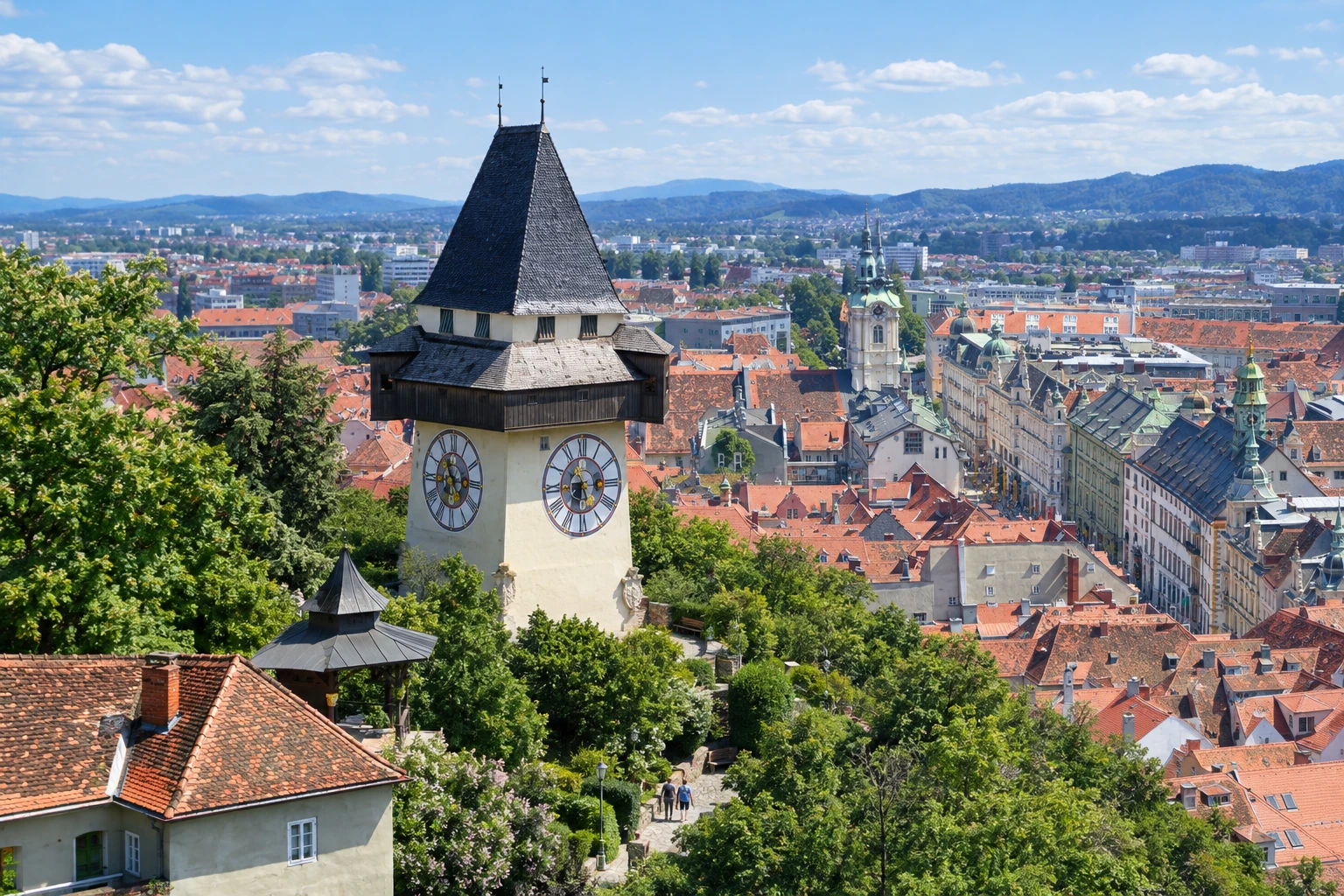
In the photo: Uhrturm in Graz
Illustrative images. The pictures in this guide are illustrations based on the real place, not photographs, and may differ from it.

The city
Graz, capital of Styria, combines a historic centre with contemporary architecture along the Mur. The Schlossberg gives an overview of the rooftops; the Kunsthaus and the Murinsel showcase recent interventions. Eggenberg and the Landeszeughaus complete a route of collections and interiors.
There's no accommodation in the guide yet in Graz.
Tem hotel, pousada ou casa de temporada aqui? Cadastre a suaHotéis e restaurantes da cidade no mapa.
how to get there · how many days · itinerary · questions
The local experience
The Schlossberg is Graz’s central hill, crowned by the clock tower. Paths and terraces open views over the Mur River and the roofs of the historic center.
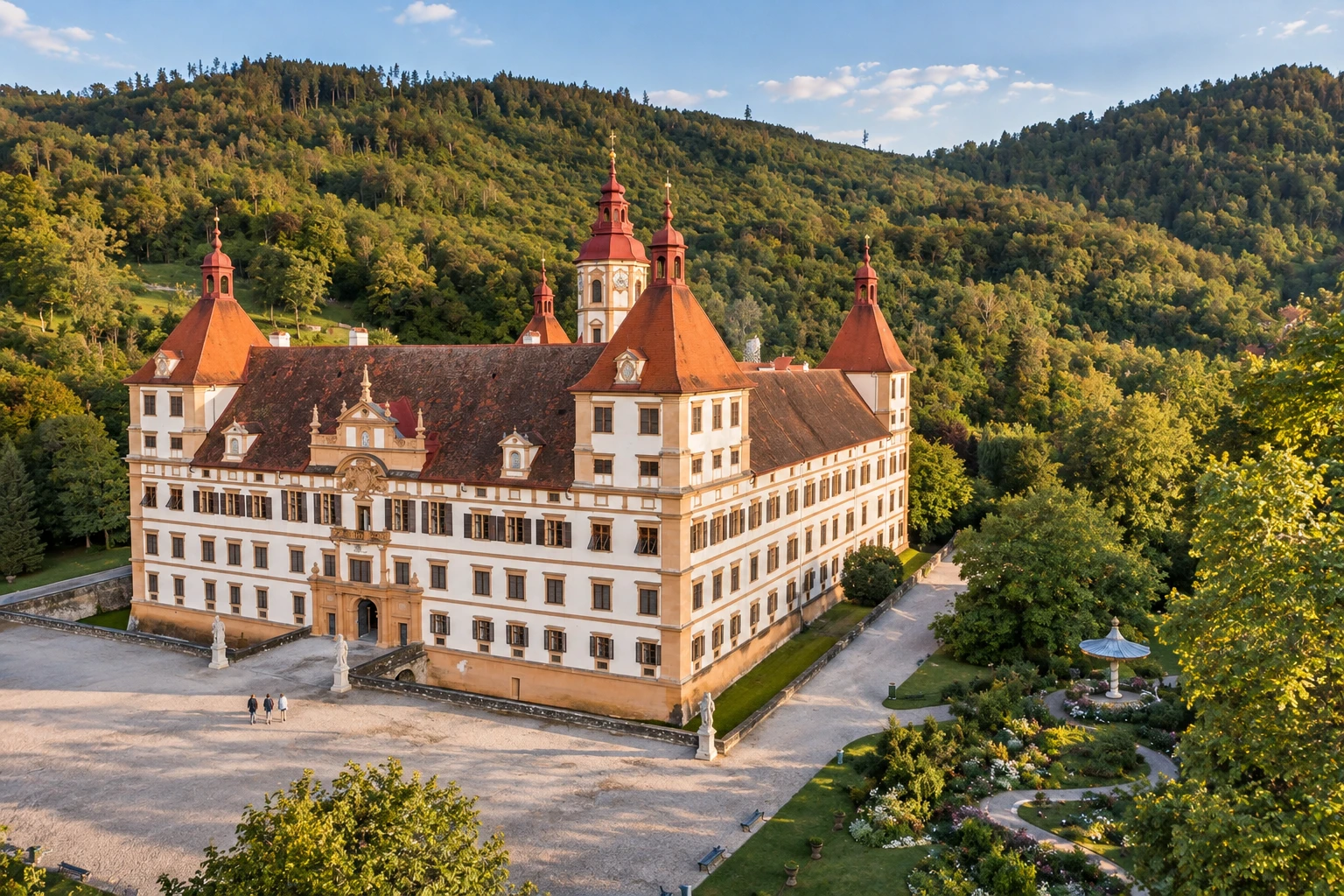
Eggenberg lies west of Graz city centre and is part of the city’s World Heritage. The palace is arranged as a complex of courtyards, towers and gardens.
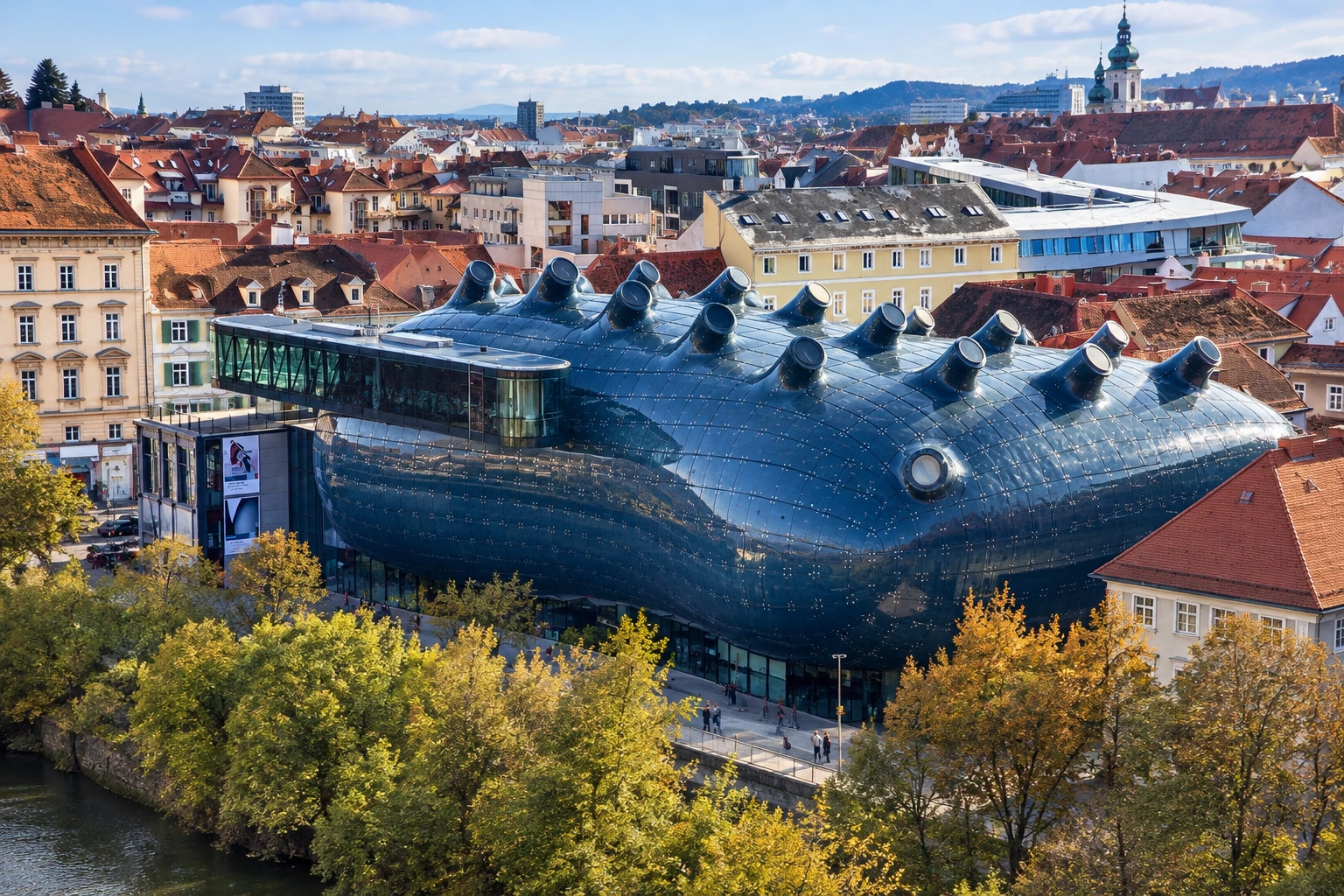
Kunsthaus Graz has a bluish curved form on the western bank of the Mur. The contemporary architecture building contrasts with the façades of the historic surroundings.
The Landeszeughaus displays Styria's historic armoury in central Graz. Rows of armours, helmets and weapons occupy the floors of the building.
Before you go
Graz – Austria Capital
Approximate distances. Check flights and bus, train or boat schedules before you travel.
Flights to Brazil usually involve a connection in another city. Check before buying. Graz Hauptbahnhof receives trains from the Vienna corridors and other regions; trams link the station to the center. The airport lies south of the city.
Three days for the center, the Schlossberg, the museums and Eggenberg, with a separate day for the palace.
April to June and September to October generally favour urban strolls. July and August can be hot; December to February is usually cold with short days, so more time is spent indoors.
The seasons shown are the most usual ones; nature doesn't always follow the calendar.
Trams and walking cover the central points and access to Eggenberg; driving adds little to the urban circuit.
Suggested itinerary
Built with the places on this page. No rush: it's paced so you have time to see them.
Walk along the Herrengasse and visit the Landeszeughaus depending on the day's opening or program.
Go up the hill and walk the terraces near the clock tower.
Cross via the Murinsel area and observe the architecture of the Kunsthaus.
Choose a regional meal in the center, remembering that kitchens often close earlier than is common in Brazil.
Check before you go. Opening hours and days change, and places may close for renovations, holidays or events. This itinerary is a suggestion from Cidade Turismo, not a commitment: plan yours by checking directly with each place you intend to visit.
Before you go
Three days for the center, Schlossberg, the museums and Eggenberg, with a separate day for the palace.
Trams and walking serve the central points and access to Eggenberg; driving adds little to the urban circuit.
April to June and September to October usually favor urban sightseeing. July and August can be hot; December to February are typically cold with short days, with more time spent indoors.
It is in another part of the city, to the west. Arrange transport and a dedicated period for the rooms and the park.