

 Brazil
 Antarctica
 Argentina
 Bolivia
 Chile
 Colombia
 Ecuador
 Falkland Islands (Malvinas)
 French Guiana
 Guyana
 Paraguay
 Peru
 Suriname
 Uruguay
 Venezuela
 Albania
 Austria
 Belgium
 Croatia
 Denmark
 Finland
 France
 Germany
 Greece
 Hungary
 Iceland
 Ireland
 Italy
 Luxembourg
 Norway
 Poland
 Portugal
 Slovakia
 Slovenia
 Spain
 Sweden
 Switzerland
 the Czech Republic
 the Netherlands
 the United Kingdom
 Turkey
 Bermuda
 Canada
 Greenland
 Mexico
 Saint Pierre and Miquelon
 the United States
 the Dominican Republic
 Japan
 Egypt
 South Africa
 Fiji
 New Zealand
 Papua New Guinea
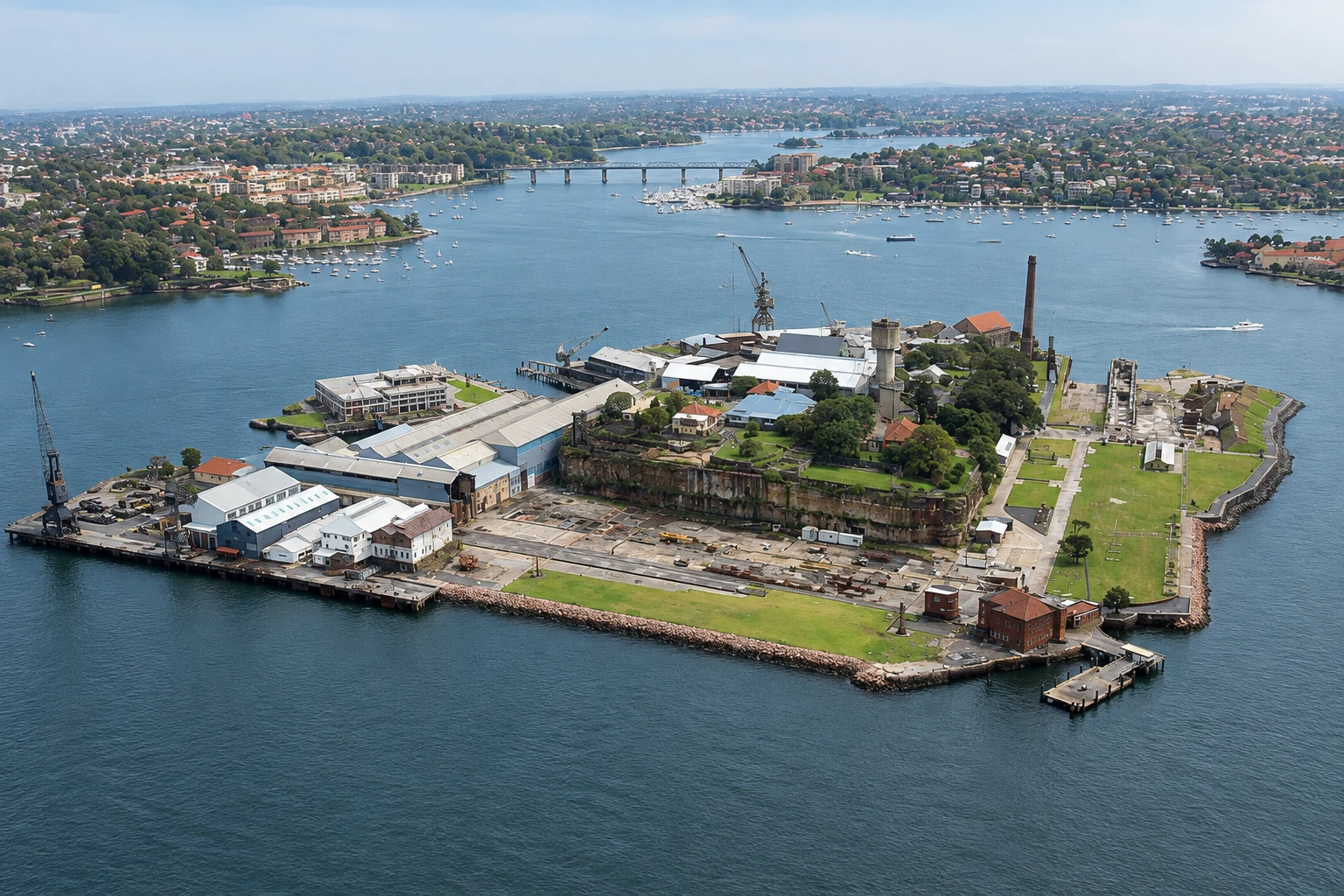
Island · Sydney, Australia
Cockatoo Island
The largest island in Sydney Harbour, a former prison and shipyard, UNESCO heritage, reached by ferry.
Illustrative images. The pictures in this guide are illustrations based on the real place, not photographs, and may differ from it.

Discover
About Cockatoo Island
Cockatoo Island, called Wareamah by the region’s Aboriginal peoples, sits at the meeting point of the Parramatta and Lane Cove rivers in the middle of Sydney Harbour. It is the harbour’s largest island and is about 18 hectares.
Between 1839 and 1869 the island was a prison for convicts who had reoffended in the colony. The prisoners cut grain silos into the rock and built the Fitzroy dock. Later, the island became a major shipyard that built and repaired ships until it closed in 1991.
Today the visit mixes both histories: the prison buildings, which are part of Australia’s Convict Sites, and the shipyard sheds, cranes and tunnels. There are interpretive panels and marked trails, guided tours and an audio guide.
The island hosts art exhibitions and events, and has camping areas and historic houses for accommodation. From the water’s edge you can see the Harbour Bridge in the distance.
Before you go
Practical information
Cidade Turismo reviews its information regularly, but something may have changed. Check with the place before planning your trip.
How much time to set aside
2 to 4 hours.
Best time
On sunny days, in the morning or early afternoon. Check the return ferry times.
How to get there
By ferry from Circular Quay on the services that go to Parramatta and Woolwich.
Tip
Bring water and comfortable shoes: the island has climbs and areas exposed to the sun.
Official website
Your questions
Frequently asked questions about Cockatoo Island
How to get to Cockatoo Island?
By ferry from Circular Quay. The island has its own dock, and ferries stop there on several routes.
Do you pay to enter Cockatoo Island?
There is no island admission fee; the audio guide and guided tours are paid separately.
Why is Cockatoo Island a UNESCO World Heritage site?
Because the buildings of the former prison, from 1839 to 1869, are part of Australia’s eleven Convict Sites.