St. Lucia · South Africa · Boat trip
St Lucia Estuary
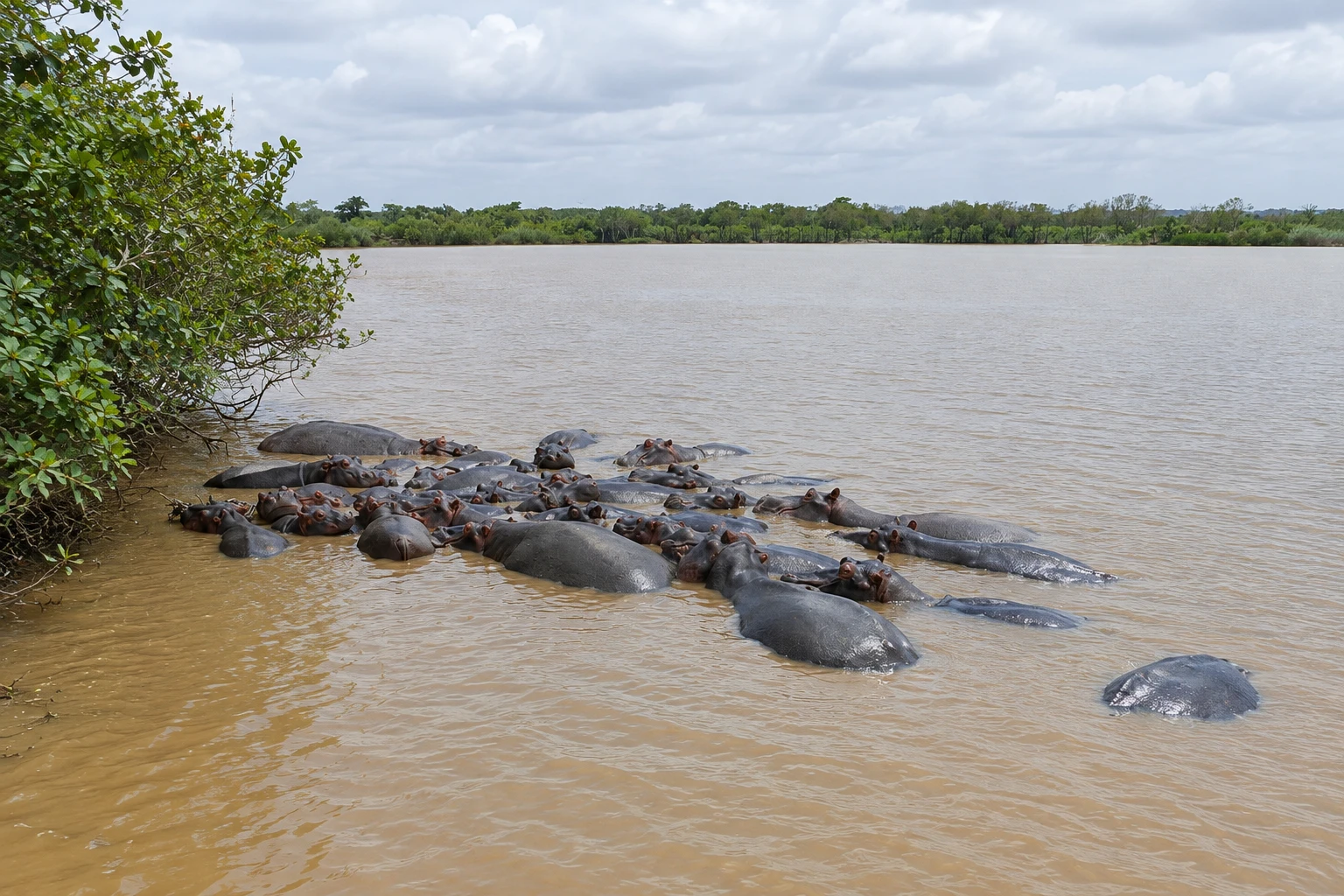
The largest estuary in Africa, beside the village of St. Lucia, with boat trips to see hippos, crocodiles and waterbirds.

 Search
 Brazil
 Antarctica
 Argentina
 Bolivia
 Chile
 Colombia
 Ecuador
 Falkland Islands (Malvinas)
 French Guiana
 Guyana
 Paraguay
 Peru
 Suriname
 Uruguay
 Venezuela
 Albania
 Austria
 Belgium
 Croatia
 Denmark
 Finland
 France
 Germany
 Greece
 Hungary
 Iceland
 Ireland
 Italy
 Luxembourg
 Norway
 Poland
 Portugal
 Slovakia
 Slovenia
 Spain
 Sweden
 Switzerland
 the Czech Republic
 the Netherlands
 the United Kingdom
 Turkey
 Bermuda
 Canada
 Greenland
 Mexico
 Saint Pierre and Miquelon
 the United States
 the Dominican Republic
 JapanTurkey
 EgyptSouth Africa
 Australia
 Fiji
 New Zealand
 Papua New Guinea
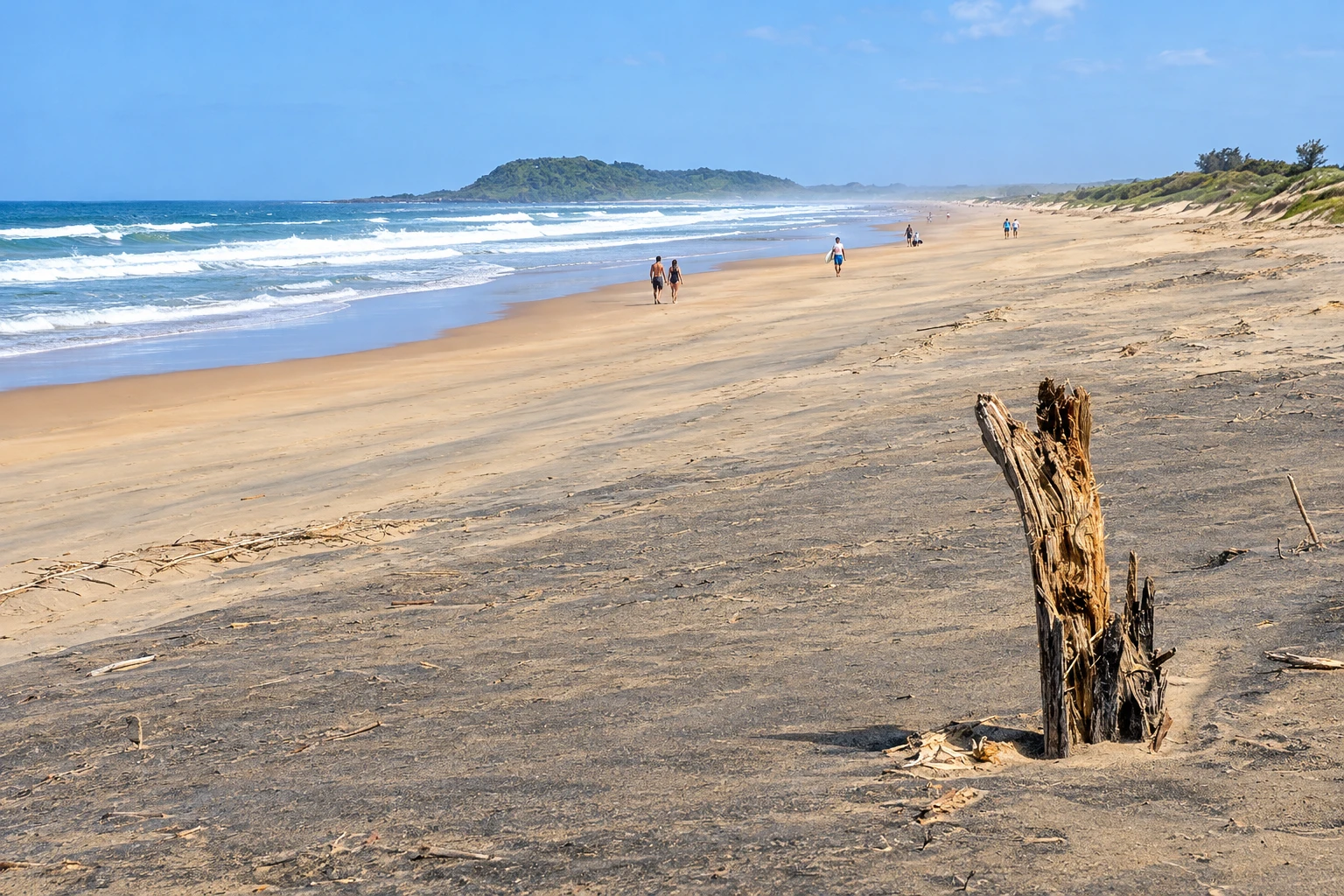
In the photo: Main beach of St. Lucia
Illustrative images. The pictures in this guide are illustrations based on the real place, not photographs, and may differ from it.

The city
St. Lucia is a coastal village between the St. Lucia estuary and the Indian Ocean, at the entrance to the iSimangaliso Wetland Park. Boat trips on the estuary bring you close to hippos and crocodiles, and at night it’s common to see hippos grazing on the village lawns. To the north, the road inside the park leads to the beaches and dunes of Cape Vidal, and about 50 km away is Hluhluwe-iMfolozi Park.
There's no accommodation in the guide yet in St. Lucia.
Do you run a hotel, guesthouse or vacation rental here? List itThere are no restaurants in the guide yet in St. Lucia.
Know a good one? Recommend it to usThe city's hotels and restaurants on the map.
how to get there · how many days · itinerary · questions
The local experience
The largest estuary in Africa, beside the village of St. Lucia, with boat trips to see hippos, crocodiles and waterbirds.
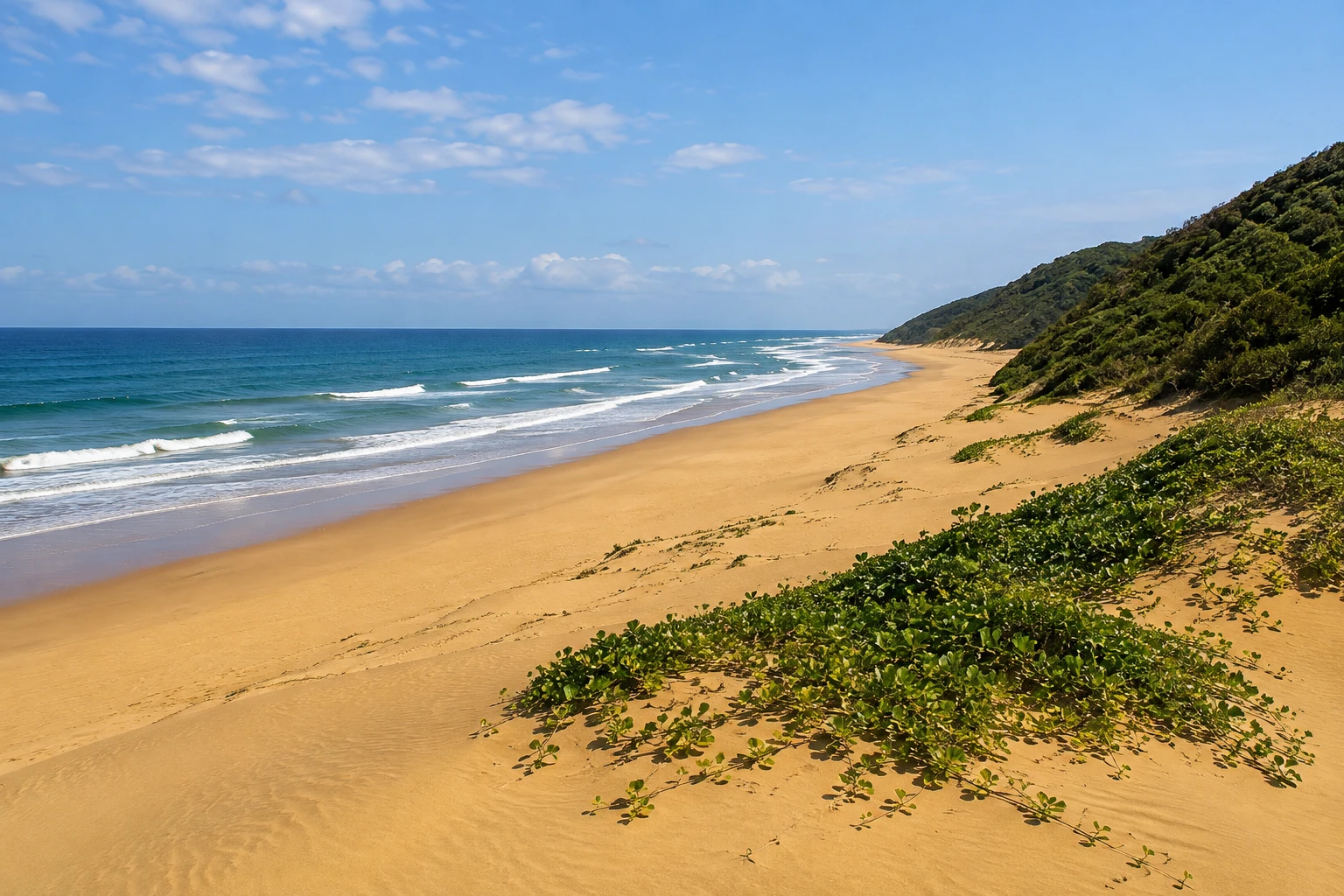
Beach within iSimangaliso, about 32 km north of St. Lucia, with dunes covered in coastal forest, a shallow reef for snorkeling and whale watching in winter.
Before you go
St. Lucia – South Africa Destination iSimangaliso and Hluhluwe-iMfolozi
Approximate distances. Check flights and bus, train or boat schedules before you travel.
Connections from Brazil may be direct or with a stopover, depending on the season and airline. Check before buying. International flights arrive in Johannesburg (JNB), and there are domestic flights to King Shaka International Airport (DUR), about 230 km via the N2, roughly 2.5 hours, and to Richards Bay (RCB), about 80 km. Transfers operate from Durban.
Three days for the estuary boat trip, Cape Vidal and a safari in Hluhluwe-iMfolozi. Those who want to relax on the beach usually stay longer.
Winter, from May to September, is dry and mild, with humpback whales passing offshore. From November to March there is turtle nesting, with hot and rainy weather.
The seasons shown are the most usual ones; nature doesn't always follow the calendar.
Yes, for Cape Vidal and Hluhluwe-iMfolozi. In the village, the estuary boat trip and the restaurants are within walking distance.
Suggested itinerary
Built with the places on this page. No rush: it's paced so you have time to see them.
Take the estuary boat trip to see hippos, crocodiles and birds.
Follow the park road to Cape Vidal, stopping at the lake viewpoints and picnic areas.
Drive back slowly, watching for animals on the road, and exit before the gate closes.
Dine in the village and be aware of hippos grazing on the lawns.
Check before you go. Opening hours and days change, and places may close for renovations, holidays or events. This itinerary is a suggestion from Cidade Turismo, not a commitment: plan yours by checking directly with each place you intend to visit.
Before you go
Estuary boat trip, a day at Cape Vidal, safari in Hluhluwe-iMfolozi and, in season, whale and turtle watching.
Yes, it’s common to see them at night on the lawns. Keep your distance and never position yourself between the animal and the water.
About 230 km from Durban airport, roughly 2.5 hours via the N2.
At the village beaches the sea is open and strong; for swimming, Cape Vidal has more sheltered sections near the reef.