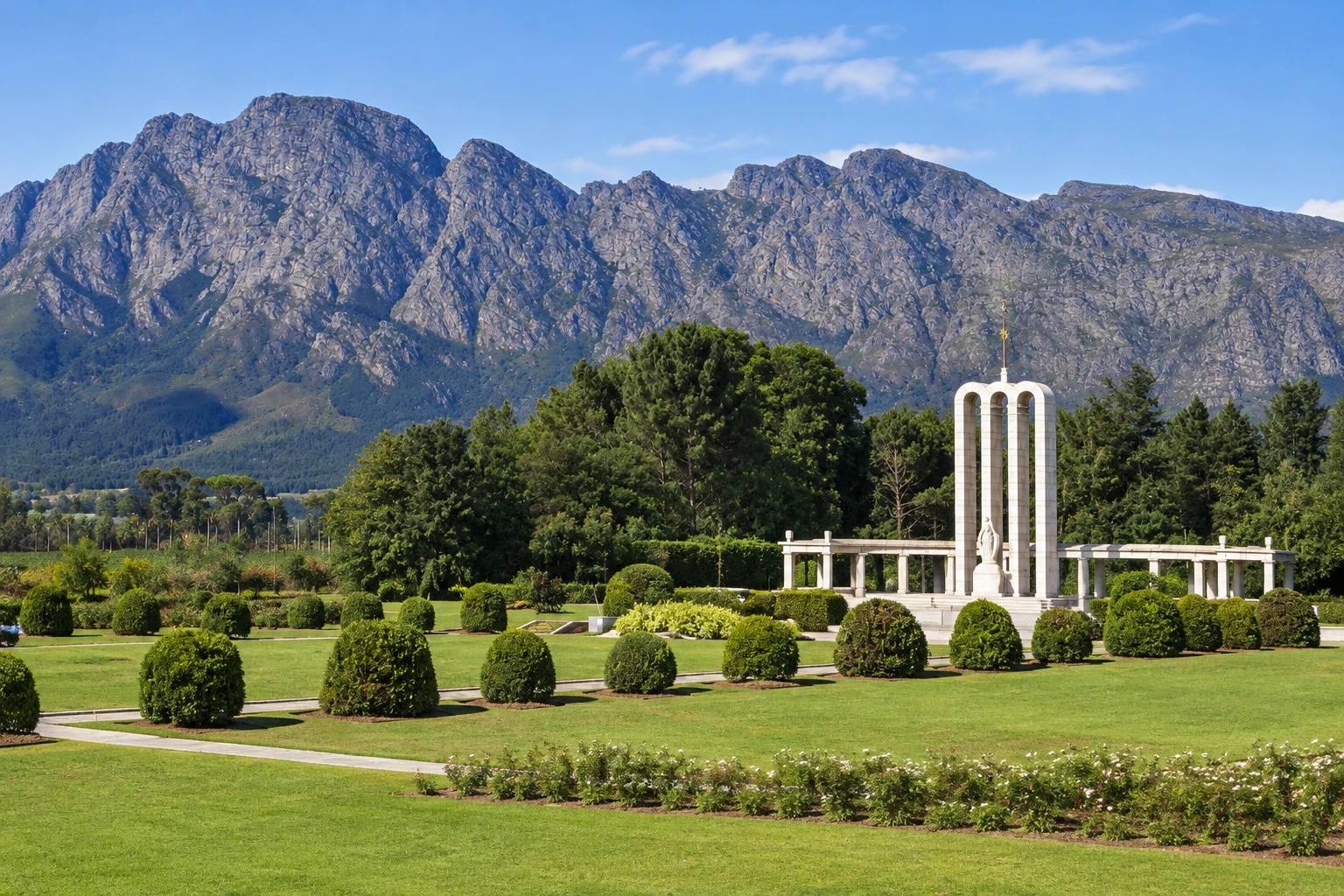
Huguenot Monument and Huguenot Memorial Museum
1948 monument to the French Huguenots at the end of Franschhoek's main street, with gardens and, beside it, the museum about the refugees who arrived at the Cape.
Antarctica
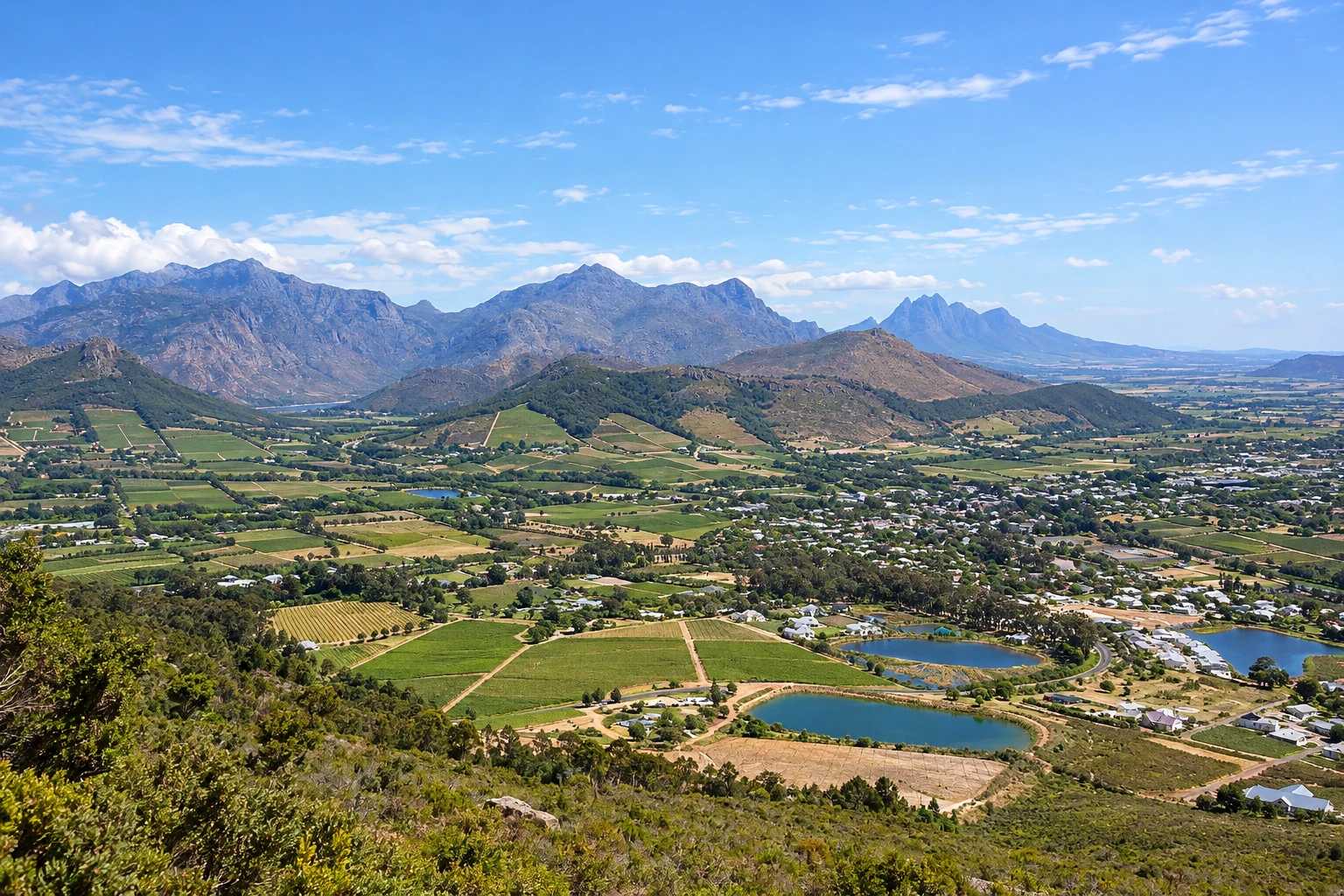
In the photo: Franschhoek Valley
Illustrative images. The pictures in this guide are illustrations based on the real place, not photographs, and may differ from it.
The city
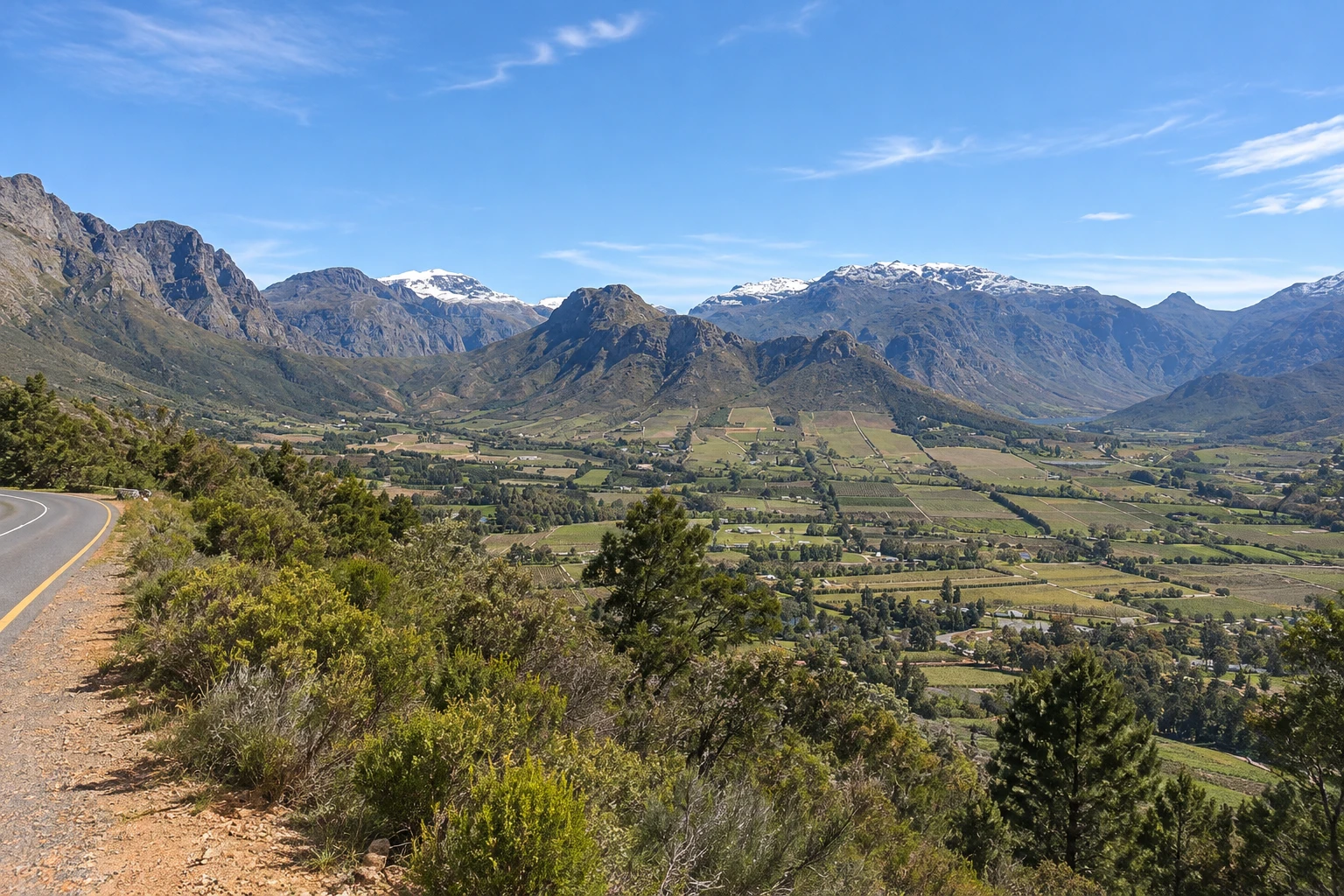
Franschhoek, the 'corner of the French', is a village with one main street at the bottom of a valley surrounded by mountains, about 30 km from Stellenbosch. It was settled by Huguenots, French Protestants who arrived at the Cape from 1688, and preserves that history at the Huguenot Monument and the adjacent museum. Wine estates cover the valley, and the Franschhoek Pass road climbs the range with views over the village.
There's no accommodation in the guide yet in Franschhoek.
Do you run a hotel, guesthouse or vacation rental here? List itThere are no restaurants in the guide yet in Franschhoek.
Know a good one? Recommend it to usThe city's hotels and restaurants on the map.
how to get there · how many days · itinerary · questions
The local experience
1948 monument to the French Huguenots at the end of Franschhoek's main street, with gardens and, beside it, the museum about the refugees who arrived at the Cape.
Mountain road that leaves Franschhoek toward the Villiersdorp valley, with viewpoints over the village and the vineyards.
Before you go
Franschhoek – South Africa Destination Cape Winelands about 75 km from Cape Town
Approximate distances. Check flights and bus, train or boat schedules before you travel.
From the arrival city, Stellenbosch is about 30 km via the Helshoogte road (R310 and R45), roughly 35 minutes by car. From Cape Town International Airport (CPT) it’s about 60 km, and from Cape Town about 75 km via the N1 and R45. There is no regular public transport; use a car, transfer or tour.
One day for the Huguenot Monument, the museum, the main street and two estates, by car with driver or on the shuttle that links the properties. With two days you can drive the Franschhoek Pass and do a hike in the valley.
During harvest, from February to April, the valley is busy. Autumn, from March to May, brings yellow and red vineyards. In winter it rains and becomes quite cool, with snow on the peaks some years; many restaurants operate with a fireplace.
The seasons shown are the most usual ones; nature doesn't always follow the calendar.
In the village, no: the main street is walkable. For the estates, there is a shuttle that links properties, as well as transfers and cars with drivers. Those who drive should avoid tastings. Driving is on the left.
Suggested itinerary
Built with the places on this page. No rush: it's paced so you have time to see them.
Visit the Huguenot Monument at the end of the main street and the Huguenot Memorial Museum next door, about the arrival of the French refugees.
Take the shuttle that links the valley estates, with tastings and lunch at one of them.
Drive up a few kilometers of the Franschhoek Pass and stop at the lookout to see the valley and the village at sunset.
Dine at one of the restaurants on Huguenot Street, the main street.
Check before you go. Opening hours and days change, and places may close for renovations, holidays or events. This itinerary is a suggestion from Cidade Turismo, not a commitment: plan yours by checking directly with each place you intend to visit.
Before you go
About 75 km, one hour to one hour fifteen by car via the N1 and R45.
'Canto dos franceses', in Afrikaans, because of the Huguenots who settled in the valley from 1688.
By the tour that links the farms in the valley, with tasting stops, or by hiring a car and driver.
Yes, it's about 30 km along a mountain road with vineyards, and the village has the monument, the museum and many farms.