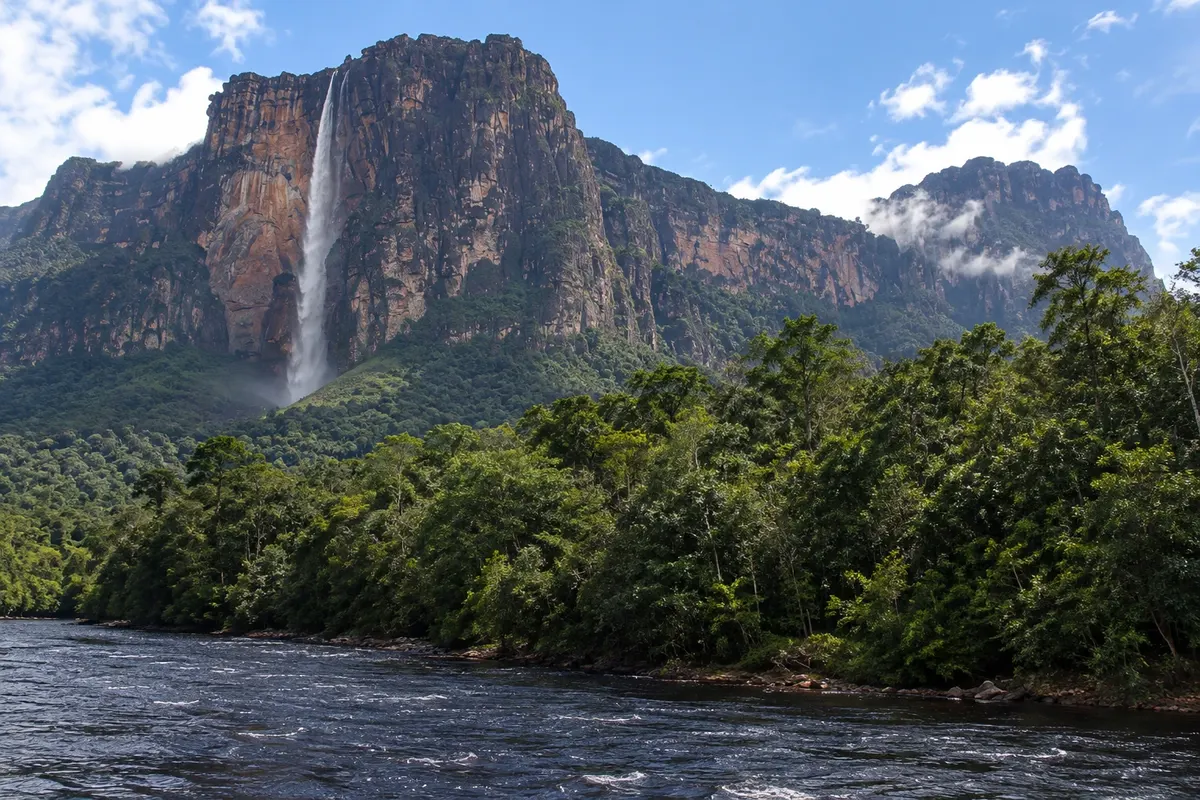
The park, created in 1962 and a UNESCO World Heritage Site since 1994, covers about 30,000 km² of savanna, forest and tepuis — the flat-topped, vertical-walled mountains that are among the oldest rock formations on the planet. There is no road to the village: it is reached by small plane.
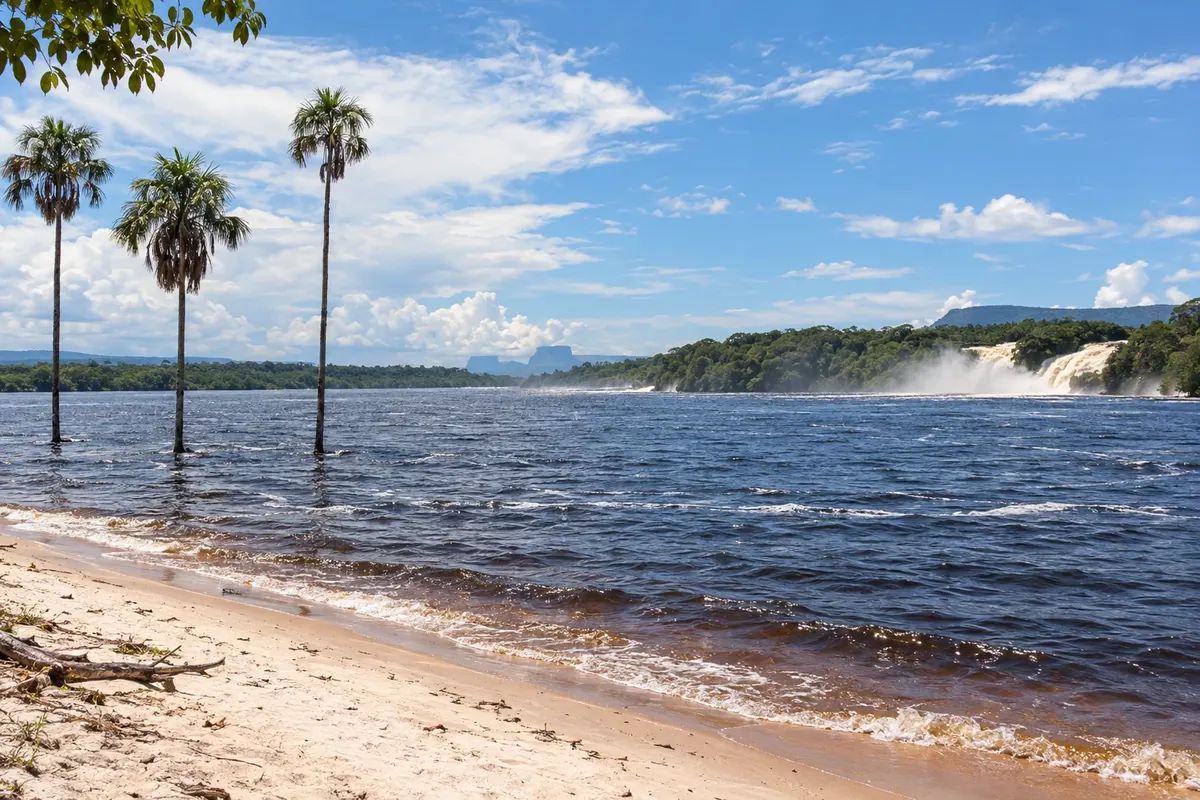
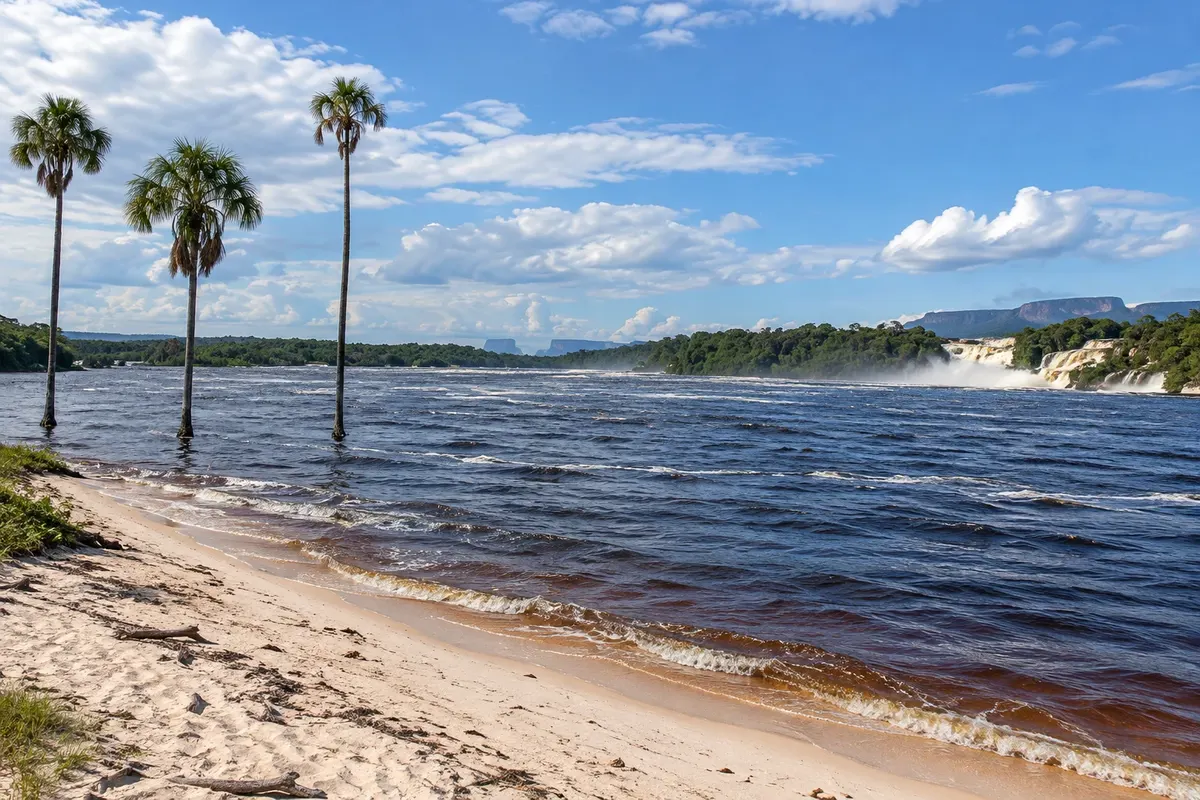
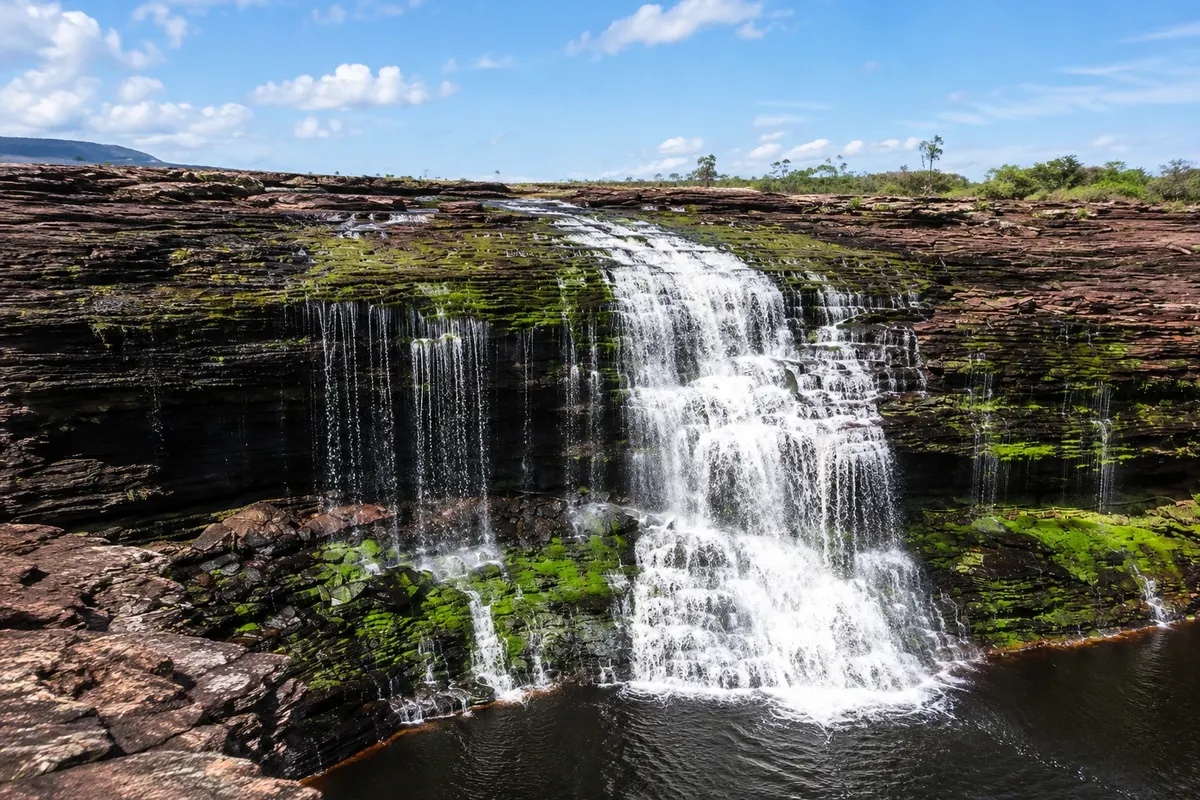
The village stands on the shore of Laguna de Canaima, where the Carrao River plunges in a sequence of wide waterfalls, such as the Hacha, Golondrina, Ucaima and Wadaima falls. The water is tea-colored because of plant tannins, the beach has pinkish sand and, in the background, the tepuis Kurún, Kusari and Kuravaina appear. Boats take you to the island on the other side of the river, from where a trail goes behind the water curtain of Salto El Sapo.
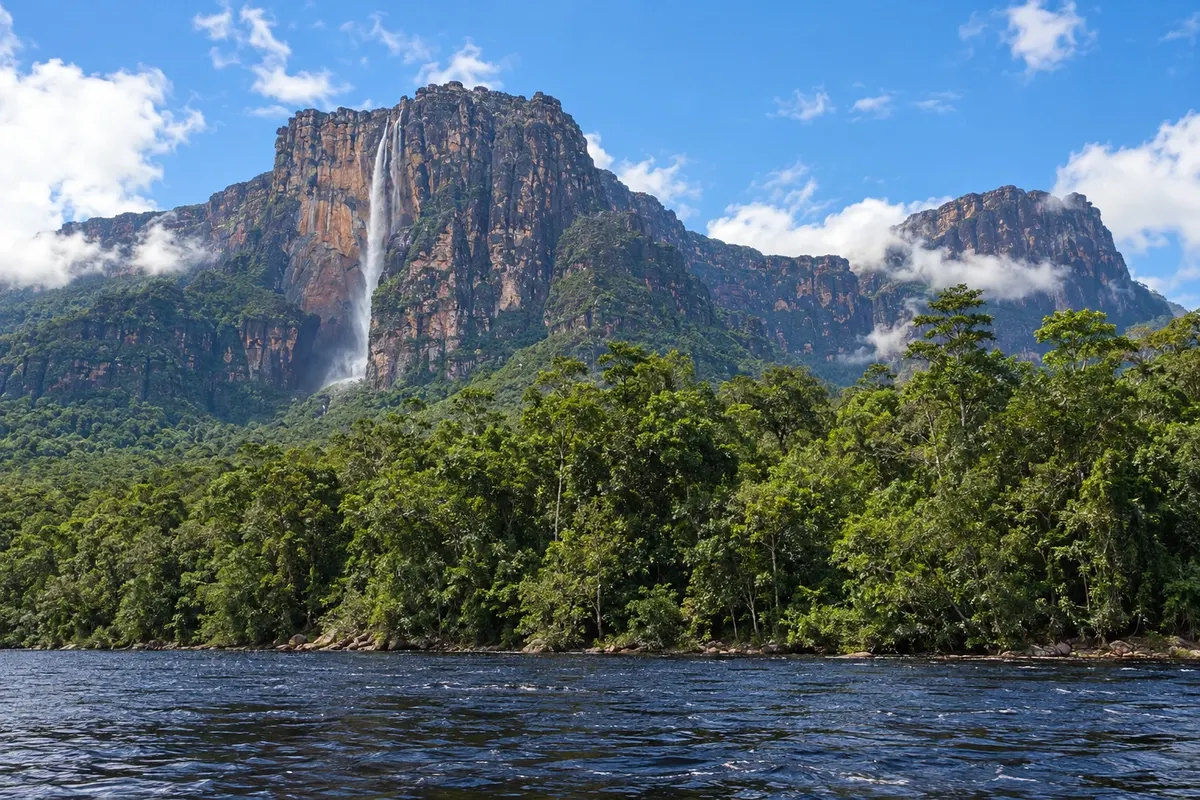
Salto Ángel drops from the top of Auyantepui, a tepui of more than 700 km², about 50 km from the village. At 979 meters total height and an 807-meter free fall, it is the highest waterfall in the world. The pemón call it Kerepakupai Merú. The name Ángel comes from American aviator Jimmie Angel, who flew over the fall in 1933.
For some areas, the yellow fever vaccine is commonly recommended or required; check before traveling.
This destination brings together 1 city: Canaima.


 Brazil
 Argentina
 Bolivia
 Chile
Chile Colombia
 Ecuador
 Guyana
 French Guiana
 Falkland Islands (Malvinas)
 Paraguay
 Peru
Peru Suriname
 Uruguay
 Germany
 Belgium
 Spain
Spain France
 Greece
 the Netherlands
 Ireland
 Italy
Italy Luxembourg
 Portugal
 the United Kingdom
 Switzerland