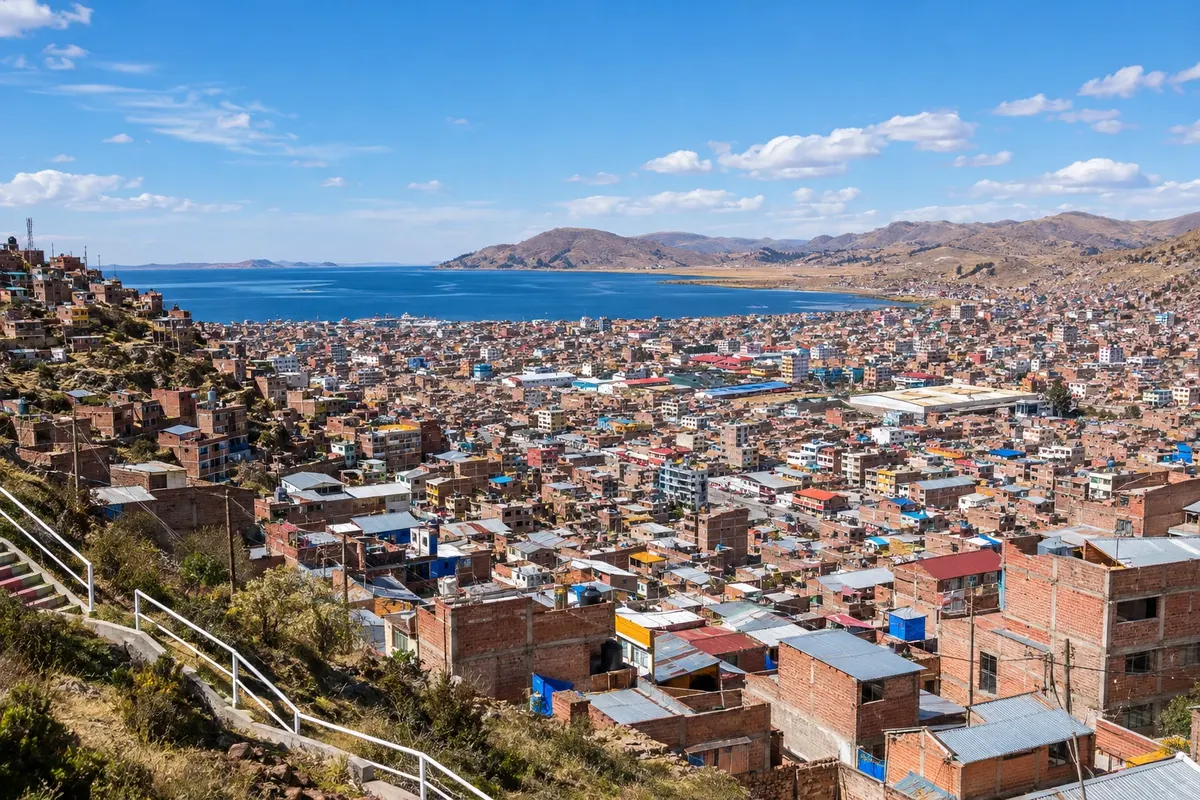
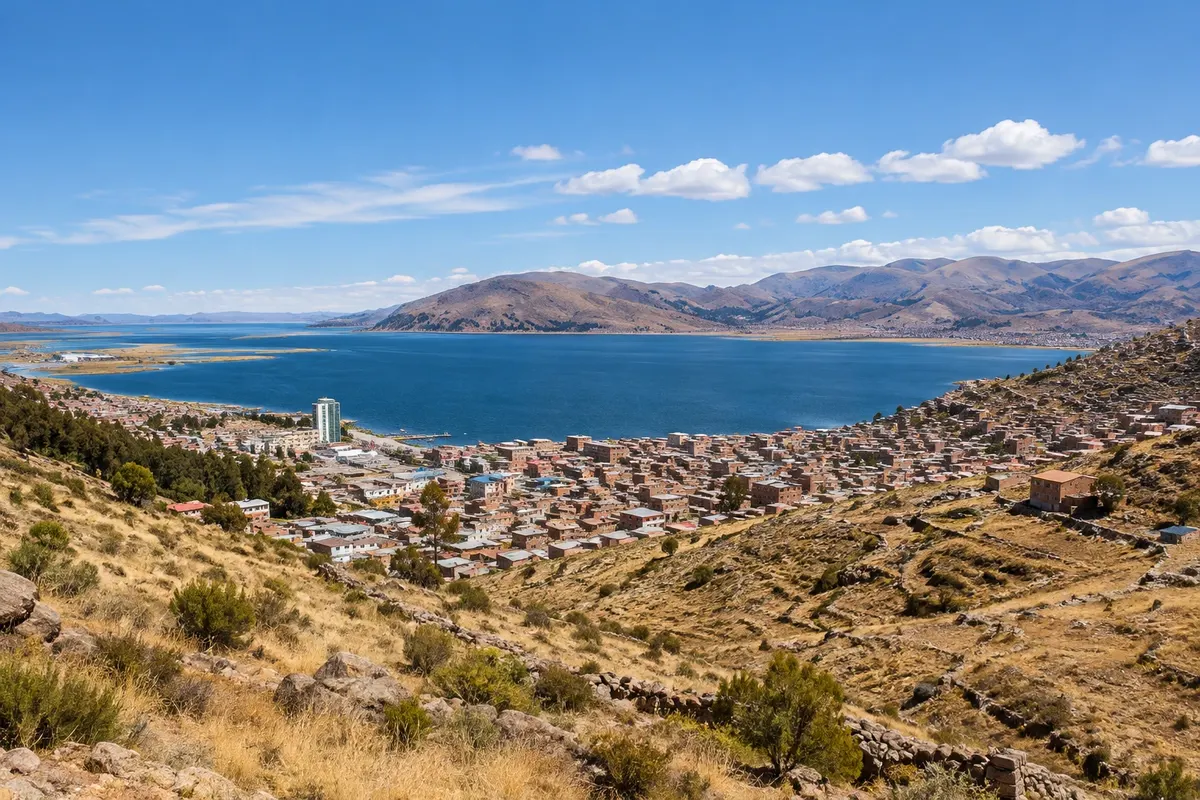
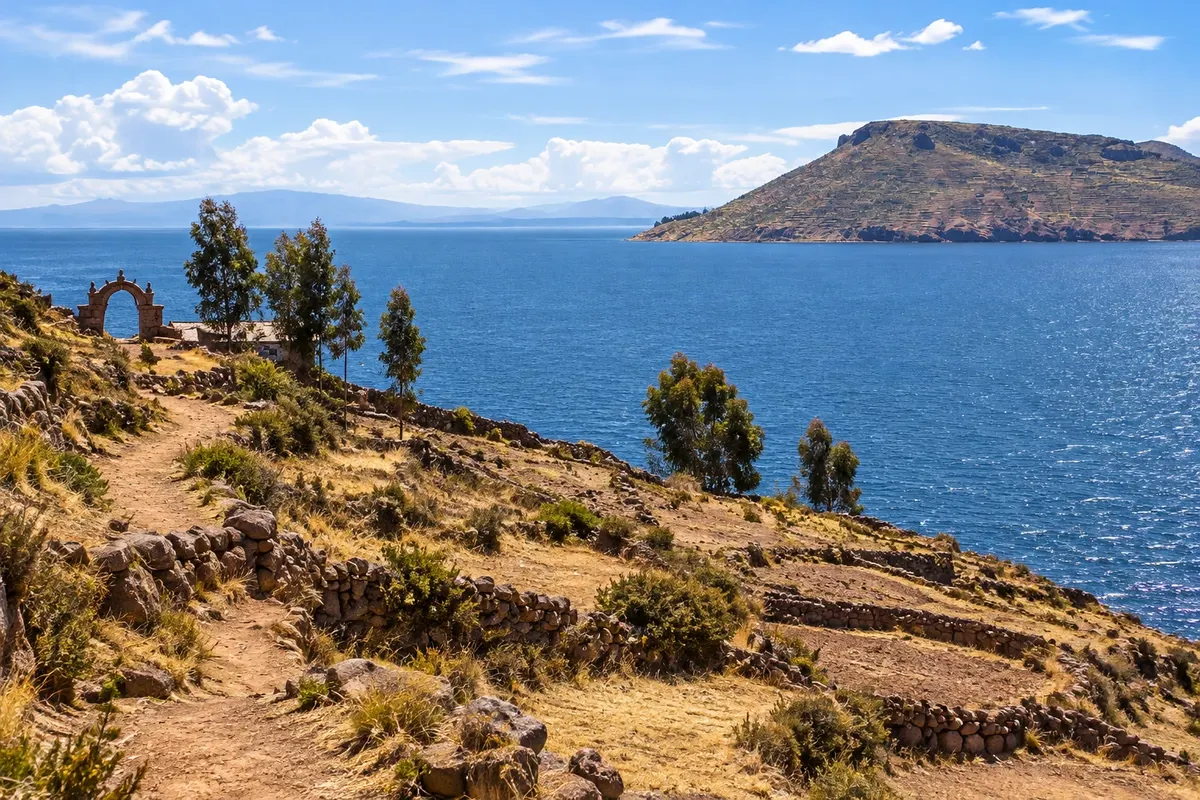
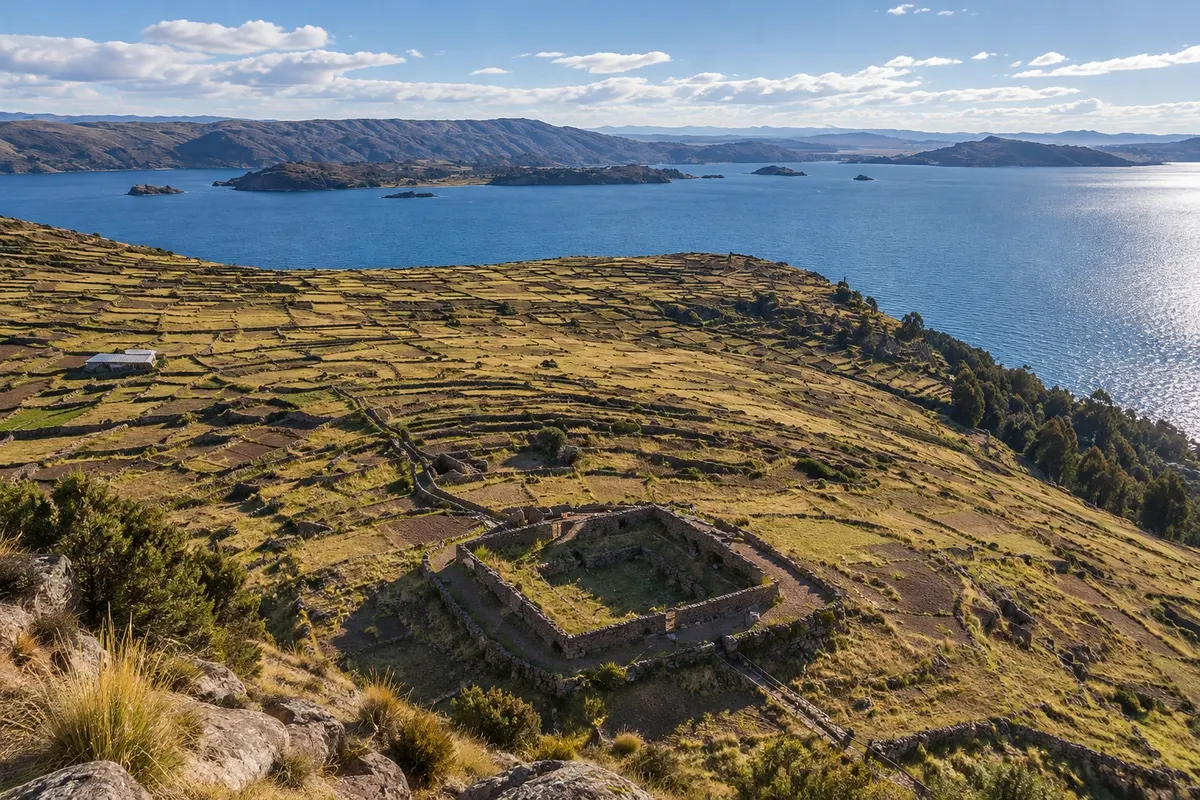
Lake Titicaca lies on the Altiplano, the high plain between the Andes of Peru and Bolivia, at about 3,810 meters above sea level. With more than 8,000 km², it is divided between the two countries and is sacred for Andean peoples: according to tradition, Manco Cápac and Mama Ocllo, the founders of the Inca Empire, emerged from its waters. On the Peruvian side, the gateway is Puno, on the western shore, at about 3,800 meters.
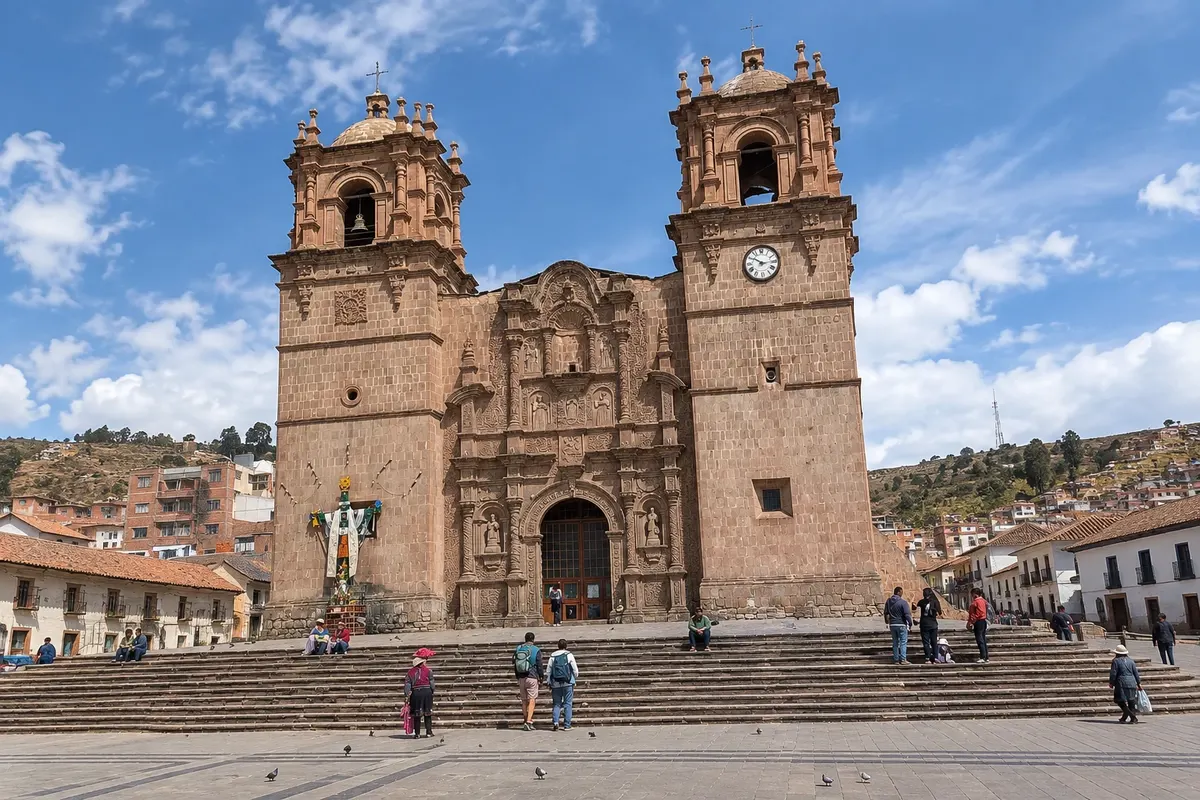
Puno is a trading and festival city, known as the capital of Peruvian folklore. In February, the Fiesta de la Virgen de la Candelaria, an Intangible Cultural Heritage of UNESCO, brings thousands of dancers with masks and embroidered costumes through the streets. On an ordinary day, the city revolves around the Plaza de Armas, with its stone Cathedral, and the port, from which boats depart for the islands.
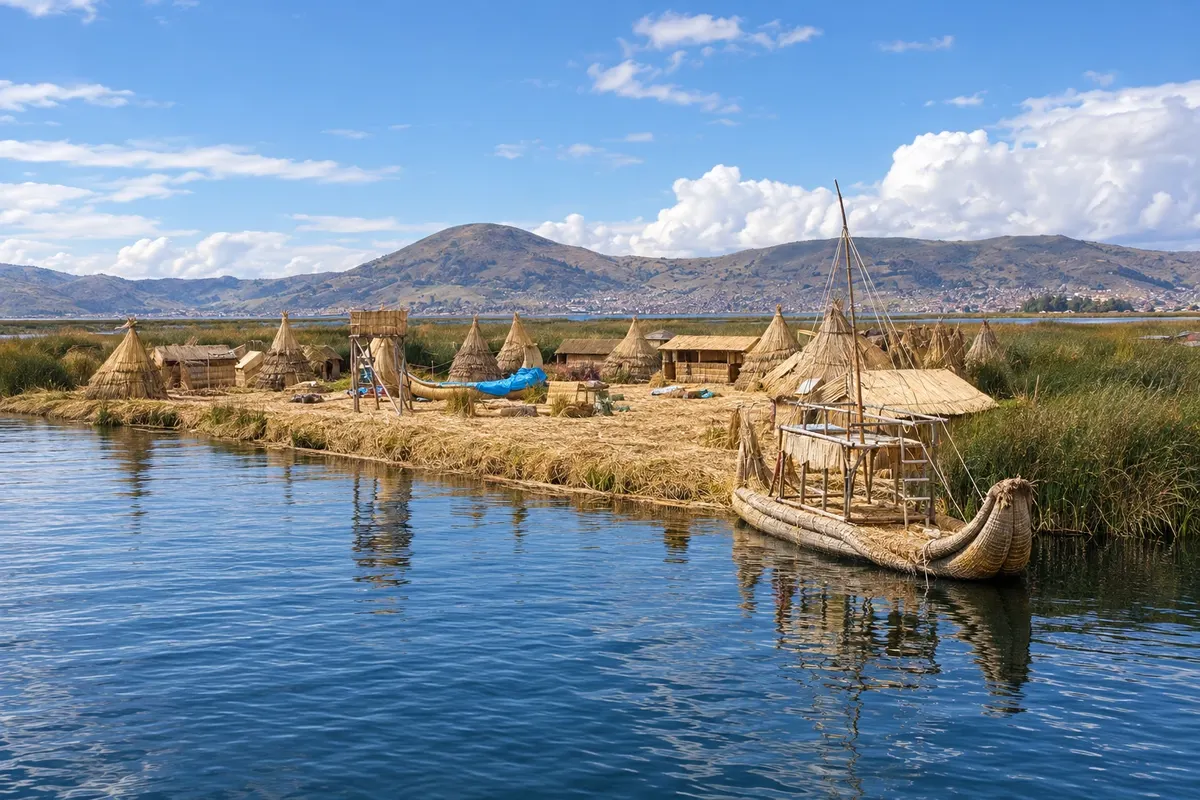
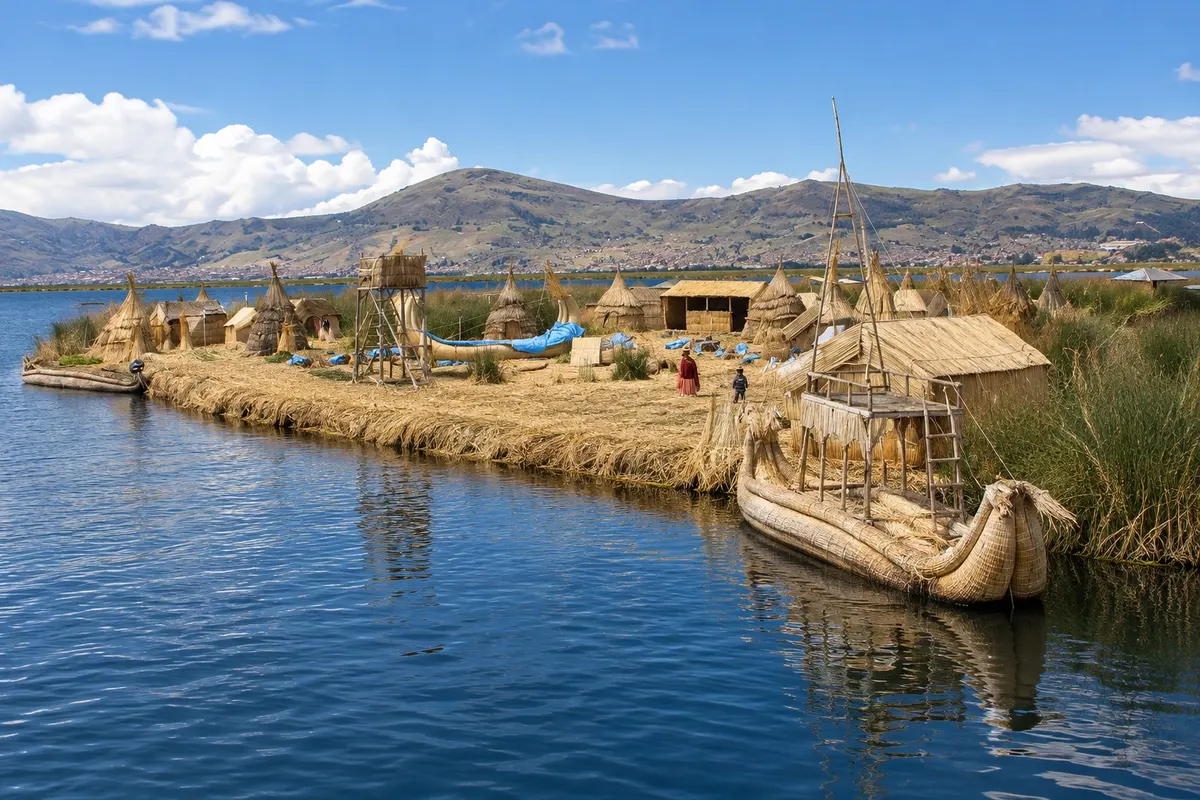
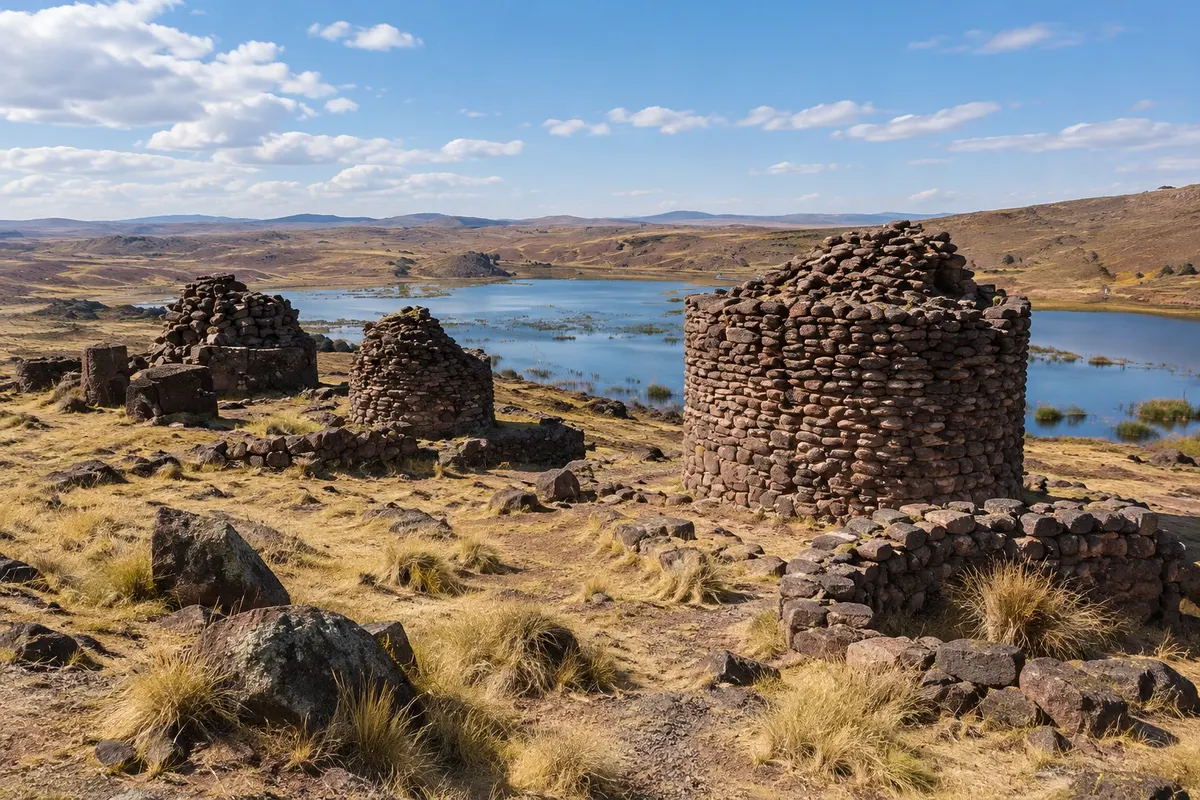
A few kilometers from the port are the Uros floating islands, made of layers of totora, a reed from the lake, and inhabited by families who live from fishing, handicrafts and tourism. Farther out, Taquile and Amantaní are rocky islands with Quechua communities that preserve traditional dress and forms of collective work, and host visitors in family homes. On land, 34 km from Puno, the site of Sillustani has funerary towers on the shore of the laguna de Umayo.
Arriving after spending time in Arequipa or Cusco helps. The sun is strong and nights are cold year‑round.
This destination brings together 1 city: Puno.


 Brazil
 Argentina
 Bolivia
 Chile
Chile Colombia
 Ecuador
 Guyana
 French Guiana
 Falkland Islands (Malvinas)
 Paraguay
 Suriname
 Uruguay
 Venezuela
 Germany
 Belgium
 Spain
Spain France
 Greece
 the Netherlands
 Ireland
 Italy
Italy Luxembourg
 Portugal
 the United Kingdom
 Switzerland