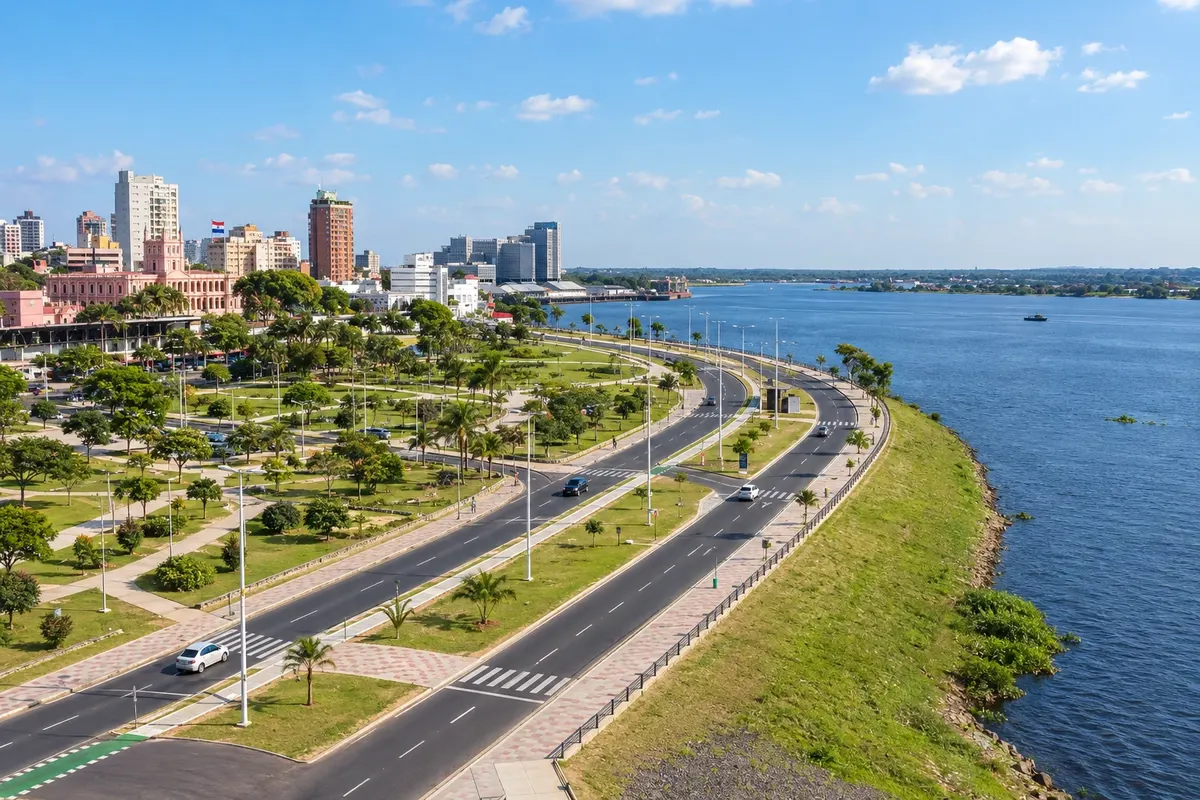
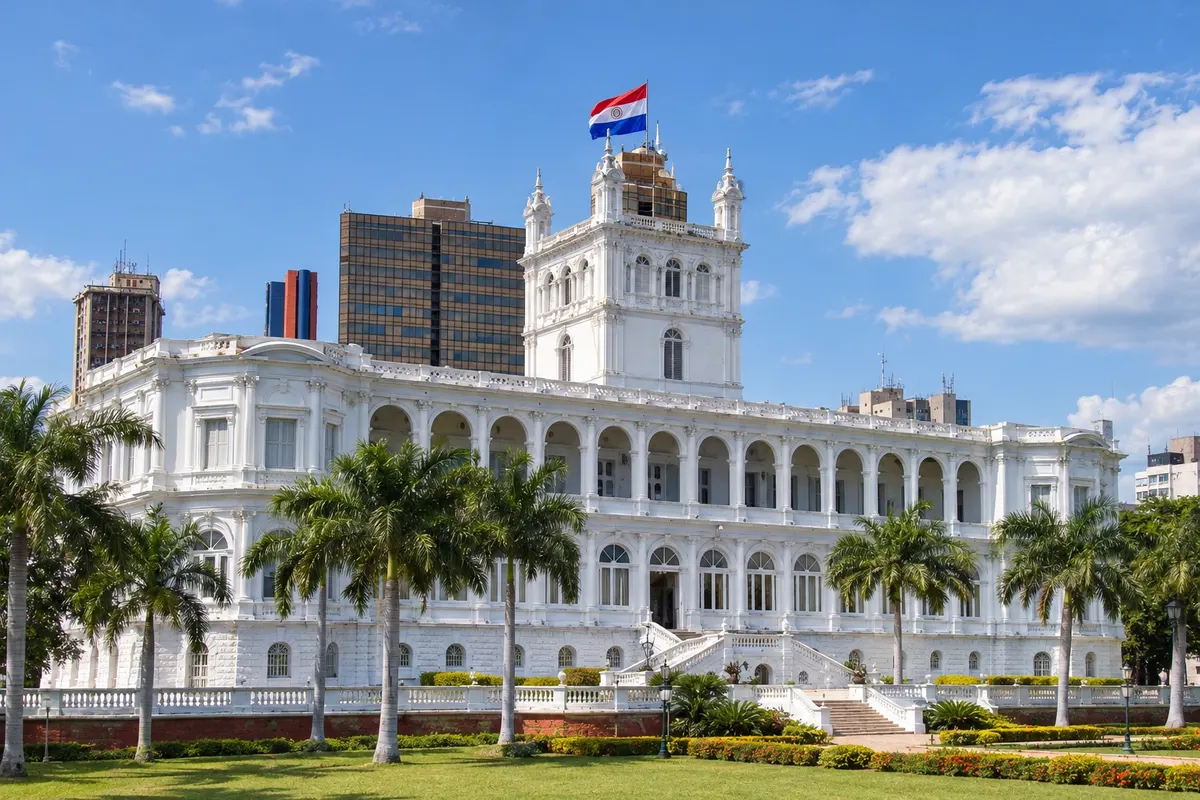
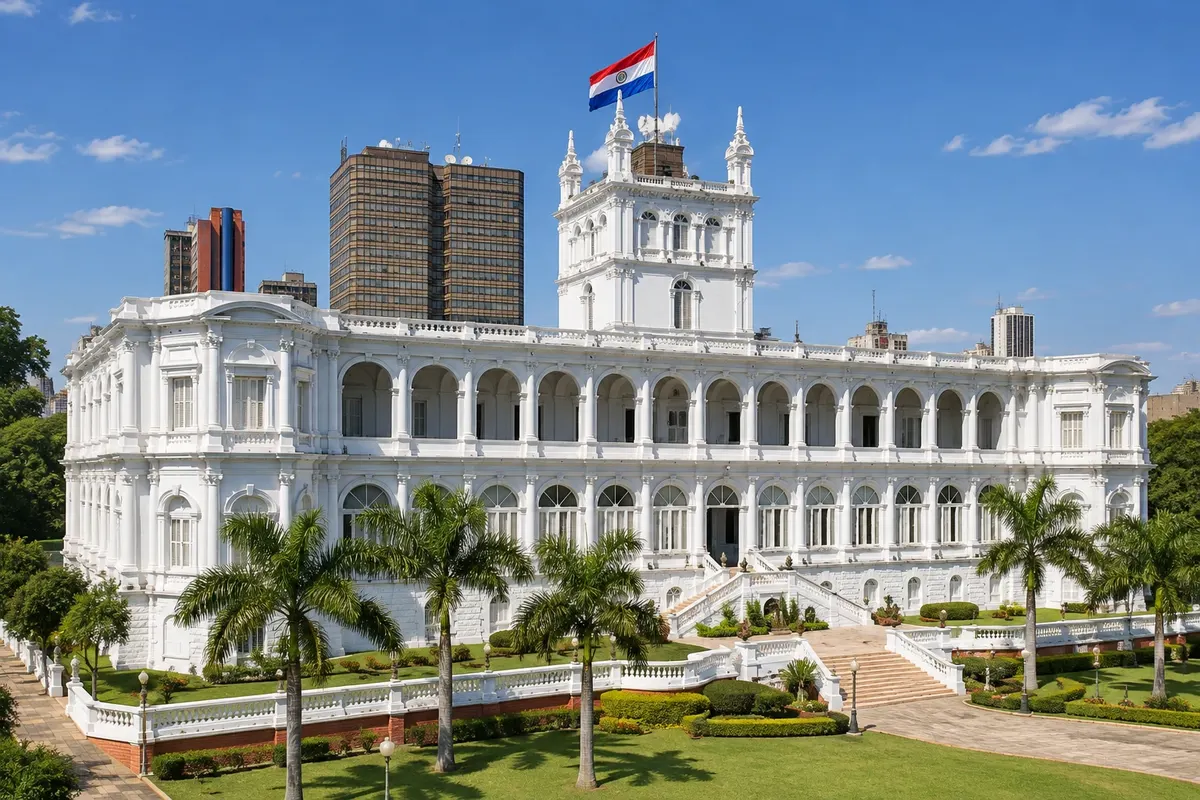
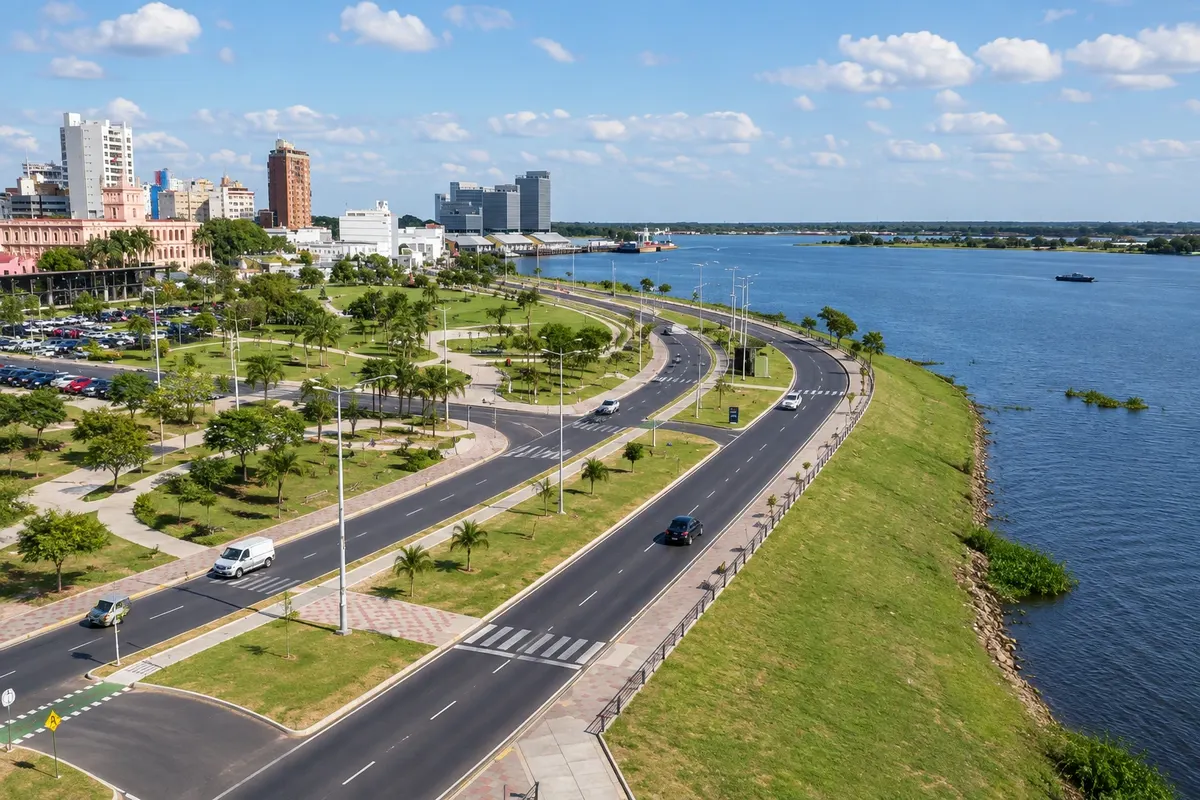
Assunção was founded in 1537 on the left bank of the Paraguay River, on a bend that forms the Bay of Assunção. It is one of the oldest cities in South America and has been the country's capital since independence in 1811. The historic center sits atop the escarpment, with a grid of streets, 19th‑century buildings and the Costanera avenue running along the water, in front of the Palacio de López, the seat of government.
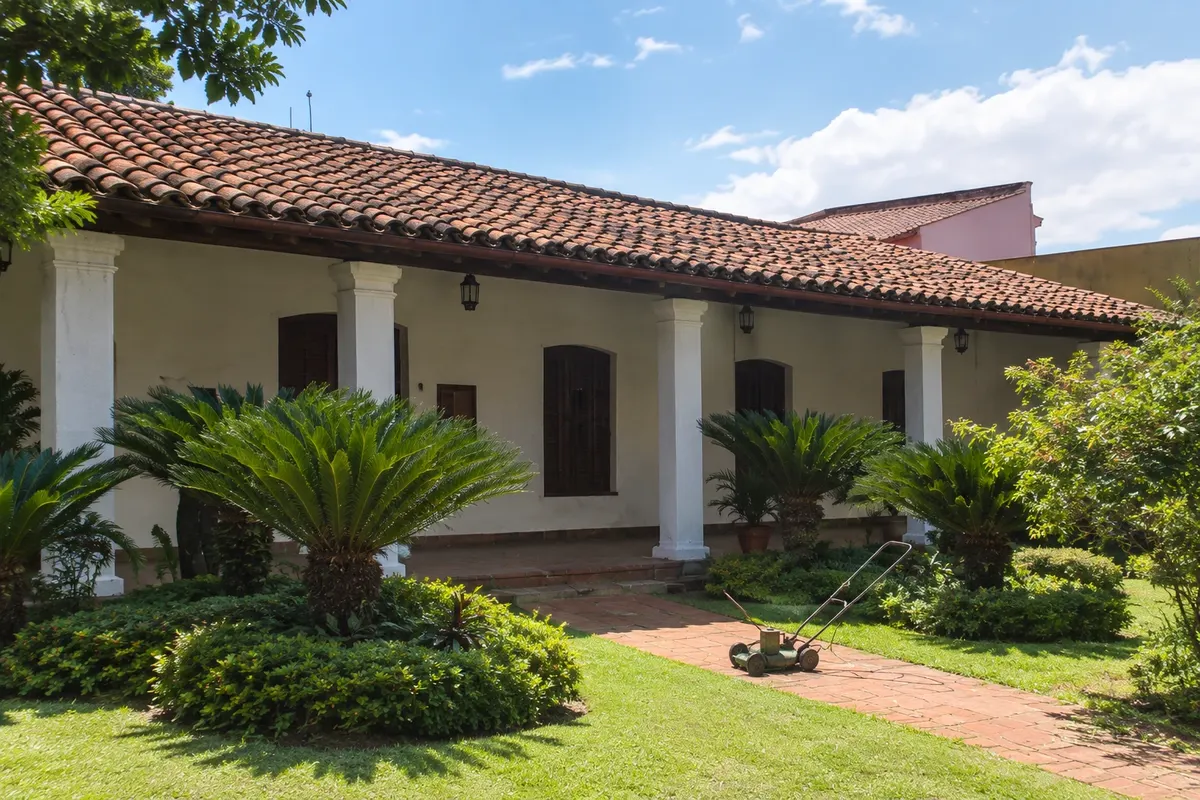
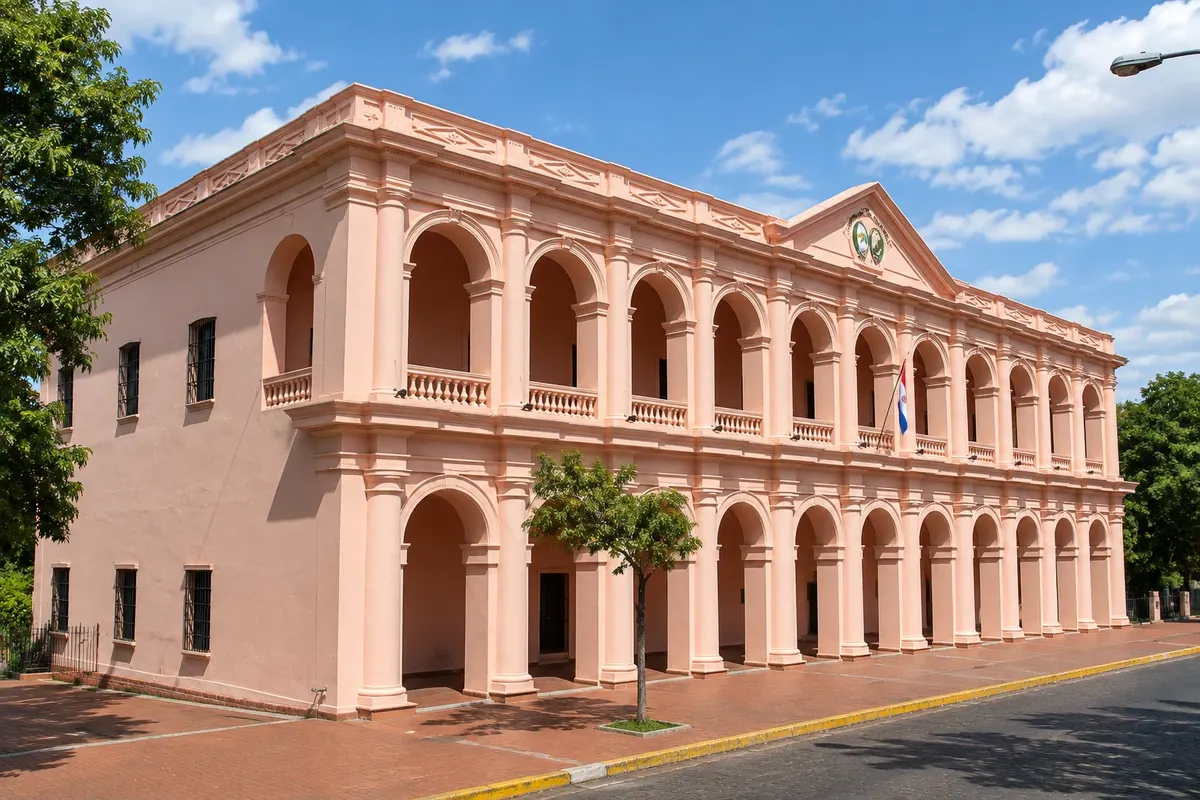
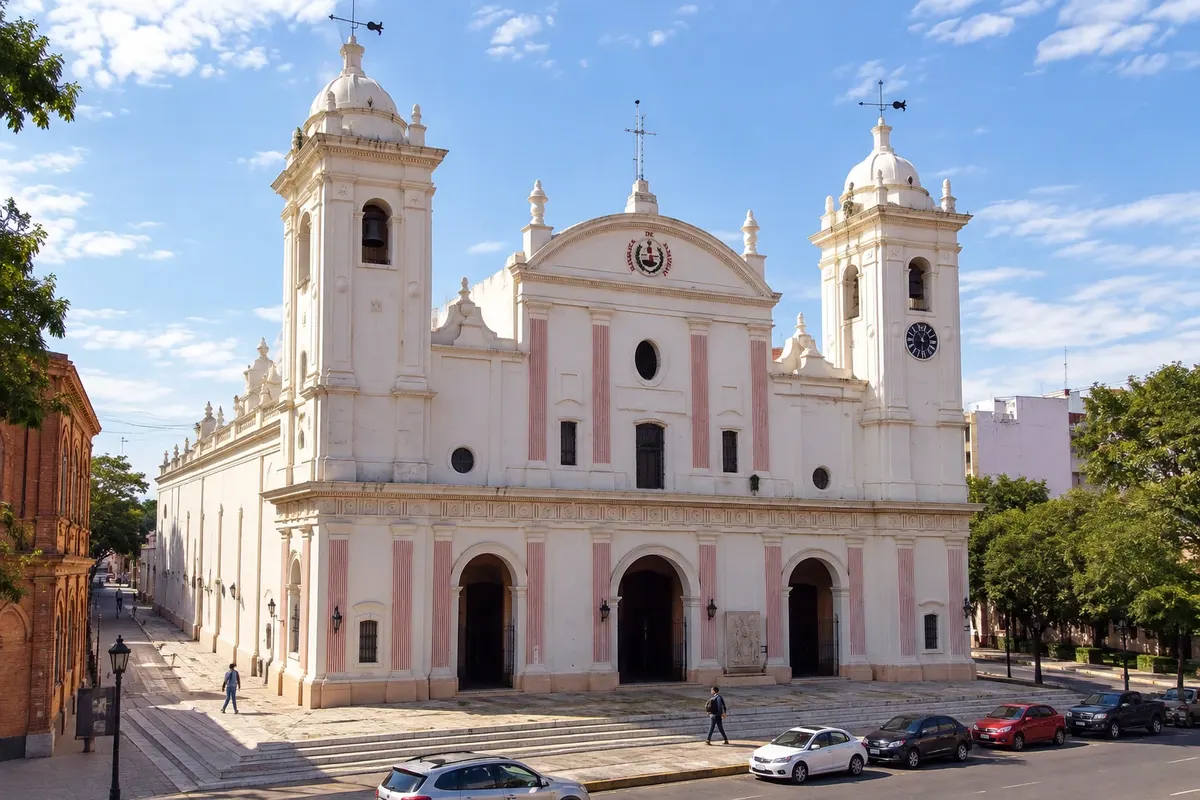
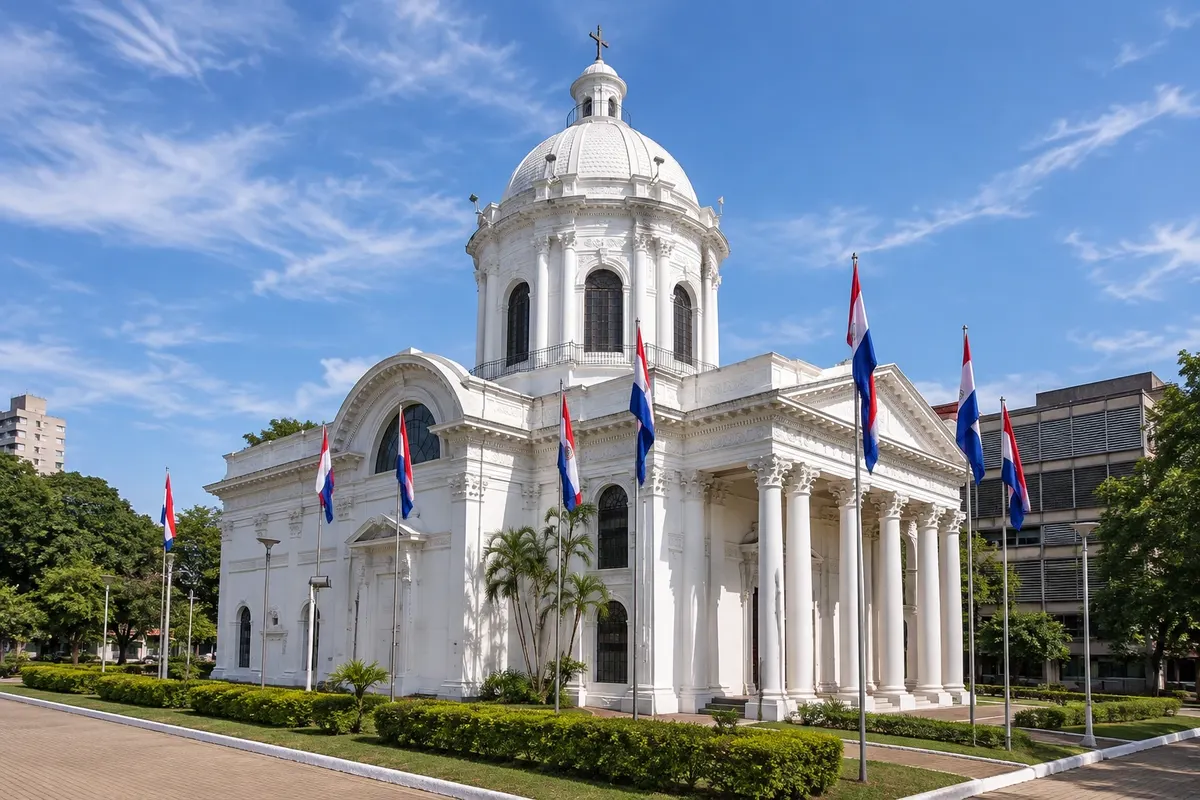
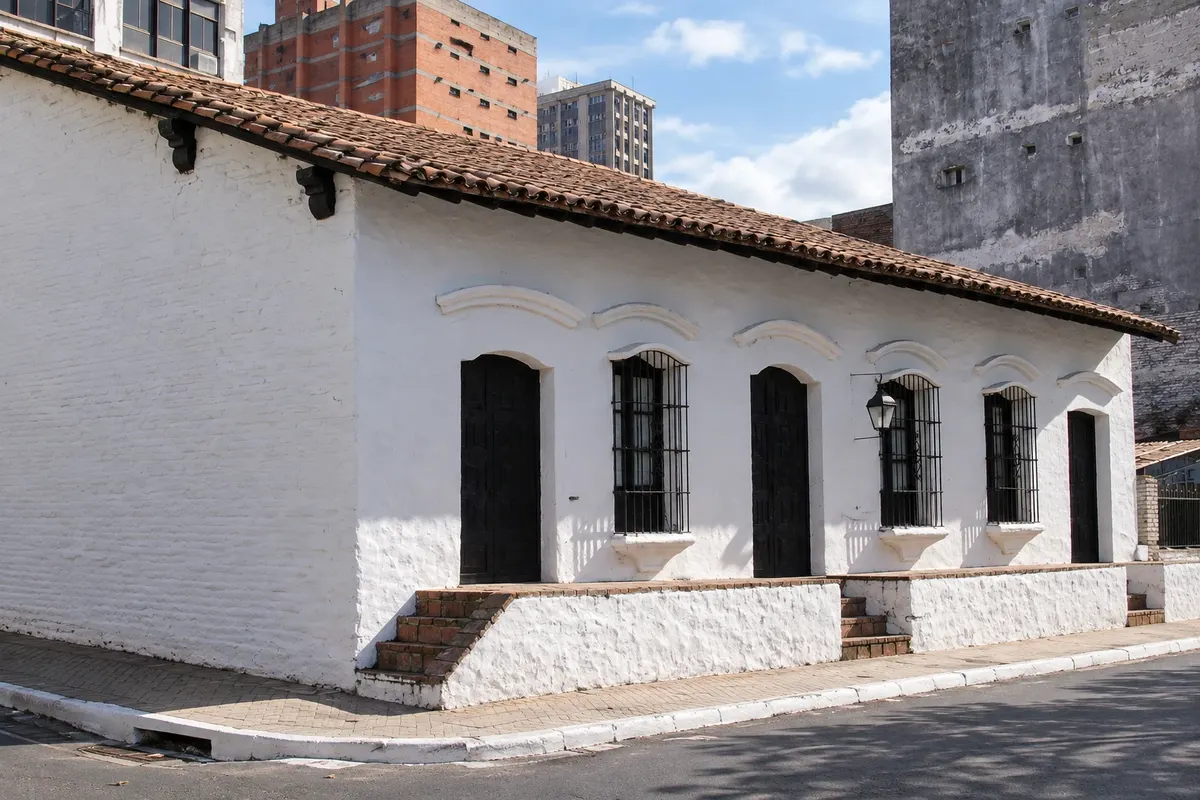
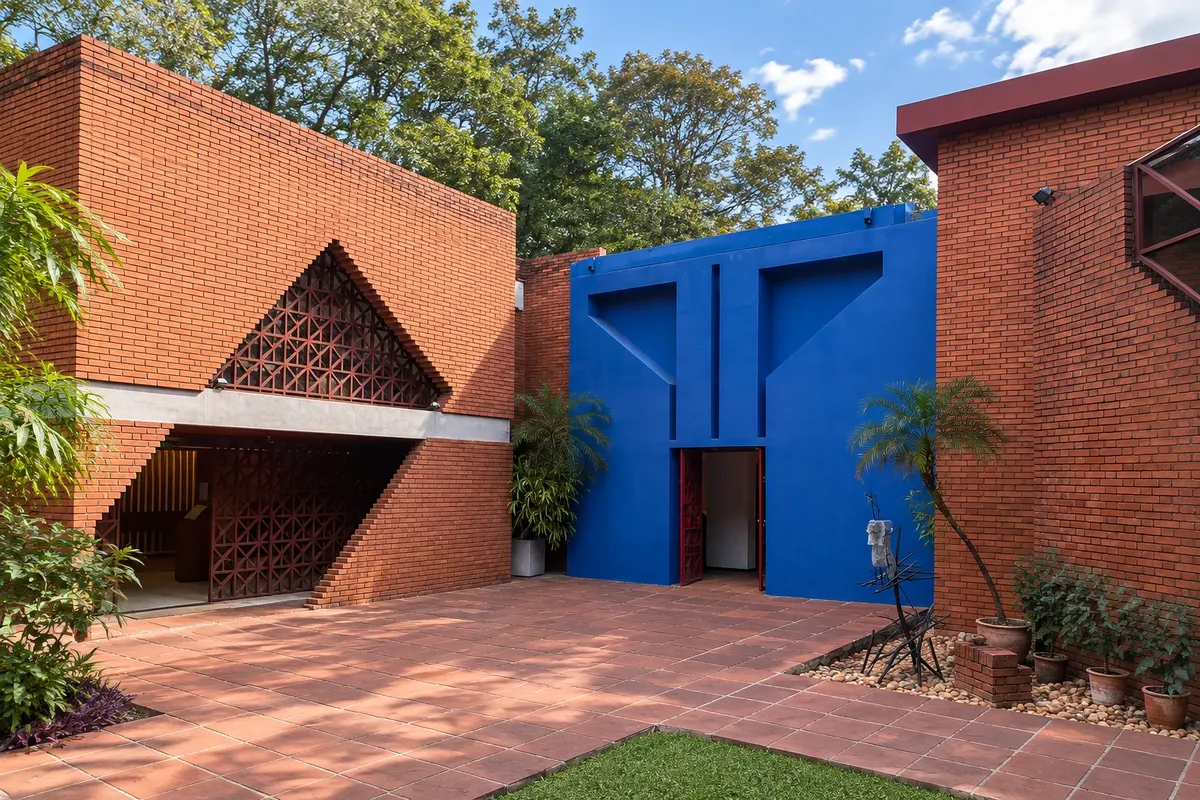
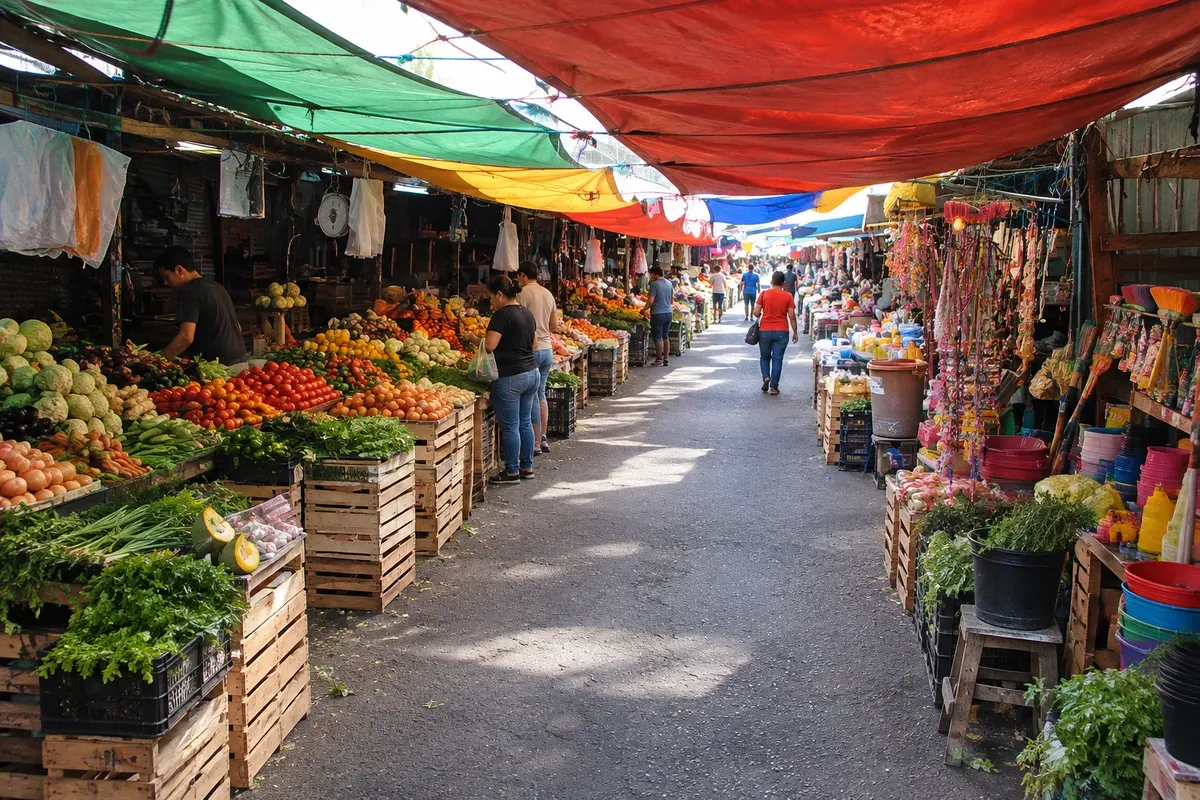
In the center, visits are done on foot: the Palacio de López and, opposite it, the Manzana de la Rivera, a block of old houses turned cultural center; the Cabildo, now the Centro Cultural de la República; the Catedral Metropolitana on the Plaza de la Independencia; the Panteón Nacional de los Héroes, inspired by the Panthéon in Paris; and the Casa de la Independencia, where the conspirators met on the night of May 14, 1811. Next to the center, Loma San Jerónimo is a neighborhood of narrow streets and stairways on a hill, with a viewpoint over the city. Further away are the Museo del Barro, with indigenous, folk and contemporary art, and Mercado 4, the city's large popular market.
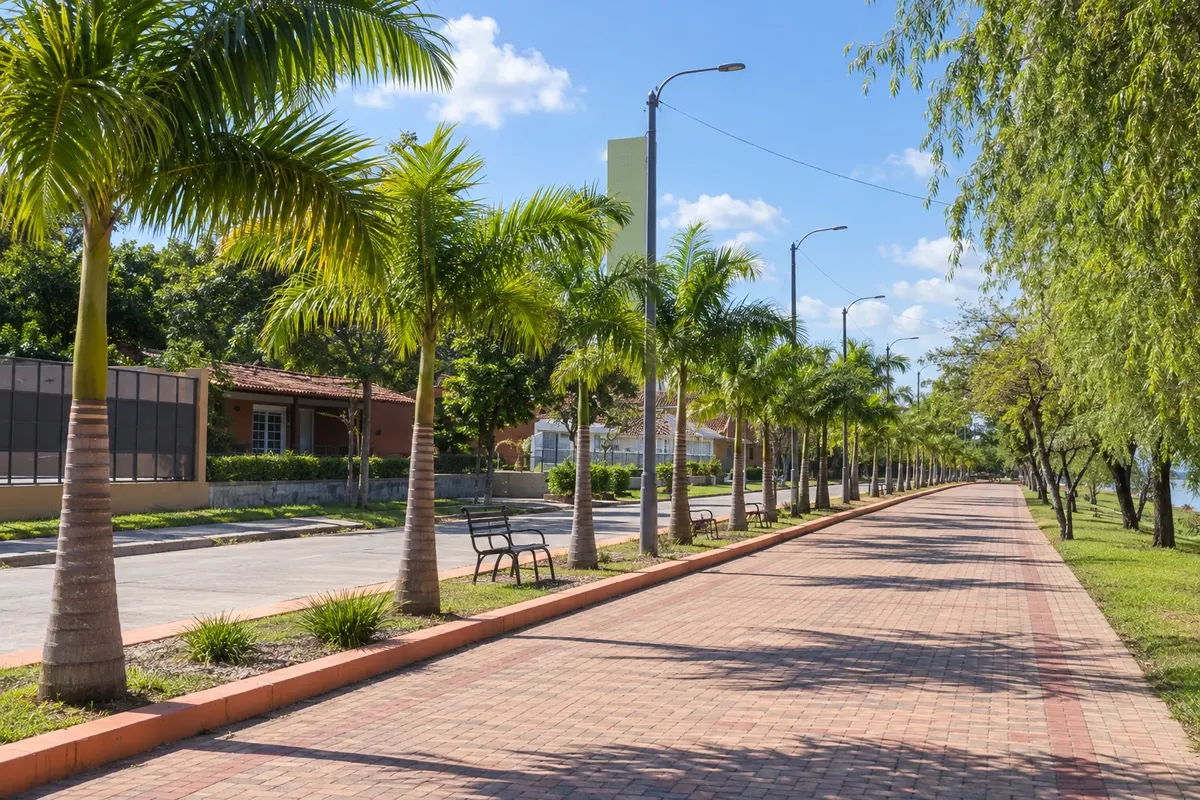
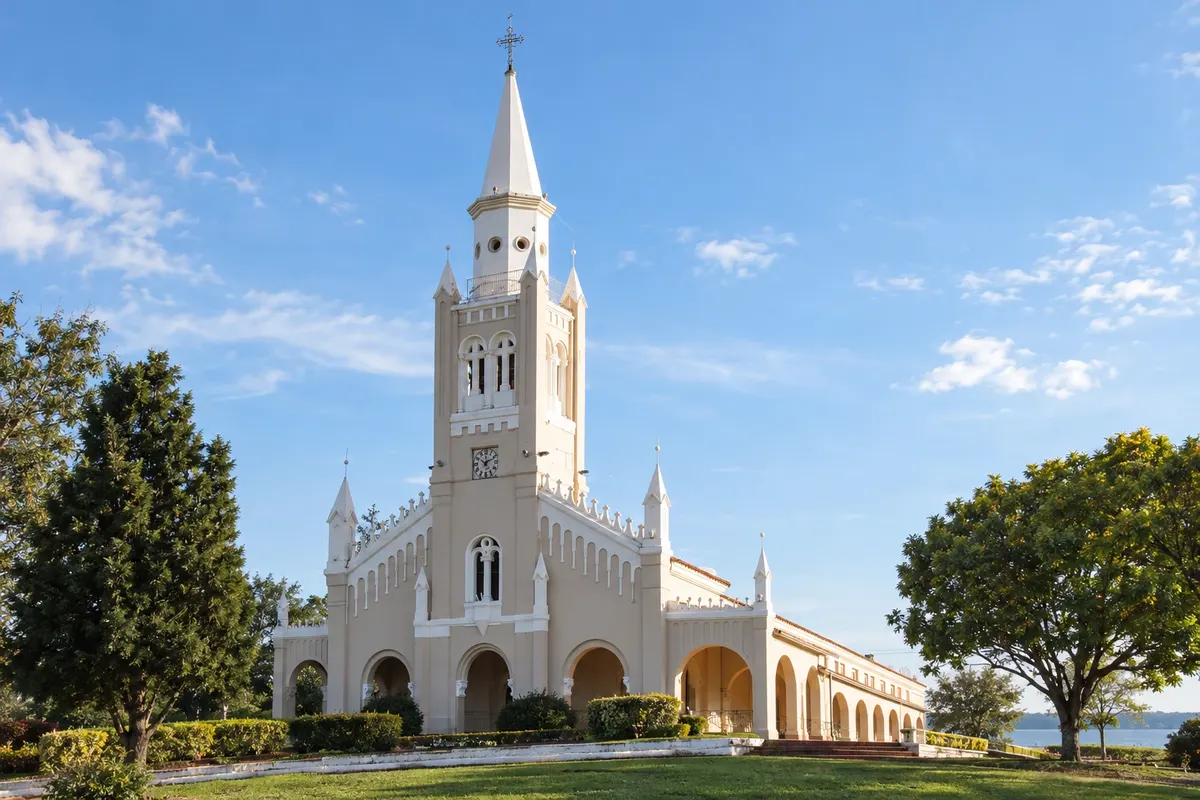
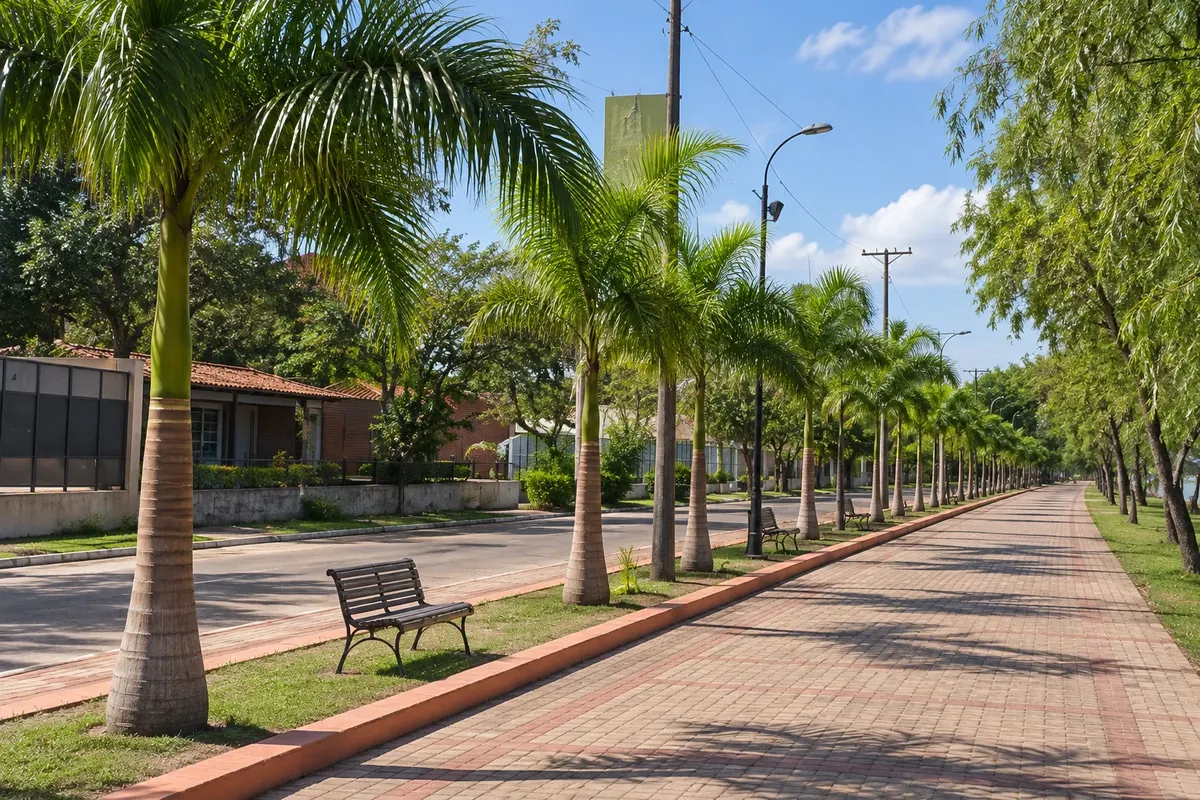
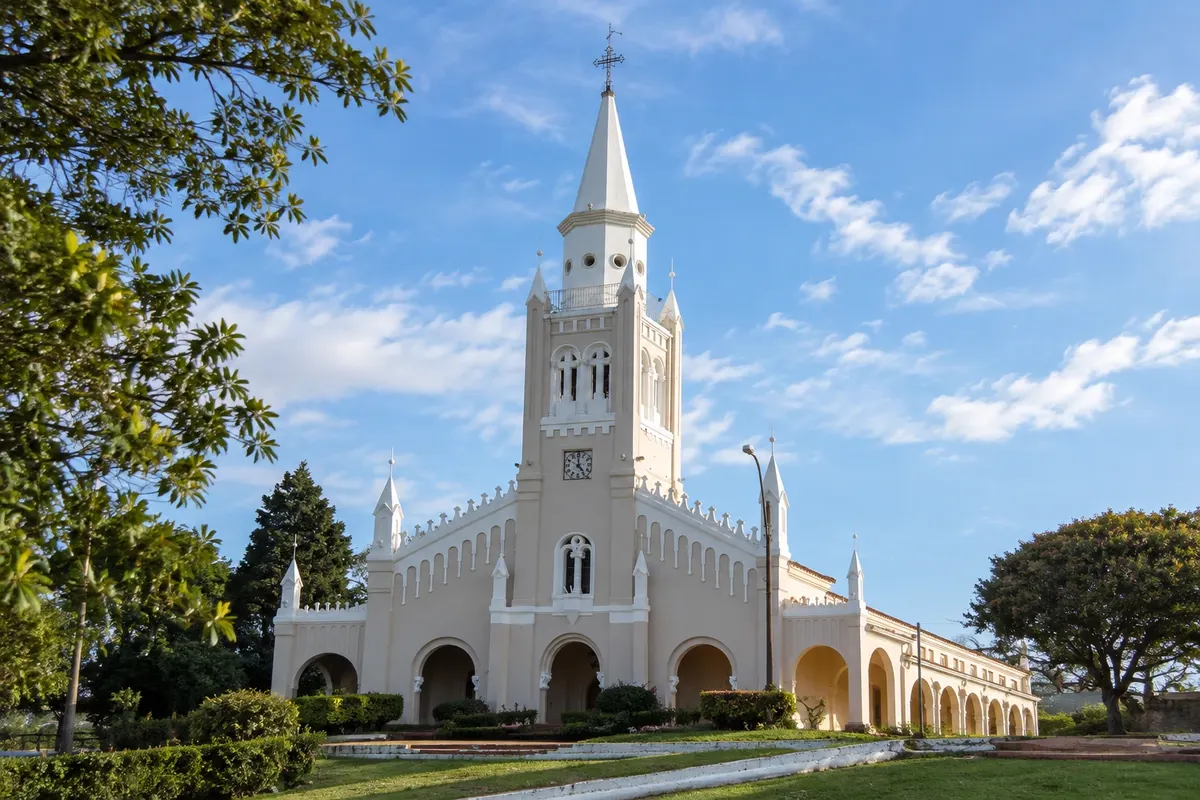
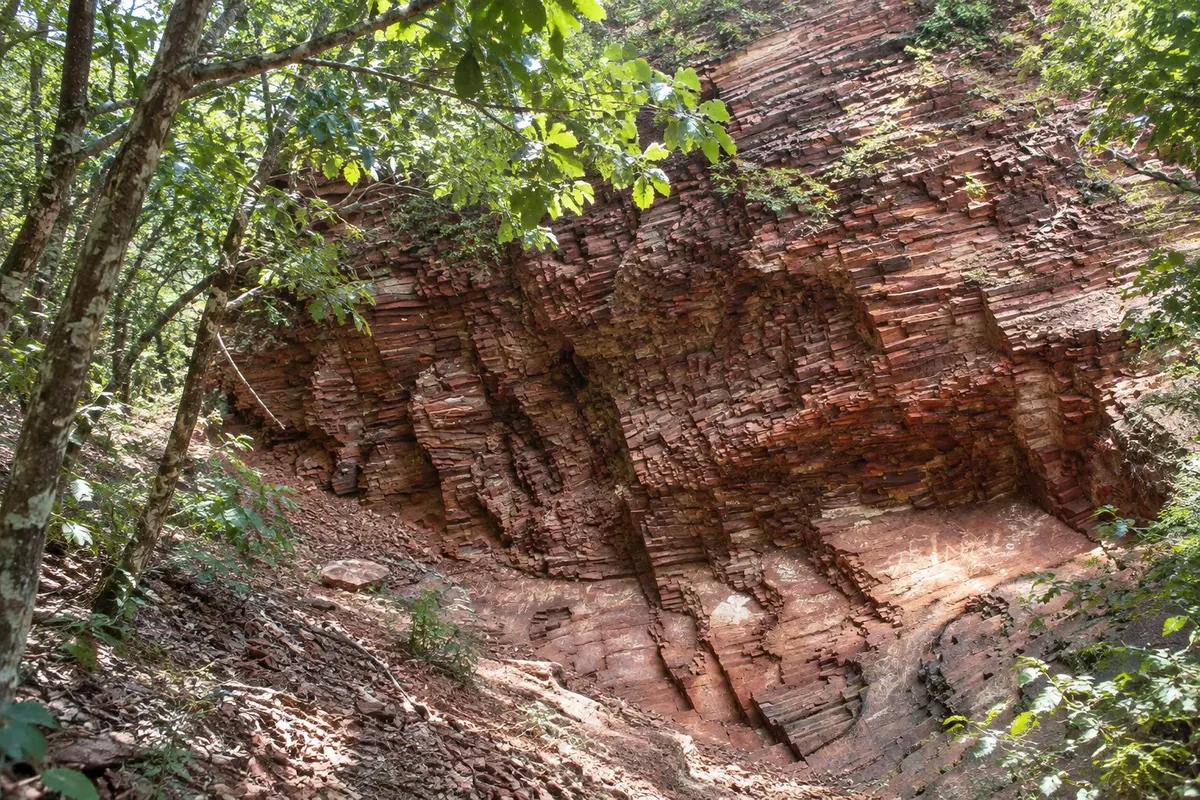
East of the capital, Lago Ypacaraí is about 24 km long and gives its name to one of the country's best‑known guarânias. On the west shore is Areguá, the capital of the Central department, with summer houses, the church on the hilltop, ceramics stalls and the sandstone formations of Cerro Koi. On the east shore, San Bernardino, founded in 1881 by German immigrants, is the summer resort for Assunção families, with the lakeside promenade and activity from December to February.
Summers are very hot and humid; winters are mild, with some cold days.
This destination brings together 3 cities: Assunção, San Bernardino, Areguá.


 Brazil
 Argentina
 Bolivia
 Chile
Chile Colombia
 Ecuador
 Guyana
 French Guiana
 Falkland Islands (Malvinas)
 Peru
Peru Suriname
 Uruguay
 Germany
 Belgium
 Spain
Spain France
 Greece
 the Netherlands
 Ireland
 Italy
Italy Luxembourg
 Portugal
 the United Kingdom
 Switzerland