Creta

Creta · Greece

Creta

The largest island of Greece: the Minoan palace of Cnossos, Venetian ports in Heraclião, Chania and Rethymno, monasteries in the mountains and beaches like Elafonisi, Balos and Preveli.

Ilhas

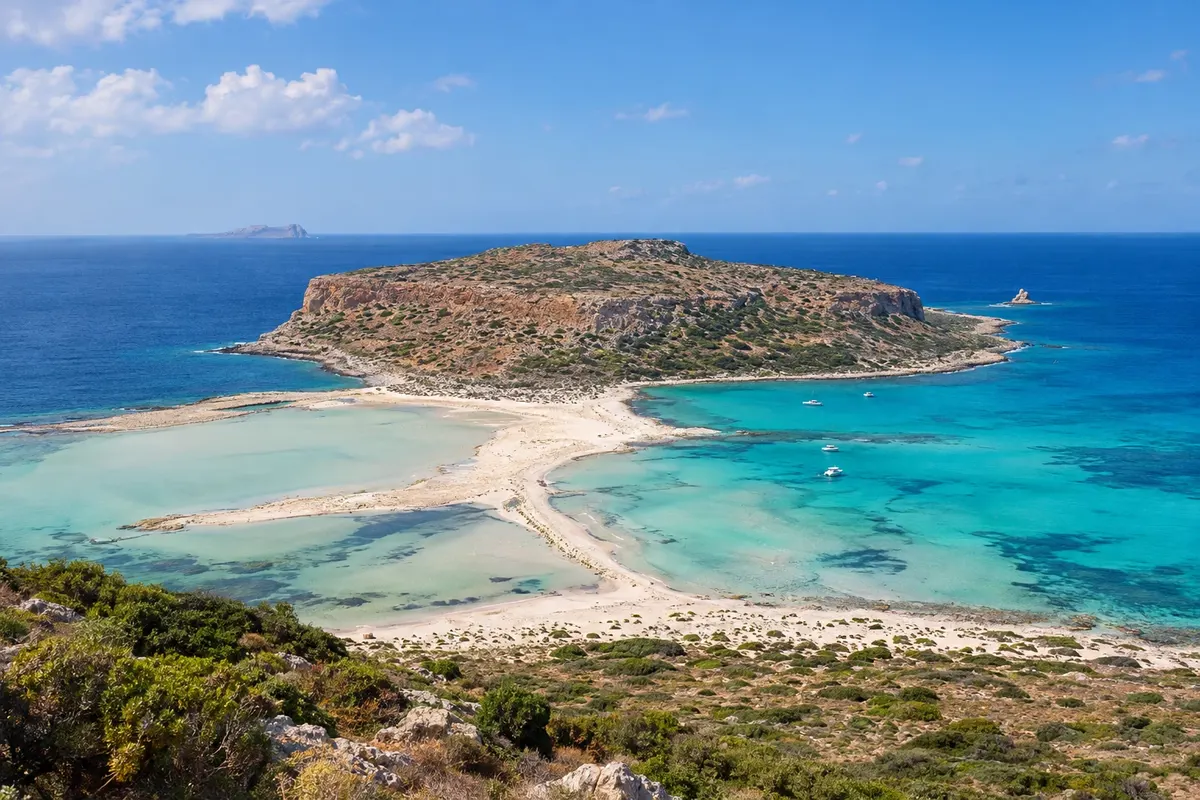
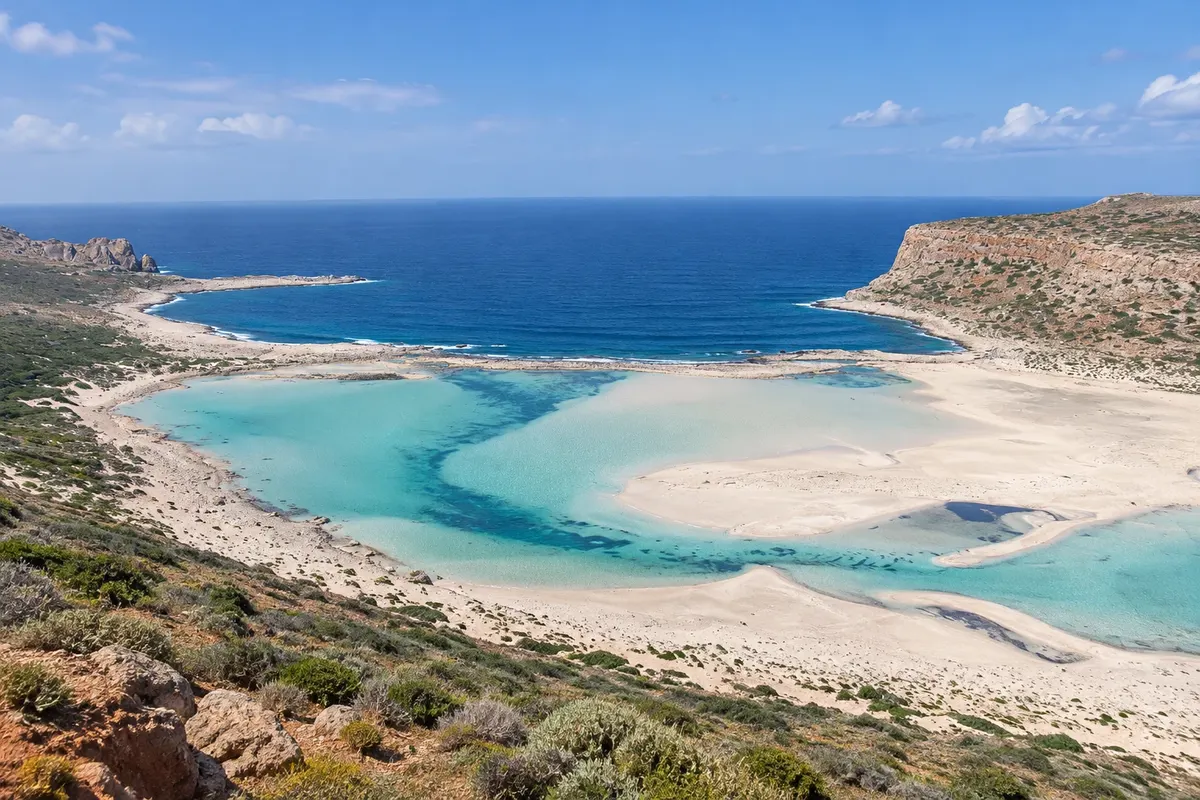
In the photo: Lagoa de Balos

Illustrative images. The pictures in this guide are illustrations based on the real place, not photographs, and may differ from it.

Get it on Google Play Send your photos

Get to know the place

A region to enjoy
at your own pace.

Creta lies at the southern tip of Greece, between the Aegean Sea and the Libyan Sea, and it is a large island: about 260 km from end to end, with mountains rising above 2,400 metres in the middle. For that reason you visit it more like a small country than like an island with a single port. The northern coast concentrates the three cities on the itinerary: Heraclião (Heraklion), the capital, Rethymno and Chania, all with Venetian ports, walls and an old town that mixes Venice and the Ottoman Empire.

History is the primary reason to visit. The Minoan civilization, which predates classical Greece, left in Cnossos, five kilometres from Heraclião, the island’s most visited palace, and the Archaeological Museum in the capital houses what came from there: frescoes, the Phaistos Disc and the figurines of the snake goddess. Romans, Byzantines, Venetians (from 1204 to 1669) and Ottomans (until the late 19th century) followed. Creta only joined Greece in 1913, and Cretans make a point of saying they are Cretan before they are Greek.

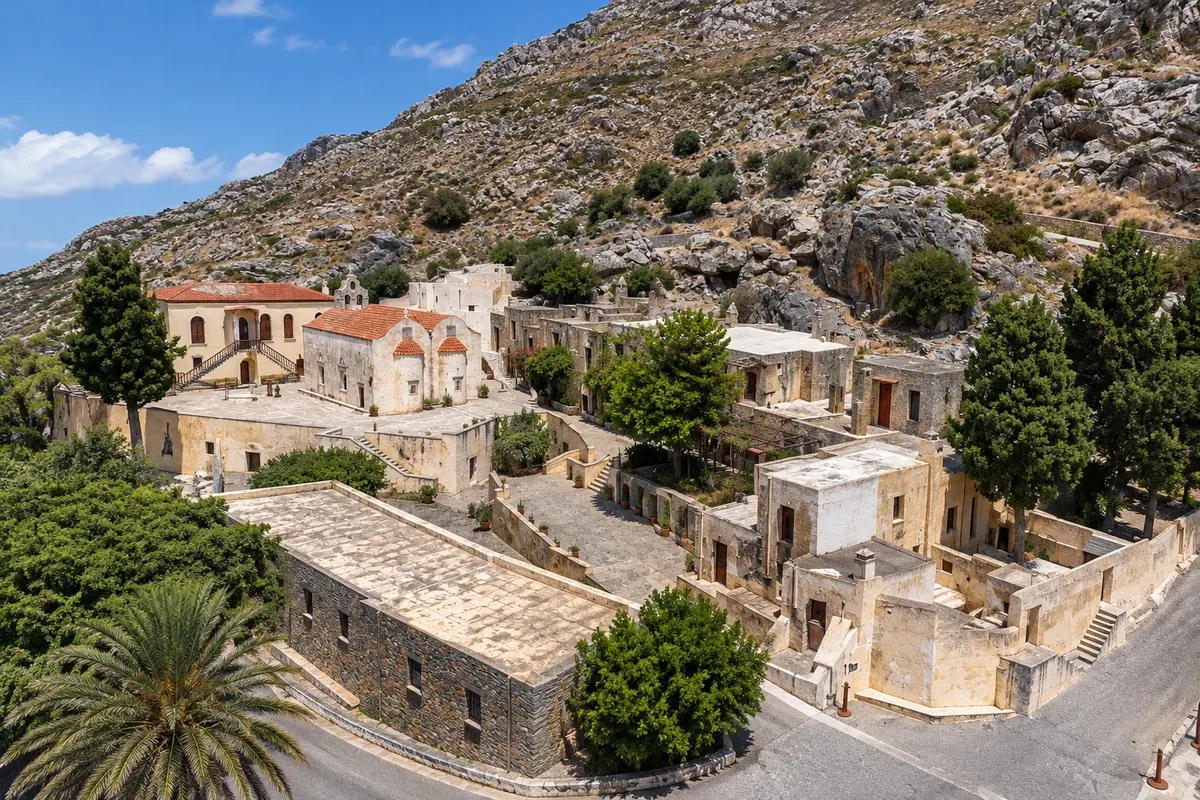
The second reason is nature. In the west are the beaches of Elafonisi, Balos and Falasarna and the Samaria Gorge, a day hike that crosses the mountains to the sea. South of Rethymno is the palm grove of Preveli. In the mountains are monasteries such as Arkadi and Agia Triada, with olive trees, vineyards and Cretan cuisine, based on olive oil, herbs, cheese and bread: the Mediterranean diet was born, in part, from studying what people eat here.

Distances between cities are short by bus, but beaches and monasteries lie off the regular routes. Summer, from June to September, is hot and dry with a strong midday sun; winters are mild on the coast and snowy in the mountains. Arrival is usually by plane from Athens, or by overnight ferry departing from Pireu.

This destination brings together 3 cities: Heraclião, Chania, Rethymno.

Share: WhatsApp
Traveler, share your experiences through photos Up to 5 photos of each place you visited.

One destination, many paths

The cities on this trip

Start with one city or combine several in your itinerary.

Where Creta is
ChaniaHeracliãoRethymno

Contornos: Natural Earth (domínio público). Adaptação do Cidade Turismo.

How to get there: Creta

✈ Aeroporto Internacional de Heraclião Nikos Kazantzakis (HER) · 5 km to Heraclião

Check before booking. From Athens there are flights to Heraclião (HER) and Chania (CHQ) of about one hour, and overnight ferries that depart from the port of Pireu and arrive in the morning at Heraclião or Souda, Chania’s port; check the season. On the island, KTEL buses link the three cities along the northern road.

Suggested arrival point: Heraclião

Heraclião
Creta · Creta Capital Suggested arrival point

Heraclião

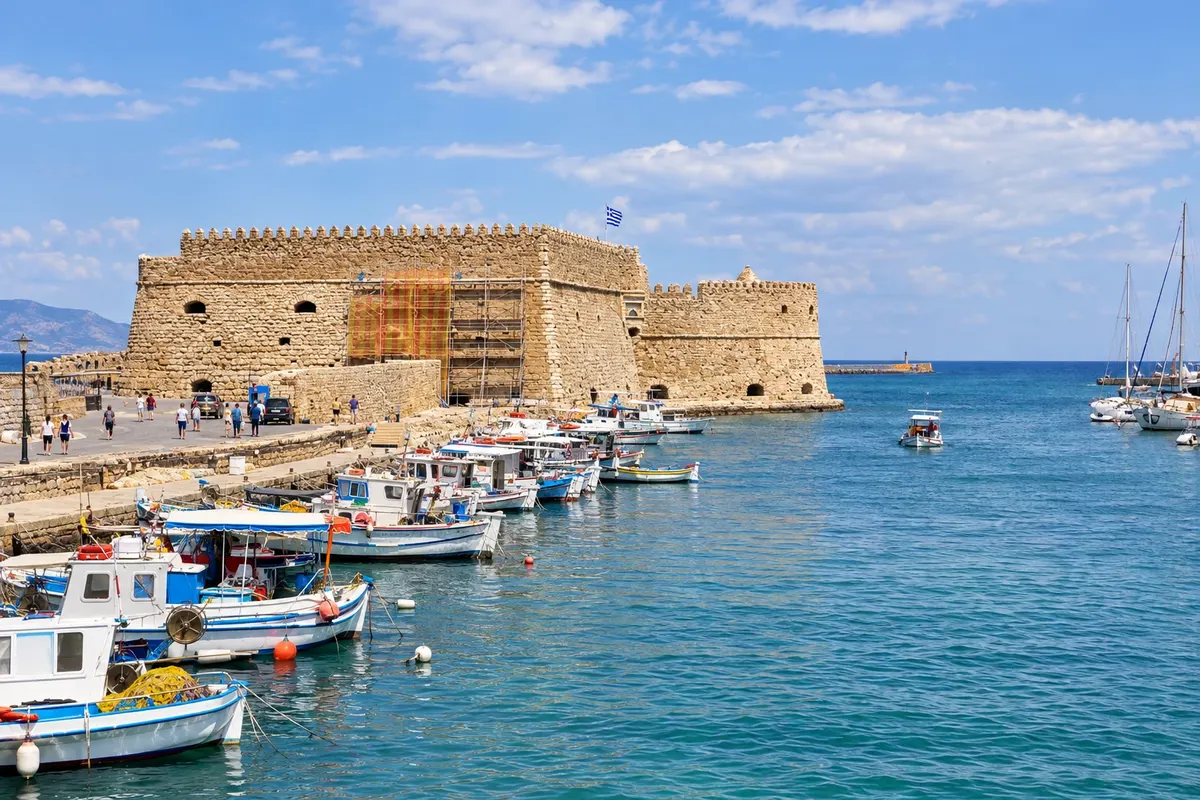
Capital and largest city of Crete, Heraclião (Heraklion) is the gateway to the island, with the busiest airport and the ferry port of Pireu. The centre is surrounded by 16th-century Venetian walls, and the fortress of Koules guards the entrance to the old harbour. Five kilometres away is the Palácio de Cnossos, and in the centre the Museu Arqueológico houses what was found there. Between Praça dos Leões and the rua 1866 market, the city is noisy and lively, less tidy than Chania and Rethymno, but it is the place you depart from for the rest of the island.

Chania
Creta · Creta

Chania

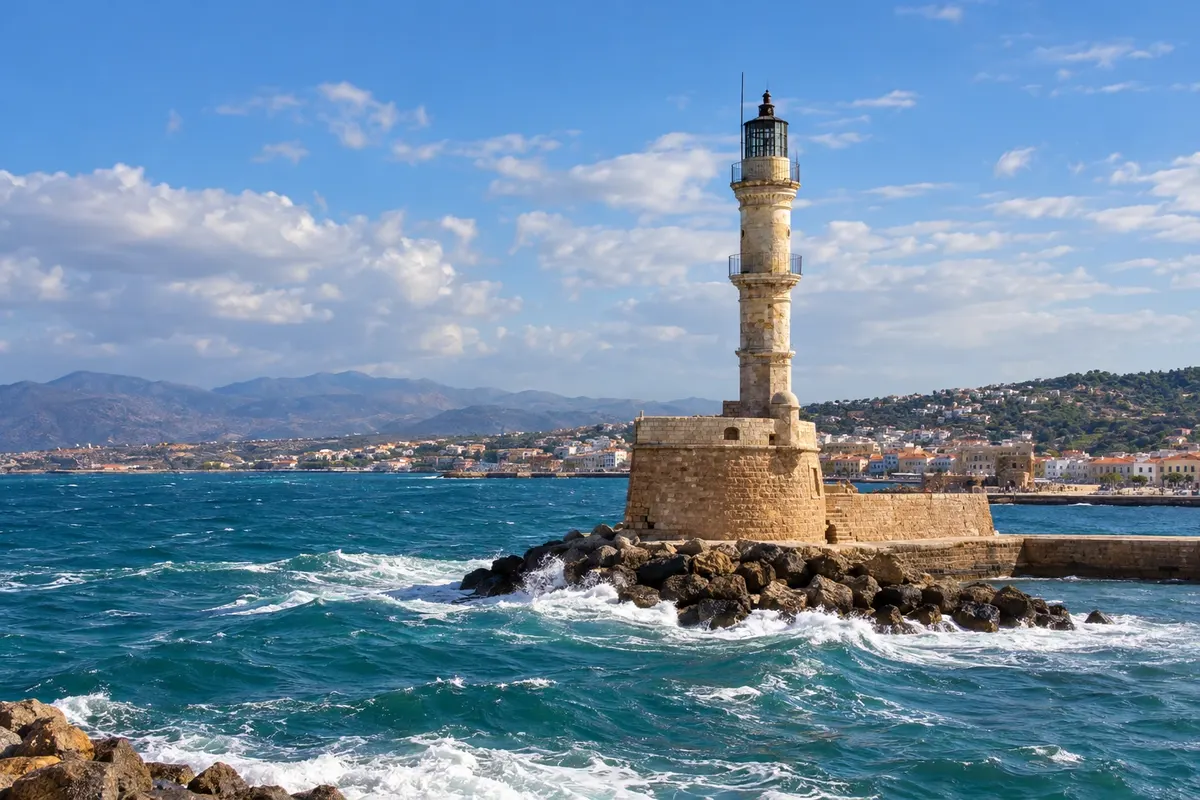
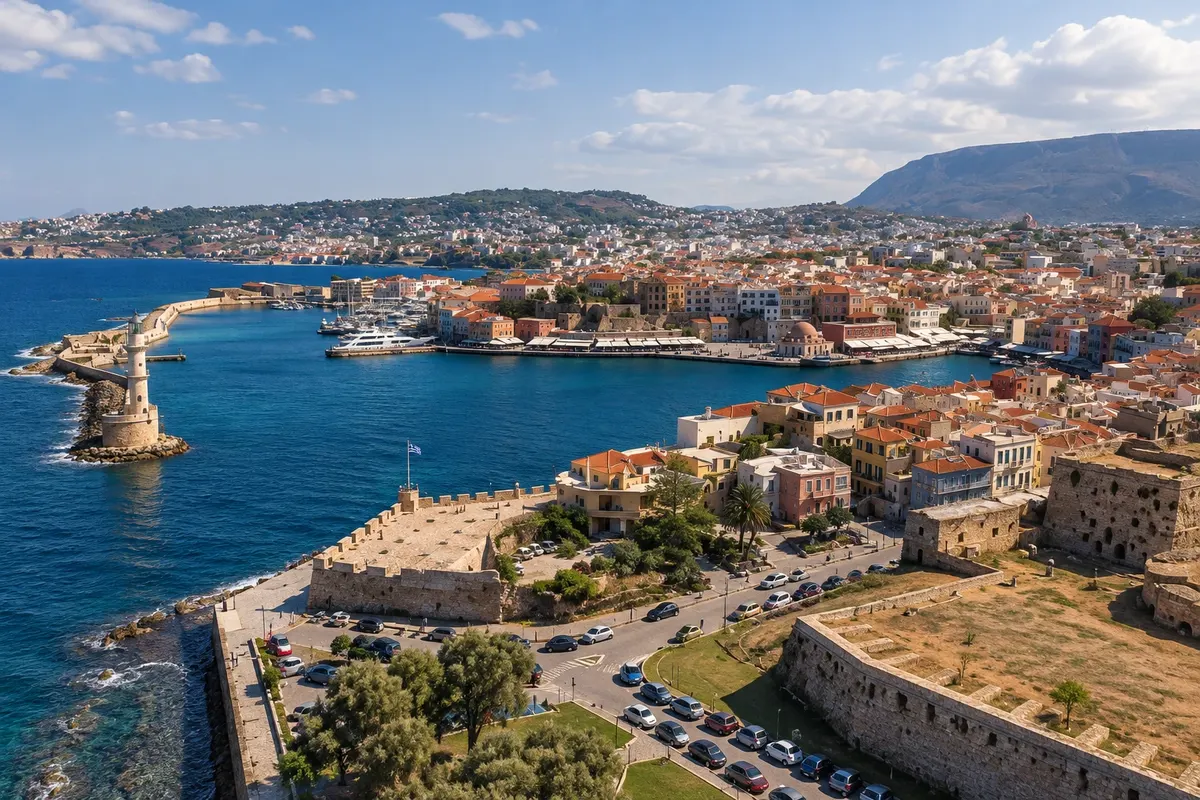
Chania is the second city of Creta and the most beautiful place to stay: the crescent-shaped Venetian harbour, with the lighthouse at the end of the breakwater and the old mosque of the janissaries on the waterfront, is the centre of an old town of narrow lanes, Venetian and Ottoman houses, neighbourhoods such as Topanas and Splantzia and the Etz Hayyim synagogue. It is the base for the west of the island: the Samaria Gorge, the beaches of Elafonisi, Balos and Falasarna, and the Akrotiri peninsula, with monasteries and the beach of Stavros.

Rethymno
Creta · Creta

Rethymno

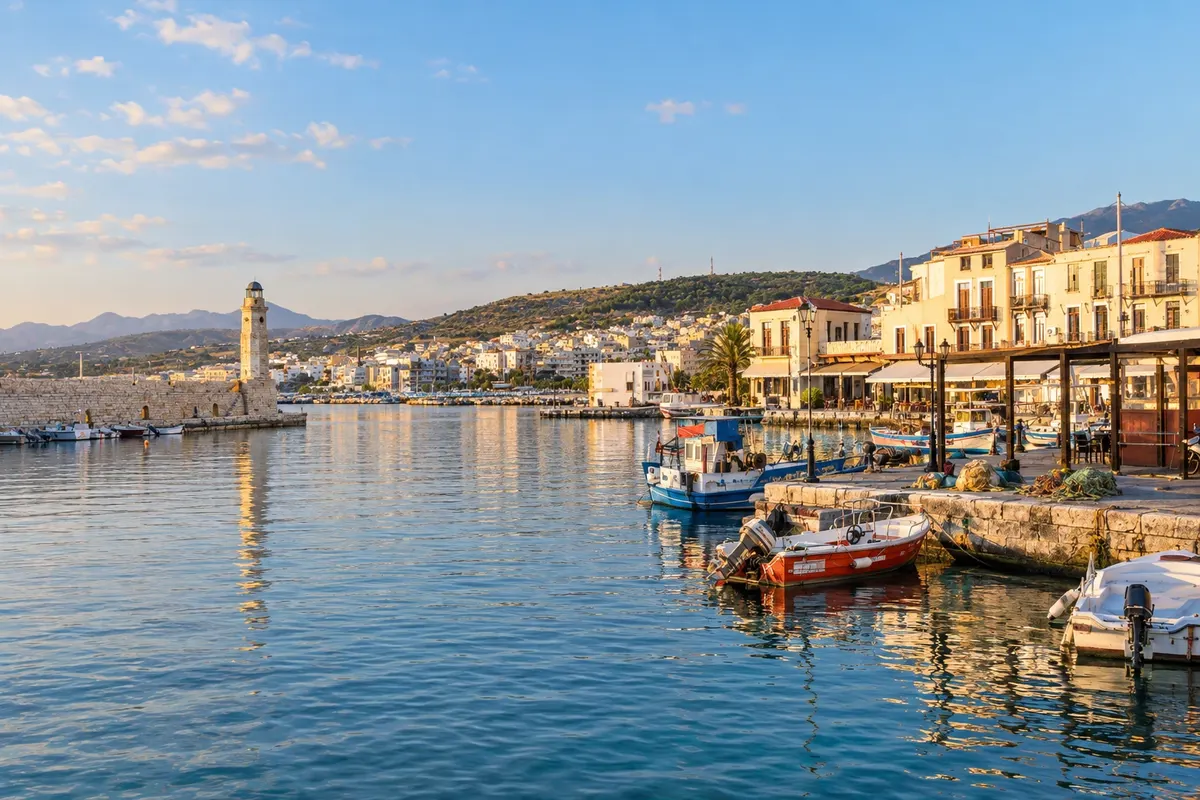
Rethymno lies halfway between Heraclião and Chania, on the north coast of Crete. The old town, at the foot of the Fortezza veneziana of 1573, is the best preserved on the island: stone lanes, fountains and Venetian portals, Ottoman minarets and a small harbour with a lighthouse. East of the centre a several-kilometre sandy beach begins, with resort hotels. In the surroundings are the monastery of Arkadi, a symbol of Cretan resistance, and, to the south, the palm grove and the beach of Preveli.

The local experience

Things to do in Creta

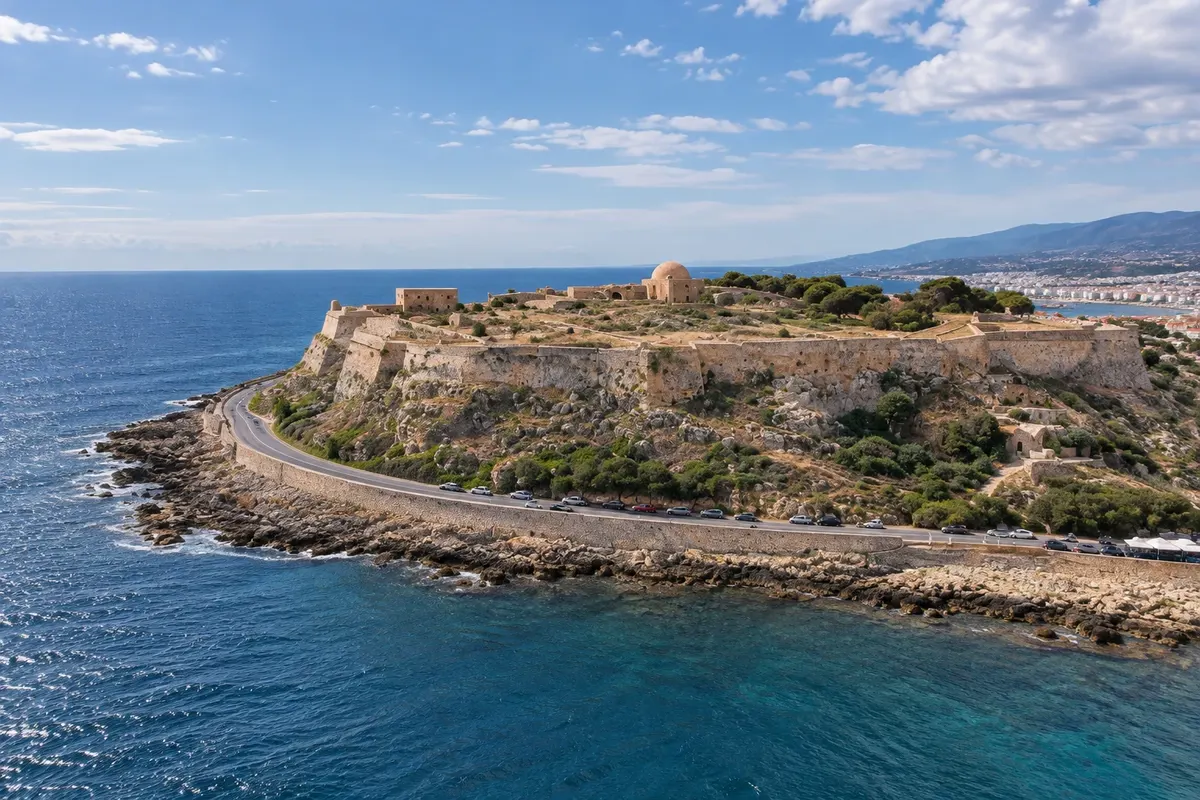
Fortezza de Rethymno
Rethymno · Creta · Fortress

Fortezza de Rethymno

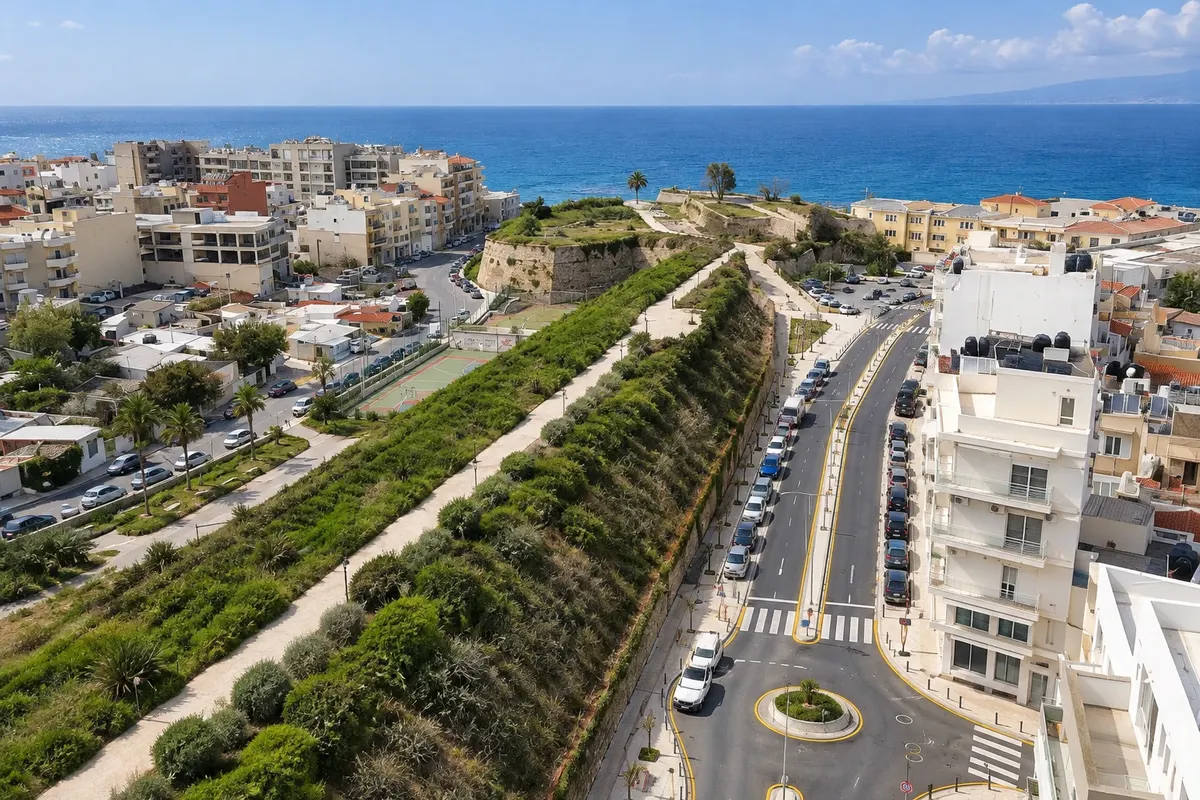
The Venetian fortress atop Paleokastro hill, built between 1573 and 1580, with 1.3 km of ramparts, the mosque of Sultan Ibrahim in the middle and views over the old town and the sea.

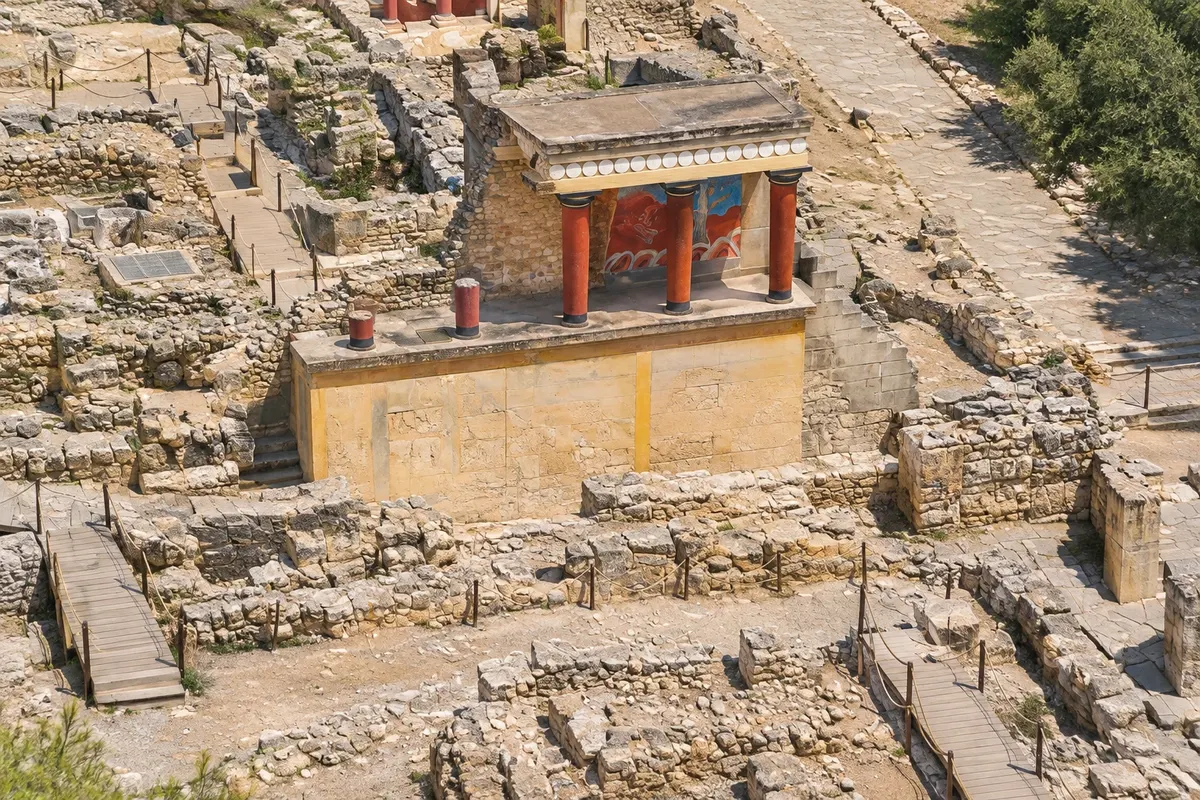
Palácio de Cnossos (Knossos)
Heraclião · Creta · Archaeological site

Palácio de Cnossos (Knossos)

The largest palace of the Minoan civilization, 5 km from Heraclião, with a central courtyard, throne room, staircases and Arthur Evans's reconstructions from the early 20th century.

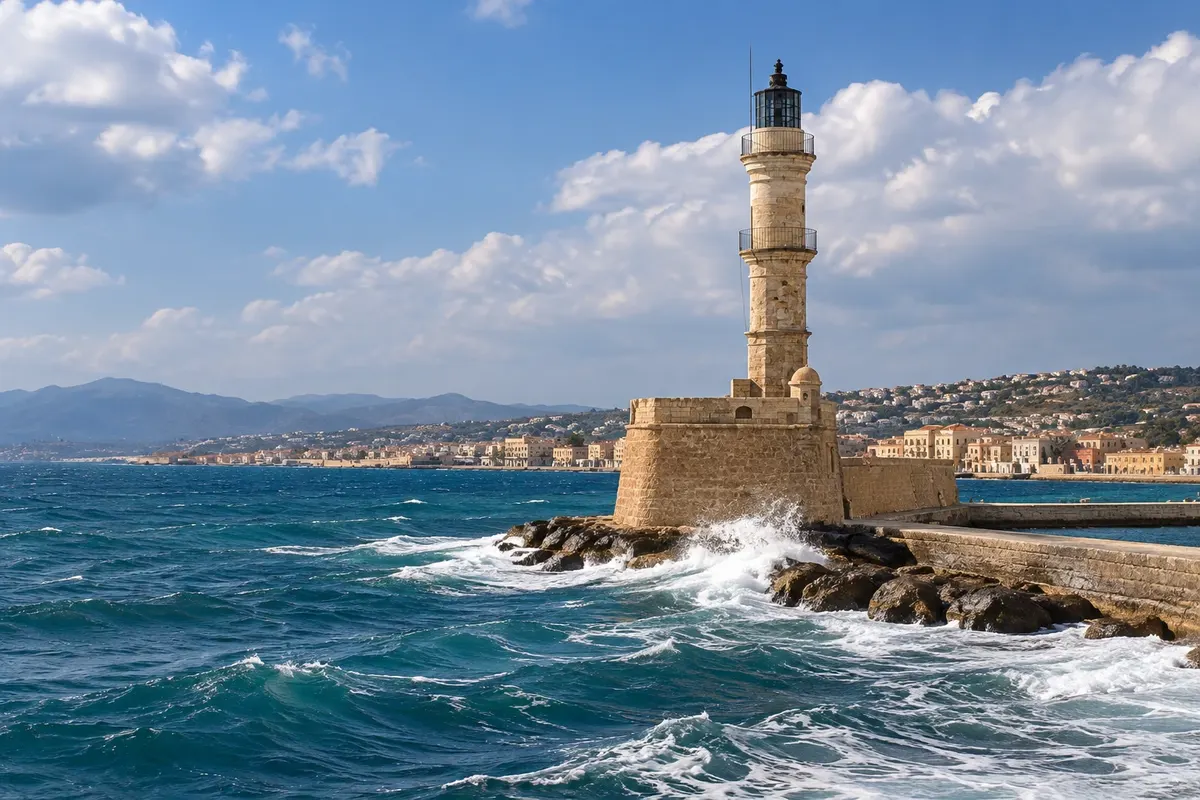
Porto veneziano e Farol de Chania
Chania · Creta · Harbour

Porto veneziano e Farol de Chania

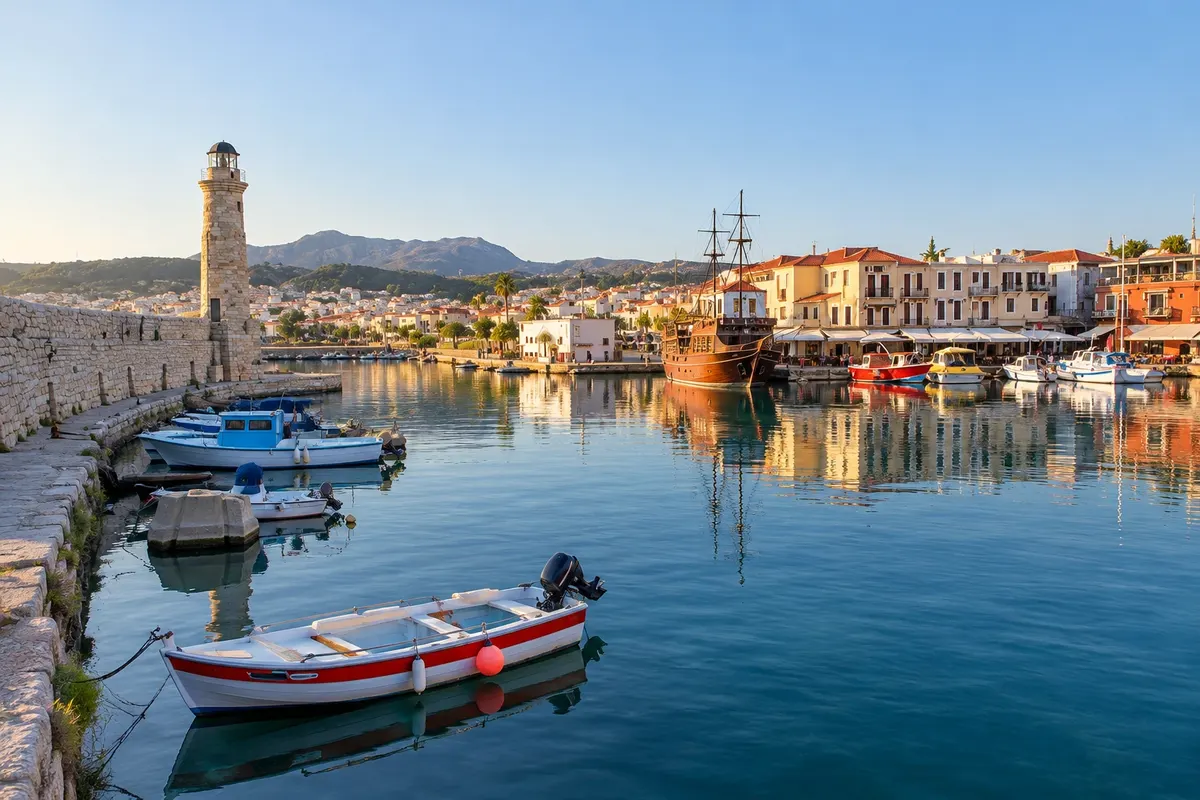
The porto veneziano in a crescent, with the mesquita dos janízaros on the water’s edge, the arcades of the shipyards and the 1864 lighthouse at the tip of the breakwater: Chania's iconic image.

Cidade velha de Chania
Chania · Creta · Neighborhood

Cidade velha de Chania

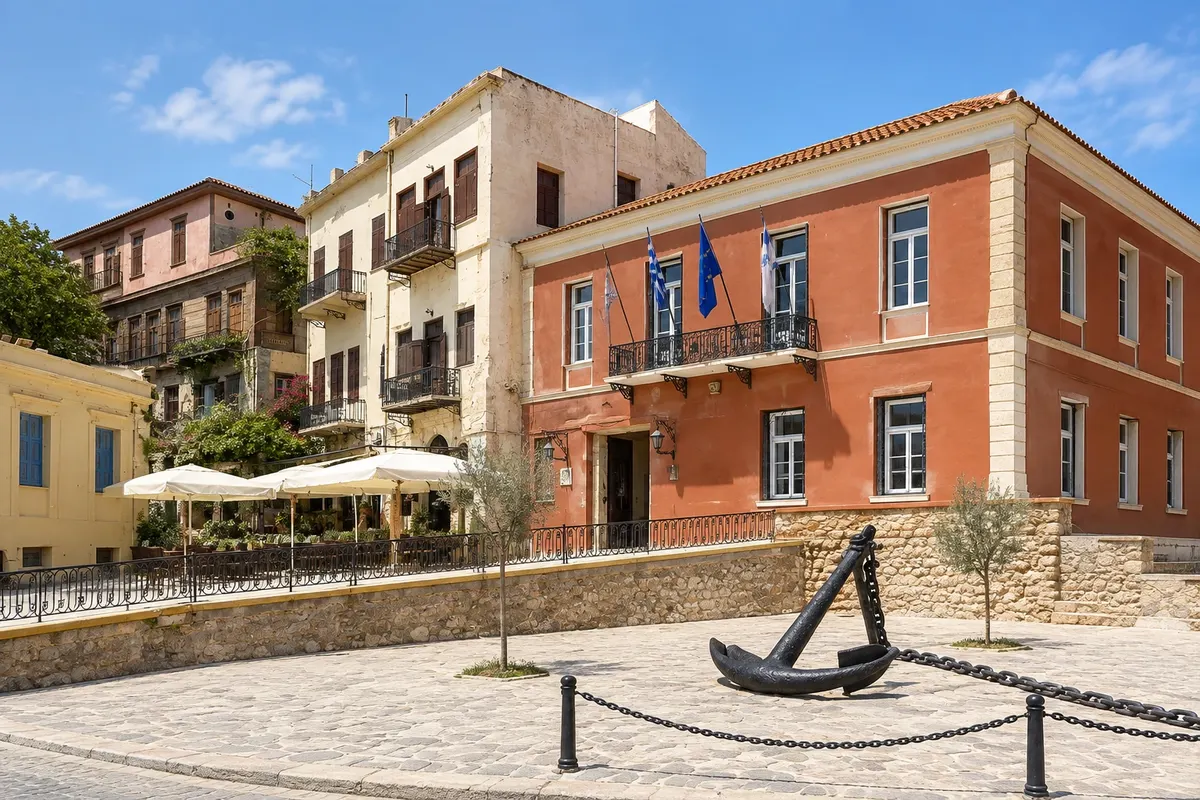
The old town behind the port: Topanas, with Venetian and Ottoman houses, the old Jewish quarter with the synagogue Etz Hayyim, Splantzia and the hill of Kastelli, where Chania began.

See 24 more places in Creta
Heraclião · Creta · Museum

Museu Arqueológico de Heraclião (Archaiologiko Mouseio Irakleiou)

The main museum of the Minoan civilization, housing the frescoes from Cnossos, the Phaistos Disc, the snake-goddess figurines and the rhyton shaped like a bull's head.

Porto veneziano de Rethymno
Rethymno · Creta · Harbour

Porto veneziano de Rethymno

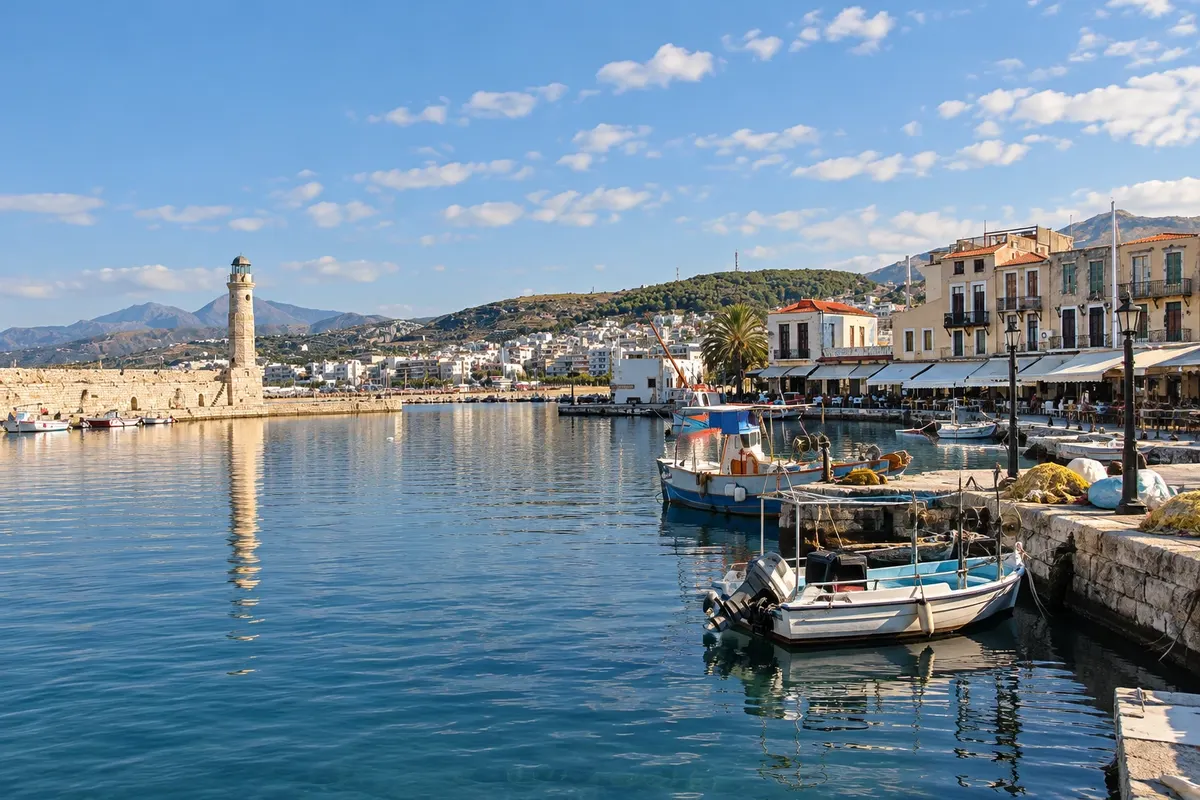
The small Venetian port of Rethymno, in a crescent shape, with tavernas on the waterfront and the stone lighthouse from the Egyptian period at the end of the breakwater; from there the city's long beach begins.

Cidade velha de Rethymno
Rethymno · Creta · Neighborhood

Cidade velha de Rethymno

Rethymno's Venetian and Ottoman old town: the Rimondi fountain (1626), the Loggia, the Neratze mosque with the city's tallest minaret, Porta Guora and lanes with stone portals and wooden balconies.

Fortaleza de Koules
Heraclião · Creta · Fortress

Fortaleza de Koules

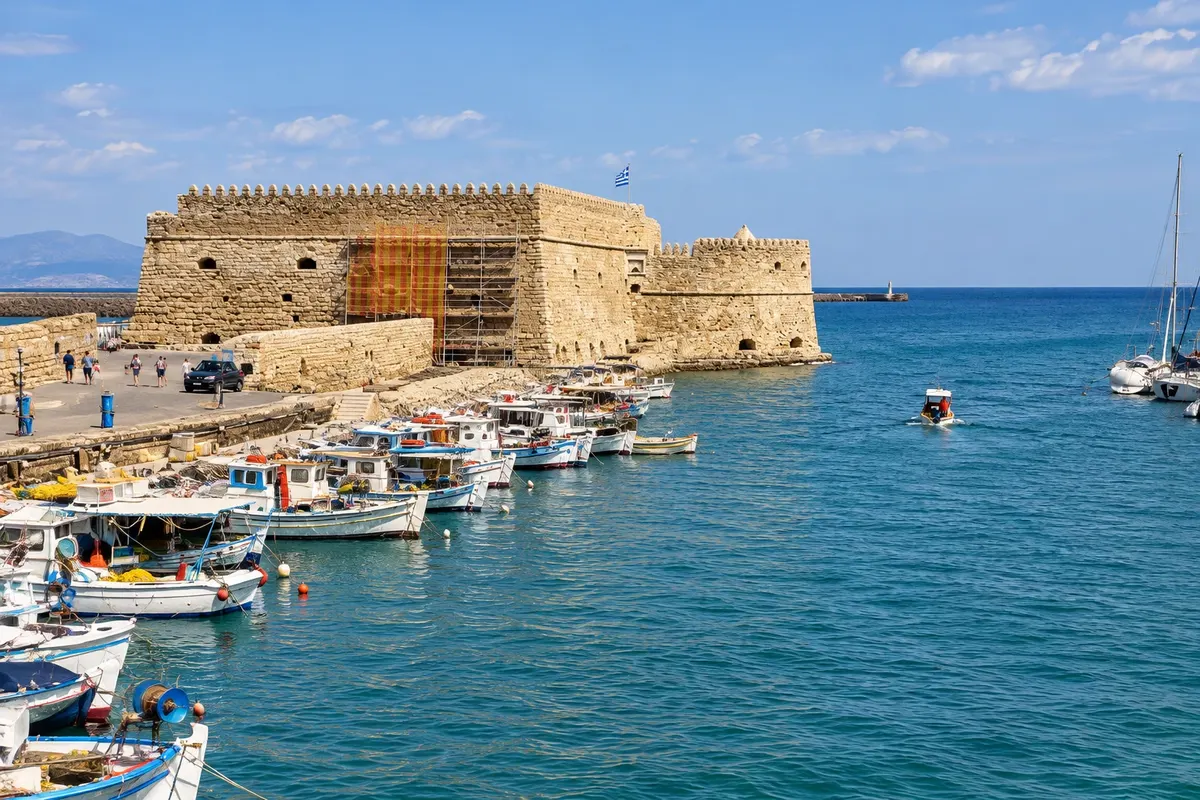
The Venetian fortress guarding the entrance to Heraclião’s old harbour, built between 1523 and 1540, with vaulted rooms and a terrace overlooking the city and the sea.

Museu Arqueológico de Chania
Chania · Creta · Museum

Museu Arqueológico de Chania

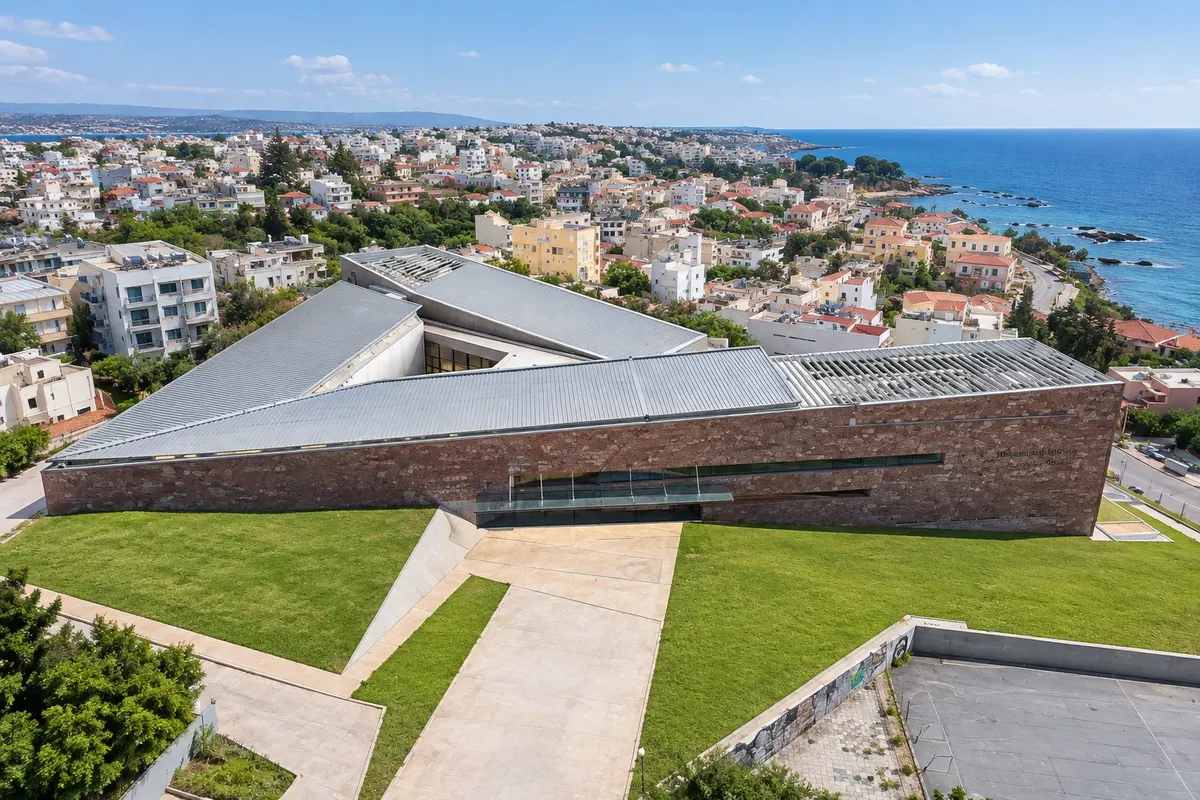
The archaeological museum of western Crete, in a new building in the Halepa district, with finds from Kydonia, Minoan Chania, Aptera and other ancient towns in the region.

Muralhas venezianas e bastião Martinengo
Heraclião · Creta · Monument

Muralhas venezianas e bastião Martinengo

The 16th-century Venetian walls that encircle central Heraclião, over 4 km long with seven bastions. The tomb of the writer Nikos Kazantzakis is on the Martinengo bastion.

Museu Arqueológico de Rethymno
Rethymno · Creta · Museum

Museu Arqueológico de Rethymno

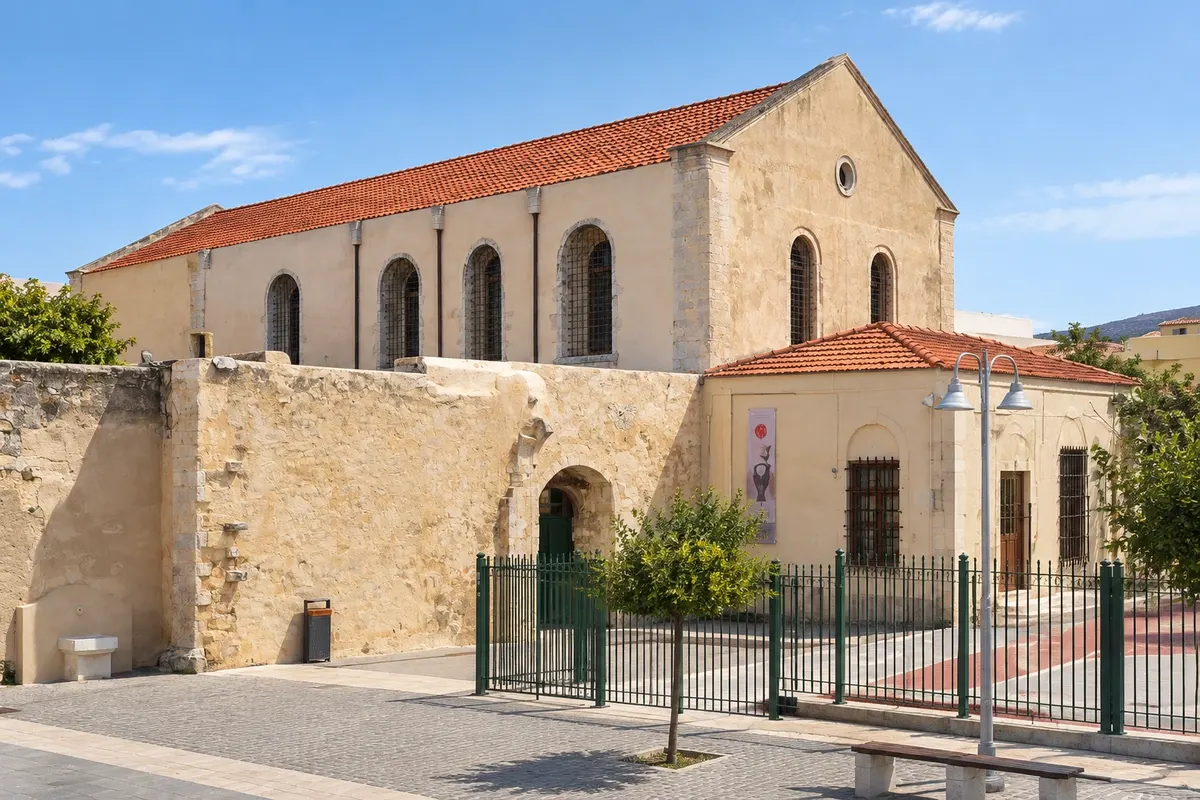
The archaeological museum of the Rethymno region, housed in the former Venetian church of São Francisco, with Minoan finds from the Melidoni cave and the Armeni necropolis, a Roman Aphrodite and mosaics from Lappa.

Museu Marítimo de Creta
Chania · Creta · Museum

Museu Marítimo de Creta

The maritime museum in the Venetian fortress Firkas, at the western entrance of the port, with ship models, navigation instruments and the story of the Battle of Crete; on the other side of the port, the replica of a Minoan ship.

Mosteiro de Agia Triada Tzagarolon
Chania · Creta · Monastery

Mosteiro de Agia Triada Tzagarolon

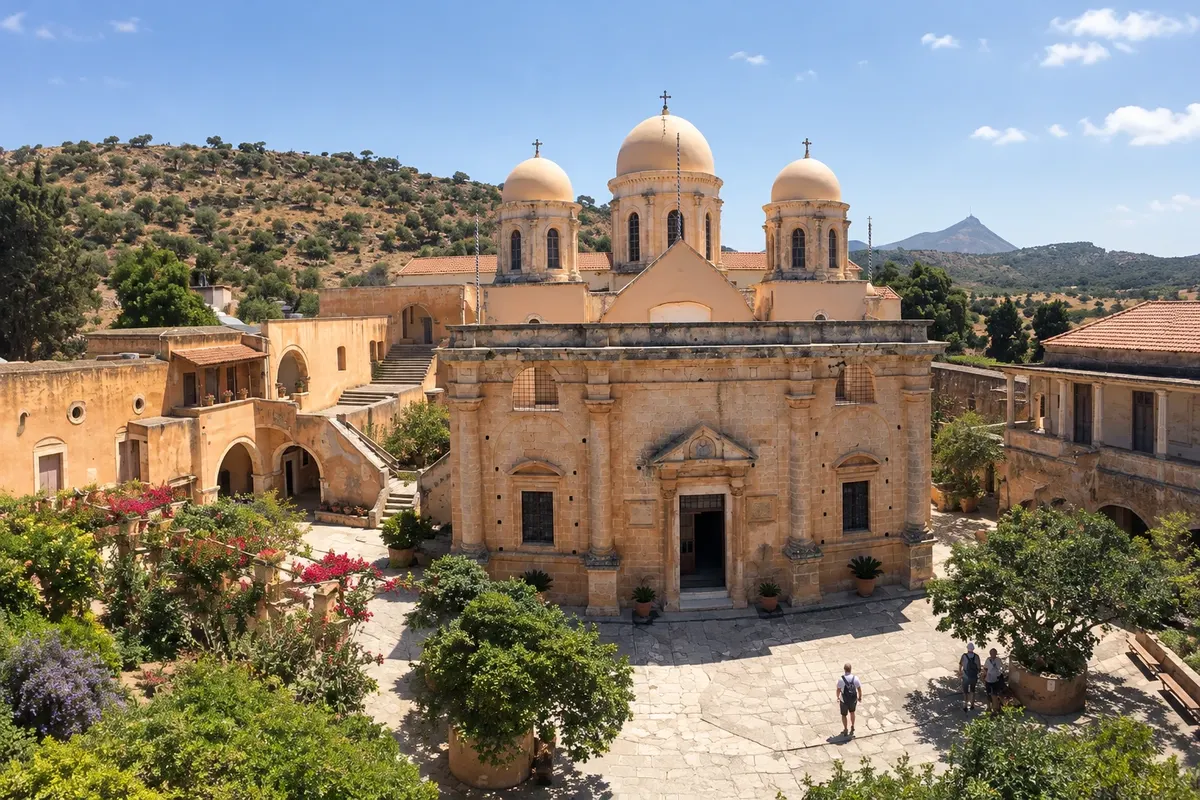
17th-century monastery on the Akrotiri peninsula, 15 km from Chania, with a three‑domed church, a columned façade, an icon museum and on-site production of olive oil and wine.

Mosteiro de Arkadi (Moni Arkadiou)
Rethymno · Creta · Monastery

Mosteiro de Arkadi (Moni Arkadiou)

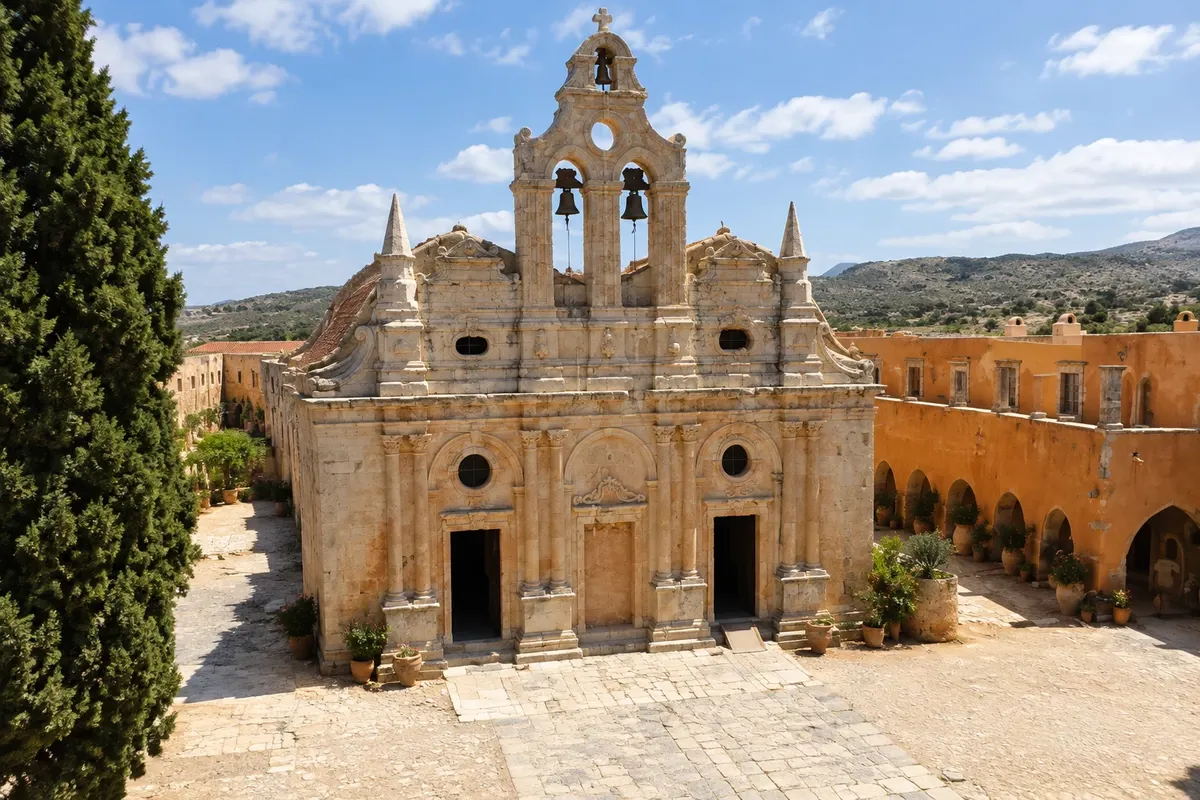
The monastery of Arkadi, 23 km from Rethymno, with a Renaissance façade dating from 1587 and the memory of the 1866 explosion, when hundreds of Cretans died resisting the Ottoman siege; a symbol of Crete's freedom.

Praça dos Leões e Fonte Morosini (Plateia Liontarion)
Heraclião · Creta · Square

Praça dos Leões e Fonte Morosini (Plateia Liontarion)

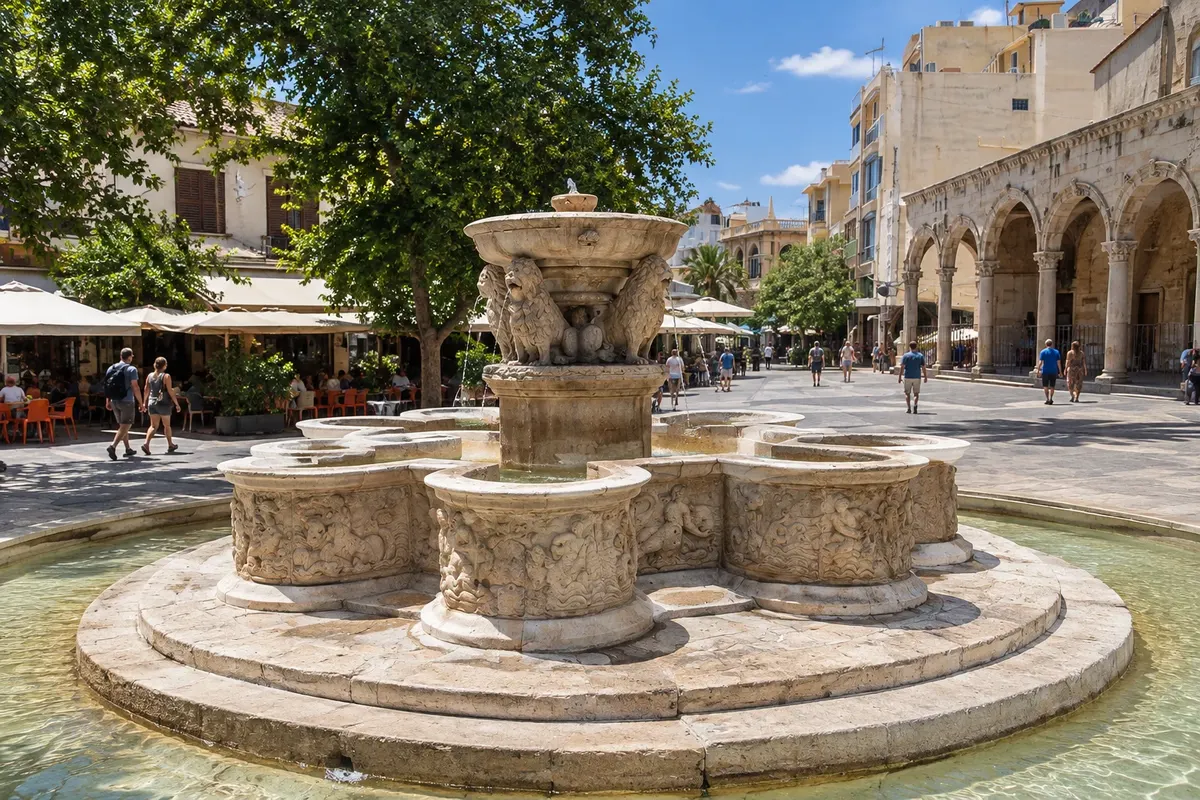
The centre of Heraclião: the praça da fonte veneziana dos quatro leões, from 1628, with the Loggia beside it and rua 1866, the market street, which descends to praça Kornarou.

Catedral de Agios Minas
Heraclião · Creta · Church

Catedral de Agios Minas

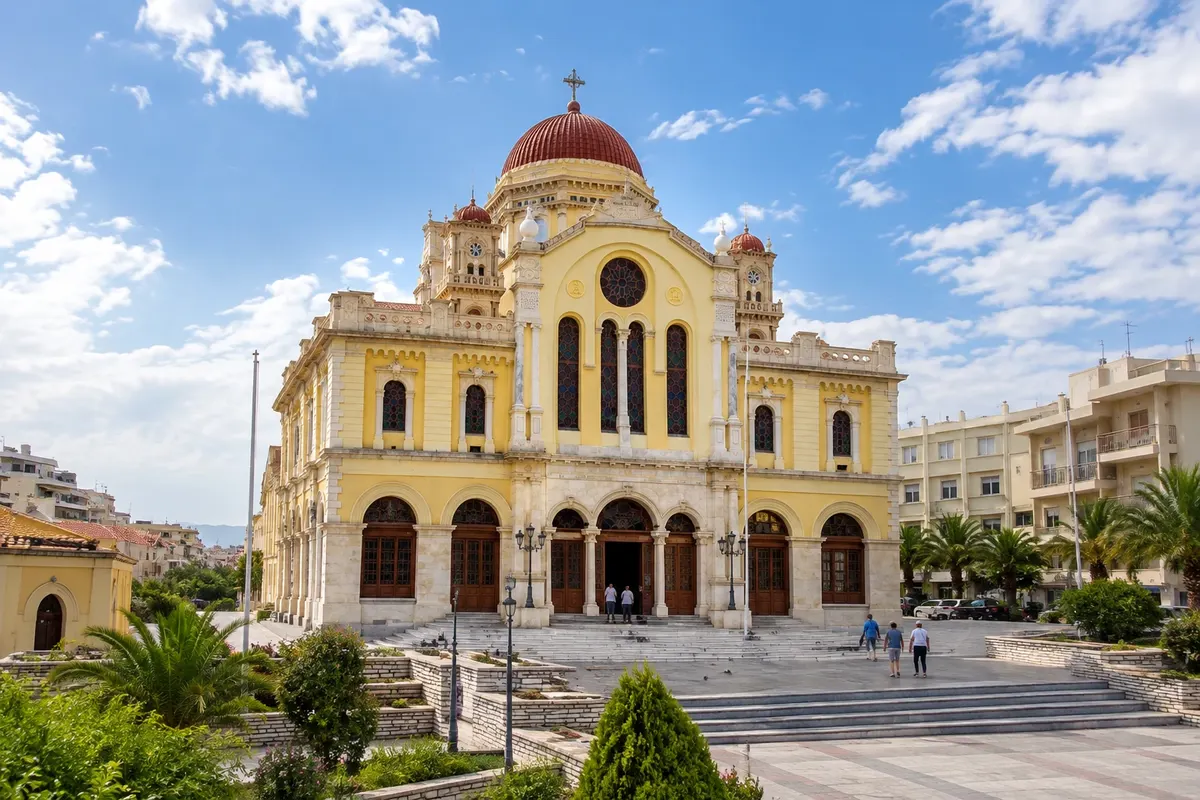
The cathedral of Heraclião, dedicated to São Menas, the city’s patron, built between 1862 and 1895 and one of the largest in Greece, next to the older church of Agios Minas from 1735.

Mosteiro de Gouverneto
Chania · Creta · Monastery

Mosteiro de Gouverneto

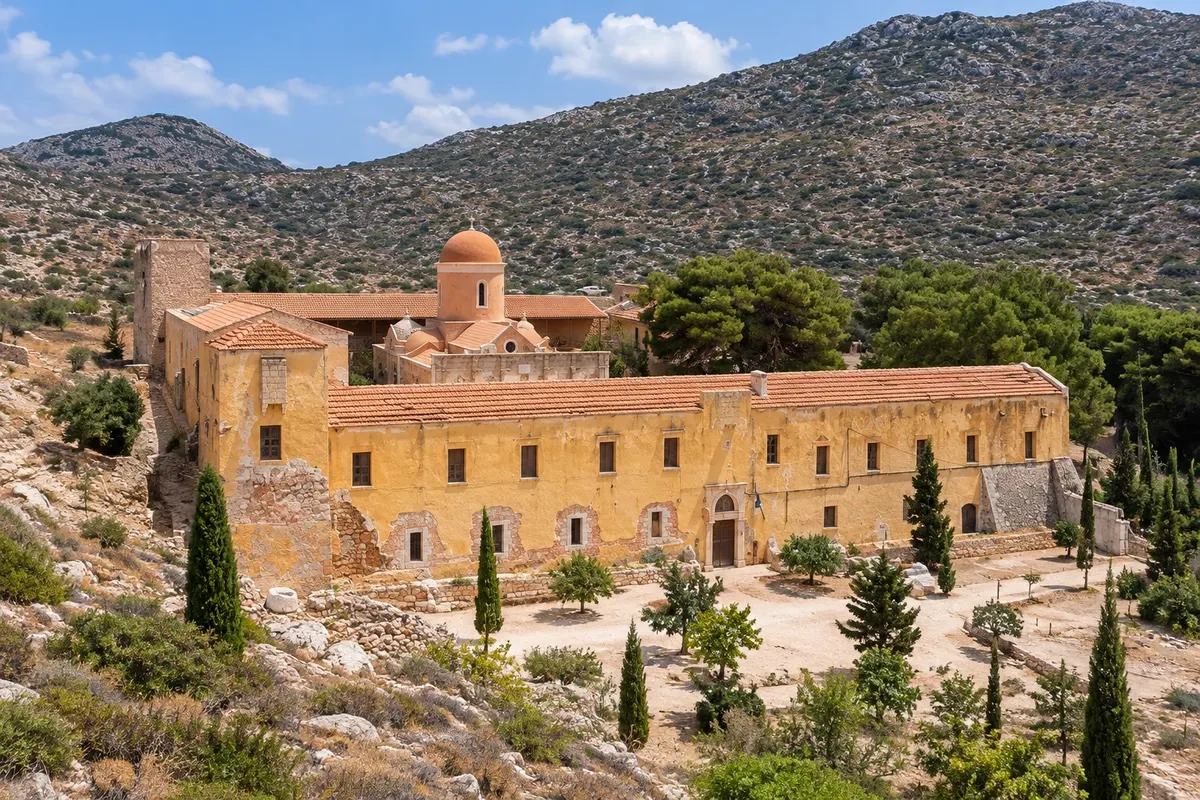
16th-century fortified monastery in the northern Akrotiri peninsula, the starting point for the trail to the Arkoudiotissa cave and the ruins of the seaside monastery of Katholiko.

Mosteiro de Preveli (Moni Preveli)
Rethymno · Creta · Monastery

Mosteiro de Preveli (Moni Preveli)

The Preveli monastery, high above the south coast, 35 km from Rethymno, with a 19th‑century church, an icon museum, views over the Libyan Sea and the memory of the rescue of Allied soldiers in 1941.

Heraclião · Creta · Museum

Museu Histórico de Creta

Museum that tells the history of Crete from the Byzantine era to the 20th century, with the only paintings by El Greco on the island, the model of Venetian Cândia and the room of Nikos Kazantzakis.

Praia de Elafonisi
Chania · Creta · Beach

Praia de Elafonisi

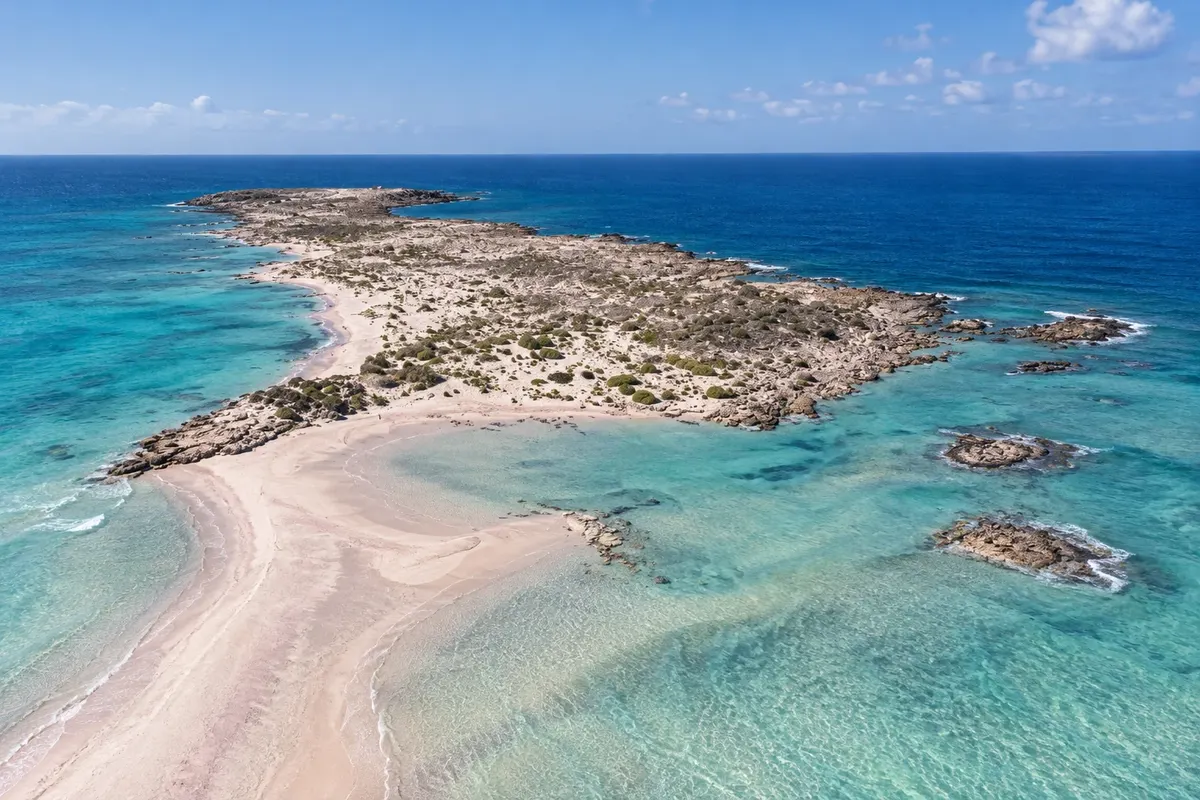
A pale‑sand beach with pinkish tones and a shallow lagoon that separates the coast from the islet of Elafonisi, at the extreme southwest of Crete, about 75 km from Chania, in a protected natural area.

Praia de Preveli
Rethymno · Creta · Beach

Praia de Preveli

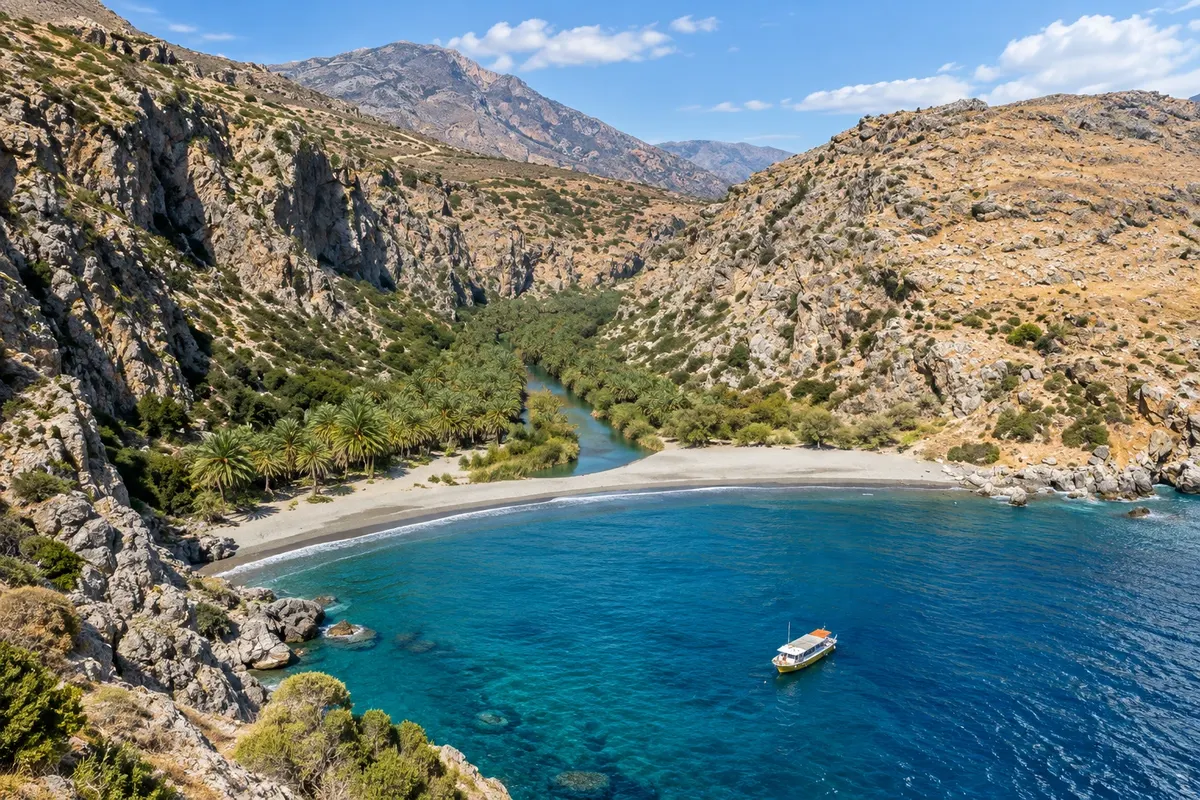
Preveli beach, on Crete's south coast: the Megalopotamos river descends through the Kourtaliotiko gorge amid a grove of Cretan palms and forms a freshwater lagoon before reaching the sea.

Garganta de Samaria (Farangi Samarias)
Chania · Creta · Trail

Garganta de Samaria (Farangi Samarias)

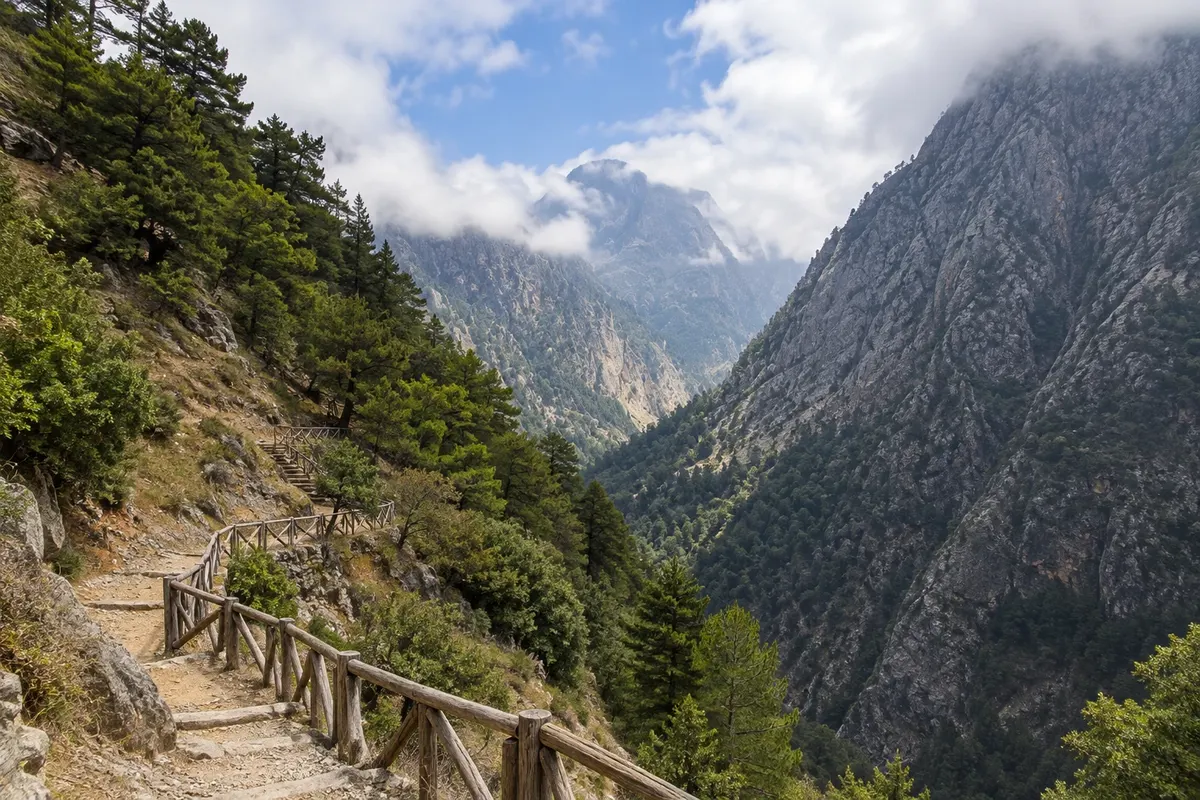
The one-day hike through the Samaria Gorge, a national park since 1962: 16 km downhill from the Omalos plateau to the Libyan Sea at Agia Roumeli, passing the Portões which are 4 meters wide.

Igreja de Agios Titos e Loggia veneziana
Heraclião · Creta · Church

Igreja de Agios Titos e Loggia veneziana

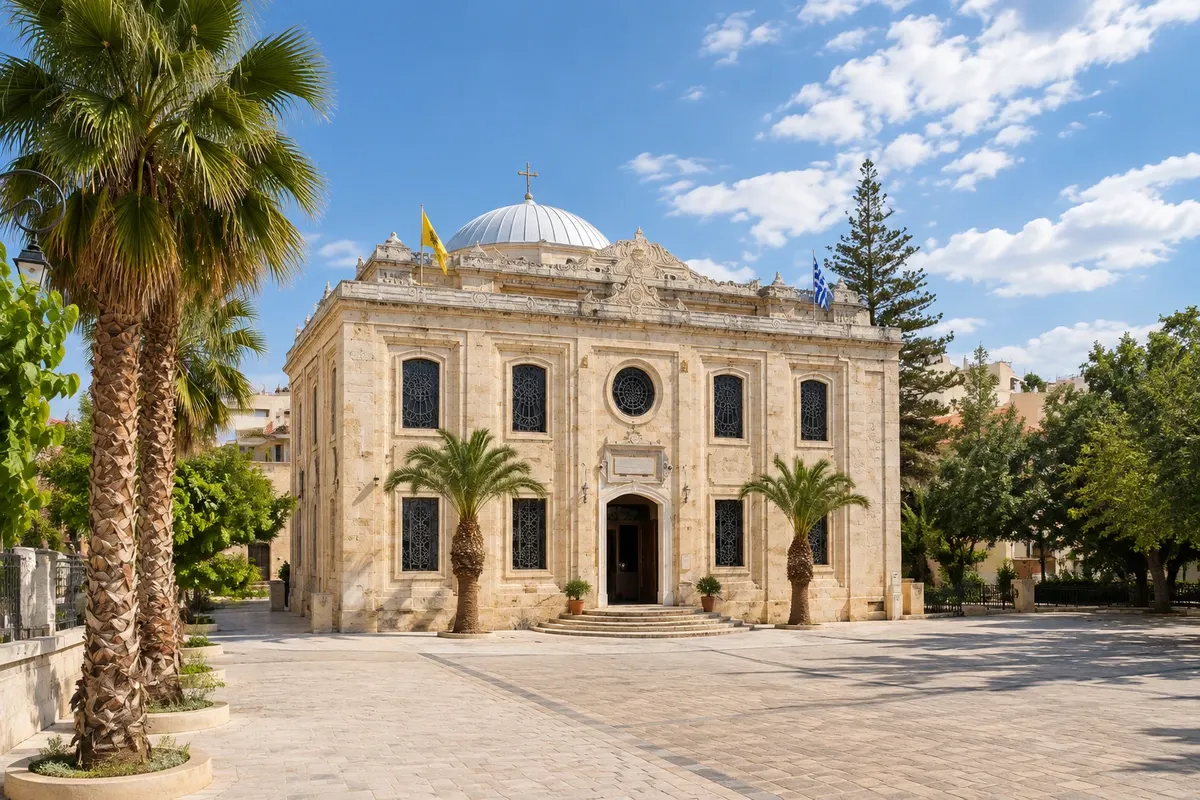
The church of São Tito, the first bishop of Crete, rebuilt in 1869 as a mosque and returned to Orthodox worship in 1925, where the saint’s skull is kept; next to it, the Loggia veneziana.

Lagoa de Balos
Chania · Creta · Beach

Lagoa de Balos

The Balos lagoon, at the far northwest of Crete: shallow water in shades of blue and green between the Gramvousa peninsula and Cape Tigani, seen from the top of the access trail, in a protected natural area.

Heraclião · Creta · Museum

Museu de História Natural de Creta

University of Crete museum about the nature of the eastern Mediterranean, in a former power company building on the seafront, with dioramas, a life‑size prehistoric elephant and an earthquake simulator.

Heraclião · Creta · Aquarium

Aquário de Creta (Cretaquarium)

Public aquarium in Gournes, about 15 km from Heracliion, with dozens of tanks dedicated to Mediterranean species, from sharks and rays to seahorses and jellyfish.

Praia de Falasarna
Chania · Creta · Beach

Praia de Falasarna

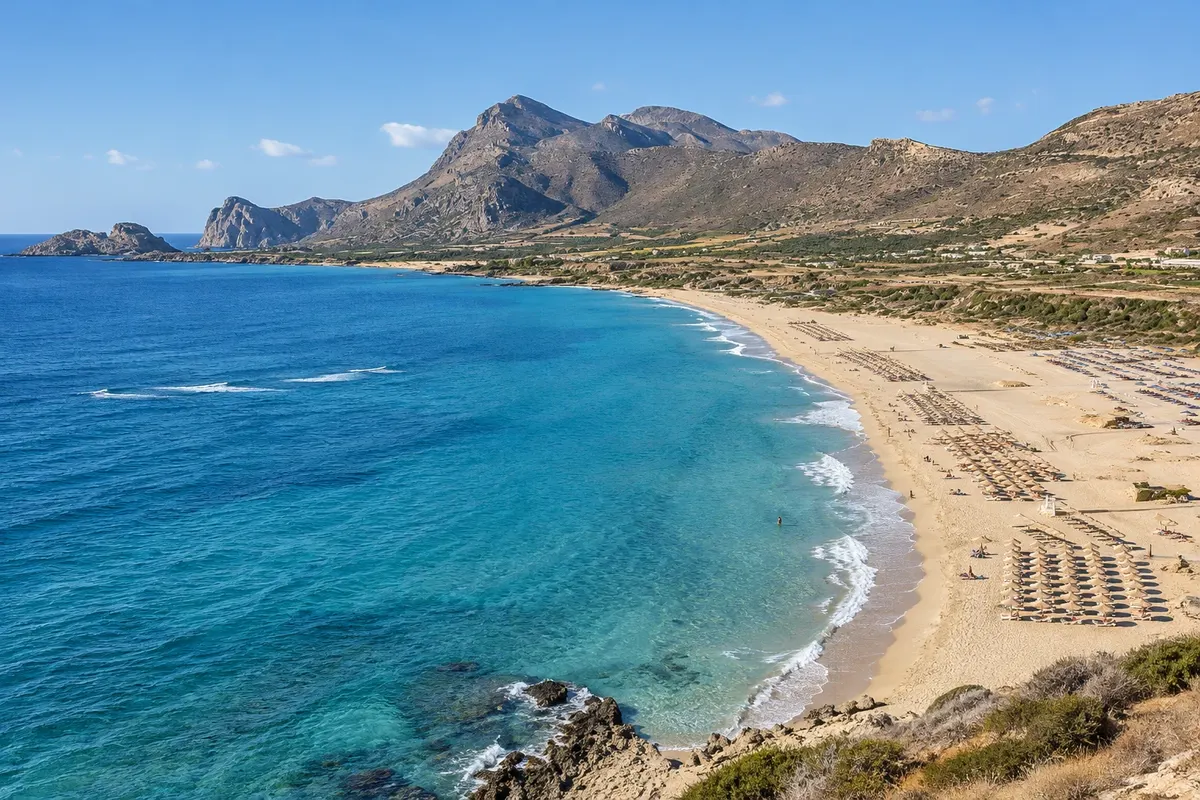
Wide pale-sand beach on the west coast of Crete, 60 km from Chania, with open sea and, on the hill to the north, the ruins of the ancient city of Falasarna, including a harbor that uplifted terrain has left away from the sea.

Praia de Stavros
Chania · Creta · Beach

Praia de Stavros

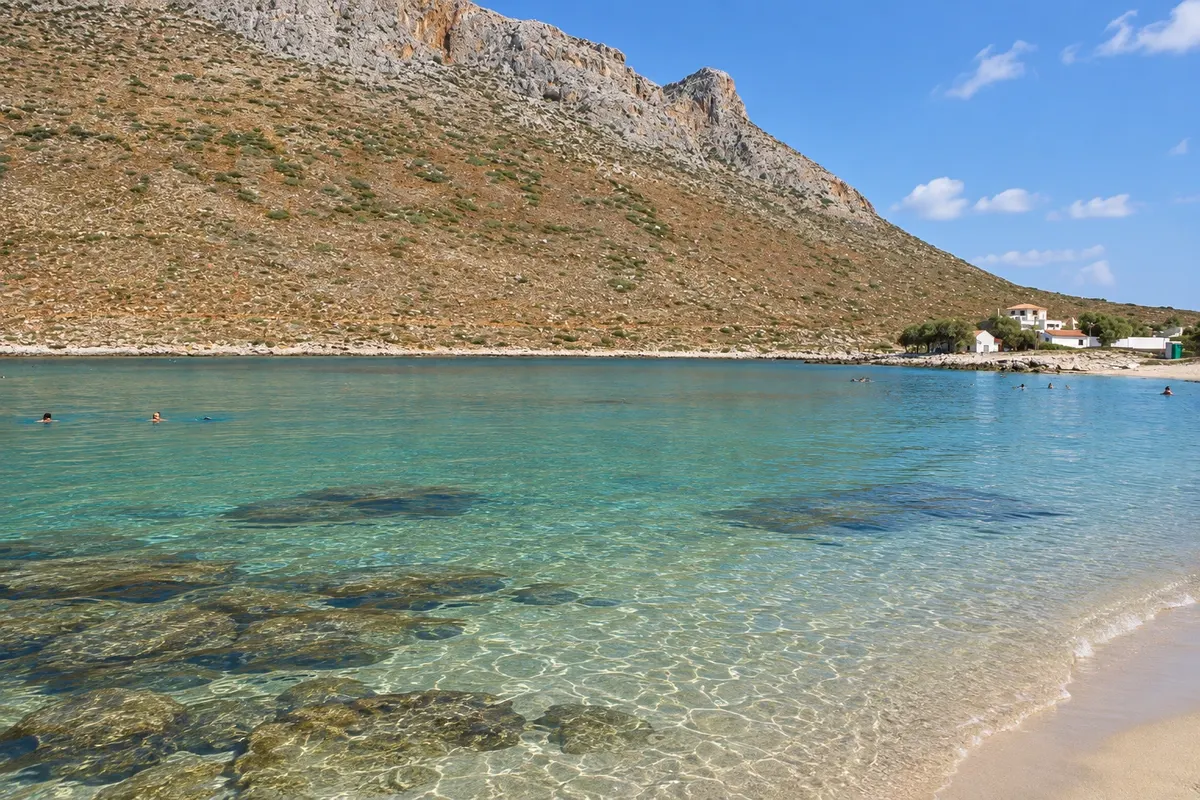
A shallow, calm-water cove on the northern tip of the Akrotiri peninsula, 15 km from Chania, enclosed by a rocky hill: it was here that the final dance in Zorba the Greek was filmed.

Before you go

Practical information

A little planning leaves more time to enjoy the journey.

When to go

From May to October the weather is dry and the sea is good for swimming; July and August are the hottest and busiest months. May, June, September and October usually have milder heat and fewer people. The Samaria Gorge typically opens from May to October; check the season. In winter, from November to March, many beaches and boat services stop, but the towns and museums remain open.

The seasons shown are the most usual ones; nature doesn't always follow the calendar.

How many days to stay

Five days is a good minimum: two in Heraclião, with Cnossos and the museum, one in Rethymno and two in Chania, with a beach on the west. With a week you can include the Samaria Gorge, Elafonisi and Balos without rushing. If you only have three days, choose a single base, Heraclião or Chania, and do a round-trip outing by car.

Which city to stay in

Heraclião is the base for Cnossos and the museum, and has the busiest airport; the old town, around the Lions Square and rua 25 de Agosto, makes everything walkable. Chania has the best-preserved historic centre, around the Venetian harbour: Topanas, Splantzia and the lanes behind the lighthouse are the most sought-after areas to stay. Rethymno sits midway, with the old town at the foot of the Fortezza and a long stretch of beach to the east where the resort hotels are. For beaches and peace, the southern coast (Plakias, Paleochora) and the west (Kissamos, Elafonisi) have small villages but require a car.

Respect the place

Take your trash with you, follow the signs and support local businesses. In natural areas, follow the visiting guidelines.

Get your questions answered

Frequently asked questions about Creta

How many days to stay in Creta?

Five days cover the three northern towns and Cnossos; a week allows for the Samaria Gorge and the western beaches. With three days, stay in one base and take a day trip by car.

Do you need to rent a car in Creta?

For the towns and Cnossos, no: KTEL buses connect Heraclião, Rethymno and Chania, and there is an urban bus to Cnossos. For beaches like Elafonisi, Balos and Preveli, for the monasteries and for the Samaria Gorge, a car or an organized tour makes a difference. Mountain roads are narrow and winding.

Can you do Creta as a round-trip day trip from Athens?

It’s not worth it. Even by plane, going and returning the same day leaves only a few hours on the island. Book at least three nights.

Which is the best base: Heraclião or Chania?

Heraclião is more practical for Cnossos, the museum and the main airport. Chania is nicer to stay in and is closer to the western beaches and the Samaria Gorge. Those with five days or more often split their stay between the two.

Is Creta hot in summer?

Yes. In July and August daytime highs often exceed 30°C and the sun is strong between 11:00 and 16:00. Archaeological sites have little shade: bring water, a hat and sunscreen, and visit early or late in the afternoon.

Explore other destinations Search by state and city
Back