

 Brazil
 Argentina
 Chile
Chile Colombia
 Peru
Peru Uruguay
 Germany
 Belgium
 Spain
Spain France
 the Netherlands
 Ireland
 Italy
Italy Luxembourg
 Portugal
 the United Kingdom
 Switzerland
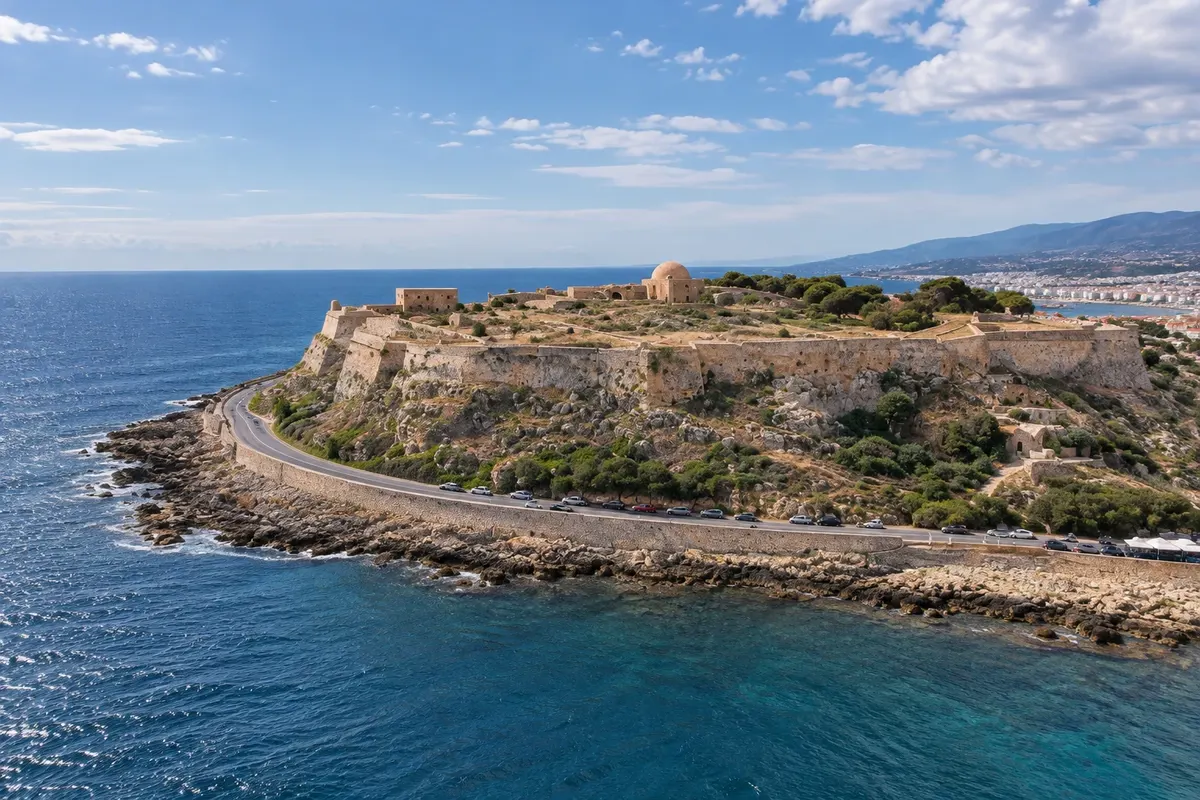
Fortress
Fortezza de Rethymno
The Venetian fortress atop Paleokastro hill, built between 1573 and 1580, with 1.3 km of ramparts, the mosque of Sultan Ibrahim in the middle and views over the old town and the sea.
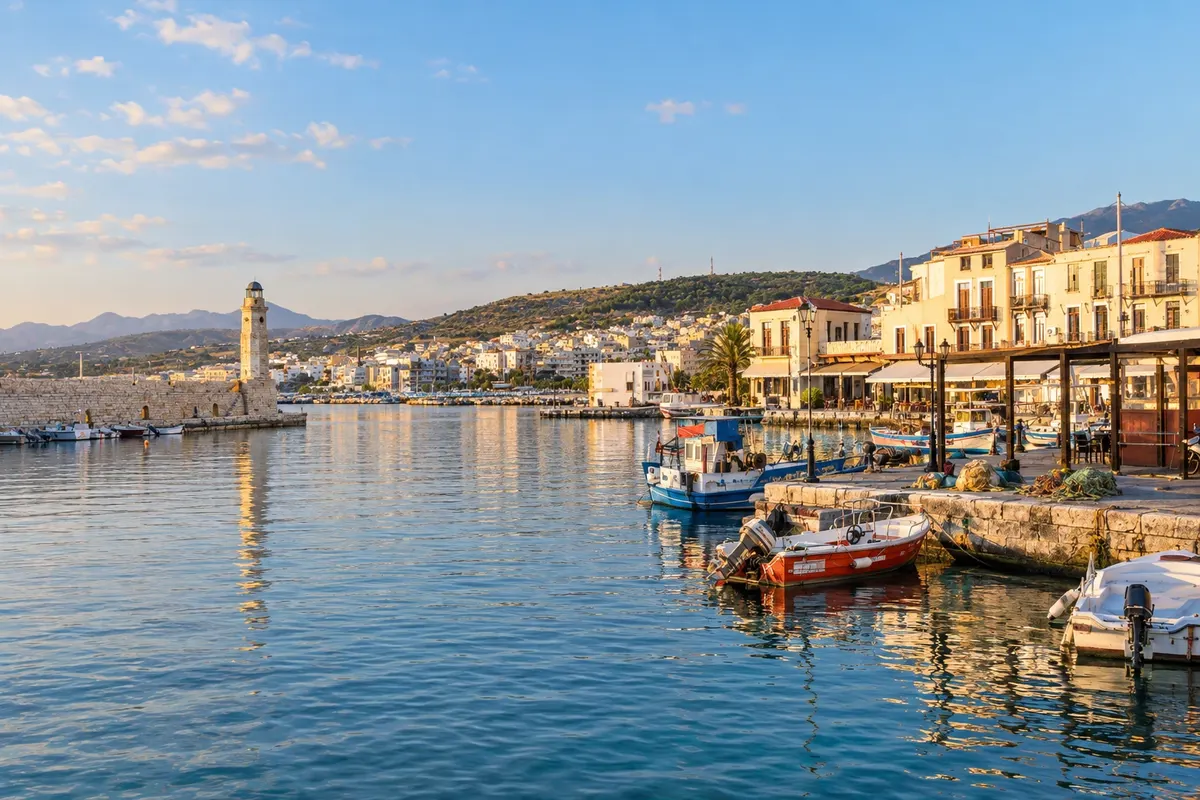
Creta · Greece
In the destination Creta.
In the photo: Venetian port of Rethymno
Illustrative images. The pictures in this guide are illustrations based on the real place, not photographs, and may differ from it.
The city
Rethymno lies halfway between Heraclião and Chania, on the north coast of Crete. The old town, at the foot of the Fortezza veneziana of 1573, is the best preserved on the island: stone lanes, fountains and Venetian portals, Ottoman minarets and a small harbour with a lighthouse. East of the centre a several-kilometre sandy beach begins, with resort hotels. In the surroundings are the monastery of Arkadi, a symbol of Cretan resistance, and, to the south, the palm grove and the beach of Preveli.
There's no accommodation in the guide yet in Rethymno.
There are no restaurants in the guide yet in Rethymno.
Know a good one? Recommend it to ushow to get there · how many days · itinerary · questions
The local experience
The Venetian fortress atop Paleokastro hill, built between 1573 and 1580, with 1.3 km of ramparts, the mosque of Sultan Ibrahim in the middle and views over the old town and the sea.
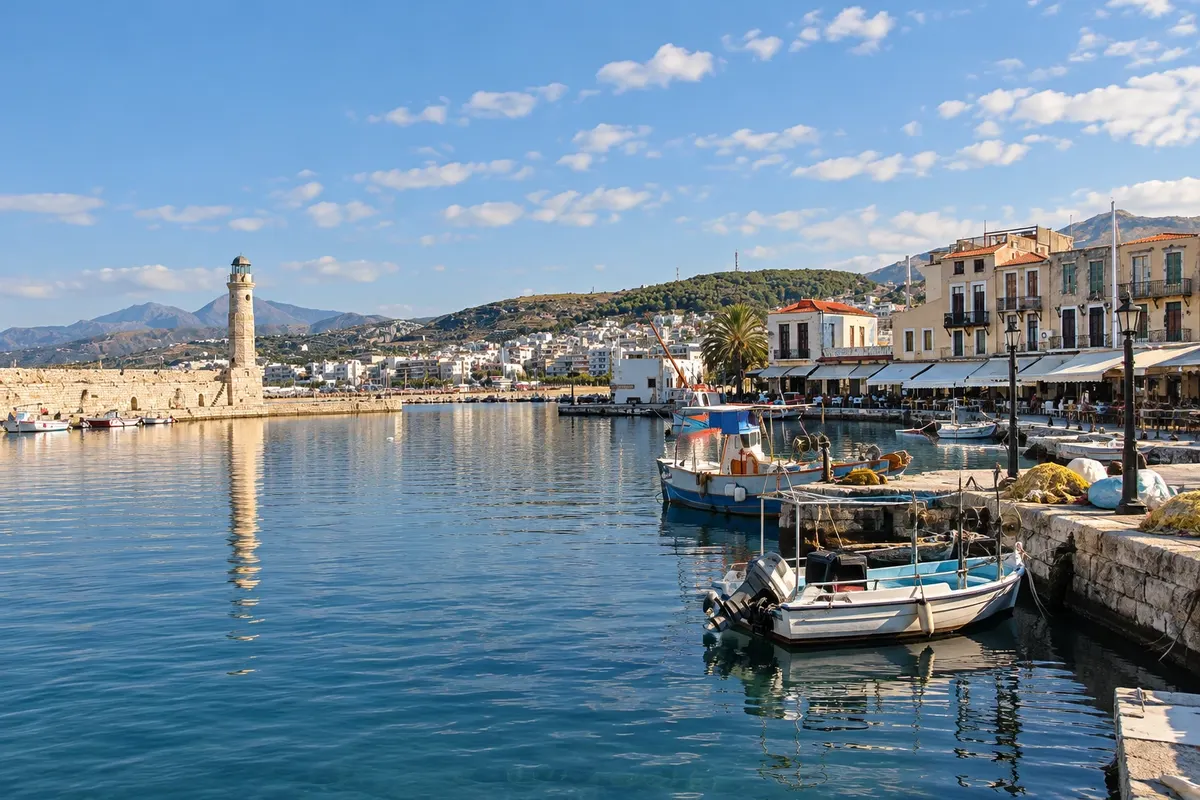
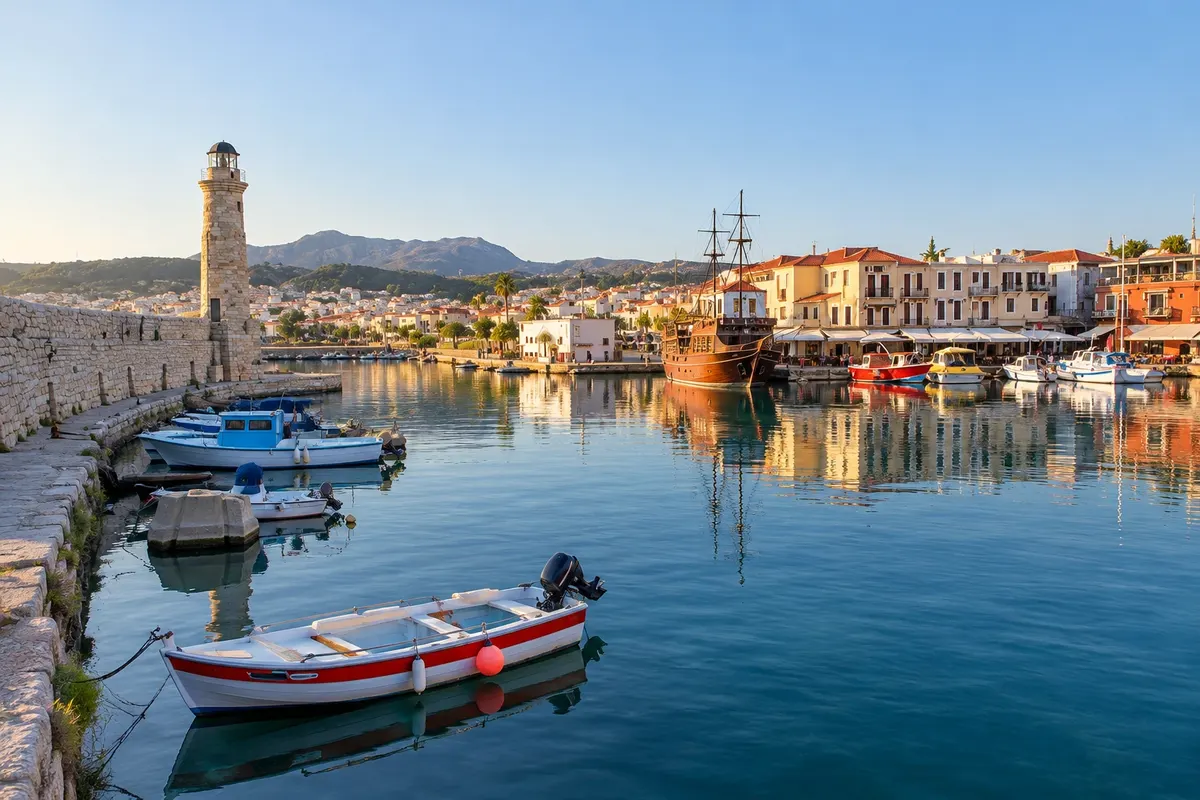
The small Venetian port of Rethymno, in a crescent shape, with tavernas on the waterfront and the stone lighthouse from the Egyptian period at the end of the breakwater; from there the city's long beach begins.
Rethymno's Venetian and Ottoman old town: the Rimondi fountain (1626), the Loggia, the Neratze mosque with the city's tallest minaret, Porta Guora and lanes with stone portals and wooden balconies.
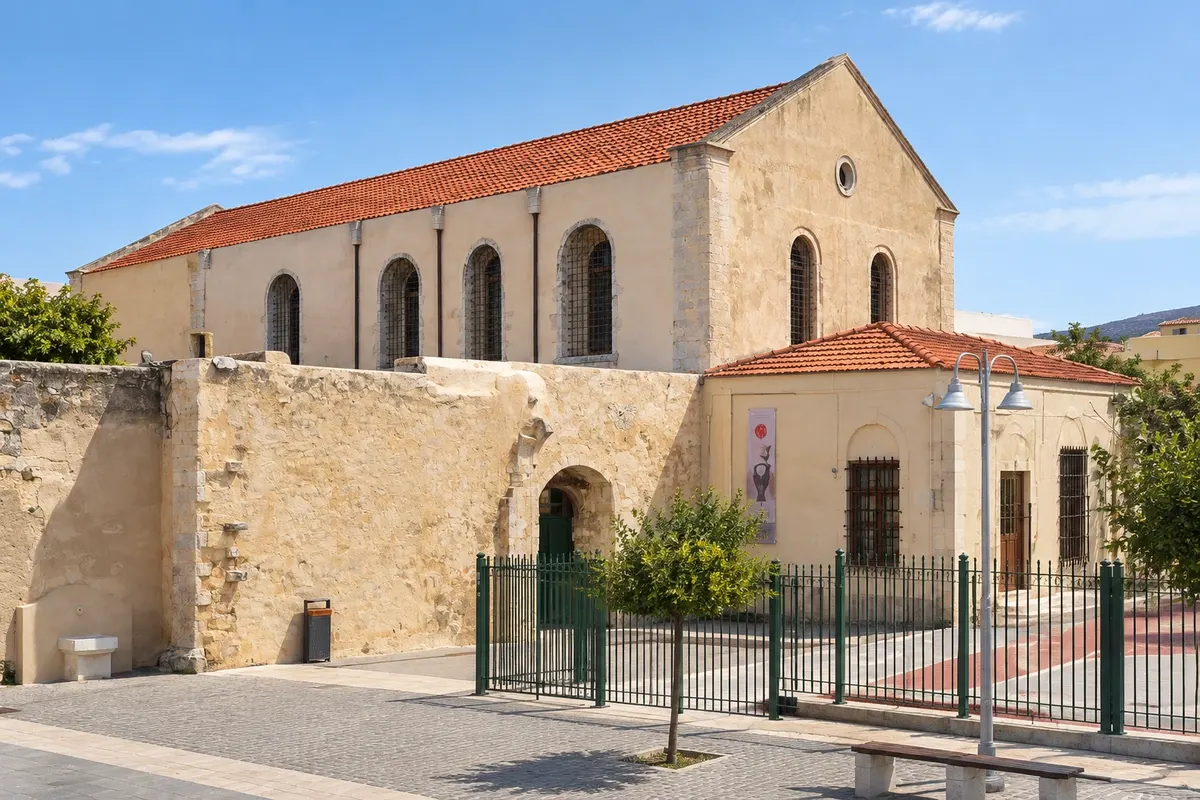
The archaeological museum of the Rethymno region, housed in the former Venetian church of São Francisco, with Minoan finds from the Melidoni cave and the Armeni necropolis, a Roman Aphrodite and mosaics from Lappa.
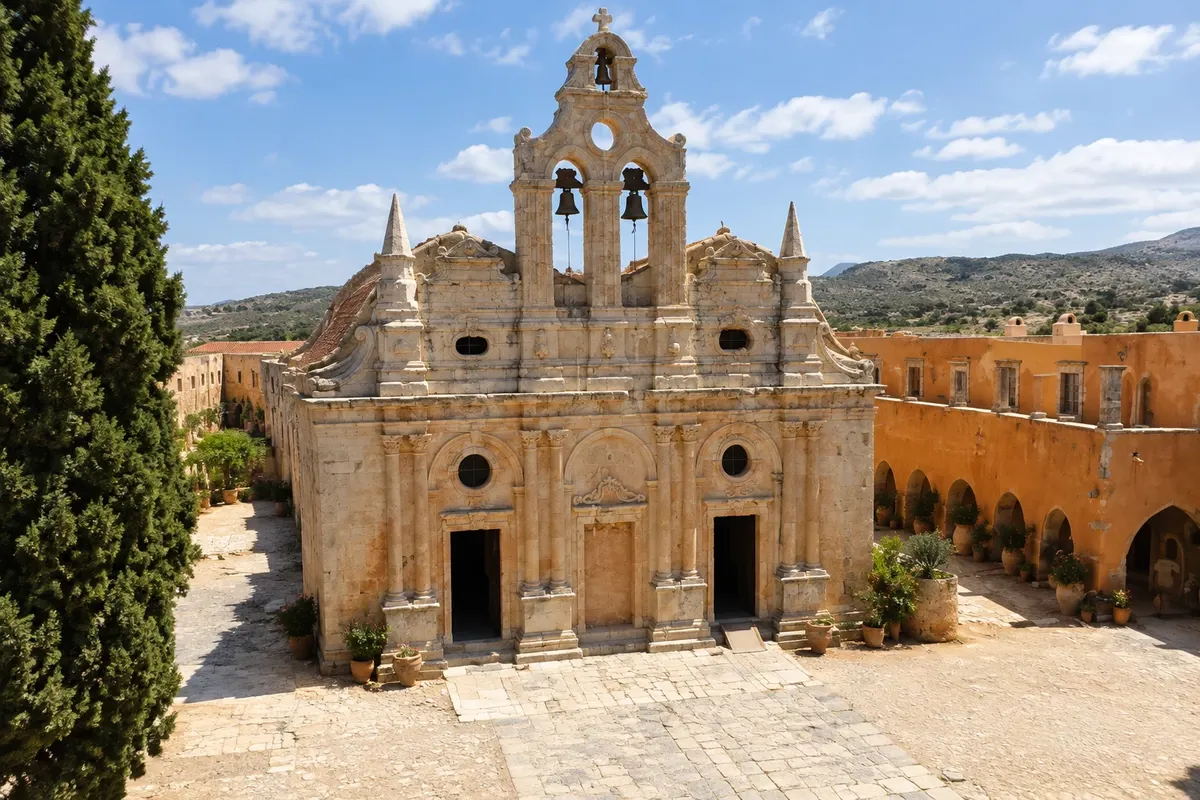
The monastery of Arkadi, 23 km from Rethymno, with a Renaissance façade dating from 1587 and the memory of the 1866 explosion, when hundreds of Cretans died resisting the Ottoman siege; a symbol of Crete's freedom.
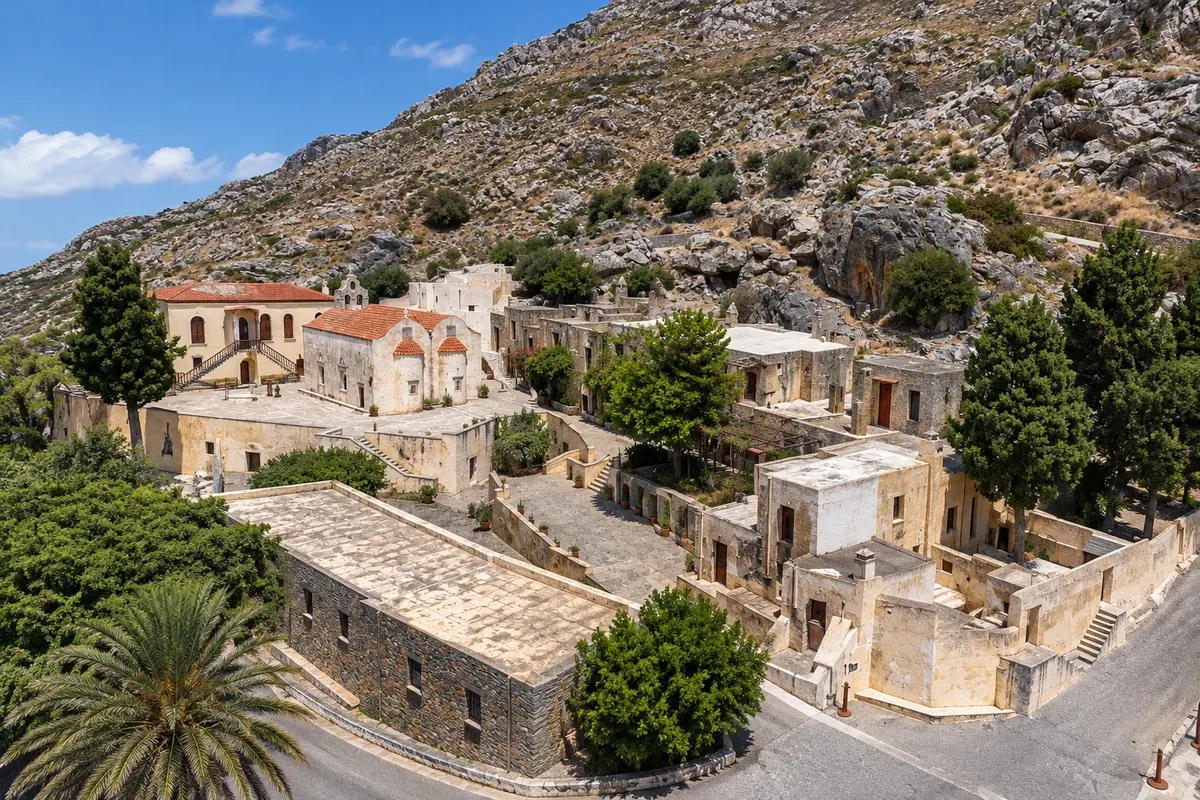
The Preveli monastery, high above the south coast, 35 km from Rethymno, with a 19th‑century church, an icon museum, views over the Libyan Sea and the memory of the rescue of Allied soldiers in 1941.
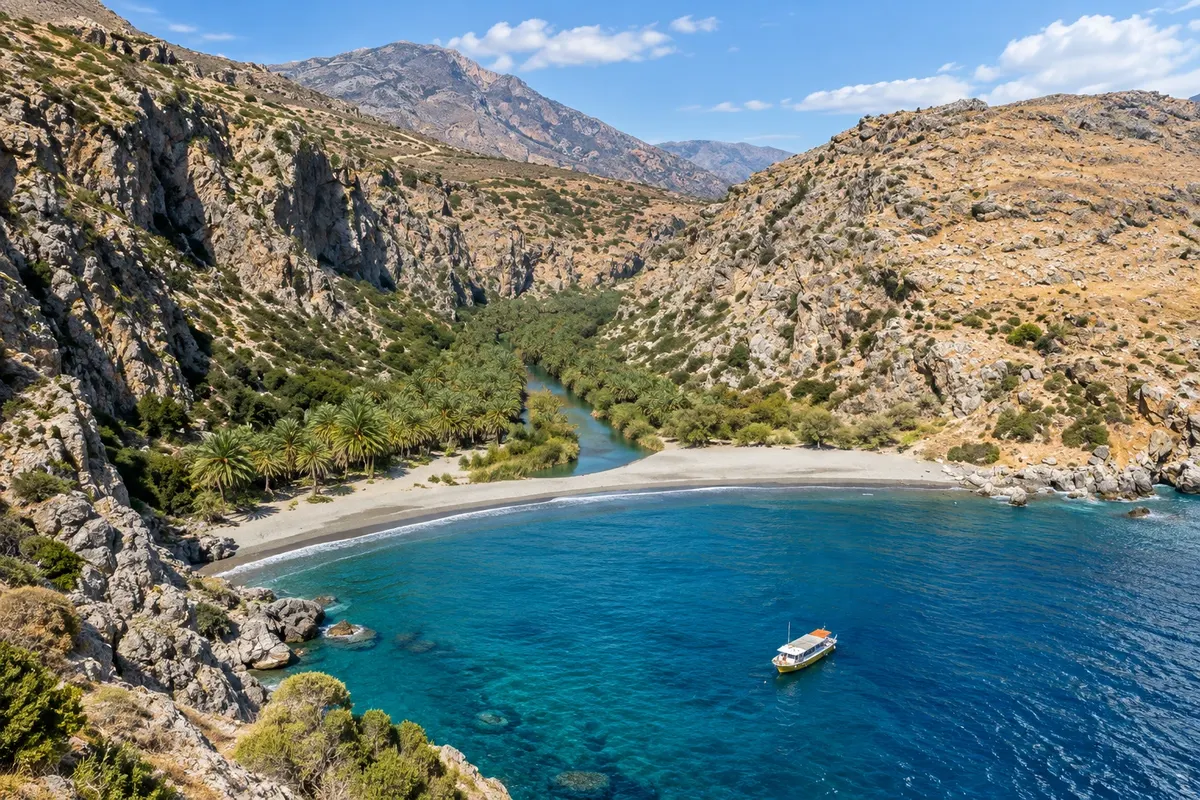
Preveli beach, on Crete's south coast: the Megalopotamos river descends through the Kourtaliotiko gorge amid a grove of Cretan palms and forms a freshwater lagoon before reaching the sea.