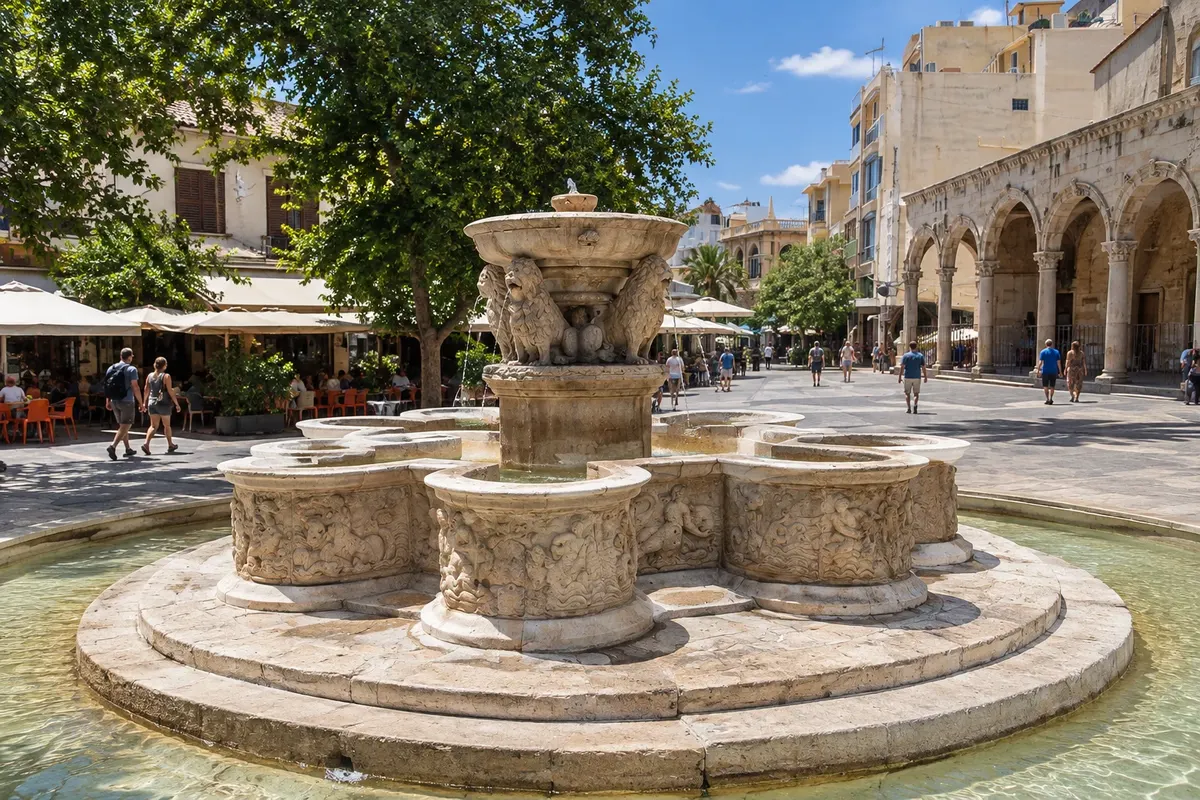
Square
Praça dos Leões e Fonte Morosini (Plateia Liontarion)
The centre of Heraclião: the praça da fonte veneziana dos quatro leões, from 1628, with the Loggia beside it and rua 1866, the market street, which descends to praça Kornarou.
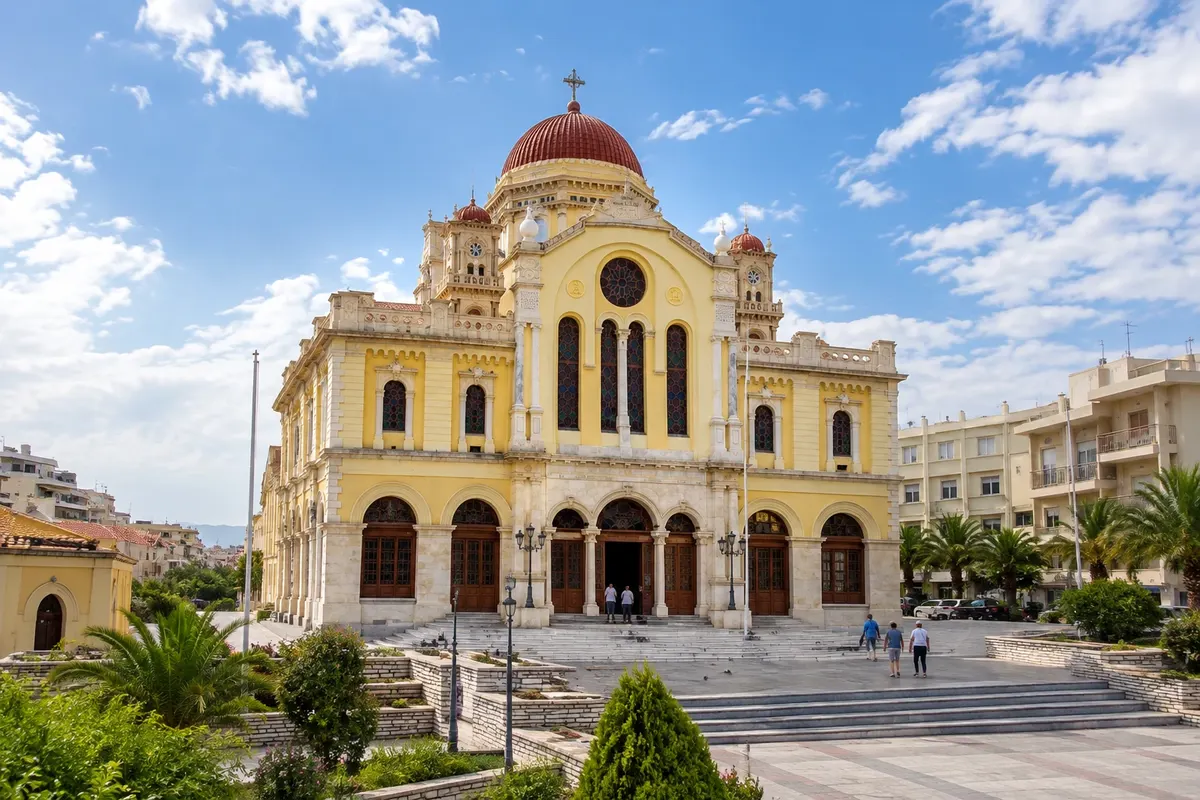
Church
Catedral de Agios Minas
The cathedral of Heraclião, dedicated to São Menas, the city’s patron, built between 1862 and 1895 and one of the largest in Greece, next to the older church of Agios Minas from 1735.
Museum
Museu Histórico de Creta
Museum that tells the history of Crete from the Byzantine era to the 20th century, with the only paintings by El Greco on the island, the model of Venetian Cândia and the room of Nikos Kazantzakis.
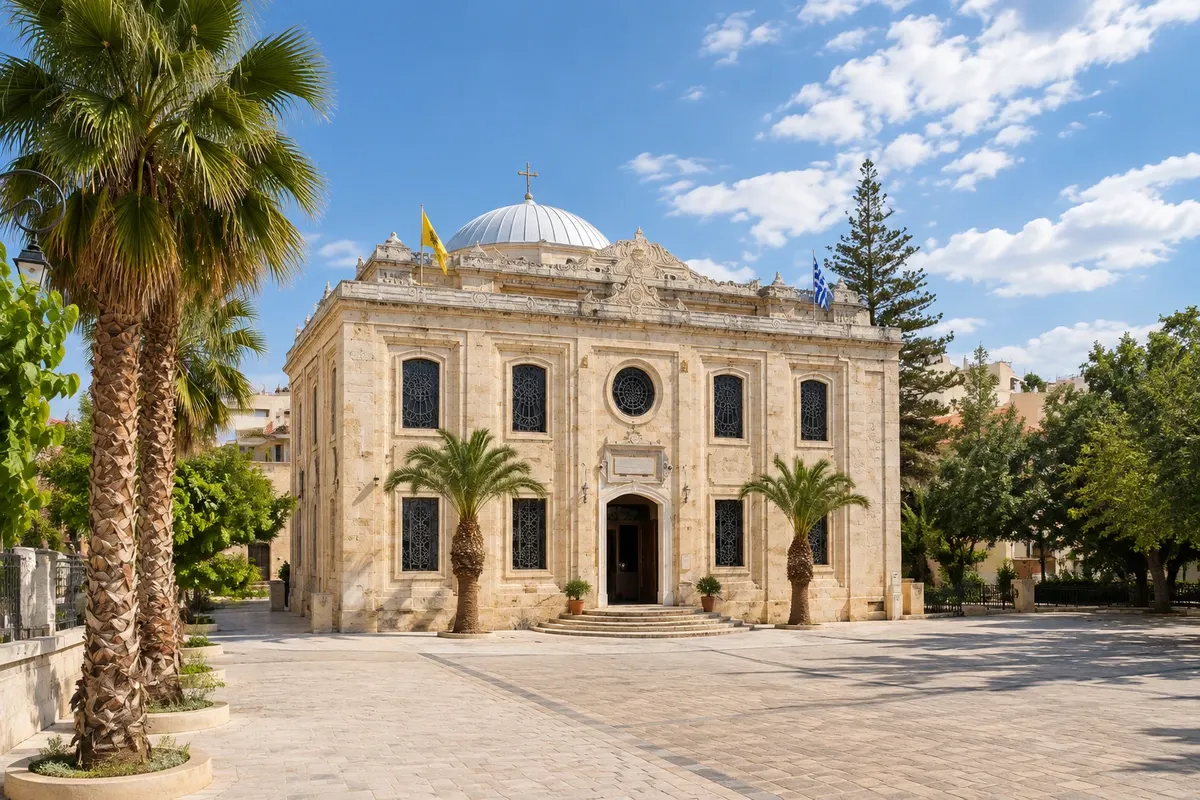
Church
Igreja de Agios Titos e Loggia veneziana
The church of São Tito, the first bishop of Crete, rebuilt in 1869 as a mosque and returned to Orthodox worship in 1925, where the saint’s skull is kept; next to it, the Loggia veneziana.
Museum
Museu de História Natural de Creta
University of Crete museum about the nature of the eastern Mediterranean, in a former power company building on the seafront, with dioramas, a life‑size prehistoric elephant and an earthquake simulator.
Aquarium
Aquário de Creta (Cretaquarium)
Public aquarium in Gournes, about 15 km from Heracliion, with dozens of tanks dedicated to Mediterranean species, from sharks and rays to seahorses and jellyfish.


 Brazil
 Argentina
 Chile
Chile Colombia
 Peru
Peru Uruguay
 Germany
 Belgium
 Spain
Spain France
 the Netherlands
 Ireland
 Italy
Italy Luxembourg
 Portugal
 the United Kingdom
 Switzerland