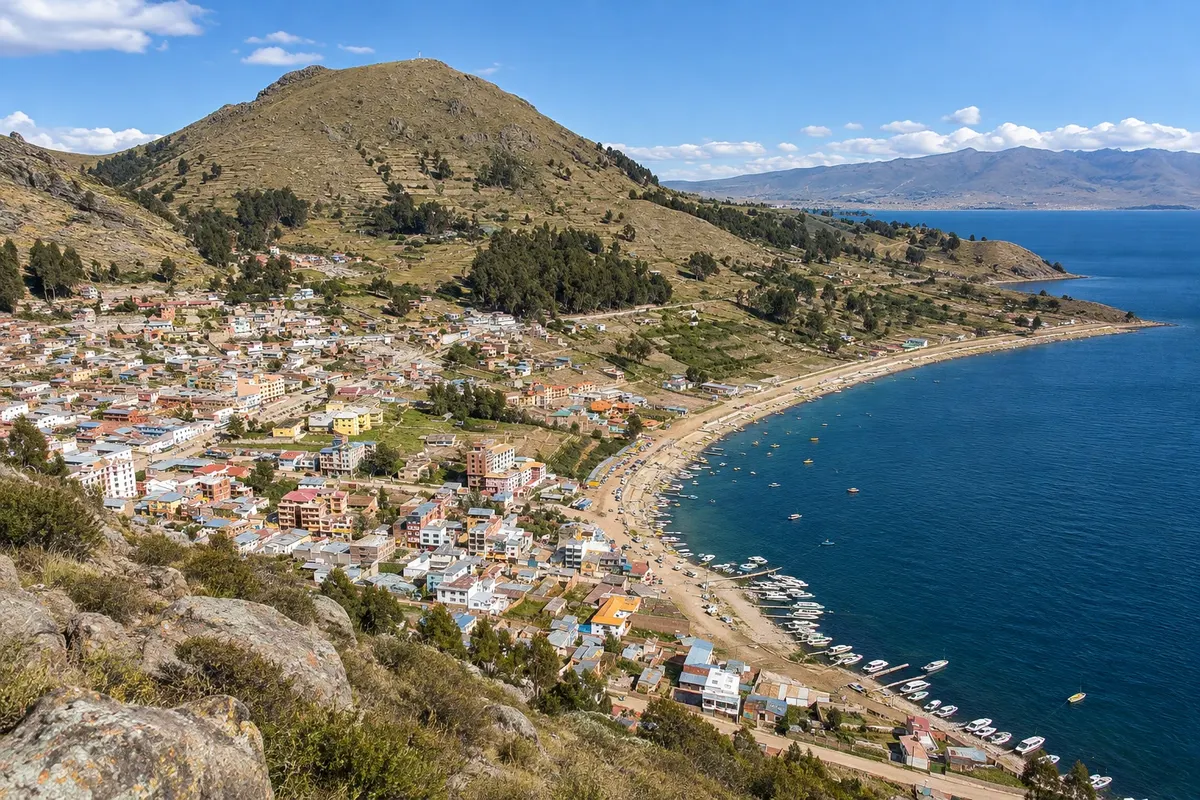
Copacabana sits on a peninsula on the southern shore of Lake Titicaca, on the Bolivian side, at about 3,800 metres above sea level and roughly 150 km from La Paz. It has been a pilgrimage village since the 16th century, when it received the image of the Virgem da Candelária carved by the indigenous artist Francisco Tito Yupanqui. Devotion to the Virgem de Copacabana spread across South America, and the Copacabana neighborhood in Rio de Janeiro took its name from a chapel dedicated to her.
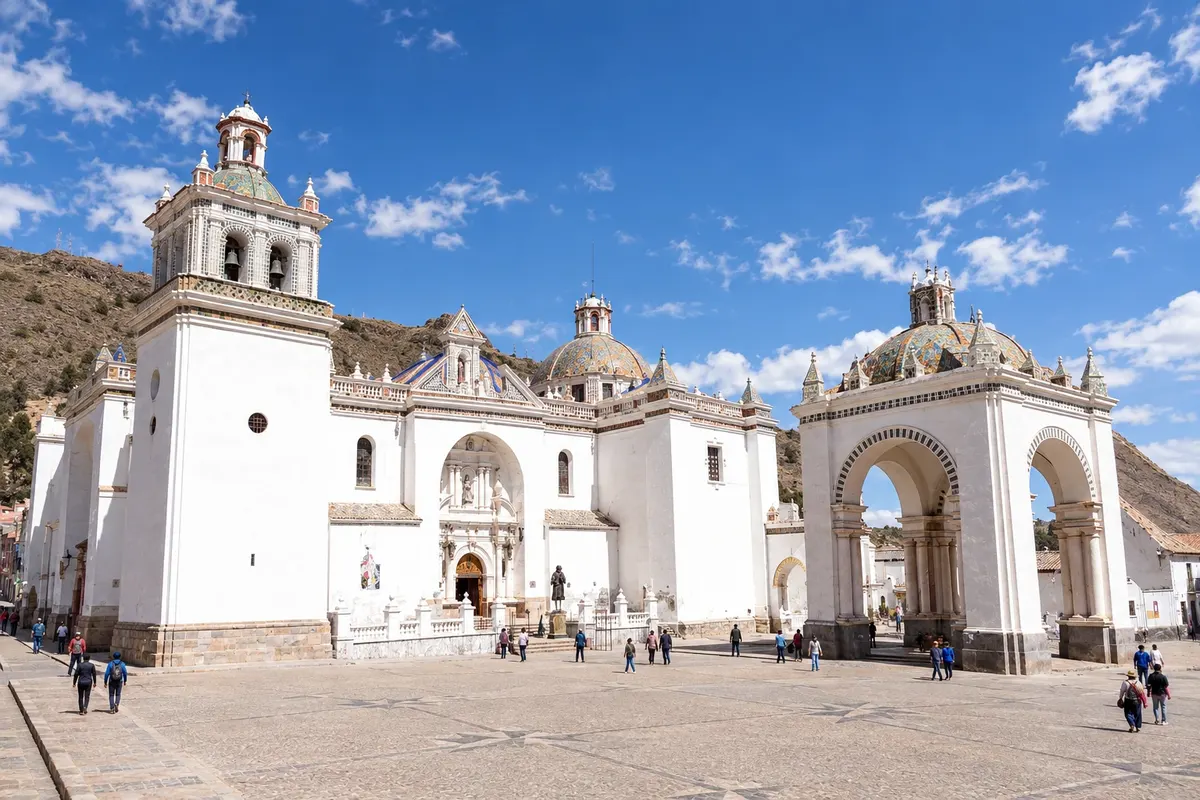
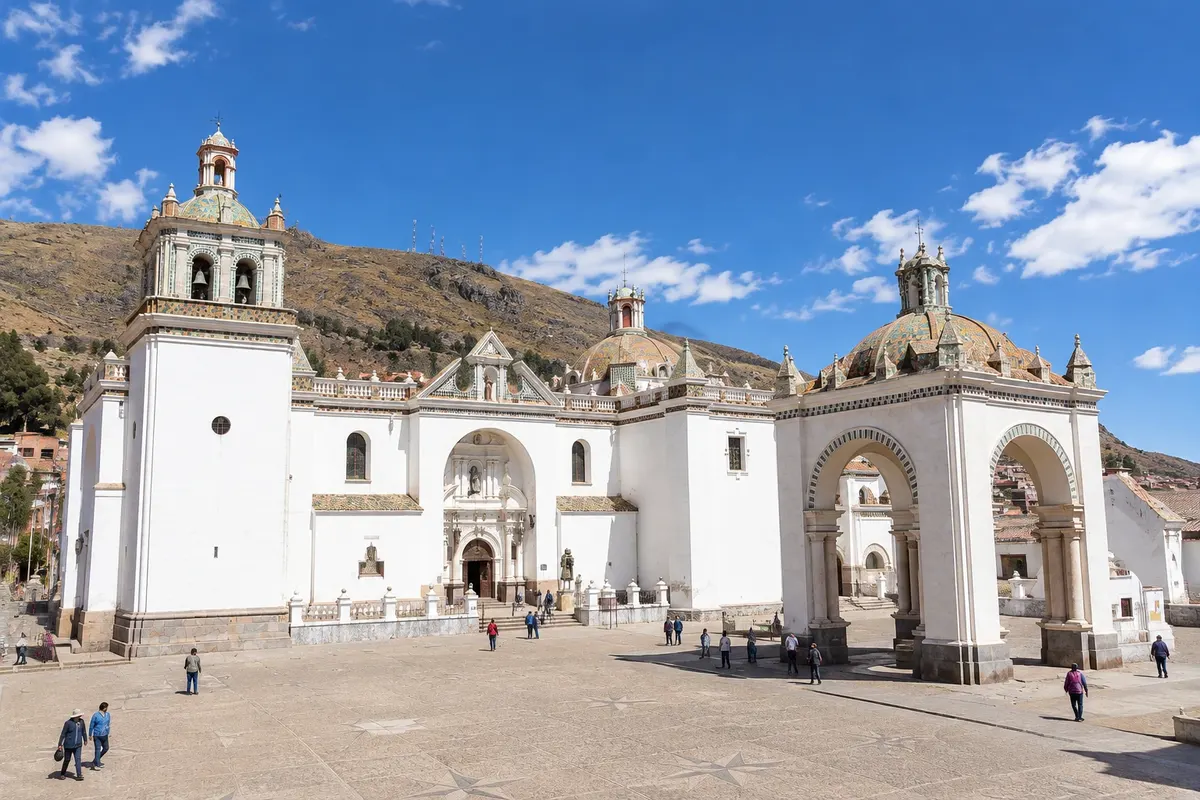
The village revolves around the basilica, built in the 17th century, with white domes of Moorish influence and a large walled courtyard. On weekends, priests bless cars decorated with flowers in front of the church, a local tradition. Above the village, the Cerro Calvario has the stations of the via crucis and views over the bay and the lake.
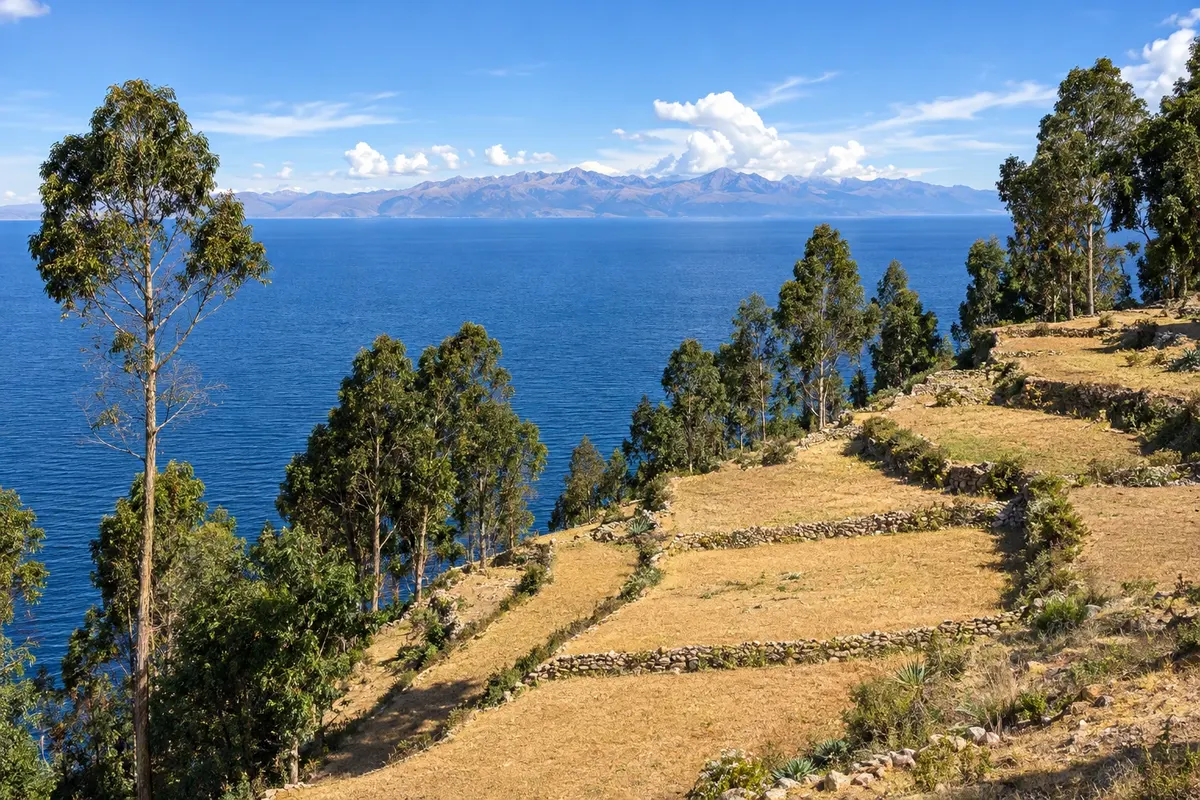
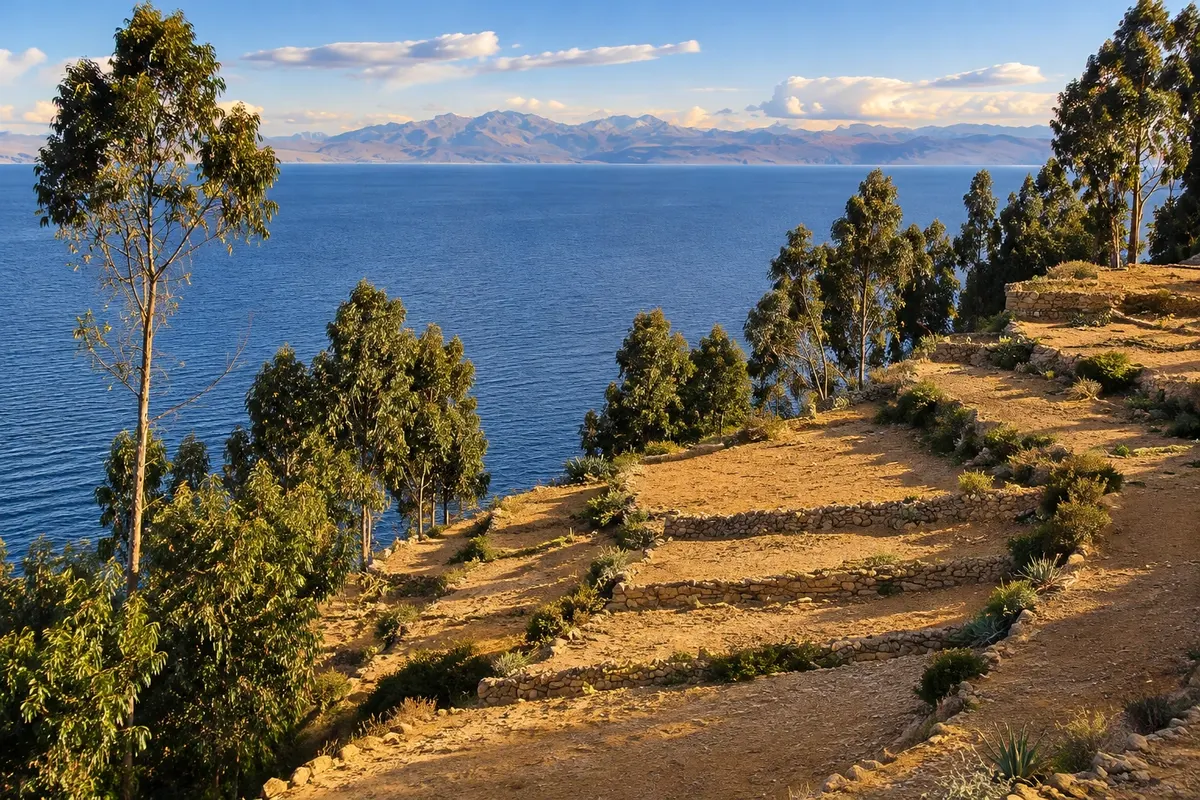
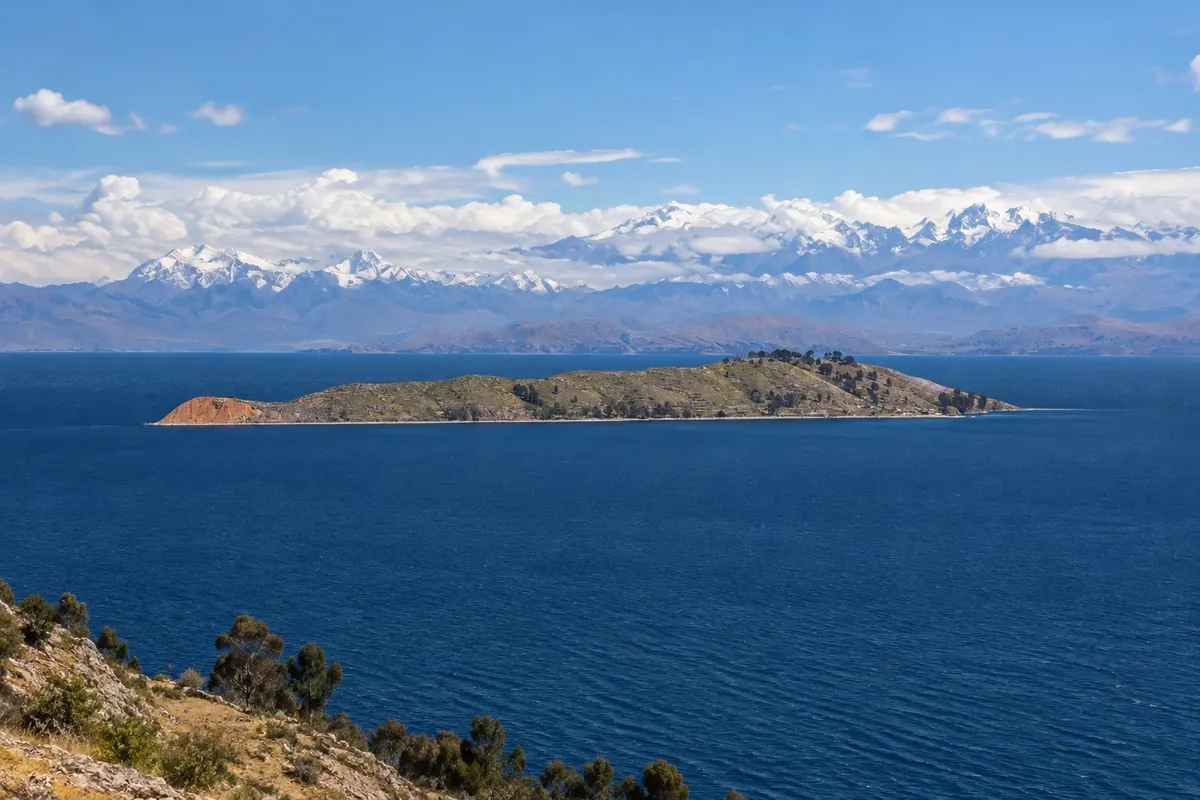
Boats leave from Copacabana's port for the Isla del Sol, which the Incas considered the birthplace of the Sun, featuring Aymara communities, terraces, stairways and ruins, and for the small Isla de la Luna, with the ruins of a temple for selected women. The lake waters are a deep blue, and the snowcapped peaks of the Cordillera Real appear in the distance.
Copacabana is also a stop on the overland route between La Paz and Puno.
This destination brings together 1 city: Copacabana.


 Brazil
 Argentina
 Chile
Chile Colombia
 Ecuador
 Guyana
 French Guiana
 Falkland Islands (Malvinas)
 Paraguay
 Peru
Peru Suriname
 Uruguay
 Venezuela
 Germany
 Belgium
 Spain
Spain France
 Greece
 the Netherlands
 Ireland
 Italy
Italy Luxembourg
 Portugal
 the United Kingdom
 Switzerland