

 Brazil
 Argentina
 Chile
Chile Colombia
 Peru
Peru Uruguay
 Germany
 Belgium
 Spain
Spain France
 Greece
 the Netherlands
 Ireland
 Italy
Italy Luxembourg
 the United Kingdom
 Switzerland
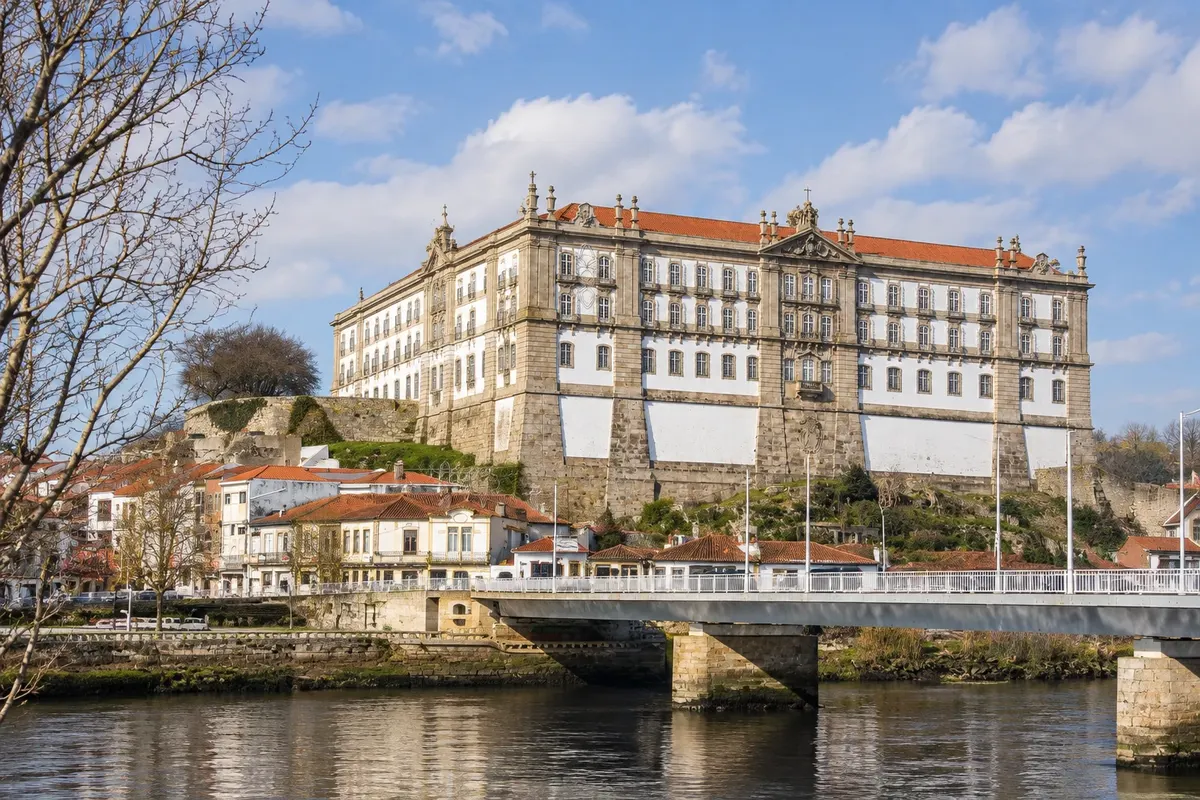
Monastery
Mosteiro de Santa Clara
Monastery of the Poor Clares founded in 1318 on the hilltop of Vila do Conde, with a Gothic church housing the founders' tombs and a large 18th‑century building facing the Ave River.
Porto · Portugal
In the destination Porto.
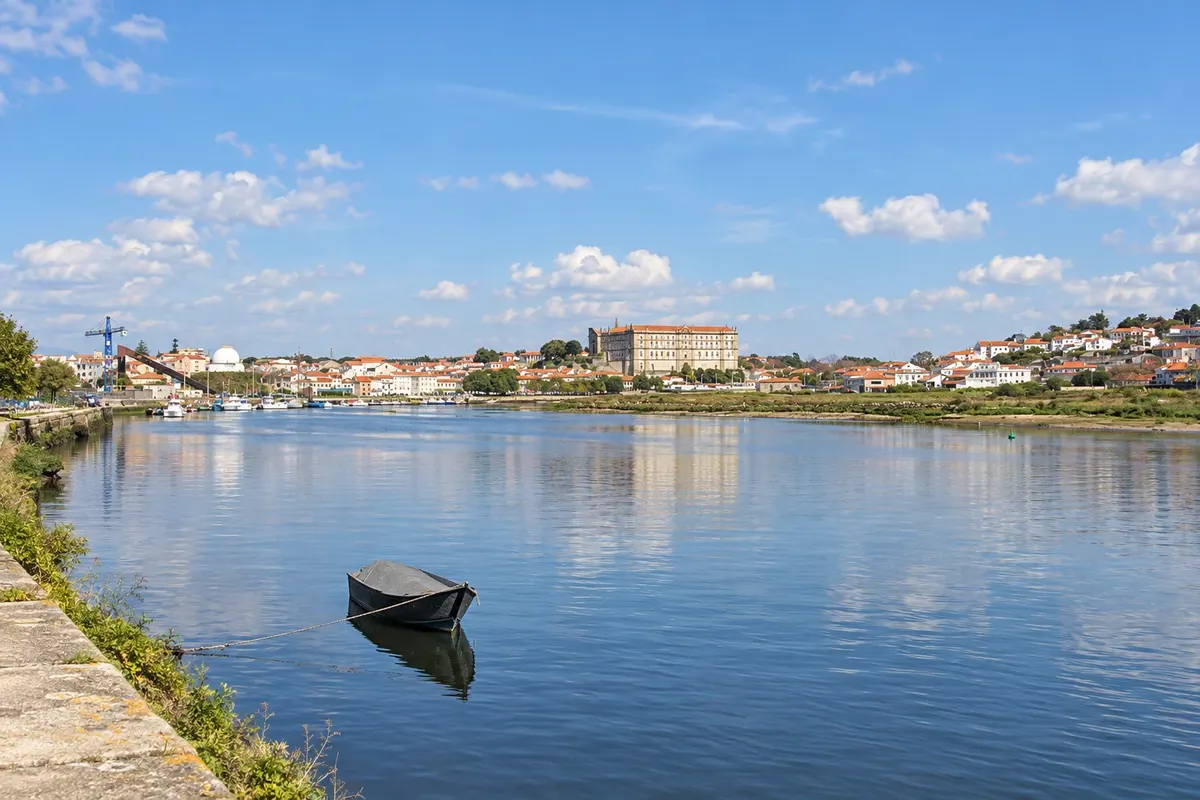
In the photo: Mouth of the Ave River, Vila do Conde
Illustrative images. The pictures in this guide are illustrations based on the real place, not photographs, and may differ from it.
The city
Vila do Conde is a city on Portugal's northern coast, at the mouth of the Ave River, about 30 km from Porto, with a long tradition of shipyards. On the top of the hill stands the monastery of Santa Clara, founded in 1318, which was supplied with water by an arched aqueduct dating from the early 18th century. On the quay, the former Alfândega Régia preserves the history of shipbuilding, next to the replica of a 16th-century nau. The center has the Manueline main church (igreja matriz) and, at the mouth, the Forte de São João Baptista. The Caminho Português da Costa runs along the waterfront.
There's no accommodation in the guide yet in Vila do Conde.
There are no restaurants in the guide yet in Vila do Conde.
Know a good one? Recommend it to ushow to get there · how many days · itinerary · questions
Rotas entre países
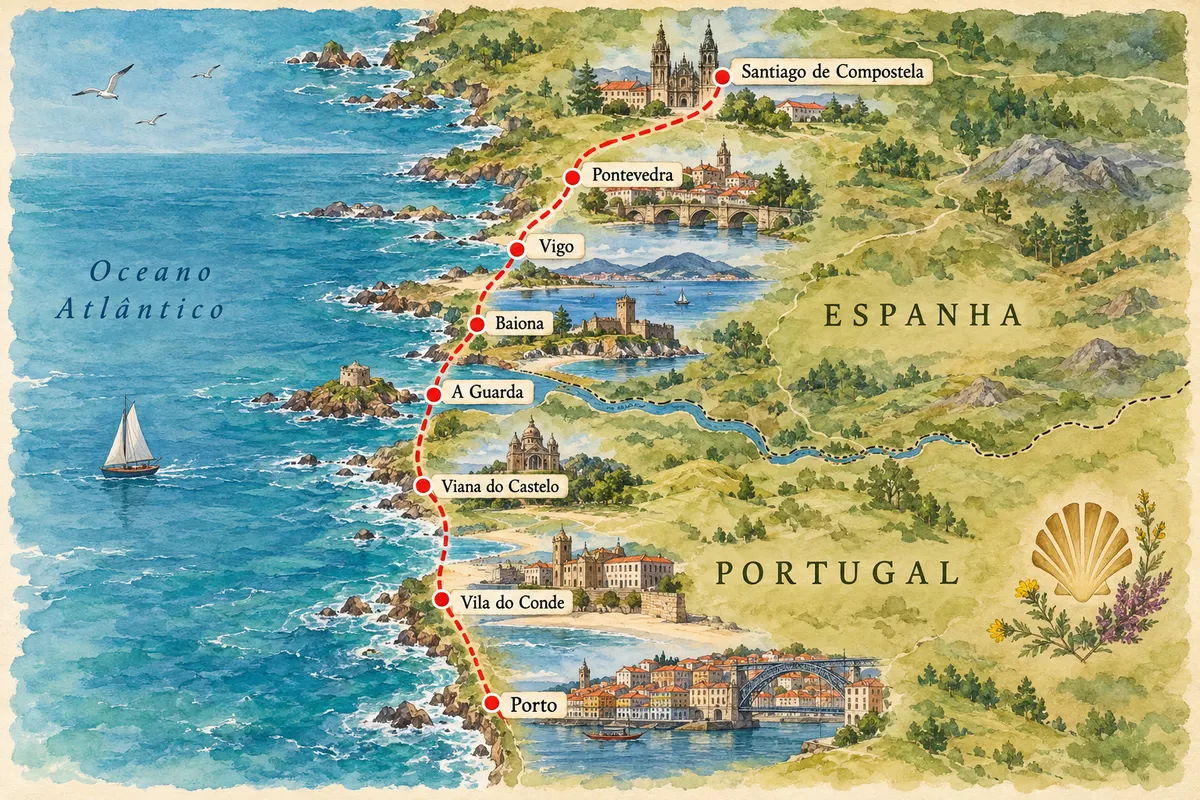
The Camino de Santiago along the Atlantic: from Porto to Galícia along the coast, via Vila do Conde, Viana do Castelo, A Guarda, Baiona and Vigo, to the cathedral of Santiago.
The local experience
Monastery of the Poor Clares founded in 1318 on the hilltop of Vila do Conde, with a Gothic church housing the founders' tombs and a large 18th‑century building facing the Ave River.
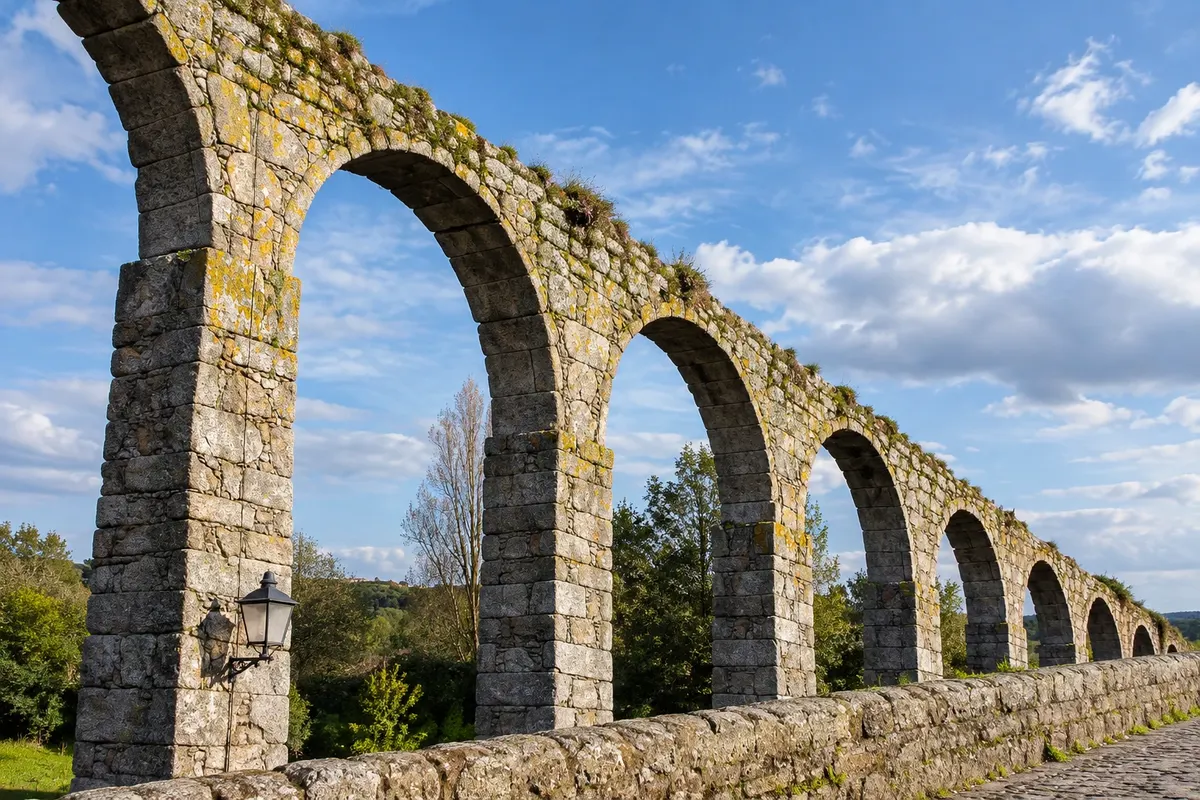
Aqueduct built between 1705 and 1714 to carry water to the monastery of Santa Clara, with hundreds of stone arches that cross Vila do Conde from Póvoa de Varzim.
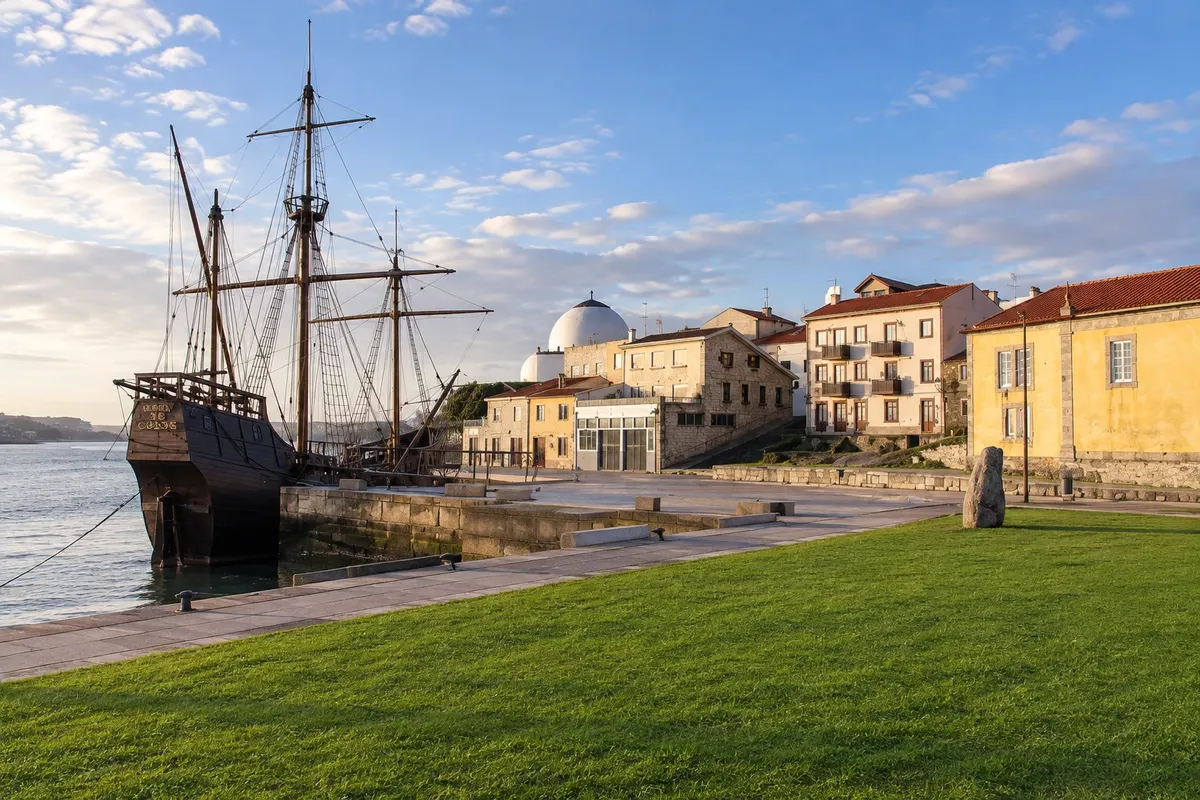
The old customs house from the time of D. Manuel I, on the quay of the Ave River, with the shipbuilding museum, and next to it a replica of a 16th-century nau that can be visited inside.
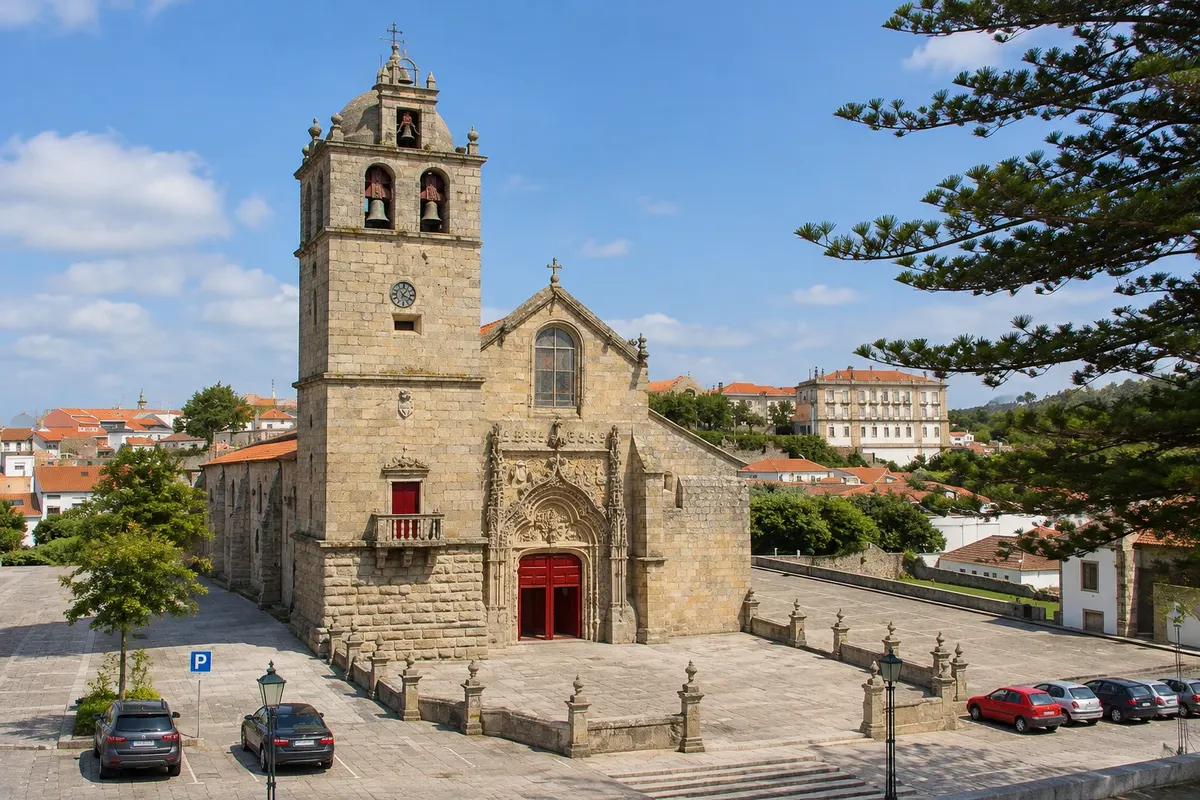
Igreja de São João Baptista, begun in 1496 and finished with support from D. Manuel I, featuring a Manueline portal by João de Castilho; classified as a National Monument since 1910.
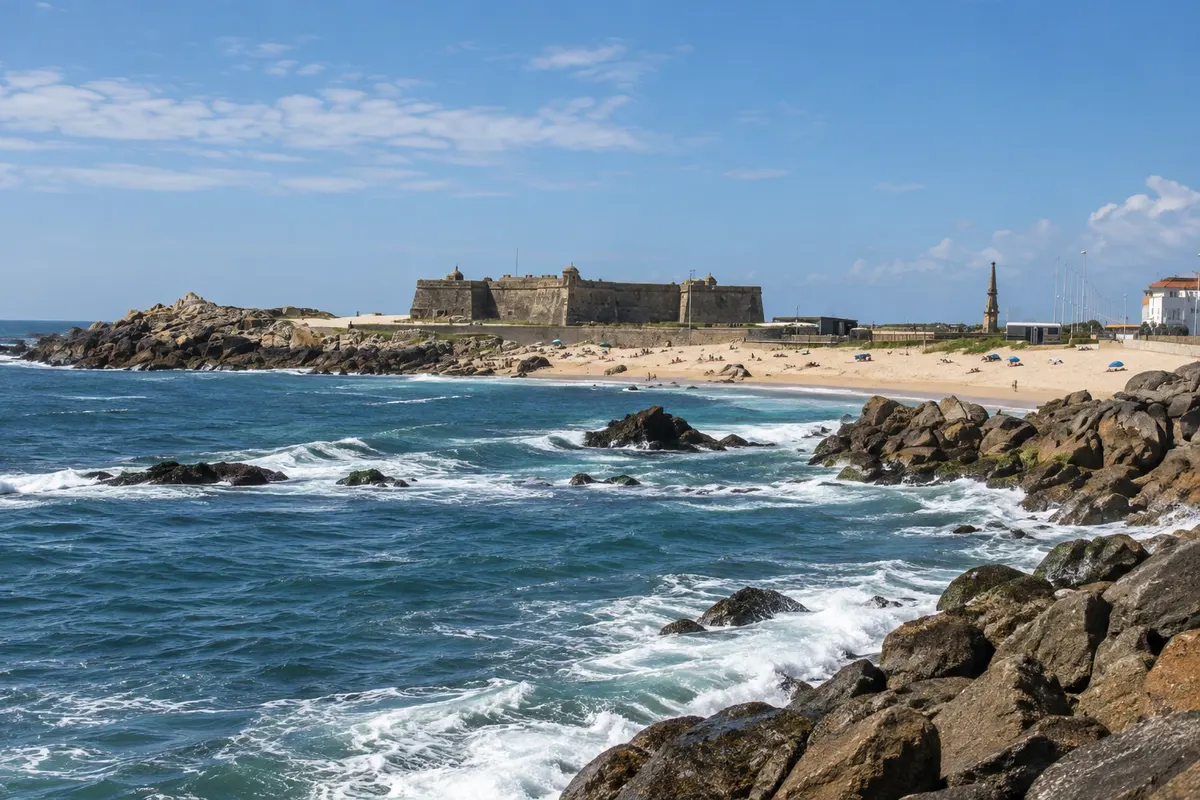
Fort with a pentagonal plan at the mouth of the Ave River, with bastions in the Vauban style, defending the bar of Vila do Conde; the last bastion was completed in 1793.
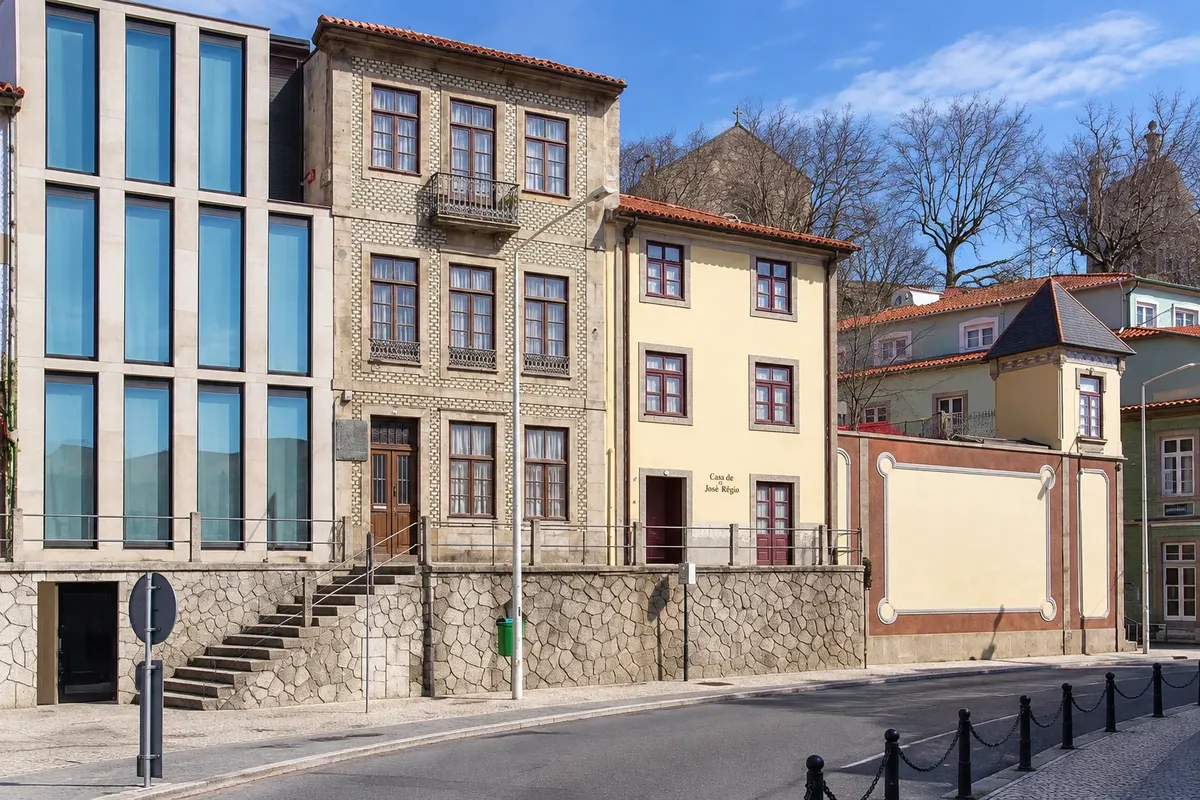
House where the writer José Régio lived, born in Vila do Conde, with his study, library and the collection of popular and sacred art he assembled.