Toledo, Segóvia and Ávila

Castela-Mancha · Castela e Leão · Spain

Toledo, Segóvia and Ávila

Three historic World Heritage cities near Madri: Toledo above the Tejo, the Roman Aqueduct of Segóvia and the medieval walls of Ávila.

Centro

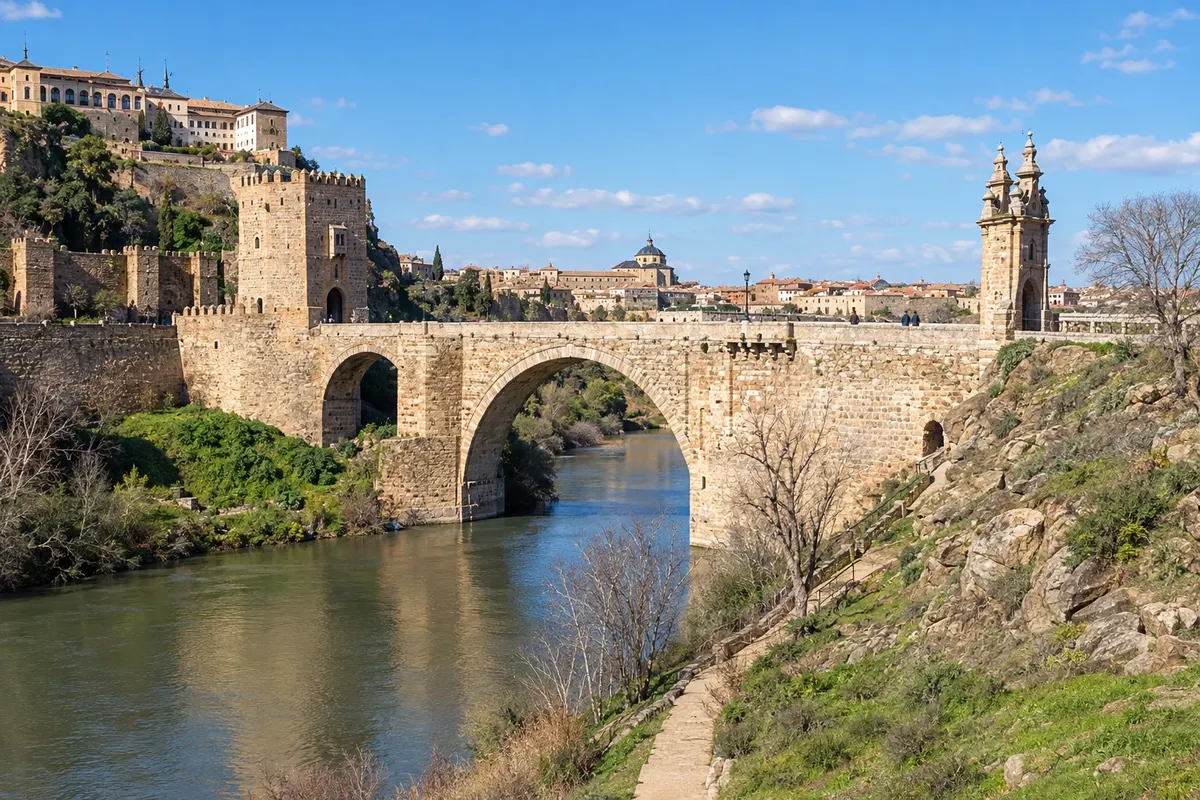
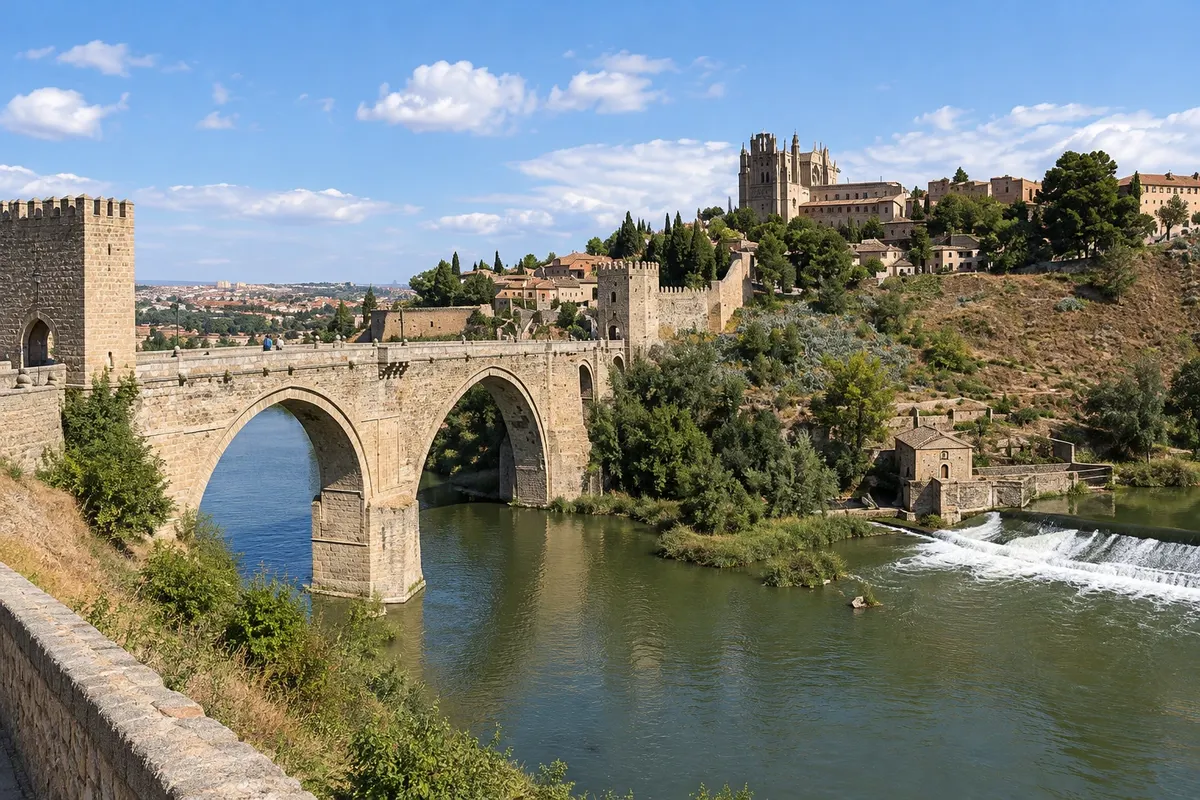
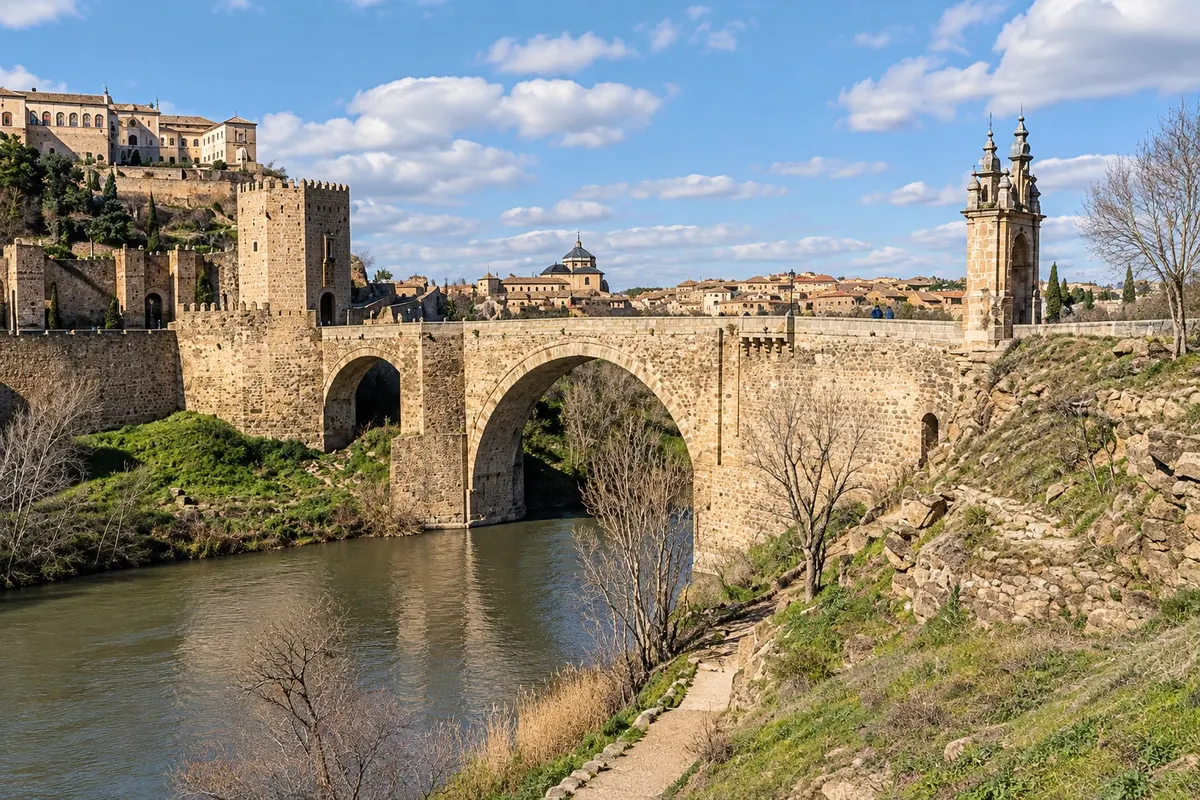
In the photo: Puente de Alcántara in Toledo

Illustrative images. The pictures in this guide are illustrations based on the real place, not photographs, and may differ from it.

Get it on Google Play Send your photos

Get to know the place

A region to enjoy
at your own pace.

Toledo, Segóvia and Ávila are in central Spain, around Madri, and all three have historic centres inscribed by UNESCO as World Heritage. Each can be visited in a day from the capital, by train or car, and many people combine two or all three on the same trip. The language in all three is Spanish (Castilian).

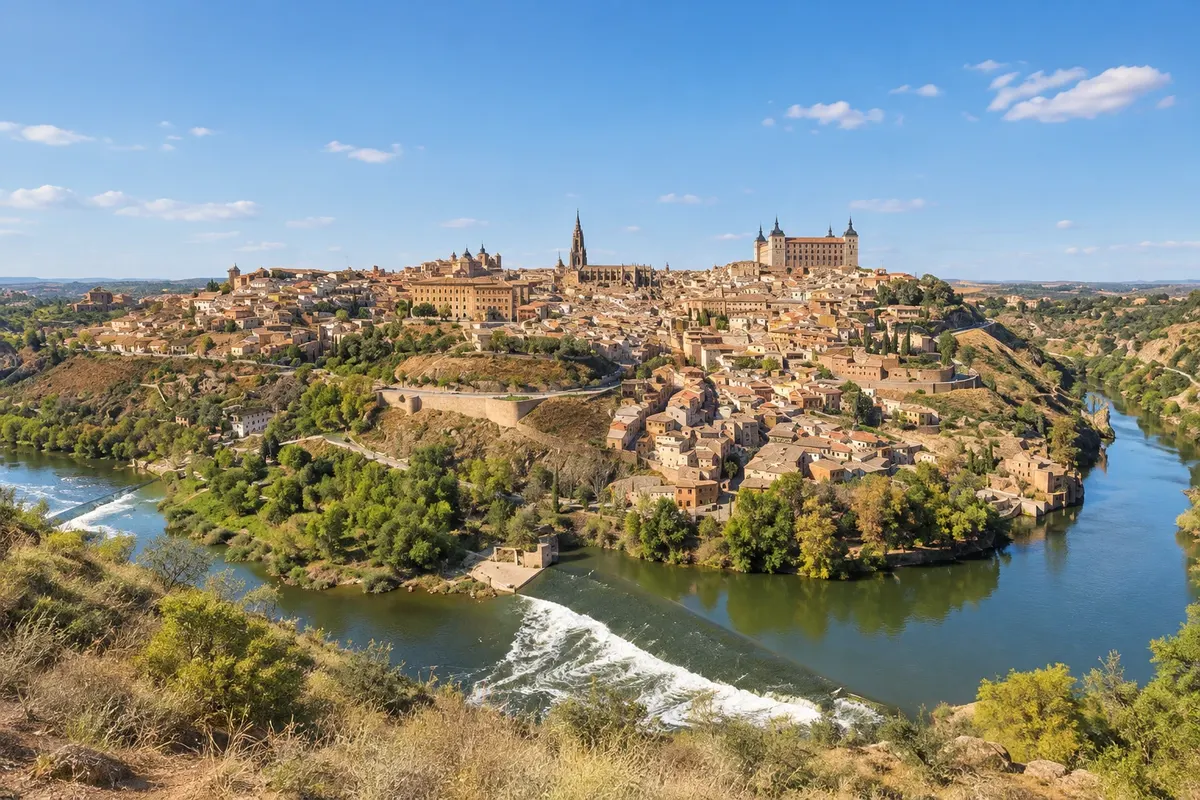
Toledo sits on a hill surrounded on three sides by a bend of the river Tejo. It was a Visigothic capital, a Muslim city and the seat of the Castile court, and it preserves the Catedral Primada, the Alcázar, two medieval synagogues, a small mosque from the year 999 and works by El Greco, who lived and painted in the city. It is the capital of Castela-Mancha.

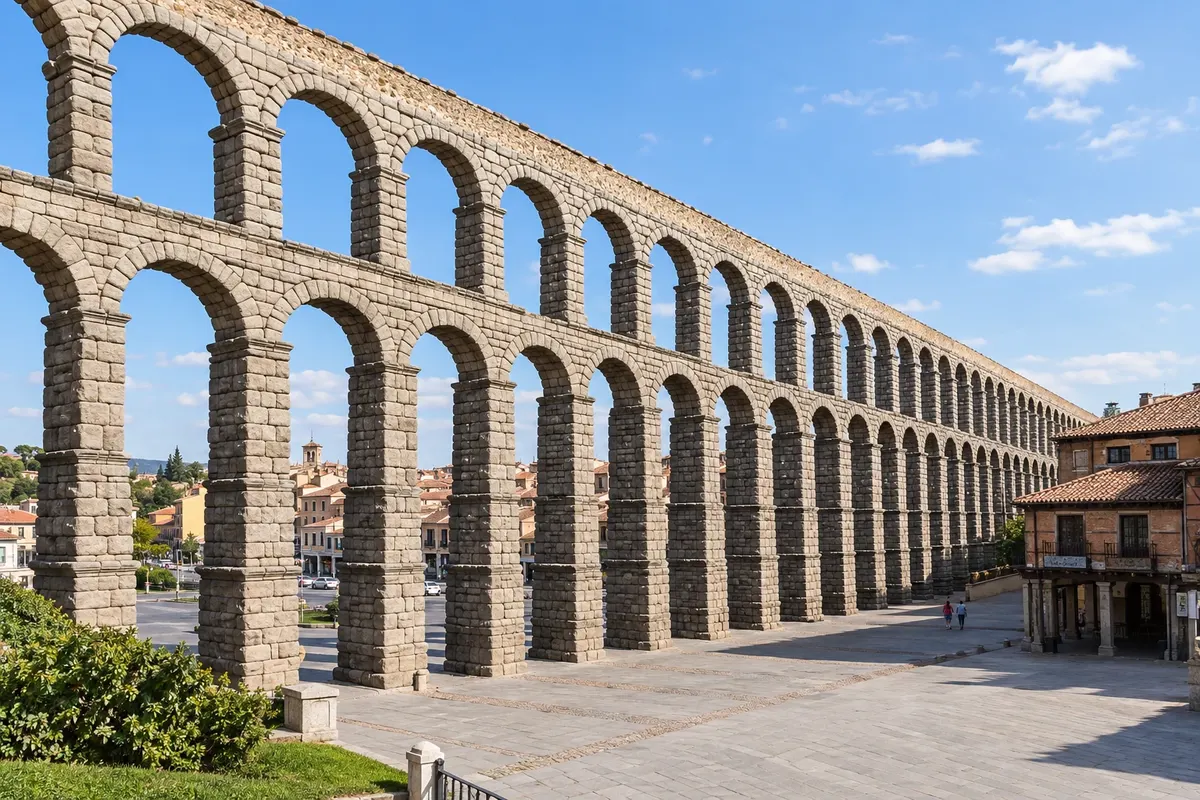
Segóvia, in Castela y Leão, is known for the Roman stone Aqueduct that crosses the entrance plaza of the old town. At the top of the historic centre are the Gothic Cathedral and, on the tip of the rock, the Alcázar, a castle that served as a residence for the kings of Castile.

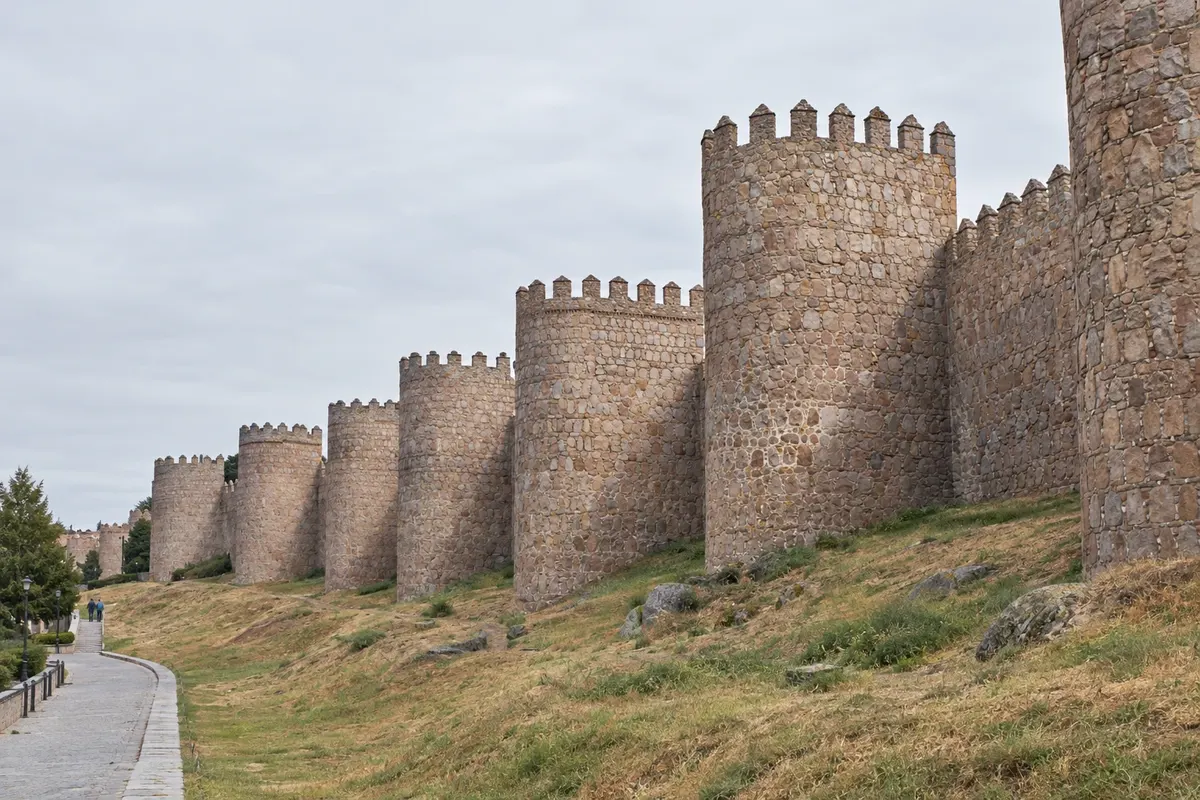
Ávila, also in Castela y Leão, is surrounded by medieval walls with towers and gates, which can be partly walked along at the top. Inside them are the Cathedral, whose apse is part of the wall itself, and places linked to Santa Teresa de Jesus, the mystic born in the city in 1515.

This destination brings together 3 cities: Toledo, Ávila, Segóvia.

Share: WhatsApp
Traveler, share your experiences through photos Up to 5 photos of each place you visited.

One destination, many paths

The cities on this trip

Start with one city or combine several in your itinerary.

Where Toledo, Segóvia and Ávila is
ToledoÁvilaSegóvia

Contornos: IGN/CNIG, unidades administrativas, CC BY 4.0. Adaptação do Cidade Turismo.

How to get there: Toledo, Segóvia and Ávila

✈ Aeropuerto Adolfo Suárez Madrid-Barajas (MAD), in Madri · 86 km to Toledo

The entry point is Madri. Check before purchasing. From Madri there are trains: Avant to Toledo, departing from Puerta de Atocha; high-speed trains to Segovia-Guiomar, departing from Chamartín; and conventional trains to Ávila.

Suggested arrival point: Toledo

Toledo
Castela-Mancha · Toledo, Segóvia and Ávila Capital Suggested arrival point

Toledo

Capital of Castela-Mancha, on a hill surrounded on three sides by a bend of the rio Tejo, about 70 km south of Madri. It was the capital of the Visigothic kingdom and a Muslim city, and it preserves the Catedral Primada, the Alcázar, the synagogues of Santa María la Blanca and del Tránsito, the Mezquita del Cristo de la Luz, San Juan de los Reyes and works by El Greco in Santo Tomé and in the Museo del Greco. The language is Spanish (Castilian). The historic center has been a UNESCO World Heritage Site since 1986.
Segóvia
Castela e Leão · Toledo, Segóvia and Ávila

Segóvia

Segóvia, in Castela e Leão, sits on a rocky outcrop about 1,000 meters above sea level, north of the serra de Guadarrama. The historic center and the Aqueduto romano are a World Heritage Site. Besides the Aqueduto, the city has the Alcázar, the Gothic Cathedral, the Plaza Mayor, the Judería and Romanesque churches such as San Millán. In the valley lie the monastery of El Parral, the Casa de Moneda and the Vera Cruz; 13 km away is the Palácio de La Granja. The language is Spanish.

The local experience

Things to do in Toledo, Segóvia and Ávila

Acueducto de Segovia
Segóvia · Castela e Leão · Monument

Acueducto de Segovia

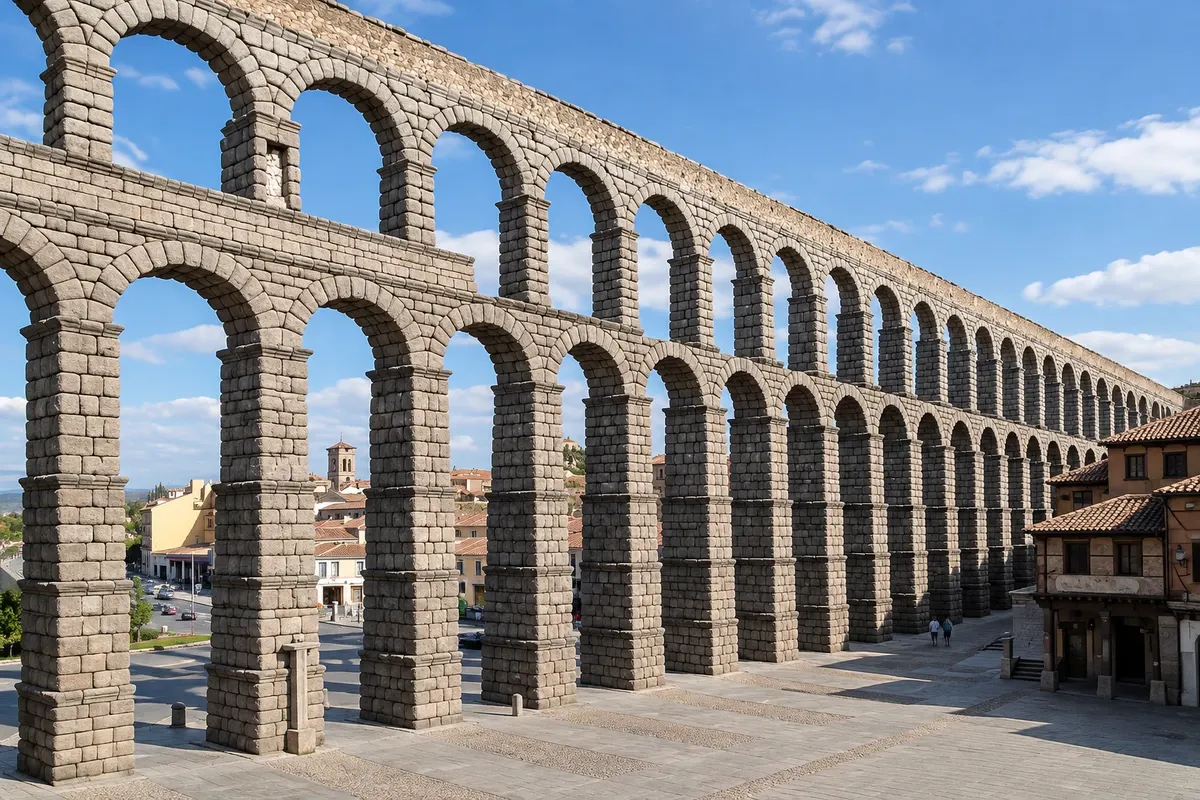
Roman Aqueduto from the early 2nd century, with 167 granite arches assembled without mortar. The arcade crosses the Plaza del Azoguejo and reaches 28 meters at its highest point.

Catedral Primada Santa María de Toledo
Toledo · Castela-Mancha · Cathedral

Catedral Primada Santa María de Toledo

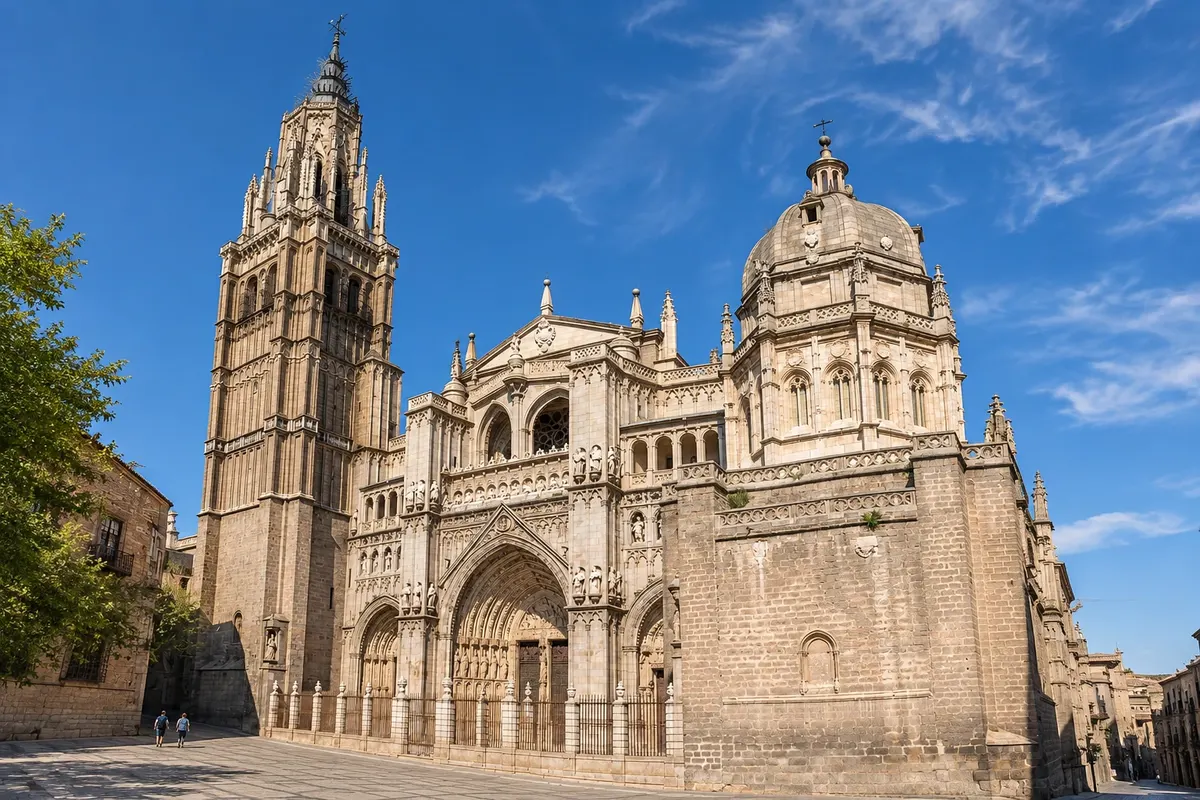
Gothic cathedral begun in 1226, seat of the Primate Archbishop of Spain. It houses the Transparente by Narciso Tomé, the choir by Berruguete and Vigarny, El Expolio by El Greco and the monstrance by Enrique de Arfe.

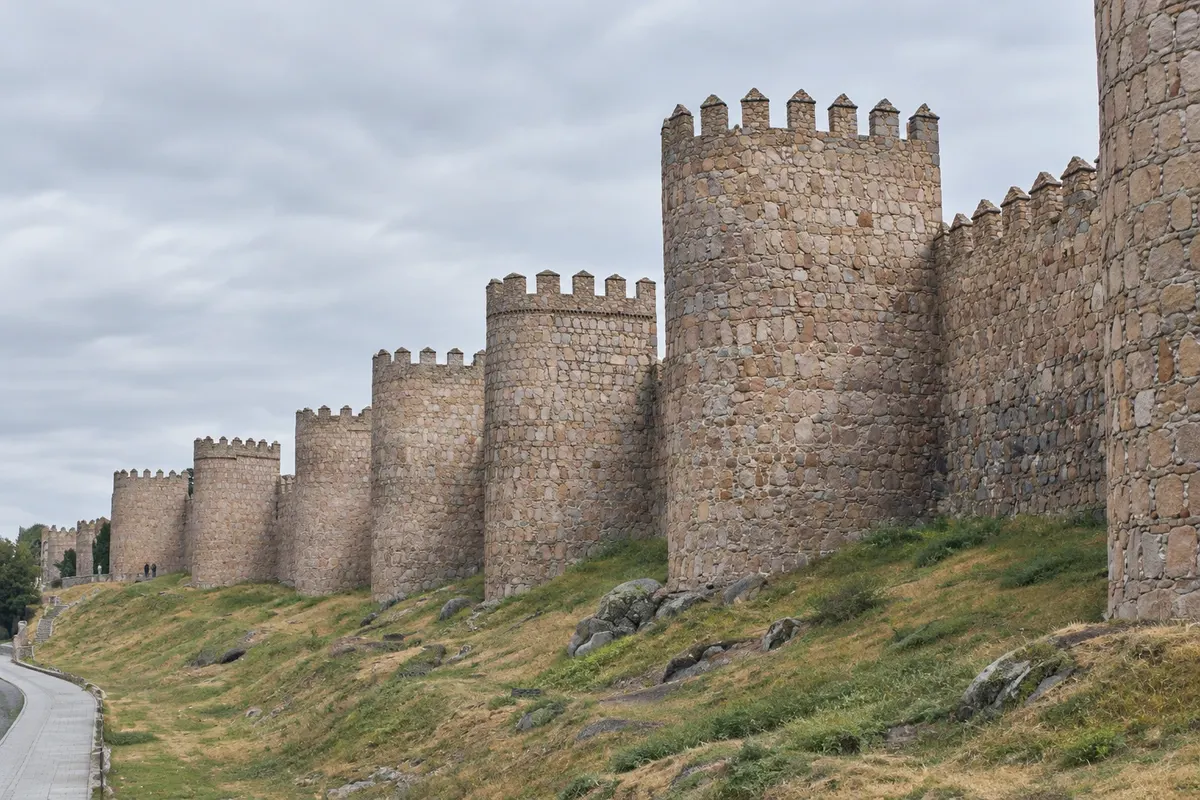
Muralla de Ávila
Ávila · Castela e Leão · Wall

Muralla de Ávila

Medieval wall enclosing the historic center, with 2,515 meters of perimeter, 87 towers and 9 gates. Several sections of the adarve, the walkway along the top of the wall, are open to visitors.

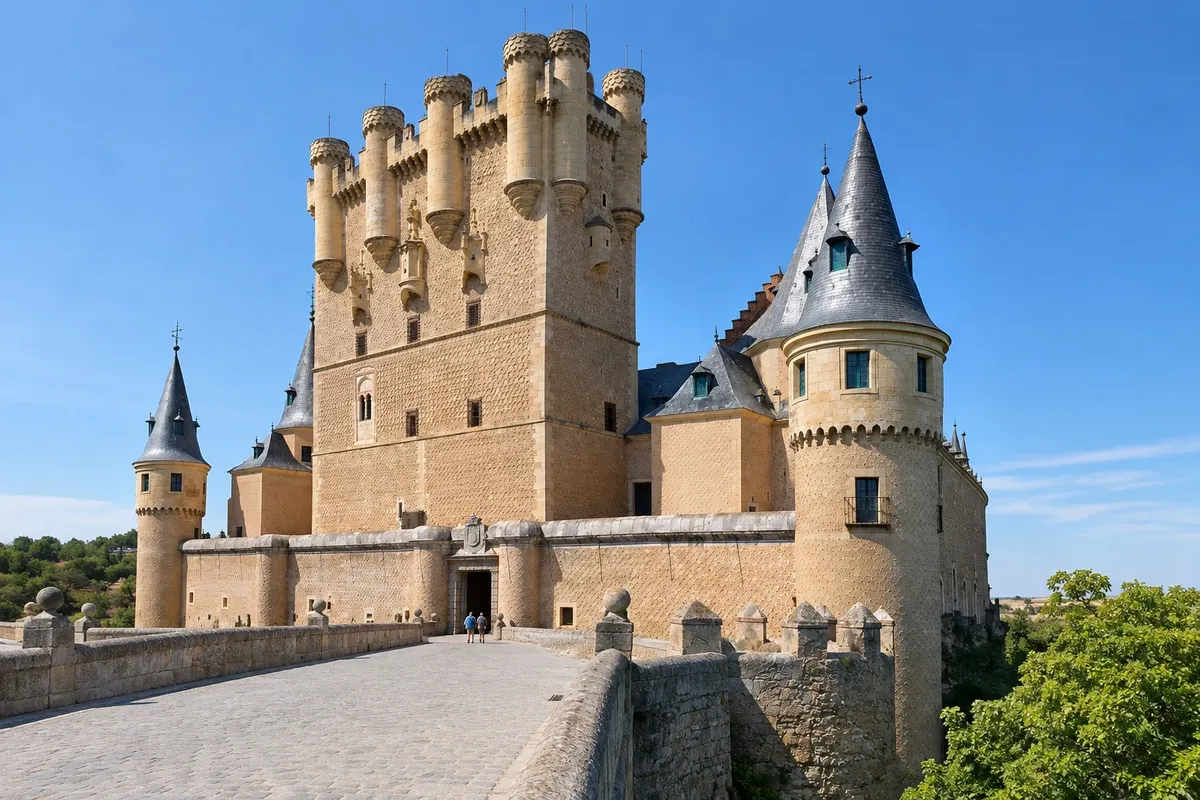
Alcázar de Segovia
Segóvia · Castela e Leão · Castle

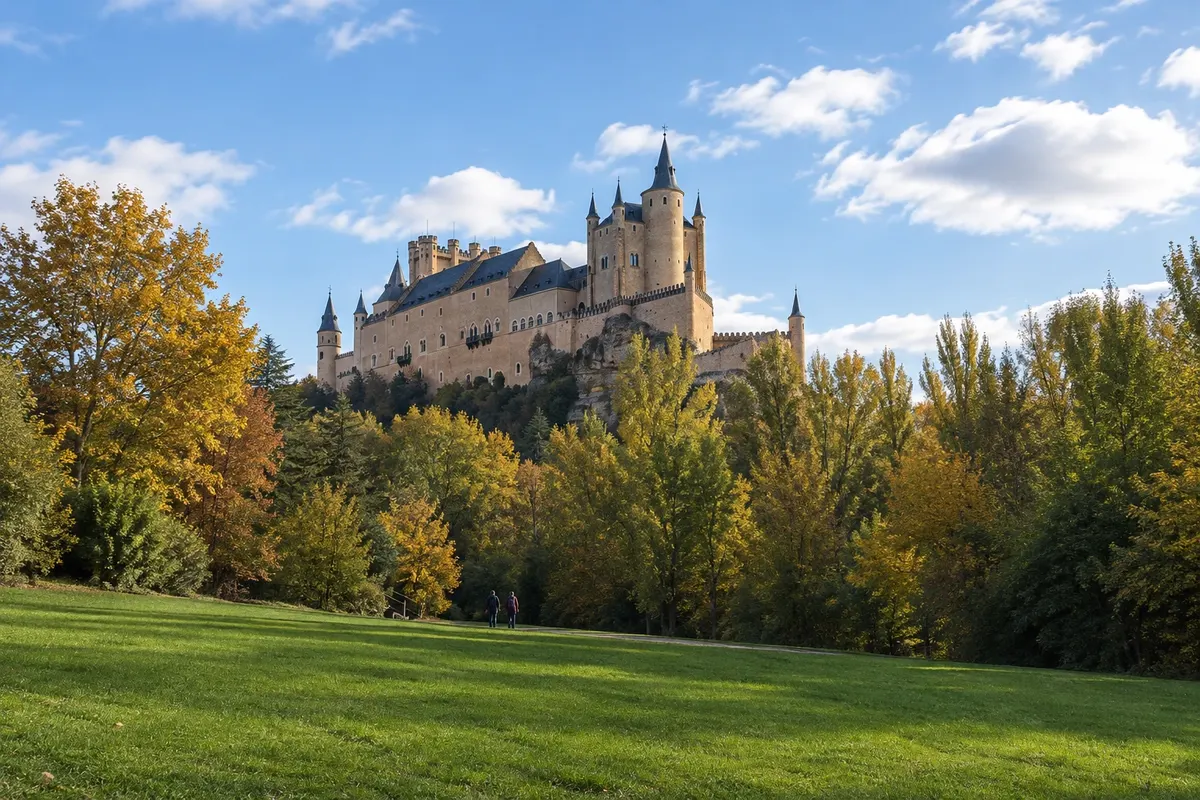
Alcázar de Segovia

Castle-palace on the rocky spur of Segóvia, between the Eresma and Clamores valleys. It was a residence of the kings of Castile, a state prison and the Real Colegio de Artillería, and it has the Torre de Juan II open to visitors.

See 30 more places in Toledo, Segóvia and Ávila
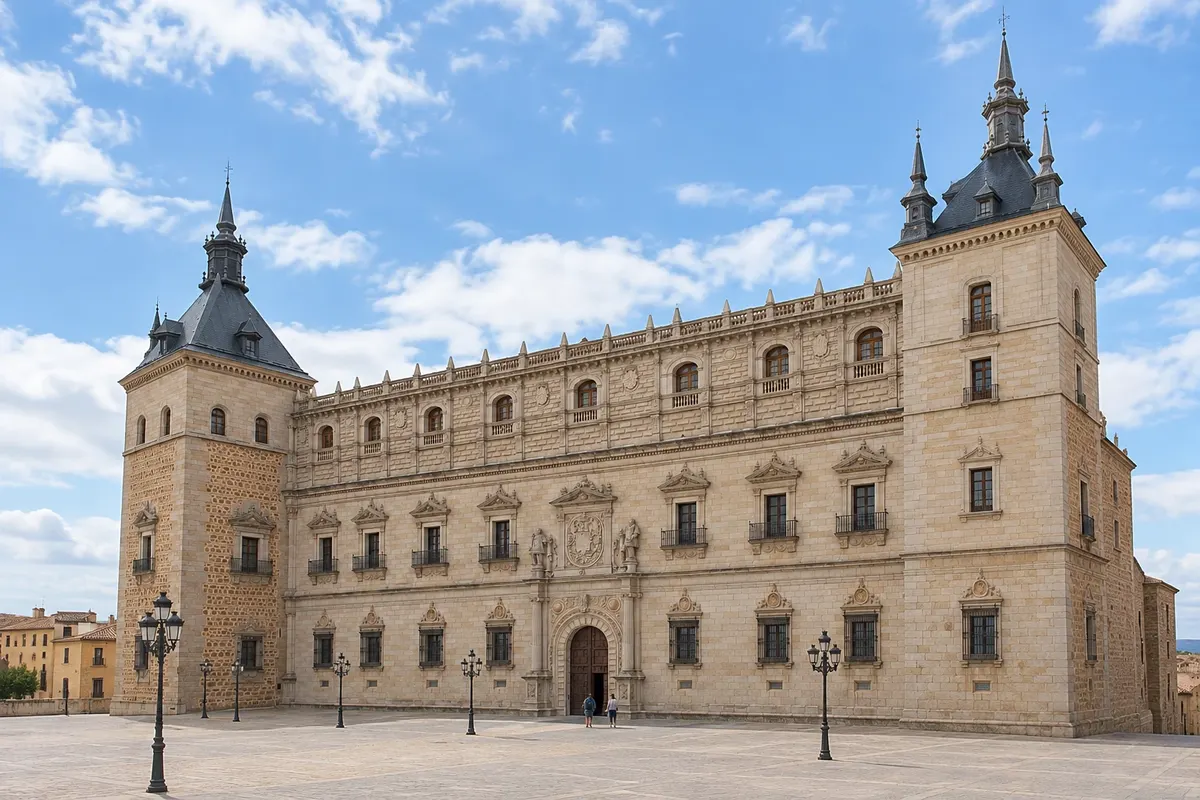
Alcázar de Toledo
Toledo · Castela-Mancha · Castle

Alcázar de Toledo

Square fortress at the highest point of the city, with four corner towers. Renovated by Carlos V and Felipe II, it now houses the Museo del Ejército and the Biblioteca de Castilla-La Mancha.

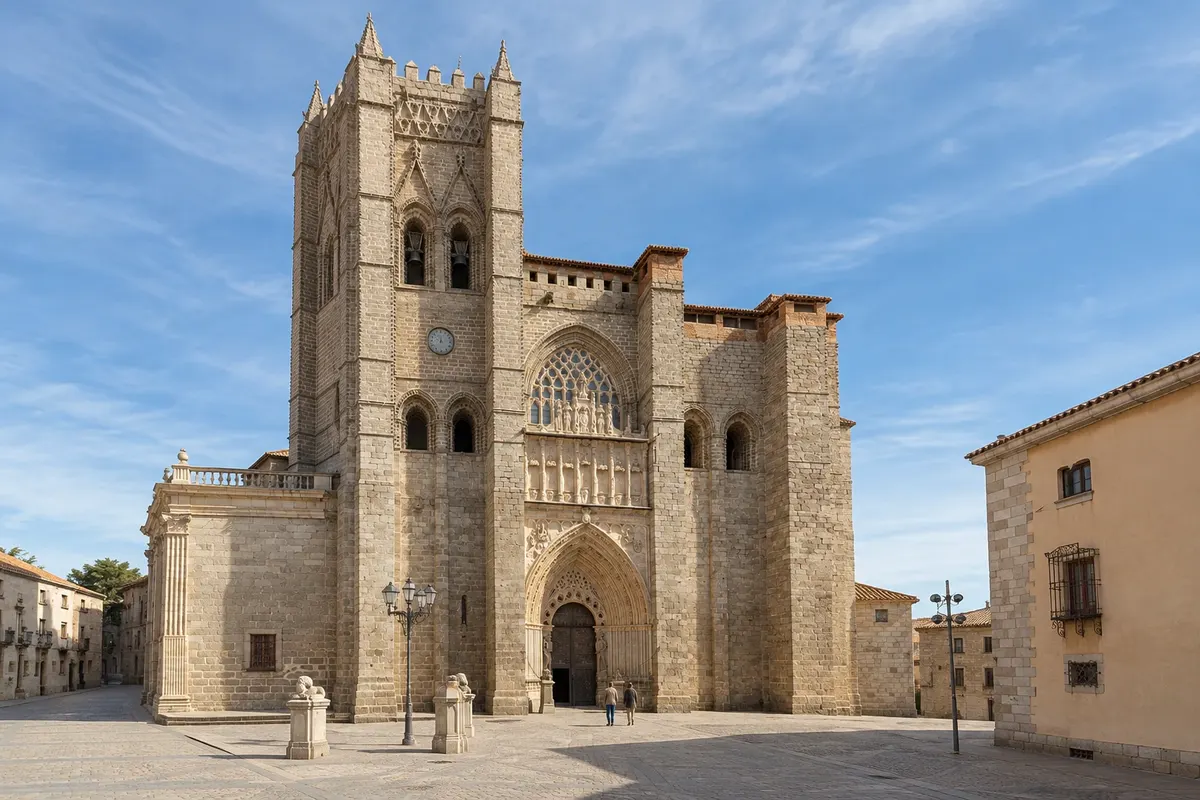
Catedral de Ávila
Ávila · Castela e Leão · Cathedral

Catedral de Ávila

Cathedral-fortress whose apse, the cimorro, is one of the towers of the wall. It is considered the first Gothic cathedral in Spain, with works beginning in 1172 under the French master Fruchel.

Basílica de San Vicente
Ávila · Castela e Leão · Church

Basílica de San Vicente

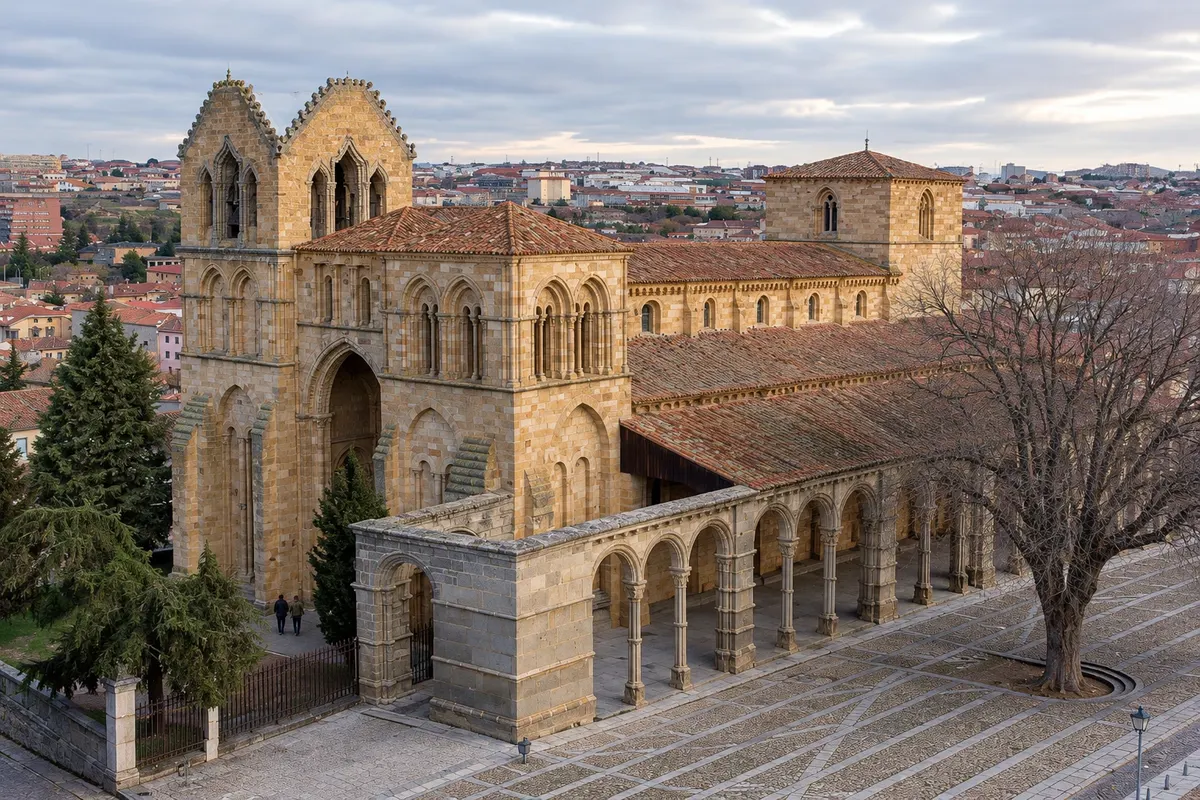
Large Romanesque church outside the wall, begun around 1120 on the site where, by tradition, the siblings Vicente, Sabina and Cristeta were martyred. It houses the sculpted cenotaph of the saints.

Catedral de Segovia
Segóvia · Castela e Leão · Cathedral

Catedral de Segovia

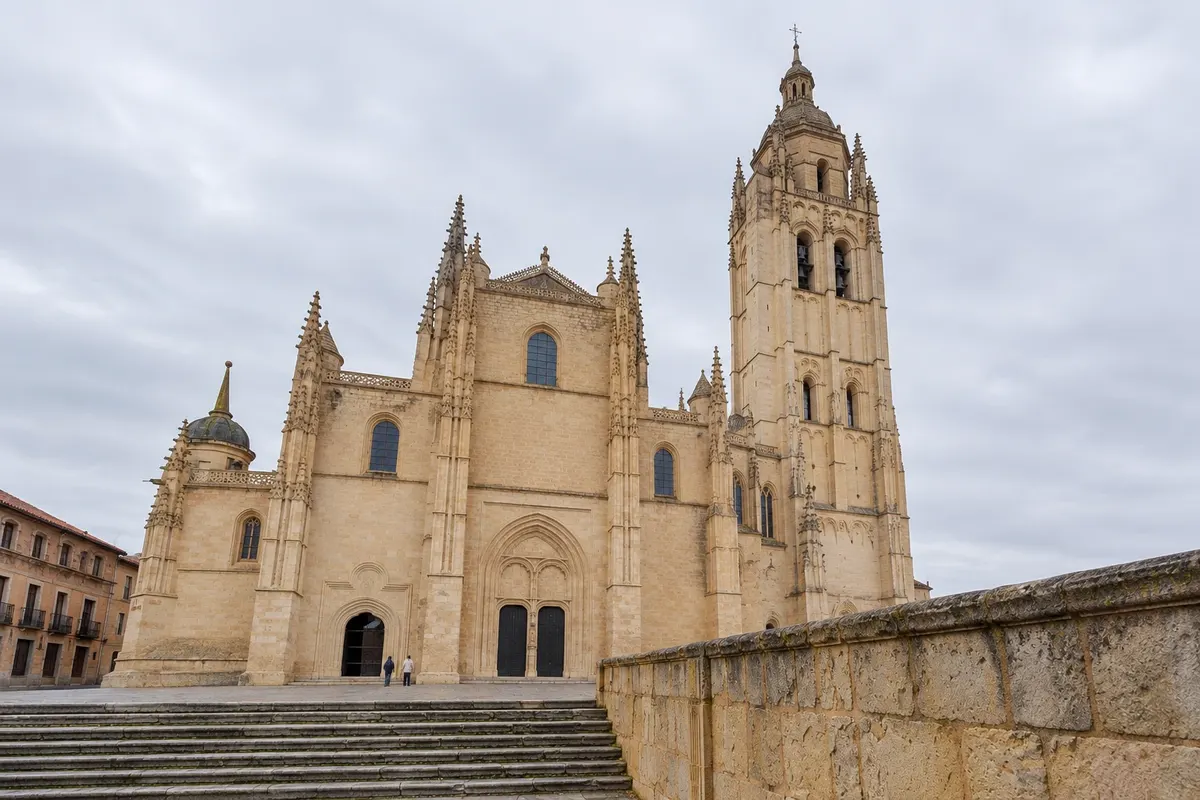
Late Gothic cathedral begun in 1525 by Juan Gil de Hontañón, at the highest point of the city. It has a tower of about 88 metres with guided visits and a cloister brought from the old cathedral.

Sinagoga de Santa María la Blanca
Toledo · Castela-Mancha · Synagogue

Sinagoga de Santa María la Blanca

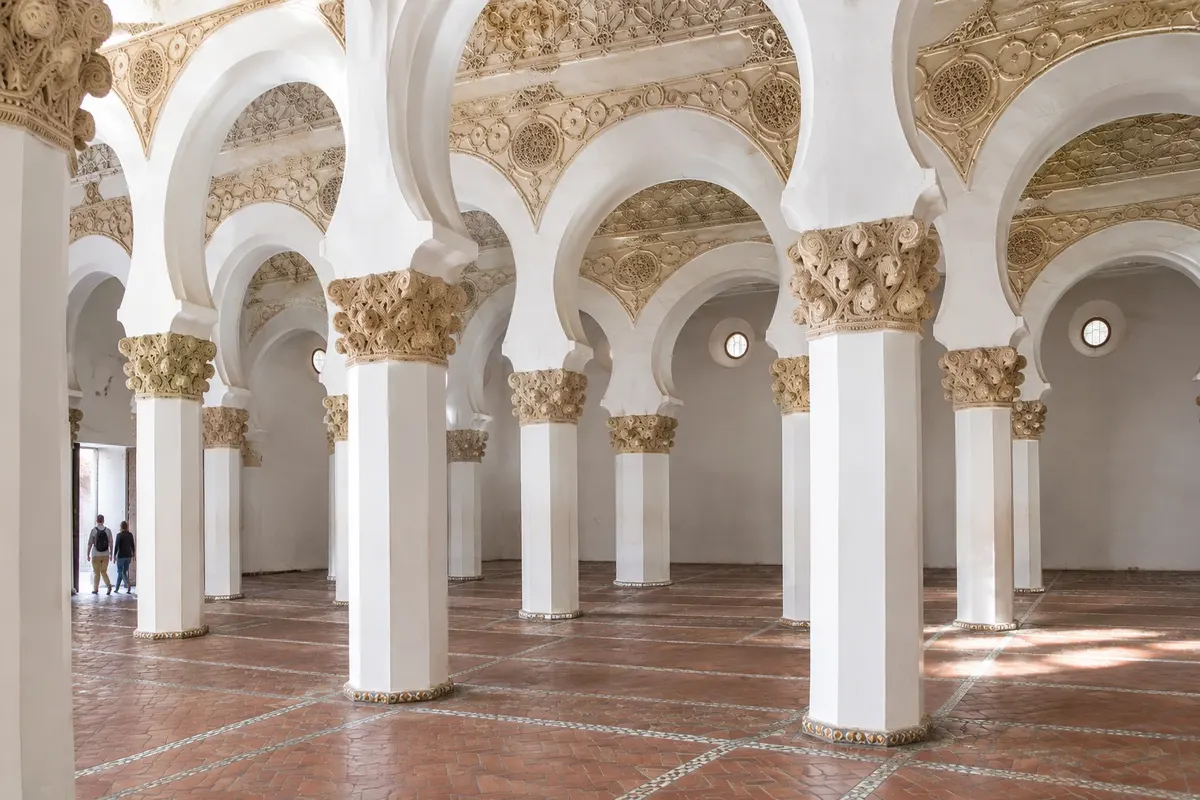
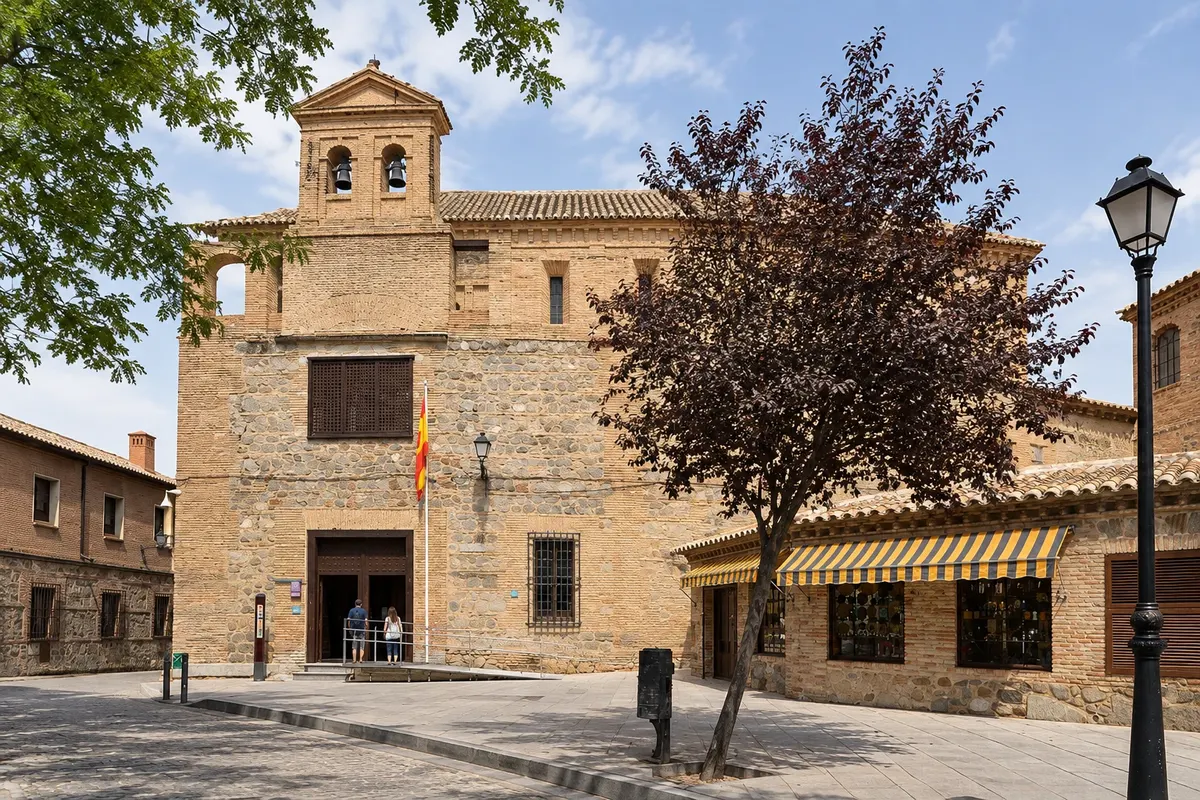
Old Sinagoga Mayor de Toledo, dating from 1180, with five naves of horseshoe arches on white pillars. Built by Muslim craftsmen for Toledo's Jewish community and later converted into a church.

Convento de Santa Teresa
Ávila · Castela e Leão · Church

Convento de Santa Teresa

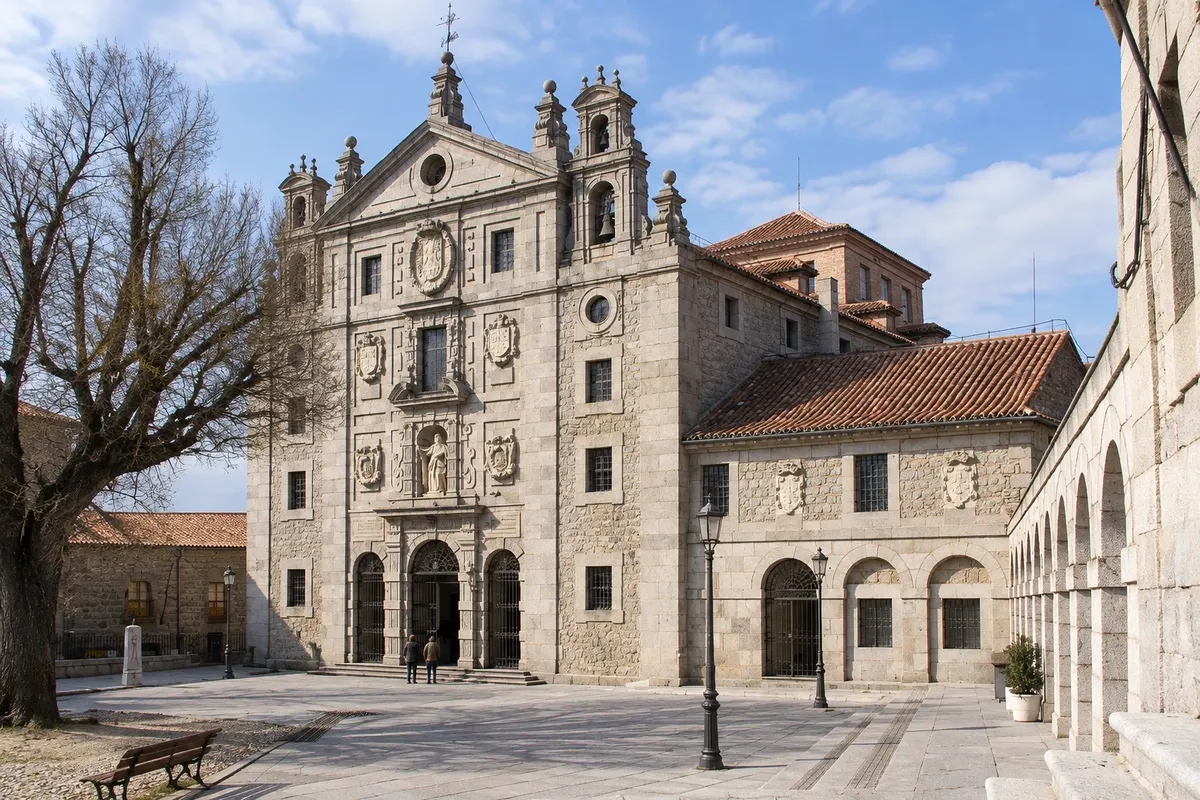
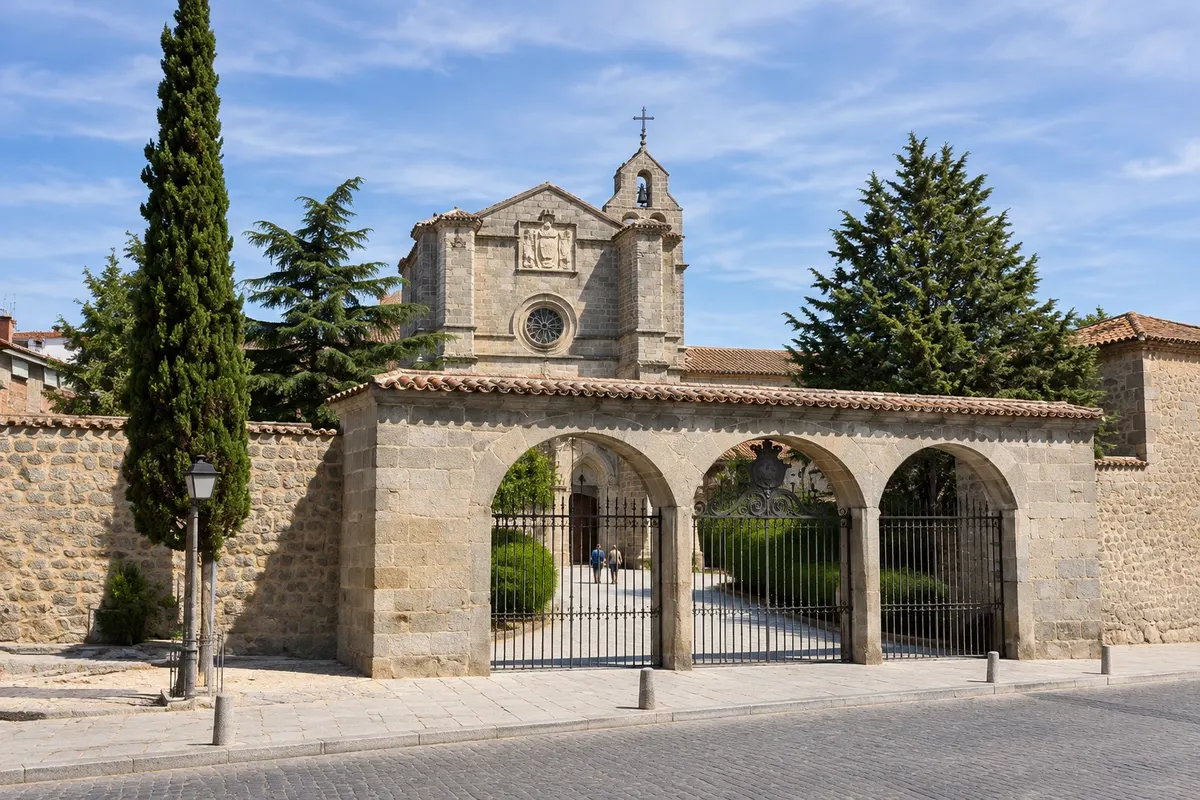
Baroque Carmelite church and convent built between 1629 and 1636 over the house where Santa Teresa de Jesús was born. It has the chapel on the site of the saint's room and a Teresian museum in the crypt.

Plaza Mayor de Segovia
Segóvia · Castela e Leão · Square

Plaza Mayor de Segovia

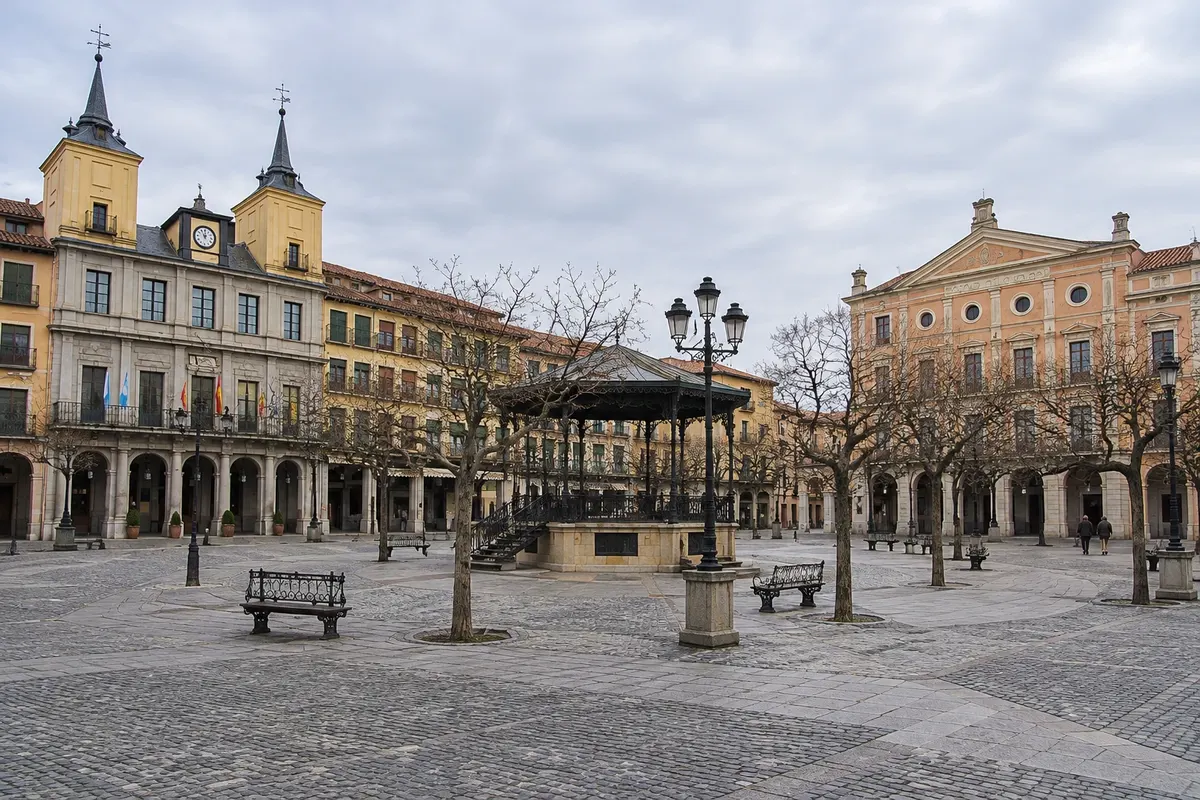
Main square of the old town, with the Cathedral's apse in the background, the town hall, the Teatro Juan Bravo and the Iglesia de San Miguel. It was there that Isabella the Catholic was proclaimed Queen of Castile in 1474.

Sinagoga del Tránsito (Museo Sefardí)
Toledo · Castela-Mancha · Synagogue

Sinagoga del Tránsito (Museo Sefardí)

Mudéjar synagogue dated to 1357, commissioned by Samuel ha‑Leví, treasurer to King Pedro I. The prayer hall features carved plasterwork with inscriptions in Hebrew and Arabic. It houses the Museo Sefardí.

Judería de Segovia
Segóvia · Castela e Leão · Historic neighborhood

Judería de Segovia

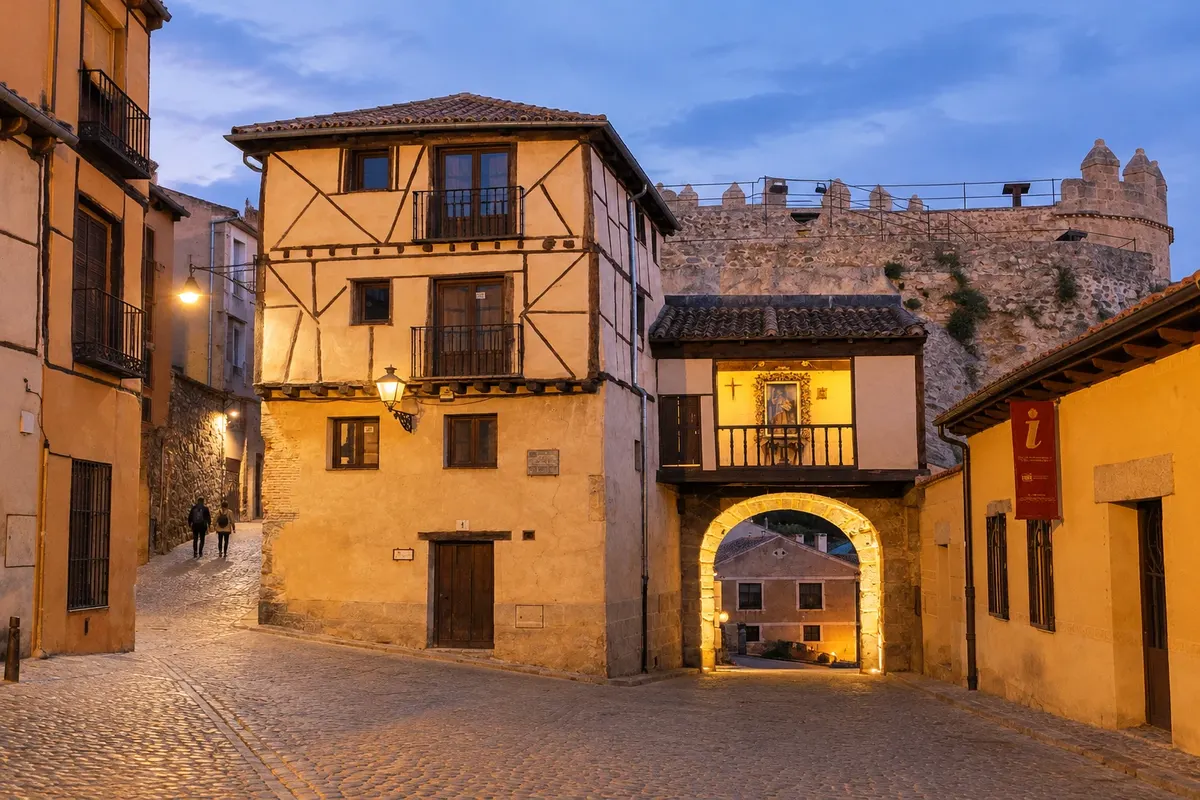
Former Jewish quarter in the southern part of the historic centre, between the Cathedral and the city wall. It has narrow streets, the old Sinagoga Mayor and the Puerta de San Andrés, one of the medieval gates of the city.

Monasterio de la Encarnación
Ávila · Castela e Leão · Monastery

Monasterio de la Encarnación

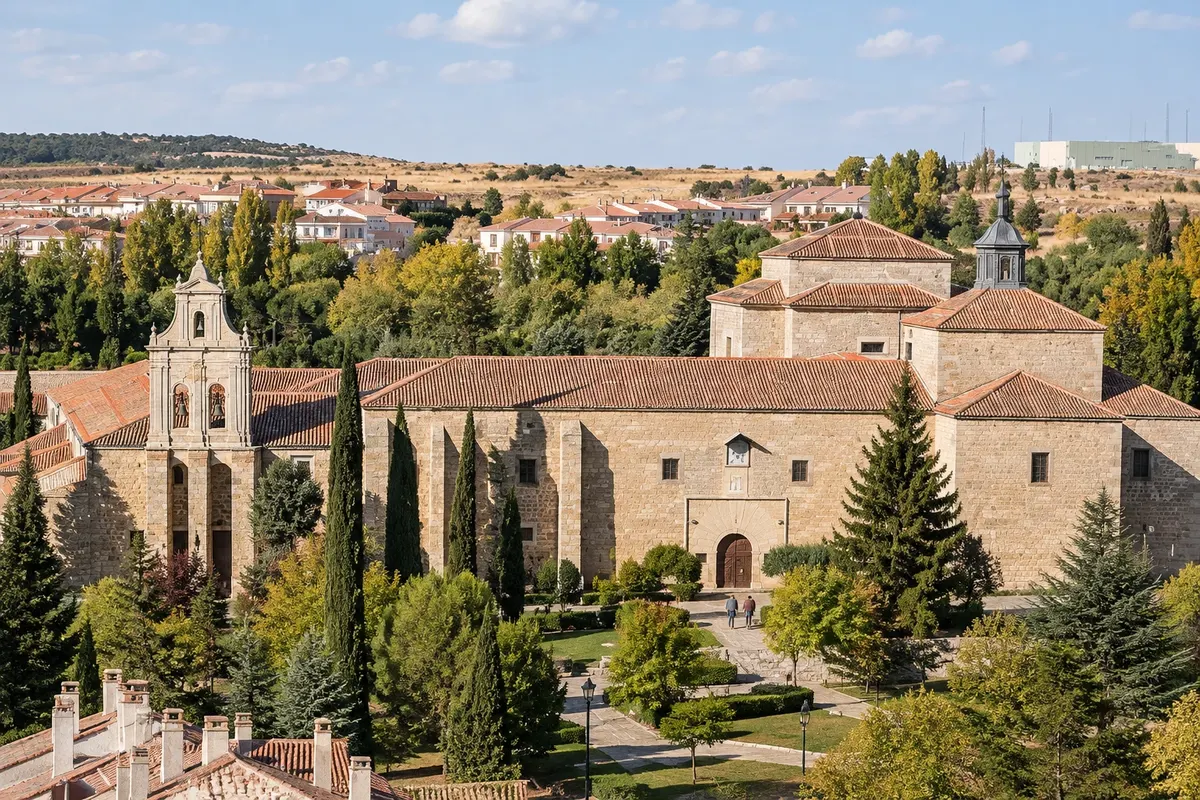
Carmelite monastery outside the wall where Santa Teresa lived from 1535 to 1574 and prepared the reform of the order. It preserves the chapel on the site of her cell and a museum with a drawing by Saint John of the Cross.

Monasterio de San Juan de los Reyes
Toledo · Castela-Mancha · Monastery

Monasterio de San Juan de los Reyes

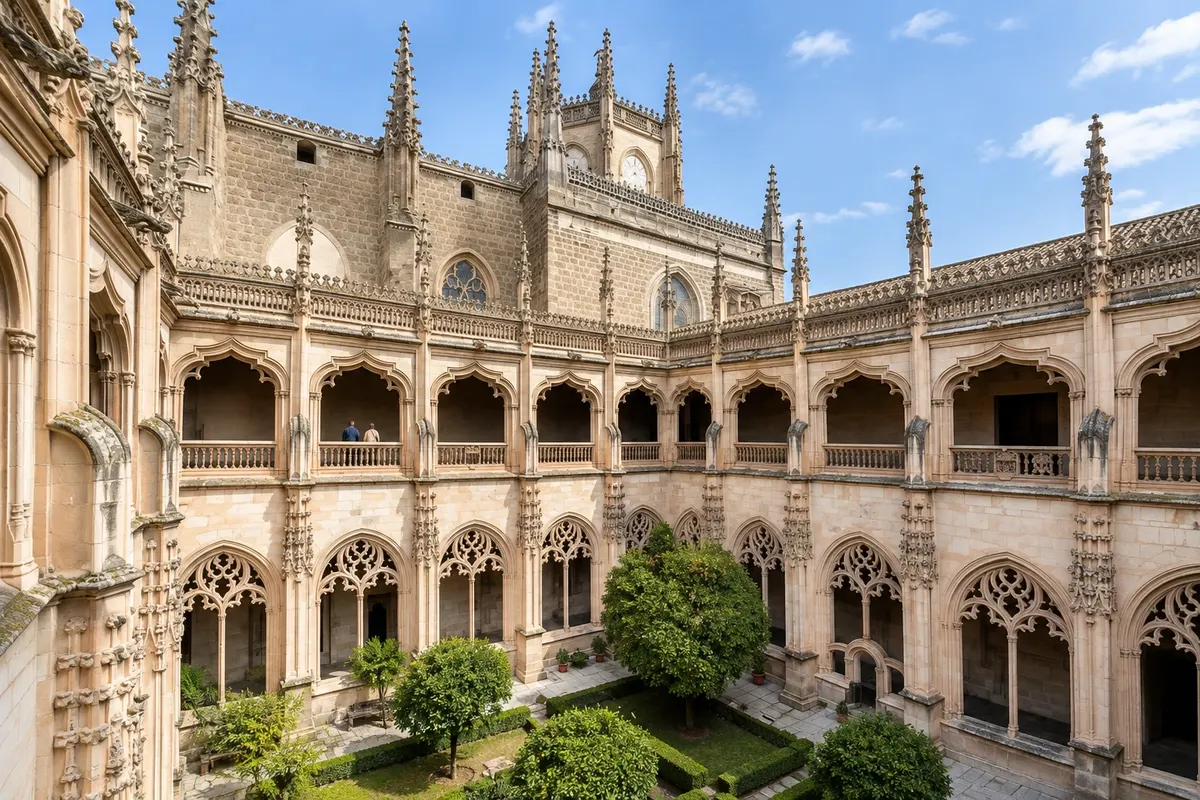
Franciscan monastery ordered built by the Catholic Monarchs to commemorate the Battle of Toro and the birth of Prince Juan. Work by Juan Guas, in the Isabelline Gothic style, with a two-storey cloister.

Iglesia de San Millán
Segóvia · Castela e Leão · Church

Iglesia de San Millán

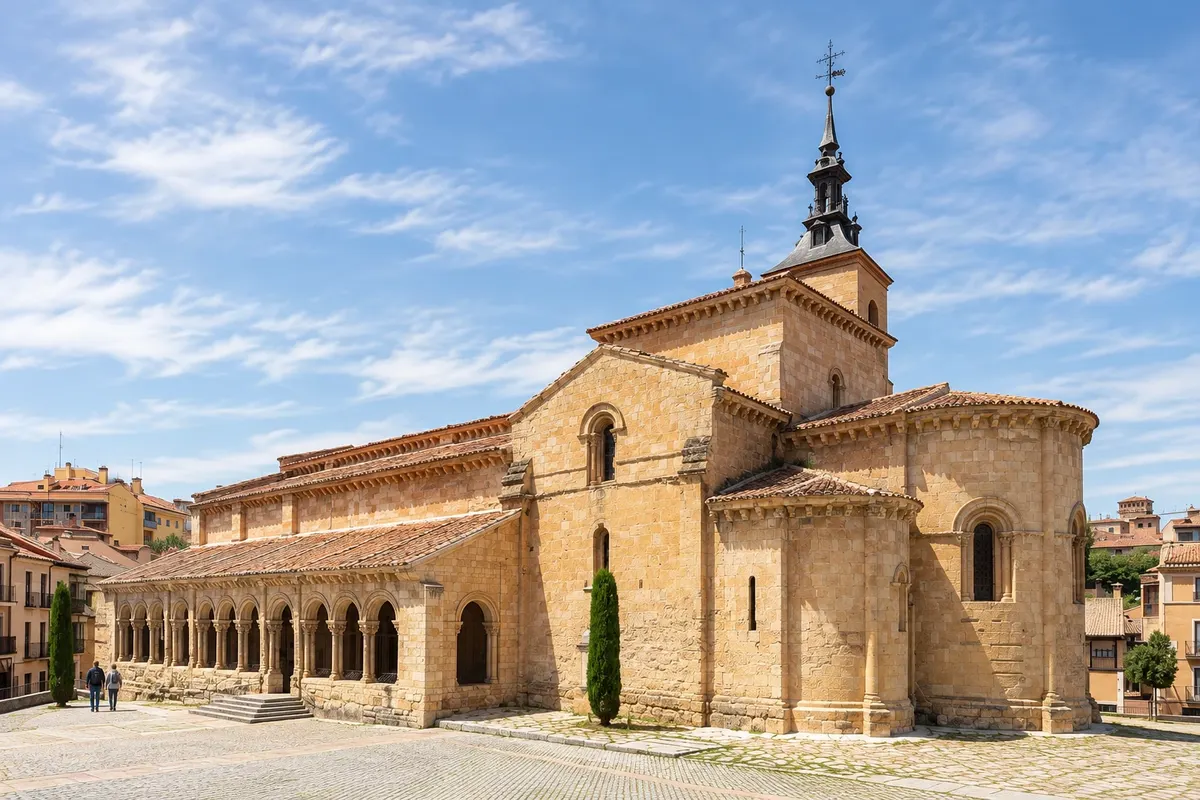
Romanesque church from 1111 to 1126, outside the city wall, near the Aqueduto. It has an 11th-century tower, arcaded galleries and a floor plan inspired by the cathedral of Jaca in Aragão.

Iglesia de Santo Tomé
Toledo · Castela-Mancha · Church

Iglesia de Santo Tomé

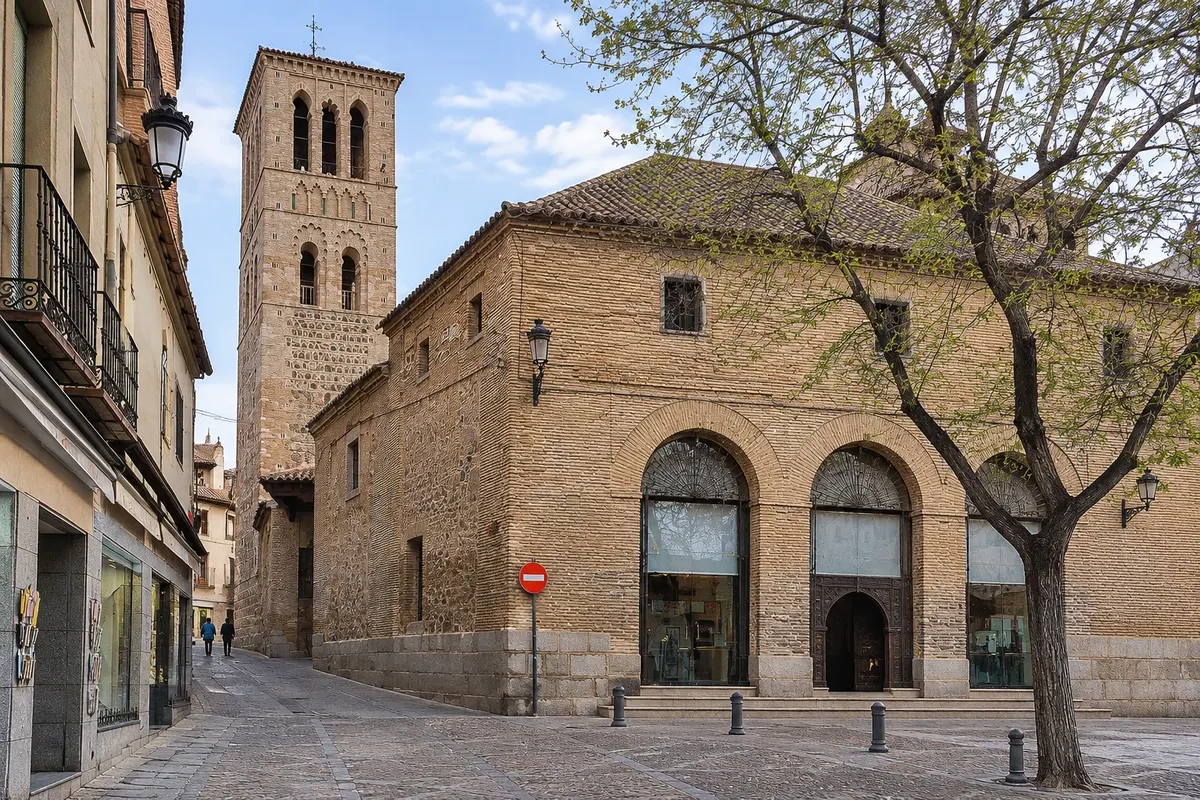
Mudejar-tower church that houses The Burial of the Lord of Orgaz, painted by El Greco in 1586 for the chapel where the lord of Orgaz himself was buried.

Real Monasterio de Santo Tomás
Ávila · Castela e Leão · Monastery

Real Monasterio de Santo Tomás

Gothic Dominican monastery from 1482 to 1493, associated with the Reyes Católicos and Torquemada. It has three cloisters, the tomb of Prince Dom João and a church with a façade sculpted by Gil de Siloé.

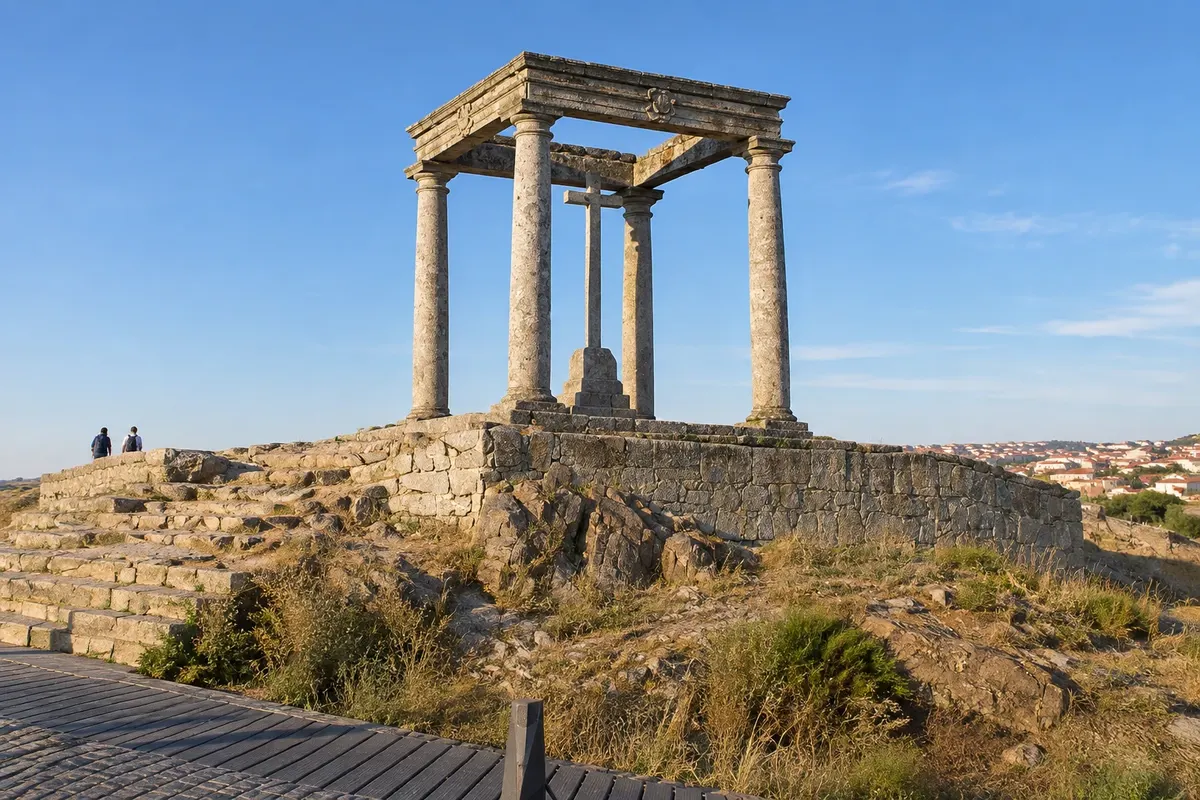
Los Cuatro Postes
Ávila · Castela e Leão · Observation deck

Los Cuatro Postes

Small monument from 1566, with four Doric columns and a granite cross, on the other side of the Adaja river. It is the classic spot to view the whole wall of Ávila.

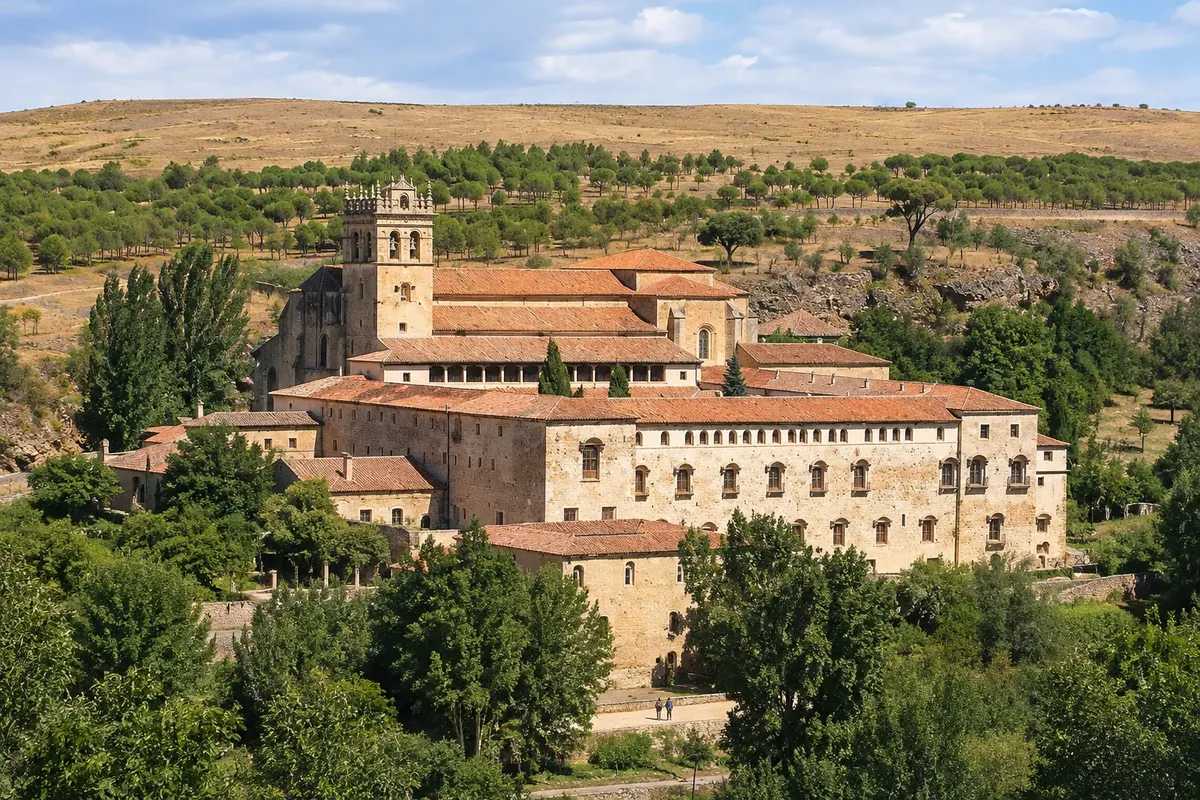
Monasterio de Santa María del Parral
Segóvia · Castela e Leão · Monastery

Monasterio de Santa María del Parral

Hieronymite monastery founded in 1447 by Henrique IV, in the Eresma valley, below the Alcázar. It is still inhabited by monks, and visits are guided at a few fixed times.

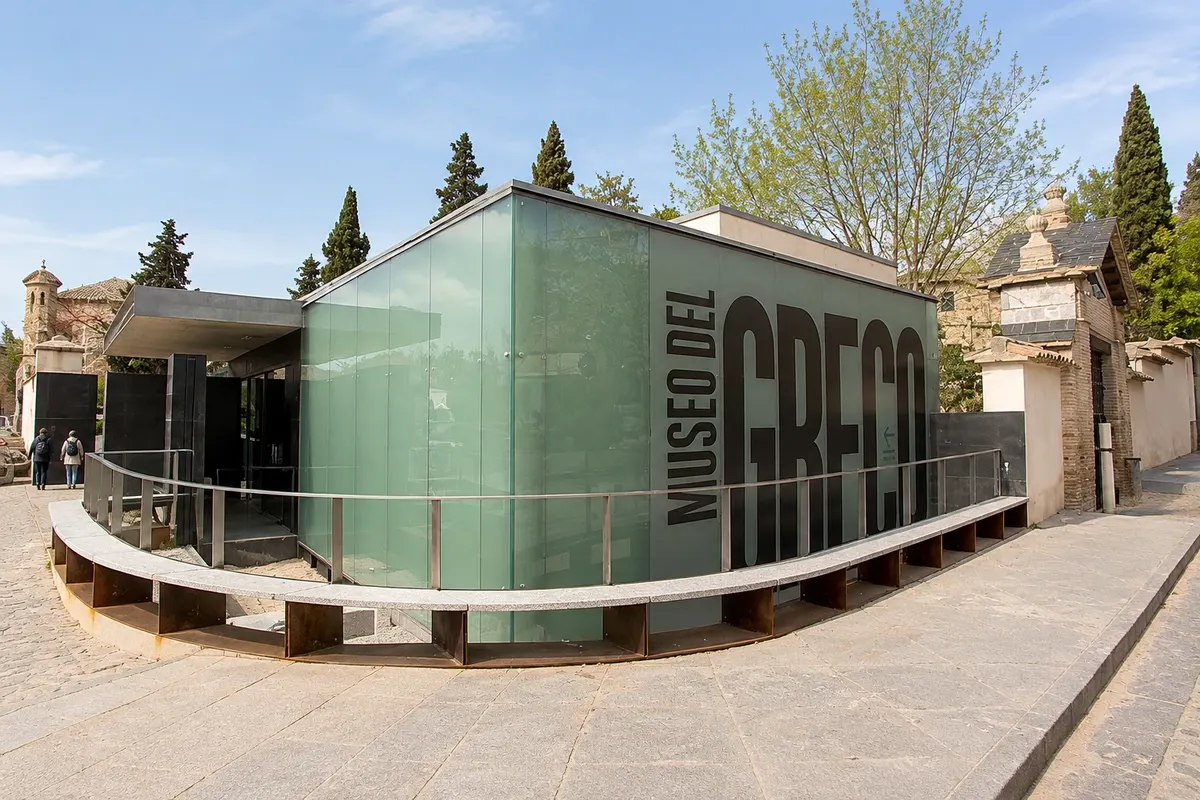
Museo del Greco
Toledo · Castela-Mancha · Museum

Museo del Greco

House-museum opened in 1910 in the old judería, recreating the atmosphere of the painter's time. It houses the complete Apostolado and the View and Plan of Toledo by El Greco.

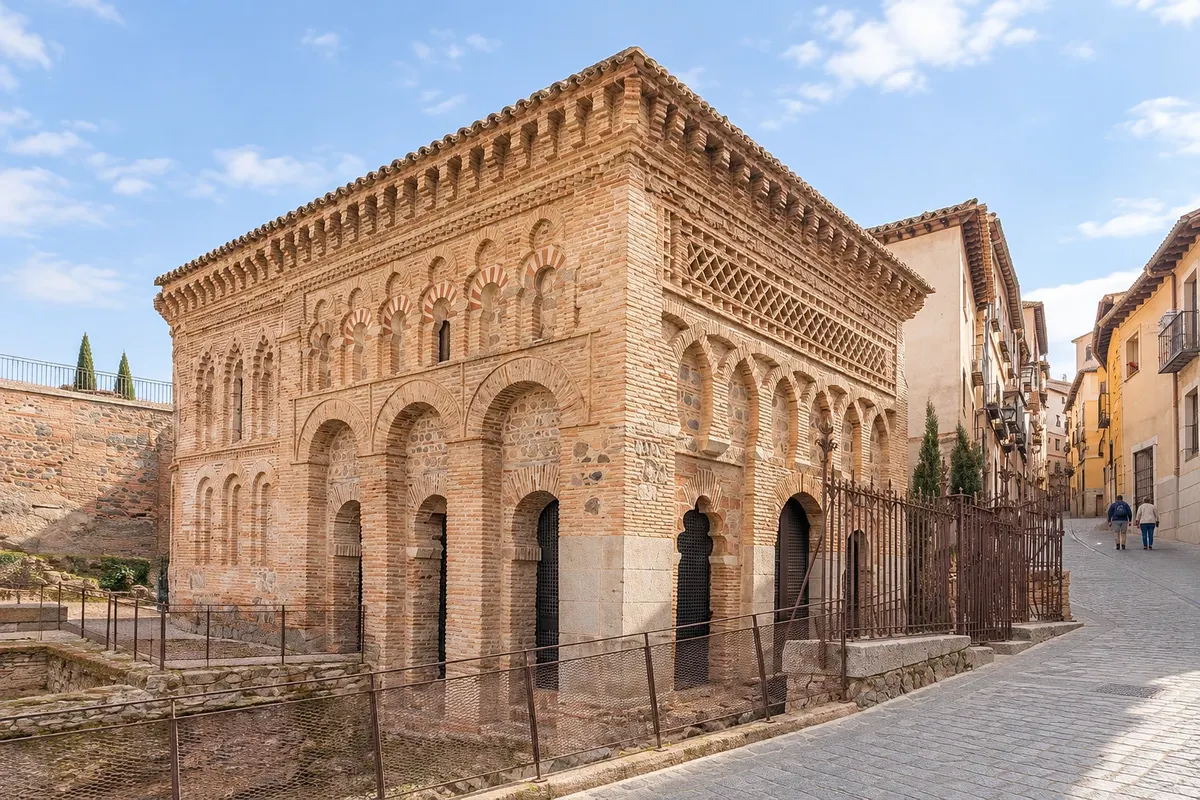
Mezquita del Cristo de la Luz
Toledo · Castela-Mancha · Mosque

Mezquita del Cristo de la Luz

Small mosque completed in December 999, the best-preserved of the ten that Toledo once had. It has nine ribbed vaults and a Christian apse added in the 12th century.

Plaza del Mercado Chico
Ávila · Castela e Leão · Square

Plaza del Mercado Chico

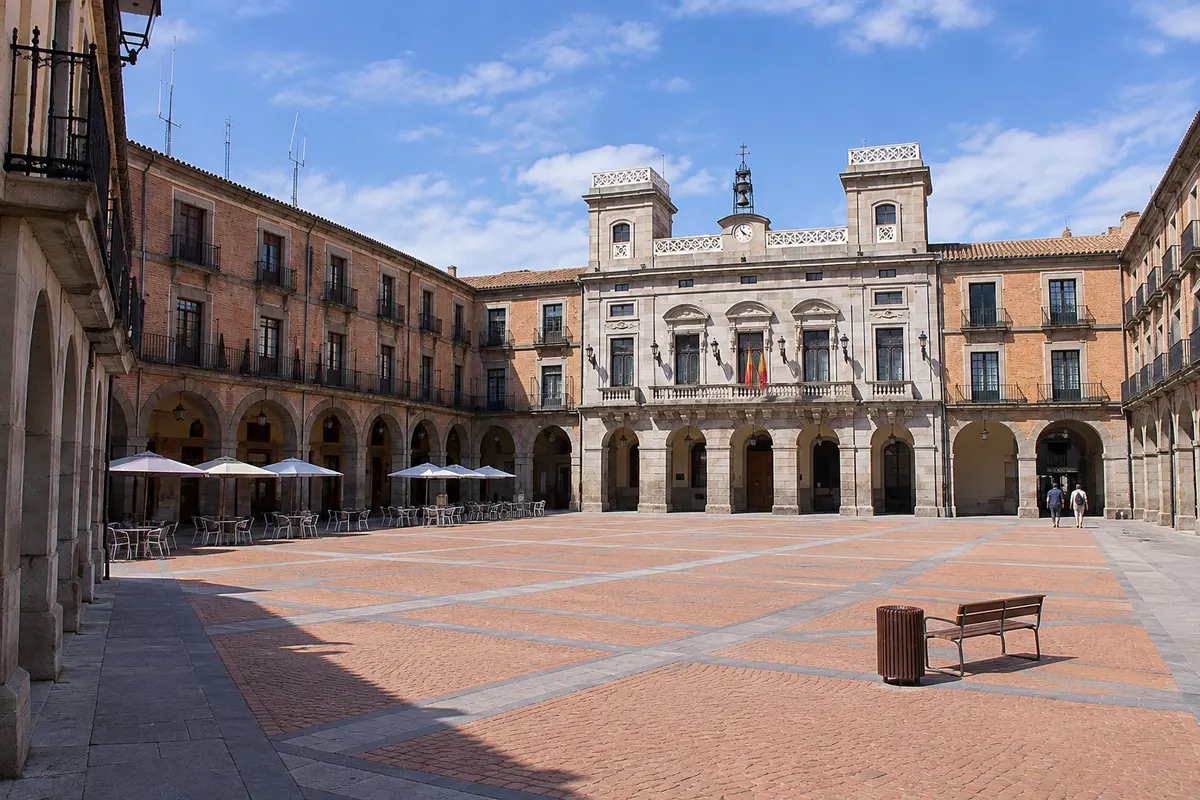
Ávila's main square, inside the wall, with arcades on three sides, the 19th-century town hall and the Iglesia de San Juan Bautista. It is the meeting point of the old town.

Real Casa de Moneda de Segovia
Segóvia · Castela e Leão · Museum

Real Casa de Moneda de Segovia

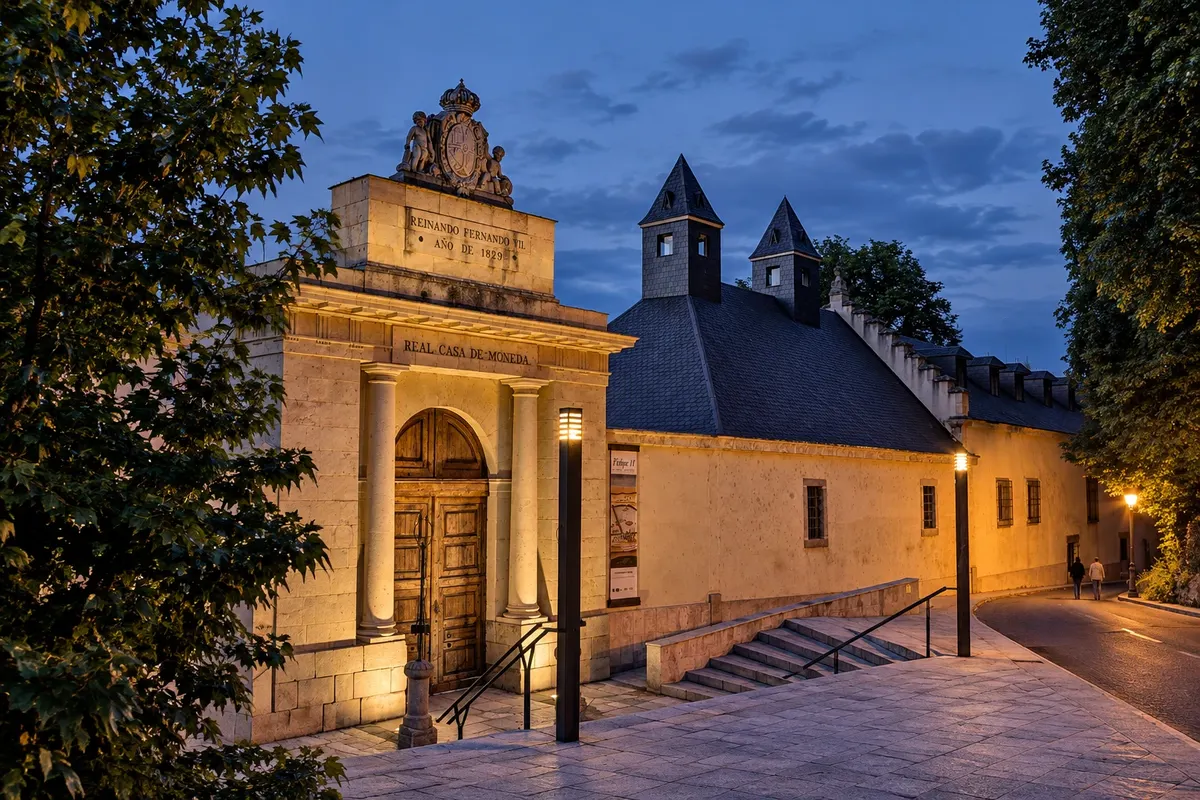
Coin factory commissioned by Filipe II between 1583 and 1588, designed by Juan de Herrera, on the banks of the Eresma. Today it is a museum, with a hydraulic wheel and the Centro de Interpretación del Acueducto.

Iglesia de la Vera Cruz
Segóvia · Castela e Leão · Church

Iglesia de la Vera Cruz

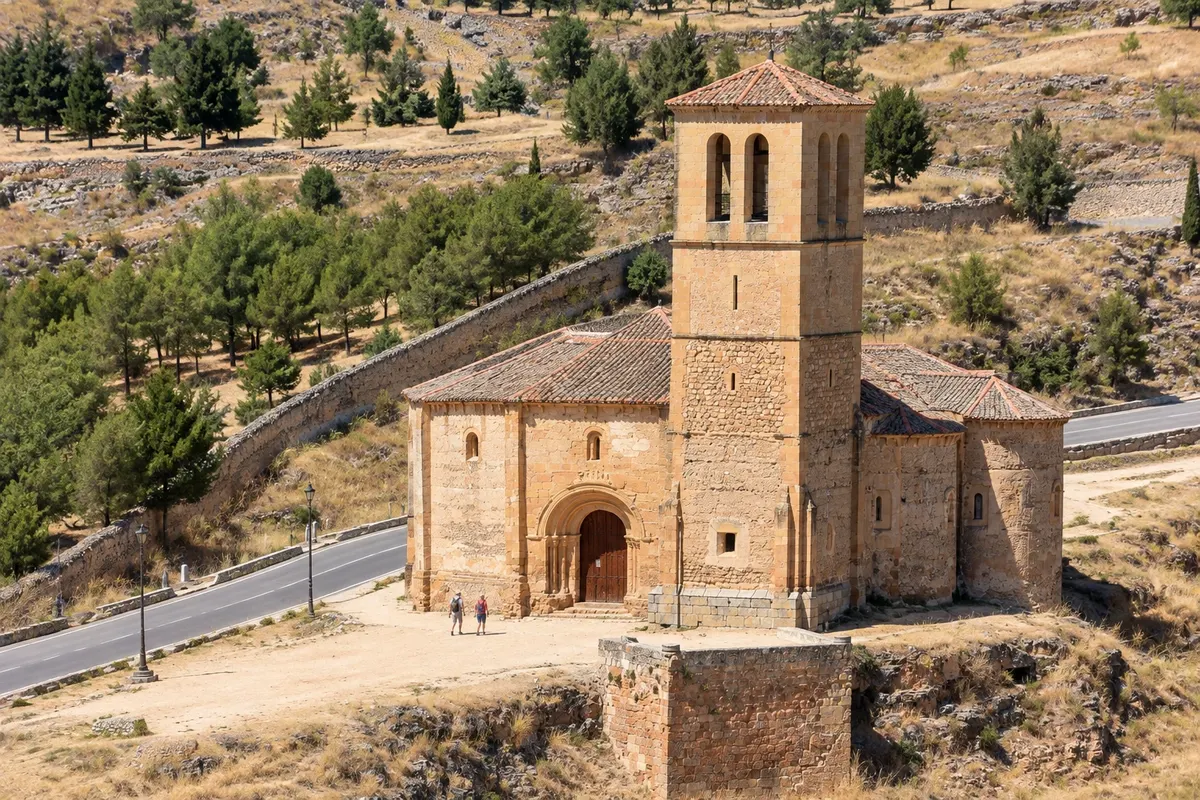
Romanesque twelve-sided church, consecrated in 1208, on the road to Zamarramala, facing the Alcázar. In the center it has a small two-story shrine inspired by the Holy Sepulchre of Jerusalem.

Puente de San Martín
Toledo · Castela-Mancha · Bridge

Puente de San Martín

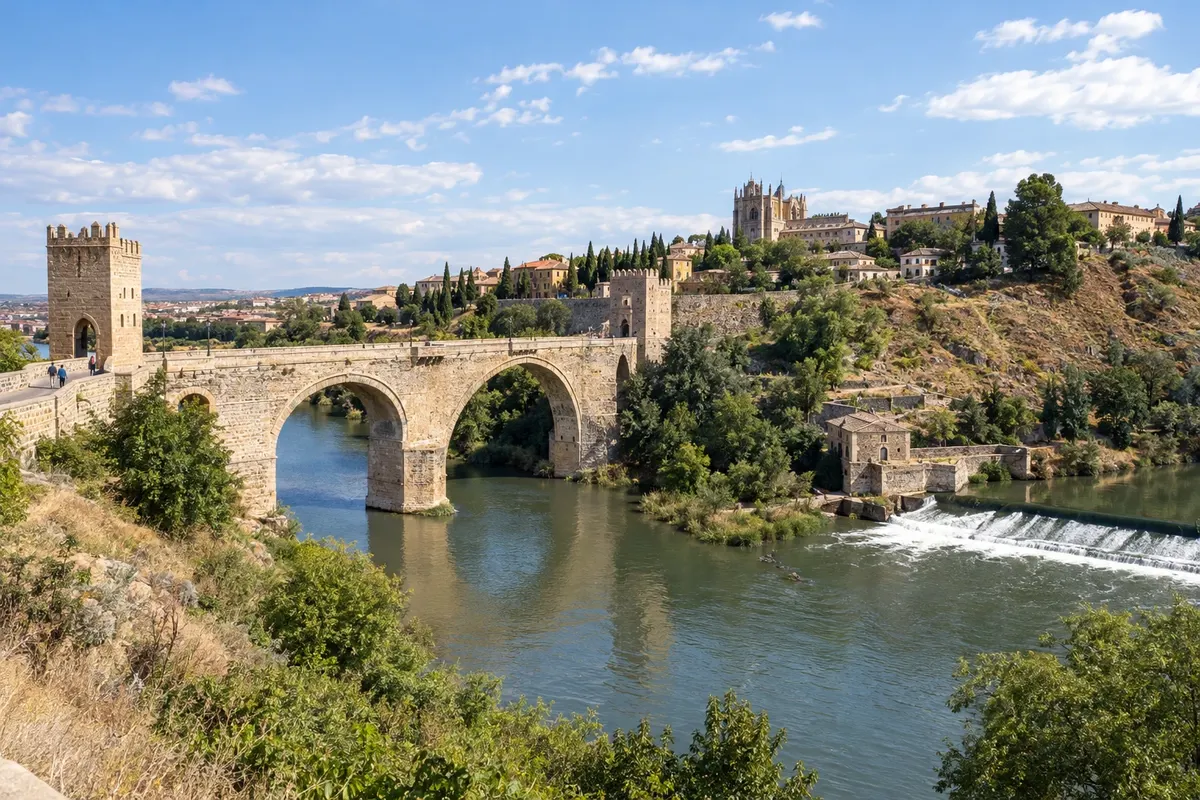
Medieval stone bridge over the Tagus at the western tip of the city, with a large central arch and a tower on each side. It was rebuilt around 1390 by Archbishop Pedro Tenorio.

Mirador de la Pradera de San Marcos
Segóvia · Castela e Leão · Observation deck

Mirador de la Pradera de San Marcos

Lawn on the banks of the Eresma, below the Alcázar, from where you can see the bow-like front of the castle on the rock. It's the classic spot to photograph the Alcázar from the north side.

Puente de Alcántara
Toledo · Castela-Mancha · Bridge

Puente de Alcántara

Bridge of Roman origin over the Tagus at the eastern entrance to the city, at the foot of the Castillo de San Servando. It has a tower with the coats of arms of the Catholic Monarchs and a Baroque arch from 1721.

Palacio Real de La Granja de San Ildefonso
Segóvia · Castela e Leão · Palace

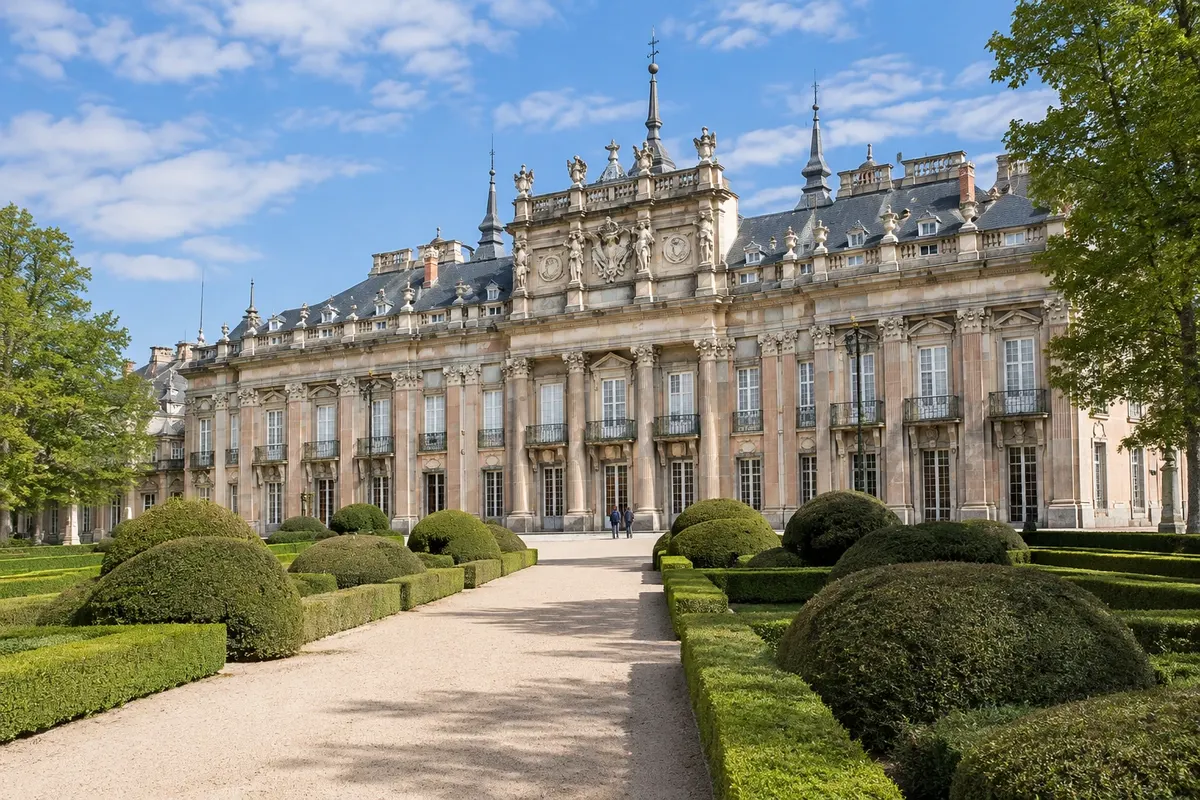
Palacio Real de La Granja de San Ildefonso

Summer palace of Filipe V, about 13 km from Segóvia, at the foot of the Sierra de Guadarrama. The French-style gardens have monumental fountains with lead sculptures.

Puerta Nueva de Bisagra
Toledo · Castela-Mancha · Wall

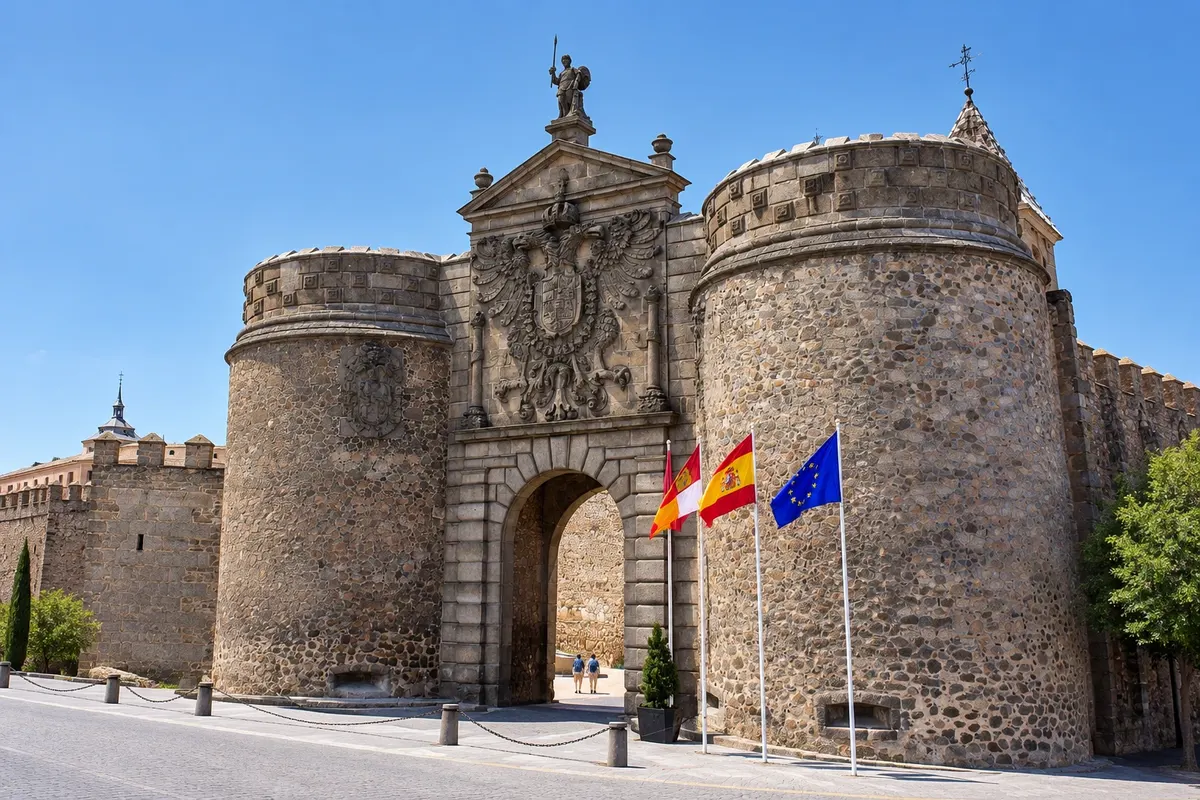
Puerta Nueva de Bisagra

Main gate of Toledo's walls, rebuilt between 1540 and 1576 with the participation of Alonso de Covarrubias. It has two round towers, the two-headed eagle of the imperial city, and a statue of Charles V in the courtyard.

Mirador del Valle
Toledo · Castela-Mancha · Observation deck

Mirador del Valle

Viewpoint on the south bank of the Tejo, on the road that skirts the city, offering the classic view of Toledo: the historic quarter atop the hill, the Cathedral, the Alcázar and the river wrapping around it.

Plaza de Zocodover
Toledo · Castela-Mancha · Square

Plaza de Zocodover

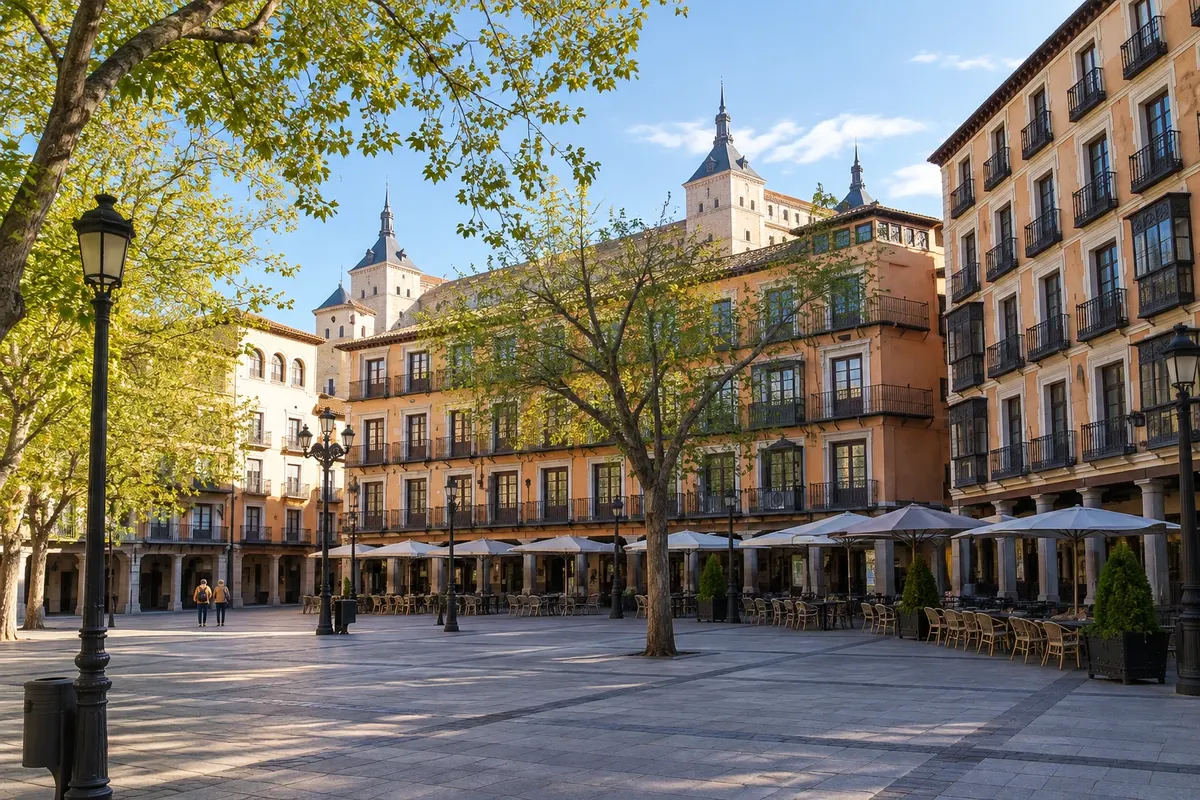
Main square of the old town, whose name comes from Arabic and means market for pack animals. It is a meeting point for locals, featuring the Arco de la Sangre and the terminus for the buses that climb up from the station.

Museo de Santa Cruz
Toledo · Castela-Mancha · Museum

Museo de Santa Cruz

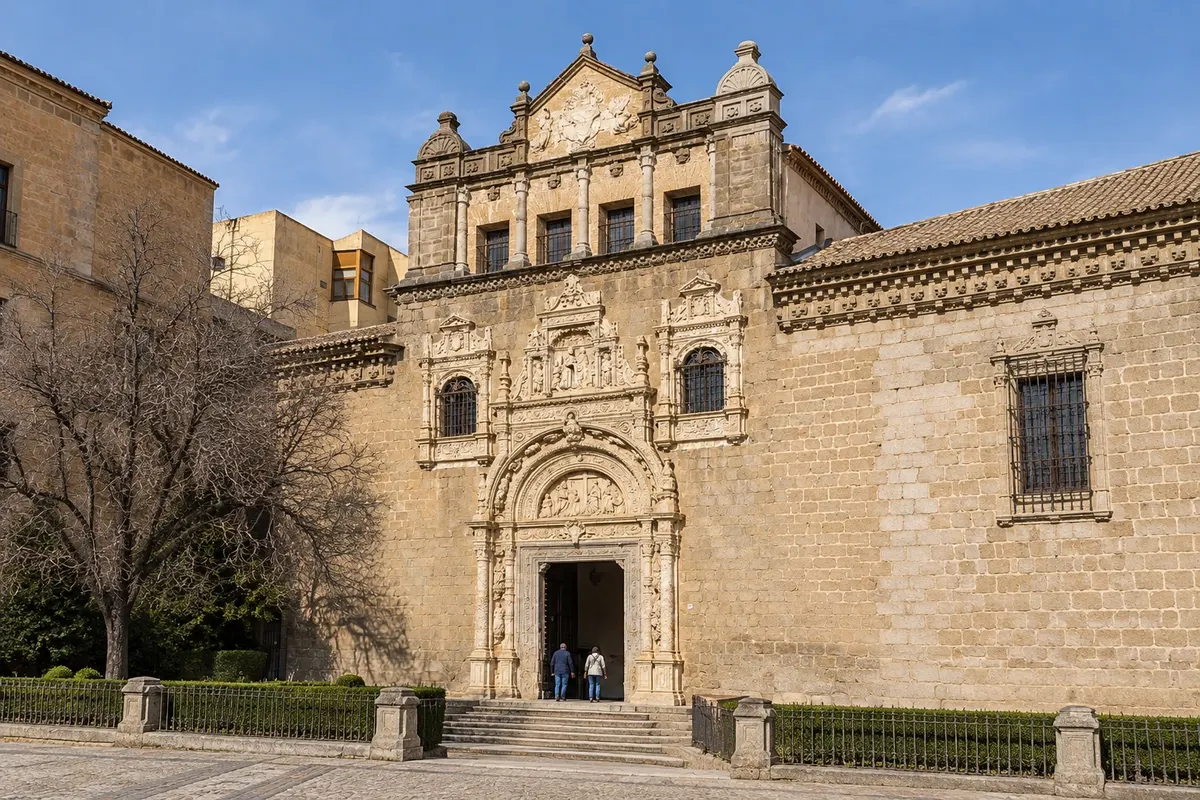
Museum in a former hospital from the early 16th century, with a plateresque portal by Alonso de Covarrubias. It contains paintings by El Greco from various periods, ceramics, tapestries and archaeological finds.

Iglesia de San Ildefonso
Toledo · Castela-Mancha · Church

Iglesia de San Ildefonso

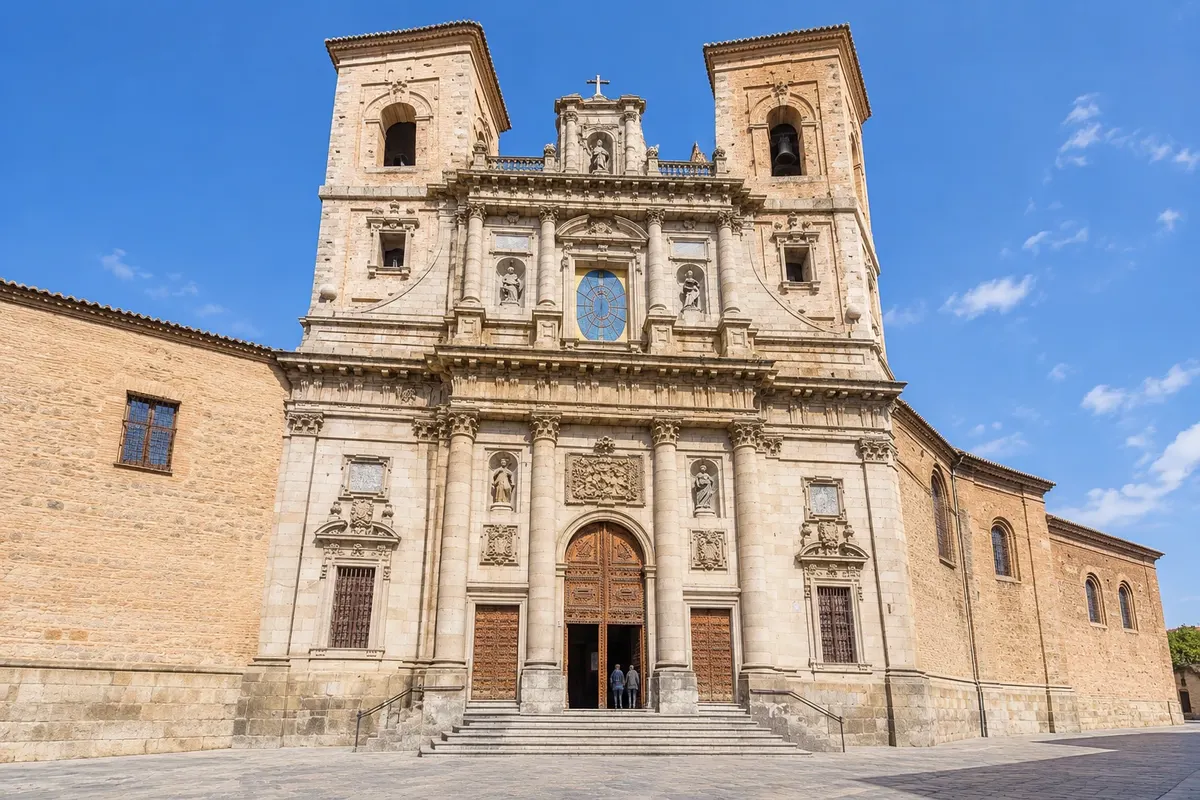
Baroque church of the Jesuits, built between 1629 and 1765 in the center of the old town. From the two towers on the façade you get one of the broadest views over the roofs of Toledo.

Before you go

Practical information

A little planning leaves more time to enjoy the journey.

When to go

Spring (April and May) and autumn (September to November) usually have pleasant temperatures for walking. Segóvia and Ávila are at higher altitude and tend to have cold winters, from December to February.

The seasons shown are the most usual ones; nature doesn't always follow the calendar.

How many days to stay

One day per city is the minimum for a day trip from Madri. Toledo deserves two days for those who want to visit the museums and synagogues at a relaxed pace. To see all three without rushing, allow three to four days. Staying overnight in one of them lets you see the streets at night, when tour groups have already returned to Madri.

Which city to stay in

In Toledo, the historic centre inside the hill is all walkable; near the Plaza de Zocodover and the Cathedral the streets are busier, and in the old Jewish quarter, near San Juan de los Reyes, quieter. In Segóvia, the area between the Aqueduct, the Plaza Mayor and the Cathedral. In Ávila, inside the walls, near the Cathedral. Those who prefer a single base can stay in Madri and do day trips, near the Atocha station (for Toledo) or Chamartín (for Segóvia and Ávila).

Respect the place

Take your trash with you, follow the signs and support local businesses. In natural areas, follow the visiting guidelines.

Get your questions answered

Frequently asked questions about Toledo, Segóvia and Ávila

Can you do a day trip from Madri to Toledo, Segóvia and Ávila?

Yes —and it is the most common way to visit the three. Toledo is about half an hour from Madri on the Avant train, which departs from Puerta de Atocha and arrives at Toledo station, roughly 2 km from the centre. Segóvia has the high-speed station Segovia-Guiomar, linked to Madri-Chamartín; it is about 7 km from the centre, and you need a city bus or taxi to reach the Aqueduct. Ávila has a conventional train from Madri, which is slower. In all cases, leave early, check the return times and buy train tickets in advance.

Can you see two cities in the same day?

Segóvia and Ávila are relatively close to each other and there are day tours that combine them, but time in each is short. Toledo is on the other side of Madri, to the south, and does not pair with the others in the same day. To see them properly, ideally allow one day per city.

Do I need a car?

No. Trains cover all three from Madri, and the historic centres are walked on foot. Toledo's streets are narrow and steep, and driving inside the old town is difficult. A car only helps to link Segóvia and Ávila with each other or to include villages in the same route.

Explore other destinations Search by state and city
Back