

 Brazil
 Argentina
 Chile
Chile Colombia
 Peru
Peru Uruguay
 Germany
 Belgium
 France
 Greece
 the Netherlands
 Ireland
 Italy
Italy Portugal
 the United Kingdom
 Switzerland
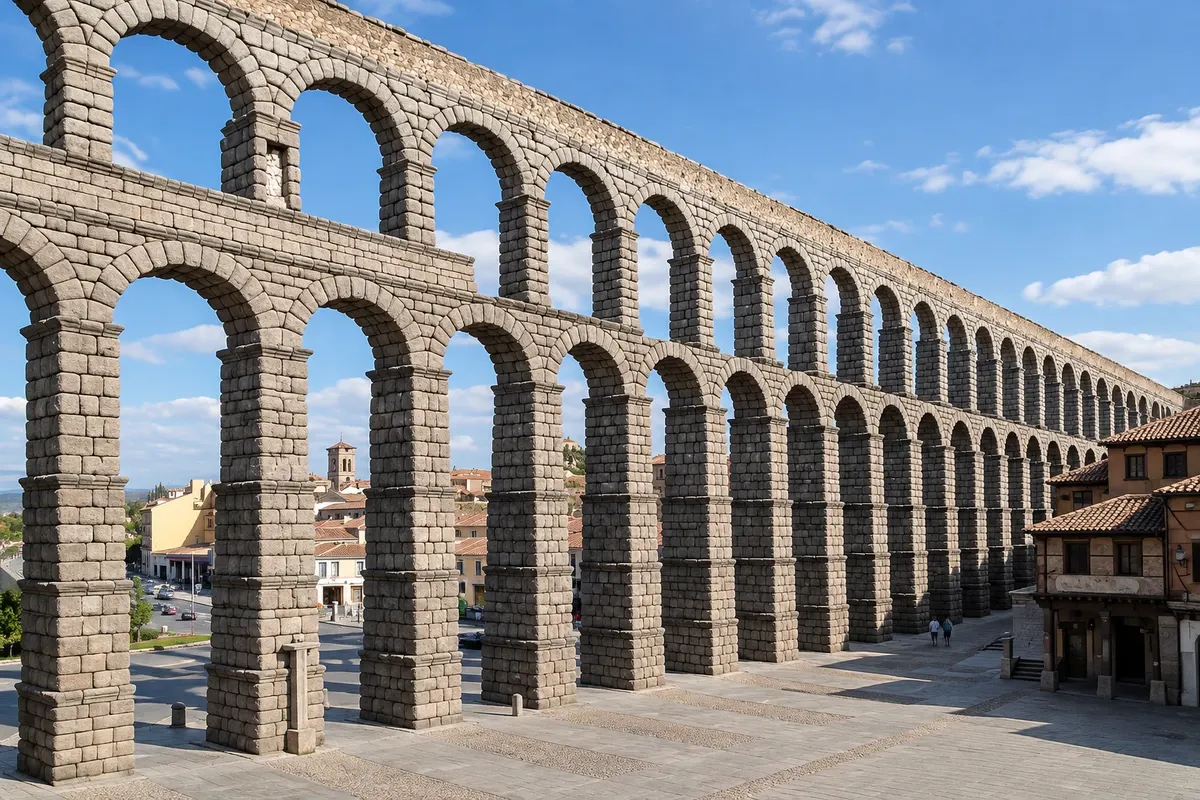
Monument
Acueducto de Segovia
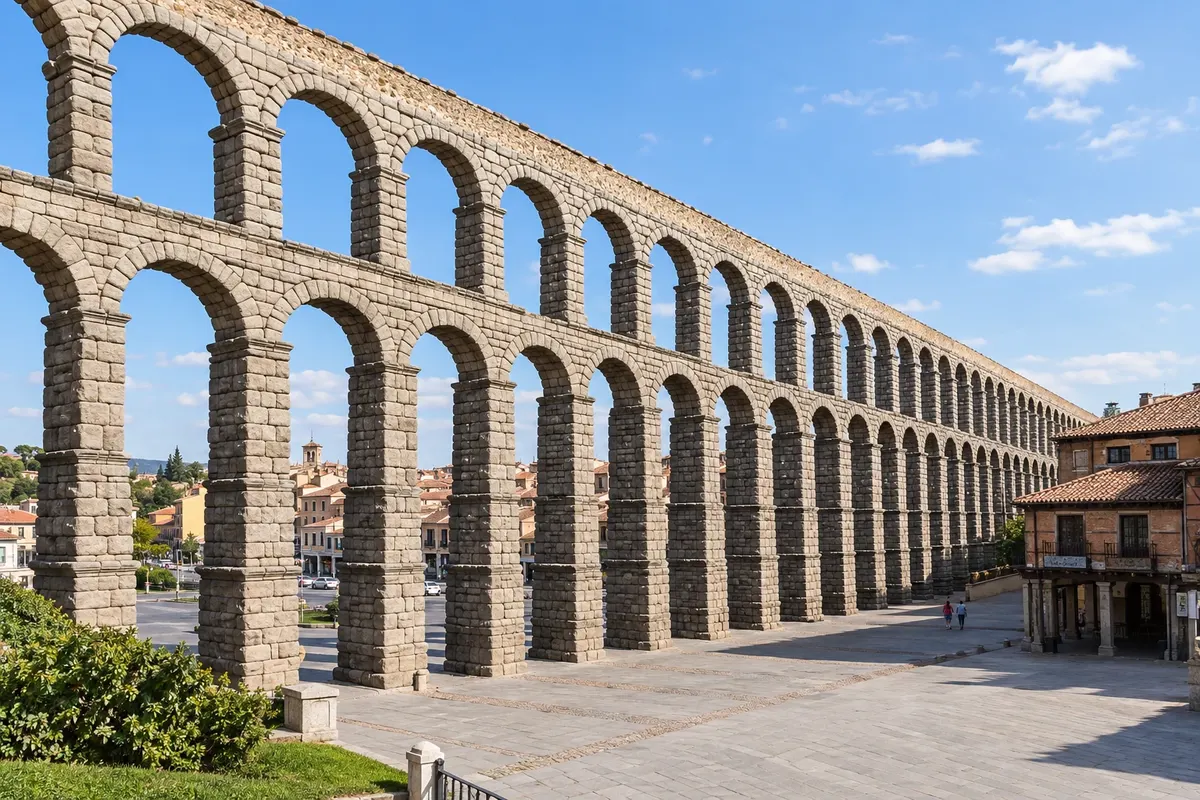
Roman Aqueduto from the early 2nd century, with 167 granite arches assembled without mortar. The arcade crosses the Plaza del Azoguejo and reaches 28 meters at its highest point.
Castela e Leão · Spain
In the destination Toledo, Segóvia and Ávila.
In the photo: Aqueduto de Segóvia
Illustrative images. The pictures in this guide are illustrations based on the real place, not photographs, and may differ from it.
The city
Segóvia, in Castela e Leão, sits on a rocky outcrop about 1,000 meters above sea level, north of the serra de Guadarrama. The historic center and the Aqueduto romano are a World Heritage Site. Besides the Aqueduto, the city has the Alcázar, the Gothic Cathedral, the Plaza Mayor, the Judería and Romanesque churches such as San Millán. In the valley lie the monastery of El Parral, the Casa de Moneda and the Vera Cruz; 13 km away is the Palácio de La Granja. The language is Spanish.
There's no accommodation in the guide yet in Segóvia.
There are no restaurants in the guide yet in Segóvia.
Know a good one? Recommend it to ushow to get there · how many days · itinerary · questions
The local experience
Roman Aqueduto from the early 2nd century, with 167 granite arches assembled without mortar. The arcade crosses the Plaza del Azoguejo and reaches 28 meters at its highest point.
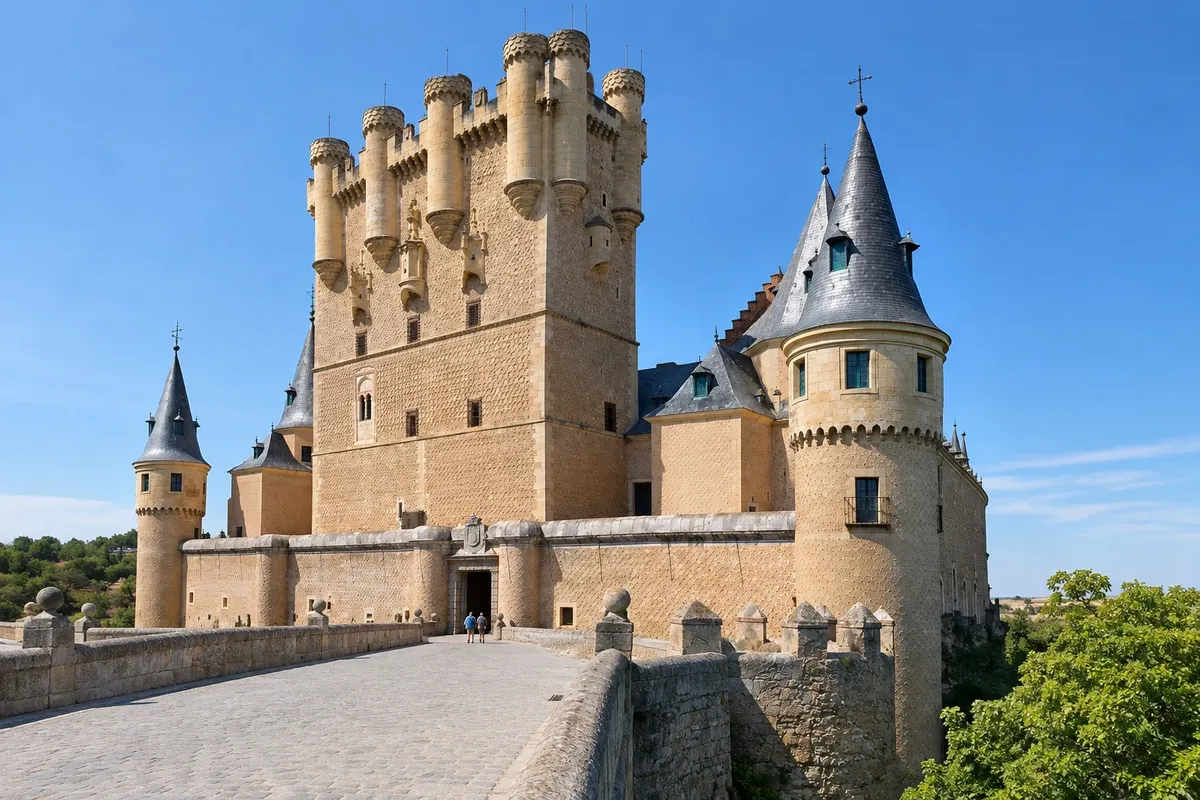
Castle-palace on the rocky spur of Segóvia, between the Eresma and Clamores valleys. It was a residence of the kings of Castile, a state prison and the Real Colegio de Artillería, and it has the Torre de Juan II open to visitors.
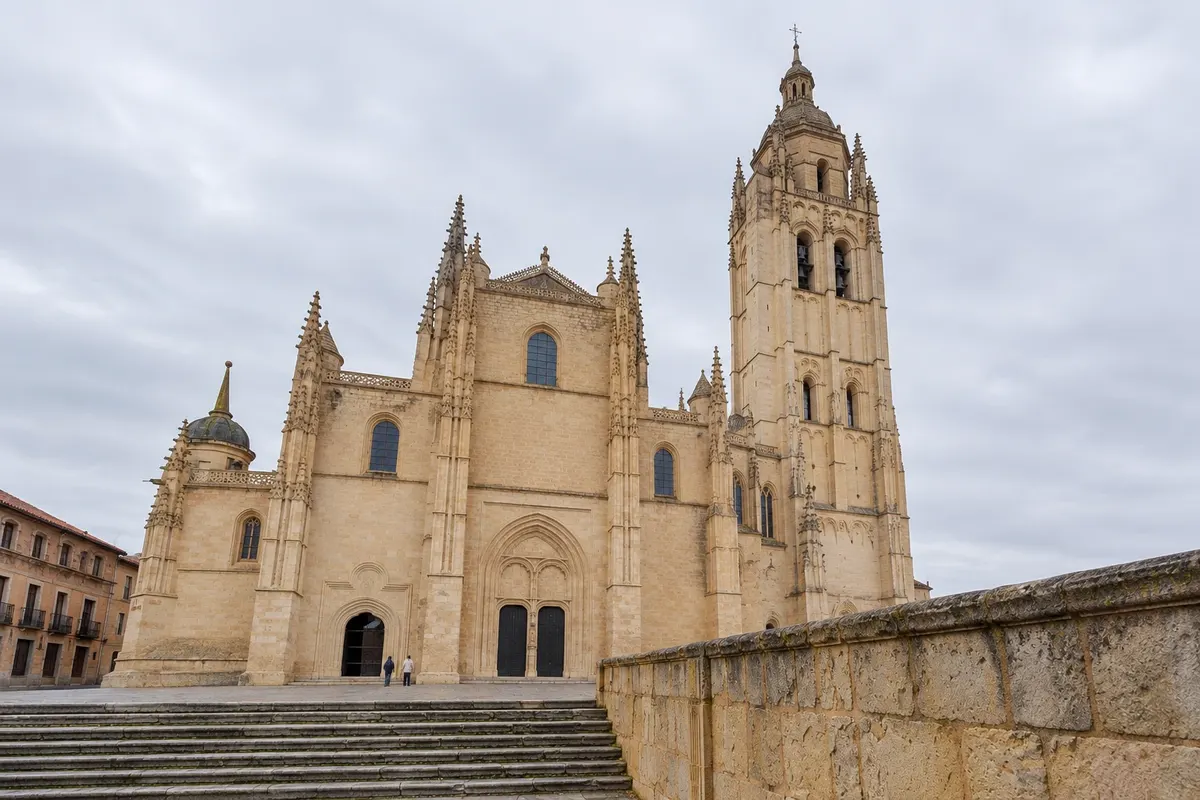
Late Gothic cathedral begun in 1525 by Juan Gil de Hontañón, at the highest point of the city. It has a tower of about 88 metres with guided visits and a cloister brought from the old cathedral.
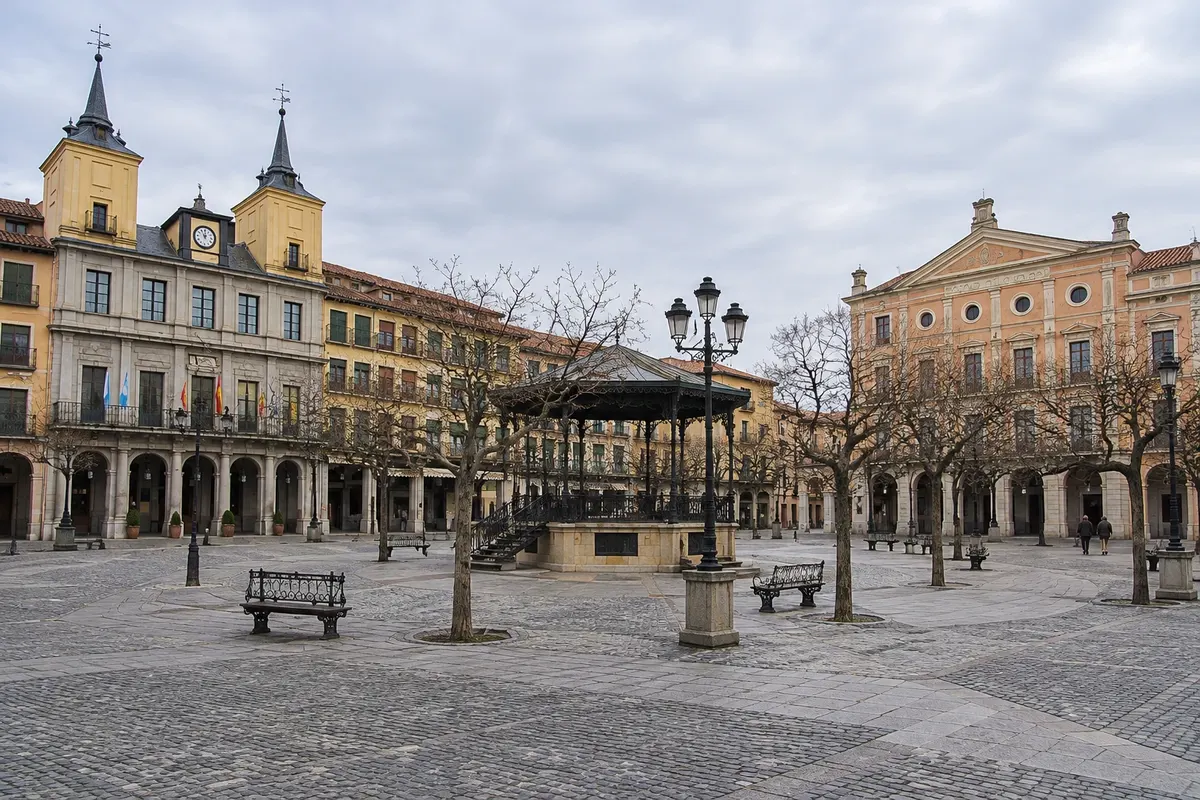
Main square of the old town, with the Cathedral's apse in the background, the town hall, the Teatro Juan Bravo and the Iglesia de San Miguel. It was there that Isabella the Catholic was proclaimed Queen of Castile in 1474.
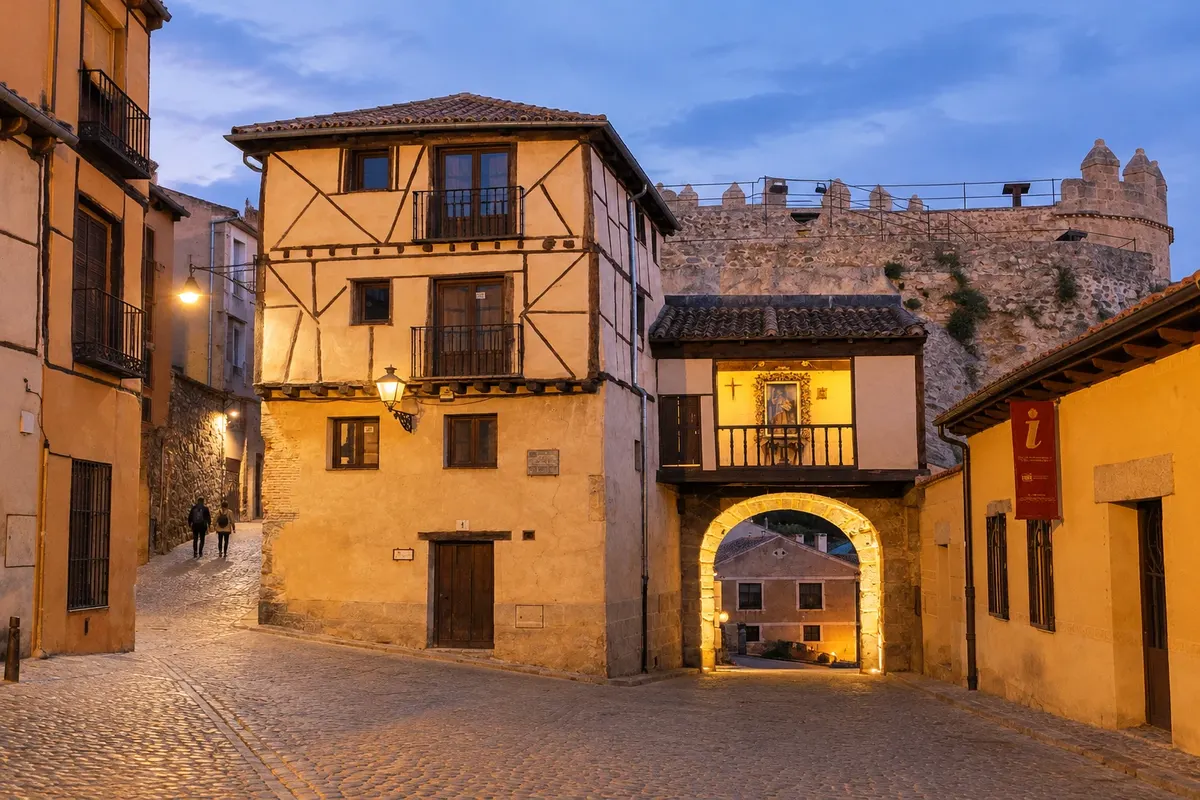
Former Jewish quarter in the southern part of the historic centre, between the Cathedral and the city wall. It has narrow streets, the old Sinagoga Mayor and the Puerta de San Andrés, one of the medieval gates of the city.
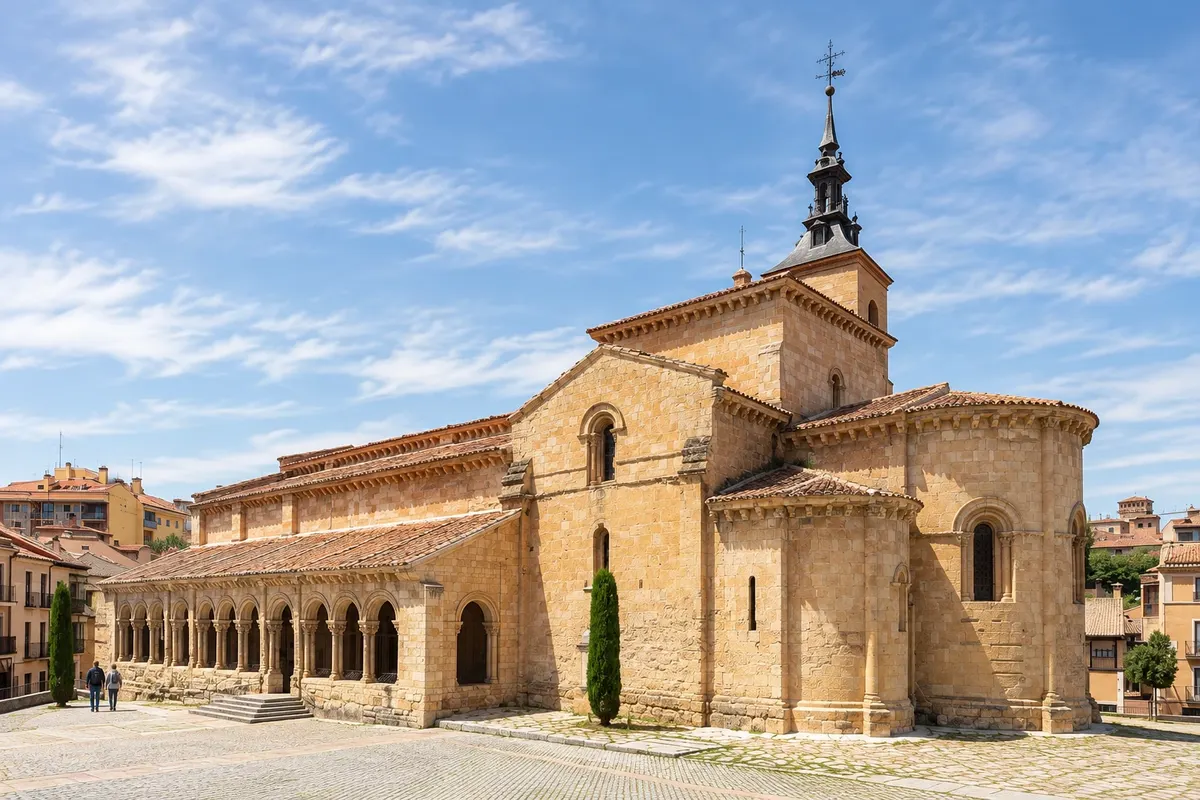
Romanesque church from 1111 to 1126, outside the city wall, near the Aqueduto. It has an 11th-century tower, arcaded galleries and a floor plan inspired by the cathedral of Jaca in Aragão.
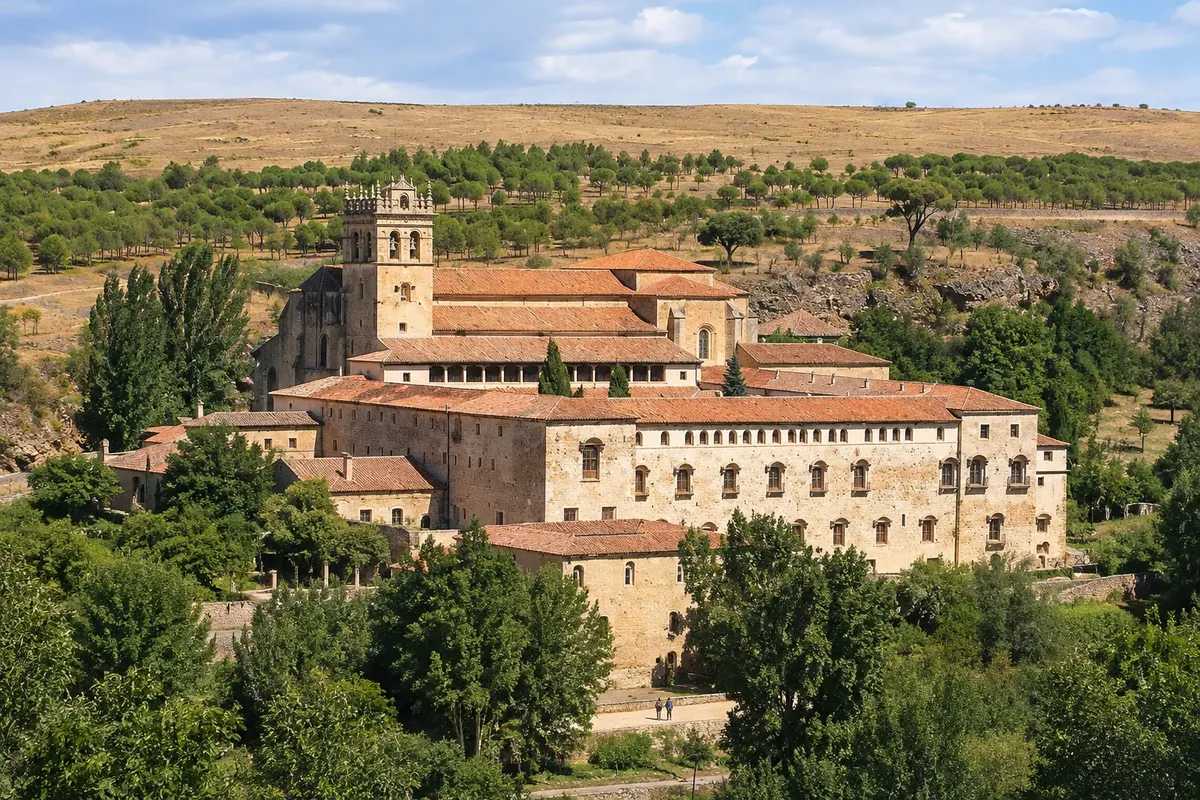
Hieronymite monastery founded in 1447 by Henrique IV, in the Eresma valley, below the Alcázar. It is still inhabited by monks, and visits are guided at a few fixed times.
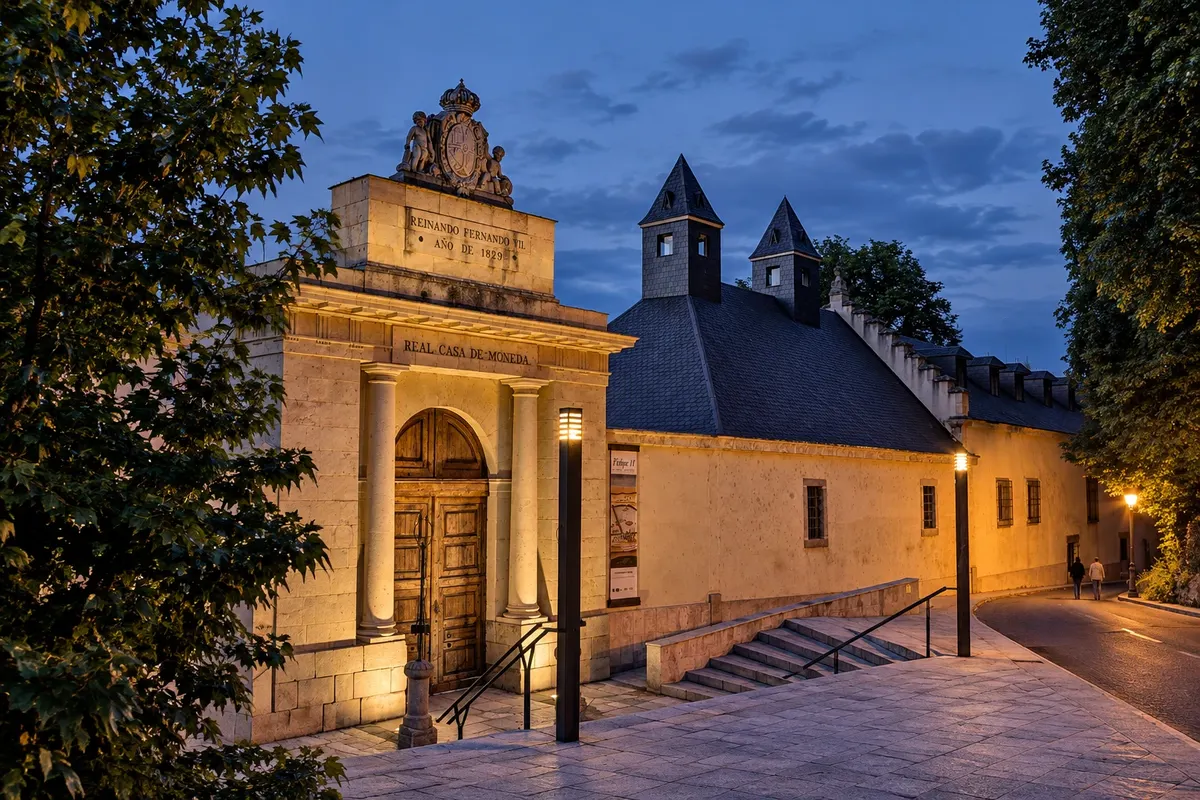
Coin factory commissioned by Filipe II between 1583 and 1588, designed by Juan de Herrera, on the banks of the Eresma. Today it is a museum, with a hydraulic wheel and the Centro de Interpretación del Acueducto.
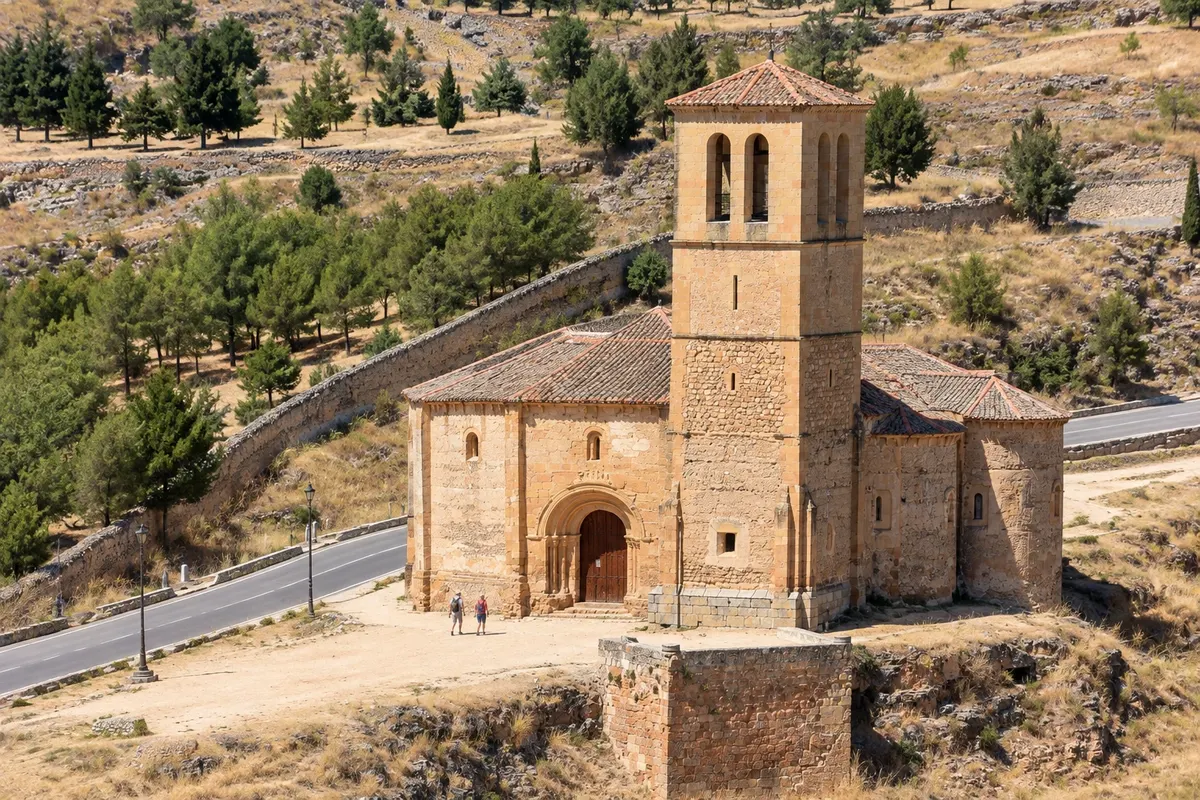
Romanesque twelve-sided church, consecrated in 1208, on the road to Zamarramala, facing the Alcázar. In the center it has a small two-story shrine inspired by the Holy Sepulchre of Jerusalem.
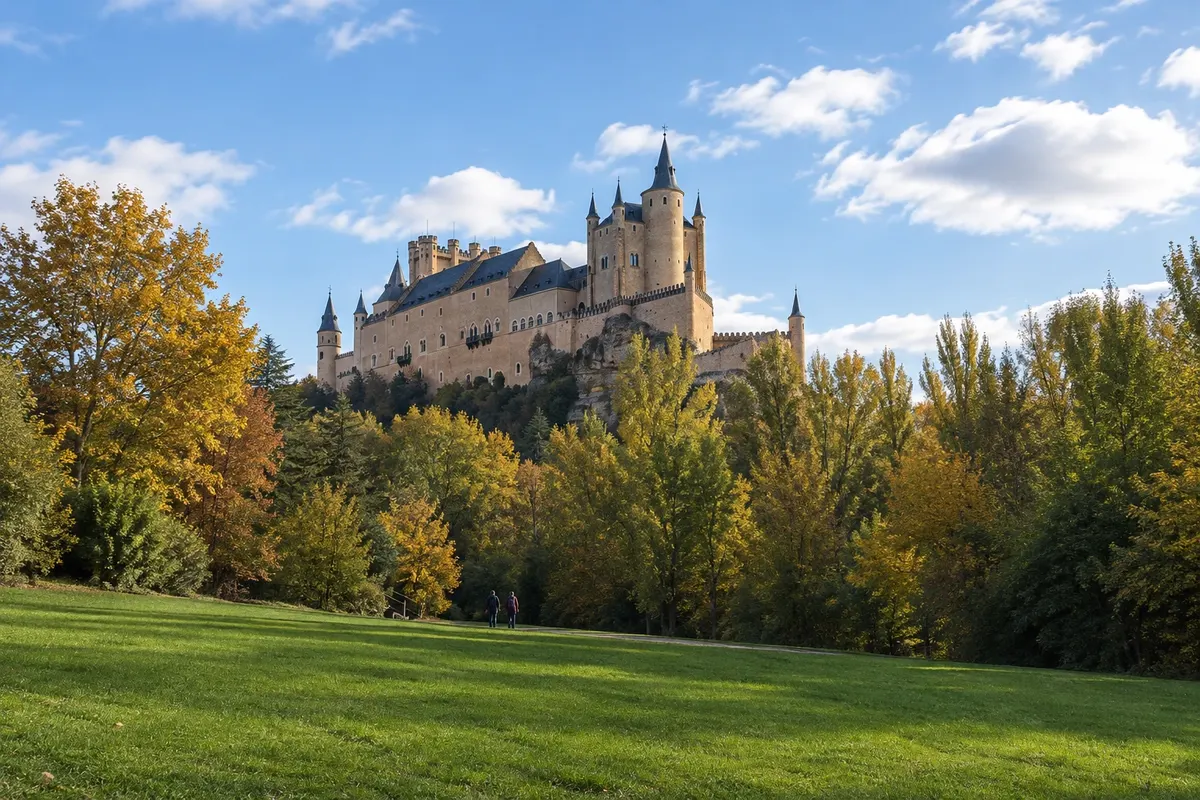
Lawn on the banks of the Eresma, below the Alcázar, from where you can see the bow-like front of the castle on the rock. It's the classic spot to photograph the Alcázar from the north side.
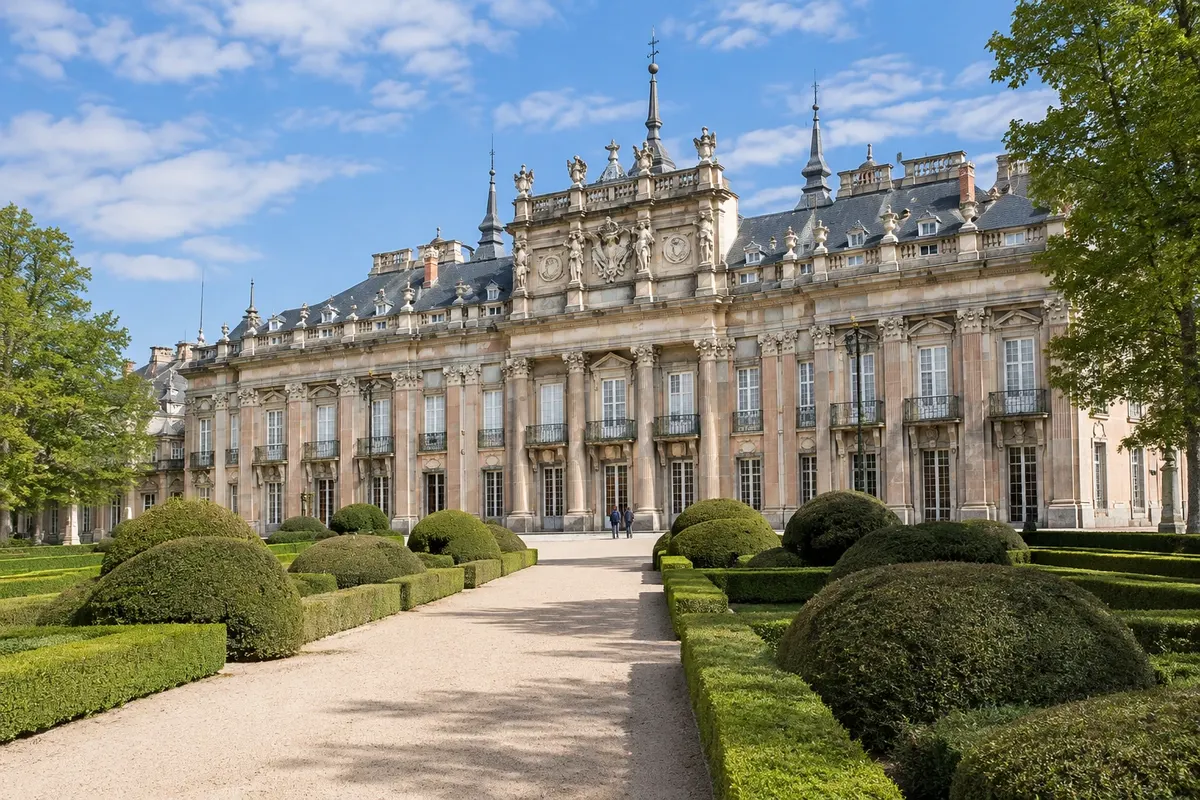
Summer palace of Filipe V, about 13 km from Segóvia, at the foot of the Sierra de Guadarrama. The French-style gardens have monumental fountains with lead sculptures.