Manaus
Manaus brings together rubber-boom heritage and Amazon scenery on the banks of the Rio Negro. Teatro Amazonas, the markets and the cultural venues of the historic center tell different chapters of the state capital's story.
AM · Brazil
Illustrative images. The pictures in this guide are illustrations based on the real place, not photographs, and may differ from it.
Get to know the place
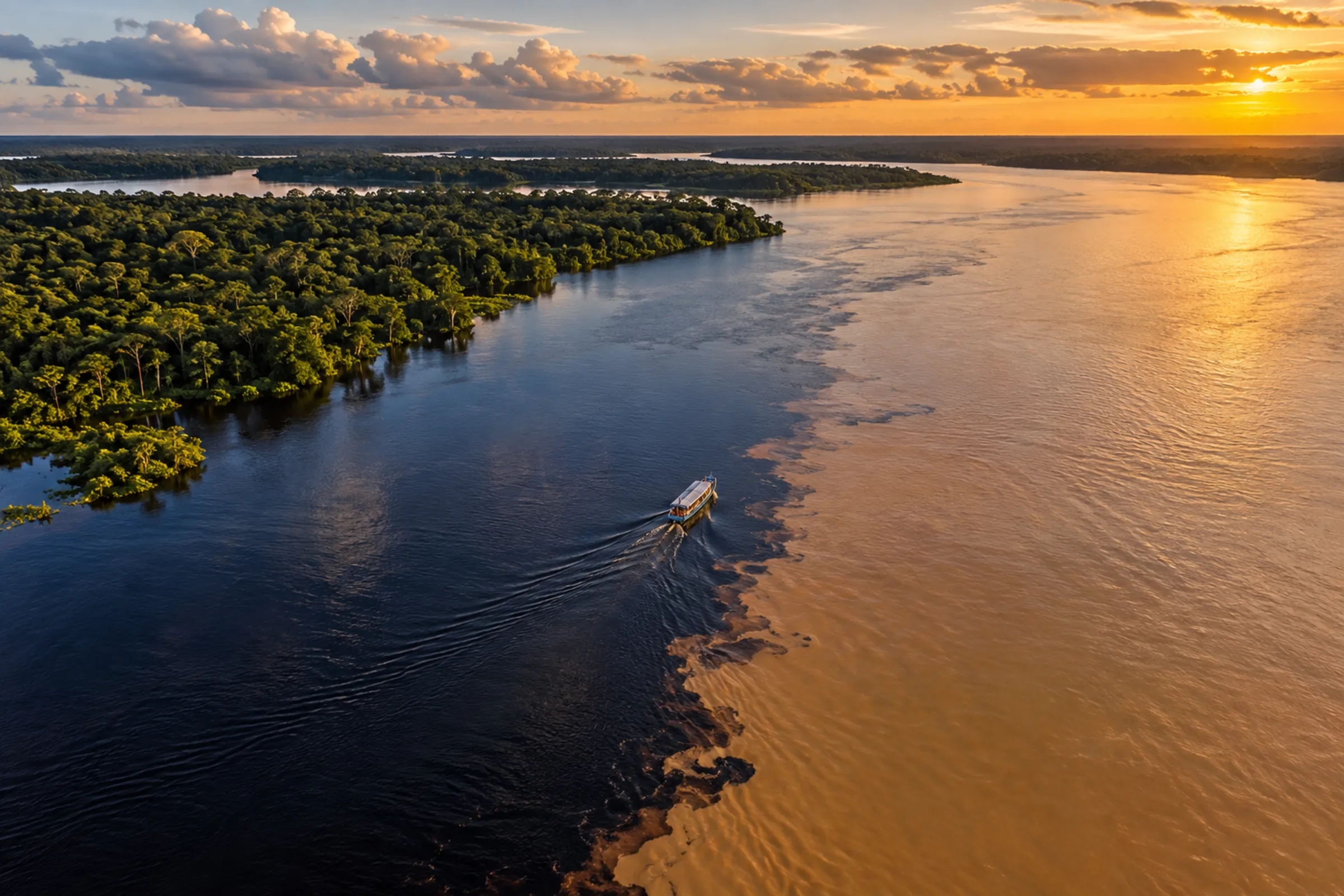
This is the gateway to the Amazon rainforest: in just a few days you see two rivers running side by side without mixing, sleep in a lodge on stilts and wake up to the sound of monkeys. Manaus blends a Belle Époque opera house with fish and açaí markets, and less than two hours from downtown you reach archipelagos, igarapés (narrow forest creeks) and blackwater waterfalls. It is the destination that sums up the Amazon for anyone with a week to spare.
This destination brings together 5 cities: Manaus, Iranduba, Novo Airão, Presidente Figueiredo, Careiro da Várzea.
A look at the place
These pictures are illustrations based on the real place, not photographs. They may differ from the place.
Click the picture to enlarge it.
One destination, many paths
Start with one city or combine several in your itinerary.
Manaus brings together rubber-boom heritage and Amazon scenery on the banks of the Rio Negro. Teatro Amazonas, the markets and the cultural venues of the historic center tell different chapters of the state capital's story.
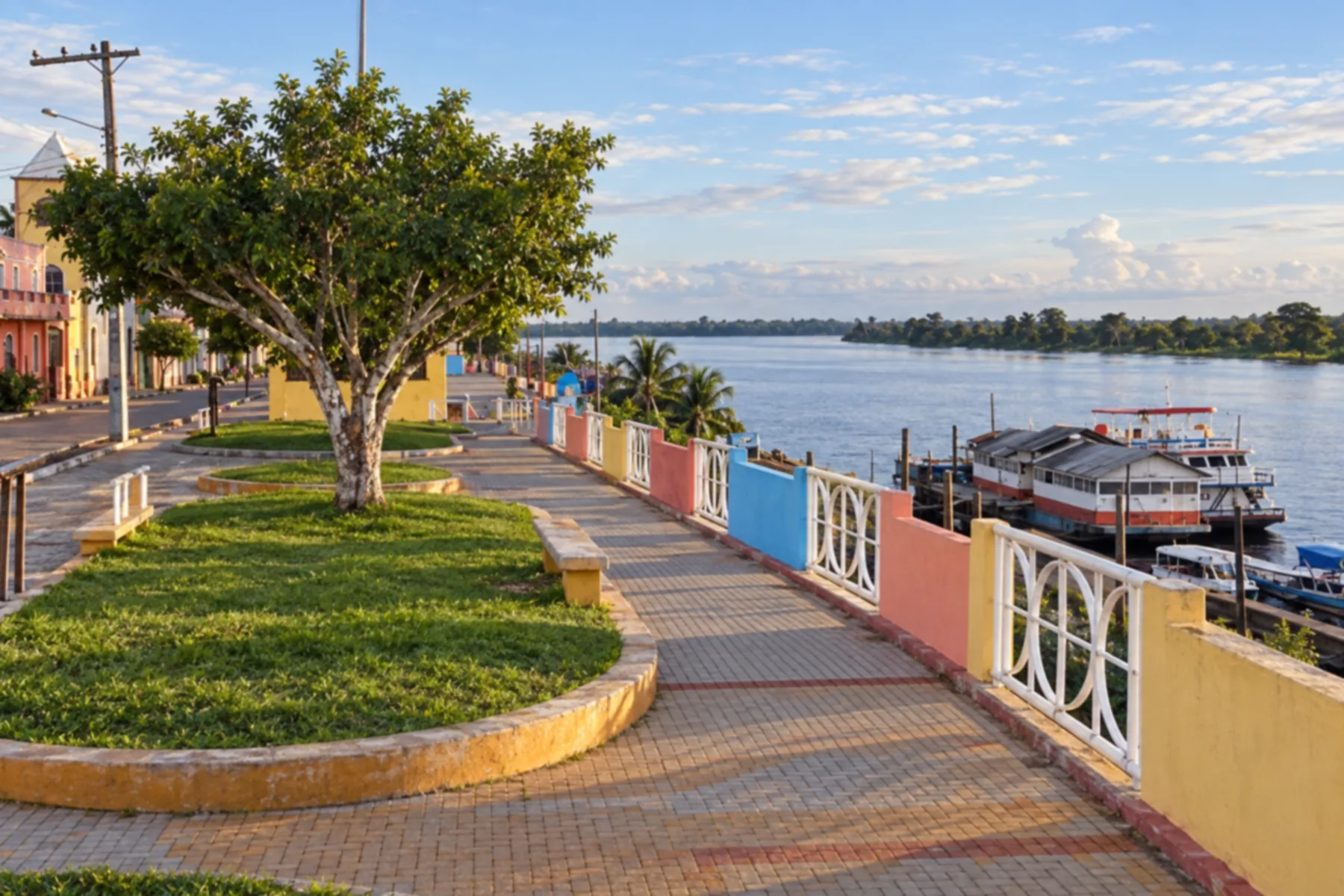
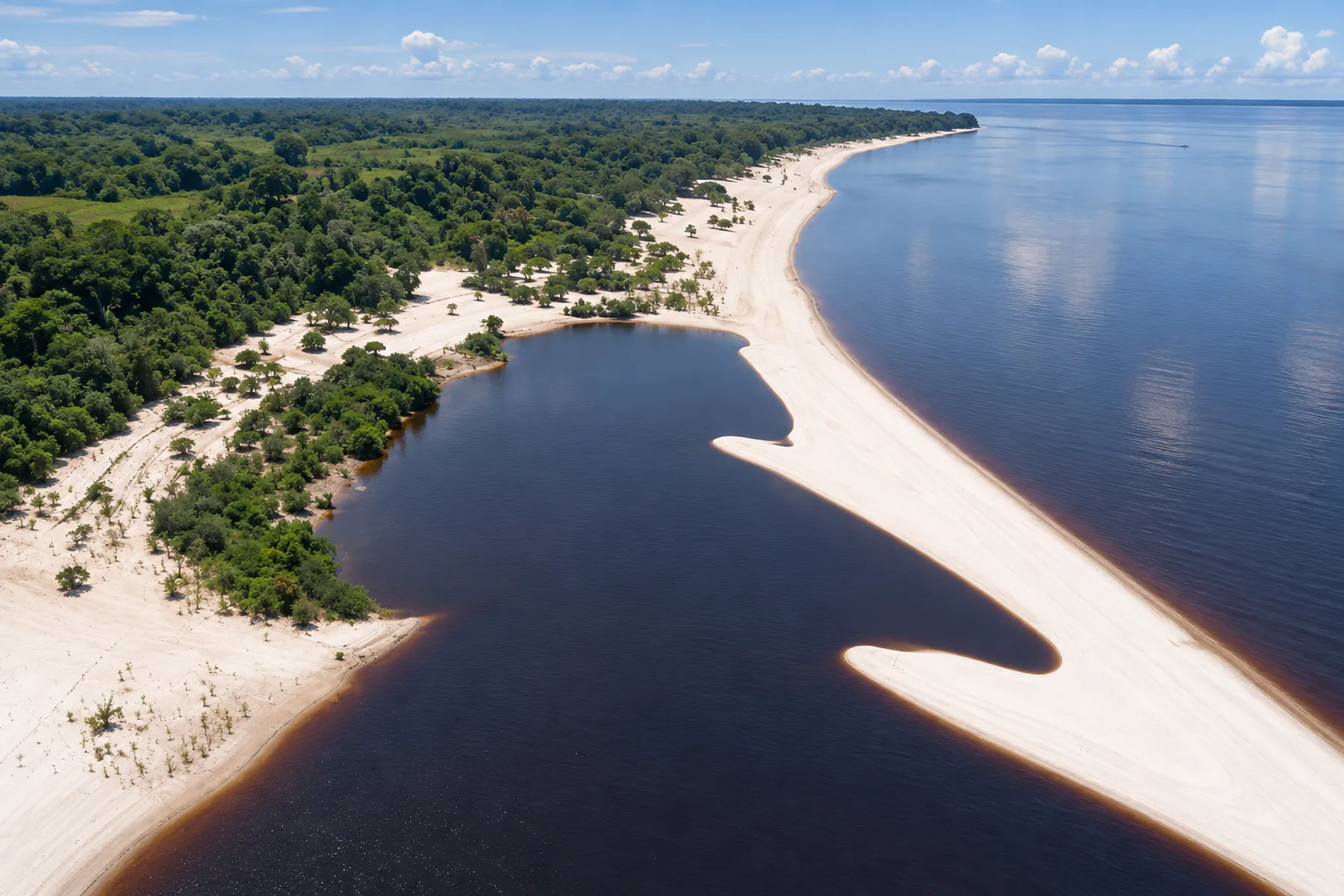
Iranduba lies between the Rio Negro and the Solimões River and combines forest and river-beach scenery. In the low-water season, the sands of Açutuba show one side of the municipality, which is linked to Manaus by the bridge over the Rio Negro.
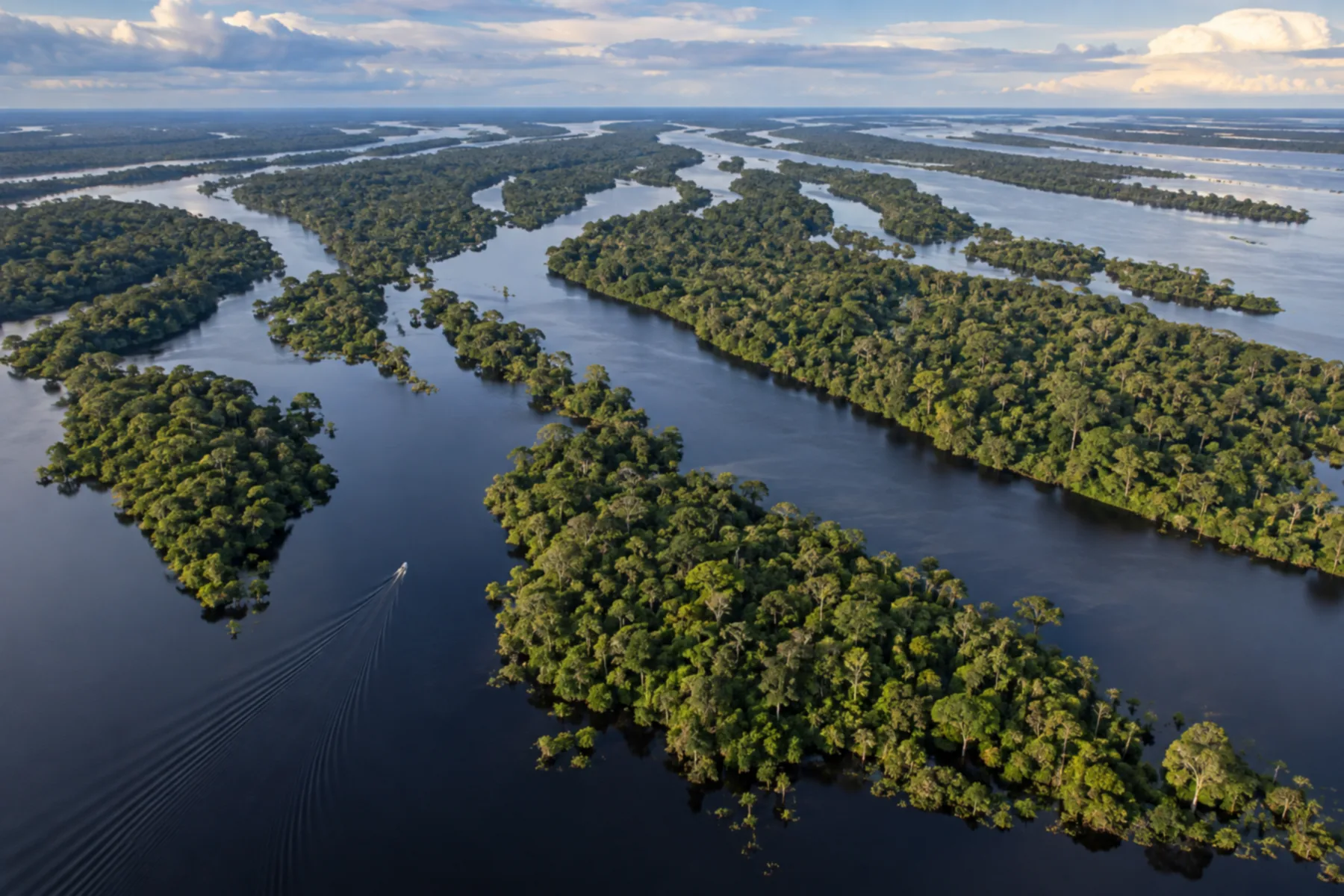
Novo Airão sits on the banks of the Rio Negro and is one of the gateways to the Anavilhanas archipelago. Riverside life, local crafts and boat trips through the channels bring you close to the Amazon rainforest.
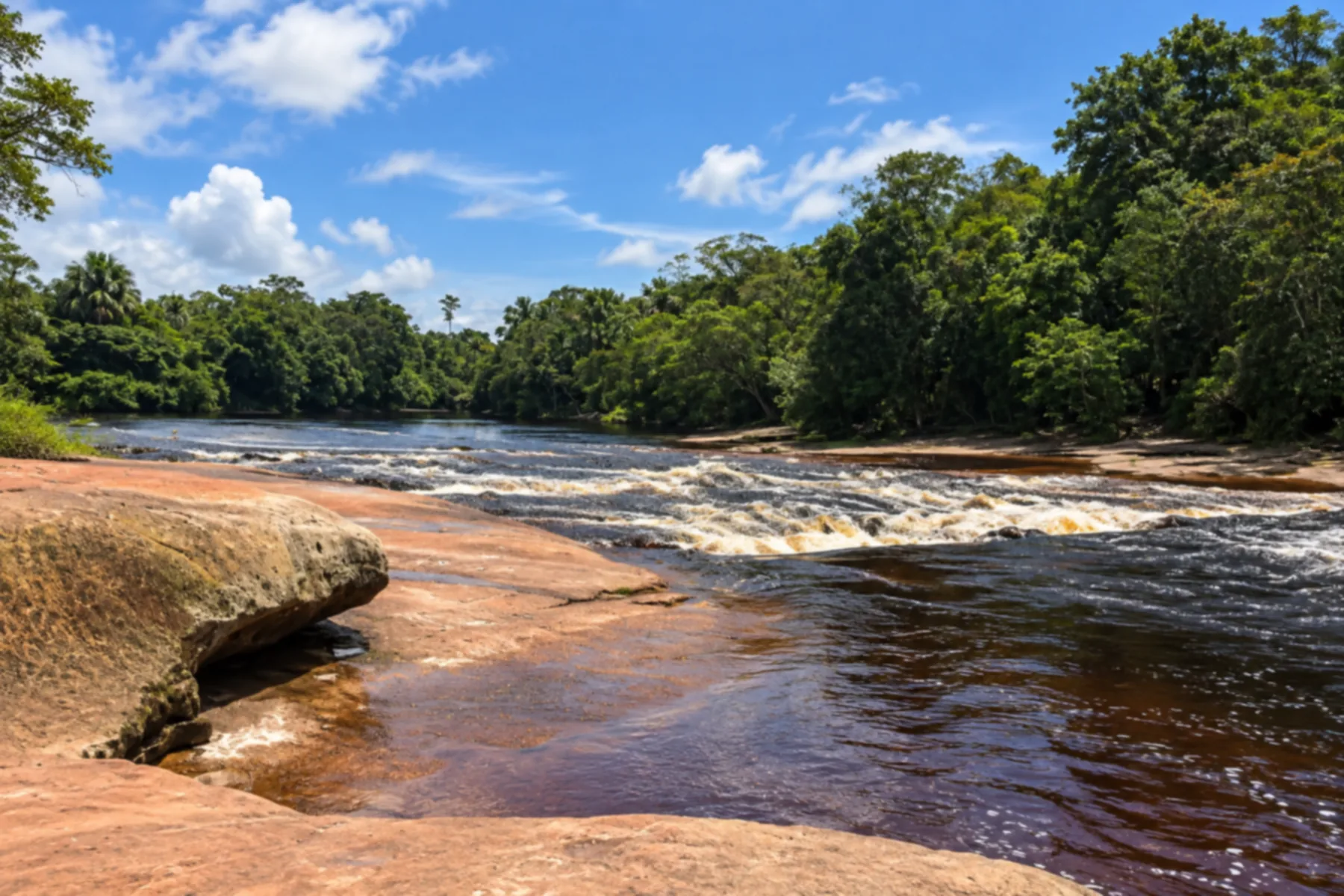
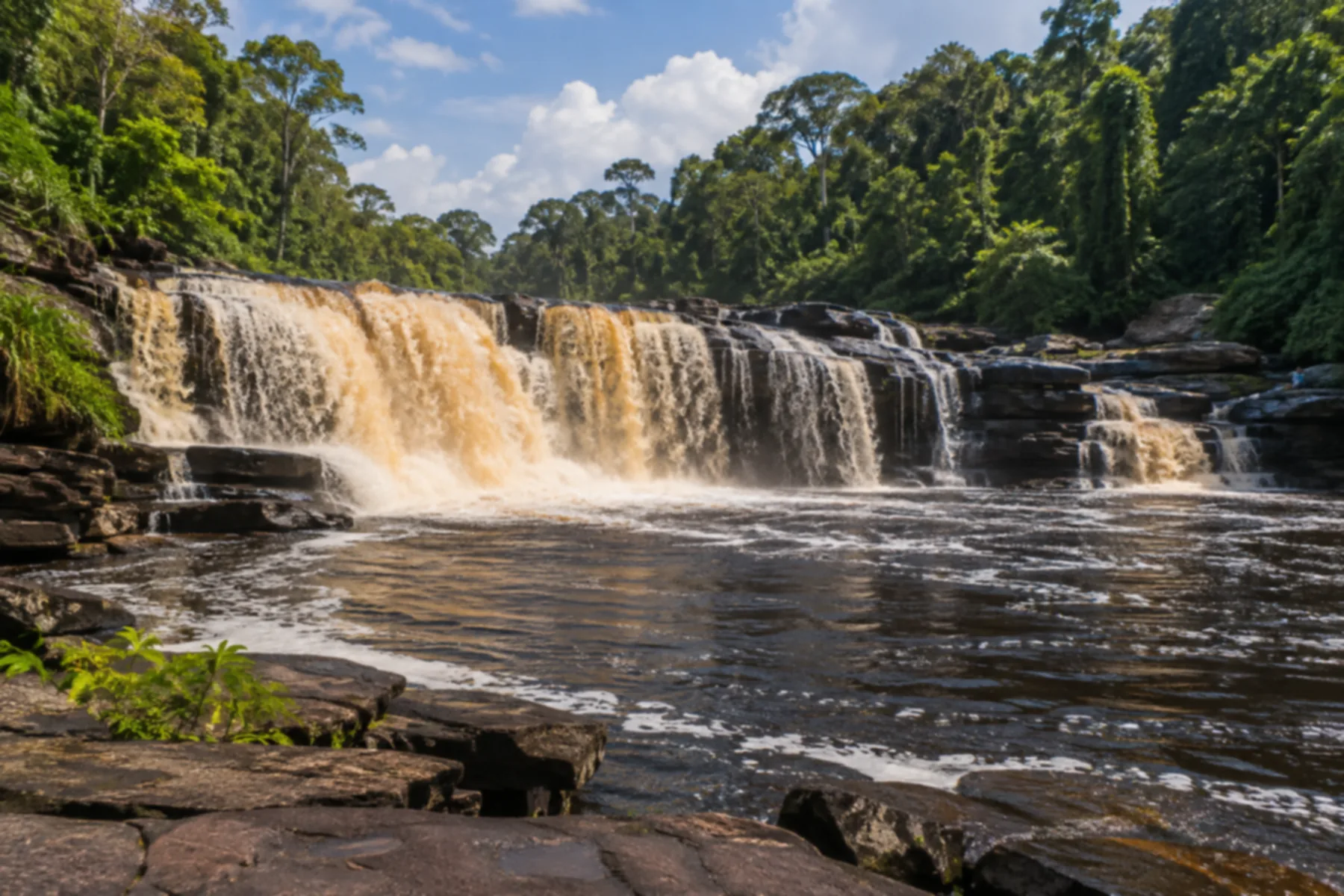
Presidente Figueiredo is known for its waterfalls, caves and rivers surrounded by Amazon rainforest. The Urubuí rapids and the area's trails show how water and rock formations shape each other.
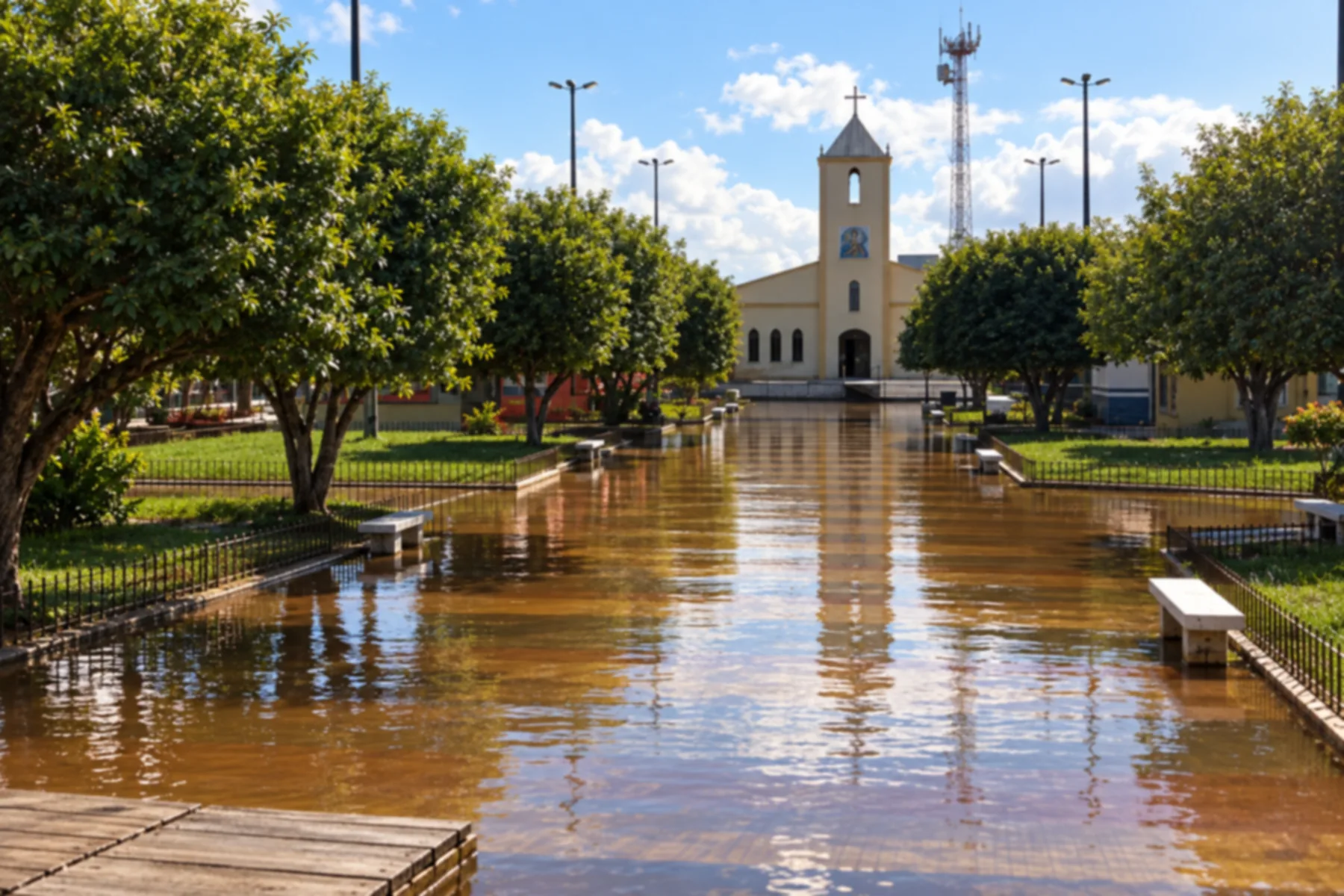
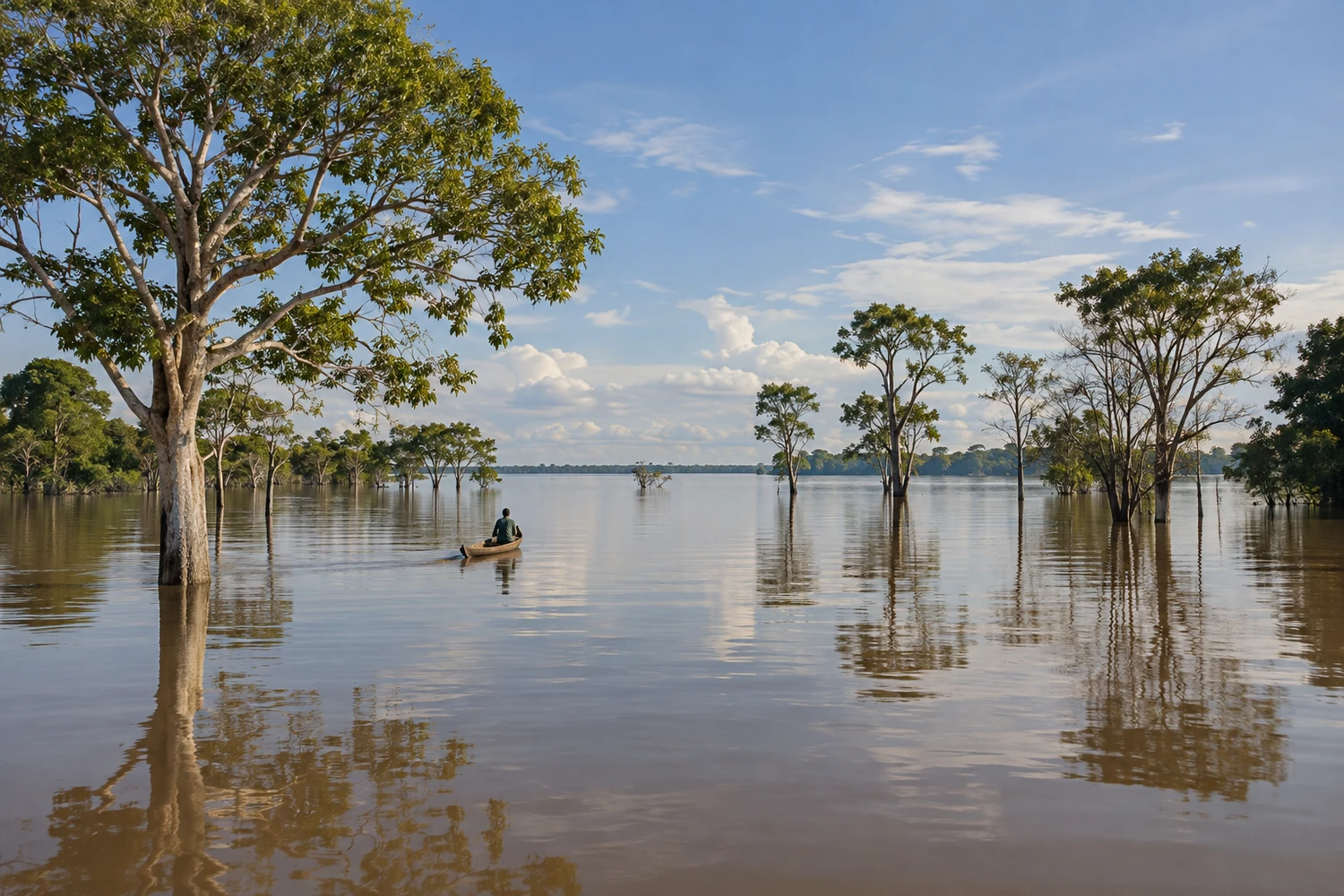
Careiro da Várzea's landscape is shaped by rivers and the Amazon's flood cycle. The riverside town, its communities and the floodplains reveal ways of life tied to the water and to farming.
The local experience
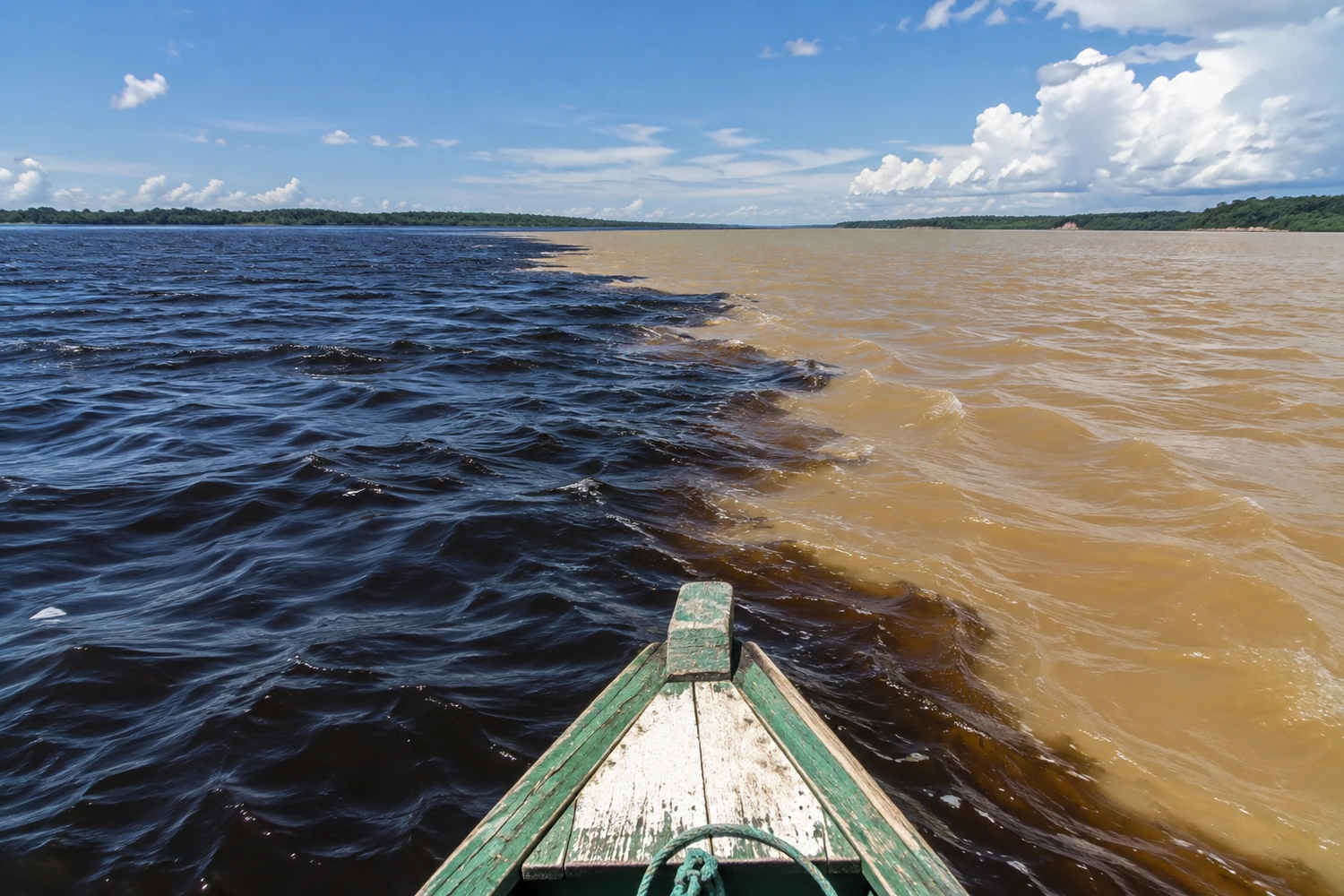
The black waters of the Rio Negro and the muddy waters of the Solimões run side by side for kilometers without mixing, because of differences in temperature and density. The boat trip usually continues to the igapós (flooded forests) and giant water lilies.
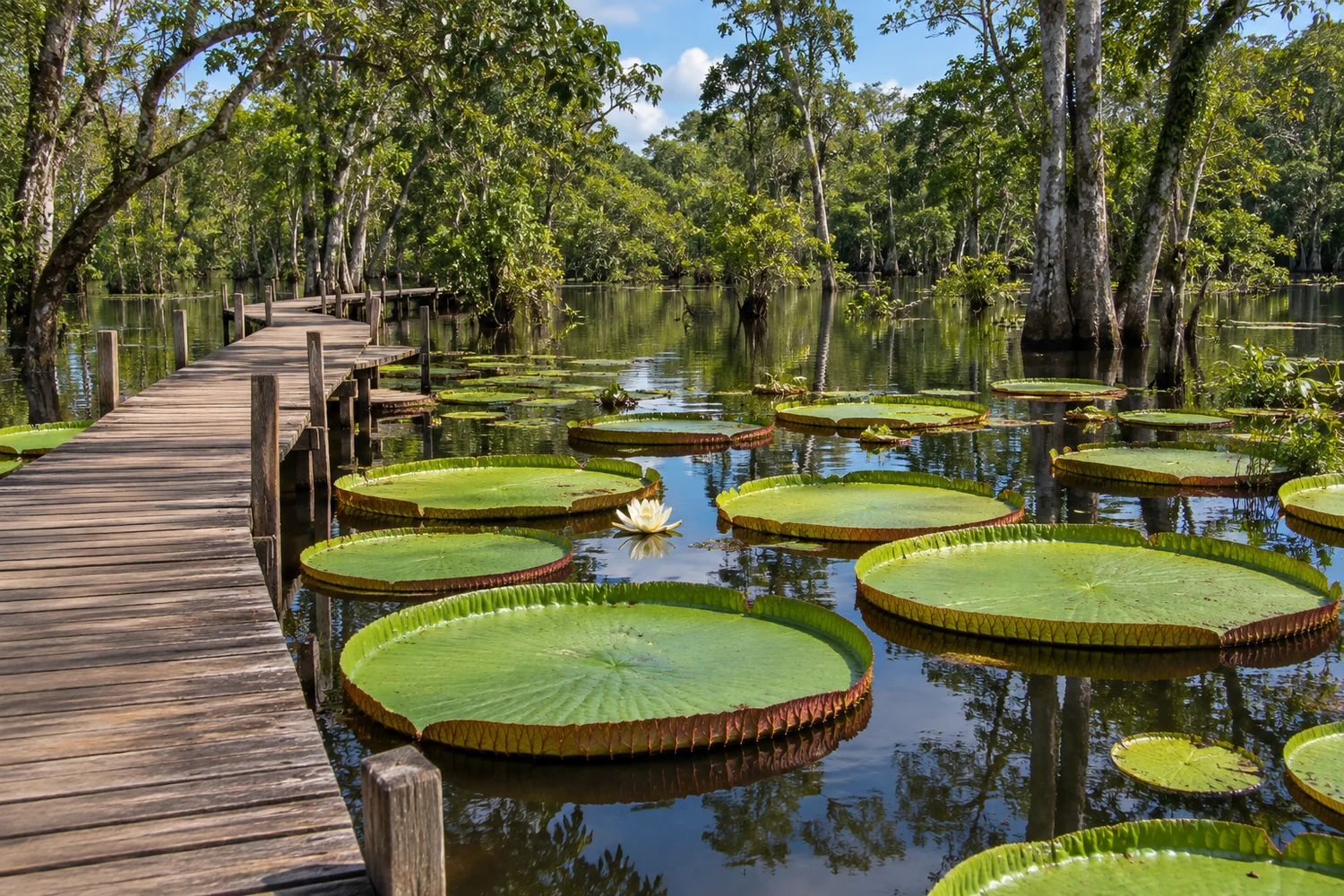
A floodplain lake on Ilha do Careiro, surrounded by riverside communities and known for its giant water lilies and abundant fish. Access is by water only, on boats leaving from the Ceasa port in Manaus, with a transfer to smaller boats.
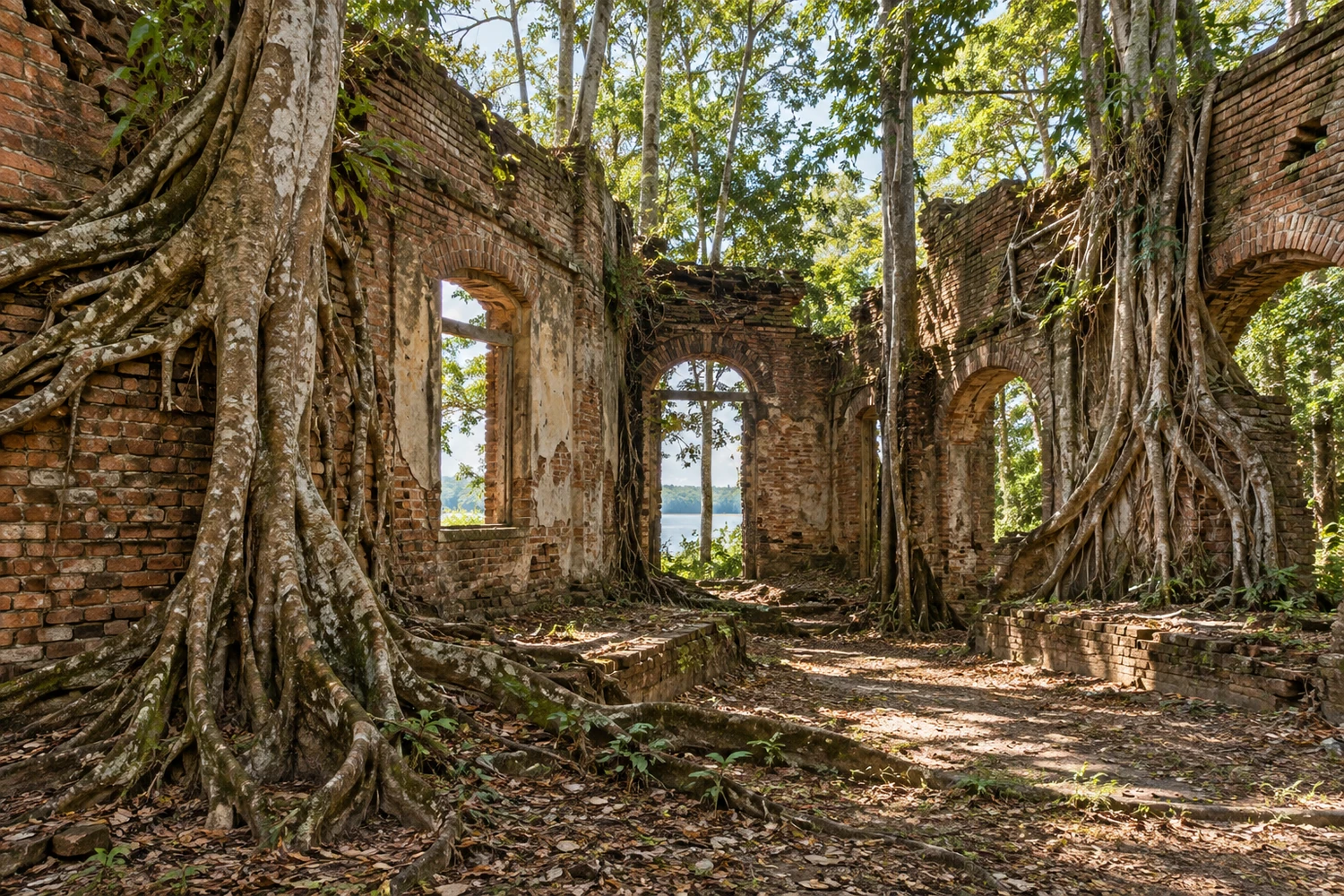
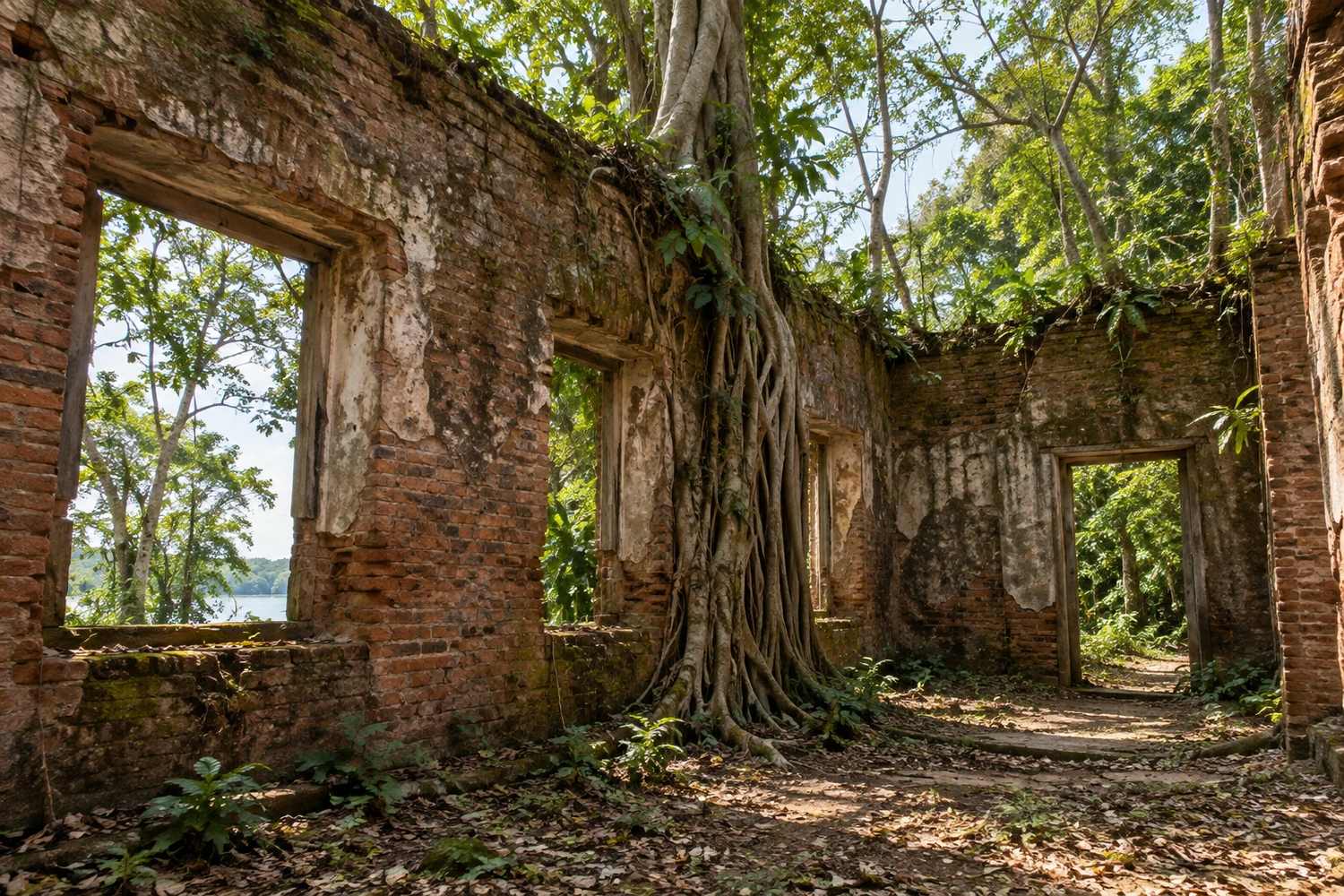
A mansion started in 1898 by the Amazonas government to house Italian immigrants, later used as a trade school, a jail and a leprosy hospital. The ruined walls, laced with roots and vines, stand on the right bank of the Rio Negro.
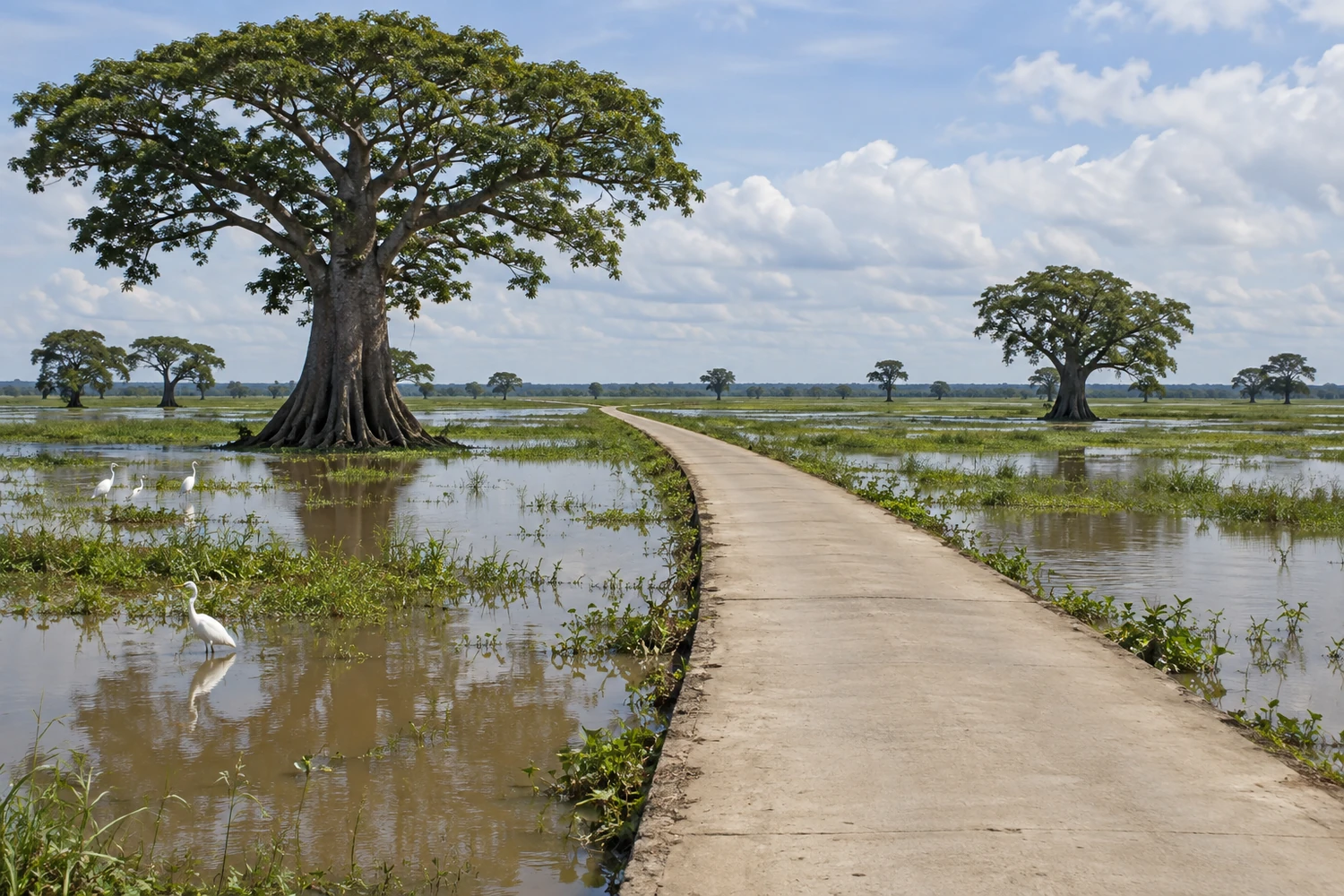
A road of about 21 kilometers that crosses the municipality's floodplain, paved in concrete and popular with cycling groups. Along the way you see kapok and munguba trees, egrets and caimans, as well as cattle ranches.
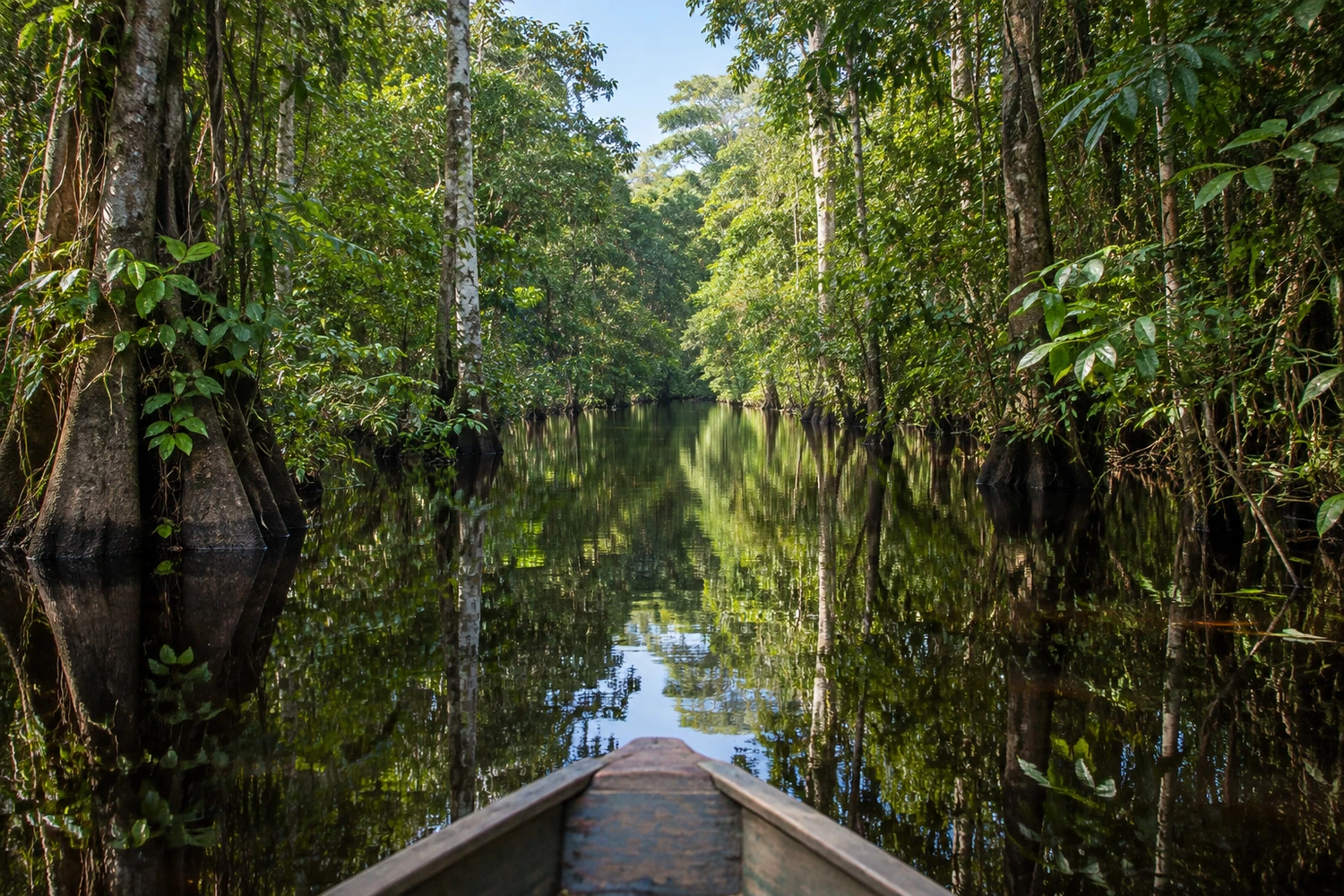
An area of lakes and igarapés (creeks) near the confluence of the Rio Negro and the Solimões, visited on boat trips from Manaus. It is known for its giant water lilies, with leaves up to 2 meters across, and for sightings of monkeys, sloths and birds.
Discover Parque Ecológico do Janauari
Created in 1980, it protects the entire basin of the blackwater Jaú River, in an area shared with Barcelos, and has been a UNESCO World Heritage Site since 2000. Visits, with prior authorization, include the Carabinani River, rapids, beaches and rock carvings.
Discover Parque Nacional do Jaú
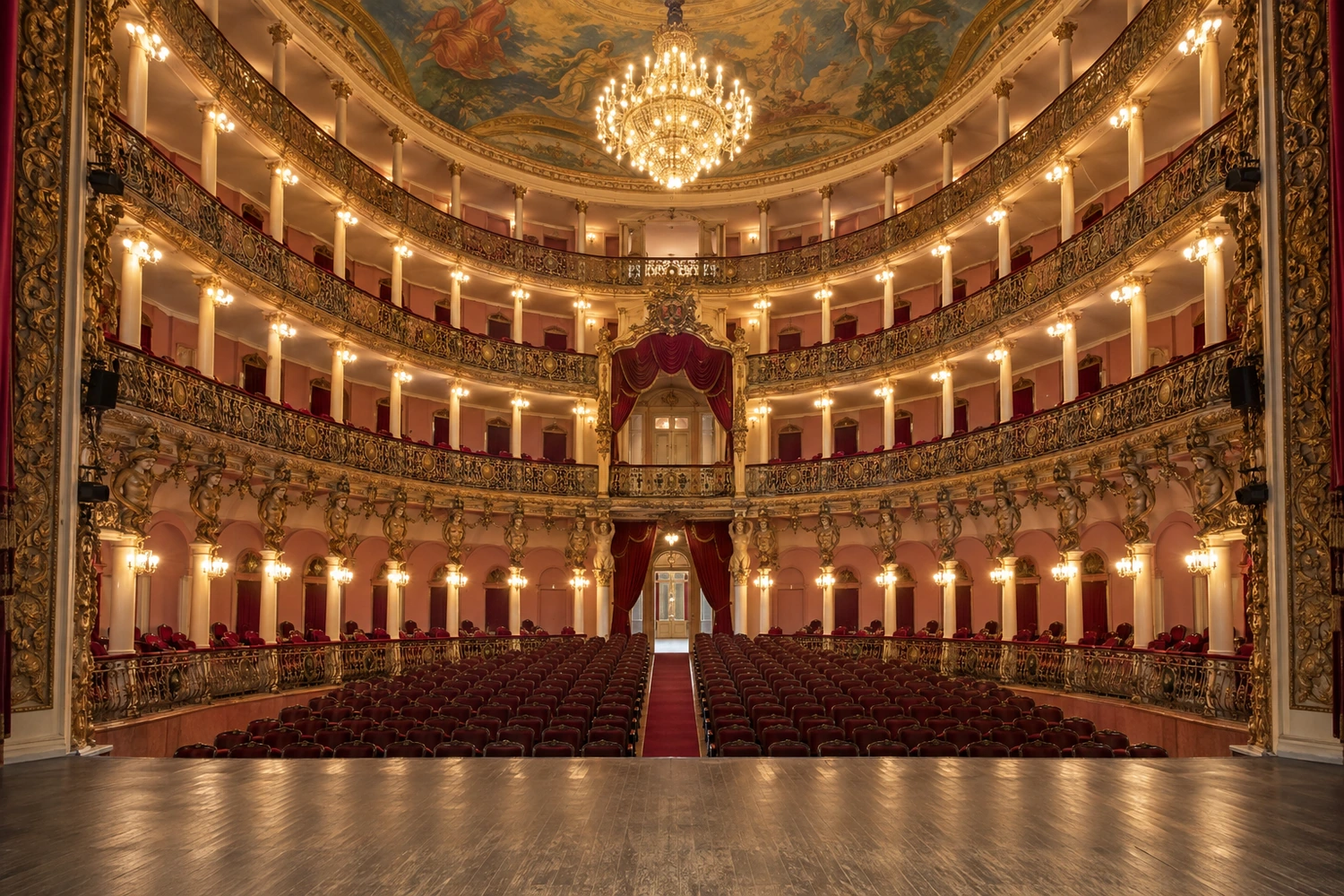
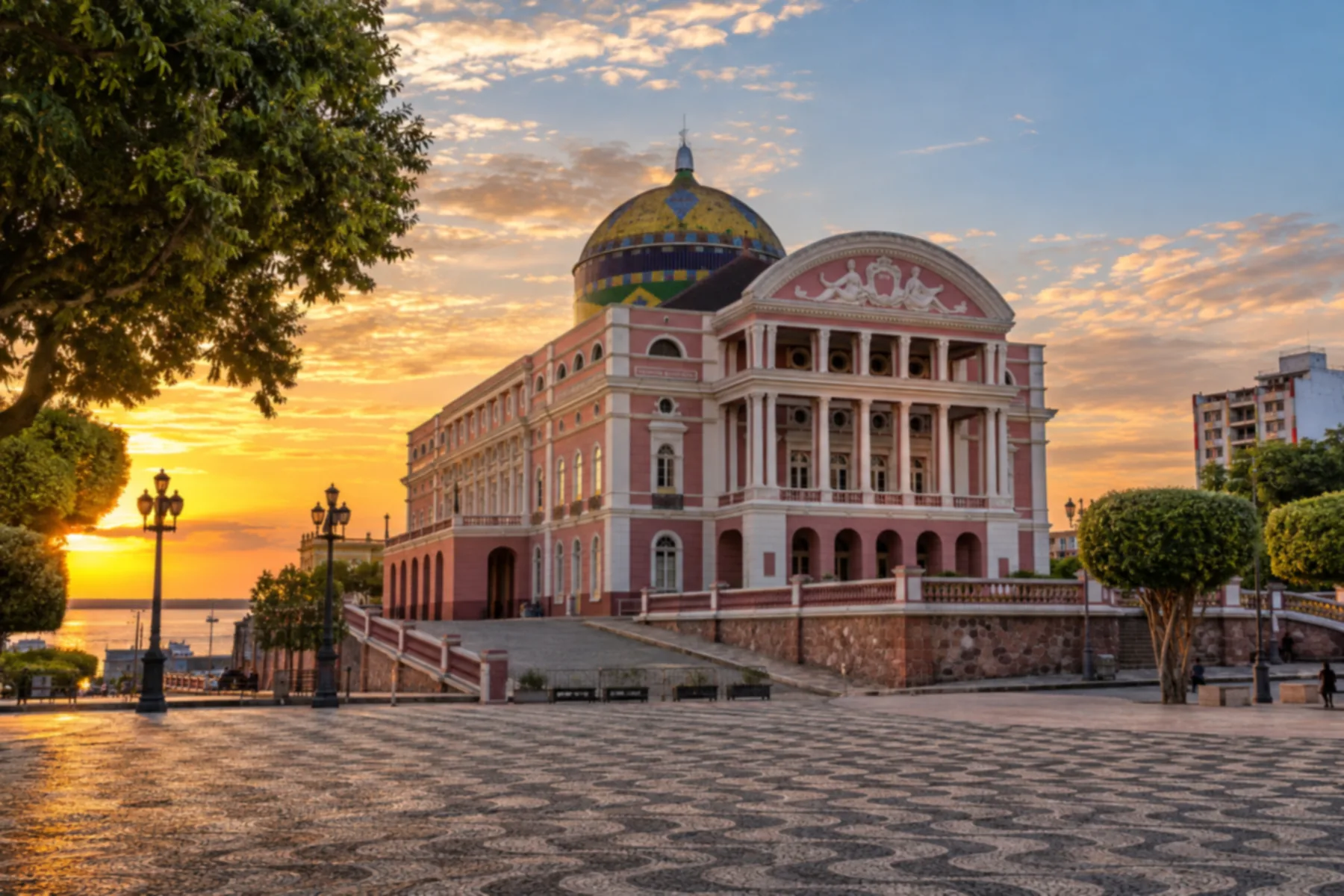
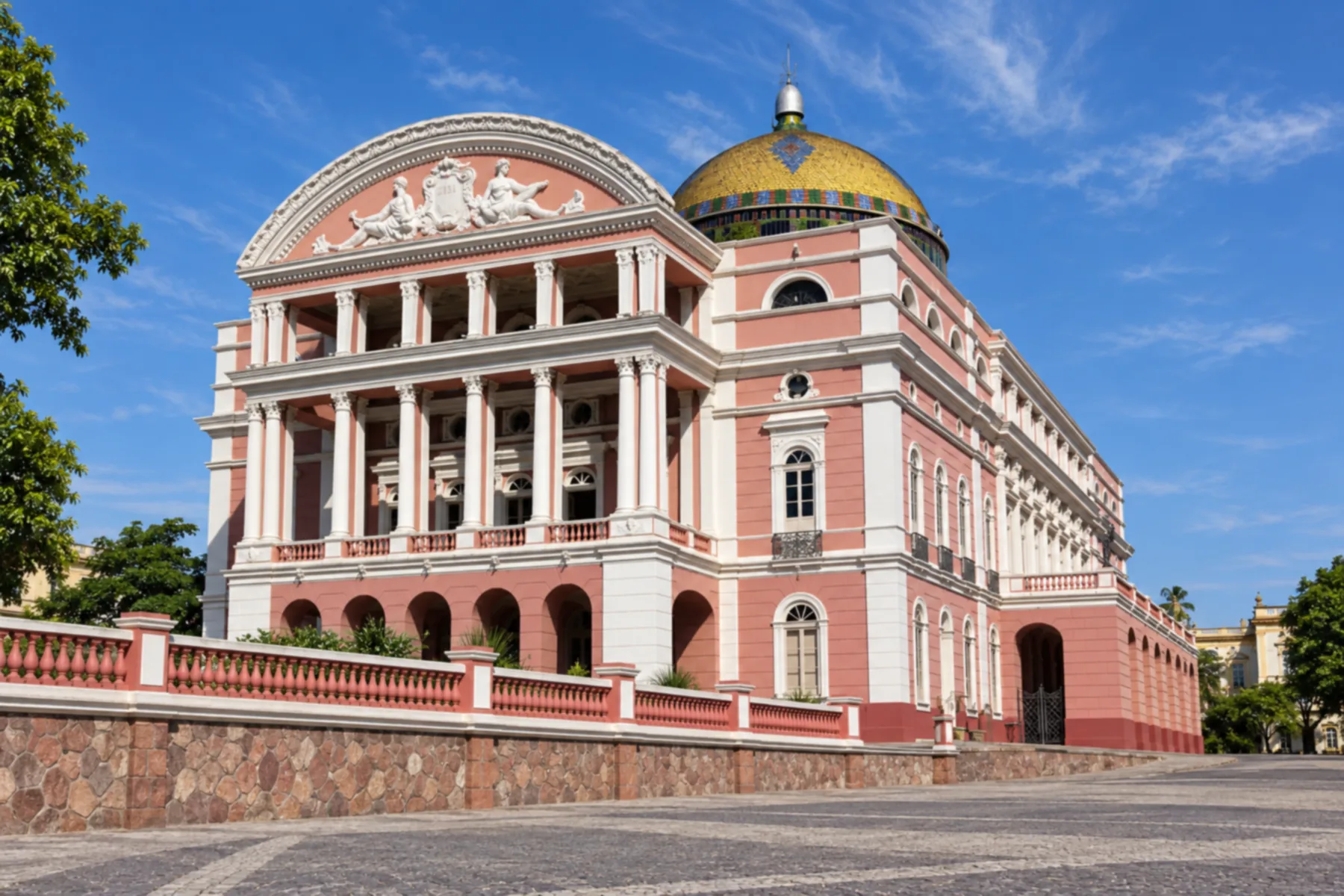
An 1896 opera house built at the height of the rubber boom, with a dome of colorful mosaics and a restored Italian-style hall. The guided tour is worth it and, if you can, an orchestra concert.
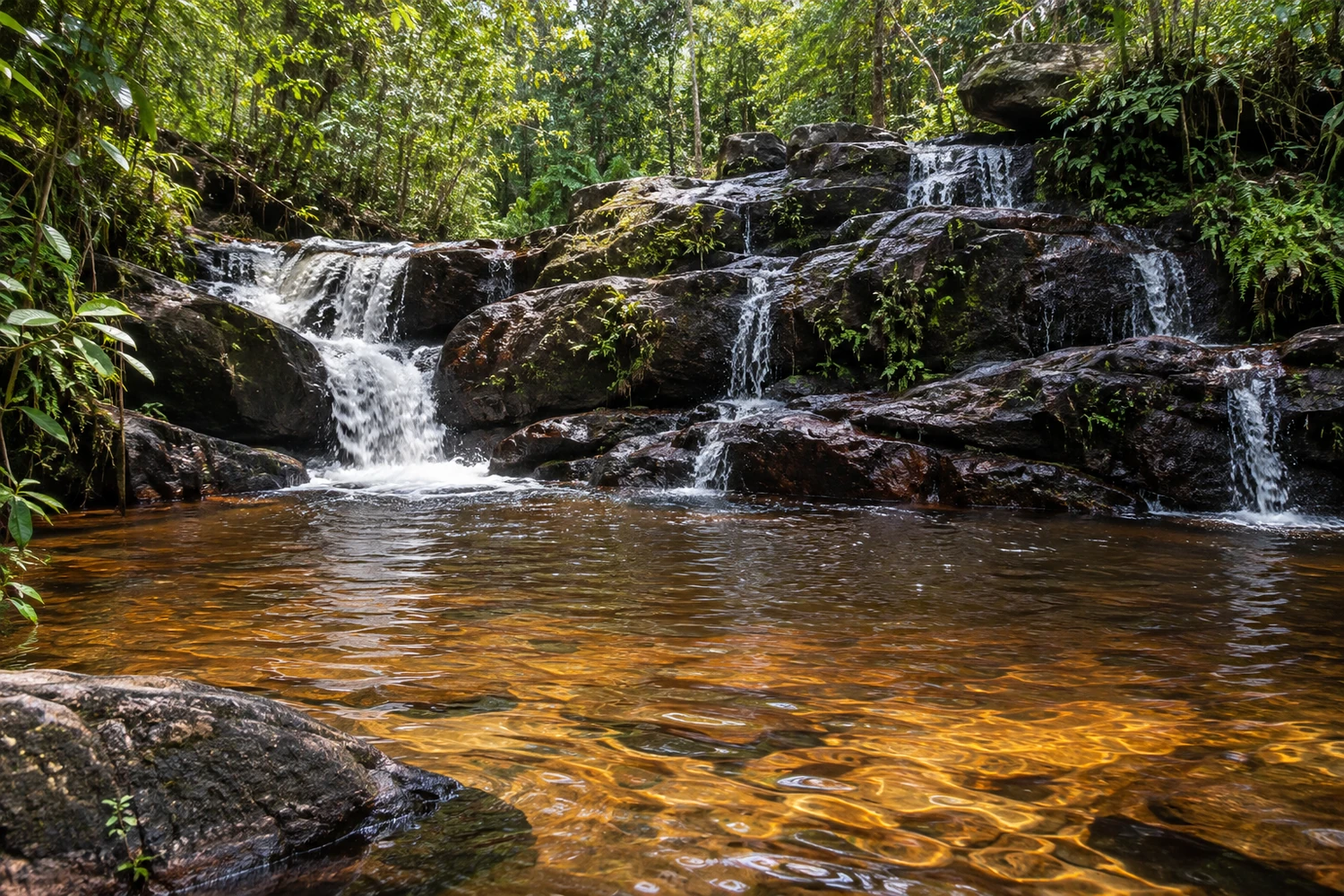
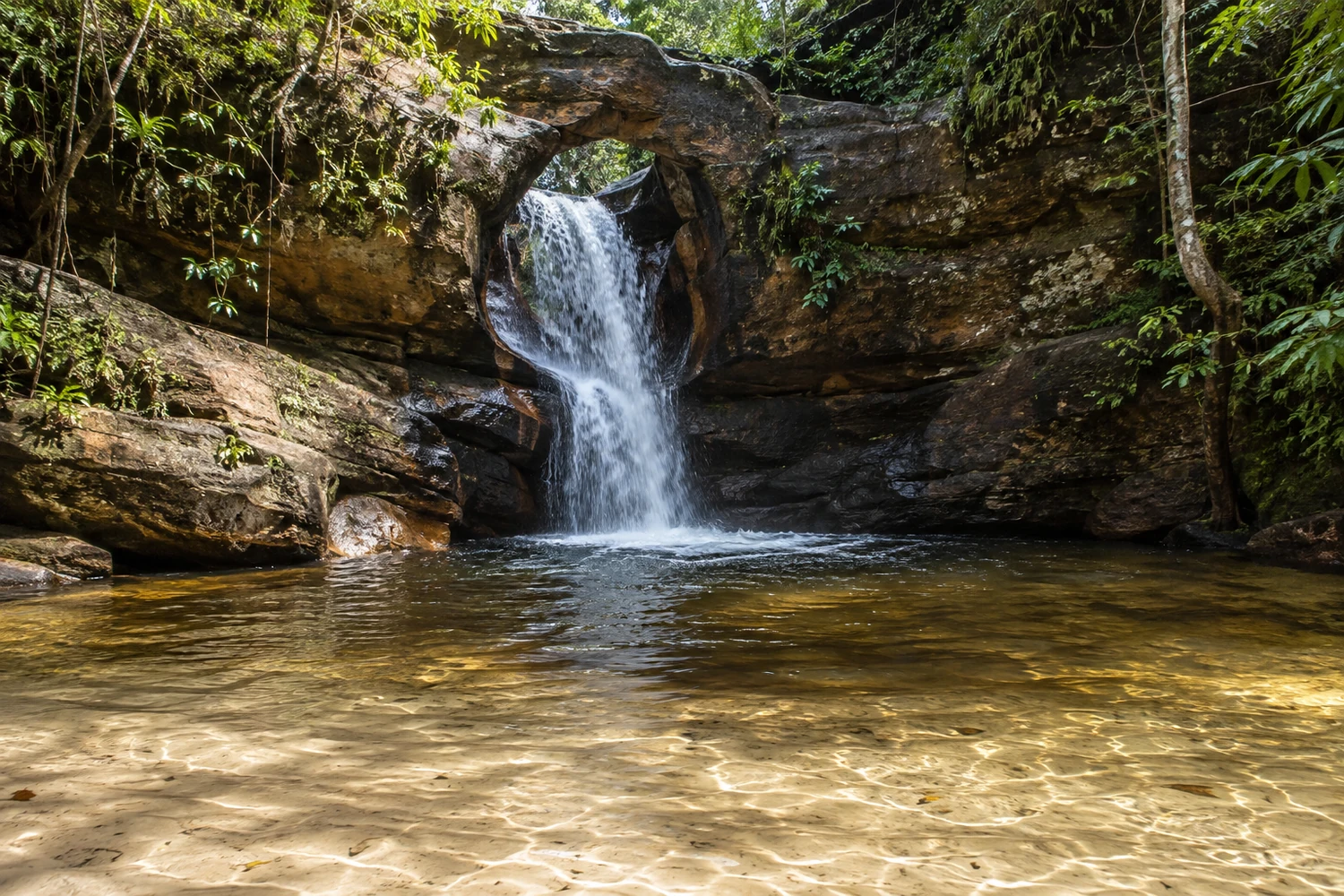
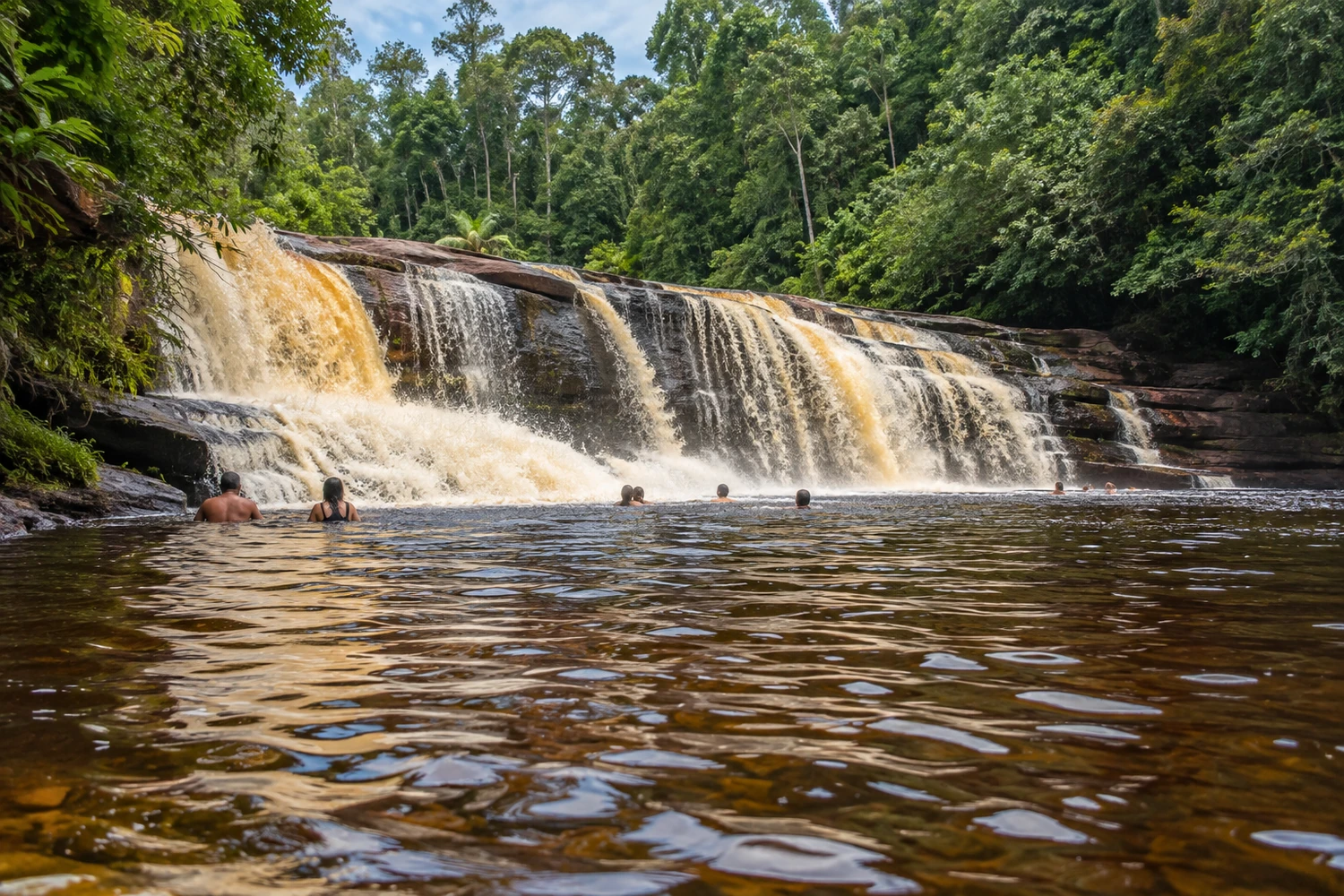
A set of small falls at km 12 of the AM-240 highway, reached by a short trail over a wooden deck and rocks. Among the rocks beside one of the falls there is a small shrine, and the natural pool is used for swimming.
Discover Cachoeira do Santuário
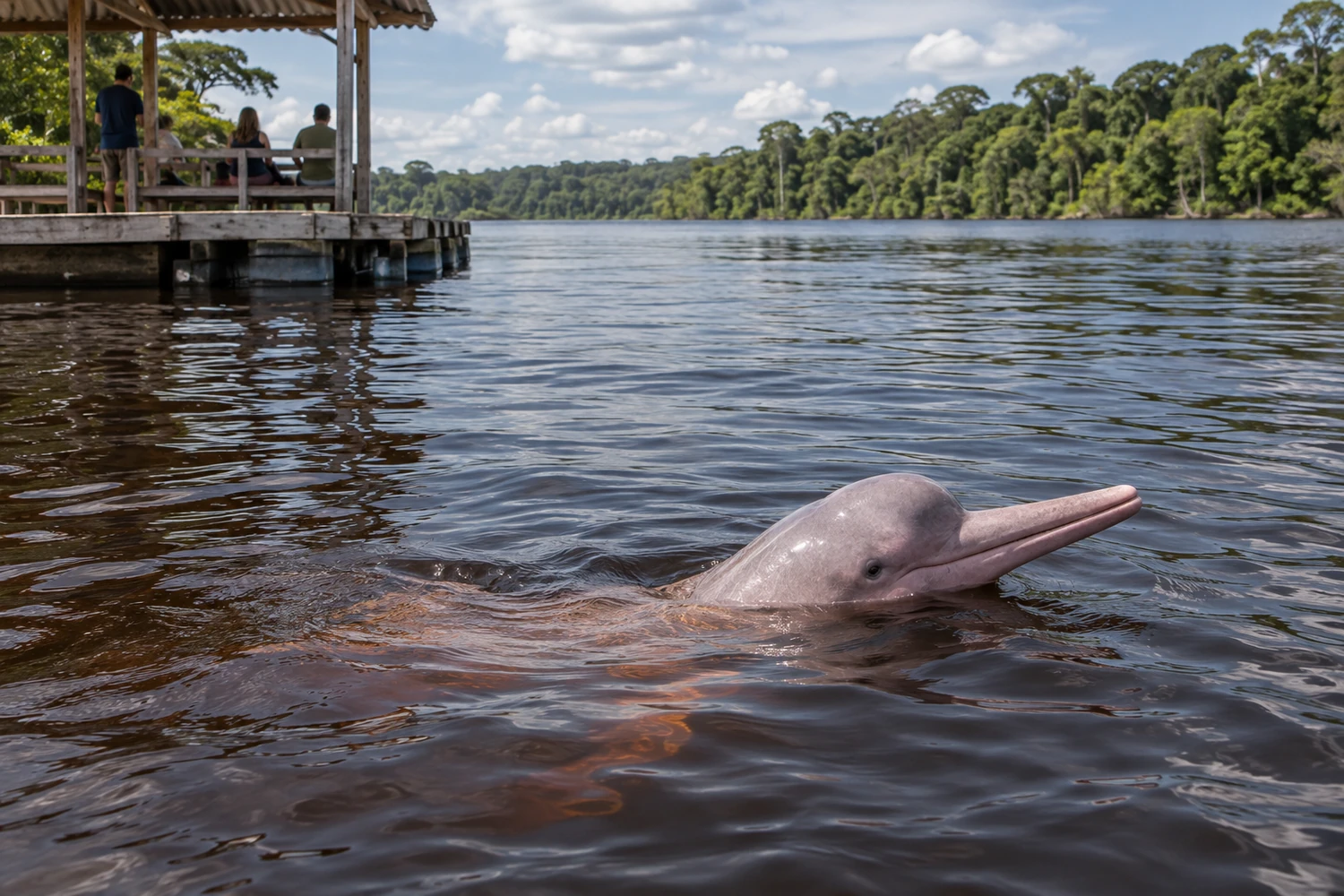
A floating platform on the waterfront where pink river dolphins approach visitors, in an activity monitored by an ICMBio research and management project since 2010. The rules forbid visitors from feeding or chasing the animals and require a life jacket.
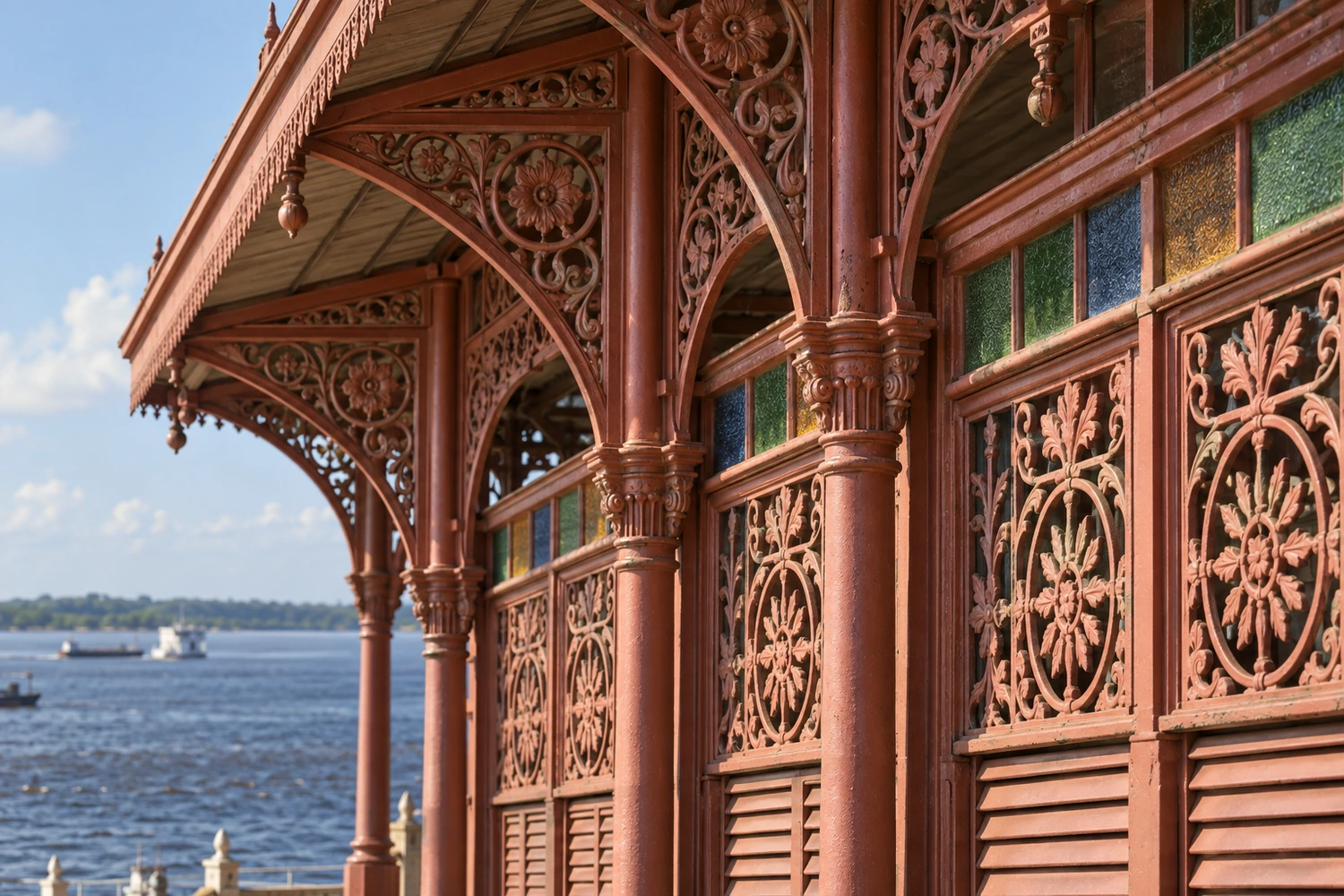
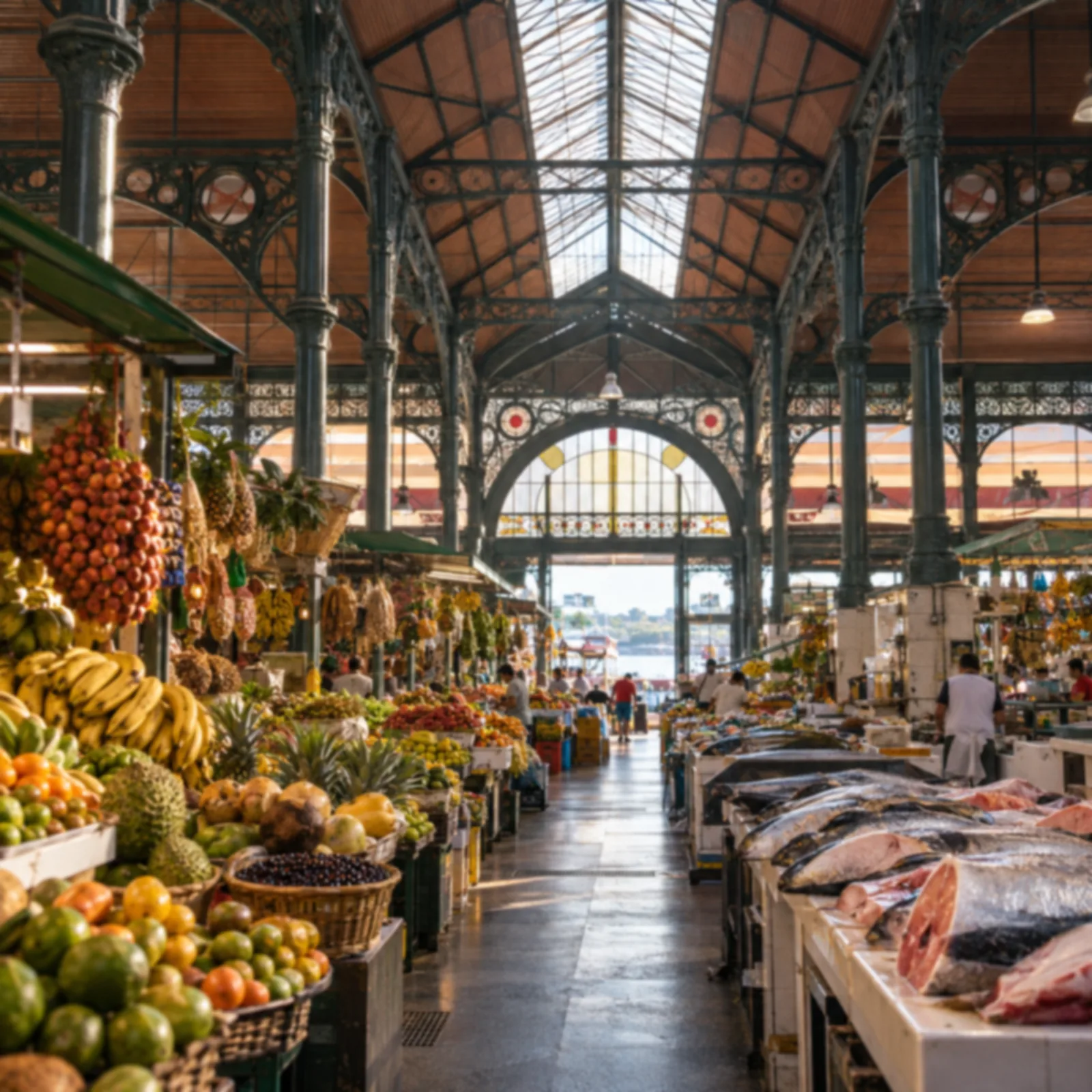
An 1883 iron structure inspired by European markets, on the banks of the Rio Negro. It is packed with Amazon fish, herbs, guaraná sticks and riverside crafts.
Discover Mercado Municipal Adolpho Lisboa
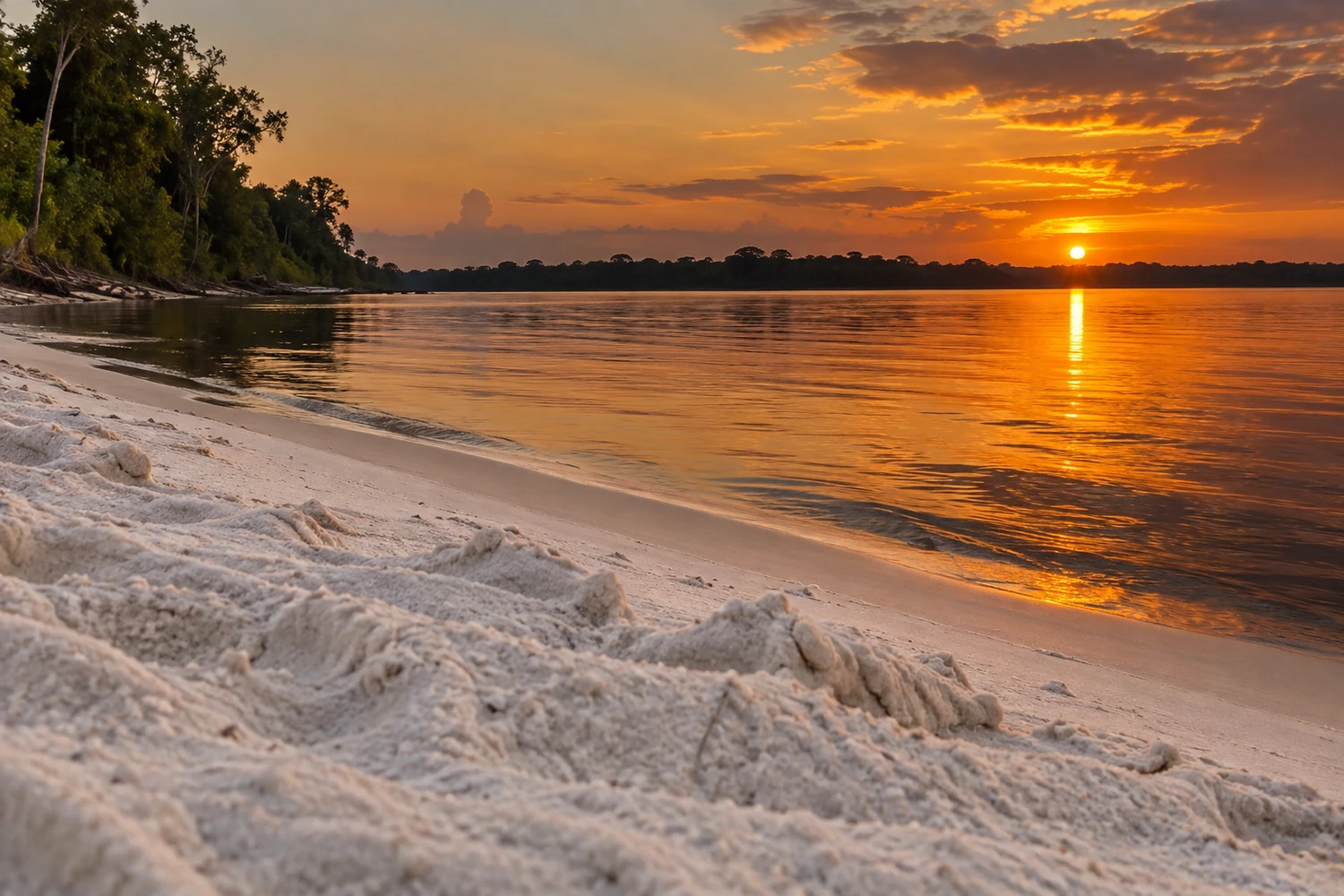
A beach of fine, light sand on a bend of the Rio Negro, reached from km 28 of the AM-070 highway and a paved side road. In the low-water season a long strip of sand appears; at high water, the water reaches the treetops and the outing becomes a kayak trip.
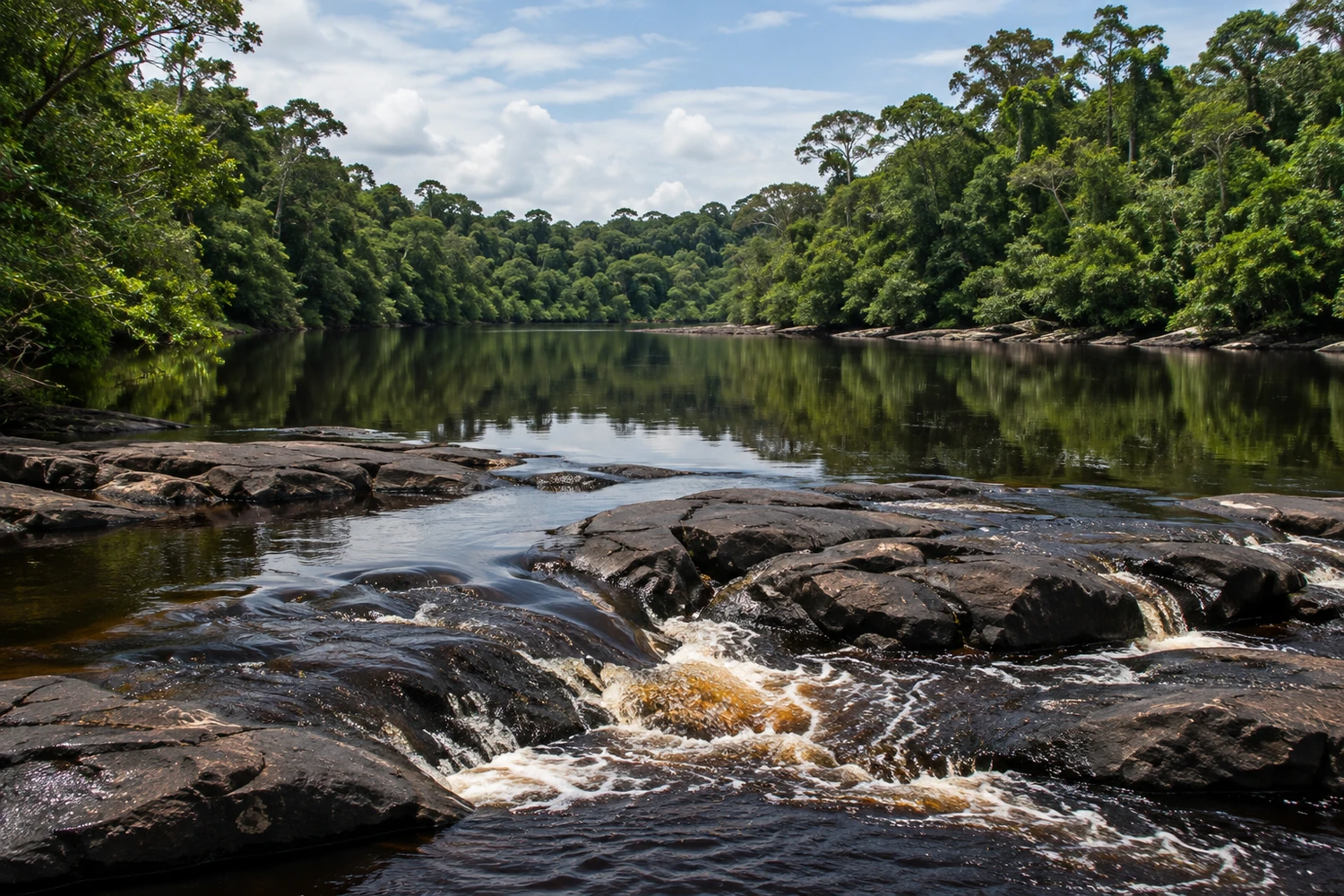
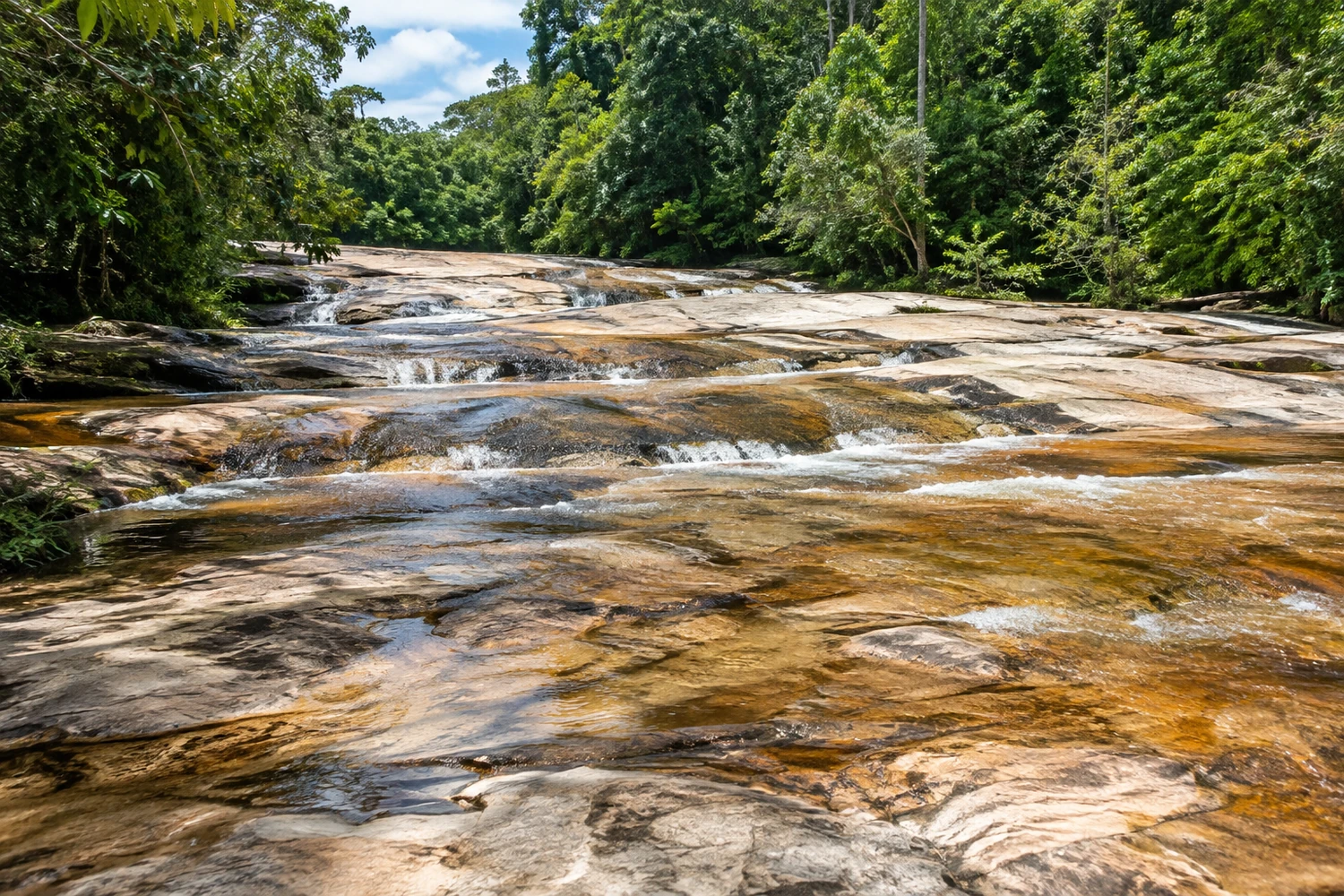
A sandstone rock shelf about 250 meters long at the foot of a slope, cut by small falls and stretches of gentle current. It is at km 13 of the AM-240 highway and is one of the geosites of the Geoparque Cachoeiras do Amazonas.
Discover Cachoeira da Porteira
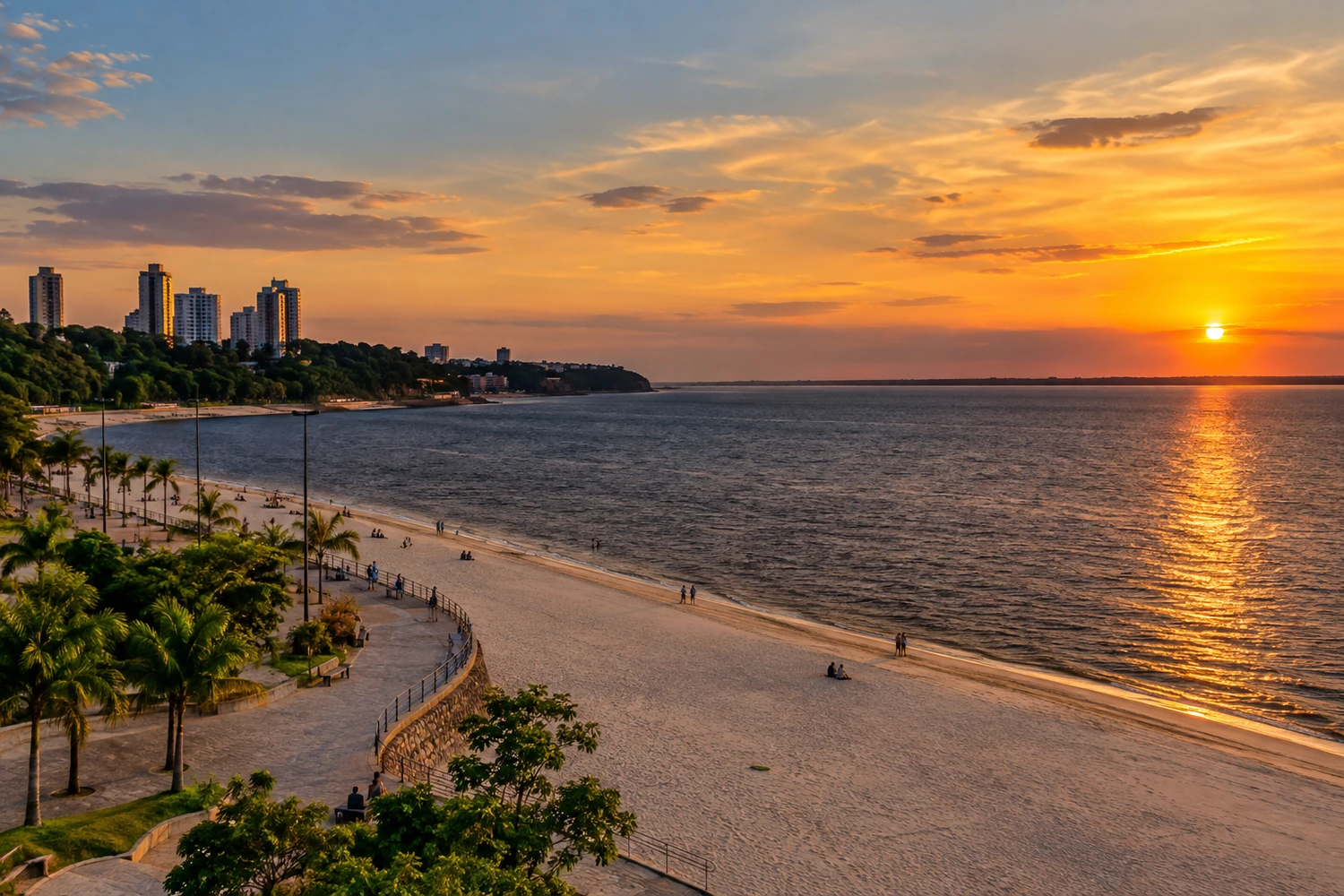
An urban waterfront on the Rio Negro, with a strip of sand that appears in the low-water season, a promenade and kiosks. It is where locals go to watch the sunset.
A settlement founded in 1694 on the banks of the Rio Negro, it prospered during the rubber boom and was emptied in the 20th century, when residents moved to the new town. Ruined mansions overgrown by the forest and an old cemetery can be visited by boat.
Discover Ruínas de Airão Velho
At km 57 of the AM-240 highway, the water passes through a hole in the rock and drops into a white-sand pool. The cliff beside it exposes layers of marine sedimentary rock and is part of the Geoparque Cachoeiras do Amazonas.
Discover Cachoeira da Pedra Furada
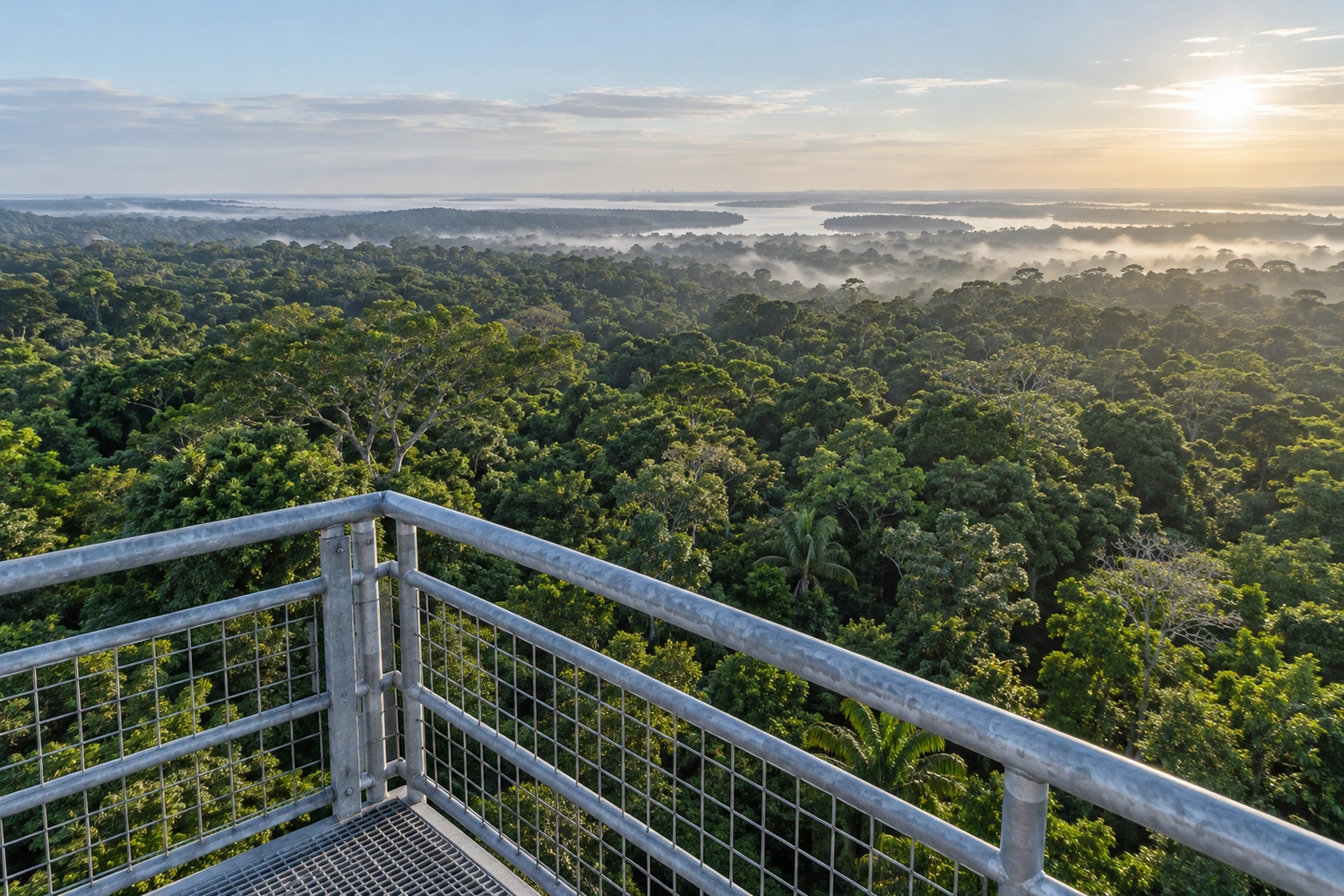
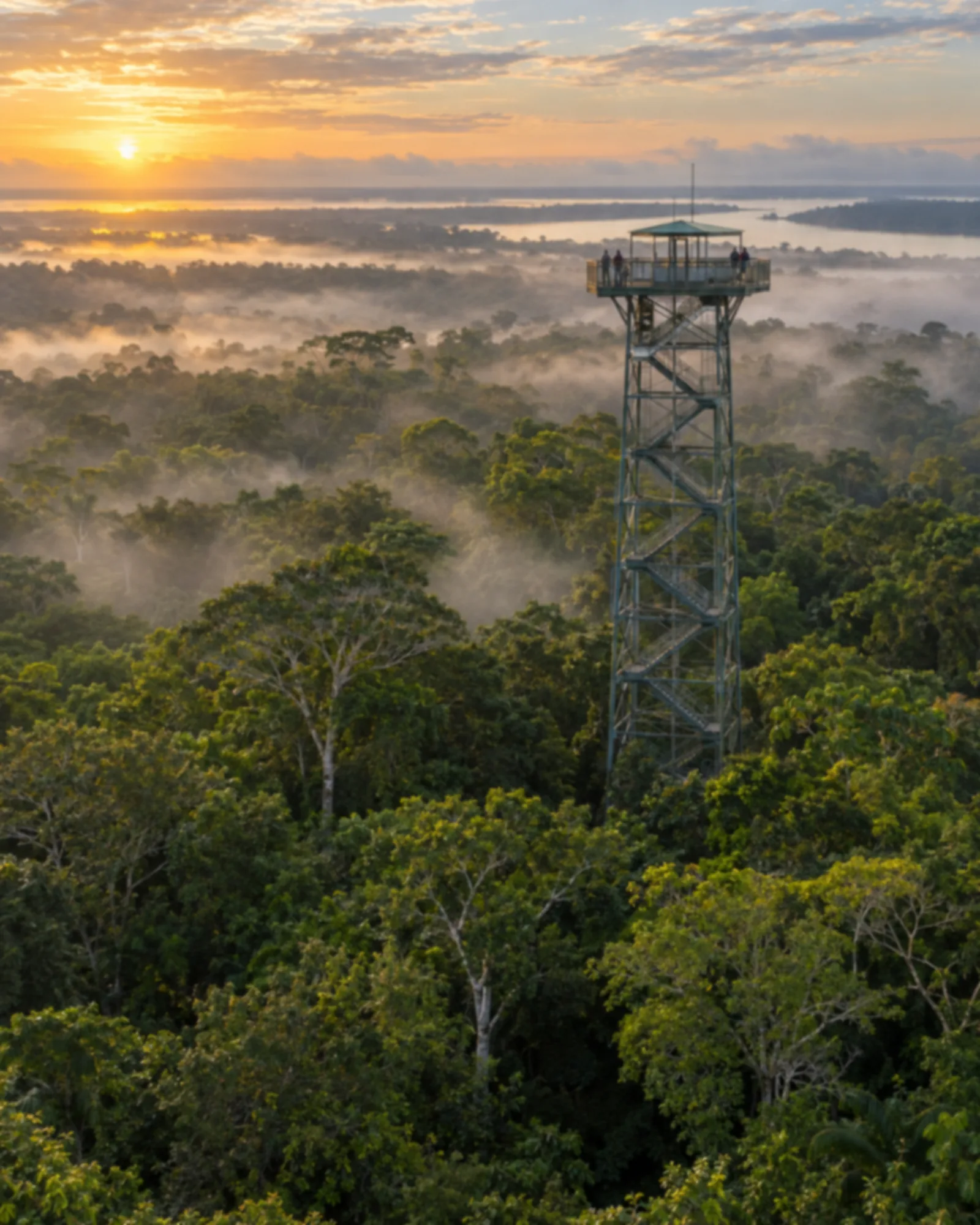
An open-air museum inside the Reserva Adolpho Ducke, with forest trails, an orchid house and a pond of giant Amazon water lilies. The 42-meter tower puts you above the treetops.
Discover Museu da Amazônia (MUSA)
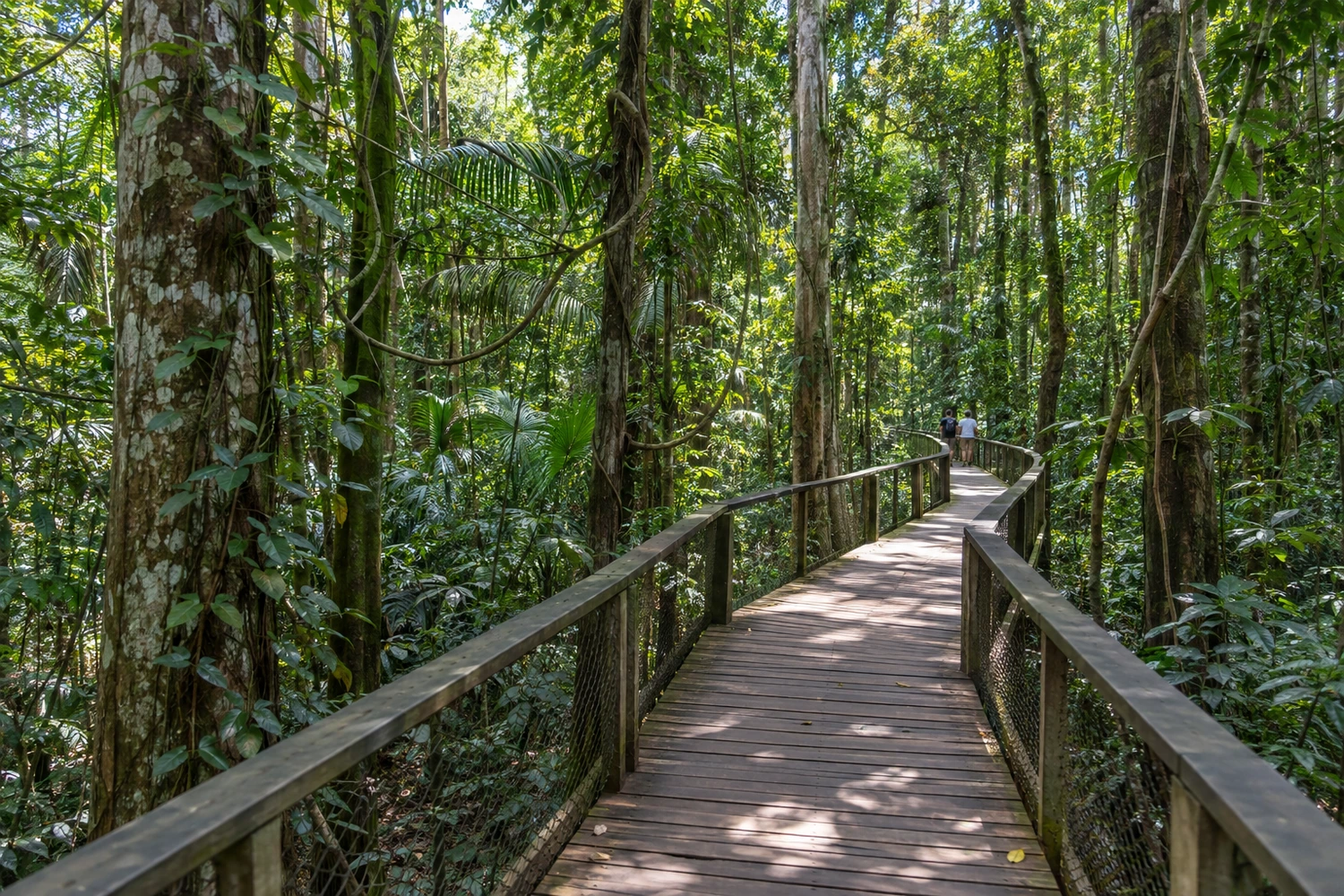
About 13 hectares of forest maintained by the National Institute for Amazon Research (Inpa), open to the public since 1995. It has trails, elevated walkways, manatee and giant otter enclosures, and the Casa da Ciência, with exhibits about the region.
Discover Bosque da Ciência (Inpa)
A river archipelago with hundreds of islands, igapós (flooded forests) and navigable channels on the Rio Negro. It is one of the best places in the Amazon to see river dolphins, caimans and birds.
Discover Parque Nacional de Anavilhanas
A wide fall of dark water over rock slabs, surrounded by dense forest. It is one of the most visited in the town nicknamed the Land of Waterfalls.
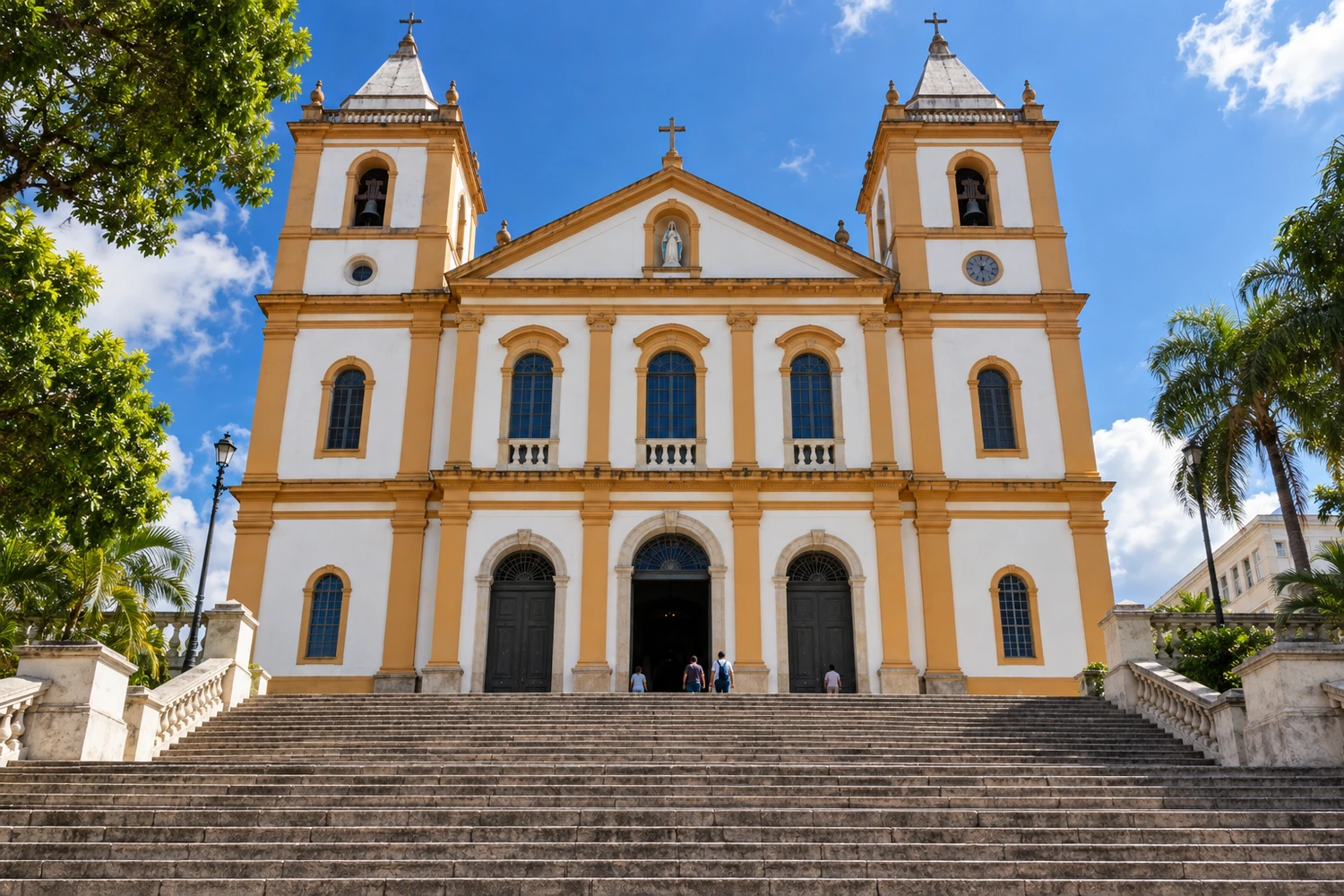
A neoclassical church built on Praça XV de Novembro after a fire destroyed the previous church in 1850, inaugurated in 1877. Facing the port, it holds objects used by Pope John Paul II during his 1980 visit.
Discover Catedral Metropolitana de Manaus
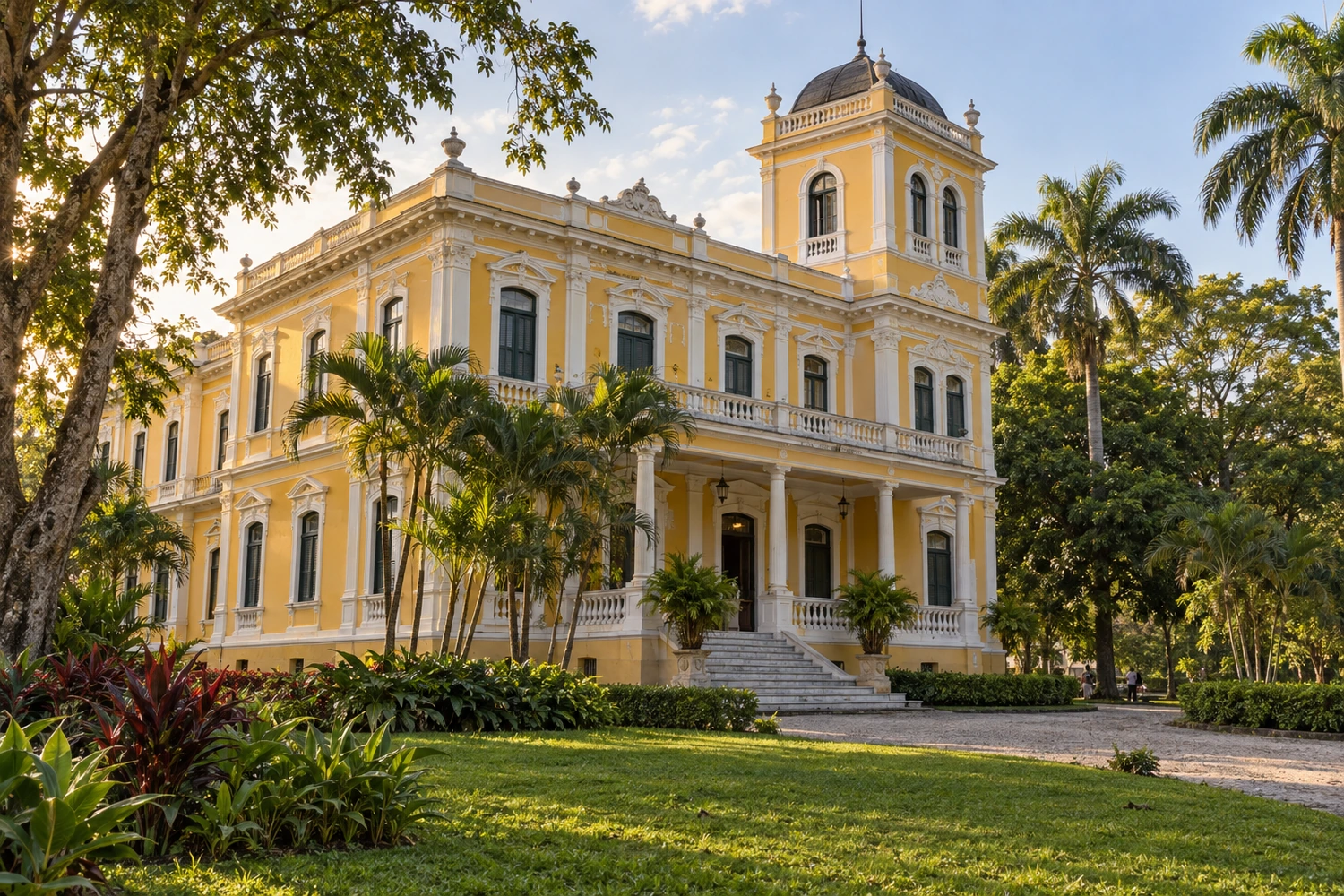
Built in 1903 in eclectic style as the home of German rubber merchant Karl Waldemar Scholz, it later served as the seat of the state government. Restored, it became a cultural center with exhibitions, recitals and a collection of 228 pieces.
Discover Centro Cultural Palácio Rio Negro
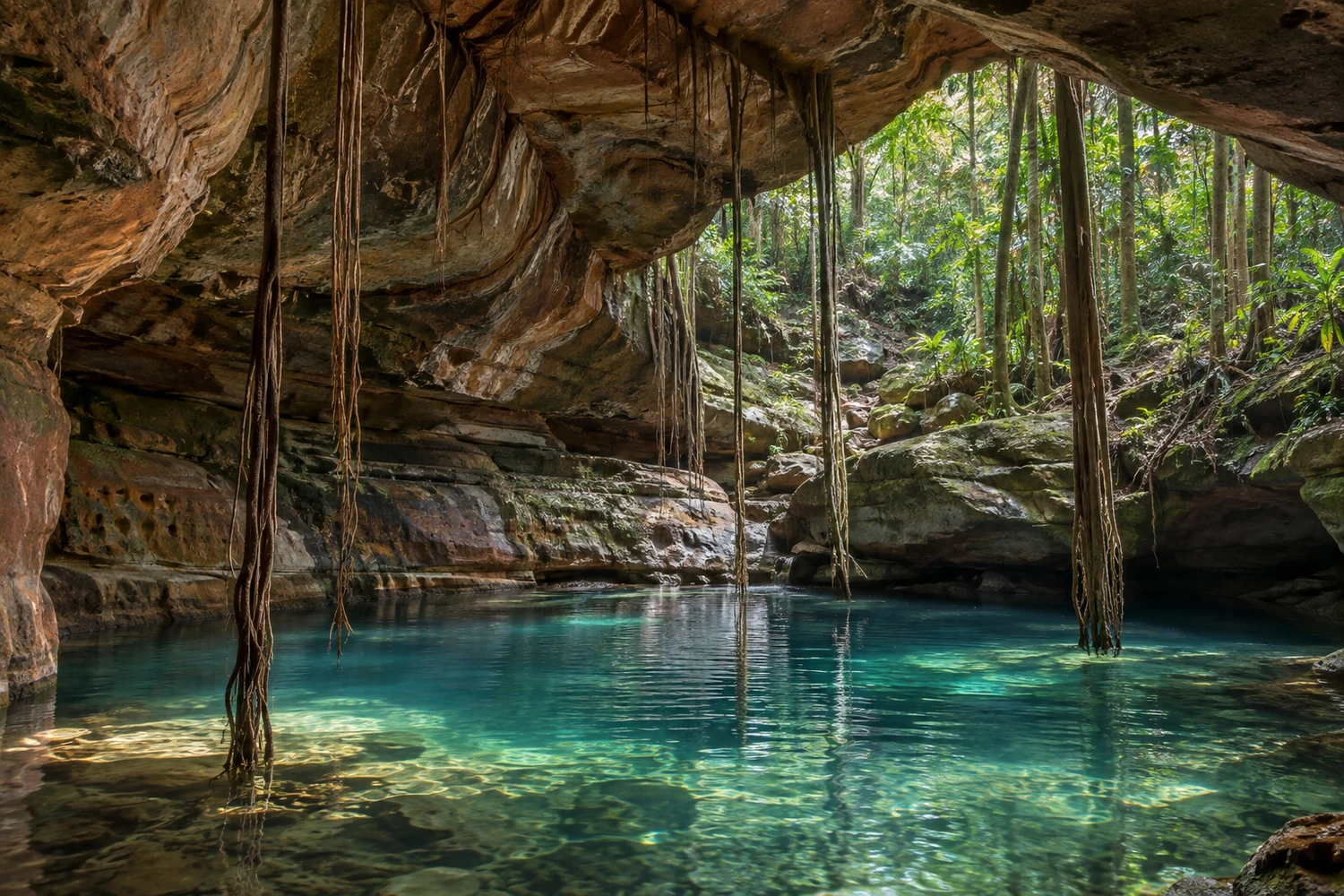
Sandstone caves inside the Caverna do Maroaga Environmental Protection Area, with tall rock walls, hanging roots and pools of bluish water. The visit combines a forest walk with a swim inside the grotto.
Discover Gruta da Judeia e Caverna do Maroaga
Your base to explore
Where you stay is part of the trip. Choose the area that best fits your itinerary.
A jungle hotel on the banks of the Paraná do Ariaú (river channel), reached via the Estrada Manoel Urbano (AM-070) and a short canoe ride, about 45 minutes by car from Manaus. It suits travelers who want the forest experience close to the state capital.
A jungle hotel on the AM-352 highway, beside the Rio Negro and facing the Anavilhanas archipelago, with daily guided tours. Recommended if you want forest immersion with full facilities.
A boutique hotel in the historic center of Manaus, on Rua 10 de Julho, facing Largo São Sebastião and Teatro Amazonas. It suits travelers who want to stay within walking distance of downtown's main sights.
A pousada (guesthouse) in the Marcos Freire community, in rural Presidente Figueiredo, with waterfalls on the property. Recommended if you come to the area for the waterfalls and want to stay surrounded by nature.
A sport-fishing pousada (guesthouse) on the banks of the Mutuca River, about 130 km from Manaus, with chalets and all-inclusive packages. It is geared to anglers after peacock bass (tucunaré) in the August-to-February season.
A family-run ecotourism pousada (guesthouse) at Cachoeira do Castanho, in rural Iranduba, with simple rooms and guided trips through the forest and rivers. It suits travelers who want a short jungle immersion near Manaus.
A boutique hotel on Rua 10 de Julho, a few meters from Teatro Amazonas, opened in 2016 in the historic center. Recommended if you want comfort and a central location for exploring on foot.
A boutique lodge in the town of Novo Airão, on Rua Francisco Cardoso, with views of the Rio Negro. It serves as a base for trips to Anavilhanas if you prefer to stay in town.
A pousada (guesthouse) with wooden chalets in the Marcos Freire community, on the banks of the Mutum River, beside the Balbina road (AM-240). Recommended if you are looking for forest, river swimming, trails and sightings of the Guianan cock-of-the-rock.
Cabin lodging in the São Miguel community, beside the Balbina road (AM-240), in Presidente Figueiredo. Geared to couples and small groups looking for peace and quiet near the area's waterfalls.
A hostel on Rua Dona Libânia, one block from the Teatro Amazonas square, in downtown Manaus. A budget option for backpackers and travelers who want to stay near the historic center.
A pousada (guesthouse) on Avenida Presidente Getúlio Vargas, on the bank of the Rio Negro, with views of the Anavilhanas islands. It is a mid-range option for visitors to Novo Airão who want to stay in the center.
Flavors of the destination
Chef Felipe Schaedler's restaurant, opened in 2009 on Rua Libertador, a benchmark of contemporary Amazonian cuisine, with forest ingredients and modern techniques. It appears in the 2026 Michelin Guide and is recommended if you want to try regional fine dining.
A steakhouse and fish restaurant on the road to Cachoeira do Urubuí, near one of the most visited waterfalls in Presidente Figueiredo. It serves grilled meat and fish and is a handy stop if you are spending the day at the waterfalls.
A floating restaurant on the Rio Negro, reached from Rua Presidente Getúlio Vargas, with views of the Parque Nacional de Anavilhanas. It serves Amazonian cuisine with a signature touch, such as tambaqui and ceviche with tucupi (a yellow manioc broth).
A restaurant in the Lago do Limão community, reached via the Estrada Manoel Urbano (AM-070), serving Amazon fish such as tambaqui, pirarucu and tucunaré. It offers swimming in the lake and canoe rides and is a weekend outing for families.
A gastropub on Rua Ajuricaba, in Novo Airão, with regional bar snacks, fish, meat, vegetarian options and house cocktails, to the sound of jazz, blues and MPB (Brazilian popular music). It opens in the evening and suits anyone who wants dinner after trips to Anavilhanas.
A café and restaurant beside the Estrada Manoel Urbano (AM-070), on the Iranduba stretch, known for its tapiocas and regional snacks with tucumã (a local palm fruit). It is a common stop for travelers heading from Manaus to Novo Airão.
Chef Débora Shornik's restaurant on Largo São Sebastião, across from Teatro Amazonas, with signature dishes made with Amazonian ingredients. It pairs well with a walk around the historic center.
A restaurant and steakhouse on Rua Manaus, in downtown Presidente Figueiredo, with a pay-by-weight buffet, barbecue, salads and hot dishes. It is a convenient option while you are in town.
A home-style restaurant on the shore of Lago de Balbina, in the village of Balbina, in Presidente Figueiredo. It serves lunch with regional fish to visitors to the lake and the hydroelectric dam area.
A floating restaurant on Lago do Janauari, in Iranduba, serving a buffet of regional Amazonian cuisine. It is very popular on boat trips through the lakes near Manaus.
A simple restaurant in Novo Airão, run by a cook from Rio Grande do Sul, who blends Amazonian and southern Brazilian cooking in dishes of fish, meat and free-range chicken. It is a meal option while you are in town to visit Anavilhanas.
A regional fish restaurant on Largo São Sebastião, next to Teatro Amazonas, known for its roasted tambaqui served butterflied ("de banda"). The atmosphere is relaxed, with tables facing the square.
Before you go
A little planning leaves more time to enjoy the journey.
Fly into Eduardo Gomes International Airport (MAO) in Manaus; Presidente Figueiredo is about 110 km away on the BR-174, and Novo Airão is reached via the AM-070 and AM-352.
From June to November, in the low-water season, when river beaches appear and forest trails dry out; from December to May, high water lets you boat among the treetops.
Take your trash with you, follow the signs and support local businesses. In natural areas, follow the visiting guidelines.