

 Brazil
 Argentina
 Colombia
 Peru
Peru Uruguay
 Germany
 Belgium
 Spain
Spain France
 Greece
 the Netherlands
 Ireland
 Italy
Italy Portugal
 the United Kingdom
 Switzerland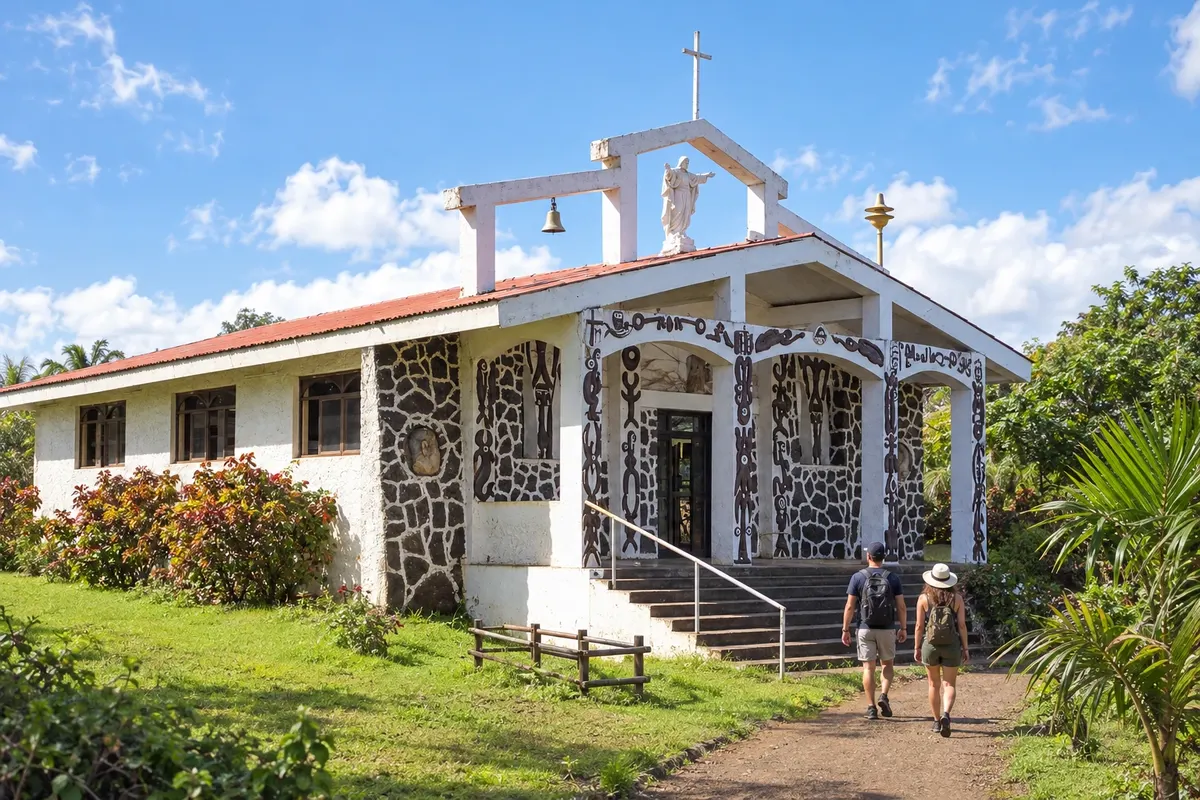
Before you go
Your trip to Hanga Roa.
Illustrative images. The pictures in this guide are illustrations based on the real place, not photographs, and may differ from it.

Hanga Roa – Valparaíso about 3676 km from Valparaíso
How to get there
-
Aeropuerto Internacional Mataveri (IPC) 1 km
Approximate road distances. Check flights and bus schedules before you travel.
Aeropuerto Mataveri is adjacent to the village, about 1 km from the center, and many guesthouses pick up guests at the disembarkation area. Flights arrive from Santiago after about five hours. There is no bus terminal: on the island, transport is by car, taxi, bicycle or guided tours.
How many days
The village itself takes about half a day: the small bay, the church, the crafts market, the museum and the late afternoon at Tahai. The rest of the stay goes to island tours, which depart from Hanga Roa and return the same day, since no site is more than half an hour away by car.
When to go
Summer, from December to March, brings hot days and late sunsets at Tahai. In early February, the Tapati Rapa Nui usually fills the village with competitions, traditional dances and songs. From April to September it rains more and the nights are cool: bring a light jacket and a raincoat.
The seasons shown are the most usual ones; nature doesn't always follow the calendar.
Do you need a car?
Within Hanga Roa, no: distances are short and Tahai is within walking distance of the center. For the rest of the island, guided tours transport you by car or van. Those who rent a car or bicycle should arrange visits to the sites with a guide, as required by the park rules.
Suggested itinerary
An order that works
Built with the places on this page. No rush: it's paced so you have time to see them.
One day in Hanga Roa
-
Morning
Sunrise at Ahu Tongariki and the quarry of Rano Raraku
Set off early with the guide toward the southeast coast to see the day break behind the fifteen moai of Ahu Tongariki. Then climb the trail at Rano Raraku, the quarry where the statues were carved, with moai half-buried on the slope and the Tukuturi, which is kneeling.
-
Afternoon
Te Pito Kura and Anakena beach
Follow the north coast to Te Pito Kura, where the fallen moai Paro and the round stone linked to Hotu Matu'a are located. Then have lunch and swim at Anakena, beside the moai of Ahu Nau Nau, under the shade of the coconut trees.
-
Late afternoon
Sunset at Tahai
Back in Hanga Roa, walk to Tahai and wait for the sun to set behind Ahu Vai Ure and Ko Te Riku, the moai with white eyes. Arrive a little earlier to choose a spot on the grass, without stepping on the platforms.
-
Evening
Dinner on Avenida Policarpo Toro
Dine in the center, where restaurants serve the catch of the day, such as tuna, and ceviche. On some nights there are rapa nui dance performances in the village: ask at your guesthouse which are on the program.
3 days in Hanga Roa
Day 1
-
Morning
Village, museum and Tahai
Start at the Iglesia de la Santa Cruz and the small harbor of Hanga Roa. Then walk along the coast to the Museo Antropológico Padre Sebastián Englert to understand the moai, the bird-man cult and the history of the rapa nui people before going on tours.
-
Afternoon
Puna Pau and Ahu Akivi
With the guide, climb the crater of Puna Pau, from which the red stone for the pukao came, and continue to Ahu Akivi, inland, where seven moai look out to sea. In the late afternoon, return to see the sunset at Tahai.
Day 2
-
Morning
Tongariki at dawn and Rano Raraku
Devote the morning to the southeast coast: sunrise at Ahu Tongariki and a walk through the quarry of Rano Raraku, with the crater lake. Entrance to Rano Raraku is valid once per ticket, so make the most of the visit.
-
Afternoon
Te Pito Kura and Anakena
Along the north coast, stop at Te Pito Kura and end the day at Anakena beach, with lunch at the beach shacks and free time for the sea and the moai of Ahu Nau Nau.
Day 3
-
Morning
Ahu Vinapu and the crater of Rano Kau
Go to Ahu Vinapu, near the head of the airport runway, to see the fitted stone wall. Then climb Rano Kau up to the crater viewpoint, with the lake below and the ocean on the other side.
-
Afternoon
Ceremonial village of Orongo
On the rim of Rano Kau, walk through Orongo, with its stone houses and bird-man petroglyphs, facing the islets Motu Nui, Motu Iti and Motu Kao Kao. In the evening, farewell dinner in the village.
Check before you go. Opening hours and days change, and places may close for renovations, holidays or events. This itinerary is a suggestion from Cidade Turismo, not a commitment: plan yours by checking directly with each place you intend to visit.
Before you go
Frequently asked questions
What time zone is Easter Island in?
The island is two hours behind mainland Chile. Since both typically change clocks together for daylight saving time, the difference with Santiago stays the same. Set your watch on arrival and confirm flight and tour times in local time.
What language is spoken in Hanga Roa?
Spanish and rapa nui are spoken, the Polynesian language of the island people. Rapa Nui is also the name residents use for the island. The greeting you hear on the street is "Iorana", used for good morning, good afternoon and hello. In shops and on tours, Spanish will do everything.
Do I need a guide to visit the moai?
In most of the sites within Parque Nacional Rapa Nui, yes: visits must be done with an accredited guide. Tahai, in Hanga Roa, and the beach area of Anakena are often exempt from that requirement. Hire the guide before you arrive and confirm the rules before traveling.
What precautions should I take around the moai and the ahu?
The moai and the ahu are sacred heritage of the rapa nui people. Do not touch the statues, do not climb or step on the platforms, follow marked trails and do not take stones as souvenirs. Park rangers accompany visits and Chilean law punishes damage to the sites.