

 Brazil
 Argentina
 Colombia
 Peru
Peru Uruguay
 Germany
 Belgium
 Spain
Spain France
 Greece
 the Netherlands
 Ireland
 Italy
Italy Portugal
 the United Kingdom
 Switzerland
Archaeological site
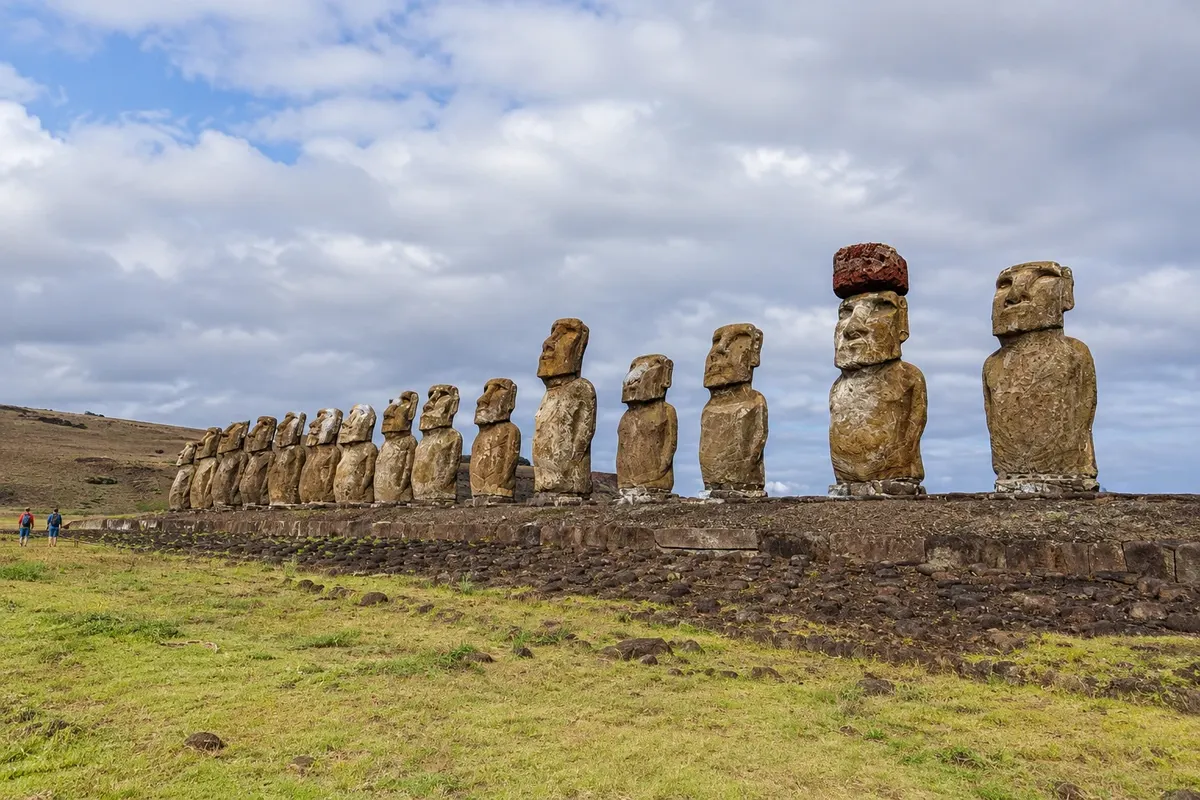
Ahu Tongariki
Largest ahu on Easter Island, with fifteen moai lined up with their backs to the sea, at the foot of the volcano Rano Raraku. It is the classic spot to watch the sunrise on the island.
Valparaíso · Chile
In the destination Ilha de Páscoa.
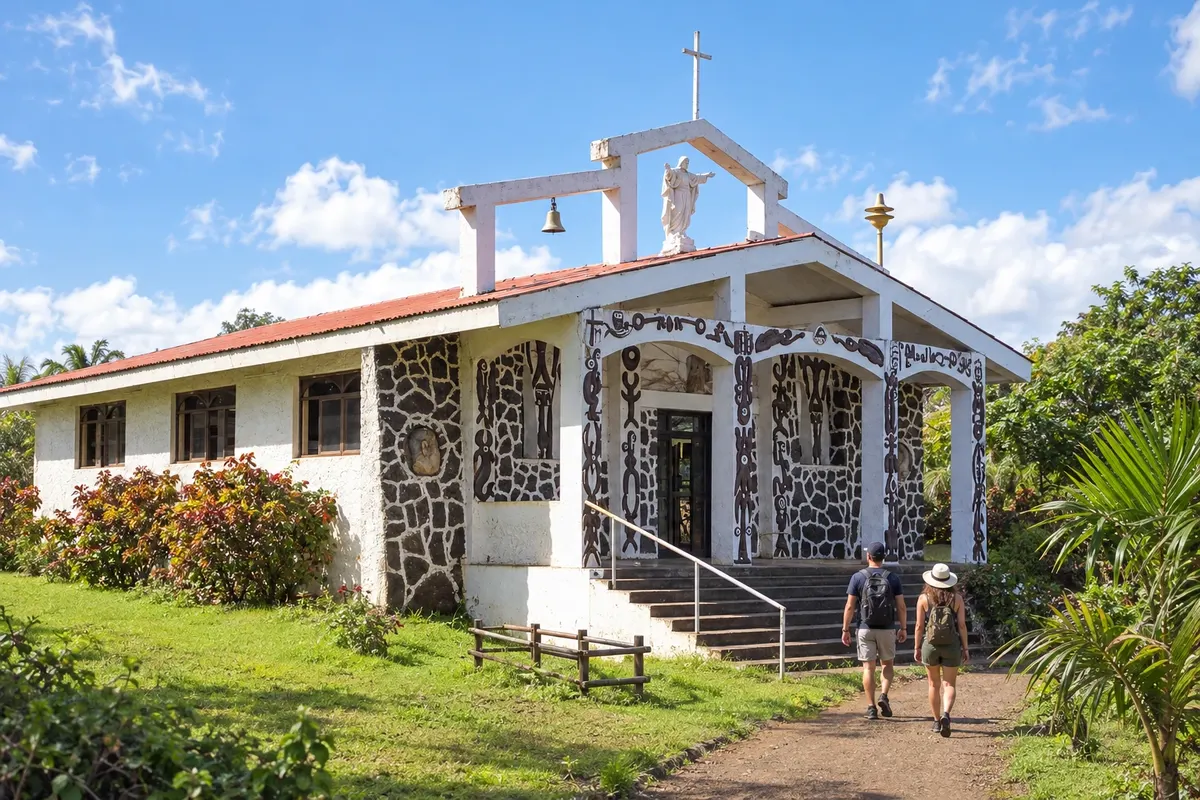
In the photo: Iglesia de la Santa Cruz, Hanga Roa
Illustrative images. The pictures in this guide are illustrations based on the real place, not photographs, and may differ from it.
The city
Hanga Roa is the village of Ilha de Páscoa on the west coast, where almost the entire population lives. The name, in Rapa Nui, means long bay. It has the fishing boat cove, Avenida Policarpo Toro and the Iglesia de la Santa Cruz. To the north are the Tahai complex and the Museo Antropológico Padre Sebastián Englert. From there depart excursions to Tongariki, Rano Raraku, Anakena, Te Pito Kura, Ahu Akivi, Puna Pau, Vinapu, Rano Kau and Orongo.
There's no accommodation in the guide yet in Hanga Roa.
There are no restaurants in the guide yet in Hanga Roa.
Know a good one? Recommend it to ushow to get there · how many days · itinerary · questions
The local experience
Largest ahu on Easter Island, with fifteen moai lined up with their backs to the sea, at the foot of the volcano Rano Raraku. It is the classic spot to watch the sunrise on the island.
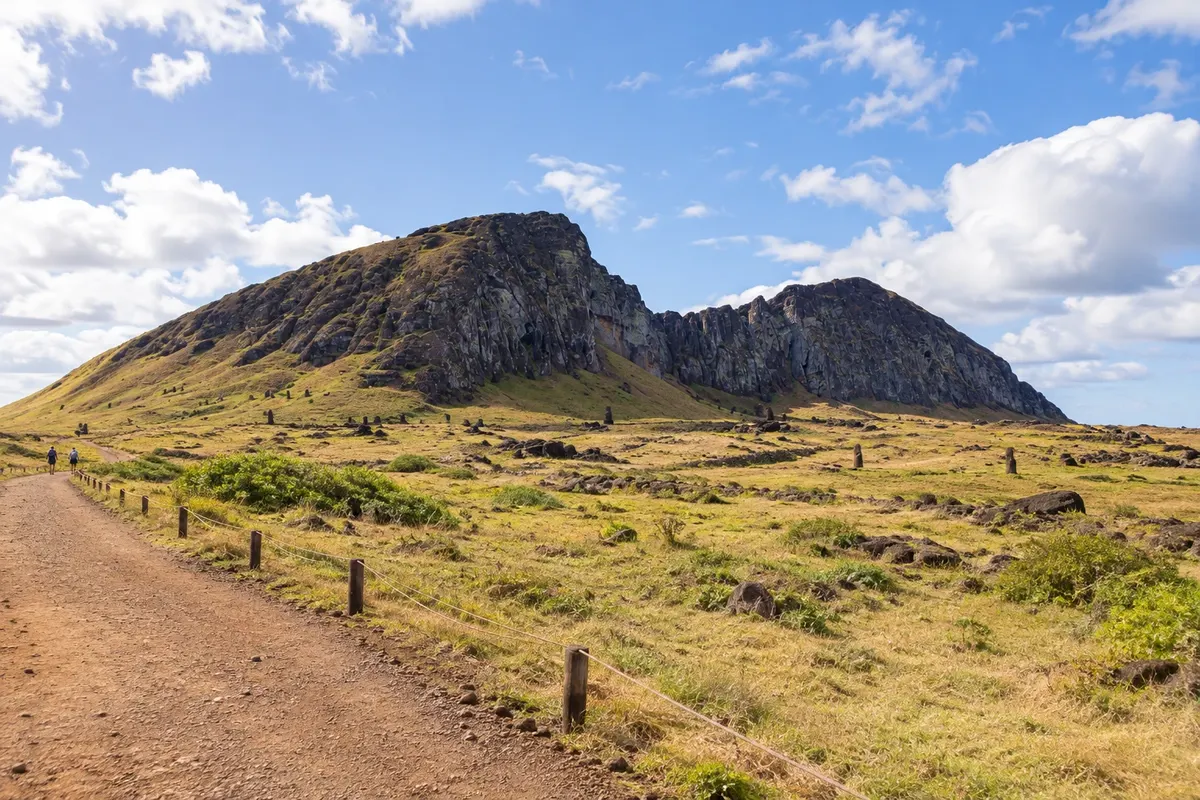
Volcanic crater that served as the quarry for almost all of the island's moai. On the slope, dozens of unfinished or partially buried statues; inside, a freshwater pond.
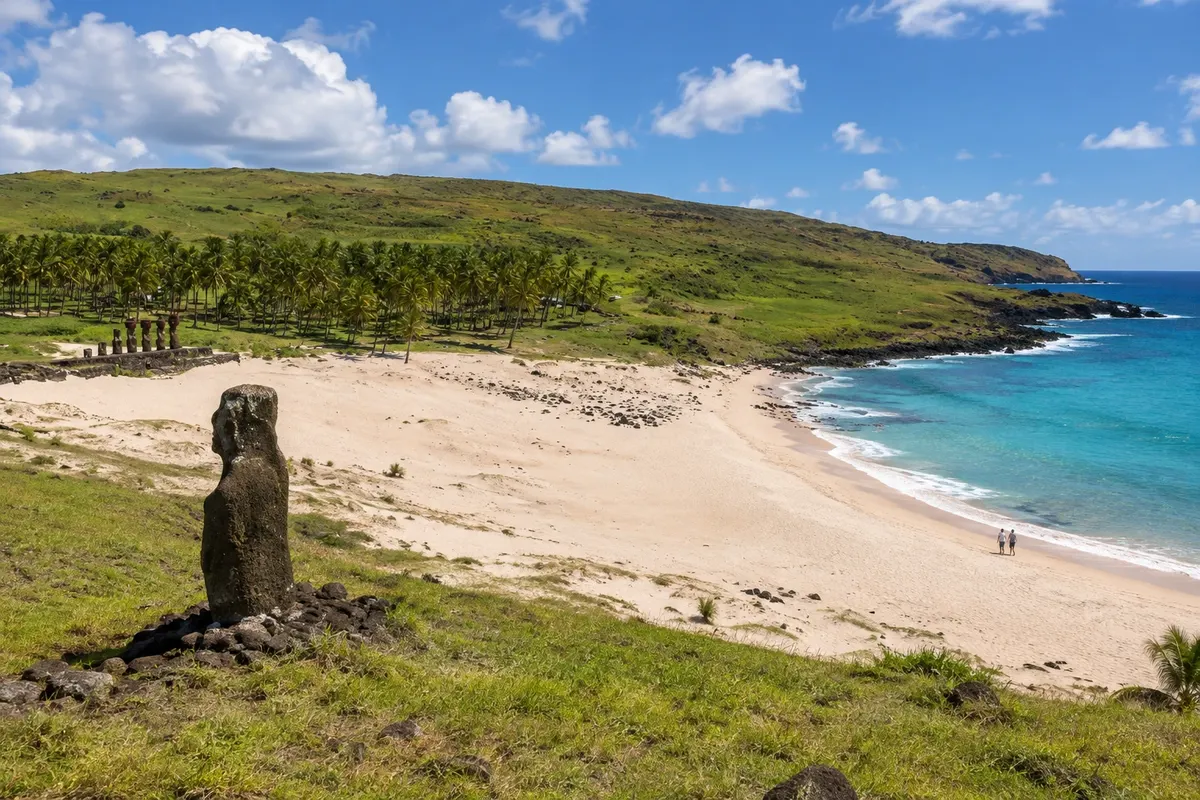
White coral-sand beach on the north coast, with coconut trees and the moai of Ahu Nau Nau. According to tradition, it was here that Hotu Matu'a, the island's first king, landed.
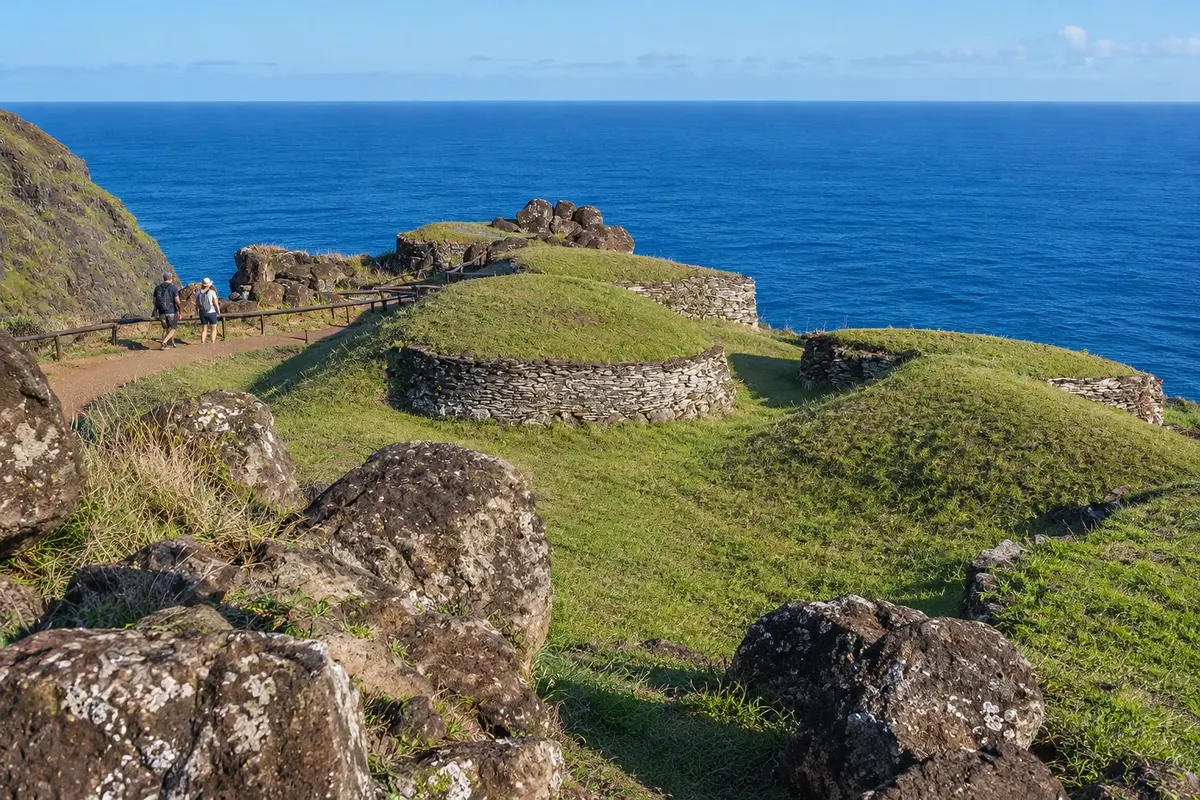
Ceremonial village of stone houses on the rim of the Rano Kau volcano, linked to the Birdman cult, with petroglyphs and views of the islets Motu Nui, Motu Iti and Motu Kao Kao.
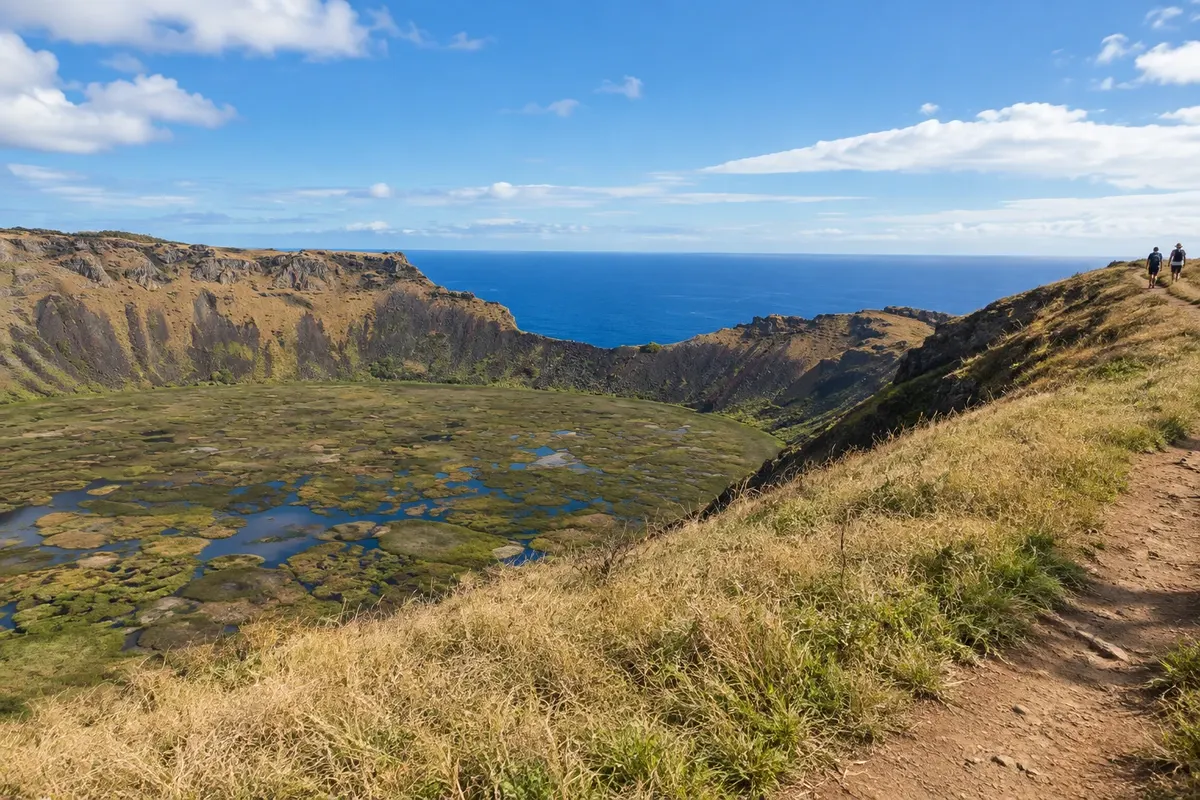
Extinct volcano at the southwest tip of the island, with a crater more than 1 km wide and a lagoon at the bottom. From the lookout on the rim you can see the crater and, on the other side, the Pacific.
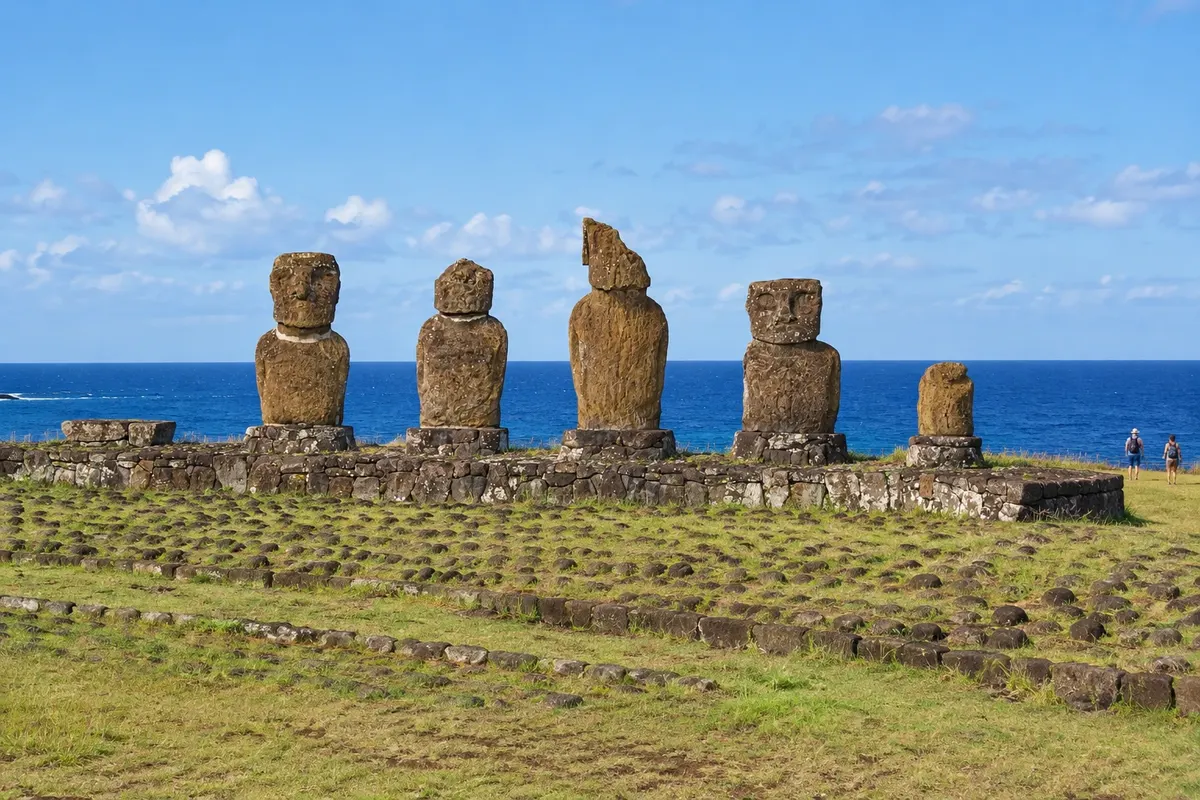
Seaside ceremonial complex north of downtown Hanga Roa, with three restored ahu and Ko Te Riku, the moai with coral eyes. The island's most popular spot to watch the sunset.
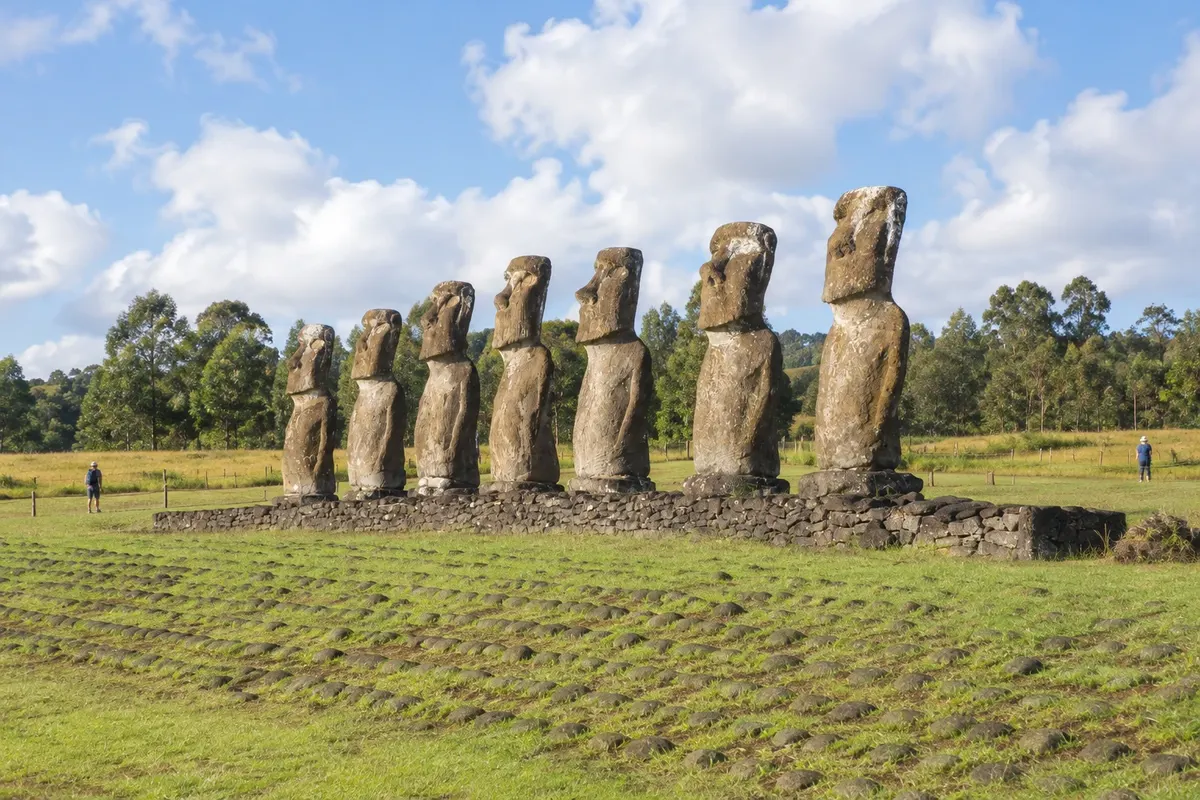
Inland platform with seven identical moai facing the ocean, unlike most. It is aligned with the equinox sunset.
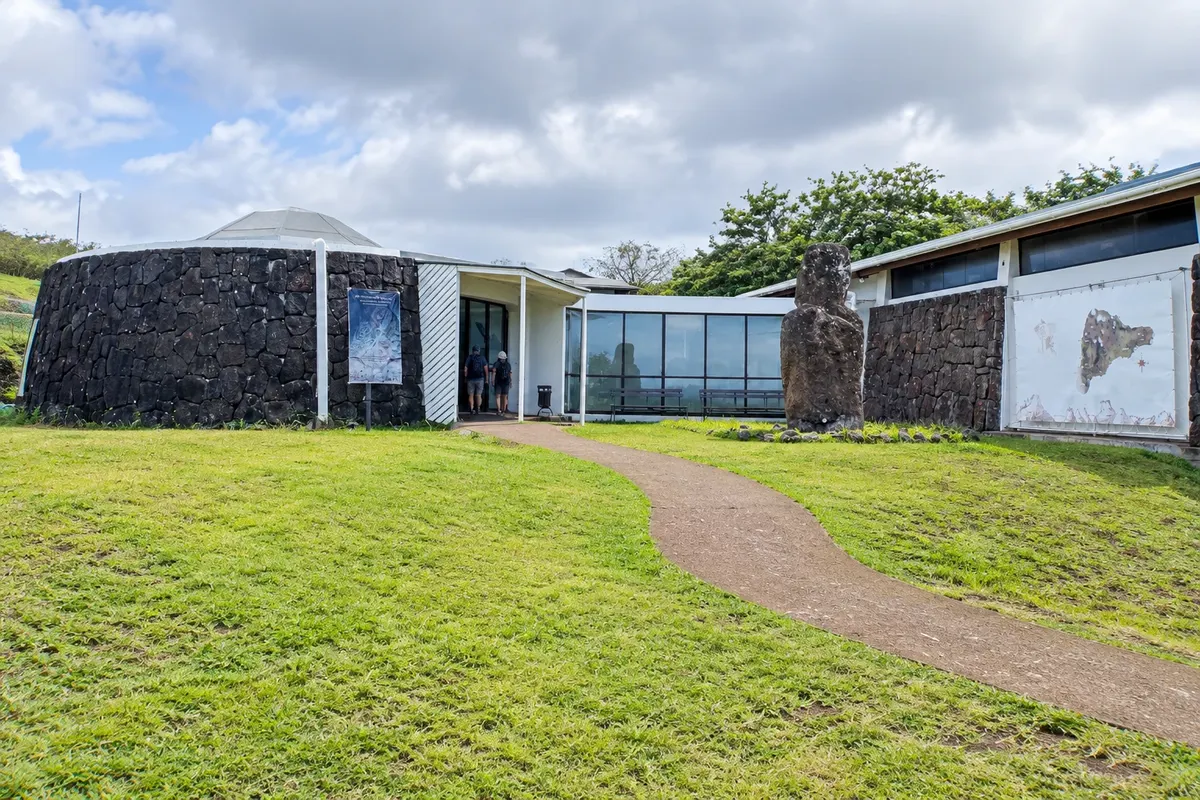
Anthropology museum in the Tahai area of Hanga Roa, with archaeological items and wood carvings that tell the story of the rapa nui people, the moai, and the bird-man cult.
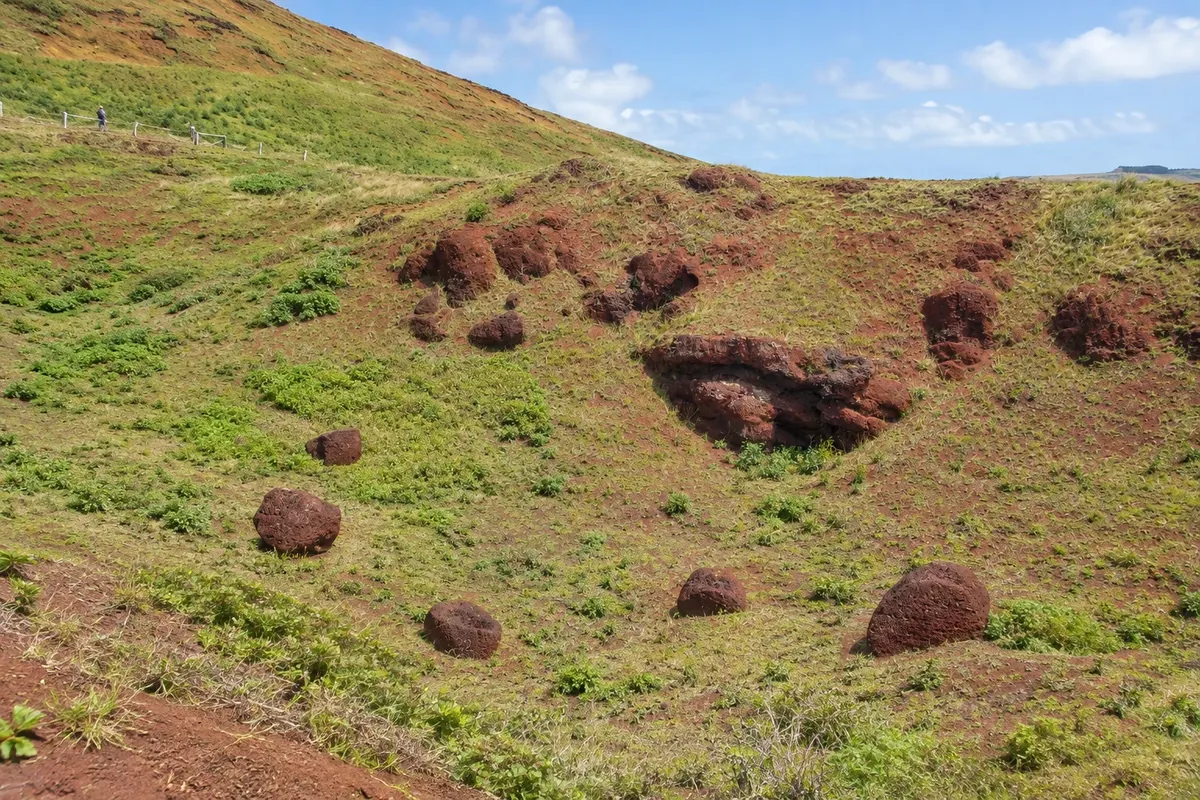
Small crater on the outskirts of Hanga Roa, from which the red scoria used for the pukao, the stone headdresses placed on the heads of some moai, was quarried.
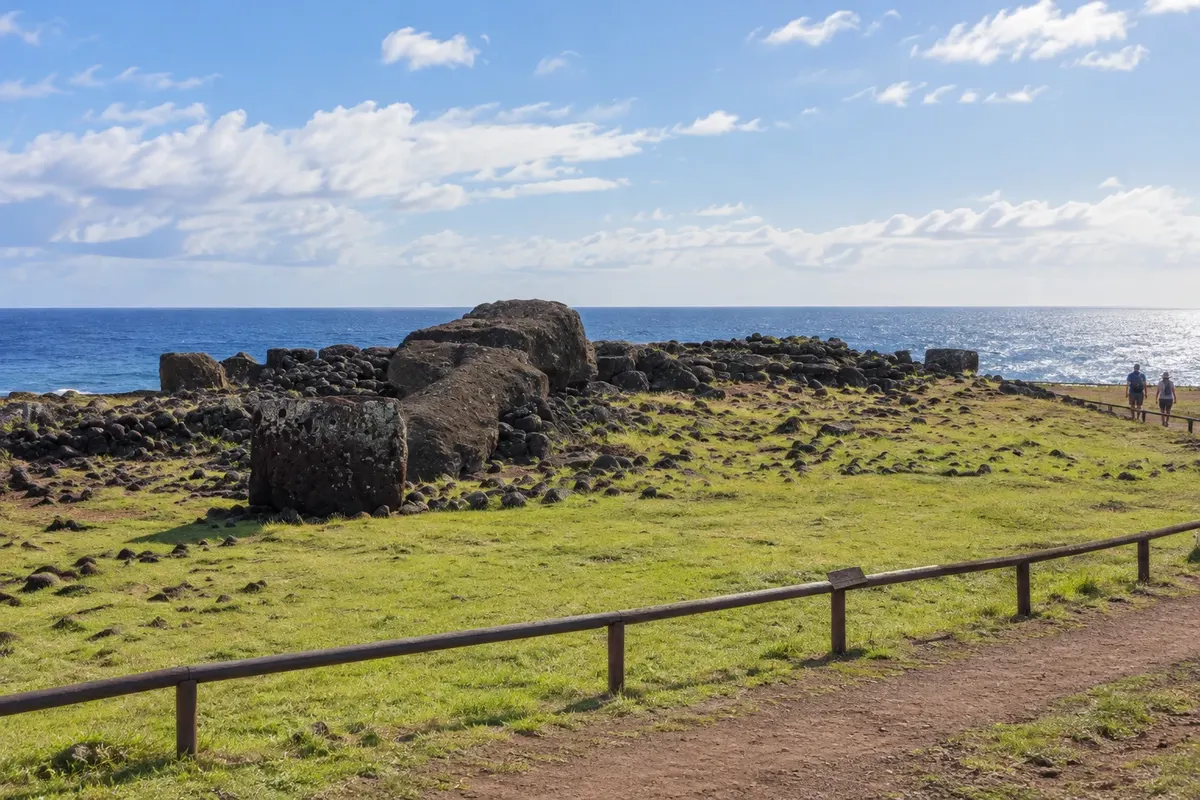
Site on the north coast with the moai Paro, the largest ever erected on an ahu, now fallen, and a round stone that tradition links to Hotu Matu'a.
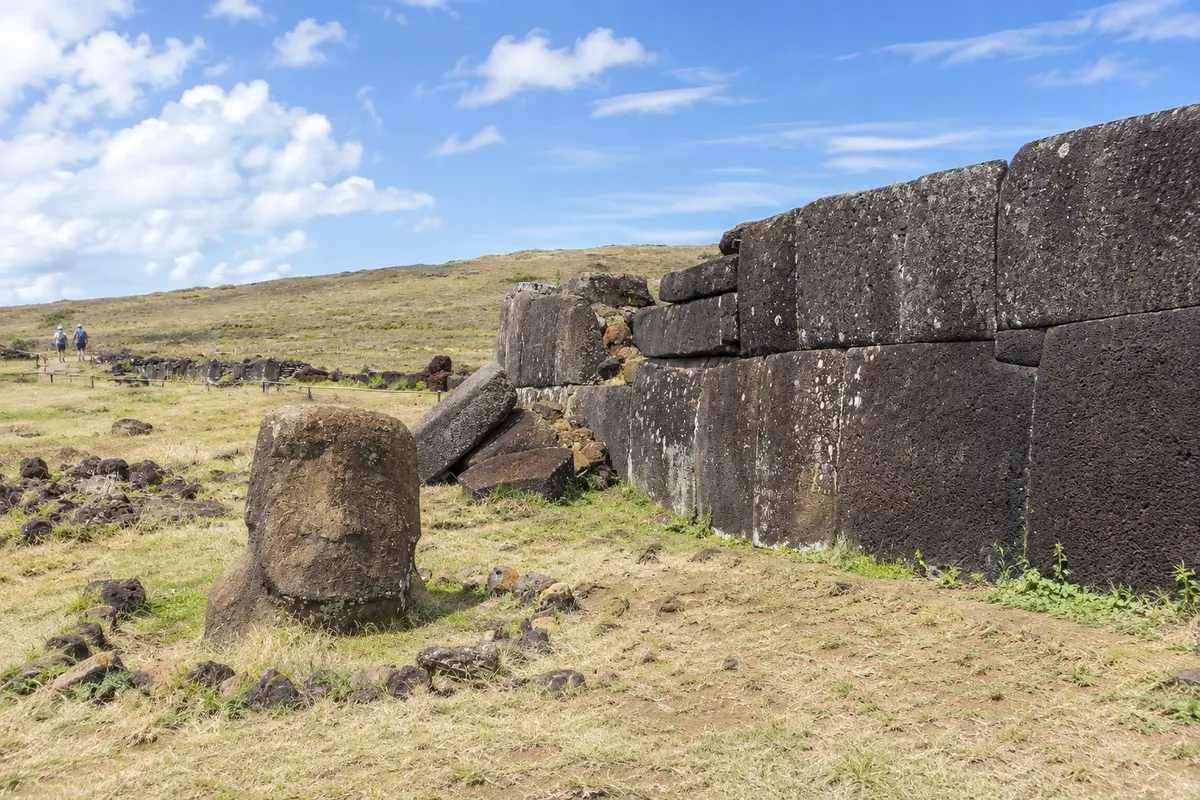
Ceremonial complex on the south coast, near the airport, known for its wall of large basalt blocks fitted with precision, compared to Inca constructions.
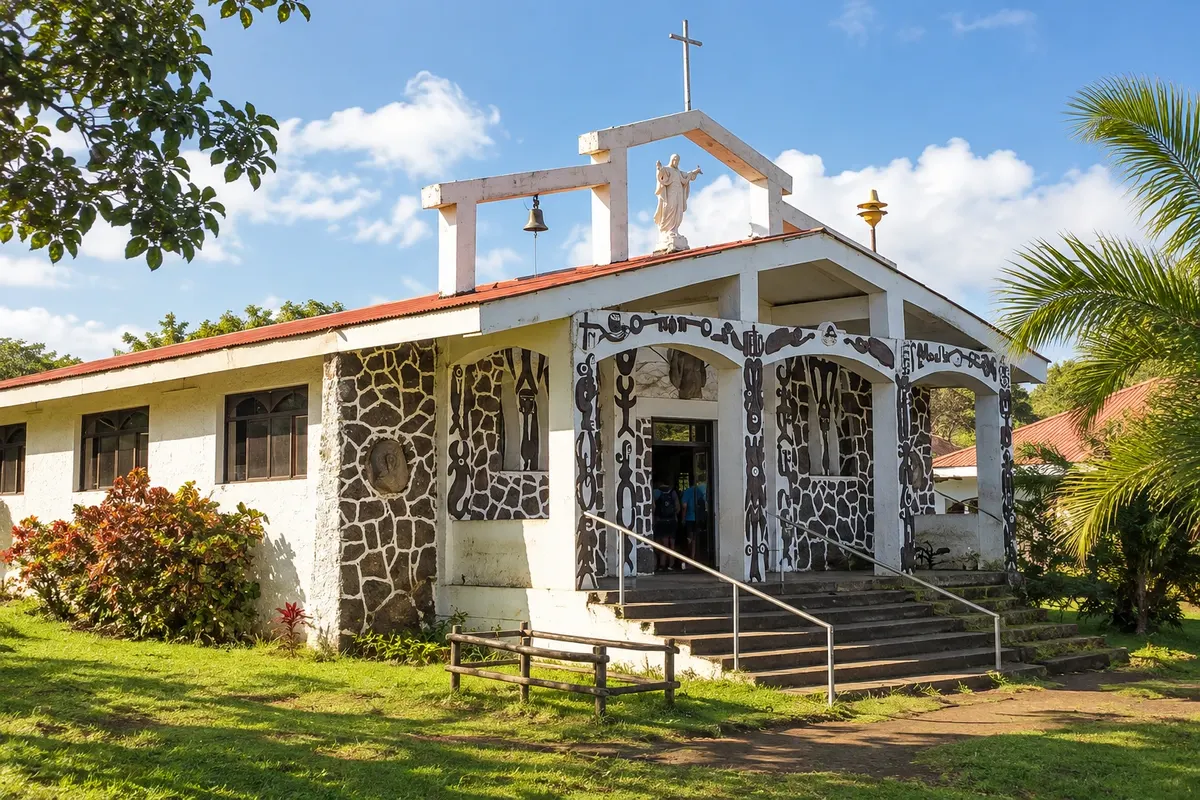
Catholic church of Hanga Roa, on rua Te Pito o te Henua, decorated with wooden saints carved in the Rapa Nui style. It is a few blocks from the cove and the village square.