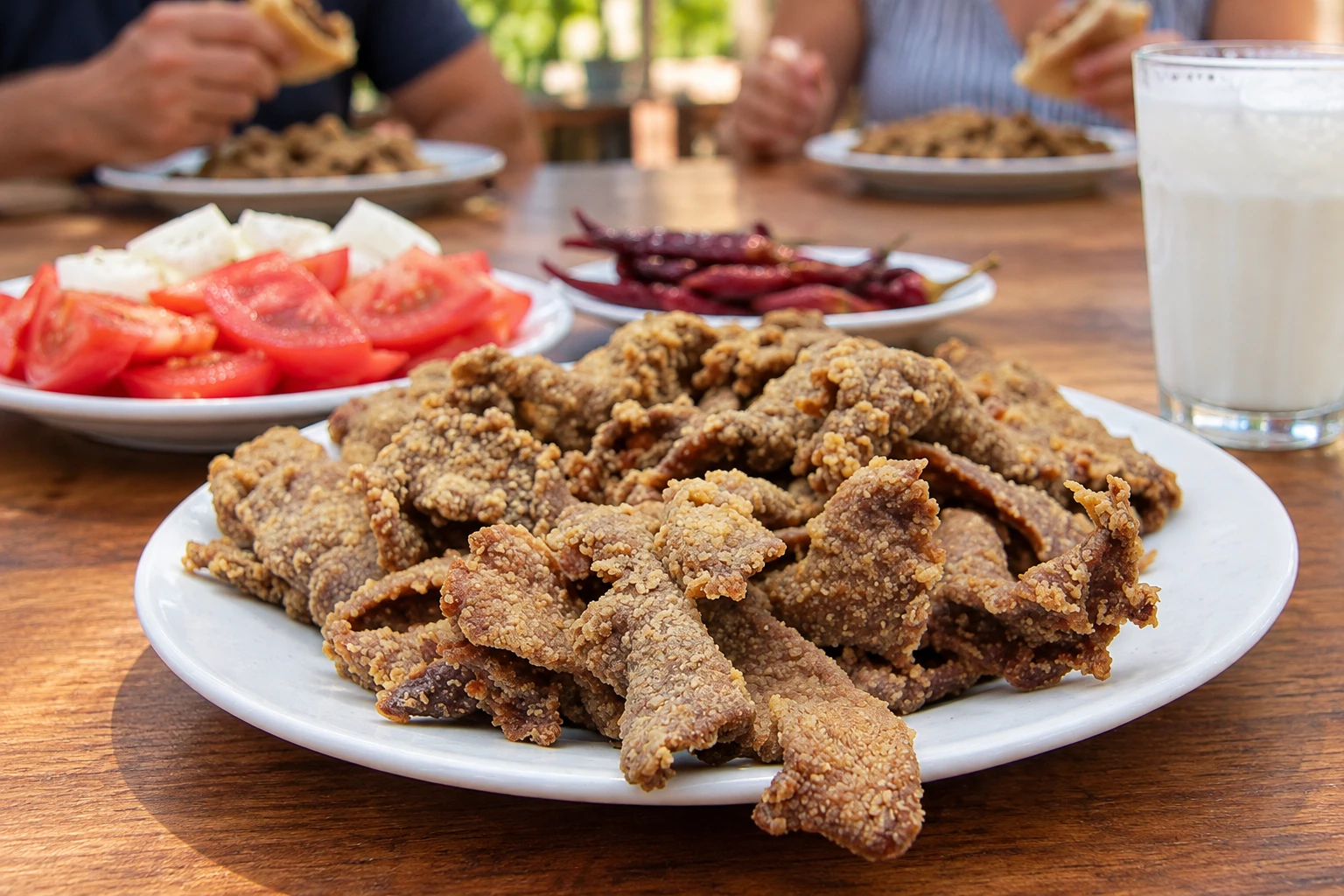
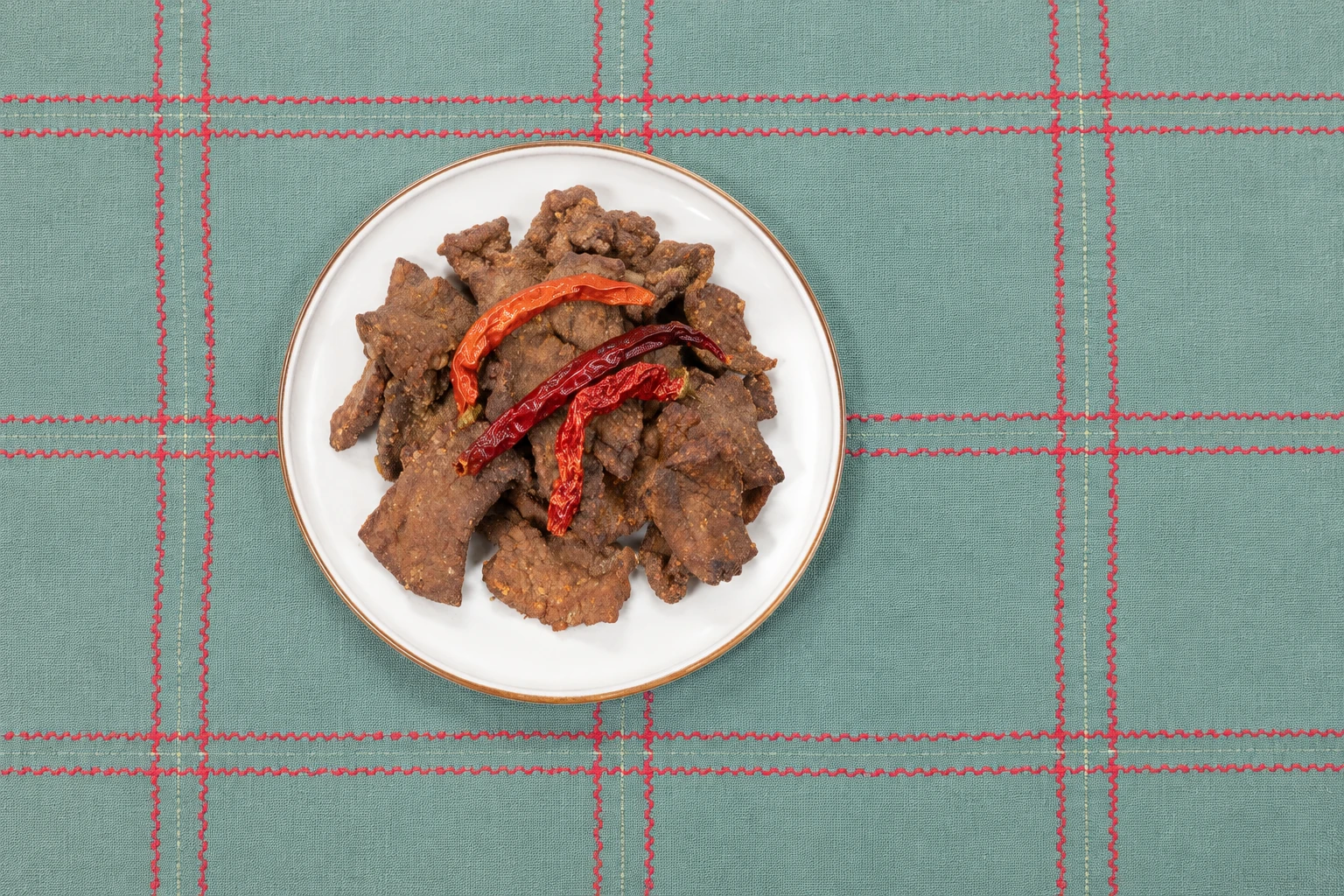
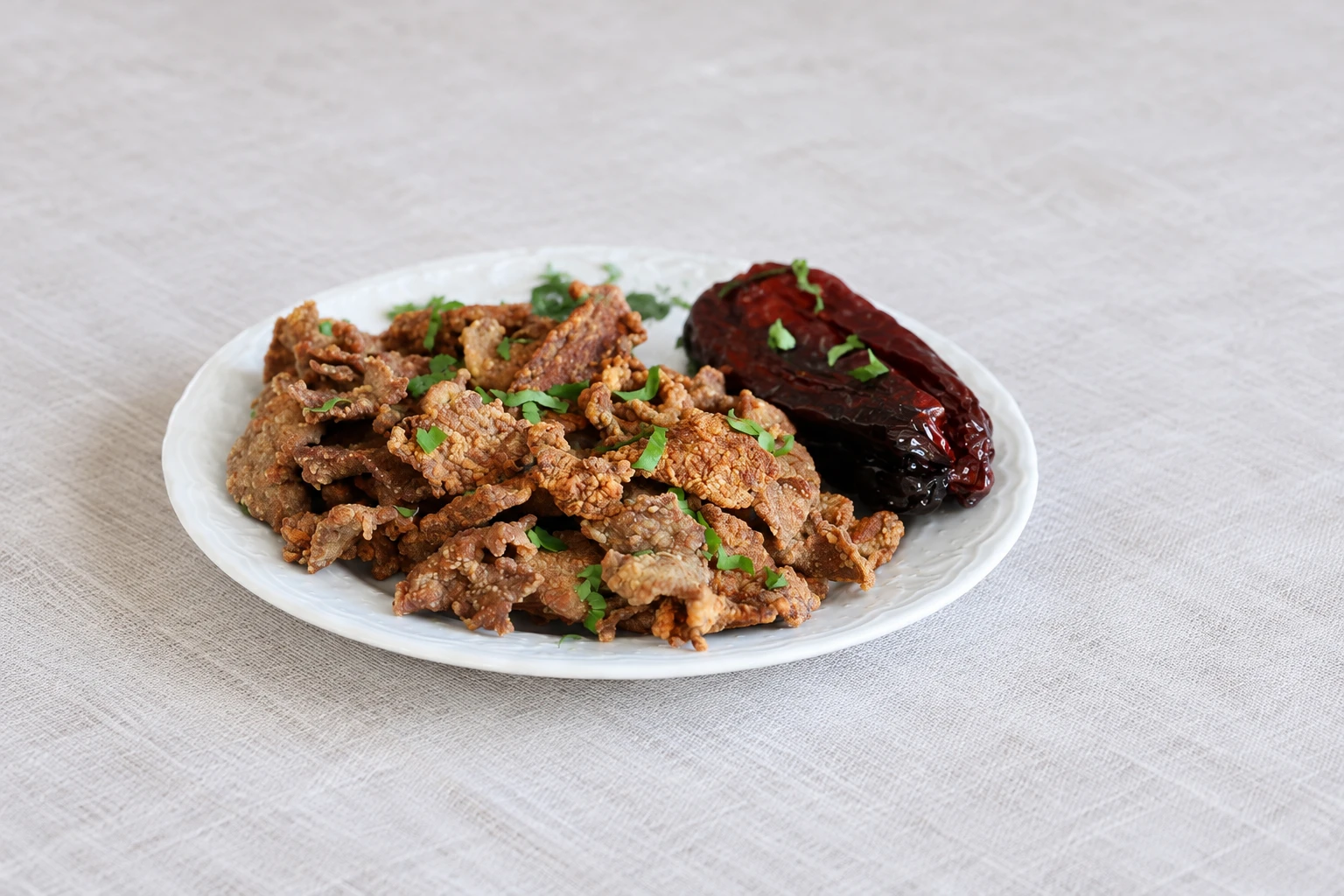
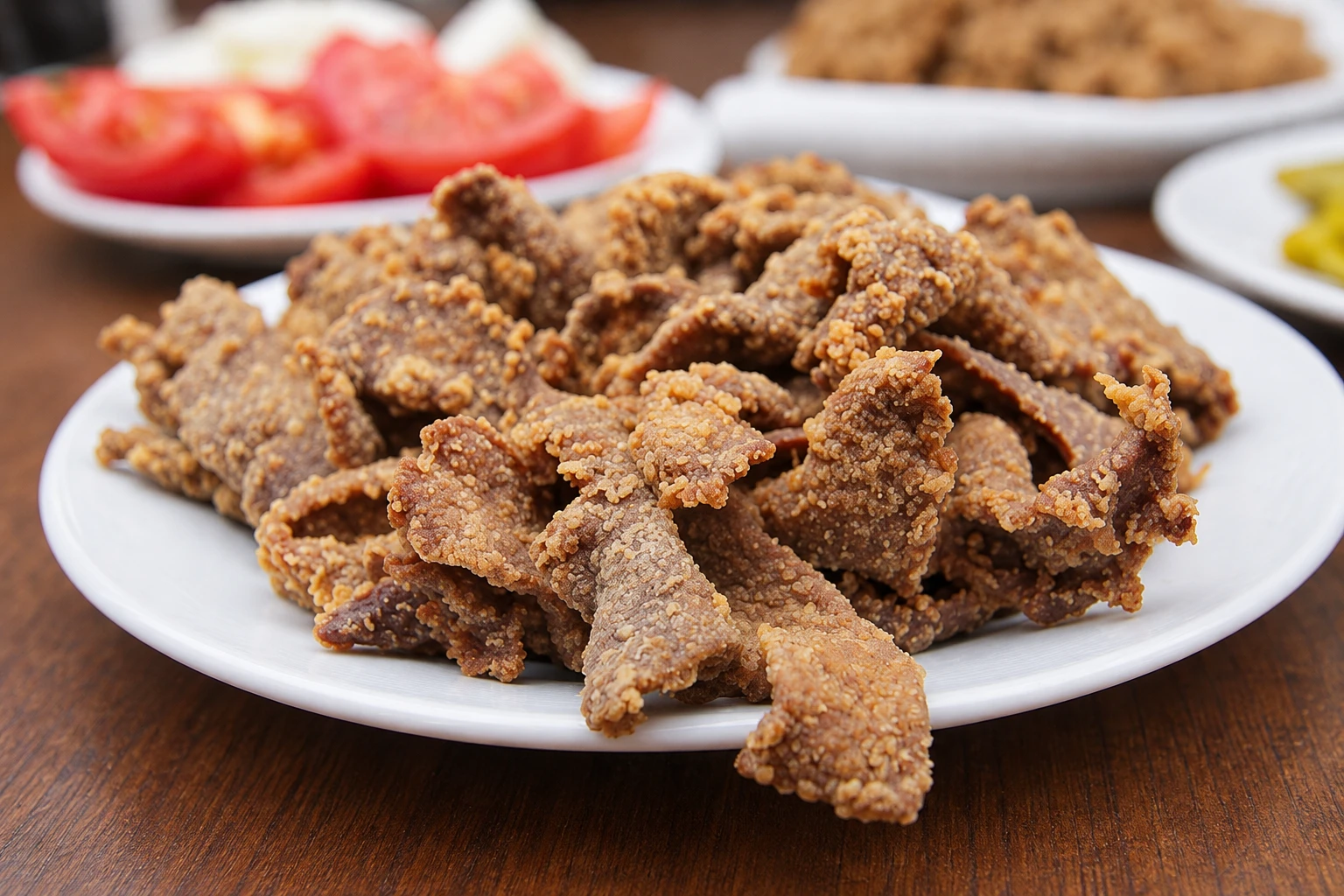
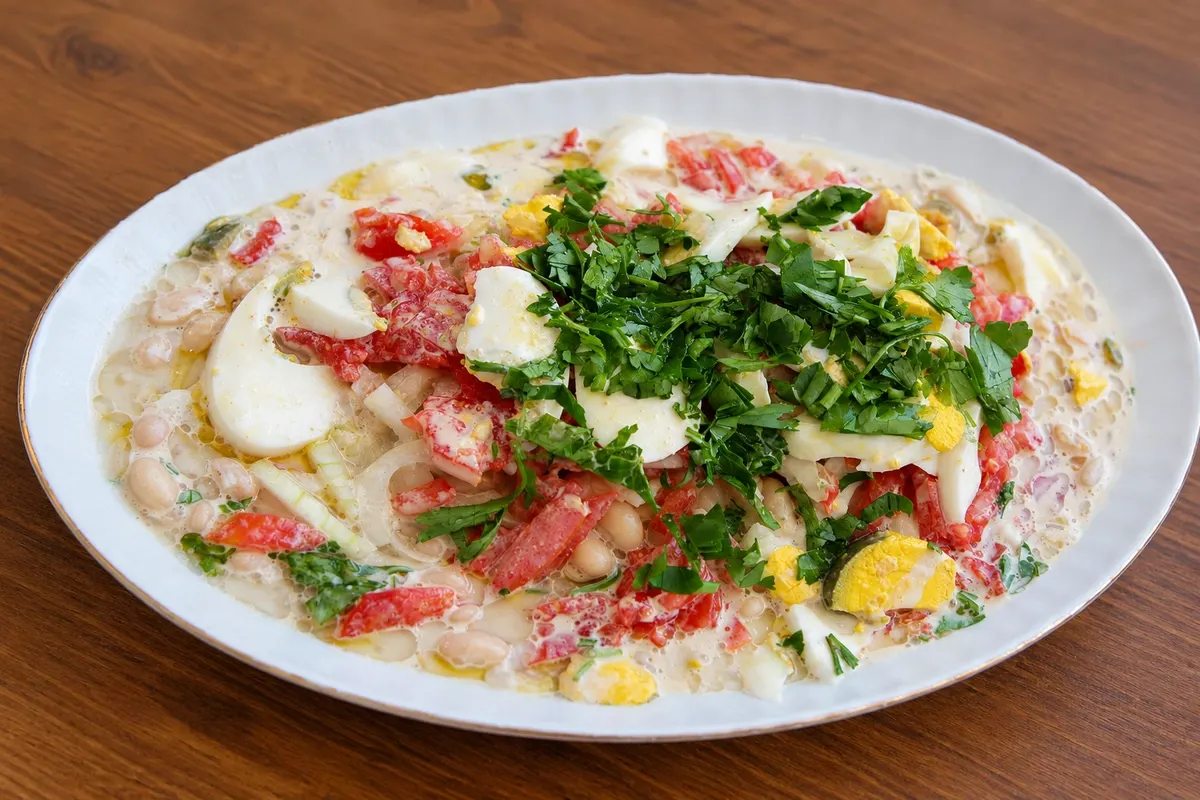
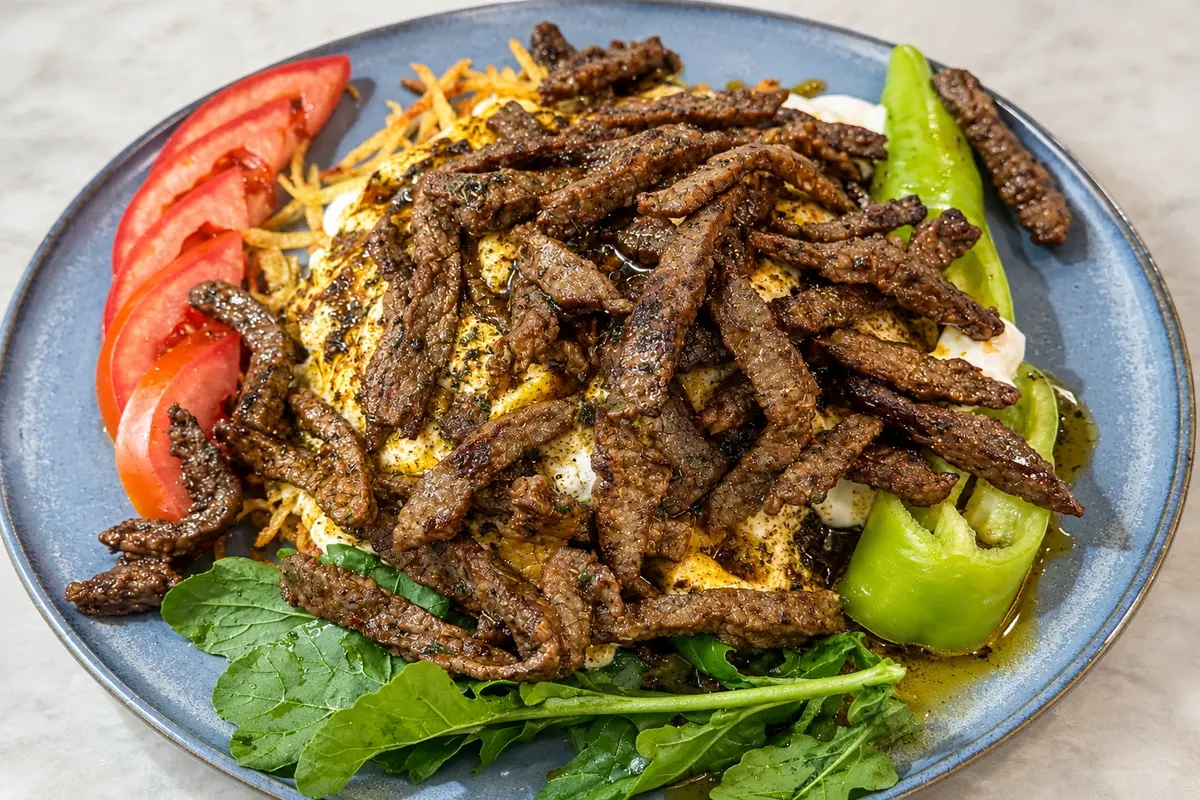
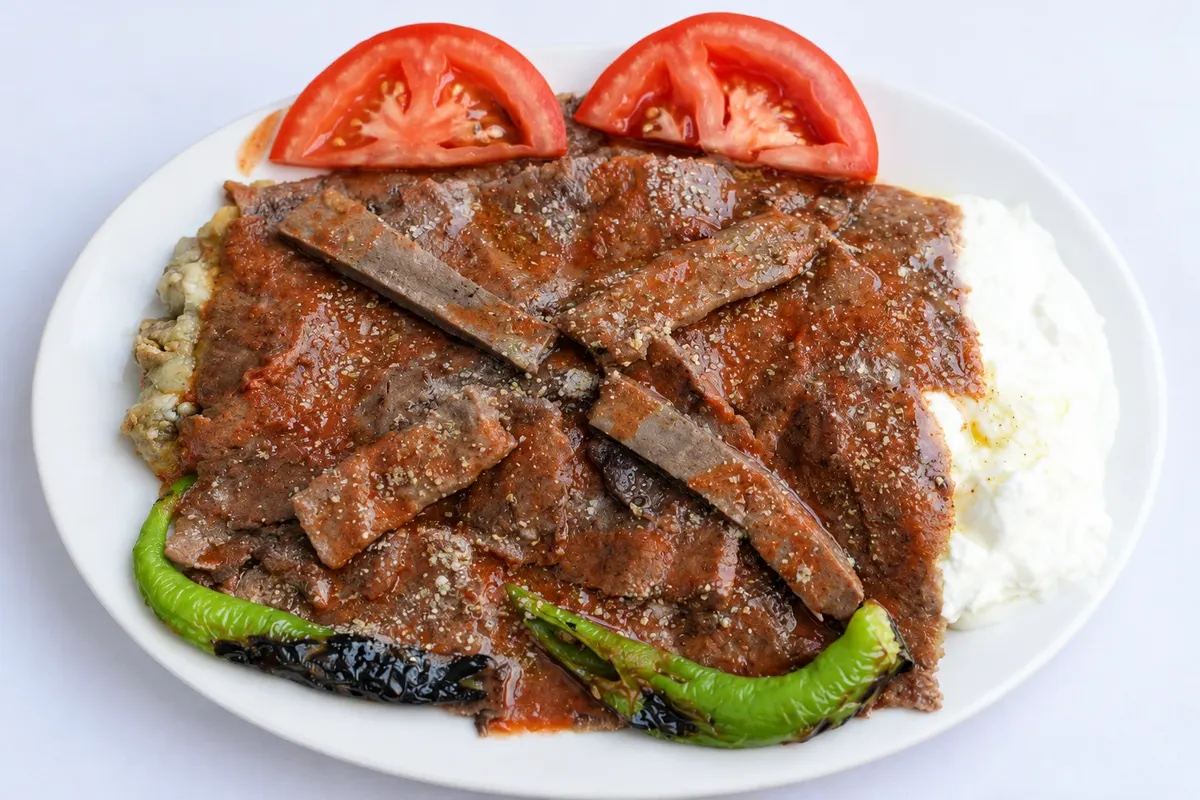
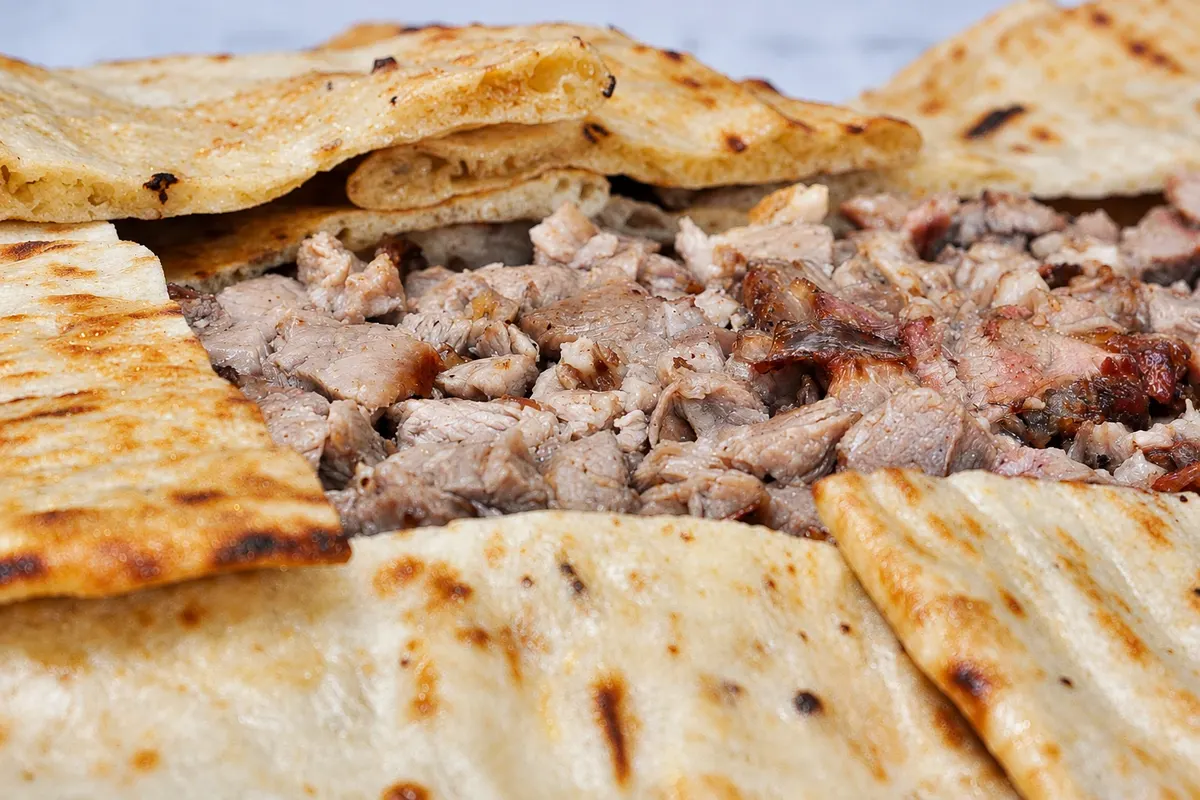
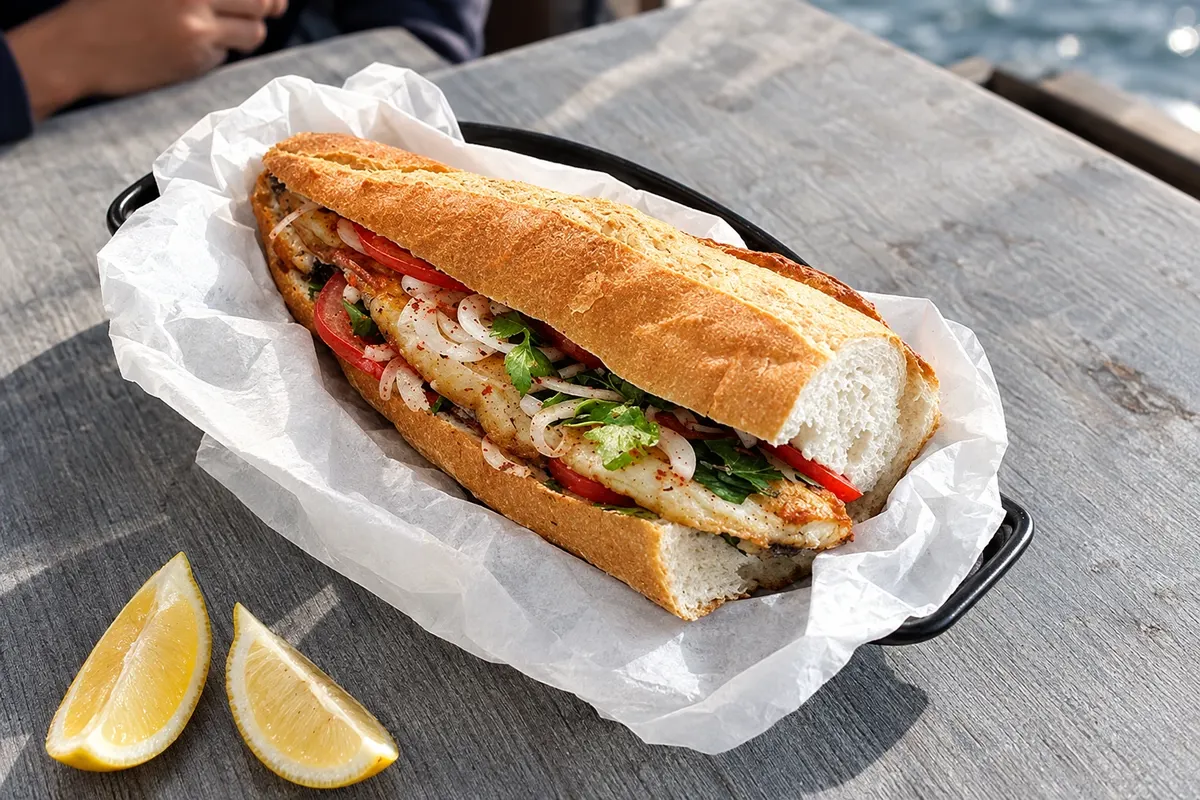
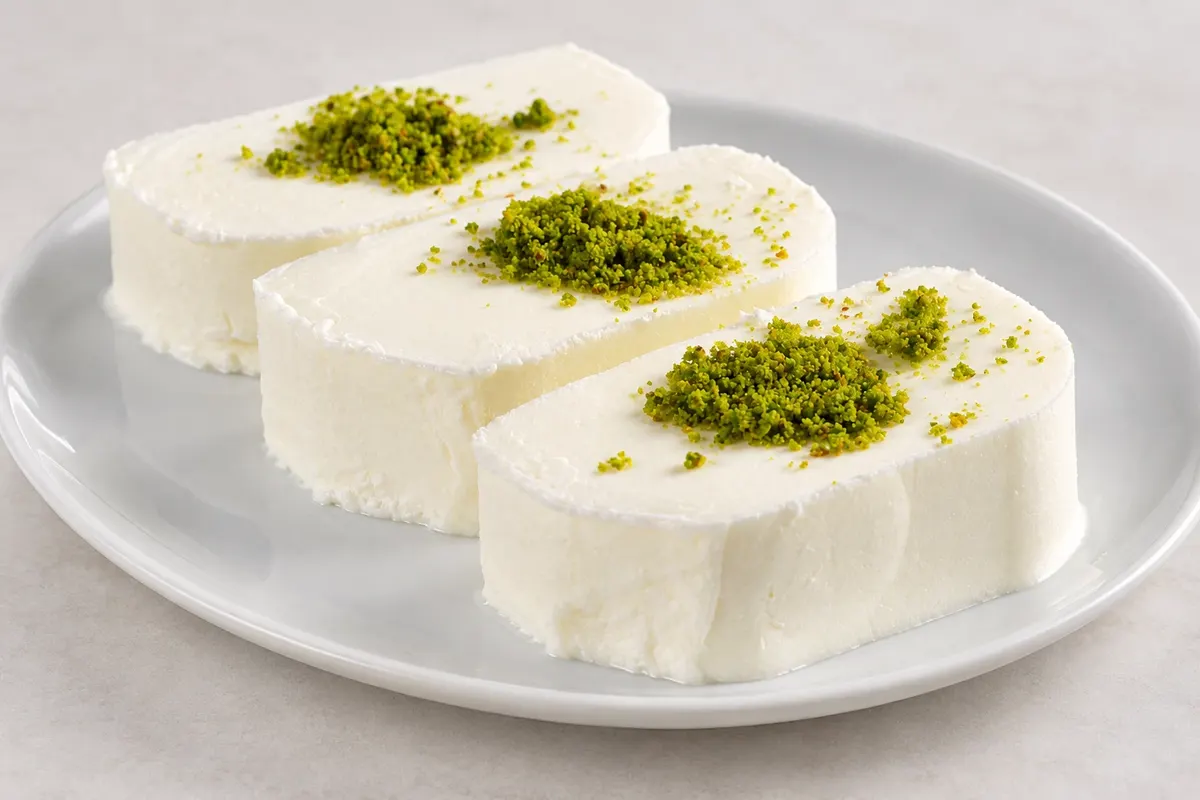
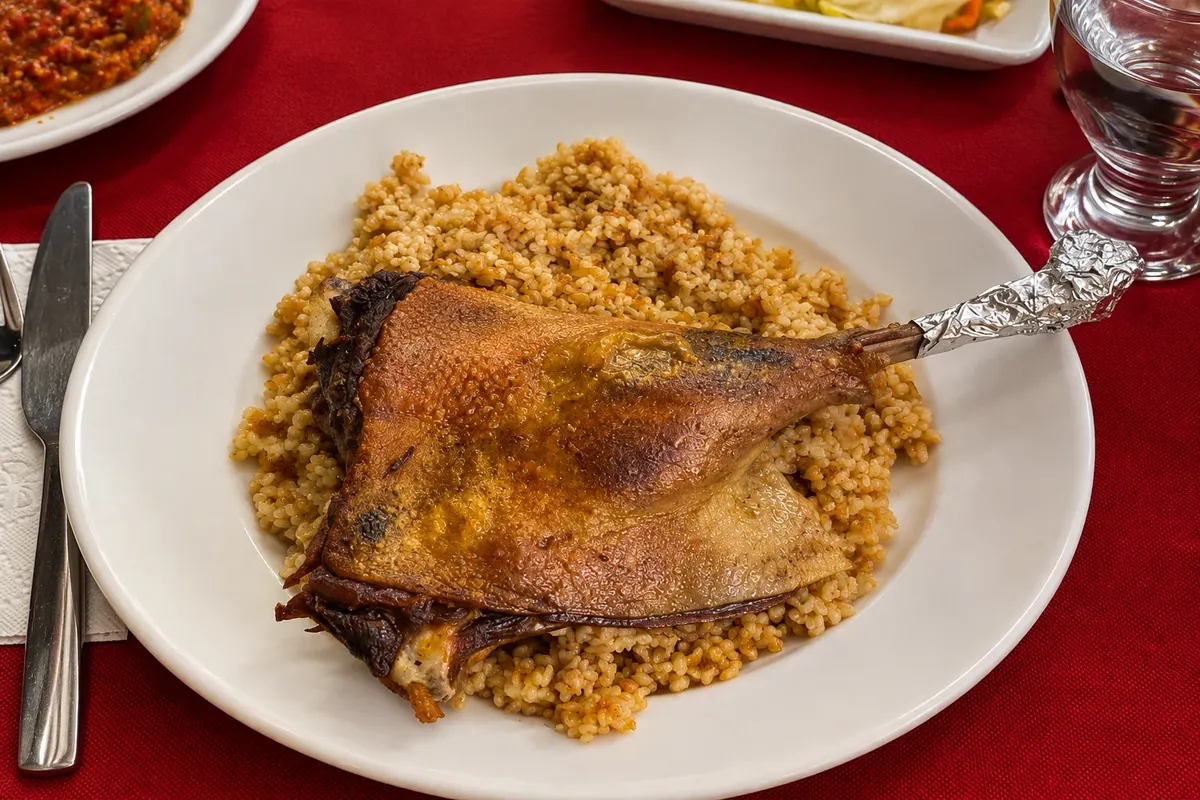
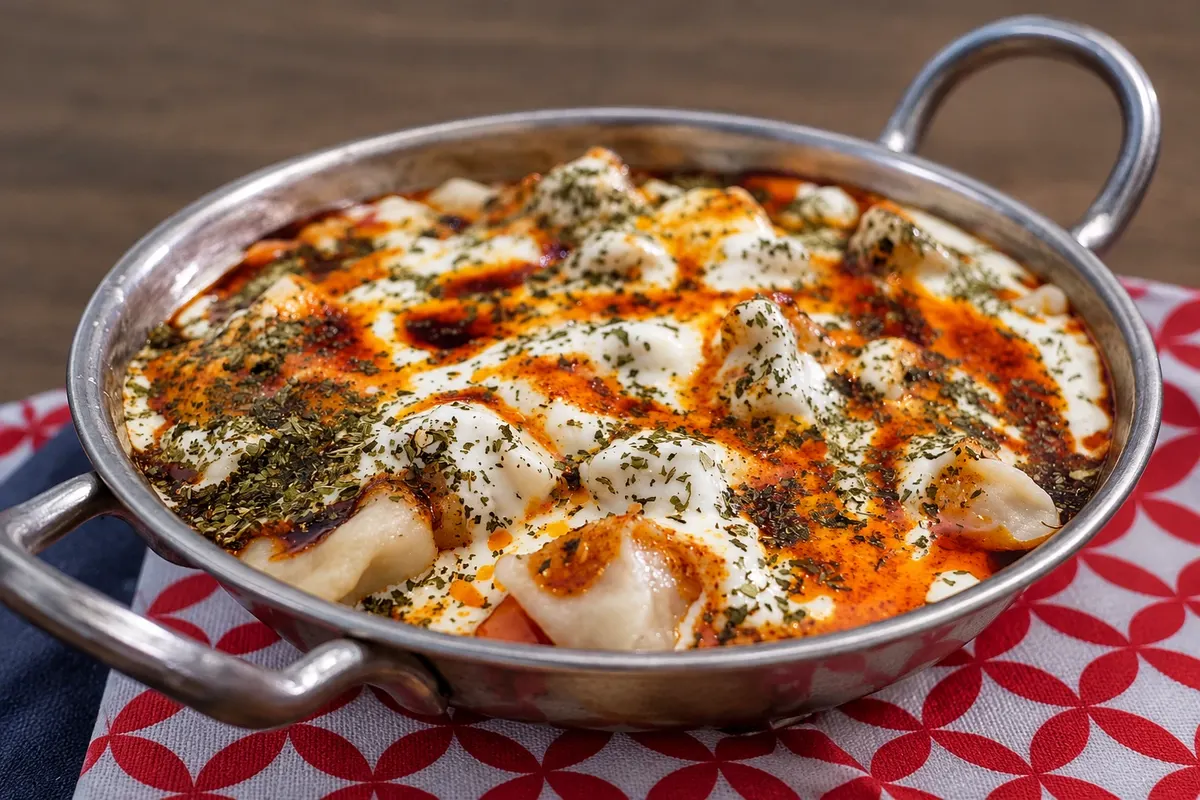
In Edirne, the former Ottoman capital in Thrace, "tava ciğeri" (liver in a pan) is the dish everyone associates with the city. Beef liver is cleaned of membranes and vessels and cut into very thin slices, like leaves. Then it’s salted, lightly coated in wheat flour, shaken to remove the excess and quickly fried in sunflower oil. Outside it becomes slightly crispy; inside, tender.
The accompaniment you always find is the dried red pepper, fried whole and placed beside the liver. The traditional pepper comes from the Karaağaç neighborhood in Edirne, where it’s harvested at the end of summer and shade-dried hanging in strings; it also has a geographical indication registration. Onion, tomato and yogurt usually complete the dish, and many people eat the liver inside bread.
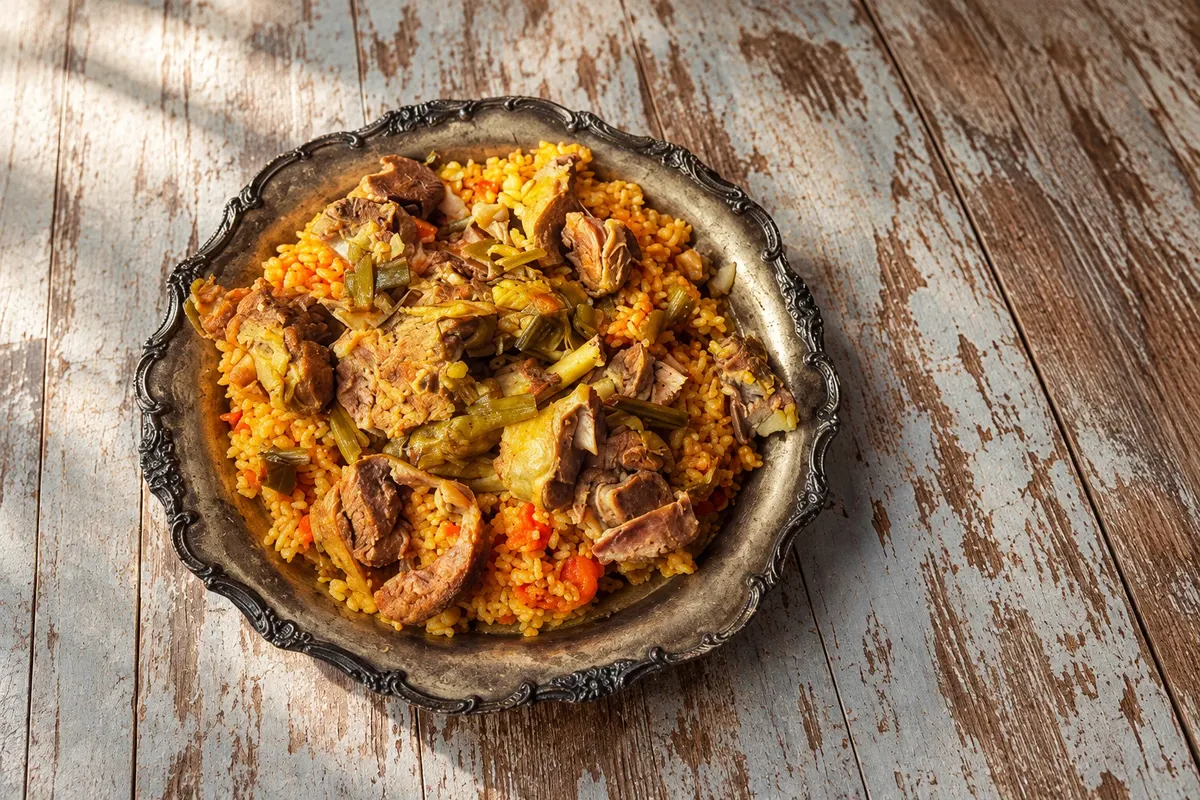
Edirne tava ciğeri has a geographical indication registration (No. 128) since 2010, requested by the union of artisans’ and traders’ chambers of Edirne. The registration specifies the type of liver, the thickness of the cut and the frying. The city has another liver dish with its own registration, ciğer sarma, made with lamb liver, rice and herbs, rolled and baked.
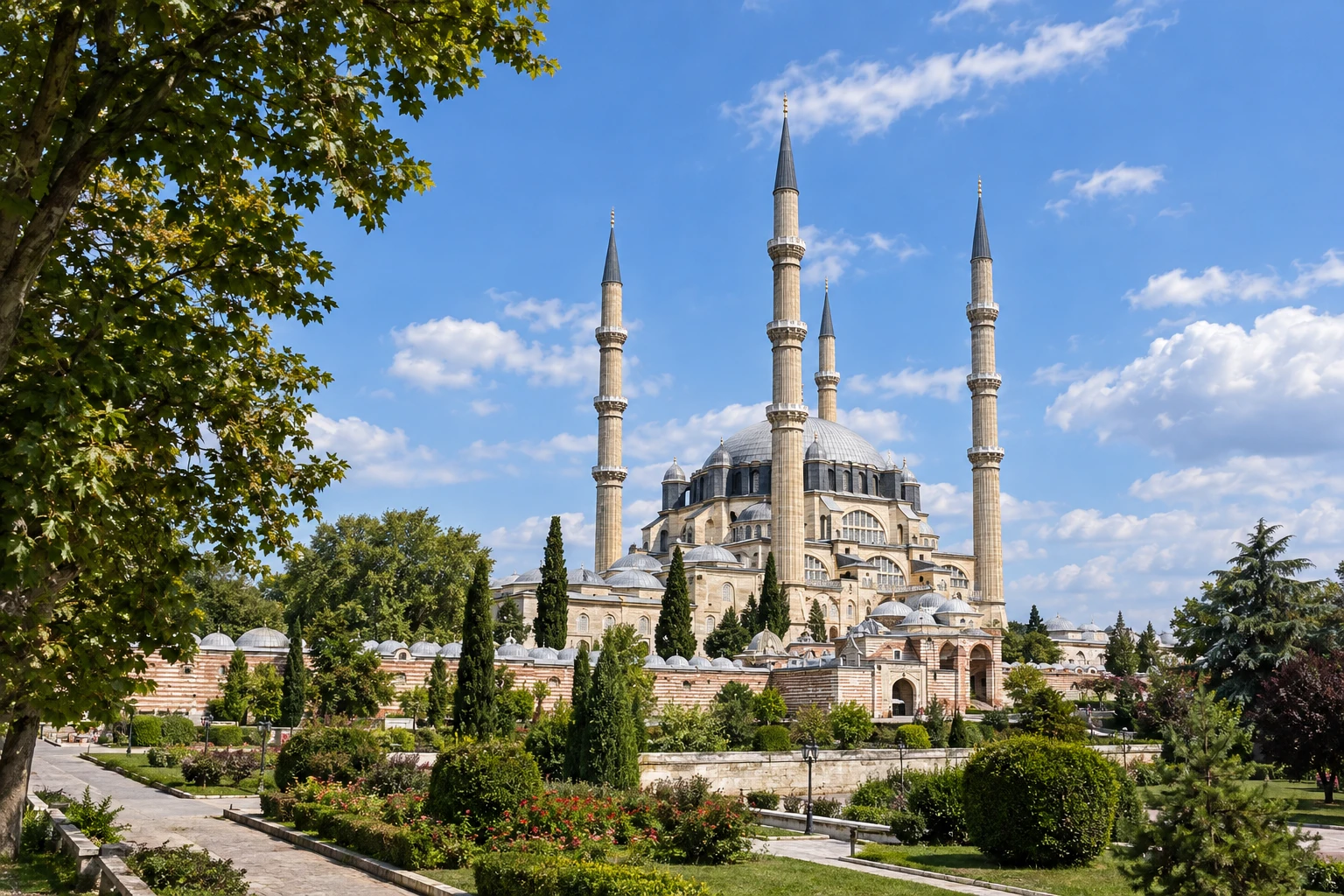
Tava ciğeri is eaten at any time, including for breakfast, and is a common stop for visitors to Edirne to see the Selimiye Mosque and the Ottoman bridges over the Tunca and Meriç rivers.


 Brazilija
 Antarktika
 Argentina
 Bolivija
 Čile
 Kolumbija
 Ekvator
 Gvajana
 Francoska Gvajana
 Falklandski otoki (Malvini)
 Paragvaj
 Peru
 Surinam
 Urugvaj
 Venezuela
 Nemčija
 Avstrija
 Belgija
 Hrvaška
 Danska
 Slovaška
 Slovenija
 Španija
 Finska
 Francija
 Grčija
 Nizozemska
 Madžarska
 Irska
 Islandija
 Italija
 Luksemburg
 Norveška
 Poljska
 Portugalska
 Združeno kraljestvo
 Češka
 Švedska
 Švica
 Bermudi
 Kanada
 Združene države Amerike
 Grenlandija
 Mehika
 Sveta Peter in Mihael
 Dominikanska republika
 Japonska
 Južnoafriška republika
 Egipt
 Avstralija
 Fidži
 Nova Zelandija
 Papua Nova Gvineja