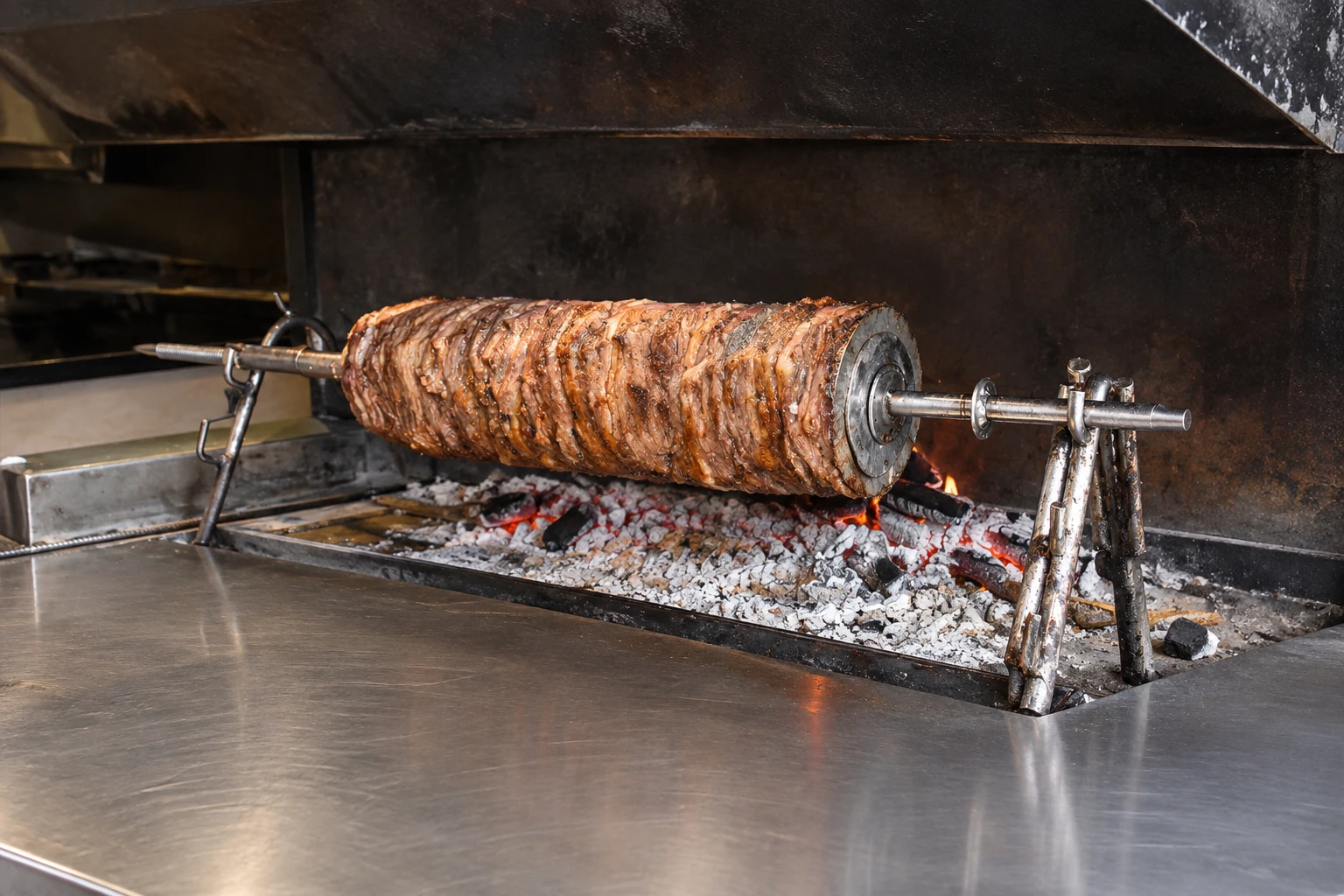
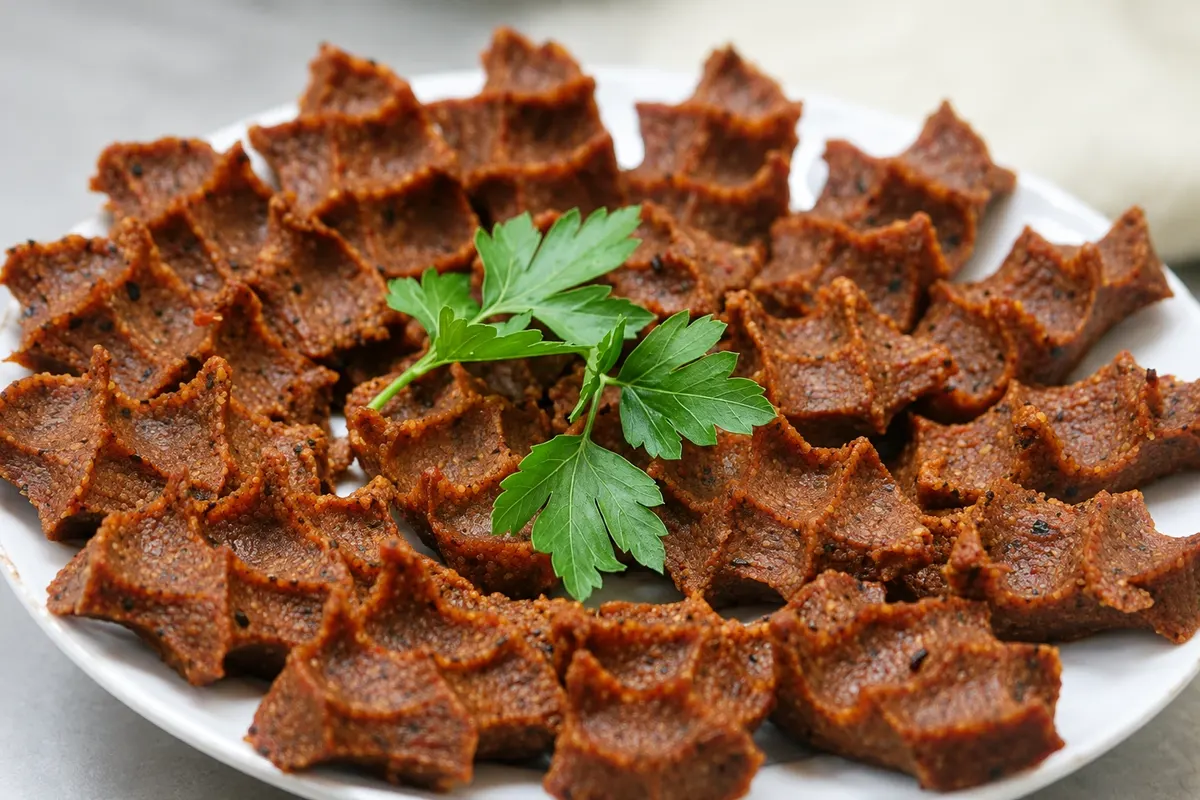
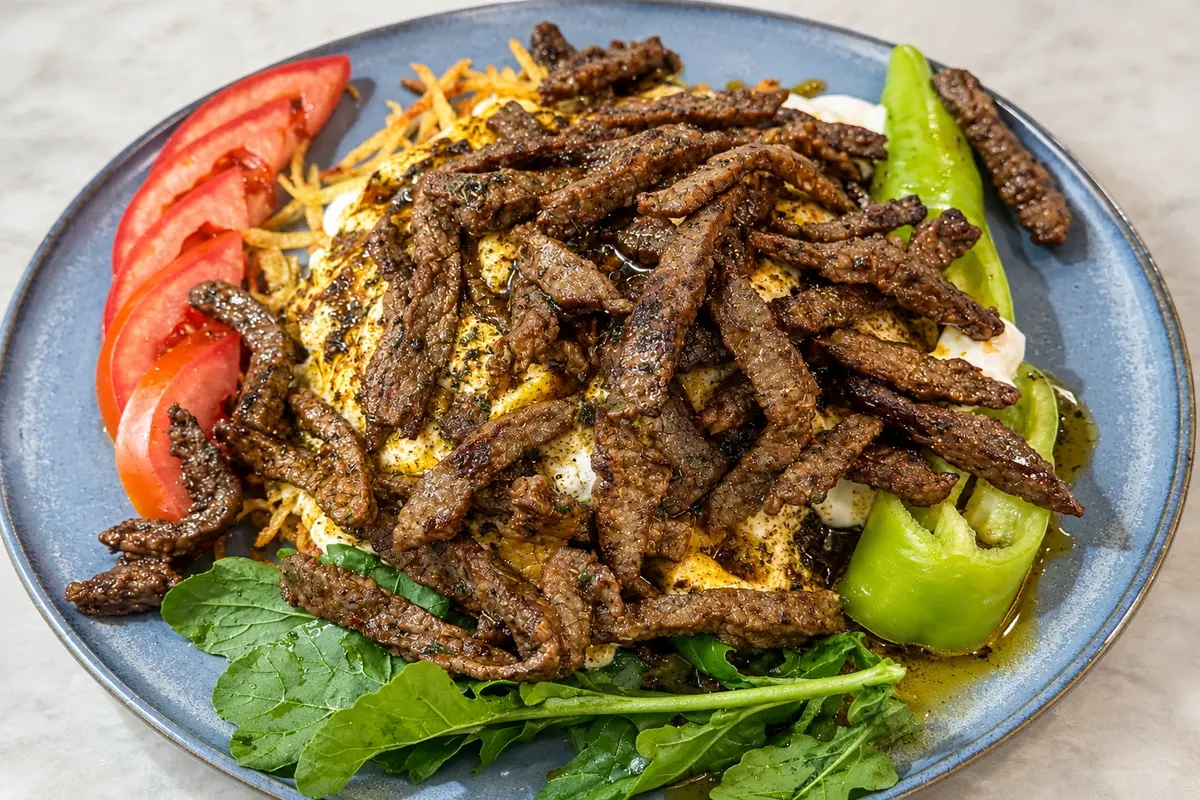
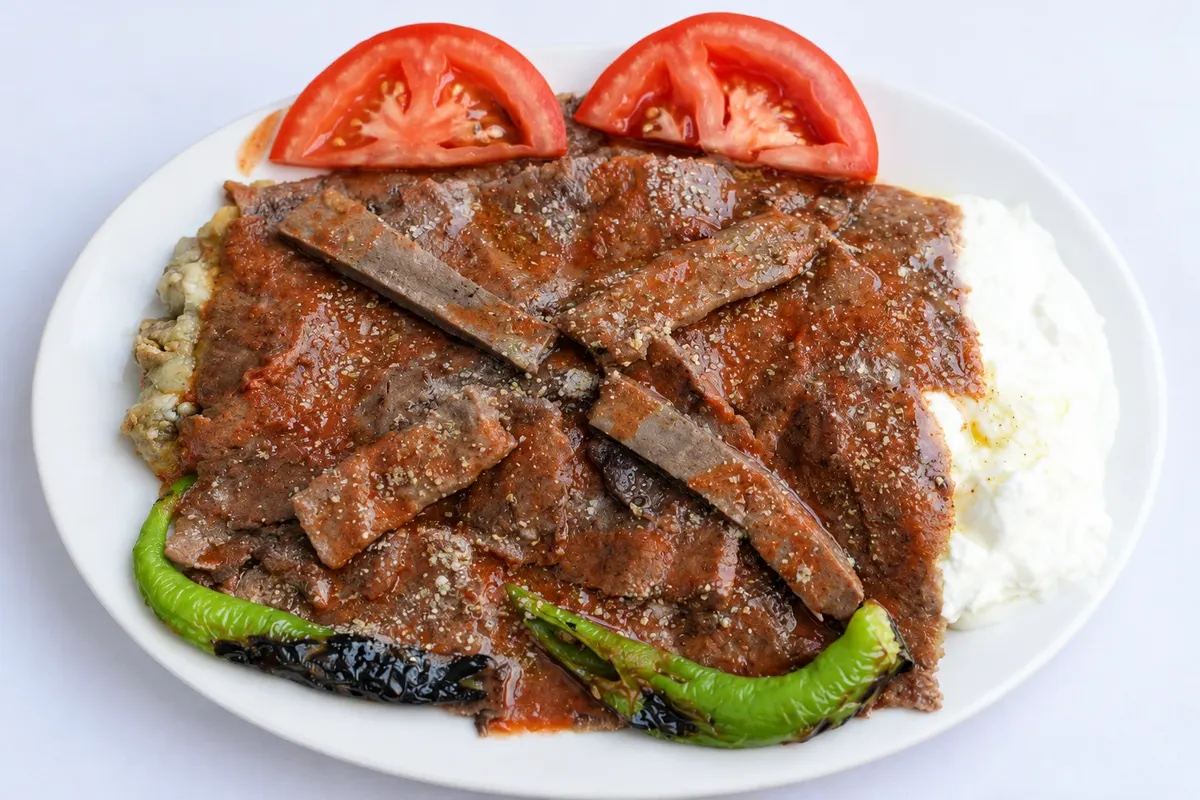
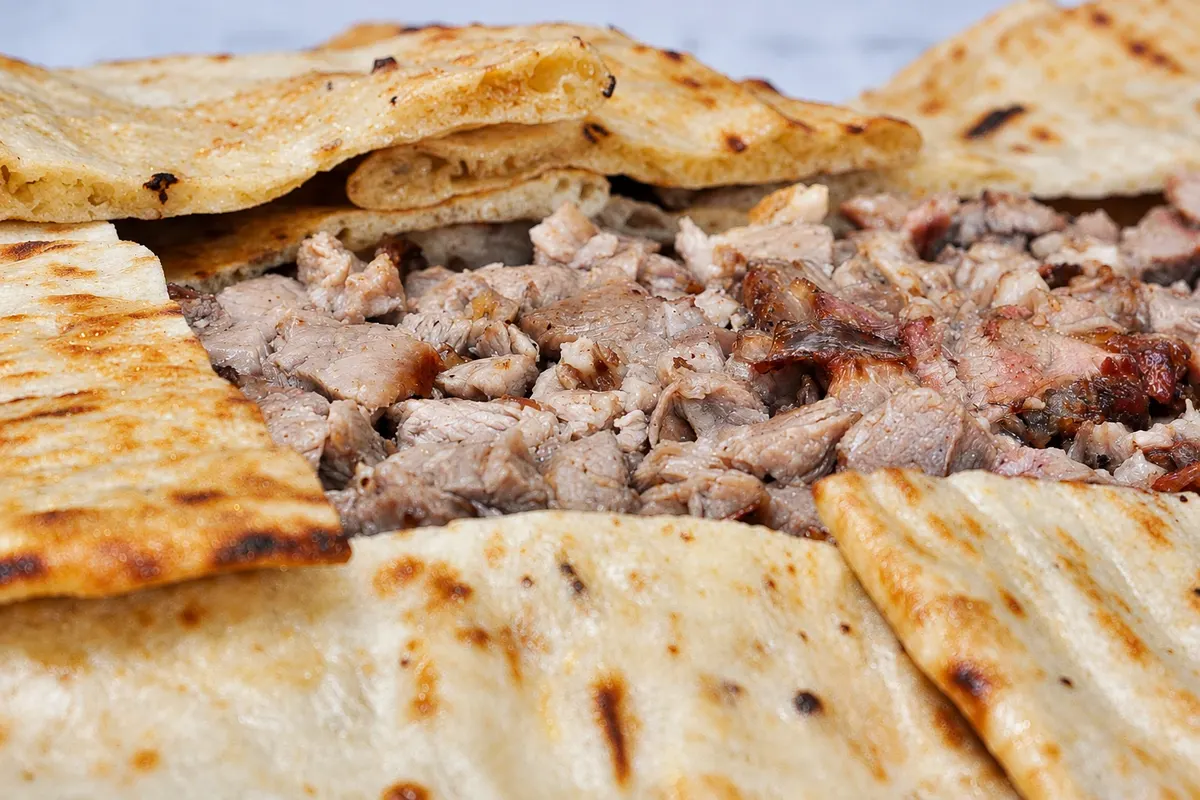
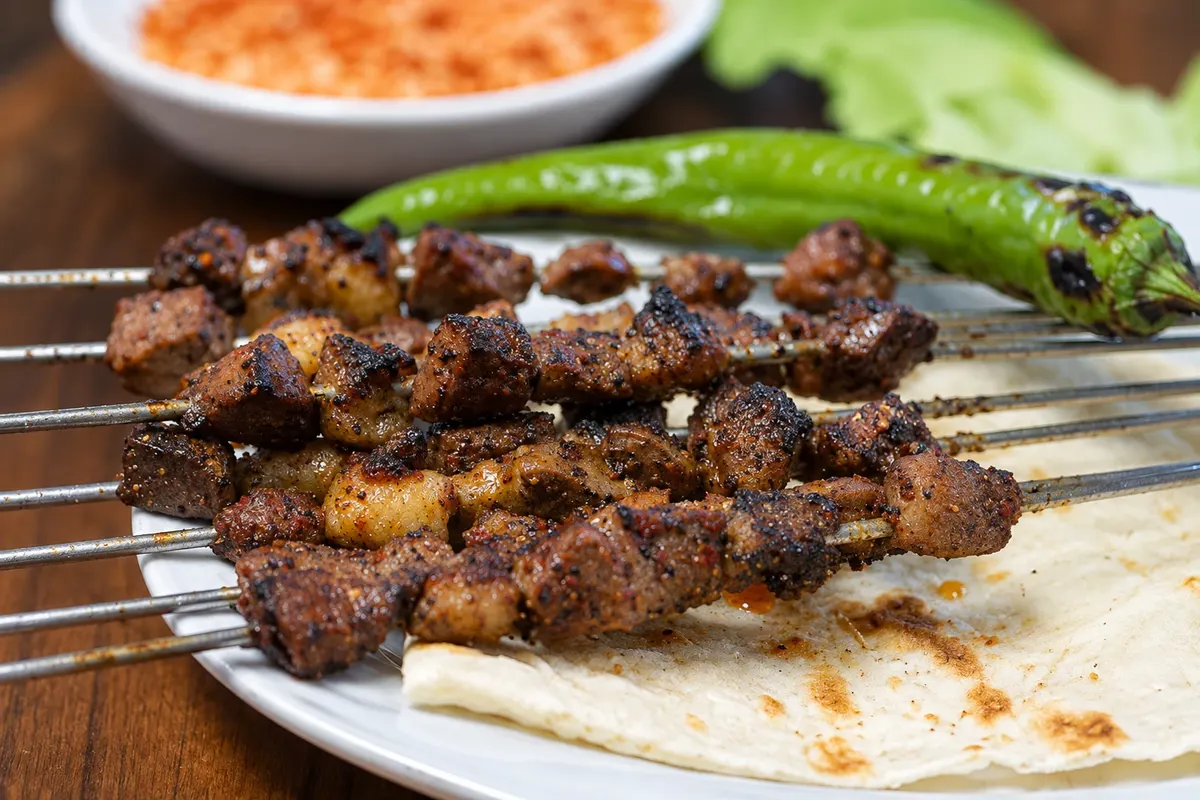
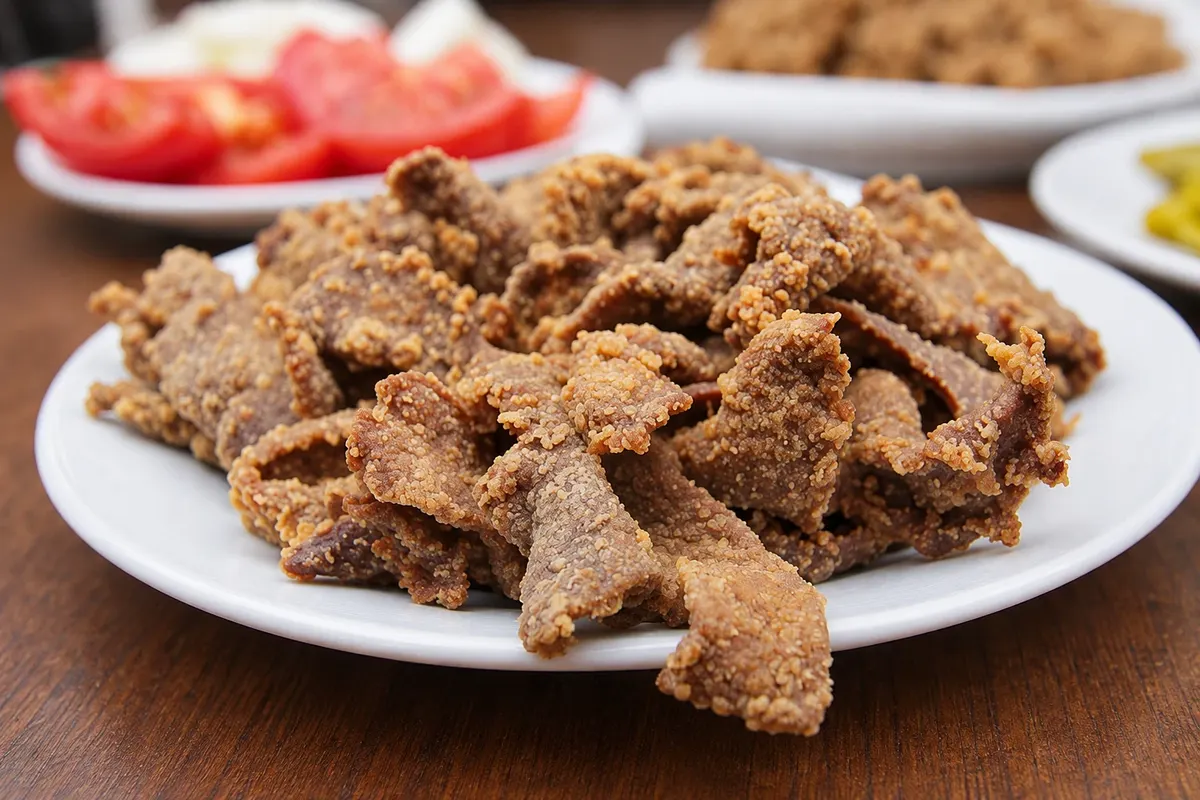
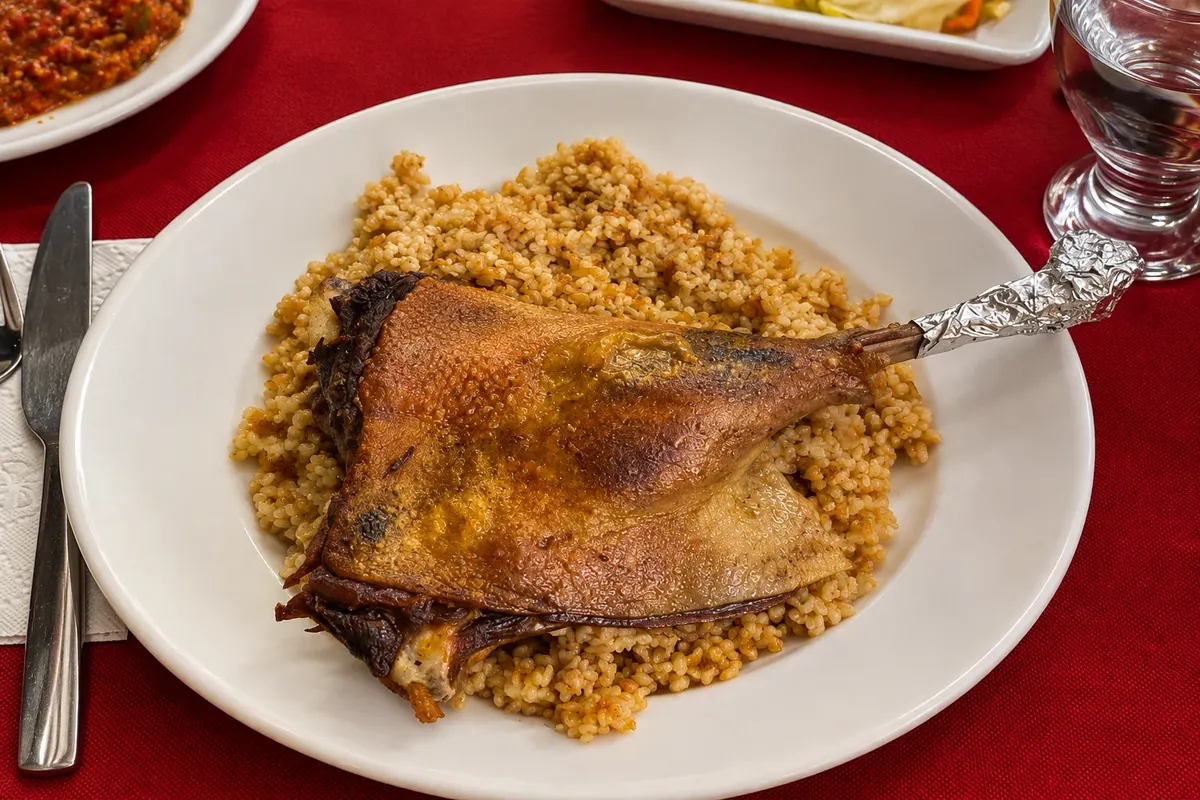
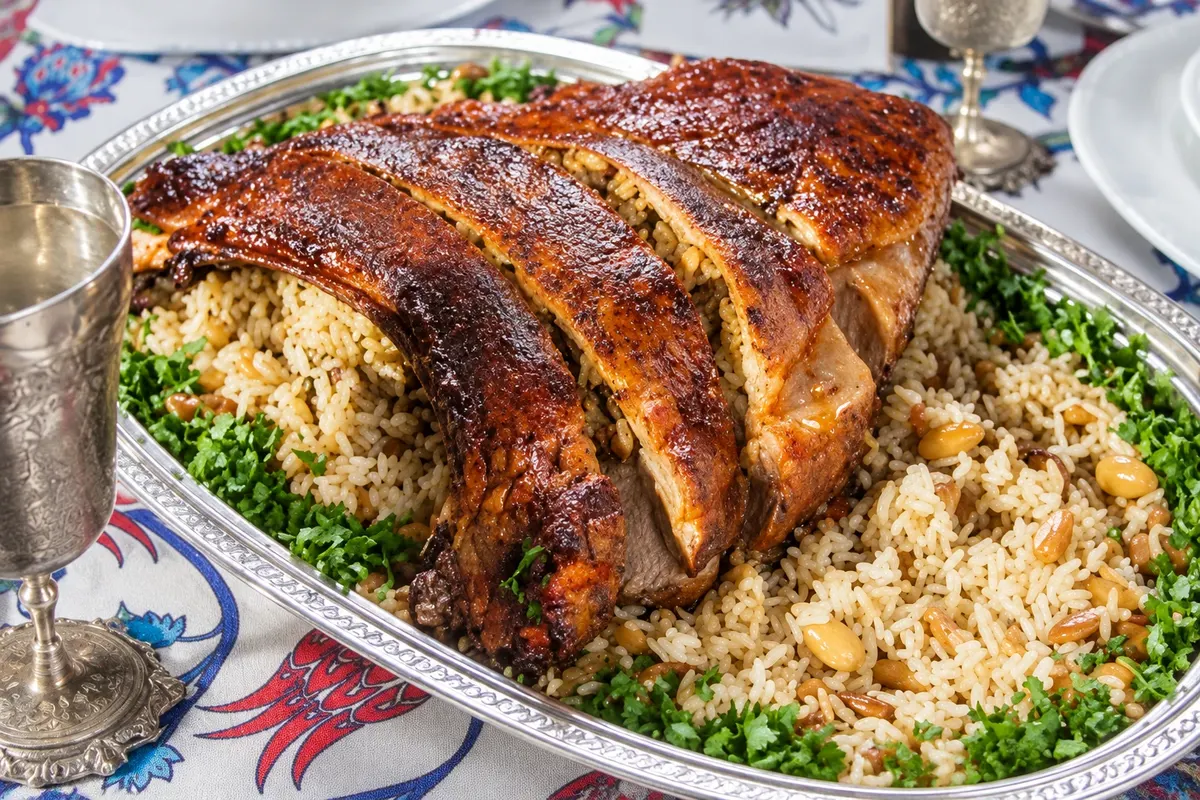
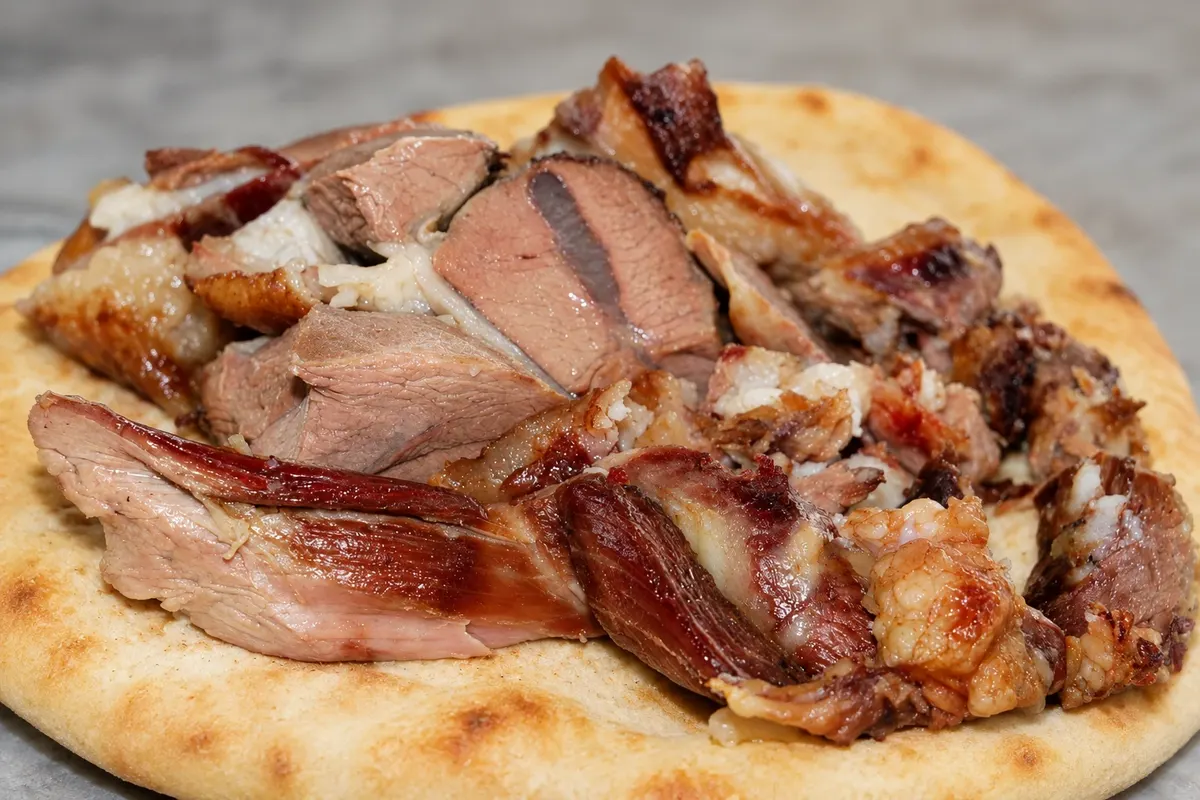
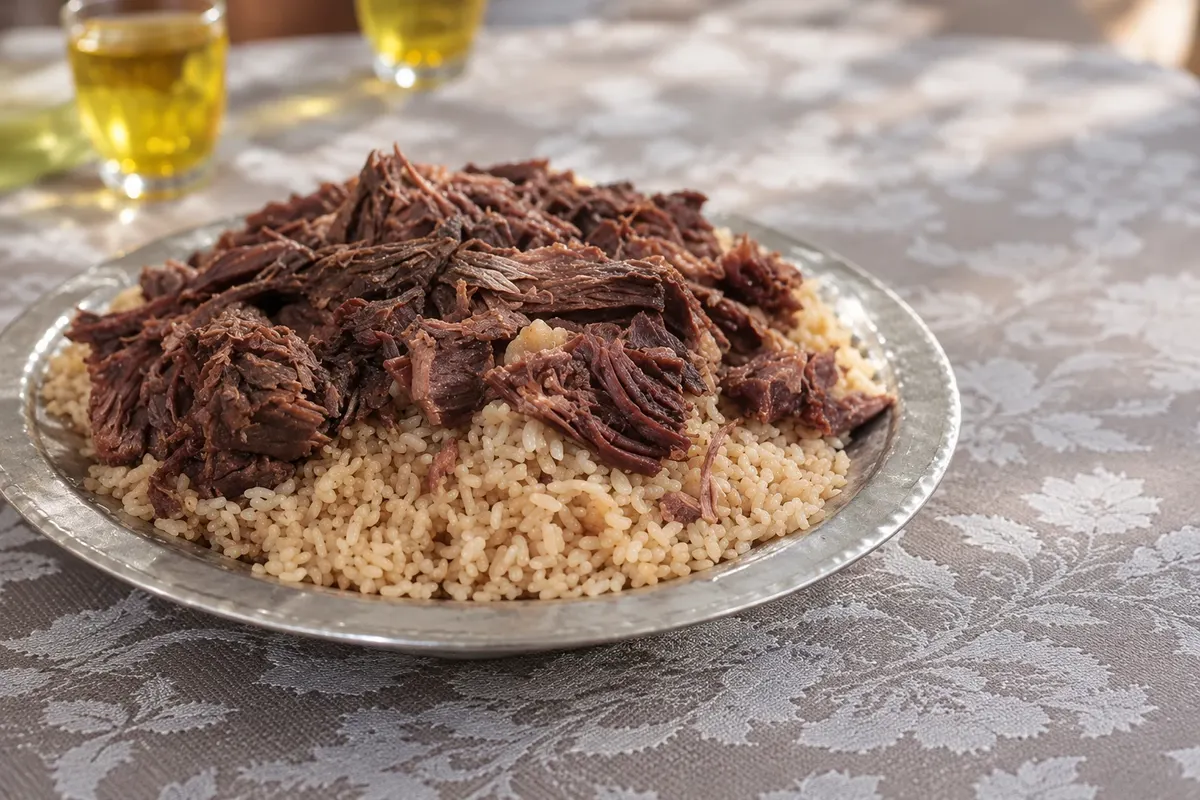
Cağ kebabı is the kebab of eastern Turkey that turns while lying down. The meat is lamb from sheep raised in the district of Oltu and on the plateaus of Erzurum. According to the registered recipe, it is cut into slices, salted and left to rest for a day. Then it is mixed with onion and black pepper and stacked on a large horizontal spit that turns in front of a wood fire.
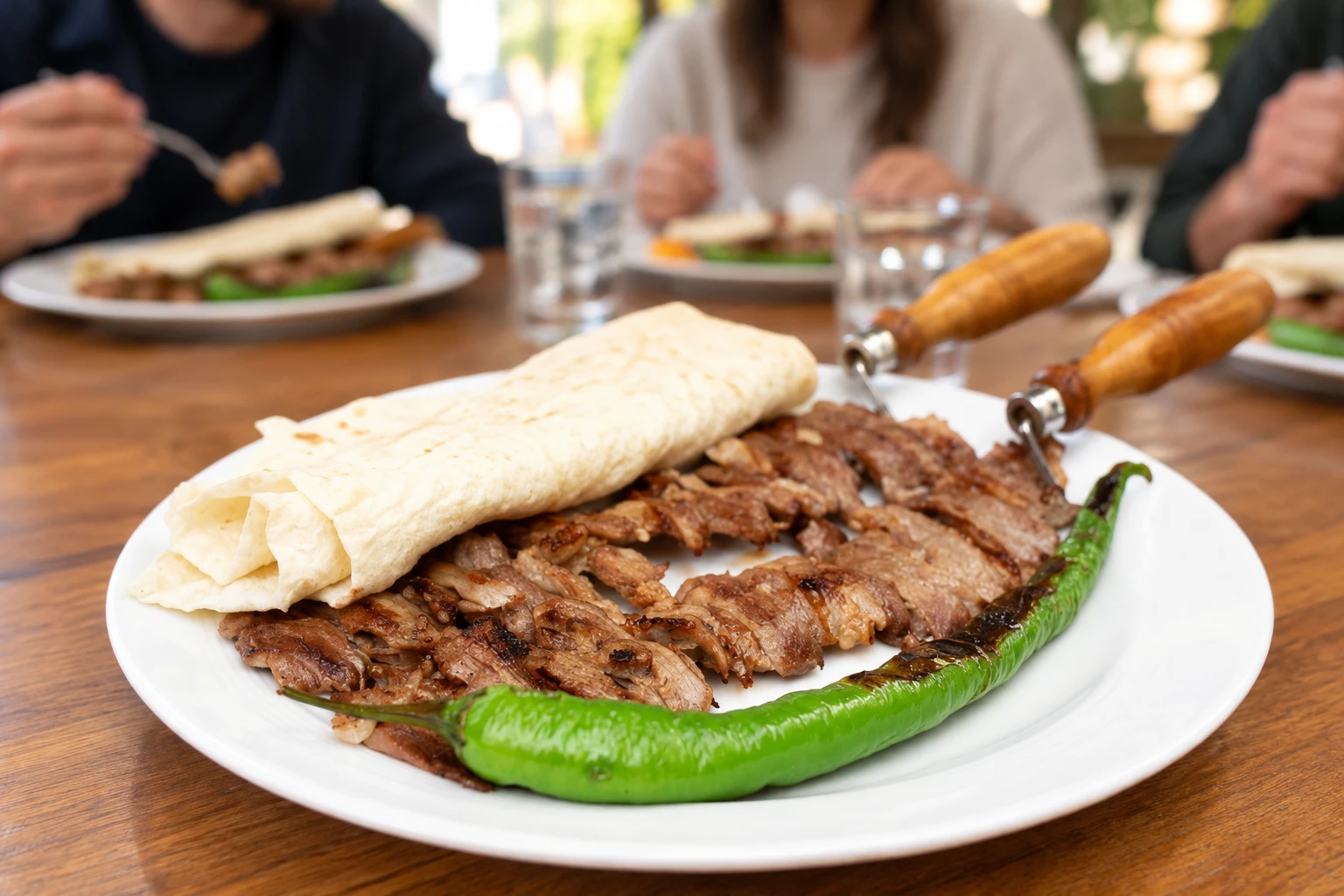
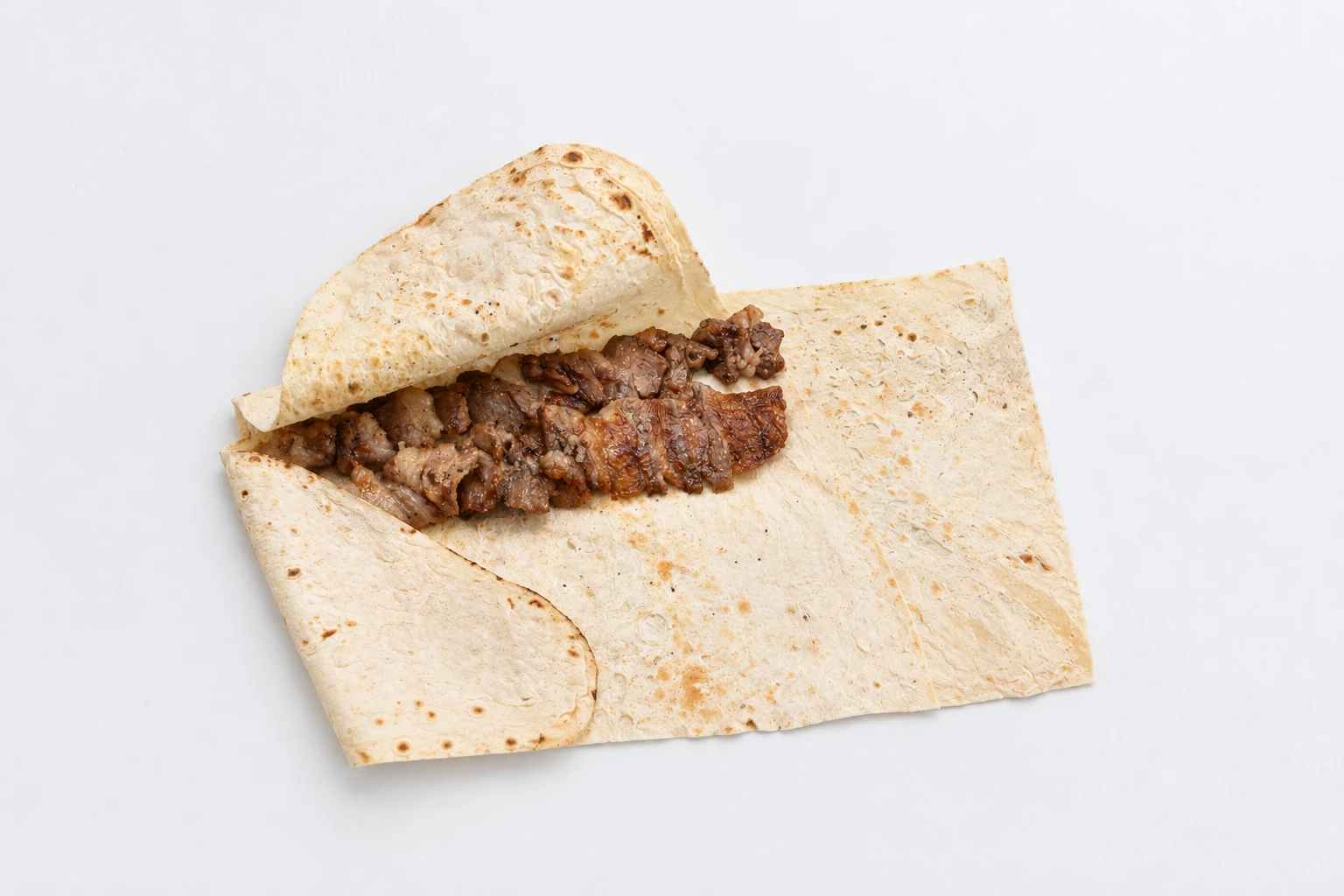
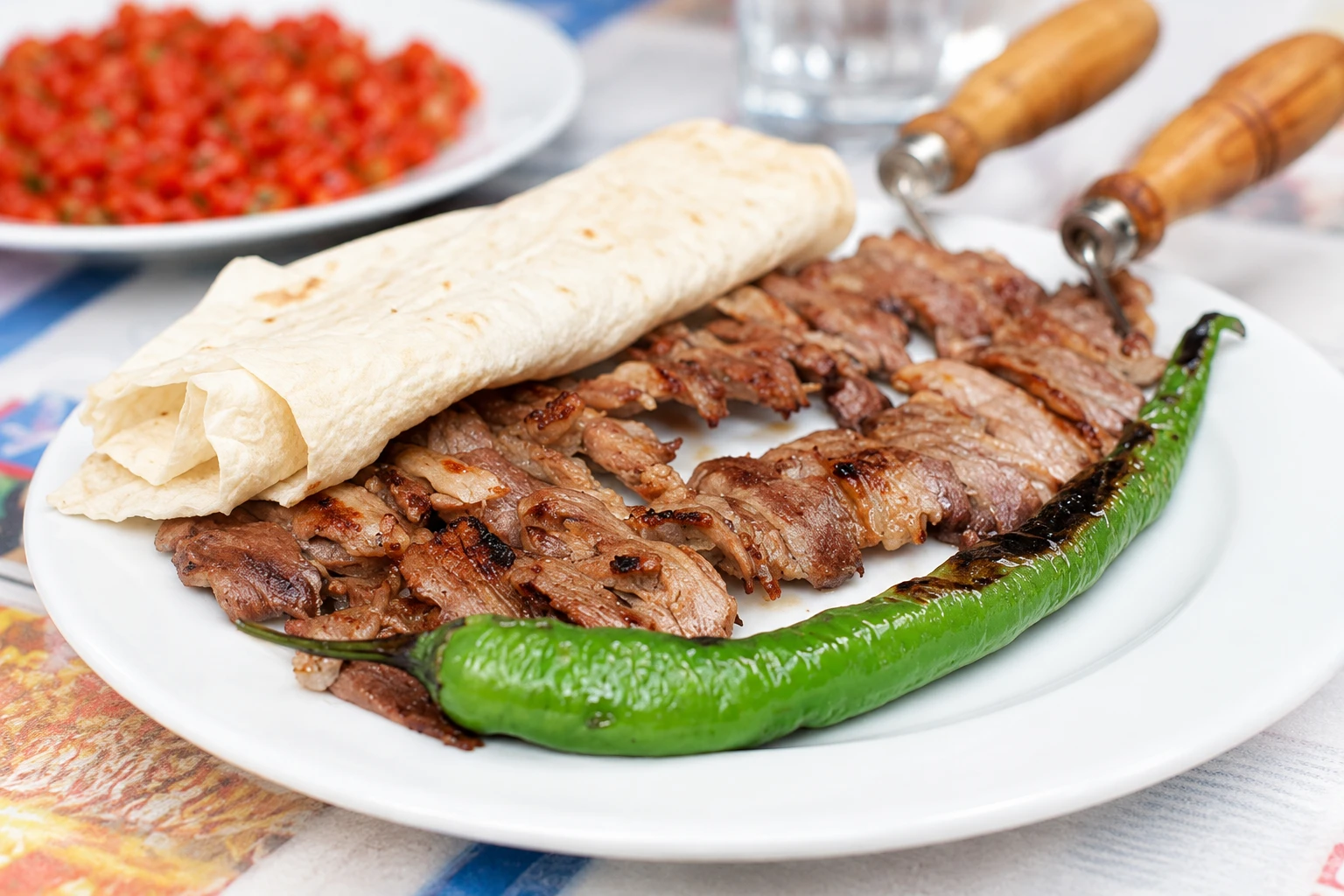
When the outer layer is ready, the master slices it and threads the pieces onto a flat skewer, the “cağ,” which gives the dish its name. The kebab arrives at the table like that, skewer by skewer, with lavaş, onion and salad. It can also be served sliced on a plate.
The name “Oltu Cağ Kebabı” has a geographical indication registration (No. 127), requested by the Oltu Chamber of Commerce and Industry, registered in 2010, with protection since 2007. The file was published in the Official Gazette in 2009. The registration requires that nothing beyond what the recipe states be added to the meat.
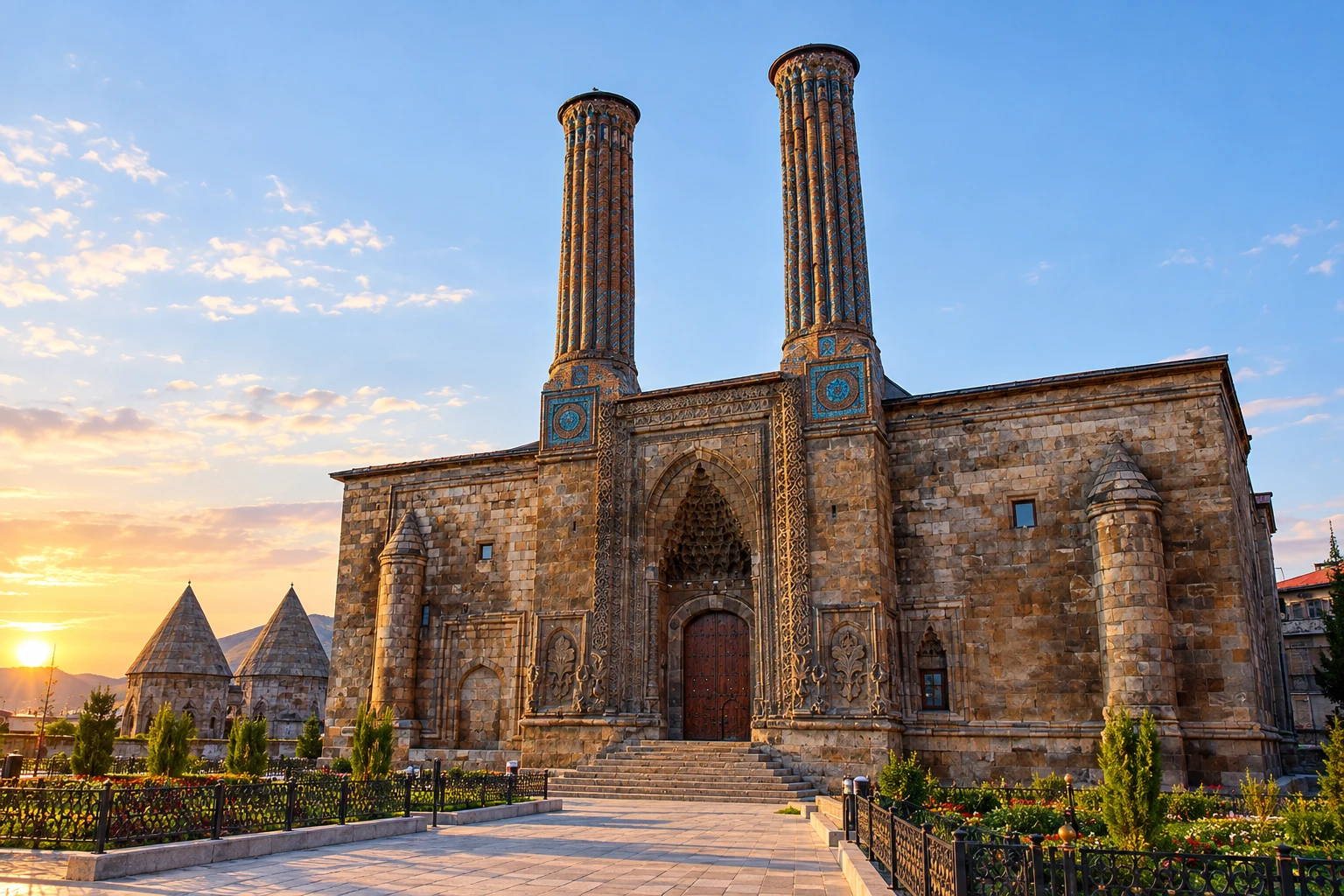
The origin is disputed between the districts of Oltu and Tortum, both in Erzurum, and also with Artvin, the neighboring province, where the dish is common. One line of research links cağ kebabı to the Kipchaks, a Turkic people of the Middle Ages. In Erzurum, the city of Seljuk madrasas and the Palandöken ski resort, cağ kebabı is the dish most associated with the city.


 Brazilija
 Antarktika
 Argentina
 Bolivija
 Čile
 Kolumbija
 Ekvator
 Gvajana
 Francoska Gvajana
 Falklandski otoki (Malvini)
 Paragvaj
 Peru
 Surinam
 Urugvaj
 Venezuela
 Nemčija
 Avstrija
 Belgija
 Hrvaška
 Danska
 Slovaška
 Slovenija
 Španija
 Finska
 Francija
 Grčija
 Nizozemska
 Madžarska
 Irska
 Islandija
 Italija
 Luksemburg
 Norveška
 Poljska
 Portugalska
 Združeno kraljestvo
 Češka
 Švedska
 Švica
 Bermudi
 Kanada
 Združene države Amerike
 Grenlandija
 Mehika
 Sveta Peter in Mihael
 Dominikanska republika
 Japonska
 Južnoafriška republika
 Egipt
 Avstralija
 Fidži
 Nova Zelandija
 Papua Nova Gvineja