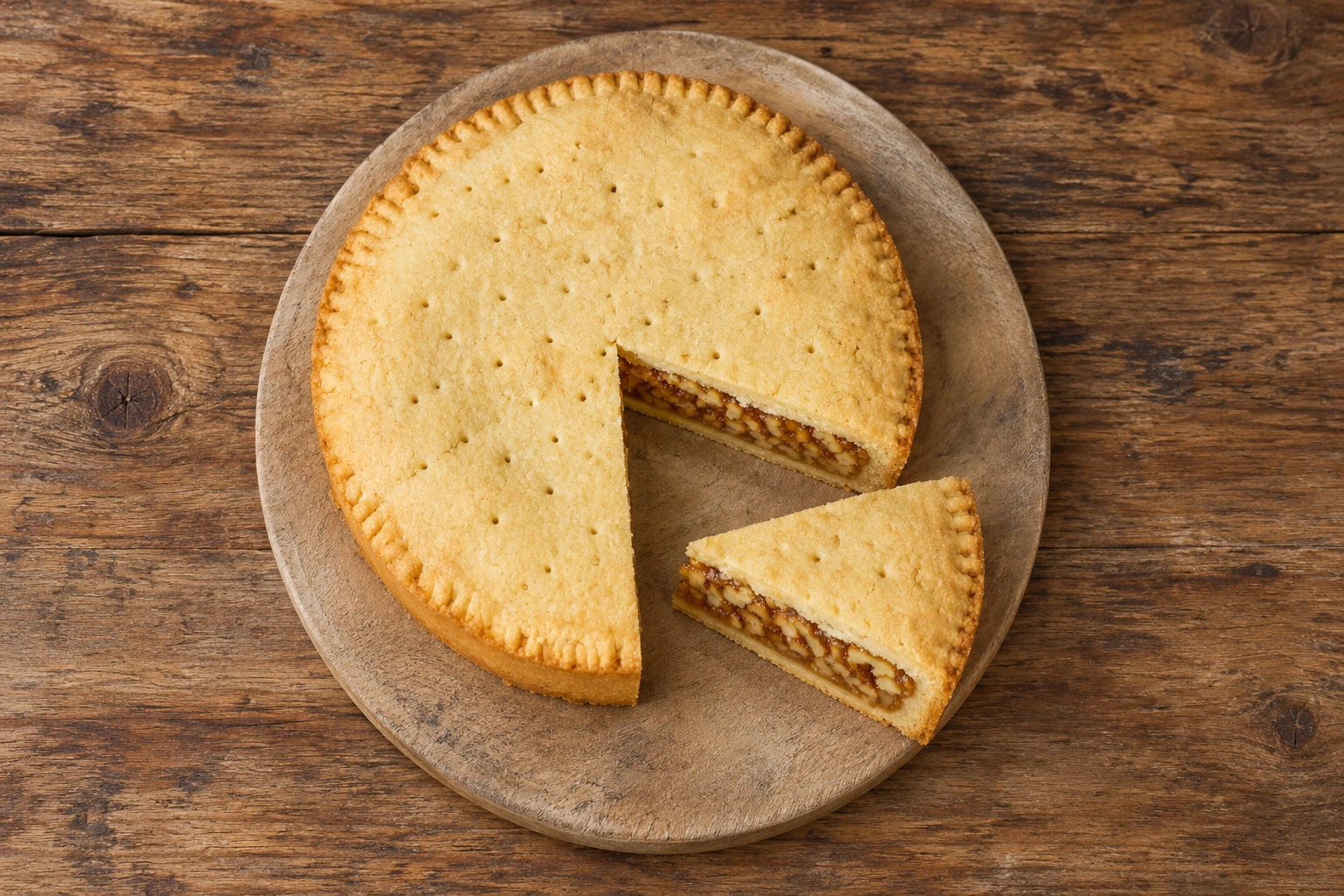
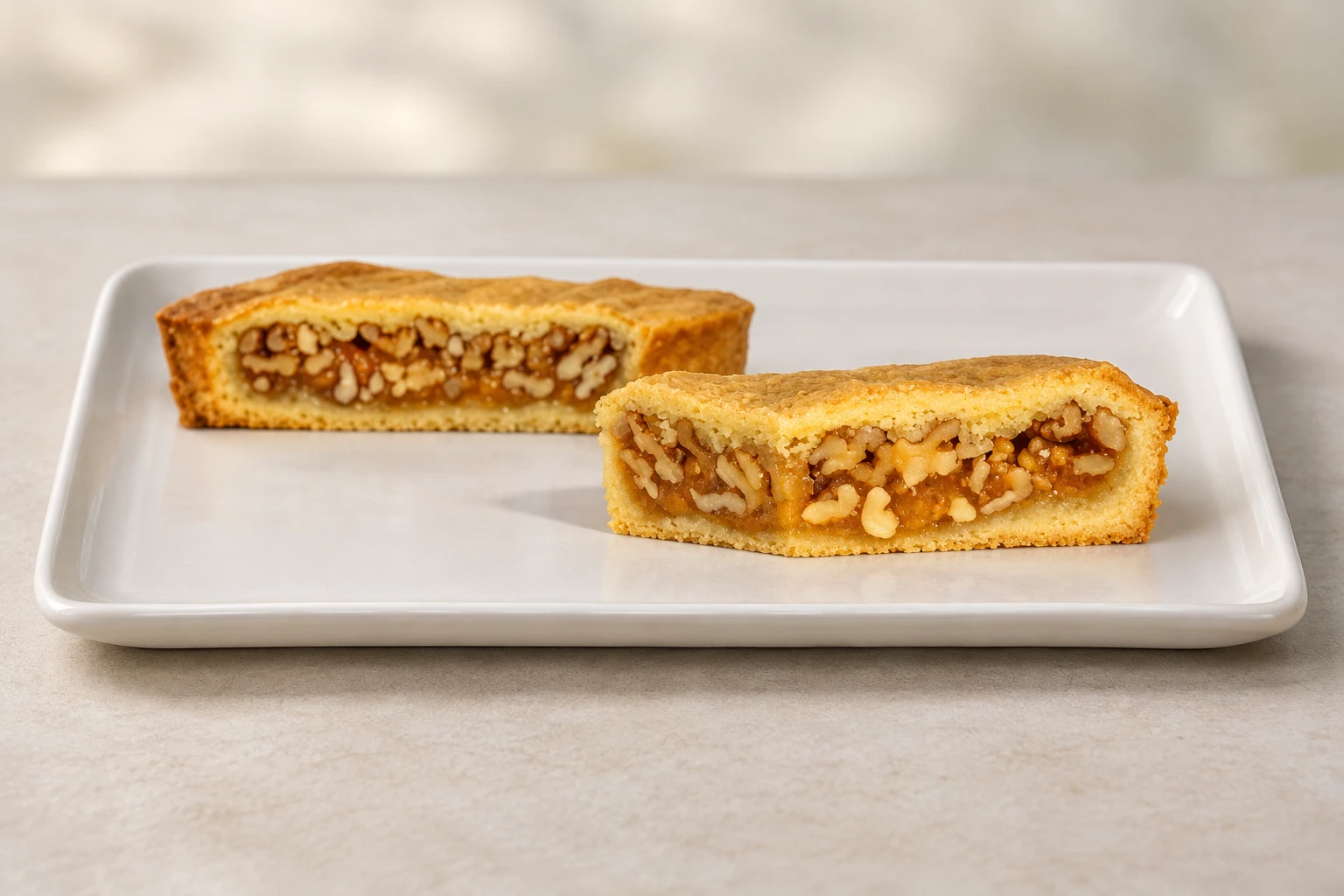
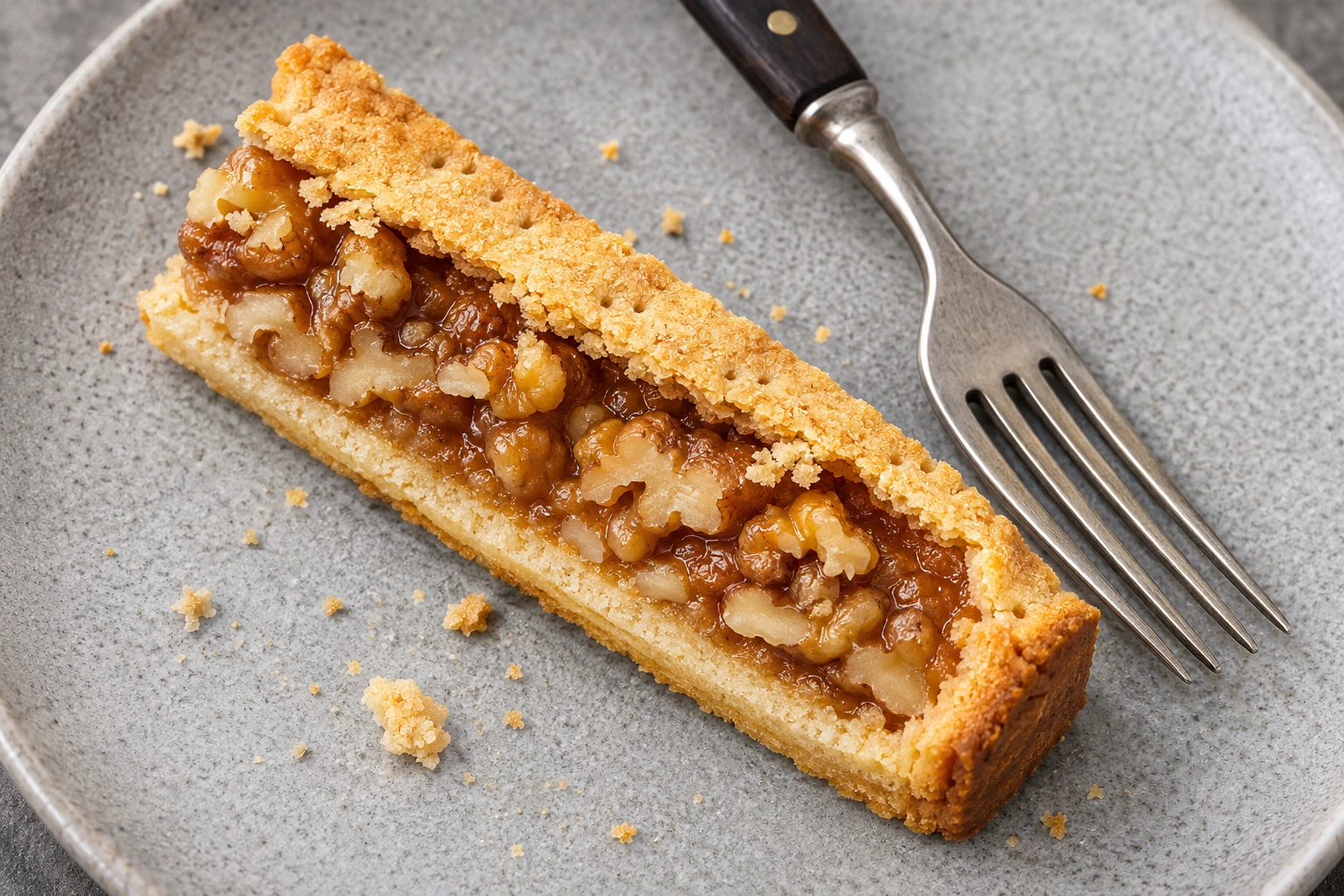
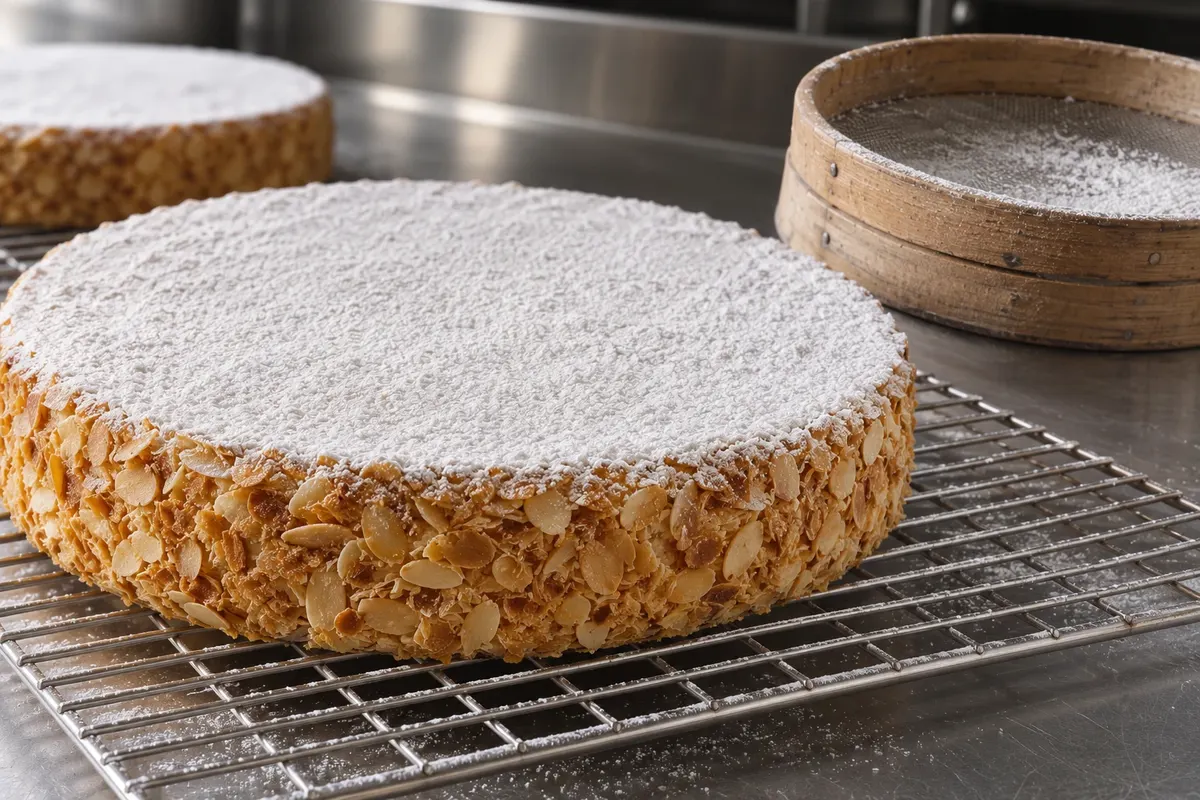
The Bündner Nusstorte, also called Engadiner Nusstorte and, in Romansh, tuorta da nuschs, is the sweet showcase of the canton of Graubünden. From the outside it looks like a simple tart, with smooth golden pastry; inside it holds a dense filling of walnuts coated in caramel cooked with cream.
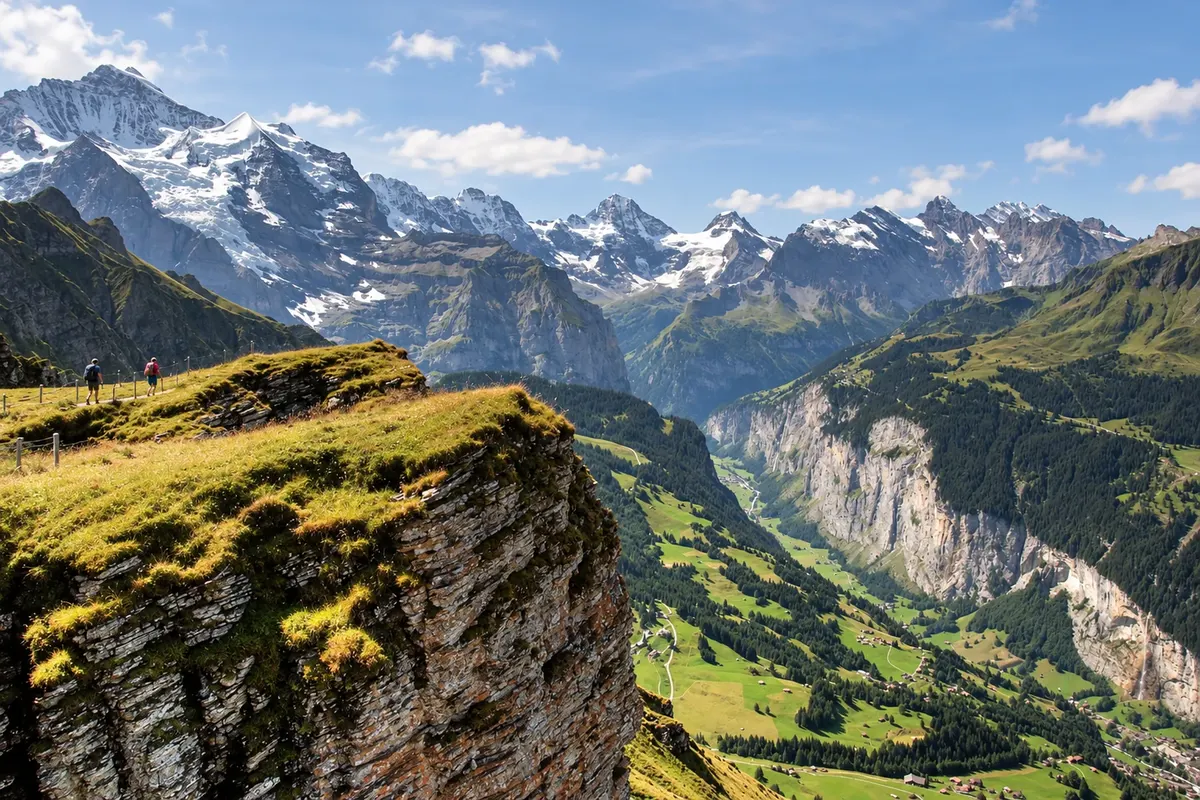
Its history is tied to the Zuckerbäcker, the pastry chefs from Graubünden. Between the 17th and 19th centuries, thousands of young people from the Engadine and other valleys of the canton left the mountains to work in pastry shops and cafés in cities such as Venice, Berlin, Toulouse and Saint Petersburg. According to Graubünden tourism, these pastry chefs brought the recipe from the south, where walnut trees grow more easily.
The exact origin is disputed. The Pult family of Samedan claims that Fausto Pult was the first to sell the tart on a larger scale in the pastry shop he opened in 1926; historians note that he had worked in an Engadine pastry shop in Toulouse, from where the recipe may have come, and another pastry family claims earlier sales. Studies point to a French walnut–caramel tart, without a top crust, as a possible model that the Engadine makers closed with pastry to make transport easier.
Preparation starts with the caramel: the sugar melts until golden, then cream and the chopped walnuts are added and cooked until thickened. The butter-rich pastry lines the pan, receives the cooled filling and is closed with another disk, pricked with a fork.
Because it keeps for weeks, the tart became a traditional souvenir for visitors to Graubünden and is produced throughout the canton, from small bakeries to larger manufacturers. Most of the walnuts used come from outside, since the mountain climate is not favourable for walnut trees.


 Brazilija
 Antarktika
 Argentina
 Bolivija
 Čile
 Kolumbija
 Ekvator
 Gvajana
 Francoska Gvajana
 Falklandski otoki (Malvini)
 Paragvaj
 Peru
 Surinam
 Urugvaj
 Venezuela
 Nemčija
 Avstrija
 Belgija
 Hrvaška
 Danska
 Slovaška
 Slovenija
 Španija
 Finska
 Francija
 Grčija
 Nizozemska
 Madžarska
 Irska
 Islandija
 Italija
 Luksemburg
 Norveška
 Poljska
 Portugalska
 Združeno kraljestvo
 Češka
 Švedska
 Turčija
 Bermudi
 Kanada
 Združene države Amerike
 Grenlandija
 Mehika
 Sveta Peter in Mihael
 Dominikanska republika
 Japonska
 Južnoafriška republika
 Egipt
 Avstralija
 Fidži
 Nova Zelandija
 Papua Nova Gvineja